The Story Beneath the Story

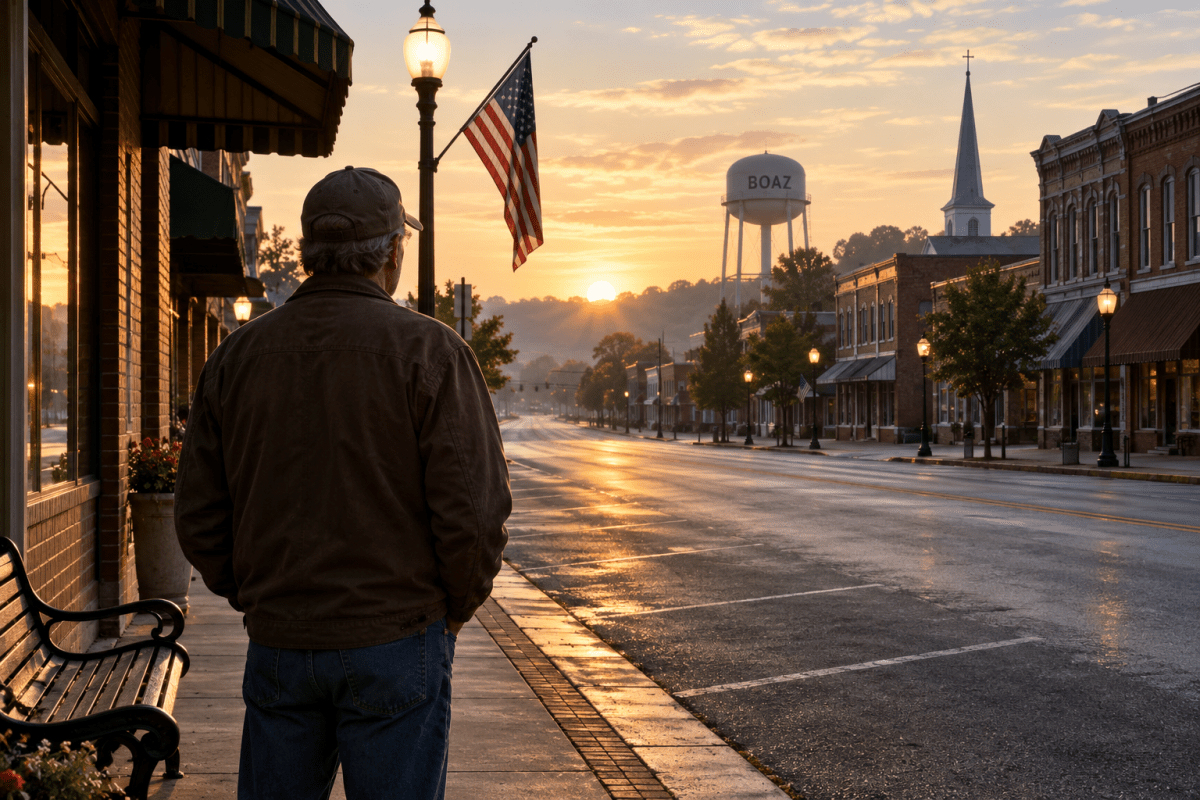
People sometimes ask why I keep returning to Boaz.

After all, there are countless small towns across America. Why this one?

The easy answer is that Boaz is familiar. I know its streets, its schools, its churches, its neighborhoods, and the rhythms of everyday life. But familiarity has never been enough reason to write a novel.

The real reason lies deeper.

Every novel I have written begins with a question that has very little to do with plot.

It begins when I wonder what story someone has been living without ever realizing it.

Not the story everyone else sees.

The quieter one beneath it.

A person may think they are protecting their family, when in reality they are protecting a secret that has shaped generations.

Someone may believe they are defending their faith, when they are actually defending an identity they inherited long before they were old enough to question it.

Another may spend years chasing success only to discover they have been pursuing someone else’s definition of a life well lived.

Those are the stories that interest me.

The mystery in my novels is rarely the deepest mystery.

The greater mystery is how ordinary people become so accustomed to the stories surrounding them that they no longer recognize those stories at all.

That is why Boaz matters.

Not because it is unique.

Because it is ordinary.

Small towns have a way of preserving stories. Families hand them down. Churches reinforce them. Schools repeat them. Businesses become part of them. Before long, an entire community begins to assume that life simply works this way because it always has.

Of course, this isn’t unique to small towns.

It happens everywhere.

Boaz simply allows me to watch it up close.

As a novelist, I’m less interested in proving someone wrong than in asking a quieter question:

Who told you this was the only story you could live?

Sometimes the answer changes everything.

I’ve come to realize that this question has quietly followed me through every Boaz novel. The crimes, the secrets, the courtroom testimony, the church conflicts, the family histories—those are not the destination. They are the circumstances that force people to stop long enough to see themselves more honestly.

When that happens, the story changes.

Not because someone else rewrites it.

Because the character finally recognizes the story they have been living all along.

Perhaps that’s why I keep returning to Boaz.

Not because it is a place filled with extraordinary people.

But because it is filled with ordinary people whose lives matter.

People very much like us.

And I suspect that’s why stories matter in the first place.

A good novel doesn’t simply entertain us for a few hours.

It quietly interrupts the story we’re already living.

When we close the book, we return to our own lives carrying a different question than the one we had when we began.

Sometimes that question stays with us.

Sometimes it changes us.

And occasionally, it helps us recognize the story beneath the story.

The Pressure of Secrets in the Boaz Novels

If you want to understand the Boaz novels, pay attention to what people do with secrets.

Not only the secrets themselves.

What matters most is the pressure they create.

That is one of the forces moving through The Boaz Secrets. A secret in that world is not simply hidden information waiting to be revealed near the end of the story. It is something that has already shaped lives before the reader arrives. It has affected what people say, what they avoid, whom they trust, whom they fear, and which version of the past they have learned to live with.

That kind of secret does not sit quietly.

It works on people.

It changes rooms.

It changes families.

It changes churches.

It changes the public story a town tells about itself.

That is the kind of pressure I keep returning to in the Boaz novels. A secret may begin with one event, one choice, one sin, one crime, one betrayal, one lie, or one moment of cowardice. But in a small town, the thing hidden rarely belongs to only one person for long.

Other people become involved.

Some know the truth.

Some suspect it.

Some repeat a safer version.

Some decide it is better not to ask.

Some benefit from the silence.

Some pay for it.

That is where story begins to deepen.

A secret may give a novel suspense, but the pressure of the secret gives it weight. The reader wants to know what happened, of course. But the more important question may be this:

What has this hidden thing done to the people who kept living around it?

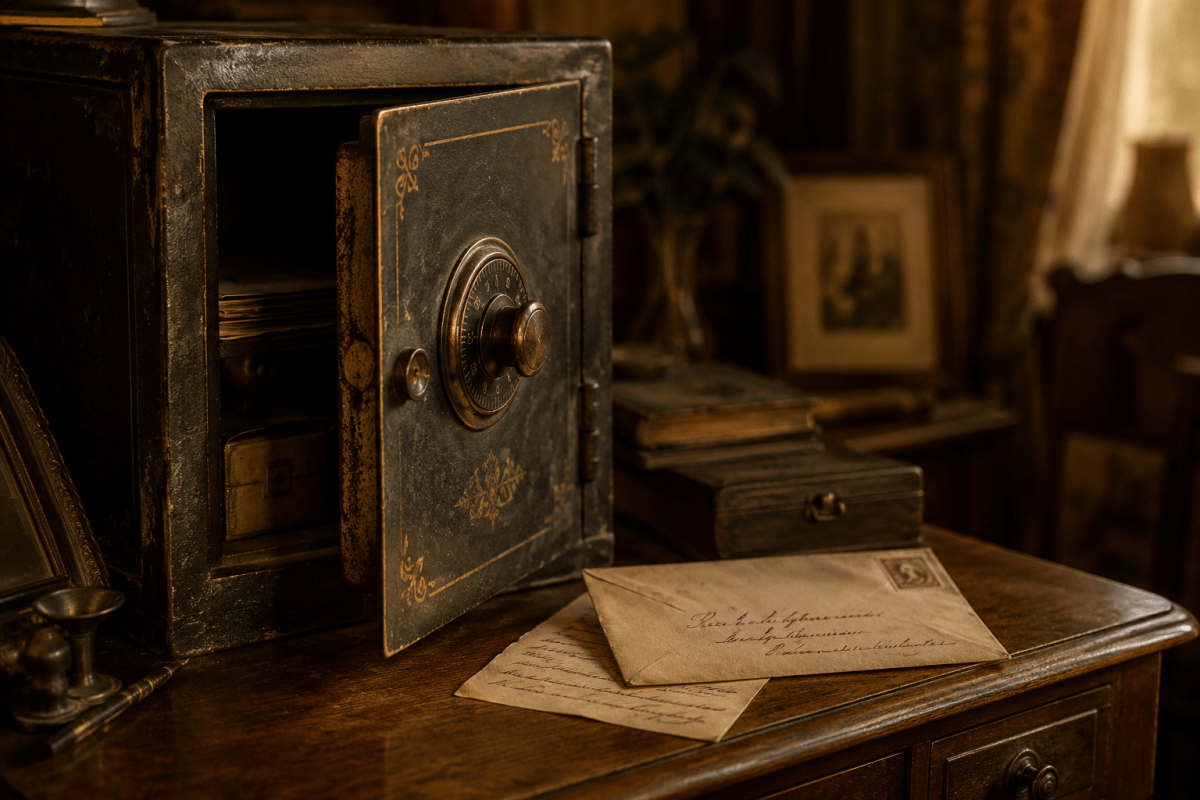
That question matters in The Boaz Secrets. It also matters in The Boaz Safecracker, though in a different way. In that novel, Jimmy Fred Martin opens an old safe and discovers more than valuables. He finds a letter that points toward a hidden moral history. The letter does not explain everything. It does not solve the story. It simply reveals that someone’s past has been locked away, preserved, and protected by silence.

That is enough.

In fiction, a small object can carry a great deal of pressure. A letter. A photograph. A newspaper clipping. A key. A Bible. A safe. A family story repeated so often that nobody remembers who first edited it.

The object matters because it points beyond itself.

It tells the reader there is another story underneath the visible one.

That is often how the Boaz novels work. The public story is rarely the whole story. A family may have one version. A church may have another. A town may preserve the version that protects the people it has already decided to respect. But underneath those public versions are older wounds, private bargains, quiet fears, and truths that did not disappear simply because no one said them aloud.

A small town intensifies this.

In a larger place, a person may be able to escape a secret by moving across town, changing circles, changing churches, changing schools, changing names, or disappearing into the crowd. But fictional Boaz does not offer that kind of distance. People overlap. Families are connected by marriage, church, school, work, property, memory, and old obligation.

Someone knows your parents.

Someone remembers your grandparents.

Someone knows where you sat in church.

Someone remembers who your friends were in high school.

Someone remembers what happened, or thinks he does.

That closeness can be beautiful. It can create belonging. It can create loyalty. It can feed the grieving, surround the sick, help the struggling, and keep people from disappearing.

But closeness can also trap the truth.

When a secret threatens the accepted version of a family, a church, or a respected person, the town may not need an official agreement to protect it. Silence can become communal without ever being voted on. People learn what not to ask. They learn which names make the room change. They learn which old event is always described too quickly.

That is pressure.

Not action in the obvious sense.

Pressure.

It is present when a character pauses before answering a simple question. It is present when a mother changes the subject. It is present when a pastor’s language becomes too smooth. It is present when a family meal feels normal on the surface but charged underneath. It is present when everyone knows a story has missing pieces, but no one wants the responsibility of finding them.

Those are the moments I am drawn to as a novelist.

A secret is not only a plot device. It is a test of character.

What will a person do to keep it hidden?

What will a person risk to bring it into the light?

Who is protected by silence?

Who is punished by it?

Who gets to call secrecy “mercy”?

Who gets to call exposure “truth”?

In the Boaz novels, those questions often move through families and churches because those are two of the places where people learn what matters, what is forgivable, what is shameful, and what must be defended. A church can offer real comfort. A family can offer real love. But both can also teach people to protect a version of the past that is easier to live with than the truth.

That does not make every character a villain.

It makes the story human.

Most people do not think of themselves as protecting lies. They think they are protecting peace. Protecting a child. Protecting a mother. Protecting the dead. Protecting the church. Protecting a family name. Protecting someone from pain.

Sometimes that may even be partly true.

But the secret still works on the living.

That is where the moral complication comes from. A person can keep a secret out of love and still cause harm. A person can tell the truth and still damage someone innocent. A town can think it is preserving decency while actually preserving power. A church can speak of forgiveness while avoiding accountability. A family can call silence loyalty because the other word would be fear.

This is the kind of pressure I hope readers feel when they enter the Boaz novels.

Not just the question of what happened.

The question of what what happened has been doing ever since.

That is why secrets matter in these stories. They bend lives. They distort memory. They assign roles. They decide who is believed and who is dismissed. They teach people how to behave in rooms where everyone knows more than they are saying.

In The Boaz Secrets, the title itself points toward that buried pressure. In The Boaz Safecracker, the safe makes the idea physical. But the concern reaches beyond any one book. Again and again, the Boaz novels return to the same kind of fictional territory: a town where the past is not gone, faith is not simple, family is not always safe, and memory is never neutral.

That may sound dark, but I do not think of these novels as bleak.

I think of them as attentive.

They pay attention to the pressure ordinary people live under. They pay attention to how long the past can remain active. They pay attention to the difference between a secret being hidden and a secret being harmless.

Those are not the same thing.

A hidden secret may still govern a life.

It may still decide who gets invited, who gets blamed, who gets pitied, who gets protected, and who is left carrying shame that never belonged to them.

That is why the pressure has to be felt before the secret is fully revealed. If the secret only surprises the reader, it may create a twist. But if the secret has already shaped the characters, then its revelation does more than surprise.

It explains the weather they have been living in.

That is what I want from the Boaz novels.

I want readers to feel that the town has weather. Not merely scenery. Not merely names and streets and churches and houses. Weather. The kind created by memory, belief, silence, affection, judgment, and fear.

A secret changes that weather.

Sometimes it darkens it.

Sometimes it thickens it.

Sometimes it waits for years until someone finally asks the question everyone else learned to avoid.

Then the story begins to speak.
When an Earlier Novel Still Has a Pulse

I have been rereading some of my earlier Boaz novels.

That is not as simple as it sounds.

A reader can open a novel and enter the story. A writer brings more baggage to the page. I see the story, but I also see the sentences. I see what I was trying to do. I see what I did not yet know how to do. I see places where I would revise, tighten, cut, or simply trust the scene more.

Recently, I reread The Boaz Secrets.

I loved the story again.

That surprised me a little because I also noticed problems. Some grammar issues bothered me. A few sentences needed more care. There were places where the prose could have moved more cleanly. The editor in me did not disappear simply because the author in me wanted to enjoy the book.

But even with those flaws, the story held me.

That matters.

A few nights later, I started rereading The Boaz Safecracker. Again, I expected to notice defects first. And I did notice some. But before long, I was no longer merely inspecting the pages. I was reading.

At one point, I caught myself thinking, “This is an awesome story.”

That may sound strange coming from the author. Maybe even a little too pleased with myself. But that is not how it felt. It felt more like rediscovery. It felt like finding something alive in a room I had not entered in a while.

That is what I mean by pulse.

A novel has a pulse when it still makes you want to turn the page.

Not because every sentence is perfect. Not because the author would make every same choice again. Not because the book has escaped the need for revision. But because something in the story still moves.

A character wants something.

A question has not been answered.

A secret presses against the surface.

A scene creates trouble.

A life has been disturbed.

A reader keeps going.

That is the part of the earlier novels I am trying to pay attention to now.

It is easy, as a writer, to become embarrassed by old work. The mistakes seem obvious. The habits stand out. The repetitions announce themselves. The sentences that once seemed fine now ask for a pencil. Time can make a writer harsher toward his own pages.

Some of that harshness is useful.

It means I have learned.

But if I only see the flaws, I miss something equally important. I miss the fact that those earlier books were doing real story work. They had movement. They had pressure. They had characters carrying trouble. They had questions I wanted answered even though I already knew the plot.

That is not nothing.

A novel does not survive by polish alone.

A polished page can still be dead. A flawed page can still be alive. The best work, of course, has both life and polish. But if I had to choose the first necessity, I would choose life.

Life is what makes a reader forgive a rough edge.

Life is what makes a fictional world feel inhabited rather than arranged.

Life is what makes a person say, “I’ll read one more chapter,” when he meant to turn off the light ten minutes earlier.

Rereading The Boaz Secrets reminded me of that. I did not love it because it was flawless. I loved it because the story still had force. It still carried me into the trouble. It still made me care about what had been hidden, what had been damaged, and what might finally be brought into view.

Rereading The Boaz Safecracker gave me a similar feeling, though in a different way. That novel has a strong story engine from the beginning: an older man, a safe, a crime, an old history, and consequences he cannot fully control. But what interested me most on rereading was not only the plot. It was the feeling that the story had roots.

Some of those roots were fictional.

Some came from memory.

That is true of much of my Boaz fiction. It is not autobiography in any direct or literal sense. The names are fictional. The events are reshaped. The characters are invented. But fiction often grows from remembered pressure. A place. A fear. A tone of voice. A school hallway. A family meal. A church sentence. A moment from youth that stayed alive long after the facts became less important than the feeling.

A novelist takes those fragments and changes them.

He has to.

Life does not usually arrive in story shape. Fiction gives it shape. It compresses, rearranges, disguises, sharpens, and imagines. It takes what might have been private or scattered and turns it into scenes, choices, consequences, and characters who begin to breathe on their own.

That is why rereading earlier work can feel so strange.

You are not only meeting the old book.

You are meeting the earlier self who made it.

I can see now that I was already circling certain concerns before I had fully named them. I was drawn to hidden histories. I was drawn to the difference between what people say publicly and what they carry privately. I was drawn to the way family, belief, reputation, grief, and old loyalty can shape a person long after he thinks he has moved on.

I might describe those concerns more clearly now.

But they were already there.

That encourages me.

It means the books were not empty exercises. They were attempts to pay attention. Imperfect attempts, yes, but real ones.

A writer grows partly by learning what to change. But he also grows by learning what to honor. If I returned to these earlier novels only with a red pen, I would miss the living thing inside them. If I returned only with affection, I would miss the ways I have changed. The better posture is honesty.

The books have flaws.

The books have life.

Both things are true.

That may be worth saying because readers do not experience novels the way writers do. Most readers are not measuring every sentence against what the author might have done twenty drafts later. They are asking more human questions.

Do I care?

Am I curious?

Do I believe these people enough to follow them?

Is something at stake?

Does the world of the book feel real while I am inside it?

Will I turn the page?

Those questions matter more than a writer’s private embarrassment.

When I reread The Boaz Secrets and The Boaz Safecracker, I found myself answering yes often enough to feel grateful. Yes, I cared. Yes, I was curious. Yes, I saw flaws. But yes, the stories still moved.

That does not make them perfect.

It makes them alive.

And maybe that is the invitation I would offer to readers now. Do not come to the earlier Boaz novels expecting museum pieces or polished monuments. Come expecting stories with a pulse. Stories shaped by place, memory, trouble, secrecy, doubt, grief, belief, and the long pressure of things left unresolved.

Come for the movement.

Come for the questions.

Come for the people who are trying, sometimes badly, to live with what they know and what they have hidden from themselves.

The older I get, the more I value fiction that feels lived in. Not flawless. Not sterile. Not sanded so smooth that no human hand remains visible. I want stories that carry weather. Stories where the past is close enough to touch. Stories where ordinary people are more complicated than they first appear.

That is what I found again in these earlier novels.

I found mistakes, yes.

But I also found weather.

I found movement.

I found a pulse.

And when an earlier novel still has a pulse, the writer ought to be honest enough to feel it.

The Letter in the Safe

In The Boaz Safecracker, a man opens an old safe and finds more than coins and jewelry.

That is the moment that still interests me.

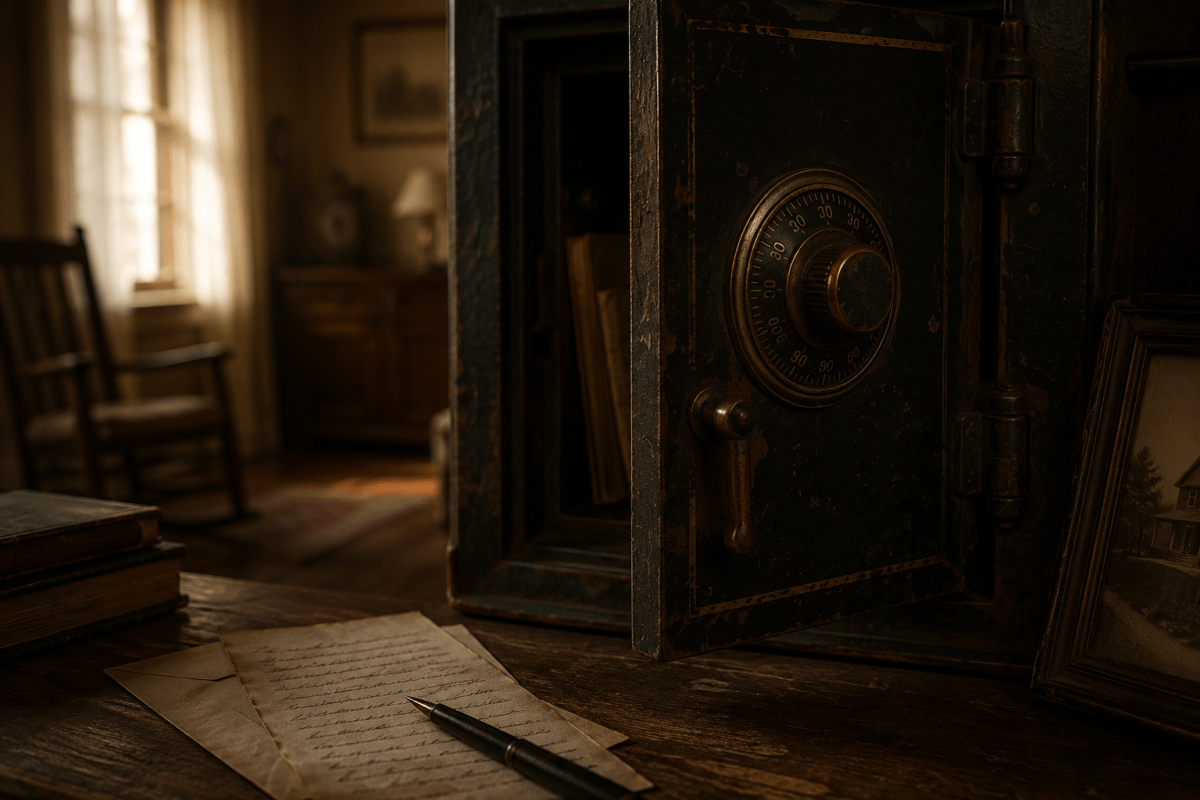
The safe itself matters. It is old, heavy, hidden, and difficult to move. It belongs to a house with history, a house that has passed from one generation to another, carrying with it the weight of former owners, former stories, and former silences.

But the real discovery is not the money.

It is a letter.

A short letter. A strange letter. A letter preserved for decades. A letter written to a woman named Rebecca Rawlins and signed by a former pastor.

“Your sins are forgiven and your secret is safe with me.”

That sentence does what a good fictional object should do. It opens a door.

A reader does not yet know the secret. The character does not yet know the secret. But the sentence carries pressure. It suggests a past event, a private wound, a religious authority, a moral judgment, and a promise of silence. It also raises the question that almost always matters in the Boaz novels:

What has this town agreed not to say?

That question appears in different forms throughout my fiction.

Sometimes it is tied to a crime. Sometimes to a family. Sometimes to a church. Sometimes to an old rumor, a death, a disappearance, a betrayal, or a version of the past that respectable people have learned to repeat because the real version would cost too much.

Small-town fiction often depends on place, but place is not merely scenery.

In the Boaz novels, the town is not just where the story happens. It is one of the forces acting on the story. Boaz remembers. Boaz watches. Boaz blesses and judges. Boaz feeds the grieving and whispers about them afterward. Boaz protects some people and exposes others. Boaz can make a person feel known and trapped at the same time.

That double nature matters to me.

A small town can be loving. It can also be merciless. It can know your parents, your grandparents, your church, your reputation, your mistakes, and your place in the invisible order of things. It can hold memory with tenderness. It can also hold memory like evidence.

A secret in a place like that rarely belongs to one person.

That is why the letter in the safe matters. It is addressed to Rebecca, but it implicates more than Rebecca. It suggests a pastor who knew something. It suggests a church culture where sin, forgiveness, reputation, and control may have been tangled together. It suggests that whatever happened did not simply disappear because someone put it behind a locked door.

Locked doors are useful in fiction.

So are safes.

A safe says there is something worth protecting. It also says there is something worth hiding. The same object can hold treasure, evidence, guilt, inheritance, history, and fear. It can be practical and symbolic at the same time. A person may lock away coins, deeds, jewelry, letters, photographs, or documents. But underneath the physical contents is the deeper question:

Why did this have to be hidden?

That question is one of the engines of The Boaz Safecracker.

Jimmy Fred Martin begins with a criminal act. He is not innocent. He is not standing outside the trouble as a pure observer. He enters the house. He opens the safe. He takes what is not his. But fiction often becomes most interesting when a morally compromised character uncovers a deeper moral problem.

He does wrong and discovers wrong.

He steals valuables and finds a secret.

He opens a safe and exposes a past.

That does not excuse him. It complicates him.

I am drawn to that kind of complication because real people are rarely as neat as the stories they tell about themselves. A person can be guilty and perceptive. Respectable and dishonest. Kind and resentful. Faithful and afraid. Devout and controlling. Injured and dangerous. A small town can produce all of these contradictions because it gives people so many roles to perform.

Church member.

Parent.

Pastor.

Businessman.

Coach.

Widow.

Deacon.

Good family.

Troubled family.

Insider.

Outsider.

Believer.

Backslider.

Once those roles harden, it becomes difficult for the truth to move freely. People begin protecting not only themselves, but the version of the town they need to preserve. They protect the church. They protect the family name. They protect the memory of the dead. They protect the story that has already been told.

But buried things do not stop exerting pressure.

They wait.

That may be the central fact of the Boaz world. The past waits. It waits in houses, churches, files, court records, family stories, old newspaper clippings, yearbooks, photographs, and rooms no one has entered in years. It waits inside people too. A comment from high school. A sermon. A humiliation. A prayer. A death. A warning. A secret kept too long.

Then one day someone opens the wrong door.

Or the right one.

That is what I like about the letter in the safe. It does not explain everything. It does not solve the story. It does not give the reader a neat answer. It simply announces that a hidden moral history exists.

Someone sinned.

Someone forgave.

Someone promised secrecy.

Someone kept the letter.

And decades later, someone else found it.

That is enough to pull me forward.

I do not want fiction that merely asks, “What happened?” I want fiction that also asks, “What did what happened do to the people who had to keep living afterward?”

What did the secret do to Rebecca?

What did it do to the pastor who knew?

What did it do to the church?

What did it do to the town?

What does it do when forgiveness becomes part of a secret arrangement?

What does it do when a person’s life is shaped by something almost no one is allowed to name?

These are the questions that make a story larger than its plot.

The safecracking gives The Boaz Safecracker movement. The letter gives it depth. One pulls the reader into the immediate danger. The other opens the old wound underneath.

That is often how the Boaz novels work.

A crime may start the story, but the deeper mystery is usually moral. A secret may drive the plot, but the real pressure comes from the lives shaped around it. A town may appear ordinary, even familiar, but under the surface there are old bargains, old silences, old versions of truth that no longer hold.

The letter in the safe is small.

One sheet of paper.

A few words.

But in fiction, a small object can carry a whole world.

That is what I hope readers feel when they enter these novels. Not just suspense. Not just curiosity. Not just the desire to know who did what.

I hope they feel the pressure of a place where memory is never neutral, where faith can comfort and conceal, where families know more than they say, and where the past keeps waiting for someone to turn the dial.

The safe opens.

The letter appears.

And the town begins to speak.

Rereading The Boaz Safecracker: When Fiction Opens an Old Door

A few nights ago, I started rereading The Boaz Safecracker.

I did not begin with a formal plan. I was not preparing a lecture on the Boaz novels. I was not trying to analyze my own work as a story coach or editor. I was simply reading.

Then somewhere in the early pages, I caught myself thinking, “This is an awesome story.”

That may sound strange coming from the author. It may even sound self-congratulatory. But that is not how it felt. It felt more like surprise. Or rediscovery. Or maybe the odd experience of meeting an earlier version of myself who had managed to leave something alive on the page.

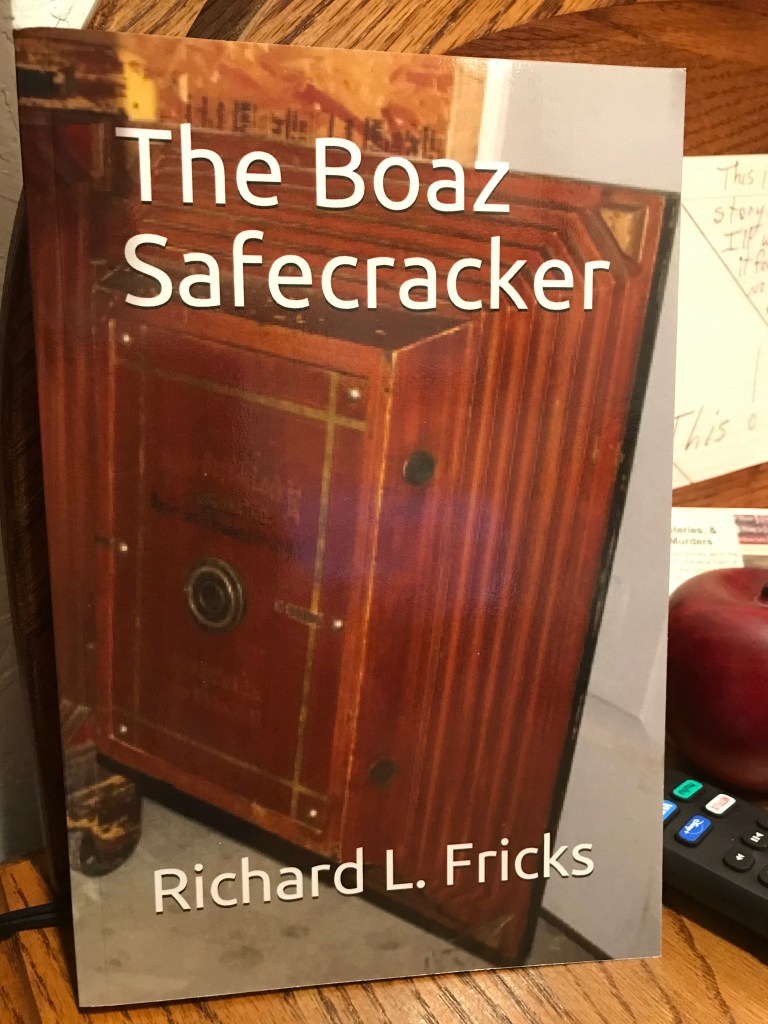
The novel begins with Jimmy Fred Martin, a sixty-four-year-old man who is about to crack his first safe.

That alone creates a question. Why now? Why this man? Why this safe? Why has a person who has lived most of his life as a lawyer, husband, insurance agent, son, church member, and respectable Boaz citizen suddenly crossed a line he cannot uncross?

But the safe is only the doorway.

Behind it is Boaz. Behind it is memory. Behind it is high school, church, family, football, old resentments, inherited belief, grief, and the peculiar power of secrets that have waited decades for someone to disturb them.

That is what pulled me back in.

The safecracking plot gives the novel movement, but the deeper pressure comes from what Jimmy Fred has carried for years. He is not merely stealing coins and jewelry. He is opening locked compartments in his own life. He is returning to old rooms. He is revisiting old voices. He is remembering what shaped him before he knew he was being shaped.

That is one of the reasons the book surprised me as I reread it.

Some fiction is invented almost entirely from the outside. A writer imagines a crime, a town, a family, a betrayal, and builds from there. But some fiction grows out of lived memory, even when the story itself is fictional. Names change. Events are reshaped. People become characters. Places are altered. Time is compressed. But the emotional truth comes from somewhere real.

The Boaz Safecracker has that kind of memory in it.

I felt it as I reread. High school days. The old pressure of belonging. Football. Church. Family meals. The sense that certain beliefs were not merely taught, but absorbed. The way a small town can know your name before it knows you. The way a boy can grow up inside a world and only later begin to understand how completely that world formed his imagination.

The novel is fiction.

But fiction is not always made from nothing.

Sometimes it is made from old weather.

That is what I kept feeling as I turned the pages. The story was not simply asking what happens when an older man becomes a safecracker. It was asking what happens when a man returns to the locked rooms of his own past.

Jimmy Fred’s grandfather worked for Mosler Safe Company. The old journals, the safe combinations, the knowledge passed from one generation to another — all of that gives the novel its machinery. But the machinery is not the whole story. The safe becomes a metaphor without ever needing to announce itself as one.

People are safes too.

Families have combinations.

Churches have locked rooms.

Small towns keep things behind walls.

Respectable people hide valuables, evidence, shame, letters, grudges, and fears. Sometimes they hide them so well that even they forget what is there. Sometimes they remember, but pretend they do not.

That is where the Boaz novels live.

Not in crime alone, and not in nostalgia alone, but in the pressure between what is publicly known and privately carried.

As I reread The Boaz Safecracker, I was reminded how much of my fiction returns to that pressure. A person does something wrong, but the wrong act is only part of the story. Beneath it are older motives. Old humiliations. Old certainties. Old sermons. Old locker rooms. Old family tables. Old comments that lodged somewhere and never went away.

The past does not have to shout to remain powerful.

Sometimes it only has to wait.

That may be why the novel still grabbed me. It begins with action — a man breaking into a house on a rainy night — but it quickly widens into something more layered. The stolen valuables matter. The secret letter matters. Rebecca Rawlins matters. Noah Waters matters. Luke matters. The church matters. Boaz High School matters. The old friendships and old wounds matter.

The plot keeps asking, “What will happen next?”

But underneath that, another question keeps forming:

“What has already happened that nobody has fully faced?”

That is the question that interests me most as a novelist.

I have always been drawn to stories where the present is being quietly governed by the past. Not because people live backward, but because they often live inside explanations they inherited before they were old enough to question them. A town teaches. A church teaches. A family teaches. Coaches teach. Pastors teach. Friends teach. Loss teaches. Silence teaches.

Years later, a person may discover that he has been carrying all of it.

In The Boaz Safecracker, Jimmy Fred’s criminal adventure is dangerous, foolish, funny at times, and morally troubling. But it is also revealing. He is not a young man chasing thrills. He is an older man with history behind him. Grief behind him. Faith behind him. Boaz behind him.

That makes his story more than a caper.

It becomes a return.

A return to a town. A return to memory. A return to old questions about belief, loyalty, justice, resentment, and truth.

Rereading the novel reminded me that fiction can preserve what ordinary memory cannot. A photograph may capture a face. A newspaper clipping may record an event. A yearbook may list names. But a novel can hold pressure. It can hold atmosphere. It can hold the feeling of sitting at a family table while everyone knows which subjects not to raise. It can hold the sound of a church sentence that once seemed unquestionable. It can hold the strange mix of affection and suffocation that a small town can create.

That is why I am glad I returned to this book.

Yes, I noticed flaws. I almost always do when I reread earlier work. There are sentences I would revise now. There are places where the grammar could be cleaner. There are choices I might sharpen if I were editing the manuscript today.

But those things did not keep me from being pulled into the story.

That matters.

A novel does not have to be perfect to be alive.

And The Boaz Safecracker is alive to me.

It is alive with old Boaz air. Alive with questions. Alive with secrets. Alive with the uncomfortable truth that a person can leave a place, question a place, criticize a place, and still carry that place in his bones.

Maybe that is why rereading it has stayed with me.

I was not only rereading a novel.

I was opening an old door.


Seventh novel

Buy the paperback.

Small Towns Remember What They Pretend to Forget

One of the reasons I keep returning to Boaz in fiction is that small towns have long memories.

Not perfect memories. Not always honest memories. Not even memories people admit to carrying.

But memories all the same.

A small town remembers who belonged to which family. It remembers who left and who stayed. It remembers who married whom, who disappointed whom, who failed publicly, who was forgiven quietly, and who was never forgiven at all.

It remembers church membership.

It remembers divorce.

It remembers old money, old rumors, old fights, old football games, old funerals, old crimes, old scandals, and old silences.

Even when no one says these things out loud, they remain present.

That is useful territory for fiction.

In a larger city, a character may be able to disappear into the crowd. A past mistake may be known only to a few people. A family wound may remain private. A lie may travel only so far.

But in a small town, very little disappears completely.

People may stop talking about something, but that is not the same as forgetting it.

They may change the subject. They may look away. They may decide certain matters are better left alone. They may repeat the official version until it sounds almost true.

But underneath the ordinary routines — the grocery store, the church hallway, the courthouse, the school, the funeral home, the family table — the past keeps pressing against the present.

That pressure interests me as a novelist.

I am not drawn to small towns because they are quaint. I am drawn to them because they are complicated.

A small town can be generous and cruel in the same afternoon. It can protect a person and trap a person. It can preserve belonging and enforce silence. It can hold memory like a family Bible and bury truth like evidence.

That tension creates story.

A character in a Boaz novel is rarely dealing only with the event in front of him. He is also dealing with what people already think they know. He is dealing with reputation. Family name. Church history. Old loyalties. Old injuries. The story everyone has agreed to tell.

And sometimes the most dangerous thing a character can do is disturb that story.

That is why family silence matters so much in fiction.

A silence may begin as protection. Someone does not want to hurt a child. Someone does not want to embarrass a family. Someone does not want to damage a church. Someone does not want to reopen an old wound.

But over time, silence changes shape.

It becomes expectation.

It becomes habit.

It becomes pressure.

It becomes the rule no one admits they are following.

In fiction, that is where the story often begins to move.

Not when something is hidden.

But when something hidden starts demanding a cost.

The cost may be guilt. It may be fear. It may be anger. It may be a marriage built around avoidance. It may be a child raised inside a story that is not true. It may be a church that protects its image at the expense of the person who was harmed.

It may be an entire town that knows more than it says.

That is part of the moral weather of the Boaz novels.

The question is not simply, “What happened?”

The deeper questions are:

Who knows?

Who benefits from silence?

Who carries the cost?

Who has been blamed?

Who has been protected?

Who finally decides the truth has waited long enough?

Those questions do not require a large stage. They do not require spectacle. They do not require a conspiracy reaching across continents.

A family table can hold enough pressure for a novel.

A church hallway can hold enough tension.

A courthouse record can disturb enough sleep.

A funeral can gather the very people who have spent years avoiding one another.

A small town gives fiction a place where the past is always nearby.

That does not mean every small town story must be dark. Boaz, as fictional territory, is not merely a place of secrets and wounds. It is also a place of loyalty, memory, humor, work, kinship, faith, doubt, and endurance.

But it is never simple.

That is why I keep returning to it.

Because small towns remember.

They remember what happened.

They remember what was said.

They remember what was not said.

They remember who left early, who stayed too long, who told the truth, who paid the price, and who pretended not to know.

And in fiction, what a town pretends to forget may be exactly where the story begins.

Rereading The Boaz Secrets

The last few nights, I have been rereading The Boaz Secrets, one of my earlier Boaz novels.

I did not pick it up as a critic. I did not pick it up as a story coach. I did not even pick it up with the intention of studying it.

I picked it up as a reader.

What surprised me, quite honestly, is that I have been enjoying it.

That may sound strange for an author to say about his own work, but it feels true. Enough time has passed that I am not reading every sentence with the same memory I had when I wrote it. I know the broad shape of the story, of course. I know the world. I know the concerns that kept pulling me back to Boaz. But there are moments, turns, details, and tensions I had not thought about in a long time.

Rereading an earlier novel is a curious experience. You meet both the book and the earlier version of yourself who wrote it.

You see what you were trying to do. You see what mattered to you then. You see the kinds of pressure you kept returning to before you had fully named them.

In The Boaz Secrets, the title tells part of the truth. The novel is concerned with secrets, but not merely secrets as hidden information. In fiction, a secret matters only when it creates pressure.

A secret held by one person may shape a marriage.

A secret held by a family may shape a child.

A secret held by a church may shape what an entire community is allowed to say.

A secret held by a town may become part of the air people breathe without noticing it.

That is one reason Boaz has remained such powerful fictional territory for me. In a small town, the past is never entirely past. People remember what they pretend to forget. They carry old loyalties, old wounds, old accusations, old silences. The grocery store, the church hallway, the courthouse, the school, the funeral home, the family table — each place can hold memory.

That gives fiction a kind of natural pressure.

A character does not have to live in a mansion, inherit a kingdom, or face an international conspiracy for the stakes to matter. Sometimes the deepest stakes are local and intimate.

Who knows?

Who suspects?

Who is protected?

Who is blamed?

Who has been carrying the cost of someone else’s silence?

Those questions have always interested me more than spectacle.

As I reread The Boaz Secrets, I am noticing how much of my fiction depends on the tension between what is publicly known and privately understood. Characters live inside communities where appearances matter. Reputation matters. Church membership matters. Family names matter. The official story matters.

But fiction begins to move when the official story weakens.

That is where secrets become story pressure.

A secret is not just something hidden from the reader. It is something acting on the characters before it is fully revealed. It shapes behavior. It creates avoidance. It explains fear. It distorts memory. It makes certain conversations impossible until the story forces them to happen.

That is one of the things I would tell a beginning novelist.

Do not think of a secret only as a twist.

Think of it as pressure.

If a secret does not change how people act, it probably is not yet doing enough story work. If it does not create risk, silence, conflict, guilt, fear, longing, denial, or consequence, it may be information rather than story.

But if the secret bends the lives around it, then the story has something to work with.

That is what I am noticing now as I reread.

I am also noticing how often my novels return to the same deeper question:

What happens when someone finally tells the truth?

Not abstract truth. Not truth as a slogan. Not truth as something easy to admire from a distance.

Truth inside a family.

Truth inside a church.

Truth inside a marriage.

Truth inside a town.

Truth spoken by someone who knows there will be a cost.

That question runs through much of my fiction, and I can see it clearly again in The Boaz Secrets.

The pleasure of rereading the novel is not merely that I wrote it. The pleasure is that the world still feels alive to me. The people still seem caught in real pressure. The secrets still have weight. Boaz still works as a moral landscape where ordinary lives carry more than they can easily say.

That is why I keep returning to these books.

Not because Boaz is simple.

Because it is not.

Not because small towns are quaint.

Because they remember.

Not because secrets are dramatic.

Because they cost something.

And fiction, at its best, lets us feel that cost without reducing it to an explanation.

Readers interested in the Boaz novels can begin with the Novels page. And those interested in the wider fictional world may also want to visit The Tanner Files, where Micaden Tanner continues remembering what others have tried to forget.