If you want to understand the Boaz novels, pay attention to what people do with secrets.
Not only the secrets themselves.
What matters most is the pressure they create.
That is one of the forces moving through The Boaz Secrets. A secret in that world is not simply hidden information waiting to be revealed near the end of the story. It is something that has already shaped lives before the reader arrives. It has affected what people say, what they avoid, whom they trust, whom they fear, and which version of the past they have learned to live with.
That kind of secret does not sit quietly.
It works on people.
It changes rooms.
It changes families.
It changes churches.
It changes the public story a town tells about itself.
That is the kind of pressure I keep returning to in the Boaz novels. A secret may begin with one event, one choice, one sin, one crime, one betrayal, one lie, or one moment of cowardice. But in a small town, the thing hidden rarely belongs to only one person for long.
Other people become involved.
Some know the truth.
Some suspect it.
Some repeat a safer version.
Some decide it is better not to ask.
Some benefit from the silence.
Some pay for it.
That is where story begins to deepen.
A secret may give a novel suspense, but the pressure of the secret gives it weight. The reader wants to know what happened, of course. But the more important question may be this:
What has this hidden thing done to the people who kept living around it?
That question matters in The Boaz Secrets. It also matters in The Boaz Safecracker, though in a different way. In that novel, Jimmy Fred Martin opens an old safe and discovers more than valuables. He finds a letter that points toward a hidden moral history. The letter does not explain everything. It does not solve the story. It simply reveals that someone’s past has been locked away, preserved, and protected by silence.
That is enough.
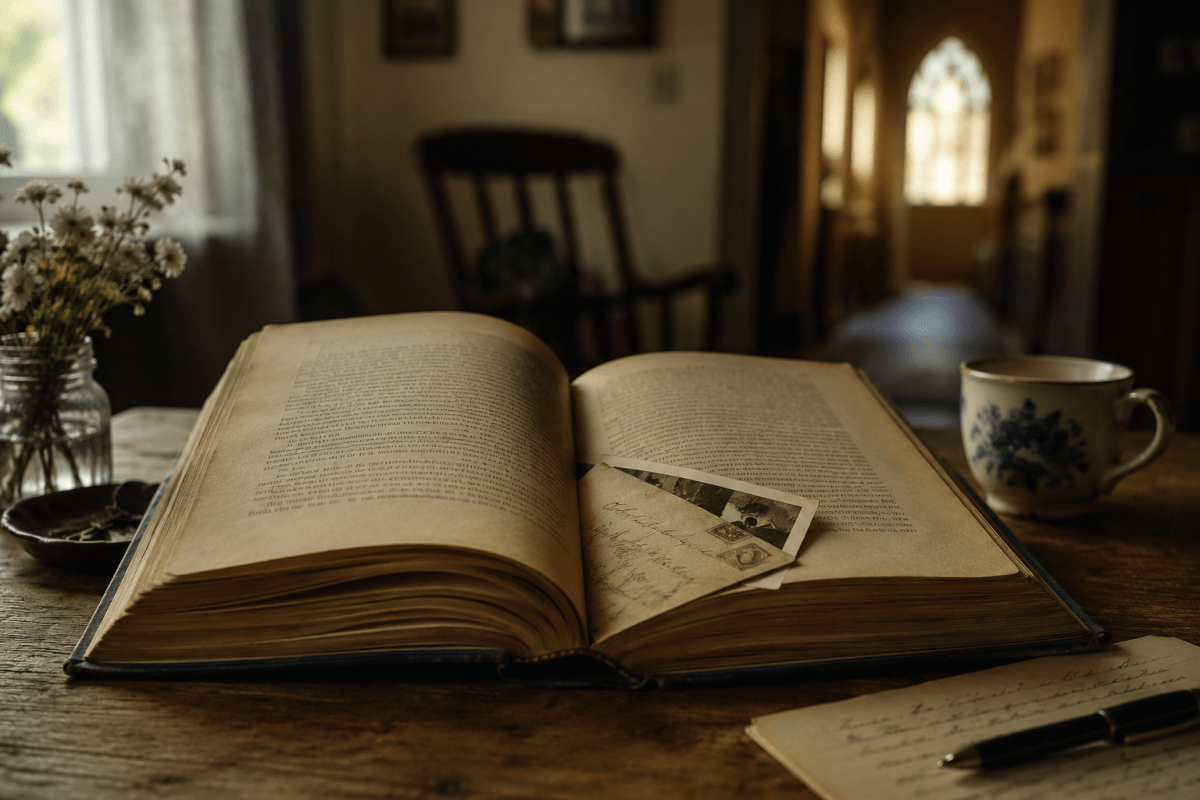
In fiction, a small object can carry a great deal of pressure. A letter. A photograph. A newspaper clipping. A key. A Bible. A safe. A family story repeated so often that nobody remembers who first edited it.
The object matters because it points beyond itself.
It tells the reader there is another story underneath the visible one.
That is often how the Boaz novels work. The public story is rarely the whole story. A family may have one version. A church may have another. A town may preserve the version that protects the people it has already decided to respect. But underneath those public versions are older wounds, private bargains, quiet fears, and truths that did not disappear simply because no one said them aloud.
A small town intensifies this.
In a larger place, a person may be able to escape a secret by moving across town, changing circles, changing churches, changing schools, changing names, or disappearing into the crowd. But fictional Boaz does not offer that kind of distance. People overlap. Families are connected by marriage, church, school, work, property, memory, and old obligation.
Someone knows your parents.
Someone remembers your grandparents.
Someone knows where you sat in church.
Someone remembers who your friends were in high school.
Someone remembers what happened, or thinks he does.
That closeness can be beautiful. It can create belonging. It can create loyalty. It can feed the grieving, surround the sick, help the struggling, and keep people from disappearing.
But closeness can also trap the truth.
When a secret threatens the accepted version of a family, a church, or a respected person, the town may not need an official agreement to protect it. Silence can become communal without ever being voted on. People learn what not to ask. They learn which names make the room change. They learn which old event is always described too quickly.
That is pressure.
Not action in the obvious sense.
Pressure.
It is present when a character pauses before answering a simple question. It is present when a mother changes the subject. It is present when a pastor’s language becomes too smooth. It is present when a family meal feels normal on the surface but charged underneath. It is present when everyone knows a story has missing pieces, but no one wants the responsibility of finding them.
Those are the moments I am drawn to as a novelist.
A secret is not only a plot device. It is a test of character.
What will a person do to keep it hidden?
What will a person risk to bring it into the light?
Who is protected by silence?
Who is punished by it?
Who gets to call secrecy “mercy”?
Who gets to call exposure “truth”?
In the Boaz novels, those questions often move through families and churches because those are two of the places where people learn what matters, what is forgivable, what is shameful, and what must be defended. A church can offer real comfort. A family can offer real love. But both can also teach people to protect a version of the past that is easier to live with than the truth.
That does not make every character a villain.
It makes the story human.
Most people do not think of themselves as protecting lies. They think they are protecting peace. Protecting a child. Protecting a mother. Protecting the dead. Protecting the church. Protecting a family name. Protecting someone from pain.
Sometimes that may even be partly true.
But the secret still works on the living.
That is where the moral complication comes from. A person can keep a secret out of love and still cause harm. A person can tell the truth and still damage someone innocent. A town can think it is preserving decency while actually preserving power. A church can speak of forgiveness while avoiding accountability. A family can call silence loyalty because the other word would be fear.
This is the kind of pressure I hope readers feel when they enter the Boaz novels.
Not just the question of what happened.
The question of what what happened has been doing ever since.
That is why secrets matter in these stories. They bend lives. They distort memory. They assign roles. They decide who is believed and who is dismissed. They teach people how to behave in rooms where everyone knows more than they are saying.
In The Boaz Secrets, the title itself points toward that buried pressure. In The Boaz Safecracker, the safe makes the idea physical. But the concern reaches beyond any one book. Again and again, the Boaz novels return to the same kind of fictional territory: a town where the past is not gone, faith is not simple, family is not always safe, and memory is never neutral.
That may sound dark, but I do not think of these novels as bleak.
I think of them as attentive.
They pay attention to the pressure ordinary people live under. They pay attention to how long the past can remain active. They pay attention to the difference between a secret being hidden and a secret being harmless.
Those are not the same thing.
A hidden secret may still govern a life.
It may still decide who gets invited, who gets blamed, who gets pitied, who gets protected, and who is left carrying shame that never belonged to them.
That is why the pressure has to be felt before the secret is fully revealed. If the secret only surprises the reader, it may create a twist. But if the secret has already shaped the characters, then its revelation does more than surprise.
It explains the weather they have been living in.
That is what I want from the Boaz novels.
I want readers to feel that the town has weather. Not merely scenery. Not merely names and streets and churches and houses. Weather. The kind created by memory, belief, silence, affection, judgment, and fear.
A secret changes that weather.
Sometimes it darkens it.
Sometimes it thickens it.
Sometimes it waits for years until someone finally asks the question everyone else learned to avoid.
Then the story begins to speak.