I have been rereading some of my earlier Boaz novels.
That is not as simple as it sounds.
A reader can open a novel and enter the story. A writer brings more baggage to the page. I see the story, but I also see the sentences. I see what I was trying to do. I see what I did not yet know how to do. I see places where I would revise, tighten, cut, or simply trust the scene more.
Recently, I reread The Boaz Secrets.
I loved the story again.
That surprised me a little because I also noticed problems. Some grammar issues bothered me. A few sentences needed more care. There were places where the prose could have moved more cleanly. The editor in me did not disappear simply because the author in me wanted to enjoy the book.
But even with those flaws, the story held me.
That matters.
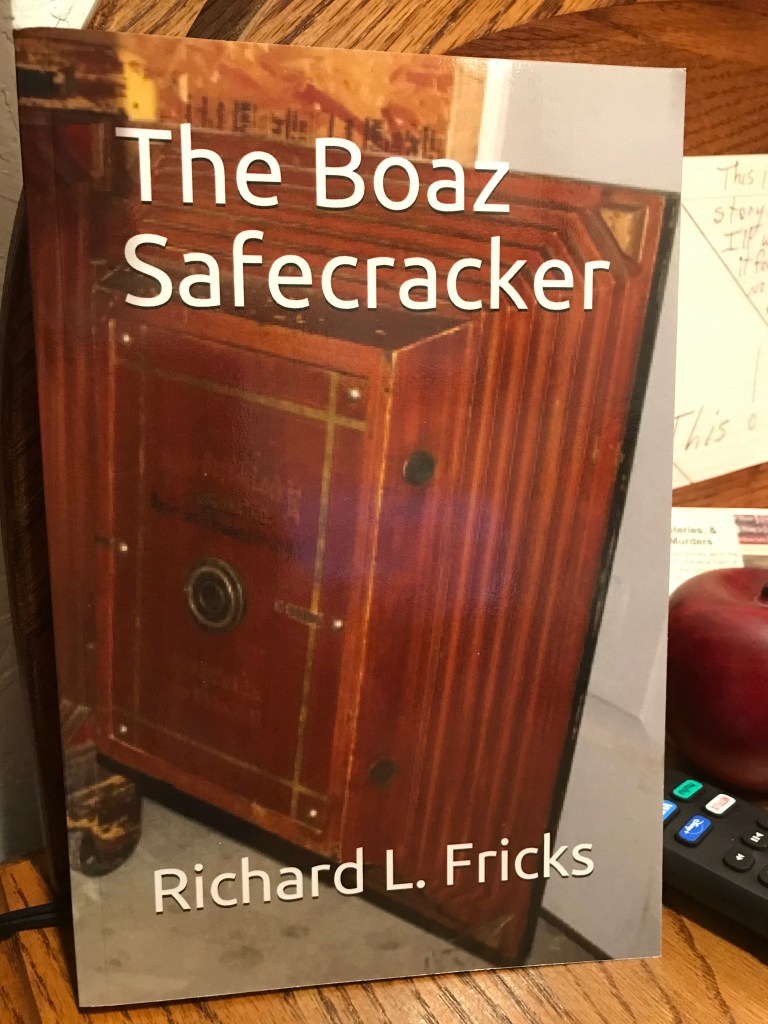
A few nights later, I started rereading The Boaz Safecracker. Again, I expected to notice defects first. And I did notice some. But before long, I was no longer merely inspecting the pages. I was reading.
At one point, I caught myself thinking, “This is an awesome story.”
That may sound strange coming from the author. Maybe even a little too pleased with myself. But that is not how it felt. It felt more like rediscovery. It felt like finding something alive in a room I had not entered in a while.
That is what I mean by pulse.
A novel has a pulse when it still makes you want to turn the page.
Not because every sentence is perfect. Not because the author would make every same choice again. Not because the book has escaped the need for revision. But because something in the story still moves.
A character wants something.
A question has not been answered.
A secret presses against the surface.
A scene creates trouble.
A life has been disturbed.
A reader keeps going.
That is the part of the earlier novels I am trying to pay attention to now.
It is easy, as a writer, to become embarrassed by old work. The mistakes seem obvious. The habits stand out. The repetitions announce themselves. The sentences that once seemed fine now ask for a pencil. Time can make a writer harsher toward his own pages.
Some of that harshness is useful.
It means I have learned.
But if I only see the flaws, I miss something equally important. I miss the fact that those earlier books were doing real story work. They had movement. They had pressure. They had characters carrying trouble. They had questions I wanted answered even though I already knew the plot.
That is not nothing.
A novel does not survive by polish alone.
A polished page can still be dead. A flawed page can still be alive. The best work, of course, has both life and polish. But if I had to choose the first necessity, I would choose life.
Life is what makes a reader forgive a rough edge.
Life is what makes a fictional world feel inhabited rather than arranged.
Life is what makes a person say, “I’ll read one more chapter,” when he meant to turn off the light ten minutes earlier.
Rereading The Boaz Secrets reminded me of that. I did not love it because it was flawless. I loved it because the story still had force. It still carried me into the trouble. It still made me care about what had been hidden, what had been damaged, and what might finally be brought into view.
Rereading The Boaz Safecracker gave me a similar feeling, though in a different way. That novel has a strong story engine from the beginning: an older man, a safe, a crime, an old history, and consequences he cannot fully control. But what interested me most on rereading was not only the plot. It was the feeling that the story had roots.
Some of those roots were fictional.
Some came from memory.
That is true of much of my Boaz fiction. It is not autobiography in any direct or literal sense. The names are fictional. The events are reshaped. The characters are invented. But fiction often grows from remembered pressure. A place. A fear. A tone of voice. A school hallway. A family meal. A church sentence. A moment from youth that stayed alive long after the facts became less important than the feeling.
A novelist takes those fragments and changes them.
He has to.
Life does not usually arrive in story shape. Fiction gives it shape. It compresses, rearranges, disguises, sharpens, and imagines. It takes what might have been private or scattered and turns it into scenes, choices, consequences, and characters who begin to breathe on their own.
That is why rereading earlier work can feel so strange.
You are not only meeting the old book.
You are meeting the earlier self who made it.
I can see now that I was already circling certain concerns before I had fully named them. I was drawn to hidden histories. I was drawn to the difference between what people say publicly and what they carry privately. I was drawn to the way family, belief, reputation, grief, and old loyalty can shape a person long after he thinks he has moved on.
I might describe those concerns more clearly now.
But they were already there.
That encourages me.
It means the books were not empty exercises. They were attempts to pay attention. Imperfect attempts, yes, but real ones.
A writer grows partly by learning what to change. But he also grows by learning what to honor. If I returned to these earlier novels only with a red pen, I would miss the living thing inside them. If I returned only with affection, I would miss the ways I have changed. The better posture is honesty.
The books have flaws.
The books have life.
Both things are true.
That may be worth saying because readers do not experience novels the way writers do. Most readers are not measuring every sentence against what the author might have done twenty drafts later. They are asking more human questions.
Do I care?
Am I curious?
Do I believe these people enough to follow them?
Is something at stake?
Does the world of the book feel real while I am inside it?
Will I turn the page?
Those questions matter more than a writer’s private embarrassment.
When I reread The Boaz Secrets and The Boaz Safecracker, I found myself answering yes often enough to feel grateful. Yes, I cared. Yes, I was curious. Yes, I saw flaws. But yes, the stories still moved.
That does not make them perfect.
It makes them alive.
And maybe that is the invitation I would offer to readers now. Do not come to the earlier Boaz novels expecting museum pieces or polished monuments. Come expecting stories with a pulse. Stories shaped by place, memory, trouble, secrecy, doubt, grief, belief, and the long pressure of things left unresolved.
Come for the movement.
Come for the questions.
Come for the people who are trying, sometimes badly, to live with what they know and what they have hidden from themselves.
The older I get, the more I value fiction that feels lived in. Not flawless. Not sterile. Not sanded so smooth that no human hand remains visible. I want stories that carry weather. Stories where the past is close enough to touch. Stories where ordinary people are more complicated than they first appear.
That is what I found again in these earlier novels.
I found mistakes, yes.
But I also found weather.
I found movement.
I found a pulse.
And when an earlier novel still has a pulse, the writer ought to be honest enough to feel it.