The First Draft Is Not a Verdict

Many beginning novelists are afraid of the first draft because they misunderstand what it is.

They think the first draft will tell them whether they are a real writer. They think it will prove whether the idea is good enough, whether the characters are strong enough, whether the plot works, whether the voice is worth trusting, and whether all the hours they have spent imagining this story were justified.

That is too much weight to put on a first draft.

A first draft is not a verdict.

It is not the final judgment on your talent, your story, your imagination, or your future as a novelist. It is not supposed to be polished. It is not supposed to carry the full burden of the book. It is not supposed to answer every question before you have even discovered what the questions are.

A first draft is a beginning.

More specifically, it is the first full attempt to get the story out of your head and onto the page where you can finally see it.

That matters because an unwritten novel can feel powerful, beautiful, mysterious, and complete. Inside your mind, the scenes may glow. The characters may seem alive. The ending may feel inevitable. But once you begin writing, the story becomes more difficult, more specific, and more stubborn.

That is not failure.

That is the work beginning.

The unwritten version of a novel is protected from reality. The written version has to make choices. A character must say this instead of that. A scene must begin somewhere and end somewhere. A chapter must move the story or reveal that it is wandering. A plot turn that felt strong in your imagination may feel thin on the page. A character who seemed clear may become vague once you ask what she wants, what she fears, and what she is willing to do.

This is why the first draft can feel discouraging.

You are not only writing the story. You are discovering the distance between the imagined novel and the actual one.

Every novelist faces that distance.

The danger for a beginning novelist is to mistake that discovery for a verdict. You write three chapters and think, “This is not as good as I hoped.” You reach the middle and think, “I do not know where this is going.” You finish a scene and think, “Something is missing.” Then the larger fear arrives: “Maybe I am not meant to do this.”

But “something is missing” is not the end of the process.

It is often the beginning of revision.

A first draft gives you material. It gives you scenes to test, characters to question, patterns to notice, and structure to examine. It reveals where the story has energy and where it sags. It shows you which characters are alive and which ones are only serving a function. It exposes repeated conversations, weak motivations, missing stakes, convenient turns, and places where the story has not yet earned the emotion it wants from the reader.

That may sound discouraging, but it is actually good news.

You cannot revise a vague intention.

You can revise pages.

Once the draft exists, the novel becomes something you can work with. You can ask better questions. What does this character want in this scene? What changes by the end of the chapter? Where does the pressure increase? What does the protagonist believe at the beginning that the story will challenge? Which scenes repeat the same beat? Which moments belong in a different order? Where does the story come alive?

These are not questions a writer can answer fully before drafting.

Some answers only appear after you have written enough to see the shape of the thing.

That is one reason I care so much about structure, scenes, and revision. Not because a novel should be forced into a rigid formula, but because a beginning novelist needs a way to think about the book once the first excitement wears off. Inspiration may get you started, but structure helps you continue. Revision helps you understand what you have made. Scene work helps you turn a large, overwhelming manuscript into smaller decisions you can actually make.

The first draft is allowed to be uneven.

It is allowed to contain dead ends. It is allowed to include scenes that later disappear. It is allowed to have a weak middle, a confused timeline, a character who changes names, and an ending that does not yet land. None of that means the novel has failed.

It means the draft is doing one of its jobs: showing you what still needs to be understood.

A beginning novelist does not need to produce a perfect first draft.

A beginning novelist needs to keep the draft alive long enough to learn from it.

That may be the more useful goal. Not perfection. Not proof. Not immediate confidence. Just enough patience to keep going, enough honesty to see what is on the page, and enough humility to revise without turning every weakness into a personal indictment.

Your first draft is not the court handing down a sentence.

It is the workshop opening its doors.

The pages may be rough. The structure may be uncertain. The story may not yet know exactly what it wants to become. But now you have something more valuable than an idea.

You have a manuscript in motion.

And once a manuscript is in motion, the real work can begin.

Small Towns Remember What They Pretend to Forget

One of the reasons I keep returning to Boaz in fiction is that small towns have long memories.

Not perfect memories. Not always honest memories. Not even memories people admit to carrying.

But memories all the same.

A small town remembers who belonged to which family. It remembers who left and who stayed. It remembers who married whom, who disappointed whom, who failed publicly, who was forgiven quietly, and who was never forgiven at all.

It remembers church membership.

It remembers divorce.

It remembers old money, old rumors, old fights, old football games, old funerals, old crimes, old scandals, and old silences.

Even when no one says these things out loud, they remain present.

That is useful territory for fiction.

In a larger city, a character may be able to disappear into the crowd. A past mistake may be known only to a few people. A family wound may remain private. A lie may travel only so far.

But in a small town, very little disappears completely.

People may stop talking about something, but that is not the same as forgetting it.

They may change the subject. They may look away. They may decide certain matters are better left alone. They may repeat the official version until it sounds almost true.

But underneath the ordinary routines — the grocery store, the church hallway, the courthouse, the school, the funeral home, the family table — the past keeps pressing against the present.

That pressure interests me as a novelist.

I am not drawn to small towns because they are quaint. I am drawn to them because they are complicated.

A small town can be generous and cruel in the same afternoon. It can protect a person and trap a person. It can preserve belonging and enforce silence. It can hold memory like a family Bible and bury truth like evidence.

That tension creates story.

A character in a Boaz novel is rarely dealing only with the event in front of him. He is also dealing with what people already think they know. He is dealing with reputation. Family name. Church history. Old loyalties. Old injuries. The story everyone has agreed to tell.

And sometimes the most dangerous thing a character can do is disturb that story.

That is why family silence matters so much in fiction.

A silence may begin as protection. Someone does not want to hurt a child. Someone does not want to embarrass a family. Someone does not want to damage a church. Someone does not want to reopen an old wound.

But over time, silence changes shape.

It becomes expectation.

It becomes habit.

It becomes pressure.

It becomes the rule no one admits they are following.

In fiction, that is where the story often begins to move.

Not when something is hidden.

But when something hidden starts demanding a cost.

The cost may be guilt. It may be fear. It may be anger. It may be a marriage built around avoidance. It may be a child raised inside a story that is not true. It may be a church that protects its image at the expense of the person who was harmed.

It may be an entire town that knows more than it says.

That is part of the moral weather of the Boaz novels.

The question is not simply, “What happened?”

The deeper questions are:

Who knows?

Who benefits from silence?

Who carries the cost?

Who has been blamed?

Who has been protected?

Who finally decides the truth has waited long enough?

Those questions do not require a large stage. They do not require spectacle. They do not require a conspiracy reaching across continents.

A family table can hold enough pressure for a novel.

A church hallway can hold enough tension.

A courthouse record can disturb enough sleep.

A funeral can gather the very people who have spent years avoiding one another.

A small town gives fiction a place where the past is always nearby.

That does not mean every small town story must be dark. Boaz, as fictional territory, is not merely a place of secrets and wounds. It is also a place of loyalty, memory, humor, work, kinship, faith, doubt, and endurance.

But it is never simple.

That is why I keep returning to it.

Because small towns remember.

They remember what happened.

They remember what was said.

They remember what was not said.

They remember who left early, who stayed too long, who told the truth, who paid the price, and who pretended not to know.

And in fiction, what a town pretends to forget may be exactly where the story begins.

What Story Coaching Is — and Is Not

A beginning novelist can get lost in several different ways.

Some get lost before they begin. They have wanted to write a novel for years, but they are not sure whether their idea is strong enough. They may have a character, a memory, a setting, a family story, a crime, or only a feeling that something is waiting to be written.

Others get lost after they have begun. They have pages, maybe chapters, maybe even a complete draft. Some scenes feel alive. Certain characters matter. The idea still has energy. But the story as a whole feels loose, slow, crowded, confusing, or not yet satisfying.

Both writers may need the same thing.

Not someone to take over the novel.

Not someone to correct every sentence.

Not someone to hand down rules from a distance.

They may need help seeing the story more clearly.

That is where story coaching can help.

Story coaching is not proofreading. It is not copyediting. It is not a line-by-line grammar review. Those forms of editing matter, but they usually come later.

Story coaching works at a different level.

It asks questions like these:

What kind of story is this?

Who is the story really about?

What does the main character want?

What pressure forces the story forward?

What stands in the way?

What changes because this scene happened?

What truth is the character avoiding?

Why does this moment matter now?

Those questions are not cosmetic. They go to the structure beneath the story.

A novel is not only a collection of well-written pages. It is a movement. Something begins, changes, deepens, tightens, breaks open, or resolves. A reader keeps turning pages because the story creates pressure and consequence.

Story coaching is about finding that movement.

For the writer who has not yet begun, coaching may mean exploring the raw material. A vague idea may need a character. A character may need pressure. A memory may need conflict. A setting may need a secret. A question may need a situation where someone must finally act.

At this stage, the goal is not to outline every chapter. The goal is to find a doorway into the story.

For the writer with a draft, coaching may mean looking at the manuscript as a whole. Does the story begin in the right place? Does the middle keep building pressure? Are the stakes clear? Does each scene earn its place? Is the ending emotionally and structurally earned?

At this stage, the goal is not to shame the draft. The goal is to understand it.

A draft is not a failure because it has problems. A draft is where problems become visible enough to work with.

That distinction matters.

Many beginning novelists assume they need confidence before they can move forward. More often, they need clarity. Confidence may come later, after they understand what the story is trying to become and what the next practical step might be.

Story coaching is not about making every novel sound the same.

It is not about forcing a formula onto a living story.

It is not about replacing the writer’s voice with the coach’s preferences.

The story still belongs to the writer.

The voice still belongs to the writer.

The decisions still belong to the writer.

The work of coaching is to help the writer see.

Sometimes that means naming what is already working. Sometimes it means finding what is missing. Sometimes it means asking the question the manuscript has been avoiding. Sometimes it means helping the writer stop rearranging sentences and look instead at the structure of the story.

A coach may notice that a scene is beautifully written but does not change anything.

A coach may notice that the protagonist is present but passive.

A coach may notice that the middle sags because the pressure does not increase.

A coach may notice that the ending is trying to solve a problem the beginning did not clearly create.

These are not moral failures. They are story problems. Story problems can be studied, named, and revised.

That is the practical value of story coaching.

It gives the novelist language for what feels wrong.

It gives shape to confusion.

It helps turn a vague anxiety — “something is not working” — into a clearer question:

What needs to change so the story can move?

For a beginning novelist, that can make the difference between quitting and continuing.

Not because coaching magically fixes the novel.

Because clarity makes the next step possible.

And sometimes the next step is all a writer needs.

At the bottom of the post, I would add a simple linked sentence:

If you are working on a novel — or have long wanted to begin one — you can learn more on the Story Coaching page.


Learn more about Story Coaching.

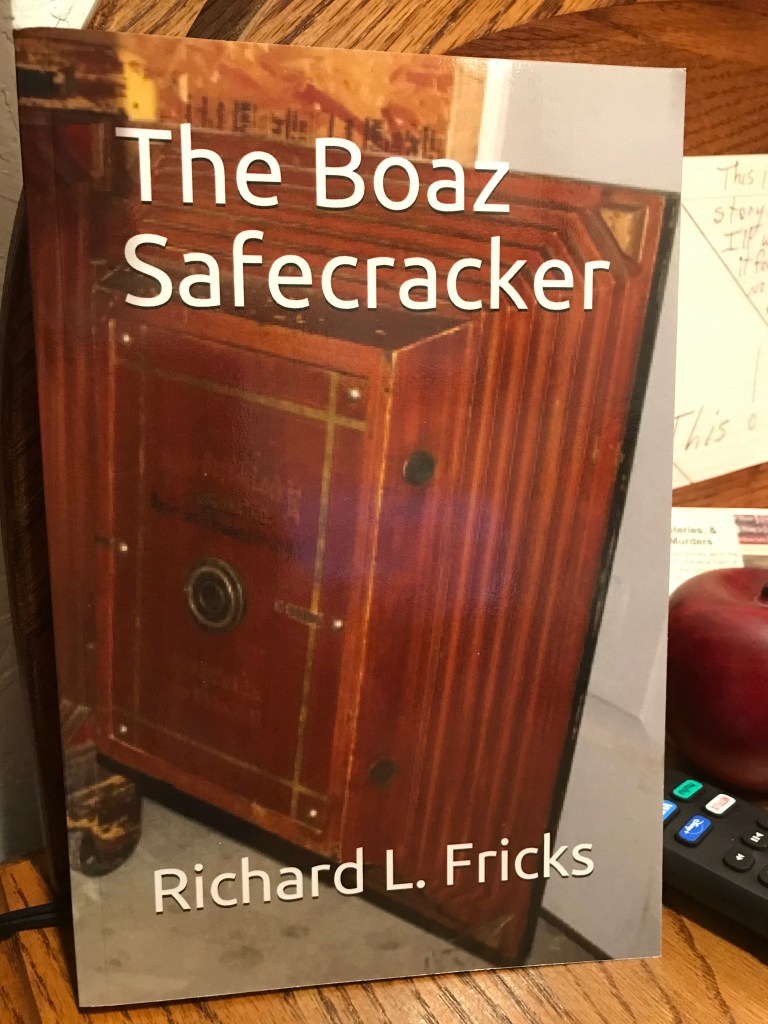
Rereading The Boaz Secrets

The last few nights, I have been rereading The Boaz Secrets, one of my earlier Boaz novels.

I did not pick it up as a critic. I did not pick it up as a story coach. I did not even pick it up with the intention of studying it.

I picked it up as a reader.

What surprised me, quite honestly, is that I have been enjoying it.

That may sound strange for an author to say about his own work, but it feels true. Enough time has passed that I am not reading every sentence with the same memory I had when I wrote it. I know the broad shape of the story, of course. I know the world. I know the concerns that kept pulling me back to Boaz. But there are moments, turns, details, and tensions I had not thought about in a long time.

Rereading an earlier novel is a curious experience. You meet both the book and the earlier version of yourself who wrote it.

You see what you were trying to do. You see what mattered to you then. You see the kinds of pressure you kept returning to before you had fully named them.

In The Boaz Secrets, the title tells part of the truth. The novel is concerned with secrets, but not merely secrets as hidden information. In fiction, a secret matters only when it creates pressure.

A secret held by one person may shape a marriage.

A secret held by a family may shape a child.

A secret held by a church may shape what an entire community is allowed to say.

A secret held by a town may become part of the air people breathe without noticing it.

That is one reason Boaz has remained such powerful fictional territory for me. In a small town, the past is never entirely past. People remember what they pretend to forget. They carry old loyalties, old wounds, old accusations, old silences. The grocery store, the church hallway, the courthouse, the school, the funeral home, the family table — each place can hold memory.

That gives fiction a kind of natural pressure.

A character does not have to live in a mansion, inherit a kingdom, or face an international conspiracy for the stakes to matter. Sometimes the deepest stakes are local and intimate.

Who knows?

Who suspects?

Who is protected?

Who is blamed?

Who has been carrying the cost of someone else’s silence?

Those questions have always interested me more than spectacle.

As I reread The Boaz Secrets, I am noticing how much of my fiction depends on the tension between what is publicly known and privately understood. Characters live inside communities where appearances matter. Reputation matters. Church membership matters. Family names matter. The official story matters.

But fiction begins to move when the official story weakens.

That is where secrets become story pressure.

A secret is not just something hidden from the reader. It is something acting on the characters before it is fully revealed. It shapes behavior. It creates avoidance. It explains fear. It distorts memory. It makes certain conversations impossible until the story forces them to happen.

That is one of the things I would tell a beginning novelist.

Do not think of a secret only as a twist.

Think of it as pressure.

If a secret does not change how people act, it probably is not yet doing enough story work. If it does not create risk, silence, conflict, guilt, fear, longing, denial, or consequence, it may be information rather than story.

But if the secret bends the lives around it, then the story has something to work with.

That is what I am noticing now as I reread.

I am also noticing how often my novels return to the same deeper question:

What happens when someone finally tells the truth?

Not abstract truth. Not truth as a slogan. Not truth as something easy to admire from a distance.

Truth inside a family.

Truth inside a church.

Truth inside a marriage.

Truth inside a town.

Truth spoken by someone who knows there will be a cost.

That question runs through much of my fiction, and I can see it clearly again in The Boaz Secrets.

The pleasure of rereading the novel is not merely that I wrote it. The pleasure is that the world still feels alive to me. The people still seem caught in real pressure. The secrets still have weight. Boaz still works as a moral landscape where ordinary lives carry more than they can easily say.

That is why I keep returning to these books.

Not because Boaz is simple.

Because it is not.

Not because small towns are quaint.

Because they remember.

Not because secrets are dramatic.

Because they cost something.

And fiction, at its best, lets us feel that cost without reducing it to an explanation.

Readers interested in the Boaz novels can begin with the Novels page. And those interested in the wider fictional world may also want to visit The Tanner Files, where Micaden Tanner continues remembering what others have tried to forget.

You Do Not Need a Perfect Idea to Begin

Many people who want to write a novel never begin because they are waiting for the idea to become clear enough.

They think they need the whole story first.

They need the plot.

They need the ending.

They need the title.

They need to know whether the idea is good enough, original enough, serious enough, commercial enough, literary enough, or large enough to carry a full-length novel.

So they wait.

Sometimes they wait for years.

But novels do not usually begin as perfect ideas. They often begin as something much smaller and less certain.

A character.

A place.

A memory.

A question.

A family secret.

A crime.

A voice.

A scene that will not leave you alone.

A feeling that something happened once, or could happen, and that the story underneath it has not yet been told.

That is enough to begin.

Not enough to finish, perhaps. Not enough to publish. Not enough to know every turn the story will take.

But enough to begin.

One of the mistakes beginning novelists make is assuming that a vague idea is a failed idea. Sometimes a vague idea is simply an undeveloped idea. It has not yet been given pressure. It has not yet been attached to a character who wants something. It has not yet been placed inside a situation where choices matter.

A story idea begins to grow when you start asking better questions.

Who is this story about?

What does this person want?

What stands in the way?

What has this person misunderstood?

What secret, fear, wound, desire, or pressure is already present?

What changes if this person acts?

What changes if this person does nothing?

A vague idea becomes a story when pressure enters it.

Suppose all you have is a small-town memory. That may not sound like a novel. But if someone in that town knows a truth everyone else has agreed to forget, pressure begins.

Suppose all you have is a character. That may not sound like a plot. But if that character wants something badly and cannot get it without facing what they fear, movement begins.

Suppose all you have is a family secret. That may not yet be a story. But if the secret begins to threaten the life someone has carefully built, consequence begins.

Beginning does not require certainty.

It requires attention.

The early work of a novelist is not to prove that the idea is perfect. The early work is to listen closely enough to discover where the pressure is hiding.

That is why I do not think a beginning novelist should ask too quickly, “Is this idea good enough?”

A better first question is:

What is alive here?

What keeps returning to your attention?

What image, person, place, wound, question, or situation keeps asking to be noticed?

What would happen if you stayed with it a little longer?

A novel does not have to arrive fully formed. It can begin as a mark on the page. A sentence. A question. A scene. A name. A door opening. A body found. A letter discovered. A child overhearing something adults thought was hidden. A woman returning to a town she thought she had escaped. A man realizing the story he inherited is not the truth.

The work is not to possess the whole novel before you begin.

The work is to begin honestly enough that the next question appears.

That is where story often starts.

Not with perfection.

With pressure.

With curiosity.

With the willingness to make the first mark and see what it reveals.


If you have long wanted to write a novel but do not know where to begin, that is a legitimate place to start. Story coaching can help you turn a vague idea, character, setting, or memory into a clearer path forward.

Learn more about my Story Coaching.

Why Scenes Need Consequences

Every scene in a novel should leave something changed.

That does not mean every scene needs a car chase, a confession, a murder, or a dramatic reversal. Some of the most important scenes are quiet. A character notices something. A question is asked. A silence lasts too long. A memory returns. A small choice reveals a larger truth.

But something still has to move.

A scene without consequence may contain good writing, but it usually does not create story pressure. It may describe, explain, or decorate, but it does not force the novel forward.

One question I often ask about a scene is simple:

What is different because this scene happened?

If the answer is not clear, the scene may need more pressure.

The difference can be external. A clue is found. A lie is exposed. A plan fails. A character loses access, trust, money, time, safety, or control.

The difference can also be internal. A character sees someone differently. A fear sharpens. A belief weakens. A desire becomes harder to deny. A question becomes impossible to avoid.

In mystery fiction, consequences matter because they create momentum. A scene should either deepen the mystery, complicate the investigation, increase the stakes, reveal character under pressure, or make the next scene necessary.

Beginning novelists often think a scene works because it contains information the reader needs. But information alone is rarely enough. The better question is not merely:

What does the reader learn?

The better question is:

What changes in the story because this moment occurred?

That is where scene structure begins to matter.

A scene earns its place when it creates a before and an after.

fiction craft, scene structure, story coaching, writing novels


If you are working on a novel and wondering whether your scenes are doing enough story work, that is one of the questions story coaching can help clarify. You can learn more on the Story Coaching page.