

Penciling from pain to purpose

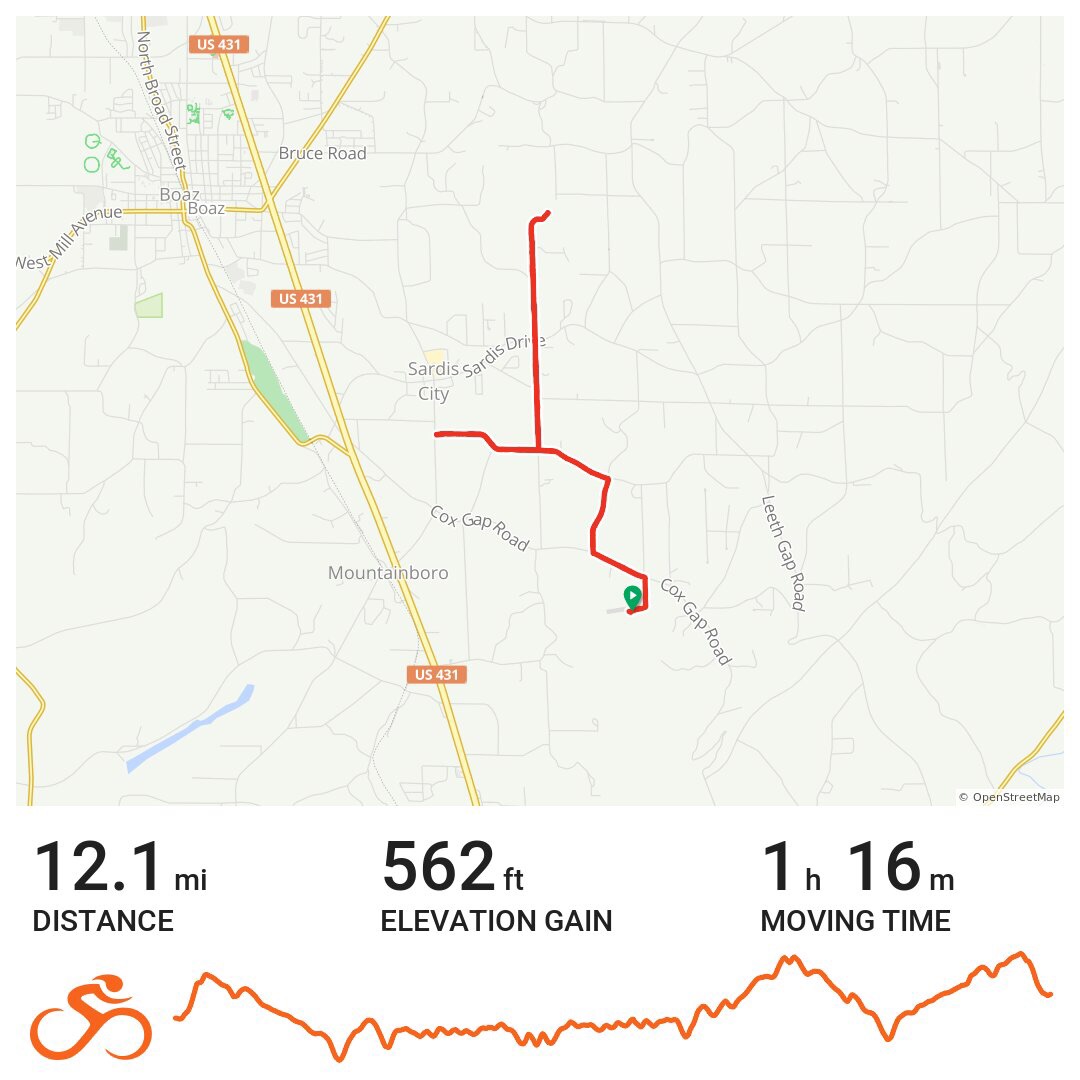
Today’s ride in 48 degree sunny weather.
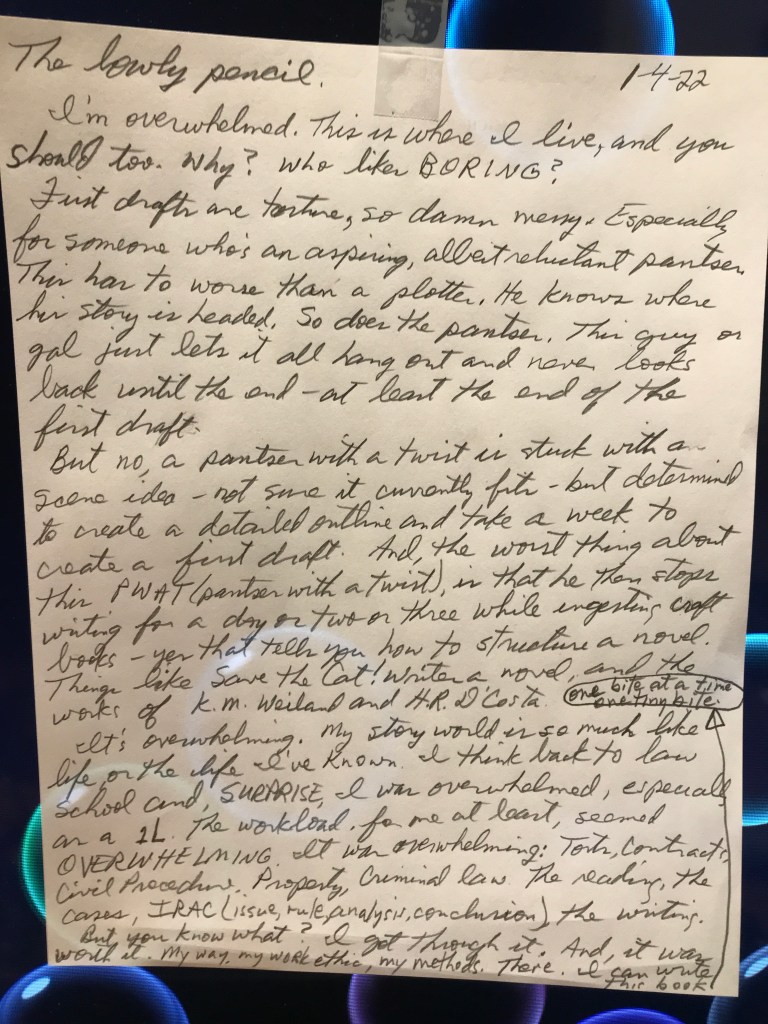
With pencil, you can always erase.
Sue Monk Kidd

The worst thing you can do is censor yourself as the pencil hits the paper. You must not edit until you get it all on paper. If you can put everything down, stream-of-consciousness, you’ll do yourself a service.
Stephen Sondheim

Map out your future – but do it in pencil. The road ahead is as long as you make it. Make it worth the trip.
Jon Bon Jovi
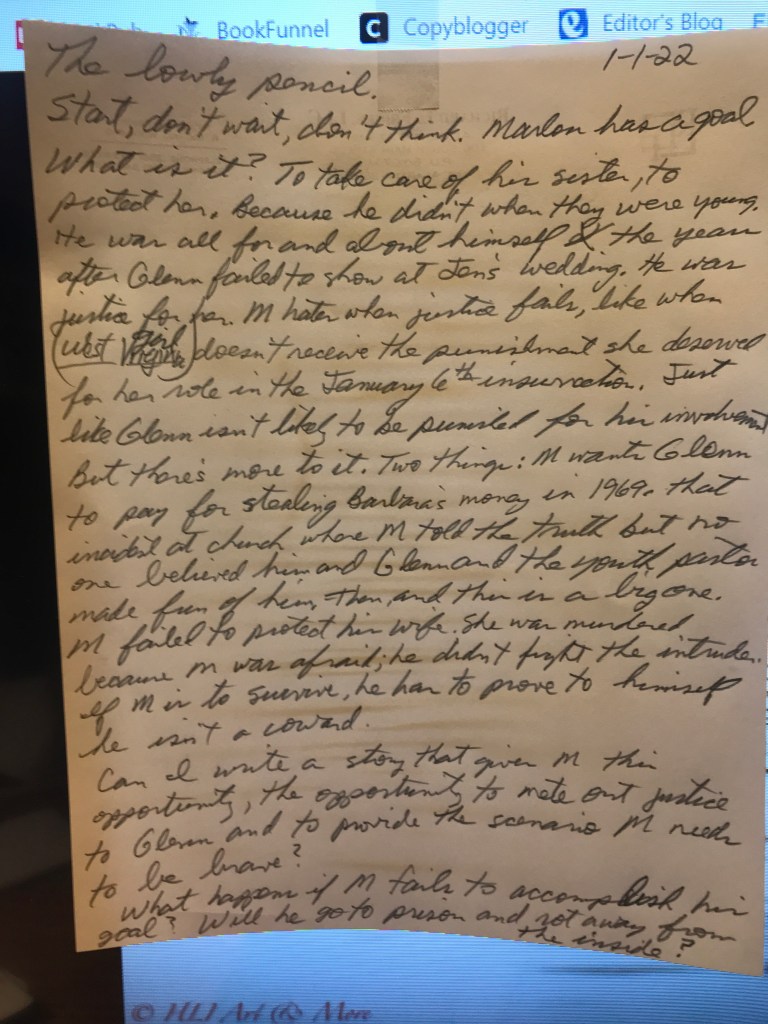
Do you have hands? Excellent. That’s a good start. Can you hold a pencil? Great. If you have a sketchbook, open it and start by making a line, a mark, wherever. Doodle
Chris Riddell

It is the very mutability of the pencil mark that enables one to keep thinking in process.
Peter Saville
Before you run off, consider Tom. Other than Mrs. Steed’s eighth grade art class, he’s never drawn a thing. Other than that high school short story project (grade = D), Tom’s never written a thing (ignoring the occasional grocery list). Other than humming the high school Alma Mater during his class’s tenth-year reunion, Tom’s never been much into music.
So, Tom’s not the creative type. Or so he thinks. But remember, Tom is human and non-creative humans are an anomaly, or they don’t survive.
If we look closer at Tom, we learn he likes to build stuff, things like knives, swords, meat cleavers, and small wood-burning heaters and pizza ovens (he’s also built a farm carryall). Sure, he uses tools: sanders, grinders, welders, air-compressors. But his designs are unique to him.
Tom’s metal-working isn’t a job; he does it to fight depression, and to battle the boredom of his day job (he’s a truck driver and delivers feed to poultry houses). Of late, Tom’s been thinking of a dream he had a few weeks ago. He was walking down an aisle towards a podium to receive the educator of the year award. The dream, or some variant of its theme, comes now at least twice a month.
Well, what do you know? Tom is creative, even though it might seem involuntary. He has an imagination, albeit fueled by the mysterious dream world. Truth be told, Tom would love to teach metal-working at the local technical college.
You and I are a lot like Tom, at least at times. We have hopes and dreams, and we get discouraged, maybe slid into depression.
Mine dream is to become a better novelist, all while encouraging others to write fiction. Yours might be to draw or paint landscapes, write poetry or short-stories, or learn how to play the guitar.
Whatever our dreams and hopes, it likely involves doing something, learning better ways of doing something. Doing and being require a multitude of skills (some of which we already have). Even if you were born knowing Beethoven’s Moonlight Sonata (unlikely!), you still have room to learn and grow.
Here’s some good advice from famous poet Jane Kenyon:
“Be a good steward of your gifts. Protect your time. Feed your inner life. Avoid too much noise. Read good books, have good sentences in your ears. Be by yourself as often as you can. Walk. Take the phone off the hook. Work regular hours.”
I encourage you to read Maria Popova’s article: Poet Jane Kenyon’s Advice on Writing: Some of the Wisest Words to Create and Live By.
I’m certain I never would have written eleven novels since November 2015 if it hadn’t been for the wonderful writing software known as Scrivener. It is the best way to simplify the complex process of writing, especially an extensive work. If you missed my Scrivener introductory video, you can watch it here.
My current work in progress (WIP) is a book I’ve titled, The Boaz Slavemaster (for now, this is a placeholder title). To gain a little familiarity with my WIP, and particularly Scene 7, click here.
My purpose for jumping from an introductory video to Scrivener (hands down, the best writing software available) straight into a scene eighteen thousand words into my manuscript, is to illustrate two things: 1) you already possess a ton of skills that can be utilized in the writing of your first novel; and 2) novel writing consists of a million small tasks.
Here’s something to keep in mind as you watch this video. You can edit a draft. You cannot edit a blank page. Of course, these words aren’t original to me, but they’re critical for you to adopt. The foremost aim for you to accomplish in writing your first novel is to complete your first draft. This requires you to put words on the page. What I hope Lesson 2 reveals is a simple process of doing just that.
One final tip. Forget time. Take as long as you want and need. I’ve been working on Scene 7 for over a week. Let’s do some quick math: if you can write 200 to 250 words per day (FACT: you’ve just read around 250 to this point), you can complete a first draft in less than a year. (disclosure: my books are typically longer than this). Said another way, with a twist: develop a writing habit, preferably every day. Take your time, but move forward; adopt the pace that is comfortable for you, the pace that you can keep up.
On to the video. I hope to keep them coming. DO NOT FORGET—you can write a novel.
Click the following to continue.

Here’s how I left my Scrivener project today (left side is the Binder; middle section is the text for Scene 7, and the right side is a character card (a text file) for Hannah Dodd).
To me, there is no more important feature to the Scrivener writing software than the binder. Although I’ve read and studied intensely how to outline a novel in full up front before writing the first word of the story, I always gravitate to the pantsing side of the fence. However, during my past two completed novels, and now my WIP, I’ve adopted a pantsing with a twist approach: from the beginning I don’t know where my story is going, but once it does, and I have a scene in mind, I outline that scene and move on.
Notice in the binder (Scene 7), I created a text file, “Hannah and David do some probing.” And, under that, there are two subfiles (“What if Glenn was supposed to have a meeting at 11:00?” and, “Had neighbor seen something [?]” Notice, the next text file is “Who are Hannah and David?” There are several other text files, but for now, let’s limit this discussion to the above.
Recall, when I start a scene, I know very little. What I do know is the result of asking a simple question: what should happen next? I try to put myself in the story and think logically about what might happen.
Here’s an example (story alert): prior to Scene 7, Glenn has been kidnapped, and the pair who grabbed him returned his Mustang to his home and took his Toyota Highlander. Further, I had just completed a scene where the protagonist (yes, he’s one of the kidnappers!), checked up on Glenn at the barn where he is hidden. So, I thought, what else is going on at this same time? Glenn owns Elkins Hardware; it’s a Monday. The store has opened and Glenn is always there by 6:30. Thus, I decided to change POV and write in third person (previous scenes were in first person).
From my outline, and over three days mind you, this is what I created [I’ll insert some current comments in brackets and bolded]:
Scene 7
“No luck.” David said as he walked inside Elkins Hardware. “Mustang’s right where it was this morning. No sign of the Highlander.”
Hannah Dodd, Glenn’s operations manager, stood behind the front checkout counter and shook her ash blond hair, a habit she’d perfected in high school over twenty-eight years ago. “This is getting surreal. You know he’s a robot six mornings a week: eat breakfast at Grumpy’s, and here by six-thirty.”
David handed Hannah a stack of mail the post lady had handed him outside. He was more worried about his future than his boss’s health or happiness. “If he doesn’t show, will that be it?” A chance to manage a big box store was David’s dream, but that hinged on Glenn’s 1:00 PM meeting [to fit my timeline I changed the meeting to 1:00] today with Home Depot’s Joel Griggs [full disclosure: this character was created by visiting Lowe’s website and borrowing the names from two actual people]. Their fourth in as many months, with today’s seal-the-deal meeting at Atticus French’s law office on North Main.
“My guess is yes, since the City of Albertville is trying to woo the Depot with more incentives.” The business phone rang and Hannah grabbed it immediately. “Elkins Hardware.” She looked at David and shook her head sideways, while mouthing, “Pastor Miller.”
[The above gets us “in the moment.” Now, I delve into my Binder question, Who are Hannah and David?]
Hannah and David were the glue that held Elkins Hardware together, although Glenn naively believed it was himself. David had started part-time in the tenth grade. Hannah, as Gracie’s best friend [Gracie is Glenn’s daughter], had unofficially started in middle school, satisfied with a bag of Planter’s Salted Peanuts and an RC Cola in exchange for sweeping the floors and flirting with prospective customers who looked like they had money.
Hannah’s official hire date was August 13th, 1993, the day Glenn and Gina moved their only child to Tuscaloosa to attend the University of Alabama. Gracie and Hannah had been friends since first grade and were destined to be close forever, including sharing a dorm room at Tutwiler Hall for four years. That had all changed when Hannah’s father was killed in an auto accident and she was left with an invalid mother and an eleven-year-old sister to care for.
[David needs to get to his office. I thought a believable interruption would be helpful.]
“I need some paint.” A customer interrupted David as he walked to the stairwell that led to a row of offices overlooking the front half of the store.
“Hold on, I’ll grab Troy.” After doing so and settling into his office, David called Valerie at the French Firm. “Hey, it’s David at Elkins. Have you seen Glenn this morning?”
“No, and I don’t have time to chat. I’m getting ready for the closing.” Valerie said, ending the call without a goodbye. David had always had a crush on the voluptuous Val, but she still didn’t know it.
[Here’s more about David—hold on, I’m getting to that ‘probing.’]
Gerald, Glenn’s father, had hired David in 1970 as a stock-boy when he finished the tenth grade at Boaz High School. Four years later, with an Associate’s degree from Snead State under his belt, and a growing fascination with numbers, Gerald had moved David into sales for three months before awarding him the lucrative sales manager position. But, it was Glenn who’d figured out David was more valuable as finance manager since he could work magic with interest rates and late fees, not to mention his easy-going, highly persuasive personality.
David sat behind his desk and opened the middle drawer. He removed an eight by ten-inch photograph of the newest house in Hunters Run, only six weeks away from completion, and David’s occupancy. But, and that was a big but, only if Home Depot was coming to Boaz. A sick feeling in his stomach made David want to rip the photo in half. He would have if his desk phone hadn’t started ringing. [Here, you can start to see the importance of that 1:00 PM meeting, at least to David. I don’t have a clue how this twist came to mind. Maybe it was from my Binder/outlining—there needs to be some reason Hannah and David find Glenn (recall, he was kidnapped yesterday afternoon)].
Unenthusiastically, he answered, “David, Finance Department.”
“Is this Mr. Vance?” The voice was old and vaguely familiar.
“It is. May I help you?” David said, wishing he hadn’t been quite so short. However, an old lady, three months behind on her washer-dryer payments, was the last thing he wanted to deal with.
“This is Irene Capps. We talked this morning.”
“Yes mam. You live across the street from my boss, Glenn Elkins.” David sat up straighter and felt a slight breeze of optimism. “Have you remembered something?”
“No, but Charles has. You know I told you I go to bed at 8:00 but my old man stays up till at least midnight.” Irene’s voice was scratchy, like sandpaper.
“Did he see something across the street, at Glenn’s house, last night or this morning?” David instantly thought he was about to learn his boss was bedding the widow Dorothy Frasier, whose husband Frank had died six months ago from Covid. The plain looking but sharp dressing woman had been politely stalking Glenn since the beginning of summer.
“Hold on. You best talk to Charles.”
Now we’re getting somewhere. David thought. While he waited, he couldn’t help but look at the two-story Tudor one more time.
“Hello.” A gruff, let’s-hurry-up voice said.
It took a trio of back-and-forth questions and answers for Charles to tell his story. To David, it sounded like the old man was drunk as a skunk.
“So, let me summarize.” David believed this was the best way to pin Charles down and get off the phone. “A little before midnight, you and Brandon, your miniature boxer, were outside peeing. I mean, Brandon was peeing. That’s when you saw Glenn’s Mustang ease into his driveway with its lights off. Am I right so far?”
“It’s a shitzu.”
“Okay, then you saw a man exit the Mustang and drive away in Glenn’s Highlander. Right?”
“Yep, got her from Second Chance Kennels.”
“Brandon’s a girl?” David often asked irrelevant questions.
“Yes.”
“Charles, I’ve got a customer waiting, so let me ask one last thing. Which way did the Highlander go?”
“You hold on while I wet my whistle.” David could hear ice cubes tumbling into a glass.
“Okay, but hurry.”
Two swallows later, Charles continued. “Towards Elder.”
“Thanks, now one more. Sorry. Did you get a good look at who was driving the Highlander?”
“Come on baby, come on.” David’s mind didn’t like the image that suddenly appeared. Was Charles coaxing Irene or Brandon? “Now, I’m sorry. Brandon is a daddy’s girl.”
“Charles, could you tell if it was Glenn driving the Highlander?”
Without hesitating, Charles dismantled David’s theory. “Oh hell no, the guy was shorter, fatter. It couldn’t have been Glenn.”
“Did you determine this when you saw the man get out of the Mustang and walk to the Highlander?” David’s mind scrolled through a list of Glenn’s friends and customers who fit Charles’ description.
“I guess, and when he turned to look at me as he drove away.”
“Okay. Thanks. One last question and I promise this is it.”
Before David could ask, Charles added, “Yeah, that’s what they all say.”
“Is there anything else you can recall, anything at all?” David literally crossed his fingers, eying the English Tudor.
“Hold on, let me think.” David shook his head and hoped he wasn’t going to be so dense when he was old. “Got it. I knew there was something. You want to know what it is?”
Oh my fucking God, David squeezed his right hand to keep from sounding the words, “yes, please.”
“The man’s jacket. I mean the back of his jacket. It had something written on it. In yellow. I couldn’t tell if it was a word or just some letters. But, I know the first one was an F. Might have been ‘fuck off,’ but I’m only guessing.”
David sat and pondered. Falcons? That might be it, the Atlanta Falcons. Or was it Faith? He had seen a group of teens wandering through the Appliance Department a few months ago wearing tee-shirts with Faith across the back. David heard the line go dead. That’s when he remembered the youth was from a church in the valley, Cox Chapel Methodist. Yes, that was it. And the group might now have jackets with Faith highlighted in yellow across the backs.
David returned the receiver to its cradle and concluded he was beyond desperate and was doing nothing but chasing an uncatchable rabbit.
END OF SCENE
As stated, this draft of Scene 7 has taken all week. It’s still a little messy, but you should have seen it yesterday.
One other thing about my writing method. Yesterday, I pretty much had the basic ideas down, but it wasn’t until mid-afternoon’s bike ride that I thought, “Doesn’t David need to learn more from Charles, Glenn’s across the street neighbor?” At that time, all Charles had told David was about seeing a man (who wasn’t Glenn) bring the Mustang to Glenn’s house—with lights off—park it and drive off in the Highlander.
So, biking, I kept thinking, “what could Charles have seen that might be harmful to my protagonist (yes, that kidnapper guy)?” It wasn’t until this morning during reread and pondering that same question that I remembered Marlon (okay, now you know the name of my protagonist) wore his FBI jacket the first night he was in town. Bingo if you have an F. Ha.
Finally, if you ask me how this yellow F is going to play into my story, I’ll have to say, I don’t know. But, hopefully, I’ll find out when I get there. Who knows, it might just appear in the Binder at just the right time.
Magic? No, it’s just pantsing with a twist.


 Richard L. Fricks