
Simplify on Purpose: Where We Actually Live

Lately, I have noticed something simple and surprising.

My mind is clearer.

Not perfect. Not empty. Not magically serene. But clearer.

There are fewer thoughts racing through it. Fewer arguments rehearsing themselves. Fewer political headlines echoing in the background. Fewer imaginary conversations with people I will never persuade. Fewer little flashes of irritation from something I saw on Facebook or read in the news.

The change has not come from some dramatic life overhaul.

It has come mostly from subtraction.

Less scrolling.
Less news.
Less political noise.
Less Facebook.
Less exposure to the endless machinery of outrage, comparison, fear, performance, and distraction.

And the more I notice the change, the more I keep coming back to one thought:

The mind is where we live.

We may say we live in a house, a cabin, a town, a state, or a country. And of course, in one sense, we do. We inhabit physical places. We sleep under roofs. We sit in chairs. We walk across floors. We look out windows.

But the actual experience of life happens in the mind.

That is where the day is received.
That is where the world appears.
That is where fear takes shape.
That is where resentment grows.
That is where peace becomes possible.
That is where comparison wounds us.
That is where ordinary beauty is either noticed or missed.

A person can sit in a quiet room and live inside a storm. Another person can stand in the middle of difficulty and still find a small clearing of awareness.

The mind is not everything, but it is where everything is experienced.

That is why what we allow into it matters.

The Crowded Mind

For years, like many people, I let too much of the world into my mind every day.

News.
Politics.
Religious arguments.
Social media posts.
Other people’s opinions.
Other people’s outrage.
Other people’s certainty.
Other people’s curated lives.

I told myself I was staying informed. And some of that was partly true. Public life matters. Politics affects real people. Religious certainty still shapes families, communities, and laws in ways that deserve attention and criticism. The world does not stop being real because I stop scrolling.

But there is a difference between being informed and being consumed.

There is a difference between awareness and addiction.

There is a difference between paying attention to reality and letting the attention economy carve up your mind for profit.

At some point, I had to admit that the constant stream was not making me wiser. It was making me more reactive.

It was not deepening my life. It was crowding it.

I would pick up the phone for a moment and lose a piece of the morning. I would check Facebook and come away irritated by something that had nothing to do with my actual life. I would read political news and feel the same old machinery start turning: anger, fear, judgment, helplessness, analysis, commentary, despair.

And then I would look up.

The room would still be there.

The dogs would still be there.

The morning would still be there.

The work in front of me would still be waiting.

But I would not be quite as present for it.

Something had been taken.

Or, more honestly, something had been given away.

Attention Is a Place

I am beginning to think of attention as a kind of dwelling place.

Where my attention goes, I go.

If my attention is on outrage, I live in outrage.
If my attention is on comparison, I live in comparison.
If my attention is on fear, I live in fear.
If my attention is on political theater, I live inside that theater.
If my attention is on someone else’s performance, I live as an audience member to their life instead of a participant in my own.

That does not mean we should ignore suffering, injustice, politics, or responsibility. It does not mean we should become indifferent.

But it does mean we should be careful.

A human life is not unlimited.

A day is not unlimited.

The mind is not an infinite warehouse where we can store every argument, every headline, every grievance, every post, every video, every warning, every opinion, and still expect to remain clear.

The mind gets crowded.

And when the mind gets crowded, the ordinary world begins to disappear.

The cup of coffee becomes background.
The dog beside us becomes background.
The morning light becomes background.
The work of our hands becomes background.
The person sitting across from us becomes background.
The actual life we are living becomes background.

And what moves to the foreground?

Noise.

Simplify on Purpose

That is why the phrase simplify on purpose has become more important to me.

It is not just about owning fewer things.

It is not just about living in a smaller place.

It is not just about cabins, wooded lots, wood stoves, porches, gardens, or gravel drives.

Those things may help. They may create a setting where simplicity becomes easier. But the deeper simplification has to happen in the way we live inside our own attention.

To simplify on purpose is to ask:

What am I letting into my mind?
What am I feeding every day?
What am I rehearsing?
What am I carrying that does not belong to this moment?
What am I calling “necessary” that is actually just habitual?
What would happen if I did not pick up the phone?
What would happen if I let the morning stay quiet?
What would happen if I gave my attention back to the ordinary?

I do not ask those questions as someone who has mastered them.

I ask them as someone who has been helped by them.

Recently, the difference has become noticeable. By pulling back from Facebook and the constant news cycle, I have not become less aware of life. I have become more aware of the life actually in front of me.

The early morning feels different.

The room feels quieter.

My thoughts are less crowded.

I am not carrying as many strangers around in my head.

That may sound small, but it is not small.

It changes the texture of a day.

Unplugging Is Not Disappearing

There is a fear, I think, that if we unplug, we will disappear from the world.

We will become uninformed.
We will become irrelevant.
We will miss something.
We will fail to respond to the crisis of the day.
We will somehow become irresponsible.

But maybe unplugging is not disappearing.

Maybe it is returning.

Returning to the room.
Returning to the body.
Returning to the work.
Returning to the people and animals near us.
Returning to silence.
Returning to the unfinished thing in our hands.
Returning to the ordinary day.

There is a difference between retreat and recovery.

Sometimes stepping back is not abandonment. Sometimes it is the only way to recover enough clarity to live honestly.

The world will continue producing emergencies. Platforms will continue producing outrage. Politicians will continue performing. Religious voices will continue claiming certainty. Advertisers will continue manufacturing dissatisfaction. Algorithms will continue learning how to hold our attention longer than we intended to give it.

The question is not whether the noise will continue.

It will.

The question is whether I will continue to offer it the best room in my mind.

The Ordinary Is Still Here

This morning, as I thought about all of this, I found myself returning to the ordinary.

A cup of coffee.

A quiet room.

Dogs nearby.

A day beginning before the world gets loud.

Work to do.

A small cabin in the woods.

A grassy meadow.

A porch.

A path.

A simpler way of living that does not promise perfection, but does make room for attention to settle.

That is the kind of life I find myself wanting to protect.

Not because it is impressive.

Because it is real.

And because I am increasingly convinced that much of modern life trains us to miss what is real.

We are encouraged to live elsewhere. In the next headline. The next argument. The next purchase. The next fear. The next comparison. The next notification. The next outrage.

But life is not happening there.

Life is happening here.

In this breath.
In this room.
In this body.
In this day.
In this ordinary moment that does not need to be upgraded before it can be lived.

A Quieter Mind Is a Different Home

If the mind is where we live, then a quieter mind is not a luxury.

It is a different kind of home.

A cleaner one.

A less crowded one.

A more honest one.

A place where the ordinary can be seen again.

That is what simplifying on purpose means to me right now.

It means removing some of what keeps pulling me away from my own life.

It means questioning the assumption that I need to know everything, react to everything, and carry everything.

It means remembering that my attention is finite and sacred, even without using religious language.

It means refusing to let my mind become a dumping ground for every algorithm that wants to profit from my agitation.

It means making room.

For quiet.

For work.

For dogs.

For trees.

For a small porch.

For the next honest thing.

For the life that is actually mine.

And maybe that is where real simplicity begins.

Not with less for the sake of less.

But with enough space inside the mind to notice what has been here all along.
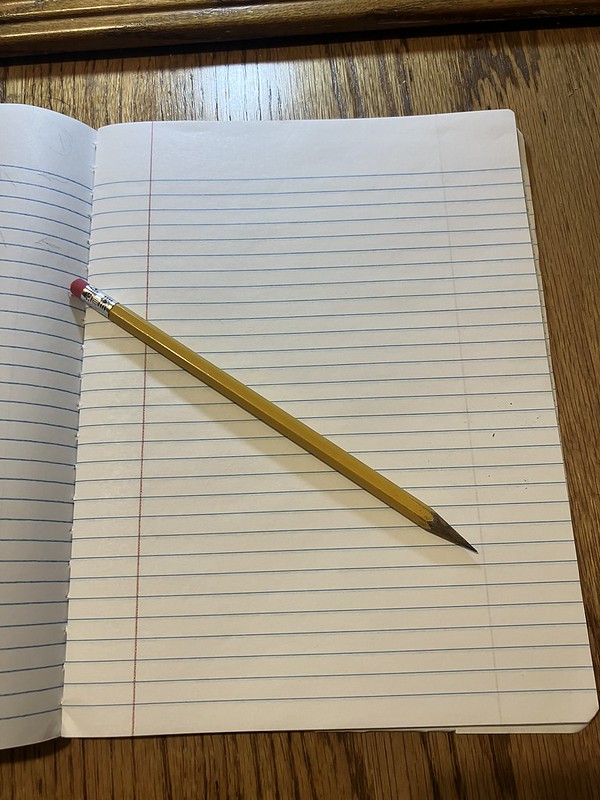
The Self in the Dental Chair – Why I Am Not Trying to Disappear

Yesterday morning, I spent about three hours in Dr. Wallace’s dental chair.

The original plan, at least as I understood it, was for her to place a crown on one of my upper right teeth. But as dental work often goes, the plan changed once she got inside the real situation.

She also filled a tooth on the upper left side. Then she turned her attention back to the upper right tooth — the one intended for the crown. She numbed the area, ground the tooth down, and prepped it as much as she could. But she was not satisfied that it was quite ready for the permanent crown. As I understood her, she did not think she had gone deep enough into the gum area to permanently set the crown the way it needed to be set.

So the permanent crown was delayed.

Instead, she prepared and placed a temporary tooth on the upper right tooth — the crown tooth — while we wait for the next step.

I did not understand every technical detail. I did not need to.

That is one of the strange things about sitting in a dental chair. You are awake. You are conscious. You are listening. You are participating in your own life. But at the same time, you are surrendered in a very practical way. Someone else has the tools. Someone else has the training. Someone else is looking into a part of your body you cannot see for yourself.

Toward the end of the visit, Dr. Wallace explained what she thought we needed to do over the next few months. She went into detail. She laid out the plan. She spoke as a professional who knows her field and cares about the person in the chair.

And I said something like, “Well, my life is in your hands. I trust you. You’re the expert here.”

I meant it lightly, but I also meant it.

She smiled, or at least responded in that familiar way people do when they know where the conversation is going.

“You know what I’m going to say,” she said.

I told her to say whatever she wanted.

And she said, “Your life is in God’s hands.”

There it was.

The sentence I have heard in one form or another for most of my life.

Your life is in God’s hands.

I did not argue with her. I did not challenge her. I did not turn a dental appointment into a theological debate. I love Dr. Mary Wallace. We have a wonderful relationship. She has always treated me with kindness, skill, and care. She is a believer, and from what I have heard her say over the years, her view of life seems to sit close to the world I came out of — the Southern Baptist fundamentalist world where God is sovereign, life belongs to him, and every human moment is finally interpreted through divine ownership.

But as I sat there, numb and tired, I noticed something inside me.

Not anger.

Not ridicule.

Not even disagreement exactly.

More like clarity.

Because I had spent the early morning struggling again with Sam Harris and his Daily Meditation. I have used the Waking Up app for quite a while now, and I still find much of it valuable. I often save Sam’s short “Moments.” Many of them land well. They interrupt the day in a helpful way.

But the Daily Meditation has become harder for me.

Too often, the session moves beyond simple attention, breathing, noticing, and returning. It becomes a lesson in Sam’s deeper claim that there is no self. Thoughts appear. Sensations appear. Emotions appear. But when we look for the one who is looking, Sam says we cannot find anyone there.

No rider on the horse.

No thinker behind the thought.

No self.

And this morning, as has happened many mornings before, I found myself not meditating but arguing.

Who is being asked to follow the breath?

Who is paying close attention?

Who heard the instruction?

Who decided to sit down in the chair at 3:00 a.m.?

Who is responsible for the day ahead?

Who went to Marvin’s yesterday and decided not to buy the pre-built steps for $89 but to buy the materials and build them himself for the cabin down the runway?

If there is no self, who is living this life?

I understand part of what Sam is saying. I do not think there is a tiny ghost hidden behind my eyes, pulling levers and operating Richard like a machine. I do not think there is a little captain sitting somewhere inside my skull, separate from the body, separate from the brain, separate from experience.

But I do think there is a self.

I am a self.

Donna is a self.

Keith, my new next-door neighbor, is a self.

Brandon, who is renting our first East Hollow cabin, is a self.

Dustin and Chelsea, who have moved their cabin onto one of our East Hollow leased lots, are selves.

Each person is a separate, living, embodied center of experience. Each has a history, a memory, a body, a temperament, a pattern of choices, a web of relationships, a private inwardness no one else can fully occupy.

We can call the self a process. I am fine with that.

But a process is not nothing.

A river is a process, but it is still a river.

A family is a process, but it is still a family.

Oak Hollow Cabins is a process — land, roads, cabins, water access, agreements, work, mistakes, hopes, people moving in and making lives there — but it is still Oak Hollow.

So why should Richard disappear just because he is also a process?

That is where I find myself parting ways with Sam Harris. He may be right to question the illusion of a fixed, separate, unchanging observer behind consciousness. But I think he overstates the case when he says there is no self.

Maybe the more careful statement is this:

There is no ghostly little owner of consciousness hidden behind experience. But there is a real self — the living person whose consciousness this is.

That seems closer to reality.

My consciousness is not Keith’s consciousness. Donna’s consciousness is not mine. Her life is not mine. She grew up in her own family. She made her own choices. She became a special education teacher and spent nearly forty years helping struggling students learn to read and survive school. She has loved, suffered, endured, chosen, regretted, served, rested, and continued.

No one owns Donna more than Donna does.

No one owns me more than I do.

That does not mean we are isolated. It does not mean we are self-created. It does not mean our choices float free from biology, culture, trauma, memory, influence, habit, or circumstance. Of course we are shaped. Of course prior causes matter.

But prior causes do not erase the self.

They become part of the self.

I am the one those causes have formed. I am the one who must live from them, revise them, resist them, continue through them, and sometimes lay them down.

That is why Sam’s Daily Meditation has begun to feel, to me, less like meditation and more like a quiet argument. It is not unlike consuming political commentary. One side tells me what Trump did and why it proves he is destroying the country. Another side tells me what Trump did and why it proves he is brave, strong, and chosen for the hour. Everyone has an angle. Everyone has an interpretation. Everyone is pushing a frame.

And I have learned, slowly and imperfectly, that not every voice deserves entrance into the morning.

Not because I want to hide from reality.

Because I want to stop letting other people’s certainty colonize my attention.

That is what the Southern Baptist fundamentalist world did to me for decades.

It told me who I was before I had a chance to ask.

It told me I was a sinner.

It told me my heart was deceitful.

It told me my mind could not be trusted.

It told me my desires were dangerous.

It told me my life was not my own.

It told me I was born under judgment and could be rescued only by accepting the system’s diagnosis and cure.

And now, here comes another kind of certainty, this time dressed not in hymns and altar calls but in calm language, neuroscience, and meditation:

There is no self.

I do not want to exchange one authority structure for another.

I do not want to leave Southern Baptist certainty only to kneel before secular certainty.

That does not mean Sam Harris is the same as a preacher. He is not. There is much in his work I value. But for me, the Daily Meditation has begun to smuggle in a conclusion I do not accept. And once I notice that, I cannot unnotice it.

The practice no longer quiets the mind.

It starts the debate.

So maybe my practice needs to become much plainer.

Sit down.

Feel the chair.

Notice the body.

Notice the breath.

Let thoughts come.

Let thoughts go.

Return.

No doctrine.

No metaphysics.

No need to solve consciousness before breakfast.

No need to disappear.

That feels much closer to The Pencil-Driven Life.

Because The Pencil-Driven Life is not about proving there is no self. It is not about finding a new theological system. It is not about replacing one master with another.

It is about living this life attentively.

The life actually here.

The dogs.

Donna in the next room.

The gravel road.

The cabin down the runway.

The lumber from Marvin’s.

The leased lots in East Hollow.

The work still waiting.

The words still wanting to be written.

The ordinary morning.

The self who is here for it.

And that brings me back to Dr. Wallace.

After she told me my life was in God’s hands, we later talked about what she was going to charge me. It sounded to me as though she was giving me some of her time and professional care. I told her I understood that. When I practiced law, there were times I helped people and did not charge them. Professionals do that sometimes. Not always. Not carelessly. But sometimes, when the person and situation call for it.

That led her to tell me about a man she knew from Mexico. He was both an architect and a lawyer, she said. A gracious man. A generous man. A wonderful person. Someone who had grown up poor and went out of his way to help others.

And then she told me he was killed by someone he was trying to help.

I did not say what passed through my mind.

But I noticed it.

If my life is in God’s hands, then so was his.

And look what happened.

That is not a cheap argument. It is not meant as a sneer. It is the problem that eventually breaks the frame for me.

When something good happens, believers say God is faithful.

When something terrible happens, believers say God is mysterious.

When the crown goes well, God guided the dentist.

When the generous man is murdered by someone he tried to help, God’s ways are higher than ours.

The system protects itself no matter what reality does.

But I cannot live there anymore.

I do not know that my life is in God’s hands.

I know that, for three hours yesterday, part of my dental life was in Dr. Wallace’s hands. Her trained, skilled, human hands.

I know that my decisions today are in my hands, in the only sense that matters: not as an uncaused soul floating above nature, but as Richard — embodied, shaped, conscious, responsible, and alive.

I know that Donna’s life is Donna’s.

I know that the man from Mexico owned his life too, and that his goodness did not protect him from tragedy.

I know that saying “God is in control” may comfort some people, but it no longer explains the world to me.

And I know this: surrendering to a good dentist is not the same as surrendering my life to a doctrine.

Trusting an expert is not the same as abandoning myself.

Letting another person help me is not the same as believing I am not real.

So this morning, I think I am ready to pause Sam’s Daily Meditation.

Not meditation.

Just that meditation.

I do not need an agenda-driven voice in my ear telling me there is no self.

I do not need a preacher, religious or secular, defining my inner life before the day begins.

I need silence.

I need breath.

I need the chair.

I need the simple practice of being here.

Not as a ghost.

Not as an illusion.

Not as a soul under judgment.

Not as a selfless field of appearances.

As Richard.

A living self.

A changing self.

A responsible self.

A pencil-driven self.

Here for this breath.

Here for this day.

Here for the life that is still, in the only way I can honestly say it, in my hands.

Unscripted — Week 3: How Inherited Stories Shape — and Shrink — Our Lives

Welcome to Unscripted, a weekly reflection on what it means to live without inherited stories, rigid identities, or predetermined purpose. Each Monday, I explore a different part of this shift toward presence and clarity—one moment, one breath, one pencil stroke at a time.

We rarely choose the stories that first shape us.

They arrive quietly—through family, culture, religion, education, praise, warning, repetition. By the time we’re old enough to question them, they already feel like truth. Not stories at all. Just “the way things are.”

This is how inherited stories work.
They don’t announce themselves as narratives.
They present themselves as reality.

And because of that, they shape our lives far more than we realize.


What I Mean by “Inherited Stories”

An inherited story isn’t a single belief.
It’s a framework—a background script that tells you:

  • who you are
  • what matters
  • what success looks like
  • what failure means
  • what you’re allowed to want
  • what you should fear
  • what must never be questioned

Some inherited stories are explicit.
Others are absorbed through tone, silence, or reward.

“You’re the responsible one.”
“Don’t rock the boat.”
“Good people don’t think that way.”
“This is just how life is.”
“You should be grateful.”
“That’s selfish.”
“That’s unrealistic.”

Over time, these stories stop sounding like voices.
They start sounding like you.


How Stories Begin to Shrink a Life

Most inherited stories begin as protection.

They keep families stable.
They maintain order.
They offer certainty.
They reduce anxiety.

But what protects early on often constrains later.

A story that once helped you survive can quietly limit who you’re allowed to become.

You may notice it when:

  • curiosity feels dangerous
  • rest feels irresponsible
  • joy carries guilt
  • silence feels unproductive
  • stillness feels wrong
  • your body says “no,” but the story says “push”

This is not failure.
It’s friction between lived experience and an outdated script.


Why These Stories Are Hard to See

Inherited stories don’t shrink us through force.
They shrink us through familiarity.

They feel normal.
Responsible.
Mature.
Even virtuous.

And because they’re often rewarded—socially, emotionally, morally—we rarely pause to ask:

Is this actually true?
Is this still mine?
Does this fit the life I’m living now?

Instead, we try harder to live inside the story.

That effort is exhausting.


The Cost of an Unexamined Story

Living inside an inherited story comes with a quiet cost:

  • chronic tension
  • a sense of never being “enough”
  • constant comparison
  • fear of slowing down
  • fear of disappointing others
  • fear of disappointing the version of yourself the story requires

You may appear successful.
Capable.
Put together.

And yet feel strangely absent from your own life.

This isn’t because something is wrong with you.

It’s because the story is no longer aligned with reality.


The Pencil as a Tool for Seeing

This is where the pencil matters.

A pencil invites examination without commitment.

It lets you write something down without declaring it final.
It allows erasure.
Revision.
Curiosity.

When you put an inherited story on paper, something subtle happens:

It stops being invisible.

Writing doesn’t judge the story.
It simply makes it visible.

And once visible, it can be questioned.


A Simple Way to Notice Your Stories

You don’t need to dismantle your life to begin.
You don’t need to confront anyone.
You don’t need new beliefs.

Just notice where tension appears.

Some gentle questions to explore—not answer all at once:

  • What do I feel pressured to be?
  • What am I afraid would happen if I stopped trying so hard?
  • What feels “not allowed,” even though no one is forbidding it?
  • What voice appears when I rest, slow down, or change direction?
  • Whose approval am I still seeking?

Write whatever arises.
No fixing.
No correcting.

The pencil moves.
You watch.


Seeing Without Replacing

This part matters.

The goal is not to swap one story for a better one.
Not to adopt a new identity.
Not to declare independence from the past.

The Pencil-Driven Life doesn’t ask you to replace inherited stories.

It asks you to see them.

Because when a story is seen clearly, its grip loosens naturally.

What once felt absolute begins to feel optional.
What once felt mandatory begins to feel negotiable.

And space appears.


Living Without a Script Begins Here

Living without a script doesn’t mean living without values or structure.

It means no longer mistaking inherited narratives for unquestionable truth.

Presence allows you to notice when a story is operating.
Clarity allows you to decide whether it still belongs.

And often, nothing dramatic happens.

You simply:

  • respond instead of react
  • rest without explanation
  • choose differently
  • let go of a role
  • stop defending an identity
  • breathe more easily

This is not rebellion.

It’s alignment.


A Quiet Invitation

You don’t need to name every story today.
You don’t need to confront the biggest ones first.

Start small.

Notice the sentence that appears when you slow down.
Notice the feeling that says, “I shouldn’t be doing this.”
Notice the voice that insists, “This is just how I am.”

Write it down.

Not to judge it.
Not to erase it.

Just to see it.

Because the moment a story is seen clearly, it stops running the show.

And in that space—
something wider becomes possible.


*Next week in Unscripted:
*”When Life Unravels Slowly — And Why That’s a Gift” — grounding the philosophy in your personal experience without rehashing the past.


A New Beginning at The Pencil-Driven Life

Why the website changed — and what comes next

For most of my life, I lived inside stories I didn’t write—beliefs I inherited, purposes assigned to me, expectations handed down long before I ever had a chance to choose my own path. I didn’t recognize how small that space had become until everything began to unravel.

That unraveling led me toward something quieter: presence, clarity, and the freedom to live moment by moment.

Over time, that shift grew into a philosophy, then a lived practice, and now a body of work called The Pencil-Driven Life.

If you’ve visited this website before, you may notice it looks very different.
Here’s why.


Life at Oak Hollow

Much of this transformation has taken place on our seventy-acre property in North Alabama—land we call Oak Hollow.

What began as a simple place to live has become an ongoing experiment in presence:

  • building off-grid cabins
  • creating quiet spaces to think and breathe
  • walking trails at sunrise
  • tending a greenhouse
  • caring for seven rescued dogs
  • letting each day unfold without a script

Oak Hollow isn’t a cabin rental business.
It’s where The Pencil-Driven Life is lived out in real time.

You’ll see glimpses of these moments, projects, and reflections on @thepencildrivenlife, because they’re inseparable from the philosophy itself.


What’s Changing on the Website

This site used to focus heavily on story coaching and Fictionary editing. I’m grateful for that chapter—my training sharpened the way I understand story and, ultimately, the way I understand life.

But I no longer offer story coaching as a profession.

The work ahead of me now is different:

  • writing The Pencil-Driven Life — Volume 1
  • creating the companion workbook
  • sharing daily reflections
  • continuing the Boaz novels
  • documenting the work happening at Oak Hollow
  • and exploring presence in ordinary life

Story still matters deeply—just not as a service.
It’s become a lens.


Where We Go From Here

You’ll see more writing here about:

  • presence
  • simplicity
  • letting go
  • finding clarity
  • creative life at Oak Hollow
  • writing as awareness
  • questioning inherited stories
  • living lightly and honestly

The Pencil-Driven Life isn’t about reaching a destination.
It’s about noticing what’s already here.

Thank you for walking with me into this next chapter.
Let’s see where the pencil moves from here.

—Richard

The Pencil’s Philosophy—Endings and Beginnings: The Writer’s Journey Through Change

THE PENCIL'S PHILOSOPHY - THURSDAYS
Welcome to The Pencil's Philosophy, my Thursday focus on writing as transformation. Here you'll explore how writing connects to deeper understanding, how questioning leads to growth, and how stories transform both writer and reader. Whether you're seeking truth or finding your voice, these posts guide your journey of discovery.

At year’s end, writers face a paradox: our stories need endings, yet every ending seeds a new beginning. Like our characters, we navigate constant change, each completed draft launching us toward the next story.

The Cycle of Creation

Endings and beginnings interweave:

  • First drafts end in revision’s birth
  • Character arcs close as new ones emerge
  • Stories conclude as ideas spark
  • Years close as fresh pages open

Writing Through Transition

Change demands:

  • Letting go of old stories
  • Embracing uncertainty
  • Finding rhythm in chaos
  • Building from endings

The Writer’s Evolution

Each story transforms:

  • How we see the world
  • What questions we ask
  • Which stories we choose
  • Where we find meaning

Moving Forward

Your writer’s journey mirrors your characters’:

  • Face the unknown
  • Accept change
  • Find truth in transition
  • Begin again

As this year ends, remember: every period ends a sentence, but also marks the space before the next one begins.


Use the Contact form to schedule a phone call or a Zoom meeting to discuss any aspect of your first novel. The first thirty-minute appointment is FREE.

First Edge—Starting Your Writing Journey in the New Year

FIRST EDGE - WEDNESDAYS
Welcome to First Edge, my Wednesday focus on beginning novelists. Here you'll find practical guidance, encouragement, and permission to start your writing journey. Whether you're thinking about writing or ready to begin, First Edge offers the support you need to take your first steps.

Merry Christmas!

So you want to write a novel in 2025. That dream has been waiting, hasn’t it? Waiting while you read craft books, watched writing videos, followed author blogs. Waiting while you thought about characters, imagined scenes, planned someday. Today, let’s turn someday into Day One.

Your Permission Slip

Dear Writer,

You have permission to:

  • Write badly
  • Start in the middle
  • Not know the ending
  • Change your mind
  • Make mistakes
  • Begin again
  • Call yourself a writer

Signed,
A Fellow Beginner

Your First Steps

  1. Choose Your Starting Point
  • A character who won’t leave you alone
  • A scene you can’t stop thinking about
  • A question you need to explore
  • A story that demands telling
  1. Create Your Space
  • A corner desk
  • A favorite chair
  • A morning coffee shop
  • A quiet library nook
  1. Set Your Schedule
  • Early morning words
  • Lunch break paragraphs
  • Evening chapters
  • Weekend writing

Simple Truths for Beginners

  • All first drafts are messy
  • Every published author started exactly where you are
  • Your voice matters because it’s yours
  • There’s no single “right” way to write
  • You learn by doing

Your Writing Foundation

Start with:

  • One dedicated writing hour
  • One notebook or document
  • One story idea
  • One commitment to yourself

Build from there.

Practical First Week Plan

Day 1: Write character notes
Day 2: Sketch a scene
Day 3: Explore setting
Day 4: Draft dialogue
Day 5: Connect ideas
Day 6: Review and plan
Day 7: Begin your story

When Doubt Creeps In

Remember:

  • Every writer starts as a beginner
  • Perfect is the enemy of written
  • Progress beats perfection
  • Small steps create novels
  • Today is always the right day to start

Moving Forward

Your novel begins with one word, then another. It grows sentence by sentence, scene by scene. The only magic is in starting, in putting words on the page, in giving yourself permission to begin.

2025 is your year to write. Not because you’re ready—no one ever feels completely ready. But because your story matters, and it’s time to tell it.

What will you write first?


Use the Contact form to schedule a phone call or a Zoom meeting to discuss any aspect of your first novel. The first thirty-minute appointment is FREE.

Edge Coach—Three-Point Scene Analysis for Stronger Endings

EDGE COACH - TUESDAYS
Welcome to Edge Coach, my Tuesday focus on professional story development. As a Fictionary Certified StoryCoach Editor, I share techniques to strengthen your writing and engage your readers. Whether you're revising your first draft or polishing your final one, Edge Coach offers practical guidance for your story.

The Three Points Every Scene Needs

  1. Character Change
  • Entry state vs. exit state
  • Emotional transformation
  • Knowledge gained or lost
  1. Story Movement
  • Plot advancement
  • New complications
  • Stakes escalation
  1. Reader Experience
  • Question answered
  • New question raised
  • Emotional impact

Applying the Three Points to Scene Elements

Entry Hook

  • Establishes character’s initial state
  • Sets scene tension
  • Poses story question

POV Goal

  • Drives character movement
  • Creates story momentum
  • Raises stakes

Scene Middle

  • Develops complications
  • Shows character agency
  • Builds tension

Scene Climax

  • Forces character change
  • Answers scene question
  • Creates consequences

Exit Hook

  • Shows transformation
  • Plants next scene’s seeds
  • Maintains momentum

Scene Name

  • Reflects main change
  • Highlights key element
  • Aids revision tracking

Analysis in Practice

When analyzing your scene, ask:

  1. What changes for the character?
  2. How does the story advance?
  3. What does the reader gain?

If any point is missing, your scene needs strengthening.

StoryCoach Tips

  • Track all three points in your scene outline
  • Verify each element serves multiple points
  • Ensure changes ripple forward
  • Connect points to your story’s theme
  • Build each scene’s points toward your ending

Remember: Strong scenes need more than structure—they need meaningful change on multiple levels.


#SceneStructure #WritingCraft #StoryEditing #ThreePointAnalysis #WritingTips #StoryCoaching #SceneWriting #RevisionStrategy


Use the Contact form to schedule a Zoom meeting to discuss any aspect of your first novel. The first thirty-minute appointment is FREE.

Sharpening the Edge—Mid-Book Crisis: Wrestling with Chapter 15’s Plot Snarl

SHARPENING THE EDGE - MONDAYS
Welcome to Sharpening the Edge, my Monday focus on real-time novel writing. Here you'll find insights from my current work-in-progress, sharing challenges, breakthroughs, and solutions as they happen. Whether you're in the midst of your novel or planning to start, these posts offer practical experience from the writing desk.

In The Boaz Student, Chapter 15 finds Bret Johnson at a crucial turning point. After challenging the mandatory prayer at a school assembly, he faces escalating isolation. The plot threads have tangled: his former youth group friends’ increasing hostility, a surprising ally in his skeptic philosophy club, and mounting pressure from both faculty and family.

## The Current Snarl

– Bret’s private doubts becoming public stands

– The philosophy club’s growing influence vs. administrative resistance

– Former best friend Marcus’s betrayal of confidence

– Family dinner scene that threatens to expose everything

## Working Through It

1. Mapped core conflict: Authentic self vs. Community acceptance

2. Listed consequences: Social isolation, family tension, academic impact

3. Identified subplot connections: Other questioning students

4. Connected to theme: Cost of intellectual honesty

## Today’s Breakthrough

While outlining possible paths, I realized Bret’s crisis parallels his younger sister’s growing curiosity about his changes. Both must navigate between comfortable acceptance and uncomfortable questions. This parallel strengthens the theme and clarifies the plot direction.

## Next Steps

1. Revise confrontation with Marcus

2. Strengthen sister’s subplot

3. Layer in consequences of assembly protest

4. Build tension toward family Christmas dinner

Sometimes plot snarls reveal deeper story truths. What looked like a structural problem was actually a character development opportunity.

Progress today: 847 words

Cumulative draft: 42,316 words


Use the Contact form to schedule a Zoom meeting to discuss any aspect of your first novel. The first thirty-minute appointment is FREE.

Creation Edge—Mastering Multiple Endings with Scrivener’s Snapshot Feature

CREATION EDGE - SUNDAYS
Welcome to Creation Edge, my Sunday focus on writing technology. Here you'll learn how to use Scrivener to organize, write, and revise your novel. Whether you're setting up your first project or managing your manuscript, Creation Edge helps you make technology serve your creativity.

Not sure which ending best serves your story? Scrivener’s Snapshot feature lets you explore multiple possibilities while keeping all versions safe and accessible. Here’s how to use this powerful tool effectively.

Taking Your First Snapshot

Before creating alternate endings:

  1. Select your ending scene in the Binder
  2. Click the camera icon in the toolbar, or use Documents → Snapshots → Take Snapshot
  3. Name your snapshot (e.g., “Original Ending – Happy”)
  4. Add a brief description of the ending’s key elements

Setting Up for Multiple Endings

Create a clear organization system:

  1. Make a folder called “Alternate Endings”
  2. Create separate documents for each version
  3. Take snapshots of each attempt
  4. Use clear naming conventions (e.g., “Ending_Bittersweet_v1”)

Using Snapshots Effectively

Comparing Versions

  1. Click the Snapshots button in the Inspector
  2. Select two versions to compare
  3. Use the comparison tools to see changes
  4. Make notes about what works in each version

Rolling Back Changes

  • Select the version you want to restore
  • Click “Roll Back” to revert to that version
  • Or use “Roll Back to Selected” for partial changes

Advanced Snapshot Strategies

Version Tracking

  • Date each snapshot
  • Add detailed notes about why you made changes
  • Track emotional impact of different versions
  • Note connection to various story themes

Mixing and Matching

  • Use snapshots to combine elements from different endings
  • Track which elements work best together
  • Create hybrid versions from successful elements

Organization Tips

Keep your endings manageable:

  1. Create a spreadsheet linking to each version
  2. Track the pros and cons of each ending
  3. Note feedback received on different versions
  4. Document your decision-making process

Best Practices

  1. Always snapshot before major changes
  2. Use clear, descriptive names
  3. Add detailed notes to each version
  4. Keep your comparison notes in the project
  5. Regular backup your entire project

Troubleshooting Common Issues

When to Take New Snapshots

  • Before significant changes
  • When trying new directions
  • After receiving feedback
  • When combining elements

Managing Multiple Snapshots

  • Regular cleanup of unused versions
  • Clear labeling system
  • Folder organization
  • Backup important versions

Moving Forward

With Scrivener’s Snapshot feature, you can:

  • Explore different endings safely
  • Track your revision process
  • Compare versions easily
  • Make informed decisions
  • Keep all options available

Remember: The perfect ending might combine elements from several versions. Snapshots help you find that ideal combination.


Use the Contact form to schedule a phone call or a Zoom meeting to discuss any aspect of your first novel. The first thirty-minute appointment is FREE.

Craft Edge—Emotional Beats in Holiday Scenes: Using the Emotion Thesaurus

CRAFT EDGE - SATURDAYS
Welcome to Craft Edge, my Saturday focus on fiction writing craft. Here you'll find deep dives into writing techniques using One Stop for Writers and Fictionary resources. Whether you're developing characters or structuring scenes, Craft Edge helps you master the tools of storytelling.

Holiday scenes can easily fall into cliché territory. Today, we’ll explore how to use One Stop for Writers’ Emotion Thesaurus to create authentic emotional moments in your seasonal scenes.

Common Holiday Scene Pitfalls

Before diving into solutions, let’s identify what makes holiday scenes feel flat:

  • Overused physical responses (tears of joy, racing hearts)
  • Predictable emotional patterns
  • Surface-level sentimentality
  • Lack of emotional complexity

Using the Emotion Thesaurus Effectively

The Emotion Thesaurus offers multiple categories for each emotion. Let’s explore them:

Physical Signals

Instead of common responses, consider:

  • Micro-expressions
  • Unconscious gestures
  • Physiological changes
  • Action tendencies

Internal Sensations

Layer emotion with:

  • Visceral responses
  • Body temperature changes
  • Muscle reactions
  • Nervous system responses

Mental Responses

Show thought patterns through:

  • Memory triggers
  • Focus shifts
  • Decision-making changes
  • Perception alterations

Complex Holiday Emotions

Let’s examine some holiday-specific emotional combinations:

Joy + Grief

Physical Signals:

  • Hands ghosting over old ornaments
  • Humming carols that break mid-note
  • Setting an extra place before catching yourself

Anticipation + Anxiety

Internal Sensations:

  • Stomach butterflies with acid edges
  • Tingling fingers that can’t quite steady
  • Heart skipping between excitement and dread

Love + Frustration

Mental Responses:

  • Counting breaths while wrapping imperfect gifts
  • Rehearsing responses to familiar criticisms
  • Finding humor in chaos to avoid explosion

Building Emotional Scenes

Structure your holiday scenes with emotional beats:

  1. Opening State
  • Establish baseline emotion
  • Show normal behaviors
  • Set emotional stakes
  1. Triggering Event
  • Create emotional catalyst
  • Show immediate reaction
  • Layer in complications
  1. Emotional Progression
  • Build through multiple responses
  • Mix emotional signals
  • Create emotional turning points
  1. Resolution
  • Show emotional impact
  • Leave room for resonance
  • Connect to character arc

Example Using the Thesaurus

Let’s transform a basic scene:

Before:
Sarah felt sad as she hung the ornaments on her first Christmas tree alone.

After:
Sarah’s fingers traced the rough edge where last year’s card still clung to the ornament. The glitter had worn away, just like everything else. She hung it anyway, adjusting it three times before letting go, her hand lingering as if the empty apartment might shake it loose.

Tips for Maximum Impact

  1. Mix emotional categories
  2. Layer responses over time
  3. Connect emotions to backstory
  4. Use setting to amplify feeling
  5. Allow emotional complexity

Moving Forward

The Emotion Thesaurus isn’t just a reference—it’s a tool for emotional authenticity. Use it to dig deeper into your holiday scenes, finding fresh ways to express timeless feelings.

Remember: The best holiday scenes don’t just show emotion—they make readers feel it.