The Self in the Dental Chair – Why I Am Not Trying to Disappear

Yesterday morning, I spent about three hours in Dr. Wallace’s dental chair.

The original plan, at least as I understood it, was for her to place a crown on one of my upper right teeth. But as dental work often goes, the plan changed once she got inside the real situation.

She also filled a tooth on the upper left side. Then she turned her attention back to the upper right tooth — the one intended for the crown. She numbed the area, ground the tooth down, and prepped it as much as she could. But she was not satisfied that it was quite ready for the permanent crown. As I understood her, she did not think she had gone deep enough into the gum area to permanently set the crown the way it needed to be set.

So the permanent crown was delayed.

Instead, she prepared and placed a temporary tooth on the upper right tooth — the crown tooth — while we wait for the next step.

I did not understand every technical detail. I did not need to.

That is one of the strange things about sitting in a dental chair. You are awake. You are conscious. You are listening. You are participating in your own life. But at the same time, you are surrendered in a very practical way. Someone else has the tools. Someone else has the training. Someone else is looking into a part of your body you cannot see for yourself.

Toward the end of the visit, Dr. Wallace explained what she thought we needed to do over the next few months. She went into detail. She laid out the plan. She spoke as a professional who knows her field and cares about the person in the chair.

And I said something like, “Well, my life is in your hands. I trust you. You’re the expert here.”

I meant it lightly, but I also meant it.

She smiled, or at least responded in that familiar way people do when they know where the conversation is going.

“You know what I’m going to say,” she said.

I told her to say whatever she wanted.

And she said, “Your life is in God’s hands.”

There it was.

The sentence I have heard in one form or another for most of my life.

Your life is in God’s hands.

I did not argue with her. I did not challenge her. I did not turn a dental appointment into a theological debate. I love Dr. Mary Wallace. We have a wonderful relationship. She has always treated me with kindness, skill, and care. She is a believer, and from what I have heard her say over the years, her view of life seems to sit close to the world I came out of — the Southern Baptist fundamentalist world where God is sovereign, life belongs to him, and every human moment is finally interpreted through divine ownership.

But as I sat there, numb and tired, I noticed something inside me.

Not anger.

Not ridicule.

Not even disagreement exactly.

More like clarity.

Because I had spent the early morning struggling again with Sam Harris and his Daily Meditation. I have used the Waking Up app for quite a while now, and I still find much of it valuable. I often save Sam’s short “Moments.” Many of them land well. They interrupt the day in a helpful way.

But the Daily Meditation has become harder for me.

Too often, the session moves beyond simple attention, breathing, noticing, and returning. It becomes a lesson in Sam’s deeper claim that there is no self. Thoughts appear. Sensations appear. Emotions appear. But when we look for the one who is looking, Sam says we cannot find anyone there.

No rider on the horse.

No thinker behind the thought.

No self.

And this morning, as has happened many mornings before, I found myself not meditating but arguing.

Who is being asked to follow the breath?

Who is paying close attention?

Who heard the instruction?

Who decided to sit down in the chair at 3:00 a.m.?

Who is responsible for the day ahead?

Who went to Marvin’s yesterday and decided not to buy the pre-built steps for $89 but to buy the materials and build them himself for the cabin down the runway?

If there is no self, who is living this life?

I understand part of what Sam is saying. I do not think there is a tiny ghost hidden behind my eyes, pulling levers and operating Richard like a machine. I do not think there is a little captain sitting somewhere inside my skull, separate from the body, separate from the brain, separate from experience.

But I do think there is a self.

I am a self.

Donna is a self.

Keith, my new next-door neighbor, is a self.

Brandon, who is renting our first East Hollow cabin, is a self.

Dustin and Chelsea, who have moved their cabin onto one of our East Hollow leased lots, are selves.

Each person is a separate, living, embodied center of experience. Each has a history, a memory, a body, a temperament, a pattern of choices, a web of relationships, a private inwardness no one else can fully occupy.

We can call the self a process. I am fine with that.

But a process is not nothing.

A river is a process, but it is still a river.

A family is a process, but it is still a family.

Oak Hollow Cabins is a process — land, roads, cabins, water access, agreements, work, mistakes, hopes, people moving in and making lives there — but it is still Oak Hollow.

So why should Richard disappear just because he is also a process?

That is where I find myself parting ways with Sam Harris. He may be right to question the illusion of a fixed, separate, unchanging observer behind consciousness. But I think he overstates the case when he says there is no self.

Maybe the more careful statement is this:

There is no ghostly little owner of consciousness hidden behind experience. But there is a real self — the living person whose consciousness this is.

That seems closer to reality.

My consciousness is not Keith’s consciousness. Donna’s consciousness is not mine. Her life is not mine. She grew up in her own family. She made her own choices. She became a special education teacher and spent nearly forty years helping struggling students learn to read and survive school. She has loved, suffered, endured, chosen, regretted, served, rested, and continued.

No one owns Donna more than Donna does.

No one owns me more than I do.

That does not mean we are isolated. It does not mean we are self-created. It does not mean our choices float free from biology, culture, trauma, memory, influence, habit, or circumstance. Of course we are shaped. Of course prior causes matter.

But prior causes do not erase the self.

They become part of the self.

I am the one those causes have formed. I am the one who must live from them, revise them, resist them, continue through them, and sometimes lay them down.

That is why Sam’s Daily Meditation has begun to feel, to me, less like meditation and more like a quiet argument. It is not unlike consuming political commentary. One side tells me what Trump did and why it proves he is destroying the country. Another side tells me what Trump did and why it proves he is brave, strong, and chosen for the hour. Everyone has an angle. Everyone has an interpretation. Everyone is pushing a frame.

And I have learned, slowly and imperfectly, that not every voice deserves entrance into the morning.

Not because I want to hide from reality.

Because I want to stop letting other people’s certainty colonize my attention.

That is what the Southern Baptist fundamentalist world did to me for decades.

It told me who I was before I had a chance to ask.

It told me I was a sinner.

It told me my heart was deceitful.

It told me my mind could not be trusted.

It told me my desires were dangerous.

It told me my life was not my own.

It told me I was born under judgment and could be rescued only by accepting the system’s diagnosis and cure.

And now, here comes another kind of certainty, this time dressed not in hymns and altar calls but in calm language, neuroscience, and meditation:

There is no self.

I do not want to exchange one authority structure for another.

I do not want to leave Southern Baptist certainty only to kneel before secular certainty.

That does not mean Sam Harris is the same as a preacher. He is not. There is much in his work I value. But for me, the Daily Meditation has begun to smuggle in a conclusion I do not accept. And once I notice that, I cannot unnotice it.

The practice no longer quiets the mind.

It starts the debate.

So maybe my practice needs to become much plainer.

Sit down.

Feel the chair.

Notice the body.

Notice the breath.

Let thoughts come.

Let thoughts go.

Return.

No doctrine.

No metaphysics.

No need to solve consciousness before breakfast.

No need to disappear.

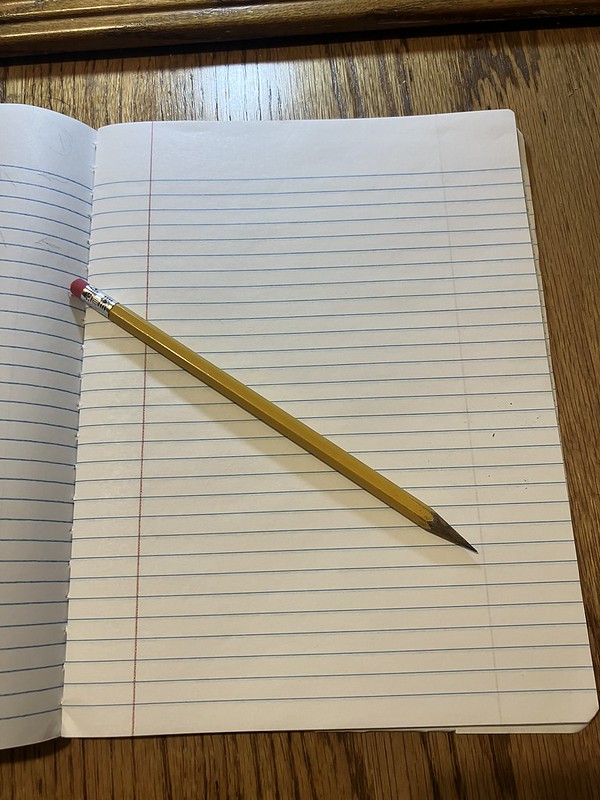
That feels much closer to The Pencil-Driven Life.

Because The Pencil-Driven Life is not about proving there is no self. It is not about finding a new theological system. It is not about replacing one master with another.

It is about living this life attentively.

The life actually here.

The dogs.

Donna in the next room.

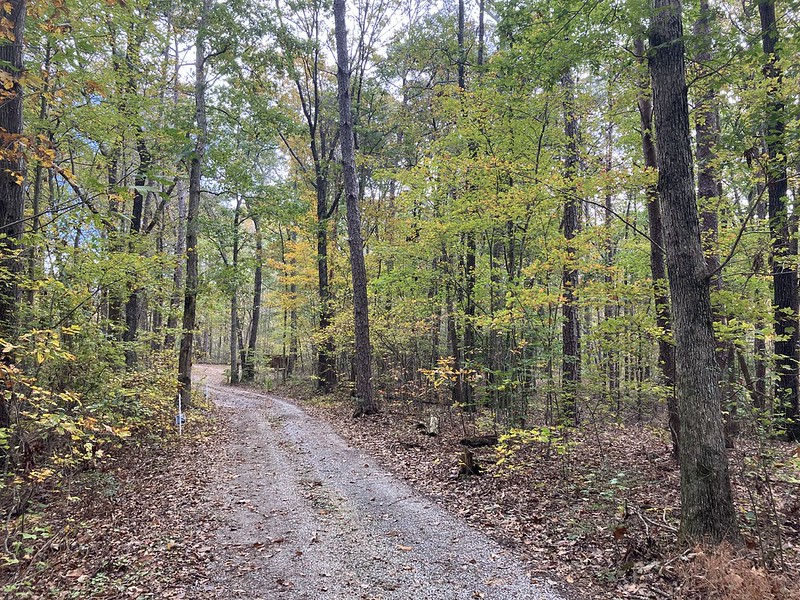
The gravel road.

The cabin down the runway.

The lumber from Marvin’s.

The leased lots in East Hollow.

The work still waiting.

The words still wanting to be written.

The ordinary morning.

The self who is here for it.

And that brings me back to Dr. Wallace.

After she told me my life was in God’s hands, we later talked about what she was going to charge me. It sounded to me as though she was giving me some of her time and professional care. I told her I understood that. When I practiced law, there were times I helped people and did not charge them. Professionals do that sometimes. Not always. Not carelessly. But sometimes, when the person and situation call for it.

That led her to tell me about a man she knew from Mexico. He was both an architect and a lawyer, she said. A gracious man. A generous man. A wonderful person. Someone who had grown up poor and went out of his way to help others.

And then she told me he was killed by someone he was trying to help.

I did not say what passed through my mind.

But I noticed it.

If my life is in God’s hands, then so was his.

And look what happened.

That is not a cheap argument. It is not meant as a sneer. It is the problem that eventually breaks the frame for me.

When something good happens, believers say God is faithful.

When something terrible happens, believers say God is mysterious.

When the crown goes well, God guided the dentist.

When the generous man is murdered by someone he tried to help, God’s ways are higher than ours.

The system protects itself no matter what reality does.

But I cannot live there anymore.

I do not know that my life is in God’s hands.

I know that, for three hours yesterday, part of my dental life was in Dr. Wallace’s hands. Her trained, skilled, human hands.

I know that my decisions today are in my hands, in the only sense that matters: not as an uncaused soul floating above nature, but as Richard — embodied, shaped, conscious, responsible, and alive.

I know that Donna’s life is Donna’s.

I know that the man from Mexico owned his life too, and that his goodness did not protect him from tragedy.

I know that saying “God is in control” may comfort some people, but it no longer explains the world to me.

And I know this: surrendering to a good dentist is not the same as surrendering my life to a doctrine.

Trusting an expert is not the same as abandoning myself.

Letting another person help me is not the same as believing I am not real.

So this morning, I think I am ready to pause Sam’s Daily Meditation.

Not meditation.

Just that meditation.

I do not need an agenda-driven voice in my ear telling me there is no self.

I do not need a preacher, religious or secular, defining my inner life before the day begins.

I need silence.

I need breath.

I need the chair.

I need the simple practice of being here.

Not as a ghost.

Not as an illusion.

Not as a soul under judgment.

Not as a selfless field of appearances.

As Richard.

A living self.

A changing self.

A responsible self.

A pencil-driven self.

Here for this breath.

Here for this day.

Here for the life that is still, in the only way I can honestly say it, in my hands.
Daily Deep Dive–Why Clarity Often Feels Like Standing Alone

There is a quiet assumption built into most social life:

If many people agree on something, it must be right. If something is widely accepted, it must be normal. If it is normal, it must be healthy.

Erich Fromm challenges that assumption directly.

A society can be deeply disordered while appearing functional. Individuals within it can adapt so completely that they no longer question the structure they are living inside. In that sense, conformity can produce stability—but not necessarily sanity.

This creates a tension.

To belong is to align with what is shared. To see clearly is sometimes to step outside of it.

And that step can feel like isolation.

Clarity does not always come with agreement. In fact, it often removes it. When a person begins to see something directly—without relying on inherited assumptions—the result may not match what others see. Not because the person is trying to be different, but because they are no longer filtering reality through the same framework.

This is where discomfort enters.

It is easier to belong than to see. It is easier to agree than to question. It is easier to adjust than to stand still in what is known directly.

But the cost of constant adjustment is subtle.

A person begins to lose contact with their own perception. Decisions become shaped by expectation rather than understanding. Over time, the internal sense of alignment weakens, even if external functioning remains intact.

Fromm’s idea of sanity points in another direction.

Sanity is not agreement. It is not comfort. It is not the absence of tension.

It is clarity.

Clarity requires attention. It requires the willingness to see what is there, even when it does not match what is expected. It requires holding perception steady long enough to trust it.

This does not mean rejecting everything external. It means not surrendering to it blindly.

A sane life, in this sense, is not one lived in opposition to others. It is one lived from a stable center of awareness. That center allows for connection, but it does not depend on agreement.

The result is a different kind of relationship to the world.

Less reactive.Less dependent.More grounded.

But also, at times, more solitary.

Not because the person is alone in a literal sense, but because they are no longer fully merged with shared assumptions.

This is where clarity and solitude meet.

And this is why clarity often feels like standing alone—not as a dramatic stance, but as a natural consequence of seeing without distortion.

The question is not whether this will happen.

The question is whether it will be avoided.

Because the alternative is not true belonging.

It is quiet disconnection.

Daily Deep Dive–Why Wholeness Matters More Than Balance in Creative Work

We often talk about creative work in the language of balance. Balance your reason and your feeling. Balance structure and spontaneity. Balance discipline and inspiration. There is truth in that language, but it can also be misleading. It suggests that the self is made of separate compartments that must be carefully negotiated into cooperation.

Lucille Clifton suggests something deeper. In the interview Maria Popova draws from, Clifton says a poem has to come from intellect and intuition. Too much intuition becomes sentimentality. Too much intellect becomes a mass of material no one knows or cares about. But the center of the insight is not really “balance” as such. It is wholeness. The poem is about a whole human, speaks to a whole human, and therefore must come from a whole human.

That distinction matters.

Balance implies management among parts. Wholeness implies a different condition altogether—an undivided life from which the work can arise naturally. The problem is not merely that we favor one faculty over another. The problem is that many of us live in pieces. We think in one register, feel in another, work in another, speak in another, and then wonder why our creative output seems thin or strained.

A divided person may still produce competent work. But there is a difference between competence and aliveness.

Clifton’s wisdom helps clarify that difference. A poem dies when intellect takes over in a sterile way, but it also dies when intuition runs free without shape. The answer is not to keep those two forces on opposite ends of a seesaw. The answer is to let them belong to one living center.

That is harder than it sounds, because modern life encourages fragmentation. We are trained into roles, outputs, categories, and modes. Be productive here. Be emotional there. Be analytical in this space. Be practical in that one. Even inner life becomes specialized. The result is a person who may function effectively but not always wholly.

Creative work suffers under that arrangement because art is not merely assembled from skill. It is formed from personhood. Popova opens the Clifton piece by observing that everything we make is shaped by the whole of what we are and what we have lived. A song, an equation, a poem, a page—all of it bears the imprint of the person making it.

That means the deeper question is not only, “How do I balance my faculties?” It is, “From what kind of self does this work arise?”

If the self is fractured, the work may carry the fracture. If the self is present, receptive, and integrated, the work may carry that instead.

This is why I think wholeness matters more than balance. Balance can remain mechanical. It can become one more managerial project. Wholeness is less tidy and more organic. It comes from living in a way that allows thought, instinct, memory, craft, labor, and feeling to remain in conversation with each other.

The same may be true well beyond poetry.

A day of useful labor, a well-made bench, a prepared garden bed, a clear conversation, a thoughtful page—none of these arise from one faculty alone. They draw from attention, memory, judgment, bodily knowledge, and a certain instinctive feel for what belongs where. Life itself asks for more than balance. It asks for participation by the whole person.

Clifton also says something else that deepens this. Poetry can heal because it comes from a heart and can speak to another heart. The healing power lies not only in expression, but in connection. The work is not complete when it is merely made. It becomes fully itself in the contact it creates.

That too points toward wholeness rather than balance.

A balanced self might still remain self-contained. A whole self is able to connect. It can create work that not only displays intelligence or feeling, but actually reaches another person. And perhaps that is one sign that the work has come from a deeper center: it does not merely show off the maker’s capacities. It carries some living human charge from one person to another.

The language of wholeness also has the advantage of being more forgiving. Balance can make a person imagine a neat symmetry that few real lives possess. Wholeness does not require symmetry. It requires honesty. It requires a willingness to let the actual person show up—flawed, layered, experienced, thinking, feeling, remembering, trying.

In that sense, wholeness is less about perfection than about consent. Consent to be present as one life. Consent to let the hand belong to the mind, the intuition belong to the craft, the labor belong to the reflection, the solitude belong to the connection.

Perhaps that is why some work feels alive from the first line or the first glance. It was not produced by a well-managed fragment. It was made by someone who, for that moment at least, was gathered enough to speak from one center.

And maybe that is what so many of us are after without quite naming it. Not simply better balance. Not a more polished arrangement of our competing faculties. But a life out of which work can rise without distortion because it rises from a self no longer at war with itself.

That kind of wholeness cannot be faked. But it can be practiced. In the page. In the shop. In the garden. In the conversation. In the way a day is lived.

The work, then, is not just to make something.

It is to become someone from whom living work can come.

Daily Deep Dive – Why Trust Works Better Than Hope in the Life of Making

Hope and trust are close enough in ordinary speech that we often use them as if they were interchangeable. But they do different work in a life.

Hope leans forward. It imagines the desired outcome. It says: may this happen, may this turn out, may this become what I long for. There is nothing wrong with that, and human beings would be poorer without it. But hope can also become abstract. It can drift upward into wishfulness. It can make a person live too far into the future and too little in contact with the material conditions of the present.

Trust is different.

Cristina Campo’s distinction, as Maria Popova frames it in her Marginalian essay, suggests that trust does not cling to the result in the same way hope does. Trust belongs more deeply to the possible already hidden inside the real. It is not less demanding than hope. In some ways it is more demanding, because it asks me to remain in relationship with what is actually here.

This matters especially in the life of making.

When I make something — a porch, a bench, a stack of kindling, a garden bed, a paragraph, a day’s work — I am almost never dealing with final outcomes. I am dealing with materials, conditions, fragments, sequences, adjustments, and limits. The finished thing may exist in imagination, but the real life of making happens elsewhere: in wood grain, weight, moisture, alignment, soil, timing, effort, revision, patience.

Hope wants the finished picture.

Trust commits to the next true act inside the unfinished one.

That difference feels crucial to me. A person can spend a great deal of life hoping without actually building anything. Hope alone can become a spectator emotion. It watches the future from a distance. Trust, by contrast, puts its hands on the work. Trust sorts the lumber. Trust splits the kindling. Trust buys the soil amendment. Trust refines the workbench. Trust does not guarantee success, but it makes relationship with possibility practical.

That is why trust often feels humbler than hope and more useful too.

Hope tends to announce itself. Trust often hides in plain sight. It looks like preparation. It looks like repetition. It looks like maintenance. It looks like feeding what may later flourish. It looks like strengthening what will later bear weight. It looks like making ready what is not yet called for but will matter when the time comes.

Kindling is a good example. No one celebrates kindling. It is not the warmth of the fire, not the spectacle of flame, not the story told afterward. It is what lets the fire begin. In that sense, kindling belongs entirely to trust. It is labor in service of ignition not yet visible.

The same is true of a garden. Hope dreams of harvest. Trust works the soil. Hope imagines fruit and abundance. Trust studies the bed, chooses the plant, carries the fertilizer, tends the small beginnings. Hope is not false there. It simply isn’t enough.

And the same may be true of inner life.

Much of religion taught me to hope in a way that often bypassed the real. Hope for rescue. Hope for intervention. Hope for a hidden hand to bridge the gap between longing and actuality. But trust, at least as I now understand it, is different. It does not remove longing. It binds longing back to responsibility, contact, preparation, and patience. It says: stay near the real and see what the possible asks of you here.

That is a harder discipline than hoping. It is also a more honest one.

Trust works better than hope in the life of making because making itself is incremental. It is relational. It is rarely dramatic. It depends on the willingness to invest in things that are not yet visible in their final form. A workbench is trusted into being before it becomes useful in a hundred unseen future tasks. A porch is trusted into being before it shelters anything. A planted bed is trusted into being before growth can prove itself.

This may also be why trust produces a steadier kind of peace than hope does. Hope can rise and fall with outcomes. It can soar or collapse according to what seems likely. Trust lives lower to the ground. It is not indifferent to outcomes, but it is less ruled by them. It asks: what is mine to do now? What preparation belongs to this moment? What part of the possible can I meet with fidelity today?

That kind of trust makes a life less theatrical and more inhabitable.

It does not require certainty. It does not promise control. It does not pretend the impossible is easy.

It simply keeps company with the real long enough for the possible to show its face.

Perhaps that is why trust seems, in the end, more courageous than hope. Hope can remain passive. Trust rarely can. Trust takes shape in action. It commits the body. It commits time. It commits attention. It works without guarantee, but not without meaning.

And maybe that is the right definition for much of a good life: not confidence in outcomes, but fidelity to the next true thing.

In that sense, trust is not the opposite of hope.

It is hope grown hands.

Daily Deep Dive — How Care Creates Inner Spaciousness

Today’s Daily Deep Dive grows out of Donald Winnicott’s reflections on mental health, relationship, and what he called “care-cure,” and it follows one question that stayed with me through the day: how does care create the kind of inner room in which a person can breathe, think, and meet others well?

How Care Creates Inner Spaciousness

One of the quieter distortions of ordinary life is the assumption that health means hardening. We imagine that a strong mind must be insulated, self-sufficient, defended against intrusion, difficult to unsettle. We talk easily about boundaries, toughness, and independence, but not always about spaciousness. Yet Donald Winnicott points toward something gentler and, to me, more accurate: a healthy mind is one able to enter imaginatively and accurately into another person’s inner life while also allowing that movement in return.

That is a remarkable standard, because it suggests that health is not merely the absence of breakdown. It is the presence of room. Room enough to meet another person without collapsing into them. Room enough to remain oneself without becoming sealed off. Room enough to care without making care into control.

This matters because much of modern life narrows us. Pressure narrows us. Productivity narrows us. Worry narrows us. Self-protection narrows us. The mind can become a tight chamber of tasks, anticipations, grievances, and defensive reflexes. Under those conditions, relationship becomes difficult because there is so little inner space left. Another person feels like one more demand, one more complication, one more emotional weather system threatening to crowd my own.

Care, rightly lived, does the opposite. It opens space.

Not sentimental care. Not theatrical care. Not the kind that performs goodness for effect. Winnicott’s phrase “care-cure” appeals to me precisely because it is steadier than that. It suggests that healing is tied to a dependable field of presence—a way of being with another person that is neither invasive nor indifferent. When care takes that form, it creates conditions in which both people can remain more human.

The phrase itself is helpful because it joins two things we often separate. “Care” can sound soft, emotional, vague. “Cure” can sound clinical, technical, goal-oriented. Winnicott holds them together. In doing so, he suggests that the atmosphere of relationship is not peripheral to health. It is part of health. How we are held, met, regarded, and responded to matters.

That is true far beyond psychotherapy. It is true in friendship. In marriage. In family labor. In ordinary work. In customer relationships. In conversation. In the tone of a room. The mind expands or contracts partly according to the kinds of contact it repeatedly inhabits.

I think this is why some forms of practical work feel emotionally stabilizing even when they are physically tiring. Shared labor can create inner spaciousness because it takes a person out of self-enclosure. Two people building something together are not merely moving lumber or fastening boards. At their best, they are participating in a form of relational clarity. This board goes here. This tool is needed. This run must be made. The next step depends on the last one. There is a plainness in that kind of work, and plainness often helps the mind breathe.

The same can be true of ordinary reliability in business or community life. A place like The Q, if it works well, is not only a commercial space. It is also a small environment of care. Schedules honored, expectations made clear, people received seriously, practical needs met without drama—these things seem minor until they are absent. When they are absent, the mind tightens. When they are present, a person can function more openly.

So perhaps care creates inner spaciousness because it reduces distortion.

Where care is thin, people brace. They guess. They guard. They compensate. They overread signals. They carry more than their share of uncertainty. All of that crowds the mind.

Where care is steady, something loosens. A person does not need to spend so much energy protecting against preventable instability. Attention becomes freer. Thought becomes less cramped. Imagination becomes less defensive. Even the body may relax its habitual vigilance.

This is not weakness. It is one form of strength.

It takes strength to remain permeable without becoming shapeless. It takes strength to imagine another person’s thoughts and feelings accurately rather than merely projecting my own. It takes strength to care concretely rather than theatrically. It takes strength to build environments—homes, workspaces, conversations, routines—in which people can breathe more easily.

The alternative is everywhere around us: relationships driven by anxiety, institutions driven by indifference, conversations driven by performance, and minds driven by constant contraction. We know this atmosphere well because it has become normal. But normal is not the same as healthy.

Health may be quieter than we think.

It may look like the reliable person. The workable room. The plain conversation. The structure that holds. The shared task honestly done. The meeting in which no one has to posture. The kind of presence that does not crowd another person out of himself.

This does not solve every deeper wound. But it does create the kind of psychic environment in which healing becomes more possible. That is why I keep returning to the word spaciousness. Care makes room. And room is often the precondition for honesty, rest, thought, and repair.

Perhaps that is what so many people are starved for—not rescue, not intensity, not grand declarations, but a steadier field of care. A place where the mind does not have to fight so hard for oxygen. A relationship in which mutual recognition is possible. A life whose structures do not constantly undo the people living inside them.

In that sense, care is not an accessory to the good life. It is part of its architecture.

And perhaps the healthiest days are not always the most exciting ones. They may be the days in which care quietly takes form—through work, presence, reliability, and the willingness to meet another person without either withdrawing or overpowering.

That kind of care does not make life dramatic.

It makes life breathable.

Daily Deep Dive — How Vastness Restores Proportion

Sunday, April 5, 2026

A few months ago, I told readers here that I was moving my primary writing to another space. Since then, that path has changed, and so has my sense of what I want this blog to be. I’m returning to The Pencil’s Edge now with a narrower purpose: to share what I’m calling Daily Deep Dives—short reflective essays that grow out of my daily journal practice, early morning reading, and the deeper questions hiding beneath ordinary life. Today’s piece begins with Derek Jarman and a question that stayed with me through the day: how does vastness restore proportion?

Daily Deep Dive — How Vastness Restores Proportion

One of the quiet distortions of ordinary life is how quickly the mind can shrink the world down to its own dimensions. A task becomes the whole field. A worry becomes the whole horizon. A conversation, an obligation, a small frustration, a practical problem—any of these can swell until they seem to occupy all available space. The mind does this almost automatically. It narrows. It fixates. It enlarges what is near and loses sight of what is large.

That is why vastness matters.

Vastness does not solve my problems. It does not repair what is broken, complete the unfinished work, or remove the demands of a given day. But it does something else that may be just as important. It restores proportion. It places my concerns back inside a larger frame. It reminds me that what feels total is often only immediate. What feels enormous is often simply close.

This is one of the reasons early morning has become so important to me. Before the machinery of the day fully starts up, there is often a brief chance to experience life at a truer scale. Darkness helps. Silence helps. Weather helps. Stepping outside before daylight and feeling the air helps. In those moments, the mind has not yet entirely succeeded in turning the day into a list of pressures. The world is still there in a less edited form. The sky is above me whether I am productive or not. The air touches me without asking what I have accomplished. The darkness does not care about my plans. And in that indifference there is relief.

Relief comes when I am no longer the measure of everything.

The cramped mind makes the self too central. Not necessarily in an arrogant way. Often in a burdensome way. I become the center of my tasks, my decisions, my unfinished work, my thoughts about what must happen next. The self fills the frame not because it is grand, but because it is trapped in nearness. Vastness interrupts that trap. It does not humiliate the self so much as resize it.

That resizing is healthy.

There is a reason open land, sky, weather, sea, darkness, stars, and silence have always mattered to reflective people. They return us to scale. They expose the fiction that our private turbulence is the whole of reality. They remind us that life is occurring on levels the anxious mind does not control and cannot contain. Wind moves. Morning comes. Trees stand. Distances remain. The world continues in dimensions larger than thought.

That realization can feel small at first. But it is not small at all. It is one of the ways sanity returns.

The modern mind lives under constant pressure to inhabit a distorted scale. Everything is immediate. Everything is personalized. Everything is framed in relation to the self—my deadlines, my messages, my reactions, my goals, my disappointments, my projects, my feed, my opinions. Even when this does not produce vanity, it produces claustrophobia. Life begins to feel like a sealed room in which every thought echoes back upon itself. The problem is not simply stress. The problem is disproportionality.

Vastness breaks that seal.

A larger horizon does not erase my responsibilities, but it changes their texture. A practical problem remains practical. Work still needs doing. A sign still needs to be painted. A washtub still needs reshaping. Wood still needs fastening. A phone call still needs making. But when these things are held inside a larger frame, they stop pretending to be ultimate. They return to their proper category. Necessary, yes. Real, yes. But not total.

That may be one of the great hidden gifts of any life lived close to land, weather, and the visible world. The world itself resists exaggeration. Open ground helps. Walking a runway helps. Looking out rather than only down helps. A person remembers, sometimes wordlessly, that he is participating in something larger than his own agenda. That memory is not mystical in any heavy-handed sense. It is simply corrective.

And correction is sometimes the deepest kindness.

The mind left to itself often inflates what is nearest. Vastness deflates without diminishing. It lets me care about what is in front of me without being consumed by it. It allows me to work without worshiping work. To think without drowning in thought. To feel without treating every feeling as final. To move through the day without granting each passing urgency permanent authority.

This is why proportion matters more than intensity.

Modern life often prizes intensity. Stronger feeling. More stimulation. More output. More certainty. More reaction. But intensity is not the same as aliveness. In fact, intensity can make a person less alive by trapping him inside his own immediate pressures. Proportion is different. Proportion gives space. It allows things to be what they are without forcing them to become everything. A task can be a task. A worry can be a worry. A day can be a day. None of these need to become a universe.

Vastness teaches that lesson quietly.

It teaches it by indifference to my self-importance and by generosity toward my actual existence. The sky does not confirm my importance, but it does offer room. Open space does not solve my mind, but it loosens it. Silence does not flatter me, but it reduces distortion. Darkness does not explain anything, but it restores mystery to proper scale—not supernaturalized mystery, but the plain mystery of being alive in a world that exceeds me.

And perhaps that is why I so often feel more alive when I stop trying to enlarge myself.

There is a wearying tendency in human life to treat fulfillment as enlargement. More recognition. More proof. More significance. More control. More achievement. More certainty. But many of the moments that actually restore me do the opposite. They do not make me feel larger. They make me feel placed. Properly located. They return me to a world that existed before my thoughts and will continue after them. That is not a loss. It is relief.

To be restored to proportion is not to become insignificant. It is to become accurate.

I am one life. One body. One consciousness moving through one day at a time. My work matters, but it is not the whole field. My concerns matter, but they are not the horizon. My thoughts matter, but they are not the world. Vastness reminds me of this without accusation. It simply waits there—sky, weather, distance, darkness, silence, land—offering a truer measure than the mind can give itself.

So perhaps one of the quiet disciplines of a sane life is to keep returning to what is larger.

Step outside before daylight. Feel the weather. Look up. Walk open ground. Let silence do its work. Let distance interrupt self-enclosure. Let the world be larger than the commentary running inside the head.

Not because responsibilities disappear. But because they become bearable again when restored to proper size.

That is what vastness offers.

Not escape. Not transcendence. Not answers.

Proportion.

And sometimes proportion is enough to let a person breathe again.