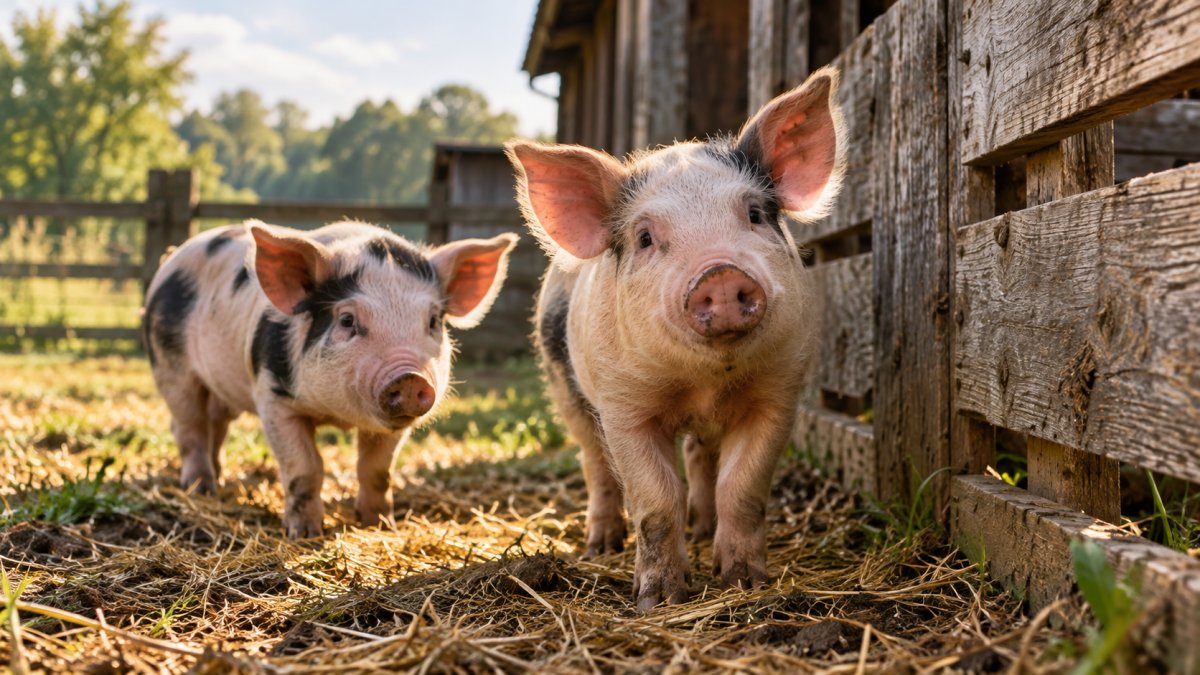
When I was growing up in rural Alabama, my maternal grandparents lived next door. My grandfather raised hogs, and I remember watching him slaughter them.
I don’t recall being particularly troubled by what I saw. Slaughtering hogs was simply something people did. The animals were raised, fed, and eventually killed for food. There was nothing unusual about it, at least not in the world I knew.
I accepted it because it was ordinary.
That was many decades ago.
Recently, as I’ve been researching and developing my seventeenth novel, The Boaz Slaughterhouse, I’ve found myself returning to those childhood memories. Not because I’ve uncovered something about my grandfather that I didn’t know, but because I’ve begun asking questions I never thought to ask when I was a boy.
What did those animals experience? Did they recognize danger? Did they suffer? And why did their suffering seem so unimportant to me?
I don’t remember asking any of those questions at the time.
I suppose that’s what troubles me most.
For much of my life, I ate meat without seriously considering the animals whose lives made those meals possible. I didn’t think about the circumstances in which they were raised, how they were transported, or what happened when they reached a slaughterhouse.
I was hardly unusual in that respect. Most people I knew lived much the same way.
And perhaps that’s where the more difficult question begins.
How do we learn to accept certain practices as perfectly normal, even when they involve suffering?
The answer, I suspect, has much to do with the circumstances into which we’re born. We inherit customs, beliefs, habits, and explanations long before we’re capable of examining them. By the time we begin thinking independently, much of what we consider normal has already been decided for us.
I’ve encountered this problem before.
For approximately sixty years, I lived within a religious tradition whose teachings I largely accepted. Only later did I begin questioning beliefs that had seemed beyond question. The process was uncomfortable. It required me to reconsider not only what I believed but why I had believed it.
Now I find myself confronting something similar concerning animals.
I grew up believing that raising and killing animals for food was a natural part of human life. Almost everyone around me believed the same thing. That widespread acceptance made the practice seem morally unremarkable.
But does something become morally acceptable simply because almost everyone accepts it?
And what happens when we begin examining the suffering hidden beneath an ordinary practice?
Those questions have become central to The Boaz Slaughterhouse.
I’m not writing the novel to reproduce my childhood or to put my grandfather on trial. I’m writing it because I’ve become interested in what happens when people are forced to reconsider something they’ve always regarded as normal.
Fiction provides an opportunity that an essay does not.
I can create characters who have spent their lives accepting the raising and slaughtering of animals without serious reflection. I can place those characters in circumstances that challenge their assumptions. I can explore their resistance, their justifications, their fears, and perhaps their willingness to change.
Some may question what they’ve always believed. Others may defend their convictions with extraordinary determination.
And I can allow readers to experience those conflicts through the characters’ lives rather than simply telling them what conclusions they should reach.
That’s an important distinction to me.
I have strong feelings about animal suffering. Those feelings helped bring this novel into existence. But a novel must be more than an author’s convictions dressed up as a story.
Its characters must be believable. Their choices must have consequences. Their conflicts must matter even to readers who disagree with the author.
Most importantly, the story must be worth reading.
As I work through the development of The Boaz Slaughterhouse, I keep returning to the boy who watched his grandfather slaughter hogs without thinking much about what he was witnessing.
I don’t condemn that boy. He understood the world largely as the people around him understood it.
But I’m no longer that boy.
And I wonder how many other things I’ve accepted throughout my life simply because they were familiar, customary, or almost universally approved.
Perhaps that’s one of the reasons I continue writing novels.
A story gives me a way to examine questions that have become too important to ignore.
The Boaz Slaughterhouse is growing out of one of those questions:
What happens when something we’ve always regarded as ordinary becomes something we can no longer accept without question?
