Getting to Know a Man Who Doesn’t Exist

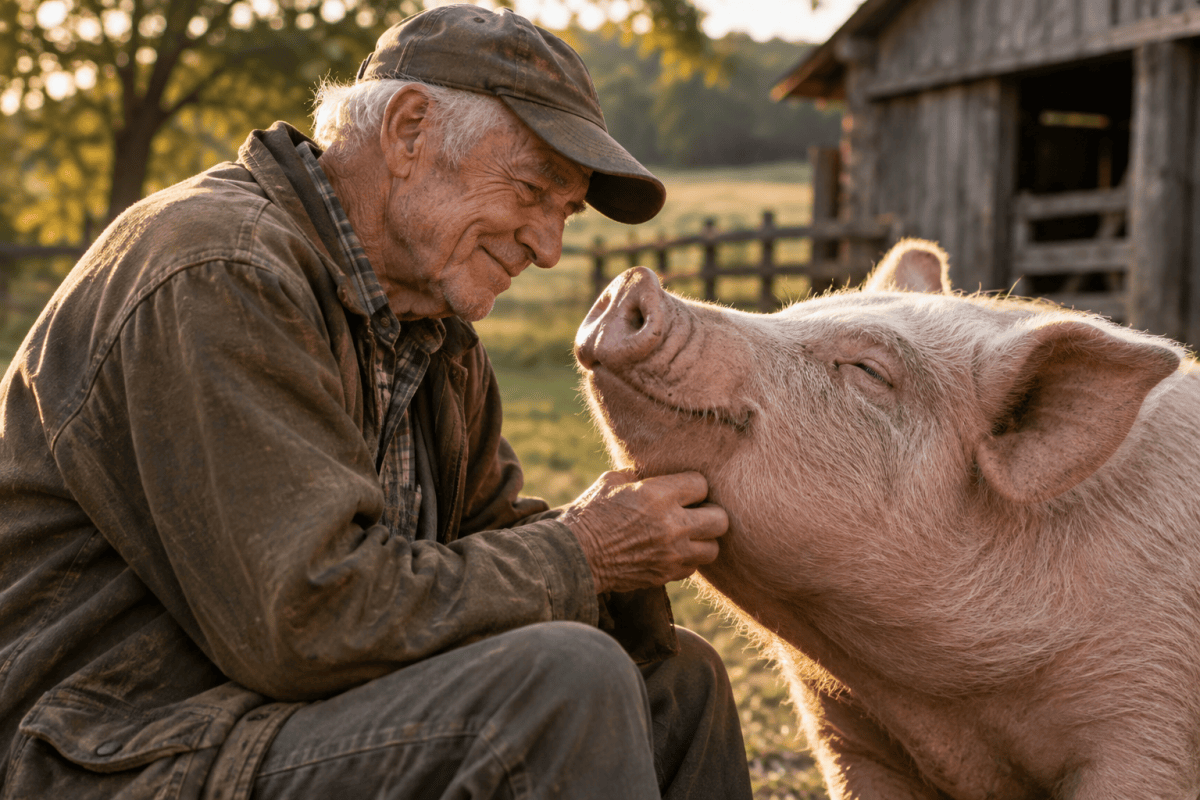
I’ve been spending a good deal of time lately with an eighty-five-year-old man who doesn’t exist.

He’s the protagonist of my seventeenth novel, The Boaz Slaughterhouse, which I’m currently developing.

He lives on a small farm in rural Alabama, where he’s raised hogs for much of his life. But farming wasn’t his principal occupation. He spent his working years as a vocational agriculture teacher, helping generations of young people understand the science, practices, and responsibilities of agriculture.

He’s an educated man, familiar with both the classroom and the barnyard. He knows livestock, not simply from textbooks or lessons he once taught, but from decades of personal experience.

And then there’s Molly.

Molly is an elderly sow, weighing somewhere between six and seven hundred pounds. She’s lived on his farm for years, and over time, their relationship has become something quite different from what most people might imagine between a farmer and a hog.

She’s become his companion.

He knows her habits. He recognizes her moods. He’s familiar with her preferences and the particular ways she responds to him.

And she knows him.

At least, that’s how I’m beginning to imagine their relationship.

As I’ve been developing these two characters, I’ve found myself thinking about how complicated human beings can be.

We tend to describe people in simple terms. A farmer. A teacher. A parent. A believer. A skeptic.

But those descriptions seldom tell us very much about what a person thinks, what matters most to him, or how he might respond when circumstances challenge the life he’s known.

My fictional farmer has spent decades learning, teaching, and practicing agriculture. He understands the traditional purposes for which livestock are raised. He’s participated in those practices himself.

And yet, his relationship with Molly has become deeply personal.

I’m interested in that combination of experiences.

Not because I’ve already decided what it means, but because it gives me something to explore as I develop his character.

One of the challenges of writing fiction is creating people who are more than collections of characteristics.

I can decide that a man is eighty-five years old, that he’s a retired teacher, that he owns a small farm, and that he’s particularly fond of an elderly sow.

Those are facts about him.

But facts alone don’t make a character believable.

I need to understand something of the life that produced him. What experiences shaped his thinking? What does he value? What does he fear losing? What assumptions has he carried through life without much examination?

And how might he respond when the circumstances of his life begin to change?

For now, I know that my farmer wants to remain on his land for whatever years he has left. He wants Molly to remain there with him.

Neither wish seems unreasonable.

But a novel needs conflict, and circumstances are developing that may make those simple desires increasingly difficult to fulfill.

That’s where the external story begins.

Beneath that story, however, lies something else.

The farmer brings eighty-five years of experiences, relationships, convictions, disappointments, and memories into the difficulties he now faces.

He won’t respond to those difficulties as I would necessarily respond. Nor should he.

He must respond as the particular man I’ve imagined would respond.

And that’s where writing fiction becomes especially interesting to me.

As an author, I bring my own experiences and beliefs to every story I write. Some of those beliefs are strongly held. But I don’t want my characters to become little more than vehicles for expressing my opinions.

I want them to be believable human beings, capable of making decisions I might disagree with, defending convictions I don’t share, and sometimes surprising me with their responses.

That requires giving them histories and perspectives of their own.

It also requires resisting the temptation to explain everything about them before the story has had an opportunity to unfold.

I’ve discovered that developing a character sometimes means asking questions for which I don’t yet have answers.

Not every question needs to become a theme. Not every contradiction needs to be resolved. And not every character needs to undergo some dramatic transformation.

Sometimes the most interesting thing about a person is the way several seemingly inconsistent qualities exist together in the same life.

As I continue developing The Boaz Slaughterhouse, I’m learning more about this elderly teacher, his farm, and his unusual companion.

I know what he wants.

I have a growing understanding of what’s standing in his way.

But there are still things about him I haven’t discovered.

And perhaps that’s as it should be.

After all, if I already knew everything about this man, there would be considerably less for me to explore as I write his story.
The Things We Learn to Regard as Ordinary

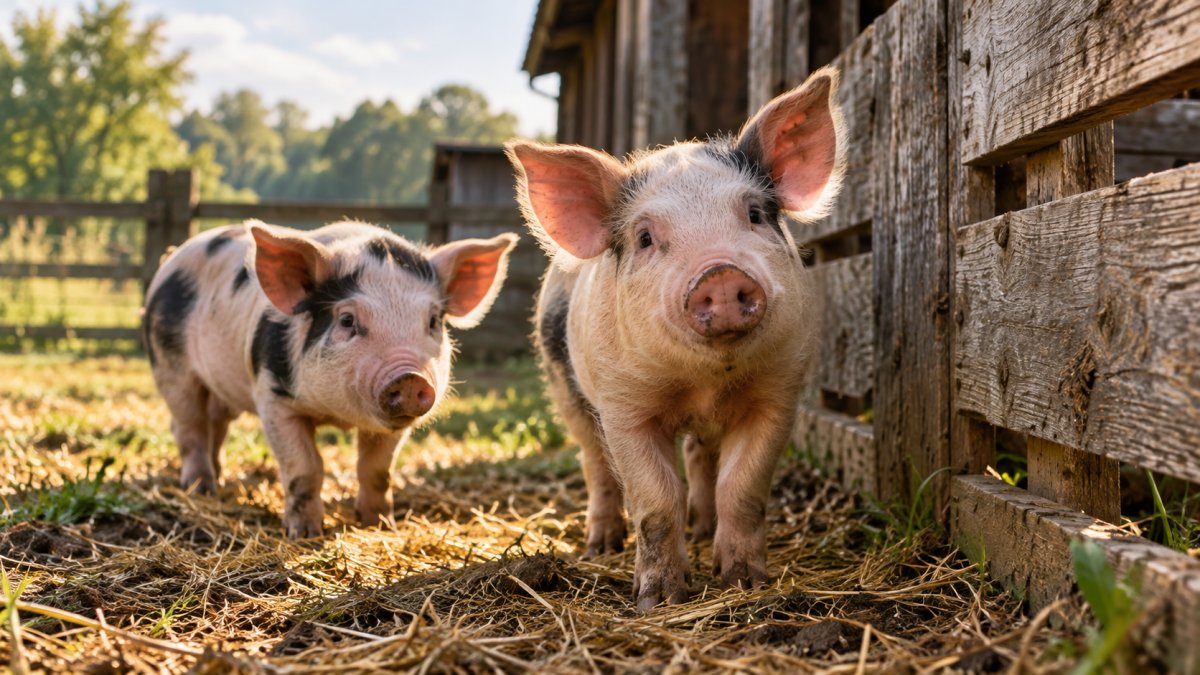
When I was growing up in rural Alabama, my maternal grandparents lived next door. My grandfather raised hogs, and I remember watching him slaughter them.

I don’t recall being particularly troubled by what I saw. Slaughtering hogs was simply something people did. The animals were raised, fed, and eventually killed for food. There was nothing unusual about it, at least not in the world I knew.

I accepted it because it was ordinary.

That was many decades ago.

Recently, as I’ve been researching and developing my seventeenth novel, The Boaz Slaughterhouse, I’ve found myself returning to those childhood memories. Not because I’ve uncovered something about my grandfather that I didn’t know, but because I’ve begun asking questions I never thought to ask when I was a boy.

What did those animals experience? Did they recognize danger? Did they suffer? And why did their suffering seem so unimportant to me?

I don’t remember asking any of those questions at the time.

I suppose that’s what troubles me most.

For much of my life, I ate meat without seriously considering the animals whose lives made those meals possible. I didn’t think about the circumstances in which they were raised, how they were transported, or what happened when they reached a slaughterhouse.

I was hardly unusual in that respect. Most people I knew lived much the same way.

And perhaps that’s where the more difficult question begins.

How do we learn to accept certain practices as perfectly normal, even when they involve suffering?

The answer, I suspect, has much to do with the circumstances into which we’re born. We inherit customs, beliefs, habits, and explanations long before we’re capable of examining them. By the time we begin thinking independently, much of what we consider normal has already been decided for us.

I’ve encountered this problem before.

For approximately sixty years, I lived within a religious tradition whose teachings I largely accepted. Only later did I begin questioning beliefs that had seemed beyond question. The process was uncomfortable. It required me to reconsider not only what I believed but why I had believed it.

Now I find myself confronting something similar concerning animals.

I grew up believing that raising and killing animals for food was a natural part of human life. Almost everyone around me believed the same thing. That widespread acceptance made the practice seem morally unremarkable.

But does something become morally acceptable simply because almost everyone accepts it?

And what happens when we begin examining the suffering hidden beneath an ordinary practice?

Those questions have become central to The Boaz Slaughterhouse.

I’m not writing the novel to reproduce my childhood or to put my grandfather on trial. I’m writing it because I’ve become interested in what happens when people are forced to reconsider something they’ve always regarded as normal.

Fiction provides an opportunity that an essay does not.

I can create characters who have spent their lives accepting the raising and slaughtering of animals without serious reflection. I can place those characters in circumstances that challenge their assumptions. I can explore their resistance, their justifications, their fears, and perhaps their willingness to change.

Some may question what they’ve always believed. Others may defend their convictions with extraordinary determination.

And I can allow readers to experience those conflicts through the characters’ lives rather than simply telling them what conclusions they should reach.

That’s an important distinction to me.

I have strong feelings about animal suffering. Those feelings helped bring this novel into existence. But a novel must be more than an author’s convictions dressed up as a story.

Its characters must be believable. Their choices must have consequences. Their conflicts must matter even to readers who disagree with the author.

Most importantly, the story must be worth reading.

As I work through the development of The Boaz Slaughterhouse, I keep returning to the boy who watched his grandfather slaughter hogs without thinking much about what he was witnessing.

I don’t condemn that boy. He understood the world largely as the people around him understood it.

But I’m no longer that boy.

And I wonder how many other things I’ve accepted throughout my life simply because they were familiar, customary, or almost universally approved.

Perhaps that’s one of the reasons I continue writing novels.

A story gives me a way to examine questions that have become too important to ignore.

The Boaz Slaughterhouse is growing out of one of those questions:

What happens when something we’ve always regarded as ordinary becomes something we can no longer accept without question?

The Questions That Won’t Leave Me Alone

I’ve written sixteen novels, and although their stories and characters differ, I’ve come to recognize something they have in common.

They begin, in one way or another, with questions I can’t quite leave alone.

Some come from things I’ve experienced. Others from something I’ve read, witnessed, or heard someone say. Sometimes the beginning is no more than a passing observation that troubles me enough to keep thinking about it.

Recently, I read about people who believed God had personally guided them to a particular place and continued to direct their lives. Their certainty caught my attention.

Not because I doubted their sincerity. But because I wondered how anyone could know such a thing.

Around the same time, I watched a documentary depicting the lives of Haitian sugarcane workers in the Dominican Republic. The poverty, exploitation, and suffering were difficult to watch.

I found myself thinking about those two very different circumstances. People enjoying lives they understand as blessings from God. Other people enduring hardships that seem almost beyond comprehension.

Why these lives? Why such different circumstances? And how can anyone claim to know what God is doing in either?

For much of my life, I accepted religious beliefs that I eventually came to question. That experience left me with a lasting concern about certainty—particularly our willingness to claim knowledge of things we cannot demonstrate.

But the questions extend well beyond religion.

Why do we accept some things without questioning them? How much of what we believe comes from our upbringing, our circumstances, and the people around us? What happens when experience challenges convictions we’ve held for most of our lives?

And perhaps most troubling, how do we become comfortable with suffering when it belongs to someone else?

I’m not interested in turning these questions into sermons. I’m interested in what happens when ordinary people confront them.

That’s where fiction comes in.

A novel gives me the opportunity to place a character in circumstances where an important belief is challenged, where an uncomfortable truth becomes impossible to ignore, or where doing what seems right carries a substantial personal cost.

The character doesn’t have to agree with me. In fact, the story may be more interesting when he doesn’t.

I want to understand how he thinks, why he believes what he believes, and what he does when life refuses to cooperate with those beliefs.

My current novel in progress, The Boaz Slaughterhouse, has grown from questions about animals, suffering, responsibility, and the things human beings have learned to regard as ordinary.

I don’t yet know everything the story will reveal.

But I know why I’m writing it.

There are questions I haven’t finished asking.

And for me, writing novels is one way to keep asking them.