Novelist / Story Coach / Observer — Fiction rooted in Boaz, Alabama
Author: Richard L. Fricks
Richard L. Fricks is a novelist, former attorney and CPA, Fictionary Certified StoryCoach Editor, and creator of The Pencil-Driven Life. He lives in rural North Alabama near Boaz, where much of his fiction and reflection remain rooted. His work explores story, inherited purpose, faith and doubt, family pressure, moral contradiction, consciousness, ordinary life, and the practice of beginning again with a pencil.
Lillian located the cabin’s key without trouble or fanfare. It hung on a nail six feet above the creek on a tree whose roots splayed into the rushing water like a web of miniature piers. Thankfully, someone had strategically placed flat rocks to use as steppingstones to cross the creek. Lillian executed the ten-foot walk flawlessly. My right foot slipped into the cold water halfway across. I somehow avoided a complete dunk in the fast moving but shallow water. Without ridicule or sympathy, Lillian led us to the front side of a log cabin, sitting dark, silent, and lifeless. “Walk three hundred feet and hide.” She pointed away from the cabin along a tree-lined narrow gravel road. “Use this to warn me if you need to.” She unzipped her fanny pack and removed a set of walkie-talkies, something I hadn’t seen in half a century. If I didn’t know better, I’d think Wonder Woman had spent a career in the military.
I paused at the road’s edge and wanted to ask a dozen questions. Like, where are you going to put the recorders? What if they bugged the house with motion detectors, cameras, alarms? “Message me when you’re done.” Lillian nodded and shushed me away.
A football field’s walk brought alarm. I had just rounded a curve and saw lights in the distance. It took me a minute, but I finally figured it out. The three corners of Ted King’s house had floodlights, and they were on. I eased into a ditch and struggled to climb what, in my youth, would be a shallow embankment. I used a smaller tree to pull myself up. The pain from my hurt shoulder was the second thing that reminded me of my age. I found a large tree to hide behind and messaged Lillian. “Base to Alpha. Are you okay?”
“Damn, you scared me. Is something wrong?” I hoped she had already completed the mission and was making her way to her post across the road from the cabin’s front porch.
“Just checking to make sure we’re connected.” I rolled my eyes as I repeated my statement to myself.
“We are. Believe me.” I think I heard her sigh. “Okay, I’m finished. You can come back. We need to take our position and get ready to snap some photos.”
“Roger over and out.” I did not know why I was acting so silly. It made me wonder whether the Vicodin had a long-term effect.
I used the same sapling to return to the ditch and road. Ten steps toward Lillian I heard a sound, like distant thunder, but that seemed unlikely given the weather. Instead, a slow-moving vehicle came to mind. After making a 180-degree turn, I saw a dim, expansive light filtering through an ocean of trees. I removed my walkie-talkie and announced. “I think we’ve got company.”
“Hide. Now. Don’t come any further.” Lillian’s order matched my intent.
I jammed the walkie-talkie into my pocket and hustled back to my first hideout. By now, I could see a pair of headlights coming my way. I grabbed the sapling and pulled. A thin layer of ice had formed where I’d last gripped my hands. This time, I slipped and fell to my knees. When I regained my footing. I removed a bandanna from my back pocket and wrapped it tightly around the small tree. This time I made it up the embankment, but my walkie-talkie didn’t. It fell out of my pants pocket and tumbled into the ditch when I stood. I was out of time. I reached my hiding spot as a red Corvette rounded a curve a hundred feet from where I squatted. Damn, Lillian is on her own.
It felt like an hour before the second vehicle arrived. Although I couldn’t see the rear bumper and tag, I knew it was the same jacked-up blue Chevrolet that had tried to kill me. For the first time since the red car passed, I stood. I was the coldest I had ever been. Thankfully, the rain, now sleet, hadn’t penetrated my clothes. But only because of my windbreaker jacket and the pair of rain-pants Lillian had insisted I slip on before backing out of her garage.
I worried about Lillian but didn’t know what to do. So, I did nothing but follow orders, the last one being, ‘Hide. Now. Don’t come any further.’
Fortunately, Ray and Buddy opposed chattering. In less than ten minutes, I heard the blue truck rumble and figured the money exchange was over. I painfully eased to the other side of the tree and waited. The sound grew louder, and the truck picked up speed. I stayed put another ten minutes until the red Corvette crawled by. Hopefully, it was my imagination, but it seemed to slow down when passing my spot.
I waited another two minutes before repelling the embankment and mentally punishing myself for leaving my red bandanna wrapped around the sapling. I grabbed the walkie-talkie from the ditch and jogged the best I could toward Lillian.
Wonder Woman was sitting on the cabin’s front porch steps when I ended my sprint. “I thought you’d left me,” she said, standing and throwing her backpack across her shoulder.
“No, just a little clumsy these days.”
Lillian gave me a quick head-to-toe inspection. “I see you like playing in the mud.” At least she smiled.
I wanted to explain, but she waved me off and onward. I read her action as ‘shut up and follow me.’ “Don’t we need to remove the recorders?”
“Done. Now, come on. I can’t wait to weigh our catch.” Her last phrase gained clarity during our twenty-minute return trek to the Clausen’s. The sleet was now mixed with snow, and I was still freezing.
Ray had arrived first. In a red Corvette. He had brought a friend. None other than Mayor King himself. Lillian had taken a dozen photos before the two had gone inside the cabin. Buddy had arrived in the blue truck ten minutes later. More photos. The money exchange had taken longer than expected. The second surprise arrived when Buddy exited the cabin and walked to the passenger side of his truck. Through a lowered window, a hand and half an arm emerged to secure a thick envelope and pull it inside the cab. More photos. Ray and the Mayor had ridden away a few minutes later. More photos.
It was nine-thirty before we arrived at Lillian’s. She’d insisted we buy coffee. I hadn’t resisted but was glad she removed her black face before entering McDonald’s drive-through. I’d kept a low profile in the passenger seat, semi-concealed under an overly stretched hoodie.
After the two of us changed out of our combat uniforms, we again settled around the kitchen table. Lillian removed the two recording devices from her backpack and shared how the two she’d concealed at the Lodge sent her updates because of Wi-Fi, something Ted’s cabin didn’t have.
It pleased Lillian that both recorders matched conversations. The extra cost had proved valuable. With one secured on a front porch beam and the other hidden inside on a bookshelf, the captured words were identical.
Ray: “Damn, it’s freezing out here. Let’s get inside.”
Ted: “No shit.” Pause. “That’s weird.”
Ray: “What?”
Ted: “The door’s unlocked.”
Ray: “You probably forgot.”
Ted: “I doubt it, but it has been weeks since I’ve been here. I’m calling Julie.”
Ray: “Forget it, just open the damn door.”
Rustling noises, including cabinet doors slamming.
Ted: “Shit. No Jack. Somebody’s been here.”
Ray: “Probably teenagers. Stole your booze. Forgot to lock up.” Thunderous laughter.
Ted: “I’m headed to the bedroom. Buddy can’t see me.”
Long pause. Minutes pass.
Ray (louder this time): “He’s here.”
Ted (faintly): “Roger.”
Lillian and I listened to the money-exchange scene three times. The conversation was as expected. Except for one part. There, through an angry back and forth, we learned the name of the tall man whose charred body was now lying on a cold stainless-steel table in Birmingham at the Alabama Department of Forensic Sciences. Eric Snyder was from Guntersville, and, like Buddy, an ex-con experienced in sophisticated detonation methodologies. Ray accused Buddy of being stupid and incompetent.
Buddy shared his theory, a hypothesis. A few minutes before eleven, Eric, as instructed, had reentered the Hunt House for one last inspection. Although the gas explosion was scheduled for midnight, something went wrong. Buddy blamed Eric and his steel-toed boots. Ray had repeated his demeaning accusation. A money argument ensued, with Ray threatening to pay only half. Buddy countered with his own threat, “You and me both will rot in jail if you don’t pay every fucking cent you promised.”
For the next two hours, Lillian and I bantered back and forth about the best course of action to pursue. We settled on a presentation of our evidence to Micaden and Connor with hopes one or both would connect the last and most vital link in the chain, from Ray and Buddy’s arson and murder to the halls of justice.
***
At midnight, I remained chilled from the night’s activities. Lillian’s central heat sucked. “I’ve got to go. Kyla’s propane heater is beckoning me home.” I stood, walked to the back door and reached for my duffel. When I turned back toward the table, Lillian was standing less than a foot away.
“Before you go, I have to say thanks. Unless something drastic happens, I’m on the quick road to my ultimate freedom. And I owe it all to you.” She stepped closer and placed her hands, palms out, on my chest. Our eyes met.
“Truth is, you didn’t need me. You’re a one-woman platoon. I just got in the way.” She laughed and shook her head, shifting strands of still-tousled hair away from her eyes. She laid the left side of her face against my cheek and slid her hands around my waist. Her lavender scent was mesmerizing. I almost put my hands in my pants pocket but connected them around her back slightly above her hips.
“Lee, I’m so sorry. Can you forgive me?” I knew what she was thinking and subconsciously I’d waited for some arrangement of these words for over half a century. She pressed her body against mine.
“I can. And I do, but next time, I get to use the Nikon.” She raised and cocked her head sideways. Smiled. Her forehead creased.
“You dufus.” She released her grip slightly. “You don’t know what I’m talking about.”
My body wanted to disconnect my hands, slide one up her back to the base of her neck, and pull her lips toward mine. But my mind questioned whether I was ready. “You retard, I know, and yes, I forgive you.”
Unlike me, Lillian responded to her body’s desire. She laid her palms across my cheeks, pulled me forward, and planted a soft kiss on my lips. When I didn’t immediately respond, she said, “Lee, I love you. I always have.”
My mind flashed forward to Lillian’s bed and her naked body. I was losing my struggle with temptation. But I knew I’d hate myself in the morning. I admitted to Lillian my lustful thoughts and ended our night with, “I’m just not ready.”
With that, I retreated through the back door, and across the porch and yard to the Hyundai. I drove home aching for Wonder Woman’s soft kisses, sexy words, and sensuous touches.
Biking is something else I both love and hate. It takes a lot of effort but does provide good exercise and most days over an hour to listen to a good book or podcast. I especially like having ridden.
Here’s my bike, a Rockhopper by Specialized. I purchased it November 2021 from Venture Out in Guntersville; Mike is top notch! So is the bike, and the ‘old’ man seat I salvaged from an old Walmart bike.
When President Donald J. Trump’s eldest son took the stage outside the Georgia Republican Party headquarters two days after the 2020 election, he likened what lay ahead to mortal combat.
“Americans need to know this is not a banana republic!” Donald Trump Jr. shouted, claiming that Georgia and other swing states had been overrun by wild electoral shenanigans. He described tens of thousands of ballots that had “magically” shown up around the country, all marked for Joseph R. Biden Jr., and others dumped by Democratic officials into “one big box” so their authenticity could not be verified.
Mr. Trump told his father’s supporters at the news conference — who broke into chants of “Stop the steal!” and “Fraud! Fraud!” — that “the number one thing that Donald Trump can do in this election is fight each and every one of these battles, to the death!”
Over the two months that followed, a vast effort unfolded on behalf of the lame-duck president to overturn the election results in swing states across the country. But perhaps nowhere were there as many attempts to intervene as in Georgia, where Fani T. Willis, the district attorney of Fulton County, is now poised to bring an indictment for a series of brazen moves made on behalf of Mr. Trump in the state after his loss and for lies that the president and his allies circulated about the election there.
Mr. Trump has already been indicted three times this year, most recently in a federal case brought by the special prosecutor Jack Smith that is also related to election interference. But the Georgia case may prove the most expansive legal challenge to Mr. Trump’s attempts to cling to power, with nearly 20 people informed that they could face charges.
It could also prove the most enduring: While Mr. Trump could try to pardon himself from a federal conviction if he were re-elected, presidents cannot pardon state crimes.
Perhaps above all, the Georgia case assembled by Ms. Willis offers a vivid reminder of the extraordinary lengths taken by Mr. Trump and his allies to exert pressure on local officials to overturn the election — an up-close portrait of American democracy tested to its limits.
There was the infamous call that the former president made to Brad Raffensperger, Georgia’s Republican secretary of state, during which Mr. Trump said he wanted to “find” nearly 12,000 votes, or enough to overturn his narrow loss there. Mr. Trump and his allies harassed and defamed rank-and-file election workers with false accusations of ballot stuffing, leading to so many vicious threats against one of them that she was forced into hiding.
They deployed fake local electors to certify that Mr. Trump had won the election. Within even the Justice Department, an obscure government lawyer secretly plotted with the president to help him overturn the state’s results.
And on the same day that Mr. Biden’s victory was certified by Congress, Trump allies infiltrated a rural Georgia county’s election office, copying sensitive software used in voting machines throughout the state in their fruitless hunt for ballot fraud.
The Georgia investigation has encompassed an array of high-profile allies, from the lawyers Rudolph W. Giuliani, Kenneth Chesebro and John Eastman, to Mark Meadows, the White House chief of staff at the time of the election. But it has also scrutinized lesser-known players like a Georgia bail bondsman and a publicist who once worked for Kanye West.
As soon as Monday, there could be charges from a Fulton County grand jury after Ms. Willis presents her case to them. The number of people indicted could be large: A separate special grand jury that investigated the matter in an advisory capacity last year recommended more than a dozen people for indictment, and the forewoman of the grand jury has strongly hinted that the former president was among them.
If an indictment lands and the case goes to trial, a regular jury and the American public will hear a story that centers on nine critical weeks from Election Day through early January in which a host of people all tried to push one lie: that Mr. Trump had secured victory in Georgia. The question before the jurors would be whether some of those accused went so far that they broke the law.
A recording of Mr. Trump talking to Brad Raffensperger, secretary of state of Georgia, was played during a hearing by the Jan. 6 Committee last October. Credit…Alex Wong/Getty Images
Unleashing ‘Hate and Fury’
It did not take long for the gloves to come off.
During the Nov. 5 visit by Donald Trump Jr., the Georgia Republican Party was already fracturing. Some officials believed they should focus on defending the seats of the state’s two Republican senators, Kelly Loeffler and David Perdue, who were weeks away from runoff elections, rather than fighting a losing presidential candidate’s battles.
But according to testimony before the Jan. 6 committee by one of the Trump campaign’s local staffers, Mr. Trump’s son was threatening to “tank” those Senate races if there was not total support for his father’s effort. (A spokesman for Donald Trump Jr. disputed that characterization, noting that the former president’s son later appeared in ads for the Senate candidates.)
Four days later, the two senators called for Mr. Raffensperger’s resignation. The Raffensperger family was soon barraged with threats, leading his wife, Tricia, to confront Ms. Loeffler in a text message: “Never did I think you were the kind of person to unleash such hate and fury.”
Understand Georgia’s Investigation of Election Interference
Card 1 of 5
A legal threat to Trump. Fani Willis, the Atlanta area district attorney, has been investigating whether former President Donald Trump and his allies interfered with the 2020 election in Georgia. The case could be one of the most perilous legal problems for Trump. Here’s what to know:
What are prosecutors looking at? In addition to Trump’s call to Raffensperger, Willis has homed in on a plot by Trump allies to send fake Georgia electors to Washington and misstatements about the election results made before the state legislature by Rudy Giuliani, who spearheaded efforts to keep Trump in power as his personal lawyer. An election data breach in Coffee County, Ga., is also part of the investigation.
The potential charges. Experts say that Willis appears to be building a case that could target multiple defendants with charges of conspiracy to commit election fraud or racketeering-related charges for engaging in a coordinated scheme to undermine the election. The grand jury, which recently concluded its work, recommended indictments for multiple people, the forewoman of the jury said.
Four other battleground states had also flipped to Mr. Biden, but losing Georgia, the only Deep South state among them, seemed particularly untenable for Mr. Trump. His margin of defeat there was one of the smallest in the nation. Republicans controlled the state, and as he would note repeatedly in the aftermath, his campaign rallies in Georgia had drawn big, boisterous crowds.
By the end of November, Mr. Trump’s Twitter feed had become a font of misinformation. “Everybody knows it was Rigged” he wrote in a tweet on Nov. 29. And on Dec. 1: “Do something @BrianKempGA,” he wrote, referring to Gov. Brian Kemp of Georgia, a Republican. “You allowed your state to be scammed.”
But these efforts were not gaining traction. Mr. Raffensperger and Mr. Kemp were not bending. And on Dec. 1, Mr. Trump’s attorney general, William P. Barr, announced that the Department of Justice had found no evidence of voting fraud “on a scale that could have effected a different outcome in the election.”
A Show for Lawmakers
It was time to turn up the volume.
Mr. Giuliani was on the road, traveling to Phoenix and Lansing, Mich., to meet with lawmakers to convince them of fraud in their states, both lost by Mr. Trump. Now, he was in Atlanta.
Even though Mr. Trump’s loss in Georgia had been upheld by a state audit, Mr. Giuliani made fantastical claims at a hearing in front of the State Senate, the first of three legislative hearings in December 2020.
Rudolph Giuliani at a legislative hearing at the Georgia State Capitol in Atlanta in December 2020.Credit…Rebecca Wright/Atlanta Journal-Constitution, via Associated Press
He repeatedly asserted that machines made by Dominion Voting Systems had flipped votes from Mr. Trump to Mr. Biden and changed the election outcome — false claims that became part of Dominion defamation suits against Fox News, Mr. Giuliani and a number of others.
Mr. Giuliani, then Mr. Trump’s personal lawyer, also played a video that he said showed election workers pulling suitcases of suspicious ballots from under a table to be secretly counted after Republican poll watchers had left for the night.
He accused two workers, a Black mother and daughter named Ruby Freeman and Wandrea Moss, of passing a suspicious USB drive between them “like vials of heroin or cocaine.” Investigators later determined that they were passing a mint; Mr. Giuliani recently admitted in a civil suit that he had made false statements about the two women.
Other Trump allies also made false claims at the hearing with no evidence to back them up, including that thousands of convicted felons, dead people and others unqualified to vote in Georgia had done so.
John Eastman, a lawyer advising the Trump campaign, claimed that “the number of underage individuals who were allowed to register” in the state “amounts allegedly up to approximately 66,000 people.”
That was not remotely true. During an interview last year, Mr. Eastman said that he had relied on a consultant who had made an error, and there were in fact about 2,000 voters who “were only 16 when they registered.”
But a review of the data he was using found that Mr. Eastman was referring to the total number of Georgians since the 1920s who were recorded as having registered before they were allowed. Even that number was heavily inflated due to data-entry errors common in large government databases.
The truth: Only about a dozen Georgia residents were recorded as being 16 when they registered to vote in 2020, and those appeared to be another data-entry glitch.
Trump supporters protesting election results at State Farm Arena in Atlanta in the days following the 2020 election.Credit…Audra Melton for The New York Times
The President Calling
In the meantime, Mr. Trump was working the phones, trying to directly persuade Georgia Republican leaders to reject Mr. Biden’s win.
He called Governor Kemp on Dec. 5, a day after the Trump campaign filed a lawsuit seeking to have the state’s election results overturned. Mr. Trump pressured Mr. Kemp to compel lawmakers to come back into session and brush aside the will of the state’s voters.
Mr. Kemp, who during his campaign for governor had toted a rifle and threatened to “round up illegals” in an ad that seemed an homage to Mr. Trump, rebuffed the idea.
Two days later, Mr. Trump called David Ralston, the speaker of the Georgia House, with a similar pitch. But Mr. Ralston, who died last year, “basically cut the president off,” a member of the special grand jury in Atlanta who heard his testimony later told The Atlanta Journal Constitution. “He just basically took the wind out of the sails.”
By Dec. 7, Georgia had completed its third vote count, yet again affirming Mr. Biden’s victory. But Trump allies in the legislature were hatching a new plan to defy the election laws that have long been pillars of American democracy: They wanted to call a special session and pick new electors who would cast votes for Mr. Trump.
Never mind that Georgia lawmakers had already approved representatives to the Electoral College reflecting Biden’s win in the state, part of the constitutionally prescribed process for formalizing the election of a new president. The Trump allies hoped that the fake electors and the votes they cast would be used to pressure Vice President Mike Pence not to certify the election results on Jan. 6.
Mr. Kemp issued a statement warning them off: “Doing this in order to select a separate slate of presidential electors is not an option that is allowed under state or federal law.”
The Fake Electors Meet
Rather than back down, Mr. Trump was deeply involved in the emerging plan to enlist slates of bogus electors.
Mr. Trump called Ronna McDaniel, the head of the Republican National Committee, to enlist her help, according to Ms. McDaniel’s House testimony. By Dec. 13, as the Supreme Court of Georgia rejected an election challenge from the Trump campaign, Robert Sinners, the Trump campaign’s local director of Election Day operations, emailed the 16 fake electors, directing them to quietly meet in the capitol building in Atlanta the next day.
Mr. Trump’s top campaign lawyers were so troubled by the plan that they refused to take part. Still, the president tried to keep up the pressure using his Twitter account. “What a fool Governor @BrianKempGA of Georgia is,” he wrote in a post just after midnight on Dec. 14, adding, “Demand this clown call a Special Session.”
Ronna McDaniel, chair of the Republican National Committee, at a news conference following the election in 2020.Credit…Al Drago for The New York Times
Later that day, the bogus electors met at the Statehouse. They signed documents that claimed they were Georgia’s “duly elected and qualified electors,” even though they were not.
In the end, their effort was rebuffed by Mr. Pence.
In his testimony to House investigators, Mr. Sinners later reflected on what took place: “I felt ashamed,” he said.
A Guide to the Various Trump Investigations
Confused about the inquiries and legal cases involving former President Donald Trump? We’re here to help.
Key Cases and Inquiries: The former president faces several investigations at both the state and the federal levels, into matters related to his business and political careers. Here is a close look at each.
What if Trump Is Convicted?: Will any of the proceedings hinder Trump’s 2024 presidential campaign? Can a convicted felon even run for office? Here is what we know, and what we don’t know.
Moves in the White House
With other efforts failing, the White House chief of staff, Mark Meadows, got personally involved. Just before Christmas, he traveled to suburban Cobb County, Ga., during its audit of signatures on mail-in absentee ballots, which had been requested by Mr. Kemp.
Mr. Meadows tried to get into the room where state investigators were verifying the signatures. He was turned away. But he did meet with Jordan Fuchs, Georgia’s deputy secretary of state, to discuss the audit process.
During the visit, Mr. Meadows put Mr. Trump on the phone with the lead investigator for the secretary of state’s office, Frances Watson. “I won Georgia by a lot, and the people know it,” Mr. Trump told her. “Something bad happened.”
Byung J. Pak, the U.S. attorney in Atlanta at the time, believed that Mr. Meadows’s visit was “highly unusual,” adding in his House testimony, “I don’t recall that ever happening in the history of the U.S.”
In Washington, meanwhile, a strange plot was emerging within the Justice Department to help Mr. Trump.
Mr. Barr, one of the most senior administration officials to dismiss the claims of fraud, had stepped down as attorney general, and jockeying for power began. Jeffrey Clark, an unassuming lawyer who had been running the Justice Department’s environmental division, attempted to go around the department’s leadership by meeting with Mr. Trump and pitching a plan to help keep him in office.
Mr. Trump, his daughter Ivanka Trump and Mark Meadows, his chief of staff, leaving the White House en route to Georgia in January 2021.Credit…Pool photo by Erin Scott
Mr. Clark drafted a letter to lawmakers in Georgia, dated Dec. 28, falsely claiming that the Justice Department had “identified significant concerns” regarding the state’s election results. He urged the lawmakers to convene a special session — a dramatic intervention.
Richard Donoghue, who was serving as acting deputy attorney general, later testified that he was so alarmed when he saw the draft letter that he had to read it “twice to make sure I really understood what he was proposing, because it was so extreme.”
The letter was never sent.
One Last Call
Still, Mr. Trump refused to give up. It was time to reach the man who was in charge of election oversight: Mr. Raffensperger, Georgia’s secretary of state.
On Jan. 2, he called Mr. Raffensperger and asked him to recalculate the vote. It was the call that he would later repeatedly defend as “perfect,” an hourlong mostly one-sided conversation during which Mr. Raffensperger politely but firmly rejected his entreaties.
“You know what they did and you’re not reporting it,” the president warned, adding, “you know, that’s a criminal — that’s a criminal offense. And you know, you can’t let that happen. That’s a big risk to you.”
Mr. Raffensperger was staggered. He later wrote that “for the office of the secretary of state to ‘recalculate’ would mean we would somehow have to fudge the numbers. The president was asking me to do something that I knew was wrong, and I was not going to do that.”
Mr. Trump seemed particularly intent on incriminating the Black women working for the county elections office, telling Mr. Raffensperger that Ruby Freeman — whom he mentioned 18 times during the call — was “a professional vote-scammer and hustler.”
“She’s one of the hot items on the internet, Brad,” Mr. Trump said of the viral misinformation circulating about Ms. Freeman, which had already been debunked by Mr. Raffensperger’s aides and federal investigators.
Trump-fueled conspiracy theories about Ms. Freeman and her daughter, Ms. Moss, were indeed proliferating. In testimony to the Jan. 6 committee last year, Ms. Moss recounted Trump supporters forcing their way into her grandmother’s home, claiming they were there to make a citizen’s arrest of her granddaughter; Ms. Freeman said that she no longer went to the grocery store.
Then, on Jan. 4, Ms. Freeman received an unusual overture.
Trevian Kutti, a Trump supporter from Chicago who had once worked as a publicist for Kanye West, persuaded Ms. Freeman to meet her at a police station outside Atlanta. Ms. Freeman later said that Ms. Kutti — who told her that “crisis is my thing,” according to a video of the encounter — had tried to pressure her into saying she had committed voter fraud.
“There is nowhere I feel safe. Nowhere,” Ms. Freeman said in her testimony, adding, “Do you know how it feels to have the president of the United States target you?”
Cathy Latham, center, in a light blue shirt, in the elections office in Coffee County, Ga., while a team working on Mr. Trump’s behalf made copies of voting equipment data in January 2021.Credit…Coffee County, Georgia, via Associated Press
‘Every Freaking Ballot’
On Jan. 7, despite the fake electors and the rest of the pressure campaign, Mr. Pence certified the election results for Mr. Biden. The bloody, chaotic attack on the Capitol the day before did not stop the final certification of Biden’s victory, but in Georgia, the machinations continued.
In a quiet, rural county in the southeastern part of the state, Trump allies gave their mission one more extraordinary try.
A few hours after the certification, a small group working on Mr. Trump’s behalf traveled to Coffee County, about 200 miles from Atlanta. A lawyer advising Mr. Trump had hired a company called SullivanStrickler to scour voting systems in Georgia and other states for evidence of fraud or miscounts; some of its employees joined several Trump allies on the expedition.
“We scanned every freaking ballot,” Scott Hall, an Atlanta-area Trump supporter and bail bondsman who traveled to Coffee County with employees of the company on Jan. 7, recalled in a recorded phone conversation. Mr. Hall said that with the blessing of the Coffee County elections board, the team had “scanned all the equipment” and “imaged all the hard drives” that had been used on Election Day.
A law firm hired by SullivanStrickler would later release a statement saying of the company, “Knowing everything they know now, they would not take on any further work of this kind.”
Others would have their regrets, too. While Mr. Trump still pushes his conspiracy theories, some of those who worked for him now reject the claims of rigged voting machines and mysterious ballot-stuffed suitcases. As Mr. Sinners, the Trump campaign official, put it in his testimony to the Jan. 6 committee last summer, “It was just complete hot garbage.”
By then, Ms. Willis’s investigation was well underway.
“An investigation is like an onion,” she said in an interview soon after her inquiry began. “You never know. You pull something back, and then you find something else.”
Danny Hakim is an investigative reporter. He has been a European economics correspondent and bureau chief in Albany and Detroit. He was also a lead reporter on the team awarded the 2009 Pulitzer Prize for Breaking News. More about Danny Hakim
Richard Fausset is a correspondent based in Atlanta. He mainly writes about the American South, focusing on politics, culture, race, poverty and criminal justice. He previously worked at The Los Angeles Times, including as a foreign correspondent in Mexico City. More about Richard Fausset
My iPhone beeped an email alert. I exited the Hardee’s restroom in Springville, where I’d relieved myself for the second time in twenty-five minutes. My frequent bathroom breaks should be an ongoing reminder I needed to see a urologist.
The email was from Bert Stallings. I settled into my Hyundai and read his response to the one I’d sent before leaving the airport. “The committee has approved your request for emergency leave.” Bert’s terseness reminded me of Micaden. Thankfully, my law school colleague’s words were more forthcoming when dealing with personal matters. Bert’s P.S. expression of care and sympathy for Rob’s health, and for speed and effectiveness in dealing with the Hunt House fire, was heartfelt and welcomed.
So far, the timing has been perfect. The last day of classes and the beginning of the Thanksgiving recess had been the 20th, a week ago today. Beginning next Monday, the students begin a seven-day reading period to prepare for their fall exams. The testing period will end December the 18th.
Thankfully, two of my colleagues, Lea Doherty and Steve Cunningham, had agreed to proctor my exams in Torts I, Appellate Advocacy, and Legal Writing, and overnight them to me for grading. I entered Reminders in Evernote to buy Lea and Steve a delightful Christmas gift, and to book a return flight that will put me in New Haven no later than Friday, January 29th, three days before the beginning of Spring term.
I started the Hyundai and exited Hardee’s parking lot. I’d always favored a tight schedule, knowing it helped occupy my mind and control my curiosity. However, two months seemed laughingly inadequate to alter the trajectory of Ray Archer’s life. In fact, it felt like a noose around my neck. And this said nothing about the time and effort required to grade a hundred and ten bluebooks, and prep for my Spring-term classes.
I called Lillian when I took the Highway 77 exit. She would know the answer to my question. “Hey.”
“Hi, it’s Lee.”
She didn’t pause. “I figured you were over Virginia by now.” Before Lillian finished her statement, I heard three bleats in unison. The goats. I doubted my former girlfriend had twisted into a tomboy and purchased her own Nubians. She had to be at Harding Hillside.
“Are you with Kyla? Outside?” My second question was unnecessary.
“Yes. Kind of. She’s in the barn.” Clear and cohesive speech is rare.
“Lillian, please don’t tell her it’s me. I’m in Attalla and need your help. I’ll tell sis later.”
“Okay. What do you need?” I heard Kyla ask Lillian to turn on a faucet.
“Can you meet at your house in thirty minutes?” I couldn’t imagine a scenario where Kyla didn’t sense it was me. Lillian wasn’t a good liar.
“I can. You didn’t tell me what this is about.”
“A stakeout. Tonight. Ray and Buddy. You know.”
Lillian ended our call with a “Thanks Justin for calling me back so soon. I’ll see you in half an hour.” I didn’t know Justin, but I suspected Lillian did, probably a plumber, an electrician, or a heating and air guy.
***
Lillian was sitting at her kitchen table staring at her open laptop when I walked in. Five minutes ago, she had sent a text telling me where to park and to enter through the back porch.
“Hey. Sit here.” Without greeting, she patted the extra chair positioned next to her own. I sat my duffel on the floor and did as instructed. With barely a glance, Lillian asked, “Do you know Barry and Vanessa Clausen?”
I craned my neck toward the laptop and Google Maps. “No. Never heard of them.” Lillian magnified Google Maps’ satellite view and used a number two pencil to point at a large house with an in-ground swimming pool nestled among a forest of trees. I gave her a confused look: cocked head and squinting eyebrows with creased forehead. I even held both hands palm up.
“Doesn’t matter, but I do. We’ll use their place to access Ted’s cabin.”
“Okay.” After half a century, I’d forgotten Lillian’s take-charge nature. If, and only if, it concerned a mystery. Normal stuff, like ‘the barn’s on fire’ (the girl loved candles in the barn loft) were boring and others (mostly me) could take care of them.
“Vanessa is CEO of Colormasters in Albertville. Her and Barry left Wednesday for Gatlinburg.” I didn’t need to ask how Lillian knew this. I wondered what Barry did for work.
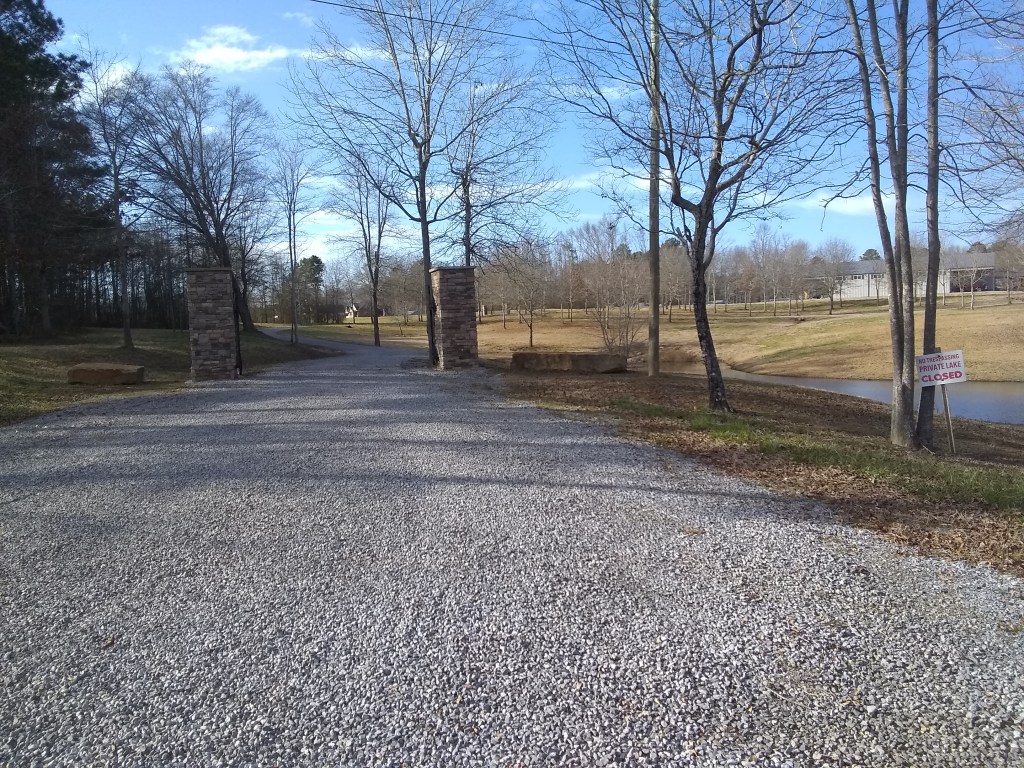
Over the next several minutes, Lillian provided all the context I needed. She started with geography. Bruce Road was the only access to Ted King’s estate. The arched brick entrance and paved driveway led to his grand, sprawling home with two turrets. A gravel road started just beyond an Olympic-sized pool and red metal lawn mower shed and led a quarter mile through a forest of trees to a log cabin Ted had built ten years ago as a ‘boys-night’ hangout. The gravel road ended at the cabin, but the forest continued another half mile to include and surround the Clausen’s home. Access to their place was via a long private driveway off Simpson Road to the north. From Lillian’s pencil pointing, I concluded there was no workable way for us to drive to Ted’s cabin, hide a vehicle, and make a safe getaway if needed. The only logical way for the two of us to witness the midnight meeting was to park at the Clausen’s and hike southward through the woods to the backside of Ted’s cabin. It didn’t sound fun, given the drizzling rain and the declining temperature.
Lillian next introduced me to Julie King, the current principal of Boaz High School. She is Mayor King’s wife. Sort of. Like Lillian, Julie is estranged from her husband. In fact, she is distraught over a failed relationship with a man named Carl Stallings, who married a woman thirty years his junior. They now live in Knoxville, Tennessee. I considered introducing Lillian to Bert Stallings but recognized she had already sidelined our conversation. “Julie lived at the cabin before she shacked up with Carl.”
“That’s helpful.” Lillian’s eyeroll told me to be quiet and listen. The laptop said it was approaching 9:00 p.m.
“Two years ago. Julie’s party became a sleepover. Just us five girls. She showed the hidden key in case any of us ever needed a safe house.” I kept quiet. If Lillian’s words were a book, she’d need an excellent editor. “We need to go inside and hide these.” Lillian reached to her left for two boxes lying on a chair tucked underneath the table. ‘Spyware’ was written across each black and gold box.
The smaller print said they were voice-activated recording and transmission devices. “Leftovers from the Lodge?”
Lillian laid one box on the table and started opening the other. “These came today. Pricier but longer reach.” At that moment, I realized the woman without a college degree had thought out our mission better than me, the seasoned attorney and law professor.
After reading the box, I offered an opinion and a fact: “Those will record voices and sounds, but not visuals, and the only camera I have is my iPhone.” Lillian scooted her chair backwards and whispered, “hold on.” She left the kitchen and returned with an expensive-looking camera.
“Nikon D7500 with a 70-200mm lens. The lens cost more than the camera.” Lillian shared, laying the expensive-looking camera in front of me for my inspection. I knew nothing about photography. My iPhone’s pointing and shooting didn’t count.
“Hobby?” Kyla had said Lillian never finished college. That apparently hadn’t stopped her education or curiosity.
“Mostly.” She then cut short my inspection and moved the Nikon with attached lens next to the Spyware. She untied the rubber band that was holding up her hair and asked, “You want coffee?” I pinched my leg to divert my attention and avoid an instant trip to 1971. Rachel said nothing.
“Not now, maybe later. Do you have a thermos?” I was visualizing cops on stakeouts. They always had coffee.
“I do.” Lillian walked to a pantry in the corner, opened the door, and grabbed a stainless-steel Yeti from an upper shelf. “Here it is.” Women are graceful creatures.
While she made a pot of coffee for the thermos, we discussed Connor Ford. I shared my unsuccessful efforts to reach him and learned he and his wife were also in Gatlinburg.
“Woman,” Lillian corrected me and provided a quick rundown. Connor’s female companion, Camilla, was the best hairdresser at Serenity Salon. She and the private investigator had lived together for several years. Although they were engaged, they’d never officially tied the knot.
“You realize Connor is the one who should conduct this stakeout?” As an attorney, I knew depositing myself inside a case was a thousand times worse than ideal. The legal community frowned upon the lawyer as a boots-on-ground investigator, at least in the United States. Becoming a witness in my case was clearly a duty-divider, as Professor Goff, my law school ethics instructor, had called it. Worse still, it could be dangerous.
“Yeah, probably, but he’s unavailable. What choice do we have?”
Lillian was correct. In a way. “One choice is to do nothing, let the criminal justice system do its thing.” I was back in the classroom with my theoretical argument.
“Like it’s done for Kyle these past fifty years?”
“You have a point. ‘The wheels of justice grind exceedingly slow.’ I think this came from Longfellow, the poet.”
Again, Lillian surprised me. “I think it was Plutarch. In the first century, he said, ‘The mills of God grind slowly, but they grind exceeding small.’ It’s about divine justice.”
As she stood and backed to the kitchen sink, we engaged in a softball argument about God, the afterlife, and the likelihood that evil was ever truly punished. In the end, I learned Lillian was an active reader and had grave doubts about the divine or anything else that could be supernatural. In my experience, those who read broadly, especially fiction, are more open-minded and empathetic.
I was glad she suggested we get going. “You can have the bathroom,” she said, glancing at my duffel. I grabbed my bag and followed her to the short hallway connecting the cabin’s two bedrooms. The bath was squeezed into the middle. For a few seconds, it was like she lost her way. Finally, she turned and walked to the front room containing an oversized bed. I entered the bathroom and closed the door. As I stripped down and climbed into an unmatched insulated bottom and top, a pair of camouflaged pants, and a sweatshirt, my thoughts returned to New Year’s Day 1971 and seeing Lillian naked inside Kyla’s bedroom. The knock on the door confused me. I didn’t remember putting on my boots, my windbreaker, or my toboggan.
“I’m coming.”
***
We left Lillian’s SUV a few minutes before 10:00. Hopefully, this would give us plenty of time to prepare for Ray and Buddy’s arrival.
The Clausen’s place was ultra-secluded, including a quarter-mile gravel driveway off Simpson Road. After our ten-minute trip, I felt I could recognize Barry at a party or at Walmart. However, striking up a conversation wouldn’t be easy. According to Lillian, Barry wasn’t homegrown, but Vanessa was.
Barry was from Dothan, short, bald, and a good forty pounds overweight. He wore thick glasses and had trouble mowing the lawn. He’d retired from the Alabama Department of Revenue and now preferred sitting at his computer, trading stocks, bonds, options, and commodities.
Vanessa was only a year younger than Lillian and me. I couldn’t spin-up a memory. The voluptuous freshman clarinet player was Ray’s first girlfriend after Rachel left town in the middle of tenth grade. The two were on and off during Ray’s senior year but shut down completely when the jock moved to Tuscaloosa. It was several years later that Lillian learned Vanessa and Ray had carried on a torrid affair after he had proposed and during their married-student days. The sex exchange had ended when Ray graduated. Apparently, Barry was Vanessa’s rebound, and after long careers as accountants in Montgomery, the odd couple had returned to her hometown and built this colossal home.
Lillian followed the circular driveway to the rear and pulled into a three-car carport next to a like-new red Alfa Romeo. I was dying to ask how in heck she and Vanessa had become friends. I stayed silent, convincing myself the common denominator had to be Ray Archer. Sergeant Bryant ordered me out of the Aviator and to follow her, pausing briefly to smear black paint on my cheeks. The toboggan-hidden, silky-haired commander had to be a clone of my sister.
We crossed the side yard and were ten feet inside a grove of pines when Lillian stopped me for the second time. She removed her backpack, knelt, and removed two pairs of sophisticated goggles. “Here, wear these.” I bit my lip and did as told.
Although I’d seen Lillian place two flashlights in her bag, she was smart enough to recognize the danger. I wondered how often she used the night vision goggles and why she had two pairs. Again, I chose silence.
The pelting rain and plunging temperature made our long hike through the woods triply difficult. Tracking Lillian was demanding, given her pace, but it still gave me time to ponder the weather and its effect on our plans.
When we reached the creek behind the cabin, I removed my iPhone and checked the time. I’d never seen Lillian move so fast. It was like an attack. She lunged at me, using both hands to engulf my cell. “Lee, think.” I quickly realized what I’d done and jammed the iPhone back inside my pocket. She continued clutching my left hand and stared into my eyes. Hers were bright green, distorted by the goggles. I smelled a luscious lavender as she reached up and touched my cheek, exclaiming via whisper, “this is not a game. Remember who you are dealing with.” At that moment, I thought about Ray and the fact he was a murderer. However, what consumed me was the radical new feelings Lillian had triggered. I accepted them as a portal into a whole new world.
Biking is something else I both love and hate. It takes a lot of effort but does provide good exercise and most days over an hour to listen to a good book or podcast. I especially like having ridden.
Here’s my bike, a Rockhopper by Specialized. I purchased it November 2021 from Venture Out in Guntersville; Mike is top notch! So is the bike, and the ‘old’ man seat I salvaged from an old Walmart bike.
For what seemed like minutes, Kent, me, and the other sixteen attendees acted like mechanical manikins, revolving half a turn one way, then another, raising an arm here and there. It was like the resonating blast had short-circuited everyone’s brain. The explosion was terrible, but seeing the ascending fireball left us all speechless and saddened. I know it did me. Plus, I was torn whether to remain at Old Mill Park in honor of Kyle or rush to the Hunt House to pay tribute to a disintegrating landmark. Either way, I felt the two subjects were hopelessly entangled.
Finally, Kent clutched my forearm. “You need to go. The firefighters may have some questions, plus you might learn something.”
I shook my head sideways. Kyla and Lillian inched forward, one to my right, one to my left. Both placed a hand on my upper back. “No. Not yet. Let’s continue here. You have a speech we all need to hear.” I realized what I was doing. The guilt I’d always felt from leaving Kyle after the Christmas parade was overwhelming. And now, there was no way I’d leave him again.
Kent looked toward Ted King, who was already halfway to his car. “It doesn’t matter. Kyle is gone and long forgotten by this little town. I was wrong to assume the mayor, the council, and two or three hundred citizens would attend.” Kent was clearly in pain, likely feeling a sense of disrespect for his brother. “Folks,” Kent gazed over the dispersing group. “Thanks so much for coming. I’ll never forget.”
I was thankful Kyla took charge. “Lee, go see what you can find out. I’ll stay and help Kent roll-up Kyle’s banner and finish up here.” She asked Kent if it would be okay to leave the food for the firefighters and the city workers who’d helped set up several hundred chairs. He agreed.
“Sounds like a plan.” Kent patted me on the back and started toward the stage. I kept watching him, wondering what was going through his brilliant mind. I had a feeling he would make another attempt to talk with Jackie Frasier before he returned to Houston. Kent stepped onto the stage and turned. “I’ll send you a copy of my speech. Call me anytime.”
I gave him a nod, returned to my seat for my notebook, and reluctantly headed to the Hunt House.
***
I crossed E. Mann Avenue and walked to the backside of the parking lot to store my notebook and suit jacket inside the Hyundai. As usual, I engaged in some self-talk. Should I move the rental to Piggly Wiggly’s parking lot? Ultimately, I opted against that since I barely felt the fire’s heat given the Hunt House was a good two hundred feet away.
I reopened the back door and tossed in my tie. “Lee. Wait.” The voice came from the direction of Old Mill Park. It was Lillian. I raised my hand, more to acknowledge I’d heard her than as an invitational wave. She was semi-jogging and carrying two bottles of water. “Can I go with you?”
My first thought was Lillian was doing a good job of smothering me. Why I said, “I guess,” and accepted her gift of water probably came from Mother’s undying influence in my life.
We exited the parking lot and walked Whitman Street to Thomas Avenue where a line of wooden blockades demanded we stop. We joined half-a-dozen other spectators staring toward the glowing structure. I thought of a miniature Titanic waging a lopsided battle against nature.
But for now, the Hunt House remained solid and erect. From where I stood, the massive brick and tile structure seemed unharmed. Except for the wild and raging flames erupting from every window on all three floors. Even if the walls remained after the fire expired, the beauty and comfort of the interior vanished forever. I couldn’t help but think of Rosa and Rob, insurance coverage, and Ray Archer’s victory.
“Do you need to call Rosa?” Lillian must have been thinking the same thing. Omitting Rob’s name meant Kyla had told Lillian about his stroke and his admission to Roanoke General.
I think it was the two ladies to my left who caused my turn toward Lillian. It’s funny. Sometimes I hear worthless chatter too well, and life-changing prescriptions barely at all. “Probably.” I said, realizing how out-of-place Lillian looked. For Kyle’s memorial, she’d chosen an all-black outfit: a below-the-knee skirt with matching jacket over a white mid-cut blouse. Her stockings were skin-toned, and her shoes were black, low-heeled. A strand of white beads hung from her neck. The redbird pinned to her label couldn’t be the one I’d given her Christmas 1971. Or could it?
“Lee. Are you okay?” No doubt she caught me staring but couldn’t have known I’d noticed her lack of makeup except for the pale red lipstick. She’d never worn much makeup. I quickly cocked my head sideways and upwards, capturing two firefighters walking the yard between the Hunt House and Julia Street Methodist Church. That’s when I saw Dan Brasher coming our way.
I pulled out my iPhone, dialed Rosa, and stepped backwards a few yards towards Old Mill Park. Earlier this morning, I’d spoken with Lyndell. Rob still hadn’t awakened from his surgery. Six rings later, I heard Leah’s voice, “hey Dad.”
“Hey baby. How are you?” My mid-thirties daughter looked so much like Rachel, even though adopted.
“Tired and worried about Papa.” Leah was in the cabin. I could hear the grands in the background, maybe in the kitchen having breakfast. “Dad, before I get sidetracked, Rosa wants you to stay in Boaz and take care of the fire.” It was a peculiar way of putting it.
“So, she already knows?” News travels fast in small towns, even when the recipient is multiple states away. I gazed at Lillian, who was deep in conversation with Pastor Brasher.
“Jane called a few minutes ago, right as Rosa got home and headed to bed.”
“I’m not sure what I can do here.” Leah interrupted me before I could continue.
“Dad, since I’m alone, I can tell you. Lyndell spoke privately with Papa’s doctors. They say he’s in a coma. He might never wake up.”
“Oh my, that’s awful.” Lillian motioned for me to return. A firefighter had joined their conversation for a few seconds before walking away. “Honey, I need to go for now. Call me if there’s any change.” I struggled whether to go to Roanoke or stay put.
“Dad, quick, before you go. Mama Rose said to tell you to hire someone to haul off the rubble once the sight’s released.” Sadly, that sounded more like Rob than Rosa.
“Okay,” I said, confused over my mother-in-law’s instruction. I returned to the blockade and a growing crowd of onlookers.
“Lee, you need to hear this.” Lillian said as I saw three fire hoses arching thick streams of water through the upstairs windows. The flames were undeterred.
“Hey Dan,” I said, reaching out and shaking his hand. He nodded and motioned me to walk with him to the sidewalk leading to Dr. Hunt’s long-abandoned office.
“I wanted you to hear it from me.” Dan held out a hand, like a stop sign, as Lillian approached. “Give us a minute.” He smiled and gave her a thumbs-up.
“What’s that?”
“It may be nothing but since the blast my mind’s grown suspicious.” I almost laughed at Dan’s word picture.
“Okay.”
“First, let me ask you something.” He stared into my eyes, waiting for my response. I gave him an affirmative nod. “Have you recently hired anyone to do work at the Hunt House?”
“No.”
“Now, I’m even more suspicious. Yesterday afternoon I saw an older model van parked in the driveway.” Dan pointed at the Hunt House as though I couldn’t follow his story. “Two men got out and walked to the back door. They stayed fifteen, maybe twenty minutes. Then left.”
Dan’s story triggered a dozen questions. I started with, “can you describe the van?”
“It was white, off-white, or might have been dirty. The back panel was solid with a sign in blue lettering: ‘Larry’s Electric & Plumbing.’ Funny, the painting or decal, whatever, looked much newer than the van.”
“Why?”
“It was cleaner, bright white.”
“I’m curious. Where were you when you saw this?” Dan’s story was already believable. He is the pastor of Julie Street Methodist.
“I was in my study.” He turned and pointed to the church. “Corner window, second floor.”
Dan turned back to face me. I again nodded. “What time yesterday afternoon?”
“That’s one thing I didn’t peg, but it had to be between 2:45 and 3:15. On Thursdays, I meet my daughter at the library after school.”
I was about to ask my next question when I heard a loud crash. It sounded like breaking glass. When I looked, I saw tile after tile slip from the front side of the roof and land on the ground and sidewalk. “One other question before you go.” I had noticed Dan, twice, looking at an oversized wristwatch.
“Go ahead, but hurry. I have a lunch appointment.”
“Can you describe the two men?” Sometimes, but rarely, I knew the answer before the witness or student responded. The rare occurrence had normally happened in court, but that was nearly twenty years ago. Although it had happened twice in a Torts class.
“Mutt and Jeff. One was tall and thick, the other was short and thick. Both wore uniforms: light blue short-sleeved shirts, darker navy pants, tan-colored hats and work boots.”
“Short sleeves?”
“Yes.”
“Were they carrying anything?”
“The taller man had an over-sized toolbox. From the way he was toting it, I’d guess it was heavy.”
“Okay, thanks for telling me.” Dan looked at his watch for the third time. “You better go.”
This time, he nodded. And walked away.
***
By 2:30 PM, I’d tired of fire watching. For two reasons. The first was the lengthy delay in holding a promised press briefing. To me, after the firefighters extinguished the flames, the firefighters followed a never-ending loop. Like an episodic story, scene after scene repeating the same thing. Two walked inside the Hunt House, stayed a few minutes, exited, and two more followed the same pattern. Things finally made more sense when a firefighter with a megaphone yelled that Chief Beck was waiting on the State’s Fire Marshall to arrive before a briefing could take place.
The second reason was more troubling. The subtle insults from several gawkers had made me angry. And filled me with an emotion I’d classify as ‘isolated.’ Several times over the past few hours I’d heard remarks such as, “the greedy bastards got what they deserved,” and, “I hope the insurance company cancelled their coverage yesterday.” I’d even heard a Boaz police officer mumble a response to a younger man in shorts and a tee-shirt, something like, “God is good.” The young gawker’s response was probably, “All the time,” although I couldn’t make out the words. Walking back to my car, I’m still wondering whether anyone present knew who I was. It probably wouldn’t matter if they did.
At 4:30 PM, I exited Highway 77 in Attalla and pointed my Hyundai south on I-59. I’d spent the past hour and a half alone at Kyla’s, considering whether to cancel my flight. Although my departure time wasn’t until 7:00, I looked forward to reflecting on the day’s events, and considering what awaited me in Roanoke.
***
I took the Springville exit and bought a chicken sandwich and fries at Hardee’s. I hadn’t eaten since Kyla’s scrambled eggs and toast early this morning. After eating inside, I visited the restroom before continuing to Birmingham’s airport.
I’d just merged into traffic when my iPhone vibrated in the seat beside me. It was Micaden Tanner. I’d been eager to speak with him ever since dropping off the pistol Tuesday afternoon. “Hey Micaden.”
“You got a minute?” The salt and pepper haired man was like a stingy book editor, cutting unnecessary words with abandon.
“Yes. I’m driving to the airport.” I chose context and brevity.
“My best to Rob.” Unsurprisingly, Micaden already knew about my father-in-law’s stroke.
“Thanks.”
“Just came from the press conference.” A tractor-trailer rig pulled beside me, muffling Micaden’s voice. “They found a body.”
“What? Hold on, let me get my ear-buds.” I fumbled with the wires, half expecting a state trooper to zoom in behind me. “Okay, you said you attended Chief Beck’s press conference.”
“Don’t add words. Beck was there but didn’t say ten words. State fire Marshall Kendrick and Boaz Police Chief Gaskin did most of the talking. Did you hear me say they found a body?”
“Damn. Let me guess. The man was tall and thick, or short and thick?” I was projecting from Pastor Brasher’s story.
“Don’t know. They’re awaiting an autopsy.” Micaden said goodbye to Tina in the background. “One thing seems certain. There was a gas leak. However, they’re not sure about the ignition.”
“What set it off?” Dumb question.
With no transition, Micaden added, “Connor says the pistol can’t be the murder weapon.” Before I could respond, Kyla called. I ignored her for now, not knowing when I’d have another chance to talk with Micaden.
“Connor Ford, our investigator?”
“Who else? He’s excellent but said a third grader could have figured it out.”
I was feeling stupid but didn’t know why. “How’s that?”
“Serial number. Smith and Wesson’s web page provides this information all the way back to its founding in 1856.”
“So, what year was it manufactured?”
“Between 2015 and 2019.”
“You’ve got to be kidding. I felt like such a dumbass.”
“It happens to me sometimes, but usually for a more respectable reason. Just kidding.” Micaden was loosening up.
“Since lately, I’m rather slow, let me summarize. The pistol Rachel led me to is irrelevant to Kyle’s murder, and the Hunt House fire is arson.”
“Your latter point seems certain. Not sure I agree with the former. But, at a minimum, it couldn’t have fired the deadly shot.” I heard a phone ringing. “Hold on, I need to get this.” Our call went mute. After a minute, he returned. “You still there?”
“Yep.”
“That was Connor. Be sure you’re sitting down.”
“I am. Remember, I’m driving to Birmingham.”
“It was a metaphor. Listen to what Joe found.”
“Joe?”
“Connor’s employee. Sidekick. He stumbled over a deed in the Marshall County Probate office. Your father-in-law signed over the Hunt House property to Rylan’s of Boaz three days ago.”
My response was predictable. “You’ve got to be kidding.”
“Rarely. Since this is confidential, you want to know my theory?”
“Absolutely.”
“Ray Archer bought the Hunt House for two reasons. One is to make a quick buck. The other was to destroy evidence.” Micaden went silent. I imagined his rudimentary pencil sketching. This time of fire raging skyward from the Hunt House’s windows.
“That’s clear as mud.” Maybe Micaden wasn’t so bright after all.
“According to Connor, Ray paid your father-in-law half a million and insured it for $750,000. I admit, this next statement is Connor’s hypothesis. Ray thinks Rachel hid the murder weapon at the Hunt House, and since she is dead, that pistol was the last link to the crime he committed half-a-century ago.”
Ten minutes after Micaden ended his call, a car accident in Roebuck forced all southbound traffic to detour onto Highway 11. In less than a mile, it was bumper to bumper. I activated my iPhone. It was 5:40. When Micaden called, I’d slowed my speed, as though that would help me digest all the bad news he’d relayed. Now, with the detour and snail-paced plodding, I worried if I’d make my flight. Thankfully, I only lost ten minutes. At East Lake Park, a state trooper directing traffic signaled approval to rejoin I-59.
My mind returned to Micaden’s call. And Ray Archer. In law school, I’d learned to ask questions, especially, ‘what does this mean?’ Professor Stern loved analogies, so he’d encourage his students to think of their case as a puzzle, and ask, ‘where does this new piece fit?’
Until the Hunt House fire, and Micaden’s call, I’d thought my puzzle was an old one, that I was on a mission to find the missing pieces that would enable a prosecutor to convict Ray Archer. One mistake I’d made was subconsciously believing Ray Archer’s horrible criminal conduct was in the past. Now, I realized I was in a whole new ball game. If Connor Ford’s hypothesis was true, Ray Archer is just as much a criminal now as he was half-a-century ago. But, with one giant difference. Now, his defense counsel couldn’t argue his client was just a kid and should be granted youthful offender status.
As I exited I-59 to Birmingham-Shuttlesworth airport, I felt a stabbing pain in my stomach, one reminiscent of the day I’d read Rachel’s story of Kyle’s murder. Sweat popped out across my forehead. There was one difference. For the first time, I was afraid. If Ray Archer would risk his financial empire and his freedom to destroy the Hunt House and any incriminating evidence it might contain, what in Hell would stop him from killing me, or anyone else who became a threat to his comfortable life?
I chose Car Park 1 since it was the closest and, I assumed, the safest place to park my Hyundai. Before leaving Kyla’s, I’d read it contained 3,497 spots. I finally found an opening on the fifth floor, remembering it was Thanksgiving weekend. This probably meant the check-in process would be as slow as traffic had been on Highway 11.
I parked, grabbed my carry-on, and headed for the elevator bank. When I exited the parking deck, my iPhone vibrated in my jacket pocket. This time, it was Rosa. Our conversation was quick and pointed, not to mention virtually one-sided.
***
For some strange reason, nothing to do with being hungry, I ate at McDonald’s in Roebuck before I left Birmingham. My decision to stay in Alabama seemed wrong. But Rosa had been so adamant, even pleading, almost begging me to remain in Boaz. “Lee, there’s nothing right now you can do here. I promise I’ll tell you soon, but now I need you. Rob needs you to have the Hunt House mess hauled off.”
It was a strange request. I didn’t have the heart to ask her about the sale to Ray Archer, but I now knew I had to act instead of react.
Biking is something else I both love and hate. It takes a lot of effort but does provide good exercise and most days over an hour to listen to a good book or podcast. I especially like having ridden.
Here’s my bike, a Rockhopper by Specialized. I purchased it November 2021 from Venture Out in Guntersville; Mike is top notch! So is the bike, and the ‘old’ man seat I salvaged from an old Walmart bike.
There are some new kids on the block, and they’re pretty cool. You know, into tech and everything.
They are the transhumanists, and they’re living forever—or at least much longer than we do right now.
Transhumanism isn’t really a new thing—it’s an idea that has interested philosophers in different ways for quite some time. But in a time when technological advance seems to be gaining at a record-breaking pace, is there a place for it front-and-center in a worldview—or in a political party?
There are differing definitions of transhumanism, and each has its advocates. Let us defer, for simplicity’s sake, to the Encylopaedia Britannica:
transhumanism, philosophical and scientific movement that advocates the use of current and emerging technologies—such as genetic engineering, cryonics, artificial intelligence (AI), and nanotechnology—to augment human capabilities and improve the human condition. Transhumanists envision a future in which the responsible application of such technologies enables humans to slow, reverse, or eliminate the aging process, to achieve corresponding increases in human life spans, and to enhance human cognitive and sensory capacities. The movement proposes that humans with augmented capabilities will evolve into an enhanced species that transcends humanity—the “posthuman.”
Before you think that transhumanism might be something that applies to other people, check yourself. Everyone is a transhumanist to some degree. We all use technology in some way to enhance our lives, our behaviors, our health, or our performances.
I wear glasses. I experience the world on a daily basis, almost every minute of it, through that bit of really quite vital technology. I have relatives with stents and pacemakers, friends with titanium bolts holding bones together, fellow multiple sclerosis sufferers who use leg braces, walking aids, and buggies.
I recently interviewed a number of members of the US Transhumanist Party (“putting science, health, and technology at the forefront of American politics”), including their presidential candidate. It was a fascinating chat:
There is certainly a lot of crossover between transhumanism and humanism, such that the movement is often called humanism+. Science, rational thinking, evidence: all of these ideas are solid common ground. And, in the interview, I also asked whether nonbelief in God is a prerequisite for transhumanism.
Although transhumanists are generally less religious and more scientifically minded, said Tom Ross, the Transhumanist Party’s Presidential candidate, “We do have very active Christian transhumanists, Mormon transhumanists, and they’re growing all the time.” It is not necessarily an either/or.
Tom Ross’s campaign manager Maura Abad told me, “It’s keeping who you are, it’s being true to yourself plus enhancement. One of the themes that blew my mind is that you can have any other religion plus you can be transhumanist. Life is not about one or another, life can be both—there is space for everything. Sometimes, we sell ourselves short: Do you want this or do you want that? What if you can have it all? It’s our own limitations; sometimes we say ‘We are our own worst enemy.’ There is no one or another, it is all together. It’s who we are. Embrace it.”
There is definitely an inclusivity to this approach, a move away from the “us and them” mentality we see in so many other political contexts, and that is refreshing.
The question for me that stands out concerns how you get from transhumanism to politics. Or more precisely, how do you develop a manifesto? Politics is morality writ large across society. So on what is the moral basis of the movement founded? To be fair, outside of theocratic political movements, the diktats are not found in holy books. But they might be found in other schools of thought and works, from Karl Marx to Ayn Rand, Milton Friedman to John Rawls.
trusts to the scientific method when it comes to understanding how the universe works and rejects the idea of the supernatural (and is therefore an atheist or agnostic)
makes their ethical decisions based on reason, empathy, and a concern for human beings and other sentient animals
believes that, in the absence of an afterlife and any discernible purpose to the universe, human beings can act to give their own lives meaning by seeking happiness in this life and helping others to do the same.
Although some transhumanists might step away from the overtly nonreligious framing of the last statement.
Indeed, the core ideals that the Transhumanist Party are guided by have a similar feel:
Ideal 1. The Transhumanist Party supports significant life extension achieved through the progress of science and technology.
Ideal 2. The Transhumanist Party supports a cultural, societal, and political atmosphere informed and animated by reason, science, and secular values.
Ideal 3. The Transhumanist Party supports efforts to use science, technology, and rational discourse to reduce and eliminate various existential risks to the human species.
It could be that, like with any other political party, there will be a phase of finding their feet, of working out where they stand in domains such as defense and education, social welfare, environment, and healthcare. At the moment, the Transhumanist Party is interested in the big ideas and how embracing technology can help.
Current parties ‘don’t meet the minimum requirements for what’s coming’
“One of my initiatives,” Ross tells me, “is to elect, to create, a Secretary of Singularity seat. The Republicans and the Democrats don’t meet the minimum system requirements for what’s coming. We have the economic singularity on its way faster than we were expecting. We have the technological singularity. We need a whole executive branch focused on this.”
We are at a period in time where AI and AGI are taking off. AGI is artificial general intelligence, a concept whereby an autonomous system can surpass human capabilities to perform the majority of economically viable tasks. The potential scenario is one where we could see a mass displacement of human beings with automation take over.
“I think there is going to be a lacuna of time where we are going to have to grapple with these things. There will probably be a lot homelessness and a lot of people laid off from their jobs and I think it’s going to be happening within the next 18 months within this campaign.” This is a note of warning, perhaps the result of the law of unintended consequences, with regard to the development of technology to aid humanity. Tom Ross is well aware of this. “So a big part of our campaign is coming up with ideas to help people who will be displaced. To put the human back into transhuman that way to give people a practical solution. We need to be really focused on this. The Republicans and the Democrats are not thinking about these very serious issues. That’s what brought me into this party because they were discussing policies that will affect me now and my children and children’s children over the next hundred years.”
There is something to be said about run-of-the-mill politics, where fighting and infighting concerns merely a four-year cycle without thinking to look to the horizon.
Daniel E. Twedt, who lost to Tom Ross in the vote for Presidential candidate and who would take a Vice President role, talks of the need for politicians and parties to embrace futurism: “I think government has dropped the ball on all the futurist impending issues. It’s time for the citizen scientist to step forward and use these voluntary institutions that we haven’t used yet, and use the geographic part of the information revolution we haven’t used yet…”
Of course, the biggest challenge for the Transhumanist Party is the same challenge any party has in an overtly two-party political system: the problem is the system.
“This is a pretty historic election season,” continued Twedt, “because the disenfranchised, the independent, the undecided voter are now effectively the majority, and they’re not being allowed to the table. If we can form these coalitions with all the other factors, the minor parties, to hammer away at the rank-choice voting issue, and not just that but the non-political avenues…”
This is, sadly, easier said than done. It is no small coincidence that the US remains an incredibly narrow manifestation of democracy. For a nation that talks big about free-market economics, they certainly don’t apply those ideals to politics. The barriers to entry for political parties and players are prohibitive. No one else has a chance, especially given that in often tight races, the third party will usually steal votes from one party as opposed to another. The Green Party being on the ticket will be unlikely to cause problems for the Republican Party, after all.
In other words, changing the system to benefit pluralism and citizens’ better representation is an existential threat to the very people who can change those rules. So changing those rules is a huge uphill battle.
To change rules, though, people need to understand that there is a problem in the first place. People need to understand the challenge to epistemic security. Truth is the first victim in political war, especially in a society where it has been shown that fake news travels faster and more effectively than truth.
Jason Geringer sees education as a key, setting up education groups within the party. “Education is the key to dealing with the problem—getting people to be media literate.”
Climate change is another increasingly important area of concern (an understatement for “existential threat to humanity”). I liked Geringer’s analogy here: “Even with climate change, our Party’s position is that we will use technology to clean it up. Because, honestly, it’s like trying to ask the world to go to rehab. It’s not going to happen.”
Nonetheless, for the Transhumanist Party to succeed, there really does need to be root and branch change to the electoral system. That said, we are starting to see this, with rank-choice voting shifting outcomes in Alaska, and changes in other places such as Maine.
Daniel Twedt doesn’t cup his hand over his eyes to survey the political landscape, he would rather be peering through the James Webb telescope. “I see the transhumanist movement’s job is to be the next evolution of the internet and to keep the American experiment open-sourced. Make it a civilization-wide experiment, and a solar-system experiment, and a galactic-wide experiment eventually…”
His background is the American flag, but where 50 stars would otherwise be placed in an ordered set of lines, on his flag sits the spiral beauty of a galaxy.
The realist in me defers to the old adage, “You can’t learn to run before you can crawl.” But you can dream of running, and you can put things in place so that when you do need to run, you’re pretty swift.
As for taking those initial steps, here we are. The Transhumanist Party are in that game and we are talking about them.

















 by
by 


 Richard L. Fricks