08/11/23 Biking & Listening

Biking is something else I both love and hate. It takes a lot of effort but does provide good exercise and most days over an hour to listen to a good book or podcast. I especially like having ridden.

Here’s my bike, a Rockhopper by Specialized. I purchased it November 2021 from Venture Out in Guntersville; Mike is top notch! So is the bike, and the ‘old’ man seat I salvaged from an old Walmart bike.

Here’s a link to today’s bike ride.


Something to consider if you’re not already cycling.

I encourage you to start riding a bike, no matter your age. Check out these groups:

Cycling for those aged 70+(opens in a new tab)

Solitary Cycling(opens in a new tab)

Remember,

Photo by Suzy Hazelwood on Pexels.com

Listened to several episodes from one or more of the following fiction writing podcasts


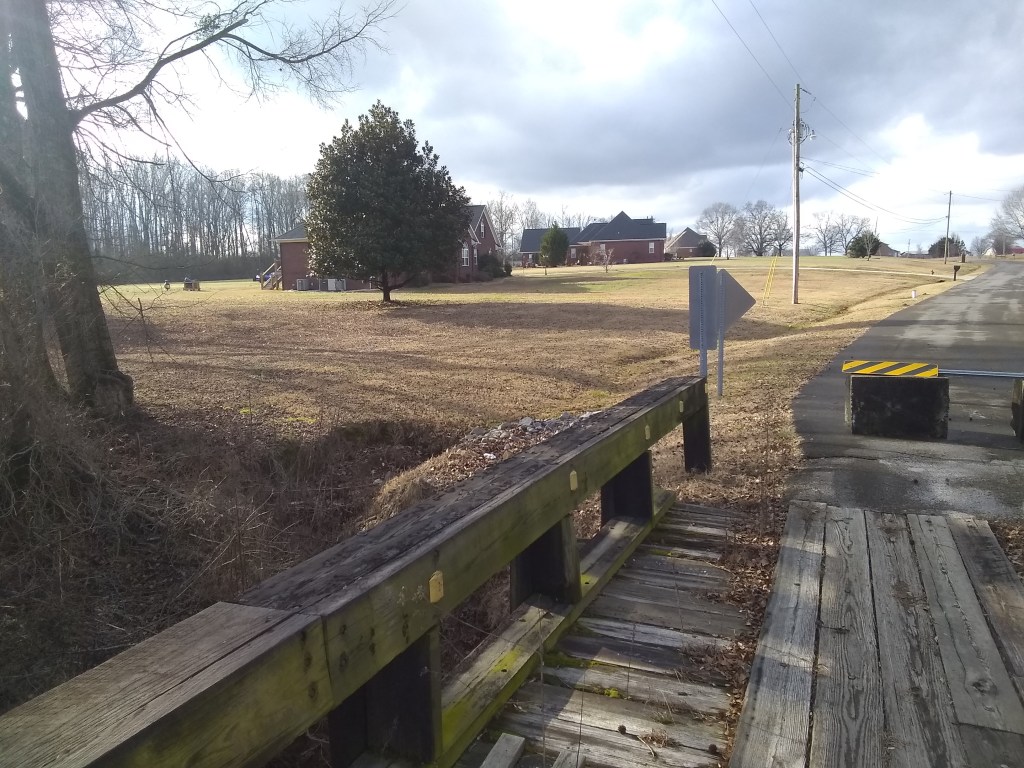
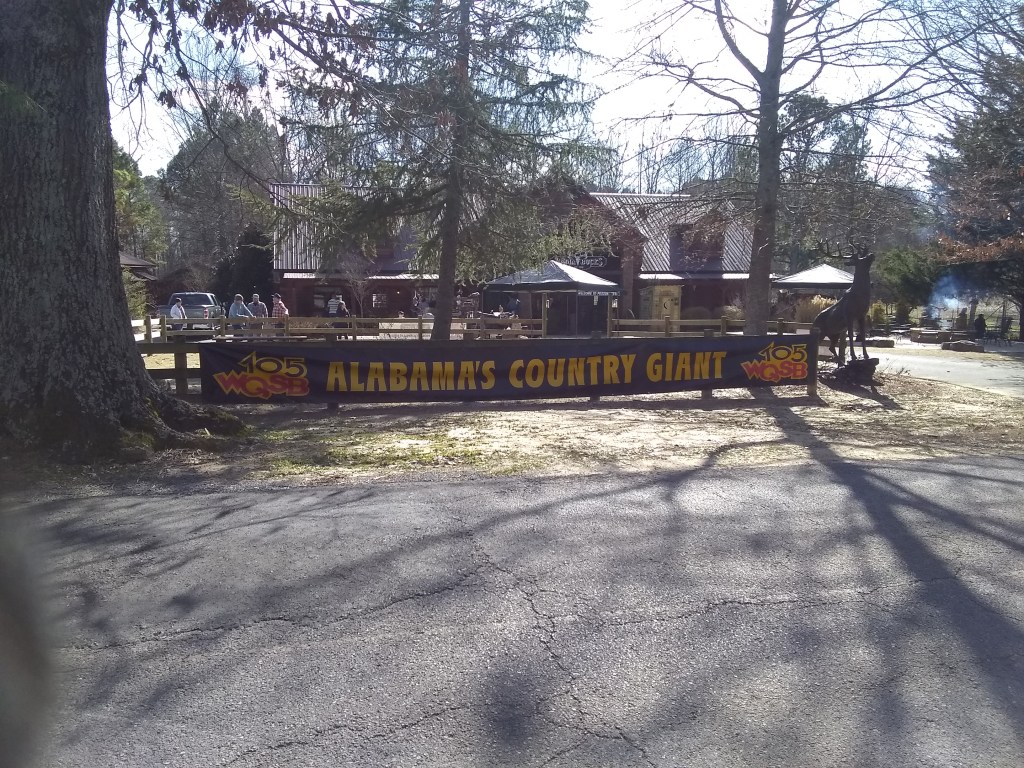
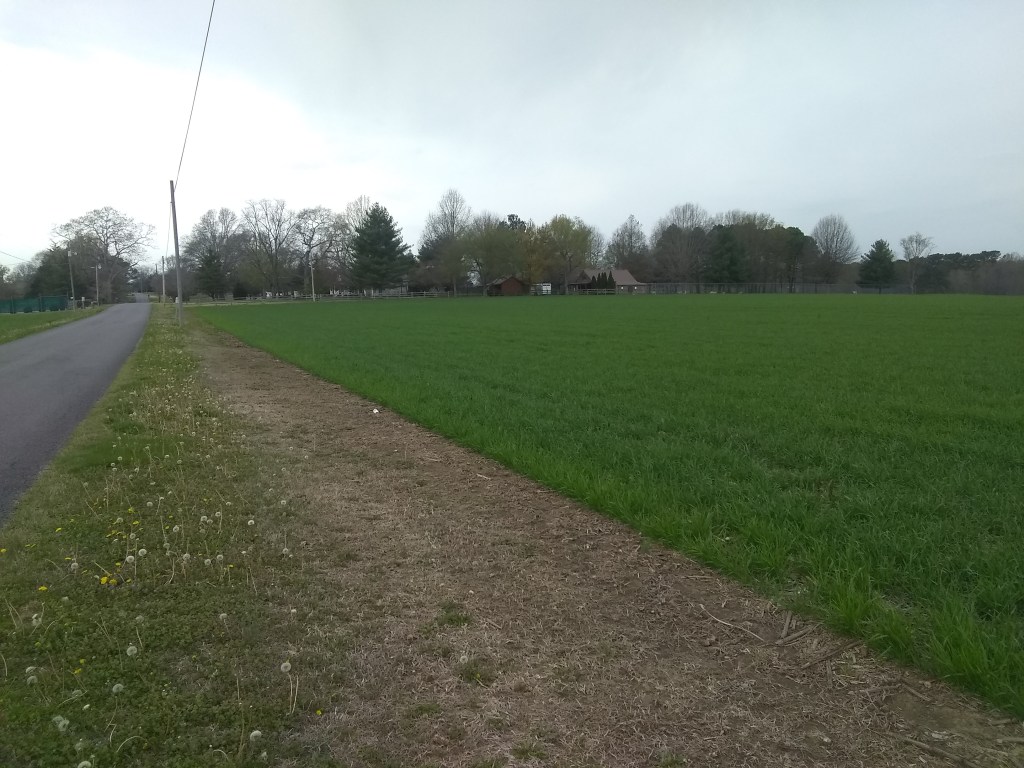
Here’s a few photos from along my pistol route:

The Boaz Stranger–Chapter 25

The dreaded moment came Friday morning a few minutes after 6:00. A few days ago, Kyla had demanded I help vaccinate her five Nubians. I had never liked farm work as a kid, especially if it involved cutting, clipping, ringing, or shooting animals, even if the latter required injection by syringe (I had refused to put a 22-caliber bullet between the eyes of a fattened hog).

Kyla put me on notice last night before she’d gone to bed. “Tomorrow. Early. Goat work. I’ll wake you.” She’d sounded like a Marine sergeant, barking military-terse instructions as she’d ascended the stairs. She disappeared before I could interpret her face or convey my reverse thankfulness. I almost followed her upstairs to beg off, reminding her I didn’t need distraction from my Old Mill Park responsibilities, or that I was two days post-accident. Instead, I stayed glued to the couch with her laptop, making last-minute edits to Kyle’s eulogy.

Unlike my all-night restlessness, the ‘goat work’ wasn’t as bad as expected. Sis, the planner, had found a pair of Dad’s coveralls and work boots, and had kept the five Nubians corralled in the barn’s hallway all night. The only one who put up any resistance to the CDT subcutaneous vaccine was Frank, the lone male. I imagined he was just showing out for Nancy, Bess, Georgia, and Nedra. However, it was Kyla’s rope trick that convinced the viral male to take his medicine.

Walking back to the house, Kyla shared the source of her name choices. As a kid, she’d always loved mysteries, including the Nancy Drew and Hardy Boys series. Voila, names for five Nubians, although George became Georgia, and Ned became Nedra.

When we reached the front porch, I stripped off Dad’s coveralls and work boots while Kyla opened the storm door and spouted more orders. “Please put Dad’s things on my tailgate.” At least she’d said ‘please.’ Sergeant Harding went inside to shower and cook breakfast. I was halfway to the Silverado when she reopened the front door and said, “Lillian needs to talk.” I left my iPhone beside Kyla’s laptop at 1:30 this morning. I guess sis had heard it vibrate. She raised her eyebrows and smiled as she waited for me to take the phone.

“Hello.”

“Lee, I’m sorry to keep pestering you, but I think it’s important.” Lillian shared that she’d left a voice mail twenty minutes ago.

“Sorry, I was helping Kyla with the goats. What’s up?” It had barely been half a day since we’d talked and made our agreement. I couldn’t help but question my decision.

“I wanted to tell you about my spyware last night, but you were in a hurry to leave.” I closed my eyes and pondered, acknowledging some things that need to remain private.

“Spyware? Is that what you said?” I stared at my iPhone, checking the time. It was 6:34. I’d told Kent I’d meet him at the north entrance to Old Mill Park at 8:30.

“Do you agree we should be open and honest about our detective work?” The attorney in me wanted to discuss Lillian’s adjective. I walked through the den and was two steps inside the hallway when she asked her next question. “Lee, you there?”

“I’m here. And, confidential.”

“Huh?”

“Let’s just say, we need to discuss before any outside disclosure. To anyone.”

“Except Kyla?”

“Okay, except Kyla.” I conveyed my schedule, hoping that would speed things up.

Lillian shared extra details, but the bottom line was she had hidden two recording devices at the Lodge before she’d vacated the premises. Device B was activated late last night. It was a call by Ray to a man named Buddy. Lillian could hear only Ray’s side of the conversation (since he wasn’t using Speaker), but concluded it was about the job he’d hired Buddy to complete. To Lillian, it was a go for today based on Ray’s repeat of what Buddy had said. ‘Today.’ Ray had responded with, ‘Daytime? That’s risky.’ The recording had ended with Ray confirming the time and place he would meet Buddy later tonight. ‘Mayor’s cabin. Midnight.’

“What makes you think this conversation relates to our investigation?” I admit Lillian might be serendipitous, but the job probably was wholly innocuous.

“If it’s the Buddy I’m thinking about, he is an ex-con.” I could hear geese honking in the background. I suspected Lillian was outside, maybe walking or sitting on the long pier I’d seen when she’d turned on the eve light.

“He works at The Shack. Right?” I had put that much together. He’d also been at McDonald’s yesterday afternoon with a much taller man.

“How do you know that?”

I shared my deduction. Lillian said she’d keep me posted and wished me good luck with my eulogy.

“I’ll be with Kyla, so I’ll see you there.” With this, Lillian ended our call.

***

I parked in a once-familiar place off E. Mann Avenue. During my growing-up years, IGA was Mom’s favorite grocery store. It was smaller than Piggly Wiggly but offered coupons in Thursday’s edition of the Sand Mountain Reporter. This provided “extra value,” according to our household’s chief financial officer.

As part of its Old Mill Park project, the City had purchased the property, razed the old building, and constructed a hundred-car parking lot. I pulled to the far side and wedged my Hyundai between Kent’s rental and an older model Impala, although there were 97 other options.

I grabbed my notebook and walked across E. Mann through a gated entrance denoted as “Support Staff Only.” Other than three guys setting up folding chairs in a semi-circle in front of the stage, the only other person I saw was Jane Fordham working behind a row of tables lined up outside the nearest pavilion. Kent had told me the mayor had arranged for Grumpy’s and The Shack to provide food.

Jane waved twice as I approached. “Hey Lee, want some coffee and a cinnamon roll?” The far-left table had a sheet of letter size paper taped to the thin tablecloth. The sign was troubling; it read, “Light Breakfast.” Besides a large aluminum pan full of rolls, there were also several dozen plastic containers of fruit.

“Thanks, maybe some coffee. Black.”

“It’s self-serve.” Jane said, handing me a small Styrofoam cup. “Rosa said Rob’s still sleeping.”

We talked back and forth about my father-in-law’s stroke and how worried Rosa seemed during her and Jane’s early morning conversation. “I’m flying there late afternoon.” I wanted to ask a dozen questions but now didn’t seem the time.

“Here comes Kent.” Jane said, looking to her right. I had already seen him walking our way from the Park’s east side entrance. “He went to Piggly Wiggly to get more tape.”

Kent was still a good fifty feet away. I summoned my courage, realizing now was as good as any. “Jane, would you be open to talking to me about Rachel when I return from Roanoke?”

Her response was instant. “I guess.” The tall and thin redhead (I’m sure the short-cropped hair is a wig) gave me a quick look with her piercing green eyes. It seemed my request was unsettling, but I didn’t know why.

“Good morning, Lee.” Kent said, handing Jane a plastic shopper bag.

“I’ll finish attaching the food signs. More brunch over there.” She looked at Kent and pointed to two larger boxes on a table underneath the pavilion. “Kyla will be here any minute.”

Kent motioned me to follow him toward the stage. Two city workers were struggling to hang a giant banner. The other one continued arranging chairs. “I have a feeling I’ve been too optimistic.”

“Crowd size?” I asked.

“Yes. Three hundred chairs are probably six or seven times too many.” Kent stopped behind the row furthest from the stage, staring at the unfolding banner.

“I like your idea.” From left to right were blowups of Kyle’s class photos, beginning in first grade. The next to the last one on the right was from tenth grade, a short three and a half months before Kyle disappeared. The last photo was a recent one of Kent, relaying the idea this was what Kyle would look like today. If he had lived.

“Thanks, but it was Jane’s creation.” Kent removed his iPhone and checked the time. “Question. Did you know Ray gave Jane a ride home that night?”

“You mean, after the parade, the night Kyle went missing?”

“Yep.”

“I’ve never heard that.” This struck me as odd, especially since Rachel hadn’t mentioned it in her diaries.

“It was news to me. I’m still not sure why she told me, but she did, right after we arrived this morning.” Kent gave a thumbs-up to the two city workers securing Kyle’s banner.

“What exactly did she say?”

“First, I admit it was me who brought up the subject. Like I’d done during each of our conversations while planning the memorial.” I saw Kyla enter through the support staff entrance. She started walking towards Kent and me and I shushed her away with our long-established tradition of flapping a low-reaching hand. “Jane said the four of them, Ray, Rachel, Kyle, and herself, crammed into Ray’s truck at the warehouse. After a quick stop at the church to leave the PA system, Ray dropped Jane off at her house around nine. The plan was for Ray and Rachel to carry Kyle home, and then for the two of them to ‘hang-out’ a couple of hours before reuniting at the Hunt House for Rachel’s all-girl sleepover party.”

“So, now it seems, there were three people and not two who saw Kyle right before he disappeared: Ray, Rachel, and Jane.” I said, looking toward the pavilion at Kyla reading something on her phone.

“I agree. If Jane’s telling the truth.” The city workers turned their attention to checking out the sound system.

“What would make you think otherwise?” Kent, like me, had worn a suit, but he’d shed his coat.

“Seems to me Ray would have dropped Kyle off first since Jane lived further down King Street. At the intersection of Lee Holcomb Road.” How I recall ordinary things from long ago never ceases to amaze me.

“Uh, I’d forgotten that.” Kent said, inserting what I assumed was a receipt, probably from Piggly Wiggly, into his wallet. I mentally scanned Rachel’s diaries. “But it makes sense.” Rachel had written that she and Ray had gone to a farm his father owned down Cox Gap Road. “That supports your conclusion.” Kent focused on the sound volume and interacted with the city workers.

I shared Ray’s most logical travel route. “To me, the four would have left the warehouse after disassembling the PA system. Dropped it off at First Baptist Church of Christ and wound their way back to Highway 168 West. Ray would have turned left at King Street. The first relevant driveway would be yours. Drop Kyle there, continue to Jane’s place, turning left on Lee Holcomb Road. From there, they’d connect with Pleasant Hill Road and turn right on 205. That’s the most logical route if they’re headed to Cox Gap Road.”

“It’s definitely an excellent theory.”

Kent spent until 10:00 a.m. working with the city workers, refining the sound system and instructing them how to operate the three video cameras he had brought.

I helped Kyla place an order-of-service flyer on each of the three-hundred chairs and made two trips to Piggly Wiggly for bagged ice. The only thing I could think about was four tenth graders squeezed inside Ray’s truck with one of them only minutes from death.

***

At 10:00 a.m. on the nose, Kent walked to the stage and asked everyone to take a seat. Although he didn’t show it, I knew the crowd size devastated him. Kyla, Lillian, and I sat alone in the section to Kent’s left.

“Good morning. I appreciate you coming on this warm and beautiful November day.” Kent introduced himself and thanked Mayor King for allowing the use of the park. He also thanked the city workers for their help.

The mayor stood and scanned the small audience. He smiled at a young woman with thick glasses who’d just arrived. An index card sized plastic tag hung from her neck. Kent had said a reporter was coming. “I’m sorry we’re here under these circumstances, but please know the City of Boaz will never forget Kyle Bennett. I hope his case will soon be resolved.” Really? Not a single city councilman was anywhere in sight.

The mayor placed his hands on the shoulders of Kent and Kyle’s mother, who was sitting one row in front of where he stood. He bent down and whispered something in her ear. Kent had said she would be here with several of her friends from Bridgewood Gardens. I counted six older women, three to Mama’s left, three to her right. I hoped none had a story as horrible as the woman who’d always welcomed me into her home.

“Before I forget, I wanted to apologize for the absence of Mountain Top Trio. You may or may not know this band started half-a-century ago and is still performing.” A train engine’s deafening horn announced its arrival a block away. And Jane’s. Kent allowed the sound waves to dissipate. Now, dressed in all black, Jane sat beside Lillian, who, like Kyla, wore the same dark color. “I suspect if Kyle were here, he’d still be Mountain Top’s manager. The group had an accident last night in New Hope. Thankfully, no one was seriously hurt, but, as a precaution, Huntsville Hospital admitted them for observation.”

The train rolled through town, headed to Gadsden and on southward to parts unknown. The rocking and rumbling sounds grew weaker. Kent used the interruption to review his notes and maybe create suspense. I didn’t know.

“I feel I should publicly answer the question local entrepreneur Ray Archer asked me last Sunday morning.” Kent paused and gave a shout-out to Grumpy’s and The Shack for providing food and invited everyone to stay and eat after the memorial.

“Ray asked me, ‘why have a memorial service for Kyle fifty years after he was killed?’” If Kent’s quote was accurate, I questioned Ray’s word choice. ‘Killed’? Why not say, ‘after he died,’ or, better still, ‘after he disappeared’? I almost smiled when I acknowledged how difficult it was to conceal a lie.

Kent continued. “Folks, here’s the reason. I fully believe Kyle’s case is about to bust wide open and the guilty party or parties will be brought to justice. The truth is all around us. We just have to keep looking.”

The thick glasses lady wrote frantically to get down Kent’s every word. I hoped the quote would be in tomorrow’s Sand Mountain Reporter. I felt certain Ray Archer wouldn’t like the attention.

“Okay, I’ll sit for now. After my brother’s best friend presents his eulogy, I’ll return. Lee, come on up.”

***

I stood and edged sideways in front of Kyla, Lillian, and Jane. Sis whispered, “break-a-leg,” and tugged my suit pants behind my right knee. Funny. My stomach did its little queasy dance like it always did before I took center-stage in a courtroom or before a classroom of intellectually gifted students.

“Good morning,” I said immediately after reaching the podium. Saying anything quickly always settled my nerves. “I’m Lee Harding, Kyle’s best friend forever.”

Mama Bennett was already crying. “Kyle and I met in the first grade, Mrs. Gillespie’s class. I hated school, but Kyle loved it and took me under his wing.” I pointed to Kent sitting ten feet from me in an otherwise unoccupied row. “By day two, Kent had connected with Micaden Tanner, who has a law office straight across the railroad tracks.” I pointed diagonally to my right.

“By the end of August 1960, I loved school, and I loved Mrs. Gillespie. It seems her and Kyle teamed-up behind my back and conspired to transform my thinking.”

“Story time after lunch each day became the key to my happiness and determination. I can still hear Mrs. Gillespie after she got all twenty-five of us huddled around her: ‘education is like a train, it can take you anywhere you want to go, but you have to choose a destination, and you have to climb on board.’”

“Although I could already read, I wasn’t in league with Kyle and Kent. From day one, they were the best readers in class. I soon learned why. It was Mama Bennett.” I pointed again. She cried more. “Mama worked long and hard all day but had her own story time routine. During my first overnight visit, the four of us took turns after supper reading a short story, things like ‘The Snows of Kilimanjaro’ by Ernest Hemingway. If you’re surprised by the Hemingway choice, you don’t know Mama. Even though he wrote in simple, unadorned prose, his words were not ‘See Spot Run.’ Mama Bennett, intelligent and loving, challenged her twin boys to learn and grow. She knew what they needed to maneuver a tough world.”

I looked at my time. There was no way I could present all my material, all the stories I recalled. I wanted to share mine and Kyle’s fourth-grade winter-time swimming experience in the creek beside his house. I wanted to share stories that emphasized each of his positive character traits, things like his perceptiveness, his alertness, his analytical ability, and his cautiousness. But there was not enough time, so I chose courageousness instead. Because to me, it took place near the end of Kyle’s life, and contained strong hints about his destination, one not of his choosing.

“The last story I want to share with you is about Kyle’s courage. If it hadn’t been for my sister, you wouldn’t be hearing this.”

“After Kent asked me to talk today, I called Kyla and asked her what she remembered about Kyle. At first, she mentioned general stuff like how he enjoyed fishing in our pond and how he and I loved playing at the creek beside his house. Almost as an afterthought, Kyla had said, ‘I wish you had his essay, the one he wrote for Mrs. Smith’s class.’ I’m sorry to say I’d forgotten all about it.”

“Mrs. Linda Smith, Ms. Linda, as she insisted we call her, was our tenth-grade literature teacher. At the first of the year, she’d assigned a project to be turned in anytime we wanted, but no later than the last day of school before the Christmas holidays. The assignment was to write about a challenge we were facing—and what we planned to do about it.”

“You might ask yourself how my memory got refreshed. That’s a straightforward question: I called Ms. Linda. Finding her was the hard part. She had recently moved from Boaz to Eugene, Oregon, to be closer to her son and was still unpacking. She instantly recalled Kyle and his essay as though it had been only a week.”

“Come to find out, Kyle’s was one of ten Ms. Linda had kept from her thirty-year teaching career. And, in somewhat of a surreal way, before moving to Oregon, she’d read all of them. Now, they were in a box somewhere in a storage unit.”

“Now, to Kyle’s essay. I ask you to keep in mind two of his dominating personality traits, one negative, the other, positive. Kyle was a fanatic, meaning he could be intensely devoted to a cause or idea. As we all know, that can turn negative. On the bright side, he was perceptive. Kyle was intuitively observant and insightful.”

“It was only natural for Kyle to respond to his challenge the way he did. And what was his challenge? He was being bullied. By a fellow student named Brute. Of course, this wasn’t his real name. Nor was Babe, Brute’s girlfriend’s name. More on her in a moment.”

“The bullying started at the beginning of ninth grade when Kyle tried out for the football team. He hadn’t made it as a player but won the team’s water-boy position. Brute was big and mean. Kyle was no match physically. At first, Brute demanded Kyle wash his practice uniform every day through the week and his game uniform over the weekend. Once Brute learned Kyle was smart, he had him do his homework. This went on throughout ninth grade, no matter the sport Brute played or the classes he took.”

“While Brute was bullying, Babe was befriending. Kyle hated Brute, but mesmerized Babe. What infatuated Kyle was the irreconcilability of Babe’s intelligence with her devotion to Brute. Somehow, Kyle learned Brute was two-timing Babe with an Albertville Aggie cheerleader. And, if that wasn’t bad enough, the girl was pregnant with Brute’s baby.”

“Let’s pause a second and make sure we understand the context. Kyle realized he would have to write Brute’s essay. Even though the two were not in the same literature class, they shared the same personal essay assignment. Oh, one thing I forgot to mention, Ms. Linda promised the essays were for her eyes only given their personal nature.”

“Listen carefully to how Kyle used his brain and his courage to outfox Brute. He first created a plan. He would write two essays for Brute, not one. It would be Brute’s choice which one to submit to Ms. Linda. The first essay was generic. It presented Brute’s response to the challenges of earning a football scholarship to the University of Alabama. The second essay was more revealing. It dealt with Brute’s love life and the problems and challenges he faced having two girlfriends, with one being pregnant with Brute’s baby.”

“After Kyle completed the essays, he presented them to Brute. Of course, Brute chose the innocuous essay, and according to Kyle’s essay, promised two things. To stop bullying Kyle, and to come clean with both girlfriends.”

“Ladies and gentlemen, it took great courage for Kyle to confront Brute, but there’s one thing we need to remember. Danger is the seed of courage. Without the first, there’s no need for the second. Ms. Linda told me all of this. I haven’t seen it with my own eyes. To this day, none of us know what happened to Kyle, and we can only speculate whether the writing assignment had anything to do with Kyle’s disappearance.”

“Thanks for listening to my too-long eulogy. I’ll leave you with this. The world would be a much better place if my best friend had lived and were with us today. I miss you, Kyle.”

***

I closed my notebook and exited the stage as Kent approached. We shook hands and clumsily executed what Rachel called a man hug.

I returned to my seat beside Kyla. We exchanged smiles, and affirmative head nods, our lifelong habit showing agreement. Just as Kent was introducing himself, a deafening noise shook the large speakers set at opposite ends of the stage. The sound originated from the north, the direction I was facing, but the huge banner displaying a collage of Kyle’s photos blocked my view. At first, I thought the noise was a monstrous thunderclap, except there wasn’t a cloud in the sky. The eighteen-person crowd remained calm and seated, but each person’s quick head movement and lowered eyebrows revealed a united uncertainty. My second guess was a sonic boom, but a billion-dollar jet flying low altitude at 700 miles per hour over Boaz, Alabama seemed a long shot. When I heard a fire siren, I concluded there had been a giant explosion in the industrial park.

Kent’s puzzled looks and bodily movements showed he had conducted a similar analysis. He finally walked off the stage onto the grass to his right and looked to the north. He yelled ‘fire’ a split second before spinning to face me. With head shaking back and forth, he motioned for me to join him.

Almost in unison, the entire crowd stood and moved toward Kent. Most gasped at something they witnessed. I think I heard one person say, “that’s one way to skin a cat.” Kyla, Lillian, and I were the last to arrive. What I saw was both shocking and sickening. The Hunt House was on fire. Boiling orange flames were already engulfing the surrounding treetops.

I’ll never forget what Kent whispered in my ear as he eased beside me. “That’s a message. I just don’t know what it is.”

Trump’s lawyers are too cowardly to quit or to tell Trump to shut up


I contend Lawrence’s coward accusation against Trump lawyers applies in equal measures to the following Alabama Republicans who endorsed Trump for President last week before the Alabama Republican Convention.

Alabama Republican members of the U.S. House of Representatives: Robert Aderholt, Jerry Carl, Barry Moore, Gary Palmer, Mike Rogers and Dale Strong;

Alabama Lt. Gov. Will Ainsworth;

Alabama Agriculture Commissioner Rick Pate;

Alabama Public Service Commission President Twinkle Andress Cavanaugh;

and Alabama Public Service Commissioners Chip Beeker and Jeremy Oden.

They’re all cowards and, by their endorsements, fully accept EVERY word and action Donald Trump says or does, including his love of Christian Nationalists, hatred of women, blacks (especially black women), gays, and anyone who confronts his unending lies.


And, of course, we know where Alabama Senator Tommy Tuberville stands.

Despicable. All of them. The Republican Party has become the Regressive Department, determined to destroy our democracy.

Here’s the link to the following article.

Trump picks up major Alabama endorsements ahead of Montgomery visit tonight

.
Former President Donald Trump arrives to speak at a fundraiser event for the Alabama Republican Party, Friday, Aug. 4, 2023, in Montgomery, Ala. (AP Photo/Butch Dill)AP

Former President Donald Trump picked up a wave of endorsements from top Alabama Republicans on Friday, hours before he is scheduled to speak in Montgomery.

Trump’s campaign announced that Tommy Tuberville, Alabama’s senior senator, and the state’s six Republican members of the U.S. House of Representatives – Robert Aderholt, Jerry Carl, Barry Moore, Gary Palmer, Mike Rogers and Dale Strong – are backing the former president in his bid to return to the White House. Other endorsements came from Lt. Gov. Will Ainsworth, Agriculture Commissioner Rick Pate, Public Service Commission President Twinkle Andress Cavanaugh and Public Service Commissioners Chip Beeker and Jeremy Oden.

Not listed among the endorsements Friday by the Trump campaign were Gov. Kay Ivey and U.S. Sen. Katie Britt. A statement from Britt on Friday said that she is maintaining neutrality in the Republican primary while serving on the Republican National Committee’s Republican Party Advisory Council. Trump endorsed Britt in the Republican Senate primary in 2022.

Related: Biden campaign knocks Donald Trump visit to Alabama as endorsement of Tuberville’s ‘political antics’

Related: Trump rules early Alabama fundraising and national polling, but pundits claim: ‘It’s just too early’

The endorsements perhaps come as no surprise given past support for Trump — the frontrunner in the 2024 Republican presidential primary — but it would seem to reiterate Alabama as a Trump stronghold even amid legal issues that have seen him indicted in three different investigations in recent months.

Trying to Make a Horrible Jesus Quote Look Good

Here’s the link to this article.

By David Madison at 8/04/2023

But wishful thinking and tortured logic can’t make it happen


The high-profile, very wealthy televangelists—Kenneth Copeland and Joel Osteen come to mind—make us wonder if they really do believe in Jesus. They have played major roles in turning Jesus into big business. Their lifestyles don’t seem compatible with the ancient preacher portrayed in the gospels. Jesus, so we’re told, championed the poor and condemned the rich, e.g., Mark 10:25 (KJV): “It is easier for a camel to go through the eye of a needle, than for a rich man to enter into the kingdom of God.” Luke 6:20 (NRSVUE): “Blessed are you who are poor, for yours is the kingdom of God.” Matthew 19:21 (KJV): “Jesus said unto him, ‘If thou wilt be perfect, go and sell that thou hast, and give to the poor, and thou shalt have treasure in heaven, and come and follow me.’”

So pardon our suspicion that Copeland and Osteen—and many others—are phonies. They’re in it for the money.

But what about the thousands of Christian apologists—who draw ordinary salaries? They’re not in it for the money. They know for sure that belief in Jesus is the one true faith and they’ve taken on the challenge of proving it. Their intense emotional investment—without Jesus, there’s no eternal life, being saved from hell—has put their brains into feverish defense mode. They have to prove that ancient superstitions and magical thinking (of course, they don’t use these terms!) deserve a place in our modern world view. Thus Jesus-on-the-cross (a human sacrifice to divert a god’s anger about sin) has to be made to look logical and respectable. Magnificent church décor helps with this.  

However, the gospels present other challenges. I’ve often said they’re a minefield, because there are so many Jesus quotes that don’t sound right at all (here’s a list of 292 of them). So the apologists have to make Jesus himself look good. Who would have thought! In fact, this can be an even bigger challenge than making human sacrifice look legitimate.

The Jesus quote that probably causes the most angst to apologists is Luke 14:26: hatred of family is required if you want to follow Jesus. I’ve come across churchgoers who don’t even know this verse exists, and they get flustered when it’s brought to their attention. Which means that apologists have to do their best to make it go away. 

I recently came across an article by a devout fellow named Nathan Cook, titled, A Radical Call: The Challenge of Discipleship in Luke 14:26. Cook is described as “Mission Pastor” for Christ Church Memphis, with a twenty-year career in “church planting and missionary work.” Apparently this focus has enabled him to master double-speak—and to remain ignorant of the work of mainstream Bible scholars. 

According to Cook, the Jesus of Luke’s gospel “emphasizes the need for self-sacrifice, service, and a transformed heart in order to participate in God’s kingdom.” And: “Jesus is inviting His followers to join Him in His mission of bringing hope and healing to a broken world.” Just how does hating your family bring healing to a broken world? Cook’s solution—he is so in sync with Jesus that he can read his mind: “It’s hyperbole”!

“This verse does not mean that we should literally hate our family members or ourselves. Instead, Jesus is using hyperbole to emphasize the importance of putting Him first in our lives. Our love and devotion to Jesus should be so great that, in comparison, our affection for our families and ourselves seems like hatred.”

Really? Is this how most devout Christians make their way in life? Loving Jesus so much that their feelings for family “seem like hatred”? Does Cook actually believe this himself? Moreover, Luke 14:26 stipulates that followers of Jesus must hate life itself. Most of the Christians I know are happy to be alive, and want to enjoy the experience. When we come across people who hate life, our impulse it to get them into therapy. Luke 14:26 collides with reality in too many ways.

I suspect that Cook’s study of the gospels has been limited to what other apologists say, to what evangelical/fundamentalist interpreters have written. He should consider the work of scholar Hector Avalos instead. There’s a 40-page chapter titled, “The Hateful Jesus: Luke 14:26” in Avalos’ 2015 book, The Bad Jesus: The Ethics of New Testament Ethics. It would be hard to find a more thorough analysis of Luke 14:26, and it’s clear that some devout scholars, as Avalos puts it, 

“…do not fully reckon with the nature of the linguistic evidence. Often these discussions reflect theological rationales that are being substituted for linguistic and historical ones…Although the text seems as clear an expression of literal hate as any text found anywhere, Christian apologists have attempted to erase or lessen its negative connotations.”  (p. 51)

The hyperbole excuse doesn’t work. Cook’s essay should get a prize for resorting to theological rationales—and a prize for dishonesty. Translators who delete or disguise the word hate also deserve a dishonesty prize.

Avalos bluntly calls attention to the bad theology here: 

“How would we judge a modern religious leader who said that we should prefer him over our families? Why would we not treat such a person as an egomaniacal cult leader who does what all cult leaders do: transfer allegiance from one’s family to him or her. In other words, that demand would be viewed as unethical in itself” (p. 89).

What great moral teacher resorts to such grim hyperbole to make a point? Hate your family. If your eye causes you so sin, pluck it out.

Cook’s ignorance of mainstream New Testament scholarship is also obvious from his claim that this gospel was “composed by the physician Luke around AD 60-61.” The consensus of NT scholars is that we don’t know the authors of any of the gospels: the traditional names were attached to them in the second century. But Luke the physician is mentioned in Colossians 4:14 and Luke is also mentioned in 2 Timothy 4:11. There is no evidence whatever that this is the Luke who wrote the gospel. This is speculation, wishful thinking. In fact, if this Luke, a companion of Paul, later wrote the gospel, how is it possible that Paul didn’t hear about any of the details about Jesus that we find in the gospel? In all his letters, Paul doesn’t refer at all to the teachings or miracles of Jesus—nor is there any mention of the empty tomb. 

And where did Cook come up with AD 60-61? Mark is commonly dated by scholars at around 70, and Luke copied major portions of it. 

The context of Luke 14:26 helps us grasp the author’s motivation for including this verse. Jesus has just told the Parable of the Great Dinner. The host had invited many people to his table, but at the last minute they all decline, offering a variety of excuses. So the host ordered his slaves to “Go out at once into the streets and lanes of the town and bring in the poor, the crippled, the blind, and the lame”… “compel people to come in, so that my house may be filled.” (v. 21 & v. 23) The point seems to be that there are no restrictions on those who are welcome in the Jesus cult—no matter social standing or position in life. 

But there is a major requirementyou’re not welcome if you have divided loyalties. If you put family first, don’t bother. 

In fact, Luke’s author might have been trying to heighten the severity of Matthew 10:37-39:

“Whoever loves father or mother more than me is not worthy of me, and whoever loves son or daughter more than me is not worthy of me, and whoever does not take up the cross and follow me is not worthy of me. Those who find their life will lose it, and those who lose their life for my sake will find it.”

Both Matthew and Luke emphasized the demands of the Jesus cult, and Nathan Cook is doing exactly the same thing:

“Pray for the wisdom and courage to make the necessary sacrifices to put Jesus first in your life. As you grow in your relationship with Him, seek out opportunities to deepen your commitment and demonstrate your love for Him, even when it requires personal sacrifice. Remember, the cost of discipleship may be high, but the reward of a life devoted to Jesus is priceless.”

But please, back to reality: at any given moment there may be a million devout Christians claiming that they feel Jesus in their hearts, confident that their intense emotions about Jesus are ignited by the holy spirit. Non-believers don’t buy it—nor would most devout Muslims and Jews, who dismiss the hype about Jesus. Those who have been groomed since their earliest years to feel Jesus and the holy spirit fail to see that these feelings—no matter how intense—don’t qualify as reliable, verifiable, objective evidence about Jesus. 


Back to reality
 includes this candid statement by Tim Sledge: 

“Faith in Jesus produces inconsistent results because Jesus was an apocalyptic prophet who is now deceased” (Four Disturbing Questions with One Simple Answer: Breaking the Spell of Christian Belief, p. 76). This apocalyptic prophet shows up full strength in Mark’s gospel, especially in the frightful chapter 13 (also see John Loftus’ essay, “At Best Jesus Was a Failed Apocalyptic Prophet,” in his 2010 anthology, The Christian Delusion: Why Faith Fails). This ancient superstition champions the idea that the human sacrifice came back to life, and ascended through the clouds to join his god in the sky. In Mark 14:62, Jesus promised those at his trial that they would see him descending from the clouds to set up his kingdom. This is fantasy literature. 

Back to reality

“If Jesus were still alive—indwelling and empowering every individual who has believed in him and made a commitment to him—we would see consistent and compelling evidence that the Christian life is supernaturally powered. And it would be clear that Christianity —unlike every other religion—is the way that God lives through human individuals. But the opposite is true (Sledge, Four Disturbing Questions, pp. 80-81).

Nathan Cook does everything he can to sustain belief that Jesus is alive and craves devotion. He ends his essay—in which he fails utterly to make Luke 14:26 fit into even a semi-rational Christian faith—with a flattering prayer to boost his god’s ego: “Heavenly Father, we adore You for Your holiness and grandeur, for You are the sovereign Creator of all things. You are perfect in all Your ways, and Your love for us is unfailing” … “As we journey on this path of discipleship, help us to resist the temptation to live for ourselves, to seek our own pleasure, or to derive meaning from the world’s standards.”

Back to reality: It’s just a fact that the “world’s standards” include loving family and loving life—and overcoming the obstacles that work against these ideals. Our planet and humanity are much more likely to survive if we can move beyond superstitions, fantasies, and magical thinking. I hope there are common sense Christians who are alarmed and disgusted by Luke 14:26, and appalled by attempts of apologists, in the most pathetic ways imaginable, to use this text to encourage devotion to a long-dead apocalyptic prophet.

David Madison was a pastor in the Methodist Church for nine years, and has a PhD in Biblical Studies from Boston University. He is the author of two books, Ten ToughProblems in Christian Thought and Belief: a Minister-Turned-Atheist Shows Why You Should Ditch the Faith, now being reissued in several volumes, the first of which is Guessing About God (2023) and Ten Things Christians Wish Jesus Hadn’t Taught: And Other Reasons to Question His Words (2021). The Spanish translation of this book is also now available. 

His YouTube channel is here. He has written for the Debunking Christianity Blog since 2016.

The Cure-for-Christianity Library©, now with more than 500 titles, is here. A brief video explanation of the Library is here

The Boaz Stranger–Chapter 24

Kent wound his way to Sparks Avenue. Neither of us said anything until he rolled through the stop sign at Brown Street. “How about going with me to see Jackie Frasier?”

I was still pondering tall man and short man. I must have misunderstood Kent’s question. “You’re joking, right?” There was no way old ‘Jack’ was still alive.

“Not at all. And he still lives across from my childhood stomping grounds.” Kent pulled beside my rental. There were other things I needed to do. One was to call Lyndell. An hour and a half ago, he’d sent a text saying he and Rosa were still waiting to talk to the ER doctor. I was eager to hear how Rob was doing.

“That dump of a single wide?” I also needed to do a hard review of tomorrow’s eulogy to determine where to insert Kent’s two suggestions but seeing a freak-of-nature sort was hard to pass.

“Yep. So, can you come along?” Kent seemed anxious. He was drumming his fingers on the stirring wheel. I wondered if he wanted a witness. I couldn’t imagine why.

“Yeah, I can go. But I need to be back within an hour.”

“That’ll work.” Kent backed onto Sparks, turned left on Highway 205, and drove toward old downtown Boaz.

I tried to visualize the last time I’d seen Jackie Frasier, the high school custodian. I still remembered his shiny Bel Air Chevrolet. “He’d have to be a hundred years old, probably more. I recall he was an old man when we graduated.”

“He’s now a hundred and three. I’ve tried all week to see him but he’s never at home.”

“What does a hermit do at a hundred and three?”

“Chase women, I guess. Or, he’s making excuses, given how many times I’ve dropped by this week and taped a note to his front door.” Kent said as the Thomas Avenue light turned red. Knowing me, I’d have run it.

“Seems like I’ve read the oldest person ever was a hundred and twenty.” The woman’s name slipped into my mind, Jeanette, somebody.

“Don’t forget, Methuselah.” Kent had a comical side. This was the second time we’d laughed in the past hour.

“Are you sure old Jack still lives there? How do you know he’s still alive?” I always had questions.

“The same way I know his age.” Kent tapped his fingers as we sat waiting on the red light beside Weathers Furniture. I figured it was to release energy. Maybe he was frustrated from wasting time, not being productive. I could appreciate that.

Kent had become a reluctant witness. I had to work for every fact. “So, how do you know Jackie’s age?”

“His daughter Jade.”

“Daughter?” I didn’t see that coming. “Jackie Frasier had kids, has kids?”

“She’s disabled, been that way all her life. Here’s what’s weird. I never saw the girl during all the years I lived at 294 King Street. I guess Jackie was too proud to let her out of the trailer.”

Kent shared his visit with Jade while he drove us to his childhood home. Jade Elizabeth Frasier is the daughter of Jack and a woman he worked with at Boaz Spinning Mill in the 1940s. Jade’s mother had abandoned her after birth, probably because of the child’s cerebral palsy and disfigured face. Since 2000, Jade continued her secluded life, not in a dilapidated single wide mobile home on south King Street, but at a government subsidized apartment in Mount Vernon Homes. Like her father, Jade never married.

If it hadn’t been for a sticky note inside the anonymously mailed package, Kent would likely have never learned of Jade Frasier. Handwritten were Jade’s full name and address, and: “witnessed 12/09/69 argument.”

“Question.” I hated to interrupt, but Kent paused while he slowed to cross the rickety Short Creek bridge. He stared to his left at what had once been Boaz City Park when we were in high school. Now, according to the sign, it’s a soccer field.

“Ask.”

“Would you agree the person who mailed you the package had spoken to Jade and knows the details of the argument you mentioned?”

“Woman. The expert said the same woman had written the sticky note and the message across the envelope.”

Kent exited the bridge and, after fifty feet, stopped again. This time, he pointed to Jackie’s trailer, now fully engulfed with rust and raging vines. Although the tiny deck and two steps outside the front door looked new.

Kent turned left into his old driveway after a car approached from the bridge. “Jade has a lot of health issues, but her memory seems perfect. This is what she told me. Kyle had exited the school bus that Tuesday afternoon, December the ninth. After the bus drove away, Jade saw a pickup truck coming straight towards her from our house. The driver stopped at the edge of King Street. It was a young girl, maybe sixteen. She exited the truck and started talking with Kyle. Low and civil at first, then the conversation got heated. Loud. It was about money. The girl demanded Kyle return it. That’s when she mentioned Ray. Then, Kyle asked the girl if she had gone inside his house. I’ll stop here and let you ask questions. I don’t want you to make your lips bleed.”

“It’s a tell. The first thing that came to mind was ‘how did Jade hear the argument?’ It was December cold.”

“Maybe she liked it cold. Maybe it was a warm day.”

“Next question. Did Jade describe the girl Kyle argued with?”

“I quote, ‘tall, dark curly hair, and built like Jane Fonda, and just as loud.’”

“Sounds like Rachel, but not my Rachel. She never raised her voice.” By now, Kent and I were out of his rental, leaning against the trunk lid. During high school, I rarely ever heard her speak.

“People change.” Kent said and started walking across King Street towards Jackie’s trailer.

Once again, Jack was not at home. However, Kent had another adventure in mind: visiting his old home place. He’d insisted we walk.

I’d forgotten how far the house was from King Street. The driveway was dirt potted with holes and lined with leaves and limbs of all sizes. I imagined the engulfing forest awakened by long-silenced conversations.

Like humans, houses age. The Bennett’s was no exception. It was a wood-framed house with a tin roof. The front porch had collapsed from the rotten posts. Many of the clapboard planks along the north wall had curled and twisted like toenails long abandoned.

We entered through an open back door, but our exploring was short-lived. Wind had blown back several pieces of tin and exposed the house’s interior. Rain had free reign for years, eventually rotting everything in its wake. It was all for the best since I really didn’t want to go inside Kent and Kyle’s old bedroom. I did my best to push back memories of my last visit. It was Thursday, December the 11th. I could still smell Mrs. Bennett’s fresh baked cornbread. After she insisted I eat a plate full of the golden bread buttered and soaked in sorghum syrup, Kyle and I had ridden in my car to Young Supply’s warehouse to work on the tenth-grade float.

Kent snapped a dozen photos as we walked around the south side and returned to the road. And he answered my questions. Mrs. Bennett now lived at the Bridgewood Gardens Assisted Living facility in Albertville, where she’d been for twenty years. Kent had insisted his mother leave the decaying structure before a life-crippling accident. He willingly continued to pay for his mother’s monthly care and the annual taxes on the home place. It was another way he could honor the memory of his long-lost brother.

It was after four when Kent dropped me beside my car. My one-hour limit had transformed into two, but I didn’t regret a thing. The time with Kent was sadly refreshing, a vivid reminder of days gone by, and a friend never to return.

***

I drove to Boaz Discount Drugs to buy a thank-you card for Lillian. I’d write a quick note and drop it in the mail. Now, that method seemed an insensitive way to express my gratitude. It might be perfect if I were back in New Haven, but I wasn’t. I was here, a few miles from the only one, among many, who had helped a hurting man. The drugstore included a large gift shop, so I ambled its aisles for ten minutes. I opted for a clip-on book light and a Hallmark card featuring an Emily Dickinson poem on kindness. I paid for my purchases and left.

Instead of driving straight to Lillian’s, I dropped by the Hunt House. I guess it was my second unsuccessful attempt to reach Lyndell that kept the place on my mind. I parked in the carport and checked both exterior doors. Locked. However, the rear one wasn’t the way I’d left it. It was an investigative trick I’d learned in Michael Dugoni’s novel, The Eighth Sister. Place a piece of writing lead from a mechanical pencil across the top hinge. When the door opens, the lead will fall. It’s so small most people would never see it.

I returned to the front, unlocked the door, and walked inside. After a thorough inspection of the entire house, I found nothing that disturbed or alarmed me. I secured the door, castigating myself for having forgotten my mechanical pencil. The front porch seemed a good place to pause and ponder who else had access to the Hunt House. Rosa and Rob came to mind, but neither was a possibility. Unresolved, I gave up and returned to my rental. I shifted the Hyundai into reverse and eased into the turning around spot. Maybe Barbara had an extra key and had returned for something. I eased forward to Thomas Avenue and waited for a red, older model Corvette to pass before heading to Lillian’s.

***

Lyndell called as I passed Wendy’s and merged onto Highway 431 South. “Hey son, how’s Rob?” I hoped by now the hospital had transferred him into a private room and he was resting comfortably.

“Not so good. It was a major stroke, much worse than we first thought. Hold on Dad.” I could hear a cacophony in the background. While I waited, I glanced at the bright green package with a red bow lying on the passenger seat. I second-guessed my decision to have the clip-on light gift-wrapped. “Sorry Dad, the ER’s a madhouse.”

“So, what’s going on right now?”

“He’s in surgery. The doctors are trying to deal with his brain swelling.” I heard a siren in the distance. I assumed Lyndell had walked outside.

“Wow. That’s serious.” I felt a rush of guilt for not being on the way to Roanoke right now. I knew little about strokes, but I knew Rob was 86 years old. That couldn’t be in his favor.

“Here it is, I wrote it down.” Lyndell spelled out, “H e m i c r a n i e c t o m y,” before pronouncing the surgical procedure, “hemicraniectomy. The surgeons remove a portion of Papa Rob’s skull to relieve the pressure.”

“Sounds like he might have a long road to recovery.” I turned left at Cox Gap Road and made my decision. I would deliver my eulogy in the morning and, out of respect for Kyle and Kent, remain until the memorial ended. Then, I would fly to Roanoke. It was the least I could do for my in-laws. And Rachel.

“That’s assuming the best. You know Leah, she’s at the cabin but reading everything she can on strokes. She said there could be permanent brain damage if the swelling isn’t relieved quickly enough. Also, there are several other potential complications, including pneumonia.”

I briefly shared my plan to fly to Roanoke late tomorrow afternoon before Lyndell ended our conversation. Apparently, he had seen Mama Rosa’s worried face staring at him through the glass wall of the Emergency Room.

***

My bravery evaporated when I reached Alexander Road. Instead of turning right, I kept driving east on Cox Gap. As I passed the pond, I glanced to my right and to Lillian’s cabin. The place was dark. She wasn’t at home. Kyla had said the Community Meal was an all-day thing.

That fact changed my mind. I would find a safe spot to turn around and then return to Lillian’s. I would deposit the card and gift on the front porch and leave. That was safe, and it showed the personal sincerity of my gratitude.

I didn’t see Lillian’s SUV when I pulled into her driveway. I exited my rental with a card and gift in hand. Halfway to the front door, the porch light came on and then a stronger one at the corner of the eve. It was like I had been thrust on stage and had forgotten my lines. I should have retreated but didn’t. I continued to the front porch, and without hesitation, rang the doorbell.

It felt like an hour before Lillian responded. My first thought was she had arrived soon after I’d driven past Alexander Road. She’d parked out back or in a garage I hadn’t noticed and walked inside through the back door. Before she could switch on a light, she’d seen a vehicle turn into her driveway. Maybe she was tired and didn’t want to be disturbed, but that didn’t explain why the outside lights were now on. Just as I discarded my first hypothesis, I heard the deadbolt click.

Lillian opened the front door and smiled. I don’t think it was noticeable, but my mind snapped a head-to-toe virtual photograph of the woman I saw. I would inspect it as she opened the storm door. If she did. She retreated for a moment to flip on the inside lights. The pine-paneled walls of the den became visible.

“Hey, come in.” Lillian said, pushing back the door to give me room. I combined my items into my left hand and used my right to assist with the stubborn door. The sweet and flowery scent of lavender was inescapable as I squeezed into a small open foyer. I felt a twinge more at ease. “What brings you out?”

I didn’t instantly respond. She closed the storm door and moved to a lamp beside the couch. She switched it on. “I wanted to thank you for coming to my rescue Tuesday afternoon.” I handed her the card and the green-wrapped gift with a red bow.

“You didn’t have to do this. I’m pretty sure you already said thanks, but you might not have known it.” It took me a second to realize she was referring to my Vicodin encounter. We both laughed and Lillian motioned me to sit.

“I wanted to. It’s the least I could do.” I also wanted to clarify my confusion over Rachel’s diary, but it wasn’t the time.

“Should I open this now?” Lillian sat on a leather couch across from me and reached for the coffee table for the green and red package.

“It’s yours.” I sucked in the personal communication department. I also sometime missed the obvious. This entire scenario was inappropriate on many levels. First, the last thing I needed, or wanted, was a relationship. I had utterly failed at the two most important ones I’d ever had: Kyle and Rachel. Both died because of my inability to recognize warning signs. My presence was wrong for an equally disturbing reason: Lillian is married. As she read her card and delicately opened her present, I did what most men would do, regardless of propriety. I took in the scenery.

I would bet most people at age 66 look radically different from their 16-year-old self. I know I do. But Lillian didn’t, at least in the virtual photograph I was inspecting. Her silky brown hair was still, well, silky, even though she now wore it shoulder length instead of halfway down her waist. My mind’s camera might be low tech, missing a few wrinkles and some loosening of Lillian’s neck muscles, but it had clearly captured her beauty, but not sensually. Even though she was heavier than at 16, the extra pounds had found suitable homes. How bad an effect would an extra fifteen or twenty pounds have on Julia Roberts? None. Come to think of it, Lillian had a lot of Julia’s features: amble and shapely breasts, and luscious lips.

“It’s perfect.” Lillian finally said after folding the green wrapping paper and setting it, along with the red bow, on the coffee table. “I love to read.”

“Kyla mentioned it.” Guilt washed over me, submerging my unintended sexual thoughts, and reminding me I needed to leave. Lillian’s phone chirped once, then a second time. It sounded like birds talking. She looked at me before grabbing her iPhone from the nearest end table.

I stood, realizing Lillian’s distraction was a good time to leave. She looked at me and mouthed the words, “please wait.” I guessed she had received a text and a voice mail at the same time. She read and listened. To avoid eavesdropping, my mind refocused on that easily accessible virtual photo. Finally, she returned her phone to the coffee table. “Lee, can I ask a big favor?”

I didn’t hesitate. “You can but know that I’m not much of a handyman.” Lillian smiled, stood, and walked to me. “The storm door does need adjusting but what I need requires little skill.” She softly poked me in the chest and laughed. “Only kidding.”

“What do you need?” I was feeling awkward, not knowing what to do with my hands. I quickly executed the hands-in-pocket routine.

Lillian’s look was somber. Her blue-green eyes stared into mine. “It’s rather personal. Do you have five minutes to let me explain?”

What was I to say? She motioned me back to my chair. She rejoined the couch. “I’m going to divorce Ray and, to put it bluntly, I need some dirt.”

Lillian summarized her and Ray’s latest prenuptial agreement. She, like a lot of other women in America, could not secure a divorce without negative financial repercussions. What Lillian wanted were two things: money and justice, including an ample dose of revenge for Ray’s many affairs. Fortunately, the prenup was her gateway. It contained a clause whereby each, Ray and Lillian, had promised the other they had fully disclosed their assets, and every other issue that could apply to the prenuptial negotiations. The bottom line for Lillian was that if she could prove Ray had withheld knowledge of his criminal activity, then she was free as a bird, a wealthy bird at that.

After Lillian’s rather long monologue, she still hadn’t told me where I fit in this convoluted story. “I’m confused about how I can help.”

My question triggered an equally long explanation. Unsurprisingly, Kyla had already shared with her best friend the two primary reasons I had come to Alabama. One was to help Rob protect the Hunt House, and the second was to seek justice for Kyle and Rachel. “Here’s what I propose since we’re after the same thing.” Lillian sounded like a lawyer, or one well read and with an excellent memory. “I’m asking you to share with me the fruits of your investigation.” I couldn’t help but think of the U.S. Constitution and ‘the fruit of the poisonous tree,’ one of the most dominate principles in Fourth Amendment search and seizure law.

I again stood and, being the excellent negotiator I am, said: “I will if you do the same.”

“Agreed,” Lillian said, standing and walking two steps toward me. She held out her right hand. We shook, and after standing, repeated my hands-in-pocket routine.

“Well, I need to be going. I’ve still got some homework.”

“Your eulogy?”

“Yes,” I said, retreating two steps. Lillian nodded affirmatively and walked past me to the front door. At 16, she loved the sweet smell of lavender.

After I reached the front porch, we exchanged goodbyes and promises to keep each other up to date on the fruits of our investigations.

08/10/23 Biking & Listening

Biking is something else I both love and hate. It takes a lot of effort but does provide good exercise and most days over an hour to listen to a good book or podcast. I especially like having ridden.

Here’s my bike, a Rockhopper by Specialized. I purchased it November 2021 from Venture Out in Guntersville; Mike is top notch! So is the bike, and the ‘old’ man seat I salvaged from an old Walmart bike.

Here’s a link to today’s bike ride.


Something to consider if you’re not already cycling.

I encourage you to start riding a bike, no matter your age. Check out these groups:

Cycling for those aged 70+(opens in a new tab)

Solitary Cycling(opens in a new tab)

Remember,

Photo by Suzy Hazelwood on Pexels.com

Listened to several episodes from one or more of the following fiction writing podcasts


Here’s a few photos from along my pistol route:

‘That’s why we have an Insurrection Act’

Here’s the link to this article.

Avatar photoby ADAM LEE AUG 07, 2023

The US Capitol building, lit up at dusk | "That's why we have an Insurrection Act"
Credit: Martin Falbisoner, CC BY-SA 3.0

Overview:

Special Counsel Jack Smith’s indictment reveals how far Donald Trump and his cronies were willing to go to overturn the election. American democracy had a very narrow escape indeed in 2020.

Reading Time: 5 MINUTES

Throughout his long life of wealth and privilege, Donald Trump has dodged consequences time and again. Could this finally be the case that brings him to heel?

At the start of 2023, progressives could have been forgiven for feeling cynical. At that point, it had been over two years since the election, and despite his numerous and well-documented acts of criminality, he was facing no charges. It seemed a foregone conclusion that, yet again, he would thumb his nose at the law and get off scot-free.

However, that pessimism was premature. While it took an unacceptably long time, the machinery of the justice system is finally creaking into action.

In the last few months, Trump has been hit with a flurry of indictments. He’s now facing criminal charges in New York (for his hush-money payments to a sex worker, in violation of election law); in federal court in Florida (for stealing classified documents and refusing to return them); and possibly soon in Georgia (for his felonious attempt at strong-arming the Secretary of State to “find” more votes for him).

But this is the big one. Special Counsel Jack Smith has filed felony charges against Trump for his attempts to overturn the 2020 election, including his role in inciting the deadly January 6 insurrection.

What’s in the indictment

There’s little in this indictment we didn’t already know. Most of it recounts the evidence gathered by the Congressional January 6 Commission. But it’s both informative and terrifying to see it in one place.

In late 2020, when it was clear that he had lost, Trump started spreading lies that the election was fraudulent, despite being told by his own advisors that there was no basis for believing this. A Trump campaign advisor complained about having to defend “conspiracy shit beamed down from the mothership”.

He filed a blizzard of groundless lawsuits, all of which were thrown out, and pressured Republican legislatures in swing states to override their own voters and award him the election. This effort failed as well.

The crux of the scheme, and of Jack Smith’s criminal charges, is this: When his other strategies to steal the election floundered, Trump came up with a last-ditch plan to rig the Electoral College. He conspired with his supporters to draw up fake electoral-vote certificates, hand them to Vice President Mike Pence on the floor of Congress, and have him reject the real electoral votes and count the fake ones.

Conspiracy against rights

To be perfectly clear: This isn’t free speech; this is a crime. It’s a scheme to use forged versions of official documents to change the outcome of a legal proceeding. This is like printing counterfeit dollar bills and trying to use them in a store, or forging a dead person’s will and giving it to a lawyer to read to the heirs because you don’t like what’s in the real one.

(Fittingly, one of the charges stemming from this plan is “conspiracy against rights”, first passed into law in the Ku Klux Klan Act of 1870.)

However, Pence wouldn’t go along with the plan. He insisted that the Vice President had no power to arbitrarily pick and choose electoral votes (because of course he doesn’t—if he did, no incumbent president would ever lose reelection). Trump berated him for being “too honest”, but Pence didn’t give in.

I despise Pence for being a soulless theocrat whose heart pumps sour milk instead of blood, but I have to grudgingly give him credit for this. He refused to go along with Trump’s lawbreaking, and he held firm on that stance despite enormous pressure.

However, not everyone in Trump’s circle was so principled. The most hair-raising line of the indictment is a transcript of a conversation between White House deputy counsel Patrick Philbin and a person identified as “Co-conspirator #4″—widely believed to be Jeffrey Clark, a Trump crony in the Justice Department.

Philbin argued that if Trump succeeded with his scheme, there would be riots in every major American city. Clark/Co-conspirator 4 said:

“…that’s why there’s an Insurrection Act.”

Sit with these words for a minute.

We know—even if it’s come to seem less shocking through sheer repetition—that the president of the United States schemed to steal an election, in plain sight, and remain in office against the will of the voters. We now know, in addition, that the conspirators expected mass protest from the American people, and that they were at least considering calling out the military to put the protests down by force.

A second Civil War

As I said at the time, it’s no exaggeration to say that a competent fascist could have overthrown the United States government in 2020. We came right up to the edge of killing democracy and turning the country over to a military junta.

It’s possible the military would have refused to follow these orders if Trump had given them—but at minimum, we’d have been plunged into a massive constitutional crisis. And what would have happened if some branches of the military had gone along with the scheme while others refused? Blue states claiming Trump wasn’t president while red states claimed he was? It could have ignited a second Civil War.

Either way, we escaped by the skin of our teeth. We know the next and final act of the drama: when everything else failed, Trump gathered a mob of his followers in Washington, D.C., riled them up with more lies about a stolen election, and incited them to assault the Capitol. The mob overwhelmed the Capitol police, broke into the building while Congress fled in a panic, and ransacked the halls of government until law enforcement regrouped and chased them out. They failed to disrupt the election, but if they had captured Pence or any member of Congress, we know what they intended. They built a gallows.

A norm not to be broken lightly

There’s good reason not to prosecute former presidents. It’s not a norm to be broken lightly. Otherwise, we risk becoming a banana republic where every new president persecutes and jails his opposition. It’s not hyperbole to say that this norm has helped America have smooth handovers of power for the last two centuries, something other nations have struggled with.

But there have to be limits to what we’re willing to tolerate. Otherwise, a president could commit crimes with impunity. There may still be reason to overlook minor offenses, but extraordinary crimes demand an extraordinary response.

We approached this precipice once before, with a different Republican president. However, with Nixon, it mattered that the entire political apparatus was united against him. He resigned because Congressional Republicans made it clear to him that they’d support impeachment. Without the party behind him, he had no prospect of political survival. Rightly or wrongly, Ford’s decision to pardon him was likely motivated by the belief that there was no further harm he could do.

The situation we’re facing is very different. With a handful of principled exceptions—many of whom have already lost their seats in primaries—the Republican Party has fallen into line behind Trump. They’re still excusing his flagrant lawbreaking and his attempted coup. Even his political rivals, who’d benefit most if he were removed from the board, continue to attack and denounce Democrats for prosecuting him. Whatever the outcomes of the criminal trials, he’s all but certain to be the 2024 nominee.

Can our democracy survive when one of its two major parties has embraced insurrection and authoritarianism? Perhaps, but only if it’s apparent to everyone that there will be consequences. The United States has to deliver a strong message that attacks on the fabric of our society will be punished. Otherwise, he and others like him will just be emboldened to try again.

There’s no question about whether Trump committed the acts he’s charged with. Of course, the real hurdle is finding a jury willing to convict him. But that’s no reason not to try. On the contrary, justice demands we make the attempt. To give up before we start would be to concede that the rich and politically influential are above the law, whereas if we try him, there’s at least a chance. And if the prosecutors succeed, they may just save American democracy in the bargain.

The Bible and Self-Esteem

Here’s the link to this article.

Merle Hertzler | December 31, 2022 | Kiosk Article

Christianity | Humanism ]


Self-esteem is important. We need our self-esteem to be positive; otherwise we might become depressed. We also need our self-esteem to be realistic, else we will make bad decisions based on our misunderstanding. Sometimes those goals are conflicting. But I find it possible to achieve both.

What is the basis of your self-esteem? My self-image is based on naturalism and humanism. This view is both realistic and positive. You may have found other ways to build your self-esteem. Is your way realistic? Is your way positive? These are important questions to ask.

Many value the Bible as their basis for self-esteem. This has been confusing to me. For the Bible never specifically mentions self-esteem. It often has a low view of human nature and strongly condemns pride. The Bible even praises Job for abhorring himself (Job 42:6) and speaks with favor of people loathing themselves (Ezekiel 20:43). So, how can you turn to the Bible as your source for self-esteem?

I came from a religious background that shared the Calvinist view known as “total depravity.” When it comes to our inner self, this view offers little to feel good about. We are told we are innately bad. Later, I met Christians who had a much higher view of human nature. They also based their views on the Bible. Who was right? Struggles over this issue led me to study the Bible and self-esteem. Eventually this was one of the keys to my deconversion.

In the first chapter of his online book, Beyond Born Again, Robert Price documents these two contrasting Christian views on solving life’s psychological problems. First, there is a hardline, traditional view that sees the Bible alone as our source for human living. It has little need for psychology. Proponents (such as Jay Adams and Martin Bobgan) often take a negative view of the value of self-esteem. The hard line sees humans as justly deserving Hell because of who we are. Our problems are essentially spiritual. Christ is the answer.

By contrast, other sites (such as this one) rely heavily on psychology. Advocates of this view seek cures such as promoting self-esteem. They adopt opinions that are often consistent with humanism. They have many proof texts, but are they really learning this from the Bible? I contend they are mainly drawing from secular humanism and science, not the Bible.

If you trust the Bible, should you adopt the hardline view or the soft-line view? Or is there, perhaps a better way, one that is built honestly on a secular foundation?

I contend that the hardline, anti-psychology view is neither realistic or positive. The soft-line, pro-psychology Christian view is positive but also often unrealistic. I will contend that humanism and science are the best way.

Are we Evil?

Let’s begin with a simple question. In a moral sense, are we humans good, or are we evil? Many Christians say we are innately bad. If so, then how could we possibly have a positive image of the self?

Christian doctrinal statements have generally seen us humans as evil. For instance, the Westminster (Presbyterian) confession of faith says:

They [Adam and Eve] being the root of all mankind, the guilt of this sin was imputed; and the same death in sin, and corrupted nature, conveyed to all their posterity…

From this original corruption, whereby we are utterly indisposed, disabled, and made opposite to all good, and wholly inclined to all evil…

Every sin…does in its own nature, bring guilt upon the sinner, whereby he is bound over to the wrath of God, and curse of the law, and so made subject to death, with all miseries spiritual, temporal, and eternal.

We find we are descended from corrupted people and that we now have a corrupted nature. In fact, we read here that we are “opposite of all good,” “wholly inclined to all evil,” and properly deserving of God’s wrath. Why is God angry with us? According to this document, it is because we deserve it.

Similarly, the London Baptist Confession of Faith says we have all become “dead in Sin, and wholly defiled, in all the faculties, and parts, of soul, and body.”

The “Articles of Religion” of the Methodist Church says: “man is very far gone from original righteousness, and of his own nature inclined to evil, and that continually.”

Those statements leave little room to feel positive about ourselves.

John Calvin not only agreed with this low view of humanity but went so far as to call self-love a noxious pest that engenders all sorts of foul behavior. He said the only way to live a good life is to leave off all thought of yourself. He wrote:

This is that self-denial that Christ so strongly enforces on His disciples from the very outset (Matthew 16:24), which, as soon as it takes hold of the mind, leaves no place either, first, for pride, show, and ostentation; or, secondly, for avarice, lust, luxury, effeminacy, or other vices which are engendered by self-love (2 Timothy 3:2-5). On the contrary, wherever it does not reign, the foulest vices are indulged in without shame…

There is no other remedy than to pluck up by the roots those most noxious pests, self-love and love of victory. This the doctrine of Scripture does…

How difficult it is to perform the duty of seeking the good of our neighbor (Matthew 12:33Luke 10:29-36)! Unless you leave off all thought of yourself and in a manner cease to be yourself, you will never accomplish it. (Calvin, 1536/2009, p. 4, 7, 8).

So, if Calvin is right, we should not even love ourselves, for self-love is the source of the vilest of vices. Such views were historically taught by Christians. Did they get this from the Bible? Let’s look at what it says.

How Does the Bible See Us?

Many verses see humans in a negative light. As I mentioned above, Ezekiel approves of self-loathing. He writes: “And there you will remember your ways and all your deeds by which you have defiled yourselves; and you will loathe yourselves in your own sight for all the evil things that you have done” (Ezekiel 20:43).

As another example, the book of Job is a drama discussing various reactions to Job’s suffering. At the end of the book, God steps in and lectures everybody on the true answer. (Job 38-42) It turns out that God is so much greater than people, and people just would not understand why they suffer. So Job and his friends better just accept what comes to them. Humans just wouldn’t understand, so don’t even ask. Job responds to this lengthy reprimand saying: “Wherefore I abhor myself, and repent in dust and ashes” (Job 42:6 KJV). The book of Job implies God approved of this response.

And Isaiah 64:6 tells us “all our righteous deeds are like a filthy garment”

John 15:5 says: “Apart from me you can do nothing.” Are we that helpless on our own?

These verses are not merely telling us to recognize that we did bad things. They are telling us we are bad to the core. We should loathe ourselves, abhor ourselves, and understand that our best deeds are nothing more than filth.

What about the New Testament? Jesus says we are evil (Matthew 7:11Luke 11:13). He tells us that “when you do all the things which were commanded you, say, ‘We are unworthy slaves; we have done only that which we ought to have done.’” (Luke 17:10) I see nothing there about intrinsically being worthy of self-love. We are simply unworthy slaves who better do what we are told to do.

Paul expands on this view. In Romans 3:11-19 he tells us that all have become unprofitable and that none is good. Our tongues are full of lies, our feet are swift to shed blood, and we don’ know the way of peace. Paul even tells us the whole purpose of the law is to make us feel guilty before God. Guilt? God wants us to feel guilty? That is far from the modern Christian psychological view that encourages us to accept our inner selves and minimize our feeling of guilt.

Total Depravity and Self-Esteem

Based on verses like the ones above, many have adopted the doctrine of “total depravity.” Total depravity is the first point of the popular Calvinist TULIP acronym. Here is an example description of total depravity from a Christian site:

The doctrine of total depravity is an acknowledgement that the Bible teaches that as a result of the fall of man (Genesis 3:6) every part of man—his mind, will, emotions and flesh—have been corrupted by sin. In other words, sin affects all of our being including who we are and what we do. It penetrates to the very core of our being so that everything is tainted by sin and “all our righteous acts are like filthy rags” before a holy God (Isaiah 64:6). It acknowledges that the Bible teaches that we sin because we are sinners by nature. (“Total Depravity—Is it Biblical?” gotquestions.org)

It appears to me that total depravity is devastating to one’s positive self-esteem. Can a Christian believe total depravity and also seek to build his self-esteem? Or are these incompatible? I asked this question on the Christian Forums website. Many on that thread could see the conflict between those two concepts.

Some people there resolved the conflict by rejecting the need for high self-esteem, clinging strongly to the traditional view of total depravity. One person wrote that self-image, self-love, self-esteem, and self-confidence are incompatible with his theology. This is one way to solve the conflict, but it is a little depressing. If I had to give up either self-esteem or total depravity, I would give up total depravity.

Others did indeed reject the idea of total depravity or watered it down to the extent where it lost its original meaning.

Dropping total depravity may seem like the natural way out of the dilemma, but there is a problem. If you reject total depravity, then why does Hell exist? The hard Calvinist line says people are in Hell because they deserve it. Total depravity takes God off the hook. People that are in Hell deserve it. Don’t blame God. But that also destroys self-esteem. If we are so rotten that we deserve Hell, how can we feel positive about ourselves?

If you instead decide to reject total depravity, how can your God justify Hell? Those that deny total depravity tend to justify Hell on a technicality. They will tell me that their God has a list of demands. And if your score on life’s test is not 100%, then sorry, you go to Hell, that’s the rule.

Oh, but they also say believers have an exemption. Don’t forget that.

But what about everybody else? What about those who never heard? Sorry. If they don’t believe in Jesus, they need to score 100% on the test. One wonders why a loving God would make this be the rule. Any teacher who failed every student that scored less than 100% would be regarded as unrealistic in expectations. So how could God make such a requirement?

And if you say we can’t blame God for that requirement, for the nature of reality is such that God had no choice but to enforce this rule, then God is not all powerful. Whatever it is that made this rule is then more powerful than God.

If people go to Hell, not because they are depraved people who deserve it, but because they made a few moral mistakes without having heard of Jesus, one wonders why God would not be more tolerant. If people don’t really deserve Hell, and they are just slightly off course, why doesn’t God stop the suffering? If we deny total depravity, then we are left with people that deserve to feel good about themselves being condemned forever as utter trash. That makes no sense.

Those that have taken this course to promote self-esteem and abandon total depravity often find the doctrine of Hell is the next to go. If people aren’t totally depraved, a God who enforces such punishments on good people who are not perfect is not easy to accept. So the doctrine of Hell is frequently ignored, or even argued away.

Some people on that Christian Forums thread went through mental contortions to make total depravity and self-esteem compatible. One person suggested that “total depravity” simply means that we are good people that sometimes make mistakes. That is not total depravity.

Another person on that thread suggested that total depravity was just another way to say we were not good enough for God. But not being good enough for God is not the same thing as being totally depraved. For instance, I am not good enough to play chess in a tournament with grandmasters, but I do have significant chess skills. The fact that I could not play competitively with Magnus Carlsen does not mean I am totally deprived of chess skills.

We cannot water down “total depravity” by saying it just means “good but falling a little short of the standard.” That is an abandonment of total depravity.

Another person told me I could have a positive self-esteem if I ignored my human, evil nature. That is ersatz self-esteem. The self-esteem that comes from ignoring reality is not true self-esteem. But this is the best self-esteem this believer in total depravity could come up with for unbelievers.

So, if one adopts a view of total depravity, based on the Bible and on the need to explain Hell, one is left with a struggle to have any meaningful positive self-esteem.

In the extreme, groups like the Independent Fundamentalist Baptists, of which I was once a participant, see people as little more than a speck of worthless dust.

In conclusion, I find traditional Christian doctrines of depravity are at odds with the modern emphasis on self-esteem. Many who were once trapped in these depressing doctrines of human depravity have expressed tremendous psychological relief when leaving these doctrines of faith.

Pride

The Bible repeatedly mentions pride. Here are links to the many verses that mention prideverses that mention the proud, and verses that mention the haughty. The Bible tells us that we are to hate pride (Proverbs 8:13); that pride leads to dishonor (Proverbs 11:2); that pride leads to destruction (Proverbs 16:18); that it brings us low (Proverbs 29:23); and that God humbles those who walk in pride (Daniel 4:37). In Mark, pride is listed as one of the evil things that defile a man (Mark 7:21-23). And Proverbs 16:5 tells us that “Everyone who is proud in heart is an abomination to the LORD.” Other verses tell us God opposes the proud and gives grace to the humble (James 4:61 Peter 5:5).

And Isaiah tells us:

Moreover, the LORD said, “Because the daughters of Zion are haughty and walk with heads held high and seductive eyes, and go along with mincing steps and jingle the anklets on their feet, the Lord will afflict the scalp of the daughters of Zion with scabs, and the LORD will make their foreheads bare.” (Isaiah 3:16-17)

You do not want you scalp afflicted with scabs or your forehead bare. Isaiah says if you are haughty and walk with head held high, this will happen. Will you no longer walk with head held high? Or will you ignore this warning?

Christians who want a healthy self-esteem will tell us that high self-esteem and pride are not the same thing. One site says pride is the notion that we don’t need help, or that pride is the notion that one is superior. Where do they come up with these definitions? Nowhere does the Bible tell you that is what it is talking about. One would think that authors who wanted us to think highly of ourselves, but to avoid certain errors would be clear that they are actually praising high self-feelings, and that their condemnation applies only to certain wrong extremes of pride. The Bible does not do this. It declares a blanket condemnation of pride. It sure looks like what is condemning is essentially a high self-esteem.

Biblical Self-Esteem

In spite of the conflicts with the Bible and Christian teachings, many modern Christians have found ways to promote a high self-esteem. You will find many Christian sites arguing for the virtue of self-esteem (such as this site and this one). You will find lists of Bible verses supposedly supporting self-esteem here and here. Yet the verses they list have little to do with self-esteem. None of these sites shows a verse warning of the problem of low self-esteem. None lists a verse telling us to think generally more positively about ourselves. None can find a verse stating the need for high self-esteem.

But there are many verses that say the opposite. Romans 12:3 tells us not to think more highly of ourselves then we ought to think. Galatians 6:3 warns people that think they are something when they are nothing. No verse warns us about thinking we are nothing when we are actually something. 2 Timothy 3:2 warns us that the last days will be terrible. It gives a long list of evils, beginning with “lovers of their own selves. ” Low self-esteem or lack of self-love didn’t make the list of evils. But loving oneself is on that list.

As I said at the top of this post, it is important that our self-esteem is both accurate and positive. I find everything that is needed to build that healthy self-esteem as a Humanist. After all, we are all humans with all the inner capacities that involves. We humans are able to accomplish great things. We can fly to the moon, make great works of art, and build great nations. And so, we can simply look at ourselves, without the veil of total depravity or fear of deserving Hell, and see ourselves as who we are as humans.

Love as You Love Yourself

How can one look at the Bible and promote a high self-esteem? Many Christians turn to verses such as the commandment to love your neighbor as yourself. They say that is telling us to love both our neighbor and ourselves.

Actually the verse assumes you already love yourself. How can it assume that? Simple. It is talking about how we treat people. It assumes that all people are nice to themselves. It tells us to also be nice to others.

As Romans 13:9 puts it, the command to love neighbors is simply summing up all the other commandments, such as the one forbidding murder and the one against stealing. It is telling us to treat others nicely, just as we already try to treat ourselves nicely.

So no, the command to love our neighbor is not primarily about respect. And no, this verse does not tell us to respect ourselves more. It is about treating people nicely. It assumes we are already nice to ourselves, and should also be nice to others.

Made in God’s Image

Ah, but you might tell me that we were made in God’s image, and that this is something to feel good about. And how do you know that? You read it in a book that I think is often mistaken.

You have read that you are made in the image of God. Reality tells a different story. Actually, we are closer to the image of a chimpanzee, sharing much of its DNA and body structure. Yes, we are significantly different from other apes. There was a series of evolutionary pressures that gave us an enormous concentration of brain power and enhanced abilities to cooperate with others. But inwardly, much of our structure is like that of the ape. A grand and glorious ape that can engineer the Internet, build great civilizations, and create wonderful works of art. But still, biologically apes, made in the image of apes—truly amazing apes.

But even if it is true that we were made in God’s image, the Bible does not stop there. It proceeds to tell of a fall for which our ancestors were cursed and removed from the garden. A few chapters later, we read, “the Lord saw that the wickedness of mankind was great on the earth, and that every intent of the thoughts of their hearts was only evil continually” (Genesis 6:5). There is not much room there for feeling positive about being human.

Again, we need our self-esteem to be realistic. I find it easy to have a high self-esteem based on the reality found by science. We are mammals that have special abilities that make our species truly worth loving.

A New Nature

Many will argue that they are in Christ, and so have become a new person (2 Corinthians 5:17). They call this process regeneration. They say it gives them a new nature that makes them want to do good. Does this give them something to feel good about?

My first response is to ask: “Do you know this is true”? For many Jews, Buddhists, Muslims, Atheists, Agnostics and others also live a moral life. And many Christians fail to live up to decent standards. So, if you really have a new nature that makes you better than me, where is the evidence?

Even Paul admits that his life is far from this new standard. He argues that he actually has two natures, the flesh and the spirit (Galatians 5:17). The word translated “flesh” literally means the body. So Paul is saying he has a body that wants to do bad things, but he also has a new spirit inside him that wants to do good. And he sees that the two natures are constantly fighting each other. He writes:

For we know that the Law is spiritual, but I am fleshly, sold into bondage to sin. For I do not understand what I am doing; for I am not practicing what I want to do, but I do the very thing I hate. However, if I do the very thing I do not want to do, I agree with the Law, that the Law is good. But now, no longer am I the one doing it, but sin that dwells in me. For I know that good does not dwell in me, that is, in my flesh; for the willing is present in me, but the doing of the good is not. For the good that I want, I do not do, but I practice the very evil that I do not want. But if I do the very thing I do not want, I am no longer the one doing it, but sin that dwells in me.

I find then the principle that evil is present in me, the one who wants to do good. For I joyfully agree with the law of God in the inner person, but I see a different law in the parts of my body waging war against the law of my mind, and making me a prisoner of the law of sin, the law which is in my body’s parts. Wretched man that I am! Who will set me free from the body of this death? (Romans 7:14-24)

So yes, Paul claimed to have a new nature, but in this moment of sincerity, he admits that it really is not making that big of a difference. His flesh, his body, his natural self still does what it wants.

So yes, he talks about a spirit inside, but it doesn’t really seem to be working. If this new creation that he has become is really not winning out, how could he rightfully claim that his new, regenerated self gives him a reason for self-worth? And can he really claim that the regenerated are so much better that they can feel self-worth, but the unregenerated cannot?

Paul ended his confession above on a most dismal note: “Wretched man that I am! Who will set me free from the body of this death?” That is depressing.

But wait, don’t stop there. Read on. He answers this rhetorical question: “Thanks be to God through Jesus Christ our Lord!” (Romans 7:25). So now we find it actually works and ends with triumph in Jesus Christ.

Or does it? Read on.

“So then, on the one hand I myself with my mind am serving the law of God, but on the other, with my flesh the law of sin.” Paul could have ended on the first sentence of v25, declaring victory in Christ, and the whole thing would have a positive tone. But he doesn’t. He can’t help himself. In a moment of sincerity, the truth comes out. Yes, he does include that note of triumph in Christ, but he immediately goes back to despair: with my flesh I am serving the law of sin. In reality, that new life he claims does not really work that well.

Realizing that the flesh—the body—keeps on wanting to do things Paul considers wrong, he has a constant answer: Don’t listen to the flesh (Romans 8:13Romans 13:142 Corinthians 7:1Galatians 5:16Galatians 5:24). Crucify it! But as he himself admits in Romans 7, this strategy does not work well.

By way of comparison, the Noom weight loss program also speaks of two natures, a “rider” and an “elephant.” The elephant is the part of you that wants to eat anything in sight. The rider is the part that wants to lose weight.

If somebody is actually riding a real elephant, the goal is to get the elephant to go where the rider wants. In order to do that, the elephant needs to know there is something in it for him, that when the elephant reaches the end of the journey he will be fed and cared for. If the elephant has been trained to know this, the elephant will go where the rider wants.

But what happens if you hop on an elephant when there is nothing in it for the elephant? The elephant then has no desire to cooperate. It will do what it wants. And you then, like the Apostle Paul, might cry out “Wretched man that I am! Who will set me free from the body of this death?!”

In the Noom program, the idea is for the metaphorical rider to get the metaphorical elephant to cooperate. To do that, we need to be nice to our “elephant”—our inner bodily desire for many food calories—with the understanding that the elephant must in turn allow us to control the overall ride. The rider must bargain with the elephant.

Paul’s reaction to his flesh is nothing like Noom’s. Paul makes no room for finding ways to please the fleshly desires. No, what the flesh wants is wrong. So, the flesh must be crucified. There must be a firm “No!” But in reality, as Paul admits in Romans 7, his plan simply does not work.

We all have fleshly desires that want us to do socially undesirable things. And we all have an inner desire to do moral, socially acceptable things. Christians and non-Christians share this. When one claims that only Christians have the good nature, one is making a claim that is simply not supported by the facts.

And when one makes the assumption that the fleshly desires are all bad, and the “spirit” is all good, one simply is not being realistic. All our desires can be channeled for good or bad. We are simply a mixture of conflicting thoughts and emotions. They are the natural result of being human. The best course of action is to rationally think through all of this and find ways that best meet all our desires in ways that are morally acceptable.

But Paul and his immediate followers were against finding rational ways to please the flesh. In fact, they even opposed all efforts to approach life from a rational, scientific viewpoint. (See 1 Corinthians 2:6-13Colossians 2:8, and A Primer on Christian Anti-Intellectualism)

I find that the assertion that believers have a spirit in addition to the flesh, but unbelievers have only the flesh, is wrong. And in practice, following this two-natures approach is not realistic. If we want our self-esteem to be based on reality, then telling ourselves that Christians have these two natures is not realistic. And it is not practical.

If our self-esteem depends on this theory of transforming grace, and that grace doesn’t seem to work in reality the way it is claimed, we are setting ourselves up for discouragement. If our self-esteem is not rooted in reality, we are asking for trouble. The human mind does not like to be told it must ignore reality.

God Loves Me

Others have told me that God loves them, and this gives them reason for self-esteem. Bill Cooke describes this method of building self-esteem:

Many accounts of pious converts tell of suffering low self-esteem that was then resolved by being told that they did indeed matter; that despite being one biped among millions on one planet among millions, the creator of this entire universe is interested in their welfare. The success of religious conversions and apologetic arguments consist of religion’s ability to inject people with such quantities of anthropocentric conceit that it almost becomes plausible. (2003/2004, p. 35)

The first problem with this is that it is unrealistic. If there is indeed a Creator of the universe, I see no reason to believe he takes a special interest in us.

A second problem is that this is nothing more than an argument from authority. It says somebody says I have worth, therefore I must have worth. Couldn’t you just figure that out for yourself? Many Humanists have long seen the worth and value of being human, without needing somebody to tells us we have worth.

It is similar to a teenage girl saying that she has worth because her boyfriend loves her. It would be better if she recognized that she had worth because there is within her a core of human goodness. That way, she would not be dependent on some authority telling her she is good.

If the teenager knows she has worth because of the goodness she sees within her, she will find it easier to escape an abusive relationship.

If, on the other hand, her only reason for valuing herself is because her boyfriend loves her, abandoning that relationship would remove her source of self-esteem. The need for positive self-esteem is so strong it can drive people to do anything to keep that self-esteem up. She might hesitate to give up her only hope.

Likewise, if the only reason one has for feeling good about herself is that God says she has worth, she might be less likely to explore if this is really the case. Too much relies on it being true. So, she avoids questions about her faith. But, if we cannot explore and ask questions, we are not really free.

And besides, if we base our self-esteem on what the Bible says about us, it is not very complimentary.

All flesh is like grass, and all its glory is like the flower of grass. The grass withers, and the flower falls off. (1 Peter 1:24; cf. Romans 3:11-19Isaiah 64:6)

As a Humanist, I readily see the worth and value of all humans, including myself.

Conclusion

I conclude that many of the problems that Christians report with self-esteem may well be rooted in the Christian religion itself. The Christian view that we are naturally sinful and depraved is degrading. Attempts to balance this teaching with the teaching of a transforming grace needlessly complicate the efforts to reach a healthy self-image. Those attempts succeed only in proportion that the resulting self-image approximates reality. But if a self-image based on reality is our goal, should we not start our search with science?

There is a better way. In humanism and naturalistic science, you can simply look at the facts—at the intrinsic value of all humans including yourself—and then you can feel good. You can then move on and start living.

References

Calvin, John. (2009). “Calvin on Self-Denial [Institutes of the Christian Religion, Book 3, Chapters 7-8]. Pensacola, FL: Chapel Library. (Originally published in Latin in 1536.)

Cook, Bill. (2003/2004). “Religion’s Anthropocentric Conceit: Atheism’s Cosmic Modesty is More Moral.” Free Inquiry, Vol. 24, No. 1 (December/January): 35-38.

Merle Hertzler | December 31, 2022 | Kiosk Article

Christianity | Humanism ]

08/09/23 Biking & Listening

Biking is something else I both love and hate. It takes a lot of effort but does provide good exercise and most days over an hour to listen to a good book or podcast. I especially like having ridden.

Here’s my bike, a Rockhopper by Specialized. I purchased it November 2021 from Venture Out in Guntersville; Mike is top notch! So is the bike, and the ‘old’ man seat I salvaged from an old Walmart bike.

Here’s a link to today’s bike ride.


Something to consider if you’re not already cycling.

I encourage you to start riding a bike, no matter your age. Check out these groups:

Cycling for those aged 70+(opens in a new tab)

Solitary Cycling(opens in a new tab)

Remember,

Photo by Suzy Hazelwood on Pexels.com

Here’s the novel I’m listening to: Expelled by James Patterson.

Amazon Abstract

One viral photo.
Four expelled teens.
Everyone’s a suspect.

Theo Foster’s Twitter account used to be anonymous – until someone posted a revealing photo that got him expelled. No final grade. No future.

Theo’s resigned himself to a life of misery in a dead-end job when a miracle happens: Sasha Ellis speaks to him. She was also expelled for a crime she didn’t commit, and now he has the perfect way to keep her attention: find out who set them up.

To uncover the truth, Theo has to get close to the suspects. What secrets are they hiding? And how can he catch their confessions on camera…?


Here’s a few photos from along my pistol route:

The Boaz Stranger–Chapter 23

I took Sparks Avenue, thinking I’d park across from the church’s front entrance. That parking lot was full. I drove to Elm Street and turned right. The rear parking lot looked impossible. Undeterred, I wound my way through the giant U and back to Elm Street without finding a single spot. Now, readily deterred, I crossed Sparks and missed a turn into the library’s rear entrance but continued to Thomas Avenue and turned right. I thought about driving all the way to the Hunt House and park there but opted for a spot I saw coming open in the Boaz Public Library’s front parking lot. By the time I’d walked to First Baptist Church’s Family Life Center, my stomach had sung all four verses of ‘Feed Me.’

I nodded at two women standing out front smoking. When I walked through the propped-open double doors, I saw a flood of people inside a large foyer. A long line of people snaked back and forth toward the heart of the Center. Portable three-foot-tall expandable railings organized the waiting crowd. The scene reminded me of my tenth birthday and a trip to Six Flags Over Georgia with Mom and Dad, Kyla, Lillian, Kyle, and me. The line waiting for the Logs was always the longest.

I eased twenty feet to my left and stood behind an older couple who anchored the end of the line. They continued their conversation, both talking at the other at the same time with the husband (I assumed) slowly turning counterclockwise like he was standing on a turntable. After a minute, I concluded they were reciting their many blessings.

Neither husband nor wife (I’m assuming) acknowledged my presence. The man, tall and thin, had a shock of thick gray hair combed straight back. It was wet or oily. The woman was short with an odd-shaped rear end. She used a cane. Probably because of her hip problem. One was inches higher than the other, cocked upwards like it was trying to look over a wall. Her hair was gray, almost white, curly, and all tucked under a dark brown crocheted toboggan. Both husband and wife wore matching jogging suits, once navy blue but now displaying an array of bleach spots that might form an interesting pattern if I focused.

The line inched forward, and the wife powered past the husband as we approached the first turn-back. A family of six younger kids entered the foyer and took places behind me. “Margaret, I’d say 1:30.” The husband in front of me stood at a ninety-degree angle and stretched his neck, looking towards the far side of the foyer. I had seen another set of open doors there. That would be the entrance to today’s dining room.

Without attempting to look higher than the floor, the wife responded. “It was almost 2:00 last year. You in for a dollar?” The two old geysers were betting. I opted for an educational route.

“How does this work once we get inside?” The husband turned and looked down at me. He wasn’t but a couple of inches taller, but he’d craned his neck up and out, leaned his head backwards, and squinted his eyes towards me. It was clearly a look of disdain.

“You’re not from around here, are you?” I couldn’t imagine how my inquiry had disclosed my domicile. Wasn’t it possible I lived at Cooper Courts and had never been invited? Or, as a CC resident, I’d never heard of this glorious event? I could go on. To this census taker, I was a stranger, “not from around here.”

I figured I might as well be a smart ass, albeit one semi-cultured. “No, I’m from up north but I have my red and green ticket.” The husband’s neck grew an inch closer to Heaven but paused for a quick glance at the wife, who was in another world, one of numbers and simple calculations to determine if she was soon to come into great wealth. I gave up and turned to ask my question to the father of six, who, unsurprisingly, was scrolling his phone.

“Sometimes I can be a smart ass.” I heard behind me. Him and me both.

As we trod at a turtle’s pace, Jim Hawkins transformed into a pleasant and knowledgeable fellow while wife, Margaret, I think I’d heard, gathered more useful data, staring at the floor and softly reciting each discovery. T. J. Miller, the pastor, caused the slow-moving line. At least, that was Jim’s opinion. The Church’s senior pastor stood, like last year, inside the gym to the left of the double-doors. He greeted everyone, teased out their first name, and asked the person what he was thankful for. Then Miller gifted each, young and old, a copy of Impact, an index card sized booklet he had written several years ago. I decided not to ask my question.

After providing the layout of buffet tables and the categorization of the food groups along half the gym’s circumference, Jim invited me to sit with him and Margaret. He said, “if you don’t mind sitting with us Manor House folks.” The intelligent Jim was also adept at recognizing patterns. The entire gymnasium floor (minus the buffet tables) served as the dining area: row after row of connected eight-foot tables. I lost interest a quarter of the way through Jim’s groupings, Summerville Homes, Mt. Vernon Homes, Cooper Courts (I half-smiled), Country Club, and his rendition of past awards. Jim’s voice trailed off at Hunter’s Run when I thought I spotted a ghost. It was a grownup, none other than Kyle Bennett. In fact, it was his ninety-second older brother, Kent. And he was looking straight at me. I returned Kent’s wave two seconds before Jim mentioned the name Ray Archer.

“What did you say about Ray?” acting like the two of us were best friends.

“That’s what I’m going to say to Pastor Miller. I’m thankful for Ray Archer.”

I stared and Jim answered before I could ask, ‘Why?’

“He furnishes the meat. Ray pays for it and The Shack cooks it. Must cost a fortune since the entire town will eat here before dark.”

“He must be a kind and generous man.” Again, I felt like a stranger. Other than Kent, since joining the line, I’d not seen one person I knew. And Kent no longer lived in Boaz. ‘He’s not from around here.’

“Lee.” I turned back toward the gym when I heard my name. I saw Kent slowly hurdling over the nylon railings coming toward me. “Why don’t we get out of here. I’m starving and tired of waiting.”

He entered my aisle, and we shook hands. “Sounds great to me. Man, it’s good to see you.”

***

I rode with Kent since he’d parked his car in the Church’s rear lot. He suggested we eat at Grumpy’s, but they were closed. As was every restaurant on Hwy. 431, except McDonald’s. Oh well.

The drive-through was busy. We chose the dining room and didn’t have to wait to place our orders. We both started with chicken sandwiches, fries, and water.

“Let’s sit outside,” Kent suggested. The weather was beautiful, blue skies, and a warm sun. The uninhabited playground was the perfect spot to enjoy our first visit since graduating high school in May of 1972. We chose a bright red two-seater. All the tables were two-seaters.

Kent’s height had struck me since watching him hurdle the railings. “I can’t get over how tall you are.” From the ninth grade, there wasn’t two hair’s difference in mine and Kyle’s height. Kent was, at most, an inch taller. But now, we weren’t close. I’m five feet nine and a half. Kent had to be six foot two.

“I started stretching at MIT.” Kent was looking down, unwrapping his sandwich, so I couldn’t get a read on his eyes. I assumed he was joking. “Just kidding,” he said as I ate three fries. “Mother nature, I guess. Two inches at MIT. One and a half at Stanford.”

Kent caught me staring after one bite of my sandwich. “Sorry, I imagined Kyle.” Neither Kent nor Kyle, nor me, were top athletes in high school. The three of us had tried out for football in the ninth grade, more as a dare than for justified reasons. Kent was the only one who made the team, but never became a starter. I admired him for not quitting and wondered what would have happened to Kyle. If he had lived. I wondered if he would be the successful salt and pepper haired guy sitting before me.

“No problem. You’re not the only one I’ve caught staring since coming to town.”

A young woman pushing a baby stroller clunked through the door, made it halfway to Kent and me, and announced it was too cold for little Jamie. It was at least fifty degrees.

“Better than getting smashed by a truck.” My statement jumped from my mouth like a freed bird. I really didn’t want to remind myself why my shoulder and head were hurting.

“It’s a wonder you didn’t fracture your shoulder or suffer a grade 3 concussion.” Kent took the last bite of his chicken sandwich.

His statement triggered my curiosity. I knew he had arrived in town last Saturday. We talked on Sunday about my plans for Kyle’s eulogy. It was a mystery how he knew about my shoulder injury. “I agree. I don’t need to lose more brain power. By the way, how did you hear about my little adventure?”

“Hold on, you want anything?” Kent stood and wiped his mouth.

“No, I’m good.” Soon, he returned with another chicken sandwich and two pies.

“Can’t have a Thanksgiving meal without apple pie.”

I nodded, then wondered how he stayed so trim and fit with such a voracious appetite. He probably had continued his weightlifting or became a jogger.

“Jane Fordham.” Kent said right before taking another huge bite. I had almost forgotten my question. “Yesterday afternoon was the third time she’s called me since Saturday.”

“I don’t remember you guys being friends in high school, but that has been a lifetime ago.” I might understand one time, but three?

“We weren’t. She’s too much of a busybody for me.” Kent eyed my uneaten fries. I pushed them his way.

“Then, why three calls?” I had slipped on my lawyer’s hat.

“I agree, but she’s also a fixer. I probably couldn’t have pulled off such a big memorial for Kyle if not for Jane.”

“I see.”

“But here’s the thing. Jane seems worried it might backfire.”

“Meaning what?” I wanted to know more since I had planned on calling her myself. Jane’s name was all over Rachel’s diaries. The two had been best friends during ninth grade and half of tenth.

“I’m not sure but I got the strange vibe Ray Archer is her primary concern, like the memorial would cast him in a poor light since he supposedly was the last person to see my brother alive.”

“Along with Rachel.” I added.

“And another reason I don’t like her, I assume we’re speaking privately in Kyle’s best interest?”

It was a question. “Absolutely.” I was no longer hungry. I rolled up the rest of my chicken sandwich.

“Jane’s a tease. That might not be the correct word. I mean nothing sexual, but she likes to toss out a subject and keep you dangling.”

“Like what?” Short, simple questions were always the best.

“Something about a promise she’d made to Rachel. Don’t ask me why that came up.”

Kent seemed high-strung. He grabbed our cups and left for refills. Hearing my dead wife’s name was worse than bittersweet. It bordered on tragic. I’m rarely angry, but an unearthed horde of despicable secrets had sent my already fragile life into an inescapable spin that seemed destined for a fatal crash. All these years, I had thought I was the problem, the reason Rachel and I could not be truly intimate. Although I was a good provider and father, nice, respectful, and considerate, now, looking back, I was simply a placeholder. A husband as marital status, but nothing remotely akin to a romantic partner. The bald truth is the woman I loved had been a mirage, a slave to her past, incapable of confiding and trusting me, thus unable to love and accept love. One thing was for sure, casting blame upon Rachel didn’t assuage my guilt or a stomach knotting nag it had all been my fault. Kent’s return relieved me. Thoughts can be painful. “I take it Jane never divulged her promise?”

“No, she later made a comment I now sense was the truth.”

“What was that?”

 “That ‘Ray had lied to Detective Darden, to protect Rachel.’” That was confusing. Context is critical to understanding. “How did you two get into that subject?”

“Sort of out of the blue. The two of us had been talking about the memorial when she asked about that night, what I had been doing, what I knew.”

“The night Kyle went missing?”

“Yes. When I asked her how she knew about Ray’s statement and that he had lied, Jane just said, ‘a little birdie told me.’ I hate that phrase.”

“Me too. Mother loved it.”

“Here’s what I was about to tell you earlier.” Kent shared his experience of receiving a large package containing a copy of the official witness statement detailing Detective Darden’s interview of Ray. Kent also revealed the conversation he had with Ray last Sunday morning at Grumpy’s, including how he used Jackie Frasier to catch Ray in a lie. “Jane is dumb as a rock or is crafty and cunning.”

I again was confused, but not because of Kent’s logic. It was because of the two men who entered the dining room and were walking to the cashier. One was tall and thick, the other was short and thicker. I could have sworn I’d recently seen the short one. But where? Kent snapped his fingers in front of my face. “Sorry. I think I see your point but talk as though I’m a third grader.”

“That’s what I’ve been doing.” We both had a friendly laugh. I wasn’t sure it was for the same reason. “Jane seemed to know Ray had not been completely truthful with Detective Darden.”

“You’re implying Jane’s the one who mailed you the package.” If she hadn’t seen Ray’s documented words, how would she know he had lied. ‘Most times, there’s another question you need to ask,’ my law school Evidence professor had oft repeated. Kent tore into his apple pie. “What else did Jane know?” Ray’s words alone wouldn’t be enough. She had to have something to compare to.

“Yes, I believe my package came from Jane. Also, she had to have learned something else from Ray or Rachel.” Kent looked at me and shook his head sideways as though apologizing for saying her name. “It’s like Jane knew I knew Ray was lying.”

I think Kent eyed my pie; I’d eat it later. “Here’s a possibility. Ray and Jane talked after last Sunday’s breakfast.”

“Maybe. Here’s another option. Jane has known this for half-a-century.”

“I see three scenarios from 1970. The conflicting information had come from Ray, Rachel, or personal observation. When Jane read Ray’s witness statement, she realized the discrepancy.” I felt like I was working on a hypothetical with my students.

Kent started neatly folding the paper wrappings from his two sandwiches. “If this didn’t concern Kyle’s death, it would almost be funny. After all our wanderings, we still don’t know what Jane promised Rachel.”

Kent was right. But I couldn’t resist. “Or, if Jane promised anything at all.” I learned the ‘opposite’ strategy as a 1L.

“Yeah, right. You agree, it’s certain that Jane leans toward protecting Ray?”

“That’s a strong possibility.” I enjoyed hedging my bets.

We gathered our garbage and dropped it and our trays at the station just before leaving the dining room. Kent detoured to the restroom while I headed to his car. I placed both hands on the roof beside the passenger door like I was about to be patted down, maybe arrested. Rachel and Jane again crossed my mind. What on earth had she promised my wife? I had nothing factual to support my feeling but deep down I believed there was something else, itching to join that horde of despicable secrets I’d already discovered.

“You ready?” Kent’s question returned me to reality. I’m not sure why I gave him a thumbs-up. “Let’s ride down King Street and talk about your eulogy?” I had prepared a solid outline, but I was open to Kent’s suggestions.

As Kent drove toward the Bethsaida Road exit, I glanced through the passenger side window. Tall man and short man were walking toward a truck facing Highway 168. I couldn’t tell the make or model, but two things were clear. It was red and wasn’t jacked up. Then, I recalled where I’d seen short man. It was last Friday night when Kyla and I ate supper at The Shack. I’d seen his face inside the kitchen. He was standing next to a stainless-steel shelf lined with finished orders awaiting customer delivery.