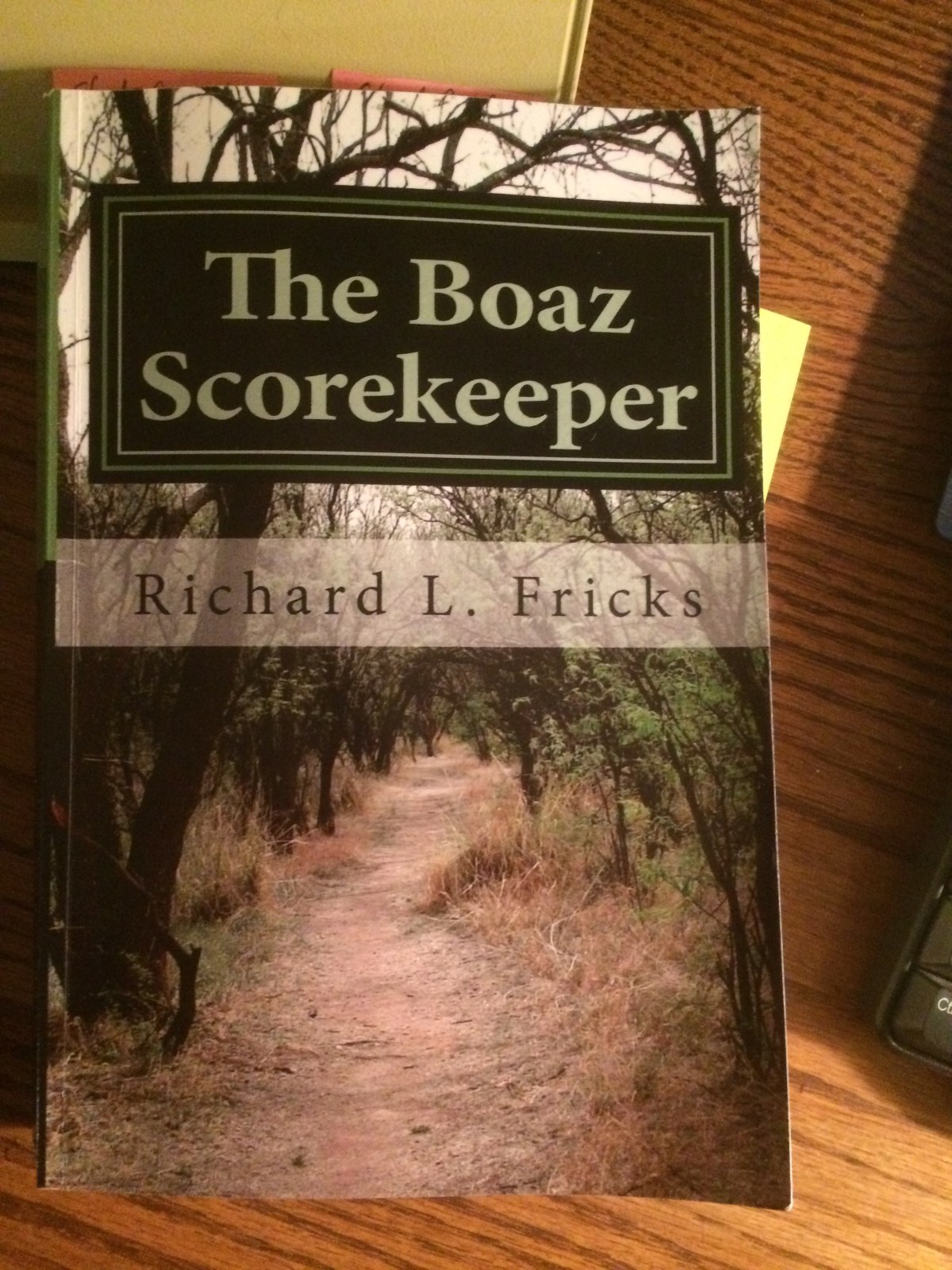
The Boaz Scorekeeper–Chapter 36

The Boaz Scorekeeper, written in 2017, is my second novel. I'll post it, a chapter a day, over the next few weeks.

The deaths of Bill and Nellie Murray brought about the death of their wrongful death lawsuit against the Flaming Five.  For over twenty-five years Alabama was one of only a hand full of states that allowed the decedent’s personal representative to bring a lawsuit on behalf of a decedent.  All other states gave this authority solely to a member of the decedent’s family.  Bill and Nellie Murray, as personal representatives, had filed their lawsuit in early 1997.

In late summer 1997 the Alabama Legislature decided it was time to conform Statute 6-5-410, the wrongful death statute, to what most of other states provided.  The amended statute removed the authority from a personal representative and instead gave it to a family member.  But, the Legislature made a grave error when it used this statement: “No one may prosecute a wrongful death action other than a living parent, spouse, or sibling.” 

In early 1997, Bill and Nellie Murray, and Bill’s mother, Brenda, were the only surviving family members of Wendi and Cindi Murray, other than cousin Clinton.  The daughters obviously had no spouse, nor did they have a sibling.  The Legislature’s failure to include a grandparent as an authorized family member to prosecute a wrongful death action killed Bill and Nellie’s lawsuit.

The attorneys for the Flaming Five were experts in wrongful death claims.  On Wednesday, only two days after the Murray’s failed to show up for court, Ralph Summerford, on behalf of all Defendants, filed a motion to dismiss Bill and Nellie’s case.  Although we knew our case was on shaky grounds, Matt and I filed a motion in opposition asserting the suspiciousness of Bill and Nellie’s deaths as sufficient grounds for the Court to postpone its ruling until autopsies could be conducted. 

The Court set the motions for hearing a week later.  Ralph Summerford had the law on his side.  He argued that no matter the reason or cause of the Murray’s deaths, Alabama law requires a dismissal of their wrongful death case.  I will never forget his statement to Judge Freeman, “Your Honor, with the unfortunate passing of the Murray’s, the Plaintiff’s case is now void.  This Court must follow the wisdom of our legislators in recognizing that wrongful death cases are very private and personal matters and that when an entire family ceases to exist, so too should any claims they might otherwise have.”  I also will never forget the smirk on the faces of the Flaming Five.

The Court granted the Defendants motion.

Once again, justice had eluded Wendi and Cindi Murray.

11/19/23 Biking & Listening

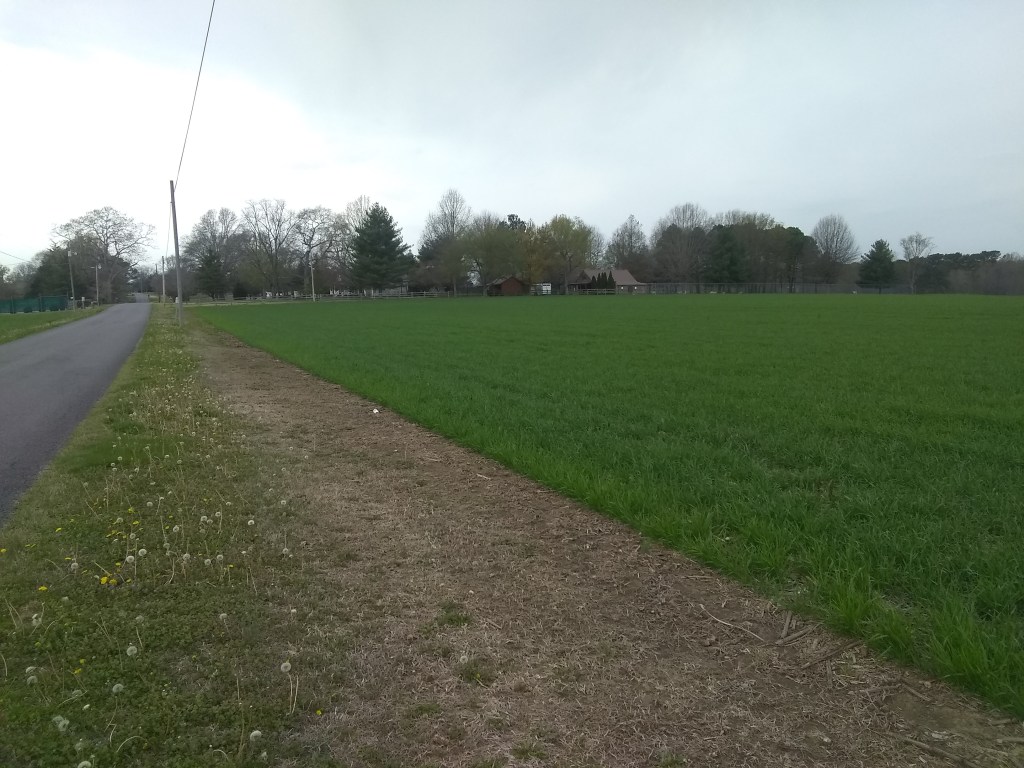
Here’s today’s bike ride.

Why I ride

Biking is something I both love and hate. The conflicting emotions arise from the undeniable physical effort it demands. However, this exertion is precisely what makes it an excellent form of exercise. Most days, I dedicate over an hour to my cycling routine, and in doing so, I’ve discovered a unique opportunity to enjoy a good book or podcast. The rhythmic pedaling and the wind against my face create a calming backdrop that allows me to fully immerse myself in the content. In these moments, the time spent on the bike seems worthwhile, as I can’t help but appreciate the mental and physical rewards it offers.

I especially like having ridden. The post-biking feeling is one of pure satisfaction. The endorphin rush, coupled with a sense of accomplishment, makes the initial struggle and fatigue worthwhile. As I dismount and catch my breath, I relish the sensation of having conquered the challenge, both physically and mentally. It’s a reminder that the things we sometimes love to hate can often be the ones that bring us the most fulfillment. In the end, the love-hate relationship with biking only deepens my appreciation for the sport, as it continually pushes me to overcome my own limitations and embrace the rewards that follow the effort.

My bike

A Rockhopper by Specialized. I purchased it November 2021 from Venture Out in Guntersville; Mike is top notch! So is the bike. The ‘old’ man seat was salvaged from an old Walmart bike (update: seat replaced, new photo to follow, someday).


Something to consider if you’re not already cycling.

I encourage you to start riding a bike, no matter your age. Check out these groups:

Cycling for those aged 70+(opens in a new tab)

Solitary Cycling(opens in a new tab)

Remember,

Photo by Suzy Hazelwood on Pexels.com


Novel I’m listening to:

 Nothing today.


Podcasts I’m listening to:

Waking Up app series/courses I’m listening to:

Nothing today.


Here’s a few photos from my pistol route:

The Boaz Scorekeeper–Chapter 35

The Boaz Scorekeeper, written in 2017, is my second novel. I'll post it, a chapter a day, over the next few weeks.

On Monday morning, Matt and I arrived at the Marshall County Courthouse in Guntersville a few minutes after 8:00 a.m.  We hauled in a trunk load of briefcases and file boxes.  Matt hung around the courtroom thinking the Defendants’ attorneys would make a reasonable offer to settle.  I walked outside to wait for the Murray’s.  I had told them Friday to park along Gunter Avenue and that I would meet them out front at 8:30.

At 8:55 a.m. they still had not arrived.  At 9:00 I walked back to Courtroom 203 and told Matt.  Judge Freeman, prompt as always, called our case.  Matt informed the Court our clients had not arrived and he feared they had been in an accident or had some other emergency.  Judge ordered a 30-minute delay.

I walked to the Clerk’s office to borrow the phone.  I dialed the Murray’s home number knowing all along that no one would answer.  I then looked up the number for Pete and Nancy Strother, the Murray’s good friends and neighbors.  Nancy answered on the first ring and told me that she had not seen Bill or Nellie this morning but that their car was still in their driveway.  I asked her to walk over.  I told her where Nellie kept a key but she already knew that.  I waited on the line for nearly ten minutes.  When Nancy returned she could barely speak.  She said that Bill and Nellie were both dead.  They were still in bed and it was like they had gone to sleep and never woke up.  I told her to call the Douglas Police Department and that I would be there as soon as I could.

I walked back to the Courtroom and told Matt.  He motioned for us to go to a small conference room off to the side of the Courtroom to prevent the Defendants and their counsel from hearing us.  The first thing Matt said was, “they’ve done it again.  You know this isn’t natural.  The Murray’s have been murdered.  There can be no other explanation.”  We then walked down the hall to Judge Freeman’s chambers.  After we relayed what we had just learned, we asked him for a continuance which he granted without bringing in the Defendant’s counsel. 

Matt and I went back into the Courtroom, packed up, and walked out.

11/18/23 Biking & Listening

Here’s today’s bike ride.

Why I ride

Biking is something I both love and hate. The conflicting emotions arise from the undeniable physical effort it demands. However, this exertion is precisely what makes it an excellent form of exercise. Most days, I dedicate over an hour to my cycling routine, and in doing so, I’ve discovered a unique opportunity to enjoy a good book or podcast. The rhythmic pedaling and the wind against my face create a calming backdrop that allows me to fully immerse myself in the content. In these moments, the time spent on the bike seems worthwhile, as I can’t help but appreciate the mental and physical rewards it offers.

I especially like having ridden. The post-biking feeling is one of pure satisfaction. The endorphin rush, coupled with a sense of accomplishment, makes the initial struggle and fatigue worthwhile. As I dismount and catch my breath, I relish the sensation of having conquered the challenge, both physically and mentally. It’s a reminder that the things we sometimes love to hate can often be the ones that bring us the most fulfillment. In the end, the love-hate relationship with biking only deepens my appreciation for the sport, as it continually pushes me to overcome my own limitations and embrace the rewards that follow the effort.

My bike

A Rockhopper by Specialized. I purchased it November 2021 from Venture Out in Guntersville; Mike is top notch! So is the bike. The ‘old’ man seat was salvaged from an old Walmart bike (update: seat replaced, new photo to follow, someday).


Something to consider if you’re not already cycling.

I encourage you to start riding a bike, no matter your age. Check out these groups:

Cycling for those aged 70+(opens in a new tab)

Solitary Cycling(opens in a new tab)

Remember,

Photo by Suzy Hazelwood on Pexels.com


Novel I’m listening to:

The Last Thing He Told Me, by Laura Dave

Amazon abstract:

Don’t miss the #1 New York Times bestselling blockbuster and Reese Witherspoon Book Club Pick that’s sold over 2 million copies–now an Apple TV+ limited series starring Jennifer Garner!

The “page-turning, exhilarating” (PopSugar) and “heartfelt thriller” (Real Simple) about a woman who thinks she’s found the love of her life—until he disappears.

Before Owen Michaels disappears, he smuggles a note to his beloved wife of one year: Protect her. Despite her confusion and fear, Hannah Hall knows exactly to whom the note refers—Owen’s sixteen-year-old daughter, Bailey. Bailey, who lost her mother tragically as a child. Bailey, who wants absolutely nothing to do with her new stepmother.

As Hannah’s increasingly desperate calls to Owen go unanswered, as the FBI arrests Owen’s boss, as a US marshal and federal agents arrive at her Sausalito home unannounced, Hannah quickly realizes her husband isn’t who he said he was. And that Bailey just may hold the key to figuring out Owen’s true identity—and why he really disappeared.

Hannah and Bailey set out to discover the truth. But as they start putting together the pieces of Owen’s past, they soon realize they’re also building a new future—one neither of them could have anticipated.

With its breakneck pacing, dizzying plot twists, and evocative family drama, The Last Thing He Told Me is a “page-turning, exhilarating, and unforgettable” (PopSugar) suspense novel.


Podcasts I’m listening to:

Waking Up app series/courses I’m listening to:

Entering the Domain of Wisdom

The world is constantly changing—and completely interconnected.


Here’s a few photos from my pistol route:

Cognitive Clarity–Christianity’s Embarrassing Apostle Paul Problem

Here’s the link to this article.

By David Madison at 11/17/2023

Hallucinations are not a credible foundation for any religion


The church gets away with a far, far too much because most of the laity don’t bother to read the Bible, let alone study it carefully.This failure enables the clergy to nurture an idealized version of the faith—indeed, an idealized version of Jesus—unhindered by so much of the nasty stuff in full view in the gospels and in the letters of the apostle Paul. The clergy are quite content that the folks in the pews don’t go digging about in these documents. Instead, ritual, sacred music, costuming, stained glass windows—church décor in general—allow the laity to savor a false version of the faith promoted by the ecclesiastical bureaucracy.
  

I have written extensively on the nasty stuff found in the gospels. Here I want to focus on the multiple embarrassments we encounter in the letters of the apostle Paul. Mainstream New Testament scholars believe that there are seven authentic letters of Paul—based on vocabulary, style, and ideas: First Thessalonians, Galatians, First & Second Corinthians, Romans, Philippians, and Philemon. These were all copied for centuries by hand, so they are spoiled by errors, omissions and interpolations, but for the most part, here we have what Paul taught. If the laity dip into the gospels from time to time, it’s probably a rarity for them to explore the Paul letters at any depth. But if they do, they encounter real puzzles—and bad theology, which is not hard to detect.  

Embarrassment One
 
Anyone who reads the letters of Paul, carefully, thoughtfully, will be stumped by his failure to mention the ministry, teachings, and miracles of Jesus of Nazareth. How can that be? Since there is no hint in the New Testament that Paul ever met or even saw Jesus, it’s not a big surprise. We’re familiar, of course, with the dramatic story of Paul’s conversion on the road to Damascus, told three times in the Book of Acts. This is probably dramatic storytelling—like so much else in Acts—because Paul doesn’t mention it in his own letters. But after this life-changing conversion, wouldn’t Paul have wanted to pump the disciples for information about Jesus? The author of Acts reports that Paul did indeed head back to Jerusalem:   

“…he attempted to join the disciples, and they were all afraid of him, for they did not believe that he was a disciple. But Barnabas took him, brought him to the apostles, and described for them how on the road he had seen the Lord, who had spoken to him, and how in Damascus he had spoken boldly in the name of Jesus. So he went in and out among them in Jerusalem, speaking boldly in the name of the Lord.” (Acts 9:26-28)
 
But the author of Acts is caught in a lie here. He had not read Paul’s letter to the Galatians: 


“…nor did I go up to Jerusalem to those who were already apostles before me, but I went away at once into Arabia, and afterward I returned to Damascus. Then after three years I did go up to Jerusalem to visit Cephas [Peter] and stayed with him fifteen days,but I did not see any other apostle except James the Lord’s brother. In what I am writing to you, before God, I do not lie!” (Galatians 1:17-20)


Since we are so familiar with Peter as depicted in the gospels, we might imagine that Paul asked him a lot of questions about Jesus. But who was this Peter whom Paul visited? Chances are he wasn’t the guy who appears in the gospel accounts: we have no idea where those stories came from. They look too much like fantasy literature. In any case, whatever this Peter might have told him about Jesus didn’t end up in Paul’s letters. Paul never mentions the empty tomb, for example.

 
And why was Paul so emphatic (“I do not lie!”) that he didn’t mix with other disciples? He probably wanted to assure his readers that his knowledge about Jesus came directly from Jesus. That is, the risen Jesus in the spiritual realm. Earlier in Galatians 1 Paul had written: “For I want you to know, brothers and sisters, that the gospel that was proclaimed by me is not of human origin, for I did not receive it from a human source, nor was I taught it, but I received it through a revelation of Jesus Christ.” (vv. 11-12)


This is the essence of Embarrassment One: Paul’s ultra-certain faith is based on his visions. Today, the professionals who study brain science would say, his hallucinations. We all know that devout folks dismiss visions of other religions, e.g., Protestants even ridicule Catholic visions of the Virgin Mary, nearly everyone laughs off Mormon vision claims. So many devout people—scattered across different religions, with conflicting concepts of god—have been certain they’re getting glimpses of happenings in the spiritual realm. If it’s someone in your own religion—especially long ago—folks say, “Isn’t that wonderful!” But if it’s outside your religion: “Isn’t that ridiculous!” 

Devout New Testament scholars, holding out hope that the gospels contain some glimpses of history, argue that “reliable” oral traditions about Jesus were in circulation in the decades before the gospels were written. But Paul seems not to have been aware of such stories about Jesus, or just chose to ignore them. Again, his credibility among his followers was based not on “things he might have heard about Jesus”—but on his communications from Jesus in the spirit world. 

Reliable oral traditions may just be wishful thinking. There is little ethical teaching in Mark’s gospel. Matthew decided to correct that by adding The Sermon on the Mount, which Luke shortened—and changed the wording. The author of John’s gospel omitted it entirely, and added lengthy Jesus monologues found nowhere else.

We are entitled to wonder, by the way, if Paul was aware of the Jesus stories that we know from the gospels. Paul’s advice in Romans 13 is a major puzzle: 

“Let every person be subject to the governing authorities, for there is no authority except from God, and those authorities that exist have been instituted by God. Therefore whoever resists authority resists what God has appointed, and those who resist will incur judgment.”  (vv. 1-2)
 
He seems not to have known that Jesus was executed by Roman authorities—and, of course, this is simply bad theology: that all government authorities are divinely appointed. Paul was several stages removed from reality. He goes on to say, “For the same reason you also pay taxes, for the authorities are God’s agents, busy with this very thing. Pay to all what is due them: taxes to whom taxes are due, revenue to whom revenue is due.” (vv. 6-7) What a perfect occasion to quote Jesus’ famous advice in Matthew 22:21, “Render unto Caesar the things that are Caesar’s…” But Paul simply wasn’t aware of anything Jesus taught. 

One comeback may be to point out that Paul quotes Jesus at the Last Supper (I Corinthians 11:23-26). How would he have known this? He wasn’t at the Last Supper, and bragged that he didn’t learn anything about Jesus from human sources. He states that “I received from the Lord” the famous words of the Eucharist, i.e., from his visions. When Mark created his account of the Last Supper, he probably quoted Paul’s version of the story.   

Embarrassment Two
 
Historians know very well that verifying anything about the life of Jesus cannot be done, because there is no contemporaneous documentation by which to do so. The gospels were written decades after his death, and the authors don’t mention their sources. Look at any modern biography of a person in history: at the back there will be pages listing the sources for the information provided in the book. We have none of that for Jesus.

But that kind of research—i.e., spending endless hours in libraries and archives—never occurred to Paul. His story of Jesus could be reconstructed from Old Testament texts. Committed to his particular vision-based theology, he was confident that his Jesus was foreseen in ancient texts. An article describing Paul’s approach, in considerable detail, was published here on the Debunking Christianity Blog on 10 November, by Greg G., How Did Paul Know What He Tells Us About Jesus? I recommend careful study of this article. At the outset he states:
 
“We often marvel at Paul’s lack of interest in the life and times of Jesus. He says Jesus was born of a woman but says nothing about his mother. He tells us Jesus was killed for the sins of others but tells us nothing about where the event occurred. He tells us that Jesus was buried but he tells us nothing about the gravesite. Did Paul not think the information was available in his time?
 
And: “Paul tells us over and over that he got his information from the scriptures.” But this is not how to write history. This is a form of ancient superstition: that a god’s secrets about the future can be gleaned from studying texts written long ago.  One’s theology is the key to figuring out these secrets. The author of Matthew’s gospel provides extreme examples of this misguided approach, e.g., he quotes Isaiah 7:14 to prove the virgin birth of Jesus—but Isaiah 7 has nothing whatever to do with the birth of a supposed messiah many centuries later. Matthew also quotes Hosea 11:1 to account for his farfetched story (found nowhere else), that Joseph and Mary fled to Egypt to keep Jesus safe. 
 
If you’re deep into Christian theology, you might think that Paul was on the right track figuring out Jesus from old manuscripts. But his faulty thinking here is a major embarrassment. 
 

On my YouTube channel, there is a playlist, “Please Stop Calling Him ‘Saint’ Paul, with four videos:

       Number 1     Number 2     Number 3     Number 4      


Embarrassment Three
 
It’s no surprise, given the violent, abusive god we find in the Old Testament, that Paul bought this theology too. Hence in Romans 1, he includes gossips and rebellious children among those who deserve to die. In Romans 2:5-8, we find this: 

“But by your hard and impenitent heart you are storing up wrath for yourself on the day of wrath, when God’s righteous judgment will be revealed. He will repay according to each one’s deeds:to those who by patiently doing good seek for glory and honor and immortality, he will give eternal life,while for those who are self-seeking and who obey not the truth but injustice, there will be wrath and fury.”
 
Churchgoers are most familiar with things Paul wrote on those days when he hadn’t forgotten to take his meds, and was in a good mood, e.g., I Corinthians 13, which includes the famous words, “Love is patient; love is kind; love is not envious or boastful or arrogantor rude…” But the fact remains, that for Paul, god’s default mood was wrath and rage. And a magical spell was a way to escape this: “…if you confess with your mouth that Jesus is Lord and believe in your heart that God raised him from the dead, you will be saved.” (Romans 10:9)

For more insight into Paul’s thinking, I recommend John Loftus’ article, Paul’s Christianity: Belief in Belief Itself, which is a longer version of the Foreword he wrote for Robert Conner’s book, The Jesus Cult: 2000 Years of the Last Days. In this piece Loftus quotes from Conner’s third essay in his 2019 anthology, The Case Against Miracles:

“A more mature modern psychology with superior investigative techniques and tools can now question whether Paul of Tarsus was functionally, if not clinically, insane—and whether the religion he championed is based on delusion.” (p. 545)

This is a major embarrassment indeed.

Embarrassment Four
 
Just a brief mention of this one. Anti-gay fanatics focus on Paul’s rant against both male and female homosexuals in Romans 1:26-27. 

“There! Doesn’t that settle it!” They don’t seem to notice that Paul wasn’t thrilled about male-female sex either: “And those who belong to Christ have crucified the flesh with its passions and desires.” (Galatians 5:24) Not too many clergy quote this verse at wedding ceremonies! And they don’t mention I Corinthians 7:1: “It is good for a man not to touch a woman” or vv. 8-9:
 
“To the unmarried and the widows I say that it is good for them to remain unmarried as I am. But if they are not practicing self-control, they should marry. For it is better to marry than to be aflame with passion.”
 
Do the anti-gay fanatics follow Paul’s advice about straight sex? Get married in order not to be aflame with passion? Paul assumed that his lack of interest in sex was the ideal standard to live by. What a tortured soul, what an embarrassment. 
 
I suspect that if the New Testament were suddenly printed without the letters of Paul, many of the faithful wouldn’t notice or care. 
 
Wasn’t it a major blunder that the New Testament didn’t include letters written by Jesus himself? We can imagine Jesus’ Epistle to Saul of Tarsus, on how not to be a rogue apostle; his Epistle to Peter, on how to run a church without resorting to magical thinking; his Epistles to Matthew, Mark, Luke, and John, on how to avoid making up bad, mediocre, alarming Jesus-script; and Jesus’ Epistle to the Women of the World, on how to fight misogyny and arrogant patriarchy. 
 
With these letters, we’d have a much better New Testament. 


David Madison was a pastor in the Methodist Church for nine years, and has a PhD in Biblical Studies from Boston University. He is the author of two books, Ten ToughProblems in Christian Thought and Belief: a Minister-Turned-Atheist Shows Why You Should Ditch the Faith, now being reissued in several volumes, the first of which is Guessing About God (2023) and Ten Things Christians Wish Jesus Hadn’t Taught: And Other Reasons to Question His Words (2021). The Spanish translation of this book is also now available. 

His YouTube channel is here. At the invitation of John Loftus, he has written for the Debunking Christianity Blog since 2016.
 
The Cure-for-Christianity Library©, now with more than 500 titles, is here. A brief video explanation of the Library is here

The Boaz Scorekeeper–Chapter 34

The Boaz Scorekeeper, written in 2017, is my second novel. I'll post it, a chapter a day, over the next few weeks.

Every time I had met with Bill and Nellie Murray, whether at the law office or at their home in Douglas, she had given me an index card containing a single Bible verse.  The verse was always a prayer promise. 

Now, it is Friday morning in late October 1998, less than three days before the start of their wrongful death lawsuit.  True to form, Bill and Nellie walk into the conference room where Matt and I are seated and Nellie hands me a small index card reading: “And all things you ask in prayer, believing, you will receive.” Matthew 21:22.

“It’s justice time for Wendi and Cindi.”  Nellie said as Matt helped her with a chair.

“It certainly appears that we have as strong a case as we could ask for.” I said.

“I just wish the prosecutor back in 1973 had had all this evidence during the murder trial.”  Matt said.

“I do too, but that was not God’s will.  Nellie and I realize that no amount of money from this civil case could ever satisfy the longings of our hearts for our dear daughters.  But, we have come to believe that the impact a multi-million-dollar judgment will have on these five families might just break their power and control in this little town.”  Bill said.

“Bill and I are ashamed for not remembering to invite you two to a final prayer meeting tonight at Calvary Baptist.  It starts at 7:00.  Pastor Brown will deliver a sermon first and then everyone who is led to will pray and lay hands on us.”

“Thank you for the invitation.  I will be there.”  Matt said.

“I’m sorry but I cannot attend.  For the past several months I have not been a very attentive husband or father.  Two weeks ago, I promised Lewis I would take him and his grandmother to Huntsville to see the Ringling Bros. and Barnum & Bailey Circus.  None of us were sure how long the trial would last.  Will you forgive me?  I trust you know that I will be there with you in spirit.”  I said.

“Completely understandable.  You go and enjoy these precious moments with your son and wife.  Bill and I thank the both of you from the bottom of our hearts.  You two have been such a blessing, just the encouragement Bill and I needed.”  Nellie said.

After an hour of reviewing, once more, the evidence and what to expect starting Monday, Nellie asked to lead us in a prayer.

“Dear Lord Jesus, we praise you for the privilege of coming before your throne.  We don’t begin to understand why we lost our beautiful daughters, Wendi and Cindi, over 25 years ago.  We acknowledge that we are sinners and lack full knowledge and wisdom.  But, we trust you and your ways.  Sweet and Holy Jesus we ask you for complete victory in this legal battle against those who murdered our daughters.  You know Father that Bill and I are not greedy and that this lawsuit is not at all about money.  We simply ask you for justice for Wendi and Cindi.  We claim victory because we believe in You and trust You, and have faith in You.  We have complete confidence in Your Holy and infallible Word.  Thank you for all your promises you have given us, and right now I especially thank you for Matthew 21:22: ‘And all things you ask in prayer, believing, you will receive.’ Amen and Amen.”

Bill and Nellie stood and hugged each other. Bill became emotional and started to cry.  Matt followed him out into the hall while Nellie lingered.  With tears in her eyes she handed me a large gold locket.  I held it in my hand not knowing exactly what to do.  She motioned for me to open it.  Inside, there were two pictures.  On the left was Wendi.  Her 9th grade school picture, according to Nellie.  On the right side of the locket was my Senior portrait.  I now knew why a few weeks ago Nellie had asked to borrow my 12th grade annual.  She had made a copy of my picture to use with the locket.  Nellie said she had given the locket to Wendi on her 15th birthday, May 8, 1969.  She had worn it virtually every day even though it contained only her picture.  Nellie said Wendi always claimed that someday God would bring to her the love of her life.  “Wendi didn’t wear her locket to the graduation party.  I think someway she had a premonition.”  Nellie reached up and kissed my cheek.  As she walked out of the conference room she said, “I have no doubt that Wendi found the love of her life.  You would have made a wonderful husband and son-in-law.  Keep her locket close during the trial.  God will guide your thoughts and speech.”

I followed Nellie out into an empty reception area.  Matt had followed Bill all the way outside to his car.  As Nellie opened the door she turned and said, “I forgot to give you this.  It is a list of prayer promises I cherish.  Just like Wendi’s locket, I wanted you to have these close as we spend the next week or two in trial.  God will not fail us.”

I thanked her and we hugged once again.  After she left, I walked back to my office, sat down and read the list of prayer scriptures Nellie had just handed me.

(See Appendix A for Nellie’s prayer promises.)

APPENDIX A

Chapter 34

Nellie’s prayer promises:

Matthew 18:19

“Again, I say to you, that if two of you agree on earth about anything that they may ask, it shall be done for them by My Father who is in heaven.

Matthew 7:7-11

“Ask, and it will be given to you; seek, and you will find; knock, and it will be opened to you. “For everyone who asks receives, and he who seeks finds, and to him who knocks it will be opened. “Or what man is there among you who, when his son asks for a loaf, will give him a stone?

“Or if he asks for a fish, he will not give him a snake, will he? “If you then, being evil, know how to give good gifts to your children, how much more will your Father who is in heaven give what is good to those who ask Him!

Luke 11:9-13

“So, I say to you, ask, and it will be given to you; seek, and you will find; knock, and it will be opened to you. “For everyone who asks, receives; and he who seeks, finds; and to him who knocks, it will be opened. “Now suppose one of you fathers is asked by his son for a fish; he will not give him a snake instead of a fish, will he?

“Or if he is asked for an egg, he will not give him a scorpion, will he? “If you then, being evil, know how to give good gifts to your children, how much more will your heavenly Father give the Holy Spirit to those who ask Him?”

Matthew 21:22

“And all things you ask in prayer, believing, you will receive.”

John 14:13-14

“Whatever you ask in My name, that will I do, so that the Father may be glorified in the Son. “If you ask Me anything in My name, I will do it.”

John 15:7

“If you abide in Me, and My words abide in you, ask whatever you wish, and it will be done for you.

John 15:16

“You did not choose Me but I chose you, and appointed you that you would go and bear fruit, and that your fruit would remain, so that whatever you ask of the Father in My name He may give to you.

John 16:23-24

“In that day, you will not question Me about anything Truly, truly, I say to you, if you ask the Father for anything in My name, He will give it to you. “Until now you have asked for nothing in My name; ask and you will receive, so that your joy may be made full.

Psalm 91:14-16

“Because he has loved Me, therefore I will deliver him; I will set him securely on high, because he has known My name. “He will call upon Me, and I will answer him; I will be with him in trouble; I will rescue him and honor him. “With a long life, I will satisfy him and let him see My salvation.”

Psalm 50:14-15

“Offer to God a sacrifice of thanksgiving and pay your vows to the Most High; Call upon Me in the day of trouble; I shall rescue you, and you will honor Me.”

Psalm 10:17

O LORD, You have heard the desire of the humble; You will strengthen their heart, You will incline Your ear.

Exodus 22:22-23

“You shall not afflict any widow or orphan. “If you afflict him at all, and if he does cry out to Me, I will surely hear his cry;

Psalm 102:19-20

For He looked down from His holy height; From Heaven the LORD gazed upon the earth, To hear the groaning of the prisoner, To set free those who were doomed to death,

Isaiah 41:17

“The afflicted and needy are seeking water, but there is none, And, their tongue is parched with thirst; I, the LORD, will answer them Myself, As the God of Israel I will not forsake them.

2 Chronicles 7:14

and My people who are called by My name humble themselves and pray and seek My face and turn from their wicked ways, then I will hear from heaven, will forgive their sin and will heal their land.

Ezekiel 36:37

‘Thus, says the Lord GOD, “This also I will let the house of Israel ask Me to do for them: I will increase their men like a flock.

Zechariah 10:6

“I will strengthen the house of Judah, And I will save the house of Joseph, And I will bring them back, Because I have had compassion on them; And they will be as though I had not rejected them, For I am the LORD their God and I will answer them.

Zechariah 13:8-9

“It will come about in all the land,” Declares the LORD, “That two parts in it will be cut off and perish; But the third will be left in it. “And I will bring the third part through the fire, refine them as silver is refined, and test them as gold is tested They will call on My name, And I will answer them; I will say, ‘They are My people,’ And they will say, ‘The LORD is my God.'”

1 John 3:22

and whatever we ask we receive from Him, because we keep His commandments and do the things that are pleasing in His sight.

Mark 11:24

“Therefore, I say to you, all things for which you pray and ask, believe that you have received them, and they will be granted you.

1 John 5:14

This is the confidence which we have before Him, that, if we ask anything according to His will, He hears us.