Write to Life blog

Cosmic Insignificance Therapy

Are you feeling stressed? Have more to do than you could ever accomplish? Or, not enough to do? Do you have regrets over past failures? Whatever your situation today, listen to this short episode by Oliver Burkeman from the Waking Up APP.

I’ve found it to be SIGNIFICANT to me, so much, I’ve listened to it two days in a row.

https://screencast-o-matic.com/watch/c0nt6xVyCTo

Do We Suffer Because We Have “Free Will”?

Here’s the link to this article written by Bart Ehrman on February 26, 2023.

In my previous posts I discussed a class I once taught at Rutgers University on how the various biblical authors deal with the problem of suffering – the problem of how there can be such horrible suffering in a world that is said to be controlled by an all-loving and all-powerful God (who therefore wants the best for people and is able to provide it).  Many of my students, as I pointed out, think that there’s an easy answer:  we suffer because of “free will.”  If we weren’t free to love and hate, to do good and do harm, we would just be robots or computers, not humans.  If God wanted to create humans, as opposed to machines, necessarily we have to be free to hurt others.  And many people do so, often in horrendous ways.

Does that solve the problem?  Naturally we dealt with that issue in my class.  Here is how I discussed those conversations in my book on suffering, God’s Problem: How The Bible Fails to Answer our Most Important Question – Why We Suffer (Oxford University Press, 2008).

*******************************

It was, in fact, fairly easy to show my students some of the problems with this standard modern explanation that suffering comes from free will.  Yes, you can explain the political machinations of the competing political forces in Ethiopia (or in Nazi Germany or in Stalin’s Soviet Union or in the ancient worlds of Israel and Mesopotamia) by claiming that humans had badly handled the freedom given to them.  But how can you explain drought?  When it hits, it is not because someone chose not to make it rain.  Or how do you explain hurricanes that destroy New Orleans?  Or tsunamis that kill hundreds of thousands overnight?  Or earthquakes, or mudslides, or malaria, or dysentery?  And so on.

Moreover, the claim that free will stands behind all suffering has always been a bit problematic, at least from a thinking perspective.  Most people who believe in God-given free will also believe in an afterlife.  Presumably people in the afterlife will still have free will (they won’t be robots then either, will they?).  And yet there won’t be suffering (allegedly) then. Why will people know how to exercise free will in heaven if they can’t know how to exercise it on earth?

In fact, if God gave people free will as a great gift, why didn’t he give them the intelligence they need to exercise it so that we could all live happily and peaceably together?  You can’t argue that he wasn’t able to do so, if you want to argue he was all powerful.  Moreover, if God sometimes intervenes in history in order to counteract the free will decisions of others — for example, when he destroyed the Egyptian armies at the Exodus (they freely had decided to oppress the Israelites) or when he fed the multitudes in the wilderness in the days of Jesus (people who had chosen to go off to hear him without packing a lunch), or when he counteracted the wicked decision of the Roman governor Pilate to destroy Jesus by raising the crucified Jesus from the dead — if he intervenes sometimes to counteract free will, why does he not do so more of the time?  Or indeed, all of the time.

At the end of the day, one would have to say that the answer is a mystery.  We don’t know why free will works so well in heaven but not on earth.  We don’t know why God doesn’t provide the intelligence we need to exercise free will.  We don’t know why he sometimes contravenes the free exercise of the will and sometimes not.  But the problem is that if in the end the question is resolved by saying it is a mystery, then we no longer have an answer.  We are admitting there is no answer.  The solution of free will, in the end, ultimately leads to the conclusion that we can’t understand, even though we imagine we are giving an answer.

As it turns out, that is one of the common answers asserted by the Bible.  We just don’t know why there is suffering.  But other answers in the Bible are just as common — in fact, even more common.  In my class at Rutgers I wanted to explore all these answers, to see what the Biblical authors thought about such matters, and to evaluate what they had to say.

Based on my experience with the class, I decided at the end of the term that I wanted to write a book about it, a study of suffering and biblical responses to it.  But the more I thought about it, the more I realized that I wasn’t ready to write the book.  I was just 30 years old at the time, and although I had seen a lot of the world, I recognized that I had not seen nearly enough of it.  A book like this requires years of thought and reflection, and a broader sense of the world and fuller understanding of life.

I’m now twenty years older [OK, with this blog post thirty-five years older!], and I still may not be ready to write the book.  It’s true, I’ve seen a lot more of the world over these years.  I’ve experienced a lot more pain myself, and have seen the pain and misery of others, sometimes close up: broken marriages, failed health, cancer taking away loved ones in the prime of life, suicide, birth defects, children killed in car accidents, homelessness, mental disease — you can make your own list of your past twenty years.  And I’ve read a lot: genocides and ethnic cleansings not only in Nazi Germany but also in Cambodia, Rwanda, Bosnia, and now Darfur; terrorist attacks, massive starvation, epidemics ancient and modern, mudslides that kill 30,000 Columbians in one fell swoop, droughts, earthquakes, hurricanes, tsunamis.

Still, even with twenty years of additional experience and reflection, I may not be ready to write the book.  But I suppose in another twenty years, with the horrible suffering in store for this world, I may still feel the same way.  So I’ve decided to write it now.

02/26/23 Biking & Listening

Biking is something else I both love and hate. It takes a lot of effort but does provide good exercise and most days over an hour to listen to a good book or podcast. I especially like having ridden.

Here’s my bike, a Rockhopper by Specialized. I purchased it November 2021 from Venture Out in Guntersville; Mike is top notch! So is the bike, and the ‘old’ man seat I salvaged from an old Walmart bike.

Here’s a link to today’s bike ride. This is my pistol ride.

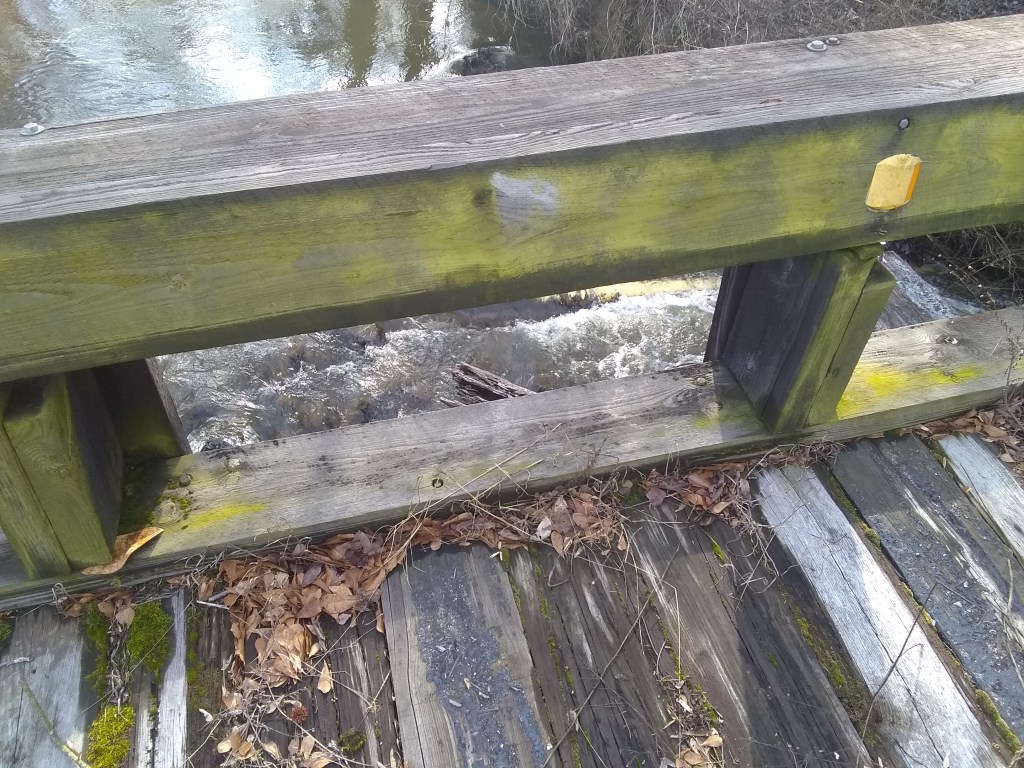
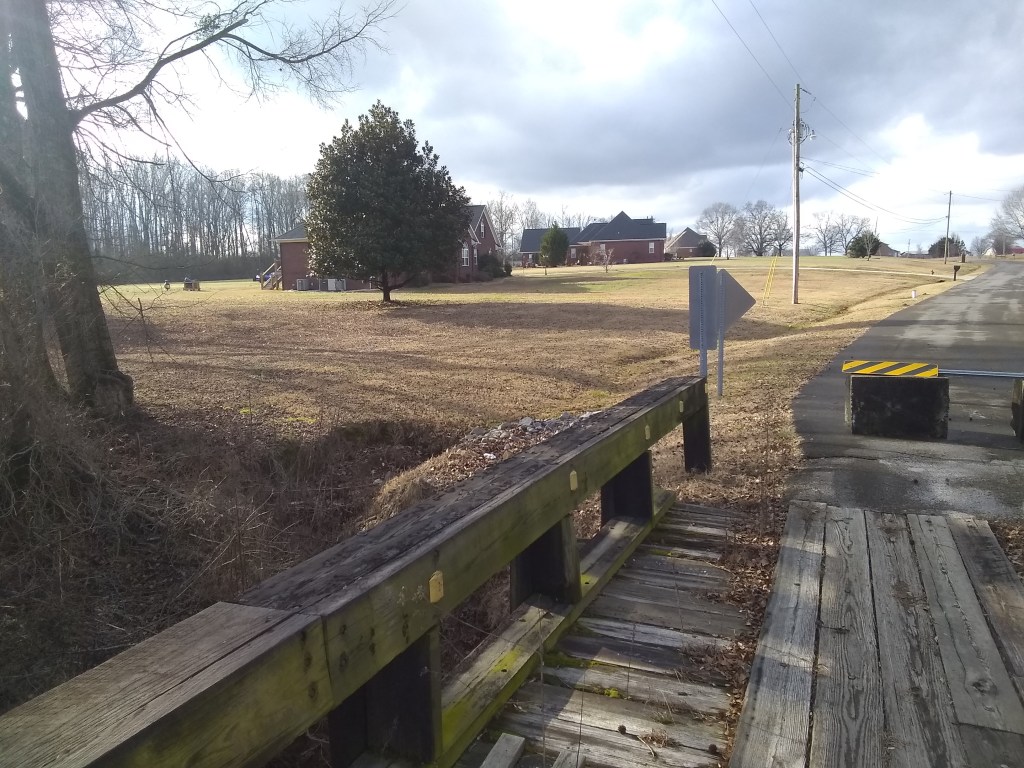
Here’s a few photos taken along my route:

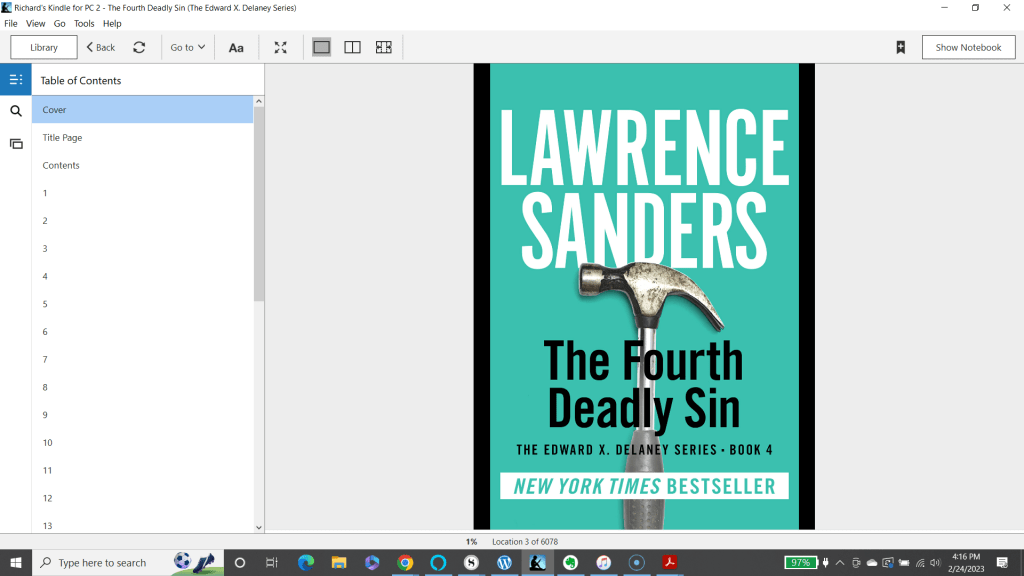
Here’s what I’m currently listening to: The Fourth Deadly Sin, by Lawrence Sanders

Sanders was a tremendously talented writer.

Amazon abstract:

When a Manhattan psychiatrist is murdered, a retired detective returns to the job, in a thriller by the #1 New York Times–bestselling “master of suspense” (The Washington Post).

On a rainy November night, Dr. Simon Ellerbee stares out the window of his Upper East Side psychiatry office, miserably wishing he could seek counseling for the problems in his seemingly perfect life. He hears the door buzzer and goes to answer it, but flinches when he sees his unexpected guest. Minutes later, he’s dead, his skull crushed by repeated blows from a ball-peen hammer. Once the doctor was down, the killer turned over the body and smashed in Ellerbee’s eyes.  With no leads and a case getting colder by the hour, the New York Police Department calls in former chief Edward Delaney. His search for the truth raises more questions than answers: Who had Ellerbee let into his office? Why were there two sets of wet footprints on the carpeting of the doctor’s townhouse? What caused Ellerbee’s odd personality transformation over the past year? And who murdered, then symbolically mutilated, the prominent Manhattan psychiatrist?

A Sample Five Star Review

Errol Mortland

5.0 out of 5 stars The Best Bubble Gum Ever!

Reviewed in the United States on August 6, 2017

If you’re tired of streaming or cleaning for the moment and need to pass some time, you won’t go wrong with the four Deadly Sins series from Lawrence Sanders. I zip through all of them every other year, in sequence. They’re great reads, and I’ve always pictured George C. Scott as Edward X. Delaney (Frank Sinatra in the movie version of the First in pretty insipid, but apparently he owned the rights).

The Fourth is the murder is Dr Simon Ellerbee, you get the usual palette of suspects, and retired Chief of Detectives gets his crew and does his stuff. If Hemingway wrote crime suspense set in NYC, it’d be like this. I love short descriptive sentences. Not sure I recall seeing “ears like slabs of veal” in this one. If you love New York, Mr Sanders captures its essence like a great musical conductor. The “Sins” series is the best, followed by the “Commandments.” The Arch McNally stuff which followed that is okay, even though they kept the series going after Mr Sanders died in 1998. I just find that disrespectful. I only regret there wasn’t a Fifth Deadly Sin.

Mental Meanderings—A Look-Back at Yesterday (Saturday–022523)

Family and I spent most of yesterday afternoon working at the restaurant installing metal siding over the deteriorating cedar boards. It looks much better and will shed water much better than the old.

The heavy steel firewood racks were a chore to move out of the way. But, with chain and Jeremy’s truck, we did it.

Yesterday, I also pondered a decision to focus these mental meanderings to my daily novel writing, including screenshots with thoughts I had the prior day while drafting my current work-in-progress. My hope would be to encourage others to commit to the daily slog of eating an elephant one bite at a time.

Writing Journal—Sunday writing prompt

Your character undergoes hypnotherapy and uncovers one of her past lives. Write the scene as this happens. 

One Stop for Writers

Guidance & Tips

Write the scene of discovery (i.e., tell a story), or brainstorm and create a list of related ideas.

Here’s five story elements to consider:

  • Character
  • Setting
  • Plot
  • Conflict
  • Resolution

Never forget, writing is a process. The first draft is always a mess.

The first draft of anything is shit.

Ernest Hemingway

02/25/23 Biking & Listening

Biking is something else I both love and hate. It takes a lot of effort but does provide good exercise and most days over an hour to listen to a good book or podcast. I especially like having ridden.

Here’s my bike, a Rockhopper by Specialized. I purchased it November 2021 from Venture Out in Guntersville; Mike is top notch! So is the bike, and the ‘old’ man seat I salvaged from an old Walmart bike.

Here’s a link to today’s bike ride. This is my pistol ride.

Here’s a few photos taken along my route:

Here’s what I’m currently listening to: The Fourth Deadly Sin, by Lawrence Sanders

Sanders was a tremendously talented writer.

Amazon abstract:

When a Manhattan psychiatrist is murdered, a retired detective returns to the job, in a thriller by the #1 New York Times–bestselling “master of suspense” (The Washington Post).

On a rainy November night, Dr. Simon Ellerbee stares out the window of his Upper East Side psychiatry office, miserably wishing he could seek counseling for the problems in his seemingly perfect life. He hears the door buzzer and goes to answer it, but flinches when he sees his unexpected guest. Minutes later, he’s dead, his skull crushed by repeated blows from a ball-peen hammer. Once the doctor was down, the killer turned over the body and smashed in Ellerbee’s eyes.  With no leads and a case getting colder by the hour, the New York Police Department calls in former chief Edward Delaney. His search for the truth raises more questions than answers: Who had Ellerbee let into his office? Why were there two sets of wet footprints on the carpeting of the doctor’s townhouse? What caused Ellerbee’s odd personality transformation over the past year? And who murdered, then symbolically mutilated, the prominent Manhattan psychiatrist?

A Sample Five Star Review

Errol Mortland

5.0 out of 5 stars The Best Bubble Gum Ever!

Reviewed in the United States on August 6, 2017

If you’re tired of streaming or cleaning for the moment and need to pass some time, you won’t go wrong with the four Deadly Sins series from Lawrence Sanders. I zip through all of them every other year, in sequence. They’re great reads, and I’ve always pictured George C. Scott as Edward X. Delaney (Frank Sinatra in the movie version of the First in pretty insipid, but apparently he owned the rights).

The Fourth is the murder is Dr Simon Ellerbee, you get the usual palette of suspects, and retired Chief of Detectives gets his crew and does his stuff. If Hemingway wrote crime suspense set in NYC, it’d be like this. I love short descriptive sentences. Not sure I recall seeing “ears like slabs of veal” in this one. If you love New York, Mr Sanders captures its essence like a great musical conductor. The “Sins” series is the best, followed by the “Commandments.” The Arch McNally stuff which followed that is okay, even though they kept the series going after Mr Sanders died in 1998. I just find that disrespectful. I only regret there wasn’t a Fifth Deadly Sin.

Is there life after death?

Here’s the link to this article by Merle Hertzler on November 30, 2022.

[A slightly modified version of this article is also available on the author’s The Mind Set Free blog.]

You may have been told that you will live forever, but that seems quite unlikely to me. For our brains will one day be gone. Throughout our life those brains have been the seat of our thoughts, emotions, and memories. So when the brain is gone, then the lights must go out. Surely then it is all over.

But some will tell me that something else lives on even after the brain has disintegrated. They often call this the soul. And ultimately, they say, the soul is the seat of the mind. And so, even if the brain is gone, the mind can continue as a function of a soul that survives death.

If the soul is really in charge, though, why do you even need a brain? If thinking is done by the soul, what is left for the brain to do? Some propose that the brain is simply an interface to the body. It gathers information from the senses and feeds it to the soul. There the soul processes the incoming data, saves memories, and makes decisions. The soul then somehow directs the brain to drive the muscles of the body. The soul is in charge, they say, and the brain handles the interface with the body.

But science has shown that it is truly the brain that is in charge. We think with our brains, not with immaterial souls.

Have You Got Soul?

Let’s look at some of the evidence that the brain is in charge, and that there is no separate, nonmaterial soul.

First, there is the evidence of amnesia. When elderly people suffer a stroke, or when trauma occurs to the brain, patients often lose the ability to remember things that happen after that tragic event. The person loses an important mental function, the ability to remember new things. But it was not the soul that had been damaged. The brain was damaged. Somehow damage to the brain causes that person to lose the ability to efficiently store new memories. If memories are actually a function of the soul, why would damage to the brain affect the functioning of the soul? Since damage to the brain affects the ability to store memories, then it must be the brain that stores the memories.

You might argue that what happened is that the brain stopped giving the soul new data. Thus, the soul has nothing to remember. But that is clearly not what is happening in such cases. The essence of the person is still communicating with us. That person sees us, recognizes us, and communicates. The mind’s senses are still working. The mind is still able to observe, but the person forgets what was observed. Why? The brain is damaged. And this damage hinders memory storage. So it must be the brain that is remembering. When the brain is affected, the mind is affected.

Second, when conditions prevent a brain from developing properly, the personality does not reach maturity. If the soul is distinct from the brain, why wouldn’t the soul go on to maturity?

A third kind of evidence that the brain is doing the thinking is the fact that, if the brain slows down and goes to sleep at night, the soul also sleeps. Suppose that your soul is something different from the brain. Why does the soul go to sleep when the brain sleeps? Why can’t it just keep on being your soul, wide awake, even though the brain goes to sleep and has stopped giving the soul input from the world? It doesn’t work that way. When the brain is affected, the mind is affected.

The effect is even more pronounced under anesthesia. In such procedures, one loses virtually all contact with the world and does not sense even severe pain. After waking up, one is not even aware of the passage of time while he was unconscious. If the soul was distinct from the brain, one would think that you could simply start counting as you go under and keep on counting into the thousands in your soul while contact with the world goes blank. It would be like losing the connection while on a Zoom call. The soul would still be awake. The person whose brain is sleeping would still be able to count or plan his next day, but the incoming sensations of the world would temporarily be blank. This is not what happens.

Fourth, evidence shows that we inherit our basic personality through our genes. How is it that genes can affect our personality? Genes must surely be directing the brain’s physical development, which then influences personality development. How could genes also change a separate, immaterial soul? That makes no sense. Personality must therefore be a function of the brain, not of a separate entity known as the soul. How else could genes have such a significant effect on the personality?

Fifth, a patient with Alzheimer’s disease enters a period of altered mental capability due to brain disease. Is the soul of the Alzheimer’s victim also changed by his physical condition? That makes no sense. The disease affects the brain, not the soul. But if the soul is working normally, why are the thoughts so confused?

You may argue that the soul is still normal, but that the connection of the brain to the soul is blurred. And that we can still communicate with the essence of the Alzheimer’s victim, with the part that you would call the soul. That spark of the inner person is still there, you might think. The communication still works. But we can see that the very essence of the inner person is changing. The part that you would call the soul is deteriorating. Why? The brain is being altered. Since the mind is a function of the brain, it too becomes altered.

Are we to believe that death does for the Alzheimer’s victim what no medicine can do? Does death suddenly restore the mind to full functioning? How could that be? The disease gradually destroys the brain, and this deteriorates the mind. How then could the full destruction of the brain at death cause the mind to become restored?

Sixth, if the soul is separate from the brain, exactly how does a soul interface with the brain? As far as we can tell, brain function consists of movements of electrons and chemicals. How could our soul communicate with this brain? Does the soul somehow start moving electrons around in our brains so that the brain knows to move a certain muscle or to command the mouth to say a certain word? How can the stuff of the soul push matter? Wouldn’t a soul push right through an electron, just like spirits supposedly pass through walls?

And if souls actually push molecules or electrons around, why can’t they push the molecules that are outside of the brain? If your soul can push molecules in your brain, why can’t it push molecules in my brain?

None of this can be observed in nature. Nowhere do we find evidence for souls deflecting molecules. So how can a nonphysical soul affect the movements of the body? It can’t. I conclude that the mind is simply a function of the brain.

Seventh, as I’ve discussed elsewhere, we have evolved from other animals. Do apes have souls? Do reptiles, fish, and germs have souls? If not, exactly when was a soul inserted into the animal kingdom for the first time? Was the first being to have a soul raised by someone without a soul? It is easy to see how mind functions could develop incrementally through many generations as we evolved. It is difficult to see how an evolved creature would somehow suddenly get a separate, immaterial soul for the first time. And if apes don’t have souls, how do their brains partially duplicate some of the functions that we require a soul to do?

For all of these reasons, I conclude that it is the brain, not an immaterial soul, that stores memories and does our thinking. For more on mind-brain dependence, see “The Case Against Immortality” by Keith Augustine, “Mind-Brain Dependence as Twofold Support for Atheism” by Steven J. Conifer, and section III.6 of Sense and Goodness without God: A Defense of Metaphysical Naturalism by Richard Carrier.

Consciousness

Yes, I know—you look inside, and you see that your conscious mind is in there telling the body what to do. Your consciousness is in charge, or so it seems to you. And you equate that consciousness with a soul that is separate from the body. So how can you be perceiving this soul inside of you to be directing the show, when actually it is brain molecules that are doing the heavy lifting? Good question.

Science has shown that the brain decides to do things before the person is aware that he made the decision. One experiment that verified this involved subjects who were told to decide to bend their wrist while watching a slowly spinning disk. They were told to tell the experimenters exactly where the disk was when they decided to bend their wrist. The experimenters used this information to determine when the subject was aware that he was making the decision. The subjects were also hooked up to sensors that could detect brain activity that occurred when the subjects decided to act.

It turns out that the brainwaves started before the subjects were aware that they were deciding. If you asked the subjects, they would tell you that they made the decision consciously at the moment that they were aware of it. But the instruments they were wired to indicate otherwise. The brain cells had begun to fire and started the process of commanding the hand to move before the person was consciously aware of the decision.[1]

Could it be that our brain cells are running the show, and that what we call the conscious mind comes along later and fills in the story after the fact? This kind of after-the-fact consciousness has been demonstrated in another experiment. Here is how it worked. A red dot was projected onto a screen. Then the red dot was turned off and, a split second later, a green dot was projected near the spot where the red dot had been. When people saw this, they reported that they saw the red dot start to move to the side, then change suddenly to a green dot as it moved along, and then continue to the new location as a green dot. Obviously, this is not what they saw. There was no moving dot that changed colors. The dot had never been in the middle. But the conscious mind told the story that the dot had traveled, and that the dot’s color had changed from red to green at the middle. The conscious mind was convinced that it had observed this happen. It was mistaken.[2]

And so, in that experiment, we find that minds rewrote history, just like the historians in the novel 1984 rewrote history to reflect what Big Brother wanted. A similar thing must have happened in the minds of the subjects. Their minds had known that objects don’t usually just disappear and immediately show up in a new location. They knew that, in such instances, the object probably moved from point A to point B. And if it changed colors, it had to change somewhere. The mind makes up the story that it observed the dot changing color when it was in the middle of its movement. The subject’s minds rewrote their memories, and did it so well that they were confident that the revised story was true.

Their conscious memory of seeing the dot change color as it moved was a sheer fabrication. The subjects “remember” it, but it never happened.

You have probably observed the mind rewriting memories. A significant event may happen to somebody, and immediately he tells us what happened. Ten minutes later you hear him tell the same story again, but it is a little different this time. An hour later, the story has been modified further. We hear the same story the next day and the next week. Each time we hear it, it is a little different. And often we can observe a trend in the rewrite. What the person thinks he should have said becomes a memory of what he did say.

True, sometimes the person modifying the story may be deliberately deceptive. But often the person is not trying to lie to us. He is an honest person, and yet his mind is changing the story.

Folks have probably observed a similar thing in you and me. Our minds gradually and unconsciously change the memories of the past so that they conform to what makes sense to us. Thus, we end up with memories of being conscious of something in the past, even though we never actually experienced it that way.

Notice that the memories of the person who saw a dot disappear and another dot appear are just like the memories of the person who truly saw a dot move. One memory reflects what was consciously observed. One is a fabrication. We cannot tell the difference. Our minds are being misinformed about what we consciously experienced. We believe the lies that are being written to our memories.

Notice also that it is our memory of past events that is fundamental to our consciousness. Suppose that you had no ability to remember anything. You would be constantly aware of your current state at each moment, but you would be totally unaware of anything that had happened a microsecond earlier. It would be like listening to a music CD that was stuck on the same chord. Now that would not be real music. Music requires change, and so does consciousness. To really mean anything, our consciousness must consist of an awareness of the narrative that has brought us to the current state.

But as we have seen, this narrative is often freely being changed. We think that we have conscious memories of how the story has unfolded, but somehow what we call our conscious memory is only the modified story that our minds create. What we call consciousness is just the story of how we got to where we are. The problem is that this story is somewhat illusory, for our minds are constantly revising that story, sometimes incorrectly.

So perhaps this explains how we can deceive ourselves into believing that there is a soul inside of us that is making the decision, even though experiments show that such decisions were made before we were aware of them. Perhaps our minds continuously create the story that we call consciousness and write it in such a way that we think that consciousness is making the decisions.

Where Do Your Words Come From?

Think about it. Where do your decisions come from? When you decide to speak, for instance, where do those words come from? You really don’t know, do you?

Think about all that is involved in creating spontaneous speech. Your brain contains information about the thousands of thoughts that you could express. You have a vocabulary of thousands of words that you can use, and your mind knows the definition of each. And these words must be put together according to the syntax of your language. But you don’t remember sorting through your mental dictionary to look up the meanings of all of the relevant words to select the proper words to express the thought. No, you just speak, and the right words present themselves to you. And you and your listeners both hear the sentence from your mouth at the same time. But where did the words come from?

If your soul is the speechwriter, why isn’t the soul aware of how the words came into your consciousness? Why isn’t your soul aware of looking up the meanings of all of the words that it could have used? Instead, behind the scenes, something must be working to look up available words and form those sentences for you. I contend that this something is nothing more than the millions of neurons in your brain. They must be working behind the scenes to write your speech for you. You and I think that our conscious mind is speaking, but the conscious mind isn’t even aware of how the speech is being written.

Even when we slowly deliberate, weighing every word carefully before speaking, we cannot tell where those word options originated. The words just present themselves to us. Something looked through our mental dictionary and pulled those words up for us.

Many Christians seem to recognize that thoughts come to us fully formed. I have heard some ascribe different authors to the thoughts that stream through their minds. It is interesting to hear them describe the experience. They will tell me that Satan was saying something in their minds, and then they responded, and then God said something, and then the old nature argued, and then Jesus said something, and so on. It must be interesting being them! There are enough people inside to have great conversation. But perhaps they are mistaken. Perhaps various thoughts originate, not from various competing spirit beings inside the mind, but from various competing coalitions of neurons in the brain.

Science indicates that there are millions of neurons working in our brains, and that this activity produces thoughts. It is a cacophony of voices, with many different ideas competing for dominance. But somehow the winning thoughts come to the top and present themselves as a string of conscious ideas. The real work, however, is done among all these competing neurons.

Often our language betrays the fact that things are going on outside of our direct conscious control. We say things like “I didn’t mean to do that,” “The words wouldn’t come,” “I couldn’t help myself,” or “I don’t know why I did that.” In such statements there is a subtle recognition that our consciousness is not really in charge.

The consciousness is along for the ride, observing the finished work that the neurons have put together. And the consciousness rewrites its memories in such a way that it seems to us that our consciousness is making the decisions.

For more on how our brains create consciousness, see Consciousness Explained by Daniel C. Dennett and my essay “How Can Molecules Think?

I conclude that thinking is done by the brain, and these thoughts produce our consciousness. Consciousness does not come from an immaterial soul.

Life after Death

We know that brain activity stops when we die. If our memories are in the brain, how could they remain after death? And how can the inherited personality survive if the very brain that produced it is destroyed? It seems that it too must be gone. If my memories and personality are gone, how can I still be said to exist?

Some will agree that the brain is doing the thinking here on Earth, but posit that there is a soul in there also. And the soul just so happens to want the same thing that the brain wants, and stores the same memories that the brain stores. So, though the brain is gone at death, a soul that works in parallel supposedly remains. How convenient! Since this seems implausible to me, I won’t waste time hoping that it is so.

Ah, but someone might counter: “Couldn’t God just make a copy of all that we had experienced in our brain? When we die, perhaps God restores everything from the backup, just like we would do on a computer. Our mind would literally be backed up in the cloud.”

If there is a backup of my mental database that will be used to drive a new body someday, how do we know that it won’t be instantiated in two bodies, or even a thousand? Will there be thousands of copies of me out there running off of the same backup database of me? It is difficult to see how we could refer to any of those backups as “me.” They are copies, not me. The same thing can be said, then, about the first copy made from a backup database of my memories. It’s not really me. Would it be fair to punish or reward a copy of me for what I have done here on Earth?

Is it possible that God is making a backup copy of me that can live forever? Perhaps, but I can make hundreds of similar wild guesses as to what might happen someday. For instance, is there a possibility that aliens will land on Jupiter, transform it into a paradise for humans, and then offer free shuttle service back and forth to Earth? Perhaps. But I don’t spend long hoping for that to happen. Nor do I spend long hoping that some backup copy of me lives forever.

So it appears that neither a soul nor a copy of the brain’s database survives death.

But what about bodily resurrection? Perhaps the brain lies dormant until God puts it back together and resurrects the body. But how could that happen? What about the bodies of people that died a thousand years ago? Their bodies have disintegrated, and the constituent atoms are spread throughout the world. Some of those particles could be in your brain now. Some atoms may have been part of many people’s brains throughout history. To which brain will they go in the resurrection?

If, on the other hand, I am reconstructed from a new set of molecules, is not such a reconstructed me just one of many possible copies of me that could be made? We are left with a copy, or even multiple copies, not a continued existence of my mind. A copy of me is not the same thing as me.

So, it appears that our minds will not survive death. Your mind is a function of your brain, and your brain will someday die. If you and I are going to find the good life, we will need to make the most of what we have here. Let us make this life count.

Notes

[1] Daniel C. Dennett, Consciousness Explained (Boston, MA: Back Bay Books, 1991), pp. 162-163.

[2] Dennett, Consciousness Explained, p. 114.

Mental Meanderings—A Look-Back at Yesterday (Friday–022423)

Yesterday we moved the carryall it had been sitting on the ground beside the box trailer for well over a year I really dont know how long im not sure it needed to be moved what was the purpose it wasn’t in the way and the platform is built out of steel and treated lumber. By the way, I’m freewriting and dont’ reall ycare to tell you who the we is. Obviously it includes me


And I’ll start a new paragraph here. I was glad we didn’t have to air up the right rear of the old john deere tractor. Snead ag, actually that’s the name of thee company back in 2010 when we built the runway and rented equipment, like a bulldozier and a giant eight wheel tractor pulling pans

I found a pallet and dragged it to the edge of the woods, along the same line as our other equipment including a disc, some call it a cutting harrow I think, there’s also a box blade and a boon, an old inoperable bushhog, the newest one is behind the box trailer which is before we move it beside the carryall. We intend to set the carryall onto the pallet to keep it off the ground.

It takes several minutes to hook the tractor to the carryall. You have to align things just right. Once it is set on the pallet we disconnect the two lower arms and then the top arm. The carryall leans forward with me in between the rear of the tractor and the front, or back, according to your view, of the carryall, thankfully I wasn’t hurt. I have jon stand along the back edge to balance it. We obviously have not centered the carryall on the pallet. It’s off by a little less than jon’s weight. I make my way out of the bind and move the tractor forward a few feet. I walk to the fire ring further east of the farm equipment and grab two pieces of firewood and insert under the front, or back, according to your view, of the carryall. This provides the needed balance and the job is complete.
I return the tractor to the barn and now don’t remember what I was thinking, nor do I recall what I was thinking as we were engaged in the task.

We wait in the barn, the task complete, I’ve already said the latter. Jared at johnson’s builders should call sometime today—that’s yesterday—declaring he has our metal order. The day before yesterday I had called and order enough metal to cover the rear wall, eighteen feet by 109 1/2 inches of the smoker room at the restaurant. When it was built, early 2013, we used cedar and never sealed or painted it (not sure if you paint cedar wood), and now it is in poor condition, a couple of lower runs are nearly rotten. Our intent is to improve that back wall with the berry colored metal.

Last night I dreamed that I’d bought some type of watch, it certainly wasn’t an Apple watch because it wouldn’t do anything but play some little short song when you pressed a side button. Why robin, a friend from law school in the early 90’s was there asking me what all the watch would do and where I’d purchased it, I don’t know. I vaguely recall a mobile home supplier had something to do with it, or was it an automobile junk yard.

I know, my freewriting will be hard to read. I bet it does a poor job of capturing what all was going on in my head yesterday. Disclaimer. These are my thoughts this morning of a small portion of yesterday’s activities and thoughts. I’m not sure if their totally accurate, some may simply be the slant I’m superimposing on them today.

Try freewriting. And by the way. The capitalization at the beginning of each sentence is done automatically as I write this in scrivener and that I I just wrote is the same. But, I’m adding some punctuation.

Oh well freewriting I’m not adding punctuation here but you do see the I in I’m was automatic

enough enough

Writing Journal—Saturday writing prompt

While on a vacation, your character runs into the one that got away. The electrifying spark is still there, as strong as ever, only your character is no longer single. Write the scene, from the character’s point of view, as all these old feelings surface and mix with guilt.

One Stop for Writers

Guidance & Tips

Write the scene of discovery (i.e., tell a story), or brainstorm and create a list of related ideas.

Here’s five story elements to consider:

  • Character
  • Setting
  • Plot
  • Conflict
  • Resolution

Never forget, writing is a process. The first draft is always a mess.

The first draft of anything is shit.

Ernest Hemingway

02/24/23 Biking & Listening

Biking is something else I both love and hate. It takes a lot of effort but does provide good exercise and most days over an hour to listen to a good book or podcast. I especially like having ridden.

Here’s my bike, a Rockhopper by Specialized. I purchased it November 2021 from Venture Out in Guntersville; Mike is top notch! So is the bike, and the ‘old’ man seat I salvaged from an old Walmart bike.

Here’s a link to today’s bike ride. This is my pistol ride.

Here’s a few photos taken along my route:

Here’s what I’m currently listening to: The Fourth Deadly Sin, by Lawrence Sanders

Sanders was a tremendously talented writer.

Amazon abstract:

When a Manhattan psychiatrist is murdered, a retired detective returns to the job, in a thriller by the #1 New York Times–bestselling “master of suspense” (The Washington Post).

On a rainy November night, Dr. Simon Ellerbee stares out the window of his Upper East Side psychiatry office, miserably wishing he could seek counseling for the problems in his seemingly perfect life. He hears the door buzzer and goes to answer it, but flinches when he sees his unexpected guest. Minutes later, he’s dead, his skull crushed by repeated blows from a ball-peen hammer. Once the doctor was down, the killer turned over the body and smashed in Ellerbee’s eyes.  With no leads and a case getting colder by the hour, the New York Police Department calls in former chief Edward Delaney. His search for the truth raises more questions than answers: Who had Ellerbee let into his office? Why were there two sets of wet footprints on the carpeting of the doctor’s townhouse? What caused Ellerbee’s odd personality transformation over the past year? And who murdered, then symbolically mutilated, the prominent Manhattan psychiatrist?

A Sample Five Star Review

Errol Mortland

5.0 out of 5 stars The Best Bubble Gum Ever!

Reviewed in the United States on August 6, 2017

If you’re tired of streaming or cleaning for the moment and need to pass some time, you won’t go wrong with the four Deadly Sins series from Lawrence Sanders. I zip through all of them every other year, in sequence. They’re great reads, and I’ve always pictured George C. Scott as Edward X. Delaney (Frank Sinatra in the movie version of the First in pretty insipid, but apparently he owned the rights).

The Fourth is the murder is Dr Simon Ellerbee, you get the usual palette of suspects, and retired Chief of Detectives gets his crew and does his stuff. If Hemingway wrote crime suspense set in NYC, it’d be like this. I love short descriptive sentences. Not sure I recall seeing “ears like slabs of veal” in this one. If you love New York, Mr Sanders captures its essence like a great musical conductor. The “Sins” series is the best, followed by the “Commandments.” The Arch McNally stuff which followed that is okay, even though they kept the series going after Mr Sanders died in 1998. I just find that disrespectful. I only regret there wasn’t a Fifth Deadly Sin.