As of October 24, 2021, Sanity Snippets are snapshots of my daily life, those things I’m doing—such as reading, writing, biking, photographing, and gardening—to maintain sanity while living in the most regressive state imaginable. Alabama.
Richard L. Fricks
Prodigious as in “causing amazement or wonder” as per the first Merriam-Webster definition.
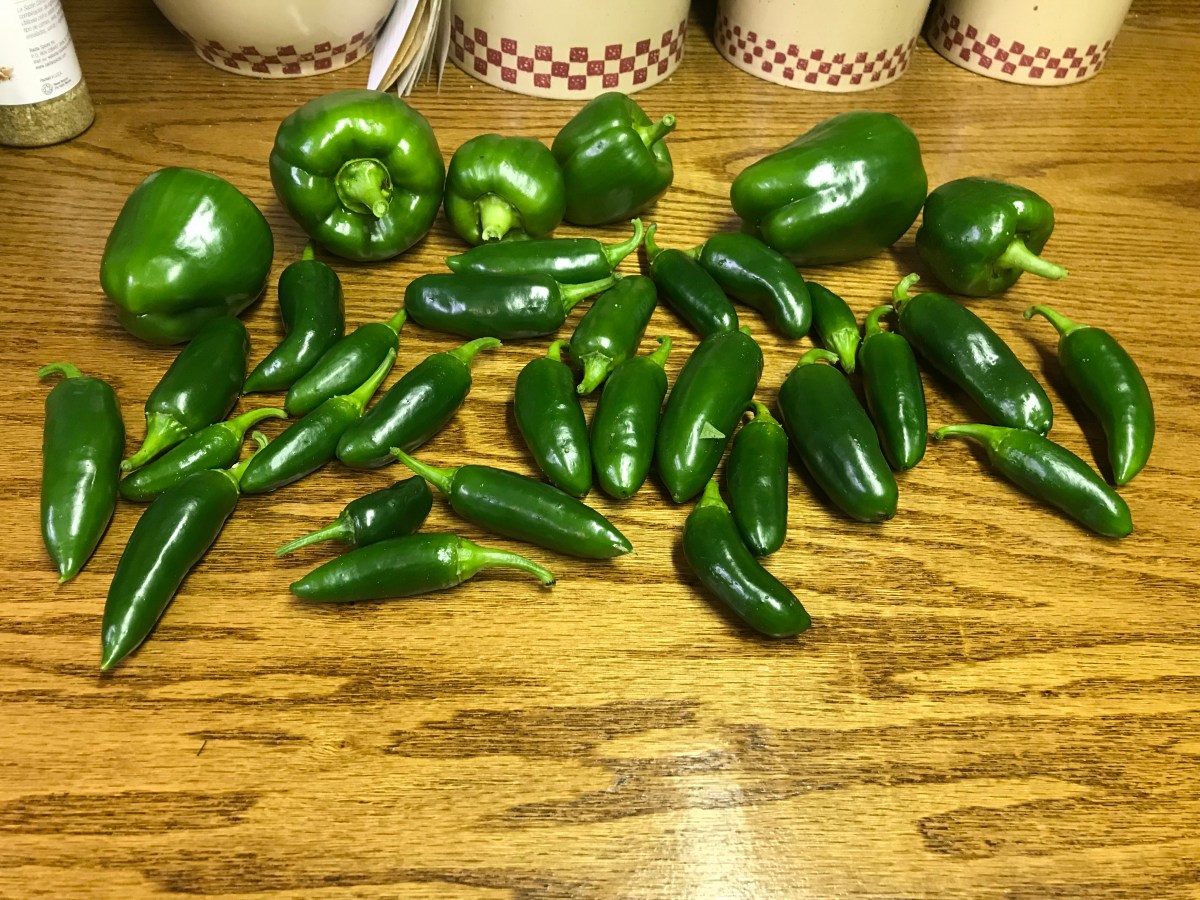
I picked these jalapeño and bell peppers yesterday and am still in awe of the productivity given their mom’s slow start last May. It seems the tiny three plants I purchased at the local feed and seed store grew steadily for the first few weeks. However, the fruit producing stage took months. But, once it kicked in, we’ve twice and sometime thrice-weekly harvested the best peppers ever. Just last night, I sliced one jalapeno into a bowl of homemade vegetable soup. It really spiced things up. Wonderful.
Question. Are you anything like these peppers? I know I am. Often (maybe all the time), I’m a slow starter. Maybe because I’m cautious by nature. Or I could be downright scared. Of what? Of failing? Yes. More narrowly put, I fear not measuring up to others. They aren’t slow starters, are they? They don’t spend weeks and months reaching that ten-mile biking goal. They don’t take a year to complete a novel. No, as soon as they ‘set-out,’ they produce.
Oh, okay, let’s admit you and I aren’t the only ones who take a little time to produce. And that’s okay. In reality, our only competition is ourselves. We each determine our goals and develop our unique paths.
It’s that way in my writing. Most days I’ll do anything to get out of sitting down at my computer and putting words on the page. This morning, I even swept and mopped the floors (well, part of the floors). Now, that’s desperation.
Back to those amazing peppers. Look at the photo again. Now, look at my first five paragraphs. What do you see? Not so fast. I know the peppers are more beautiful. But, to me at least, I’ve just been productive. Yes, I’m a slow-starter, but I stand dead center of my productivity journey. I’m close to completing my eleventh novel since stepping onto this path in 2015, with the next one in the composting stage.
That doesn’t mean I’m ahead of you or that I’m anything special. We create our own meaning. We set out our own plan[t]s. We choose what’s most important.
If you want to grow some outstanding peppers, you can. If you want to write a sentence, a paragraph, a short-story, or a novel, you can. Nothing is easy. Everything takes time and focus. And a bushel of determination.
You are a prodigious pepper. Take your time. Be patient but consistent. Before long, fruits will emerge.
And when that happens, please don’t forget to celebrate with a bowl of homemade vegetable soup.
Sign up for my Myths, Mysteries & Murders readers’ group for news, special offers, and to receive a FREE digital copy of The Boaz Scorekeeper: https://dl.bookfunnel.com/i9qbcspivt.
As of October 24, 2021, Sanity Snippets are snapshots of my daily life, those things I’m doing—such as reading, writing, biking, photographing, and gardening—to maintain sanity while living in the most regressive state imaginable. Alabama.
Richard L. Fricks
Chain problems.
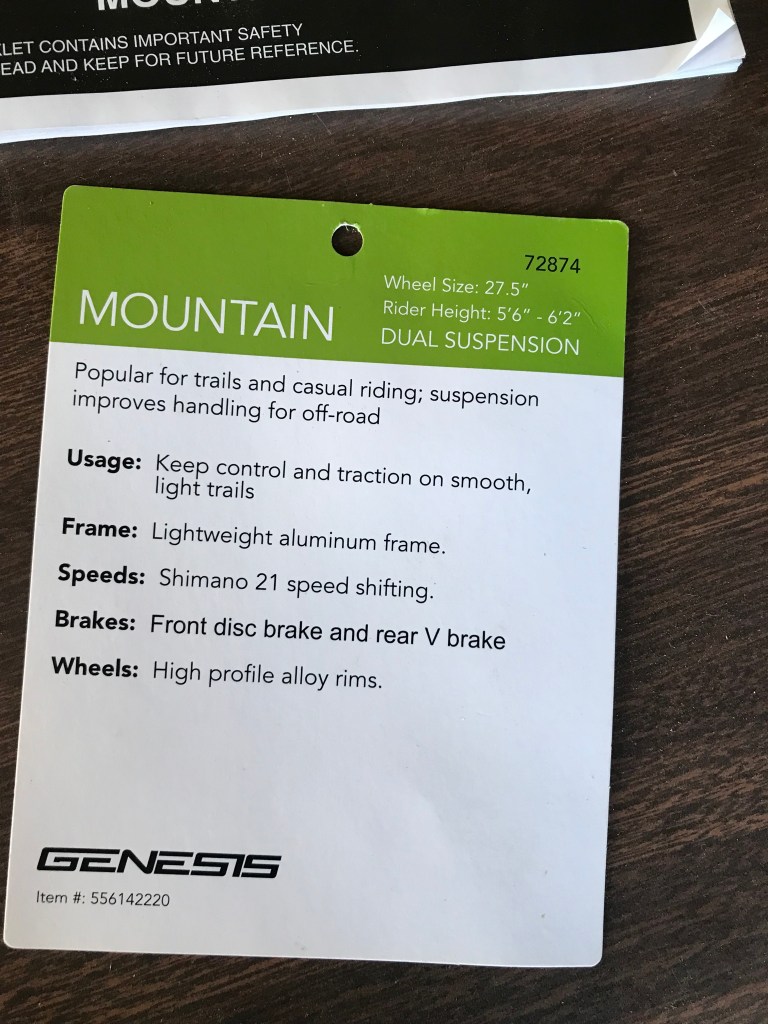
I posted this because I couldn’t email this video to customer service, so I sent the rep the link and he viewed it that way. I’d purchased my bike at Walmart in August and it has performed admirably ever since. Until two days ago when the chain came off during a seven mile ride. I reinstalled the chain but to no available. While peddling, the rear wheel would not turn. It seems the rear seven-cog mechanism is swiveling on the axle, preventing the wheel from turning.
On the bright side, I was able to contact the customer service department from a phone number on the bike (and owner’s manual) and was quickly transferred to a helpful rep. The warranty repair process was activated by my detailed reply to the rep’s initial email.
I’ve spent the last three weeks contemplating a big change in my focus. My decision to discontinue my book coaching services is the result. This endeavor was consuming too much of my time and diminishing my drive, efforts, and resources to create my own novels.
From now on, Sanity Snippets will be snapshots of my daily life, those things I’m doing—such as reading, writing, biking, photographing, and gardening—to maintain sanity while living in the most regressive state imaginable. Alabama.
This decision doesn’t mean I will stop encouraging others to pick up their pencil and start writing. Nothing has changed in that regard; I fully maintain that writing changed my life for the better, and it will yours. I’ll continue my attempts to motivate you to try writing, but now, will do so more informally, and without, of course, any hint to use my fee-based coaching services.
In my second paragraph, I intimated a strongly held belief that Alabama is a regressive state. I don’t intend for this blog to become a rant. However, I don’t live in a vacuum. Life goes on all around us and unless we live with our heads stuck in a desert hole, we cannot ignore the reality all around. To be regressive means to regress, and that means “movement backward to a previous and especially worse or more primitive state or condition.”
For now, all I’ll say is I sincerely believe my conclusion is fully rational—after living 49 years since graduating high school, and reading enough books (on both sides of the issues) to fill a library—the main contributing factors to this regressive state is the incestuous relationship between the Republican Party and Christian fundamentalism, not to say that each, on its own, cannot swiftly and securely return us all to the darkest of the dark ages.
Now, to today’s Sanity Snippet.
I normally start my morning with two to three hours of reading. Usually, by 7:00 a.m. at the latest, but often by 5:00. As the talented fiction writer Stephen King said, “If you want to be a writer, you must do two things above all others: read a lot and write a lot.” I wholeheartedly agree. However, I’d like to make an amendment. If you want to learn and mature into an empathetic human being, you must read both fiction and nonfiction. And a lot of each.
I’m currently reading a book everyone should read: Enlightenment NOW, The Case for Reason, Science, Humanism, and Progress, by Steven Pinker. Per Google, “The Enlightenment, also known as the Age of Reason, was an intellectual and cultural movement in the eighteenth century that emphasized reason over superstition and science over blind faith.” The years 1715 to 1789 are oft-cited as the time-frame for this ‘Age.’ However, and thank goodness, yesterday was a day of enlightenment, as is today, and hopefully tomorrow will be the same (not to say superstition and faith aren’t energetic antagonists).
I think Mr. Pinker also believes the hard, cold facts give hope that 1789 was not the end of progress. Thus, our focus should be on reason, science, and humanism if we want the good trends to continue. Read what he said in response to an audience member’s question, “Why should I live?” (note, the question came after Pinker had discussed how most scientists conclude ‘that mental life consists of patterns of activity in the tissues of the brain.’):
“In the very act of asking that question, you are seeking reasons for your convictions, and so you are committed to reason as the means to discover and justify what is important to you. And there are so many reasons to live! As a sentient being, you have the potential to flourish. You can refine your faculty of reason itself by learning and debating. You can seek explanations of the natural world through science, and insight into the human condition through the arts and humanities. You can make the most of your capacity for pleasure and satisfaction, which allowed your ancestors to thrive and thereby allowed you to exist. You can appreciate the beauty and richness of the natural and cultural world. As the heir to billions of years of life perpetuating itself, you can perpetuate life in turn. You have been endowed with a sense of sympathy—the ability to like, love, respect, help, and show kindness—and you can enjoy the gift of mutual benevolence with friends, family, and colleagues. And because reason tells you that none of this is particular to you, you have the responsibility to provide to others what you expect for yourself. You can foster the welfare of other sentient beings by enhancing life, health, knowledge, freedom, abundance, safety, beauty, and peace. History shows that when we sympathize with others and apply our ingenuity to improving the human condition, we can make progress in doing so, and you can help to continue that progress.” Pinker, Steven (2018-02-12T22:58:59). Enlightenment Now. Penguin Publishing Group. Kindle Edition.
And this is my position too. Unless we “emphasize [] reason over superstition and science over blind faith,” we, as a society (and individually), will regress.
For a taste of what you’ll learn, carefully study this graph showing the gigantic decrease in worldwide poverty over the past hundred plus years (and no, superstition or blind faith is not the cause).
In Sanity Snippet #11 we determined our inciting incident (what gets our story moving). Today, let’s consider the opening image.
As the name suggests, this image should be unveiled at the beginning of our story. Many experts contend it should come shortly before the inciting incident. Naturally, it should reveal the protagonist in his ordinary world (recall, that’s his life before he sets off on his adventure at the end of Act I).
Let’s step back, we’re not editing our manuscript. We are developing our story. We are a long way from writing our first draft. Sanity Snippets are all about getting started with our novel. Much will likely change later on. For example, the inciting incident we recently chose, may change. The point is, we need to start somewhere. Also, as to the timing of the opening image, don’t get bogged down on whether to choose a day, week, month, or year prior to the inciting incident. The goal is simply to make a decision and go forward.
Keep this quote in mind as you plod along:
Don’t wait for the muse. As I’ve said, he’s a hardheaded guy who’s not susceptible to a lot of creative fluttering. This isn’t the Ouija board or the spirit-world we’re talking about here, but just another job like laying pipe or driving long-haul trucks. Your job is to make sure the muse knows where you’re going to be every day from nine ’til noon. Or seven ’til three. If he does know, I assure you that sooner or later he’ll start showing up.
Stephen King
Here’s an exercise you could try. Grab a pencil and start free-writing. Think about your hook, the inciting incident, and your first act break. What ties these together? Or could? Brainstorm, jot down everything that comes to mind. Don’t worry about them being far-fetched. You are thinking. You are writing. You are engaged with story creation. It can be messy and frustrating, yet ultimately rewarding.
Let’s say the story idea you’ve been developing throughout these Sanity Snippets has a politician as the protagonist. He’s already served as state representative and governor. Now, he wants to run for U.S. Senate.
Maybe the inciting incident you choose is his fifteen year old teenage daughter who is coming to live with him. And, she’s pregnant (her backstory could be any number of things, as could that of your protagonist).
Maybe your protagonist is an opportunist of sorts and chooses to ‘use’ his pregnant teenage daughter to promote his senatorial campaign. At the first act break, he reveals she will not have an abortion (protagonist is against, even says “all abortion is murder.”).
Now, what is your opening image? What is your protagonist doing twenty-four or forty-eight hours before he learns his teenage daughter is coming to live with him (backstory: what if she was a mistake? Meaning, the daughter is the product of an illicit affair fifteen years ago?)?
Maybe he is giving a campaign speech revealing his position on abortion? Maybe he is in church (is he religious? Probably, but it’s your story) listening to his pastor preach his most aggressive pro-life sermon? Keep brainstorming. In the context of the example, raw materials start surfacing because you have gained entrance into your story through the process we’ve been pursuing in the Sanity Snippet series.
Keep thinking, keep writing, and remember, you don’t have to get it right the first time. Your story may change as you continue to outline. It may change during the writing of your first draft. Stay engaged and story will slither up beside you.
Question: is today a good day to commit to a regular writing routine?
How’s your story idea coming? Here’s an exercise that is difficult, rewarding, and necessary if you want to create an engaging novel. It’s called the logline.
Simply put, the logline is a bird’s-eye one sentence description of your story.
Why is this important? There are two main reasons. One is for your benefit. Experts say that if you cannot condense your novel into one sentence then you either don’t understand your story or you are trying to do too much (something I’m often guilty of). Your logline will keep you from chasing too many rabbits as you draft your story. In other words, it will keep you on the right track.
The second reason your logline is important is to trigger interest in a prospective reader. “Oh, that sounds interesting.” That’s what you want your audience to say. Hopefully, this, along with your book cover and blurb motivates potential readers to purchase and consume your story.
What should be addressed in your logline? H.R. D’Costa offers this helpful template in her Story Outlines book:
because of a compelling reason,
a protagonist must accomplish a goal
despite extraordinary resistance.
D’Costa also tweaks the above to include step-numbers from her detailed story outlining list.
because of the stakes [action step #6],
a protagonist [action steps #2 and #3b]
must accomplish a goal [action step #2]—
despite the antagonistic forces in his way [action #3a].
She offers several examples. I like these two the best (quotation marks omitted):
A Few Good Men: To prevent two marines from being convicted of murder, a US Navy lawyer—accustomed to easy victories—must elicit a confession from a powerful colonel desperate to suppress the truth.
Here, I’ve added the related attribute from D’Costa’s tweaked template: Because of the stakes (To prevent two marines from being convicted of murder) a protagonist (a US Navy lawyer—accustomed to easy victories) must accomplish a goal (must elicit a confession from a powerful colonel) despite the antagonistic forces in his way (desperate to suppress the truth).
Here’s the second example I like: One for the Money: Facing eviction and desperate for cash, a freshly minted female bounty hunter must apprehend a cop accused of murder…who also happens to be her ex-flame.
Here, I’ve added the related attribute from D’Costa’s tweaked template: Because of the stakes (Facing eviction and desperate for cash) a protagonist (a freshly minted female bounty hunter) must accomplish a goal (must apprehend a cop accused of murder…) despite the antagonistic forces in [her] way (who also happens to be her ex-flame).
Here’s the logline for my current work in progress, The Boaz Stranger: To get justice for the disappearance and presumed death of his high school friend half-a-century ago, a sixty-six year old Yale Law School professor must return to his North Alabama hometown to verify whether clues recently discovered inside his deceased wife’s diaries are true, and to reveal how the wealthiest man in town got away with murder.
I admit, it’s a little too long.
One thing to note before you try your hand. Your logline is not a plot by plot listing. You don’t have space and that’s not the goal. Obviously, subplots aren’t included.
Now, take out pencil and paper (or laptop) and start drafting your logline. I suggest using D’Costa’s tweaked template. Don’t worry, you don’t have to get it perfect the first time. Expect that you won’t.
Finally, and never forget this, if I can write a novel, you surely can.
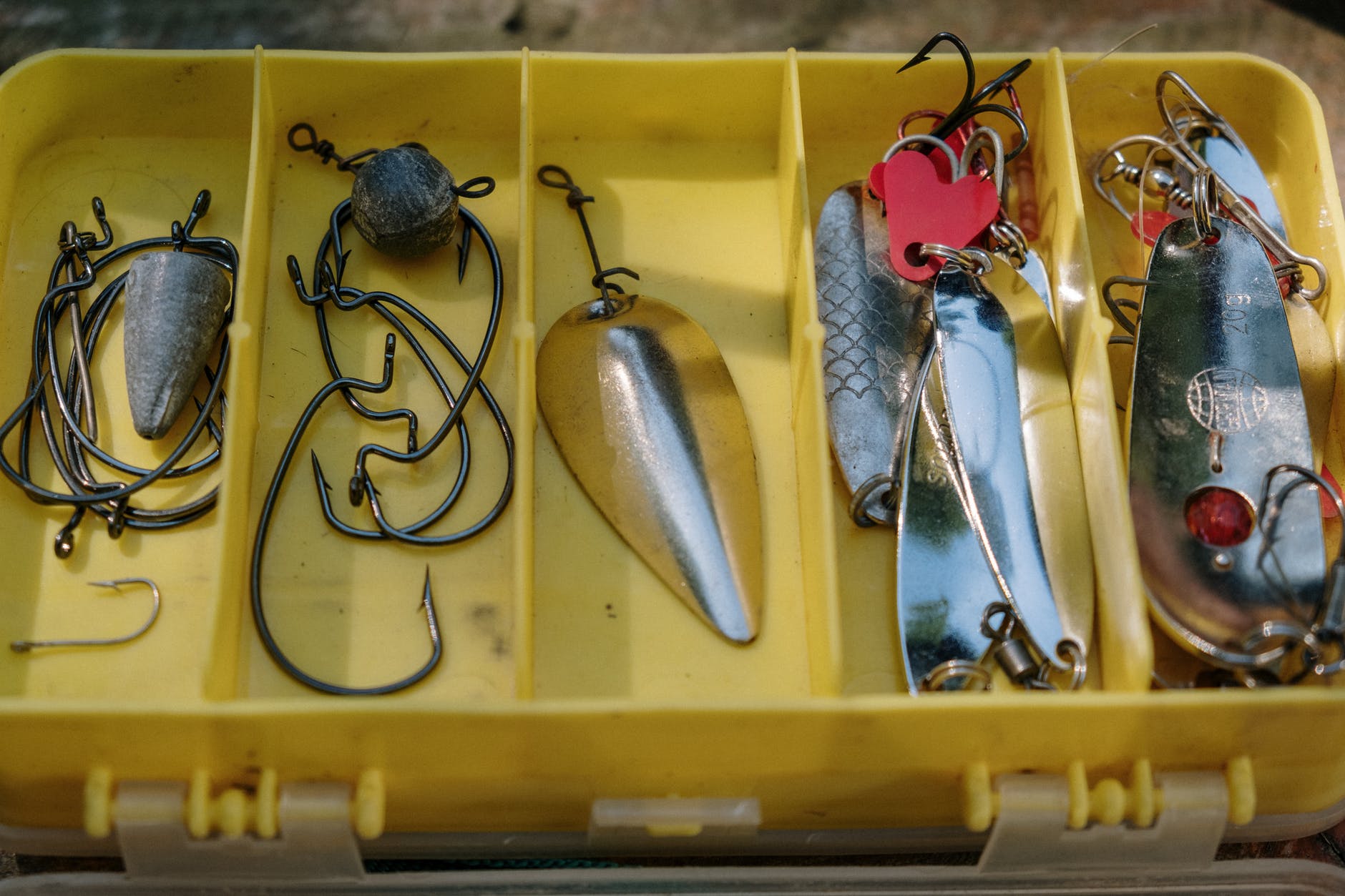
What first comes to mind? Fishing, no doubt. And now you broadly know why your story needs a hook. Without one, you won’t catch your prospective reader’s attention. Thus, she will never read your book.
H.R. D’Costa, in Sizzling Story Outlines, says story hooks come in a number of shapes and sizes, including: setting, character, origin of material, tone, title, book cover, reputation of the content creator, star power, word of mouth, and irony.
Here’s my first-thoughts about each of these eleven ‘shapes and sizes.’
Setting. The first permanent settlement on the other side of Mars.
Character. Matt Damon as Jason Bourne in the Bourne series. More about character below.
Origin of material. In Cold Blood, by Truman Capote, tells the true story of the murder of the Clutter family in Holcomb, Kansas, in 1959. It obviously isn’t a novel in its purest form (fiction). Although it is based on a real life crime (non-fiction), it’s told in long-story form.
Tone. Per Google, tone “in literary terms, typically refers to the mood implied by an author’s word choice and the way that the text can make a reader feel. The tone an author uses in a piece of writing can evoke any number of emotions and perspectives.” How a novel handles bedroom doors, open or closed, may be the hook for some readers. Some prefer not to read about what happens, others want ever detail.
Title. The book’s title itself may hook the reader. The Extraordinary Life of Sam Hell, by Robert Dugoni, did it for me. Excellent story, and more details below when we look at character.
Book cover. D’Costa calls it, “candy for the eye.” You get the picture. You’ve been in a book store browsing around and been lured in by the photo, drawing, or other depiction on the front cover before touching the book. It might be the bold (or subtle) portrayal of sex. It might be a beautiful country scene, including a snow covered forest with cabin at the end of a long winding road with soft shafts of smoke rising from the chimney. You get the idea.
Reputation of the content creator. Seeing the author’s name can be all the hook a reader needs. Think John Grisham, Stephen King, or Nicolas Sparks. As for movies, the hook may be the producer. You ever heard of Steven Spielberg?
Star power. I’ve already mentioned Matt Damon. What about Julia Roberts? Tom Hanks? Meryl Streep? George Clooney? Of course, all of these are movie actors, but there are those we know from novels. Atticus Finch and Sherlock Holmes to name two (btw, if you’d like to try a great murder-mystery series, look no further than Hulu and Elementary. It’s about a modern day Sherlock Holmes and Watson, as in Joan Watson).
Word of mouth. You know all about it. The importance of a word of mouth recommendation. Hint, I just gave you one.
Irony. As D’Costa discloses, irony deserves a lot of ink. Succinctly, irony is the pairing of opposites, things we would never (or rarely at best) ever considering joining together. Here’s an example: a real estate mogul with a cloudy reputation (to put it mildly) and without any political experience, becomes President of the United States. Now, that would make a hell of a hook for a novel.
Moving on.
A hook is a lure. It’s like a magnet, drawing its prey closer and closer until there’s an inseparable connection.
Let me close with a brief look at the novel I finished reading yesterday: The Extraordinary Life of Sam Hell, by Robert Dugoni. I believe my experience illustrates an important point about hooks. As stated, it was the book’s title that lured me in. But, it’s not what kept me reading. Now, don’t get me wrong. The title, as a theme, no doubt was present throughout the book. However, there were a number of other reasons I kept turning the pages.
It should go without saying but, well, you know, I’m about to say it anyway. Dugoni is an excellent writer. One thing I liked was the minimal description and the short chapters. This doesn’t mean I couldn’t picture (or feel) what Sam was experiencing, but Dugoni doesn’t take a whole page detailing every chink in Our Lady of Mercy’s (the Catholic church just blocks from Sam’s boyhood home) front steps.
As an aside, if you think you like long and tedious descriptions (and explanations), I encourage you to read, The Goldfinch, by Donna Tartt.
SPOILER ALERT. Let’s cut to the chase. It was Sam Hill, the protagonist, who served as the real lure for me. Sam (formally Samuel) was born to Maxwell and Madeline Hill in Burlingame, California (near San Francisco). He was born with red eyes, medically labeled, “ocular albinism.”
The story is told in two time frames: Sam’s youth and his adulthood (through, I think, his early to mid-forties). Of course, you’ve figured out that Sam’s red eyes (that’s where the ‘Hell’ comes from; he’s also called “Devil Boy”) are going to have an overwhelming affect upon his life. And, you’d be correct.
Sam’s story portrays a positive change arc. Thus, he starts one way and ends another. In between are scenes that move you from sadness and sympathy to uncontrollable laughter, with anger and more than a desire for vengence in between. They reveal what any school kid would experience if he’d been born with such a horrendous disability.
But, don’t tell Sam’s mother that her only child is disabled. She is a devout Catholic (recall, Our Lady of Mercy) who from Sam’s birth believed he is her gift from God and is destined for an extraordinary life. And, he is.
In a strong sense, I saw my own mother in Madeline Hill. She was Sam’s number one supporter throughout the story and her life, just like my dear, saintly mother. However, don’t believe Sam’s father wasn’t in his corner. He was, with his wisdom and tough love philosophy. And yes, like my own father.
I’d be remiss if I didn’t mention two other folks who made Sam’s life worth living. His black friend, the athletic Ernie Cantwell, and the girl Sam loved from first site, the unorthodox Mickie Kennedy. Without them, the story would have been far poorer and Sam’s life would have been a bore.
Finally (sorry for such a long ‘snippet’), I encourage you to think about your own book. What type of hook will lure in your reader? Take some time to write down your thoughts.
Let’s think about genre. How do you pronounce it much less define it?
Say it like this: “zhaan·ruh.” Say it five times.
Define it like this (from Wordnet Dictionary): “a kind of literary or artistic work; a style of expressing yourself in writing; an expressive style of music; a class of art (or artistic endeavor) having a characteristic form or technique[.]”
For now let’s look at genre simply as a specific kind of story that leaves the reader with the sought after emotional experience. Said another way, genre is a way of categorizing stories. Think again of a reader. She wants to read a mystery. Book sellers want her to locate just the right one and literally or figuratively bring it to the checkout counter. Without categorization, she would have to hunt and hunt and hunt, plowing through massive stackes of disorganized books: sci-fi, horror, thriller, romance, suspense, erotica, and on and on, before she finds her mystery (I’m ignoring the fact a lot of books are hybrids. Can you imagine a mystery-romance genre?).
Of course, there is mystery and there is mystery. Uh? Let’s look at how Amazon breaks down this category, but first let’s define mystery. I found this on Google: “[t]he mystery genre is a genre of fiction that follows a crime (like a murder or a disappearance) from the moment it is committed to the moment it is solved. Mystery novels are often called ‘whodunnits’ because they turn the reader into a detective trying to figure out the who, what, when, and how of a particular crime.” Of course, this definition isn’t always rigidly applied. For example, the murder could have taken place long before the beginning of the book.
“As far as I’m concerned, you can’t beat a good whodunnit: the twists and turns, the clues and the red herrings and then, finally, the satisfaction of having everything explained to you in a way that makes you kick yourself because you hadn’t seen it from the start.”
Anthony Horowitz, Magpie Murders
Now, to Amazon. It further categorizes the mystery genre as follows: Amateur Sleuth Black & African American Collections & Anthologies Cozy Hard-Boiled Historical International Mystery & Crime LGBTQ+ Police Procedurals Private Investigators Series Traditional Detectives Women Sleuths
My favorite genre is mystery (although I do love a good legal thriller; BTW, John Grisham is still king of this genre). It’s a toss-up whether I like Amateur Sleuth or Private Investigator Series the most. But, considering that the majority of my novels fit in the Amateur slot I’d say that’s indicative of my preference.
Let’s look closer. So, what is an amateur sleuth mystery? Again, Google answers our question: “An amateur sleuth mystery features a protagonist who, having no professional direct ties to the police or other investigative agency, stumbles upon and sets out to solve or help solve various crimes, most notably murder. They are often seen in the sub-genre cozy mystery.”
To the end of not leaving you hanging, let’s look at another Google search result: “Cozy mysteries involve an amateur sleuth, usually in a small town, solving a murder. Unlike grittier mystery genres, cozies don’t have swearing, violence, or sex. With the exception of the fact that somebody has been bumped off, the cozy tends to be light in tone, and sometimes even humorous.”
Here’s an example of a book in the amateur sleuth category (note, it’s not a cozy): The Mighty Johns, by David Baldacci. Read the following and decide if the Amazon abstract makes it clear a reader would discover his desired emotional experience assuming he is seeking a good amateur sleuth story.
“From a #1 New York Times bestselling author comes a gripping thriller novella about a college football player’s investigation into the unsolved disappearance of a local legend who seemingly vanished into thin air.
Forty years ago, Herschel Ruggles, the most legendary player on the Mighty Johns football team at Draven University, disappeared after scoring a record-breaking touchdown.
Instead of tossing the ball to the referee after his near-mythical athletic feat or celebrating with the nearly 25,000 spectators in the stands, Ruggles continued running, ball in hand, into a passageway that led deep underneath the field to the Mighty Johns’ locker room—and was never seen again.
His disappearance has mystified the community for decades . . . until another player—Merlin North, a brilliant physics major—helps break Ruggles’s record for kickoff returns. After that, North turns detective and becomes fixated on discovering what happened to Herschel Ruggles.
Investigating Ruggles’s mysterious disappearance, however, will prove unexpectedly dangerous for North, as evidence of murder—and ghostly visions—reveal the truth to be far more stunning than he ever could have anticipated.”
Did you notice the word ‘thriller’ in the description’s first paragraph? Think hybrid. Here, we have a mystery, an amateur sleuth mystery, that is written at a thriller pace.
Don’t worry if all of this sounds complicated. It is. Take it from me (who, over my writing years), one who has not always given genre enough thought.
Although choosing a genre is complex, it is necessary. A genre-less book is like a piece of driftwood in the middle of the Atlantic Ocean—probably alone for ever.
I encourage you to think about your story. What genre is it? Take out pencil and paper and record some thoughts. You might consider your sixty-six year old protagonist’s goal. Is he trying to win the heart of Jill the newest waitress at the corner cafe? Or, is he trying to find out who killed his best friend back in high school? Or, is your story about both, romance and mystery? That’s okay, it is up to you.
Here’s another exercise I’d encourage. Spend some time on Amazon looking at various genres. Find your favorite and read the summaries for at least half-a-dozen. Find one that sounds a lot like a story you want to write. Buy this book and read it carefully, noting the conventions the author used.
The protagonist of our story must be someone our readers cheer on and support. One way novel writers can accomplish this is by giving the hero a worthy goal.
Creating authentic story stakes is an additional requirement if we want to create fans. Please note that I didn’t say story stakes was an alternative way. No, the hero’s goal and the story’s stakes are two sides of the same coin.
So, what are story stakes? They are the undesirable results (bad things) that result from our hero failing to accomplish his goal. Without a doubt, to create a great novel (or even a mediocre one), the hero’s goal must be entwined with the story’s stakes.
SPOILER ALERT: In my own novel, The Boaz Seeker, eleventh-grader Cullie Sims’ goal (initially) is to help Andrea, her classmate and friend, discover who killed Skylar Simmons, a rising ninth-grader who Andrea had befriended. However, Cullie’s goal becomes personal when she learns her mother was involved in the disappearance and death of Patrick Wilkins, the local high school’s assistant principal. The reason? Katie, Cullie’s mother, did so to avenge the brutal rape of her co-teacher and best friend Cindy Barker.
In a broad sense, Cullie’s two goals seem disjointed. If Cullie (and Andrea) fail to discover who killed Skylar, then her killer will go free (note: the local criminal justice system is disinterested or is looking in the wrong place). As to Cullie’s more personal goal, if she doesn’t protect her mother, she likely will spend the rest of her life in prison. In fact, the two goals are intertwined. I’ll leave it at that and let you read my novel to discover what’s at stake (regarding both Skylar and Katie) if Cullie fails.
Exercise: think about your story, your protagonist, and his external goal. What’s at stakes if he fails? Pencil a few snippets or a page or two.
You now have a picture of your protagonist. You’ve given him a SMART goal. Now, it’s time to think about your chief antagonist. What is an antagonist? It’s the person who is against your protagonist achieving his goal. He is your story’s primary source of conflict. Often, it’s a good-guy vs. bad-guy story.
However, there can be a group of antagonists. Think of it as a football game. The antagonist/defense is doing all it can to keep the offense from scoring. This is obviously not a perfect analogy. Yes, there are eleven characters on defense against the offense but marvellous stories don’t have that many protagonists.
In the first paragraph, I provided a simple and true definition of what an antagonist is. He is a person. These novels are my favorite. The antagonist is a person, a real, living-breathing human being. But, there is much more to consider.
Generally , there are four types of antagonists: villains, quasi good-guys, nature, and the protagonist himself.
Villains are the true bad-guys. They are evil and will do anything to stop the protagonist from achieving his goal. There are many types of villains, which I’ll ignore for now. You’ve probably heard of the following villains: Hannibal Lecter; Norman Bates; Darth Vader; and The Wicked Witch of the West.
Quasi good-guys can be antagonists. They aren’t evil in and of themselves. Often, they simply have goals that conflict with that of the protagonist. Think of Mr. Darcy in Jane Austen’s Pride and Prejudice. He and Elizabeth Bennet are in constant disagreement.
A force such as nature can be an antagonist. Here’s two stories where the sea is the antagonist: The Old Man and the Sea (by Ernest Hemingway), and Robinson Crusoe (by Daniel Defoe). Here’s other stories with nature as the antagonist: Walden, by Henry David Thoreau; Wild, by Cheryl Strayed, and Into the Wild, by Jon Krakauer.
Some of the most meaningful stories are those where the antagonist is the protagonist himself. The story’s conflict comes from within. The source could be any number of things such as a past mistake, a fear, a weakness, an obsession, an addiction, or a needed, but absent, skill. Any one of these things can prevent a protagonist from reaching his goal.
Absent from my list is the story without an official antagonist. Slaughterhouse-Five by Kurt Vonnegut is an example. However, this doesn’t mean there is no conflict. There are always obstacles standing in the way of a protagonist reaching his goal. If not, there’s no story. Who wants to read about Ted who decides he wants to climb Mt. Everest and, after a quick cup of coffee, finds himself standing on the world’s tallest mountain?
Start thinking about your story’s antagonist. Put words to paper. A ten or fifteen minute free-writing session can get your juices flowing. Ask yourself some questions: what is my protagonist’s story goal? Who/what is most likely to get in his way of achieving this goal? Why?
Every good novel has at least one protagonist, and every protagonist has a goal. Use H.R. D’Costa’s (Aka HRD) SMART technique to make sure your protagonist’s story objective is powerful enough to go the distance and keep your audience reading.
SMART is an acronym. Here’s how HRD desribes each component:
S – Specific (it’s concrete, not amorphous or abstract)
M – Measureable (it has a clear indicator of success or failure)
A – Actionable (even a brief description immediately conjures a few of the action steps needed to accomplish it)
R – Realistic (it’s credible for your hero to achieve it)
T – Time-bound (it must be accomplished by a certain deadline)
Keep in mind that other story characters also have goals. Use SMART to discover what your antagonist is trying to accomplish. Sometimes, you can start here and work backwards to discover your protagonist’s goal.
Here’s how I describe Lee Harding’s SMART goal in my current work in progress: S (he wants Ray Archer brought to justice for the kidnapping and murder of Kyle Bennett, Lee’s childhood friend who disappeared half-a-century ago); M (either Ray will be arrested or he won’t); A (there are multiple things Lee can do to investigate Kyle’s disappearance and Ray’s involvement); R (Lee is an attorney, thus he, along with allies such as a private investigator and the District Attorney, can marshall the skills and resources needed); and T (Lee arrives in Boaz in late November and has until February (the beginning of Spring semester at Yale Law School) to accomplish his goal).
It’s time to write. Use HRD’s SMART technique to discover your protagonist’s goal. Fifteen minutes invested in focused free-writing might stimulate your creative juicies. Start your session by asking yourself, “what question is my protagonist trying to answer?” Or, “what problem is he trying to solve?” After your time is over, write your protagonist’s SMART goal.









 Richard L. Fricks
