James Haught lived life with no qualms

Here’s the link to this article.

Avatar photoby ADAM LEE JUL 27, 2023

A beautiful sun over a green field | James Haught lived life with no qualms
Credit: Shutterstock

Overview:

Bidding farewell to a giant of the freethought movement, and looking back at his achievements and the progress he bore witness to over nine decades.

Reading Time: 5 MINUTES

James Haught, a giant in the freethought movement and my long-time guest contributor, died on July 23 at the age of 91. The West Virginia Gazette-Mail, the newspaper where he worked throughout his seven-decade career in journalism, posted his obituary.

James was born in 1932 in Reader, West Virginia, a rural town without electricity or paved streets. He started work as an apprentice printer and worked his way up to the newsroom. When his H.L. Mencken-esque editor assigned him to the religion beat, they had a memorable exchange:

One day he told me: “Haught, we want you to be our religion columnist.” I said, “But I haven’t been to church in twenty years.” He said, “Fine—that means you’ll be objective.”

In his long career, he covered everything from snake-handling Pentecostals, to money-grubbing televangelists, to religious swindlers and crooks, to fundamentalists who rioted against “godless” textbooks. As he put it, “My years of covering Bible Belt religion hardened my youthful skepticism into militant agnosticism.” He penned books like Holy Horrors2000 Years of Disbelief, and Honest Doubt.

I was in contact with Jim starting in 2011. He had a regular mailing list, which I somehow found my way onto, sending interesting articles he’d come across as well as his own thoughts. He graciously gave me permission to reprint some of his columns.

In 2018, he approached me with a proposition. He wanted to put more of his vast catalog of essays online and was seeking a home for them. At the time, my son was a baby and I was working on my book Commonwealth, both of which had cut into my writing time—so this offer couldn’t have come at a more propitious time. Over the following years, he became a reliable guest contributor, first to my blog Daylight Atheism on Patheos and now here on OnlySky.

Some of my favorites from his collection include a column on the majesty of West Virginia’s mountains, his autobiographical account of his life, and an optimistic view of the human progress he bore witness to over nine decades.

From his writing, I learned about bloody religious conflicts I’d never heard of, like the Cristero War and the Taiping Rebellion, as well as violent battles for the right to organize. Proving that age is no barrier to acceptance of moral progress, he also wrote about white privilege and sexism in the freethought movement.

Even in his old age, he retained his intellect, his restless curiosity, his optimism for the future, and his staunch humanism. I hope I live so long or age so well.

I last heard from him about a month ago. He said that he’d received some serious medical news, and that he was making an appointment with a specialist for a second opinion. I wrote back a brief note, expressing my hope for good results and asking him to keep me updated. I regret that I didn’t say more—but how do you know, how can you ever know, when you correspond with someone for the last time?

Besides, it would have been arrogant of me to presume to offer words of wisdom or comfort to someone whose life experience so far outstripped mine. In the face of death, his courageous humanism never wavered.

In his honor, I’m rerunning a column of his from a few years ago about death. It’s a powerful essay, looking back on his life and confronting his own imminent mortality without fear or qualm. Out of all his writings, it’s my favorite.


I’m quite aware that my turn is approaching. The realization hovers in my mind like a frequent companion.

My first wife died ten years ago. Dozens, hundreds, of my longtime friends and colleagues likewise came to the end of their journeys. They number so many that I keep a “Gone” list in my computer to help me remember them all. Before long, it will be my turn to join the list.

I’m 86 and still work. I feel keen and eager for life. My hair’s still dark (mostly). I have a passel of children, grandchildren and rambunctious great-grandchildren. I love sailing my beloved dinghy on our small private lake, and hiking in shady forests with my three-legged dog, and taking a gifted grandson to symphony, and seeking wisdom in our long-running Unitarian philosophy-and-science circle. I remarried an adorable woman in her 70s, and we relish our togetherness. But her health is fragile. Her turn is on the horizon too.

I have no dread. Why worry about the inescapable, the utterly unavoidable, the sure destiny of today’s seven billion? However, sometimes I feel annoyed because I will have no choice. I’m accustomed to choosing whatever course I want—but I won’t get to decide whether to take my final step. Damn!

I have no supernatural beliefs. I don’t expect to wake up in Paradise or Hades, surrounded by angels or demons. That’s fairy-tale stuff. I think my personality, my identity—me—is created by my brain, and when the brain dies, so does the psyche. Gone forever into oblivion.

I’ll admit that some reports of “near-death experiences” raise tantalizing speculation about a hereafter. But, in the end, I assume those blinding lights and out-of-body flotations are just final glimmers from oxygen deprivation. I guess I’ll find out soon enough.

It takes courage to look death in the eye and feel ready. So be it. Bring it on. I won’t flinch. Do your damnedest. I’ll never whimper. However, maybe this is bluster and bravado, an attempt to feel strong in the face of what will happen regardless of how I react.

Unlike Dylan Thomas, I won’t rage, rage against the dying of the light. Instead, I plan to live as intensely as I can, while I can, and then accept the inevitable. I find solace in wisdom I’ve heard from other departees. Just before she died of ovarian cancer, one of my longtime friends, Marty Wilson, wrote:

“I often think of humankind as a long procession whose beginning and end are out of sight. We the living… have no control over when or where we enter the procession, or even how long we are part of it, but we do get to choose our marching companions. And we can all exercise some control over what direction the procession takes, what part we play, and how we play it.”

In The Fire Next Time, brilliant writer James Baldwin said:

“Life is tragic simply because the earth turns and the sun inexorably rises and sets, and one day, for each of us, the sun will go down for the last, last time. Perhaps the root of our trouble, the human trouble, is that we will sacrifice all the beauty of our lives, will imprison ourselves in totems, taboos, crosses, blood sacrifices, steeples, mosques, races, armies, flags, nations, in order to deny the fact of death, which is the only fact we have.”

Legendary lawyer Clarence Darrow wrote:

“When we fully understand the brevity of life, its fleeting joys and unavoidable pains; when we accept the fact that all men and women are approaching an inevitable doom; the consciousness of it should make us more kindly and considerate of each other. This feeling should make men and women use their best efforts to help their fellow travelers on the road, to make the path brighter and easier… for the wayfarers who must live a common life and die a common death.”

My journey on the road has been proceeding for eight decades. Actuarial tables make my future so obvious that I can’t shut my eyes to it. Life proceeds through stages, and I’m in the last scene of the last act.

I have a Pantheon of my favorite heroes: Einstein, Jefferson, Voltaire, Lincoln, Carl Sagan, Shakespeare, Martin Luther King Jr., Tolstoy, FDR, Beethoven, Epicurus, Gandhi, etc. They fill a different “Gone” list. They uplifted humanity, even transformed humanity, in their day—but their day ended, and life moved on.

My day was the 1960s, and ’70s, and ’80s, even the ’90s. I was a Whirling Dervish in the thick of everything. Life was a fascinating carnival. But it slides into the past so deftly you hardly notice.

While my clock ticks away, I’ll pursue every minute. Carpe diem. Make hay while the sun shines. And then I’m ready for nature’s blackout, with no regrets.

The Boaz Stranger–Chapter 16

Ray wasn’t interested in cooking breakfast. It was the first morning to awaken without Lillian in the house. He already missed her, even though they hadn’t been intimate for years. After showering and dressing, Ray left the Lodge and drove to Grumpy’s Restaurant in the old Boaz Outlet Center.

A broad-hipped middle-aged server led him to a table along the back wall. The man sitting alone at the corner table next to the windows laid his newspaper aside as another server delivered his food. The man’s profile startled Ray. It was a grown-up version of the young man who had inhabited his dreams for over half-a-century. The man was Kent Bennett, Kyle’s twin brother. Ray had heard he was already in town, five days before Black Friday and Kyle Bennett’s memorial.

Kent noticed Ray staring at him, said “good morning,” and returned to his food. Ray had an idea.

“Mind if I join you?” Ray said once, then twice a little louder, to grab Kent’s attention.

“Sure, do I know you?” Kent knew exactly who he was.

“I’m Ray Archer. From high school. You’re Kent Bennett, right?”

“I am. Ray, I didn’t recognize you.” Kent said, motioning towards an empty chair on the other side of the large round table.

Ray sat. “Aging is brutal, more for me than you. I’ve gained a half-ton, shrunk a couple of inches, gone ghost gray, and turned out a barn full of wrinkles.” Ray stared at the trim, blue-eyed Kent with near-perfect teeth and wondered if his old high school classmate had found the proverbial fountain of youth. Ray’s stomach started a mild revolt as his memory poured forth a brutally cold and bloody image, like a bucket of hot lava. He figuratively shook his head, wondering why and how that thought appeared.

Kent nodded as his server refilled his water glass. “My friend needs to order.” Kent said, motioning towards Ray.

“I’ll have what he’s having.” Ray no longer felt like a plate of grease-saturated bacon, sausage, and eggs. Instead, he opted for a bowl of oatmeal with a side-serving of bananas, grapes, strawberries, and cantaloupe. The server left. “Can I run something by you?” Ray believed himself to be a master manipulator.

“Sure.” Kent was patient. He had his own ‘something’ to run by Ray.

“You may not know, but the City and I are in process of developing a piece of property off Thomas Avenue.”

Kent jumped in. “And you guys are experiencing a temporary delay. Others call it a brick wall.”

“Well, yes. What I wanted to ask is whether you’d have any opposition to us honoring Kyle with a bust, maybe a full statute.”

“Probably not, as long as it is professionally done with a suitably worded plaque.”

Ray continued, as though Kent hadn’t responded. “I call it the Oasis. It’s in the middle of the development with trees, plants, flowers, benches, and will encircle a beautiful fountain.”

“Okay, but with one stipulation. I serve ex officio with the right of final approval?” Kent was just as rich as Ray. But, much smarter.

“Not a problem.” The server delivered Ray’s breakfast and refilled his coffee cup. Kent again declined caffeine.

“I have a question myself, if you don’t mind.”

“Fair enough.” Ray figured Kent would ask for a donation to the Kyle Bennett Charitable Foundation he had established a few years ago. Ray had learned about it through a recent Sand Mountain Reporter article that discussed Kyle’s upcoming memorial.

“That night.” Kent paused. “Let me start over.” Ray now knew Kent’s direction. A day or so after Kyle had disappeared, Kent had approached Ray asking him to confirm the rumor: Ray and Rachel were the last to see Kyle alive.  They had dropped him off just beyond the city dump on King Street at the end of the Bennett’s long driveway. “Why didn’t you take Kyle all the way to the house that night?”

It was a softball question. Ray and Rachel had rehearsed their story a hundred times. “Kyle said he would walk. I guess he wanted to look at the full moon.”

Kent had no follow-up. But he had a different question. “Do you remember the blue and white car Jackie Frasier drove?”

“Are you talking about the custodian and bus driver?” Ray was looking down, eating furiously, hoping Kent wasn’t noticing the sweat popping out on his forehead.

“Yes.”

“Yeah, I remember. A 1957 Chevrolet Bel Air.”

Ray never saw Kent activate his recorder. Not that he thought it likely since it was an APP he’d developed and installed on his iPhone. “Do you remember where he lived? It’s for a story I’m writing.” Kent was nudging Ray further from safety, ten feet out on a scraggly limb.

“Straight across from you and Kyle, didn’t he?”

“That’s right. One more thing if you would be so kind. When you and Rachel dropped Kyle off at the end of our driveway, do you remember seeing Jackie’s Bel Air?”

“Yep, it was parked in front of his old dingy mobile home.”

Kent, and most everyone else in Boaz, knew of the good-hearted Jackie Frasier. The man worked three jobs. Bus-driver, but only in the early morning, then chief custodian five days per week at Boaz High School. By three PM every day except Sunday, Jackie was clocking in at Boaz Spinning Mill for a full nine hours. The shift bell rang straight-up at midnight. Jackie was always home by twelve-twenty. His 1957 blue and white Chevrolet Bel Air was his pride and joy and by far the most valuable thing he owned. It was beautiful and good old ‘Jack’ deserved it.

Kent knew if Jackie was already at home that long-ago Friday night, that Ray had lied to the Marshall County investigator who had interviewed him and Rachel. This aspect of the official report read: “It was a few minutes after ten when me and Rachel dropped Kyle off at the end of his driveway.”

Kent whispered to himself, “If Jackie was home, Ray had lied to the tune of at least two hours. But why?”

It seemed like only a few days since Kent and Kyle had shared a tiny bedroom in the dilapidated old house just south of the city dump. The brittle wooden frame around their northern-facing window guaranteed the twins had an unending supply of putrid smells, everything imaginable discarded from kitchens, bathrooms, garages, restaurants, and a butcher shop on South Broad Street.

Ray excused himself when he saw Mayor King and Pastor T. J. Miller enter Grumpy’s and seat themselves two tables over. “Listen. Kent, thanks for breakfast, but I’ve got some business with the mayor, so I need to run. I’ll see you at the memorial. Maybe afterwards we can talk more about Kyle’s statute.” Ray scurried away, but not before laying down a ten-dollar bill.

For several years after Kyle disappeared, Kent had suspected Ray Archer. He hadn’t been able to put his finger on the exact reason. But he knew Kyle had an odd reaction every time he saw Ray at school and especially during the last week as the tenth graders met to work on their Christmas float. But, as the decades had rolled by, Kent had chalked his feelings up to, well, feelings, just a hunch.

That had changed less than a month ago when he’d received an anonymous package, a box large enough to hold a dozen paperback novels. The package had been postmarked in Birmingham, Alabama on October 2, 2020. It contained a single number ten envelope. Across its seal someone had printed: “Thought you’d be interested.” Kent had been patient and waited a week for a hand-writing analysis. The expert had concluded a woman had written the four-word phrase.

Inside was a form document titled, “Witness Statement.” Along the bottom, in tiny print, was “Marshall County Sheriff’s Department.” Detective Charlie Darden had taken the statement of one Raymond Carl Archer.

Kent took a last drink of water and grabbed his check and Ray’s ten-dollar bill. After paying, he walked outside and headed across the parking lot to Mill Avenue, and on to his room at Key West Inn. He smiled at his luck and voiced his satisfaction: “I never could have dreamed a sit-down with Ray Archer would have been so easy.”

***

Five minutes after Kent paid for his breakfast and left Grumpy’s, Ray told Mayor King and Pastor Miller he needed to review his notes before teaching today’s Sunday School lesson. He exited the restaurant, slid into his Suburban, and drove south to Billy Dyar Blvd. It was only 7:20 and Sunday School didn’t start until 9:30. Ray told himself he had plenty of time for a quick visit to Dogwood Trail.

As he drove south on Highway 431, Ray couldn’t believe he could be so stupid. Somehow, Kent had tricked him. Ray cursed aloud, “why in the Hell did I commit one way or the other? Why didn’t I say I don’t remember if Jack’s Bel Air was home or not?”

Ray continued to curse and almost missed the left-hand turn onto Cox Gap Road. He turned on the radio, hoping to find a calming song, but gave up in thirty seconds. Seeing the pastor of Cornerstone Baptist Church closing the trunk of his car distracted Ray and had the sought-after soothing effect. But not enough to stop his questions. “What kind of story was Kent writing? Why was he so interested in Jackie Frasier?” At the stop sign, Ray convinced himself it all had to do with the upcoming memorial. Ray guessed that as part of his speech, Kent would set out a detailed chronology of what was known about that fateful Friday night.

Ray slowed when he approached Alexander Drive. He wanted to stop and see Lillian but decided against it. Even though he fully intended to woo her back to the Lodge, now was not the time. She might still be asleep, and he didn’t want to upset her. He couldn’t help but wonder whether Lillian’s move foreshadowed the end of his successful life, and the beginning of another phase, one filled with failure and pain.

 At Happy Hill Baptist Church, Ray’s attitude leaned toward positive. Mayor King’s attorney had promised Rob Kern’s opposition to the City’s eminent domain action was doomed. The Hunt House would be demolished, and Rylan’s would be built. The worst-case scenario was a week or two delay.

Ray smiled as he imagined the bulldozers doing their thing, followed by the dump trucks hauling away load after load of debris, that included a key piece of evidence. Then Ray remembered his last conversation with Rachel. That was Halloween a year ago.

She had called during her ride from Birmingham’s airport, declaring there was still time for the two of them to do the right thing. They had argued. He still didn’t know why she had come so far, refused to see him, and then simply vanished.

All he knew was she’d received an anonymous package. Shortly afterwards, she traveled to Alabama. The package had contained copies of the statements the two of them had given to Detective Charlie Darden two days after Kyle disappeared. A scared Rachel believed the case was heating up, and fifty-year-old secrets were about to be revealed.

Ray tried to calm her. Like he always had, but this time it didn’t work. Finally, Rachel had assured him the murder weapon was still where she’d hidden it fifty years ago.

In a sick and morbid thought, Ray was glad Rachel was dead. She was the only one who could incriminate him. Thank God she was successful in her second suicide attempt. And thank God, the destruction of the murder weapon was inevitable.

Ray turned left onto the old logging trail and stopped to unlock and open the gate. Three hundred yards beyond was the barn and the pond in the center of what once was the only clearing on the entire sixty-acre tract. When Ray arrived, the dilapidated barn reminded him again of the brutality of aging. He drove another hundred feet and parked at the same spot he had half-a-century ago.

He sat in the Suburban and closed his eyes, reminded that Rachel had lied to him about the abortion. He considered whether that was her only lie. What if she had lied about the pistol? What if she had removed it from the Hunt House and hidden it somewhere else?

Ray slid out of the Suburban and walked to the water’s edge. He stared at an odd-shaped limb that had fallen from the giant oak behind the barn and someway floated here. The image presented by a large knot and two outstretched limbs from the main branch sent a shiver down his spine. To Ray, it looked like a human head with outstretched arms arising from the pond, and coming back to settle a score?

***

Rosa saw Jane the minute the elevator doors opened. She was standing at a podium across the hall, inside her classroom, a few feet from the rear wall. Jane was reading or meditating.

For nearly a year, Rosa and Jane had been prayer partners. Any time Rosa was in town, the two met in the Ruth Sunday School class before any of the twenty-plus ‘senior’ women arrived. Even when Rosa was out-of-town, no matter the state or country, no matter the time zone, the two always did their best to connect at this hour and have a few moments of prayer.

Rosa paused until Jane looked up. And smiled. It had been Rachel’s wish that her mother and her lifelong friend connect. Rachel’s plea to both women had started as, ‘if something were to happen to me…’

“Hey baby.” Rosa said, walking across the hallway and into the classroom. She wanted to honor Rachel’s wishes, but sometimes this time on a Sunday morning was not the most convenient. Rob was waiting in the car in the rear parking lot. The two were scheduled to speak at a church-wide assembly at Cullman First Baptist. Rosa knew the time was tight.

“Good morning. You look nice. As always.” Jane hoped she would look as young and beautiful as Rosa when she was eighty-six. “Why don’t we pray? I have a little reviewing to do before the girls arrive. I’m having a little trouble describing the end times.”

Rosa smiled, eased around the podium, and wrapped her left arm around the lower back of the tall and thin Jane. “Don’t we all?”

After a few minutes of intercessory prayer, the two women had exhausted Rob, Lee, Judge Broadside, and everyone else loosely connected to the Hunt House dispute. It had been Jane’s idea to limit each prayer session to one issue. She was a big fan of the Gospel of Matthew, especially chapter 18, verses 19-20: “Again, truly I tell you that if two of you on earth agree about anything they ask for, it will be done for them by my Father in heaven. For where two or three gather in my name, there am I with them.”

The two hugged and recited their weekly post-prayer ritual: “God is good. All the time.” Jane knew the Hunt House situation was in excellent hands.

Rosa departed and Jane wondered why she couldn’t come to peace about another issue. A big one that Rachel had left with her that Rosa knew nothing about.

Rachel and Jane had hit it off from day one in the ninth grade. To those outside their circle, it would not have been unreasonable to think the girls were gay. Even some of their closer friends, Lillian and Kyla, often questioned (in a lighthearted way) the two about whether they would tie the knot before they turned eighteen.

Rachel and Jane shared an openness and intimacy that rivaled the most star-struck couples. Yet, it wasn’t sexual. Rachel and Jane shared most everything, including their deepest fears, failures, and fantasies. And that hadn’t stopped when the MK had returned to China. What troubled Jane now, and ever since her best friend had died, was what Rachel asked her to do.

Elita Ann Kern was born June 1, 1970, at the Tung Wah Hospital in Hong Kong. Three days later, Rachel and Elita (Latin for ‘the chosen one’) were discharged. Rachel returned with her family to their thirteenth floor Hong Kong apartment in the Lower Ngau Tau Kok public housing estate. Elita and her adoptive parents traveled by plane 4,580 miles to her new home in Sydney, Australia. One of Rob’s missionary colleagues arranged the transaction. At the time, all the Kern’s had been told was that the middle-aged couple was well-off, childless, and would provide young Elita with a God-fearing home and every opportunity for health, happiness, and education.

Other than her parents and her diary, Rachel didn’t share the wonderful but sad news of the arrival and departure of Elita Ann Kern with anyone except Jane Fordham.

08/02/23 Biking & Listening

Biking is something else I both love and hate. It takes a lot of effort but does provide good exercise and most days over an hour to listen to a good book or podcast. I especially like having ridden.

Here’s my bike, a Rockhopper by Specialized. I purchased it November 2021 from Venture Out in Guntersville; Mike is top notch! So is the bike, and the ‘old’ man seat I salvaged from an old Walmart bike.

Here’s a link to today’s bike ride.


Something to consider if you’re not already cycling.

I encourage you to start riding a bike, no matter your age. Check out these groups:

Cycling for those aged 70+(opens in a new tab)

Solitary Cycling(opens in a new tab)

Remember,

Photo by Suzy Hazelwood on Pexels.com

I’m listening to The One From The Other by Philip Kerr

Amazon Abstract

In the fourth mystery in Philip Kerr’s New York Times bestselling series, Bernie Gunther—a former policeman and reluctant SS offier—attempts to start over in the aftermath of World War 2 and quickly learns that the past is never far behind you…

Berlin, 1949
. Amid the chaos of defeat, Germany is a place of dirty deals, rampant greed, and fleeing Nazis. For Bernie Gunther, Berlin has become far too dangerous. After being forced to serve in the SS in the killing fields of Ukraine, Bernie has moved to Munich to reestablish himself as a private investigator. 

Business is slow and his funds are dwindling when a woman hires him to investigate her husband’s disappearance. No, she doesn’t want him back—he’s a war criminal. She merely wants confirmation that he is dead. It’s a simple job, but in postwar Germany, nothing is simple—nothing is what it appears to be. Accepting the case, Bernie takes on far more than he’d bargained for, and before long, he is on the run, facing enemies from every side.


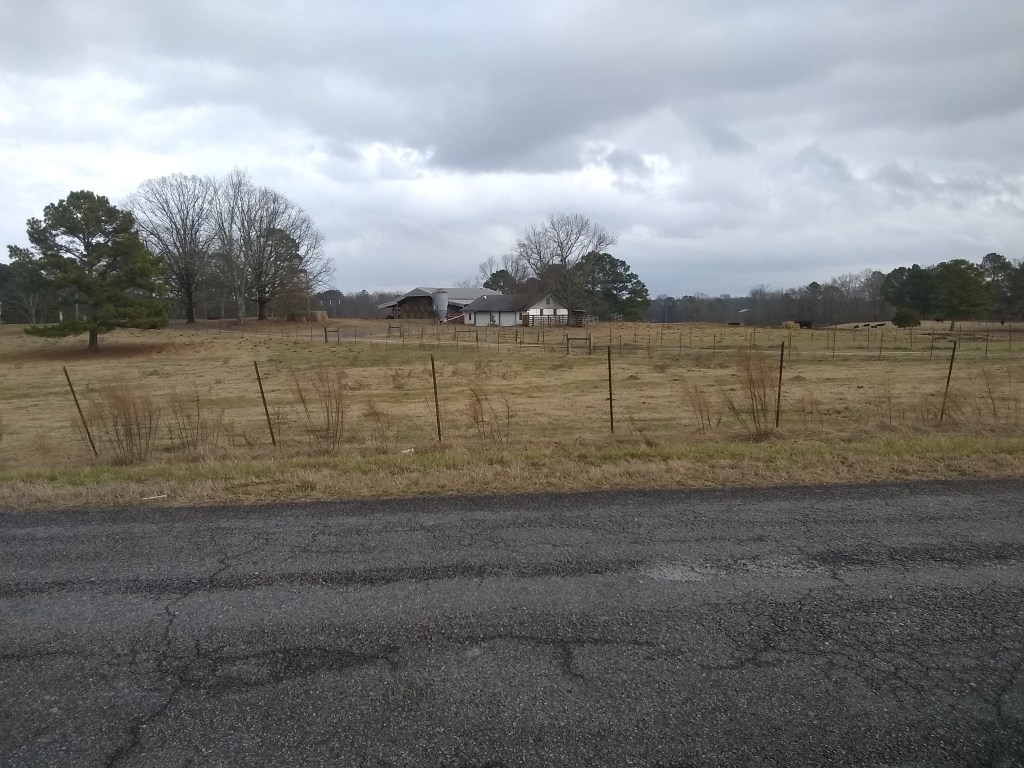
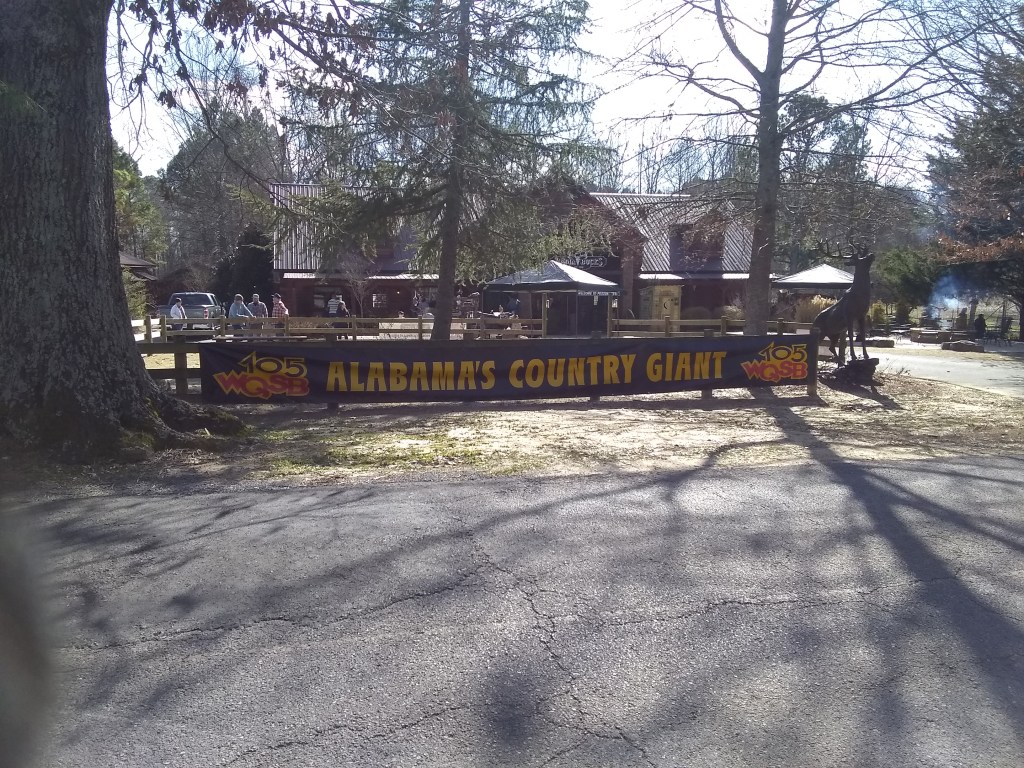
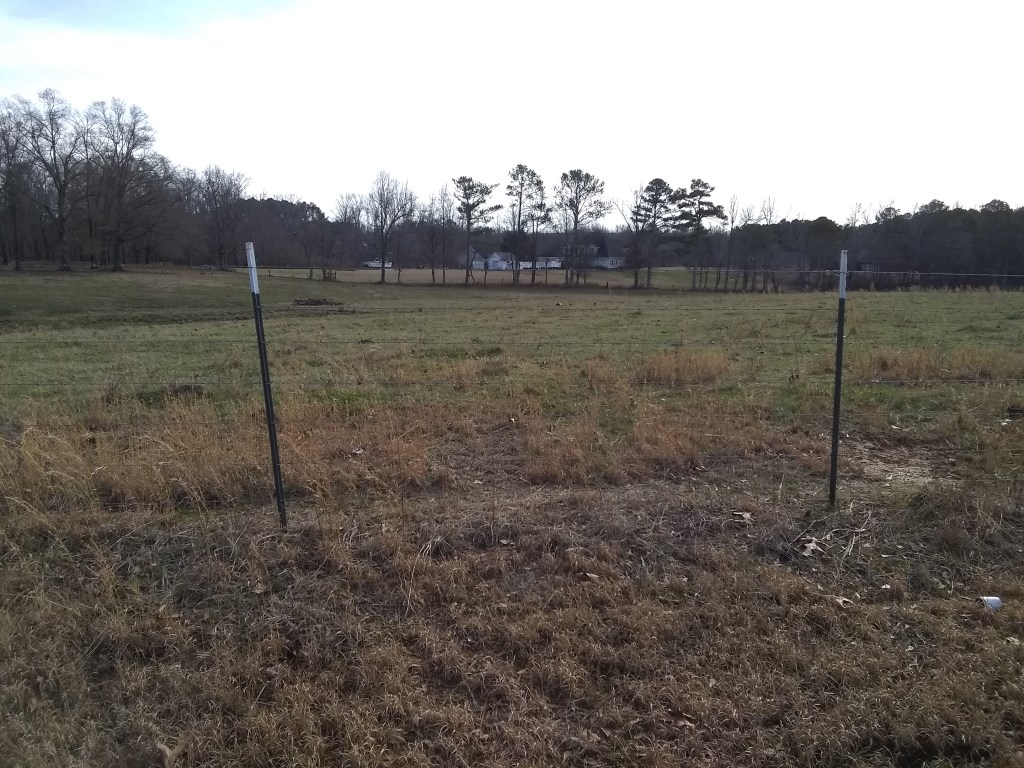
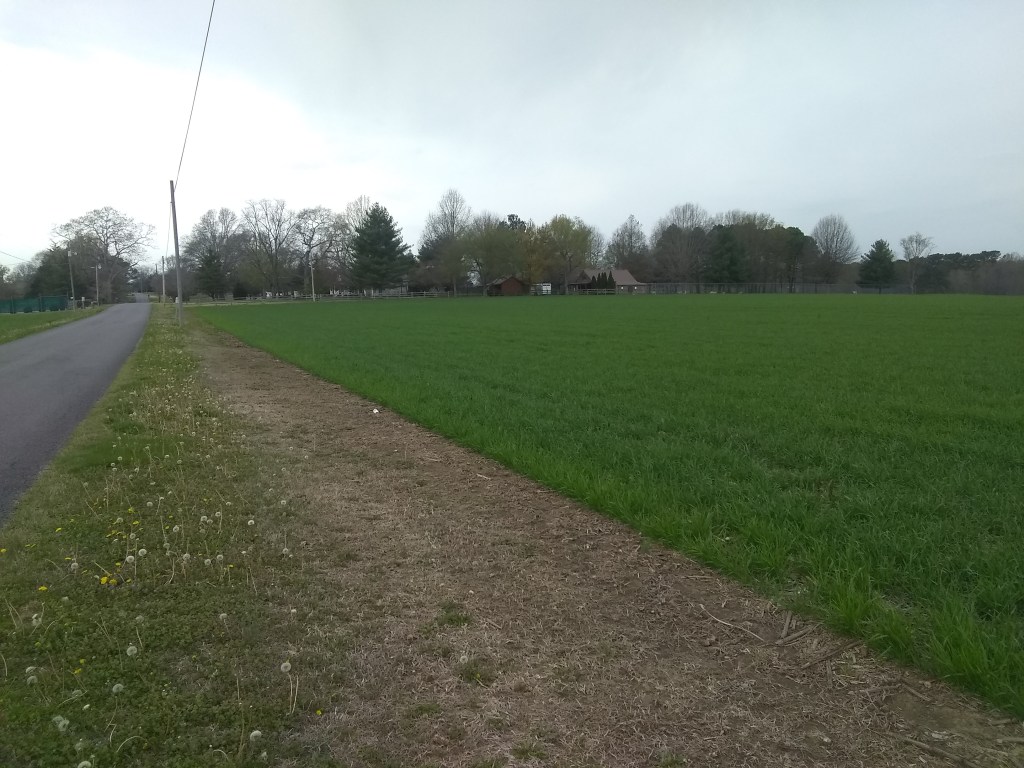
Here’s a few photos from along my pistol route:

Courtroom Apologetics: You Call Them Eyewitnesses?

Here’s the link to this article.

G. P. Denken | May 31, 2023 | Kiosk Article

Believers | Bible: New Testament | Catholicism | Christian Apologetics | Fundamentalism ]


Many people blanch when a “jury duty” letter shows up in the mail. Nevertheless, some popular evangelical authors believe that recruiting jurors for an imaginary trial for Christianity is the best way to defend the faith. Courtroom apologists are recognizable by the way they season their arguments with courtroom jargon and analogies. They put Bible scholars on the stand to defend the strength of the scriptural evidence. Above all, they give great weight to four eyewitness accounts, the gospels of Matthew, Mark, Luke, and John. At trial’s end, they ask their jury of readers to reach an objective verdict based on an unbiased examination of the evidence.

But a trial analogy for Christianity is absurd unless both sides get to make their cases. Because the courtroom apologists I will highlight did not provide a genuine rebuttal case, I will present the beginnings of such a case below. Not only did these apologists misidentify the gospel authors, they ignored how these authors could not have been eyewitnesses to many famous scenes in the gospels. Hence my question: “You call them eyewitnesses?”

Three Courtroom Apologists

Three evangelical authors stand out as popularizing courtroom apologetics over the last several decades. The first is Josh McDowell, a minister with Campus Crusade for Christ (website http://www.josh.org). McDowell is perhaps best known for his 1977 bestseller More Than a Carpenter, which went into detail on his personal investigation of Christianity and his conversion while in college. However, I would argue McDowell planted the seed for courtroom apologetics with the startling title of an earlier bestseller, Evidence that Demands a Verdict, first published in 1972.

That seed sprouted with Lee Strobel (website http://www.leestrobel.com), author of the 1998 book The Case for Christ. Strobel was formerly a reporter and legal affairs editor at the Chicago Tribune, often covering crime stories. In his book, he described how his wife stunned him in 1979 by becoming a Christian. Baffled, he launched himself into a nearly 2-year investigation into the claims of Christianity, which led to his conversion in 1981. In The Case for Christ, Strobel revisited this investigation and laid out the categories of proof he examined. He used these categories to shepherd his readers into the jury room: “These are the same classifications that you’d encounter in the courtroom. And maybe taking a legal perspective is the best way to envision this process—with you in the role of a juror” (Strobel, p. 15).

The third author is J. Warner Wallace (website http://www.coldcasechristianity.com), who wrote Cold-Case Christianity in 2013. Wallace is a homicide detective who has appeared on the NBC series Dateline. In Cold-Case, he explained his ten principles of cold-case investigations and showed how each could be used to examine the Gospels. He then tested whether the Gospels pass muster as eyewitness accounts by answering four questions:

  • Were they present?
  • Were they corroborated?
  • Were they accurate?
  • Were they biased?

Wallace also likened his readers to jurors: “Jurors aren’t experts, yet they are required to make the most important decision in the courtroom…. Our justice system trusts that folks like you and me can examine the testimony of experts and come to a reasonable conclusion about the truth” (Wallace, p. 259).

The authors had similar backstories in their evangelical journeys. All converted to Christianity as young adults, although Wallace pushed the young part by waiting until he was a wizened 35-year-old. Before their conversions, all describe being an agnostic or atheist who sneered at religion, until a seminal event triggered them to investigate Christianity. Also, when they began their inquiries, none had academic backgrounds or theological expertise in the religious matters they sought to investigate. Instead, they offered the authority of a fresh set of eyes from legal disciplines (legal affairs journalism and homicide detective) that applied cold rationalism to the examination of evidence. Even McDowell raised his college kid legal expertise: “I was a prelaw student, and I knew something about evidence. I would investigate the claims of Christianity thoroughly and come back and knock the props out from under their sham religion” (McDowell, Carpenter, p. 11).

Once converted, all devoted their lives to the faith. McDowell has written or coauthored an Everest-like stack of 153 books and preached in 139 countries. Strobel has gone on to write a series of popular “Case for” books, such as The Case for Faith and The Case for a Creator. Wallace has continued to use his detective skills for more apologetics books like God’s Crime Scene and Forensic Faith. Strobel hit upon the idea of engaging youngsters with his book Case for Christ for Kids. Wallace hit upon the idea of engaging youngsters with his book Cold-Case Christianity for Kids. Do they have office cubicles at Evangelism HQ just across from each other or something?

Some Courtroom Criteria

Because these authors speak of eyewitnesses, juries, and verdicts, I expected their books to include the following basic courtroom features:

  1. both sides get an equal opportunity to present their cases and challenge the other’s case;
  2. the burden of proof falls on the prosecution;
  3. the prosecution must meet the standard of proof beyond a reasonable doubt; and
  4. procedural rules govern the trial and the admissibility of evidence.

For Bullet 4, some widely recognized rules on witnesses can be found in the Federal Rules of Evidence (website http://www.rulesofevidence.org). Under Rules 602 and 603, a fact witness must have personal knowledge of a matter and be placed under an oath or affirmation. The credibility of the witness can also be attacked (Rule 607). Experts can also give testimony (Rule 702), to offer opinions on the trial evidence based on their specialized knowledge. However, “hearsay” testimony is inadmissible (Rules 801 to 807). Generally, hearsay is when one side tries to offer as evidence the statements from someone that were not made under oath during the trial.

Sadly, these authors shortchanged their readers by failing to include all four of these features. Under Bullet 1, the authors did not give equal time to the case against Christianity, other than to attack its perceived weaknesses. None of the authors clearly addressed Bullets 2 and 3, as they never said whether the case for Christianity was the prosecution or defense case, nor did they articulate a clear standard of proof they were using. They also proposed an odd rule change under Bullet 4 to banish philosophical naturalism from the courtroom.

To get this imaginary trial moving so I can make my rebuttal, I’m going to assume the case for Christianity is the prosecution case and the proof standard is beyond a reasonable doubt (any lower standard, and the apologists would be conceding that atheists like me CAN have a reasonable doubt, an admission they would find anathema). I summarize the prosecution case below, followed by my defense case. Because I could not cover all the prosecution’s arguments from three books in one essay, my summaries focus on their shared points about eyewitnesses.

The Prosecution Case

As I visualize this trial, I see each author playing a different role. Strobel devoted each chapter of his book to a category of evidence, which he explored with “thirteen leading scholars and authorities who have impeccable academic credentials” (Strobel, p. 15). Thus, I see him as the prosecuting attorney who calls his expert witnesses to the stand. The first two chapters of The Case for Christ discuss eyewitness evidence and the interviewee is Craig Blomberg, currently professor emeritus of New Testament at Denver Seminary in Colorado.

Is see Wallace as the detective called to the stand to explain his investigation and conclusions from Cold-Case. As the earliest author, I see McDowell as a pre-law assistant for the prosecution, since many of the arguments and evidence he developed years earlier for Evidence were echoed in the latter authors’ books. If you can imagine a thick trial binder sitting on prosecutor Strobel’s desk, McDowell played a role in assembling it.

This sentence summarizes the heart of the prosecution case: “The writers of the New Testament either wrote as eyewitnesses of the events they described or recorded eyewitness firsthand accounts of the events” (McDowell, Evidence, p. 5). The prosecution accepts that the gospel authors are anonymous but underlines that the earliest church fathers from the 2nd century (such as Papias and Irenaeus) were unanimous in attributing authorship to four people: the apostles Matthew and John; John Mark, an associate of the apostle Peter, who wrote Mark; and Luke, an associate of the apostle Paul (Strobel, pp. 23-25; Wallace, pp. 77-79). While not a direct witness, Luke was like an early historian, investigating everything anew and examining what eyewitnesses had handed down (Luke 1:1-3).

The prosecution pursues what I would call a “win-win-win” strategy in examining the Gospels. In areas where the Gospels agree, then the Gospels corroborate each other, so can be accepted as eyewitness accounts (win 1). If they disagree, then the prosecution explains how eyewitnesses in real trials often recall events differently, based on their unique perspectives (Wallace, p. 74). In the case of the Gospels, their perspectives sometimes differed because of the authors’ target audiences and the differing theological aspects of Jesus they wanted to emphasize. Because we should expect such disagreements, they make the Gospels even more credible as eyewitness accounts (win 2). Goodness, how could a gospel be considered a genuine independent eyewitness account, if it was just a verbatim match to another gospel?

Then comes win 3. If a gospel records scenes that are a verbatim match to another gospel, then there is a satisfactory explanation why, leaving both eyewitness accounts credible. In The Case for Christ, Strobel asked Blomberg why Matthew would copy Mark in many places, since Matthew was a direct eyewitness while Mark was not. Blomberg responded that “It only makes sense if Mark was indeed basing his account on the recollections of the eyewitness Peter…. Peter was among the inner circle of Jesus and was privy to seeing and hearing things the other disciples didn’t” (Strobel, p. 28).

Another part of the prosecution case is assuring the jury that these eyewitness accounts remained uncorrupted as they went from oral traditions, to written documents, to Biblical canon by the 4th century. This was a particular concern for Wallace as he addressed his “Were they present?” question in Chapter 11 of Cold-Case (Wallace, pp. 159-180). Surprisingly, Wallace did not use this chapter to dissect various scenes from the Gospels and, using his cold-case skills, show his readers how the gospel authors were present in those scenes. Instead, his sole focus was defending his conclusion that the Gospels were written early, within a few decades after the death of Jesus.

As I noted earlier, the authors did not present the case against Christianity, although they implied they had. Strobel, for example, said he hit his interviewees “with the objections I had when I was a skeptic, to force them to defend their positions with solid data and cogent arguments” (Strobel, p. 15). In effect, he did the defense’s cross examination of the prosecution witnesses, perhaps as a professional courtesy to the opposing counsel. But in a real trial, defense attorneys cross-examine witnesses with leading questions that only allow a short answer, to force painful admissions from the stand. Strobel’s questioning was just the prosecutor ploy known as the prebuttal, where you ask your witnesses open-ended questions about the defense’s evidence, so they can expound at length on how weak it all is.

Strobel employed the prebuttal most clearly in Chapter 6, “The Rebuttal Evidence,” the sole chapter devoted to anything resembling the defense case (Strobel, pp. 119-138). Strobel’s interviewee was Gregory A. Boyd, currently senior pastor at Woodlawn Hills Church in Saint Paul, Minnesota. Most of Boyd’s testimony was devoted to heaping abuse on the Jesus Seminar (website http://www.westarinstitute.org), an organization that dared conclude that Jesus did not say about 82 percent of what the Gospels attributed to him (Strobel, p. 120). Boyd dismissed them as “an extremely small number of radical-fringe scholars,” not representative of mainstream scholarship (Strobel, p. 124). But did Strobel interview any members of the Jesus Seminar, to give them an equal opportunity to defend their positions with solid data and cogent arguments? No.

Finally, in what I consider a rule change that would be rejected in any real trial, the prosecution attacks philosophical naturalism and its “bias” against the supernatural (Strobel, p. 125; Wallace, pp. 25-29; McDowell, Evidence, pp. 7-9), and effectively wants to exclude it from the courtroom. They claim this bias infects those Bible scholars who seek only the historical Jesus. To reach the verdict that the Jesus of history is the Jesus of faith, they caution the jury to maintain an open mind and avoid this naturalism bias in their deliberations.

The Defense Case

My first goal as defense attorney would be to convince the jury that the prosecution has failed to prove its core claims about gospel authorship beyond a reasonable doubt. I would begin sowing that doubt via my cross-examination of the prosecution’s witnesses, to draw out admissions about the limitations of the historical evidence and how divided scholarly opinion is in many areas. I would then put my own expert witnesses on the stand.

My lead-off witness would be Bible scholar Bart D. Ehrman, author of bestsellers like Misquoting Jesus and Jesus, Interrupted. In the latter book, he described the majoritarian opinion among scholars about the Gospels: “They were not written by Jesus’ companions or by companions of his companions. They were written decades later by people who didn’t know Jesus, who lived in a different country or different countries from Jesus, and who spoke a different language from Jesus” (Ehrman, Interrupted, p. 112). So much for eyewitness accounts! For some payback, I would call some top Jesus Seminar scholars to the stand, so they can rebut the outrages in Boyd’s testimony. I would also call additional New Testament scholars to the stand, as many as necessary, to drive home to the jury that the prosecution’s task is impossible, because no scholar can know beyond a reasonable doubt who the gospel authors were.

The prosecution, I suspect, would counter by calling rebuttal expert witnesses to split hairs about what my expert witnesses said. I’d then call back my witnesses to nitpick about what the rebuttal expert witnesses said. Torturing the jury for weeks on end with competing conga lines of Bible scholars may seem cruel, but I’m confident the fatiguing debate would lead to a verdict in the defense’s favor.

But a good trial also needs a good surprise witness. Imagine the gasps as I say, “I now call to the stand … the Bishop of Rome, Vicar of Jesus Christ, Successor of the Prince of the Apostles, Supreme Pontiff of the Universal Church, Primate of Italy, Archbishop and Metropolitan of the Roman Province, Sovereign of the Vatican City State, Servant of the servants of God, His Holiness POPE FRANCIS.”

The Pope? My goal is to have a respected Catholic scholar walk the jury through my first defense exhibit, a Catholic study bible. Since this is an imaginary trial, why not the Pope?

Exhibit A – Fireside New American Bible, 2006-2007 Personal Study Edition

My copy of the Fireside New American Bible (Fireside NAB) is loaded with commentary and verse footnotes giving a Catholic perspective on the Bible. I would ask Pope Francis to read from the introductory material on each of the four Gospels. The scholarly speculation found in these introductions is clearly at odds with the prosecution’s case and much more in line with Ehrman’s position:

Matthew: The author was possibly from Antioch in Roman Syria, where there was a mixed population of Greek-speaking Gentiles and Jews. It was probably written about a decade after the Jewish revolt of 66-70 AD (Fireside NAB, pp. 1009).

Mark: The author was possibly a Hellenized Jewish Christian, writing in Syria shortly after 70 AD, who’s target audience appeared to be Gentiles unfamiliar with Jewish customs (Fireside NAB, p. 1065).

Luke: The likely author was a non-Palestinian writing to a non-Palestinian audience that was largely made up of Gentile Christians. The author was not part of the first generation of disciples. Most scholars date Luke’s composition to after the Jewish revolt of 70 AD, and many propose 80-90 AD (Fireside NAB, p. 1091).

John: Critical analysis finds difficulties with any theory of eyewitness authorship, such as John’s highly developed theology. The gospel may have had more than one author and the final editing and arrangement probably took place between 90-100 AD, with opinions differing as to where (Fireside NAB, pp. 1135-1136).

The Fireside NAB contains Nihil Obstat and Imprimatur declarations from Catholic officials, meaning it was deemed free of doctrinal or moral error. I do not think these declarations, as a matter of church doctrine, prohibit Catholics from accepting the prosecution’s proposed authors. But they do show that a Christian church with some 1.3 billion members is fine with its followers accepting that the Gospels were likely written late and by non-eyewitnesses.

This observation upends the prosecution’s notion that philosophical naturalism is behind any criticism of their case. For example, in Cold-Case, Wallace offers the Gospels’ failure to describe the destruction of the Jerusalem temple in 70 AD as his first piece of circumstantial evidence that they were written before then (pp. 161-162). Later, He attacks skeptics by saying, “The naturalistic bias of these critics prevents them from accepting any dating that precedes the destruction of the temple” (Wallace, p. 173). But the Pope could contradict Wallace directly in regards Matthew, testifying that a date after 70 AD is “is confirmed within the text by 22, 7, which refers to the destruction of Jerusalem” (Fireside NAB, p. 1009). What a dilemma! To salvage Wallace’s testimony, imagine an embarrassed prosecutor Strobel asking the Pope under cross, “Your Holiness, isn’t it true that your church accepts a composition date for Matthew after 70 AD because it is infected with philosophical naturalism?”

The second goal of my defense would be to dissect famous scenes from the Gospels to show how they fail one or more of Wallace’s four tests for eyewitness accounts. My exhibits fall in three categories:

  • scenes where neither Jesus nor his disciples could be eyewitnesses (Exhibits B through F);
  • a scene where Jesus was alone (Exhibit G); and
  • scenes where Jesus and some or all the disciples were present (Exhibits H and I).

Exhibit B – The nativity narratives (Matthew 1 and 2Luke 1:5-80Luke 2:1-40)

Are there any Christians in the world who do not know the true story of Jesus’ birth? Yes, all of them, because the true story is lost to history. Most Christians could probably describe a crèche, but only devoted Gospel readers would know that the nativity stories are only found in Matthew and Luke and that their stories differ in many details. Still fewer Christians would know that many scholars question the historical accuracy of the nativity accounts and accept that Jesus was likely born in Nazareth, not Bethlehem.

But what about the eyewitnesses? In my cross-examination of Wallace, I’d show the jury that the nativity stories fail Wallace’s “were they present?” test for eyewitnesses. To illustrate, below are just a few of the questions I would ask him regarding Matthew (I’d have similar questions for Luke). I cannot be certain how he would respond, but I provide what I think are the unavoidable admissions he would have to make:

“Detective Wallace, you concluded that the gospel of Matthew was written by the apostle Matthew, is that correct?” Yes.

“Does the apostle Matthew say anywhere in his gospel that he was a direct eyewitness to the nativity events he describes?” No.

“Does he state in his gospel that any of the other apostles were present at the nativity?” No.

“In fact, isn’t it likely that Matthew and the other apostles were either children or not even born yet at the time of Jesus’ birth?” Yes.

“Did the apostle Matthew identify, by name, any direct eyewitnesses he spoke with to create his nativity narrative?” No.

So, if the apostles were not there and Matthew and Luke did not name the direct eyewitnesses they spoke with, where did these nativity stories come from? The prosecution might claim Jesus himself or his mother Mary were the sources. Granted, Jesus was there, but he was just born. Even Jesus (the historical Jesus that is) would have learned from others his birth stories as he grew up, likely from Mary. But Mary as the eyewitness presents many problems. If Mary told Jesus’ apostles, why would Peter (via Mark) and John leave these important nativity accounts out of their gospels? Why would Mary only tell Matthew about the magi, the star of Bethlehem, and the flight to Egypt, and Luke only about the Roman census, the manger, and the shepherds? Also, both narratives have scenes where Mary was not present to be an eyewitness, such as Zechariah’s meeting with an angel in the temple sanctuary (Luke 1:11-20), King Herod’s meeting with his chief priests and the scribes (Matthew 2:4), and the slaughter of the innocents in Bethlehem after Mary and Joseph fled with Jesus to Egypt (Matthew 2:16).

The nativity stories fail Wallace’s other three eyewitness tests as well. Corroborated? Matthew and Luke only agree on a few details, such as Mary’s virginity, husband Joseph, and Jesus’ birth in Bethlehem. Otherwise, their accounts differ wildly, and Mark and John ignore the nativity altogether. Accurate? Scholars have identified many elements of the nativity stories that are clearly inaccurate, such as a lack of any Roman census that Luke reported at the time of Jesus’ birth. Biased? The anonymous Christian authors of Matthew and Luke wanted to convince people that Jesus was the prophesied Messiah of the Jews. Thus, they would have had a motivation to manufacturer legends of Jesus being born of a virgin in Bethlehem to fulfill supposed prophecies from Isaiah 7:14 and Micah 5:1-2.

With no direct eyewitnesses, the prosecution would have little choice but to open the floodgates of speculation as to what kind of hearsay evidence Matthew and Luke relied on. Maybe this is what happened: one of the shepherds abiding in the field (Luke 2:8) told his son, who years later told his wife, who told her fisherman cousin in Capernaum, who later joined the Jesus movement as one of the three thousand at Pentecost (Acts 2:41), and it was this cousin who told the story to Luke. Believers can claim this is plausible, but under the cruel constraints of the courtroom such evidence is inadmissible. This cousin is just the last link in a hearsay daisy chain, and for convenience I’ll contrive an acronym for the rest of the trial: HEArsay DAisy CHain Eyewitness (HEADACHE) evidence.

Exhibits C through F are additional scenes where neither Jesus nor his disciples were present. Since they could not be eyewitnesses, the prosecution’s only gambit would be to offer HEADACHEs to the jury, which the defense will strongly oppose!

Exhibit C – The death of John the Baptist (Matthew 14:6-11Mark 6:21-28)

Matthew and Mark describe how John’s fate was decided at a party for King Herod Antipas. Herod’s daughter-in-law dances for him, so he foolishly offers her half his kingdom. Instead, she asks for John’s head on a platter because her mother wants it. Strange family. The eyewitness problem: neither Jesus nor his disciples were invited to this party. So which drunken official sitting near King Herod started this story on its HEADACHE journey to Matthew and Mark?

Exhibit D – The treachery of Judas (Matthew 26:3-5 and 14-16Matthew 27:3-10)

All four Gospels have scenes of Judas misbehaving out of sight of Jesus and the other disciples. In the Matthew verses, Judas meets with the chief priests to betray Jesus. They pay him thirty pieces of silver. After Jesus’ arrest, Judas tries to return the money out of guilt, but the priests insult him, so he flings the money into the temple and wanders off to hang himself. The issue in all four Gospels is the same. If the only people present in these scenes were Judas and the chief priests, how did the gospel authors find out about it? HEADACHEs.

Exhibit E – Pilate authorizing tomb guards (Matthew 27:62-66)

Only Matthew places guards at Jesus’ tomb. To get them there, Matthew describes a meeting between the chief priests and the Pharisees with Pontius Pilate himself. But unless one believes that Pilate graciously admitted Matthew into the meeting to take notes, Matthew was not an eyewitness to this meeting. More HEADACHEs!

Exhibit F – The women fleeing the tomb (Mark 16:8)

The two earliest manuscripts of Mark end with Mark 16:8 (NAB): “Then they went out and fled from the tomb, seized with trembling and bewilderment. They said nothing to anyone, for they were afraid.” Scholars widely accept that verses 9 to 20, which appear in later manuscripts, were an addition written by someone other than the author of Mark (Ehrman, Misquoting Jesus, pp. 65-68). But the prosecution claims that the apostle Peter gave his eyewitness testimony to Mark, so verse 8 should be considered his final word. But this presents a testimonial impossibility. If the women were the only eyewitnesses, and they told no one, then their story ended with them. How, then, did Peter find out about it?

Exhibit G – Jesus’ temptation in the wilderness (Matthew 4:1-11Mark 1:12-13Luke 4:1-13)

My defense would next turn a different type of Gospel scene, ones where Jesus was without his disciples so none of them saw what he did. Short scenes like this are scattered throughout the Gospels, but the temptation in the wilderness is the clearest example. According to Matthew, Mark, and Luke, Satan tempted Jesus during his forty-day sojourn in the wilderness. This event happens after Jesus is baptized in the Jordan but before he gathers his disciples. Mark’s account provides few details, but Matthew and Luke give every verbal lunge and parry between Jesus and Satan, in almost identical language.

Many scholars believe Matthew and Luke were copying from a theorized manuscript of sayings called “Q,” but Q cannot be treated as an eyewitness account. The Q manuscript has never been found, the author is unknown, and the story describes Jesus and Satan as being alone anyway. The prosecution’s proposed gospel authors are even more problematic. What eyewitness could historian Luke have interviewed for his account, given that he could not have interviewed Jesus? Where did the outer-circle apostle Matthew get the additional details for his account that inner-circle apostle Peter (via Mark) failed to include in his two-verse summation? Why would the apostle John ignore the temptation story altogether in his gospel?

Because the Mark and Q sources do agree that the temptation took place, I find it likely that there were early oral traditions of Jesus preaching some version of this story during his ministry. But as Jesus himself reportedly said in John 5:31 (NAB): “If I testify on my own behalf, my testimony cannot be verified.” With no independent eyewitnesses to verify it, this scene could not be established as true beyond a reasonable doubt in a courtroom. Also, there are explanations for this preaching that would not require the jury to believe that a supernatural clash took place (here comes naturalism again!). Perhaps Jesus had a sincere conviction this confrontation happened, but it was due to delirium brought on by prolonged fasting in the desert. Or, perhaps Jesus was just the first preacher to invent a pious fiction about himself to teach about temptation, just as pastors today will sermonize about getting pestered endlessly by Satan to sin.

Exhibit H – The Sermon on the Mount (Matthew 5 to 7)

My final two exhibits are famous scenes where Jesus was with some or all of his disciples. The first is the lengthy Sermon on the Mount, where Jesus preaches the Beatitudes, the Lord’s Prayer, and other teachings. It is only found in Matthew (a much shorter “Sermon on the Plain” is found in Luke 6:20-49). As with Exhibit G, scholars suggest that Matthew got the sermon from the Q source, which again cannot be considered an eyewitness account.

The apostle Matthew as the eyewitness makes little sense. First, according to Matthew 9:9, Jesus does not even make Matthew a disciple until after the sermon takes place. Two of the prosecution’s other apostle authors, John and Peter (via Mark) could have been eyewitnesses, as they were already disciples when Jesus spoke. But in a glaring omission, neither one records this most famous of sermons in their gospels. If they were eyewitnesses, what possible reason could John and Peter have had to exclude the Lord’s Prayer from their gospels? How can the jury accept the Sermon on the Mount as an eyewitness account at all, if the two disciples who should have been there wrote nothing about it, and the one disciple who described it wasn’t among Jesus’ followers yet?

Exhibit I — The Last Supper (Matthew 26:20-30Mark 14:17-26Luke 22:14-39John 13:2 to 18:1)

My final exhibit is the Gospel accounts of Jesus’ last supper with his disciples before his arrest. No need for HEADACHE evidence here, as all twelve disciples are present, sitting mere feet from Jesus and hanging on his every word. Given this, one would expect that the testimony from the prosecution’s three eyewitnesses who were in the room would match closely, with Luke’s account in substantial agreement.

But there is a huge problem. All four Gospels quote Jesus’ words during the last supper, between the time he sat down with the disciples to when they all left for the Mount of Olives. Jesus was likely speaking Aramaic, but any Bible translation can give an approximation of the total words he said. My count: Mark – 116; Matthew – 136; Luke – 396; John – 2,887! Incredible! John’s word count is almost 25 times longer than Peter’s supposed account in Mark, and the Matthew account matches Mark’s account nearly verbatim. But all the disciples were in the same room. Were Peter and Matthew hard of hearing? Did they just dose off during Jesus’ long speech?

There are also eyewitness issues when it comes to content. Why is it that John would recall Jesus and Peter discussing the washing of Peter’s feet (John 13:6-10), while Peter apparently did not mention it to Mark? Why would John ignore the important words Jesus said to invest the Passover meal with new meaning (“this is my body,” “this is my blood”), which the other gospel authors all focus on? Who was Luke’s source for Jesus’ comments on the disciples bickering over who was greatest (Luke 22:24-30), a scene the other gospels omit?

Conclusion

I would close this imaginary trial by asking the court to throw out the prosecution’s case entirely, by filing a motion for a change to two new venues. I will illustrate by focusing on one final, famous verse from the last supper:

John 14:6 (NAB): “Jesus said to him, ‘I am the way and the truth and the life. No one comes to the Father except through me.’”

Did Jesus say this? For the secular, this is a historical question, and the proper venue for examining the historical Jesus is within the halls of academia. A courtroom is not the right venue, because the conclusions reached by Biblical historians come with varying degrees of certainty and rarely rise to proven beyond a reasonable doubt. That said, the only source for this statement is the gospel of John, written anonymously some 70 years after Jesus died. Scholarship supports that the Christian author of John promoted his theology by inventing lengthy discourses for Jesus to say, which include this verse. Simply put, decades after Jesus’ death, someone who was not an eyewitness put words in Jesus’ mouth. So no, it is highly unlikely that Jesus said this.

For many believers, this is both a historical and a faith question, and the proper venue for the latter is the church pew. Probably all Christians believe that the Bible was divinely inspired. Many accept that the Holy Spirit moved through many human authors over the course of centuries and was not constrained to using direct eyewitnesses only. As noted earlier, the Pope (fictionally) testified that the late authorship of John by a non-eyewitness can be accepted by Christians without doing violence to the faith. In this view, whoever wrote John may have put words in Jesus’ mouth, but the Holy Spirit put the right message in that author’s mind. I cannot join them in this belief, but it does mean that many believers would answer “yes,” they can accept John 14:6 as the words of Jesus as a matter of faith.

But courtroom apologists reject all this. They insist that the eyewitness evidence is so overwhelming that they want to drag everyone into the courtroom, both the secular and the faithful. Reason and historical analysis can take us all the way to the Jesus of faith, they claim, provided we put naturalism aside and embrace the Gospels as early eyewitness accounts. Wallace even says in all caps in Cold-Case, “IF THE GOSPELS ARE LATE, THEY’RE A LIE” (Wallace, p. 159). Well, they are late, and the author of John was not an eyewitness, so per Wallace’s standard John 14:6 is a lie.

References

Josh McDowell, More Than a Carpenter (Carol Stream, IL: Tyndale House Publishers, 1977). Revised and updated edition by Josh McDowell Ministry and Sean McDowell (2009 Kindle edition).

Josh McDowell, Evidence that Demands a Verdict, Volume I (San Bernardino, CA: Here’s Life Publishers, 1972). (The Kindle edition is cited here.)

Lee Strobel, The Case for Christ (Grand Rapids, MI: Zondervan, 1998).

J. Warner Wallace, Cold-Case Christianity (Colorado Springs, CO: David C. Cook, 2013). (The Kindle edition is cited here.)

Federal Rules of Evidence, 2023 Edition. <https://www.rulesofevidence.org&gt;.

Bart D. Ehrman, Misquoting Jesus (New York, NY: HarperCollins, 2005).

Bart D. Ehrman, Jesus, Interrupted (New York, NY: HarperCollins, 2009).

Fireside New American Bible, Personal Study Edition [2006-2007 Edition]. (Wichita, KS: Catholic Bible Publishers, 1970.) [This book cites multiple copyrights. The copyright holder for scriptural texts was the Confraternity of Christian Doctrine, Washington, D.C., as follows: Old Testament, 1970; Revised New Testament, 1986; and Revised Psalms, 1991.]

How to Read the Indictment

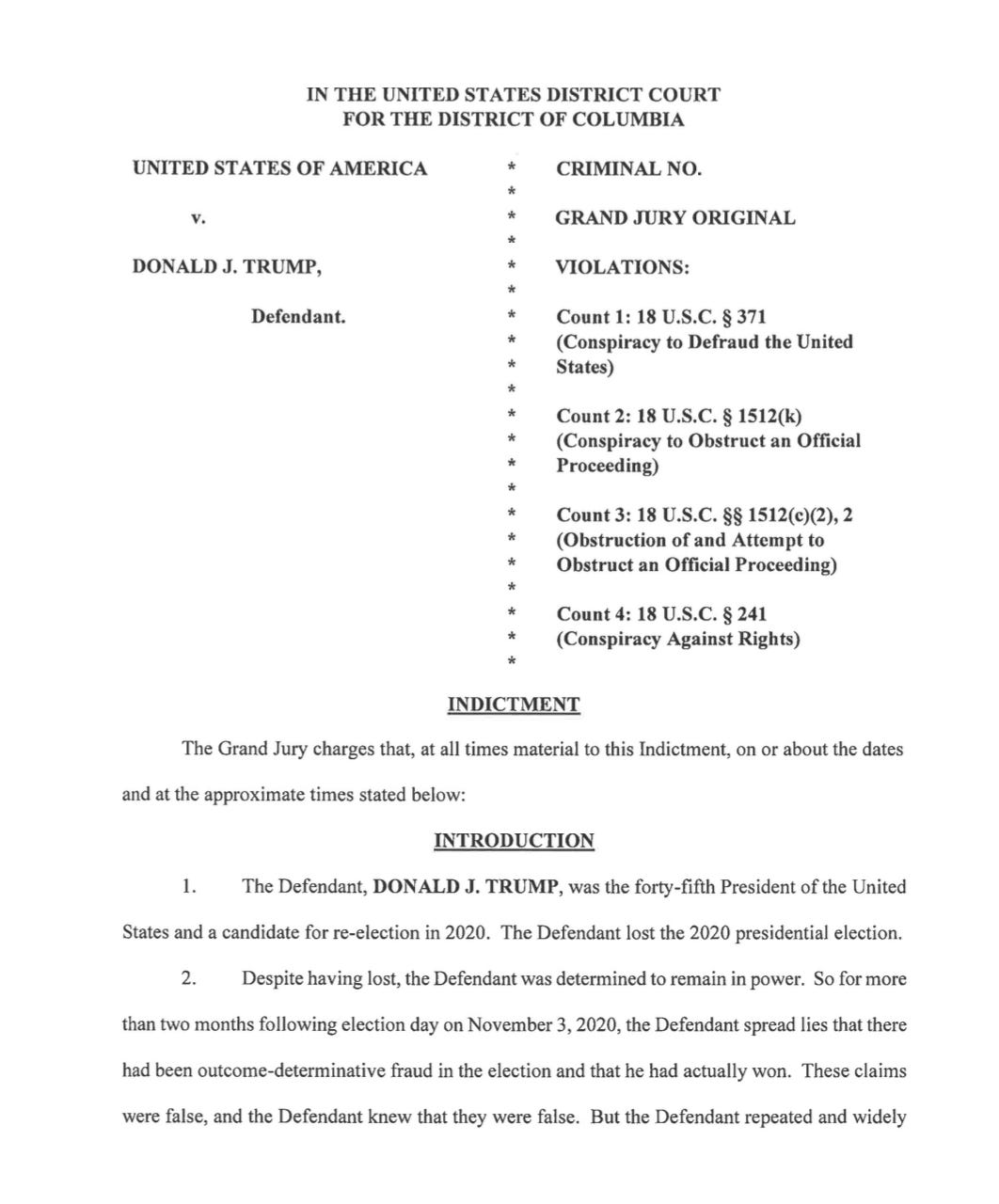
Here’s the indictment. Click trumpj6indictment link below for larger view.

Now, to Joyce Vance’s excellent article.

United States v. Trump, again

Here’s the link to Joyce’s article. Please read!

JOYCE VANCE

AUG 2, 2023

First off tonight, I want to thank all of you who sent emails and left comments about my Mom. I appreciate all of them, I’ve read through them and continue to read them. I’ve gained a lot of strength from your support, and I’m touched and honored by the stories you’ve shared. Thank you from the bottom of my heart.

Today, Tuesday, August 1, 2023, was the day the Justice Department indicted the wretch of a former president for trying, and damn near succeeding, in preventing American voters from determining the outcome of the presidential election in 2020. It’s about time.

The January 6 investigation was massive, and it’s remarkable Jack Smith got to this point so quickly. He owes a huge debt of gratitude to the House January 6 Committee, which did prosecutors’ work, unearthing much of the evidence that was used to indict. In a very real sense, prosecutors in this case stand on the shoulders of the members of the House who insisted on pursuing the investigation and made Americans believe that accountability for the former president was possible.

The conduct, the swarm of different angles Trump worked to try and steal the election, makes for a complicated prosecution. It was a massive effort at political interference in the constitutional processes that make our country a republic. The factual basis for the charges, even though we’ve lived through the events themselves, is not simple like the Mar-a-Lago classified documents case is. There you can readily wrap your mind around the basics and understand Trump kept classified documents he wasn’t entitled to and obstructed the government’s efforts to get them back. You can’t do the January 6 investigation in one sentence like that. Trump had a lot of moving parts in play to try and hold onto power, some legal, and many others not.

So the question has always been, how would Jack Smith make sense of it all, organize the conduct, and charge this case? It has to be done in a way that, legally speaking, is air tight—there’s no point in fighting for a conviction that you lose on appeal—but it also has to make sense out of a morass. For instance, we all understand now that there was a scheme to use fake slates of electors to try and interfere with the count of votes under the Electoral Count Act. But in the wake of the election, as news of an event here and another there began to emerge, we didn’t have the roadmap we have now for understanding the component pieces, which include efforts in swing states, the attempt to pervert DOJ, the pressure campaign on Pence, and so on. That’s the challenge: draft an indictment that will make compelling sense to 12 jurors in a courtroom who get to hear all the evidence and make a decision based on it. Which of Trump’s many crimes do you charge him with?

Now we know.

Tonight, I want to give you a bit of a guide for reading the indictment for yourself. I think it’s important to do that. Set aside an hour or two, or find ten minutes here and there over the course of the next week. You’ll understand it better if you read it for yourself. The indictment is written in a manner that makes it clear prosecutors wanted it to be comprehensible to anyone who wanted to read it.

The indictment is a speaking indictment—the story of the three conspiracies that are charged is told in detail.

First off, you get some framing in the introductory paragraphs. The government alleges that Trump “spread lies” and that he “knew that they were false.” And it sets up some parameters: Trump could legally lie about the election and say it was tainted by fraud. That’s okay—what I would call awful but lawful. He could challenge the results in court and seek recounts. But DOJ draws the line in paragraph 4 and says that what he can’t do is pursue “unlawful means of discounting legitimate votes and subverting the election results.” In other words, some of what he did, the lawsuits for instance, was lawful. His lies to the public were distasteful and inappropriate but still, not crimes. But then Trump crossed the line into criminal. That’s the conduct, we learn in the introduction, that we’re going to hear about in the rest of the indictment.

It’s done artfully; it clarifies that this isn’t about going after Trump for his speech, which is arguably (at least in his view) protected by the First Amendment. It’s about his conduct, illegal conduct. In the opening lines of the indictment, prosecutors effectively gut the First Amendment defense Trump has been floating for the last two years.

There is only one defendant, Donald Trump. That’s likely a strategy for streamlining the process to get the case to trial as quickly as possible. He has six uncharged and therefore unnamed (but as good as identified) co-conspirators. We’ll get to them in a moment. The indictment alleges three separate conspiracies:

  • one to defraud the United States by interfering with the lawful processes that are used to collect, count, and certify the presidential election (18 USC § 371)
  • one to obstruct the January 6 congressional proceeding in which the results are counted and certified (18 USC § 1512)
  • one to defeat citizens’ right to vote and have their votes counted (18 USC § 241)

It alleges that each conspiracy was fostered by the “widespread mistrust the Defendant was creating through pervasive and destabilizing lies about election fraud.” There is also one substantive charge of obstruction related to the second conspiracy.

The penalties are serious. 18 USC § 371 carries a five-year maximum. The two charges under 18 USC § 1512 each have a 20-year maximum penalty. And the maximum penalty for violating 18 USC § 241 is 10 years. While the sentencing guidelines often set a lower range the judge is advised to sentence within, here, and especially if Trump has picked up one or more prior convictions before he’s sentenced, there is serious time associated with conviction on any one of these charges.

Here’s the trick to understanding the indictment. Because the same facts underlie each of the charges, the government sets them out only once, in the first count. Then it adopts them as the factual basis for each of the next three charges. That means that the first count, which begins on page 3, takes up the bulk of the indictment. It concludes on page 42. But once you’ve read it, you have the facts and the key aspects of each of the conspiracies that are charged. If you want a refresher on the basics of conspiracy law before you get started, we did that here at Civil Discourse, back in July of 2022, with chicken videos to explain the finer points of the law: “Conspiracy! Understanding the basics (with chickens).”

First, we get the “purpose of the conspiracy.” This is a standard inclusion in conspiracy indictments. In essence, here, it’s the purpose of all three conspiracies. The government alleges Trump’s purpose “was to overturn the legitimate results of the 2020 presidential election by using knowingly false claims of election fraud to obstruct the federal government functions by which those results are collected, counted, and certified.” The plain, legal prose is so dry that it almost masks what this is about: a president who wanted to take away the right of Americans to vote.

The next section clarifies who the “co-conspirators” referred to throughout the indictment are. But because they aren’t charged in the indictment, DOJ policy says they can’t be identified by name. Instead, we get descriptions that all but identify them after informing us that Trump “enlisted co-conspirators to assist him in his criminal efforts to overturn the legitimate results of the 2020 presidential election and retain power.” I’ve added their likely identities in italics following the language describing them from the indictment:

a. “Co-Conspirator 1, an attorney who was willing to spread knowingly false claims and pursue strategies that the Defendant’s 2020 re-election campaign attorneys would not.” Rudy Giuliani

b. “Co-Conspirator 2, an attorney who devised and attempted to implement a strategy to leverage the Vice President’s ceremonial role overseeing the certification proceeding to obstruct the certification of the presidential election.” Trump lawyer John Eastman, whose communications were disclosed after a judge found the crime–fraud exception meant the attorney–client privilege should be set aside

c. “Co-Conspirator 3, an attorney whose unfounded claims of election fraud the Defendant privately acknowledged to others sounded ‘crazy.’ Nonetheless, the Defendant embraced and publicly amplified Co-Conspirator 3’s disinformation.” “Kraken” lawyer Sidney Powell

d. “Co-Conspirator 4, a Justice Department official who worked on civil matters and who, with the Defendant, attempted to use the Justice Department to open sham election crime investigations and influence state legislatures with knowingly false claims of election fraud.” DOJ environmental lawyer and AG wannabe Jeffrey Bossert Clark

e. “Co-Conspirator 5, an attorney who assisted in devising and attempting to implement a plan to submit fraudulent slates of presidential electors to obstruct the certification proceeding.” Kenneth Chesebro, another lawyer involved in devising the fake electors scheme

f. “Co-Conspirator 6, a political consultant who helped implement a plan to submit fraudulent slates of presidential electors to obstruct the certification proceeding.” Identity unclear

Next up is a section entitled “Federal Government Function” that manages to explain, in one paragraph, how the electoral college system works. It will also make you wonder why we still use this godforsaken system that unduly focuses presidential selection power in less populated parts of the country, but we’ll leave that for another day. Like all conspiracy indictments, this one has an involved section on “Manner and Means,” which is an overview that explains how they did it. Here, it’s a helpful summary of all the conduct that’s laid out next. There is the use of fake fraud claims to try and subvert the outcome of state elections, the fraudulent slates of electors, the attempted subversion of DOJ, the pressure campaign on Vice President Mike Pence, and Trump’s exploitation of the violence at the Capitol on January 6 to try and convince Congress to delay certification of the vote.

Before the indictment dives into the details of those means of effectuating the conspiracies, we get a section you don’t normally see in indictments, where the government sets forth its evidence that Trump knew the fraud claims he was making about the election were false. We discussed the importance of the government being able to use circumstantial evidence to establish what was going on inside of Trump’s mind, notably, that he knew he’d lost the election but lied about it. The government uses three and one half pages of the indictment to set out its evidence in that regard in detail. With that important detail established, we then get a detailed layout of each of the “Manner and Means” of executing the conspiracy, and it’s here that you may want to spend some time. Most of the contours are familiar; we know about the events in Georgia, for instance, but some of the detail is informative, and it’s an excellent refresher to make sure you remember the details you first learned while watching the January 6 Committee hearings.

So we get a speaking indictment, or as MSNBC anchor Ari Melber quipped tonight, a shouting indictment. We still have some unanswered questions. The status of the unindicted co-conspirators isn’t clear. Often, people identified that way are cooperators, but that doesn’t appear to be the case here. It seems likely that some or all of these people will face charges in the future. Their crimes are set out clearly in the indictment, and there’s little rationale other than expediency, a weak one at best, for permitting them to escape accountability for their conduct. But there are other people who appear to be working with the government. Mike Pence, after trying to fight off his subpoena with all sort of excuses, testified and would seem to be the only possible source of information about his personal conversations with Trump, which includes this fascinating passage in paragraph 90:

On January 1, the Defendant called the Vice President and berated him because he had learned that the Vice President had opposed a lawsuit seeking a judicial decision that, at the certification, the Vice President had the authority to reject or return votes to the states under the Constitution. The Vice President responded that he thought there was no constitutional basis for such authority and that it was improper. In response, the Defendant told the Vice President, “You’re too honest.” Within hours of the conversation, the Defendant reminded his supporters to meet in Washington before the certification proceeding, tweeting, “The BIG Protest Rally in Washington, D.C., will take place at 11.00 A.M. on January 6th. Locational details to follow. StopTheSteal! [emphasis added.]

Still more interesting is the question of Mark Meadows’ status. In paragraph 28, there is information that seems like it would have to have come from him: “On December 23, a day after the Defendant’s Chief of Staff personally observed the signature verification process at the Cobb County Civic Center and notified the Defendant that state election officials were ‘conducting themselves in an exemplary fashion’ and would find fraud if it existed, the Defendant tweeted that the Georgia officials administering the signature verification process were trying to hide evidence of election fraud and were ‘[t]errible people!’” If Meadows is actually cooperating, in the sense that he’s finally decided to share everything he knows about Trump with prosecutors, that would be big. But there’s little additional information in the indictment to suggest that. Prosecutors aren’t obligated to reveal all of their evidence, but in the event they want to convince some of the six unindicted co-defendants to cooperate, they might want to show off a little more evidence to help them understand the peril of their situation if they don’t. Five of them, after all, are lawyers, and all quite capable of assessing the evidence. It’s surprising we don’t get more here if Meadows is in fact on board.

So, take some time when you can, and read the indictment for yourself! Encourage others to do it, too. Most importantly, don’t accept the defeatist mentality that no Trump supporters can take in the information and change their minds. While his hardcore base may not, there are others who may support him for policy or political reasons, but who, when confronted with the hard facts about his complicity, including Count Four where he is charged with a conspiracy to interfere with Americans’ right to vote, may finally decide they’ve had enough.

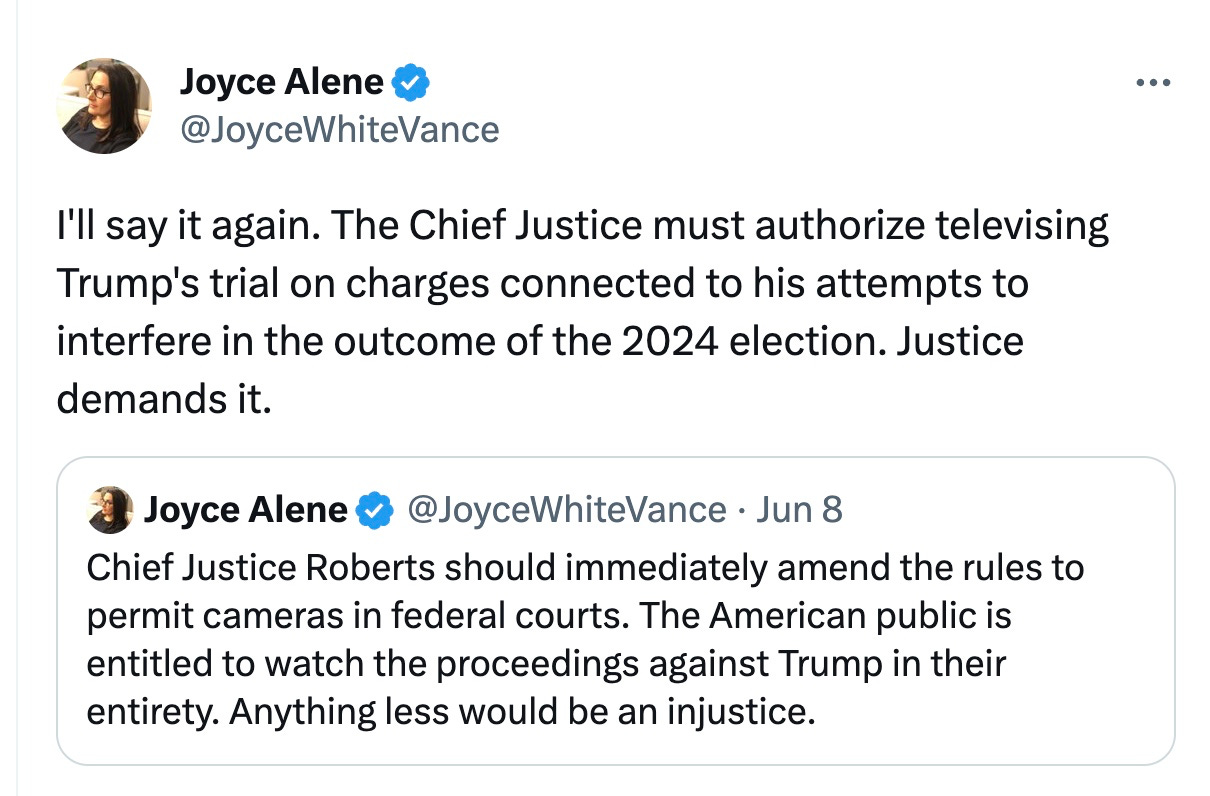
Finally, cameras in the courtroom. Chief Justice Roberts could ensure these proceedings were made publicly available. He can order that there be cameras in the courts. And he should. That final charge makes it clear that we are all victims of this crime. We have the right to watch the proceedings.

Because this isn’t a case about classified information. We’ll see more of the proceedings in public, and it should kick into gear more quickly, with arraignment scheduled for Thursday afternoon. The Judge, Obama appointee Tanya Chutkan, confirmed in the Senate by a vote of 95-0 in 2014, has signaled she means business with that prompt kickoff. But given the time it takes to get cases to trial in the District of Columbia’s courts, often over a year and a half, we’ll have to wait to see if there’s even a prospect of this case, so highly important and certain to be aggressively litigated, getting to trial ahead of the election.

Today was one of the good days for people who believe in the Republic. No man should be above the law. Trump is finding out that democracy and the Constitution are for real.

We’re in this together,

Joyce

p.s.: If you’re not already a paid subscriber and you’re enjoying Civil Discourse, I hope you’ll consider up-subscribing (if that’s a word). But we live in challenging times, and I understand that not everyone can or wants to buy a paid subscription. I’m happy to have you here either way! I’m glad we’re all committed to saving the Republic. Tonight, it feels like we’re making progress.

08/01/23 Biking & Listening

Biking is something else I both love and hate. It takes a lot of effort but does provide good exercise and most days over an hour to listen to a good book or podcast. I especially like having ridden.

Here’s my bike, a Rockhopper by Specialized. I purchased it November 2021 from Venture Out in Guntersville; Mike is top notch! So is the bike, and the ‘old’ man seat I salvaged from an old Walmart bike.

Here’s a link to today’s bike ride.


Something to consider if you’re not already cycling.

I encourage you to start riding a bike, no matter your age. Check out these groups:

Cycling for those aged 70+(opens in a new tab)

Solitary Cycling(opens in a new tab)

Remember,

Photo by Suzy Hazelwood on Pexels.com

I’m listening to The One From The Other by Philip Kerr

Amazon Abstract

In the fourth mystery in Philip Kerr’s New York Times bestselling series, Bernie Gunther—a former policeman and reluctant SS offier—attempts to start over in the aftermath of World War 2 and quickly learns that the past is never far behind you…

Berlin, 1949
. Amid the chaos of defeat, Germany is a place of dirty deals, rampant greed, and fleeing Nazis. For Bernie Gunther, Berlin has become far too dangerous. After being forced to serve in the SS in the killing fields of Ukraine, Bernie has moved to Munich to reestablish himself as a private investigator. 

Business is slow and his funds are dwindling when a woman hires him to investigate her husband’s disappearance. No, she doesn’t want him back—he’s a war criminal. She merely wants confirmation that he is dead. It’s a simple job, but in postwar Germany, nothing is simple—nothing is what it appears to be. Accepting the case, Bernie takes on far more than he’d bargained for, and before long, he is on the run, facing enemies from every side.


Here’s a few photos from along my pistol route:

The Boaz Stranger–Chapter 15

I still thought it was surreal. Kyla and a truck. I first saw it last night when I arrived. It’s big, a 2500 Series Chevrolet, a Silverado model, and it’s silver colored. With four full doors and 4-wheel drive. It’s three times as big as the last Lexus she owned.

Sis had been a tomboy growing up. Every chance she got, she’d be outside exploring the woods behind the house, helping Mom in the garden, fishing at the pond, or hiding in the barn loft. Even more boyish, Kyla was a master at castrating baby piglets, at least according to Dad.

The odd thing was Kyla had been both a tomboy and a scholar. Even though she was a year younger than me, we finished high school on May 26, 1972. I think it was third grade she sailed right over. I had always been jealous of her memory. It was close to photographic. She could capture, process, collate, store, and retrieve so much faster than me. However, my claim to fame, and an intelligence greater than little sis, was that I had been the Valedictorian of our high school class. Of course, Kyla was the Salutatorian.

Sis circled my rental and eased toward the attached carport, smiling and waving as she passed. At sixty-five, she was half-a-century beyond her tomboyish days, yet her looks were beating a path towards beauty unlike so many other women her age. Sis had graduated magna cum laude from Emory University in Atlanta and gone on to a stellar career at Coca Cola. She’d retired a few months ago, second in seniority and compensation to the Vice President of International Marketing. Her world in Atlanta, including life in a sophisticated Buckhead neighborhood, had shaped Kyla Harding into cultural elegance. Now, back where she began, I wondered how easy it would be for her to return to her tomboyish roots.

Sis finally appeared from the carport toting several Walmart bags. “Here, let me help.” I should have already gone to meet her. People often misconstrue introverts. Until Rachel’s death, I’d always figured if someone wanted help, they would ask.

I tried to untangle a few bags from her hands, but she refused, “just open the door.”

Inside, Kyla set everything on the kitchen table. She gave a quizzical look at the two books still laying open where I’d been sitting. I quickly stuffed them into my briefcase.

“Work related?” Kyla asked, now removing the crock pot lid and using the wooden stirring spoon to sample her re-creation.

“Yes.” After I watched her put away the groceries, she suggested we go back outside. The temperature had risen into the mid-fifties since I’d checked my rental.

“I hope you don’t mind me making some changes around here?” Kyla was always considerate, sometimes too much.

I sat on one of Mom’s old benches to give Kyla the more comfortable swing. “Not at all. Why should I? It’s your place.”

“I still feel guilty taking your money.” Mom and Dad’s Will left everything they owned in equal shares to Kyla and me. The accidental death of our parents, strangely, came at a perfect time for sis. She had been toying with retirement for at least a year. Her call had surprised me. “What do you think of me buying you out? I’m ready to return to Harding Hillside.”

“You should. How about a refund?” Kyla and I had always prided ourselves on quick retorts, often brutally sarcastic.

Sis had paid for two independent appraisals and yet still insisted she pay fifteen percent more than half the highest valuation. “I love the fresh paint on the barn. Do you remember the summer we persuaded Dad and Mom to pay us to paint the front?”

“Oh yeah. Summer before we started high school. We nearly killed ourselves.” If pushed, Kyla could probably share the top three things we’d talked about as we’d stood side by side on two heavy ladders Dad built.

“Question. Isn’t it difficult living here, knowing what happened to Mom and Dad?” I could still hear Kyla’s trembling voice when she’d given me the call everyone dreads to receive. It was New Year’s Eve 2018. Mom and Dad were driving home after a Sunday School get-together at Blaine and Zadie Fordham’s. Earlier in the day, it had rained. That was hours before a cold front had moved into the area. By midnight, the temperature was in the mid-twenties. Mom and Dad were crossing Highway 431 headed straight for McVille Road when an eighteen-wheeler slammed into their little Plymouth. They never knew what hit them.

“This may sound crazy, but I find it rewarding. It’s like their spirits are everywhere. I know that sounds silly, but I find myself in conversation with one of them several times a day.” Kyla leaned to her right and touched the window shutter. I’d already noticed them but had said nothing. “Dad wasn’t so crazy about the color, but you know how Mom loved forest green.”

I chose not to inject my thoughts, pro or con, about the spirit world, concerned it might lead to a full-blown discussion on souls and the afterlife. Instead, I played a polite game of brother-sister ping pong. After all, it was only a few hours into our family reunion. “Who painted the barn?” I suspected it wasn’t Kyla.

“The goat man, Donnie Tolbert. He was highly recommended from a guy at Lowe’s. Not only was he a talented painter, but he also raises goats. Voila. My beautiful Nubians.”

“Kyla, the goat lady. Why not a few chickens? With your marketing background, you could start peddling milk, cheese, and eggs.” I was still trying to figure out what my little sis was going to do with all her time.

“And you could retire and move back home.” Kyla walked down the porch stairs and to the edge of the house. She turned on the water faucet. Although it was late fall, she dragged the attached hose in front of a flower garden that bordered each side of the porch steps and watered two Azaleas and some Monkey Grass surrounded by a thick layer of new mulch. “Plus, you could refund my money and own half of Harding Hillside.”

I joined her and offered to do the watering. She refused. So, I backed away toward the barn to gaze at the six new shutters and how they’d given new life to an old farmhouse.

I sometime ask too many questions. “Did Donnie help install the forest greens?” I was fishing to find out how much he had charged her. I knew it wasn’t a really demanding job, especially on the first floor.

“Interesting that you ask. What you’re looking at is a masterpiece by a pair of talented and gorgeous felines.”

“Okay, so you and Donnie’s wife installed them. She’s gorgeous and you’re talented.”

“Smart ass. Think you know everything. Truth is, Lillian and I did the work all by ourselves. It wasn’t difficult at all.”

The last thing I wanted to do was signal to my sister I was interested in Lillian Bryant. Archer. But I was curious. What I really wanted to know was whether Lillian was aware she married a monster. I tip-toed into the water. Sometimes acting dumb is the best approach. “Where did you say Lillian and Ray were moving to?”

“I didn’t. As far as I know, Ray’s staying at the Lodge.”

“Where’s the Lodge?”

“Top of Skyhaven Drive. I’ve been to it twice. It’s beautiful, like a Vail, Colorado chalet.”

“Trouble in paradise?” As kids, Kyla and I had always been open, virtually no filters between us. Not as true as the years had rolled by.

“You could phrase it that way. From what Lillian has told me over the years, Ray’s an asshole. And that’s putting it mildly. Strictly between you and me, Ray has always been a womanizer.”

“He’s also a crook, but I’m speculating.” As an attorney, even under the umbrella of openness and confidentiality, I was careful with my words.

“Lillian is a great gal who made a big mistake when she dumped you.” My sister had always thought Lillian was the right woman for me. And that there was something a little off about Rachel.

“Her words or yours?” I was now in deep water. Surely it was about time to feed the goats or go fishing or something.

“Both.” Kyla looked at me with those deep green eyes and smiled. “Don’t worry, I can keep a secret. Not a word about the beautiful and sexy Lillian. Not a raised eyebrow you’re also interested in her mind, soul, and spirit.”

“We best check the chili,” was all I could say.

***

According to Kyla, the chili was too spicy. She added a little water, and we settled in the den around the big screen TV. It didn’t take long for the Alabama Crimson Tide to put Kentucky’s Wildcats in a chokehold.

At halftime, we each ate a bowl of chili. Kyla added Tostito chips. I chose saltine crackers. She swore she followed the recipe to the letter, but admitted Mom was not one to divulge her secrets when she scribbled down ingredients and instructions. Regardless, Kyla’s chili was certainly better than store bought.

At 49 to 3, I made my decision. I asked sis the question that had been burning my gut long before I ate my first bite of the crock-pot chili. I grabbed the TV remote and lowered the volume. “Sis, I need to ask you something.”

“Shoot, but the answer is still no.” I instantly knew what she was talking about. Her upstairs bedroom. Growing up, I had always wanted it. It was much more private than mine downstairs, the one set between the laundry room and the corridor to the back porch.

“Okay, but is this your final answer?” We both laughed. Finally, I said, “I have a second question.”

“Shoot.” We laughed some more.

“Sis, think hard before you answer. Please. Do you remember Rachel coming to Boaz after she first tried to kill herself?”

“Lord have mercy.” It wouldn’t take Kyla five seconds to recall if there was anything filed away. Yet, she paused. “No, to your question, but I suggest you frame a follow-up.”

I repeated my question, slowly and out loud, to myself. Sis would have made an excellent attorney. I crafted a broader interrogatory. “Do you have any information, whether directly gained or via hearsay or any other method, that Rachel Harding came to Boaz after she tried to kill herself in April 2019?” I could probably do better, but Kyla was giving me an affirmative nod.

“Your honor, I have a question for the learned counselor. Sir, does your question include a Rachel Harding look-alike?”

“Yes. It does.” I now shook my head. Sideways. Kyla could always split hairs better than me.

Sis stood and transferred our bowls to the kitchen sink. When she returned, she sat in a new Lazy Boy recliner facing me. “It’s pure hearsay, but this is what I heard. Lillian told me. Jane Fordham told her. What caught Jane’s attention was a Birmingham taxi turning right onto Darnell from Mill Street. Jane had just exited Piggly Wiggly and was walking to her car. You know how nosy a spinster can be.” I laughed to myself, wanting to comment, but didn’t. “Jane quickly stuffed her three bags of groceries in her back seat and took off. Following the taxi. It stopped in front of the Hunt House and a woman got out clutching a leather-looking bag. The taxi drove away. Jane said the woman was wearing a blond wig and a long raincoat, even though it wasn’t raining. Or, cold. Jane circled the block and wound-up parking at Dr. Hunt’s old office. Thirty minutes later, the taxi returned. The same woman, tall and thin from what Jane could see, crawled into the back seat and away they went. Jane followed the taxi south on Highway 431 as far as Carlisle Elementary School.”

After Kyla’s lengthy monologue, I was at a complete loss when Rachel could have made this trip. It finally came to me after sis told me the phantom visit was sometime around Halloween. That was all I needed to hear. Rachel had gone with a group of middle-schoolers to Washington, D.C. It was a two-day trip. Even though she taught high school, the group needed another chaperon. “Why didn’t you tell me?”

Kyla’s answer came quick and surprised me. “I knew it wasn’t true.”

“Uh?”

“First, the woman in Jane’s story could have been anyone. And second, I talked to Rachel two, if not three, times that weekend. There’s nothing in my head that, even now, makes me think she was anywhere but home.”

Over the next hour, I shared every dot and tittle of what was going on. Whatever reluctance I had in sharing information that painted Rachel in such a poor light was easily overcome by my solid belief that my sister’s intelligence could be invaluable in helping bring Ray Archer to justice.

Before the evening was over and we retired to our separate rooms, I knew I had no choice but to stay in Alabama and prove my case.

I hoped the stay would not be a problem for Yale Law School.

The MAGA vandals

Here’s the link to this article.

STEVE SCHMIDT

AUG 1, 2023

Photo credit: Win McNamee/Getty Images

America is being vandalized. Specifically, the American people are being abused and denigrated by their politicians. More precisely, they have become the targets of systemic gaslighting from the MAGA radicals and fascists who seek power by overturning democracy — lest they be forced to share it with a political opposition. 

This era has shown that cowardice, dishonesty, idolatry and a bottomless disregard for shame are a potent rocket fuel for advancement within the corrupted ranks of the MAGA sewer. The abandonment of principle, integrity and decency have become credentials in a toxic culture in which grievance, entitlement and taking are virtuous, while empathy, duty and responsibility are for losers. This is the polluted river in which Kevin McCarthy is a champion swimmer. 

His noxious pablum is unrestrained by reality, truth or any worry that he will ever be asked about it again after sundown. Here is a a perfect example from CNN quoting the oft-lying Speaker and the only one ever called a p***y on the floor of the House by another member of Congress. Here’s McCarthy being taken at face value by CNN, which seems oblivious to his Orwellian slop. McCarthy asks:

How do you get to the bottom of the truth? The only way Congress can do that is go to an impeachment inquiry.

Yes, the truth. Kevin McCarthy has certainly shown himself its staunch defender. Lol. 

The Warning with Steve Schmidt is a reader-supported publication. To receive new posts and support my work, consider becoming a free or paid subscriber.

Upgrade to paid

Anyway, this pursuit for truth, which apparently includes launching an impeachment inquiry against the president of the United States without any evidence whatsoever, and assailing his son for cruelty’s sake and satisfying the bloodlust of a political mob, has led the kitty of the House to a familiar figure when it comes to grotesque hypocrisy and impeachments. CNN sets the stage perfectly for the sinister arrival of Newt Gingrich, the last GOP speaker to illegitimately impeach a Democratic president over nonsense. Proving that anything remains possible in America, that very same speaker would one day be able to accompany Callista Gingrich, his former mistress and now wife, to the Vatican where Donald Trump honored Catholics and their faith by making her ambassador to the Holy See. 

According to CNN:

Speaker Kevin McCarthy in recent weeks has heard similar advice from both a senior House Republican and an influential conservative lawyer: prioritize the impeachment of President Joe Biden over a member of his Cabinet. 

Part of the thinking, according to multiple sources familiar with the internal discussions, is that if House Republicans are going to expend precious resources on the politically tricky task of an impeachment, they might as well go after their highest target as opposed to the attorney general or secretary of homeland security.

And McCarthy – who sources said has also been consulting with former House GOP Speaker Newt Gingrich on the issue – has warmed up to an idea that has long been relegated to the fringes of his conference.

“The fringes of his conference” is quite a description and declaration of naïveté from CNN about reality. There is no fringe in the MAGA majority. It is an undulating blob of layered imbecility, cowardice, vice, extremism, ignorance, ambition, incompetence and scheming, bubbling and gurgling together in a ceaseless assault against democracy. The fringe and its middle are identical. MAGA is round and without edges. 

The proposition at hand for the country is whether a majority will tolerate the lies, corruption, malice and cruelty offered by the MAGA GOP because of the imperfections of the Democratic Party. There is no comparison between the two in terms of comportment, ethics and political morality. MAGA tried to overthrow the government, and is running on a scorched earth platform of revenge and retribution. Alongside the confederacy, Jim Crow and McCarthyism, MAGA is amongst the most odious concoctions ever created from the fumes of American nativism and know- nothingness. It is a pestilence. 

In the end, the American people have to decide what the future of the nation will be. Perhaps the majority is ready to end the American experiment begun in 1776 and passed down for nearly 250 years. Are you? I’m definitely not. 

Why do believers cling to religion even after escaping it?

Here’s the link to this article.

Leaving religion isn’t the end of it for apostates. The seductive pull of faith remains.

Avatar photoby RICK SNEDEKER APR 28, 2023

Why do believers cling to religion even after escaping it? | young man praying
via Pixels

Overview:

Apostates often desperately cling to remnants of their rejected faiths long after leaving the fold, which slows the secular progress.

Reading Time: 5 MINUTES

Whatever we’re doing now to ensure church-state separation clearly isn’t working as the Founding Fathers intended.

The problem is that even former true believers still have religion on the brain—literally—as do continuing true believers. I’ll explain later.

The upshot is that until we change the U.S. Constitution to explicitly, categorically separate all religious intrusion and orthodoxy from tax-supported public institutions—federal, state, and local government, educational establishments, courts, etc.—the faithful will keep unconstitutionally trying to insinuate and embed themselves and their fanciful notions in public life.

Because that’s what evangelical Christians believe Jesus demands of them.

And they will succeed. As they are now succeeding. A review of recent U.S. Supreme Court decisions pointedly accommodating religious encroachment in the public sphere and dismissing secularist concerns ominously symbolizes this success. This year has been particularly florid for the Court regarding privileging of religion, mainly Christianity, the nation’s still-dominant faith.

Founders envisioned a secularly governed republic

This really isn’t what the Founders of the American experiment had in mind for their envisioned secular republic with prescribed church-state separation.

In a recent op-ed piece in The HillSteven M. Freeman, vice president of Civil Rights at ADL (the Anti-Defamation League), explained the history of church-state separation in America, quoting late Justice Sandra Day O’Connor and Founding Father (and fourth president) James Madison.

“Supporters of the basic concept of church-state separation have long understood that religion legitimately occupies a very important place in the home and in houses of worship, but not in public school classrooms or the halls of government,” Freeman writes.

So why are well-funded evangelical organizations, like Project Blitz, laboring so mightily to insert Christian dogma and symbols in “public school classrooms and the halls of government”? Like legislatively mandated and Supreme Court-authorized “In God We Trust” signs in a number of states.

Because that’s where the rubber meets the road in American democracy—where healthy change, as well as poisonous laws, are born. And regarding children, specifically, evangelists see innocent, vulnerable kids as the vanguard of the next generation of tithing believers, who must be indoctrinated in the arcane imaginings of “faith” before they know their own minds and can spot the ruse themselves.

Because Christianity over centuries has become ever-more-deeply embedded in American culture, whether everyone buys into the dogma or not, I am wary of too casually accommodating evangelical political machinations, which never stop.

And I’m extremely wary of yielding to any church or ecclesiastic representative an inch of space in the “state” domain.

Apostates who cling to religion

So when I read essays about former religious believers who call themselves atheists or agnostic or simply “not religious” but still can’t entirely break free of their birth faith (whatever it is), I am disappointed and alarmed.

Like in a recent article, “I’m a devout Muslim: Here’s what I love about religion,” by Muslim apostate Zeeshan Aleem, a senior staff writer at MIC, a news-and-views website that “helps young people process the present.”

“[H]aving been a devout atheist for all of my adult life, in recent years I have developed a far more sympathetic perspective toward those with faith,” wrote Aleem. “Liberated from the pressure to accept religion in its entirety, I’ve been able to sort through it like a toolkit, discarding the things I don’t like and embracing the ones I do. I now find debates about the existence of higher beings less interesting than before and prefer instead to study the ability of religion to organize and inspire human behavior.

“I remain as resolute an atheist as ever, but I encourage my godless brethren to consider the vast offerings of the world’s religions with care. The scope of faith in religions extends far beyond belief in God. It invests a valuable kind of hope in community, purpose, ritual and gratitude, ideas that can be embraced without embracing religion itself.”

Well, sure, religion has provided all those things over millennia but under the overweening guise of a completely fabricated reality supposedly controlled by deities. So, in my view, this enormous subterfuge—people are trained from birth to have absolute faith in nonexistent entities—largely cancels out the good stuff, which is just incidental, not foundational.

Nothing justifies believing in made-up tales or in the presumed benefits of believing in made-up tales to escape reality’s inherent difficulties. It just masks them, while the difficulties remain undiminished.

To my mind, what Aleem is doing is glorifying religion’s side-effect benefits— “community, purpose, ritual and gratitude”—as a template for secular life. And a distraction from religion’s fundamental paradox: it ain’t true.

Why reference religion in the first place?

But the question is, why even reference religion in the first place? All its positive outcomes are fully available to godless heathens even if the concept of “religion” never existed. Humanism, for example, can just as easily provide “community, purpose, ritual, and gratitude,” and it has the enormous added virtue of being verifiable.

Like many once-faithful apostates, Aleem remains filled with warm memories of the many dopamine hits his former religious life once delivered—like the joy of the closely shared communal experience.

But that doesn’t automatically make the delivery system OK.

I categorically don’t think people should, as Aleem promotes, “consider the vast offerings of the world’s religions.”

That would be like pushing recovering alcoholics, for instance, to enthusiastically patronize bars for their ritualized communal atmosphere, which is partly why some people develop drinking problems in the first place.

Getting hammered with your friends isn’t too unlike experiencing God with them. Both activities are addictive, and both provide “hope in community, purpose, ritual, and gratitude.”

Not that those things, in isolation, aren’t beneficial.

But when you credit them in any way to religion, their independent good is grossly devalued.

Unlike, as Aleem argues:

Many atheists look at religion as a device for averting one’s eyes from the harsh realities of an indifferent universe and the certainty of death. This line of thinking states that faith in God is a form of self-deception to avoid uncomfortable conclusions. The atheist’s response is to balk; the prospect of meaninglessness might be terrifying, but that doesn’t justify making up tales to escape it.

The idea of religion can’t be reduced to avoidance. It also springs from a human impulse for people to ground themselves in something bigger than themselves.

To which I respectfully say, hogwash.

Despite religious belief, human difficulties remain

Nothing justifies believing in made-up tales or in the presumed benefits of believing in made-up tales to escape reality’s inherent difficulties. It just masks them, while the difficulties remain undiminished. It’s simply self-delusion.

And while it may be a seemingly hard-wired human impulse to wish for omnipotent saviors somewhere in the cosmos, it’s a fantasy.

For sure, beings greater than ourselves may actually exist somewhere out there. But there’s zero evidence that any of them, if they exist at all, are “gods” that rule the natural universe. Or rule us.

As far as we can tell, only nature does that. But indirectly.

What’s also natural is banishing the unnatural delusions of religion from all of the public square’s necessarily secular realms.

This is made much harder when even Americans who escape religion’s tight grip still, perhaps unconsciously, cling desperately to the vestiges of their faith and resist secularization.

The Boaz Stranger–Chapter 14

After stirring the chili, I walked outside into a cool but gorgeous blue-sky day. I stared at the barn, the five goats nudging the fence, and the pond beyond, before checking the doors on my Explorer. I had no good reason to believe they had somehow come unlocked, but I had to verify. Last night I’d left the pistol in its plastic bag laying underneath the floor mat behind the driver’s seat. I’d stuffed the diary and Bonhoeffer’s book inside my briefcase and brought them inside to the bedroom of my youth, tiptoeing to avoid waking Kyla, who I assumed was sound asleep in her upstairs bed.

I went inside and poured a cup of lukewarm coffee from Kyla’s automatic maker that had already turned itself off. After nuking it for forty seconds, I almost returned to the front porch, but given the temperature, opted for the kitchen table. I was glad I had this time alone to organize and digest the things I’d learned from yet another one of Rachel’s diaries. This one, found stuffed inside a wall for who knows how long.

I don’t know why, but last night, lying in my old bed, I read Rachel’s last entry. It was dated Saturday, December 27, 1969. Now, more alert, I fetched it from my bedroom, returned to the den, and again flipped to the back. “In two days, I will fly with my family from Atlanta to Miami, and from there, sail to Hong Kong, along with the baby turning and kicking inside me.” I was still as much in shock as I had been at 2:00 a.m. this morning.

Since I hadn’t brought the diaries from Rachel’s basement library, confusion set in. My memory was cloudy, but before I set foot on Alabama soil, I would have bet her abortion had taken place while she was still living in Alabama. Now, the latest diary stated the very opposite. Had Rachel lied to me?

After her first suicide attempt, she told me the reason she had tried to kill herself was because of an abortion at age 16. During the months after her disclosure, I’d fought my way to acceptance, concluding teenagers do stupid things; I chalked her sex, pregnancy, and abortion to youthful indiscretion.

Maybe I had read between the diary lines or subconsciously created facts that didn’t exist. But one thing now appeared true. The diary I was holding laid out Rachel’s account of her last thirty days as a tenth grader at Boaz High School. Two other things I felt were correct. This diary and the pistol had been inside the wall since shortly before Rachel returned to Hong Kong in December 1969. However, the Bonhoeffer book had joined its companions in the not-so-distant past. The reason I believe the latter to be true is that Rachel had written notes that strongly suggested she had made them after her first suicide attempt. Somehow, during the six months before she hanged herself, November 29, 2019, she had traveled to Boaz and visited the Hunt House. Then I realized there might be another option. What if Rachel had given The Cost of Discipleship to someone else and that person had hidden it inside the wall?

I raided Kyla’s refrigerator for a bottle of grape juice and changed mental gears. What I’d learned early this morning about Kyle Bennett was even more shocking.

In all the years we’d been friends, I’d never known he was greedy or opportunistic. That assessment had changed whether Rachel’s diary was trustworthy. Somehow, Kyle had learned about her pregnancy. Rachel had expressed confidence Kyle’s source had come from Dr. Harold Malone’s office. Kyle’s mother worked for him as a nurse. Kyle and Kent often took the bus there after school.

With his newfound knowledge, Kyle had concocted a plan, one that would eventually (so he thought) enable him to purchase a car. Even though Kyle, like me, was a half foot shorter than Ray Archer and a hundred pounds lighter, he presented a demand for $500.00 in exchange for his silence. Apparently, at first, Ray kept his cool, even seeking Rachel’s advice. This negotiation had ended with Ray borrowing the money from his father (the ruse being Ray needed the money to buy Rachel a ring) and giving it to Kyle. Per Rachel’s stipulation, Kyle had signed a document she had prepared that acknowledged his promise of confidentiality, and that Ray had paid him in full for his ‘knowledge.’

Kyle’s second demand took only a week: “one-thousand dollars by Thanksgiving.” This demand revealed my friend’s naivety and stupidity, illustrating he was unaware of the risks he was taking. Albeit Ray’s hair-trigger temper and superior strength.

To Rachel’s surprise, Ray again paid the money. This time sweet-talking Arlene Baker, his father’s bookkeeper, for a ‘short-term’ loan. After Ray tendered the money to the conniving Kyle, he expressed his anger at Rachel and acknowledged their near-hopeless situation. “This shit won’t ever end (Ray was sometimes short-sighted).” He pleaded with Rachel to do something. “Use your smarts and figure out a way to convince Kyle this has to stop.”

By the morning of Friday, December 12, the day of the Boaz Christmas Parade, Ray had given up on Rachel’s intelligence and creativity. Just as she had written in one of her basement diaries, she and Ray had taken care of Kyle after removing the PA system from the tenth-grade float.

Ray had shot and killed Kyle. But, unlike the basement diaries, the walled-off diary provided additional details. After dropping off the PA system at First Baptist Church of Christ, with Kyle sitting between Ray and Rachel on the bench seat of his 1968 step-side Chevrolet pickup, he had driven to a farm his father owned off Cox Gap Road. It was a subterfuge. Ray shared his intent to give his 1964 Ford Mustang to Kyle in exchange for his eternal silence and that, “tonight was as good a time as any to show off the red fireball.” According to Rachel, Ray’s father had bought the car directly from the factory and it was one of the first ever to be built by Ford Motor Company.

Once Ray turned right onto Dogwood Trail, Kyle started fidgeting, like he’d just had a rude awakening. He offered to refund the money and asked to be let out of the truck. Ray laughed. In a mile, he turned left onto an old logging road and wound his way beyond a barn and to a clearing next to a pond. Ray had parked, gotten out of the truck, leaving Kyle and Rachel sitting. During this time, Kyle had asked why they had stopped and where the Mustang was. In less than a minute, Ray was back. Rachel opened her door and exited the vehicle. Ray ordered Kyle to slide on the seat and come to him, all the while pointing the Smith & Wesson at Kyle’s head.

Ray had walked a shaking and nervous Kyle to the edge of the pond and ordered him to keep walking and never come back. Kyle had screamed, cried, and begged Ray to forgive him and save his life, again promising to return the money. Ray had shot two times, the first hitting the water ten feet from the shore. Rachel didn’t know if this was simply a bad shot or a tease to terrorize Kyle even more. The second blast hit Kyle in the head, at the base of the skull. He was dead before his body hit the water.

I closed my eyes and lifted my head. In my thirty-eight years as an attorney, I’d read countless murder cases appealed to a higher court. Everyone sets out facts determined at trial. Everyone involved a victim, all horrible situations, some more terrorizing than others. Now, my mind changed forever. The victim in this case, my best childhood friend, had experienced mental trauma I wouldn’t wish on the most horrible person I could imagine. Then, it hit me, this was no appeals case on behalf of the murderer. No defendant existed or ever argued for a directed verdict or a new trial. In Kyle’s situation, there had never been a trial. There had been no justice of any kind for my dearly departed friend. For half a century, the brutal and evil billionaire enjoyed unlimited freedom. Tossing and teasing justice like a cat terrorizing a mouse.

I stood and walked to the front porch. It seemed colder than it had an hour earlier. I sat in Kyla’s swing and started audibly repeating the same word. “Why, why, why?” Why would it have mattered if Ray and Rachel disclosed the commonly occurring facts? Why would they take such drastic steps to keep them secret? Why did they value their future, which was uncertain, over the life of a fellow human being, one they should have considered a friend?

The answer I kept getting had something to do with Rachel’s abortion. The lawyer in me couldn’t stay still. What if Rachel admitted her abortion to Ray, but that had been a lie? If the last entry in the walled-off diary was true, Rachel was pregnant with Ray’s baby the day she left with family to return to Hong Kong.

I became nauseated when another thought crossed my mind: what if Kyle knew more truth than he’d shared with Ray? What if Kyle knew Rachel had lied to Ray about her having the abortion?

And more nauseating still: what if Rachel herself was an accessory to Kyle’s murder? Doing more than simply hide the Smith & Wesson? Again, if she had written the truth, she had done nothing to stop Ray. Couldn’t she have warned Kyle? Somehow? Couldn’t she have talked Ray out of his evil intent?

I dug myself deeper into my hole of confusion. I stayed there until I heard Kyla’s truck crunching gravel as it left McVille Road headed my way.