08/05/23 Biking & Listening

Biking is something else I both love and hate. It takes a lot of effort but does provide good exercise and most days over an hour to listen to a good book or podcast. I especially like having ridden.

Here’s my bike, a Rockhopper by Specialized. I purchased it November 2021 from Venture Out in Guntersville; Mike is top notch! So is the bike, and the ‘old’ man seat I salvaged from an old Walmart bike.

Here’s a link to today’s bike ride.


Something to consider if you’re not already cycling.

I encourage you to start riding a bike, no matter your age. Check out these groups:

Cycling for those aged 70+(opens in a new tab)

Solitary Cycling(opens in a new tab)

Remember,

Photo by Suzy Hazelwood on Pexels.com

Halfway through today’s ride I started listening to:

AUGUST 4, 2023

Sam speaks with Peter Attia about his book, Outlive: The Science and Art of Longevity. They discuss “healthspan,” centenarians, diet and nutrition, sugar, macronutrients, alcohol, fasting and time-restricted eating, exercise, Zone 2 training, heart disease, blood pressure, cholesterol, cancer, brain health, metabolic disorders, proactive medical testing, medication side effects, Rapamycin, emotional health, and other topics.

Peter Attia, MD, is the founder of Early Medical, a medical practice that applies the principles of Medicine 3.0 to patients with the goal of lengthening their lifespan and simultaneously improving their healthspan. He is the host of The Drive, one of the most popular podcasts covering the topics of health and medicine. 


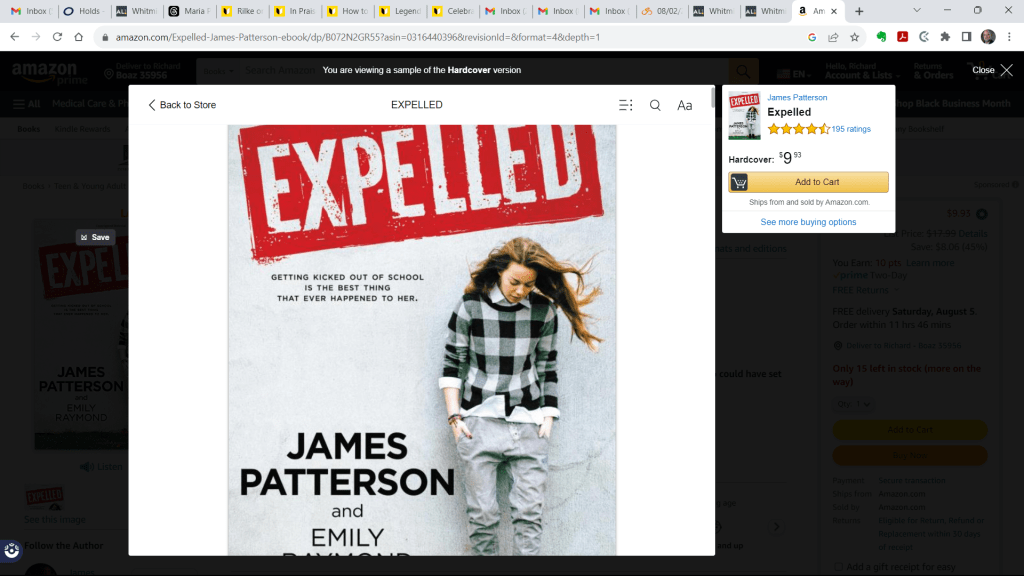
I’m listening to Expelled by James Patterson

Amazon Abstract

One viral photo.
Four expelled teens.
Everyone’s a suspect.

Theo Foster’s Twitter account used to be anonymous – until someone posted a revealing photo that got him expelled. No final grade. No future.

Theo’s resigned himself to a life of misery in a dead-end job when a miracle happens: Sasha Ellis speaks to him. She was also expelled for a crime she didn’t commit, and now he has the perfect way to keep her attention: find out who set them up.

To uncover the truth, Theo has to get close to the suspects. What secrets are they hiding? And how can he catch their confessions on camera…?


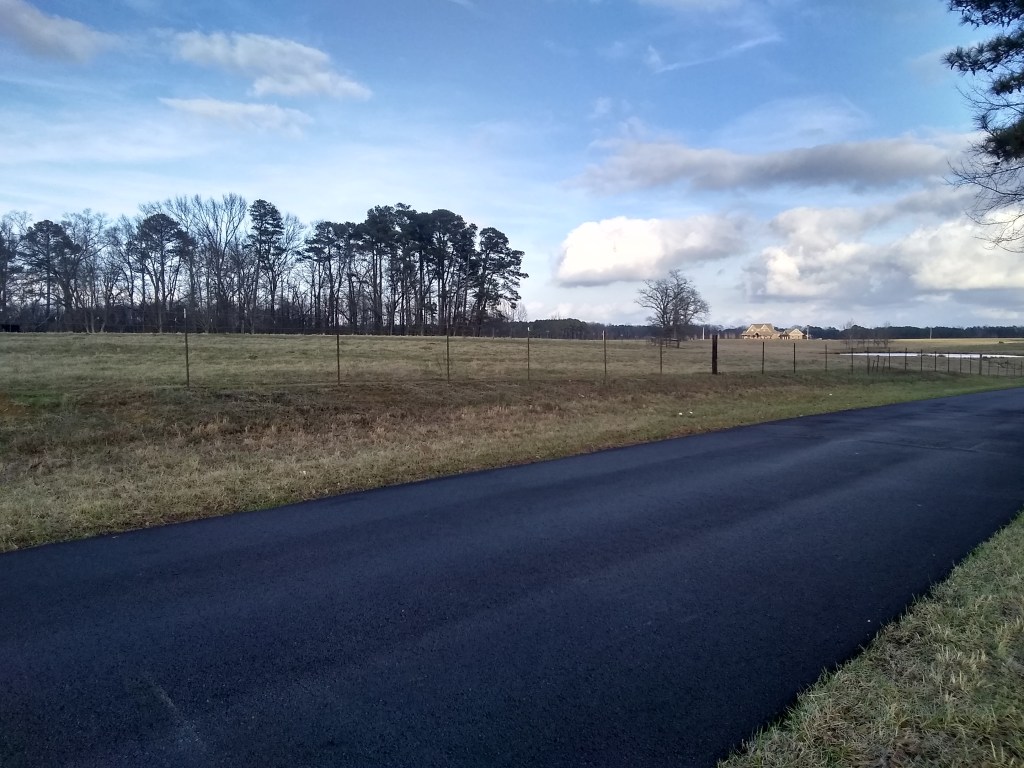
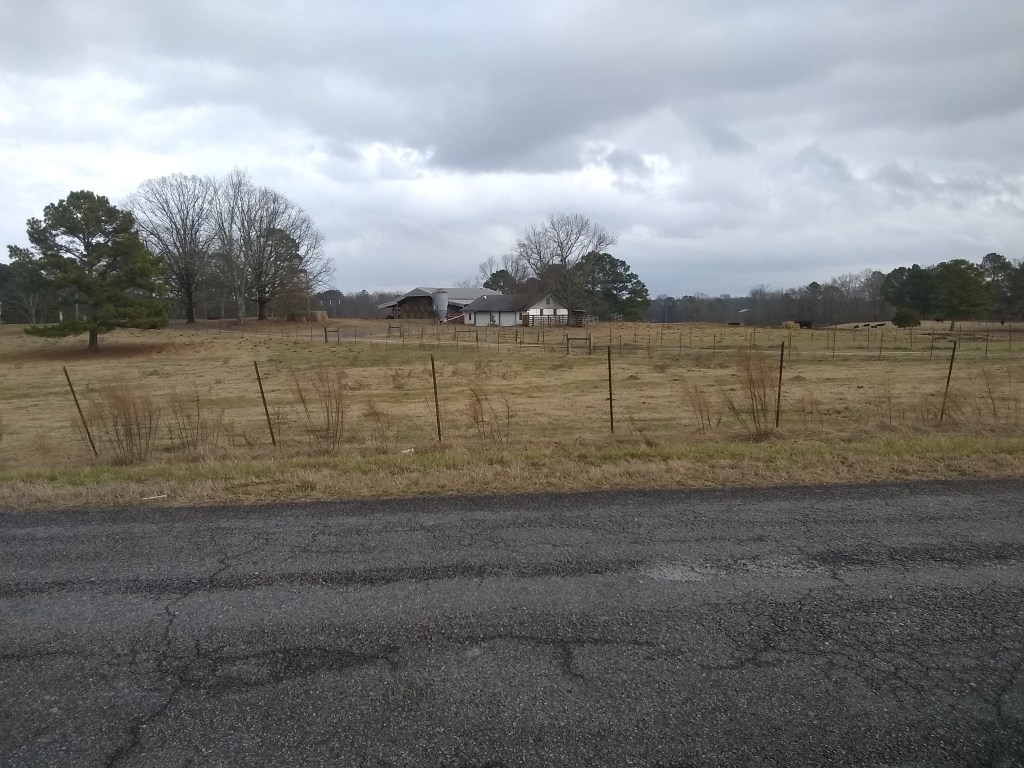
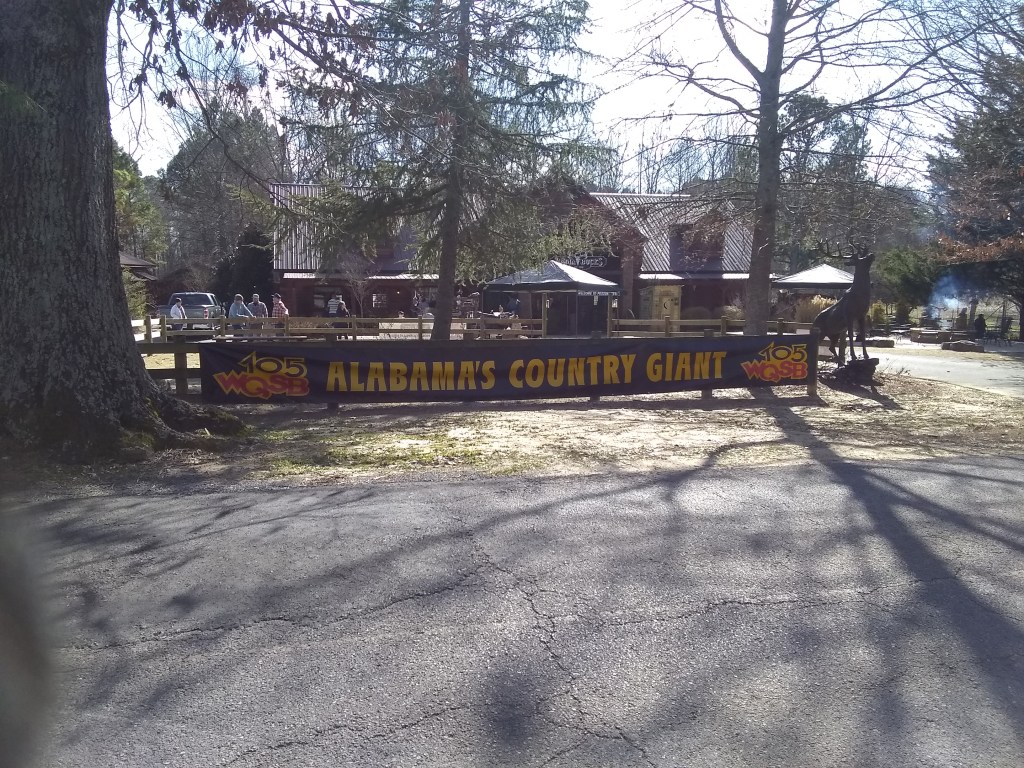
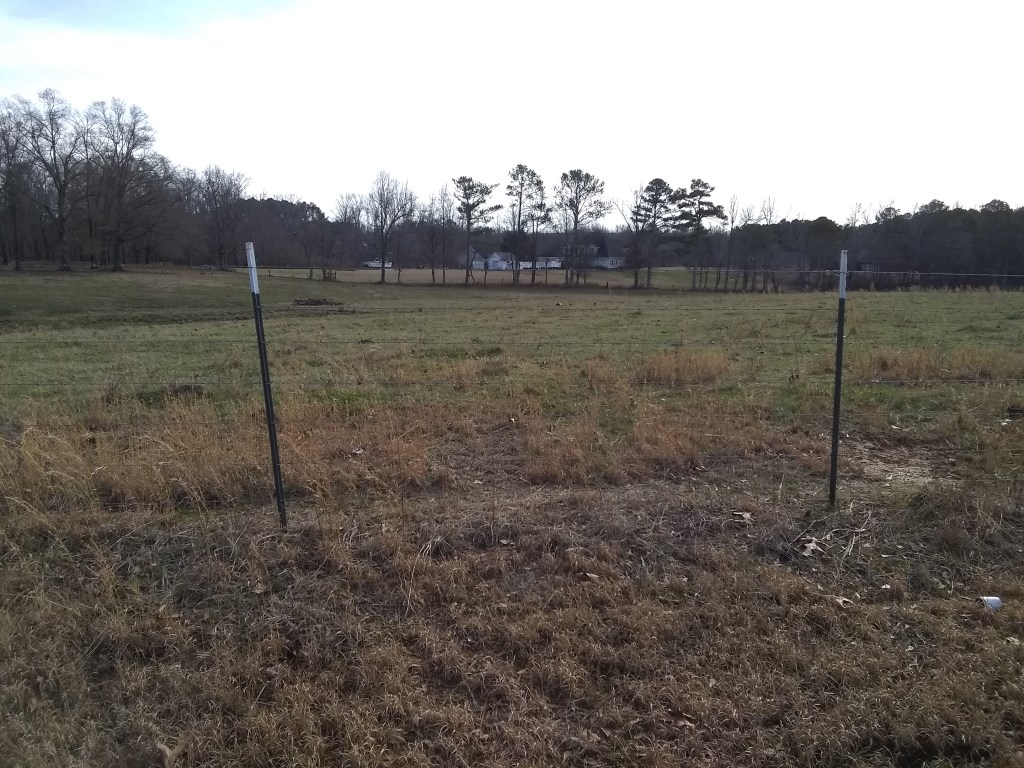
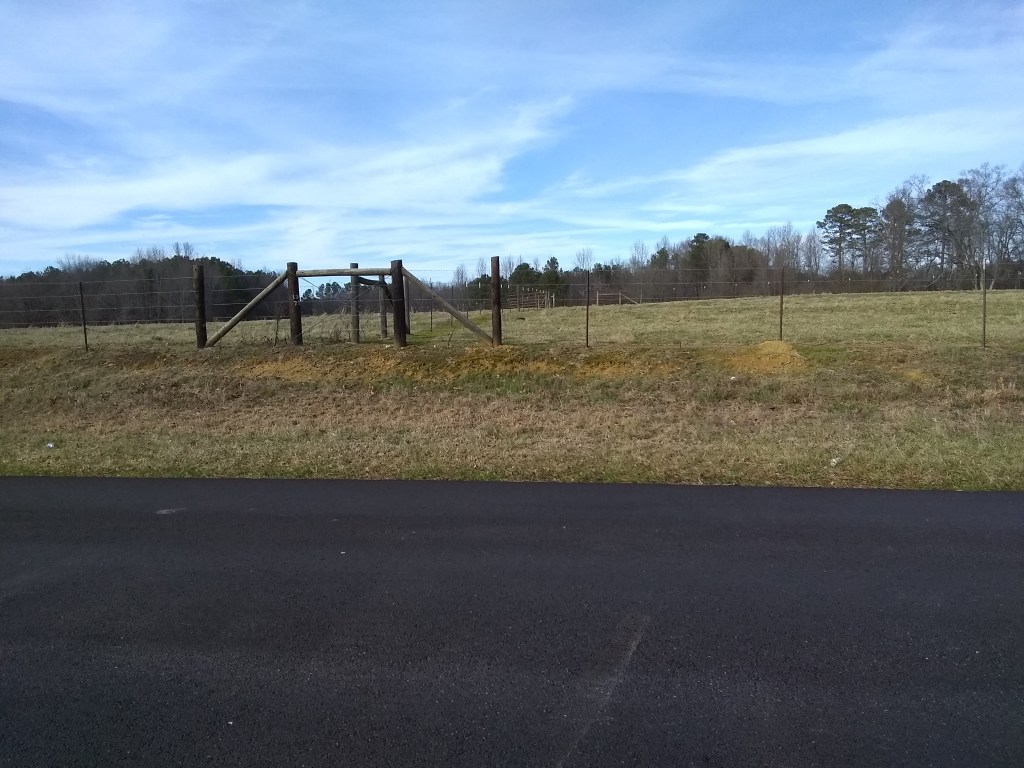
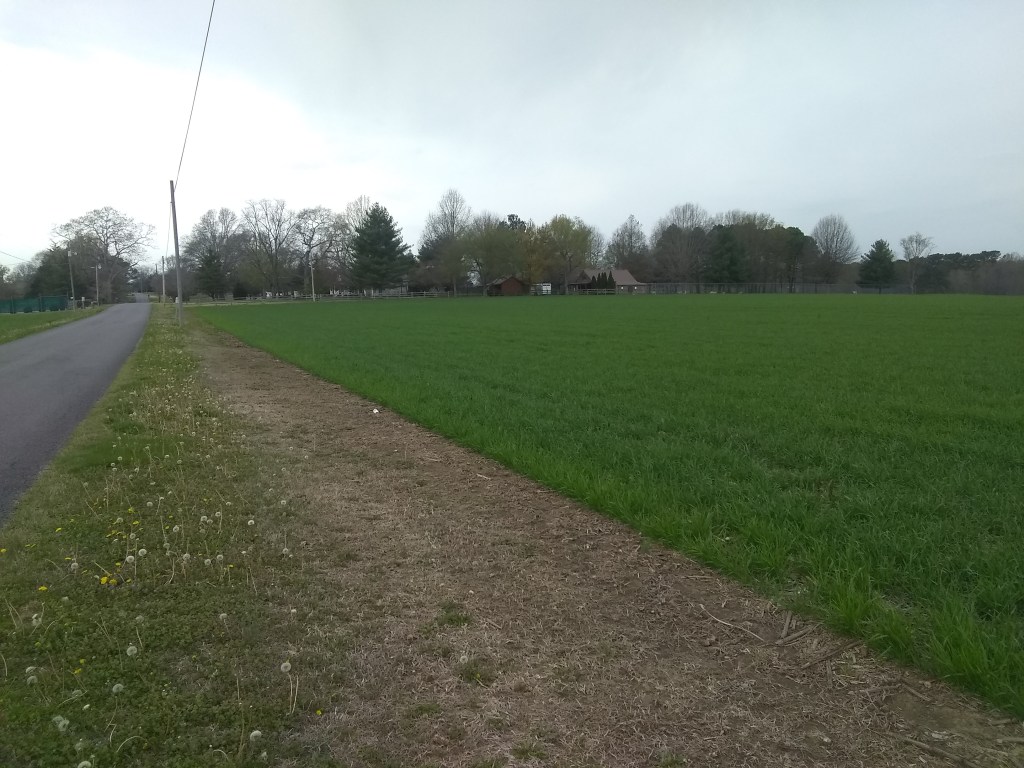
Here’s a few photos from along my pistol route:

Battling Demons of the Mind

Here’s the link to this article.

James A. Haught | January 1, 1997 | Modern Library


(1997)

[This article was originally published in the Spring 1997 issue of Free Inquiry.]

Sincere seekers of reliable knowledge lost a friend when Carl Sagan died too young at 62.

Like all good scientists, the brilliant Cornell astronomer spent his life pursuing secrets of nature, looking for facts that can be documented, tested, and retested.

Like some maturing thinkers, he decided late in life to escalate his criticism of mystical mumbo-jumbo into an all-out, no-holds-barred attack. His last book, The Demon-Haunted World: Science as a Candle in the Dark, urged intelligent people to repudiate:

Astrology horoscopes, faith-healing, UFO “abductions,” religious miracles, New Age occultism, fundamentalist “creationism,” Tarot card reading, prayer, prophecy, palmistry, Transcendental Meditation, satanism, weeping statues, “channeling” of voices from the dead, holy apparitions, extrasensory perception, belief in life after death, “dowsing,” demonic possession, “magical powers” of crystals and pyramids, “psychic phenomena” etc., etc.

Sagan’s farewell message was simple:

— Many people believe almost anything they’re told, with no evidence, which makes them vulnerable to charlatans, crackpots and superstition.

— Only the scientific outlook, mixing skepticism and wonder, can give people a sensible grasp of reality.

He scorned supernatural aspects of religion. The Demon-Haunted World abounds with comments like these:

“If some good evidence for life after death were announced, I’d be eager to examine it; but it would have to be real scientific data, not mere anecdote…. Better the hard truth, I say, than the comforting fantasy.” (p. 204)

“If you want to save your child from polio, you can pray or you can inoculate…. Try science.” (p. 30)

“Think of how many religions attempt to validate themselves with prophecy. Think of how many people rely on these prophecies, however vague, however unfulfilled, to support or prop up their beliefs. Yet has there ever been a religion with the prophetic accuracy and reliability of science? There isn’t a religion on the planet that doesn’t long for a comparable ability — precise, and repeatedly demonstrated before committed skeptics — to foretell future events. No other human institution comes close.” (p. 30)

“Since World War II, Japan has spawned enormous numbers of new religions featuring the supernatural…. In Thailand, diseases are treated with pills manufactured from pulverized sacred Scripture. ‘Witches’ are today being burned in South Africa…. The worldwide TM [Transcendental Meditation] organization has an estimated valuation of $3 billion. For a fee, they promise through meditation to be able to walk you through walls, to make you invisible, to enable you to fly.” (p. 16)

“The so-called Shroud of Turin… is now suggested by carbon-14 dating to be not the death shroud of Jesus, but a pious hoax from the 14th century — a time when the manufacture of fraudulent religious relics was a thriving and profitable home handicraft industry.” (p. 46)

Sagan quoted the Roman philosopher Lucretius:

“Nature… is seen to do all things spontaneously of herself, without the meddling of the gods.” (p. 310)

And he quoted the Roman historian Polybius as saying the masses can be unruly, so “they must be filled with fears to keep them in order. The ancients did well, therefore, to invent gods and the belief in punishment after death.” (p. 213)

Sagan recounted how the medieval church tortured and burned thousands of women on charges that they were witches who flew in the air, coupled with Satan, turned into animals, etc. He said “this legally and morally sanctioned mass murder” was advocated by great church fathers.

“In Italy, the Inquisition was condemning people to death until the end of the 18th century, and inquisitional torture was not abolished in the Catholic Church until 1816,” he wrote. “The last bastion of support for the reality of witchcraft and the necessity of punishment has been the Christian churches.” (p. 413)

The astronomer-author was equally scornful of New Age gurus, UFO buffs, seance “channelers” and others who tout mysterious beliefs without evidence.

He denounced the tendency among some groups, chiefly fundamentalists and marginal psychologists, to induce people falsely to “remember” satanic rituals or other non-existent events they supposedly experienced as children.

Sagan, a laureate in the International Academy of Humanism, had been a member of the Committee for the Scientific Investigation of Claims of the Paranormal since its founding in 1976 by Dr. Paul Kurtz. The astronomer said CSICOP serves a valuable public purpose by offering the news media “the other side of the story” in response to supernatural declarations by “every levitating guru, visiting alien, channeler, and faith-healer…. CSICOP represents a counterbalance, although not yet nearly a loud enough voice, to the pseudo-science gullibility that seems second nature to so much of the media.” (p. 299)

Again and again in his last book, Sagan said wonders revealed by science are more awesome than any claims by mystics. He said children are “natural scientists” because they incessantly ask “Why is the moon round?” or “Why do we have toes?” or the like.

He urged that youngsters be inculcated with the scientific spirit of searching for trustworthy evidence, to guide them through “the demon-haunted world.” That’s a noble wish for the young.

I’m a friend of Sagan’s sister, Cari Greene, who donated bone marrow repeatedly in a desperate attempt to fend off his marrow disease. Through her, I watched the family’s pain.

Although his unstoppable illness was cruel, I’ll bet the wise scientist didn’t personalize his misfortune, but saw it factually as part of the random lottery of life, which takes some victims early, some late.

Meanwhile, we who admired him can be grateful that his last act was a courageous battle against the many demons of the mind.

The Boaz Stranger–Chapter 18

Four hours of preparation down the drain. That’s the time I’d spent yesterday afternoon and evening pouring through case law while anticipating being on the hot seat presenting my best argument for saving the Hunt House from the greedy hands of Ray Archer and the City of Boaz.

I shook my head in disbelief as I descended the courthouse steps and headed across the street to my Explorer. Why had Judge Broadside demanded my appearance for a sixty-second hearing where I didn’t say a word? Heck, he hadn’t even acknowledged my presence. My aggravation was barely assuaged by the fact Broadside had ruled in my client’s favor.

After the short hearing, I’d wanted to quiz Micaden, but that had to wait. The second the judge called his next case, Micaden leaned toward me, instructed me to meet him at his office in an hour, and quickly disappeared through a door marked ‘Attorney/Witness Rooms.’

Since I had time to kill, I used my iPhone and found Jamoka’s, a great local coffee shop. Lucky for me, it was on East Main Street, less than a block away. For forty minutes, I enjoyed an organic blend, Moka-Java, and responded to a few student emails. At 2:50 PM, I left and drove to Boaz.

As Tina led me into Micaden’s office, he was standing and staring westward through an enormous window. The glass served as an outside wall. The blinds were fully open, allowing the blazing afternoon sun easy entry into a room that was too hot for my liking.

“You can sit.” Tina pointed to two wingback chairs in front of a giant wooden desk. “He’ll be back shortly.” I looked at her, confused. Before I could say anything, she retreated through the doorway into the hall.

It felt like five minutes, but it was probably one. “I remember when I was a kid. I rarely wore a coat, even in weather as clear and cold as today.” The tall and fit Micaden with his unruly shock of salt & pepper hair closed the blinds and sat behind his desk. “But, enough about the past and my aging body.” The two of us had been friends from a distance in high school. He was always cordial, but since he played football, we didn’t share the same social circles.

“I still cannot believe Judge Broadside. Did you have any inkling he would rule against the City?” I asked, still thinking I was in a dream.

Micaden placed a stack of documents inside a folder and laid it on the credenza to his right. “I’ve learned to never be surprised by anything that happens around here. But don’t forget, the Order is conditional.” He was right. Judge Broadside had stated he would reconsider his ruling if the City produced credible evidence Rylan’s would have a significant impact upon the local economy. The deadline was December the 24th.

“Do you think….” Micaden lifted and waved the palms of both hands. I stopped talking.

“Let’s leave the Hunt House for now. You said before we entered the courthouse you wanted to discuss another case after the hearing, one that is rooted in our high school days.” Micaden was more of a no-nonsense, get-to-the-point type of attorney than me. That’s saying a lot.

“That’s right.”

“You’ve got me intrigued, so let’s hear it.” Until yesterday, I had been only vaguely familiar with Micaden’s story. While I was in Charlottesville, Virginia, my freshman year, he had nearly lost his freedom. While Kyla and I unloaded hay, she revealed that a jury had acquitted him in a double-homicide case where two girls from Douglas attended the same high school graduation party as Micaden.

“I appreciate you meeting. First, I must know you don’t have a conflict of interest.” My words sounded elementary, even condescending, given I addressed them to an experienced criminal defense attorney.

“I would be the first to tell you.” Micaden opened his middle desk drawer and removed a yellow legal pad and pencil.

“Let’s start with Ray Archer.” Again, Micaden did his palm thing.

“Done. No conflict. I wouldn’t have associated with you on the Hunt House case if there was.” It was small, but I think Micaden was drawing a barn at the top of his pad.

“Right. What about Rachel, my late wife?”

“No.”

“Kyle Bennett?” I was trying to be terse.

“No. I suspect you can figure out that I wasn’t an attorney when I knew Kyle, and the same for Rachel. And I never saw or talked with her again after she moved away in the tenth grade.” Micaden paused. “Strike that last statement. I saw her at our thirty-year reunion. That was 2002. I cannot remember if I spoke with her, other than maybe saying hello.”

I dropped the bomb and filled in the details as Micaden would allow. “Here’s why I need your help. I believe Ray Archer killed Kyle Bennett.”

Micaden’s response surprised me. “Me too, but believing something, without evidence, is not worth a cup of coffee.” I should have said, ‘Ray Archer killed Kyle Bennett, and here’s why.’

“You’re absolutely correct.” I knew I was taking a risk to bring up conflicts of interest again, but I had to. “Do you know of any reason to end our conversation?”

Micaden continued to doodle for a few seconds and then said, “no, but again, if I sense a potential conflict, I’ll let you know. Can we move along?”

“Okay.”

“Since you are an attorney, I assume you have some proof, something more than a dream that has persuaded you to accuse, albeit privately, Ray Archer of murder?” Micaden laid his pencil down and stared at me.

He let me talk for several minutes. I shared most of what I’d learned from Rachel’s diaries and that I had located the murder weapon. “I’m hoping you have a good connection to have the pistol tested.”

“Tested for what?” At first, I thought Micaden was joking, or at least being condescending. However, he had a valid question.

“I guess I was hoping for fingerprints, Ray’s fingerprints on the Smith & Wesson.”

“Okay, I’ll stipulate.” Micaden was ready to hypothesize and play the devil’s advocate. “I’ll also stipulate it was Ray’s fingerprints that your expert used to conduct his analysis.”

“Okay. I see your point. That wouldn’t be enough for a prosecutor to go forward. Ray and his counsel would pursue several avenues of rebuttal, including that someone had tampered with the pistol, it was his and a present from his father, and the two of them had used it frequently for target practice.”

Micaden added another possibility: “Or, Ray admits the pistol discharged accidentally and killed Kyle Bennett.”

“Right again. The list is almost endless.”

“You mentioned Rachel’s diaries. I’m confident an impartial judge would admit them under a hearsay exception, assuming a proper foundation. But, and here I’m speculating. What if Rachel wrote things the defense could use in their favor? For example, Rachel had mixed in some creative writing. Let’s say, a fictional story about the wind, the sun, a tiger, anything that she personified.”

“Oh my. I agree. Ray’s lawyer could say Rachel was a loony, always making shit up. I can hear him now, ‘Rachel killed herself, that proves she was crazy.’” I hadn’t been down this trail and felt like a dumbass. It felt like I was dull and had never practiced law. Truth was, I hadn’t tried a case in nearly twenty years. Being a professor was nothing like the daily battle of facing opposing counsel figuratively trying to cut your throat.

Micaden nodded in agreement and returned to his drawing, pencil in hand. But then he laid it down. “Sorry I sent us down a rabbit hole. Here’s something we should have already discussed. Why in God’s name would Ray want to kill Kyle Bennett?”

The answer was one reason I was here. Fortunately, I was smart enough to know that the old saying, ‘he who represents himself has a fool for a client,’ is remarkably accurate. Even though I was not here as a criminal defendant, I was personally and deeply embedded in this entire ordeal. I had no choice but to be totally honest. “Ray Archer got Rachel pregnant early in the tenth grade. It seems both wanted to keep it a secret, and at least Ray wanted Rachel to have an abortion. Somehow, Kyle found out about the pregnancy, or the pregnancy and the planned abortion, and tried to extort money from Ray.”

Micaden let me stop when I chose. “At sixty-six, it’s difficult to understand teenagers, but I can imagine a popular teenage boy with a bright future might take risky steps to protect his reputation.” Tina stuck her head in and said she needed to run to the post office and for Micaden to listen for the phone. “Come to think of it, this is prime territory for a father, Ray’s father, to be a heavy influence. I’m not speaking of persuading Ray to kill Kyle, but simply of wanting, maybe needing, Ray to persuade Rachel to get an abortion. To silence the matter forever.”

“I’ve had the same thoughts, but it gets more complicated. Rachel’s diaries are a little confusing, directly conflicting, but my current position is that before she and her family returned to China, around New Year’s Day in the tenth grade, she lied to Ray about having the abortion.”

Micaden drew a rudimentary ocean liner underneath his barn. “Look at it both ways. Rachel had an abortion. Rachel did not have an abortion. Can both be true?”

“That’s easy. No.” I shared how I had a crush on Rachel since I’d first seen her in the ninth grade. I also shared how we met at the University of Virginia during the first semester of our sophomore years. “There was no baby.”

“You want another straightforward answer?” It was sadly refreshing to be discussing these harrowing circumstances with such an experienced and intelligent professional.

“Absolutely. What else could I say?”

“Rachel didn’t have an abortion but gave the child away. Adoption.”

“You may be right, but here’s the rub, the thing that has torn my life apart since discovering the first set of diaries. Rachel took an overdose in April 2019. She almost died. The reason she tried to kill herself, so she said, was her regret over the abortion. She told me about Ray getting her pregnant. One thing she didn’t say was when she got the abortion. Looking back on those conversations, she led me to believe it was before she returned to China.”

“So, Rachel lied to you?” Micaden was polite, but in no way did he coddle.

“I have to say yes. I can’t see it any other way.”

“You’re missing something. I don’t know what it is, but, and you know this, there’s always one more fact we need to know. Especially, at the beginning of a case.”

I almost laughed. “There is, and it’s a good one. I wish, oh how I wish. Let me tell you about last night’s dream.” Micaden returned to his sketching. I think he rolled his eyes when he looked at his notepad. “Kyle Bennett showed up at his memorial service. And, you know who was with him? Rachel. Neither could stop laughing about the biggest punk ever perpetrated.”

Without looking up, Micaden said, “I doubt that’s the missing fact.” I heard the same ding I’d heard when I’d entered the office and when Tina had left to run errands. Micaden continued, “I was leaning more the other way, you know, bad news. Don’t you think it’s time we address the elephant in the room?” I glanced at the notepad. That had to be what he had just drawn.

Without greeting, or verifying whether I was still present, Tina started talking in the hallway a few steps before reaching Micaden’s office. “You need to warn me when you’ve pissed off an entire city.” She walked through the door and next to the desk. “That way I’ll be better prepared.”

“Okay, what happened this time?” Micaden asked, as though this was a daily occurrence.

Tina laid a box at the edge of Micaden’s desk. Based on its size, I guessed it contained a book. I wondered what genre my old classmate liked to read. “Dan Brasher, I like Dan, but he sure likes to talk. His wife, sister, somebody related, works in the Clerk’s office. He said she’s a busybody. I wanted to say, ‘oh please, it must run in the family.’ Apparently, news of Judge Broadside’s ruling has hit the streets and people are mad, including Ray Archer, who’s being pressured to up the ante for the other nine landowners. I don’t know how he knows so much. He said more, including we might want to board up our windows, but you get the drift. I’ve got a hair appointment so I’m out of here.”

Tina left. Micaden paused until he heard the front door ding. “She’s a great secretary and paralegal. Don’t overreact, the locals raising a ruckus are harmless, just looking for a pot to piss in.”

I hoped he was right. Micaden started opening his package while I pondered whether the locals might have more than piss in them. I wondered how they would respond when they discovered the man who was the city’s financial savior was destined for a cross, one he wouldn’t survive.

The book was Grisham’s latest novel, A Time for Mercy. Kyla had a copy lying on her coffee table. I’d read the back copy. The author’s legendary character, Jake Brigance, and Clanton, Mississippi, were back. Micaden grabbed the book from his credenza and tossed it inside his briefcase. “Let’s get back on track. I had asked about the lost and lumbering elephant.”

“Okay, I guess there could be more than one, so where do we start?” I made it appear I didn’t have a clue what Micaden was referring to. But I did.

“Lee, you came to me seeking legal advice and counsel. I’m sure you’re hoping I can bring something positive to the table. You are asking me to use my knowledge, connections, and resources, to assemble enough evidence to present to the DA. Am I correct?”

“You are.”

“How about a hundred dollars an hour? I’ll give you the high-school-friend discount.”

“I agree. Thanks for your generosity. How much for the retainer?” I knew how this worked.

“None, just pay my monthly invoice within ten days of receipt. Cash is welcome.” Micaden laughed. “And no written agreement required.”

“Okay, we have a deal.” I stood and offered my right hand. We shook, and I sat.

“Now, officially, as your attorney, you know I’m required to be a bloodhound after the truth. There is nothing, and I mean nothing, off the table.”

“It has to be this way.” I could almost hear the thunder, feel the wind, and see the lightning from what Micaden was about to say.

“I assume you have given some thought that your deceased wife might be an accessory to the murder?”

It was something I had resisted since the beginning, since I first learned from Rachel’s diaries that Ray had killed Kyle. To me and what I knew about the only woman I’d ever truly loved, there was no way she was a criminal. “I’ve avoided it like the plague. Rachel didn’t have a mean bone in her body.”

“You think that. You believe that. But don’t expect me to get on board that boat right now. We must question everything. Remember, all the knowledge you have that implicates Ray Archer comes from Rachel’s diaries. There, she directly admits her knowledge, and indirectly, her involvement.”

I ignored Micaden’s statement. “Can we talk about another elephant in the room?”

“What’s wrong with my elephant? We’ll have to pursue it at some point. The defense won’t let us avoid it. Shit, the DA will ask the same thing.”

“You’re right but help me scope this out. I’m at a standstill, which is obvious since I’m coming to you asking for help. I don’t know what to do next. Last night I almost poured the whole can of beans on Kyla, but I didn’t. Question. Who could I talk to, what could I try to verify? I’m sounding rather ignorant.”

“Join the club, but I have an idea. Attorneys should avoid becoming investigators. You know, becoming a witness in your own case. I suggest we hire a private investigator. Let him do what he does best and let us do the same.” Micaden drew a large P and a large I, then he printed something beside it I couldn’t make out.

“Do you have anyone in mind?” Dollar signs streamed across my eyes.

“Connor Ford. He’s across the street.” Micaden pointed his left thumb over his shoulder.

As usual, I had a bag of questions. “Can we trust him? What’s his experience?” I should have expected Micaden’s waving palms.

“We’ll be here until midnight if we play your conflict-of-interest game. Not being condescending, but Connor’s as good as they come. He’s helped me on a dozen or more cases in the four years he’s been here. I guarantee you’ll like him and his work.”

I had no choice but to trust Micaden’s judgment. I had complete confidence in the salt and pepper haired man across the desk. Since I’d called him the first time, I’d done a lot of research, including reading several cases he’d tried. Micaden was unique, a loner who could make a jury dance if he wanted to. And he was not part of the good-old-boy system. I’d characterize him as almost a radical. “Let me know the cost.”

“I will. I’ll talk to him this evening or in the morning. And here’s a big bonus, which might be a starting point. Connor, unlike me, has a good connection with a Marshall County detective, Mark Hale. The two worked together as cops years ago in Dothan. Now, they swap information when it’s legal, but don’t ask me to draw that line. Regardless, I’m thinking Connor might gain access to the initial file. It’s buried somewhere. It must exist. Damn, a young man has been missing for half-a-century.”

“Exactly.” I stood. I’d been here long enough. Micaden had checked something on his iPhone twice in the last fifteen minutes. It might have been the time. “I best go. Kyla is insisting we eat out tonight at a place called The Shack.”

Micaden stood, and the two of us walked into the hallway. He stopped me when I reached for the doorknob that led to the waiting room. “Here’s a final thought for today. You mentioned your reluctance to disclose this story to Kyla. You might rethink that. Isn’t she friends with Ray’s wife? Lillian?” I didn’t know how Micaden knew this, but I suspected it had everything to do with life in a small town.

“Best of friends.” I pondered his suggestion. “Not a bad idea. But she’s recently moved out of what’s called the Lodge.”

“Wiley Jones’ place. Was. Where someone murdered him a year ago. Just think about it. What Lillian might know, from years past, might give us a lead or two.” Micaden reached above my left shoulder and swung the door farther open.

“I will. I removed a business card from my wallet and handed it to Micaden. Other than the law school, you can reach me on my cell. It’s written on the back. Thanks for your time.” I walked across the waiting room and opened the outside door.

“The Corbett place.” I turned back toward Micaden, wondering if his cell had vibrated a call. His hands were empty. “That’s Lillian’s new digs. Ray bought it several years ago and had it remodeled. She moved in last Saturday. By the way, I live about a mile further south on Cox Gap Road.”

I gave a slight nod and left. All the way home, I kept opening and closing my hands, gripping and re-gripping the steering wheel, trying to figure out if I was inside a dream. An image of me standing a few feet from a train that had just arrived at the long-gone Boaz railroad station. Slowly, the passenger train pulled away, leaving me with an unobstructed view of the raised platform attached to the ticket office. There, all alone, was Lillian, clutching a heavy suitcase and looking all around for the person she was supposed to meet.

When I turned left into Kyla’s driveway, I apologized to Rachel for having such thoughts.

08/04/23 Biking & Listening

Biking is something else I both love and hate. It takes a lot of effort but does provide good exercise and most days over an hour to listen to a good book or podcast. I especially like having ridden.

Here’s my bike, a Rockhopper by Specialized. I purchased it November 2021 from Venture Out in Guntersville; Mike is top notch! So is the bike, and the ‘old’ man seat I salvaged from an old Walmart bike.

Here’s a link to today’s bike ride.


Something to consider if you’re not already cycling.

I encourage you to start riding a bike, no matter your age. Check out these groups:

Cycling for those aged 70+(opens in a new tab)

Solitary Cycling(opens in a new tab)

Remember,

Photo by Suzy Hazelwood on Pexels.com

Halfway through today’s ride I started listening to:

AUGUST 4, 2023

Sam speaks with Peter Attia about his book, Outlive: The Science and Art of Longevity. They discuss “healthspan,” centenarians, diet and nutrition, sugar, macronutrients, alcohol, fasting and time-restricted eating, exercise, Zone 2 training, heart disease, blood pressure, cholesterol, cancer, brain health, metabolic disorders, proactive medical testing, medication side effects, Rapamycin, emotional health, and other topics.

Peter Attia, MD, is the founder of Early Medical, a medical practice that applies the principles of Medicine 3.0 to patients with the goal of lengthening their lifespan and simultaneously improving their healthspan. He is the host of The Drive, one of the most popular podcasts covering the topics of health and medicine. 


I’m listening to Expelled by James Patterson

Amazon Abstract

One viral photo.
Four expelled teens.
Everyone’s a suspect.

Theo Foster’s Twitter account used to be anonymous – until someone posted a revealing photo that got him expelled. No final grade. No future.

Theo’s resigned himself to a life of misery in a dead-end job when a miracle happens: Sasha Ellis speaks to him. She was also expelled for a crime she didn’t commit, and now he has the perfect way to keep her attention: find out who set them up.

To uncover the truth, Theo has to get close to the suspects. What secrets are they hiding? And how can he catch their confessions on camera…?


Here’s a few photos from along my pistol route:

Whitmire: Tommy Tuberville leaves Alabama lost in space

Here’s the link to this article.

  • Published: Aug. 01, 2023, 2:46 p.m.
Tommy Tuberville
FILE – Sen. Tommy Tuberville, R-Ala., a member of the Senate Armed Services Committee, talks to reporters at the Capitol in Washington, May 16, 2023. (AP Photo/J. Scott Applewhite, File)AP

By 

Sign up for Alabamafication: Kyle Whitmire’s newsletter, “Alabamafication” examines the outsized influence of this very strange state, taking aim at corruption, cruelty, incompetence and hypocrisy while also seeking out those righteous folks making their state and country better places for all.

This is an opinion column.

Don’t blame Tommy Tuberville for losing Space Command.

Blame Kay Ivey.

As Alabama governor, she is supposed to be our state’s first, best champion.

Don’t blame Tommy Tuberville for losing Space Command.

Blame Tommy Battle.

As Huntsville mayor, he is supposed to look out for the interests of his city.

Don’t blame Tommy Tuberville for losing Space Command.

Blame Katie Britt.

Coach isn’t Alabama’s only U.S. senator.

Tuberville’s manipulation of Senate rules to stonewall military promotions isn’t a novel, genius political tactic. He’s a toddler who found a pistol on the nightstand. And when the gun goes off, and somebody gets hurt, it’s not the kid that’s to blame. It’s the grownups who didn’t do anything to stop it from happening in the first place.

Alabama is short of responsible grownups willing to stop Tuberville, so now it’s time to hold some of these grownups responsible.

Want to know who they are? Look around at who’s trying to blame somebody else.

Ivey, Britt and every member of our Congressional delegation — including the lone Democrat, Terri Sewell — shook their fingers and clucked their tongues at the president.

Fine. But what else did they expect? Of course, President Biden had every incentive to put Space Command in Colorado. As Birmingham Mayor Richard Arrington once said after he was accused of giving business to his friends, “Who am I supposed to give it to? My enemies?”

The time for sanctimony has passed. Bluster and bravado are worthless.

“This fight is far from over,” U.S. Rep. Mike Rogers, R-Saks, tweeted.

Ahem. It’s over.

What’s remarkable about Biden’s decision is how long it took. He could have flipped this switch the moment Donald Trump copped to rigging the game for Alabama on the Rick & Bubba Show. Trump’s dumb comments — which were probably another lie — gave Biden cover to do for Colorado what Trump claimed to have done for Alabama.

What Biden needed was a veneer of plausibility. He needed a general to say this was the right thing to do.

And what Alabama needed was military brass to say, “No, Mr. President, Colorado is not the best place for this. We did a study and …”

But who’s going to do that when Alabama’s senior senator is being a jerk to the very folks Alabama needed on our side?

In the end, the Associated Press reported, it was General James Dickinson, the head of Space Command, who persuaded the president that Colorado was the best choice.

In politics, sometimes you have to make enemies, but you always have to make friends. Tuberville doesn’t get that. And a man who’s lost his shirt in two ponzi schemes isn’t likely to learn from his mistakes.

If your senior senator can’t do that, then someone needs to tell the senator to sit down and shut up. Someone needed to put Tuberville in a corner.

Alabama’s top public officials weren’t willing to do that. Officials who knew better whispered to each other and looked nervously around the room waiting for somebody else to do something.

Meanwhile, the political delinquent acted out as he pleased.

Republicans don’t like calling out Republicans — not for Ronald Reagan’s Eleventh Commandment, or whatever. Rather, an iota of dissent could get you labeled a liberal Democrat, if not a groomer. They’re terrified they’ll get booed, like those Republican primary candidates who bring up Trump’s indictment.

If Alabama were a two-party state that would be fine. Democrats would savage Republicans for their failure and balance would be restored. There would be billboards at the gates of every Alabama military base saying “We wouldn’t hurt you like this.”

But not here. Alabama Democrats can’t run a Twitter account, much less an effective messaging strategy. They’re too busy fighting with each other to keep Republicans honest.

And what’s the result? Well, that might be the saddest thing of all.

Hidden in plain view is a clear indicator of how leaderless and desperate Alabama has become.

After decades of bribing auto manufacturers with tax breaks and cheap labor (some of it children), what do we have left when it comes to economic recruitment?

Our strategy for economic growth was having the president of the United States order people to move to Alabama, no matter if they wanted to or not.

Get much more desperate than that and you’ll trigger an Amber alert.

Alabama has to attract business and development by making itself attractive. We need elected leaders with vision, smarts and guts.

The folks we have now don’t have any of those qualities. I’m not sure they’re really in control and they certainly aren’t looking out for us. They’re just here for the ego fulfillment — not so much different than Tuberville.

Ultimately, blame doesn’t stop at these officials. If our Republican officials won’t hold Tuberville accountable, and if Democrats can’t hold Republicans accountable, then we, the voters, have to be the grownups. We have to make better choices.

We elected a day-trading, Florida-living, mediocre football coach to the U.S. Senate.

The blame lands where the responsibility always was.

We put the toddler in the room with the loose gun, and now we caught a bullet in the groin.

This one’s on us.

Kyle Whitmire is the state political columnist for AL.com and the 2023 recipient of the Pulitzer Prize for commentary. Sign up for his weekly newsletter and get “Alabamafication” in your inbox every Wednesday.

Three little words: I don’t know

Here’s the link to this article.

James A. Haught | February 11, 1997 | Modern Library


[This speech was delivered to the Marshall University chapter, Campus Freethought Alliance, Feb. 11, 1997.]

When I was a young reporter about your age, I hung out with my newspaper buddies in all-night diners (liquor clubs were illegal in those days), earnestly debating the meaning of life.

Some of us couldn’t swallow the standard explanation — that the purpose of life is to be saved by an invisible Jesus and go to an invisible heaven — but we couldn’t see any alternatives that made sense.

One day I asked my city editor, a disciple of H.L. Mencken, how an honest person can answer the ultimate questions: Is there life after death? Is there a spirit realm of unseen gods and devils, heavens and hells? Is there a divine force running the universe? Since there’s no tangible evidence, one way or the other, how can you make a sincere answer?

He replied: “You can say, I don’t know.”

That rang a bell in my mind. I suppose I had half-known it all along, in my confused search for answers, but now I saw clearly how to be truthful and straightforward about an extremely touchy, emotional subject. I felt liberated, because it gave me a way to maintain integrity. Saying “I don’t know” isn’t really an answer, but it’s the only answer I could give without lying or guessing or pretending.

Of course, those were the naive days of youth. I hadn’t yet learned of a thousand philosophers who sweated through the same dilemma and reached the same conclusion. But it became a foundation stone of my psyche, never to leave me.

Once you say “I don’t know,” you’re in conflict with the majority culture. All the supernatural religions and ministers claim that they do know. They say absolutely that invisible spirits exist. Hundreds of millions of Americans go to churches and pray to the unseen beings. Successful politicians always invoke the deities. When you say “I don’t know,” you’re clashing with all these people who claim to know.

It puts you out of step with the world — but I don’t think a truthful person can take any other stance. From my viewpoint, the only honest mind is the unsure mind, the doubtful mind. It’s the only outlook that doesn’t claim knowledge which nobody actually possesses. This is the agnostic, skeptical, rationalist, scientific posture. To me, anything else is dishonest, because it requires people to swear they know things they really don’t.

To me, priests and theologians are lying when they declare that supernatural beings are real, that people are rewarded or punished after death. It isn’t dishonest to speculate about such ideas — but the clergy flatly say spirits exist, and pray to them, and even claim to know how the spirits want us to behave. That’s absurd.

As Voltaire said, “Doubt is not a pleasant condition, but certainty is a ridiculous one.”

Once you’ve crossed the “I don’t know” threshold, maybe you’ll take some logical steps that lead you further, beyond just a neutral, hands-off position. If you’re scientific-minded, always looking for trustworthy evidence, you’ll see that there isn’t a shred of reliable proof for mystical, magical, miraculous things.

What’s the evidence for an invisible heaven or hell? For invisible deities and devils? None, except ancient tribal writings and the pronouncements of priests. It’s rather like the evidence for witches, ghosts, vampires, fairies, werewolves, demons, leprechauns, etc. Educated people know that the latter spooks are just imaginary.

By the time you reach this point, you may be pretty much convinced that the mystical beings worshiped by religions are just imaginary, too — that the whole rigmarole is a gigantic, worldwide, billion-member, trillion-dollar fantasy, a universal human delusion and self-deception that has been going on for 10,000 years.

And you may extend your skepticism to other fantastic things: astrology horoscopes, UFO abductions, seances with the dead, Ouija boards, New Age “channeling” of spirits, psychic prophecies, palm-reading, “dowsing” rods, etc., etc., etc.

See how far you can be led by three little words: I don’t know.

If you proceed along this mental path, as I did, you’ll face a tough decision: whether to dispute the True Believers you encounter, or whether to stay silent.

There’s little point in arguing with worshipers. They often become angry when challenged. (Bertrand Russell said it’s because they subconsciously realize their beliefs are irrational — so they can’t tolerate having them questioned.)

Time after time, I vow to avoid theological quarrels. But when an ardent believer tells me that God wants us to punish homosexuals, or that prayer cures cancer, or that Jesus opposes birth control, or that God disapproves of nudity and sex, I can’t restrain myself. I don’t want to be a religion-basher, yet I turn into one.

Perhaps you and I should take a pledge: When believers confront us with dogmatic declarations about miraculous things, we will just smile sweetly and say, I don’t know.


The Boaz Stranger–Chapter 17

I hate hot and prickly tasks, but that’s what Sunday afternoon and half of Monday morning brought my way. Although the weather was warm for late November, it was a marathon of physical activity and the barn loft’s inadequate airflow caused seven hours of profuse sweating. To my surprise and consternation, Kyla thrived. Without a handkerchief in sight, she drank coffee during our rare breaks while I swiped my face, head, neck, and arms with Dad’s old bandannas between gulps of bottled water. When it related to the farm, Kyla had always been the boss.

After she purchased the five Nubians, the goat man had related that alfalfa hay was the best source of roughage given the condition of the farm’s pasture. Lucky for Kyla, the business-savvy goat expert had a hundred and fifty bales available, and all for the cheap price of $600. My gullible sister took the bait, hook, line, and sinker, and called my name when the delivery arrived.

It was after 11:00 when I hefted the last bale through the barn loft’s paint-peeling door and scurried up the ladder to satisfy Kyla’s weird hay-stacking fetish.

***

After taking a cold shower, I flipped on my old window unit air conditioner, repositioned my Lazy Boy, and dialed Connie Dalton.

She answered on the first ring. I was glad we had exchanged texts earlier this morning. That icebreaking had revealed she wasn’t hostile to my call.

“Hello.” Her voice sounded much younger than I’d expected, almost like a teenager. From Bert, I’d learned her late-term abortion occurred in 2011 when she was twenty-five. That would make her thirty-four now.

“Hi Connie. This is Lee.” I didn’t repeat my last name. “Is now a good time to talk?” In my text, I’d promised I’d call before noon. Given the subject, I wanted to be extra sensitive.

“It is.” I heard arguing in the background, younger kids, girls, I think. “Hold on, let me close this door. The twins are at it again.”

“Okay, take your time.” While I waited, I heard Connie firmly, but respectively, instruct her kids to be kind to one another and remember Tolstoy’s calendar. I understood her first statement, but not the latter.

“Sorry about that. The kids are out-of-school today, teacher workday or something.”

Connie and I spoke ten minutes off-topic. From Bert, she had learned about me, Rachel’s suicide and my widowhood. He had warned me the conversation might be uncomfortable and shared that the best way to get our interviewee talking openly was to personalize myself, the questioner. Before Connie took the lead and transitioned us to the purpose for my call, she had given me an insightful perspective on the pain Rachel likely experienced before ending her life.

Connie and Lawrence married in 2007. Their son William was twenty-one months old at the time of the abortion. The couple had not planned the pregnancy but were happy. That changed over the next several weeks.

A sonogram at week twenty-nine revealed the network of cavities in their baby’s brain was larger than normal. Connie’s doctor referred her to a specialist. It was two weeks later, after another sonogram, that the couple learned their baby had a brain abnormality. The part of the child’s brain that connects the right and left hemispheres was missing. It didn’t exist.

The specialist told Connie and Lawrence their baby could never suck or swallow and would likely suffer from uncontrollable seizures after birth. There would be no end to the medical attention and care needed. The baby’s quality of life would be nonexistent.

Connie shared how at first, she blamed herself for not detecting the problem much earlier, but the specialist assured her that would not have been possible.

For several minutes, Connie’s mind and memory returned to 2011. Her sorrow and grief figuratively leaked through our phone connection. Finally, after what seemed minutes of her soft, semi-controlled crying, Connie said, “Lawrence and I faced the most horrible dilemma. We could end sweet Justin’s life and spare him unspeakable pain and suffering, or we could follow the religious teachings we’d held sacrosanct all our lives. Our decision was straightforward. How could any normal human being decide otherwise?”

I responded with, “you two were loving, and courageous.” I really didn’t know what to say, but I wholeheartedly agreed with their decision.

Connie, now more in control, continued. “What once was pure joy became unbearable. For several days, back home considering our options, sweet Justin persisted in kicking my belly. I finally realized his kicks were not playful but were his only way of screaming his pain. This realization was the final straw. God or no God. It would be inhumane to not give our dear baby the peace he deserved.”

The time had come. Per instruction from Bert, I asked a mind-numbing, heart-stopping question. “If you would be so kind and courageous, please share how Justin’s life ended and how you and Lawrence dealt with it.”

Connie didn’t hesitate. “The doctor used a sonogram to find the baby’s heart. He gave me an injection through my stomach to stop it from beating. My baby gave me one last kick. I believe it was to assure me of two things, that he loved me, and everything was going to be okay.”

That’s when I cried. It was the saddest story I’d ever heard. “I’m sorry,” I said. As quickly as it started, my sorrow turned to anger. The steady drone of “abortion is murder” from right wing evangelicals exploded in my mind. In the seconds before Connie shared her next thought, I shook my head in amazement at how ignorant, no, stupid, humans can be. If not for religion and what the Bible supposedly says, humanity would stop painting every issue as black and white. The world is full of gray. For an unknown reason, I was glad I’d gone to law school and gained critical thinking skills.

“Your crying assures me you are a genuine human being.” Connie paused for a few seconds. “As to the second part of your question, I delivered sweet Justin at the end of my thirty-second week. Deceased, of course, but beautiful, a spitting image of William.” I had planned on ending our call by asking what life was like today for Connie and her family. However, she beat me to it. “Now, although we have three healthy children, William, almost thirteen, Carrie and Lauren, eight going on eighteen, Justin is still with us. The only difference is he isn’t suffering. He’s healthy and headstrong.”

I think Connie would have continued her daydreaming if all three of her kids hadn’t rushed in and announced they had found a turtle on top of the tarp covering the swimming pool. “Sounds like you need to go. Thank you for sharing your story with me, Bert, Yale Law School, and the world. We will do everything we can to protect the right to late-term abortions in situations like yours.”

After our call ended, I cried some more, wishing life didn’t include such tragic events.

***

I stayed in my chair another thirty minutes, reliving the pain of losing Rachel. It didn’t take long to realize I was heading toward despair, something I’d often done during the past year. It normally took at least twenty-four hours to resurface. I lowered my footrest and stood. I didn’t have the luxury of time, not with tomorrow’s court appearance looming.

Twenty minutes later, my mind was unwilling to focus. I moved to the kitchen table and scanned Alabama’s eminent domain statute, and two federal circuit cases I’d found on point. At 12:30, it was time for a drive to clear my head. Afterwards, I could focus.

By the time I reached the Explorer, my mind was revisiting something Kyla had said yesterday afternoon. Her chosen subject was Lillian, more particularly, her constant presence while the three of us were growing up and her love for the barn loft. Kyla’s last statement before I descended the ladder to hoist up more bales was, “now Lillian has her own barn, red with a big loft. And her pond is gorgeous, complete with its enormous fountain.” These statements, plus my recall that Kyla had said Lillian’s place was on Cox Gap Road, tricked me into an adventure of sorts.

Before departing Kyla’s, I programmed the Explorer’s GPS to guide me to Alexander Road, the other identifier sis had mentioned during my phone call Saturday morning.

The weather had turned cooler since this morning, but the blue sky was ablaze with a brilliant sun. The GPS instructed me to turn left on Beulah Road. As safely as I could, I scanned the screen to get a feel of where I was going. After two miles, I’d turn right onto Highway 168, then proceed south to Highway 431 and make another left turn. From there, I’d drive two miles and turn left onto Cox Gap Road. After another mile, Alexander Road, along with Lillian’s red barn, huge pond, and spurting fountain, would be on my right.

I didn’t expect unsafe twists and turns, so I used my time to make a dreaded call. After speaking with Connie, I recognized two things. One, my mental state wasn’t stable enough to deal with stories seemingly like Rachel’s. And second, I wanted to give all my attention to the mission I’d set for myself here in Boaz.

I reached Cox Gap Road without clearly articulating what that mission was. Regardless, I called Bert and relayed that I wasn’t the right person to interview those who’d experienced a late-term abortion. As expected, he was sympathetic, leaving open the door for my return if I changed my mind.

I passed a six-bay cleanup shop and rounded a corner. I knew instantly that the Norman Rockwell scene before me was Lillian’s place. A large pond, a gorgeous deep green with fountain spurting water ten feet in the air, nestled next to Cox Gap Road. A right turn on Alexander Road led quickly to the driveway and a cute one-story cabin that was fifty yards in front of a like-new red metal-sided barn with a distinguished gambrel roof and an over-sized loft.

I thought about stopping but kept driving. A large, late model black SUV was parked in front of a matching garage at the rear of the cabin. I couldn’t stop my thoughts from venturing across the back porch and inside. I drove another half-mile to a driveway and turned around. A quick calculation yielded forty-eight years as the time span since the silky and sexy Lillian had called me at the University of Virginia and told me she was marrying Ray Archer. That too was the week of Thanksgiving.

Again, I drove past, looking left across the pond and seeing for the first time Lillian sitting inside the gazebo with her head down, probably reading a novel.

I returned to Harding Hillside, hoping the entire time that Lillian hadn’t seen my blue Explorer.

What he did

Here’s the link to this article. I encourage you to subscribe to Steve Schmidt’s The Warning.

STEVE SCHMIDT

AUG 3, 2023

Photo credit: Spencer Platt/Getty Images

Donald Trump tried to overthrow the American republic because he lost an election. Nearly every single Republican member of Congress helped him do it by suborning his ceaseless and premeditated lies. They stoked the fires of incitement that led to Trump’s coup as his collaborators and partners. Ambition and fear overwhelmed their duty and patriotism.

The wretched truth is that with scant exceptions the entirety of the Republican Party from its elected officials, party officials, donors, activists and volunteers abandoned America in favor of their faction. George Washington’s fears had come to pass just as his warnings went unheeded by this generation of Americans. In his farewell address on September 17, 1796, he said the following:

However [political parties] may now and then answer popular ends, they are likely in the course of time and things, to become potent engines, by which cunning, ambitious, and unprincipled men will be enabled to subvert the power of the people and to usurp for themselves the reins of government, destroying afterwards the very engines which have lifted them to unjust dominion.

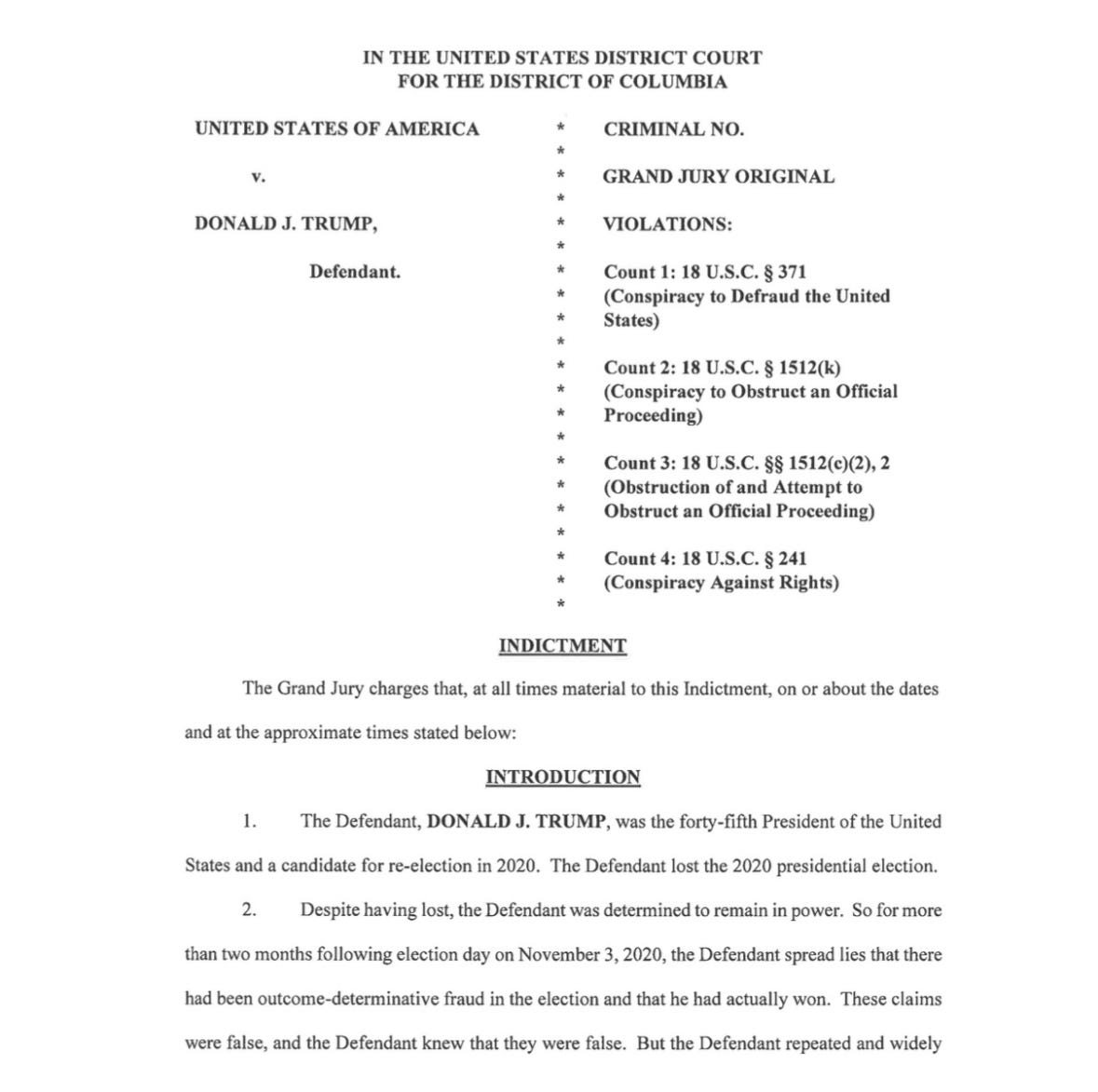
Every American has an absolute obligation and duty to read the details of the most important criminal indictment in American history carefully and thoroughly. The language is stark, vivid and declarative. The indictment rejects the jaundiced notion that there is dispute around the details of the election. Instead, it boldly embraces reality in a way that the overwhelming majority of the American media has refused to do so on a consistent basis. It declares flatly and directly:      

He absolutely did lose the 2020 presidential election. Yet, he wanted power. What he did was try and take it through a conspiracy of lies and thuggery. Though he knew he lost, he didn’t care. What followed was the most reprehensible actions in American history by an American president. They represent a betrayal of stupendous dimensions. What Donald Trump did was amoral, illegal and nearly cataclysmic.

The Warning with Steve Schmidt is a reader-supported publication. To receive new posts and support my work, consider becoming a free or paid subscriber.

Upgrade to paid

Donald Trump desecrated the sacrifices and patriotism of the men and women who laid down their lives so America could endure and survive. He tried to take America away from all of us. Donald Trump isn’t just a failed and seditious president and an accused criminal, he is an abomination and every loyal citizen should be enraged by what he did. He assaulted our ancestors and our descendants, while trying to burn down our way of life and taking our right to choose our leaders from us. It cannot be forgiven, excused, rationalized or minimized. The propaganda of Fox News and all of its derivative media cannot hide the simple truth. Trump tried to destroy the United States. He is a domestic enemy.

We must not allow the ambitions of one man and his cabal to destroy the American way of life. It cannot happen. It must be fiercely opposed. Donald Trump and his cause are a national cancer, and it remains deeply embedded in our politics. This age of extremism must yield, or democracy will be lost.

The only thing that matters is that the Republican frontrunner doesn’t believe in democracy. He is running on a platform of revenge and retribution.

Everything is on the line in 2024. Will it be America’s last election not decided in advance?

Let’s hope not, and let’s work very hard to make sure it isn’t.

08/03/23 Biking & Listening

Biking is something else I both love and hate. It takes a lot of effort but does provide good exercise and most days over an hour to listen to a good book or podcast. I especially like having ridden.

Here’s my bike, a Rockhopper by Specialized. I purchased it November 2021 from Venture Out in Guntersville; Mike is top notch! So is the bike, and the ‘old’ man seat I salvaged from an old Walmart bike.

Here’s a link to today’s bike ride.


Something to consider if you’re not already cycling.

I encourage you to start riding a bike, no matter your age. Check out these groups:

Cycling for those aged 70+(opens in a new tab)

Solitary Cycling(opens in a new tab)

Remember,

Photo by Suzy Hazelwood on Pexels.com

I’m listening to Expelled by James Patterson

Amazon Abstract

One viral photo.
Four expelled teens.
Everyone’s a suspect.

Theo Foster’s Twitter account used to be anonymous – until someone posted a revealing photo that got him expelled. No final grade. No future.

Theo’s resigned himself to a life of misery in a dead-end job when a miracle happens: Sasha Ellis speaks to him. She was also expelled for a crime she didn’t commit, and now he has the perfect way to keep her attention: find out who set them up.

To uncover the truth, Theo has to get close to the suspects. What secrets are they hiding? And how can he catch their confessions on camera…?


Here’s a few photos from along my pistol route: