Writer / Observer / Builder — Presence, clarity, and living without a script
Author: Richard L. Fricks
Writer. Observer. Builder. I write from a life shaped by attention, simplicity, and living without a script—through reflective essays, long-form inquiry, and fiction rooted in ordinary lives. I live in rural Alabama, where writing, walking, and building small, intentional spaces are part of the same practice.
Values that later grew into liberalism began stirring in the epoch now known as the Enlightenment, starting more than three centuries ago, chiefly in England and France. It was an era when kings still ruled brutally by “divine right,” and the church still sought to execute “heretics” holding irregular beliefs, or jail skeptics for blasphemy. Most people were agricultural serfs, working on lands inherited by wealthy barons and counts. The bottom-rung majority had virtually no rights.
But the Enlightenment roused a new way of thinking: a sense that all people should have some control over their lives, a voice in their own destiny. Absolute power of authorities—either the throne or the cathedral—was challenged. Reformers asserted that human reason and the scientific method can improve society and benefit nearly everyone.
The 1600s were a time of ugly intolerance, much of it stemming from alliances between church and throne. In England’s notorious Star Chamber, controlled by the Anglican archbishop, Puritan and Presbyterian dissenters were forced to testify against themselves, then sentenced to have their ears cut off or their faces branded with markings such as S. L. (for seditious libeler). One victim, John Lilburne, became a public hero because he wrote pamphlets claiming that all people deserved “freeborn rights” not subject to king or church.
Europe was emerging from horrors of religious wars and massacres between Catholics and Protestants. Catholic France persecuted Huguenot Protestants. Jews were attacked cruelly and banned from certain nations, including England. Sporadic executions of “heretics” and “witches” still occurred. England’s last accused witch was put to death in 1684. A few others were executed around Europe and the New World for another century.
This was the background that helped spawn Enlightenment reform.
England was shattered by civil war in the 1640s between Parliament and Puritans on one side versus King Charles I and Anglicans on the other. Charles was beheaded and the power of kings was reduced—expanding an erosion that began four centuries earlier when barons forced King John to sign the Magna Carta, yielding certain rights.
By the late 1600s, some thinkers began pondering society and government.
Thomas Hobbes (1588-1679) wrote Leviathan asserting that people need a “social contract” to secure safe lives. In a dog-eat-dog natural state, he said, everyone suffers from “continual fear and danger of violent death; and the life of man [is] solitary, poor, nasty, brutish and short.” Therefore, he said, people must yield power to a sovereign government to enforce order and protect them. Hobbes supported a king as the sovereign—but the tide away from absolute kings already was flowing. Hobbes raised awareness that the social order is made by humans, not by God.
In his many writings, Hobbes repeatedly affronted the clergy. A bishop accused him of atheism, possibly punishable by death. The allegation subsided, then flared again. Nearing 80 years old, Hobbes hastily burned some of his papers and eluded prosecution.
John Locke (1632-1704) hatched notions of democracy, arguing that all people, male and female, deserve a degree of equality. He dismissed the divine right of kings, and advocated separation of church and state to avert religious conflict.
John Milton (1608-1674) was more than an epic poet who wrote in four languages. He also supported popular government and attacked state-mandated religion. When Parliament imposed censorship on writings, he defied a licensing requirement and published an Areopagitica pamphlet claiming that all thinking people are entitled to free expression of their beliefs. “Books are not absolutely dead things,” he said. “He who destroys a good book kills reason itself.” The principle of free speech and free press was furthered.
In France, Baron de Montesquieu (1689-1755) championed democracy and envisioned an elected government with power divided between executive, legislative and judicial branches.
Francois Marie Arouet (1694-1788)—”that consuming fire called Voltaire,” as Will Durant called him—was a brilliant French writer who became a heroic champion of human rights. Endlessly, he denounced cruelties of bishops and aristocrats. Here’s an example: In the devout town of Abbeville, a teen-age youth, Francois de la Barre, was accused of marring a crucifix, singing impious songs and wearing his hat while a church procession passed. He was sentenced to have his tongue torn out, his head chopped off, and his remains burned. Voltaire wrote bitter protests against this savagery. He helped appeal the youth’s case to Parliament, which showed “mercy” by affording the blasphemer a quick death by beheading—with a copy of Voltaire’s Philosophical Dictionary nailed to his body.
Voltaire’s protest writings roused ferment across Europe and won reversal of a few cases. He freed Jean Espinas, who had spent 23 years aboard a penal galley ship because he sheltered a fugitive Protestant minister for one night. Likewise, he freed Claude Chaumont from a galley bench, where he had been sentenced for attending a Protestant worship service.
In The Rights of Man, Thomas Paine wrote that Voltaire’s “forte lay in exposing and ridiculing the superstitions which priestcraft, united with statecraft, had interwoven with governments.”
At first, Enlightenment ideas were somewhat suppressed in Europe, where kings and archbishops still prevailed, but they found fertile ground in America’s colonies. Brilliant radicals such as Thomas Jefferson, John Adams, Benjamin Franklin and James Madison read them ardently and adopted them as a pattern for the first modern democracy, the United States of America. In the Declaration of Independence, Jefferson summed up the essence:
All men are created equal and endowed by their creator with certain inalienable rights, among these life, liberty and the pursuit of happiness.
Less-known founding father George Mason incorporated the principles into the Bill of Rights, keeping church and state apart, guaranteeing free speech, and protecting each person from abuses by the majority. Similarly, the personal liberties were reiterated in the Rights of Man and the Citizen adopted by the French Revolution, and eventually in the Universal Declaration of Human Rights that Eleanor Roosevelt helped craft for the United Nations.
Thus democracy became self-contradictory. A basic premise is majority rule—yet a bill of rights prevents majority rule. For example, the Christian majority cannot vote to banish minority Jews or skeptics. Personal beliefs are exempt from majority rule.
The Enlightenment was the seedbed that sprouted most of the liberal freedoms now enjoyed in democracies everywhere. It projected a model for humane, safe, fair modern life.
Biking is something else I both love and hate. It takes a lot of effort but does provide good exercise and most days over an hour to listen to a good book or podcast. I especially like having ridden.
Here’s my bike, a Rockhopper by Specialized. I purchased it November 2021 from Venture Out in Guntersville; Mike is top notch! So is the bike, and the ‘old’ man seat I salvaged from an old Walmart bike.
Here’s the novel I’m listening to: Expelled by James Patterson
Amazon Abstract
One viral photo. Four expelled teens. Everyone’s a suspect.
Theo Foster’s Twitter account used to be anonymous – until someone posted a revealing photo that got him expelled. No final grade. No future.
Theo’s resigned himself to a life of misery in a dead-end job when a miracle happens: Sasha Ellis speaks to him. She was also expelled for a crime she didn’t commit, and now he has the perfect way to keep her attention: find out who set them up.
To uncover the truth, Theo has to get close to the suspects. What secrets are they hiding? And how can he catch their confessions on camera…?
The Religion News Foundation, Religion News Service, Associated Press and The Conversation recently announced the creation of a global religion journalism initiative, an effort to expand religion news reporting in the United States and around the world.
The initiative is funded by a $4.9 million grant from Lilly Endowment.
The endowment says part of its mission is to “deepen and enrich the religious lives of American Christians” and to “foster public understanding about religion and help lift up in fair and accurate ways the contributions that people of diverse religious faiths make to our greater civic well-being.”
Columnist James A. Haught, former editor of West Virginia’s largest newspaper, The Charleston Gazette-Mail, said he “suspects that Lilly is trying to buy a whitewash to offset endless ugly headlines about religious horrors and cruelties around the world. I wanted to give the project a jolt. Half sarcastically, I offered to write ‘curmudgeon columns’ for the Lilly-funded enterprise. Here is my first one (which I assume is doomed to rejection).”
By James A. Haught
Supernatural religion is a colossal system of falsehoods. Invisible gods, devils, heavens, hells, angels, demons and other magical church entities don’t actually exist. They’re just concoctions of the human imagination. Yet they’re the basis of a trillion-dollar labyrinth of worship around the planet.
Widespread belief in such spirits shows a deep flaw in the supposedly logical minds of our species. It’s akin to fairy tale beliefs of children.
The most dishonest people are clergy who endlessly declare God’s commands, as if an imaginary being really gave commands. I wonder how many ministers realize, at least subconsciously, that they’re spouting lies?
Studies show that religious skeptics have higher intelligence than religious believers. Maybe that’s why brilliant thinkers throughout history have doubted religion.
In Ancient Greece, thinker Prodicus reportedly said: “The gods of popular belief do not exist.”
In medieval times, while the Holy Inquisition burned skeptics, Michel de Montaigne wrote: “Man is certainly stark mad. He cannot make a worm, yet he will make gods by the dozen.”
As American radicals launched the first modern democracy, Thomas Jefferson wrote: “The day will come when the mystical generation of Jesus, by the supreme being as his father in the womb of a virgin, will be classed with the fable of the generation of Minerva in the brain of Jupiter.”
Jefferson also wrote, in an 1820 letter, that ministers “dread the advance of science as witches do the approach of daylight.”
Thomas Edison scoffed: “Religion is all bunk.”
Albert Einstein told The New York Times in 1930 that he couldn’t believe in a personal god, adding: “Neither can I believe that the individual survives the death of his body, although feeble souls harbor such thoughts through fear or ridiculous egotism.”
There you have it. The brightest people have always known that supernatural church dogmas are untrue.
The Flynn Effect shows that the average American I.Q. rises three points per decade. Educated folks are getting smarter. Maybe that’s why religion is dwindling rapidly in the United States, as it has done in Europe.
At least one-fourth of American adults now say their religion is “none” — and the ratio is one-third among those under 30. Supernatural faith is dying, right before everyone’s eyes. A new secular age is taking shape. Scientific honesty prevails. Hurrah.
It may seem harmless that millions of older Americans still attend church and pray to imaginary spirits that don’t exist. But religion has a dark side that is profoundly harmful.
It has cropped up since the time of human sacrifice, Crusades, Inquisitions, witch hunts, holy wars and pogroms against Jews.
Today, the vile side of faith erupts in Muslim suicide massacres, child molestation by Catholic priests (and Protestant evangelists), opposition to the teaching of evolution, resistance to sex education and birth control, cruel hostility to gays, opposition to lifesaving stem cell research, etc.
Another vile aspect of religion is the adherence of white evangelicals to the Republican Party. Jesus was allegedly a liberal who urged followers to help the poor, feed the hungry, heal the sick, clothe the naked and aid underdogs.That’s the formula of the social “safety net” backed by Democrats. Yet, white fundamentalists vote overwhelmingly for the GOP, which seeks to slash the safety net. In effect, those believers oppose Jesus.
It’s fortunate that supernatural religion is fading as America grows more intelligent. Bring it on. The faster the better.
James A. Haught is editor emeritus of West Virginia’s largest newspaper, the Charleston Gazette-Mail.
Perhaps it is best to start by looking back at the moment immediately before Donald Trump descended via escalator in Trump Tower into the 2016 presidential race on June 16, 2015.
Two thousand nine hundred and seventy-two days have passed since then, and the end stage of a great American travesty and tragedy is at hand. What lies beyond it is unclear because behind us is a vast wreckage field where shards of shattered trust and the jagged edges of obliterated integrity lay scattered. The American people have lost faith in their society, and become estranged from the nation’s most important institutions. They disdain the media, politics, politicians, political parties, powerful tech companies, billionaires, corporations and a system where there seems to be one set of rules for people at the top, and one for everyone else.
Trump’s rise is a symptom, not the cause, of America’s current cancer. A man like Trump simply does not get elected to the presidency of a stable and healthy country. He is a marker of decay and a catalyst for it. His presidency was a vicious cycle of degradations, national humiliations, collaboration, betrayal, failure and incandescent cowardice. It has led us here — to this epic hour where the citizens of the United States must make a decision for the future that will either begin an era of renewal and reform, or one that cripples American democracy and murders the republic born in 1776. Whatever the choice may be, it will be made by this generation of Americans on the eve of America’s 250th anniversary of independence.
Maybe we wouldn’t have gotten here if there wasn’t so much arrogant disdain for the achievements of our ancestors and the magnificence of their most noble acts. There has never been a just or perfect era in America’s story. Instead, there has been the opportunity for progress and the expansion of justice handed to each generation of free citizens who can all claim the legacy of America’s founding. The unfolding story of American liberty is among mankind’s greatest achievements. Understanding the story and knowing the details is essential to its survival and continuation. Let us talk about George Washington. Washington is America’s most important and wisest teacher. His lessons were about humility. There is great strength through authentic humility. America should remember this:
This painting by John Trumbull of General Washington resigning his commission hangs in the rotunda of the United States Capitol. Notice the chair larger than the rest draped with a cloak. It symbolizes Washington’s act of resigning from his position of power. Turnbull considered this to be amongst the “highest moral lessons ever given to the world.”
Washington entered the chambers of the Maryland State House where the Congress of the Confederation had convened for a highly scripted ceremony that had been meticulously planned down to the last detail. The date was December 23, 1783, and Washington had come to lay down his power. He could have been Caesar. Instead, he became president six years later when his country called him to service again. Washington could have been a tyrant or a king. He chose a different path because of the magnificence of his character.
The Warning with Steve Schmidt is a reader-supported publication. To receive new posts and support my work, consider becoming a free or paid subscriber.
Upgrade to paid
The great tragedy of this moment is that Trump’s delusions simply needed to be repudiated with the truth. Yet there was none to be found on a vast desert of MAGA cowardice, where the essence of the American system was left undefended lest it piss Trump off. The fear of mean tweets is all it took to undo the act of humility that made the nation spring to life.
When Trump sent his mob to reverse Washington’s submission to Congress and make him dictator, they paraded past the old painting of George Washington. The criminals who attacked on Trump’s orders smeared excrement on the walls of the Capitol and urinated on the floors of the US Senate and House. They desecrated America’s capitol and founding with treachery and venom. It was a despicable act, and it was created by Trump. It was his moment. His actions were a declaration of repudiation against what Washington fought to create. Shameful doesn’t begin to describe it.
We the people must not tolerate it any longer. It is time to move on to a new era and leave Donald Trump behind. There is no way to support Trump and maintain loyalty to America. They are antithetical propositions and the hour of choosing has arrived. Soon we will know.
I noticed the jacked-up blue truck in my rear-view after I turned right off Highway 431 and passed McDonald’s. It came out of nowhere. I slowed, not wanting to wreck my rental and deal with that hassle. By the time I eased into the curve at five-points, the driver tightened the gap between our vehicles and started blasting his horn. I veered to the right towards Y-Mart to give the idiot all the space he needed to pass. Finally, he jerked his behemoth to the left and pulled next to me. There, he stayed, until we reached Mill Street Deli where he sped ahead, but not for long and not far enough. The right side of his rear bumper clipped my left front fender when he reentered my lane. I barely controlled the steering wheel to avoid leaving the road and barreling into the Domino’s Pizza parking lot. The idiot gave me the middle finger through his opened driver’s side window as he raced west towards downtown.
My hands were shaking, and my brow was sweating. I almost pulled into the Key West Inn to gather myself but didn’t. Although I was running a little early for my 1:00 PM appointment, I was ready to shed the responsibility for managing the pistol I believed had killed my best childhood friend.
I successfully timed two red-lights, crossed the railroad tracks, and turned left into the parking lot Micaden and eight other businesses, including First State Bank of Boaz, shared. I easily found a spot and parked. When I exited the Explorer, I looked around in all directions before removing the plastic-wrapped Smith & Wesson from beneath the floor mat. I quickly secured it inside my briefcase and walked even faster towards the law office, feeling more vulnerable than ever. Tina, the take-charge secretary/paralegal, was standing at the all-glass front door and welcomed me in. I felt safe. It turned out that Micaden had an emergency hearing in Etowah County and wasn’t available to meet. Tina assured me she’d lock the pistol in their safe.
I thanked her and returned to the Explorer. After circling the parking lot, I turned right and re-entered Highway 168. My luck was missing. I hadn’t gone twenty feet beyond the railroad track until the same damn truck slid in behind me; it couldn’t be an inch away from my rear bumper. At least this time, the damn horn wasn’t blasting.
***
The driver slowed when a Boaz Police car eased past us on the left. By the time I made it past five-points, the blue truck had faded to ten car lengths behind. Things stayed the same until I passed Pizza Hut and turned right a block from Walmart. I circled to the front of the Grocery section hoping I’d find a parking spot near the building entrance. Again, luck was on vacation.
Rachel had always advised, even demanded, I make opportunities for exercise. Today, I didn’t have a choice. I assumed Thanksgiving was the cause. I finally found a spot nearly a mile away, or so it seemed.
I exited the Explorer and walked to the rear passenger door to remove a box containing a new crock pot Kyla had asked me to return. The inner pot had cracked. Before removing the box, I checked my wallet to make sure I’d inserted the receipt. The last thing I remember was that it was still lying on the kitchen counter. Lucky for me, luck returned. I found it tucked where I’d put it.
Before I could fold my wallet and return it to my back pocket, I heard the blue behemoth. I turned to my right just enough to see the idiot barreling straight for me at maybe a forty-five-degree angle from where my Explorer was setting. A smothering fear engulfed me a split second before a knife-like pain tore through my left shoulder. I’m not sure, but it seemed the driver veered to his left a second before his bumper slammed into my Explorer’s right side passenger door. Like football, life was a game of inches.
As the driver sped away, my body collapsed to the ground though I was clutching a seat belt to maintain balance. Somehow, I could contort my body into an upright sitting position, squeezed between the still open door and the frame of the now-damaged rental. My shoulder was hurting. Blood pooled inside the palm of my hand after I touched my pounding forehead. I needed to call 911, but I couldn’t access my iPhone. I could see it but didn’t know if I could crawl that far. The impact had knocked it from my left hand, catapulting the needed device a good twenty feet from where I sat. Life isn’t just a game of inches, it’s a game of seconds.
The number of cars that passed within fifty feet surprised me. If the drivers hadn’t seen the accident, they certainly could see a man lying crumbled on the ground next to his car, most likely needing help. I guess everyone had that ‘I-don’t-want-to-get-involved’ attitude, in part because of tomorrow’s holiday. My theory held true for another couple of minutes until a large black SUV pulled within ten feet.
At first, I thought the woman sliding out of the driver’s seat was an angel.
***
“Lee, oh my God, what happened?” The woman who knew my name knelt and lightly re-angled my cheek to inspect my forehead. “That looks bad. Hold on.” She raced back to her vehicle. The perfume scent was faint, memorable I think, but I was woozy, and my eyes were glassy. I closed them and heard her calling 911. I wondered if she found my iPhone.
“Thanks for stopping by.” I whispered to no one as I felt I could pass out at any moment. I opened my eyes and saw an attractive woman, vaguely familiar, standing at the rear of her SUV with head cocked to the side, holding her phone to one ear as she scrounged through what I assumed was a pile of Walmart bags. Again, I closed my eyes, this time wondering if angels wear tight jeans and bulky Christmas sweaters.
The weirdly dressed angel returned, knelt beside me, and nudged my right shoulder, my good one. “The ambulance should be here in a minute or two. They said to keep you still as possible, but that I could wipe the blood from your forehead if it wasn’t too deep a gash.”
“Okay,” I said and looked into the woman’s eyes. They were bluish green. She had a pretty face, high cheekbones, and lips, the lips were.
“Lee. Look at me.” I thought that’s what I’d been doing while she kept wiping my face and forehead with a damp cloth. “You need to stay awake. What am I holding?” She reached to the ground beside her and held up a bottle of water. “Lee, answer my question.”
I wasn’t hearing very good, but it was how she said ‘question’ that I recognized the woman. Well, that and her shape, her face, her eyes, her lips. “Me, you’re holding me.”
“No dufus. This is water, bottled water.” She had brought an entire roll of paper-towels from her SUV, and several bottles of water. She kept pouring more onto clean towels. “Look at me, tell me your name, your full name?” I heard the siren getting closer.
I knew the answer, but I was also traveling to a place I’d never been. It was like I had fallen out of an airplane from thirty thousand feet, without a parachute. I was falling and spinning, and the air was thin. I was out of control, but crazily, I was hopeful. The cool water was keeping me afloat. With eyes closed, I said, “Thanks L, you’re the only one to stop.”
I opened my eyes and met hers. Blue for beautiful. Green for gorgeous. She smiled and caressed my cheek. “Did you call me L?”
The ambulance parked in the lane behind my Explorer. I saw two men and a woman exit. One man and a bulky leather bag were heading my way. The other two were removing a gurney through the opened rear doors. “Yes.” I returned my gaze to L. “You’re Lillian Bryant?”
The attendant arrived. “Please move.” He knelt and removed a stethoscope from his bag.
As L stood and backed away, I heard her say, “yes, I’m Lillian Bryant.”
“USA for God.” I said, still looking up at L while the EMT checked my vitals.
“What? Lee, what are you saying?” She squatted down four feet away.
“Tag number. The blue truck’s license: U S A, the number 4, and G O D.”
“Good, very good. I’ll go write it down.”
***
It was 5:55 pm, and I was semi-comfortable in the front passenger seat of Lillian’s SUV. She was inside, picking up my prescription. Through the side mirror, I stared at Walgreen’s front entrance, estimating how much longer it was going to take.
At straight-up six, she walked through the automatic doors. She was clutching a white paper sack. Assuming no mistakes by the pharmacy, the enclosed pill bottle contained the most powerful painkiller prescribed by U.S. emergency room doctors: Vicodin.
Dr. Claburn had taken an extra five minutes after he’d issued his discharge order to share a funny story about a man who had grossly mistaken the doctor’s home-care instructions. I guess he thought I was smart enough to not make the same mistake. The doctor had told the man he was recommending bananas. Two times the doctor had said he was only joking, that the word ‘bananas’ is street slang for Vicodin, that most powerful painkiller. When the orderly arrived to cart me to Lillian’s car, I’d told Dr. Claburn I would never see another banana unless I thought of him. He smiled and waved me off.
The afternoon visit to Marshall Medical Center South’s ER Department had been long and tiring. About an hour after my delivery, my wooziness had decreased by half, thanks to a covey of nurses and assistants administering an assortment of drugs by injection, intravenous drip, and via swallowing and dissolution under the tongue.
While waiting for x-rays and a nurse to stitch my head, Kyla had appeared. Shaken, especially after Lillian shared what she knew, some of which might have come unintentionally from me. Now, looking back, I’m sure Kyla’s fear had spawned from Lillian’s conclusion: “Someone tried to kill him.”
Lillian had stood watch over me throughout the entire ordeal. After the short ambulance ride, I’d groggily attempted to persuade her to leave. She’d refused and responded, barely above a whisper, something like, “Once is enough.” I didn’t comprehend her words.
I also didn’t understand why I wasn’t riding home with Kyla. “Damn, I’ve never had to wait this long. Your insurance card was out-of-date, and I’m pretty sure they had to call some place in India.”
“Surely not.” I let Lillian get situated and backed up. I didn’t need to cause another wreck. “Question, why did Kyla leave you to do all the dirty work?” I felt high as a kite.
“She told you and so did I. She was doing a lot of baking for tomorrow and was afraid she’d left her oven on. Once she saw you weren’t going to die, she asked if I would bring you home.” Lillian patted my left knee.
My emotions were a roller coaster. I normally keep my gratitude to myself, but not now. “I have a lot to be thankful for. An unbroken shoulder, an unbroken head, and an old friend showing up at the perfect time.”
Lillian turned left on Bruce Road and gave me a head-to-toe inspection, lingering an uncomfortable moment on my eyes. “I’m not old.” We both had a pleasant laugh.
Neither of us said much until she slowed for the stop sign at Beulah Road. I thought an 18-wheeler was about to hit us after she said, “Oh shit.” She paused and looked at her rear-view mirror. “My groceries: ice-cream, milk, hamburger meat, pork chops. They’re ruined.”
I almost told her I’d make it right but didn’t. Instead, my smart-ass mouth activated. “Friendship can be costly.” She pulled her left signal to Kyla’s driveway and rolled her eyes, half looking at me and half at the road.
That had always been a sign she thought I was rather lame.
In an era of unprecedented upheaval, it is difficult to find suitable context and perspective for the latest indictment of Donald Trump.
After all, this isn’t the first indictment he has faced, or even the first in federal court. It isn’t the first time we have had to grapple with his moral failings, the unleashing of political violence, or the degradation of our constitutional order.
Much of what is in the document made public on Tuesday we knew before. We saw it unfold on TV. We read the reporting of its aftermath. We heard the gripping public testimony in front of the bipartisan House Select Committee that investigated the insurrection of January 6.
It wasn’t even that the indictment was a surprise. For a long time, the investigation has been in the public consciousness. After Trump announced that he had been told he was a target, it was mostly a matter of when, not if.
It is important to keep in mind that this latest indictment does not charge Trump with arguably the gravest potential crimes, like insurrection or sedition, even though many who watched in horror the events leading up to and cresting on January 6 think it obvious he is guilty of both.
Randall Eliason, a former chief of the fraud and public corruption section at the U.S. Attorney’s Office for the District of Columbia, argued in a New York Times opinion piece titled “What Makes Jack Smith’s New Trump Indictment So Smart” that the special counsel wisely chose to limit the scope of the case (and the number of defendants) to just Trump despite the six other unnamed but easily identifiable co-conspirators. Smith did this, the piece points out, in order to proceed quickly to trial and yield the best chance at conviction. “Although it might have been psychologically gratifying to see Mr. Trump charged with sedition, the name of the legal charge is less important than the facts that will make up the government’s case,” Eliason wrote.
In other words, Smith decided not to try to prove too much; keep the charges few and based on what facts he believes are most likely to convince a jury — and whatever part of the public may be open to persuasion.
Let us stop for a moment to ponder these facts and the narrative they tell. They are chilling, but we must remember the Department of Justice will have to prove them in a court of law. Trump is presumed not guilty until and unless he is proven otherwise. He has every right to mount a vigorous defense. It’s probably best for the country that his lawyers fight hard and smart. The more thoroughly this case is adjudicated, the more its conclusion is likely to be strengthened by the process.
But in reading the indictment, all who love and care for our precious republic and its democratic traditions should feel a deep shudder of fear that we were driven to such a precipice. The writing itself is not fancy — no stacking of dependent clauses or diving into a thesaurus in search of adjectives. Reading the introduction aloud, it almost has the syncopation of a children’s picture book, even if the story it tells is one of horror:
The Defendant, DONALD J. TRUMP, was the forty-fifth President of the United States and a candidate for re-election in 2020.
The Defendant lost the 2020 presidential election.
Despite having lost, the Defendant was determined to remain in power.
So for more than two months following election day on November 3, 2020, the Defendant spread lies that there had been outcome-determinative fraud in the election and that he had actually won.
These claims were false, and the Defendant knew that they were false.
But the Defendant repeated and widely disseminated them anyway — to make his knowingly false claims appear legitimate, create an intense national atmosphere of mistrust and anger, and erode public faith in the administration of the election.
The Defendant had a right, like every American, to speak publicly about the election and even to claim, falsely, that there had been outcome-determinative fraud during the election and that he had won.
He was also entitled to formally challenge the results of the election through lawful and appropriate means, such as by seeking recounts or audits of the popular vote in states or filing lawsuits challenging ballots and procedures.
Indeed, in many cases, the Defendant did pursue these methods of contesting the election results.
His efforts to change the outcome in any state through recounts, audits, or legal challenges were uniformly unsuccessful.
Shortly after election day, the Defendant also pursued unlawful means of discounting legitimate votes and subverting the election result.
What follows that in the indictment is a story we all saw unfold in real time, laid bare in a double-spaced legal document. There is also a lot to read between the lines. Even former Trump Attorney General Bill Barr, who enabled many of Trump’s worst instincts and misled the American public about Trump’s fitness for office, told CNN he thinks prosecutors have more evidence than what they have shared thus far. He called the indictment “very spare” and added, “I think there’s a lot more to come and I think they have a lot more evidence as to President Trump’s state of mind.”
Be that as it may, these 45 pages comprise one of the most consequential pieces of writing in American history. It does not have the earth-shattering rhetoric of our Declaration of Independence, the poetry of Lincoln’s “Gettysburg Address” or the urgent morality of Dr. Martin Luther King’s “Letter from Birmingham Jail.” But it is a clear statement at one of the most pivotal intersections in our nation’s narrative; that autocracy and the fomenting of political violence to subvert the peaceful transfer of presidential power is not only anathema to our values — it is illegal.
History is riddled with “what ifs.” We are left to ponder what the worst outcomes might have been if things had turned out differently, from our own revolution, to World War II, to the Cuban Missile Crisis. January 6 should be added to that list.
As bad as it was, it could have been (and came close to being) much worse. And that reality bursts forth from this indictment. According to what is written in the indictment, violence was expected by Trump and his co-conspirators. They understood that their schemes to steal an election would almost certainly plunge the nation into chaos. That was the plan.
In the end, their plot was unsuccessful, but the danger has not receded. Trump is running for president. At this point he is the favorite, by far, to win the Republican nomination. And that means he could win reelection. That result would likely usher in chaos, greater and deeper division than even what we now have. It could very well end the country as we know it.
That may sound to some to be hyperbole, but by any reasonable analysis, that is a lesson to be learned from this indictment. And that is what Jack Smith hopes to prove in federal court. One can make a credible argument that this is one of (if not THE) most consequential criminal cases in American history.
A former and potentially future president is accused of trying to destroy the United States. His own vice president is a key witness. You couldn’t make this up. But this is the reality of what we face. Democracy is always fragile and must be fought for to survive. A free people must constantly be on alert and working to preserve their liberty.
At the birth of our nation, Benjamin Franklin is said to have quipped that the Framers had produced “a republic, if you can keep it.” Lincoln, in his Gettysburg Address, spoke of how the Civil War was a “test” of whether a nation “conceived in Liberty, and dedicated to the proposition that all men are created equal … can long endure.” We, the people, can take nothing for granted.
This concept of the United States of America, still relatively new in human history, is impossible to maintain without the continual peaceful transfer of power at the top. That is what this new indictment is about.
In his first inaugural address as governor of California in 1967, Ronald Reagan spoke eloquently of this truth:
“We are participating in the orderly transfer of administrative authority by direction of the people. And this is the simple magic of the commonplace routine, which makes it a near miracle to many of the world’s inhabitants. This continuing fact that the people, by democratic process, can delegate power, and yet retain the custody of it. Perhaps you and I have lived too long with this miracle to properly be appreciative. Freedom is a fragile thing and it’s never more than one generation away from extinction. It is not ours by way of inheritance; it must be fought for and defended constantly by each generation.”
This is what is at stake for the generations alive today. It is an epic battle that will now take place in federal court as well as at the ballot box.
Biking is something else I both love and hate. It takes a lot of effort but does provide good exercise and most days over an hour to listen to a good book or podcast. I especially like having ridden.
Here’s my bike, a Rockhopper by Specialized. I purchased it November 2021 from Venture Out in Guntersville; Mike is top notch! So is the bike, and the ‘old’ man seat I salvaged from an old Walmart bike.
Halfway through today’s ride I started listening to:
AUGUST 4, 2023
Sam speaks with Peter Attia about his book, Outlive: The Science and Art of Longevity. They discuss “healthspan,” centenarians, diet and nutrition, sugar, macronutrients, alcohol, fasting and time-restricted eating, exercise, Zone 2 training, heart disease, blood pressure, cholesterol, cancer, brain health, metabolic disorders, proactive medical testing, medication side effects, Rapamycin, emotional health, and other topics.
Peter Attia, MD, is the founder of Early Medical, a medical practice that applies the principles of Medicine 3.0 to patients with the goal of lengthening their lifespan and simultaneously improving their healthspan. He is the host of The Drive, one of the most popular podcasts covering the topics of health and medicine.
I’m listening to Expelled by James Patterson
Amazon Abstract
One viral photo. Four expelled teens. Everyone’s a suspect.
Theo Foster’s Twitter account used to be anonymous – until someone posted a revealing photo that got him expelled. No final grade. No future.
Theo’s resigned himself to a life of misery in a dead-end job when a miracle happens: Sasha Ellis speaks to him. She was also expelled for a crime she didn’t commit, and now he has the perfect way to keep her attention: find out who set them up.
To uncover the truth, Theo has to get close to the suspects. What secrets are they hiding? And how can he catch their confessions on camera…?
A recent post by Russell Moore in ‘The Atlantic’ reveals the standard-issue advice that evangelicals keep giving each other about how to reverse their decades-long decline.
It’s not that it’s terrible advice. It’s that almost nobody will do it. Any evangelicals still sticking around this dysfunctional flavor of Christianity are there for a reason. And this advice conflicts with that reason.
Reading Time: 13 MINUTES
Acouple of years ago, Russell Moore made a name for himself as the earnest leader of the Southern Baptist Convention’s (SBC) Ethics and Religious Liberty Commission (ERLC). Eventually, his fellow SBC leaders got sick of him taking his job seriously and drove him out of not just the job, but the entire denomination.
He found a soft landing, though. And now he’s written an opinion piece for The Atlantic about how evangelicals can totally reverse their ongoing decline. Let’s review that advice—and see why it won’t work in the increasingly toxic and dysfunctional culture of evangelicalism.
Russell Moore: A Southern Baptist without a denominational country
The ERLC is an interesting office. The SBC’s Cooperative Program finances it with a budget set by the top-ranked Executive Committee. It or something like it has existed in the SBC for over a century, but a huge reorganization in 1997 gave it its current name and mission:
The ERLC is dedicated to engaging the culture with the gospel of Jesus Christ and speaking to issues in the public square for the protection of religious liberty and human flourishing.“About the ERLC,” ERLC.com
In practical terms, the ERLC encourages evangelicals to vote (Republican), wages the evangelical culture wars in the media, and convinces evangelicals to toe the party line on those culture wars. In essence, the ERLC is supposed to help evangelicals regain their lost dominance over America—and other Americans’ lives.
From 1988-2013, Richard Land led the ERLC. He turned out to be quite a handful. After saying some shockingly racist things about the Trayvon Martin case, the SBC allowed him to quit-before-he-was-fired. Now, Land had been a quintessential SBC good ol’ boy—plugged into their crony network at the hip. He’d understood what his position required and involved. Under him, the ERLC operated as a freewheeling, rollicking display of casual dominance.
But the SBC needed to make a major statement about Land’s gaffes. They chose to make it by hiring Russell Moore as his replacement.
Out of every other officer the SBC has ever had in the past 20 years, Moore might just be one of the only ones who really wanted to do the actual job he’d accepted. By that, I don’t mean he’s a wonderful—or even good—person. But he always demonstrated a certain charming sincerity about the ERLC.
It’s quite clear that the very last thing the SBC’s top leaders wanted was someone who genuinely wanted to help evangelicals win their war for lost dominance. But that is precisely what they got.
Russell Moore declares that ‘there is only one way out’ for American evangelicals
On July 25, Russell Moore penned quite a dramatic post for The Atlantic. Its title and subtitle say it all:
The American Evangelical Church Is in Crisis. There’s Only One Way Out. Evangelicals can have revival or nostalgia—but not both.The Atlantic
Indeed, The Atlantic has provided a home for posts just like this for years now. From almost the start of Russell Moore’s time at the ERLC, The Atlantic liked the cut of his jib. In 2015, a writer for the site praised his attempts to end Southern Baptist structural racism. In 2019, another praised his opposition to Donald Trump as a political candidate. Evangelicals might be a noxious bunch, but Moore at least seemed to want to steer them in a slightly more wholesome direction.
And now, he wants to try to do that again. His post concerns evangelicals’ ongoing decline. It is, as Moore puts it, a “crisis.” He perceives only one way to reverse that decline and end that crisis:
Evangelicals must step up their Jesusing.
In other words, they must stop pining for their glory days, whatever that phrase might mean to them. Instead, they must seek revival. And not just any kind of revival, but the real-deal revival.
Revivals are very important to evangelicals
Evangelicals love the idea of revival. Revival is a Christianese word. It means a period of great zeal and rowdiness that leads to tons of new conversions and generally increased piety for years to come. Often, lots of miracle claims multiply during the initial outbreak of revival.
Many evangelicals pray at least sometimes for small-scale revivals in their churches—and larger-scale ones across their countries. Earlier this year, they hoped that that recent shindig in Kentucky would become such a large-scale revival, but it petered out before it could get that far. It also sparked vanishingly few new converts, which is a requirement for the label of revival.
(That’s why the Toronto Blessing is called a blessing and not a revival. As spectacularly important as it was for evangelicals, most normies at the time barely even knew it was happening.)
So when evangelicals talk about revivals, they’re talking about an unmistakable show of power from their god. And that show of power always leads directly to them gaining both lots of new converts and more cultural power.
What a real-deal revival means to Russell Moore
In his post, Russell Moore also wants a large-scale revival. But he frets that evangelicals might be yearning for the wrong kind of revival.
If you’re wondering what that even looks like, you’re in luck:
The Christian Church still needs an organic movement of people reminding the rest of us that there’s hope for personal transformation, for the kind of crisis that leads to grace. [. . .]
Churches must stop the frantic rhetoric and desperate lack of confidence that seek to hold on to the Bible Belt of the past. Instead, those worthy of the word evangelical should nurture the joyous and tranquil fullness of faith that prays for something new, rooted in something very old—namely a commitment to personal faith and to the authority of the Bible.
That starts not with manifestos and strategic road maps, but with small-scale decisions to reawaken the awe of the God evangelicals proclaim. We must refocus our attention on conversion rather than culture wars and actually read the Bible rather than mine it for passages to win arguments.The Atlantic
Still confused? I wouldn’t blame you if you were.
Yes yes, but what did that even mean?
Evangelicals have this maddening habit of writing tons of words, words, words that don’t mean much in concrete terms. When they’re done, we don’t know what they actually mean, or what their suggestions look like in the real world, or how we’d know if someone were enacting their suggestions correctly or incorrectly. I’ve even caught evangelical ministers lamenting this unfortunate tendency. So I will translate:
Russell Moore thinks many evangelicals want a huge revival, but they want the wrong kind of revival. They want a revival that will result in them returning to their former dominance over America. For some evangelicals, that means a return to 2015:
Many mainstream evangelicals assumed that we were all just waiting out a moment of disorder: If we can just get through the 2016 presidential election, the pandemic, the racial-reckoning protests and backlashes, the 2020 presidential election, and the seemingly constant evangelical-leadership sex-and-abuse scandals, we’ll end up safely back in 2015. That’s clearly not happening.The Atlantic
That date is specific and very important. You see, 2015 was the last year evangelicals could still delude themselves into thinking that they were not, in fact, years into an unending decline of members and cultural power. That was the year that Pew Research released their 2015 Religious Landscape Study. This study revealed what some observers had been saying for years: People were leaving Christian churches by the truckload, and they were not coming back.
Other evangelicals, Moore asserts, want a revival will land them back in the 1950s:
Some evangelical Christians have confused “revival” with a return to a mythical golden age. A generation ago, one evangelical leader said that the goal of the religious right should be 1950s America, just without the sexism and racism.The Atlantic
I couldn’t figure out which evangelical leader he means in that quote, but it doesn’t surprise me. Even when I was Pentecostal in the 1980s-1990s, everyone I knew idolized that decade as the last great period of evangelical dominance. Looking back, it was like they all wanted to LARP a Jesus-themed Mad Men TV show.
However, Christian leaders in the 1950s sure didn’t feel that way about their time. They lamented what they saw as a rising tide of secularism and disobedience to Christian demands. Back then, those leaders wanted a revival that would get them back to the Victorian Age. They were certain that Victorian-era evangelicals knew exactly how to Jesus correctly, and that nobody had dared refuse them anything they wanted. And as with the 1950s, the Victorian Age was far from that ideal as well.
No, Moore tells us, evangelicals should not crave a revival that ends with a return to dominance:
The idea of revival as a return to some real or imagined moment of greatness is not just illusory but dangerous. In the supposedly idyllic Christian America of the post–World War II era, the evangelical preacher A. W. Tozer wrote: “It is my considered opinion that under the present circumstances we do not want revival at all. A widespread revival of the kind of Christianity we know today in America might prove to be a moral tragedy from which we would not recover in a hundred years.” Tozer knew that the confusion of revival with nostalgia could amount to exactly what contemporary psychologists tell us about trauma: What is not repaired is repeated.The Atlantic
Instead, Moore wants a revival that ends with evangelicals Jesusing like they’ve never Jesused before.
Russell Moore wants the right kind of revival here
Here’s what the right kind of revival looks like, according to Russell Moore:
The answer to the crisis of credibility facing evangelical America is not fighting a battle for the “soul of evangelicalism,” with one group winning and exiling the losers. [. . .]
The answer is instead what it has always been: Those who wish to hold on to the Old Time Religion must recognize that God is doing something new. The old alliances and coalitions are shaking apart. And the sense of disorientation, disillusionment, and political and religious “homelessness” that many Christians feel is not a problem to be overcome but a key part of the process. [. . .]
The Christian Church still needs an organic movement of people reminding the rest of us that there’s hope for personal transformation, for the kind of crisis that leads to grace.The Atlantic
Oh, okay. So evangelicals need “an organic movement” that focuses on “personal transformation.” That will, in turn, result in showers of divine grace upon them and the entire nation.
And how, you might be wondering now, shall evangelicals do that?
Out with the old, in with the new (again), sort of
To accomplish this miraculous change of priorities, evangelicals must stop doing all the stuff that Russell Moore doesn’t like and start doing the stuff he prefers. He doesn’t like social media fights, so evangelicals must stop doing that. Nor does he like “manifestos and strategic road maps,” so those must stop as well. Instead, evangelicals must talk up how awe-inspiring their god is, which will inevitably lead to conversions and increased piety.
He even, shockingly, appears to suggest that evangelicals exit the culture wars to focus like lasers on recruitment instead. Here it is again:
We must refocus our attention on conversion rather than culture wars and actually read the Bible rather than mine it for passages to win arguments.The Atlantic
Oh, that was such a sly, devious little bit. Bravo, Russell Moore!
The first time I read his post, I completely missed it. A friend had linked it to me and mentioned the culture wars line specifically, and I seriously thought they’d linked the wrong URL. What culture wars? He didn’t talk about culture wars. When I reread it (since that person’s not prone to such mistakes), I finally caught it. It’s just buried in there.
What the culture wars encompasses and what its warriors want
Right now, evangelicals fight culture wars on three main fronts:
Anti-trans legislation
Anti-LGBT efforts, generally
Complete opposition to elective abortion
But those aren’t their only culture wars. Here are some others:
Blocking gun control efforts
Sneaking indoctrination in front of non-evangelical children without their parents’ knowledge or approval
Destroying the social safety net
Enshrining Christian—particularly extremist evangelical—privilege into law at all levels of government and throughout its three branches
As well as these culture wars, evangelicals also have begun to perceive some looming schisms over racism, sex abuse, and women pastors.
None of this stuff is coincidental, either. For the most part, all of their wars and schisms boil down to sheer, blithering authoritarian panic over lost power. And they’re losing that power thanks to increasing regard for and awareness of human rights and civil liberties. Abortion care, in particular, draws upon an impressive number of recognized human rights. When it is restricted and criminalized, human rights in that society erode for everyone who isn’t in power, not just women. It cannot be restricted or criminalized without jeopardizing human rights generally.
Their other culture wars run along similar lines. They all attack human rights and civil liberties at some level. These attacks seek to weaken America’s dedication to protecting both. After all, a society that robustly protects rights and liberties certainly won’t allow evangelicals to graciously appoint themselves everyone’s Designated Adult and start unilaterally making big sweeping personal decisions for others.
And authoritarian evangelicals fall apart if they stop feeling like they own everything around themselves—or are at least in the process of seizing that ownership.
Did Russell Moore seriously suggest that evangelicals stop fighting their culture wars?
I shall not be breaking Betteridge’s Law of Headlines today: No, he did not. The guy who once led the ERLC with rock-solid conviction is not about to drop evangelicals’ ongoing war for dominion over America.
He just wants it done more nicely.
If evangelicals stop pursuing the culture wars, they will implode on themselves like a star collapsing into a black hole. The entire thrust of their end of Christianity is like America’s so-called Manifest Destiny: A sense of permission to take control of something that did not actually belong to them. As it was then, their permission slip happens to be totally signed by Jesus himself.
The church is an environment of extremes. The trouble with extremes is that they always contain a seed of truth, making them look and sound plausible to the careless bystander. By virtue of this fact, the church is also often full of susceptible bystanders ready to lap-up the latest and greatest fad.Reformation 21
It’s always nice to hear evangelicals concede that as a group, they have absolutely no way to discern dangerous lies from divine demands.
As outraged authoritarians suffering a group-wide narcissistic injury, evangelicals can no more abandon the culture wars than they could stop breathing.
The only moral culture wars are Russell Moore’s culture wars
Russell Moore has always wanted authoritarian evangelicalism, just without the sexism and racism. In his post, he may gently criticize an unnamed previous evangelical leader for using that exact phrase, but it’s his own heart’s desire as well. It always has been.
He thinks he can have dysfunctional authoritarian evangelicalism, but somehow strip away all the bad stuff that always happens with systems like this. That never works. Dysfunctional authoritarian systems absolutely depend on everyone in power acting only in good faith. But groups created under these systems have absolutely no way to ensure that—much less to prevent bad-faith actors from achieving power, much less to remove such bad-faith actors when they become aware of ’em.
So Moore’s always been perfectly happy to wade into the culture wars himself. He still is. In just the past year or so, he’s written a slew of anti-abortion articles for Christianity Today alone. In fact, at no point have I seen him suggesting that evangelicals should back off from their attempts to restrict and criminalize this care.
Instead, he just wants evangelicals to adopt a more simpering paternalistic tone while they trample human rights in America. You know, explain things to death. That way, women in evangelical-controlled states will completely understand why they no longer have access to the same human rights that men enjoy without even thinking about it. That’s always worked before.
Though Russell Moore also wants a strengthening of the social safety net, this is pure wishful thinking. Evangelicals despise helping the poor and disadvantaged, and always have. Worse, that desire takes second place to maintaining abortion as a heavily-restricted, criminalized form of health care. It’d be nice if the social safety net thing happens, he implies, but that legal stuff is staying regardless. That legal stuff is mandatory. The rest is just him begging evangelicals to at least pretend that they care about something besides power, dominance, and control of others’ lives. And they won’t, because nobody is making them.
Dude’s as much a culture warrior as the evangelicals he’s begging to leave the culture wars behind. It sounds a lot like he just wants the faction warfare to die down. And that ain’t gonna happen for the exact same reasons that evangelicals will continue to refuse to strengthen the social safety net.
He just wants other evangelicals to adopt his priorities instead of caring about their own.
Why Russell Moore’s suggestions will not become the new face of evangelicalism
I’ve mentioned already that I had to reread the post to find his buried reference to ending the culture wars (that he doesn’t like). Well, I also had to double-check the date of the post because this exact suggestion crops up constantly in evangelical writing. I’ve double-double-checked it a couple of times already because I keep thinking I might have misread the date and it really came out in 2021 or something.
Evangelicals constantly exhort each other to Jesus harder as a way to fix any problem they perceive anywhere. This advice has been a constant since well before I began writing. When Ronald Sider published his famous book The Scandal of the Evangelical Conscience in 2005, he suggested that Jesusing harder would make evangelicals finally stop being such hypocrites. Since then, any number of evangelicals have made this exact same suggestion.
But they didn’t take this advice then, and they’re not about to start now for Russell Moore.
The sad truth about Jesusing harder
Anyone loudly involved in right-wing evangelicalism right now is there because they like how things work right now. They’re not there to Jesus harder. They’re there to climb the power ladder of a dysfunctional authoritarian political movement that claims to derive its mandate to rule from nothing less than the god of the entire universe.
This exact combination of factors makes evangelicalism extremely dangerous to the rest of us. Jesusing harder should theoretically keep evangelicals so busy they wouldn’t possibly have time to grab for temporal power. But evangelicals imagine that it would do the opposite by bestowing upon them all the power in the world. And since Russell Moore has a demonstrated affection for C.S. Lewis, let me offer a word of advice from the man himself about what would happen then:
Of all tyrannies, a tyranny sincerely exercised for the good of its victims may be the most oppressive. It would be better to live under robber barons than under omnipotent moral busybodies. The robber baron’s cruelty may sometimes sleep, his cupidity may at some point be satiated; but those who torment us for our own good will torment us without end for they do so with the approval of their own conscience.C.S. Lewis
If they were thinking straight about this thing, even evangelicals would not want a world where super-hard-Jesusing evangelicals rule over everyone.
But we’re all in luck, because it won’t ever happen. If some evangelical leader ever somehow did manage to force this fractious, restive tribe to Jesus harder, they’d leave immediately to remake this current version of evangelicalism elsewhere. This is the only version that suits their needs and seems likely to fulfill their dreams of rulership.
And since it requires only lip service to Jesusing harder, then that is all they shall give it.
At 5:00 AM, Ray finally threw the covers back. “Shit, I might as well get up.” He had barely slept. Judge Broadside’s ruling had crawled around Ray’s head all during the night, slithering into two dreams, one involving a drop-by-visit to the aging jurist with a gun-to-the-head threat.
After showering, shaving, and dressing, Ray cooked a large breakfast: pancakes, scrambled eggs, and four slices of crisp bacon. Cooking and eating always settled his nerves. But not this time.
Ray ate at the bar, standing. He removed a cell from his pants pocket. It wasn’t his iPhone. It was a new burner. A twin of the one he’d hidden Friday night inside the mouth of a big fish mounted to the wall of The Shack’s rear hallway.
Ray dialed The Shack. And waited. Six rings. “Kitchen. Buddy.” Ray smiled at his good fortune.
“Buddy. It’s Braxton. I don’t think that fish I had the other night was fully cooked.”
“I’m sorry for your unpleasant experience. I’ll look into it.” Buddy knew the routine. It was Ray and Buddy’s way of communicating. And it wasn’t the first time Ray left a burner inside the large-mouth bass.
While waiting for the callback, Ray pondered whether it was time to update his code name. He had used ‘Braxton’ three times already with Buddy, the greaser. It was the same number for the fish reference. Greaser meant fixer, one who slicks things up and makes them work, not a long-haired dumpy little man who liked his ponytail. Although Buddy was that too.
In less than two minutes, Ray’s new burner rang. “Morning Buddy. Thanks for being so prompt.”
“Just prepping breakfast, waiting for the rush. What’s happening Santa?” The name wasn’t code, but a belief Buddy knew Ray never called unless he’d already packed his sleigh. Ray heard the loud sound of traffic from Highway 431.
Ray drank the last swallow of his orange juice and walked outside onto the Lodge’s rear deck overlooking his outdoor kitchen and attached pavilion. “You got time for a little job before Christmas?”
“Sure boss, as long as it’s safe and worth my time and skills.” Buddy knew he could trust Ray. He was a man of his word, protected his sources, and paid top dollar. It was what Buddy needed since he was still on probation for something not connected to Ray Archer.
“It’s a fire and smoke sortie. Buddy also knew this was code for arson.”
“Local or foreign?”
“Local.”
“High profile?”
“High.”
“Figures?” Money motivated Buddy, especially now. He’d just bought a new camper and the rent was high at Guntersville State Park.
“Mid-fives.” Ray figured $50,000 was cheaper than legal fees. Or offering more to Rob Kern.
“Make it upper fives and I’ll do it, no matter the profile.” An extra twenty or thirty would pay off some old gambling debts, maybe save his hide.
“There’s homework.” Ray needed Buddy’s expertise. The last thing he wanted was a slow-burning fire, especially with Boaz Fire Department close by.
“No doubt. Give me the address and I’ll start my inspection.”
Ray walked down the stairs, across the stone pavers encircling the open-air kitchen, and to a picnic table underneath the pavilion. “309 Thomas Avenue. It’s the Hunt House.”
Without a single pause, Buddy semi-yelled. “Shit man, that is high profile. The risk is God-awful.”
“I’ll make it a hundred grand. You in or not?”
There was more pause this time. “Okay, I’ll do it, but I may need Billy.” Billy was Ray’s other greaser. And Buddy’s brother. The two of them managed the kitchen at The Shack.
“Pay’s the same. You and Billy can split it any way you want.”
“Plus, expenses.”
“Damn, Buddy, you’re pushing it.”
“High profile ain’t cheap.”
“Do your homework and report back.” Ray pressed end and tucked the burner in his shirt pocket.
***
It was almost 6:30 when Ray tapped on the door to room 343 at Bridgewood Gardens, an assisted living facility in Albertville. “Come in.” The voice surprised Ray because it was not his father.
Inside, a young red-haired man was situating a food tray in front of Ronald’s chair. “Morning Pop,” Ray said as he entered. His father’s face, puffy and fleshier than Ray recalled, revealed his anger. Ray knew that look well.
“Who says you can’t feed me? I’m paying a shit-pot full of money for this damn place. It’s a fucking ripoff.”
Stan, per his name tag, remained calm. “Mr. Archer, you agreed to take your meals in the dining room. There’s an extra charge for room service.”
“Hey Dad, let me feed you.” Ray said, circling Stan and kneeling beside his father.
It took five minutes for Ray to convince him he would talk to the administrator and make sure they delivered his meals, and that they fed him if needed.
Seeing his father become an invalid had been wearing on Ray for the past five years. The cause of Ronald’s near incapacitation was a rare form of Parkinson’s disease. Even in Stage Four, he was semi-mobile but had little strength or power. He had the usual tremors but, so far, Bridgewood’s level of service had been adequate. What worried Ray was the medication that caused his father to talk so much. Ray had zero control over what might come out of Ronald Archer’s mouth.
If it hadn’t been for his father, he would be in a dark and dank prison with a cellmate who was barely human.
After a few bites of oatmeal and toast, and a few sips of grape juice, Ray used a napkin to wipe jelly from his father’s chin. “Thanks son.” These words were also rare.
“Dad, I need to talk to you about something.” Ray moved the tray out of the way and retreated to an over-sized couch across the narrow room.
“It’s about time I go home.” Ronald was an enigma. It was his idea to move to Bridgewood when Evelyn, his second wife, had died five years ago. Ray could have paid for round-the-clock nurses, but Ronald wouldn’t have it. He was fiercely independent and didn’t want any of Ray’s ‘damn’ money. But Ronald griped everyday he was at Bridgewood.
“Dad, it’s about your will. I think it’s time you made some changes. Lillian and I are in trouble.” Ray was shocked two years ago to learn his father was leaving everything to Lillian. Ray’s problem wasn’t the money, his father wasn’t wealthy by any means. It was the real estate, more particularly, the old Hibbs place. It was the sixty-acre farm off Dogwood Trail that had concealed secrets for half a century.
Ray and his father had rarely spoken about the crimes. But truth was, both men had near perfect memories of every step they took that long ago fateful night.
In a frenzy, with the victim lying beside the pond, Ray had driven to Ronald’s house. He knew that if anyone would know what to do; it was his father.
Ray was right. It had taken several hours, but after dismembering the corpse and digging three graves, his father had given him confidence. Ronald had repeated over and over during the entire ordeal that ‘without a body, they couldn’t convict.’ Ronald still believed that to this day. But now, what worried him was not the body, but the bones.
“Did you ever find the pistol?” From Ronald’s statement, Ray knew his father was confused. He had a right to be given the five decades that had expired since the two murders. Two, not one. But either could spell doom for Ray, since publicity over the one he didn’t commit could lead to the one he did. Ray answered his father’s question.
“No.” Ray knew his father was importing facts from one night to another, from one cover-up to another. For all Ray knew, now in the present, his father could believe his son had killed two people.
“How well did you look? You remember it was my gun?” After the second murder, and after the body disposal, Ronald stayed and searched for the 38 Smith & Wesson. Not so much because he was the owner, but because it was the murder weapon. Ray had shared that the shooter had dropped it to the ground after shooting Kyle. It was only later, after Rachel had returned to China, that she had told him she had returned to the crime scene, located Ronald’s pistol, and had hidden it in a secure place.
“I know that. And I’ve looked for it a dozen times. I still believe it’s somewhere in the Hunt House.” Over the years, Ray had rented all six of Barbara McReynolds’ guest rooms, at least twice each. Ray’s excuse was always that he loved Rachel and the Hunt House (now, the bed-and-breakfast) was the last place he’d seen her. Barbara had believed him.
Ray helped his father go to the bathroom. With Ronald sitting on the commode, Ray turned away. “I’ve wiped your butt a thousand times when you were a kid. You can wipe mine this once.” It was all Ray could do to keep from gagging. He rushed out into the hall and soon found Stan.
Five minutes later with Ronald back in his Lazy Boy and Ray claiming he was late for a meeting, Ronald said, “be careful who you trust and remember what I taught you. Don’t put all your eggs in one basket.” Ray smiled, leaned down and kissed his father’s forehead, and left.
Returning to Boaz, he pondered how lucky he had been, so far, in breaking his father’s guiding business principle.
***
It was almost noon when Spectrum Cable completed their installation. Before moving, Lillian had convinced herself that starting over didn’t require TV cable or Internet service; instead, she could rely strictly on her cell phone. However, all that was before her last-minute decision to install two recording devices inside the Lodge. Lillian had rationalized that the cost of the listening equipment, and the monthly price to receive the transmissions, were simply investments in her future. Hopefully, a future as a divorced woman disentangled from Ray Archer, and comfortably situated with half the man’s estate. Starting over didn’t mean giving up her two favorite past-times: watching Netflix movies, and reading or listening to books either through OverDrive or her Kindle APP.
“Which plan did you choose?” Kyla said, standing inside the kitchen as Lillian palmed the Spectrum installer a tip. Generous to the core, Kyla thought.
Lillian fiddled with the storm door. It wouldn’t shut properly. She gave up and joined Kyla, retreating to the pantry. “Silver. Who needs two hundred channels? Really, I don’t watch that much TV.”
“Let me show you what I’ve done and then I’m heading out.” Kyla was the organizer. That’s why Lillian had delegated the storage closet to her best friend.
For such a small house, the kitchen had a large walk-in pantry lined with multiple shelves on two sides. Lillian looked inside and made a mental note to buy more can goods during her next trip to Walmart. The shelves were almost bare except for a few things contributed by an unaware Ray: three kinds of Campbell’s soup, four bags of beef flavored Ramen Noodles (Lillian preferred chicken), and a bottle of medium spiced salsa. No Tortilla chips. Lillian was pleased. Kyla had spent two-hours installing bright green adhesive shelf liner she’d bought at Dollar General during her ride over earlier this morning.
Kyla encouraged Lillian to consider a pest service given the two bugs and several mice turds she’d seen on the floor inside the pantry. After agreeing and soliciting Kyla’s promise to work together at tomorrow’s community-wide Thanksgiving meal, the friends hugged, and Kyla departed.
Lillian was mildly hungry but didn’t like her options, so she grabbed her laptop and retired to the couch. She checked her email and reread a few old ones, since nothing was new. Lillian then clicked on the ‘Educate Yourself’ icon that was automatically created when she’d downloaded the Spyware APP that came with the two recording devices.
“Click here for today’s lessons.” Lillian liked Spyware’s take on education. She imagined it would be like reading a good mystery. Learning something that helped solve the case.
Lillian clicked Device A, that’s the one she’d placed in a lower kitchen cabinet, hung over a bracket that kept the sink from moving. The first sounds were a voice and name she didn’t recognize: “Kitchen. Buddy.” The clarity impressed Lillian.
“Buddy. It’s Braxton. I don’t think that fish I had the other night was fully cooked.” Lillian never doubted it was Ray’s voice; it was clear as blue sky, not disguising his Southern drawl in the least. But why was he pretending to be Braxton? Buddy was another unfamiliar name. Lillian paused the replay to think. After an unsuccessful thirty seconds, she again clicked the Play icon.
“I’m sorry for your unpleasant experience. I’ll investigate it.” Back to the initial voice. Buddy. Kitchen. Fish. It was true Ray was always complaining about something. For years, something had often embarrassed her when the two had gone out to eat. Lillian waited for another minute, but no familiar sounds. She looked closer at her laptop. The tiny red line had scrolled across the screen. This conversation had ended. She X’d the file and clicked on the next one, the last one listed under Device A.
Lillian clicked on the darkened triangle. “Morning Buddy. Thanks for being so prompt.” Ray’s voice.
“Just prepping breakfast, waiting for the rush. What’s happening Santa?” That must be Buddy.
There was a slight slurping sound. Lillian wondered if it was Ray or Buddy drinking. There was a pause and then, in Ray’s voice, “You got time for a little job before Christmas?” This statement was half as clear as the others. Then, a door slammed. The red line stopped again, far right side of the frame, like it does on YouTube.
Lillian could have kicked herself. She’d opted for the cheaper models. For an extra $250, she could have bought the premiums; their reach was a hundred feet, including most obstructions. All she could visualize was that Ray initially had been in the kitchen, maybe right next to the sink and counter. Then, when the sound grew weaker, he’d walked to the Lodge’s back door, ultimately walking onto the deck and closing the door. That door was always a little hard to close.
Lillian attempted to analyze what she’d heard. If she could believe the words, Buddy must work at a restaurant, one that served breakfast, one that was busy on a weekday morning. Grumpy’s came to mind, but there was also The Shack. Lillian shook her head and breathed aloud, “you dummy, why do you think Buddy works in Boaz?”
She closed her laptop and walked to the bedroom. In ten minutes, she had changed clothes, made a list, and was on her way to Walmart. She’d forgotten her promise to Jane. A sweet potato casserole for tomorrow’s Community Wide Thanksgiving meal was the last thing she wanted to do.
Lillian’s mind returned to the recordings as she passed The Shack on her left. She realized she had no good reason to conclude Buddy worked there, but that didn’t keep her from wondering what type of job Ray needed finished by Christmas.
On Monday, the ACLU sued Alabama Attorney General Steve Marshall on behalf of the West Alabama Women’s Center and the Alabama Women’s Center, both providers of women’s medical care and support. They sued because Alabama is trying to extend its state abortion ban beyond its borders by making it illegal for people to help Alabamians access abortion in states where it remains legal.
You’ll recall the underlying premise of the Supreme Court’s decision in Dobbs, when it upset 50 years of abortion rights. The Court said the decision about whether – and to what extent – abortion should be legal would be left up to each state. Post-Dobbs, some states have continued to permit women to make their own medical decisions, while others have imposed bans, some near-total. But even a near-total ban is not enough for Alabama, where the Attorney General has announced his intention of trotting out a never-used 1896 conspiracy provision to criminally prosecute those who assist individuals who want to travel across states lines – something we are all free, as Americans, to do – in order to obtain legal abortion care outside of Alabama.
This is the next frontier in expanding newly-permissible state bans on abortion care. The courts will have to decide whether the Supreme Court meant it when it said abortion was an issue for each state to decide for its residents. Because now that conservative states have expanded abortion bans as far as they can within their borders, the push to extend them beyond their borders is on, in lieu of a highly unpopular national ban. This is the next fight.
Alabama Attorney General Marshall threatened to prosecute people who help Alabamians travel out of state to obtain abortions where they are legal. Attorneys general in red states like Idaho, where there is litigation pending as well, and Alaska, have said they will seek criminal penalties against those who help pregnant people obtain out-of-state abortions.
Strangely, Marshall has conceded that “There’s nothing about [Alabama] law that restricts any individual from driving across state lines and seeking an abortion in another place.” And yet, he publicly made the threats to prosecute those who do and who help others to do so. That’s the heart of the concern here: making the threat chills people’s exercise of their constitutional rights. Fear about the threat of prosecution accomplishes what the state knows it cannot do constitutionally: prosecuting people for leaving or helping someone leave the state to visit another state and do something there that is entirely legal.
The Plaintiffs, who currently provide non-abortion reproductive health care to pregnant patients in Alabama, are afraid that if they provide information, counseling, or other forms of practical support to assist pregnant people who may end up going out of state to obtain care, they’ll be prosecuted as conspirators or accessories. To avoid the chill on exercise of rights to which all of this uncertainty leads, they ask the courts to clarify that Alabama cannot prosecute them for assisting Alabamians who want to travel across state lines and access legal abortion care.
Meagan Burrows, an ACLU attorney representing the plaintiffs, characterized the lawsuit this way: “Because Alabama cannot constitutionally ban abortion in states that have chosen to keep abortion legal, the Attorney General is instead trying to have the same effect by criminalizing the provision of information and assistance to Alabamians seeking to exercise their constitutional right to cross state lines for lawful abortion care. But this too is blatantly unconstitutional. We’re hopeful that the Court sees through this attempted end-run around the constitutional limits on Alabama’s power.”
One important question is whether the plaintiffs have standing to bring the case. No one has been prosecuted yet, and as students of the last Supreme Court term know, plaintiffs must have standing to sue, which means there must be an actual case or controversy for the court to resolve. While standing may not be apparent here, there is actually a strong argument the court should hear this case now. This is a classic pre-enforcement challenge, allowing the plaintiffs to challenge Alabama before it takes any enforcement action to avoid scaring people out of exercising their constitutional rights. Situations like this are why pre-enforcement of the law challenges exist.
Many of the people who need access to abortion services are low-income Alabamians who lack the resources to negotiate the patchwork quilt of abortion laws that blanket the country. They need to be able to get advice they can trust from their doctors. Depriving them of that kind of assistance realistically ends their right to travel to another state. This kind of interstate travel advice doesn’t seem to be a problem when people can take advantage of marijuana tourism. Abortion is not different. Medical professionals have a First Amendment right to provide advice, and pregnant people have a right to take advantage of it and to travel if they choose to.
In his Dobbsconcurrence, Supreme Court Justice Brett Kavanaugh acknowledged the right Americans have to travel between states in this context. “For example,” he said, “may a State bar a resident of that State from traveling to another State to obtain an abortion? In my view, the answer is no, based on the constitutional right to interstate travel.” Alabama’s Attorney General, while paying lip service to that legal principle in one breath, seemed determined to roll it back in the next. He has said that he intends to enforce Alabama’s abortion ban to its fullest extent, which means not just in-state, but out of state, too. The plaintiffs in the newly-filed case are taking him at his word – which leaves them unable to “provide specific information, counseling, and other forms of practical support to assist individuals who are seeking to exercise their constitutional right to cross state lines and obtain legal medical care outside of Alabama” – and we should too, unless and until a court says otherwise.
The impact of Attorney General Marshall’s actions and the outcome of this lawsuit will have a ripple effect far beyond the borders of Alabama. This case may shape the contours of Americans’ rights across the country. A decision that Alabama’s Attorney General can sacrifice Alabamians’ rights on the altar of his political views will mean the same for people throughout the United States. It’s essential that the courts protect people’s rights in the face of the intransigence of states like Alabama that want to impose their own views on others.




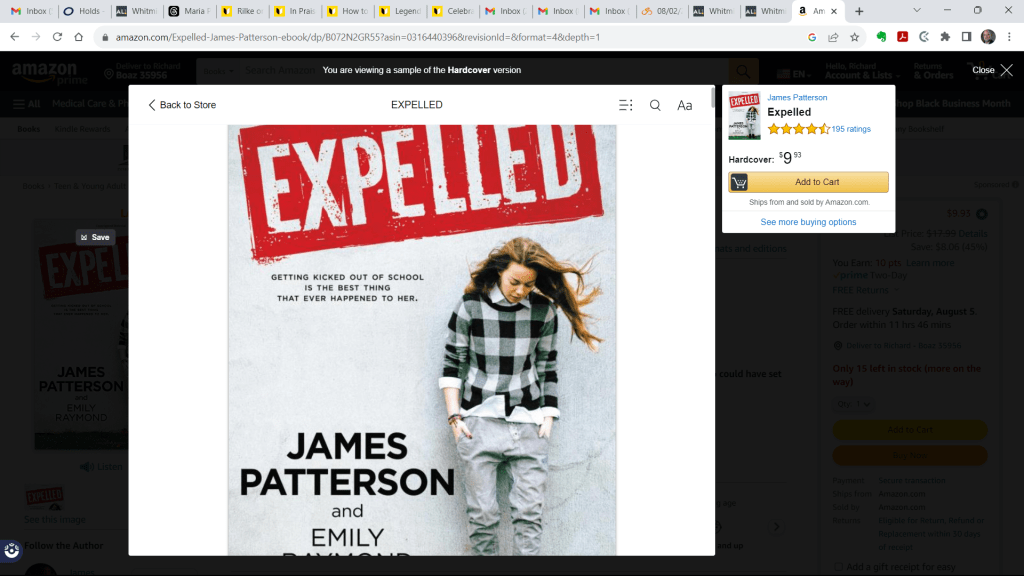

























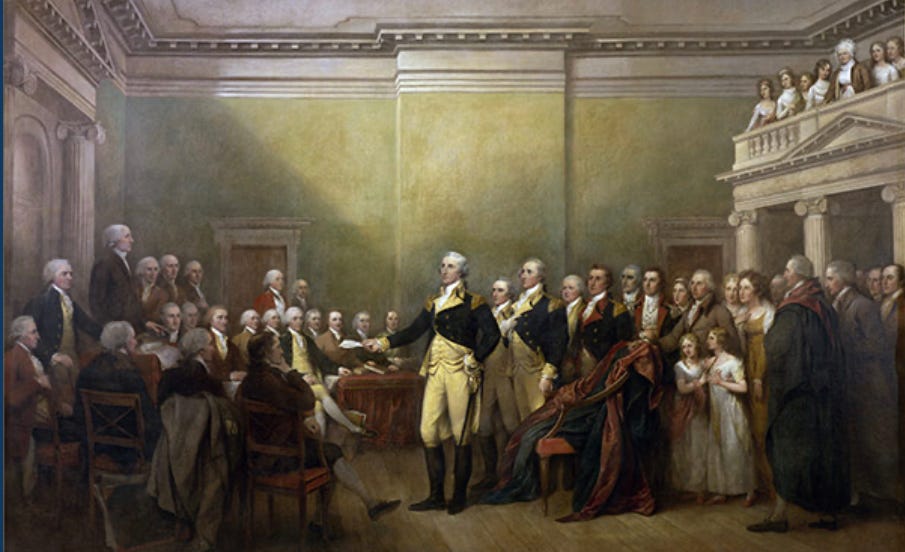


 by
by 

 Richard L. Fricks