The Boaz Stranger–Chapter 26

For what seemed like minutes, Kent, me, and the other sixteen attendees acted like mechanical manikins, revolving half a turn one way, then another, raising an arm here and there. It was like the resonating blast had short-circuited everyone’s brain. The explosion was terrible, but seeing the ascending fireball left us all speechless and saddened. I know it did me. Plus, I was torn whether to remain at Old Mill Park in honor of Kyle or rush to the Hunt House to pay tribute to a disintegrating landmark. Either way, I felt the two subjects were hopelessly entangled.

Finally, Kent clutched my forearm. “You need to go. The firefighters may have some questions, plus you might learn something.”

I shook my head sideways. Kyla and Lillian inched forward, one to my right, one to my left. Both placed a hand on my upper back. “No. Not yet. Let’s continue here. You have a speech we all need to hear.” I realized what I was doing. The guilt I’d always felt from leaving Kyle after the Christmas parade was overwhelming. And now, there was no way I’d leave him again.

Kent looked toward Ted King, who was already halfway to his car. “It doesn’t matter. Kyle is gone and long forgotten by this little town. I was wrong to assume the mayor, the council, and two or three hundred citizens would attend.” Kent was clearly in pain, likely feeling a sense of disrespect for his brother. “Folks,” Kent gazed over the dispersing group. “Thanks so much for coming. I’ll never forget.”

 I was thankful Kyla took charge. “Lee, go see what you can find out. I’ll stay and help Kent roll-up Kyle’s banner and finish up here.” She asked Kent if it would be okay to leave the food for the firefighters and the city workers who’d helped set up several hundred chairs. He agreed.

“Sounds like a plan.” Kent patted me on the back and started toward the stage. I kept watching him, wondering what was going through his brilliant mind. I had a feeling he would make another attempt to talk with Jackie Frasier before he returned to Houston. Kent stepped onto the stage and turned. “I’ll send you a copy of my speech. Call me anytime.”

I gave him a nod, returned to my seat for my notebook, and reluctantly headed to the Hunt House.

***

I crossed E. Mann Avenue and walked to the backside of the parking lot to store my notebook and suit jacket inside the Hyundai. As usual, I engaged in some self-talk. Should I move the rental to Piggly Wiggly’s parking lot? Ultimately, I opted against that since I barely felt the fire’s heat given the Hunt House was a good two hundred feet away.

I reopened the back door and tossed in my tie. “Lee. Wait.” The voice came from the direction of Old Mill Park. It was Lillian. I raised my hand, more to acknowledge I’d heard her than as an invitational wave. She was semi-jogging and carrying two bottles of water. “Can I go with you?”

My first thought was Lillian was doing a good job of smothering me. Why I said, “I guess,” and accepted her gift of water probably came from Mother’s undying influence in my life.

We exited the parking lot and walked Whitman Street to Thomas Avenue where a line of wooden blockades demanded we stop. We joined half-a-dozen other spectators staring toward the glowing structure. I thought of a miniature Titanic waging a lopsided battle against nature.

But for now, the Hunt House remained solid and erect. From where I stood, the massive brick and tile structure seemed unharmed. Except for the wild and raging flames erupting from every window on all three floors. Even if the walls remained after the fire expired, the beauty and comfort of the interior vanished forever. I couldn’t help but think of Rosa and Rob, insurance coverage, and Ray Archer’s victory.

“Do you need to call Rosa?” Lillian must have been thinking the same thing. Omitting Rob’s name meant Kyla had told Lillian about his stroke and his admission to Roanoke General.

I think it was the two ladies to my left who caused my turn toward Lillian. It’s funny. Sometimes I hear worthless chatter too well, and life-changing prescriptions barely at all. “Probably.” I said, realizing how out-of-place Lillian looked. For Kyle’s memorial, she’d chosen an all-black outfit: a below-the-knee skirt with matching jacket over a white mid-cut blouse. Her stockings were skin-toned, and her shoes were black, low-heeled. A strand of white beads hung from her neck. The redbird pinned to her label couldn’t be the one I’d given her Christmas 1971. Or could it?

“Lee. Are you okay?” No doubt she caught me staring but couldn’t have known I’d noticed her lack of makeup except for the pale red lipstick.  She’d never worn much makeup. I quickly cocked my head sideways and upwards, capturing two firefighters walking the yard between the Hunt House and Julia Street Methodist Church. That’s when I saw Dan Brasher coming our way.

I pulled out my iPhone, dialed Rosa, and stepped backwards a few yards towards Old Mill Park. Earlier this morning, I’d spoken with Lyndell. Rob still hadn’t awakened from his surgery. Six rings later, I heard Leah’s voice, “hey Dad.”

“Hey baby. How are you?” My mid-thirties daughter looked so much like Rachel, even though adopted.

“Tired and worried about Papa.” Leah was in the cabin. I could hear the grands in the background, maybe in the kitchen having breakfast. “Dad, before I get sidetracked, Rosa wants you to stay in Boaz and take care of the fire.” It was a peculiar way of putting it.

“So, she already knows?” News travels fast in small towns, even when the recipient is multiple states away. I gazed at Lillian, who was deep in conversation with Pastor Brasher.

“Jane called a few minutes ago, right as Rosa got home and headed to bed.”

“I’m not sure what I can do here.” Leah interrupted me before I could continue.

“Dad, since I’m alone, I can tell you. Lyndell spoke privately with Papa’s doctors. They say he’s in a coma. He might never wake up.”

“Oh my, that’s awful.” Lillian motioned for me to return. A firefighter had joined their conversation for a few seconds before walking away. “Honey, I need to go for now. Call me if there’s any change.” I struggled whether to go to Roanoke or stay put.

“Dad, quick, before you go. Mama Rose said to tell you to hire someone to haul off the rubble once the sight’s released.” Sadly, that sounded more like Rob than Rosa.

“Okay,” I said, confused over my mother-in-law’s instruction. I returned to the blockade and a growing crowd of onlookers.

“Lee, you need to hear this.” Lillian said as I saw three fire hoses arching thick streams of water through the upstairs windows. The flames were undeterred.

“Hey Dan,” I said, reaching out and shaking his hand. He nodded and motioned me to walk with him to the sidewalk leading to Dr. Hunt’s long-abandoned office.

“I wanted you to hear it from me.” Dan held out a hand, like a stop sign, as Lillian approached. “Give us a minute.” He smiled and gave her a thumbs-up.

“What’s that?”

“It may be nothing but since the blast my mind’s grown suspicious.” I almost laughed at Dan’s word picture.

“Okay.”

“First, let me ask you something.” He stared into my eyes, waiting for my response. I gave him an affirmative nod. “Have you recently hired anyone to do work at the Hunt House?”

“No.”

“Now, I’m even more suspicious. Yesterday afternoon I saw an older model van parked in the driveway.” Dan pointed at the Hunt House as though I couldn’t follow his story. “Two men got out and walked to the back door. They stayed fifteen, maybe twenty minutes. Then left.”

Dan’s story triggered a dozen questions. I started with, “can you describe the van?”

“It was white, off-white, or might have been dirty. The back panel was solid with a sign in blue lettering: ‘Larry’s Electric & Plumbing.’ Funny, the painting or decal, whatever, looked much newer than the van.”

“Why?”

“It was cleaner, bright white.”

“I’m curious. Where were you when you saw this?” Dan’s story was already believable. He is the pastor of Julie Street Methodist.

“I was in my study.” He turned and pointed to the church. “Corner window, second floor.”

Dan turned back to face me. I again nodded. “What time yesterday afternoon?”

“That’s one thing I didn’t peg, but it had to be between 2:45 and 3:15. On Thursdays, I meet my daughter at the library after school.”

I was about to ask my next question when I heard a loud crash. It sounded like breaking glass. When I looked, I saw tile after tile slip from the front side of the roof and land on the ground and sidewalk. “One other question before you go.” I had noticed Dan, twice, looking at an oversized wristwatch.

“Go ahead, but hurry. I have a lunch appointment.”

“Can you describe the two men?” Sometimes, but rarely, I knew the answer before the witness or student responded. The rare occurrence had normally happened in court, but that was nearly twenty years ago. Although it had happened twice in a Torts class.

“Mutt and Jeff. One was tall and thick, the other was short and thick. Both wore uniforms: light blue short-sleeved shirts, darker navy pants, tan-colored hats and work boots.”

“Short sleeves?”

“Yes.”

“Were they carrying anything?”

“The taller man had an over-sized toolbox. From the way he was toting it, I’d guess it was heavy.”

“Okay, thanks for telling me.” Dan looked at his watch for the third time. “You better go.”

This time, he nodded. And walked away.

***

By 2:30 PM, I’d tired of fire watching. For two reasons. The first was the lengthy delay in holding a promised press briefing. To me, after the firefighters extinguished the flames, the firefighters followed a never-ending loop. Like an episodic story, scene after scene repeating the same thing. Two walked inside the Hunt House, stayed a few minutes, exited, and two more followed the same pattern. Things finally made more sense when a firefighter with a megaphone yelled that Chief Beck was waiting on the State’s Fire Marshall to arrive before a briefing could take place.

The second reason was more troubling. The subtle insults from several gawkers had made me angry. And filled me with an emotion I’d classify as ‘isolated.’ Several times over the past few hours I’d heard remarks such as, “the greedy bastards got what they deserved,” and, “I hope the insurance company cancelled their coverage yesterday.” I’d even heard a Boaz police officer mumble a response to a younger man in shorts and a tee-shirt, something like, “God is good.” The young gawker’s response was probably, “All the time,” although I couldn’t make out the words. Walking back to my car, I’m still wondering whether anyone present knew who I was. It probably wouldn’t matter if they did.

At 4:30 PM, I exited Highway 77 in Attalla and pointed my Hyundai south on I-59. I’d spent the past hour and a half alone at Kyla’s, considering whether to cancel my flight. Although my departure time wasn’t until 7:00, I looked forward to reflecting on the day’s events, and considering what awaited me in Roanoke.

***

I took the Springville exit and bought a chicken sandwich and fries at Hardee’s. I hadn’t eaten since Kyla’s scrambled eggs and toast early this morning. After eating inside, I visited the restroom before continuing to Birmingham’s airport.

I’d just merged into traffic when my iPhone vibrated in the seat beside me. It was Micaden Tanner. I’d been eager to speak with him ever since dropping off the pistol Tuesday afternoon. “Hey Micaden.”

“You got a minute?” The salt and pepper haired man was like a stingy book editor, cutting unnecessary words with abandon.

“Yes. I’m driving to the airport.” I chose context and brevity.

“My best to Rob.” Unsurprisingly, Micaden already knew about my father-in-law’s stroke.

“Thanks.”

“Just came from the press conference.” A tractor-trailer rig pulled beside me, muffling Micaden’s voice. “They found a body.”

“What? Hold on, let me get my ear-buds.” I fumbled with the wires, half expecting a state trooper to zoom in behind me. “Okay, you said you attended Chief Beck’s press conference.”

“Don’t add words. Beck was there but didn’t say ten words. State fire Marshall Kendrick and Boaz Police Chief Gaskin did most of the talking. Did you hear me say they found a body?”

“Damn. Let me guess. The man was tall and thick, or short and thick?” I was projecting from Pastor Brasher’s story.

“Don’t know. They’re awaiting an autopsy.” Micaden said goodbye to Tina in the background. “One thing seems certain. There was a gas leak. However, they’re not sure about the ignition.”

“What set it off?” Dumb question.

With no transition, Micaden added, “Connor says the pistol can’t be the murder weapon.” Before I could respond, Kyla called. I ignored her for now, not knowing when I’d have another chance to talk with Micaden.

“Connor Ford, our investigator?”

“Who else? He’s excellent but said a third grader could have figured it out.”

I was feeling stupid but didn’t know why. “How’s that?”

“Serial number. Smith and Wesson’s web page provides this information all the way back to its founding in 1856.”

“So, what year was it manufactured?”

“Between 2015 and 2019.”

“You’ve got to be kidding. I felt like such a dumbass.”

“It happens to me sometimes, but usually for a more respectable reason. Just kidding.” Micaden was loosening up.

“Since lately, I’m rather slow, let me summarize. The pistol Rachel led me to is irrelevant to Kyle’s murder, and the Hunt House fire is arson.”

“Your latter point seems certain. Not sure I agree with the former. But, at a minimum, it couldn’t have fired the deadly shot.” I heard a phone ringing. “Hold on, I need to get this.” Our call went mute. After a minute, he returned. “You still there?”

“Yep.”

“That was Connor. Be sure you’re sitting down.”

“I am. Remember, I’m driving to Birmingham.”

“It was a metaphor. Listen to what Joe found.”

“Joe?”

“Connor’s employee. Sidekick. He stumbled over a deed in the Marshall County Probate office. Your father-in-law signed over the Hunt House property to Rylan’s of Boaz three days ago.”

My response was predictable. “You’ve got to be kidding.”

“Rarely. Since this is confidential, you want to know my theory?”

“Absolutely.”

“Ray Archer bought the Hunt House for two reasons. One is to make a quick buck. The other was to destroy evidence.” Micaden went silent. I imagined his rudimentary pencil sketching. This time of fire raging skyward from the Hunt House’s windows.

“That’s clear as mud.” Maybe Micaden wasn’t so bright after all.

“According to Connor, Ray paid your father-in-law half a million and insured it for $750,000. I admit, this next statement is Connor’s hypothesis. Ray thinks Rachel hid the murder weapon at the Hunt House, and since she is dead, that pistol was the last link to the crime he committed half-a-century ago.”

Ten minutes after Micaden ended his call, a car accident in Roebuck forced all southbound traffic to detour onto Highway 11. In less than a mile, it was bumper to bumper. I activated my iPhone. It was 5:40. When Micaden called, I’d slowed my speed, as though that would help me digest all the bad news he’d relayed. Now, with the detour and snail-paced plodding, I worried if I’d make my flight. Thankfully, I only lost ten minutes. At East Lake Park, a state trooper directing traffic signaled approval to rejoin I-59.

My mind returned to Micaden’s call. And Ray Archer. In law school, I’d learned to ask questions, especially, ‘what does this mean?’ Professor Stern loved analogies, so he’d encourage his students to think of their case as a puzzle, and ask, ‘where does this new piece fit?’

Until the Hunt House fire, and Micaden’s call, I’d thought my puzzle was an old one, that I was on a mission to find the missing pieces that would enable a prosecutor to convict Ray Archer. One mistake I’d made was subconsciously believing Ray Archer’s horrible criminal conduct was in the past. Now, I realized I was in a whole new ball game. If Connor Ford’s hypothesis was true, Ray Archer is just as much a criminal now as he was half-a-century ago. But, with one giant difference. Now, his defense counsel couldn’t argue his client was just a kid and should be granted youthful offender status.

As I exited I-59 to Birmingham-Shuttlesworth airport, I felt a stabbing pain in my stomach, one reminiscent of the day I’d read Rachel’s story of Kyle’s murder. Sweat popped out across my forehead. There was one difference. For the first time, I was afraid. If Ray Archer would risk his financial empire and his freedom to destroy the Hunt House and any incriminating evidence it might contain, what in Hell would stop him from killing me, or anyone else who became a threat to his comfortable life?

I chose Car Park 1 since it was the closest and, I assumed, the safest place to park my Hyundai. Before leaving Kyla’s, I’d read it contained 3,497 spots. I finally found an opening on the fifth floor, remembering it was Thanksgiving weekend. This probably meant the check-in process would be as slow as traffic had been on Highway 11.

I parked, grabbed my carry-on, and headed for the elevator bank. When I exited the parking deck, my iPhone vibrated in my jacket pocket. This time, it was Rosa. Our conversation was quick and pointed, not to mention virtually one-sided.

***

For some strange reason, nothing to do with being hungry, I ate at McDonald’s in Roebuck before I left Birmingham. My decision to stay in Alabama seemed wrong. But Rosa had been so adamant, even pleading, almost begging me to remain in Boaz. “Lee, there’s nothing right now you can do here. I promise I’ll tell you soon, but now I need you. Rob needs you to have the Hunt House mess hauled off.”

It was a strange request. I didn’t have the heart to ask her about the sale to Ray Archer, but I now knew I had to act instead of react.
08/12/23 Biking & Listening

Biking is something else I both love and hate. It takes a lot of effort but does provide good exercise and most days over an hour to listen to a good book or podcast. I especially like having ridden.

Here’s my bike, a Rockhopper by Specialized. I purchased it November 2021 from Venture Out in Guntersville; Mike is top notch! So is the bike, and the ‘old’ man seat I salvaged from an old Walmart bike.

Here’s a link to today’s bike ride.


Something to consider if you’re not already cycling.

I encourage you to start riding a bike, no matter your age. Check out these groups:

Cycling for those aged 70+(opens in a new tab)

Solitary Cycling(opens in a new tab)

Remember,

Photo by Suzy Hazelwood on Pexels.com

Listened to several episodes from one or more of the following fiction writing podcasts


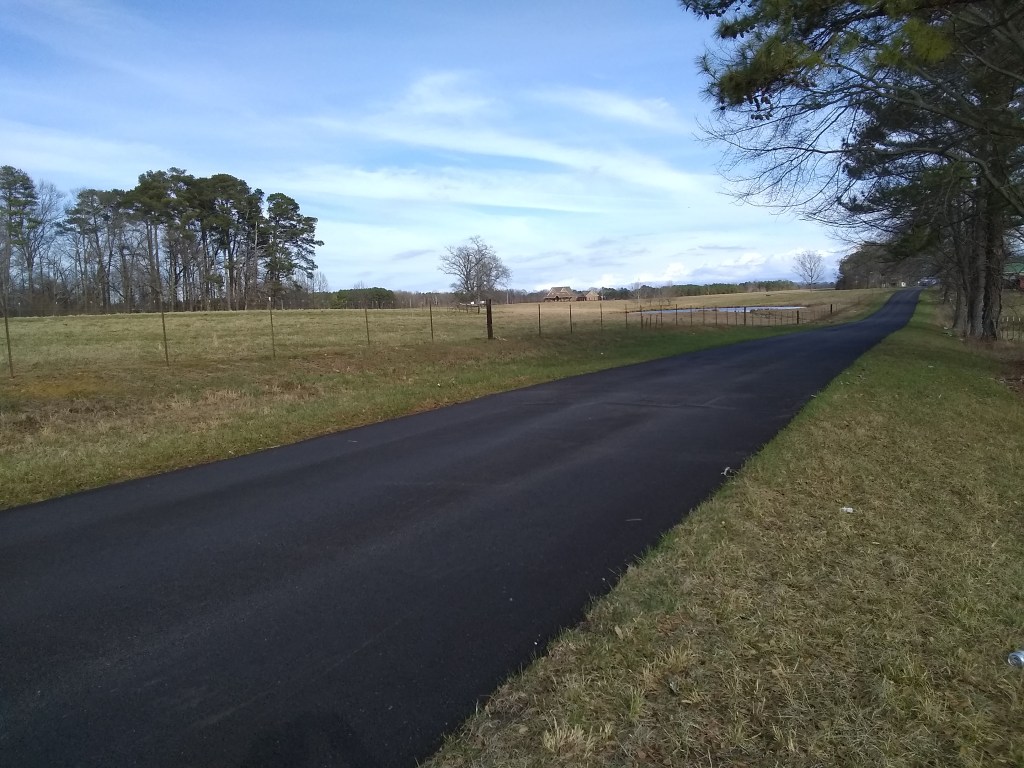
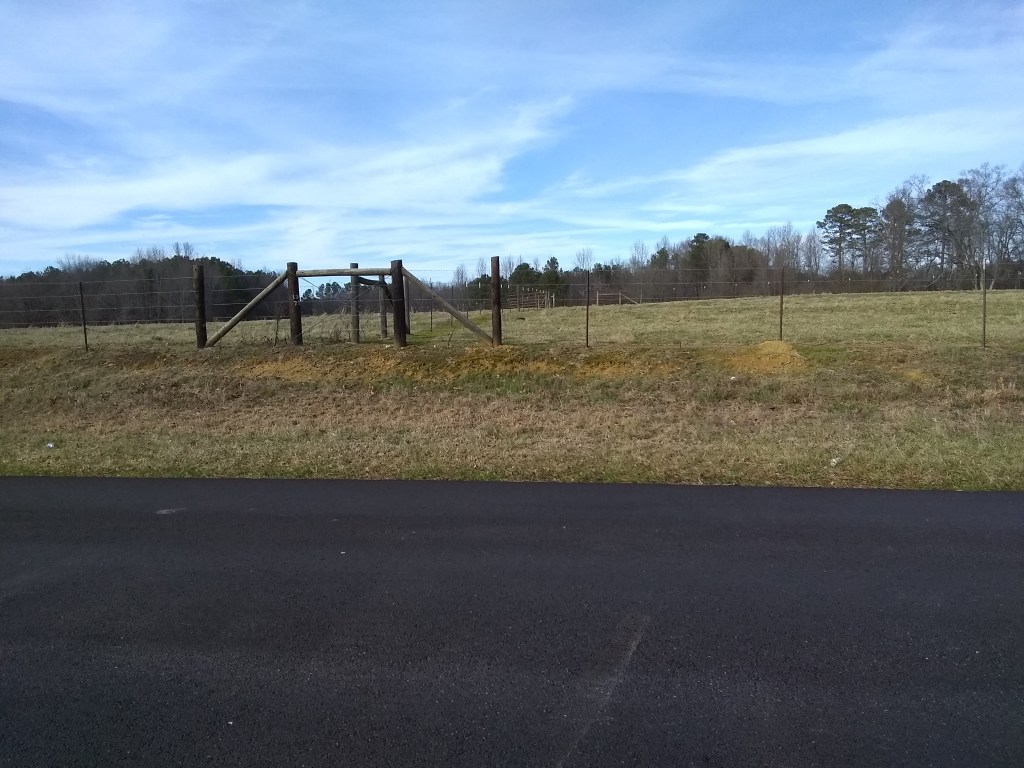
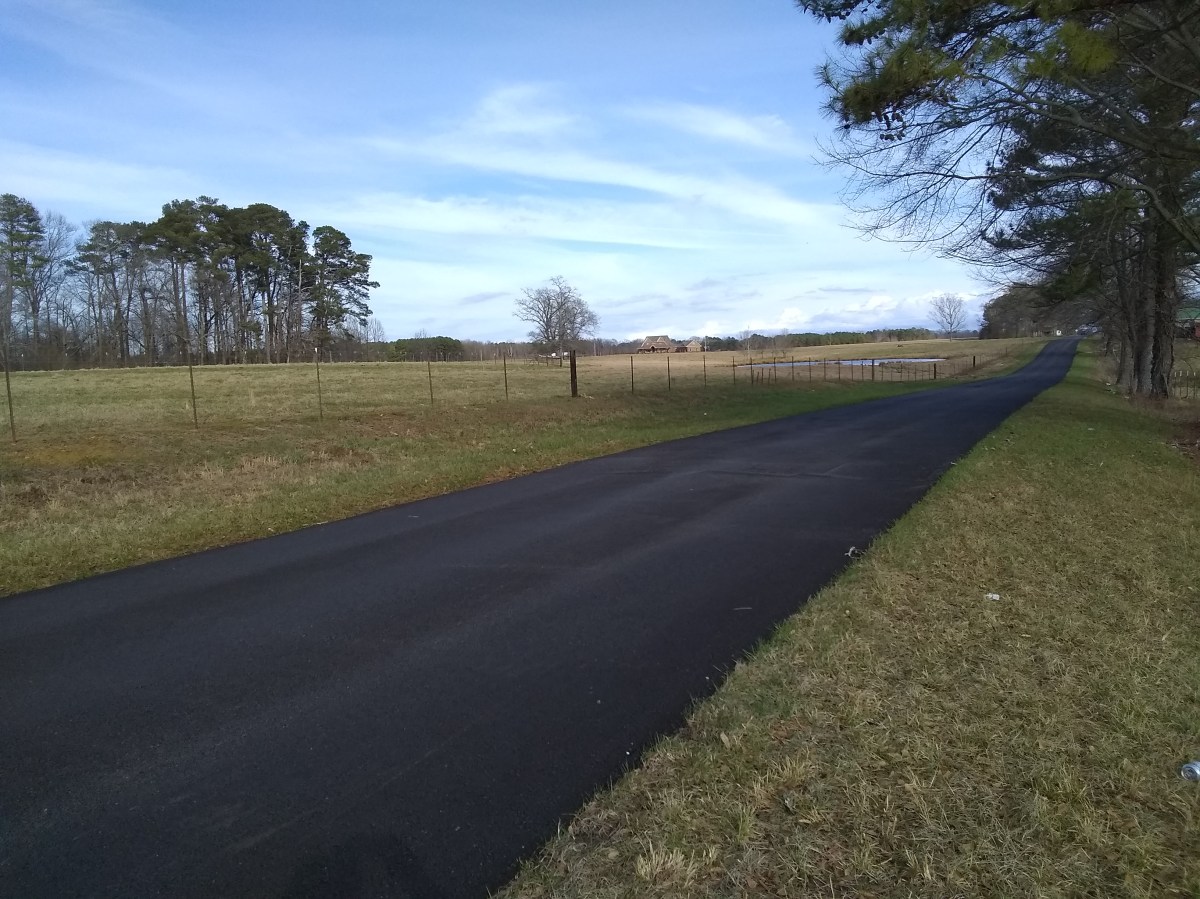
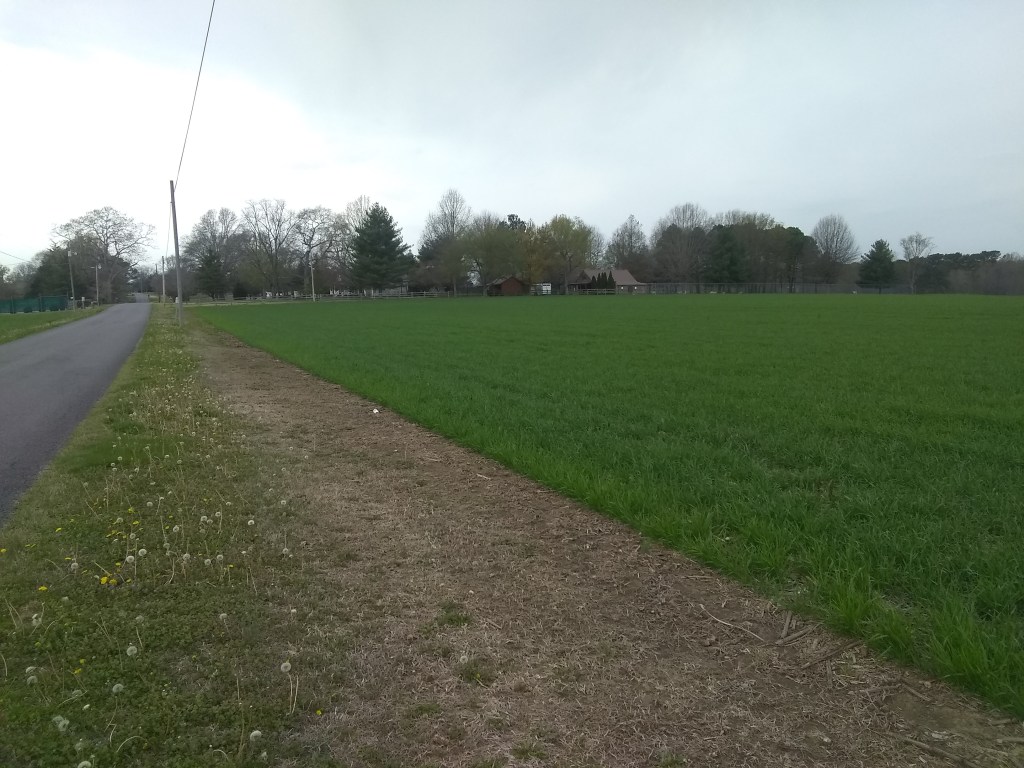
Here’s a few photos from along my pistol route:

Welcome to the Transhumanist Party

Here’s the link to this article.

Avatar photoby JONATHAN MS PEARCE

JUL 30, 2023

AI-generated image by ArtificialArtist on Pixabay

Reading Time: 7 MINUTES

There are some new kids on the block, and they’re pretty cool. You know, into tech and everything.

They are the transhumanists, and they’re living forever—or at least much longer than we do right now.

Transhumanism isn’t really a new thing—it’s an idea that has interested philosophers in different ways for quite some time. But in a time when technological advance seems to be gaining at a record-breaking pace, is there a place for it front-and-center in a worldview—or in a political party?

There are differing definitions of transhumanism, and each has its advocates. Let us defer, for simplicity’s sake, to the Encylopaedia Britannica:

transhumanism, philosophical and scientific movement that advocates the use of current and emerging technologies—such as genetic engineering, cryonics, artificial intelligence (AI), and nanotechnology—to augment human capabilities and improve the human condition. Transhumanists envision a future in which the responsible application of such technologies enables humans to slow, reverse, or eliminate the aging process, to achieve corresponding increases in human life spans, and to enhance human cognitive and sensory capacities. The movement proposes that humans with augmented capabilities will evolve into an enhanced species that transcends humanity—the “posthuman.”

Before you think that transhumanism might be something that applies to other people, check yourself. Everyone is a transhumanist to some degree. We all use technology in some way to enhance our lives, our behaviors, our health, or our performances.

I wear glasses. I experience the world on a daily basis, almost every minute of it, through that bit of really quite vital technology. I have relatives with stents and pacemakers, friends with titanium bolts holding bones together, fellow multiple sclerosis sufferers who use leg braces, walking aids, and buggies.

The question is, as ever, how far along the continuum do we go…should we go?

I recently interviewed a number of members of the US Transhumanist Party (“putting science, health, and technology at the forefront of American politics”), including their presidential candidate. It was a fascinating chat:

YouTube video

There is certainly a lot of crossover between transhumanism and humanism, such that the movement is often called humanism+. Science, rational thinking, evidence: all of these ideas are solid common ground. And, in the interview, I also asked whether nonbelief in God is a prerequisite for transhumanism.

Although transhumanists are generally less religious and more scientifically minded, said Tom Ross, the Transhumanist Party’s Presidential candidate, “We do have very active Christian transhumanists, Mormon transhumanists, and they’re growing all the time.” It is not necessarily an either/or.

Being who you are, plus

But given that liberals have been found to be more open to new experiences, the challenge and potential benefits of technology (such as artificial intelligence [AI]) are things that liberals are more inclined to embrace.

Tom Ross’s campaign manager Maura Abad told me, “It’s keeping who you are, it’s being true to yourself plus enhancement. One of the themes that blew my mind is that you can have any other religion plus you can be transhumanist. Life is not about one or another, life can be both—there is space for everything. Sometimes, we sell ourselves short: Do you want this or do you want that? What if you can have it all? It’s our own limitations; sometimes we say ‘We are our own worst enemy.’ There is no one or another, it is all together. It’s who we are. Embrace it.”

There is definitely an inclusivity to this approach, a move away from the “us and them” mentality we see in so many other political contexts, and that is refreshing.

The question for me that stands out concerns how you get from transhumanism to politics. Or more precisely, how do you develop a manifesto? Politics is morality writ large across society. So on what is the moral basis of the movement founded? To be fair, outside of theocratic political movements, the diktats are not found in holy books. But they might be found in other schools of thought and works, from Karl Marx to Ayn Rand, Milton Friedman to John Rawls.

There is certainly the basis of humanism, which can be seen as follows: A humanist is someone who

  • trusts to the scientific method when it comes to understanding how the universe works and rejects the idea of the supernatural (and is therefore an atheist or agnostic)
  • makes their ethical decisions based on reason, empathy, and a concern for human beings and other sentient animals
  • believes that, in the absence of an afterlife and any discernible purpose to the universe, human beings can act to give their own lives meaning by seeking happiness in this life and helping others to do the same.

Although some transhumanists might step away from the overtly nonreligious framing of the last statement.

Indeed, the core ideals that the Transhumanist Party are guided by have a similar feel:

Ideal 1. The Transhumanist Party supports significant life extension achieved through the progress of science and technology.

Ideal 2. The Transhumanist Party supports a cultural, societal, and political atmosphere informed and animated by reason, science, and secular values.

Ideal 3. The Transhumanist Party supports efforts to use science, technology, and rational discourse to reduce and eliminate various existential risks to the human species.

It could be that, like with any other political party, there will be a phase of finding their feet, of working out where they stand in domains such as defense and education, social welfare, environment, and healthcare. At the moment, the Transhumanist Party is interested in the big ideas and how embracing technology can help.

Current parties ‘don’t meet the minimum requirements for what’s coming’

“One of my initiatives,” Ross tells me, “is to elect, to create, a Secretary of Singularity seat. The Republicans and the Democrats don’t meet the minimum system requirements for what’s coming. We have the economic singularity on its way faster than we were expecting. We have the technological singularity. We need a whole executive branch focused on this.”

We are at a period in time where AI and AGI are taking off. AGI is artificial general intelligence, a concept whereby an autonomous system can surpass human capabilities to perform the majority of economically viable tasks. The potential scenario is one where we could see a mass displacement of human beings with automation take over.

“I think there is going to be a lacuna of time where we are going to have to grapple with these things. There will probably be a lot homelessness and a lot of people laid off from their jobs and I think it’s going to be happening within the next 18 months within this campaign.” This is a note of warning, perhaps the result of the law of unintended consequences, with regard to the development of technology to aid humanity. Tom Ross is well aware of this. “So a big part of our campaign is coming up with ideas to help people who will be displaced. To put the human back into transhuman that way to give people a practical solution. We need to be really focused on this. The Republicans and the Democrats are not thinking about these very serious issues. That’s what brought me into this party because they were discussing policies that will affect me now and my children and children’s children over the next hundred years.”

There is something to be said about run-of-the-mill politics, where fighting and infighting concerns merely a four-year cycle without thinking to look to the horizon.

Daniel E. Twedt, who lost to Tom Ross in the vote for Presidential candidate and who would take a Vice President role, talks of the need for politicians and parties to embrace futurism: “I think government has dropped the ball on all the futurist impending issues. It’s time for the citizen scientist to step forward and use these voluntary institutions that we haven’t used yet, and use the geographic part of the information revolution we haven’t used yet…”

Of course, the biggest challenge for the Transhumanist Party is the same challenge any party has in an overtly two-party political system: the problem is the system.

“This is a pretty historic election season,” continued Twedt, “because the disenfranchised, the independent, the undecided voter are now effectively the majority, and they’re not being allowed to the table. If we can form these coalitions with all the other factors, the minor parties, to hammer away at the rank-choice voting issue, and not just that but the non-political avenues…”

This is, sadly, easier said than done. It is no small coincidence that the US remains an incredibly narrow manifestation of democracy. For a nation that talks big about free-market economics, they certainly don’t apply those ideals to politics. The barriers to entry for political parties and players are prohibitive. No one else has a chance, especially given that in often tight races, the third party will usually steal votes from one party as opposed to another. The Green Party being on the ticket will be unlikely to cause problems for the Republican Party, after all.

In other words, changing the system to benefit pluralism and citizens’ better representation is an existential threat to the very people who can change those rules. So changing those rules is a huge uphill battle.

To change rules, though, people need to understand that there is a problem in the first place. People need to understand the challenge to epistemic security. Truth is the first victim in political war, especially in a society where it has been shown that fake news travels faster and more effectively than truth.

Jason Geringer sees education as a key, setting up education groups within the party. “Education is the key to dealing with the problem—getting people to be media literate.”

There is nothing to disagree with there. Perhaps countries can take a leaf out of Finland’s book. The nation has formalized learning in schools about misinformation.

Climate change is another increasingly important area of concern (an understatement for “existential threat to humanity”). I liked Geringer’s analogy here: “Even with climate change, our Party’s position is that we will use technology to clean it up. Because, honestly, it’s like trying to ask the world to go to rehab. It’s not going to happen.”

Nonetheless, for the Transhumanist Party to succeed, there really does need to be root and branch change to the electoral system. That said, we are starting to see this, with rank-choice voting shifting outcomes in Alaska, and changes in other places such as Maine.

Daniel Twedt doesn’t cup his hand over his eyes to survey the political landscape, he would rather be peering through the James Webb telescope. “I see the transhumanist movement’s job is to be the next evolution of the internet and to keep the American experiment open-sourced. Make it a civilization-wide experiment, and a solar-system experiment, and a galactic-wide experiment eventually…”

His background is the American flag, but where 50 stars would otherwise be placed in an ordered set of lines, on his flag sits the spiral beauty of a galaxy.

The realist in me defers to the old adage, “You can’t learn to run before you can crawl.” But you can dream of running, and you can put things in place so that when you do need to run, you’re pretty swift.

As for taking those initial steps, here we are. The Transhumanist Party are in that game and we are talking about them.

Welcome to the Party.

08/11/23 Biking & Listening

Biking is something else I both love and hate. It takes a lot of effort but does provide good exercise and most days over an hour to listen to a good book or podcast. I especially like having ridden.

Here’s my bike, a Rockhopper by Specialized. I purchased it November 2021 from Venture Out in Guntersville; Mike is top notch! So is the bike, and the ‘old’ man seat I salvaged from an old Walmart bike.

Here’s a link to today’s bike ride.


Something to consider if you’re not already cycling.

I encourage you to start riding a bike, no matter your age. Check out these groups:

Cycling for those aged 70+(opens in a new tab)

Solitary Cycling(opens in a new tab)

Remember,

Photo by Suzy Hazelwood on Pexels.com

Listened to several episodes from one or more of the following fiction writing podcasts


Here’s a few photos from along my pistol route:

The Boaz Stranger–Chapter 25

The dreaded moment came Friday morning a few minutes after 6:00. A few days ago, Kyla had demanded I help vaccinate her five Nubians. I had never liked farm work as a kid, especially if it involved cutting, clipping, ringing, or shooting animals, even if the latter required injection by syringe (I had refused to put a 22-caliber bullet between the eyes of a fattened hog).

Kyla put me on notice last night before she’d gone to bed. “Tomorrow. Early. Goat work. I’ll wake you.” She’d sounded like a Marine sergeant, barking military-terse instructions as she’d ascended the stairs. She disappeared before I could interpret her face or convey my reverse thankfulness. I almost followed her upstairs to beg off, reminding her I didn’t need distraction from my Old Mill Park responsibilities, or that I was two days post-accident. Instead, I stayed glued to the couch with her laptop, making last-minute edits to Kyle’s eulogy.

Unlike my all-night restlessness, the ‘goat work’ wasn’t as bad as expected. Sis, the planner, had found a pair of Dad’s coveralls and work boots, and had kept the five Nubians corralled in the barn’s hallway all night. The only one who put up any resistance to the CDT subcutaneous vaccine was Frank, the lone male. I imagined he was just showing out for Nancy, Bess, Georgia, and Nedra. However, it was Kyla’s rope trick that convinced the viral male to take his medicine.

Walking back to the house, Kyla shared the source of her name choices. As a kid, she’d always loved mysteries, including the Nancy Drew and Hardy Boys series. Voila, names for five Nubians, although George became Georgia, and Ned became Nedra.

When we reached the front porch, I stripped off Dad’s coveralls and work boots while Kyla opened the storm door and spouted more orders. “Please put Dad’s things on my tailgate.” At least she’d said ‘please.’ Sergeant Harding went inside to shower and cook breakfast. I was halfway to the Silverado when she reopened the front door and said, “Lillian needs to talk.” I left my iPhone beside Kyla’s laptop at 1:30 this morning. I guess sis had heard it vibrate. She raised her eyebrows and smiled as she waited for me to take the phone.

“Hello.”

“Lee, I’m sorry to keep pestering you, but I think it’s important.” Lillian shared that she’d left a voice mail twenty minutes ago.

“Sorry, I was helping Kyla with the goats. What’s up?” It had barely been half a day since we’d talked and made our agreement. I couldn’t help but question my decision.

“I wanted to tell you about my spyware last night, but you were in a hurry to leave.” I closed my eyes and pondered, acknowledging some things that need to remain private.

“Spyware? Is that what you said?” I stared at my iPhone, checking the time. It was 6:34. I’d told Kent I’d meet him at the north entrance to Old Mill Park at 8:30.

“Do you agree we should be open and honest about our detective work?” The attorney in me wanted to discuss Lillian’s adjective. I walked through the den and was two steps inside the hallway when she asked her next question. “Lee, you there?”

“I’m here. And, confidential.”

“Huh?”

“Let’s just say, we need to discuss before any outside disclosure. To anyone.”

“Except Kyla?”

“Okay, except Kyla.” I conveyed my schedule, hoping that would speed things up.

Lillian shared extra details, but the bottom line was she had hidden two recording devices at the Lodge before she’d vacated the premises. Device B was activated late last night. It was a call by Ray to a man named Buddy. Lillian could hear only Ray’s side of the conversation (since he wasn’t using Speaker), but concluded it was about the job he’d hired Buddy to complete. To Lillian, it was a go for today based on Ray’s repeat of what Buddy had said. ‘Today.’ Ray had responded with, ‘Daytime? That’s risky.’ The recording had ended with Ray confirming the time and place he would meet Buddy later tonight. ‘Mayor’s cabin. Midnight.’

“What makes you think this conversation relates to our investigation?” I admit Lillian might be serendipitous, but the job probably was wholly innocuous.

“If it’s the Buddy I’m thinking about, he is an ex-con.” I could hear geese honking in the background. I suspected Lillian was outside, maybe walking or sitting on the long pier I’d seen when she’d turned on the eve light.

“He works at The Shack. Right?” I had put that much together. He’d also been at McDonald’s yesterday afternoon with a much taller man.

“How do you know that?”

I shared my deduction. Lillian said she’d keep me posted and wished me good luck with my eulogy.

“I’ll be with Kyla, so I’ll see you there.” With this, Lillian ended our call.

***

I parked in a once-familiar place off E. Mann Avenue. During my growing-up years, IGA was Mom’s favorite grocery store. It was smaller than Piggly Wiggly but offered coupons in Thursday’s edition of the Sand Mountain Reporter. This provided “extra value,” according to our household’s chief financial officer.

As part of its Old Mill Park project, the City had purchased the property, razed the old building, and constructed a hundred-car parking lot. I pulled to the far side and wedged my Hyundai between Kent’s rental and an older model Impala, although there were 97 other options.

I grabbed my notebook and walked across E. Mann through a gated entrance denoted as “Support Staff Only.” Other than three guys setting up folding chairs in a semi-circle in front of the stage, the only other person I saw was Jane Fordham working behind a row of tables lined up outside the nearest pavilion. Kent had told me the mayor had arranged for Grumpy’s and The Shack to provide food.

Jane waved twice as I approached. “Hey Lee, want some coffee and a cinnamon roll?” The far-left table had a sheet of letter size paper taped to the thin tablecloth. The sign was troubling; it read, “Light Breakfast.” Besides a large aluminum pan full of rolls, there were also several dozen plastic containers of fruit.

“Thanks, maybe some coffee. Black.”

“It’s self-serve.” Jane said, handing me a small Styrofoam cup. “Rosa said Rob’s still sleeping.”

We talked back and forth about my father-in-law’s stroke and how worried Rosa seemed during her and Jane’s early morning conversation. “I’m flying there late afternoon.” I wanted to ask a dozen questions but now didn’t seem the time.

“Here comes Kent.” Jane said, looking to her right. I had already seen him walking our way from the Park’s east side entrance. “He went to Piggly Wiggly to get more tape.”

Kent was still a good fifty feet away. I summoned my courage, realizing now was as good as any. “Jane, would you be open to talking to me about Rachel when I return from Roanoke?”

Her response was instant. “I guess.” The tall and thin redhead (I’m sure the short-cropped hair is a wig) gave me a quick look with her piercing green eyes. It seemed my request was unsettling, but I didn’t know why.

“Good morning, Lee.” Kent said, handing Jane a plastic shopper bag.

“I’ll finish attaching the food signs. More brunch over there.” She looked at Kent and pointed to two larger boxes on a table underneath the pavilion. “Kyla will be here any minute.”

Kent motioned me to follow him toward the stage. Two city workers were struggling to hang a giant banner. The other one continued arranging chairs. “I have a feeling I’ve been too optimistic.”

“Crowd size?” I asked.

“Yes. Three hundred chairs are probably six or seven times too many.” Kent stopped behind the row furthest from the stage, staring at the unfolding banner.

“I like your idea.” From left to right were blowups of Kyle’s class photos, beginning in first grade. The next to the last one on the right was from tenth grade, a short three and a half months before Kyle disappeared. The last photo was a recent one of Kent, relaying the idea this was what Kyle would look like today. If he had lived.

“Thanks, but it was Jane’s creation.” Kent removed his iPhone and checked the time. “Question. Did you know Ray gave Jane a ride home that night?”

“You mean, after the parade, the night Kyle went missing?”

“Yep.”

“I’ve never heard that.” This struck me as odd, especially since Rachel hadn’t mentioned it in her diaries.

“It was news to me. I’m still not sure why she told me, but she did, right after we arrived this morning.” Kent gave a thumbs-up to the two city workers securing Kyle’s banner.

“What exactly did she say?”

“First, I admit it was me who brought up the subject. Like I’d done during each of our conversations while planning the memorial.” I saw Kyla enter through the support staff entrance. She started walking towards Kent and me and I shushed her away with our long-established tradition of flapping a low-reaching hand. “Jane said the four of them, Ray, Rachel, Kyle, and herself, crammed into Ray’s truck at the warehouse. After a quick stop at the church to leave the PA system, Ray dropped Jane off at her house around nine. The plan was for Ray and Rachel to carry Kyle home, and then for the two of them to ‘hang-out’ a couple of hours before reuniting at the Hunt House for Rachel’s all-girl sleepover party.”

“So, now it seems, there were three people and not two who saw Kyle right before he disappeared: Ray, Rachel, and Jane.” I said, looking toward the pavilion at Kyla reading something on her phone.

“I agree. If Jane’s telling the truth.” The city workers turned their attention to checking out the sound system.

“What would make you think otherwise?” Kent, like me, had worn a suit, but he’d shed his coat.

“Seems to me Ray would have dropped Kyle off first since Jane lived further down King Street. At the intersection of Lee Holcomb Road.” How I recall ordinary things from long ago never ceases to amaze me.

“Uh, I’d forgotten that.” Kent said, inserting what I assumed was a receipt, probably from Piggly Wiggly, into his wallet. I mentally scanned Rachel’s diaries. “But it makes sense.” Rachel had written that she and Ray had gone to a farm his father owned down Cox Gap Road. “That supports your conclusion.” Kent focused on the sound volume and interacted with the city workers.

I shared Ray’s most logical travel route. “To me, the four would have left the warehouse after disassembling the PA system. Dropped it off at First Baptist Church of Christ and wound their way back to Highway 168 West. Ray would have turned left at King Street. The first relevant driveway would be yours. Drop Kyle there, continue to Jane’s place, turning left on Lee Holcomb Road. From there, they’d connect with Pleasant Hill Road and turn right on 205. That’s the most logical route if they’re headed to Cox Gap Road.”

“It’s definitely an excellent theory.”

Kent spent until 10:00 a.m. working with the city workers, refining the sound system and instructing them how to operate the three video cameras he had brought.

I helped Kyla place an order-of-service flyer on each of the three-hundred chairs and made two trips to Piggly Wiggly for bagged ice. The only thing I could think about was four tenth graders squeezed inside Ray’s truck with one of them only minutes from death.

***

At 10:00 a.m. on the nose, Kent walked to the stage and asked everyone to take a seat. Although he didn’t show it, I knew the crowd size devastated him. Kyla, Lillian, and I sat alone in the section to Kent’s left.

“Good morning. I appreciate you coming on this warm and beautiful November day.” Kent introduced himself and thanked Mayor King for allowing the use of the park. He also thanked the city workers for their help.

The mayor stood and scanned the small audience. He smiled at a young woman with thick glasses who’d just arrived. An index card sized plastic tag hung from her neck. Kent had said a reporter was coming. “I’m sorry we’re here under these circumstances, but please know the City of Boaz will never forget Kyle Bennett. I hope his case will soon be resolved.” Really? Not a single city councilman was anywhere in sight.

The mayor placed his hands on the shoulders of Kent and Kyle’s mother, who was sitting one row in front of where he stood. He bent down and whispered something in her ear. Kent had said she would be here with several of her friends from Bridgewood Gardens. I counted six older women, three to Mama’s left, three to her right. I hoped none had a story as horrible as the woman who’d always welcomed me into her home.

“Before I forget, I wanted to apologize for the absence of Mountain Top Trio. You may or may not know this band started half-a-century ago and is still performing.” A train engine’s deafening horn announced its arrival a block away. And Jane’s. Kent allowed the sound waves to dissipate. Now, dressed in all black, Jane sat beside Lillian, who, like Kyla, wore the same dark color. “I suspect if Kyle were here, he’d still be Mountain Top’s manager. The group had an accident last night in New Hope. Thankfully, no one was seriously hurt, but, as a precaution, Huntsville Hospital admitted them for observation.”

The train rolled through town, headed to Gadsden and on southward to parts unknown. The rocking and rumbling sounds grew weaker. Kent used the interruption to review his notes and maybe create suspense. I didn’t know.

“I feel I should publicly answer the question local entrepreneur Ray Archer asked me last Sunday morning.” Kent paused and gave a shout-out to Grumpy’s and The Shack for providing food and invited everyone to stay and eat after the memorial.

“Ray asked me, ‘why have a memorial service for Kyle fifty years after he was killed?’” If Kent’s quote was accurate, I questioned Ray’s word choice. ‘Killed’? Why not say, ‘after he died,’ or, better still, ‘after he disappeared’? I almost smiled when I acknowledged how difficult it was to conceal a lie.

Kent continued. “Folks, here’s the reason. I fully believe Kyle’s case is about to bust wide open and the guilty party or parties will be brought to justice. The truth is all around us. We just have to keep looking.”

The thick glasses lady wrote frantically to get down Kent’s every word. I hoped the quote would be in tomorrow’s Sand Mountain Reporter. I felt certain Ray Archer wouldn’t like the attention.

“Okay, I’ll sit for now. After my brother’s best friend presents his eulogy, I’ll return. Lee, come on up.”

***

I stood and edged sideways in front of Kyla, Lillian, and Jane. Sis whispered, “break-a-leg,” and tugged my suit pants behind my right knee. Funny. My stomach did its little queasy dance like it always did before I took center-stage in a courtroom or before a classroom of intellectually gifted students.

“Good morning,” I said immediately after reaching the podium. Saying anything quickly always settled my nerves. “I’m Lee Harding, Kyle’s best friend forever.”

Mama Bennett was already crying. “Kyle and I met in the first grade, Mrs. Gillespie’s class. I hated school, but Kyle loved it and took me under his wing.” I pointed to Kent sitting ten feet from me in an otherwise unoccupied row. “By day two, Kent had connected with Micaden Tanner, who has a law office straight across the railroad tracks.” I pointed diagonally to my right.

“By the end of August 1960, I loved school, and I loved Mrs. Gillespie. It seems her and Kyle teamed-up behind my back and conspired to transform my thinking.”

“Story time after lunch each day became the key to my happiness and determination. I can still hear Mrs. Gillespie after she got all twenty-five of us huddled around her: ‘education is like a train, it can take you anywhere you want to go, but you have to choose a destination, and you have to climb on board.’”

“Although I could already read, I wasn’t in league with Kyle and Kent. From day one, they were the best readers in class. I soon learned why. It was Mama Bennett.” I pointed again. She cried more. “Mama worked long and hard all day but had her own story time routine. During my first overnight visit, the four of us took turns after supper reading a short story, things like ‘The Snows of Kilimanjaro’ by Ernest Hemingway. If you’re surprised by the Hemingway choice, you don’t know Mama. Even though he wrote in simple, unadorned prose, his words were not ‘See Spot Run.’ Mama Bennett, intelligent and loving, challenged her twin boys to learn and grow. She knew what they needed to maneuver a tough world.”

I looked at my time. There was no way I could present all my material, all the stories I recalled. I wanted to share mine and Kyle’s fourth-grade winter-time swimming experience in the creek beside his house. I wanted to share stories that emphasized each of his positive character traits, things like his perceptiveness, his alertness, his analytical ability, and his cautiousness. But there was not enough time, so I chose courageousness instead. Because to me, it took place near the end of Kyle’s life, and contained strong hints about his destination, one not of his choosing.

“The last story I want to share with you is about Kyle’s courage. If it hadn’t been for my sister, you wouldn’t be hearing this.”

“After Kent asked me to talk today, I called Kyla and asked her what she remembered about Kyle. At first, she mentioned general stuff like how he enjoyed fishing in our pond and how he and I loved playing at the creek beside his house. Almost as an afterthought, Kyla had said, ‘I wish you had his essay, the one he wrote for Mrs. Smith’s class.’ I’m sorry to say I’d forgotten all about it.”

“Mrs. Linda Smith, Ms. Linda, as she insisted we call her, was our tenth-grade literature teacher. At the first of the year, she’d assigned a project to be turned in anytime we wanted, but no later than the last day of school before the Christmas holidays. The assignment was to write about a challenge we were facing—and what we planned to do about it.”

“You might ask yourself how my memory got refreshed. That’s a straightforward question: I called Ms. Linda. Finding her was the hard part. She had recently moved from Boaz to Eugene, Oregon, to be closer to her son and was still unpacking. She instantly recalled Kyle and his essay as though it had been only a week.”

“Come to find out, Kyle’s was one of ten Ms. Linda had kept from her thirty-year teaching career. And, in somewhat of a surreal way, before moving to Oregon, she’d read all of them. Now, they were in a box somewhere in a storage unit.”

“Now, to Kyle’s essay. I ask you to keep in mind two of his dominating personality traits, one negative, the other, positive. Kyle was a fanatic, meaning he could be intensely devoted to a cause or idea. As we all know, that can turn negative. On the bright side, he was perceptive. Kyle was intuitively observant and insightful.”

“It was only natural for Kyle to respond to his challenge the way he did. And what was his challenge? He was being bullied. By a fellow student named Brute. Of course, this wasn’t his real name. Nor was Babe, Brute’s girlfriend’s name. More on her in a moment.”

“The bullying started at the beginning of ninth grade when Kyle tried out for the football team. He hadn’t made it as a player but won the team’s water-boy position. Brute was big and mean. Kyle was no match physically. At first, Brute demanded Kyle wash his practice uniform every day through the week and his game uniform over the weekend. Once Brute learned Kyle was smart, he had him do his homework. This went on throughout ninth grade, no matter the sport Brute played or the classes he took.”

“While Brute was bullying, Babe was befriending. Kyle hated Brute, but mesmerized Babe. What infatuated Kyle was the irreconcilability of Babe’s intelligence with her devotion to Brute. Somehow, Kyle learned Brute was two-timing Babe with an Albertville Aggie cheerleader. And, if that wasn’t bad enough, the girl was pregnant with Brute’s baby.”

“Let’s pause a second and make sure we understand the context. Kyle realized he would have to write Brute’s essay. Even though the two were not in the same literature class, they shared the same personal essay assignment. Oh, one thing I forgot to mention, Ms. Linda promised the essays were for her eyes only given their personal nature.”

“Listen carefully to how Kyle used his brain and his courage to outfox Brute. He first created a plan. He would write two essays for Brute, not one. It would be Brute’s choice which one to submit to Ms. Linda. The first essay was generic. It presented Brute’s response to the challenges of earning a football scholarship to the University of Alabama. The second essay was more revealing. It dealt with Brute’s love life and the problems and challenges he faced having two girlfriends, with one being pregnant with Brute’s baby.”

“After Kyle completed the essays, he presented them to Brute. Of course, Brute chose the innocuous essay, and according to Kyle’s essay, promised two things. To stop bullying Kyle, and to come clean with both girlfriends.”

“Ladies and gentlemen, it took great courage for Kyle to confront Brute, but there’s one thing we need to remember. Danger is the seed of courage. Without the first, there’s no need for the second. Ms. Linda told me all of this. I haven’t seen it with my own eyes. To this day, none of us know what happened to Kyle, and we can only speculate whether the writing assignment had anything to do with Kyle’s disappearance.”

“Thanks for listening to my too-long eulogy. I’ll leave you with this. The world would be a much better place if my best friend had lived and were with us today. I miss you, Kyle.”

***

I closed my notebook and exited the stage as Kent approached. We shook hands and clumsily executed what Rachel called a man hug.

I returned to my seat beside Kyla. We exchanged smiles, and affirmative head nods, our lifelong habit showing agreement. Just as Kent was introducing himself, a deafening noise shook the large speakers set at opposite ends of the stage. The sound originated from the north, the direction I was facing, but the huge banner displaying a collage of Kyle’s photos blocked my view. At first, I thought the noise was a monstrous thunderclap, except there wasn’t a cloud in the sky. The eighteen-person crowd remained calm and seated, but each person’s quick head movement and lowered eyebrows revealed a united uncertainty. My second guess was a sonic boom, but a billion-dollar jet flying low altitude at 700 miles per hour over Boaz, Alabama seemed a long shot. When I heard a fire siren, I concluded there had been a giant explosion in the industrial park.

Kent’s puzzled looks and bodily movements showed he had conducted a similar analysis. He finally walked off the stage onto the grass to his right and looked to the north. He yelled ‘fire’ a split second before spinning to face me. With head shaking back and forth, he motioned for me to join him.

Almost in unison, the entire crowd stood and moved toward Kent. Most gasped at something they witnessed. I think I heard one person say, “that’s one way to skin a cat.” Kyla, Lillian, and I were the last to arrive. What I saw was both shocking and sickening. The Hunt House was on fire. Boiling orange flames were already engulfing the surrounding treetops.

I’ll never forget what Kent whispered in my ear as he eased beside me. “That’s a message. I just don’t know what it is.”

Trump’s lawyers are too cowardly to quit or to tell Trump to shut up


I contend Lawrence’s coward accusation against Trump lawyers applies in equal measures to the following Alabama Republicans who endorsed Trump for President last week before the Alabama Republican Convention.

Alabama Republican members of the U.S. House of Representatives: Robert Aderholt, Jerry Carl, Barry Moore, Gary Palmer, Mike Rogers and Dale Strong;

Alabama Lt. Gov. Will Ainsworth;

Alabama Agriculture Commissioner Rick Pate;

Alabama Public Service Commission President Twinkle Andress Cavanaugh;

and Alabama Public Service Commissioners Chip Beeker and Jeremy Oden.

They’re all cowards and, by their endorsements, fully accept EVERY word and action Donald Trump says or does, including his love of Christian Nationalists, hatred of women, blacks (especially black women), gays, and anyone who confronts his unending lies.


And, of course, we know where Alabama Senator Tommy Tuberville stands.

Despicable. All of them. The Republican Party has become the Regressive Department, determined to destroy our democracy.

Here’s the link to the following article.

Trump picks up major Alabama endorsements ahead of Montgomery visit tonight

.
Former President Donald Trump arrives to speak at a fundraiser event for the Alabama Republican Party, Friday, Aug. 4, 2023, in Montgomery, Ala. (AP Photo/Butch Dill)AP

Former President Donald Trump picked up a wave of endorsements from top Alabama Republicans on Friday, hours before he is scheduled to speak in Montgomery.

Trump’s campaign announced that Tommy Tuberville, Alabama’s senior senator, and the state’s six Republican members of the U.S. House of Representatives – Robert Aderholt, Jerry Carl, Barry Moore, Gary Palmer, Mike Rogers and Dale Strong – are backing the former president in his bid to return to the White House. Other endorsements came from Lt. Gov. Will Ainsworth, Agriculture Commissioner Rick Pate, Public Service Commission President Twinkle Andress Cavanaugh and Public Service Commissioners Chip Beeker and Jeremy Oden.

Not listed among the endorsements Friday by the Trump campaign were Gov. Kay Ivey and U.S. Sen. Katie Britt. A statement from Britt on Friday said that she is maintaining neutrality in the Republican primary while serving on the Republican National Committee’s Republican Party Advisory Council. Trump endorsed Britt in the Republican Senate primary in 2022.

Related: Biden campaign knocks Donald Trump visit to Alabama as endorsement of Tuberville’s ‘political antics’

Related: Trump rules early Alabama fundraising and national polling, but pundits claim: ‘It’s just too early’

The endorsements perhaps come as no surprise given past support for Trump — the frontrunner in the 2024 Republican presidential primary — but it would seem to reiterate Alabama as a Trump stronghold even amid legal issues that have seen him indicted in three different investigations in recent months.

Trying to Make a Horrible Jesus Quote Look Good

Here’s the link to this article.

By David Madison at 8/04/2023

But wishful thinking and tortured logic can’t make it happen


The high-profile, very wealthy televangelists—Kenneth Copeland and Joel Osteen come to mind—make us wonder if they really do believe in Jesus. They have played major roles in turning Jesus into big business. Their lifestyles don’t seem compatible with the ancient preacher portrayed in the gospels. Jesus, so we’re told, championed the poor and condemned the rich, e.g., Mark 10:25 (KJV): “It is easier for a camel to go through the eye of a needle, than for a rich man to enter into the kingdom of God.” Luke 6:20 (NRSVUE): “Blessed are you who are poor, for yours is the kingdom of God.” Matthew 19:21 (KJV): “Jesus said unto him, ‘If thou wilt be perfect, go and sell that thou hast, and give to the poor, and thou shalt have treasure in heaven, and come and follow me.’”

So pardon our suspicion that Copeland and Osteen—and many others—are phonies. They’re in it for the money.

But what about the thousands of Christian apologists—who draw ordinary salaries? They’re not in it for the money. They know for sure that belief in Jesus is the one true faith and they’ve taken on the challenge of proving it. Their intense emotional investment—without Jesus, there’s no eternal life, being saved from hell—has put their brains into feverish defense mode. They have to prove that ancient superstitions and magical thinking (of course, they don’t use these terms!) deserve a place in our modern world view. Thus Jesus-on-the-cross (a human sacrifice to divert a god’s anger about sin) has to be made to look logical and respectable. Magnificent church décor helps with this.  

However, the gospels present other challenges. I’ve often said they’re a minefield, because there are so many Jesus quotes that don’t sound right at all (here’s a list of 292 of them). So the apologists have to make Jesus himself look good. Who would have thought! In fact, this can be an even bigger challenge than making human sacrifice look legitimate.

The Jesus quote that probably causes the most angst to apologists is Luke 14:26: hatred of family is required if you want to follow Jesus. I’ve come across churchgoers who don’t even know this verse exists, and they get flustered when it’s brought to their attention. Which means that apologists have to do their best to make it go away. 

I recently came across an article by a devout fellow named Nathan Cook, titled, A Radical Call: The Challenge of Discipleship in Luke 14:26. Cook is described as “Mission Pastor” for Christ Church Memphis, with a twenty-year career in “church planting and missionary work.” Apparently this focus has enabled him to master double-speak—and to remain ignorant of the work of mainstream Bible scholars. 

According to Cook, the Jesus of Luke’s gospel “emphasizes the need for self-sacrifice, service, and a transformed heart in order to participate in God’s kingdom.” And: “Jesus is inviting His followers to join Him in His mission of bringing hope and healing to a broken world.” Just how does hating your family bring healing to a broken world? Cook’s solution—he is so in sync with Jesus that he can read his mind: “It’s hyperbole”!

“This verse does not mean that we should literally hate our family members or ourselves. Instead, Jesus is using hyperbole to emphasize the importance of putting Him first in our lives. Our love and devotion to Jesus should be so great that, in comparison, our affection for our families and ourselves seems like hatred.”

Really? Is this how most devout Christians make their way in life? Loving Jesus so much that their feelings for family “seem like hatred”? Does Cook actually believe this himself? Moreover, Luke 14:26 stipulates that followers of Jesus must hate life itself. Most of the Christians I know are happy to be alive, and want to enjoy the experience. When we come across people who hate life, our impulse it to get them into therapy. Luke 14:26 collides with reality in too many ways.

I suspect that Cook’s study of the gospels has been limited to what other apologists say, to what evangelical/fundamentalist interpreters have written. He should consider the work of scholar Hector Avalos instead. There’s a 40-page chapter titled, “The Hateful Jesus: Luke 14:26” in Avalos’ 2015 book, The Bad Jesus: The Ethics of New Testament Ethics. It would be hard to find a more thorough analysis of Luke 14:26, and it’s clear that some devout scholars, as Avalos puts it, 

“…do not fully reckon with the nature of the linguistic evidence. Often these discussions reflect theological rationales that are being substituted for linguistic and historical ones…Although the text seems as clear an expression of literal hate as any text found anywhere, Christian apologists have attempted to erase or lessen its negative connotations.”  (p. 51)

The hyperbole excuse doesn’t work. Cook’s essay should get a prize for resorting to theological rationales—and a prize for dishonesty. Translators who delete or disguise the word hate also deserve a dishonesty prize.

Avalos bluntly calls attention to the bad theology here: 

“How would we judge a modern religious leader who said that we should prefer him over our families? Why would we not treat such a person as an egomaniacal cult leader who does what all cult leaders do: transfer allegiance from one’s family to him or her. In other words, that demand would be viewed as unethical in itself” (p. 89).

What great moral teacher resorts to such grim hyperbole to make a point? Hate your family. If your eye causes you so sin, pluck it out.

Cook’s ignorance of mainstream New Testament scholarship is also obvious from his claim that this gospel was “composed by the physician Luke around AD 60-61.” The consensus of NT scholars is that we don’t know the authors of any of the gospels: the traditional names were attached to them in the second century. But Luke the physician is mentioned in Colossians 4:14 and Luke is also mentioned in 2 Timothy 4:11. There is no evidence whatever that this is the Luke who wrote the gospel. This is speculation, wishful thinking. In fact, if this Luke, a companion of Paul, later wrote the gospel, how is it possible that Paul didn’t hear about any of the details about Jesus that we find in the gospel? In all his letters, Paul doesn’t refer at all to the teachings or miracles of Jesus—nor is there any mention of the empty tomb. 

And where did Cook come up with AD 60-61? Mark is commonly dated by scholars at around 70, and Luke copied major portions of it. 

The context of Luke 14:26 helps us grasp the author’s motivation for including this verse. Jesus has just told the Parable of the Great Dinner. The host had invited many people to his table, but at the last minute they all decline, offering a variety of excuses. So the host ordered his slaves to “Go out at once into the streets and lanes of the town and bring in the poor, the crippled, the blind, and the lame”… “compel people to come in, so that my house may be filled.” (v. 21 & v. 23) The point seems to be that there are no restrictions on those who are welcome in the Jesus cult—no matter social standing or position in life. 

But there is a major requirementyou’re not welcome if you have divided loyalties. If you put family first, don’t bother. 

In fact, Luke’s author might have been trying to heighten the severity of Matthew 10:37-39:

“Whoever loves father or mother more than me is not worthy of me, and whoever loves son or daughter more than me is not worthy of me, and whoever does not take up the cross and follow me is not worthy of me. Those who find their life will lose it, and those who lose their life for my sake will find it.”

Both Matthew and Luke emphasized the demands of the Jesus cult, and Nathan Cook is doing exactly the same thing:

“Pray for the wisdom and courage to make the necessary sacrifices to put Jesus first in your life. As you grow in your relationship with Him, seek out opportunities to deepen your commitment and demonstrate your love for Him, even when it requires personal sacrifice. Remember, the cost of discipleship may be high, but the reward of a life devoted to Jesus is priceless.”

But please, back to reality: at any given moment there may be a million devout Christians claiming that they feel Jesus in their hearts, confident that their intense emotions about Jesus are ignited by the holy spirit. Non-believers don’t buy it—nor would most devout Muslims and Jews, who dismiss the hype about Jesus. Those who have been groomed since their earliest years to feel Jesus and the holy spirit fail to see that these feelings—no matter how intense—don’t qualify as reliable, verifiable, objective evidence about Jesus. 


Back to reality
 includes this candid statement by Tim Sledge: 

“Faith in Jesus produces inconsistent results because Jesus was an apocalyptic prophet who is now deceased” (Four Disturbing Questions with One Simple Answer: Breaking the Spell of Christian Belief, p. 76). This apocalyptic prophet shows up full strength in Mark’s gospel, especially in the frightful chapter 13 (also see John Loftus’ essay, “At Best Jesus Was a Failed Apocalyptic Prophet,” in his 2010 anthology, The Christian Delusion: Why Faith Fails). This ancient superstition champions the idea that the human sacrifice came back to life, and ascended through the clouds to join his god in the sky. In Mark 14:62, Jesus promised those at his trial that they would see him descending from the clouds to set up his kingdom. This is fantasy literature. 

Back to reality

“If Jesus were still alive—indwelling and empowering every individual who has believed in him and made a commitment to him—we would see consistent and compelling evidence that the Christian life is supernaturally powered. And it would be clear that Christianity —unlike every other religion—is the way that God lives through human individuals. But the opposite is true (Sledge, Four Disturbing Questions, pp. 80-81).

Nathan Cook does everything he can to sustain belief that Jesus is alive and craves devotion. He ends his essay—in which he fails utterly to make Luke 14:26 fit into even a semi-rational Christian faith—with a flattering prayer to boost his god’s ego: “Heavenly Father, we adore You for Your holiness and grandeur, for You are the sovereign Creator of all things. You are perfect in all Your ways, and Your love for us is unfailing” … “As we journey on this path of discipleship, help us to resist the temptation to live for ourselves, to seek our own pleasure, or to derive meaning from the world’s standards.”

Back to reality: It’s just a fact that the “world’s standards” include loving family and loving life—and overcoming the obstacles that work against these ideals. Our planet and humanity are much more likely to survive if we can move beyond superstitions, fantasies, and magical thinking. I hope there are common sense Christians who are alarmed and disgusted by Luke 14:26, and appalled by attempts of apologists, in the most pathetic ways imaginable, to use this text to encourage devotion to a long-dead apocalyptic prophet.

David Madison was a pastor in the Methodist Church for nine years, and has a PhD in Biblical Studies from Boston University. He is the author of two books, Ten ToughProblems in Christian Thought and Belief: a Minister-Turned-Atheist Shows Why You Should Ditch the Faith, now being reissued in several volumes, the first of which is Guessing About God (2023) and Ten Things Christians Wish Jesus Hadn’t Taught: And Other Reasons to Question His Words (2021). The Spanish translation of this book is also now available. 

His YouTube channel is here. He has written for the Debunking Christianity Blog since 2016.

The Cure-for-Christianity Library©, now with more than 500 titles, is here. A brief video explanation of the Library is here

The Boaz Stranger–Chapter 24

Kent wound his way to Sparks Avenue. Neither of us said anything until he rolled through the stop sign at Brown Street. “How about going with me to see Jackie Frasier?”

I was still pondering tall man and short man. I must have misunderstood Kent’s question. “You’re joking, right?” There was no way old ‘Jack’ was still alive.

“Not at all. And he still lives across from my childhood stomping grounds.” Kent pulled beside my rental. There were other things I needed to do. One was to call Lyndell. An hour and a half ago, he’d sent a text saying he and Rosa were still waiting to talk to the ER doctor. I was eager to hear how Rob was doing.

“That dump of a single wide?” I also needed to do a hard review of tomorrow’s eulogy to determine where to insert Kent’s two suggestions but seeing a freak-of-nature sort was hard to pass.

“Yep. So, can you come along?” Kent seemed anxious. He was drumming his fingers on the stirring wheel. I wondered if he wanted a witness. I couldn’t imagine why.

“Yeah, I can go. But I need to be back within an hour.”

“That’ll work.” Kent backed onto Sparks, turned left on Highway 205, and drove toward old downtown Boaz.

I tried to visualize the last time I’d seen Jackie Frasier, the high school custodian. I still remembered his shiny Bel Air Chevrolet. “He’d have to be a hundred years old, probably more. I recall he was an old man when we graduated.”

“He’s now a hundred and three. I’ve tried all week to see him but he’s never at home.”

“What does a hermit do at a hundred and three?”

“Chase women, I guess. Or, he’s making excuses, given how many times I’ve dropped by this week and taped a note to his front door.” Kent said as the Thomas Avenue light turned red. Knowing me, I’d have run it.

“Seems like I’ve read the oldest person ever was a hundred and twenty.” The woman’s name slipped into my mind, Jeanette, somebody.

“Don’t forget, Methuselah.” Kent had a comical side. This was the second time we’d laughed in the past hour.

“Are you sure old Jack still lives there? How do you know he’s still alive?” I always had questions.

“The same way I know his age.” Kent tapped his fingers as we sat waiting on the red light beside Weathers Furniture. I figured it was to release energy. Maybe he was frustrated from wasting time, not being productive. I could appreciate that.

Kent had become a reluctant witness. I had to work for every fact. “So, how do you know Jackie’s age?”

“His daughter Jade.”

“Daughter?” I didn’t see that coming. “Jackie Frasier had kids, has kids?”

“She’s disabled, been that way all her life. Here’s what’s weird. I never saw the girl during all the years I lived at 294 King Street. I guess Jackie was too proud to let her out of the trailer.”

Kent shared his visit with Jade while he drove us to his childhood home. Jade Elizabeth Frasier is the daughter of Jack and a woman he worked with at Boaz Spinning Mill in the 1940s. Jade’s mother had abandoned her after birth, probably because of the child’s cerebral palsy and disfigured face. Since 2000, Jade continued her secluded life, not in a dilapidated single wide mobile home on south King Street, but at a government subsidized apartment in Mount Vernon Homes. Like her father, Jade never married.

If it hadn’t been for a sticky note inside the anonymously mailed package, Kent would likely have never learned of Jade Frasier. Handwritten were Jade’s full name and address, and: “witnessed 12/09/69 argument.”

“Question.” I hated to interrupt, but Kent paused while he slowed to cross the rickety Short Creek bridge. He stared to his left at what had once been Boaz City Park when we were in high school. Now, according to the sign, it’s a soccer field.

“Ask.”

“Would you agree the person who mailed you the package had spoken to Jade and knows the details of the argument you mentioned?”

“Woman. The expert said the same woman had written the sticky note and the message across the envelope.”

Kent exited the bridge and, after fifty feet, stopped again. This time, he pointed to Jackie’s trailer, now fully engulfed with rust and raging vines. Although the tiny deck and two steps outside the front door looked new.

Kent turned left into his old driveway after a car approached from the bridge. “Jade has a lot of health issues, but her memory seems perfect. This is what she told me. Kyle had exited the school bus that Tuesday afternoon, December the ninth. After the bus drove away, Jade saw a pickup truck coming straight towards her from our house. The driver stopped at the edge of King Street. It was a young girl, maybe sixteen. She exited the truck and started talking with Kyle. Low and civil at first, then the conversation got heated. Loud. It was about money. The girl demanded Kyle return it. That’s when she mentioned Ray. Then, Kyle asked the girl if she had gone inside his house. I’ll stop here and let you ask questions. I don’t want you to make your lips bleed.”
“It’s a tell. The first thing that came to mind was ‘how did Jade hear the argument?’ It was December cold.”

“Maybe she liked it cold. Maybe it was a warm day.”

“Next question. Did Jade describe the girl Kyle argued with?”

“I quote, ‘tall, dark curly hair, and built like Jane Fonda, and just as loud.’”

“Sounds like Rachel, but not my Rachel. She never raised her voice.” By now, Kent and I were out of his rental, leaning against the trunk lid. During high school, I rarely ever heard her speak.

“People change.” Kent said and started walking across King Street towards Jackie’s trailer.

Once again, Jack was not at home. However, Kent had another adventure in mind: visiting his old home place. He’d insisted we walk.

I’d forgotten how far the house was from King Street. The driveway was dirt potted with holes and lined with leaves and limbs of all sizes. I imagined the engulfing forest awakened by long-silenced conversations.

Like humans, houses age. The Bennett’s was no exception. It was a wood-framed house with a tin roof. The front porch had collapsed from the rotten posts. Many of the clapboard planks along the north wall had curled and twisted like toenails long abandoned.

We entered through an open back door, but our exploring was short-lived. Wind had blown back several pieces of tin and exposed the house’s interior. Rain had free reign for years, eventually rotting everything in its wake. It was all for the best since I really didn’t want to go inside Kent and Kyle’s old bedroom. I did my best to push back memories of my last visit. It was Thursday, December the 11th. I could still smell Mrs. Bennett’s fresh baked cornbread. After she insisted I eat a plate full of the golden bread buttered and soaked in sorghum syrup, Kyle and I had ridden in my car to Young Supply’s warehouse to work on the tenth-grade float.

Kent snapped a dozen photos as we walked around the south side and returned to the road. And he answered my questions. Mrs. Bennett now lived at the Bridgewood Gardens Assisted Living facility in Albertville, where she’d been for twenty years. Kent had insisted his mother leave the decaying structure before a life-crippling accident. He willingly continued to pay for his mother’s monthly care and the annual taxes on the home place. It was another way he could honor the memory of his long-lost brother.

It was after four when Kent dropped me beside my car. My one-hour limit had transformed into two, but I didn’t regret a thing. The time with Kent was sadly refreshing, a vivid reminder of days gone by, and a friend never to return.

***

I drove to Boaz Discount Drugs to buy a thank-you card for Lillian. I’d write a quick note and drop it in the mail. Now, that method seemed an insensitive way to express my gratitude. It might be perfect if I were back in New Haven, but I wasn’t. I was here, a few miles from the only one, among many, who had helped a hurting man. The drugstore included a large gift shop, so I ambled its aisles for ten minutes. I opted for a clip-on book light and a Hallmark card featuring an Emily Dickinson poem on kindness. I paid for my purchases and left.

Instead of driving straight to Lillian’s, I dropped by the Hunt House. I guess it was my second unsuccessful attempt to reach Lyndell that kept the place on my mind. I parked in the carport and checked both exterior doors. Locked. However, the rear one wasn’t the way I’d left it. It was an investigative trick I’d learned in Michael Dugoni’s novel, The Eighth Sister. Place a piece of writing lead from a mechanical pencil across the top hinge. When the door opens, the lead will fall. It’s so small most people would never see it.

I returned to the front, unlocked the door, and walked inside. After a thorough inspection of the entire house, I found nothing that disturbed or alarmed me. I secured the door, castigating myself for having forgotten my mechanical pencil. The front porch seemed a good place to pause and ponder who else had access to the Hunt House. Rosa and Rob came to mind, but neither was a possibility. Unresolved, I gave up and returned to my rental. I shifted the Hyundai into reverse and eased into the turning around spot. Maybe Barbara had an extra key and had returned for something. I eased forward to Thomas Avenue and waited for a red, older model Corvette to pass before heading to Lillian’s.

***

Lyndell called as I passed Wendy’s and merged onto Highway 431 South. “Hey son, how’s Rob?” I hoped by now the hospital had transferred him into a private room and he was resting comfortably.

“Not so good. It was a major stroke, much worse than we first thought. Hold on Dad.” I could hear a cacophony in the background. While I waited, I glanced at the bright green package with a red bow lying on the passenger seat. I second-guessed my decision to have the clip-on light gift-wrapped. “Sorry Dad, the ER’s a madhouse.”

“So, what’s going on right now?”

“He’s in surgery. The doctors are trying to deal with his brain swelling.” I heard a siren in the distance. I assumed Lyndell had walked outside.

“Wow. That’s serious.” I felt a rush of guilt for not being on the way to Roanoke right now. I knew little about strokes, but I knew Rob was 86 years old. That couldn’t be in his favor.

“Here it is, I wrote it down.” Lyndell spelled out, “H e m i c r a n i e c t o m y,” before pronouncing the surgical procedure, “hemicraniectomy. The surgeons remove a portion of Papa Rob’s skull to relieve the pressure.”

“Sounds like he might have a long road to recovery.” I turned left at Cox Gap Road and made my decision. I would deliver my eulogy in the morning and, out of respect for Kyle and Kent, remain until the memorial ended. Then, I would fly to Roanoke. It was the least I could do for my in-laws. And Rachel.

“That’s assuming the best. You know Leah, she’s at the cabin but reading everything she can on strokes. She said there could be permanent brain damage if the swelling isn’t relieved quickly enough. Also, there are several other potential complications, including pneumonia.”

I briefly shared my plan to fly to Roanoke late tomorrow afternoon before Lyndell ended our conversation. Apparently, he had seen Mama Rosa’s worried face staring at him through the glass wall of the Emergency Room.

***

My bravery evaporated when I reached Alexander Road. Instead of turning right, I kept driving east on Cox Gap. As I passed the pond, I glanced to my right and to Lillian’s cabin. The place was dark. She wasn’t at home. Kyla had said the Community Meal was an all-day thing.

That fact changed my mind. I would find a safe spot to turn around and then return to Lillian’s. I would deposit the card and gift on the front porch and leave. That was safe, and it showed the personal sincerity of my gratitude.

I didn’t see Lillian’s SUV when I pulled into her driveway. I exited my rental with a card and gift in hand. Halfway to the front door, the porch light came on and then a stronger one at the corner of the eve. It was like I had been thrust on stage and had forgotten my lines. I should have retreated but didn’t. I continued to the front porch, and without hesitation, rang the doorbell.

It felt like an hour before Lillian responded. My first thought was she had arrived soon after I’d driven past Alexander Road. She’d parked out back or in a garage I hadn’t noticed and walked inside through the back door. Before she could switch on a light, she’d seen a vehicle turn into her driveway. Maybe she was tired and didn’t want to be disturbed, but that didn’t explain why the outside lights were now on. Just as I discarded my first hypothesis, I heard the deadbolt click.

Lillian opened the front door and smiled. I don’t think it was noticeable, but my mind snapped a head-to-toe virtual photograph of the woman I saw. I would inspect it as she opened the storm door. If she did. She retreated for a moment to flip on the inside lights. The pine-paneled walls of the den became visible.

“Hey, come in.” Lillian said, pushing back the door to give me room. I combined my items into my left hand and used my right to assist with the stubborn door. The sweet and flowery scent of lavender was inescapable as I squeezed into a small open foyer. I felt a twinge more at ease. “What brings you out?”

I didn’t instantly respond. She closed the storm door and moved to a lamp beside the couch. She switched it on. “I wanted to thank you for coming to my rescue Tuesday afternoon.” I handed her the card and the green-wrapped gift with a red bow.

“You didn’t have to do this. I’m pretty sure you already said thanks, but you might not have known it.” It took me a second to realize she was referring to my Vicodin encounter. We both laughed and Lillian motioned me to sit.

“I wanted to. It’s the least I could do.” I also wanted to clarify my confusion over Rachel’s diary, but it wasn’t the time.

“Should I open this now?” Lillian sat on a leather couch across from me and reached for the coffee table for the green and red package.

“It’s yours.” I sucked in the personal communication department. I also sometime missed the obvious. This entire scenario was inappropriate on many levels. First, the last thing I needed, or wanted, was a relationship. I had utterly failed at the two most important ones I’d ever had: Kyle and Rachel. Both died because of my inability to recognize warning signs. My presence was wrong for an equally disturbing reason: Lillian is married. As she read her card and delicately opened her present, I did what most men would do, regardless of propriety. I took in the scenery.

I would bet most people at age 66 look radically different from their 16-year-old self. I know I do. But Lillian didn’t, at least in the virtual photograph I was inspecting. Her silky brown hair was still, well, silky, even though she now wore it shoulder length instead of halfway down her waist. My mind’s camera might be low tech, missing a few wrinkles and some loosening of Lillian’s neck muscles, but it had clearly captured her beauty, but not sensually. Even though she was heavier than at 16, the extra pounds had found suitable homes. How bad an effect would an extra fifteen or twenty pounds have on Julia Roberts? None. Come to think of it, Lillian had a lot of Julia’s features: amble and shapely breasts, and luscious lips.

“It’s perfect.” Lillian finally said after folding the green wrapping paper and setting it, along with the red bow, on the coffee table. “I love to read.”

“Kyla mentioned it.” Guilt washed over me, submerging my unintended sexual thoughts, and reminding me I needed to leave. Lillian’s phone chirped once, then a second time. It sounded like birds talking. She looked at me before grabbing her iPhone from the nearest end table.

I stood, realizing Lillian’s distraction was a good time to leave. She looked at me and mouthed the words, “please wait.” I guessed she had received a text and a voice mail at the same time. She read and listened. To avoid eavesdropping, my mind refocused on that easily accessible virtual photo. Finally, she returned her phone to the coffee table. “Lee, can I ask a big favor?”

I didn’t hesitate. “You can but know that I’m not much of a handyman.” Lillian smiled, stood, and walked to me. “The storm door does need adjusting but what I need requires little skill.” She softly poked me in the chest and laughed. “Only kidding.”

“What do you need?” I was feeling awkward, not knowing what to do with my hands. I quickly executed the hands-in-pocket routine.

Lillian’s look was somber. Her blue-green eyes stared into mine. “It’s rather personal. Do you have five minutes to let me explain?”

What was I to say? She motioned me back to my chair. She rejoined the couch. “I’m going to divorce Ray and, to put it bluntly, I need some dirt.”

Lillian summarized her and Ray’s latest prenuptial agreement. She, like a lot of other women in America, could not secure a divorce without negative financial repercussions. What Lillian wanted were two things: money and justice, including an ample dose of revenge for Ray’s many affairs. Fortunately, the prenup was her gateway. It contained a clause whereby each, Ray and Lillian, had promised the other they had fully disclosed their assets, and every other issue that could apply to the prenuptial negotiations. The bottom line for Lillian was that if she could prove Ray had withheld knowledge of his criminal activity, then she was free as a bird, a wealthy bird at that.

After Lillian’s rather long monologue, she still hadn’t told me where I fit in this convoluted story. “I’m confused about how I can help.”

My question triggered an equally long explanation. Unsurprisingly, Kyla had already shared with her best friend the two primary reasons I had come to Alabama. One was to help Rob protect the Hunt House, and the second was to seek justice for Kyle and Rachel. “Here’s what I propose since we’re after the same thing.” Lillian sounded like a lawyer, or one well read and with an excellent memory. “I’m asking you to share with me the fruits of your investigation.” I couldn’t help but think of the U.S. Constitution and ‘the fruit of the poisonous tree,’ one of the most dominate principles in Fourth Amendment search and seizure law.

I again stood and, being the excellent negotiator I am, said: “I will if you do the same.”

“Agreed,” Lillian said, standing and walking two steps toward me. She held out her right hand. We shook, and after standing, repeated my hands-in-pocket routine.

“Well, I need to be going. I’ve still got some homework.”

“Your eulogy?”

“Yes,” I said, retreating two steps. Lillian nodded affirmatively and walked past me to the front door. At 16, she loved the sweet smell of lavender.

After I reached the front porch, we exchanged goodbyes and promises to keep each other up to date on the fruits of our investigations.

08/10/23 Biking & Listening

Biking is something else I both love and hate. It takes a lot of effort but does provide good exercise and most days over an hour to listen to a good book or podcast. I especially like having ridden.

Here’s my bike, a Rockhopper by Specialized. I purchased it November 2021 from Venture Out in Guntersville; Mike is top notch! So is the bike, and the ‘old’ man seat I salvaged from an old Walmart bike.

Here’s a link to today’s bike ride.


Something to consider if you’re not already cycling.

I encourage you to start riding a bike, no matter your age. Check out these groups:

Cycling for those aged 70+(opens in a new tab)

Solitary Cycling(opens in a new tab)

Remember,

Photo by Suzy Hazelwood on Pexels.com

Listened to several episodes from one or more of the following fiction writing podcasts


Here’s a few photos from along my pistol route:

‘That’s why we have an Insurrection Act’

Here’s the link to this article.

Avatar photoby ADAM LEE AUG 07, 2023

The US Capitol building, lit up at dusk | "That's why we have an Insurrection Act"
Credit: Martin Falbisoner, CC BY-SA 3.0

Overview:

Special Counsel Jack Smith’s indictment reveals how far Donald Trump and his cronies were willing to go to overturn the election. American democracy had a very narrow escape indeed in 2020.

Reading Time: 5 MINUTES

Throughout his long life of wealth and privilege, Donald Trump has dodged consequences time and again. Could this finally be the case that brings him to heel?

At the start of 2023, progressives could have been forgiven for feeling cynical. At that point, it had been over two years since the election, and despite his numerous and well-documented acts of criminality, he was facing no charges. It seemed a foregone conclusion that, yet again, he would thumb his nose at the law and get off scot-free.

However, that pessimism was premature. While it took an unacceptably long time, the machinery of the justice system is finally creaking into action.

In the last few months, Trump has been hit with a flurry of indictments. He’s now facing criminal charges in New York (for his hush-money payments to a sex worker, in violation of election law); in federal court in Florida (for stealing classified documents and refusing to return them); and possibly soon in Georgia (for his felonious attempt at strong-arming the Secretary of State to “find” more votes for him).

But this is the big one. Special Counsel Jack Smith has filed felony charges against Trump for his attempts to overturn the 2020 election, including his role in inciting the deadly January 6 insurrection.

What’s in the indictment

There’s little in this indictment we didn’t already know. Most of it recounts the evidence gathered by the Congressional January 6 Commission. But it’s both informative and terrifying to see it in one place.

In late 2020, when it was clear that he had lost, Trump started spreading lies that the election was fraudulent, despite being told by his own advisors that there was no basis for believing this. A Trump campaign advisor complained about having to defend “conspiracy shit beamed down from the mothership”.

He filed a blizzard of groundless lawsuits, all of which were thrown out, and pressured Republican legislatures in swing states to override their own voters and award him the election. This effort failed as well.

The crux of the scheme, and of Jack Smith’s criminal charges, is this: When his other strategies to steal the election floundered, Trump came up with a last-ditch plan to rig the Electoral College. He conspired with his supporters to draw up fake electoral-vote certificates, hand them to Vice President Mike Pence on the floor of Congress, and have him reject the real electoral votes and count the fake ones.

Conspiracy against rights

To be perfectly clear: This isn’t free speech; this is a crime. It’s a scheme to use forged versions of official documents to change the outcome of a legal proceeding. This is like printing counterfeit dollar bills and trying to use them in a store, or forging a dead person’s will and giving it to a lawyer to read to the heirs because you don’t like what’s in the real one.

(Fittingly, one of the charges stemming from this plan is “conspiracy against rights”, first passed into law in the Ku Klux Klan Act of 1870.)

However, Pence wouldn’t go along with the plan. He insisted that the Vice President had no power to arbitrarily pick and choose electoral votes (because of course he doesn’t—if he did, no incumbent president would ever lose reelection). Trump berated him for being “too honest”, but Pence didn’t give in.

I despise Pence for being a soulless theocrat whose heart pumps sour milk instead of blood, but I have to grudgingly give him credit for this. He refused to go along with Trump’s lawbreaking, and he held firm on that stance despite enormous pressure.

However, not everyone in Trump’s circle was so principled. The most hair-raising line of the indictment is a transcript of a conversation between White House deputy counsel Patrick Philbin and a person identified as “Co-conspirator #4″—widely believed to be Jeffrey Clark, a Trump crony in the Justice Department.

Philbin argued that if Trump succeeded with his scheme, there would be riots in every major American city. Clark/Co-conspirator 4 said:

“…that’s why there’s an Insurrection Act.”

Sit with these words for a minute.

We know—even if it’s come to seem less shocking through sheer repetition—that the president of the United States schemed to steal an election, in plain sight, and remain in office against the will of the voters. We now know, in addition, that the conspirators expected mass protest from the American people, and that they were at least considering calling out the military to put the protests down by force.

A second Civil War

As I said at the time, it’s no exaggeration to say that a competent fascist could have overthrown the United States government in 2020. We came right up to the edge of killing democracy and turning the country over to a military junta.

It’s possible the military would have refused to follow these orders if Trump had given them—but at minimum, we’d have been plunged into a massive constitutional crisis. And what would have happened if some branches of the military had gone along with the scheme while others refused? Blue states claiming Trump wasn’t president while red states claimed he was? It could have ignited a second Civil War.

Either way, we escaped by the skin of our teeth. We know the next and final act of the drama: when everything else failed, Trump gathered a mob of his followers in Washington, D.C., riled them up with more lies about a stolen election, and incited them to assault the Capitol. The mob overwhelmed the Capitol police, broke into the building while Congress fled in a panic, and ransacked the halls of government until law enforcement regrouped and chased them out. They failed to disrupt the election, but if they had captured Pence or any member of Congress, we know what they intended. They built a gallows.

A norm not to be broken lightly

There’s good reason not to prosecute former presidents. It’s not a norm to be broken lightly. Otherwise, we risk becoming a banana republic where every new president persecutes and jails his opposition. It’s not hyperbole to say that this norm has helped America have smooth handovers of power for the last two centuries, something other nations have struggled with.

But there have to be limits to what we’re willing to tolerate. Otherwise, a president could commit crimes with impunity. There may still be reason to overlook minor offenses, but extraordinary crimes demand an extraordinary response.

We approached this precipice once before, with a different Republican president. However, with Nixon, it mattered that the entire political apparatus was united against him. He resigned because Congressional Republicans made it clear to him that they’d support impeachment. Without the party behind him, he had no prospect of political survival. Rightly or wrongly, Ford’s decision to pardon him was likely motivated by the belief that there was no further harm he could do.

The situation we’re facing is very different. With a handful of principled exceptions—many of whom have already lost their seats in primaries—the Republican Party has fallen into line behind Trump. They’re still excusing his flagrant lawbreaking and his attempted coup. Even his political rivals, who’d benefit most if he were removed from the board, continue to attack and denounce Democrats for prosecuting him. Whatever the outcomes of the criminal trials, he’s all but certain to be the 2024 nominee.

Can our democracy survive when one of its two major parties has embraced insurrection and authoritarianism? Perhaps, but only if it’s apparent to everyone that there will be consequences. The United States has to deliver a strong message that attacks on the fabric of our society will be punished. Otherwise, he and others like him will just be emboldened to try again.

There’s no question about whether Trump committed the acts he’s charged with. Of course, the real hurdle is finding a jury willing to convict him. But that’s no reason not to try. On the contrary, justice demands we make the attempt. To give up before we start would be to concede that the rich and politically influential are above the law, whereas if we try him, there’s at least a chance. And if the prosecutors succeed, they may just save American democracy in the bargain.