Write to Life blog

11/08/23 Biking & Listening

Here’s today’s bike ride.

Why I ride

Biking is something I both love and hate. The conflicting emotions arise from the undeniable physical effort it demands. However, this exertion is precisely what makes it an excellent form of exercise. Most days, I dedicate over an hour to my cycling routine, and in doing so, I’ve discovered a unique opportunity to enjoy a good book or podcast. The rhythmic pedaling and the wind against my face create a calming backdrop that allows me to fully immerse myself in the content. In these moments, the time spent on the bike seems worthwhile, as I can’t help but appreciate the mental and physical rewards it offers.

I especially like having ridden. The post-biking feeling is one of pure satisfaction. The endorphin rush, coupled with a sense of accomplishment, makes the initial struggle and fatigue worthwhile. As I dismount and catch my breath, I relish the sensation of having conquered the challenge, both physically and mentally. It’s a reminder that the things we sometimes love to hate can often be the ones that bring us the most fulfillment. In the end, the love-hate relationship with biking only deepens my appreciation for the sport, as it continually pushes me to overcome my own limitations and embrace the rewards that follow the effort.

My bike

A Rockhopper by Specialized. I purchased it November 2021 from Venture Out in Guntersville; Mike is top notch! So is the bike. The ‘old’ man seat was salvaged from an old Walmart bike (update: seat replaced, new photo to follow, someday).


Something to consider if you’re not already cycling.

I encourage you to start riding a bike, no matter your age. Check out these groups:

Cycling for those aged 70+(opens in a new tab)

Solitary Cycling(opens in a new tab)

Remember,

Photo by Suzy Hazelwood on Pexels.com


Novel I’m listening to:

The Last Thing He Told Me, by Laura Dave

Amazon abstract:

Don’t miss the #1 New York Times bestselling blockbuster and Reese Witherspoon Book Club Pick that’s sold over 2 million copies–now an Apple TV+ limited series starring Jennifer Garner!

The “page-turning, exhilarating” (PopSugar) and “heartfelt thriller” (Real Simple) about a woman who thinks she’s found the love of her life—until he disappears.

Before Owen Michaels disappears, he smuggles a note to his beloved wife of one year: Protect her. Despite her confusion and fear, Hannah Hall knows exactly to whom the note refers—Owen’s sixteen-year-old daughter, Bailey. Bailey, who lost her mother tragically as a child. Bailey, who wants absolutely nothing to do with her new stepmother.

As Hannah’s increasingly desperate calls to Owen go unanswered, as the FBI arrests Owen’s boss, as a US marshal and federal agents arrive at her Sausalito home unannounced, Hannah quickly realizes her husband isn’t who he said he was. And that Bailey just may hold the key to figuring out Owen’s true identity—and why he really disappeared.

Hannah and Bailey set out to discover the truth. But as they start putting together the pieces of Owen’s past, they soon realize they’re also building a new future—one neither of them could have anticipated.

With its breakneck pacing, dizzying plot twists, and evocative family drama, The Last Thing He Told Me is a “page-turning, exhilarating, and unforgettable” (PopSugar) suspense novel.


Podcasts I’m listening to:


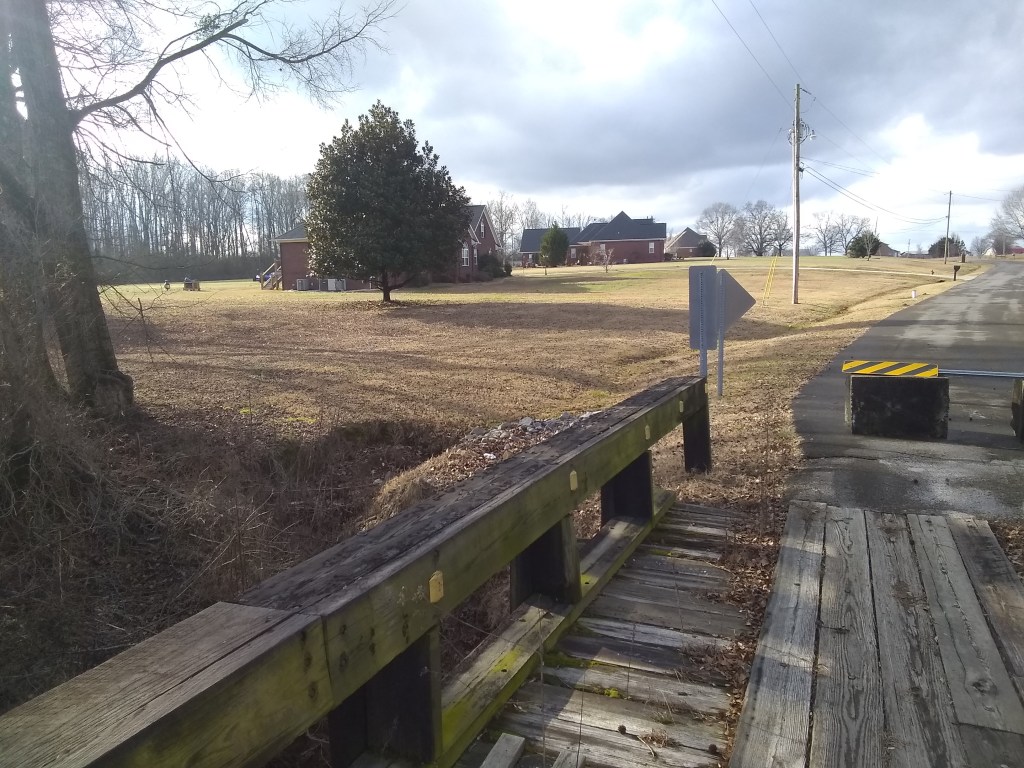
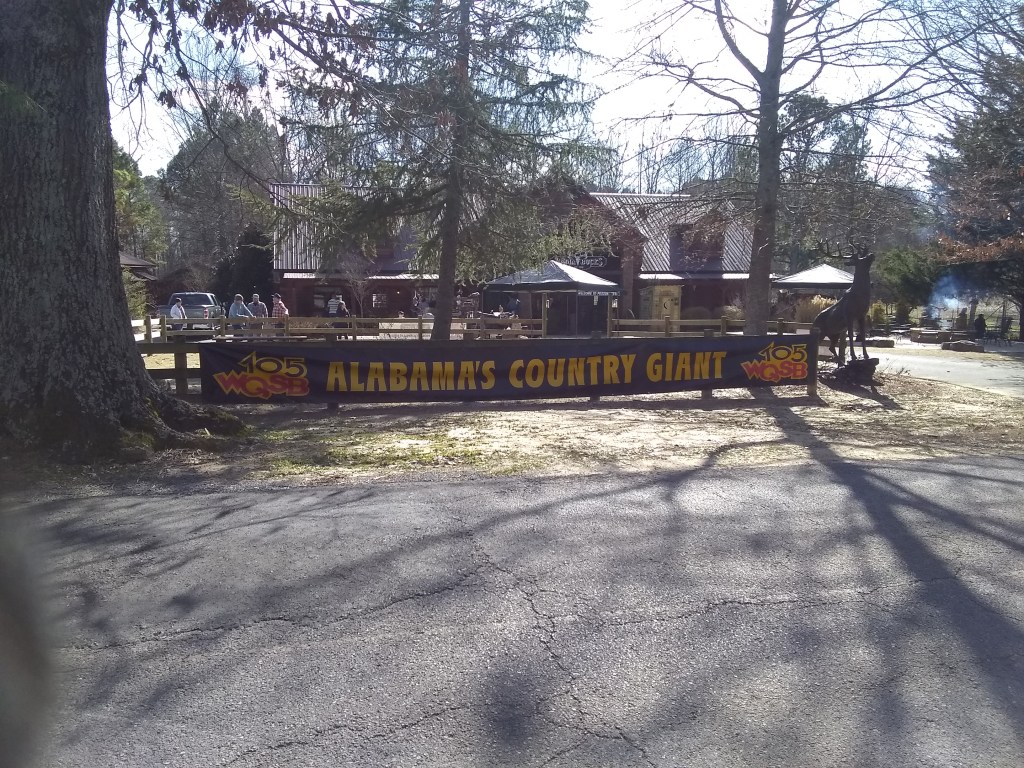
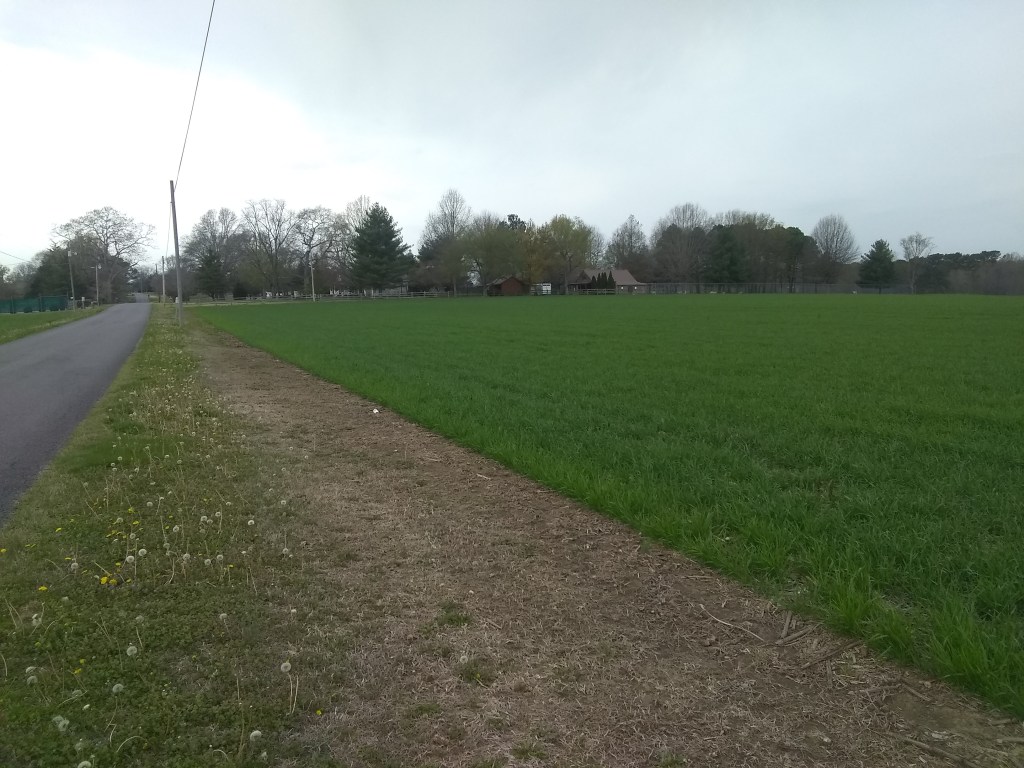
Here’s a few photos from along my pistol route:

To Be a Person: Jane Hirshfield’s Playful and Poignant Poem About Bearing Our Human Condition

Here’s the link to this article.

BY MARIA POPOVA

To Be a Person: Jane Hirshfield’s Playful and Poignant Poem About Bearing Our Human Condition

A human being is a living constellation of contradictions, mostly opaque to itself. “Inward secret creatures,” Iris Murdoch called us in reckoning with the blind spots of our self-knowledge. “Humans are just the sort of organisms that interpret and modify their agency through their conception of themselves,” philosopher Amélie Rorty wrote as she examined what makes a person — a self-conception shaped by our astonishing evolutionary inheritance, which took us from bacteria to the Benedictus in a mere minute on the clock-face of the cosmos; a self-conception distorted by an ego that habitually confuses who we wish we were for who we are, redeemed only by the courage to know ourselves.

A generation after Maya Angelou captured these flickering contradictions in her poem “A Brave and Starling Truth,” which sailed into space to remind us that “we are neither devils nor divines,” Jane Hirshfield cracks open this eternal question of what it means to be a person in a lovely poem from her collection The Asking: New and Selected Poems (public library).

TO BE A PERSON
by Jane Hirshfield

To be a person is an untenable proposition.

Odd of proportion,
upright,
unbalanced of body, feeling, and mind.

Two predator’s eyes
face forward,
yet seem always to be trying to look back.

Unhooved, untaloned fingers
seem to grasp mostly grief and pain.
To create, too often, mostly grief and pain.

Some take,
in witnessed suffering, pleasure.
Some make, of witnessed suffering, beauty.

On the other side —
a creature capable of blushing,
who chooses to spin until dizzy,
likes what is shiny,
demands to stay awake even when sleepy.

Learns what is basic, what acid,
what are stomata, nuclei, jokes,
which birds are flightless.
Learns to play four-handed piano.
To play, when it is needed, one-handed piano.

Hums. Feeds strays.
Says, “All together now, on three.”

To be a person may be possible then, after all.

Or the question may be considered still at least open —
an unused drawer, a pair of waiting workboots.

Complement with Sylvia Plath on the pillars of personhood and philosopher Rebecca Goldstein on what makes you and your childhood self the same person despite a lifetime of physiological and psychological change, then revisit Jane Hirshfield’s wonderful poems “Optimism,” “The Weighing,” and “For What Binds Us,” and her uncommonly insightful prose meditation on how poetry transforms us.

Christianity’s Addiction to Magical Thinking

Here’s the link to this article.

By David Madison at 11/03/2023

Churchgoers don’t even notice or care 

A thousand years from now, will there be people—with as little grasp of history as contemporary Christians—who worship a goddess named Minerva, because they believe that Minerva McGonagall in the Harry Potter stories was real? What magical powers she had! She could change herself instantly into a cat, and multiply food supplies. Will there also be a goddess Hermione, based on Hermione Granger in Harry Potter, who created a magic potion that allows the person who drinks it to assume the physical appearance of another person? Will the Fairy God Mother in Cinderella be worshipped as well, because she used a magic spell to turn a pumpkin into a splendid coach?
 
 
The New Testament authors used exactly this kind of razzle-dazzle to bring converts to the Jesus cult. These authors borrowed freely from miracle folklore of the ancient world: they depicted Jesus healing a blind man by smearing mud on his eyes; a woman was healed by touching the hem of Jesus’ garment. He transferred demons from a man into pigs, fed thousands of people with just a few loaves and fish, turned water into wine, raised a man from the dead by voice command, recommended magic potions—drinking his blood and eating his flesh—to gain eternal life. He cured a paralytic by forgiving his sins. Jesus glowed on a mountaintop while chatting with Moses and Elijah—and the voice of Yahweh came from water vapor (a cloud). Jesus walked on water and controlled with weather. At the end of his story, he floated up and away, disappearing in the clouds. 
 
There’s magic as well in the letters of the apostle Paul. He taught that by believing in your heart—and saying with your lips—that Jesus was raised from the dead, “you will be saved.” That’s a magic spell. Paul also was sure your sexual desires are cancelled (or, as he put it, crucified) if you “belong to Jesus.” 
 
The New Testament is a handbook of magic. Any one of these Jesus stories told from the pulpit evokes a feeling of awe, “Wow, wasn’t Jesus wonderful!” But a responsible study/analysis of scripture means that even the most devout readers must consider probabilities, based on how we know the world works. Which is more likely—that Jesus did such awesome things, or that the gospel authors fashioned their stories from the fantasy folklore of the time? If your favorite priest or minister claims to have pulled off miracles similar to these Jesus-deeds in the gospels, only the most gullible would be convinced. In this era of cell-phones, many churchgoers would ask for evidence: “Let’s see the pictures.” But when they believe—and adore—the magic stories in the Bible, they waive the request for evidence. 
 
There is very little curiosity about what it was like to live at the time the New Testament was written, or a grasp of how little knowledge of the world and the universe most people at that time possessed, e.g., that we live on a planet whose crust consists of seven continents and vast oceans—with a molten core at its center; that we are in a solar system that orbits the galactic center, along with billions of other solar systems. The Bible authors didn’t even know what stars are. 
 
Nor is there much curiosity among the devout about the authors of the New Testament. Who were they, after all? But it is hard to satisfy this curiosity because the gospels were written anonymously, and so many of the epistles were forgeries. Because of the apostle Paul’s own seven authentic letters, we have an abundance of information about him—which, unfortunately, is not a good thing! But from what the New Testament authors wrote, we can figure out a lot about their mind-sets—which, also unfortunately, is not a good thing. The church has done a good cover-up job by positioning these authors as saints, and this has deflected attention from the superstitions and magical thinking that they embraced and promoted.  
 
Scholars have researched and debated these realities for a long time, with devout scholars trying to put the best possible spin on ancient beliefs that should be trashed. Religions have always thrived on the appeal to belief without evidence. That’s the whole point of the story of Doubting Thomas, found only in John’s gospel (20:24-29). When the other disciples told Thomas that the resurrected Jesus had appeared to them—Thomas wasn’t there when it happened—his skepticism kicked in. A week later, Thomas was present when Jesus showed up again. He invited Thomas to touch the sword wound in his side, and that convinced him: “My Lord and my God!” And then he got a scolding from Jesus: “Have you believed because you have seen me? Blessed are those who have not seen and yet have come to believe.” 

Religions rely on this gimmick: believe what the preachers claim to know about god(s).
 
For in depth study of this issue, I recommend an article published here last November by John Loftus, Paul’s Christianity: Belief in Belief Itself. This is actually the full version of the Foreword that Loftus wrote for Robert Conner’s excellent book, The Jesus Cult: 2000 Years of the Last Days.
 
What are we up against when we face belief-in-belief? Loftus reports this encounter: “I asked one woman whether she honestly wanted to know if her faith was false. She said she didn’t, that she was happy, and that was that. She knew the implications if she concluded it was false. It would involve some adverse social repercussions she didn’t want, so she chose not even to consider whether she was wrong.” 
 
Which means that most churchgoers would not want to deal with the issues that Loftus discusses in this article. He opens with a quote from the Conner book: “…the greatest threat is the core feature of the Christian cult: belief in belief, the conviction that the Christian narrative is literally its own proof.” (p. 2, The Jesus Cult)
 
Hence churchgoers today—like the woman Loftus mentions—couldn’t care less how Christian theology emerged in the ancient world; their simple answer is sufficient: “Jesus the son of God was born, did his magic tricks—proof for sure he had divine powers—was sacrificed to atone for our sins, rose from the dead. This is what we have to belief to live with Jesus forever.” The heavy magic component here isn’t noticed—or more correctly, it is embraced as willingly as Harry Potter fans cheer on their hero. Conner is blunt:
 
“Christianity was a cult as presently understood from its inception, a toxic brew of apocalyptic delusion, sexual phobias and fixations, and a hierarchy of control, control of women by men, of slaves by masters, and society by the church.” (p. 2, The Jesus Cult)
 
This toxic brew of apocalyptic delusion got a jump start in the writings/teachings of the apostle Paul. The devout don’t seem to notice how much their religion has been damaged by Paul’s bad theology. No surprise. If few Christians make a practice of reading the gospels with full curiosity and skepticism engaged, I suspect far fewer read Paul’s letters. The gospels at least have stories, but Paul wrote extensively about his theological certainties based on his visions. It is obvious he had little—if any—knowledge about Jesus of Nazareth. 
 
Why doesn’t this example of Paul’s bragging shock churchgoers: “For I want you to know, brothers and sisters, that the gospel that was proclaimed by me is not of human origin, for I did not receive it from a human source, nor was I taught it, but I received it through a revelation of Jesus Christ.” (Galatians 1:11-12)
 
So, Jesus spoke to Paul directly from the spiritual realm? Here we go again with magical thinking, similar to the commonly accepted notion that gods speak to humans via dreams. Loftus notes that this is detached from reality:
 
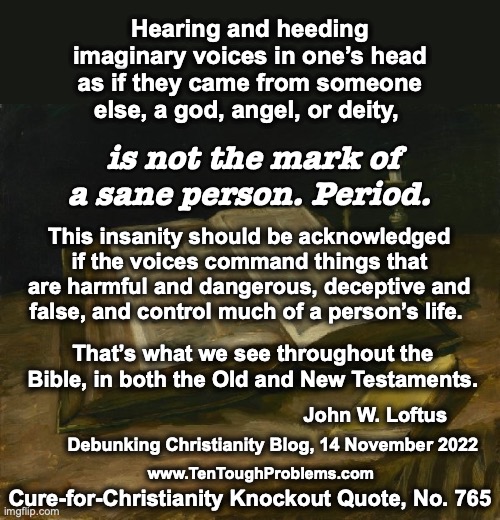
“Hearing and heeding imaginary voices in one’s head as if they came from someone else, a god, angel, or deity, is not the mark of a sane person. Period. This insanity should be acknowledged if the voices command things that are harmful and dangerous, deceptive and false, and control much of a person’s life. That’s what we see throughout the Bible, in both the Old and New Testaments.”
 
The Old Testament prophets claim that the word of Yahweh “came to them” and Joseph supposedly learned about Mary’s pregnancy in a dream. This is yet more magical thinking. 
 
There has been a lot written about Paul’s state of mind, and Loftus sums up the conclusions of many secular thinkers: “I can affirm with a great deal of confidence that Paul was functionally insane, if he were living among rational people. But in a rational society Paul wouldn’t function well at all. He would be that homeless guy on the city street corner who proselytized with bullhorns and signs to no one, calling on people to ‘REPENT! FOR THE END IS NEAR!’” 
 
Robert Conner also wrote an essay, “Paul’s Christianity,” for Loftus’ 2019 anthology, The Case Against Miracles. Conner’s conclusion, at the end of his 25-page essay: “A more mature modern psychology with superior investigative techniques and tools can now question whether Paul of Tarsus was functionally, if not clinically, insane—and whether the religion he championed is based on delusion.” (p. 545)

                                             Loftus draws attention to Gerd Ludemann’s book, Paul: The Founder of Christianity. This title might puzzle many of the devout, who don’t appreciate New Testament chronology. That is, Paul’s version of the faith was preached long before the gospels were written, and much of their content might, in fact, be derived from his thought. On this, see especially, Mark Dykstra’s book: Mark Canonizer of Paul.
 
I’ve just scratched the surface of Loftus’ essay. It is worth careful study, especially by Christians who are inclined to ignore the origins of their faith—to protect their beliefs. Their belief in belief. Loftus also references Richard Carrier’s article, Kooks and Quacks of the Roman Empire: A Look into the World of the Gospels, in which he states:


“From all of this one thing should be apparent: the age of Jesus was not an age of critical reflection and remarkable religious acumen. It was an era filled with con artists, gullible believers, martyrs without a cause, and reputed miracles of every variety. In light of this picture, the tales of the Gospels do not seem very remarkable. Even if they were false in every detail, there is no evidence that they would have been disbelieved or rejected as absurd by many people, who at the time had little in the way of education or critical thinking skills.”
 
Christianity’s addiction to magical thinking guarantees that its foundations are incredibly weak. 


David Madison was a pastor in the Methodist Church for nine years, and has a PhD in Biblical Studies from Boston University. He is the author of two books, Ten ToughProblems in Christian Thought and Belief: a Minister-Turned-Atheist Shows Why You Should Ditch the Faith, now being reissued in several volumes, the first of which is Guessing About God (2023) and Ten Things Christians Wish Jesus Hadn’t Taught: And Other Reasons to Question His Words (2021). The Spanish translation of this book is also now available. 
 
His YouTube channel is here. At the invitation of John Loftus, he has written for the Debunking Christianity Blog since 2016.
 
The Cure-for-Christianity Library©, now with more than 500 titles, is here. A brief video explanation of the Library is here

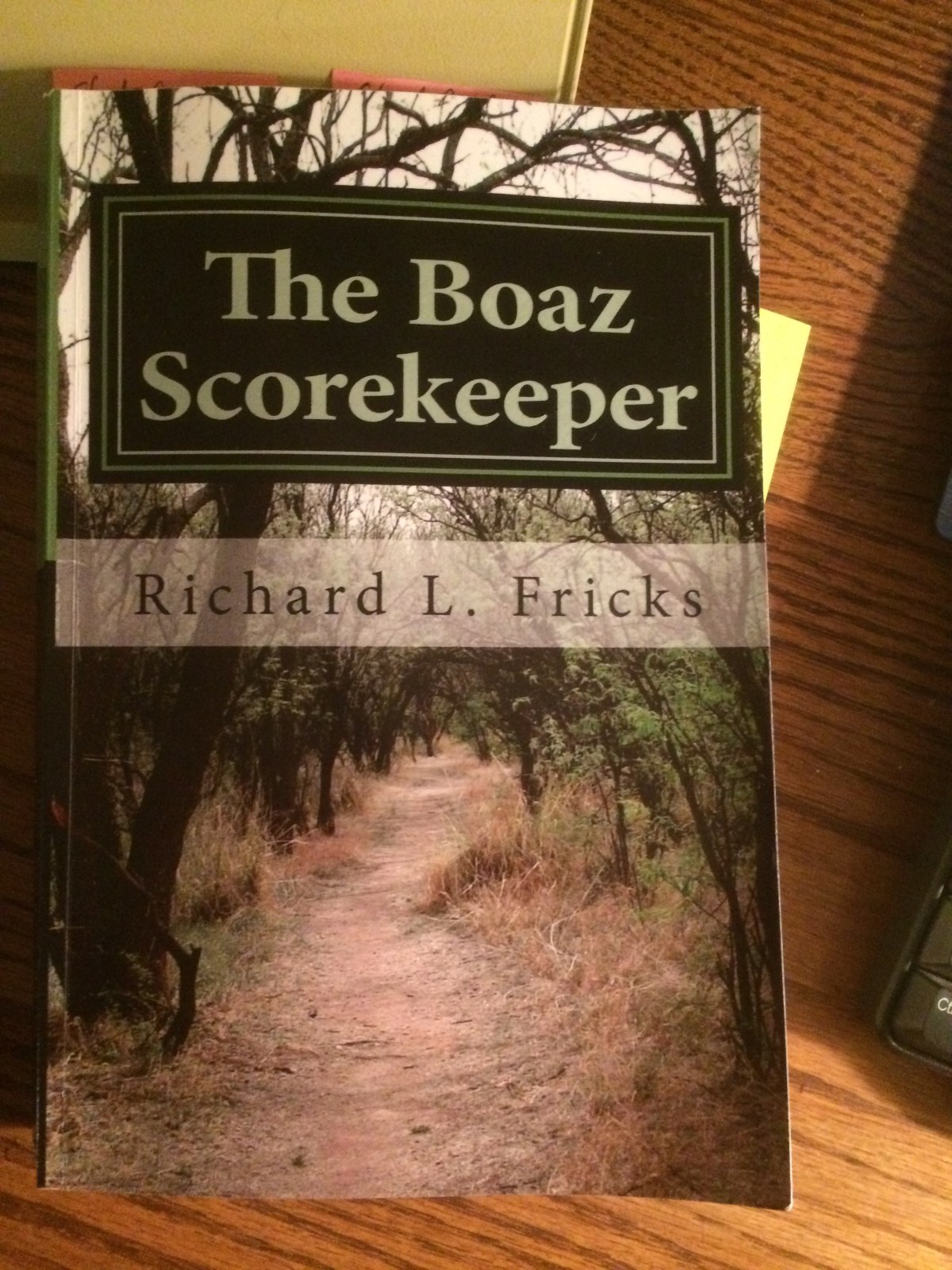
The Boaz Scorekeeper–Chapter 24

The Boaz Scorekeeper, written in 2017, is my second novel. I'll post it, a chapter a day, over the next few weeks.

Almost immediately, Matt and I started taking depositions.

Nyra Sue Gibson Ellsworth now lives in Montgomery. She was one of the four cheerleaders who were at the Graduation Party.  Attorney Gil Burns, a friend of Matt’s, allowed us to use his conference room.

She arrived without an attorney and before she was sworn in she looked at me and said, “Micaden, I am sorry I did not help you back in 1973.”  I started to respond but Matt said this all needed to be on the record.  After the court reporter swore her in and after he laid out the general rules for depositions, Matt began:

Matt: What did you say to Micaden when you first walked in this morning?

Nyra: I am sorry I did not help you back in 1973.

Matt: What did you mean?

Nyra: I did not tell all I knew.

Matt: Let’s go back to that day, May 25, 1972.  You agree you were at the graduation party that took place at Club Eden?

Nyra: I do, at the time I didn’t know what the place was called.  I learned that later.

Matt: Who else was at the party?

Nyra: Gina Culvert, Rickie Bonds, Darla Sims, two girls I didn’t really know named Wendi and Cindi, Micaden, and the Flaming Five.

Matt: If you will, name the Flaming Five.

Nyra: Wade Tillman, James Adams, Randall Radford, Fred Billingsley, and John Ericson.

Matt: How did you get to the party?

Nyra: I rode with the Flaming Five.

Matt: Where did they pick you up?

Nyra: At a barn off Martin Road.

Matt: Can you be a little more descriptive?

Nyra: It was a place John’s father owned.  We had met there before.  Anytime we went to their Club we would drive there and one of them would pick us up. 

Matt: Are you referring to Gina Culvert, Rickie Bonds, Darla Sims?

Nyra: Yes, we drove my car that night and James, Randall, and John were already there.

Matt: Do you know where the Hutchinson’s live on Martin Road?

Nyra: Yes, if you’re talking about Whitesville on the hill?

Matt:  For the record, why did you call it Whitesville?

Nyra: That’s a nickname.  What I always heard it called.  Everything is white, the house, the barns, the fence.

Matt:  Where was the Ericson’s barn in relation to the Huntchinson’s place?

Nyra: Just beyond on the right.  Go past for about a half-mile and it’s on the right.  I haven’t been out that way in 25 years.  There was a gate and the barn was way back beyond a grove of trees down a little narrow lane.  The road or path kept going a long way to the back side of the property.  John and I had walked back there a few times before that night.

Matt: So, you left your car parked at the barn and all seven of you went to Club Eden?

Nyra: Yes

Matt: Who drove?

Nyra:  John drove his red Blazer and James drove his van.  All the cheerleaders rode with John.

Matt: So, Randall, James, and John were there in two vehicles?

Nyra: Yes.

Matt: You mentioned that there were two other girls present at the party.  How did they get there?

Nyra: Oh, I forgot.  We followed Randall and James to the Dairy Queen where they picked up the two girls.

Matt: Had they driven there?

Nyra: I assume so.  They were sitting in a little blue car waiting on us when we arrived.

Matt: Give me an overview of what happened at the party.

Nyra: We arrived and grilled out a cooler full of steaks.  I remember Micaden and Wendi, she had introduced herself.  The two of them went walking and, inside the tent.  It was like they already knew each other because they stayed paired up all night.  We all hung out by the fire and started playing spin the bottle.  I’m sure you know what that is.

Matt: Tell me please.

Nyra: You sit in a circle and spin a bottle.  Whoever it points to goes to the tent.  And the next person spins the bottle.  The person of the opposite sex that the bottle points to goes to the tent.  It’s up to the two people in the tent to decide what they want to do.  I’m pretty sure we all made out with each other that night.  Except for Micaden and Wendi.  Like I said, they stayed paired off to themselves all night.

Matt: Did anyone force you to do anything you didn’t want to do?

Nyra: No.  Absolutely not.

Matt: When did you leave the party?

Nyra: It was late, probably 1:00 or 2:00 a.m.

Matt: Who did you leave with?

Nyra: All six of us girls left with James, Randall, and John, in James’ van.

Matt: So, Micaden, Wade, and Fred stayed at the Club?

Nyra: Yes.  James drove us back to the barn.

Matt: What about Wendi and Cindi?

Nyra: James didn’t drop them off at Dairy Queen.  He just drove straight to the barn on Martin Road.

Matt: What happened when you all got there?

Nyra: Gina, Rickie, Darla, and I got in my car and we left.  We went to Darla’s house and slept for hours.

Matt: So, when you four left the barn on Martin Road, Wendi and Cindi were there with Randall, James, and John?

Nyra: Yes.

Matt: Do you know why James didn’t drop them off at Dairy Queen?  Wasn’t that where they had left their car?  Ya’ll had to pass it on the way from the Club to the barn, didn’t you?

Nyra: That’s right.  I remember Wendi saying, “you missed the turn” or something like that.  She seemed upset that James didn’t stop and let them out.

Matt: What did James say?

Nyra: He said something about wanting to show Wendi and Cindi where the barn was so they would know where to meet next time.

Matt: Is there anything else you can remember about what happened at the barn before you and your three friends drove off?

Nyra: Wendi asked if she and Cindi could go with us.

Matt: What did you say?

Nyra: I said sure, but we’ll have to cram inside my car.

Matt: Why didn’t they?

Nyra: The guys wouldn’t let them.  They kept saying that was out of the way and that they would drop them off.

Matt: What happened next?

Nyra: I drove me, Gina, Rickie, and Darla back to her house.

Matt: Leaving Wendi and Cindi alone at the barn with Randall, James, and John?

Nyra: Yes.

Matt: You of course realize that this is not the story you gave at Micaden’s trial?

Nyra: I do, and again Micaden, I am so very sorry that I lied.

Matt: I have a copy of your trial testimony.  In it you say that Micaden was the one who drove all the girls home from the party dropping you, Gina, Rickie, and Darla off at Boaz High School, and then leaving with Wendi and Cindi.

Nyra: I know that’s what I said but now you know what really happened.

Matt: Why did you lie?

Nyra: I was pressured to lie.

Matt: By who?

Nyra: By the Flaming Five and their fathers.

Matt: Please be more specific.

Nyra: The day after the party, John came to see me and told me that the two girls, Wendi and Cindi, were missing.  He said there was going to be trouble for all of us.  He said we needed to go for a ride.  He drove us back to the Ericson’s barn. Everyone was there.

Matt: Please name everyone who was there.

Nyra: Of course, me and John, his father Franklin, Randall and his father Raymond, Fred and his father Fitz, Wade and his father Walter, James and his father David.  Also, Gina Culvert, Rickie Bonds, and Darla Sims were there.

Matt: Please continue.

Nyra: Walter and David were kind of the ring leaders.  They said that the Flaming Five could likely wind up in prison unless we got our stories straight.  Walter said that Randall, James, and John had dropped the twins off at the Dairy Queen early Saturday morning and that’s the last they saw them.  He said no one knew what happened to them but the truth would raise too much suspicions for the Flaming Five.  David then told me and the other girls what we were to say when we were questioned.  None of us liked the idea.  Darla and Gina refused.  Fitz said that they had an offer that would change our lives forever.  He said that each of us would receive a fully paid education at either Auburn or Alabama and that we would be paid a monthly payment of $200.00 for ten years.  Walter then handed each of us an envelope containing $1,000.00.  The Flaming Five and their fathers all made us promise that we would never say anything about this meeting or our agreement.  They threatened us and our families if we ever said anything.

The deposition ended and Matt and I drove back to Boaz thankful for the helpful evidence we had discovered but both knowing that it was far from what we would have to have to win Bill and Nellie Murray’s wrongful death case.


11/07/23 Biking & Listening

Here’s today’s bike ride.

Why I ride

Biking is something I both love and hate. The conflicting emotions arise from the undeniable physical effort it demands. However, this exertion is precisely what makes it an excellent form of exercise. Most days, I dedicate over an hour to my cycling routine, and in doing so, I’ve discovered a unique opportunity to enjoy a good book or podcast. The rhythmic pedaling and the wind against my face create a calming backdrop that allows me to fully immerse myself in the content. In these moments, the time spent on the bike seems worthwhile, as I can’t help but appreciate the mental and physical rewards it offers.

I especially like having ridden. The post-biking feeling is one of pure satisfaction. The endorphin rush, coupled with a sense of accomplishment, makes the initial struggle and fatigue worthwhile. As I dismount and catch my breath, I relish the sensation of having conquered the challenge, both physically and mentally. It’s a reminder that the things we sometimes love to hate can often be the ones that bring us the most fulfillment. In the end, the love-hate relationship with biking only deepens my appreciation for the sport, as it continually pushes me to overcome my own limitations and embrace the rewards that follow the effort.

My bike

A Rockhopper by Specialized. I purchased it November 2021 from Venture Out in Guntersville; Mike is top notch! So is the bike. The ‘old’ man seat was salvaged from an old Walmart bike (update: seat replaced, new photo to follow, someday).


Something to consider if you’re not already cycling.

I encourage you to start riding a bike, no matter your age. Check out these groups:

Cycling for those aged 70+(opens in a new tab)

Solitary Cycling(opens in a new tab)

Remember,

Photo by Suzy Hazelwood on Pexels.com


Novel I’m listening to:

The Last Thing He Told Me, by Laura Dave

Amazon abstract:

Don’t miss the #1 New York Times bestselling blockbuster and Reese Witherspoon Book Club Pick that’s sold over 2 million copies–now an Apple TV+ limited series starring Jennifer Garner!

The “page-turning, exhilarating” (PopSugar) and “heartfelt thriller” (Real Simple) about a woman who thinks she’s found the love of her life—until he disappears.

Before Owen Michaels disappears, he smuggles a note to his beloved wife of one year: Protect her. Despite her confusion and fear, Hannah Hall knows exactly to whom the note refers—Owen’s sixteen-year-old daughter, Bailey. Bailey, who lost her mother tragically as a child. Bailey, who wants absolutely nothing to do with her new stepmother.

As Hannah’s increasingly desperate calls to Owen go unanswered, as the FBI arrests Owen’s boss, as a US marshal and federal agents arrive at her Sausalito home unannounced, Hannah quickly realizes her husband isn’t who he said he was. And that Bailey just may hold the key to figuring out Owen’s true identity—and why he really disappeared.

Hannah and Bailey set out to discover the truth. But as they start putting together the pieces of Owen’s past, they soon realize they’re also building a new future—one neither of them could have anticipated.

With its breakneck pacing, dizzying plot twists, and evocative family drama, The Last Thing He Told Me is a “page-turning, exhilarating, and unforgettable” (PopSugar) suspense novel.


Podcasts I’m listening to:


Here’s a few photos from along my pistol route:

Center of the Universe: Non-Speaking Autistic Poet Hannah Emerson’s Extraordinary Poem About How to Be Reborn Each Day

Here’s the link to this article.

BY MARIA POPOVA

Center of the Universe: Non-Speaking Autistic Poet Hannah Emerson’s Extraordinary Poem About How to Be Reborn Each Day

In their strange cosmogony predating Copernicus by two millennia, the ancient Greek scientific sect of the Pythagoreans placed at the center of the universe a ball of fire. It was not hell but the heart of creation. Hell, Milton told us centuries and civilizations later, is something else, somewhere else: “The mind is its own place,” he wrote in Paradise Lost, “and in it self can make a Heav’n of Hell, a Hell of Heav’n.”

Grief and despair, heartache and humiliation, rage and regret — this is the hellfire of the mind, hot as a nova, all-consuming as a black hole. And yet, if are courageous enough and awake enough to walk through it, in it we are annealed, forged stronger, reborn.

That is what the non-speaking autistic poet Hannah Emerson celebrates in her shamanic poem “Center of the Universe,” found in her extraordinary collection The Kissing of Kissing (public library), song of the mind electric, great bellowing yes to life.

CENTER OF THE UNIVERSE
by Hannah Emerson

Please try to go
to hell frequently
because you will
find the light there

yes yes — please
try to kiss the ideas
that you find there
yes yes — please

try to get that
it is the center
of the universe
yes yes — please

try to help yourself
by kissing the hot hot
hot life that is born
there yes yes — please

try to yell in hell
yes yes — please
try to free yourself
by pouring yourself

into the gutter all
guttural guttural yell
yes yes yes — please
try to get that you

become the being
that you came there
to be yes yes — please
try to go to the great

great great fire that you
created because you
become the light
that the fire makes

inside of you
yes yes — please
try to kiss yourself
for going there

yes yes — please
get that you are
reborn there
yes yes — please

begin your day

Drink in more soul-slaking poetry here, then revisit the story of how Dostoyevsky, just after his death sentence was repealed, found himself “regenerated into a new form… reborn for the better.”

I’ve Written Three Books On How To Honestly Seek the Truth

Here’s the link to this article.

By John W. Loftus at 11/02/2023

[First Published August 2022] I’ve written three books to educate believers on how to honestly seek the truth and defend it: 1) The Outsider Test for Faith: How to Know Which Religion is True. In it I show honest believers how to approach their faith consistently without any double standards or special pleading.

2) How to Defend the Christian Faith: Advice from an Atheist. In it I show Christian apologists how to correctly defend their faith, if it can be defended at all. Apologists should read it before writing another sentence in defense of their faith. In it I challenge apologists to stop doing what they’re doing if they’re honest about defending their Christian faith. The risk is that if they stop it they cannot defend their faith at all. But the risk is worth it if they’re serious about knowing and defending the truth.

3) Unapologetic: Why Philosophy of Religion Must End. In it I show philosophers of religion and other intellectuals how to properly discuss and debate religious beliefs. What I cannot teach however, is to desire the truth. That comes from within. Taken together these three books are the antidote to the faith virus. The problem is almost none of them desire the truth, comparatively speaking. Here’s hoping a few honest believers are reading who desire the truth.

————–

John W. Loftus is a philosopher and counter-apologist credited with 12 critically acclaimed books, including The Case against MiraclesGod and Horrendous Suffering, and Varieties of Jesus Mythicism. Please support DC by sharing our posts, or by subscribing, donating, or buying our books at Amazon. Thank you so much!