Before you run off, consider Tom. Other than Mrs. Steed’s eighth grade art class, he’s never drawn a thing. Other than that high school short story project (grade = D), Tom’s never written a thing (ignoring the occasional grocery list). Other than humming the high school Alma Mater during his class’s tenth-year reunion, Tom’s never been much into music.
So, Tom’s not the creative type. Or so he thinks. But remember, Tom is human and non-creative humans are an anomaly, or they don’t survive.
If we look closer at Tom, we learn he likes to build stuff, things like knives, swords, meat cleavers, and small wood-burning heaters and pizza ovens (he’s also built a farm carryall). Sure, he uses tools: sanders, grinders, welders, air-compressors. But his designs are unique to him.
Tom’s metal-working isn’t a job; he does it to fight depression, and to battle the boredom of his day job (he’s a truck driver and delivers feed to poultry houses). Of late, Tom’s been thinking of a dream he had a few weeks ago. He was walking down an aisle towards a podium to receive the educator of the year award. The dream, or some variant of its theme, comes now at least twice a month.
Well, what do you know? Tom is creative, even though it might seem involuntary. He has an imagination, albeit fueled by the mysterious dream world. Truth be told, Tom would love to teach metal-working at the local technical college.
You and I are a lot like Tom, at least at times. We have hopes and dreams, and we get discouraged, maybe slid into depression.
Mine dream is to become a better novelist, all while encouraging others to write fiction. Yours might be to draw or paint landscapes, write poetry or short-stories, or learn how to play the guitar.
Whatever our dreams and hopes, it likely involves doing something, learning better ways of doing something. Doing and being require a multitude of skills (some of which we already have). Even if you were born knowing Beethoven’s Moonlight Sonata (unlikely!), you still have room to learn and grow.
Here’s some good advice from famous poet Jane Kenyon:
“Be a good steward of your gifts. Protect your time. Feed your inner life. Avoid too much noise. Read good books, have good sentences in your ears. Be by yourself as often as you can. Walk. Take the phone off the hook. Work regular hours.”
I encourage you to read Maria Popova’s article: Poet Jane Kenyon’s Advice on Writing: Some of the Wisest Words to Create and Live By.
I’m certain I never would have written eleven novels since November 2015 if it hadn’t been for the wonderful writing software known as Scrivener. It is the best way to simplify the complex process of writing, especially an extensive work. If you missed my Scrivener introductory video, you can watch it here.
My current work in progress (WIP) is a book I’ve titled, The Boaz Slavemaster (for now, this is a placeholder title). To gain a little familiarity with my WIP, and particularly Scene 7, click here.
My purpose for jumping from an introductory video to Scrivener (hands down, the best writing software available) straight into a scene eighteen thousand words into my manuscript, is to illustrate two things: 1) you already possess a ton of skills that can be utilized in the writing of your first novel; and 2) novel writing consists of a million small tasks.
Here’s something to keep in mind as you watch this video. You can edit a draft. You cannot edit a blank page. Of course, these words aren’t original to me, but they’re critical for you to adopt. The foremost aim for you to accomplish in writing your first novel is to complete your first draft. This requires you to put words on the page. What I hope Lesson 2 reveals is a simple process of doing just that.
One final tip. Forget time. Take as long as you want and need. I’ve been working on Scene 7 for over a week. Let’s do some quick math: if you can write 200 to 250 words per day (FACT: you’ve just read around 250 to this point), you can complete a first draft in less than a year. (disclosure: my books are typically longer than this). Said another way, with a twist: develop a writing habit, preferably every day. Take your time, but move forward; adopt the pace that is comfortable for you, the pace that you can keep up.
On to the video. I hope to keep them coming. DO NOT FORGET—you can write a novel.
Here’s how I left my Scrivener project today (left side is the Binder; middle section is the text for Scene 7, and the right side is a character card (a text file) for Hannah Dodd).
To me, there is no more important feature to the Scrivener writing software than the binder. Although I’ve read and studied intensely how to outline a novel in full up front before writing the first word of the story, I always gravitate to the pantsing side of the fence. However, during my past two completed novels, and now my WIP, I’ve adopted a pantsing with a twist approach: from the beginning I don’t know where my story is going, but once it does, and I have a scene in mind, I outline that scene and move on.
Notice in the binder (Scene 7), I created a text file, “Hannah and David do some probing.” And, under that, there are two subfiles (“What if Glenn was supposed to have a meeting at 11:00?” and, “Had neighbor seen something [?]” Notice, the next text file is “Who are Hannah and David?” There are several other text files, but for now, let’s limit this discussion to the above.
Recall, when I start a scene, I know very little. What I do know is the result of asking a simple question: what should happen next? I try to put myself in the story and think logically about what might happen.
Here’s an example (story alert): prior to Scene 7, Glenn has been kidnapped, and the pair who grabbed him returned his Mustang to his home and took his Toyota Highlander. Further, I had just completed a scene where the protagonist (yes, he’s one of the kidnappers!), checked up on Glenn at the barn where he is hidden. So, I thought, what else is going on at this same time? Glenn owns Elkins Hardware; it’s a Monday. The store has opened and Glenn is always there by 6:30. Thus, I decided to change POV and write in third person (previous scenes were in first person).
From my outline, and over three days mind you, this is what I created [I’ll insert some current comments in brackets and bolded]:
Scene 7
“No luck.” David said as he walked inside Elkins Hardware. “Mustang’s right where it was this morning. No sign of the Highlander.”
Hannah Dodd, Glenn’s operations manager, stood behind the front checkout counter and shook her ash blond hair, a habit she’d perfected in high school over twenty-eight years ago. “This is getting surreal. You know he’s a robot six mornings a week: eat breakfast at Grumpy’s, and here by six-thirty.”
David handed Hannah a stack of mail the post lady had handed him outside. He was more worried about his future than his boss’s health or happiness. “If he doesn’t show, will that be it?” A chance to manage a big box store was David’s dream, but that hinged on Glenn’s 1:00 PM meeting [to fit my timeline I changed the meeting to 1:00] today with Home Depot’s Joel Griggs [full disclosure: this character was created by visiting Lowe’s website and borrowing the names from two actual people]. Their fourth in as many months, with today’s seal-the-deal meeting at Atticus French’s law office on North Main.
“My guess is yes, since the City of Albertville is trying to woo the Depot with more incentives.” The business phone rang and Hannah grabbed it immediately. “Elkins Hardware.” She looked at David and shook her head sideways, while mouthing, “Pastor Miller.”
[The above gets us “in the moment.” Now, I delve into my Binder question, Who are Hannah and David?]
Hannah and David were the glue that held Elkins Hardware together, although Glenn naively believed it was himself. David had started part-time in the tenth grade. Hannah, as Gracie’s best friend [Gracie is Glenn’s daughter], had unofficially started in middle school, satisfied with a bag of Planter’s Salted Peanuts and an RC Cola in exchange for sweeping the floors and flirting with prospective customers who looked like they had money.
Hannah’s official hire date was August 13th, 1993, the day Glenn and Gina moved their only child to Tuscaloosa to attend the University of Alabama. Gracie and Hannah had been friends since first grade and were destined to be close forever, including sharing a dorm room at Tutwiler Hall for four years. That had all changed when Hannah’s father was killed in an auto accident and she was left with an invalid mother and an eleven-year-old sister to care for.
[David needs to get to his office. I thought a believable interruption would be helpful.]
“I need some paint.” A customer interrupted David as he walked to the stairwell that led to a row of offices overlooking the front half of the store.
“Hold on, I’ll grab Troy.” After doing so and settling into his office, David called Valerie at the French Firm. “Hey, it’s David at Elkins. Have you seen Glenn this morning?”
“No, and I don’t have time to chat. I’m getting ready for the closing.” Valerie said, ending the call without a goodbye. David had always had a crush on the voluptuous Val, but she still didn’t know it.
[Here’s more about David—hold on, I’m getting to that ‘probing.’]
Gerald, Glenn’s father, had hired David in 1970 as a stock-boy when he finished the tenth grade at Boaz High School. Four years later, with an Associate’s degree from Snead State under his belt, and a growing fascination with numbers, Gerald had moved David into sales for three months before awarding him the lucrative sales manager position. But, it was Glenn who’d figured out David was more valuable as finance manager since he could work magic with interest rates and late fees, not to mention his easy-going, highly persuasive personality.
David sat behind his desk and opened the middle drawer. He removed an eight by ten-inch photograph of the newest house in Hunters Run, only six weeks away from completion, and David’s occupancy. But, and that was a big but, only if Home Depot was coming to Boaz. A sick feeling in his stomach made David want to rip the photo in half. He would have if his desk phone hadn’t started ringing. [Here, you can start to see the importance of that 1:00 PM meeting, at least to David. I don’t have a clue how this twist came to mind. Maybe it was from my Binder/outlining—there needs to be some reason Hannah and David find Glenn (recall, he was kidnapped yesterday afternoon)].
Unenthusiastically, he answered, “David, Finance Department.”
“Is this Mr. Vance?” The voice was old and vaguely familiar.
“It is. May I help you?” David said, wishing he hadn’t been quite so short. However, an old lady, three months behind on her washer-dryer payments, was the last thing he wanted to deal with.
“This is Irene Capps. We talked this morning.”
“Yes mam. You live across the street from my boss, Glenn Elkins.” David sat up straighter and felt a slight breeze of optimism. “Have you remembered something?”
“No, but Charles has. You know I told you I go to bed at 8:00 but my old man stays up till at least midnight.” Irene’s voice was scratchy, like sandpaper.
“Did he see something across the street, at Glenn’s house, last night or this morning?” David instantly thought he was about to learn his boss was bedding the widow Dorothy Frasier, whose husband Frank had died six months ago from Covid. The plain looking but sharp dressing woman had been politely stalking Glenn since the beginning of summer.
“Hold on. You best talk to Charles.”
Now we’re getting somewhere. David thought. While he waited, he couldn’t help but look at the two-story Tudor one more time.
“Hello.” A gruff, let’s-hurry-up voice said.
It took a trio of back-and-forth questions and answers for Charles to tell his story. To David, it sounded like the old man was drunk as a skunk.
“So, let me summarize.” David believed this was the best way to pin Charles down and get off the phone. “A little before midnight, you and Brandon, your miniature boxer, were outside peeing. I mean, Brandon was peeing. That’s when you saw Glenn’s Mustang ease into his driveway with its lights off. Am I right so far?”
“It’s a shitzu.”
“Okay, then you saw a man exit the Mustang and drive away in Glenn’s Highlander. Right?”
“Yep, got her from Second Chance Kennels.”
“Brandon’s a girl?” David often asked irrelevant questions.
“Yes.”
“Charles, I’ve got a customer waiting, so let me ask one last thing. Which way did the Highlander go?”
“You hold on while I wet my whistle.” David could hear ice cubes tumbling into a glass.
“Okay, but hurry.”
Two swallows later, Charles continued. “Towards Elder.”
“Thanks, now one more. Sorry. Did you get a good look at who was driving the Highlander?”
“Come on baby, come on.” David’s mind didn’t like the image that suddenly appeared. Was Charles coaxing Irene or Brandon? “Now, I’m sorry. Brandon is a daddy’s girl.”
“Charles, could you tell if it was Glenn driving the Highlander?”
Without hesitating, Charles dismantled David’s theory. “Oh hell no, the guy was shorter, fatter. It couldn’t have been Glenn.”
“Did you determine this when you saw the man get out of the Mustang and walk to the Highlander?” David’s mind scrolled through a list of Glenn’s friends and customers who fit Charles’ description.
“I guess, and when he turned to look at me as he drove away.”
“Okay. Thanks. One last question and I promise this is it.”
Before David could ask, Charles added, “Yeah, that’s what they all say.”
“Is there anything else you can recall, anything at all?” David literally crossed his fingers, eying the English Tudor.
“Hold on, let me think.” David shook his head and hoped he wasn’t going to be so dense when he was old. “Got it. I knew there was something. You want to know what it is?”
Oh my fucking God, David squeezed his right hand to keep from sounding the words, “yes, please.”
“The man’s jacket. I mean the back of his jacket. It had something written on it. In yellow. I couldn’t tell if it was a word or just some letters. But, I know the first one was an F. Might have been ‘fuck off,’ but I’m only guessing.”
David sat and pondered. Falcons? That might be it, the Atlanta Falcons. Or was it Faith? He had seen a group of teens wandering through the Appliance Department a few months ago wearing tee-shirts with Faith across the back. David heard the line go dead. That’s when he remembered the youth was from a church in the valley, Cox Chapel Methodist. Yes, that was it. And the group might now have jackets with Faith highlighted in yellow across the backs. David returned the receiver to its cradle and concluded he was beyond desperate and was doing nothing but chasing an uncatchable rabbit.
END OF SCENE
As stated, this draft of Scene 7 has taken all week. It’s still a little messy, but you should have seen it yesterday.
One other thing about my writing method. Yesterday, I pretty much had the basic ideas down, but it wasn’t until mid-afternoon’s bike ride that I thought, “Doesn’t David need to learn more from Charles, Glenn’s across the street neighbor?” At that time, all Charles had told David was about seeing a man (who wasn’t Glenn) bring the Mustang to Glenn’s house—with lights off—park it and drive off in the Highlander.
So, biking, I kept thinking, “what could Charles have seen that might be harmful to my protagonist (yes, that kidnapper guy)?” It wasn’t until this morning during reread and pondering that same question that I remembered Marlon (okay, now you know the name of my protagonist) wore his FBI jacket the first night he was in town. Bingo if you have an F. Ha.
Finally, if you ask me how this yellow F is going to play into my story, I’ll have to say, I don’t know. But, hopefully, I’ll find out when I get there. Who knows, it might just appear in the Binder at just the right time.
Wrought iron words are carefully selected, soft but tough, malleable, forged to the scalding point in the writer’s mind, then poured onto the page. With tong and hammer he rolls, stretches, shapes, and orders the words into snippets, sentences, and paragraphs. Meaning fused into life, just waiting to be discovered.
Richard L. Fricks
This morning’s reading session was fruitful. In the following article, author Jessica Lourey asks us to read written words and life like a writer. This is great advice and I encourage you to read it through, take good notes, and feed your narrative detective some PIE.
“Learning to read like a writer is a practice in self-awareness and critical analysis. You need to be mindful when you really like a book/ movie/ song, or, even more telling, when you are actively turned off by one. Reading like a writer requires you to get in touch with that self-awareness and hone it by asking questions. I’m going to call that piece your narrative detective—its job is to solve the mystery of the narrative, looking at the ways it is and isn’t succeeding—and I’m going to encourage you to feed it PIE every time you read anything: a menu, a short story, the interpretive plaque next to the world’s biggest redwood tree. A book.
Here are the ingredients to the PIE:
P—Prepare. Prepare with pen and paper. Always have your notebook and something to write with nearby when you read. Your goal is to be prepared for insight. In addition to reading for pleasure, you will now use words as research and write down what you learn. If you prefer, you can dictate into a recorder or type into the Notes section of your phone.
I—Immerse. Get inside the words, the sentences, the story arc. Don’t simply stay on the surface of what you’re reading, no matter how shallow it seems. Go deep.
E—Examine. Examine. If that cereal box makes you excited to eat the sugar doodles, ask yourself what it is about the words and their formatting is doing that for you. If you read that redwood plaque and walk away feeling smart, ask yourself how it pierced your busy mind.
If—especially if—you’re reading a novel, and you connect with a character, or you find yourself yanked out of the story, or you read a sentence twice to savor the citrus taste of it, or anything else of note happens, study that situation like a lover’s face. Write down what you think is happening (“main character makes stupid choices,” “too many adverbs,” “lots of smells make me feel like I’m right there,” “each chapter ends with a hook,” etc.) because transcribing information flips a switch in our brain, waking up the records guy who then goes over to pick up what you wrote and file it somewhere so you can access it later.
When you feed your narrative detective PIE, she begins to internalize the language and rhythm of story. This level of observation is how most novelists learned to craft their stories. They didn’t go to college to learn to be writers. They read to learn to be writers. In fact, the first MFA in Creative Writing wasn’t offered until 1936, five years after the New York Times Bestseller List premiered. Agatha Christie, Mark Twain, and Jane Austen wrote their masterpieces well before that. And most of the current New York Times best-selling authors didn’t go to college for creative writing. J. K. Rowling’s degree is in French. Robert Ludlum studied acting. Ray Bradbury barely graduated high school. The amazing Maya Angelou earned fifty honorary degrees in her lifetime, but she gave birth three weeks after graduating high school and never attended college.
When it came to writing books, all of these writers learned by reading. You read like a writer to notice how good writing happens so you can emulate it and how bad writing happens so you can avoid it. You learn to understand how a story is strung together, how one particular scene leads to another, to observe how characters are built. I particularly encourage reading in the genre you wish to write in because those stories will have their own unique seasonings. Also, if you have the time and interest, I encourage you to check out Francine Prose’s exquisite Reading Like a Writer: A Guide for People Who Love Books and for Those Who Want to Write Them for a deeper guided practice on the art of reading like a writer.
It’s not only words that you need to pay more attention to on this healing odyssey. You should also start to read life like a writer. This is a little bit of a cheat, conflating reading words with reading people, but only a little because when it comes to writing well, inviting your narrative detective to real-life situations and feeding her PIE is just as important as bringing her to written words.
You can’t take a person you know, whole cloth, and shove them into a story. One, they’ll struggle. Two, real people are too big and clumsy for stories. They’re inconsistent and often dull if rendered whole. You can—and must—instead take pieces of people, settings, situations and transform them into a story.
So walk this world with a pen and notebook in hand, immerse yourself in life, examine why people make the choices they make. Consider what parts work, and which don’t, and what you can take away from that to write a compelling novel. Eavesdrop. Hang out with people who think differently than you do. Seek art, particularly art that makes you uncomfortable. Ask yourself “why” a lot, and then ask yourself “what if.” Start answering both questions. And most importantly, read as if your life depends on it.”
— Rewrite Your Life: Discover Your Truth through the Healing Power of Fiction by Jessica Lourey
Wrought iron words are carefully selected, soft but tough, malleable, forged to the scalding point in the writer’s mind, then poured onto the page. With tong and hammer, he rolls, stretches, shapes, and orders the words into snippets, sentences, and paragraphs. Meaning fused into life, just waiting to be discovered.
Richard L. Fricks
We all need to be more empathetic, more open-minded and accepting (aka, less judgmental), more creative, and more courageous.
The good thing is, we can accomplish all this without a brain (or heart) transplant.
Look at what I discovered during this morning’s reading session:
“Researchers have found tangible benefits to reading fiction…
Immersing yourself in a good novel increases your understanding of self and others. Studies suggest this is due to something called embodied cognition, in which your brain thinks your body is doing something it isn’t.… Specific to reading fiction, your brain drops you into the body of the protagonist, experiencing what they experience, which expands your capacity to put yourself in another’s shoes.
In addition to increasing empathy, neurobiological research proves that reading fiction changes the biology of the brain, making it more receptive and connected.
Reading novels also makes you more creative and open-minded, gives you psychological courage, and keeps your brain active and healthy.
The therapeutic value of reading novels is so profound that it has birthed something called bibliotherapy, in which clients are matched with a literary fiction designed to address what is ailing them, from mild depression to a troubled intimate relationship to a desire to find a work/ family balance.
Anyone who belongs to a book club has likely experienced a version of fiction’s healing powers. The value of reading is even more significant if you’re a writer. Imagine being a chef who eats only chicken nuggets, a carpenter who refuses to look at buildings, or an orchestra conductor who doesn’t listen to anything but commercial jingles.
Such is the problem for a writer who doesn’t read regularly and widely. Books are the maps to your craft. According to Stephen King, ‘If you don’t have the time to read, you don’t have the time (or the tools) to write. Simple as that.’ I agree.”
From Rewrite Your Life: Discover Your Truth through the Healing Power of Fiction by Jessica Lourey.
As of October 24, 2021, Sanity Snippets are snapshots of my daily life, those things I’m doing—such as reading, writing, biking, photographing, and gardening—to maintain sanity while living in the most regressive state imaginable. Alabama.
Richard L. Fricks
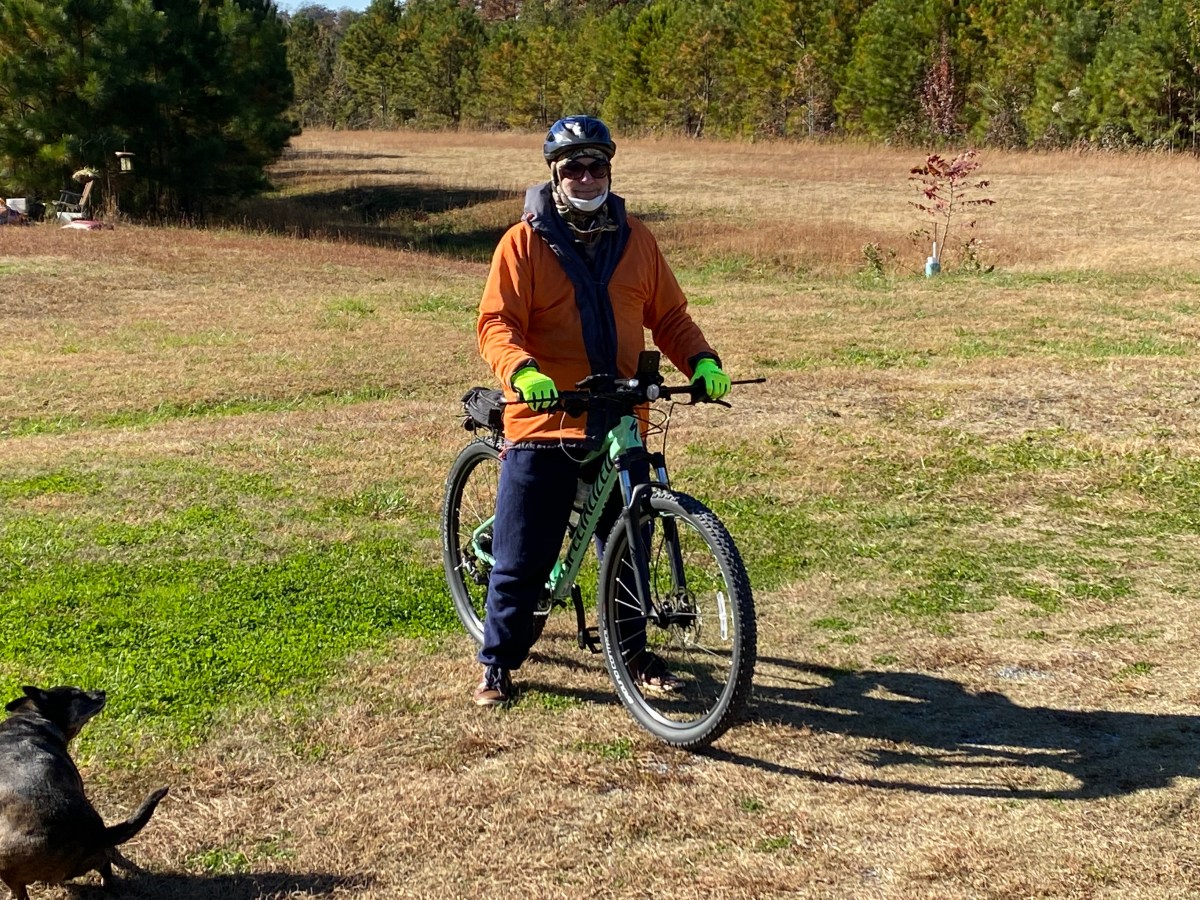
I’m riding my bike every day I can, weather permitting.
For more information about the Ride with GPS biking app, click here.
I’m also listening to a book as I ride, usually fiction, but two days ago I started this masterpiece.
Borrowed through OverDrive App
Abstract from Amazon.com
A distinguished novelist and critic inspires readers and writers with this inside look at how the professionals read―and write
Long before there were creative writing workshops and degrees, how did aspiring writers learn to write? By reading the work of their predecessors and contemporaries, says Francine Prose.
As she takes us on a guided tour of the tools and the tricks of the masters―Dostoyevsky, Flaubert, Kafka, Austen, Dickens, Woolf, Chekhov―Prose discovers why these writers endure. She takes pleasure in the signature elements of such outstanding writers as Philip Roth, Isaac Babel, John Le Carré, James Joyce, and Katherine Mansfield. Throughout, she cautions readers to slow down and pay attention to words, the raw material out of which literature is crafted. Written with passion, humor, and wisdom, Reading Like a Writer will inspire readers to return to literature with a fresh eye and an eager heart.
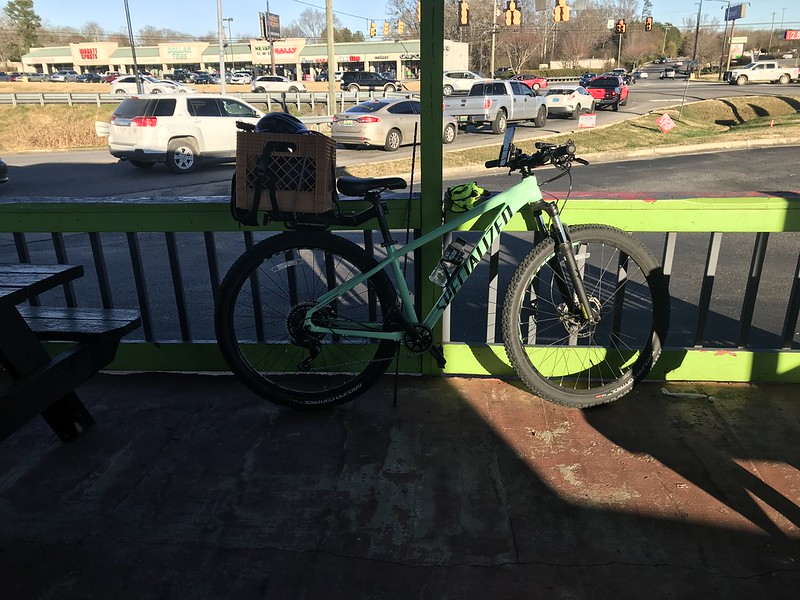
Recent bike-riding photos
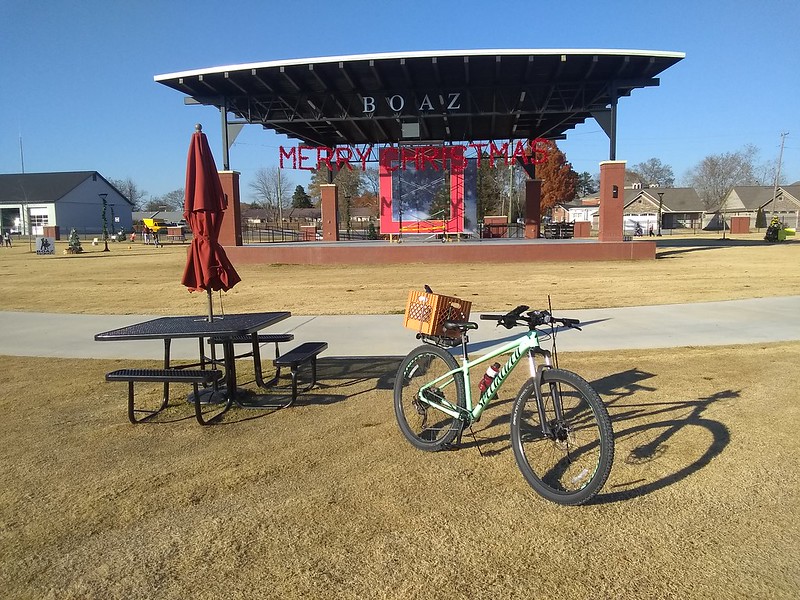
Dairy Queen in BoazDowntown Boaz—in front of the Q (our BBQ restaurant building for sale)Speedy Gonzales, Boaz, Highway 431 (great food)–how about that good-looking basket.Old Mill Park, Boaz
Processing…
Success! You're on the list.
Whoops! There was an error and we couldn't process your subscription. Please reload the page and try again.
Hold on a minute. Merriam Webster states there are two definitions for addiction. Here they are:
“1: a strong and harmful need to regularly have something (such as a drug) or do something (such as gamble). He has a drug addiction. His life has been ruined by heroin addiction. 2: an unusually great interest in something or a need to do or have something. He devotes his summers to his surfing addiction.”
Forget the first one. My post title refers only to the second. I’m addicted to writing fiction and you should be too. Gosh, that’s emphatic, assessing your situation without knowing your specific ailments.
On December the first, I announced I wasn’t going to blog anymore, at least for the time being. But, remember, I’m an addict. In fact, my addiction is two-pronged: an unquenchable need to write fiction, and the same desire to convince you to do the same. Why? Because writing fiction will transform your life. My website title and tag line says it this way: The Pencil Driven Life [g]ives you a mission & transforms your wounds, traumas, & mistakes into a life of meaning & purpose.
I’d like to share with you several points from an article I read the other day. But, first, let me address changes I’ve made. First, as stated above, the title of my website is now The Pencil Driven Life. This phrase has been around for a while because it encapsulates my life over the past six years. Until recently, this phrase was the title of my blog. Now, that’s changed to Write to Life.
In a nutshell, the Write to Life blog is intended to reveal the answer to “Why write fiction?” Catchy uh? Seriously, my blog’s title is meant to convey at least two meanings: you and I have a right to life. And, we can write our way to life, real life, which, ties directly to my website title, The Pencil Driven Life. This Life is all about reading and writing fiction, which, if we’re serious, will enable us to write our way to a wonderful life (note, I’m not saying you’ll become rich financially) of peace, contentment, and compassion.
One other change I’ll mention before we look at that article. I’ve created the Fiction Writing School. No, this isn’t a formal brick and mortar school. In fact, it’s not formal at all. It’s a site you can visit by clicking on the Writing School menu option (or, clicking here) anytime and find connections to five-star authors and teachers I’ve found to truly ‘know their fiction writing stuff.’ In addition, I include links to articles and YouTube episodes and channels I’ve found useful and important. Periodically, I’ll also include my own fiction writing advice or instruction. At least once per week, I’ll update the ‘School’s’ offerings. In a nutshell, the Fiction Writing School is intended to reveal the answer(s) to,“How to write fiction?”
Now, let me address that article I mentioned: “The Therapeutic Benefits of Writing a Novel,” by Jessica Lourey. I loved her story because it was my story. Now, I’m certainly not saying that the shock I encountered was anything as bad as what Jessica did: she lost her husband to suicide. But, living a lie for fifty-six years (not counting the first five years of my life) and slowly over the last six years learning the truth, isn’t a bed of roses. My shock, translated: being a diehard Southern Baptist Fundamentalist most all my life, then learning (albeit slowly) there’s little to any credible evidence for its truthfulness.
My intent in transitioning to the real benefits of writing a novel is simply to say, we all, you, me, and everyone we know, has experienced a shock (or two or three) that is hard to shack off and recover from. In a most accurate sense, every new novelist starts at the same place–we each bring wounds to the page. Plus, I think it’s safe to say, we all want things to be better, we each want a way to offload the pain we carry around like a saddle on our backs. In Jessica’s words, “I needed to get it out of my head or it was going to destroy me. Channeling it into fiction seemed like the safest method.”
Fictionalizing your own painful experiences is a way to unbuckle that saddle. Offloading what happened to you onto the written page and inside your imagined characters creates space in your own head for more healthy thoughts. This paves the way to healing.
Jessica says there are two key elements that make this possible, “creating a coherent narrative and shifting perspective.” In fiction writing parlance, these are plot and point of view.
Of course, you can write a novel about most anything, but, if the main purpose is to heal, or, at least, begin the healing process, then the novel will be about events and circumstances surrounding your own painful experience. We could call it “your wound.”
I like what Jessica says in this regard, “The power of this process is transformative. Writing fiction allows you to become a spectator to life’s roughest seas. It gives form to your wandering thoughts, lends empathy to your perspective, allows you to cultivate compassion and wisdom by considering other people’s motivations, and provides us practice in controlling attention, emotion, and outcome. We heal when we transmute the chaos of life into the structure of a novel, when we learn to walk through the world as observers and students rather than wounded, when we make choices about what parts of a story are important and what we can let go of.”
In a not-so-logical way, my first novel was transformative. As stated above, I reached the point I was ready to explode, not so much that I was angry at any one else, I was angry with myself for never questioning what I believed. So, I channeled my anger into a young adult book (probably thinking I wish I’d had this book when I was a kid, and hoping that every teenager would read it). My novel was an in-your-face type reply to the half-century I’d wasting believing a fairy tale.
God and Girl is about Ruthie, the teenage daughter of Southern Baptist preacher Joseph Brown. She is a good kid, and loves her faith, and her family. Then, during the summer after her eighth grade, she meets Ellen Ayers who’s just moved to town and, like Ruthie, will be a ninth grader at Boaz High School where Ellen’s mom will begin teaching Biology. Ruthie and Ellen fall passionately in love. That’s all I’ll say about my little story, but, you get the picture (God and Girl). Writing my first novel was no doubt therapeutic and began my journey to recovery and healing.
To gather every nugget available, click and read, “The Therapeutic Benefits of Writing a Novel.” Please read it once, twice, or three times. Then, start pondering that novel anchoring your life to the bottomless pit of despair. You know it, you feel it every day. It greets you when you wake every morning (assuming you slept), it makes you stumble when crossing the kitchen for your first cup of coffee, it punches you in the gut more than once before mid-morning. I’ll stop, but it doesn’t.
What your painful wound needs is a way out, and you need it too. Could letting it escape through your mind and fingers, and gluing it to the written page, begin your journey to recovery and on to healing?
As of October 24, 2021, Sanity Snippets are snapshots of my daily life, those things I’m doing—such as reading, writing, biking, photographing, and gardening—to maintain sanity while living in the most regressive state imaginable. Alabama.
Richard L. Fricks
Today, 18.00 miles. A record for me. I biked to Boaz and back, even ate a grilled chicken sandwich at Jack’s.
Here’s a ten-minute video from today’s ride.
Clip: starting in old downtown Boaz
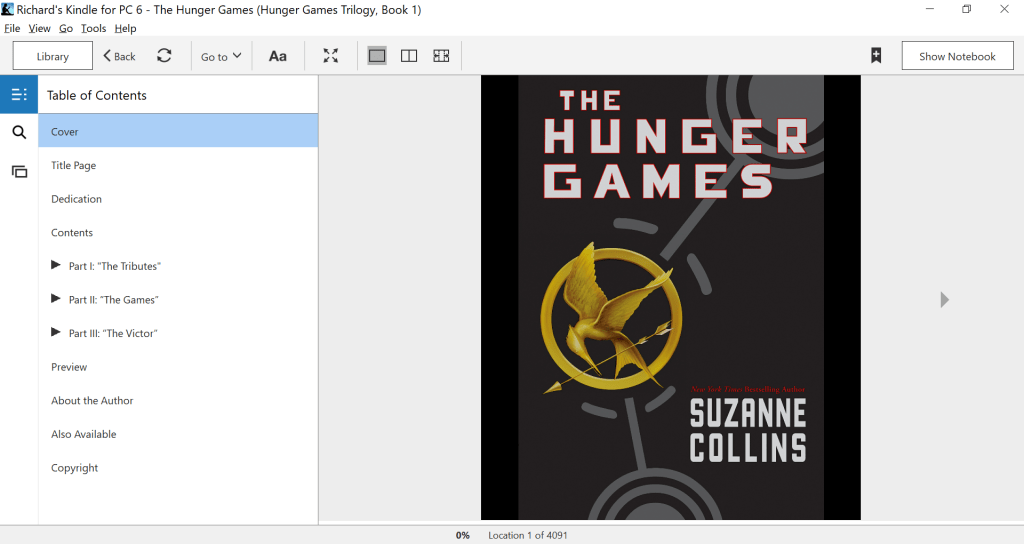
Today, during my ride to town, I listened to The Hunger Games by Susan Collins. It’s a great book, but I’m ready to move on to something less dystopian.
Read the abstract, and if it suits your fancy, grab a copy and start reading or listening.
Abstract of The Hunger Games from Amazon
In the ruins of a place once known as North America lies the nation of Panem, a shining Capitol surrounded by twelve outlying districts. The Capitol keeps the districts in line by forcing them all to send one boy and one girl between the ages of twelve and eighteen to participate in the annual Hunger Games, a fight to the death on live TV.
Sixteen-year-old Katniss Everdeen regards it as a death sentence when she steps forward to take her sister’s place in the Games. But Katniss has been close to death before-and survival, for her, is second nature. Still, if she is to win, she will have to start making choices that weigh survival against humanity and life against love.
Sign up for my Myths, Mysteries & Murders readers’ group for news, special offers, and to receive a FREE digital copy of The Boaz Scorekeeper: dl.bookfunnel.com/i9qbcspivt.
As of October 24, 2021, Sanity Snippets are snapshots of my daily life, those things I’m doing—such as reading, writing, biking, photographing, and gardening—to maintain sanity while living in the most regressive state imaginable. Alabama.
Richard L. Fricks
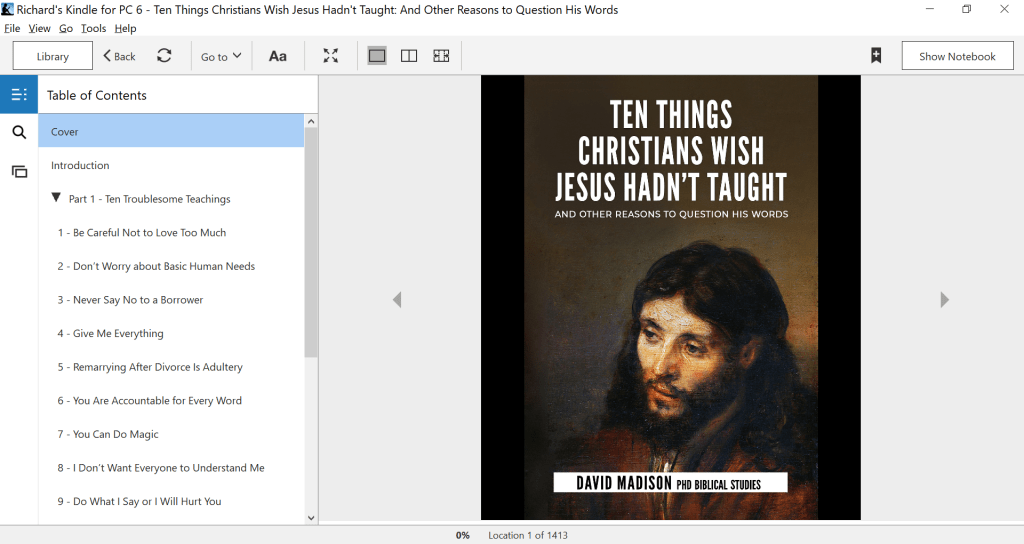
Just finished this excellent book. Whether you are a believer or non-believer, you will gain by reading, comprehending, and considering these words.
I encourage you to read this 5 Star review. It accurately portrays the contents and truths embodied in David’s book:
Reviewed in the United States on August 24, 2021 Verified Purchase
There are problems with religious faith. We see it in the brutality of the fundamentalist Muslims who are retaking Afghanistan; in the group-think that makes Covid denial and vaccine refusal badges of tribal loyalty for a significant fraction of American Evangelicals; and in Christian bookstores stocked with countless works of Christian apologetics aimed at believers who struggle with unanswered prayers and inherent contradictions in Christian theology.
This lucid, insightful, and concise book takes a unique approach to the problem of Christian faith. Biblical scholar David Madison approaches the reader in a spirit of empathy and generosity but also uncompromising honesty. More specifically, he approaches Christian readers on their own turf. In the first ten chapters he assumes, for the sake of argument, that the words attributed to Jesus in the gospels are accurate representations of his teachings. If we accept this premise, is Jesus truly the greatest teacher of all time? Do his words really match the image of the loving Savior we were told about as children in Vacation Bible School? The answers will shock a great many Christians who have never read the New Testament completely, carefully, and honestly.
Some of these teachings are merely strange, unwise, or hopelessly impractical, like the admonition never to refuse anyone who asks you for a loan, the advice to ignore the basic human needs of food and clothing, or appeals to magical thinking. Others, however, are truly shocking and disturbing for anyone who believes in a Jesus of unconditional love and forgiveness. For example, Jesus teaches that we cannot be his followers unless we hate our closest family members, suggests that we should value devotion to him above life itself, and threatens eternal torture for anyone who fails to acknowledge his divinity and worship him. These are the Bible verses that seldom appear in Sunday School lessons or preachers’ sermons, yet they are the purported words of the Messiah. Madison tells of one devout believer who accused him of lying when he quoted Luke 14:26 for her. She simply refused to accept that Jesus could have said those words, though they were there in her own copy of the Bible.
In the last part of the book, Madison tackles the deeper problems of the unhistorical nature of the gospels and the dubious historicity of Jesus. This is a quick and broad survey of these subjects, but he emphasizes the most salient points and directs the reader to a helpful list of sources for further exploration.
Of course, many Christians are so deeply committed to their faith that nothing will shake the scales from their eyes, and Madison obviously understands this. But he also knows, from his own experience, that there are intellectually honest Christians who struggle with doubt and that a deep, open-minded study of Scripture only makes the problem worse. This book is ideal for people who are on that difficult path. It takes courage to seek truth, wherever that journey leads, but this book will help.
The book is also a fascinating read for anyone skeptical of religion. I read it late in life, decades after my own deconversion from Christianity, but I kept thinking as I read it how much I wish I had had it back then. It would have eased and accelerated the process, and it would have been a great way to explain my loss of faith to my Christian parents. I could have just handed it to them and said, “Here, read this.”
This is a splendid book. I’m almost certain it did not expose me to any new arguments. But, after six plus years of reading hundreds of essays and books arguing for and against the Christian God, it impressed me how cogently the author addressed the issues. His writing is brilliant, meaning you don’t have to read and reread to grasp his points. Further, I suspect his story is not as rare as many church-goers would think.
Sign up for my Myths, Mysteries & Murders readers’ group for news, special offers, and to receive a FREE digital copy of The Boaz Scorekeeper: dl.bookfunnel.com/i9qbcspivt.
As of October 24, 2021, Sanity Snippets are snapshots of my daily life, those things I’m doing—such as reading, writing, biking, photographing, and gardening—to maintain sanity while living in the most regressive state imaginable. Alabama.
Richard L. Fricks
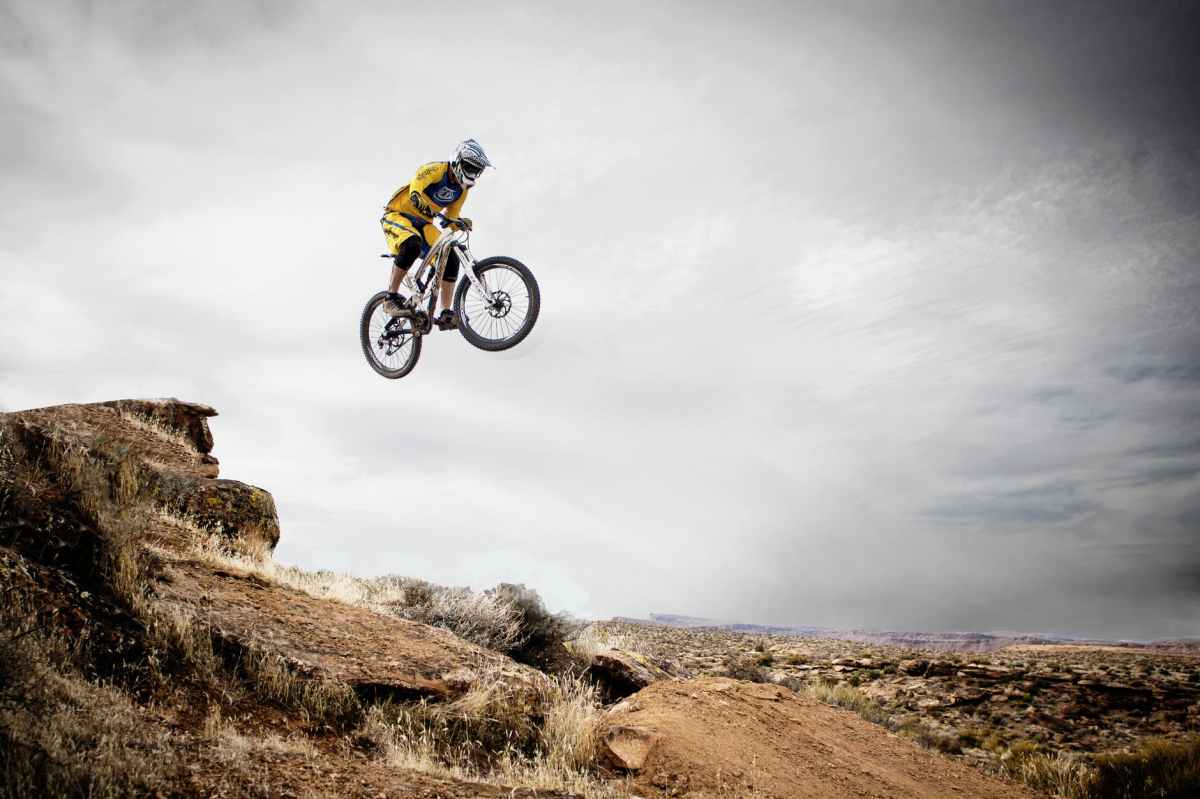
Today, 11.20 miles. For sure, that’s not me doing that stunt in the above photo. I’m 67 and want to stay in one piece. Which makes me thankful after today’s near accident while passing Sardis High School. Kids with cars at 3:00 p.m.–MUST CAREFULLY WATCH.
Trying a new App: Ride with GPS
Here’s a seven-minute video from today’s ride. No, I’m not talking to myself. I’m talking with my truck-driving son. Cannot wait until I have a good camera and bike mount.
Clip: Walter Whitt Road, Cox Gap Road, & ending at our mailbox
I spend most of my biking time listening to a book. Today, I continued with The Hunger Games by Susan Collins.
Read the abstract, and if it suits your fancy, grab a copy and start reading or listening.
Abstract of The Hunger Games from Amazon
In the ruins of a place once known as North America lies the nation of Panem, a shining Capitol surrounded by twelve outlying districts. The Capitol keeps the districts in line by forcing them all to send one boy and one girl between the ages of twelve and eighteen to participate in the annual Hunger Games, a fight to the death on live TV.
Sixteen-year-old Katniss Everdeen regards it as a death sentence when she steps forward to take her sister’s place in the Games. But Katniss has been close to death before-and survival, for her, is second nature. Still, if she is to win, she will have to start making choices that weigh survival against humanity and life against love.
Sign up for my Myths, Mysteries & Murders readers’ group for news, special offers, and to receive a FREE digital copy of The Boaz Scorekeeper: dl.bookfunnel.com/i9qbcspivt.










 Richard L. Fricks