Write to Life blog

Have You Chosen the Right Main Character to Tell Your Story?

I’m currently taking a writing, blogging, and coaching sabbatical due to family health issues. For now, I’ll repost selected articles from my Fiction Writing School.

Here is the link to this article.
Main characters can make or break a story’s success. But how do you know if you’ve selected the perfect protagonist? The answer may be simpler than you think!

Episode #44: Have You Chosen the Right Main Character to Tell Your Story?

Kristen Kieffer | The Well-Storied Podcast


Main characters can make or break a story’s success.

Oftentimes, the doubts we face as we work to bring our main characters to life can seem endless. Are our protagonists’ well-rounded enough? Are they interesting? Will readers root for them to achieve their goal? 

Choosing the right main character to carry the weight of your story is absolutely vital, but knowing whether you’ve selected the perfect protagonist can be tricky — or is it? Truth is: knowing you’ve chosen the right main character for your story doesn’t have to be complicated. Here’s why!
 

Can your protagonist carry the weight of your story?

A successful main character must be able to bear the weight of your story’s plot, but what exactly does that mean? A few things, actually. Let’s break ‘em down:
 

#1: THEY MUST HAVE A STAKE IN THE STORY

As events in your story begin to unfold, is there a strong reason your protagonist gets drawn into them? Perhaps a better question would be: what’s at stake for your protagonist if they don’t get involved? How is the price of inaction worse than the potential consequences of action?

If your main character could just as easily stay out of the mire of your story’s plot — and face little consequence as a result — you likely haven’t chosen or crafted a character who can truly carry the weight of your story’s plot.

#2: THEY MUST INTERACT WITH THE STORY’S THEME

Think your story doesn’t have or need a theme? Think again, my friend! Even the most action-driven stories are built on theme, which is just another world for the main subject(s) a book discusses. Not convinced?

Just think of Indiana Jones and its themes of good vs. evil, family, forgiveness, and integrity; or Jason Bourne and identity, corruption, and injustice. Talk about two action-heavy series, right?

Themes define stories — all stories — and so strong protagonists must be able to not only interact with those themes, but interact with them in ways that other characters could not. In other words, it’s time to make things personal for your protagonist. Tell a story that only they could tell.


What makes the stakes and themes in a story so important? Simply put, it’s the stakes characters face that push them to action, while themes are discussed as a result of that action. So naturally, a character must be able to carry the weight of both of these elements if they’re to serve as a powerful protagonist.

But just because a character can carry the weight of these elements doesn’t mean they’re automatically the right character to serve as the protagonist of your story. There remains one more element we need to discuss…
 

Does your protagonist have the right perspective?

Your main character is the lens through which readers will see your story, so ensuring they present readers with the right lens is key. But how can you know which character will best serve this vital role? Again, we go back to theme — or, to be more specific, thematic statements.

Oftentimes, authors choose to discuss certain themes in their stories because they want to address those themes head on. What they wish to say about each theme via their story’s plot or character arcs is known as a thematic statement.

As we discussed in our article on themes, authors should not view thematic statements as an opportunity to bash readers over the head with a specific message. Rather, a good thematic statement allows readers to draw conclusions about the story’s themes as a result of the protagonist’s experiences.


(Confused? I’d recommend checking out our articles on theme and character arcs.)


Knowing your thematic statement is key to choosing the right protagonist for your story for one simple reason: there are endless statements an author can make about a single theme and only certain characters can make those statements. Let’s talk about the theme of family for example…

Through their main character’s arc, an author can make any of these statements about family:
 

  • Family will always have your back.
  • You should stay loyal to family, no matter what.
  • You don’t have to maintain relationships with toxic family members.
  • Your parents’ failures don’t have to define who you are.
  • Family isn’t always blood.
  • Families aren’t always perfect, but they’re still family.


So, what statement(s) do you want to make about the themes in your story? 

Once you’ve defined your answer, it’s time to consider whether the main character you’ve chosen for your book is truly the best character to relate this thematic statement. If they don’t have the right perspective, they won’t be able to serve as the proper lens and your story’s thematic statement may fall flat. Need an example?
 

Let’s look at The Lord of the Rings by J.R.R. Tolkien.

One of the main themes in The Lord of the Rings is the corruption of power. The statement that Tolkien makes about this topic is that even the lowest among us have the power to fight corruption. This is why Frodo, of the lowly Hobbit race, is chosen by Tolkien to carry the Ring — the symbol of corruption — to be destroyed in the fires of Mordor.

If Tolkien had given any of his other prominent characters this role, his story wouldn’t have had the same impact. Case in point? Gandalf is a wizard and a demigod. Aragorn is a long-lost heir to a wealthy kingdom. Gimli is of a race of master craftsmen with great ambitions, and Legolas is of an ancient, powerful race of elves. 

None of these characters closely resemble the everyday reader Tolkien was trying to reach. But Frodo is of the simple Hobbit folk. He has no claim to power or fame, no incredible skill. He sets out only with a strong moral compass and a simple desire for something more than what he’s be given. 

And that’s why his perspective on the world makes him the perfect main character to carry the weight of Tolkien’s story. 
 

What else makes for a powerful protagonist?

If you’ve chosen a character who can carry the weight of your story — who has a stake in the story’s plot and the right perspective with which to tell the story you’d like to tell — you’ve likely chosen the right main character for your book.

Now it’s time to make sure you crafted a strong main character, one that captivates readers’ interests and drives the story’s narrative. How can you do just that? Simple:


STEP #1: MAKE THEM HUMAN

Strong characters have depth and complexity. Take the time to create a character who is as real as the people around you. How? Get started with our article on the 33 ways you can write stronger characters or our free video on crafting well-developed characters.


STEP #2: GIVE THEM A JOURNEY

Strong characters aren’t pushed around by your story’s plot; they push it. How so? By having a strong goal and the motivation to achieve it. So don’t skimp out on plotting a powerful story that only your protagonist could tell.


To read more of Beemgee’s writing craft articles click here

How to Beemgee: Features and Functions of the Character Developer

I’m currently taking a writing, blogging, and coaching sabbatical due to family health issues. For now, I’ll repost selected articles from my Fiction Writing School.

Here is the link to this article.

Developing the dramatic function of the characters determines the narrative.

When you work out what the characters do and why they do it, you are effectively working on your plot.

Find a video here.

The Beemgee character-builder asks you a series of questions about each of your main characters. Answering them will help you find their role and importance in narrative.

Always try to keep your answers as concise as possible. And above all, always remember that knowing the answers to these questions is not enough. You must show your audience what you have answered through scenes. That means there must be plot events that convey what you have answered here to your readers or viewers.

Working on Characters

Work on Character or Plot

Click into the CHARACTER area of Beemgee. By the way, stay in the same browser window, whether you’re working on PLOT, CHARACTER or STEP OUTLINE – having one project open in multiple windows may result in some of your input being lost.

In the CHARACTER area you’ll land in COMPARE-view, where you can add a character card for each of the major figures in your story.

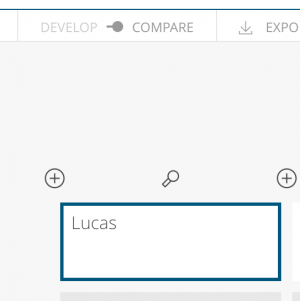
Click into a character card and write the name of a character. To create a new character click one of the plus signs above an active character card. If you’ve added characters in the PLOT area, you will see that each of them has a card here.

Use the DEVELOP-COMPARE switch to get into the Beemgee character-builder itself.

The character builder is about a lot more than characterisation. The plot of a story consists of the actions of the characters. The character-builder is a sequence of questions designed to help you discover the dramatic function of each of your main characters in the story, specifically by defining their actions and the motivations behind these actions.

Individual character questions in single view.
Answer individual character questions in single view.

Answer each question carefully and succinctly, and this should help you determine the plot.

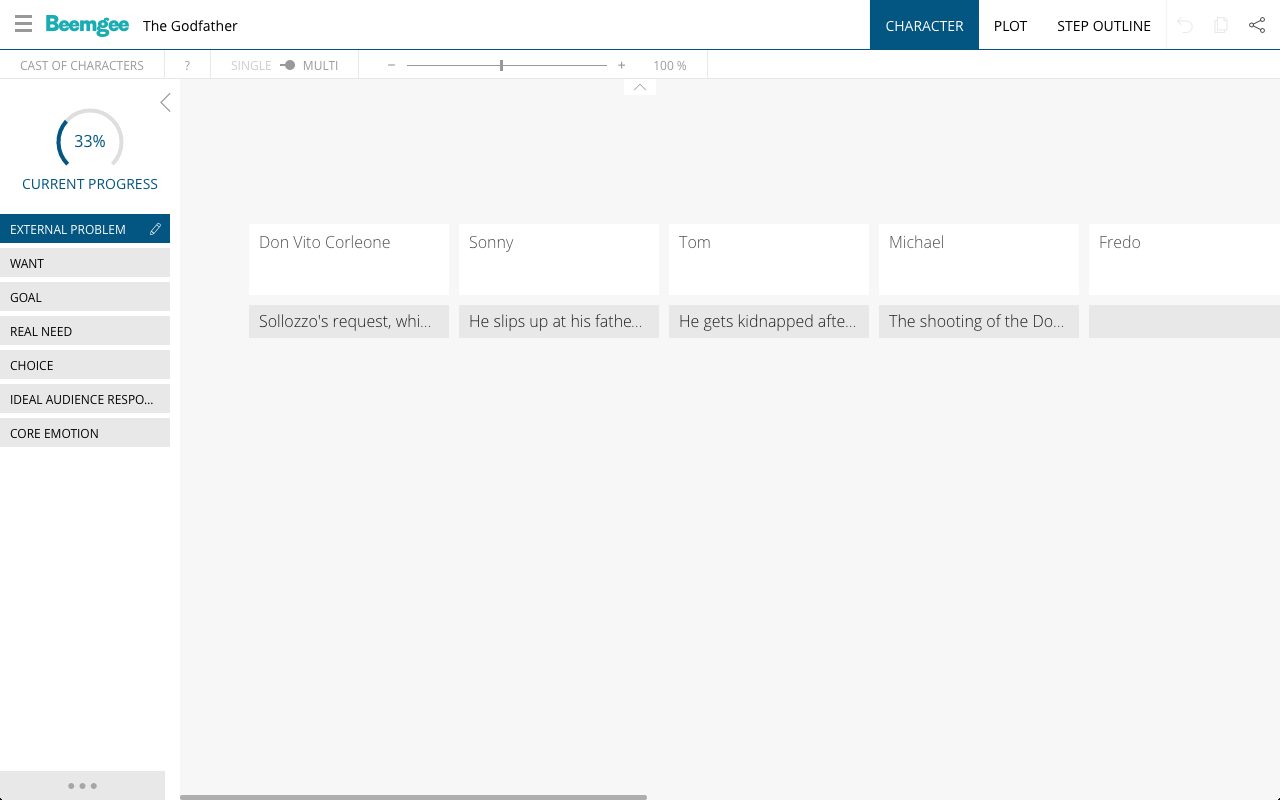
Whenever you’re ready, go back to the COMPARE-view to see all of the characters. Compare and contrast your answers for each character by activating the attribute you want to see in the sidebar.

Beemgee_Character_Multiview
Click the attribute in the sidebar to turn on the grid beneath the cards. To edit in the grid, click the pencil icon.

You can drag and drop your character cards into any order you want. We suggest that you keep your main characters to the left.

To delete a character card, drag it upwards. A bin will appear. Attention: Once in the bin, the card and all your inputs associated with it will be irretrievably deleted.

If the answers you typed in the DEVELOP view were too long to fit into the text fields in the COMPARE view, there is a PREMIUM function in the tool bar with which you can increase the grid size.

You may edit your input texts in the compare view per attribute by clicking the pencil icon in the active attribute button. Then click into any of the texts for this attribute. The cursor will appear at the end of the text. Use the arrow key to move the cursor and edit.

If you do not require all the attributes in the sidebar, consider hiding some of them.

Sidebar options
Sidebar options

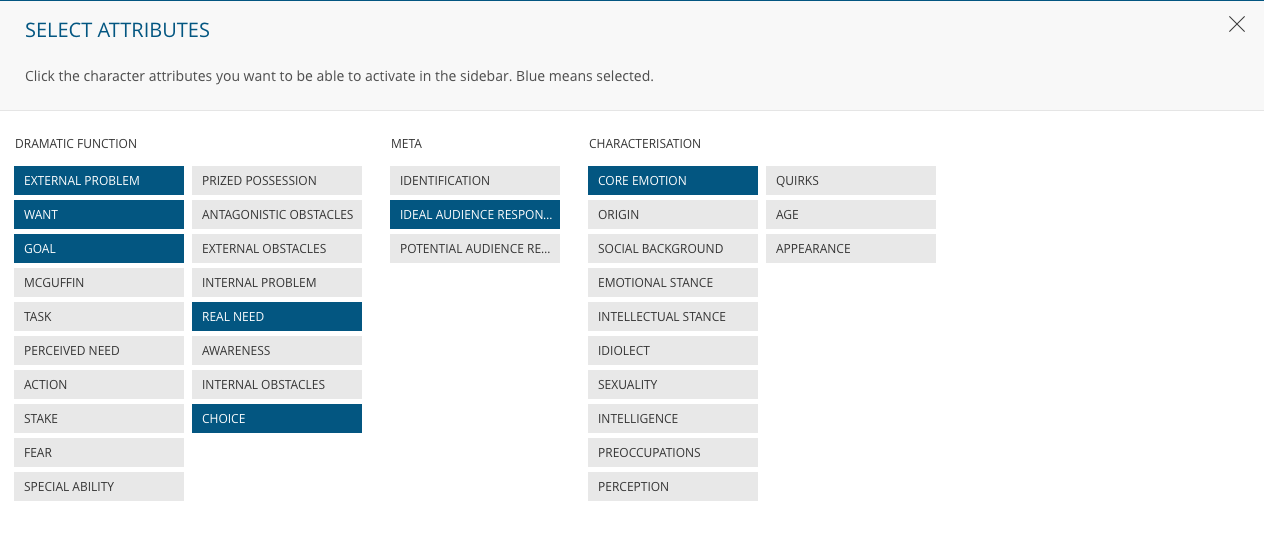
Clicking the three dots at the bottom of the sidebar will take you to a window where you can make all available attributes visible or invisible in the sidebar (this is the case whether you are in the character or plot area). In the character-builder, that means one attribute per question.

Select Attributes
Select Attributes

Make your selection of which attributes you want to be able to activate through the sidebar, then click the x to exit this page.

For more on how to develop your plot with Beemgee, click here.

Anywhere in the Beemgee tool, consult the in-app help texts under the | ? | button in the tool bar to find out more about an active function.

Have fun developing your characters!

How To Save Your Outline

Beemgee saves your project automatically, so there is no “Save” button.

If you have signed up to an account, FREE or PREMIUM, you can log out and close the project window at the end of each session. The next time you log in, go to the global menu top left next to the logo.

In the menu you will find “All stories”. Select the project you want to work on.

If you are not a registered user, you may press the share icon in the top menu bar, above right.

Share/Save Button
Share/Save Button

Click the share button to send yourself the link to your outline. Beemgee has created a unique URL for your project. Keep this link safe – calling it up later will take you back to the state of your project as you left it.

There are three ways of keeping this link:

1) send yourself the link per e-mail using the form provided under the share icon, top right of screen
2) copy the complete link out of the URL bar at the top of your browser and save it somewhere
3) bookmark this page in your browser or using a bookmarking service.

Want to show your project to someone else? Send them the link. Anybody with the unique link to your project will be able to see and edit your work.

To read more of Beemgee’s writing craft articles click here
The Differences Between Authoring and Writing and How to Author a Story

I’m currently taking a writing, blogging, and coaching sabbatical due to family health issues. For now, I’ll repost selected articles from my Fiction Writing School.

Here is the link to this article.

Stefen Emunds portrait

Today’s guest post is by author Stefan Emunds.

Stefan’s favorite genre is visionary fiction – stories that have an enlightenment dimension. Enlightenment and storytelling have interesting parallels, which prompted Stefan to write a book about storytelling – The Eight Crafts of Writing

Get a glimpse of his approach to story craft in his article.

Art and Craft

Storytelling is both art and craft, authoring and writing, plotting and pantsing.

1.1 Art and Authoring

Art is creativity. Creativity requires receptivity to the Muse and its inspirations.

Inspirations arrive as thought-images, which writers put into words. How to turn thought-images into words and assemble those into a structured story with vivid characters and an engrossing world is a matter of craft and skill.

1.2 Craft and Writing

The literal meaning of Kung Fu is a discipline achieved through hard work and persistent practice. Writing is Kung Fu.

Craft gives form to inspirations. Forms limit. Writers love the artistic side of writing, less so crafting, in particular, Story Outline. Writers are prone to procrastinate crafting.

But no limitations, no story. No canvas, no painting. No net, no tennis.

Understanding the difference between freedom and dominion helps to appreciate the constraints of craft. Freedom is a means to an end. We want to be free to do something, for example, to write a book. That’s all there is to freedom. Dominion, on the other hand, is mastery of structure. 

1.3 The Authoring and Writing Phases

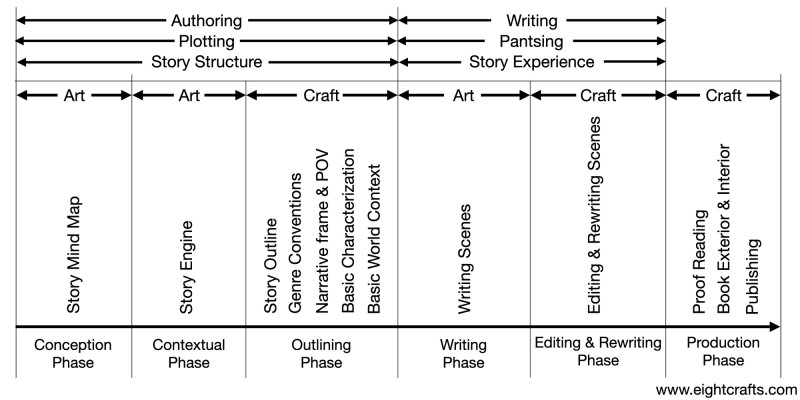
If a task is too complex, break it down into a series of small and manageable tasks. Allow me to break down storytelling into the following stages and phases: 

Overview Authoring Writing Phases

In this article, we will have a closer look at the authoring stage.

2. How to Author a Story

The authoring stage comprises three phases:

  • The conception phase
  • The contextual phase
  • The outlining phase

2.1 The Conception Phase

The Muse seduces a writer and gets him pregnant.

We conceive inspirations as fragments, or rather puzzle pieces, for example, an interesting what-if, the image of a quirky character, a cool inciting incident, a mind-blowing scene, or a riveting dialoguefragment.

Why don’t you capture those inspirations in a story overview? A story overview is a drone view of the most important story elements:

  1. Adversity
  2. Antagonist
  3. Protagonist
  4. Inciting incident
  5. Stakes
  6. Story goal
  7. Midpoint
  8. Key ability
  9. All-is-lost moment
  10. Climax
  11. Conclusion

You could summarize your story elements in a word or two and jot down additional thoughts below them.

The story elements make up your story engine. Upon completing and assembling your story engine, your story will run, meaning it will write itself.

2.2 The Contextual Phase

The purpose of the contextual phase: Finding the missing story elements.

While the first inspirations for your story came uninvited and effortless, requesting targeted inspirations from the Muse is a hard earned skill. Let’s call this skill focussed meditation. Focussed meditation synchronizes focus and receptivity, in this case the focus on a missing story element and the receptivity to the Muse.

The problem: During focussed meditation, subconsciousness will remind you of things you experienced, read in books, or watched in movies, things that aren’t original. Likely, you will have to ignore ten such memory diversions to receive original ideas. Some professional authors collect up to twenty options for each story element before choosing one.

Completing the story engine can take weeks, if not months. A notoriously difficult item to nail is the climax. Mind that many literary works that excel in prose and drama lack inspiring climaxes.

Sometimes, you won’t be able to hear the Muse. In this case, you need to fall back to your reservoir of personal experiences, books you read, or movies you watched and innovate or steal something. This is perfectly fine, and every artist does that.

Good artists copy. Great artists steal.

– Pablo Picasso

Great artists steal. They don’t do homages.

– Quentin Tarantino

2.4 The Outlining Phase

The tasks of the outlining phase are:

  1. Deciding on a genre
  2. Deciding on a narrative frame and/or POV)
  3. Accomplishing basic characterizations and world building
  4. Outlining the scenes

2.4.1 Genre

Genre manages readers’ expectations.

Stories have external and internal genres. Examples of external genres are thrillerromance, and adventure.

Examples of internal genres are redemptioneducation, and revelation.

2.4.2 Narrative

Narrative comprises three things:

  • The author’s voice
  • The narrative frame
  • The POV

A narrative frame determines the angle from which a story is told: why, to whom, and when. For example, a narrative frame could be an interview or an interrogation. Epistolary novels and fictional diaries are narrative frames.

Persons can be narrative frames too, for example, Dr. Watson in The Adventures of Sherlock Holmes. In such cases, the narrative frame and POV overlap.

2.4.3 Basic Characterization and World Building

Usually, the story world and characters reveal themselves while writing. But some characterizations and world building elements impact story outline, for example, the protagonist’s flaw and motivation determine the story’s midpoint. If you nail them prior to writing, it will help with the first draft and reduce the danger of rewriting.

An example of a world building element that affects story outline is the story world’s power structure that the protagonist and antagonist need to navigate.

2.4.4 Story and Scene Outline

The next step is structuring your story according to story outline principles and genre conventions.

For that, you can use the Hero’s Journey, the Virgin’s Promise, Robert McKee’s Five Commandments, or other story outline methods.

The key scenes from your story’s outline and the key scenes of the story’s genre will give you fifty to sixty scenes to write, et voilà, you got your story’s skeleton.

3. Take Your Time Authoring

In his book Story: Style, Structure, Substance, and the Principles of Screenwriting, Robert McKee suggests that successful screenplay writers spend two-thirds of storytelling time on authoring and one-third on writing.

In the case of fiction, the ratio is probably something like 50/50. Literary fiction writers need to demonstrate exceptional prose and may end up with 30/70.

This ratio is a time ratio, not an effort ratio. Let’s assume your story takes twelve months to write. This means that you will spend six months on authoring your story. Likely, you will author just an hour or two every day, sometimes not at all for a couple of days. While it takes six months to author your story, you may have only worked on it – accumulated – forty-five days. While the time ratio of authoring/writing is 50/50, effort-wise it is something like 20/80.

What to do with all that free time? You can promote your published books. Or you can author a new story while you are still writing your current one.

The Writing Phase

Sit at your laptop and bleed your fifty to sixty scenes.

To read more of Beemgee’s writing craft articles click here
How to Hone Your Writing Process With a Step Outline

I’m currently taking a writing and blogging sabbatical due to family health issues. For now, I’ll repost selected articles from my Fiction Writing School.

Here is the link to this article.


Mel Lee-Smith

About The Author: Mel Lee-Smith is a freelance writer, editor, and word nerd with a lifelong passion for the craft. She’s been writing since she was old enough to hold a pencil and telling stories since she was old enough to talk. That passion led her to pursue a master’s degree in Creative & Critical Writing from the University of Winchester in England.

Mel now lives in Ireland with her husband and their cuddly calico. When she’s not crafting bespoke, branded content for her freelance clients, she’s retelling her family’s larger-than-life stories in her novel, Escape Artist. Connect with her on Twitter, Pinterest, Instagram, and LinkedIn.


If you’re anything like me, you’ve probably spent more time daydreaming about the TV or film adaptation of your novel than you care to admit. While some might consider this procrastinating, visualizing your story this way is only natural — our brains process visual information best, after all.

Any writer will attest that translating those visions into immersive prose is one of the many challenges of the craft. Sometimes, while drafting my Southern lit novel, Escape Artist, I find myself wishing I could just enter the story world and take notes. It’s all too easy to lose track of important details when plotting a novel

Enter the step outline, a streamlined synopsis of a screenplay that breaks down each scene into individual actions. I learned how to create a step outline in my Scriptwriting class while completing my MA in Creative & Critical Writing. I quickly discovered scriptwriting isn’t my strong suit, but the step outline has been an invaluable tool in my writing arsenal ever since.

What is a step outline? How can you adapt it for your novel? What are the best methods for step outlining? Let’s dive in.

Photo by Windows on Unsplash

What is a step outline?

The step outline is a bare-bones outline of a screenplay, or for our purposes, a novel. Some step outline pros liken it to a full “report” of the narrative, while others insist it’s not the birthplace of the story. (I agree — developing your characters and a rough overview of your narrative should come first.)

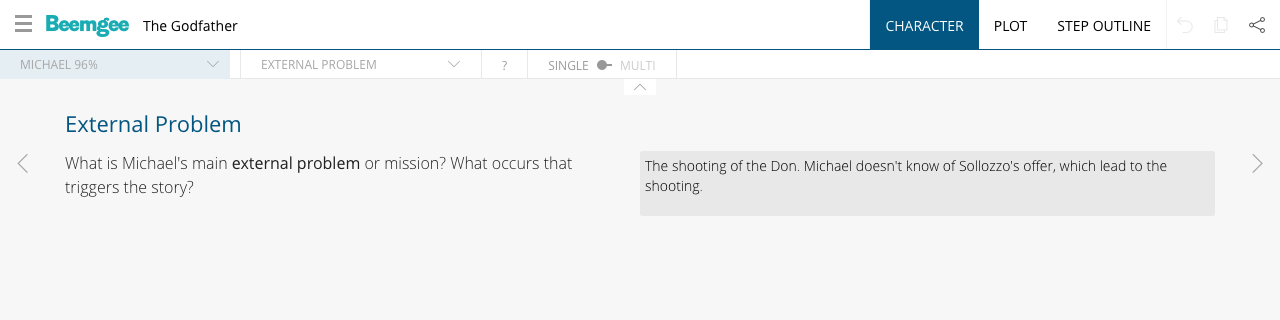
Each scene is broken down into “steps”, or individual actions. Here’s an example from Writing for the Screen by Craig Batty:

  1. Paul finishes his novel. 
  2. Paul heads for home through the snow. 
  3. Paul crashes his car. 
  4. Paul is rescued.

The point of the step outline, according to Batty, is to clarify the purpose of each scene. Condensing each scene into a concise action establishes narrative momentum and allows you to quickly audit your plot.

Tip: When creating your step outline, omit exposition and description. That comes later. Focus on action.


Methods of Step Outlining

I recommend two methods for step outlining: a master list and scene cards (digital and analog both work just fine).

HOW TO MAKE A STEP OUTLINE: THE MASTER LIST

I call it a list, but it’s important to note that the step outline isn’t just a giant list of scenes. Think of it more like a chain of interlocking events. You should be able to see the narrative structure unfold as you read through your outline: exposition, rising action, climax, falling action, resolution, etc.

A master list condenses your story into one fluid document, allowing you to view your whole narrative at a glance. Scrivener’s Outline feature and custom metadata fields work really well for this.

My master list is in a Google Doc and formatted with headings so I can navigate it easily. (You’ll even get a sneak peek later in this article!)

HOW TO MAKE A STEP OUTLINE: SCENE CARDS

Whether you choose to use paper index cards, Scrivener’s corkboard, or another medium, scene cards are a staple of the writing process. Physically moving (or dragging and dropping) your scene cards also adds a tactile element to plotting.


A sneak peek of my step outline for Escape Artist

Inspired by true stories and real people, Escape Artist is a fictionalized retelling of the stories my family passed down to me. It’s set in rural South Carolina and spans over 70 years, beginning in 1932. 

Full disclosure: I use both a master list and scene cards. I know, I know — sounds a little crazy, but there is a method to my madness. For starters, I work as a freelance writer and editor, so screen-time overload and burnout are real. Working with paper and colorful pens gets my creative juices flowing and prevents eye strain. 

But I also wanted the option to access my step outline at any time, since I occasionally write at coffee shops and other places. Obviously, I can’t lug around my bulletin boards and index cards everywhere I go. (Could you imagine the looks I’d get if I went full-on Charlie Day at my local café?)

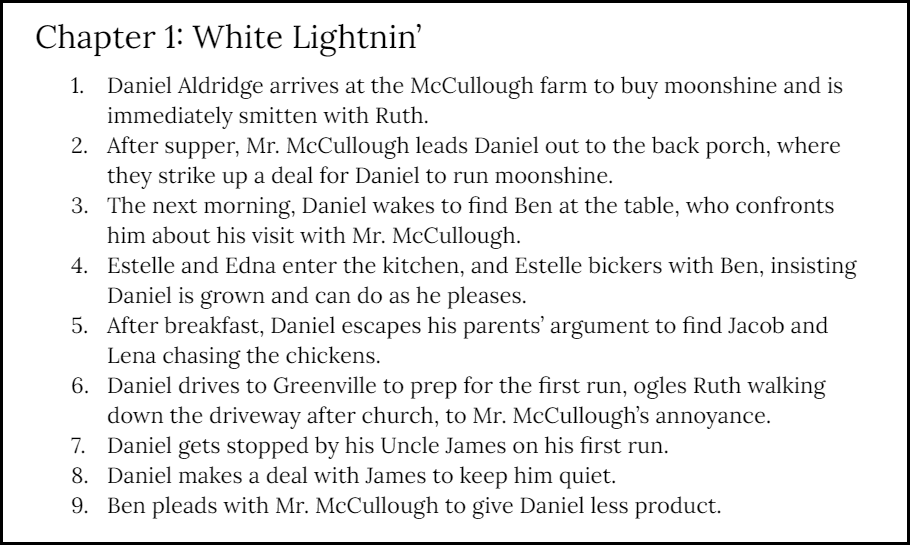
Anyway, without further ado, here’s a sneak peek of the master list for “White Lightnin’”, the first chapter:

chapter 1 master list scenes.png


I chose to omit some of the less important scenes that didn’t serve the plot, like Daniel’s sister, Mabel, coming down for breakfast and Ben preaching at Daniel to ease up on drinking.

What this outline doesn’t describe are the “butter-rich scents of vegetable stew, cornbread, and wood-stove fire” warming every corner of the McCullough cabin, or Ben “flicking his newspaper open, giving Daniel a flimsy shield from his agitation.”

It also doesn’t describe the characters or how they’re related. That’s because this step outline is (technically) meant for my eyes only. I know that Ben and Estelle are Daniel’s parents, that Lena is the family dog, and that Jacob and Edna are Daniel’s children by his first wife. The step outline isn’t the place to discuss those details.

Screen Shot 2020-04-29 at 2.15.09 PM.png


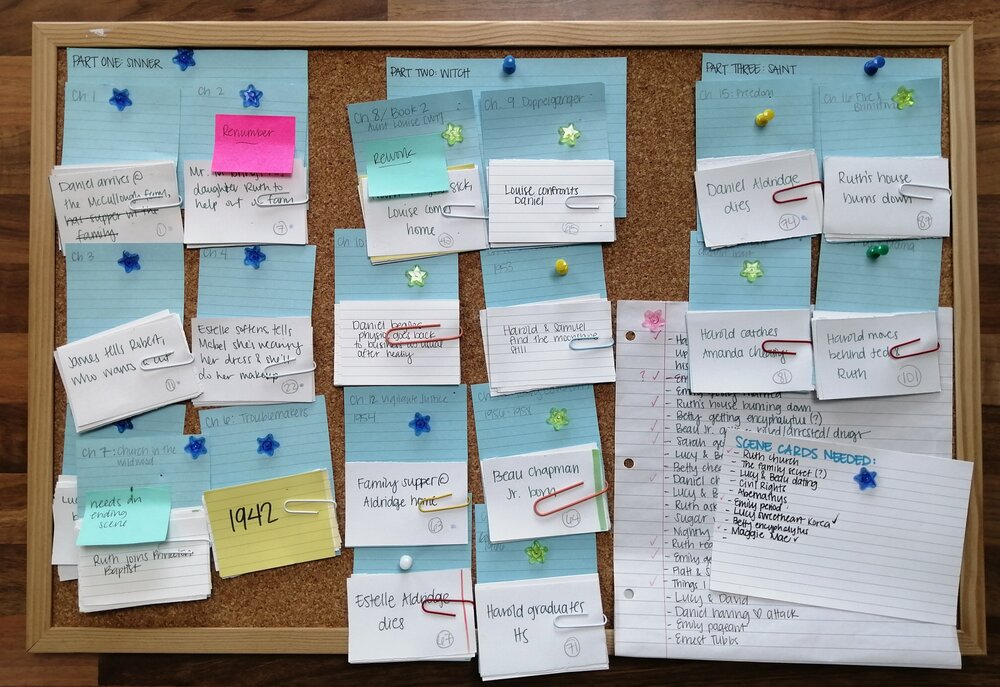
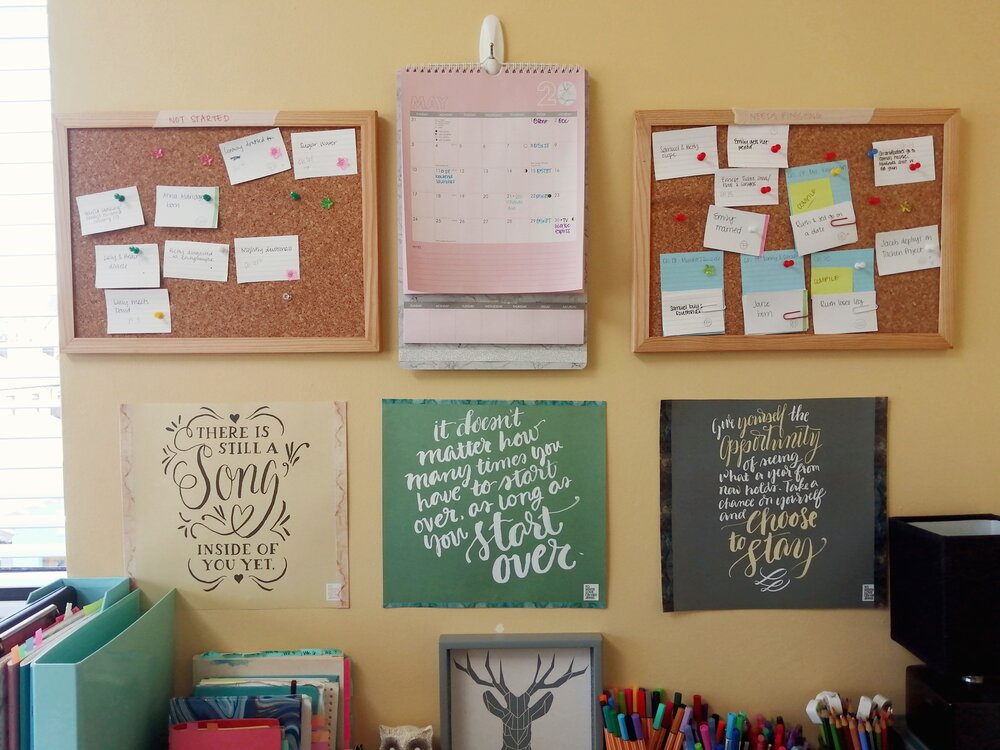
I stack scene cards and clip them to a blue chapter card. I then pin them to a bulletin board, split into three columns for part one, part two, and part three. I also have two smaller bulletin boards above my desk where I pin scenes I haven’t started or finished drafting. That makes it easier for me to know what to work on when I sit down to write.

IMG_20200513_123117.jpg


On the back of each scene card is the date. (My WIP covers 70 years, so I gotta keep the timeline straight!) I also number my scene cards in pencil in case I need to move them around later. Finally, I add notes to scene cards to indicate their status: not started, needs finishing, and drafted.

Step outlining as a writing exercise or editing aid

Maybe you’ve already created a detailed outline of your project and aren’t keen to overhaul the whole thing. Or maybe you’ve finished your first draft and are elbow-deep in revisions. No matter where you are in the process, step outlining can provide clarity and accelerate your momentum.

If you feel a scene lacks direction or you’re questioning whether a scene serves the story, try making a mini step outline. Grab a sheet of paper or open your preferred writing program and jot down the steps of the chapter or scene. Consider what absolutely must happen to advance the narrative or build character.

I’ve created my step outline. Now what?

Congrats! You’ve got a solid step outline and you’re itching to dive back into drafting or editing — but you hit a snag. Some of your steps aren’t working. Maybe you realize you can remove some links from the chain without breaking it. Or maybe your chain is broken and you need to add more links somewhere.

That’s okay. That’s what the step outline is for. Its beauty lies in its flexibility. If you find that your steps aren’t serving the story, cut them, rework them — do what you need to do. I’ve reworked a good chunk of my step outline since I began writing Escape Artist in September 2018.

Need more inspiration? The Sticking Place has a helpful list of step outlines from famous films.

One final tip for creating a strong step outline

Use strong verbs. One of the top tips for writing well also applies to outlining.

Compare these two examples from my own step outline:

  • Daniel goes to Greenville to prep for the first run, sees Ruth walking down the driveway after church, to Mr. McCullough’s annoyance.
  • Daniel drives to Greenville to prep for the first run, ogles Ruth walking down the driveway after church, to Mr. McCullough’s annoyance.

The first example, while technically accurate, lacks essential information. Remember, the step outline deals with actions. Be descriptive but concise.

Using a scriptwriting tool for plotting fiction: final thoughts

The step outline is essentially the bedrock of your plot, a foundation on which to build your best work. Even though it’s primarily used in scriptwriting, the step outline is one of my favorite fiction writing tools. It’s helped me pare down a gigantic narrative to its core. If you choose to experiment with step outlining, I hope you find it as useful as I have.

Once you’ve completed your step outline, you’re free to refine it, rework it, and flesh it out however you like. Consider adding other scriptwriting elements, like visual framing, to turn those idle daydreams into a real page-turner.

The Unbearable Lightness of Being Opaque to Ourselves: Milan Kundera on Writing and the Key to Great Storytelling

I’m currently taking a writing and blogging sabbatical due to family health issues. For now, I’ll repost selected articles from my Fiction Writing School.

Here is the link to this article.

A torch for traversing “the territory where no one possesses the truth… but where everyone has the right to be understood.”

Milan Kundera

BY MARIA POPOVA

The Unbearable Lightness of Being Opaque to Ourselves: Milan Kundera on Writing and the Key to Great Storytelling

This might be the most transcendent capacity of consciousness, and the most terrifying: that in the world of the mind, we can construct models of the real world built upon theories of exquisite internal consistency; that those theories can have zero external validity when tested against reality; and that we rarely get to test them, or wish to test them. Just ask Ptolemy.

In its clinical manifestation, we call this tendency delusion. In its creative manifestation, we call it art — the novel, the story, the poem, the song are each a model, an imagistic impression of the world not as it is but as the maker pictures it to be, inviting us to step into this imaginary world in order to better understand the real, including ourselves.

Art from Thomas Wright’s 1750 treatise An Original Theory or New Hypothesis of the Universe, depicting the Solar System as it was then understood. (Available as a print, as a face mask, and as stationery cards.)

Because we are always partly opaque to ourselves even at our most self-aware, fiction and real life have something wonderful in common, wonderful and disorienting: the ability to surprise even the author — of the story or the life.

Both are a form of walking through the half-mapped territory of being, real or imagined, making the path in the act of walking and so revising the map with each step.

In both, we can set out for one destination and arrive at another, or as another.

In both, we are propelled partly by our directional intentionality and partly by something else, something ineffable yet commanding that draws its momentum from the energy of uncertainty.

The great Czech-French novelist Milan Kundera articulates this something else with uncommon clarity in The Art of the Novel (public library), published two years after The Unbearable Lightness of Being — the 1984 classic that might be read as one long elegiac entreaty for embracing the uncertainties of love and life, challenging Nietzsche’s notion of “the eternal return.”

Double rainbow from Les phénomènes de la physique, 1868. Available as a print and face mask.

With an eye to storytellers’ ability to surprise themselves in the telling as the story crosses the terrain of imagined existence under its self-generated momentum, Kundera writes:

When Tolstoy sketched the first draft of Anna Karenina, Anna was a most unsympathetic woman, and her tragic end was entirely deserved and justified. The final version of the novel is very different, but I do not believe that Tolstoy had revised his moral ideas in the meantime; I would say, rather, that in the course of writing, he was listening to another voice than that of his personal moral conviction. He was listening to what I would like to call the wisdom of the novel. Every true novelist listens for that suprapersonal wisdom, which explains why great novels are always a little more intelligent than their authors. Novelists who are more intelligent than their books should go into another line of work.

Kundera locates that suprapersonal wisdom in “the wisdom of uncertainty” — something his poet-contemporary Wisława Szymborska named as the crucible of all creativity in her superb Nobel Prize acceptance speech. In a sentiment evocative of physicist Richard Feynman’s astute observation that uncertainty is the prerequisite for truth and morality, in science as in life, Kundera writes:

The novel is the imaginary paradise of individuals. It is the territory where no one possesses the truth, neither Anna nor Karenin, but where everyone has the right to be understood, both Anna and Karenin.

Art from Johannes Kepler’s 1619 treatise The Harmony of the World. (Available as a print, as a face mask, and as stationery cards.)

Great storytelling, then, deals in the illumination of complexity — sometimes surprising, sometimes disquieting, always enlarging our understanding and self-understanding as we come to see the opaque parts of ourselves from a new angle, in a new light. Kundera writes:

Every novel says to the reader, “Things are not as simple as they seem.” That is the novel’s eternal truth, but it grows steadily harder to hear amid the din of easy, quick answers that come faster than the question and block it off.

So understood, storytelling becomes a way of walking with uncertainty and sitting with nuance, which is in turn a way of broadening the possibilities of existence in each of our lives. Echoing Adrienne Rich’s notion that all forms of literary imagination are “the arts of the possible,” Kundera writes:

A novel examines not reality but existence. And existence is not what has occurred, existence is the realm of human possibilities, everything that man* can become, everything he’s capable of. Novelists draw up the map of existence by discovering this or that human possibility. But… to exist means “being-in-the-world.” Thus both the character and his world must be understood as possibilities… [Novels] thereby make us see what we are, and what we are capable of.

A quarter century earlier, James Baldwin had captured this in his lovely notion that the artist’s role, the writer’s role, the storyteller’s role is “to make you realize the doom and glory of knowing who you are and what you are.”

Complement this portion of Kundera’s altogether illuminating The Art of the Novel with Iris Murdoch on storytelling as resistance, Toni Morrison on storytelling as sacrament to beauty, Susan Sontag storytelling as moral calibration, and Ursula K. Le Guin on storytelling as transformation, then revisit poet Naomi Shihab Nye’s advice on writing, Anton Chekhov’s six rules for a great story, and psychologist Jerome Bruner on the psychology of what makes a great story.

For a library of great fiction writing instruction, click here.

Core Emotion and Primary Character Trait

I’m currently taking a writing and blogging sabbatical due to family health issues. For now, I’ll repost selected articles from my Fiction Writing School.

Here is the link to this article.

Classical stories have characters that almost epitomize an emotion or quality. Achilles is angry. Odysseus is clever. Nowadays, we like our characters more “realistic” or more “complex”. Modern stories tend to give their main characters “psychological depth”. Nonetheless, even the “well-rounded” characters of modern stories may be accurately described with primary character traits. Emma Bovary is, for instance, romantic. Indiana Jones is adventurous. Bridget Jones has prejudices, Darcy is proud. What is this character?

In stories, the characters’ emotions are ultimately the sources of their actions, because motivations are ultimately based on emotions.

Determining the emotional core of a character in a story may lead to a clearer understanding of that character’s behaviour, i.e. their actions.

What we’re getting at here is essentially a premise for creating a story. We have noted that if you plonk a group of contrasting characters in a room – or story-world –, then a plot can emerge out of the arising conflicts of interest. If you’re designing a story, one approach is to create the contrasts between the characters (their essential differences of character) by giving each character a core trait or emotion. One character may be frivolous, another penny-pinching. One may be fearful, another cheeky.

You might object: Isn’t that a bit one-dimensional? Aren’t characters with just one core emotion flat?

Not necessarily. Focusing on one core emotion is not a cheap trick. It is as old as storytelling.

Classical Storytelling

Ancient stories focus on characters with specific emotions or qualities. It is these emotions that make them distinguishable, that give them their character. –

Gilgamesh is initially proud and arrogant – he needs to be made humble. He is later struck by grief, and must learn to cope with this emotion. Enkidu is wild. He needs to be tamed.

Achilles’ wrath and rage are legend, his core emotion is anger. Other ancient heroes have specific character traits. Odysseus is clever. Agamemnon, while kingly and steadfast, is primarily haughty. Aeneas is pious and just.

Beowulf is strong, but in danger of being proud.

In The Divine Comedy, the character Dante is spiritually lost, and guided by the reasonable and wise Virgil.

Shakespeare built some characters around one primary emotion: Othello is jealous.

You might say that this type of character, fashioned around one single principle, is old-fashioned. Nowadays audiences and readers prefer more realism and psychological complexity. But is that really true?

Modern Characters

Flaubert is often credited with creating a watershed in storytelling. It is claimed that his characters are psychologically complex and may therefore seem more “realistic” to modern sensibilities. Nonetheless, Emma Bovary’s core trait is that she is romantic and naïve.

In the twentieth century, perhaps because of Freud’s influence, the idea became prevalent that characters, in order to be more life-like, have to be psychologically “well-rounded”. In real life, people have all sorts of emotions – an author shouldn’t just pin only a single overriding emotional state on one character. This would not be true to life.

Stories, however, are slices of life. One of the main reasons stories exist in the first place is to show us the potential effects of certain traits. Moral parables and fables demonstrate this most explicitly: the boastful hare is taught a lesson about his overconfidence by the tortoise.

You might say that most stories are not as simple as that, especially to modern audiences. But, just as an example, you see the same tortoise and hare scene in the movie Cars.

You might say that stories for adults don’t – or shouldn’t – exhibit such clear “morals” or an “author’s message”. True. But that doesn’t mean that stories are no longer composed around primary character traits. Bridget Jones’s Diary works in the same way that its inspiration does, by focusing on two characters who exhibit strong primary character traits based on emotions: Pride and Prejudice.

The Story Arc

So how does an author make a character with one core emotion well-rounded? How must the character be in order not to appear flat?

A character becomes interesting to audiences by having contrast within him or herself. A character who is consistently fearful, frivolous, penny-pinching or cheeky can supply no surprises for the audience or reader, and therefore runs the risk of being boring. This is avoidable by seeing emotions as axes, along which specific actions occur. The axes of emotions create dimensions of character. Some “big” examples:

  • extrovert vs introvert
  • neurotic vs well-balanced and healthy
  • open vs inward-looking
  • agreeable vs unfriendly or disagreeable
  • conscientious vs lazy
  • selfish vs helpful and selfless

Give characters scenes in which they exhibit a quality at one end of a spectrum, but drop in a scene in which they show themselves capable of acting the opposite way. This will intrigue the audience!

Look at a story, any story, and see if you can’t spot a curve, usually a learning curve, in the protagonist. This change is sometimes called the character arc. Isn’t the main character, and probably some other characters too, wiser at the end of the story than at the beginning? Irrespective of his or her success in doing so, was there not some internal problem that the character really needed to solve before the end of the story? If so, that internal problem was likely based on a character trait, and character traits tend to come from an emotional stance or value-set. From that emotional stance it is only a short step to a pinpointable primary emotion at the core of this character.

Find out now in what ways characters in story differ from real people. Click:

Characters vs. People.

To read more of Beemgee’s writing craft articles click here
Choice

I’m currently taking a writing and blogging sabbatical due to family health issues. For now, I’ll repost selected articles from my Fiction Writing School.

From Beemgee.com’s story creation library.

Many stories feature a character having to make a difficult choice. Sometimes a choice the character makes is the inciting incident that sets off the bulk of the story. Sometimes a moral choice will determine the pivotal central action of the character and mark a kind of point of no return. And often the story journey leads up to a crisis in the form of a dilemma or moral choice. This choice may involve the character’s fear, or the learning curve the character has gone through on the way to resolving the internal need. The choice may be an alternative to the goal the character has sought throughout. The choice represents two distinct and probably opposing value sets, thesis versus antithesis. Whatever the dilemma is, either and any choice of action must appear viable and in some way potentially beneficial to the character. In other words, the choice must be hard rather than obvious to the character.

To read more of Beemgee’s writing craft articles click here

Internal Obstacles

I’m currently taking a writing and blogging sabbatical due to family health issues. For now, I’ll repost selected articles from my Fiction Writing School.

Here is the link to this article.

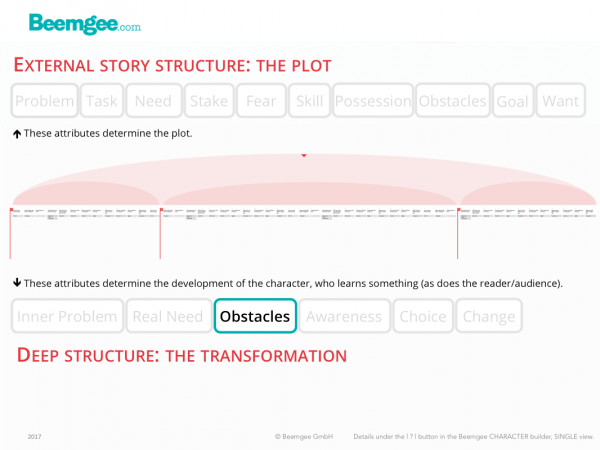
An obstacle is the manifestation in a plot event of a problem. Internal obstacles are the instances of opposition that the character faces which arise out of her or his internal problem. Stories establish a direction by setting a want and a goal for the character. On the way to that goal, the author hurls every obstacle possible at the character – because if things are easy for the character, there is no tension in the story. The biggest obstacle may come from within, from the internal problem. This may be the most important thing for the character to learn or overcome in order to grow into a changed, usually better person. Before the climax, the scale of the problem must become clear, which means the character cannot overcome an internal obstacle first time round.

In stories, characters are faced with obstacles.

These obstacles come in various forms and degrees of magnitude. And they may have different dimensions: they may be internal, external, or antagonistic.

Often the obstacles that resound most with a significant proportion of the audience are the ones that force the main characters to face and deal with problems within themselves, in their nature. In other words, with their internal problem.


Internal obstacles are the symptoms of the characters’ flaws or shortcomings, i.e. of the internal problem. The audience perceives them in scenes in which the character’s flaw prevents her progress. 


Not every story features characters with internal problems. An internal problem is not strictly speaking necessary in order to create an exciting story.

But it helps.

The Emotional Truth

An internal problem makes the character appear fallible – and thus more credible, more human, more like us. Internal problems are invariably emotional and private. They express the inner life of a character, and often reflect our own inner feelings. They are therefore usually far closer to the reality experienced by the recipient of the story, the audience or reader, than the surface structure of the story, which is based on the external problems of the characters. Everybody knows feelings like doubt, fear, pride, desire, anger, etc. We can relate to emotions like that more intensely than we can relate to, say, the work of an FBI agent, the adventures of an archaeologist, even the ordinary life of an Irishman on a June day in 1904. Or rather, we are interested in the work of the FBI agent, the adventures of the archaeologist, the ordinary life of the Irishman because they have emotions that we know.

So fairly early on in the story, while the audience or reader is being introduced to the characters, the story may also provide clues about the main character’s internal problem. The character then sets forth on the story journey, hoping to achieve the want and the goal, which the story has also established quite early on.

The Story Journey

At first, small hindrances turn up that need to be overcome or circumnavigated in order to continue. They may appear as tests.

It is vital for the whole concept of the internal problem that in the first few instances where the character bumps into obstacles that challenge the internal problem, the character will fail. These obstacles or tests show the audience/reader as well as the character that the internal problem is jeopardizing the character’s chances of overall success. The problem reveals itself as a negative character trait which will prevent the character from achieving his or her want. Only if the character can recognize the negativity of the character trait – usually round about the middle of the story – and change it into a positive one towards the end, will the character have overcome the internal obstacle and solved the internal problem.

In other words, an internal obstacle is a manifestation of the internal problem. The obstacle shows us, the audience, an instance of how behaviour typical to the character is engendered by the character’s internal problem, and how that hinders the character.

Internal_3_Beemgee_InternalObstacles

Internal obstacles arise as manifestations of the character’s inner problem. They are instances that occur only because of particular character traits the character really needs to address. 

So if the character’s internal problem is excessive doubt, fear, pride, desire or anger, the first few times the character runs into obstacles, the character will react to them with excessive doubt, fear, pride, desire or anger, and will therefore suffer a setback. Eventually, after an escalation of setbacks, a revelation may occur in the character when he or she recognises the reason why such setbacks occur.

At the goal, which is the gateway to the want, the character then faces the final battle with the most massive form of the internal obstacle.

By this time, the story may have woven the various sorts of obstacles together, so that the climax is about the character overcoming them all at the same time.

Now, what we’ve described here is an archetypal way stories are structured. It sounds a little simplistic when put in abstract terms like this. But look at your favourite stories, whatever they are – however literary and high-brow or popular and entertaining they may be – and you will probably find that the basic gist of the story can be described in such abstract terms. If you want to tell a story, and you are in the process of composition, it might help to set some internal obstacles for your character to overcome.

The internal obstacles a character encounters in a story are the consequences of the character’s internal problem. Dealing with these obstacles helps the character to recognize her or his real need.

To read more of Beemgee’s writing craft articles click here

How to Decide Which Exciting Story Idea to Write Next

I’m currently taking a writing and blogging sabbatical due to family health issues. For now, I’ll repost selected articles from my Fiction Writing School.

Here is the link to this article.

By Kristen Kieffer

Have a hundred thrilling story ideas rumbling around in your brain? Choosing which to write next can be tough, but it doesn't have to be impossible. Here are a few tips and tricks for making the smartest decision today!


Have a hundred thrilling story ideas rumbling around in your brain?

Choosing which of those many ideas to write next can seem impossible — especially when you’re of unsure which idea best aligns with your aims and abilities as a writer — but have no fear! Today, we’re going to cut through option overwhelm by discussing the tips and tricks that can provide clarity as you decide which exciting story idea to write next.

Are you considering the right kind of ideas?

There are ideas for stories, and then there are story ideas — the difference being that story ideas have workable premises, whereas ideas for stories are merely scraps of inspiration that haven’t yet found a home.

You may be excited about an idea for a new magic system or a fun meet-cute or one heck of a heart-wrenching scene, but unless you have characters and core conflicts to go along with those ideas, you likely won’t get far into your pre-writing or discovery drafting process before you hit a wall.

If you have a premise, on the other hand, you have promise. 

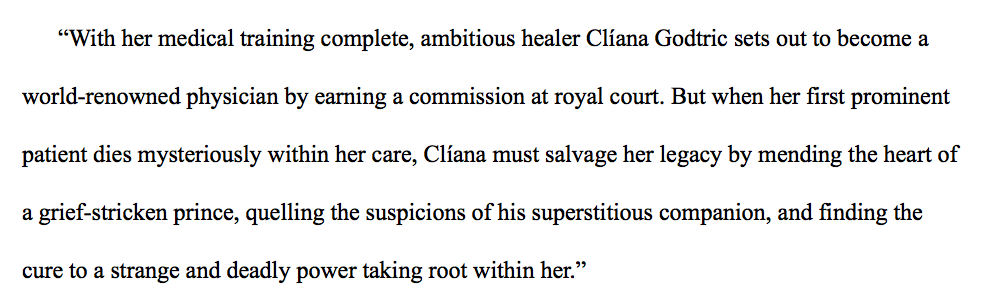
Premises pull storytelling weight. They can be plotted and provide structural clarity as you draft, reasonably ensuring the story idea you ultimately choose to write won’t turn into a flop. To create a premise for your own story idea, simply answer the following questions:


Here’s an example of what a story’s premise can look like:


This is the premise for my current work-in-progress, Lady Legacy.

I don’t believe any time spent writing is ever wasted, as there’s always something to be learned from your experiences. But if you want to save yourself a little time and frustration, take care to choose story ideas that stir both passion and potential.  

My top tips for choosing between story ideas…

Choosing between story ideas can feel a bit like pulling teeth, but there are a few tips and tricks that may make the process a little less harrowing. Perhaps the simplest of suggestions is this: if one story idea excites you more than all the others, choose that one!

Concerns about your ability to write or market a particular story can certainly weigh heavy, but I believe passion to be magnetic. If you pour your heart and hard work into a story you love, there won’t be able any room for regret.

If, however, you’re eager to write all of your story ideas, here are a few tips and tricks — presented in no particular order — that can help you make the best decision for you and your writing life.

TIP #1: DEFINE YOUR WHY 

What is your intent for the next book you write? Do you want it to be your publishing debut or to fill a specific place in your publishing plan? Would you like it to help grow your fan-fiction following or put a smile on your children’s faces? Or, are you writing simply for yourself?

By defining the purpose you want your next book to fulfill, you should gain a clearer understanding of which story ideas can provide the most creative fulfillment. 

 TIP #2: IDENTIFY YOUR CURRENT CREATIVE SEASON 

Our creative lives go through seasons. Sometimes, we need our writing to be a sure, stable oasis in our otherwise chaotic days. Other times, our creative energies are bouncing off the walls, urging us to write, write, write!

Identifying your current creative season can help you choose the story idea that best fits your needs. For example, you may want to save your most ambitious story idea for a time when your creative energies are running high, whereas a fun and simple story idea may be the best choice to pursue when life gets tough. 

TIP #3: BE A BIT GRIM

If you knew you could only write one more story before your time was up, which story idea would you choose? Albeit a bit grim, asking yourself this question can help single out the story idea that’s most captured your heart.

For some, that idea may be the most outrageous in their repertoire or the one that finishes out their series. Others may choose to write the idea that tackles an issue weighing heavy on their hearts, or perhaps the idea that simply feels right.

Whatever the case, it’s time to write with no regrets. You never know which story may be your last.

TIP #4: MULL OVER THE PRACTICALITIES

When choosing the story idea you want to write next, you’ll want to balance passion with practicality. You’ll likely spend the next several months — or even years — working with the story you choose. Is it one you feel confident dedicating your time and attention to writing? 

Alternatively, mulling over the practicalities of your story ideas may point out which are more a flash in the pan than stories you want to spend your foreseeable future creating.

TIP #5: CONSIDER WHICH IDEA IS MOST UNIQUE

Sometimes, the most exciting ideas are those that challenge old tropes or put a fresh spin on classic storylines. Do you have a story idea you believe will challenge the standards of your genre or the publishing industry as a whole? Don’t back down from the challenge!

Pursuing the most revolutionary idea in your arsenal can be a great way to liven up your writing life and help your work stand out from the crowd.


Choosing which of your many story ideas to write next certainly isn’t easy. With any luck, the tips and tricks we outlined today should help you whittle down your options by clarifying which ideas best align with your aims and abilities as a writer.

If you’re still stuck between two or three ideas, however, you may simply need to pull the trigger. Choose one from a hat. Close your eyes and point. Have a trusted friend choose for you. Remember, the only thing worse than having to choose between several exciting story ideas is never writing a word because you refuse to take action.

Make decisions that are right for you and where you are in your writing life, and I promise you’ll have no regrets, writer. It’s time to get your next creative endeavor underway!
 

Awareness and Revelation

I’m currently taking a writing and blogging sabbatical due to family health issues. For now, I’ll repost selected articles from my Fiction Writing School.

Here is the link to this article.

If the character is already aware of their internal psychological or emotional problem at the beginning, then the story is probably one of overcoming it. If not, then the story is likely to be one of realisation or revelation. The task a character faces is to resolve the external problem she or he will be confronted with at the beginning of the story. But in order to do so, the character usually has to deal with the deeper internal problem too. This inner issue or shortcoming is often an indirect or metaphorical expression of the external problem. The internal problem is a character trait, flaw or weakness that may result in anti-social or hurtful behaviour. Often the realisation it exists occurs first at the midpoint but is not acted upon until shortly before the character’s goal is reached. At what point in the narrative does this character become aware of the internal problem? Is there a particular “aha-moment” when the character experiences a new understanding of the self? Or is there such a moment for the audience, the reader or viewer?

What’s the problem? Does the character know?

In storytelling, discrepancy between a character’s awareness and the awareness-levels of others is one of the most powerful devices an author can use. “Others” refers here not just to other characters, but to the narrator and – most significantly – to the audience/reader.

Let’s sum up potential differences in knowledge or awareness:

  1. A character’s awareness of his or her own internal problem or motivation
  2. A difference between one character’s knowledge of what’s going on and another’s
  3. The narrator knows more about what is going on than the character
  4. The audience/reader knows more than the character – dramatic irony

In this post, we’ll concentrate on the first point: Awareness of the internal problem. We’ll break that down into

  • Becoming Aware – the importance of the revelation
  • The Story Journey – and where to place the revelation
  • Surface Structure and Deep Structure
  • The Need for Awareness – or, Alternatives to Revelation

Becoming Aware – the importance of the revelation

In many stories, major characters, especially the protagonist, have some sort of character flaw that holds them back from achieving what they want or that causes them to hurt other characters around them. Quite often, the characters are not aware of this failing until later in the narrative, when the story leads them to a sort of insight or revelation. This moment of self-discovery allows them to change their typical actions in order to make good their failing. In short, to grow into a better person.

Such a self-revelation can by definition only come about if the character is unaware of the internal problem at the beginning of the story. Conflict makes stories interesting, and it is the conflict between how the character sees him or herself and how the rest of the world – or the audience/reader – sees him or her that can make the character interesting. When will this character realise the truth?

There is a tricky writer trap here, but we’ll get to that later.

Furthermore, the revelation should not be confused with a reveal, which is a scene type. In a reveal, the audience learns something it previously did not know. A reveal usually marks a plot twist, a “the plot thickens” moment.

Despite the pitfalls involved, revelation is perhaps the single most powerful element of storytelling. That is one of the reasons why mystery and crime fiction is so popular – because these genres inherently feature a revelation when the mystery is solved.

Without revelation, there can be no realisation, and therefore no learning experience, which is at heart what stories are all about. Not only for the protagonist, but for the recipient – the reader or viewer. A good story will often have a single pinpointable moment where the recipient, or at least the protagonist, realises something important. This scene can give meaning to the entire story.

Some examples: The audiences fully realises the depth of Michael Corleone’s fall at the moment the door is closed to his wife. Indiana Jones realises that spirituality is not all hocus pocus and mumbo jumbo as angels and demons appear when the Lost Ark is opened.

The Story Journey – and where to place the revelation

The bulk of the narrative can be described as the story journey, beginning from the point at which the character acts on the external problem and moving all the way to the denouement. In the story journey, awareness of the internal problem often arises at the midpoint, though at first it may be ignored or denied. Proper awareness and the final choice of how to act upon it typically comes at the crisis point of confrontation towards the end of the narrative.

So awareness may not come in one go, but might grow, especially in the second half of the narrative. Essentially, the story journey consists of the character either taking action or discovering information, and of course the latter especially leads to growing awareness.

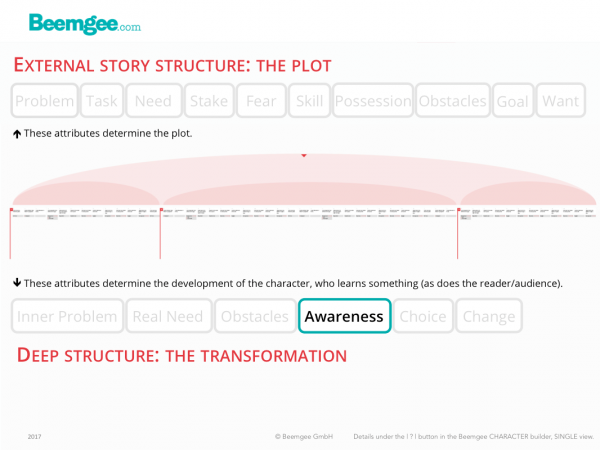
Internal_4_Beemgee_Awareness

Awareness of the inner problem comes to a character by revelation, typically at the midpoint and/or at the crisis.

Surface Structure and Deep Structure

We have said that the external problem forms the basis of the plot, and is therefore superficially what the story is about. The internal problem leads to character growth – which is good, because it gives the story a deeper level of meaning.

What does deeper level of meaning mean?

By getting the audience/reader to watch a character deal with an internal problem, the author can impart a universal truth about human emotions and how people act towards each other. On the whole, this is good. It’s what stories are for.

But for an author there is a danger not only of overdoing it, of moralising. There is also the other danger: feeling one has to do it at all. That’s the writer trap of revelation.

The Need for Awareness – or, Alternatives to Revelation

It would be excessive to suggest that the audience/reader expects or demands a self-revelatory insight of the protagonist in the story. Or at least we would say that the audience/reader should not necessarily expect this sort of effect. After all, why must the protagonist realise that s/he was wrong to //insert character flaw//?

Antagonists are often be unyielding. But it can be just as powerful, perhaps even more so, when an author defies convention and lets the protagonist keep and savour the flaw too. An unflinching protagonist who is aware of and steadfastly holds on to his or her failings and shortcomings can be more interesting than one who “learns” and is made “better” in the eyes of society. For society, read audience. We’ll posit as examples to consider stories such as Dirty Harry or American Psycho. Do those protagonists learn by revelation of their internal problem? Or do we find them fascinating because they don’t? Indeed, do these characters perhaps force us to consider our own internal problems?

It’s up to the author to decide what story to tell, and how to tell it. Many workshops and modern books on storytelling suggest that the protagonist requires self-revelation, i.e. revelation of the internal problem (though they might put it differently). While this is undoubtedly a valid and effective technique, we would point out that alternatives are perfectly valid too.

There is no absolute blueprint for stories.

Nonetheless, one of the deepest and most essential elements of story is revelation. More important still than that the protagonist experiences revelation is that the audience does. This emotion – the aha-effect, if you like – is one of the most satisfying for readers or viewers.

To read more of Beemgee’s writing craft articles click here