I’m currently taking a writing, blogging, and coaching sabbatical due to family health issues. For now, I’ll repost selected articles from my Fiction Writing School.
Here is the link to this article. Note, this article is 8 1/2 years old, it is well worth reading. We might learn something important.
Reflections on how to keep the center solid as you continue to evolve.
BY MARIA POPOVA
UPDATE: The fine folks of Holstee have turned these seven learnings into a gorgeous letterpress poster inspired by mid-century children’s book illustration.
On October 23, 2006, I sent a short email to a few friends at work — one of the four jobs I held while paying my way through college — with the subject line “brain pickings,” announcing my intention to start a weekly digest featuring five stimulating things to learn about each week, from a breakthrough in neuroscience to a timeless piece of poetry. “It should take no more than 4 minutes (hopefully much less) to read,” I promised. This was the inception of Brain Pickings. At the time, I neither planned nor anticipated that this tiny experiment would one day be included in the Library of Congress digital archive of “materials of historical importance” and the few friends would become millions of monthly readers all over the world, ranging from the Dutch high school student who wrote to me this morning to my 77-year-old grandmother in Bulgaria to the person in Wisconsin who mailed me strudel last week. (Thank you!) Above all, I had no idea that in the seven years to follow, this labor of love would become my greatest joy and most profound source of personal growth, my life and my living, my sense of purpose, my center. (For the curious, more on the origin story here.)
Illustration by Maurice Sendak from ‘I’ll Be You and You Be Me’ by Ruth Krauss, 1954. Click image for more.
Looking back today on the thousands of hours I’ve spent researching and writing Brain Pickings and the countless collective hours of readership it has germinated — a smile-inducing failure on the four-minute promise — I choke up with gratitude for the privilege of this journey, for its endless rewards of heart, mind and spirit, and for all the choices along the way that made it possible. I’m often asked to offer advice to young people who are just beginning their own voyages of self-discovery, or those reorienting their calling at any stage of life, and though I feel utterly unqualified to give “advice” in that omniscient, universally wise sense the word implies, here are seven things I’ve learned in seven years of making those choices, of integrating “work” and life in such inextricable fusion, and in chronicling this journey of heart, mind and spirit — a journey that took, for whatever blessed and humbling reason, so many others along for the ride. I share these here not because they apply to every life and offer some sort of blueprint to existence, but in the hope that they might benefit your own journey in some small way, bring you closer to your own center, or even simply invite you to reflect on your own sense of purpose.
Illustration from ‘Inside the Rainbow: Russian Children’s Literature 1920-35.’ Click image for more.
Allow yourself the uncomfortable luxury of changing your mind. Cultivate that capacity for “negative capability.” We live in a culture where one of the greatest social disgraces is not having an opinion, so we often form our “opinions” based on superficial impressions or the borrowed ideas of others, without investing the time and thought that cultivating true conviction necessitates. We then go around asserting these donned opinions and clinging to them as anchors to our own reality. It’s enormously disorienting to simply say, “I don’t know.” But it’s infinitely more rewarding to understand than to be right — even if that means changing your mind about a topic, an ideology, or, above all, yourself.
Do nothing for prestige or status or money or approval alone. As Paul Graham observed, “prestige is like a powerful magnet that warps even your beliefs about what you enjoy. It causes you to work not on what you like, but what you’d like to like.” Those extrinsic motivators are fine and can feel life-affirming in the moment, but they ultimately don’t make it thrilling to get up in the morning and gratifying to go to sleep at night — and, in fact, they can often distract and detract from the things that do offer those deeper rewards.
Be generous. Be generous with your time and your resources and with giving credit and, especially, with your words. It’s so much easier to be a critic than a celebrator. Always remember there is a human being on the other end of every exchange and behind every cultural artifact being critiqued. To understand and be understood, those are among life’s greatest gifts, and every interaction is an opportunity to exchange them.
Build pockets of stillness into your life. Meditate. Go for walks. Ride your bike going nowhere in particular. There is a creative purpose to daydreaming, even to boredom. The best ideas come to us when we stop actively trying to coax the muse into manifesting and let the fragments of experience float around our unconscious mind in order to click into new combinations. Without this essential stage of unconscious processing, the entire flow of the creative process is broken.Most importantly, sleep. Besides being the greatest creative aphrodisiac, sleep also affects our every waking moment, dictates our social rhythm, and even mediates our negative moods. Be as religious and disciplined about your sleep as you are about your work. We tend to wear our ability to get by on little sleep as some sort of badge of honor that validates our work ethic. But what it really is is a profound failure of self-respect and of priorities. What could possibly be more important than your health and your sanity, from which all else springs?
When people tell you who they are, Maya Angelou famously advised, believe them. Just as importantly, however, when people try to tell you who you are, don’t believe them. You are the only custodian of your own integrity, and the assumptions made by those that misunderstand who you are and what you stand for reveal a great deal about them and absolutely nothing about you.
Presence is far more intricate and rewarding an art than productivity. Ours is a culture that measures our worth as human beings by our efficiency, our earnings, our ability to perform this or that. The cult of productivity has its place, but worshipping at its altar daily robs us of the very capacity for joy and wonder that makes life worth living — for, as Annie Dillard memorably put it, “how we spend our days is, of course, how we spend our lives.”
“Expect anything worthwhile to take a long time.” This is borrowed from the wise and wonderful Debbie Millman, for it’s hard to better capture something so fundamental yet so impatiently overlooked in our culture of immediacy. The myth of the overnight success is just that — a myth — as well as a reminder that our present definition of success needs serious retuning. As I’ve reflected elsewhere, the flower doesn’t go from bud to blossom in one spritely burst and yet, as a culture, we’re disinterested in the tedium of the blossoming. But that’s where all the real magic unfolds in the making of one’s character and destiny.
One of Maurice Sendak’s vintage posters celebrating the joy of reading. Click image for more.
Then, just for good measure, here are seven of my favorite pieces from the past seven years. (Yes, it is exactly like picking your favorite child — so take it with a grain of salt.)
I’m currently taking a writing, blogging, and coaching sabbatical due to family health issues. For now, I’ll repost selected articles from my Fiction Writing School.
Author Janet Key shares the feeling of not wanting to revisit the world she was creating and the tools she used to help make her fiction a place she wanted to be.
Last fall, I decided with great determination that it was finally time to finish that literary novel of mine.
At that point, I had published short stories in literary journals and been told that a collection could be published … with, of course, a novel to go with it. It was disappointing to put the stories on hold, but I wasn’t too worried. I wrote in many forms, including long-form narratives. I had finished full-length plays and scripts, along with other, early attempt novels, and had sold a middle grade book, Twelfth, that I was still doing intermittent edits on.
The literary novel I was trying to write had been picked up and put down a lot over the years, but I was certain there was plenty of good stuff in there, and I was ready. I had the time blocked out. I had my notes and plans prepared. Finally, I thought, I could sit down and finish my real, serious, literary novel.
I would open the file on my computer and then immediately open YouTube. I would catch myself skimming my own work. More than once I lay my head down on my desk, willing my writing time to evaporate out from under me. As someone who always considered myself unafraid of “doing the work” of writing, this was a new, confusing, and honestly embarrassing experience.
It wasn’t writer’s block. I definitely had a sense of what needed to happen on the next page, and I already had bits and pieces drafted to get me there. Nor had I lost faith in the story I was telling. I believed it was exploring some valuable, big ideas, that it was interesting and engaging, and had moments of well-written tension and tenderness (I still do, in case you’re wondering).
At first, I blamed my problems on the fact that I had picked up and put down the novel too many times, distracted by other projects and jobs, and now couldn’t find the cohesive narrative. There was some truth to that—it was Frankenstein-ed together, overstuffed, and stitched sloppily at the seams—but it didn’t account for how I felt. It didn’t explain the dread, the procrastination, the sort of white-knuckle “just do it already!” self-talk I had to employ to actually write. Those feelings all boiled down to one thing: I just didn’t want to go in there.
But where was there? And why didn’t I want to go in?
Around the same time, I was receiving occasional questions and final edits on my middle grade novel, Twelfth. Normally I find this nit-picky, comma arrangement type of editing tedious, but instead I found myself eagerly jumping back into the book. I wasn’t making big changes, I was just enjoying hanging out with my sweet little band of theater geeks on a quest to find a diamond ring. I liked spending summer days at a camp in the Berkshires—chowing cafeteria food, taking classes, and going to the auditorium to rehearse Twelfth Night. And I loved having space to talk about Charlotte Cushman, Dorothy Arzner, Helen Gahagan Douglas, the Hollywood blacklist, the lavender scare, and more historical figures and moments I find remarkable, and remarkably under-represented culturally.
But what was the difference between the two projects? After all, Twelfth had been picked up and put down over many years, too. It, like my adult novel, drew on personal experiences but was entirely fictionalized, and also had historical details I found fascinating. It, like every project I have written and probably ever will write, had been full of the usual sorts of frustrations: Brain-farty days when I couldn’t write my way out of a box, internal debates that stretched on far too long about what should come next, characters who would not do as they were told. So why was I so ready to work on one book but kept ghosting the other?
Like most writers, I’ve taken all sorts of workshops, have read all kinds of craft manuals, and have now spent the greater part of my life trying to figure out how a story gets made. I gained invaluable knowledge about the art and craft of writing, but what no one at any point in my writing studies talked to me about was the sheer number of hours you will spend in your projects.
The hours you spend at your desk doing the actual writing, yes, but also the hours you spend considering your characters as if they were real people. How thoughts of your writing will invade your commute and ruin your appetite and distract you when you’re just trying to relax and binge watch a TV show. How you will have to not just live with your writing, but in your writing—you will live in your writing as much or more than in your real life—and, for longer projects, how you will have to choose to go back into it every day for months, even years at a time.
In my stalled literary novel, I was proud to think of myself as brutal, leaning into writing advice like “there’s no story without conflict!” and “kill your darlings!” I had made sure there was conflict with my protagonist’s partner, her mother, and her boss. I had abandoned her alone in a decrepit, dangerous, and possibly haunted house (which seems appropriate, considering I am now thinking about writing as a place), complete with a pigheaded contractor who made sexual “jokes” and vaguely threatening comments. I had even invested in her some of my least favorite traits about myself.
When I peered close enough, through the fog of fiction, I could see my character hauling around my own sense of shame over health issues, my meek agreeability and willingness to laugh off casual misogyny, my stubborn desire to be proven right in an argument. There was even an incident of trauma and shame lifted directly from my own life experience, spit-shined with different circumstances.
My poor character had to wear my worst self nakedly in narrative, all our ugly inner thoughts exposed by a close third person point of view, and, on top of that, face dangers and difficulties I never had. Did it follow the rules of good fiction? Definitely. Did it make for an interesting, engaging read? No clue. All I know is it made me physically cringe my way through each page.
Vonnegut famously advocated that a writer should “be a sadist” to their characters—something I had obviously taken to heart—but I had overlooked the next part of that same advice. That making “awful things happen to them” wasn’t just for the sake of the making awful things happen; it was so “that the reader may see what [the characters] are made of.” Novels aren’t meant to be trail after trail for no purpose, but rather the story of overcoming trials or finding the meaning that failing can offer.
Looking at the list of prize-winners and bestsellers from the past few years, I don’t think I’m the only writer who has made this mistake in approaching their work. How many scenes have I had to sit through where characters are belittled or manipulated by their partners, abused or ignored by their bosses, and then drown their sorrows with petty, selfish, spiteful friends—or, worse, everyone besides the blowhard protagonist is only there to oafishly serve as exposition into the next scene.
I’m not saying that books shouldn’t try to tackle difficult, even traumatizing topics—of course they should. Stories are frequently the only way into some sort of understanding of the darker moments in life and a way to find empathy for suffering. I’m also not advocating that you write only “likeable” characters. Yes, there is a place for the anti-hero in literature, but before you decide to write one, ask yourself this: Do you really want to hang out with that jerkface day in and day out for the time it takes you to write a novel?
Maybe you do, maybe you get a kick out of him. Personally, I can fume for hours about people who honk for no reason in traffic, so I’d rather not spend my precious time at the desk sitting in a world full of honkers. And finally, I’m really, really not suggesting everyone toss their literary novels and jump ship to start writing middle-grade fiction—in fact, please don’t. For one thing, there are plenty of us already, and for another, if you think it’s going to be easier than any other kind of writing, you’ll be sorely disappointed.
All I’m saying is find a way to make your writing an inviting place to go to every day. Construct your draft with the same care and attention you would use to decorate your home. Add a historical element you love, set it on a cruise ship, include a Monday morning boba tea ritual. Figure out a way to like your character and then treat them like someone you like: Let her have a nice dress that doesn’t get spilled on or worn to a funeral; let him cook his mother’s lasagna without burning it; give them a hobby that you’re neglecting in your own life and then watch with pride as they make the sort of progress you wish you had the time for.
Stories are supposed to be about the exceptional moments, the breaks from the everyday that challenge protagonists, but maybe the baseline of their everyday life doesn’t have to be “crap” and the exceptional, “total crap.”Don’t just make your writing a minefield of future conflict and then, day after day, guide them to step in fresh traps.
If you don’t want to hear it from me, then take it from Alice Munro, who compares a story to a house: “You go inside and stay there for a while, wandering back and forth and settling where you like and discovering how the room and corridors relate to each other, how the world outside is altered by being viewed from these windows.”
So, if you can’t make your writing a pleasant house, then make it an interesting house; and if you can’t do that, if your book has to be a place where you delve into the darkest parts of your history and/or humanity at large, then consider making sure there is a very comfy therapist’s couch waiting somewhere in the story for your characters to rest. Maybe have a real one waiting in your non-writing life, too.
I haven’t returned to that serious, literary novel I was writing last fall—not yet, anyway. Maybe it’ll have to be permanently drawered, but for now, I’m thinking of it in the same way I’m thinking of my apartment: deeply in need of a spring cleaning.
Someday soon, when I find a free hour or just can’t stand it anymore, I’ll grab the vacuum, literal and metaphorical, and start from the rugs up. I’ll toss the expired coupons and expired ideas about good fiction. I’ll dust off the sentimental tchotchkes and see if they look better somewhere else. I’ll go full Marie Kondo on my closet and on my conflicts: what can stay, and what can go, and what still brings me joy.
Do you yearn to write a romantic story? If so, you need to know what sets romance writing apart from other types of fiction. This course explores why romance is the same, yet different. Some essential components of romance are unique to the genre, while some romance requirements are identical to those of any good fiction story. Neither Stephen King nor Tom Clancy could sit down and write a romance unless he first familiarized himself with the specific factors that create a successful romance.
When Janet Key was 12, she sang and danced onstage, stayed up too late reading Shakespeare, and had a closet full of themed, hand-sewn vests. Twelfth is her first novel.
I’m currently taking a writing, blogging, and coaching sabbatical due to family health issues. For now, I’ll repost selected articles from my Fiction Writing School.
When someone asks you “What is this book about?”, there are a few ways you can answer. There’s “plot,” which refers to the literal events in the book, and there’s “character,” which refers to the people in the book and the struggles they overcome. Finally, there are themes in literature that correspond with the work’s topic and message. But what is theme in literature?
The theme of a story refers to that story’s deeper meaning. All works of literature contend with certain complex ideas, and theme is how a story or poem approaches these ideas.
There are countless ways to approach the theme of a story or poem, so we’ll take a look at some theme examples and a list of themes in literature. We’ll also discuss the differences between theme and other devices, like theme vs moral and theme vs topic. Finally, we examine why theme is so essential to any work of literature, including your own writing.
But first, what is theme? Let’s explore what theme is—and what theme isn’t.
Theme Definition
Theme describes the central idea(s) that a piece of writing explores. Rather than stating this theme directly, the author will look at theme using the set of literary tools at their disposal. The theme of a story or poem will be explored through elements like characters, plot, settings, conflict, and even word choice and literary devices.
Theme describes the central idea(s) that a piece of writing explores.
All works of literature have these “central ideas,” even if those ideas aren’t immediately understandable.
Justice, for example, is a theme that shows up in a lot of classical works. To Kill a Mockingbird contends with racial justice, especially at a time when the U.S. justice system was exceedingly stacked against African Americans. How can a nation call itself just when justice is used as a weapon?
By contrast, the play Hamlet is about the son of a recently-executed king. Hamlet seeks justice for his father and vows to kill Claudius—his father’s killer—but routinely encounters the paradox of revenge. Can justice really be found through more bloodshed?
Clearly, these two works contend with justice in unrelated ways. All themes in literature are broad and open-ended, allowing writers to explore their own ideas about these complex topics.
The premise line is the only reliable tool that can tell you, BEFORE you start writing, whether or not your story will “work.” In this class participants will learn how to master the process of premise line development—the essential first step in any book or screenplay’s development process.
In Creative Nonfiction, place is a character in itself. Deeply explore a narrative and a place of your choosing, and make weekly progress on your essay or memoir.
“Who are you to want to write?” Someone great, that’s who! Politely ask Mr. or Ms. Fear to step aside while you sign up for this fun, freeing and functional adventure.
Let’s look at some common themes in literature. The ideas presented within this list of themes in literature show up in novels, memoirs, poems, and stories throughout history.
Theme
Theme Definition
Theme Examples
Circle of Life
What comes around, goes around. The Circle of Life dwells on life’s transience and impermanence: how death isn’t death, just an evolution.
Where the Red Fern Grows by Wilson Rawls
Coming of Age
Also known as a bildungsroman, Coming of Age involves the intense experiences of growing up, and how these experiences shape the future of the protagonist.
Jane Eyre by Charlotte BronteGreat Expectations by Charles Dickens
Faith vs Doubt
Whether it’s faith in God, other people, or the protagonist’s own self, believing isn’t easy—but is it worth doing anyway?
Many families are connected by blood, but to overcome certain obstacles, literary families must strengthen their ties to each other.
Anna Karenina by Leo TolstoyHomegoing by Yaa GyasiPachinko by Min Jin Lee
Fate vs Free Will
How much of our actions are decided by fate, and how much does free will really control?
Romeo & Juliet by William ShakespeareThe Alchemist by Paulo Coelho
Good vs Evil
One can argue that every story is about good vs evil, assuming the story has a protagonist and antagonist. Still, good and evil are in eternal conflict with each other, so writers must document how this conflict evolves.
Doctor Faustus by Christopher MarloweThe Strange Case of Dr. Jekyll and Mr. Hyde by Robert Louis Stevenson
Hubris
Hubris refers to excessive self-confidence and the terrible decisions that arise from it. Many works of literature explore hubris as man’s defiance of God/the gods, or else man himself playing God.
Frankenstein by Mary ShelleyThe Iliad by HomerThe story of Adam & Eve in The Book of Genesis
Identity
At some point in their life, the protagonist asks the question: who am I?Additionally, “Identity” refers to the qualities that make one person distinct from another. How much of a difference exists between you and I?
Kafka on the Shore by Haruki MurakamiThe Idiot by Elif BatumanEncircling by Carl Frode Tiller
Justice
What makes a society just? What are the proper consequences for people who do the wrong thing? Who is best equipped to dispense justice? Are we collectively responsible for each other’s actions?
To Kill a Mockingbird by Harper LeeHamlet by William ShakespeareCrime and Punishment by Fyodor Dostoevsky
Loneliness
Loneliness affects the way people think, act, and view the world. The theme of loneliness charts how certain characters contend with their loneliness, and whether man can survive this disconnection from others.
Colorless Tsukuru Tazaki and His Years of Pilgrimage by Haruki Murakami“A Clean, Well-Lighted Place” by Ernest Hemingway
Man vs Nature
Man’s natural inclination is to dominate the land, but nature has its own means of survival.
Lord of the Flies by William GoldingInto the Forest by Jean HeglandPower by Linda Hogan
Man vs Self
Sometimes, the protagonist is their own adversary. In order to overcome certain challenges, the protagonist must first overcome their own internal conflicts.
Their Eyes Were Watching God by Zora Neale Hurston
Man vs Society
When the story’s antagonist is society-at-large, the protagonist must convince the world that it’s sick—or else die trying. Some protagonists also try to escape society altogether.
Nineteen Eighty-Four: A Novel by George OrwellThe Handmaid’s Tale by Margaret AtwoodFahrenheit 451 by Ray Bradbury
Power and Corruption
Power corrupts, and absolute power corrupts absolutely. This theme is often closely related to “Man vs Society.” Additionally, “Power” can refer to a person’s political leadership, personal wealth, physical prowess, etc.
In the Time of the Butterflies by Julia AlvarezAnimal Farm by George Orwell
Pursuit of Love
Love makes the world go round, but it’s not always easy to find. Whether it’s romantic, familial, or platonic love, there’s much to be said about love’s pursuit—and the conflict that comes from pursuing it.
Wuthering Heights by Emily BronteWhy be Happy When You Could be Normal? By Jeanette WintersonEmma by Jane Austen
Revenge
When someone wrongs you or the people you love, revenge is tempting. But, is revenge worth it? Can revenge beget justice? And how far is too far?
The Count of Monte Cristo by Alexandre Dumas
Sacrificial Love
When you truly love someone, you’re willing to sacrifice everything for them. Sacrifice is a component of all themes concerning love, though this is especially true for stories about motherly love.
Beloved by Toni MorrisonThe Leavers by Lisa Ko
Survival
When survival is at stake, people discover the limits of their own power. The theme of survival applies to stories about being lost in the wilderness, but it also applies to stories about the survival of ideas, groups, and humanity-at-large.
Sir Gawain and the Green Knight, author unknownOryx and Crake by Margaret AtwoodHeart of Darkness by Joseph Conrad
The Environment
Whether it’s because of technology, climate change, or our increasingly online world, man’s relationship to the environment is ever-evolving. Themes in literature concerning the environment often coincide with “man vs nature.”
My Year of Meats by Ruth OzekiProdigal Summer by Barbara Kingsolver
War
Mankind has been at war with itself since the dawn of civilization. The causes of war, as well as its impacts on society, are topics of frequent musing by writers—especially writers who have been at war themselves.
For Whom the Bell Tolls by Ernest HemingwayThe Red Badge of Courage by Stephen CraneThe Art of War by Sun Tzu
Theme Examples
Let’s take a closer look at how writers approach and execute theme. Themes in literature are conveyed throughout the work, so while you might not have read the books in the following theme examples, we’ve provided plot synopses and other relevant details where necessary. We analyze the following:
Power and Corruption in the novel Animal Farm
Loneliness in the short story “A Clean, Well-Lighted Place”
Love in the Poem “How Do I Love Thee”
Theme Examples: Power and Corruption in the Novel Animal Farm
At its simplest, the novel Animal Farm by George Orwell is an allegory that represents the rise and moral decline of Communism in Russia. Specifically, the novel uncovers how power corrupts the leaders of populist uprisings, turning philosophical ideals into authoritarian regimes.
Most of the characters in Animal Farm represent key figures during and after the Russian Revolution. On an ailing farm that’s run by the negligent farmer Mr. Jones (Tsar Nicholas II), the livestock are ready to seize control of the land. The livestock’s discontent is ripened by Old Major (Karl Marx/Lenin), who advocates for the overthrow of the ruling elite and the seizure of private land for public benefit.
After Old Major dies, the pigs Napoleon (Joseph Stalin) and Snowball (Leon Trotsky) stage a revolt. Mr. Jones is chased off the land, which parallels the Russian Revolution in 1917. The pigs then instill “Animalism”—a system of government that advocates for the rights of the common animal. At the core of this philosophy is the idea that “all animals are equal”—an ideal that, briefly, every animal upholds.
Initially, the Animalist Revolution brings peace and prosperity to the farm. Every animal is well-fed, learns how to read, and works for the betterment of the community. However, when Snowball starts implementing a plan to build a windmill, Napoleon drives Snowball off of the farm, effectively assuming leadership over the whole farm. (In real life, Stalin forced Trotsky into exile, and Trotsky spent the rest of his life critiquing the Stalin regime until he was assassinated in 1940.)
Napoleon’s leadership quickly devolves into demagoguery, demonstrating the corrupting influence of power and the ways that ideology can breed authoritarianism. Napoleon uses Snowball as a scapegoat for whenever the farm has a setback, while using Squealer (Vyacheslav Molotov) as his private informant and public orator.
Eventually, Napoleon changes the tenets of Animalism, starts walking on two legs, and acquires other traits and characteristics of humans. At the end of the novel, and after several more conflicts, purges, and rule changes, the livestock can no longer tell the difference between the pigs and humans.
Themes in Literature: Power and Corruption in Animal Farm
So, how does Animal Farm explore the theme of “Power and Corruption”? Let’s analyze a few key elements of the novel.
Plot: The novel’s major plot points each relate to power struggles among the livestock. First, the livestock wrest control of the farm from Mr. Jones; then, Napoleon ostracizes Snowball and turns him into a scapegoat. By seizing leadership of the farm for himself, Napoleon grants himself massive power over the land, abusing this power for his own benefit. His leadership brings about purges, rule changes, and the return of inequality among the livestock, while Napoleon himself starts to look more and more like a human—in other words, he resembles the demagoguery of Mr. Jones and the abuse that preceded the Animalist revolution.
Thus, each plot point revolves around power and how power is wielded by corrupt leadership. At its center, the novel warns the reader of unchecked power, and how corrupt leaders will create echo chambers and private militaries in order to preserve that power.
Characters: The novel’s characters reinforce this message of power by resembling real life events. Most of these characters represent real life figures from the Russian Revolution, including the ideologies behind that revolution. By creating an allegory around Lenin, Trotsky, Stalin, and the other leading figures of Communist Russia’s rise and fall, the novel reminds us that unchecked power foments disaster in the real world.
Literary Devices: There are a few key literary devices that support the theme of Power and Corruption. First, the novel itself is a “satirical allegory.” “Satire” means that the novel is ridiculing the behaviors of certain people—namely Stalin, who instilled far-more-dangerous laws and abuses that created further inequality in Russia/the U.S.S.R. While Lenin and Trotsky had admirable goals for the Russian nation, Stalin is, quite literally, a pig.
Meanwhile, “allegory” means that the story bears symbolic resemblance to real life, often to teach a moral. The characters and events in this story resemble the Russian Revolution and its aftermath, with the purpose of warning the reader about unchecked power.
Finally, an important literary device in Animal Farm is symbolism. When Napoleon (Stalin) begins to resemble a human, the novel suggests that he has become as evil and negligent as Mr. Jones (Tsar Nicholas II). Since the Russian Revolution was a rejection of the Russian monarchy, equating Stalin to the monarchy reinforces the corrupting influence of power, and the need to elect moral individuals to posts of national leadership.
Theme Examples: Loneliness in “A Clean, Well-Lighted Place”
Ernest Hemingway’s short story “A Clean, Well-Lighted Place” is concerned with the theme of loneliness. You can read this short story here. Content warning for mentions of suicide.
There are very few plot points in Hemingway’s story, so most of the story’s theme is expressed through dialogue and description. In the story, an old man stays up late drinking at a cafe. The old man has no wife—only a niece that stays with him—and he attempted suicide the previous week. Two waiters observe him: a younger waiter wants the old man to leave so they can close the cafe, while an older waiter sympathizes with the old man. None of these characters have names.
The younger waiter kicks out the old man and closes the cafe. The older waiter walks to a different cafe and ruminates on the importance of “a clean, well-lighted place” like the cafe he works at.
Themes in Literature: Loneliness in “A Clean, Well-Lighted Place”
Hemingway doesn’t tell us what to think about the old man’s loneliness, but he does provide two opposing viewpoints through the dialogue of the waiters.
The younger waiter has the hallmarks of a happy life: youth, confidence, and a wife to come home to. While he acknowledges that the old man is unhappy, he also admits “I don’t want to look at him,” complaining that the old man has “no regard for those who must work.” The younger waiter “did not wish to be unjust,” he simply wanted to return home.
The older waiter doesn’t have the privilege of turning away: like the old man, he has a house but not a home to return to, and he knows that someone may need the comfort of “a clean and pleasant cafe.”
The older waiter, like Hemingway, empathizes with the plight of the old man. When your place of rest isn’t a home, the world can feel like a prison, so having access to a space that counteracts this feeling is crucial. What kind of a place is that? The older waiter surmises that “the light of course” matters, but the place must be “clean and pleasant” too. Additionally, the place should not have music or be a bar: it must let you preserve the quiet dignity of yourself.
Lastly, the older waiter’s musings about God clue the reader about his shared loneliness with the old man. In a stream of consciousness, the older waiter recites traditional Christian prayers with “nada” in place of “God,” “Father,” “Heaven,” and other symbols of divinity. A bartender describes the waiter as “otro locos mas” (translation: another crazy), and the waiter concludes that his plight must be insomnia.
This belies the irony of loneliness: only the lonely recognize it. The older waiter lacks confidence, youth, and belief in a greater good. He recognizes these traits in the old man, as they both share a need for a clean, well-lighted place long after most people fall asleep. Yet, the younger waiter and the bartender don’t recognize these traits as loneliness, just the ramblings and shortcomings of crazy people.
Does loneliness beget craziness? Perhaps. But to call the waiter and old man crazy would dismiss their feelings and experiences, further deepening their loneliness.
Loneliness is only mentioned once in the story, when the young waiter says “He’s [the old man] lonely. I’m not lonely. I have a wife waiting in bed for me.” Nonetheless, loneliness consumes this short story and its older characters, revealing a plight that, ironically, only the lonely understand.
Theme Examples: Love in the Poem “How Do I Love Thee”
Let’s turn towards brighter themes in literature: namely, love. Elizabeth Barrett Browning’s poem “How Do I Love Thee” is all about the theme of love.
How do I love thee? Let me count the ways.
I love thee to the depth and breadth and height
My soul can reach, when feeling out of sight
For the ends of being and ideal grace.
I love thee to the level of every day’s
Most quiet need, by sun and candle-light.
I love thee freely, as men strive for right.
I love thee purely, as they turn from praise.
I love thee with the passion put to use
In my old griefs, and with my childhood’s faith.
I love thee with a love I seemed to lose
With my lost saints. I love thee with the breath,
Smiles, tears, of all my life; and, if God choose,
I shall but love thee better after death.
Themes in Literature: Love in “How Do I Love Thee”
Browning’s poem is a sonnet, which is a 14-line poem that often centers around love and relationships. Sonnets have different requirements depending on their form, but between lines 6-8, they all have a volta—a surprising line that twists and expands the poem’s meaning.
Let’s analyze three things related to the poem’s theme: its word choice, its use of simile and metaphor, and its volta.
Word Choice: Take a look at the words used to describe love. What do those words mean? What are their connotations? Here’s a brief list: “soul,” “ideal grace,” “quiet need,” “sun and candle-light,” “strive for right,” “passion,” “childhood’s faith,” “the breath, smiles, tears, of all my life,” “God,” “love thee better after death.”
These words and phrases all bear positive connotations, and many of them evoke images of warmth, safety, and the hearth. Even phrases that are morose, such as “lost saints” and “death,” are used as contrasts to further highlight the speaker’s wholehearted rejoicing of love. This word choice suggests an endless, benevolent, holistic, all-consuming love.
Simile and Metaphor: Similes and metaphors are comparison statements, and the poem routinely compares love to different objects and ideas. Here’s a list of those comparisons:
The speaker loves thee:
To the depths of her soul.
By sun and candle light—by day and night.
As men strive to do the right thing (freely).
As men turn from praise (purely).
With the passion of both grief and faith.
With the breath, smiles, and tears of her entire life.
Now in life, and perhaps even more after death.
The speaker’s love seems to have infinite reach, flooding every aspect of her life. It consumes her soul, her everyday activities, her every emotion, her sense of justice and humility, and perhaps her afterlife, too. For the speaker, this love is not just an emotion, an activity, or an ideology: it’s her existence.
Volta: The volta of a sonnet occurs in the poem’s center. In this case, the volta is the lines “I love thee freely, as men strive for right. / I love thee purely, as they turn from praise.”
What surprising, unexpected comparisons! To the speaker, love is freedom and the search for a greater good; it is also as pure as humility. By comparing love to other concepts, the speaker reinforces the fact that love isn’t just an ideology, it’s an ideal that she strives for in every word, thought, and action.
Themes in Literature: A Hierarchy of Ideas
“Theme” is part of a broader hierarchy of ideas. While the theme of a story encompasses its central ideas, the writer also expresses these ideas through different devices.
You may have heard of some of these devices: motif, moral, topic, etc. What is motif vs theme? What is theme vs moral? These ideas interact with each other in different ways, which we’ve mapped out below.
Theme vs Topic
The “topic” of a piece of literature answers the question: What is this piece about? In other words, “topic” is what actually happens in the story or poem.
You’ll find a lot of overlap between topic and theme examples. Love, for instance, is both the topic and the theme of Elizabeth Barrett Browning’s poem “How Do I Love Thee.”
The difference between theme vs topic is: topic describes the surface level content matter of the piece, whereas theme encompasses the work’s apparent argument about the topic.
Topic describes the surface level content matter of the piece, whereas theme encompasses the work’s apparent argument about the topic.
So, the topic of Browning’s poem is love, while the theme is the speaker’s belief that her love is endless, pure, and all-consuming.
Additionally, the topic of a piece of literature is definitive, whereas the theme of a story or poem is interpretive. Every reader can agree on the topic, but many readers will have different interpretations of the theme. If the theme weren’t open-ended, it would simply be a topic.
Theme vs Motif
A motif is an idea that occurs throughout a literary work. Think of the motif as a facet of the theme: it explains, expands, and contributes to themes in literature. Motif develops a central idea without being the central idea itself.
Motif develops a central idea without being the central idea itself.
In Animal Farm, for example, we encounter motif when Napoleon the pig starts walking like a human. This represents the corrupting force of power, because Napoleon has become as much of a despot as Mr. Jones, the previous owner of the farm. Napoleon’s anthropomorphization is not the only example of power and corruption, but it is a compelling motif about the dangers of unchecked power.
Theme vs Moral
The moral of a story refers to the story’s message or takeaway. What can we learn from thinking about a specific piece of literature?
The moral is interpreted from the theme of a story or poem. Like theme, there is no single correct interpretation of a story’s moral: the reader is left to decide how to interpret the story’s meaning and message.
For example, in Hemingway’s “A Clean, Well-Lighted Place,” the theme is loneliness, but the moral isn’t quite so clear—that’s for the reader to decide. My interpretation is that we should be much more sympathetic towards the lonely, since loneliness is a quiet affliction that many lonely people cannot express.
Great literature does not tell us what to think, it gives us stories to think about.
However, my interpretation could be miles away from yours, and that’s wonderful! Great literature does not tell us what to think, it gives us stories to think about, and the more we discuss our thoughts and interpretations, the more we learn from each other.
Why Themes in Literature Matter
The theme of a story affects everything else: the decisions that characters make, the mood that words and images build, the moral that readers interpret, etc. Recognizing how writers utilize various themes in literature will help you craft stronger, more nuanced works of prose and poetry.
“To produce a mighty book, you must choose a mighty theme.” —Herman Melville
Should I Decide the Theme of a Story in Advance?
You can, though of course it depends on the actual story you want to tell. Some writers certainly start with a theme. You might decide you want to write a story about themes like love, family, justice, gender roles, the environment, or the pursuit of revenge.
From there, you can build everything else: plot points, characters, conflicts, etc. Examining themes in literature can help you generate some strong story ideas!
Nonetheless, theme is not the only way to approach a creative writing project. Some writers start with plot, others with character, others with conflicts, and still others with just a vague notion of what the story might be about. You might not even realize the themes in your work until after you finish writing it.
So, experiment with ideas and try different ways of writing.You don’t think about the theme of a story right away—but definitely give it some thought when you start revising your work!
Develop Great Themes at Writers.com
As writers, it’s hard to know how our work will be viewed and interpreted. Writing in a community can help. Whether you join our Facebook group or enroll in one of our upcoming courses, we have the tools and resources to sharpen your writing.
I’m currently taking a writing, blogging, and coaching sabbatical due to family health issues. For now, I’ll repost selected articles from my Fiction Writing School.
I don’t have a link to the following because it came via email from Oliver Burkeman (I’m a subscriber). His website is oliverburkeman.com. Mr. Burkeman offers insightful and helpful information that relates in many ways to the writer. BTW, sorry for the formatting and run-on text–my fault, not Oliver’s.
Against good habits This week, because I like a challenge, or perhaps just because I’m an annoying contrarian, I’d like to try to persuade you that cultivating good habits can be bad for you.Or to put the point a little more precisely: I think one of the subtler psychological obstacles to building a creative and fulfilling life – in other words, to actually getting around to the things we most want to do with our finite weeks on earth – is the idea that we first need to become the kind of person who does those things all the time. You want to become, say, the kind of person who meditates, or writes or makes videos or podcasts on a regular basis, or finds more time for your kids – and so you conclude, understandably enough, that what’s needed is to develop certain good habits in those areas. The trouble is that “developing good habits” all too easily gets in the way of just doing the damn thing now.Two quick examples from my own life: a while back, I was feeling sad that I wasn’t in closer touch with a few specific friends. But before I could alight on the obvious remedy – reaching out to one of those friends, later that day – I’d already raced ahead mentally to how I was going to inculcate a new habit of reaching out to at least one such friend per week. Around the same time, I thought of a new project I could launch via my website – one that I’d enjoy, that might benefit others, and that could generate income. So did I take a few initial actions to get started, like a sensible person would? Reader, I did not. Instead, I decided I needed to come up with a whole plan for how I would regularly make time in my schedule for such ventures.Obviously – and in true contrarian spirit, this is the part of the post where I retreat from the attention-grabbing claim in the headline, to something more reasonable – I don’t really think there’s no value in building good habits. There clearly is. Several recent and deservedly popular books on the topic converge on the wisdom that slow, incremental, and easily doable micro-changes can snowball into significant long-term transformations.Nonetheless, I do think it’s often the case that the project of habit-building can serve as an invitation to avoidance. Sometimes that’s because the idea of building a habit seems rather daunting, and so you conclude that it’s best left until you have more time, later this year, or whatever. At other times, the idea of “building a habit” is so appealing precisely because the change in question is scary or uncomfortable – and so treating it as a long-term project is a convenient way of putting off the difficult stuff to another time.What we’re craving when we use habit-building as avoidance in this way, I think, is our old friend, the feeling of control: we want to see ourselves as the captain of the superyacht, standing confidently on the bridge, steering our life to the point at which we’ll finally feel adequate, acceptable, and on top of things. Devising schemes for self-improvement obviously feeds into that fantasy, whereas just doing something today, as a one-off – just writing a chapter of the short story, just suggesting a meetup with a friend, just going for a run – requires the surrender of control. It means launching your little canoe onto the rapids and letting life take you wherever it’s going to take you. It means risking that you’ll do the thing badly, and the certainty that you’ll do it imperfectly.So my challenge – to myself as much as to anyone else, as ever – is as follows. What’s one thing you could do, today, that you know would be a good way to use a small portion of your time, and would you be willing to actually do it? I’m precisely not talking about “relaunching your meditation practice”, but instead just meditating once, today. And not “writing for thirty minutes a day”, but just writing for one period of thirty minutes. Just doing it, once. But actually doing it.Because the irony, of course, is that just doing it once today is ultimately the only way to become “the kind of person” who does that sort of thing on a regular basis anyway. Otherwise (and believe me, I’ve been there) you’re merely the kind of person who spends your life drawing up plans and schemes for how you’re going to become a different kind of person at some point in the future which never quite arrives. And that’s not the same thing at all.My New York Times bestselling book Four Thousand Weeks: Time Management for Mortalsis available wherever you get your books, and you might also be interested in my just-released TedX Manchester talk, ‘Why patience is a superpower’. I’d love to hear from you – just hit reply. (I read all messages, and try to respond, though I don’t always manage.) If you received this email from a friend, and would like to subscribe, please go here.Unsubscribe | Update your profile | View this email in a browser 540 President St, Brooklyn NY 11215
Btw, I recently purchased Burkeman’s book, Four Thousand Weeks: Time Management for Mortals. So far, it’s great.
Here’s what a few others have said about this New York Times and Sunday Times bestseller:
“The most important book ever written about time management” – Adam Grant
“Comforting, fascinating, inspiring and… actually genuinely useful” – Marian Keyes
“Every sentence is riven with gold” – Chris Evans
“You’ll emerge from his writing fortified by wonder” – Derren Brown
I’m currently taking a writing, blogging, and coaching sabbatical due to family health issues. For now, I’ll repost selected articles from my Fiction Writing School.
Mastery is a concept that many believe is subjective, especially when it comes to writing (novels in particular). There’s an insidious belief that what constitutes good or bad is a matter of popular opinion. Quality isn’t something we can measure.
This belief—that mastery is a matter of taste—has been around as long as the publishing business. Probably longer. If this wasn’t so, then vanity presses would never have made a single cent.
Yet, vanity presses arose to meet the needs of those who believed that the gatekeepers had gotten it all wrong.
Their book was ready for popular consumption, ripe for the public to eagerly hand over disposable income for the privilege of using up limited free time to consume said book.
Sometimes (albeit rarely) the author was right.
Yet, before the digital age, an author had to seriously count the cost of publishing too soon, even with a vanity press.
Literally.
If one was going to hand over thousands of dollars to hold one’s book in hand? Then the author knew the gamble could either pay off big (The Firm), or that they’d end up with a storage unit filled with mouldering novels.
Mastery-Minded Culture
Legacy publishing.
When I started writing seriously, the author culture was vastly different. Most writers aspired to mastery. It was a time when artists outnumbered entrepreneurs.
Granted, after a few brutal critique sessions, we pretty much all figured out we’d never craft the ‘perfect novel,’ but that didn’t mean we wouldn’t keep trying to get as close as possible.
Storytelling mastery included learning the basics. We had our worn copies of Strunk & White dog-eared, underlined, and held together with tape. There was a general sense we had to earn the title of ‘author,’ and we didn’t take kindly to shortcuts.
***This was why self-publishing took years to be accepted as a legitimate form of publishing.
Many of us wanted to become authors because we were, first and foremost, avid readers.
We loved books and stories. The idea of honing the same skill levels, attaining the same sort of mastery as our author heroes propelled us forward draft after draft, rejection after rejection.
Times Change
In my early years, tapping out and deciding to use a vanity press or self-publishing was akin to literary blasphemy.
There was also an atavistic response to any kind of self-promotion. It smacked too much of self-publishing bottom-feeder egomania.
This overriding negative attitude was one of the major obstacles I faced early in my career. Trying to convince authors that—one day soon—they’d need an on-line platform to survive was akin to walking around L.A. wearing tin foil shouting the world was going to end (and expecting to be taken seriously).
In my early years as a social media/branding expert, authors believed the publishers would do all that unseemly marketing and promotion stuff. Their only job was to write excellent books.
Then, over time, and due to some seriously bad business decisions in traditional publishing (namely the multinational media conglomerates who called the shots), self-publishing exploded in popularity.
Within a decade, the tables turned. Authors in 2009 considered landing an agent the first step to success. After the agent, then the publishing deal with a ‘real’ publisher. Social media was for hacks.
In 2019, I run across more ‘authors’ who aspire for marketing mastery over storytelling mastery. They can’t figure out why they’re not selling any books even though they have a fifteen-book series.
Is it the promotion? S.E.O.? Maybe they need a bigger newsletter or a spot on BookBub?
Maybe. Yet, from what I’ve seen, the major problem—more often than not—is the product not the packaging.
Content is and King
I spent the first half of this month on the road keynoting and teaching, and the second half recovering from keynoting and teaching. This past Saturday was the first time I had a voice, and I’ve been so exhausted I could hardly move.
I’m STILL dragging.
Suffice to say, I put out MASSIVE wattage when I present, and often I present ten hours at a time. It’s no easy feat to keep an audience awake and inspired for ten hours when they’re sitting in comfortable auditorium seats under low lighting.
Anyway, while recovering, I was tempted to dust off my old copy of Stephen King’s On Writing, but I didn’t have it in me to read. So I bought a copy on Audible and listened to it at least ten times (namely the sections that have to do with our craft).
This line, in particular, stood out to me.
If you want to be a writer, you must do two things above all others—read a lot and write a lot.
This might seem like a ‘no duh’ statement, but I cannot count how many times I’ve encountered people who say they want to be a writer but they simply don’t have any time to read. Most of the samples I see? I can tell the writer reads very little if at all.
They don’t have time.
Here, King and I are in total agreement. Anyone who doesn’t have the time to read doesn’t have the time—or the tools—to be a writer (especially a good writer).
Craft classes and grammar lessons aside, reading helps fill our toolbox. We are artisans, crafting people, places, worlds, and concepts with combinations of twenty-six letters.
Would you trust someone to build your house who only owned (and knew how to use) a hammer and saw? Or a doctor who only knew how to wield a scalpel, but skipped learning how to suture?
Yet how many writers are publishing books and they don’t even possess the basic fundamentals of our craft? And are more concerned with a new marketing plan then why people don’t WANT to read their work, let alone PAY to read it?
Is Fiction COMPLETELY Subjective?
To a degree, yes. But, really? No. Not as much as some might claim.
As I mentioned earlier, it’s impossible to write the ‘perfect’ book, to craft the novel ‘everyone’ will love. This, however, is no excuse to dismiss the true artist’s inherent obligation to pursue mastery.
Did Picasso break all the rules? Yes, but he apprenticed for years, studied the masters, learned the rules and THEN broke them. Like a master mason who’s so familiar with the composition of stone, the feel of its striations, that he knows where to put the chisel and where to steer clear.
Yes, I’ve heard how there are a lot of ‘bad’ books/authors who sell a ton of copies and have a gazillion fans. Yet, I imagine one could look at any one of their books and see the writer at least tells a coherent STORY.
Mastery Begins with Basics
Grammar, structure, vocabulary, punctuation, etc. is for the READER. When we don’t know what P.O.V. is, we’re strapping readers onto Hell’s Tilt-A-Whirl, then have the nerve to be angry when they stumble away green around the gills.
If we don’t punctuate correctly, readers become easily lost. Similarly, grammar is akin to literary road signs that help the reader know where they are and what’s happening.
No signs or confusing signs don’t make for a pleasant drive any more than a pleasant read.
When we botch the basics, readers get a headache trying to untangle what’s happening where and why and to whom. Reading should be a pleasant experience, an adventure the reader never wants to leave.
It is the height of hubris to blame readers if we’ve failed to do all that’s in our power to serve them an enjoyable experience. Stories aren’t simply for our own entertainment, unless writing is a hobby and we have no intention of selling that work.
Mastery takes time, study, practice, commitment, failure, more failure, and discipline. Sad to say we have devolved to a point where the slush pile has been dumped in the readers’ laps.
If we think it was tough to get people to read twenty years ago, what about now when there are a million plus books self-published every year (and most unedited)?
Self-Publishing & Mastery
If we take a good look at the runaway successes that have emerged out of self-publishing, we’ll see that most of the BIG ones are pretty incredible books. Read Hugh Howey’s Wool, or Andy Weir’s The Martian, and Wm. Paul Young’s The Shack.
Though The Martian’s hard-science-as-story might not appeal to everyone, it’s tough to argue it wasn’t well-written. Andy Weir simply told a story differently, to a group that NY publishers at the time didn’t believe existed…hard core geeks/nerds.
Weir, and others who’ve successfully self-published, have collected a fanbase because they tell stories other people want to read and can read.
Writing, like any art, has a learning curve. Sometimes, I believe this is what flubs so many of us up. Our culture believes that, because we possess command of our native tongue that OBVIOUSLY our first attempt at a novel should make millions. RIGHT?
NO!!!
Yet, strangely the same people who believe the first draft of our first novel should be made into an HBO series would never expect a child who picks up a violin for the first time to be ready for Carnegie Hall by the end of the year.
Singers and dancers endure years of training, coaching and have tens of thousands of hours of practice before we’re likely to know they exist.
Mastery in sports, medicine, law, and yes even writing takes dedication and sacrifice. We need training, guidance, practice, mentors, failure, success, and yes…talent and a little (or a lot) of luck.
Mastery Resources
Critics are brutal.
First and foremost, if you write fiction then READ fiction. If you’re selling me a mystery then a crime better happen somewhere in the beginning, and I’m not talking about a crime against the written word.
Read a lot, in your genre and out. Absorb the good and the bad. Learn the literary terrain and build your skills using observation. There are super successful authors who claim they never plot.
Yet, I will counter with this.
They have probably read SO many books that structure is hardwired into their brains. These authors gained mastery ‘by ear,’ if you will.
Some people learn piano with an instructor, others pick it up by listening and playing around on a keyboard long enough.
Both ways are hard work.
All serious authors should read (much like all serious musicians should probably listen to music). Yet, there are other tools at our disposal and here’s a list of my favorite in no particular order:
I’ve probably left out one or twenty other items I’d love to add to this list, but there will be more blogs, and this is enough to give any author interested in pursuing mastery a darn good start.
I read and reread these books because I’m always learning and growing. I’m far from the perfect writer, but every day I’m gaining on her (even if she IS a unicorn). I write an average of 2,000 to 4,000 words a day, depending on what I’m working on.
Additionally, I average 3-4 hours of reading a day. I do this mainly using Audible because, according to the laundry piles, I think I have people living in my house I don’t know about.
And I already can hear the howls of complaint.
I just can’t listen to books. They make me fall asleep. My mind wanders.
Mine did, too. I had to TRAIN myself to listen to books. The excellent ones, I buy in paper (or ebook) and read again the old-fashioned way. But audio books are portable. I can listen when waiting in a line, stuck in traffic, while doing dishes, and when working out.
Perfect is the enemy of the good and I’d rather y’all ‘imperfectly’ listen to audiobooks than not read any books. When we show up to the blank page with no tools, no reservoirs bursting with vocabulary and imagery, we risk looking ill-prepared or simply ignorant.
I’ve been both. It sucks to invest years into a ‘novel’ that is an unsalvageable mess. I keep my first ‘novel’ in the garage because it chews on the furniture and pees on the rugs.
Remember, we all start somewhere. Give yourselves permission to be NEW.
I’m currently taking a writing, blogging, and coaching sabbatical due to family health issues. For now, I’ll repost selected articles from my Fiction Writing School.
How can you deepen your story’s theme? This is a question most writers find themselves asking at one point or another. And there are many answers.
As an inherently abstract concept, theme can be approached from many different directions—and still feel hard to get at. But as one of the most important factors in creating a story with meaning, cohesion, and resonance, theme must be approached with practical understanding at least at some point in the writing process. I’ve written extensively on this site and in my book Writing Your Story’s Theme about how writers can use a practical understanding of plot structure and character arc to consciously craft and hone integral themes.
Basically, this approach revolves around the realization that character arc reveals and proves theme, while plot structure creates and unfolds character arc. In order for any of the “big three” of plot, character, and theme to truly work, all three must be in alignment. This means that if you’ve got a plot that works or a character arc that works, it’s pretty likely you also have a theme that works. And if any of the three doesn’t work, you’ll at least have clear problems to solve on your way to strengthening all three.
But are there any other practical tools you can use in deepening your story’s theme?
First of all, what does it even mean to “deepen” theme?
It might mean simply to “improve” the theme. But often, writers who are seeking a deeper theme are, in fact, looking for ways to expand upon their thematic argument and delve deeper than simplistic good/bad explorations of moral premises. Good stories will be complex enough to generate many different thematic queries, some only tangentially related to the main premise (which is fine as long as they’re not given major screentime). This, however, can get tricky fast, since sometimes even simple themes can be difficult to execute with cohesion. There is a vast difference between a properly complex theme, in which a single simple idea is explored from multiple angles, versus a complicated theme, in which too many disparate ideas are being thrown at the wall and too few are actually sticking.
In increasing the complexity of a story’s theme, one tool I personally use and love and about which I am frequently asked is Robert McKee’s “thematic square.” He talks about this approach in his exceptional screenwriting classic Story (a must-read for anyone passionate about story theory). Today, at the request of several of you, I will offer a quick overview of this technique, and I how I use it.
What Is the Thematic Square?
The simplest way to approach theme is through the polarity of the protagonist’s view of the world (whether accurate or not) versus an opposing view of the world. In teaching character arc, I refer to this polarity as the Lie and the Truth. However, this is necessarily a very black and white description of any thematic argument. These terms are only meant to be representative of the protagonist’s relative views at the beginning and ending of the story; they are unlikely to represent moral absolutes. To the degree they do, stories can often end up feeling moralistic and on the nose. As McKee points out:
Life … is subtle and complex, rarely a case of yes/no, good/evil, right/wrong. There are degrees of negativity.
He then develops those “degrees of negativity” into three specific categories of thematic viewpoints that progressively distance themselves from a basic “positive” view (what I refer to as the thematic “Truth”). Together, the positive Truth and its three counter-views can be seen to form a thematic square:
Instead of the positive Truth being simply opposed by a negative Lie (or call it a Counter-Truth if you prefer) of equal force, it is instead challenged by many nuanced arguments. Thanks to this realistic variation, the story can explore both clearly awful alternatives to the Truth as well as subtler ideas that may, in fact, offer convincing arguments against the Truth.
For example, here is the thematic square I concocted when writing my gaslamp fantasy Wayfarer:
Positive thematic Truth: Respect
An aspect that is outright Contradictory to the Truth: Disrespect
Another aspect that is perversely Contrary to that Truth: Rudeness
The Negation of the Negation, which is an atmosphere in which the Truth doesn’t even exist: Self-Disrespect
In his book, McKee offers several other examples, including this excellent one:
Positive: Love
Contradictory: Hate
Contrary: Indifference
Negation of the Negation: Self-hate
Four Corners of Your Story’s Thematic Truth You Can Explore
Now, let’s dive a little deeper and explore each of the corners of this thematic square.
1. Positive
In my explorations of story, I refer to the positive value of the theme as the thematic Truth. Although it may be a relative truth that is pertinent specifically to your character and your story, it will usually be rooted in something deeper and more universal. McKee says:
Begin by identifying the primary value at stake in your story. For example, Justice. Generally, the protagonist will represent the positive charge of this value; the forces of antagonism, the negative.
In a story in which your protagonist fulfills a Positive Change Arc, he will start out believing a Lie (probably one of the thematic “anti-values” in the below categories) and, gradually, over the course of his story come to recognize and embody the Truth. In a Flat Arc, the protagonist will embody the Truth throughout the story, using it to combat other characters’ Lies and encourage change in some of them. In a Negative Change Arc, the protagonist may or may not represent the Truth in the beginning of the story, but will eventually fall away from it by the end.
2. Contradictory
The contradictory thematic value is the simple binary opposite of the positive thematic Truth. In a story with a clear-cut “good guy” and “bad guy,” the good guy will usually obviously represent the positive value, while the bad guy will obviously (and sometimes mindlessly) represent a contradiction to that value. McKee puts it:
….the Contradictory value [is] the direct opposite of the positive. In this case, Injustice. Laws have been broken.
Although simplistic, the contradictory value is crucial within the story since it represents the fundamental polarity found within the thematic argument. However, by its very simplicity, it can create realism issues for writers who over-rely on it. After all, in most simplistic situations, most people would easily choose the positive value over the negative. If life were always as simple as that, there would be no struggle to reject Lies in favor of Truths—and thus no stories!
3. Contrary
Now things start to get more complicated—and interesting. As McKee says:
Between the Positive value and its Contradictory … is the Contrary: a situation that’s somewhat negative but not fully the opposite. The Contrary of justice is unfairness, a situation that’s negative but not necessarily illegal: nepotism, racism, bureaucratic delay, bias, inequities of all kinds. Perpetrators of unfairness may not break the law, but they’re neither just nor fair.
The contrary value of your theme is where the nuances began to appear. At first glance, some of the contraries of your positive theme may seem “less bad” than its outright contradiction. Via McKee’s example, we might initially be inclined to say that “unfairness” is not so bad as “injustice.” And yet, here we find the slow fade, the gray areas that can lead us to compromise our own basic values, sometimes without even fully realizing it.
It is in the contrary aspect of the theme that your protagonist will be most tempted to abandon the difficult high road of the positive Truth. Indeed, in not accepting or allowing some contrary aspects, the character makes it all the harder for herself to truly embody the Truth. For instance, a boxer unwilling to compromise his sense of integrity and justice in the face of pressure to throw a fight may find this causes him to become the victim of a true injustice that threatens his very life.
4. Negation of the Negation
Finally, McKee finishes out his square with the “negation of the negation”:
At the end of the line waits the Negation of the Negation, a force of antagonism that’s doubly negative…. Negation of the Negation means a compound negative in which a life situation turns not just quantitatively but qualitatively worse. The Negation of the Negation is at the limit of the dark powers of human nature. In terms of justice, this state is tyranny.
In essence, the negation of the negation is an ideology or state of being in which the theme is flipped on its head: right becomes wrong, wrong becomes right. The negation of the negation is the thematic Lie taken to its furthest extreme. Disrespect of others eventually leads to disrespect of self and of all life. Hatred leads to a total moral vacuum: evil. Injustice leads to unmitigated oppression.
Obviously, this aspect of your theme offers tremendous dramatic possibilities. You may choose to fully portray the consequences your character and the story world will face (or already face) if the protagonist fails to embrace and embody the high side of the theme. Stories such as Lord of the Rings, Hunger Games, and Schindler’s List come to mind.
But you can also use simply the specter of the negation of the negation in subtler ways to symbolize what is at stake for your character. Even in “quiet” stories, the negation of the negation is usually what shows up, in some form or another, at the story’s Low Moment or Third Plot Point. For example, in a romance where the positive theme might be “love,” the protagonist may have just broken up with her love interest, believing they can never make it work. Now, at this Low Moment, she is faced, however briefly or symbolically, with a horrifying negation of the negation: loneliness as the absence of love.
One More Trick: Combining McKee’s Thematic Square with Truby’s Conflict Square
So how do you apply McKee’s thematic square to your story? Your protagonist’s inner conflict is one aspect of the story in which you can (and should) explore all four nuanced corners of your theme. But you can also powerfully externalize your character’s inner conflict onto the outer conflict of the plot. You do this by identifying certain supporting characters in the story who can represent different corners of the thematic argument.
This ties in beautifully with the idea of the “four corners of opposition,” which John Truby presents in his Anatomy of Story. His proposition is that of ensuring that your protagonist is not simply opposed by the antagonist, but rather by multiple characters, who in turn oppose not just the protagonist on some level but all the others as well.
This is an excellent approach for breathing dimension into your characters and your conflict. After all, how often in real life are we perfectly aligned with our allies—or even perfectly opposed to our opponents?
Truby illustrates this idea particularly as a square representing four characters (personally, I always default their identities to the four primary character roles of protagonist, antagonist, sidekick, and love interest—or alternately the contagonist sometimes). However, you can actually apply the idea of “conflict from all sides” to every character in your story. This doesn’t mean your protagonist’s mom has to be coming after him with a butcher’s cleaver. But it does mean that even good ol’ Mom should have some goal or belief that conflicts with the protagonist’s in however small a way.
Overlaying this idea atop McKee’s thematic square gives you a guide for assigning a plethora of worldviews to your characters while still keeping them all thematically pertinent. For instance, as McKee noted in his description of the contrary aspect of theme, there may be many different contrary ideas to the main positive thematic Truth. If your story takes up McKee’s example to explore a positive theme of Justice, then you could choose to develop any or all of his contrary suggestions through individual supporting characters: nepotism, bureaucratic delay, etc.
As with any exploration of theme, you don’t want to get too obvious about this. Characters, including the antagonist, need to be fleshed out beyond serving as basic foils for your protagonist’s thematic exploration. But if you can craft characters who authentically represent differing arguments or aspects of the theme, your story’s complexity and depth will expand almost all on its own.
I’m currently taking a writing, blogging, and coaching sabbatical due to family health issues. For now, I’ll repost selected articles from my Fiction Writing School.
“A good society contains many different artists doing many different things. A bad society coerces artists because it knows that they can reveal all kinds of truths.”
BY MARIA POPOVA
“One of the functions of art,” Ursula K. Le Guin observed in contemplating art, storytelling, and the power of language to transform and redeem, “is to give people the words to know their own experience… Storytelling is a tool for knowing who we are and what we want.” Because self-knowledge is the most difficult of the arts of living, because understanding ourselves is a prerequisite for understanding anybody else, and because we can hardly fathom the reality of another without first plumbing our own depths, art is what makes us not only human but humane.
That is what the philosopher and novelist Iris Murdoch (July 15, 1919–February 8, 1999) — one of the most lucid and luminous minds of the twentieth century — explored in a long, deep, immensely insightful 1977 conversation with the British broadcaster and philosopher Bryan McGee, which aired on McGee’s television series Men of Ideas. (That, after all, was the era when every woman was “man.”) The transcript was later adapted and published in the altogether revelatory collection of Murdoch’s essays and interviews, Existentialists and Mystics: Writings on Philosophy and Literature (public library).Iris Murdoch
Murdoch begins by reflecting on the fundamental difference between the function of philosophy and that of art — one being to clarify and concretize, the other to mystify and expand. She observes:
Literary writing is an art, an aspect of an art form. It may be self-effacing or it may be grand, but if it is literature it has an artful intention, the language is being used in a characteristically elaborate manner in relation to the “work,” long or short, of which it forms a part. So there is not one literary style or ideal literary style, though of course there is good and bad writing.
Literary modes are very natural to us, very close to ordinary life and to the way we live as reflective beings. Not all literature is fiction, but the greater part of it is or involves fiction, invention, masks, playing roles, pretending, imagining, story-telling. When we return home and “tell our day,” we are artfully shaping material into story form. (These stories are very often funny, incidentally.) So in a way as word-users we all exist in a literary atmosphere, we live and breathe literature, we are all literary artists, we are constantly employing language to make interesting forms out of experience which perhaps originally seemed dull or incoherent. How far reshaping involves offences against truth is a problem any artist must face. A deep motive for making literature or art of any sort is the desire to defeat the formlessness of the world and cheer oneself up by constructing forms out of what might otherwise seem a mass of senseless rubble.
We want a writer to write well and to have something interesting to say. Perhaps we should distinguish a recognisable style from a personal presence. Shakespeare has a recognisable style but no presence, whereas a writer like D. H. Lawrence has a less evident style but a strong presence. Though many poets and some novelists speak to us in a highly personal manner, much of the best literature has no strongly felt presence of the author in the work. A literary presence if it is too bossy, like Lawrence’s, may be damaging; when for instance one favoured character is the author’s spokesman. Bad writing is almost always full of the fumes of personality.
Literature could be called a disciplined technique for arousing certain emotions. (Of course there are other such techniques.) I would include the arousing of emotion in the definition of art, although not every occasion of experiencing art is an emotional occasion. The sensuous nature of art is involved here, the fact that it is concerned with visual and auditory sensations and bodily sensations. If nothing sensuous is present no art is present. This fact alone makes it quite different from “theoretical” activities… Art is close dangerous play with unconscious forces. We enjoy art, even simple art, because it disturbs us in deep often incomprehensible ways; and this is one reason why it is good for us when it is good and bad for us when it is bad.
Expanding upon the ideas of the ancient Greeks, so formative to our understanding of art, Murdoch offers a definition:
Art is mimesis and good art is, to use another Platonic term, anamnesis, “memory” of what we did not know we knew… Art “holds the mirror up to nature.” Of course this reflection or “imitation”” does not mean slavish or photographic copying. But it is important to hold on to the idea that art is about the world, it exists for us standing out against a background of our ordinary knowledge. Art may extend this knowledge but is also tested by it.
She considers the ecosystem of good and bad art in human culture, and the essential distinguishing factor between the two:
There is always more bad art around than good art, and more people like bad art than like good art.
[…]
Good art is good for people precisely because it is not fantasy but imagination. It breaks the grip of our own dull fantasy life and stirs us to the effort of true vision. Most of the time we fail to see the big wide real world at all because we are blinded by obsession, anxiety, envy, resentment, fear. We make a small personal world in which we remain enclosed. Great art is liberating, it enables us to see and take pleasure in what is not ourselves. Literature stirs and satisfies our curiosity, it interests us in other people and other scenes, and helps us to be tolerant and generous. Art is informative. And even mediocre art can tell us something, for instance about how other people live. But to say this is not to hold a utilitarian or didactic view of art. Art is larger than such narrow ideas.
I certainly do not believe that it is the artist’s task to serve society.
[…]
A citizen has a duty to society, and a writer might sometimes feel he ought to write persuasive newspaper articles or pamphlets, but this would be a different activity. The artist’s duty is to art, to truth-telling in his own medium, the writer’s duty is to produce the best literary work of which he is capable, and he must find out how this can be done.
A propaganda play which is indifferent to art is likely to be a misleading statement even if it is inspired by good principles. If serious art is a primary aim then some sort of justice is a primary aim. A social theme presented as art is likely to be more clarified even if it is less immediately persuasive. And any artist may serve his society incidentally by revealing things which people have not noticed or understood. Imagination reveals, it explains. This is part of what is meant by saying that art is mimesis. Any society contains propaganda, but it is important to distinguish this from art and to preserve the purity and independence of the practice of art. A good society contains many different artists doing many different things. A bad society coerces artists because it knows that they can reveal all kinds of truths.
A poem, play or novel usually appears as a closed pattern. But it is also open in so far as it refers to a reality beyond itself, and such a reference raises… questions about truth… Art is truth as well as form, it is representational as well as autonomous. Of course the communication may be indirect, but the ambiguity of the great writer creates spaces which we can explore and enjoy because they are openings on to the real world and not formal language games or narrow crevices of personal fantasy; and we do not get tired of great writers, because what is true is interesting… Any serious artist has a sense of distance between himself and something quite other in relation to which he feels humility since he knows that it is far more detailed and wonderful and awful and amazing than anything which he can ever express. This “other” is most readily called “reality” or “nature” or “the world” and this is a way of talking that one must not give up.
Murdoch holds good criticism — the formal interpretation of art — to the same standard as good art:
Beauty in art is the formal imaginative exhibition of something true, and criticism must remain free to work at a level where it can judge truth in art… Training in an art is largely training in how to discover a touchstone of truth; and there is an analogous training in criticism.
It is important to remember that language itself is a moral medium, almost all uses of language convey value. This is one reason why we are almost always morally active. Life is soaked in the moral, literature is soaked in the moral. If we attempted to describe this room our descriptions would naturally carry all sorts of values. Value is only artificially and with difficulty expelled from language for scientific purposes. So the novelist is revealing his values by any sort of writing which he may do. He is particularly bound to make moral judgements in so far as his subject matter is the behaviour of human beings… The author’s moral judgement is the air which the reader breathes.
The extent to which the writer is a seer and channeler of truth, Murdoch argues, is the measure of his or her writing:
One can see here very clearly the contrast between blind fantasy and visionary imagination. The bad writer gives way to personal obsession and exalts some characters and demeans others without any concern for truth or justice, that is without any suitable aesthetic ‘explanation’. It is clear here how the idea of reality enters into literary judgement. The good writer is the just, intelligent judge. He justifies his placing of his characters by some sort of work which he does in the book. A literary fault such as sentimentality results from idealisation without work. This work of course may be of different kinds, and all sorts of methods of placing characters, or relation of characters to plot or theme, may produce good art. Criticism is much concerned with the techniques by which this is done. A great writer can combine form and character in a felicitous way (think how Shakespeare does it) so as to produce a large space in which the characters can exist freely and yet at the same time serve the purposes of the tale. A great work of art gives one a sense of space, as if one had been invited into some large hall of reflection.
[…]
Artists are often revolutionary in some sense or other. But the good artist has, I think, a sense of reality and might be said to understand “how things are” and why they are… The great artist sees the marvels which selfish anxiety conceals from the rest of us. But what the artist sees is not something separate and special, some metaphysically cut-off never-never land. The artist engages a very large area of his personality in his work…
In a sentiment that Zadie Smith would come to echo in the tenth of her ten tenets of writing — “Tell the truth through whichever veil comes to hand — but tell it.” — Murdoch adds:
Art is naturally communication (only a perverse ingenuity can attempt to deny this obvious truth) and this involves the joining of the farthest-out reality to what is nearer, as must be done by any truthful explorer… Literature is connected with the way we live. Some philosophers tell us that the self is discontinuous and some writers explore this idea, but the writing (and the philosophy) takes place in a world where we have good reasons for assuming the self to be continuous. Of course this is not a plea for ‘realistic’ writing. It is to say that the artist cannot avoid the demands of truth, and that his decision about how to tell truth in his art is his most important decision.
A quarter century after Hannah Arendt penned her timeless treatise on how dictatorships use isolation as a weapon of oppression, Murdoch considers this singular virtue of “merciful objectivity” at the heart of art — the selfsame virtue of which totalitarian regimes bereave society by persecuting art and artists. In a parallel to physicist Freeman Dyson’s observation that “the glory of life [is] that it always seems to tend to diversity,” she argues that what art gives us, above all else, is a warm and welcoming regard for what is other than ourselves:
I would like to say that all great artists are tolerant in their art, but perhaps this cannot be argued. Was Dante tolerant? I think most great writers have a sort of calm merciful vision because they can see how different people are and why they are different. Tolerance is connected with being able to imagine centres of reality which are remote from oneself. There is a breath of tolerance and generosity and intelligent kindness which blows out of Homer and Shakespeare and the great novelists. The great artist sees the vast interesting collection of what is other than himself and does not picture the world in his own image.
I’m currently taking a writing, blogging, and coaching sabbatical due to family health issues. For now, I’ll repost selected articles from my Fiction Writing School.
Conflict is the life’s blood of fiction. Conflict means something is happening. Conflict brings change. And there’s also the little matter of human nature’s voyeuristic fascination with other people’s confrontations. “No conflict, no story” is a rule of fiction familiar to even the noobiest of noob writers. We’re told to pack in the conflict. Make sure there’s conflict on every page. When the story feels slow, just add a little more conflict. Conflict, conflict, conflict—it’s the fiction fix-all.
But is it?
Turns out conflict isn’t the wonder drug we may have thought. For example, let’s consider that last instruction: “When the story feels slow, just add a little more conflict.” On the surface, it’s pretty good advice. But, if we dig a little deeper, we’re going to find it’s also pretty problematic.
Conflict is only interesting or compelling within the context of the plot. In other words, conflict just for the sake of conflict is not only just as boring as zero conflict, it’s also much more difficult for readers to swallow whole. Dwight V. Swain, in his canonical Techniques of the Selling Writer, explains:
[Your reader] demands that your character’s efforts have meaning. They must be the consequences of prior development and the product of intelligence and direction. So, unless you’ve planted proper motivation, he’ll resent it if your boxer, for no apparent reason, slugs a cop or stomps the arena doorman. Nor will he be satisfied, for that matter, if a gang of young hoodlums chooses this particular moment to pelt your vanquished warrior with rotten eggs, not even knowing who he is.
This means no scenes with random arguments about which of our characters was supposed to buy groceries. Why? Because in the context of, for example, a save-the-world-from-a-nuclear-holocaust thriller, an argument about eggs will be pointless. Likely, this random “conflict” is only in there because we don’t know what else to write. The story has stalled, and we don’t know what’s supposed to happen in the next scene. But something has to happen in this scene and it had better include conflict. Enter the groceries argument. Often, this is symptomatic of the meandering or goal-less character.
Creating Meaningful Story Conflict
If some types of conflict don’t cut it, how do you know which types are acceptable? Generally, of course, you’re looking for conflict that makes sense within the scope of the plot. You’re looking for conflict that flows from the plot. But how do you know when conflict flows?
It all comes down to character. And not just the character’s personality, but more specifically, the character’s motivations, goals, and reactions. Conflict that drives stories is conflict that arises from a direct opposition to the protagonist’s goals.
If the presence of groceries in the protagonist’s pantry has no effect on the story or scene goals, then the grocery conflict has no place in the story. On the other hand, if the absence of those groceries is going to spell doom (or perhaps just delay) for the character’s dreams, that’s the kind of conflict I want to read about.
What About Subtle or Sidelong Story Conflict?
While we’re at it, let’s also note that this integral conflict we’re talking about doesn’t always have to be overt. It could be the groceries in the above argument won’t have any direct impact on the characters, but the argument about the groceries might be symbolic of a deeper, unstated conflict between the characters—one which will present inherent obstacles within the plot.
On its surface, conflict is a very uncomplicated mechanism (two people arguing—how complicated is that?). But we must always understand what’s driving the conflict in every scene.
What’s causing the conflict in this scene?
What changes will this conflict cause for future scenes?
Answer just these two questions, and before you know it, you’ll have a cohesive and compelling plot on your hands.
I’m currently taking a writing, blogging, and coaching sabbatical due to family health issues. For now, I’ll repost selected articles from my Fiction Writing School.
Surely there was a time when you said, “I love writing!”
Most people feel that way when they start writing. But after years in the writing business, it’s possible for that feeling to fade.
If that’s happened to you, it’s natural for you to feel nervous. You may wonder if you’ve still “got it” when it comes to writing. You may be afraid that your best writing years are behind you.
Or maybe you wonder if you should be writing at all.
Never fear. If you loved writing once, you can love it again. All it takes is a little time and perhaps one of the following suggestions.
Love Writing Exercise 1: Re-Read Some of Your Old Work
It’s easy to fall out of love with your writing when you’re working on a long project.
You may have come up against obstacles that you had a hard time working through. Maybe you’ve been blocked on the story, or have been unable to finish it for one reason or another.
As weeks, months, or even years pass, the shine can easily wear off of a writing project. What seemed so exciting and full of possibility in the beginning may now seem dull and hopeless.
Try to re-ignite your love of writing by reading something else that you’ve written. Peruse your old files and check out some of your poems, short stories, children’s stories, or other novels.
You may see some passages that make you cringe (as you get better, it’s natural to judge your old works), but it’s also possible you’ll find something that will make you smile or laugh, or that will move you to tears.
When you read your past work, even if it’s not as good as you’d like it to be, it will remind you of your passion for writing. You’ll remember what you felt like when you wrote that piece, and how eager you were to improve your writing skills. That may be enough to turn your thoughts about your writing in a more positive direction.
It could also be that as you read your old stuff, you’ll realize how much better you’ve become! That too can encourage you to go back to your current project because hey, you didn’t see it before, but this is pretty good!
2. Focus on Your Passions
There’s a Willa Cather quote that goes: “A reporter can write equally well about everything that is presented to his view, but a creative writer can do his best only with what lies within the range and character of his deepest sympathies.”
I have found this to be true in my fiction writing. If the story isn’t tapping into something deep within me, I can’t stick with it. It gets boring.
If you’ve fallen out of love with your writing, it could be because you’re just not passionate about the story. Maybe the plot, characters, setting, or all of the above don’t resonate with you. You don’t care about it as much as you thought you would.
Consider too that you’re not writing about what you want to write about because it scares you. This is one of the most common reasons writers shy away from their “deepest sympathies.” If you suspect this may be the case, try tip #4 to see if that helps.
Either way, remember that when you’re writing, you need to write about what you’re passionate about. If you’re not doing that, the feeling is likely to be missing.
Love Writing Exercise 3: Plan a Retreat
Sometimes we fall out of love with writing simply because we’re burned out.
It happens a lot. Writers are frequently overworked and overwhelmed. With so much of the marketing and platform-building now on our shoulders, we can easily become over-booked and find ourselves running around like chickens with our heads cut off.
If, after a book launch, website revamp, series of interviews, or other similar situation, you feel like writing has become a chore instead of a pleasure, it’s time to plan a retreat. What you need is some time away from all the marketing and platform-building and all the rest to get back to what matters—the writing.
Even just four days in a different location (away from home) can be enough to jumpstart your creativity and get you excited about your story again.
4. Take 10 Minutes to Freewrite Something New
After writing steadily for a while, you may have inadvertently locked yourself into what you “should” write or what you think is your writing arena.
But life changes things. Maybe you started out writing fantasy, but a decade later, you find yourself bored with it. Or maybe horror was your thing, but now you’ve experienced a big life-changing event and you can’t muster the passion for horror that you used to have.
This is when you need to find out where you are as a writer now. The best way to do that is to put all your old projects away. Clear the deck. Then take a week or two to free-write every morning.
The time you spend is up to you. The important thing is to let your creative muse take you where it wants to. Instead of “writing,” try “listening.” Tune into your gut and your heart. Abandon your preconceived notions. Let your writing be like a meditation. Close your eyes and let your fingers fly.
Do this for a few days and see if something new emerges that excites you. If it does, follow where it leads.
Keep your expectations out of it! Don’t worry about whether it will become a publishable work or whether you’ll earn money with it. Forget all of that and just write for the joy of writing—and for the discovery you might make about yourself.
Love Writing Exercise 5: Focus on Educating Yourself
Let’s face it—sometimes we get frustrated with our writing because it’s simply not living up to our expectations for it.
This usually points to one solution—we need to become better writers. There are many ways to do that.
I always start with books. Find one that talks about the writing craft and read it. Consider how what’s suggested may apply to your story.
Other options include hiring an editor, signing on to a workshop, entering a contest (that provides feedback), or attending a conference.
Even if you’re feeling discouraged, you may be surprised at how quickly learning more about writing can turn things around for you. It can open up possibilities, and help you come up with ideas you never would have thought of before.
When you go back to try that new idea, it can spark new energy for your story so that soon, you find yourself loving it once again.
I’m currently taking a writing, blogging, and coaching sabbatical due to family health issues. For now, I’ll repost selected articles from my Fiction Writing School.
It’s difficult. Let me just say that at the beginning. Creativity can be a struggle even when you have equilibrium in your life. But when daily challenges disrupt your mental and emotional balance, finding time to write, paint, or play music feels impossibly difficult.
As I write this in San Francisco in September 2020, we are quite literally surrounded by wildfires. This morning the sky is red with smoke, the automatic street lights are still on at 11 a.m., and it’s raining ash. But we’re also in the midst of a society-defining pandemic, the most consequential American election in decades, and social upheaval to acknowledge that Black lives matter.
All of that is lurking outside our doors, in our homes, and taking up space in our minds. Inside, many of us are working from home while trying to keep our kids focused on academic achievement via Zoom. Some are keeping the medical, food, and safety systems running — you are heroes. Social gatherings are distant, muffled, and sweaty because of our masks. Even watching Disney’s “Mulan” is a political decision.
This is how you stay creative while all of that is swirling around you: remember that everything, difficult or easy, is a test of your determination and purpose. This is life during wartime, and you are a journalist at the event. Whether you are writing a newspaper article or a poem, your words and stories matter. They help you process the turbulence, make sense of the chaos, and bring order and deliberation to your days. You do all this by simply sitting down and saying to yourself, “Now I write.”
I’m attempting to create that order through my current science fiction project. Even though it’s a story set 450 years in the future, it is very much a product of the current moment. My main character is Black, in part because I want more diversity in science fiction (and I secretly imagined Chadwick Boseman playing him in the movie version, but that’s a different story.) This forces me to examine what life is like for Black men now, so I can extrapolate that into the future. Even though I wrote the outline for this story almost 20 years ago, writing it now has helped me focus on the social upheaval and growth that surrounds me. I’m no Shakespeare, who is reputed to have written “King Lear” under a stay-at-home order during a plague. But the words I write, and the stories I tell, are part of the zeitgeist of today.
Fully invest yourself in this moment and don’t shy away from the discomfort. Empathy can change your life. Ask yourself: Why are people protesting? Why is this election such a historical inflection point? What about people for whom this level of catastrophe is a daily experience? Write, and let that inform your writing. The world is always on fire somewhere. If it’s only now making you uncomfortable, then you get to examine your privilege and why you have been insulated from the worst of it.
Luckily, you’re an artist. You get to write about it, sketch it, sculpt it, create a dance that embodies the confusion and chaos. You get to be a historian for this moment, even if what you write is not directly related to current events. This is how you can focus yourself during all this disruption and distill the cacophony into some sort of order.
Is it more difficult to find a creative spark? Maybe. Is it more difficult to create the space to work? Absolutely, particularly if you live with family or roommates, and none of them ever leave the house! Is it more difficult to find the time? Yes. But it’s worth it. It might be challenging to give priority to your creative endeavors, but try to find time, even if it’s only five or 10 minutes a day.
You are tired. You are stressed. You are uncertain. But you can make time to create. Every 10 minutes you spend opening yourself to your story can be a healing experience, even if your art is only for you. We all yearn for respite, and the arts offer us the space to imagine a less chaotic, overwhelming world.
It’s life during wartime, the world is on fire, and we need to hear your story, to hear your song, to watch your dance, to hear you recite your poem, your voice cracking with anger, fear, and hope.
Write.
Dance.
Play.
Act.
Create.
Published by Rennie Saunders
Rennie founded Shut Up & Write! in 2007 following a desire to meet fellow writers while working on a series of science fiction novels. Rennie spends an inordinate amount of time reading Wikipedia and Discover Magazine articles as research for his science fiction writing, practices Indonesian martial arts and cooks wholesome dinners for his family. His novella, Pale Angel, is available on Amazon and The Proteus Knife, a novel, will be released in late 2019. View more posts
 On October 23, 2006, I sent a short email to a few friends at work — one of the four jobs I held while paying my way through college — with the subject line “brain pickings,” announcing my intention to start a weekly digest featuring five stimulating things to learn about each week, from a breakthrough in neuroscience to a timeless piece of poetry. “It should take no more than 4 minutes (hopefully much less) to read,” I promised. This was the inception of Brain Pickings. At the time, I neither planned nor anticipated that this tiny experiment would one day be included in the Library of Congress digital archive of “materials of historical importance” and the few friends would become millions of monthly readers all over the world, ranging from the Dutch high school student who wrote to me this morning to my 77-year-old grandmother in Bulgaria to the person in Wisconsin who mailed me strudel last week. (Thank you!) Above all, I had no idea that in the seven years to follow, this labor of love would become my greatest joy and most profound source of personal growth, my life and my living, my sense of purpose, my center. (For the curious, more on the origin story here.)






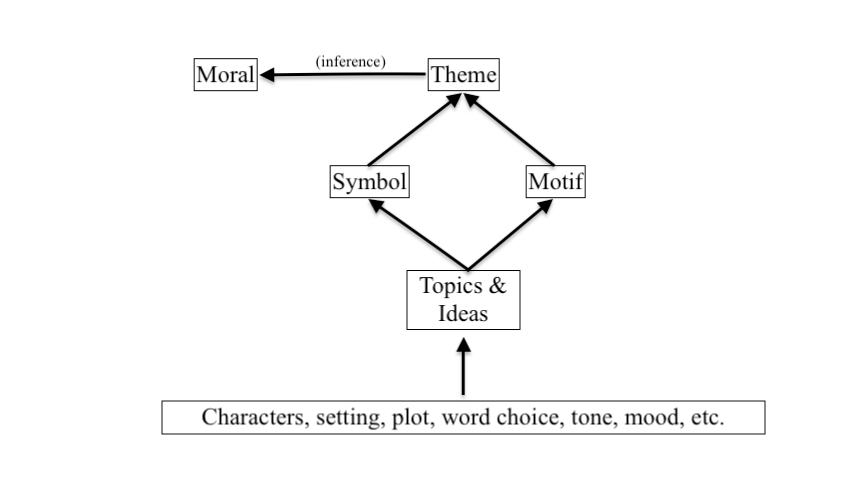


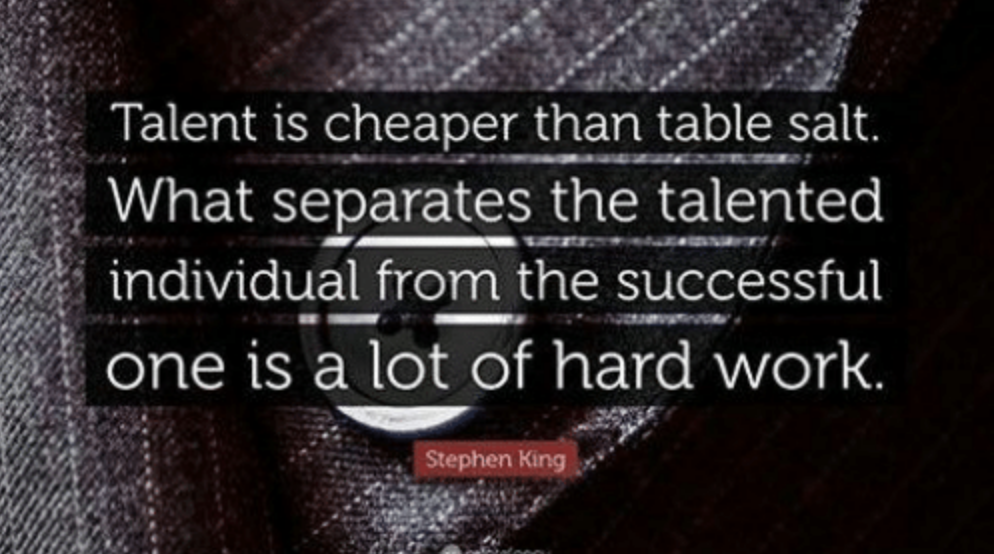
 )
)