Write to Life blog

Reading the Gospels as Informed Adults

Here’s the link to this article.

By David Madison, 04/21/23.

Rise above the credulity expected in Sunday School

For many, many people, reading the gospels eyes-wide-open for the first time can prompt serious doubt—and their departure from the Christian faith. It’s awfully hard to divest the gospels of that aura of holiness promoted by the church: the gospels are the greatest story ever told—their authors were inspired by God himself. It’s not uncommon for congregations to stand when the ritual includes a reading from the gospels. 

But an adult mentality can kick in, i.e., the assumption that I can “spot a fairy tale when I see one.” For example, eleven verses into Mark, chapter 1, we read that a “voice came from heaven” announcing to Jesus—at his baptism—that he was God’s son. But very few of us believe that gods make announcements from the sky. In Matthew, chapter 1, verse 20, we’re told that an angel of the lord tells Joseph in a dream that Mary is pregnant by the holy spirit. Most of us have weird dreams from time to time, but we don’t believe they’re messages from a god.

If this adult mentality is applied to most of the stories we find in the gospels, they fail tests of logic and reason. They are not so convincing, so compelling as we have been urged to believe—since our earliest days in Sunday school or catechism. 

Even devout New Testament scholars admit that the gospels present serious challenges that diminish their status as authentic history; they fail to measure up on so many levels—and secular scholars can be blunt about it. 

Richard Carrier specializes in the literature of the ancient world, including the New Testament. Here is his analysis—I have bolded key elements—that puts the gospels into perspective:  

“Each author just makes Jesus say or do whatever they want. They change the story as suits them and neglect to mention they did so. They craft literary artifices and symbolic narratives routinely. They frequently rewrite classical and biblical stories and just insert Jesus into them. If willing to do all that (and plainly they were), the authors of the Gospels clearly had no interest in any actual historical data. And if they had no interest in that (and plainly they didn’t), they didn’t need a historical Jesus. Even if there had been one, he was wholly irrelevant to their aims and designs. These are thus not historians. They are mythographers; novelists; propagandists. They are deliberately inventing what they present in their texts. And they are doing it for a reason (even if we can’t always discern what that is). The Gospels simply must be approached as such. We have to stop thinking we can use them as historical sources.” 

(On the Historicity of Jesus: Why We Might Have Reason for Doubt, Kindle, p. 556)

Preachers, priests, and apologists also qualify as propagandists: they earn their livings by promoting their particular versions of the Christian faith (hence Catholic priests won’t promote Mormonism, Baptist preachers won’t promote Catholicism—so many of the rival Christian brands detest each other!) 

It would be such a blessing—please excuse the term—if these champions of the gospels could be honest enough to publish this long Carrier quote in the church bulletins and newsletters, under the heading: Food for Thought: Let’s Discuss. But thinking about the gospels would be lethal to their purpose. 

We find a good example of a gospel propagandist posing as historian in the opening of Luke’s gospel. Here are the first four verses:

“Since many have undertaken to compile a narrative about the events that have been fulfilled among us, just as they were handed on to us by those who from the beginning were eyewitnesses and servants of the word, I, too, decided, as one having a grasp of everything from the start, to write a well-ordered account for you, most excellent Theophilus, so that you may have a firm grasp of the words in which you have been instructed.”

There are several problems with this text. Devout scholars have been delighted that Luke claims that his material was derived from eyewitnesses, but we have to be suspicious—and skeptical. How would that process have worked? Consider a few problems:

(1)  The author of Luke’s gospel copied so much text from Mark’s gospel (according to Encyclopedia Britannica, 50 percent) without mentioning that he had done so, which we call plagiarism. In other words, he doesn’t mention his sources. Did this author assume that Mark’s account was based on eyewitness testimony? There is, in fact, nothing in Mark’s gospel that can be verified as eyewitness accounts. It contains so much fantasy and folklore, with a heavy dose of magical thinking as well, e.g., in Mark 5 Jesus—presumable using a magic spell—transfers demons from a deranged man into a herd of swine. Nor does Luke identify the sources for his non-Marcan material. 

(2)  There is wide consensus among New Testament scholars that the gospel of Mark—upon which the gospels and Matthew and Luke were heavily dependent—was written after the destruction of Jerusalem and the temple in 70 CE, i.e., during the devastating First Jewish-Roman war (this catastrophe is reflected in Mark, chapter 13). Guesses vary as to when Luke was written, perhaps ten years or more after that, i.e., a full fifty years after the time of Jesus. Would any of the eyewitnesses to Jesus-events have survived that long? Would they have survived the war? That’s a stretch. 

(3)  Maybe the eyewitnesses wrote down their experiences? How would such documents have been preserved, cared for? How would the author of Luke’s gospel, so many years later, have had access to them—after the catastrophic war? 

(4)  The author claims that he is “one having a grasp of everything from the start,” yet never identifies himself! Never cites his credentials. But we do know that he wrote propaganda for the early Jesus cult—his gospel certainly qualifies as that. Which means that it’s hard to trust his gospel as authentic history

And he gives away his game in the first two chapters of the gospel. Here we read about how both John the Baptist and Jesus were conceived and born. Since an angel is given a speaking role, right away we know we’re dealing with religious fantasy literature. Informed adults today know right away that the Fairy God Mother in Cinderella is fantasy, but it’s harder to break away from angel-fantasy learned in Sunday School and catechism. Devout folks may nod in approval as they read about the angel speaking to Elizabeth and Mary in Luke 1, but there is no evidence whatever—reliable, verifiable data—that angels are real, despite thousands of vivid depictions in religious art. 

Moreover, the propaganda element is prominent, for example, in the angel’s promise to Mary about Jesus (Luke 1:32-33): “…and the Lord God will give to him the throne of his ancestor David. He will reign over the house of Jacob forever, and of his kingdom there will be no end.” This never happened, the angel here was dead wrong; but the author was promoting his cult theology. In Mary’s “Song of Praise” (Luke 1:46-55, as the RSV translation labels it—also known as the Magnificat), verse 50 is a description of Luke’s god: “…his mercy is for those who fear him from generation to generation.” This god is nice to those fear him, which reflects the vindictive god of the Old Testament. 

This is a helpful exercise: read Luke 1-2 carefully, and try to identify which parts of this text could have been based on eyewitness testimony. Also ask: who was there taking notes? —upon which the story could have been based as it was written down decades later. One evangelical scholar has suggested that the author of Luke took the time and trouble to interview Mary—an idea based on no evidence whatever. His desire to make the story credible was all that mattered.

When Zechariah was alone in the temple (no eyewitnesses) he was spoken to by the angel, i.e., the promise that his elderly wife Elizabeth would conceive. And so it happened (this episode is a recrafting of the story of Abraham and Sarah), Luke 1:24-25:

“After those days his wife Elizabeth conceived, and for five months she remained in seclusion. She said, ‘This is what the Lord has done for me in this time, when he looked favorably on me and took away the disgrace I have endured among my people.’”

If she remained in seclusion, how could there have been an eyewitness who heard what she said? Maybe she wrote a diary? Where was it archived, and how would the author of Luke have accessed it? 

Reading the gospels as informed adults requires curiosity, the willingness to question everything, as well as skepticism about documents that were clearly intended to enhance belief in an ancient cult. That’s why it’s important to ponder carefully every gospel episode. Study it, read what scholars have written about it—and don’t be satisfied with “study guides” written by preachers and apologists. They can highlight positives and deflect attention from negatives—and even be deceitful. This is how The Message Bible renders Luke 1:1-4:

“So many others have tried their hand at putting together a story of the wonderful harvest of Scripture and history that took place among us, using reports handed down by the original eyewitnesses who served this Word with their very lives. Since I have investigated all the reports in close detail, starting from the story’s beginning, I decided to write it all out for you, most honorable Theophilus, so you can know beyond the shadow of a doubt the reliability of what you were taught.”

This is not a translation or a paraphrase, but rather an expression of the theology of the pretend-translator, who wants to make sure his readers get the message as he imagines it.  

It’s the working hypothesis of New Testament scholars that the Book of Acts is by the same author who wrote Luke. It too, especially in the first third, gives credit to angels and the holy spirit for things that happen. There are miracles and fantasies, such as Jesus ascending through the clouds to sit down on a throne next to god (Acts 1). Acts tells that story of the apostle Paul’s dramatic conversion on the road to Damascus (three times, in fact, chapters 9, 22, 26), which Paul himself never mentions in his letters. We suspect that Luke’s literary imagination was at work.

In an article published 9 April 2023, Do the ‘We’ Passages in Acts Indicate an Eyewitness Wrote It?, Richard Carrier goes into considerable detail regarding the difficulties these “we” passages present. Are they in fact eyewitness accounts? The “we” are never identified. Did Luke have a copy of a ship log (the “we” passages appear in accounts of sea voyages)? There are parallels in other ancient stories about trips at sea. It’s clear that the “we” passages cannot be trusted as much as Christian apologists argue they should be. 

This is the basic rule: informed readers of the gospels and Acts should want to find out what can be authenticated as history—based on reliable, verifiable data. Again, Carrier states the problem bluntly:

“Christian apologists often cite [the “we” passages] as evidence the author of Acts was one of these people and therefore “was really there” and thus a reliable source. None of that follows—liars can pretend to have been there; and people who were there can lie about everything anyway; so if we accumulate evidence that the author of Acts (traditionally said to be Luke) was a habitual liar and fabricator, the whole notion that he is reliable merely because he occasionally uses a first-person narrative falls apart anyway.” (from the 9 April 2023 article)

Modern cult leaders—such as wealthy TV evangelists—commonly lie to promote their modern version of the Christian brand. Anyone who probes the gospels with serious intent to find out what’s really there will be sorely disappointed at the level of fictionalizing and mythologizing. Propagandists rarely have much respect for the truth. 

This not all that hard for Christians themselves to figure out: they ignore the propaganda peddled by the thousands of Christian brands they don’t belong to.

David Madison was a pastor in the Methodist Church for nine years, and has a PhD in Biblical Studies from Boston University. He is the author of two books, Ten Tough Problems in Christian Thought and Belief: a Minister-Turned-Atheist Shows Why You Should Ditch the Faith (2016; 2018 Foreword by John Loftus) and Ten Things Christians Wish Jesus Hadn’t Taught: And Other Reasons to Question His Words (2021). The Spanish translation of this book is also now available. 

His YouTube channel is here. He has written for the Debunking Christianity Blog since 2016.

The Cure-for-Christianity Library©, now with more than 500 titles, is here. A brief video explanation of the Library is here

If It Looks Like a Cult, Walks Like a Cult, and Quacks Like a Cult…

Here’s the link to this article.

By David Madison 05/05/23

It’s a cult!

With well more than two billion followers, Christianity ranks as humanity’s biggest religion, and thus to many it also qualifies as one of the great religions of the world. Look at all it has going for it: 2,000 years of momentum, churches in every city and town—in the countries where it predominates—as well as massive cathedrals that draw vast crowds. From my own experience, I can say that those in London, Paris, Milan, Rome, and Barcelona are indeed magnificent. Some of the great composers have set Christian stories and rituals to music, e.g., Bach, Mozart, Beethoven, Verdi. A massive propaganda engine promotes the faith as well: Sunday school, catechism, and professional apologists whose primary goal is to explain away the incoherencies that sabotage Christian theology, i.e., its many claims about god are in jarring conflict, and cannot, in truth, be reconciled. But the apologists are slick enough to make it look good.

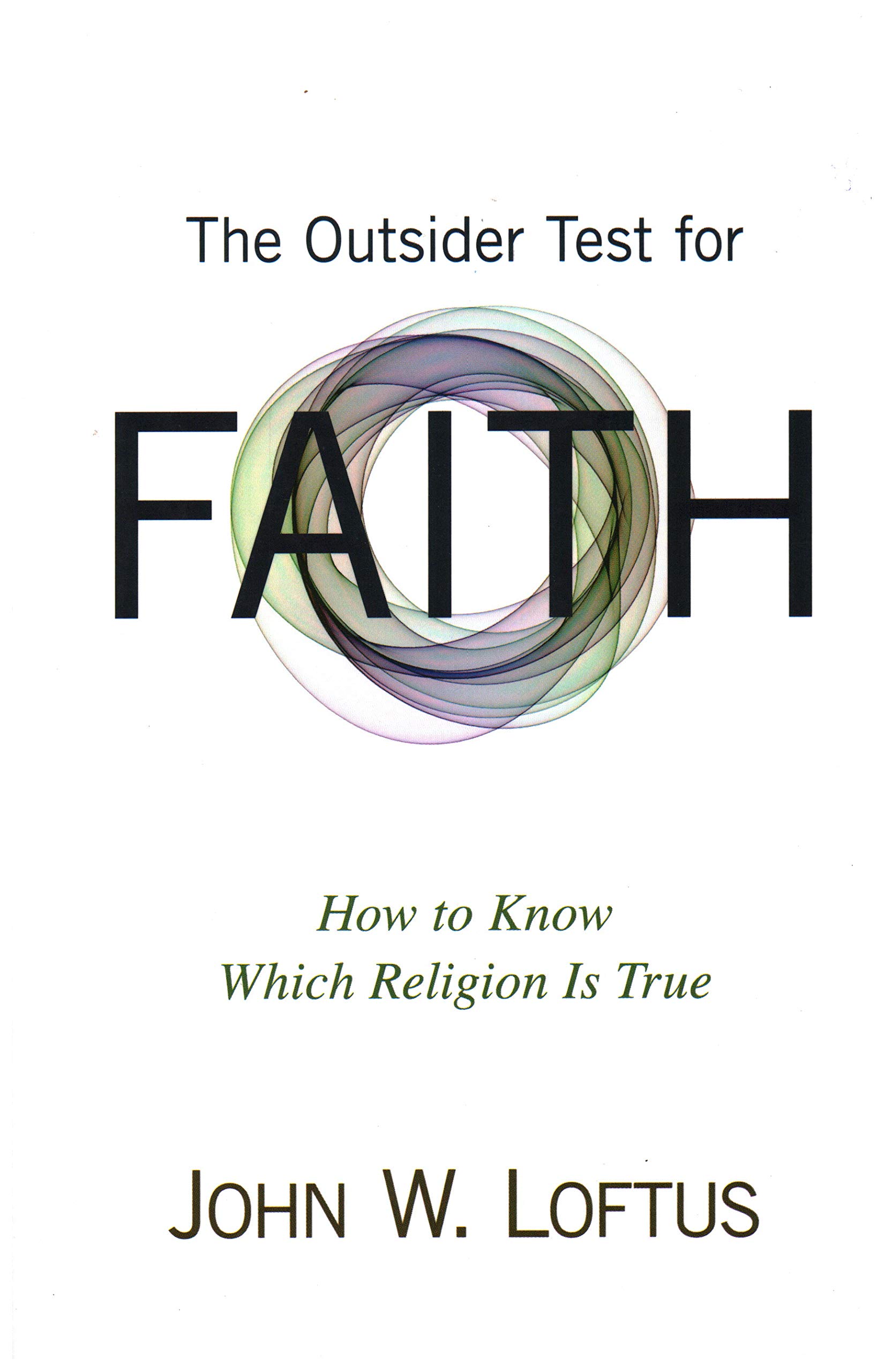
Full Stop: In fact it doesn’t look so good. If you don’t recognize Christianity as a vast, splintered, quarreling cult, you’re not looking at it closely, critically, skeptically—as an outsider would, as John Loftus makes the case in his 2013 book, The Outsider Test for Faith: How to Know Which Religion Is True. Christian adults who went through the

Sunday School or catechism experience were trained not to do so. And they think you’re crazy if you call Christianity a cult. Those unfortunate 900 folks who drank the Kool-Aid—committing mass suicide in 1978 in Guyana—under the urging of Jim Jones: they were
members of a cult.          

But it doesn’t take all that much study, that much research into Christian origins—that is, looking below the surface of cherished dogma—to see the stark reality: core Christian beliefs are a clumsy blend of ancient superstitions, common miracle folklore, and magical thinking. All of these flourished at the time Christianity emerged.

Based on its core beliefs, Christianity is a cult. Are the folks in the pews really okay with these ideas?

Human Sacrifice 

It might be a bit troubling when the devout read in Genesis 8:21 that Yahweh was pleased with the aroma of birds that Noah burned after the flood. Likewise, we read in Leviticus 1 that this god liked the aroma of bull-flesh being burned. This reflects the naïve concept of god that prevailed at the time: he was close overhead to get a whiff of the smoke. Now we know that the Cosmos has billions of galaxies—so the idea that god is pleased by the aroma of smoke on earth just won’t do. In Mark 1:44 we read that Jesus, after healing a man, told him to “…show yourself to the priest, and offer for your cleansing what Moses commanded”—most likely a burnt offering. Incinerating animals was in fact big business at the Jerusalem Temple before it was destroyed by the Romans in 70 CE.  

But Christianity decided to make an adjustment: it upgraded to human sacrifice. Here’s what we read in the New Testament book of Hebrews, chapter 9:26-28, about the role of Christ:

“…he has appeared once for all at the end of the ages to remove sin by the sacrifice of himself. And just as it is appointed for mortals to die once and after that the judgment, so Christ, having been offered once to bear the sins of many, will appear a second time, not to deal with sin but to save those who are eagerly waiting for him.” This is Jesus-script found in Mark 10:45: “For the Son of Man came not to be served but to serve and to give his life a ransom for many.”

It strikes me as a horrible twisting of piety that, in some Christian traditions, the horror of the crucifixion is depicted as vividly as possible: the bloodier Jesus is, the better: a brutal human sacrifice. How does this possibly make sense? An all-powerful god can’t just forgive people, but somehow slipped into theological dotage, and arranged this gimmick: “I came up with this idea of having my son murdered—to enable me to forgive humans.” 

This is from the Wikipedia article on human sacrifice, as widely practiced around the world, with the Christian twist on it: 

“Christianity developed the belief that the story of Isaac’s binding was a foreshadowing of the sacrifice of Christ, whose death and resurrection enabled the salvation and atonement for man from its sins, including original sin…The beliefs of most Christian denominations hinge upon the substitutionary atonement of the sacrifice of God the Son, which was necessary for salvation in the afterlife. According to Christian doctrine, each individual person on earth must participate in, and/or receive the benefits of, this divine human sacrifice for the atonement of their sins. Early Christian sources explicitly described this event as a sacrificial offering, with Christ in the role of both priest and human sacrifice…”  

And It Gets Worse

Just as many other religions/cults embraced human sacrifice—for a variety of reasons—so it was believed that some dying gods came back to life. In other words, it was a common superstition, as Richard Carrier has explained:

“The dying-and-rising son (sometimes daughter) of god ‘mytheme’ originated in the ancient Near East over a thousand years before Christianity and was spread across the Mediterranean principally by the Phoenicians (Canaanites) from their base at Tyre (and after that by the Carthaginians, the most successful Phoenician cultural diffusers in the early Greco-Roman period), and then fostered and modified by numerous native and Greco-Roman cults that adopted it. The earliest documented examples are the cult of Inanna and Dumuzi (also known as Ishtar and Tammuz), the cult of Baal and Anat, and the cult of Marduk (also known as Bel or Baal, which basically meant ‘the Lord’), all of whose resurrection stories are told in Sumerian, Ugaritic and Assyrian tablets (respectively) long predating the advent of Christianity” (p. 169, Carrier, On the Historicity of Jesus: Why We Might Have Reason for Doubt).

Carrier discusses this belief in great detail in his 29 March 2018 blog article, Dying-and-Rising Gods: It’s Pagan, Guys. Get Over It.

The early Jesus-cult borrowed the idea, and profound ignorance of this fact has prevailed for centuries. Robert Lowry’s 1874 hymn captures Christian naivete perfectly: “Up from the grave He arose, With a mighty triumph o’er His foes, He arose a Victor from the dark domain, And He lives forever, With His saints to reign. He arose! He arose! Hallelujah! Christ arose!” 

The confusion in the Easter morning gospel stories should be a tip-off that something is wrong. The four gospels managed to attain sacred status among early Christians, so they were put side by side in the holy canon, without any thought—so it would seem—to their contradictions. Snippets of the Easter stories are read from the pulpit, but it’s not common for the laity to scrutinize the four Easter accounts side-by-side. They are, in fact, a mess, and Christian apologists have worked oh-so-hard to make them look coherent. From Mark (the first) through John (the last), the story grew with the telling. Luke alone included the Road to Emmaus story, and John alone included the account of Doubting Thomas, both of which suggest that their authors were influenced by ghost folklore. On this, see Robert Conner’s book: Apparitions of Jesus: The Resurrection as Ghost Story

The Magical Thinking Piles On

One of the great embarrassments for devout New Testament scholars is that the apostle Paul, who was the first to write about Christ, does not mention—in any of his letters—the supposed events of Easter morning, including an empty tomb. He bragged that his Christ-information did not come from any human sources, but from his visions (= hallucinations). He was locked into his conviction that Jesus had been resurrected. 

It would appear that Paul was terrified of dying, and was convinced he’d found the formula for living forever. He assured the folks in the Thessalonian congregation that their dead relatives (i.e., those who had believed in Jesus), would escape from their graves to meet Jesus: “Then we who are alive, who are left, will be caught up in the clouds together with them to meet the Lord in the air, and so we will be with the Lord forever” (I Thessalonians 4:17). The problem with death was solved! And in Romans 10:9 he was just as explicit: “…if you confess with your mouth that Jesus is Lord and believe in your heart that God raised him from the dead, you will be saved.” 

This is magical thinking, utterly, totally: if you say and believe that Jesus was raised from the dead—well, that’s the magical formula for getting out of dying. Followers of other cults that worshipped dying-and-rising savior gods were just as confident that they had the right god.

The author of John’s gospel took the magical thinking to an even higher level—actually, it’s a lower level—because it is so ghoulish. In his sixth chapter, he includes Jesus-script in which his Christ promises eternal life to those who drink his blood and eat his flesh. Other such cults had sacred meals as well, and this text probably played a role in moving the Catholic church to adopt the concept of transubstantiation: by the Miracle of the Mass, the bread and wine become the real body and blood of Jesus, i.e., magic potions. That’s just too spooky.

As mentioned above, the Easter morning stories in the gospels provide no evidence at all that Jesus was resurrected from the dead. But the people who embrace resurrection theology should notice they’ve got a big problem to deal with. So Jesus was alive and walking around (the gospels don’t agree on just how long)—so what do you eventually do with the newly alive Jesus? In the first chapter of Acts we read that, after forty days, Jesus ascended to heaven, i.e., he rose from the earth and disappeared into the clouds. Apologists today may claim that this can be taken metaphorically, but the author of Acts—knowing nothing about how the Cosmos is structured—would have assumed that his story was accurate. After all, writing decades later, he had to provide a happy ending: Jesus sitting on a throne in heaven next to Yahweh. 

But we know that there’s no throne of god somewhere above the earth. Just a few miles overhead is the intense cold of space, pulsing with radiation. A few years ago, Scott McKellar commented on the fantasy story in Acts 1: 

“In the course of his ascension, at around 15,000 feet Jesus began to

wish he had brought a sweater. At 30,000 feet he felt weak from lack of oxygen. By 100,000 feet his bodily fluids were boiling away from every orifice. If he ever did return, it would be as a fifty-pound lump of bone and frozen jerky.”  (from a Facebook post)

So newly alive Jesus—if you believe he resurrected—never left Planet Earth. Thus even devout Christians, if they give any thought at all to this, have to admit that Jesus died again. Just as Lazarus did, and the dead folks whom Matthew claims came alive when Jesus died, then walked out of their tombs on Easter morning to wander around Jerusalem. What happened to Jesus in the end? Nobody knows. The gospels don’t tell us. What an embarrassment: the New Testament is guilty of a coverup. Jesus isn’t alive somewhere in the sky guaranteeing eternal life for those who believe that he rose from the dead. The magical thinking—the cult fantasy—just doesn’t work. 

One final point: the Christian cult still embraces the idea that its god must be praised and glorified by humans. This derives from a primitive concept of god that was based on the behavior/expectations of tribal chieftains and kings. As much as theologians have tried to upgrade this concept—make it more respectable—it now seems so unlikely. Does a god who runs the Cosmos need/require continual flattery and stroking by a species of mammals on one planet? That it gets off on being sung to? In fact, that’s just silly. Yet the building boom goes on: putting up more churches for devout to gather in, to offer praise: “How great Thou art, how great Thou art, Then sings my soul, my Savior God to Thee, How great Thou art, how great Thou art.” 

There is no reliable, verifiable, objective evidence that god(s) exist—and certainly none that god(s) expect repetitive, unending praise. But cult nonsense has incredible staying power.   

David Madison was a pastor in the Methodist Church for nine years, and has a PhD in Biblical Studies from Boston University. He is the author of two books, Ten Tough Problems in Christian Thought and Belief: a Minister-Turned-Atheist Shows Why You Should Ditch the Faith (2016; 2018 Foreword by John Loftus) and Ten Things Christians Wish Jesus Hadn’t Taught: And Other Reasons to Question His Words (2021). The Spanish translation of this book is also now available. 

His YouTube channel is here. He has written for the Debunking Christianity Blog since 2016.

The Cure-for-Christianity Library©, now with more than 500 titles, is here. A brief video explanation of the Library is here

What Would You Do If Money Were No Object? Alan Watts on the Life of Purpose

Here’s the link to this article.

One key question for breaking free of consumer culture’s hamster wheel.

BY MARIA POPOVA

British philosopher and writer Alan Watts (1915–1973), author of the cult-classic The Way of Zen, played a key role in popularizing Eastern philosophy in the West, like John Cage had done, in the middle of the 20th century. In this short remix video, a fine complement to this omnibus of wisdom on how to find your purpose and do what you love, Watts asks the seemingly simple question of what you would do if money were no object:

If you say that money is the most important thing, you’ll spend your life completely wasting your time: You’ll be doing things you don’t like doing in order to go on living, that is, in order to go on doing things you don’t like doing — which is stupid!

Pair with Watts on money vs. wealth.

05/07/23 Biking & Listening

Biking is something else I both love and hate. It takes a lot of effort but does provide good exercise and most days over an hour to listen to a good book or podcast. I especially like having ridden.

Here’s my bike, a Rockhopper by Specialized. I purchased it November 2021 from Venture Out in Guntersville; Mike is top notch! So is the bike, and the ‘old’ man seat I salvaged from an old Walmart bike.

Here’s a link to today’s bike ride. This is my pistol ride.

Here’s a few photos taken along my route:

Here’s what I listened to today: I Will Find You, by Harlan Coben

Amazon abstract:

Five years ago, an innocent man began a life sentence for murdering his own son. Today he found out his son is still alive.
 
David Burroughs was once a devoted father to his three-year-old son Matthew, living a dream life just a short drive away from the working-class suburb where he and his wife, Cheryl, first fell in love–until one fateful night when David woke suddenly to discover Matthew had been murdered while David was asleep just down the hall. 
 
Half a decade later, David’s been wrongly accused and convicted of the murder, left to serve out his time in a maximum-security prison—a fate which, grieving and wracked with guilt, David didn’t have the will to fight. The world has moved on without him. Then Cheryl’s younger sister, Rachel, makes a surprise appearance during visiting hours bearing a strange photograph. It’s a vacation shot of a bustling amusement park a friend shared with her, and in the background, just barely in frame, is a boy bearing an eerie resemblance to David’s son. Even though it can’t be, David just knows: Matthew is still alive.

David plans a harrowing escape, determined to achieve the impossible – save his son, clear his own name, and discover the real story of what happened. But with his life on the line and the FBI following his every move, can David evade capture long enough to reveal the shocking truth?

A few top reviews from the United States:

vegasbill

VINE VOICE

5.0 out of 5 stars Another great story from this author

Reviewed in the United States on April 13, 2023

Verified Purchase

Harlan Coben can spin a yarn! Once again he has proven that in I Will Find You. This intricate plot is populated by a colorful and interesting cast of characters, especially the two FBI Special Agents, Max and Sarah, assigned to this case. They provide the comic relief in an otherwise very serious story of murder and a missing child. While cracking wise to each other they manage to cut through the distractions provided by Coben’s other characters and home in the most important issues.

David Burroughs is accused and convicted of killing his three year old son. While in prison he learns the son might still be alive, a scenario which makes no sense as the son’s body was found in his bed, beaten to death. In order to find out if that is true David must find a way to get out of prison and find his son.

The story is compelling and moves swiftly with lots of suspense and things that keep the reader guessing. If there is any flaw, there are parts of the plot which sound more like a soap opera rather than a murder mystery. That didn’t detract from my enjoyment of the book. I recommend this to all who enjoy a good mystery/thriller.

KC

5.0 out of 5 stars Harlan Coben at his best!

Reviewed in the United States on April 16, 2023

Verified Purchase

The story begins with David Burroughs five years into serving a life sentencing for murdering his son. He feels his life his over and never fought his conviction since he felt his life was over without his son. He never felt he would have murdered his own son but he had no memory of the night in question. David refused visitors in his first years at the prison until one day when his sister-in-law, Rachel, shows up requesting to see him. The visit causes him to question if his son is actually still alive. The book is an another great by Harlan Coben! I couldn’t put it down until the last page. I highly recommend this book and this author.

Daniel Kramer

5.0 out of 5 stars An Amazing Ride

Reviewed in the United States on March 28, 2023

Verified Purchase

I Will Find You has a premise which I have not found in another novel. A man convicted of murdering his child, who thinks that he may have done it in a drunken moment of hysteria, finds out that the murdered child in his house that evening was not his son and that his son is still alive. Great idea for a book. How will Harlan Coben bring the pieces together so that it makes sense and gives the reader a thrilling ride? I will divulge nothing other than Harlan Coben did a really nice job of giving me the ride that I was hoping for.
Is the book perfect? Am I still a little confused by the ending? Yes. Does it matter? No. The book is a roller coaster ride which you should take if you like thrillers or you have read everything that Coben has ever written.
His best book ever was The Boy From The Woods. By far, that book was perfect and exceptional. This book is right up there and worth your time.

Jodie Short

5.0 out of 5 stars Harlan Coben has done it again!! This book will be your favorite this year!

Reviewed in the United States on April 7, 2023

Verified Purchase

Wow! The storyline in this book is beyond! I didn’t know if I even wanted to know the truth behind how it happened, but I had to know! That is what makes Harlan Coben a standout beyond all the rest! The characters, as usual, you will fall in love with and some you will love to hate! His style of writing is the reason I love to read! I would recommend this book to anyone and everyone! I already recommended it before I even finished it myself! I gave this book a five-star rating because Harlan Coben gets an A+ and every area of his writing! The plot, the characters, his style of writing the mystery! He has ramped up the edginess in this one!

John Updike on the Universe and Why There is Something Rather Than Nothing

Here’s the link to this article.

“The mystery of being is a permanent mystery, at least given the present state of the human brain.”

BY MARIA POPOVA

“What is it that breathes fire into the equations and makes a universe for them to describe?,” wondered Stephen Hawking in A Brief History of Time“Why does the universe go through all the bother of existing?”

This inquiry has long occupied scientistsphilosophers, and deep thinkers alike, culminating in the most fundamental question of why there is something rather than nothing. That, in fact, is the epicenter of intellectual restlessness that Jim Holt sets out to resolve in Why Does the World Exist?: An Existential Detective Story (public library). Seeking to tease apart the most central existential question of all — why there is a world, rather than nothingness, a question he says is “so profound that it would occur only to a metaphysician, yet so simple it would occur only to a child” — Holt pores through millennia of science and theology, theory by theory, to question our most basic assumptions about the world, reality, and the nature of fact itself, with equal parts intelligence, irreverence, and insight.

Reflecting on his many conversations with philosophers, theologians, particle physicists, cosmologists, mystics, and writers, Holt puts things in perspective:

When you listen to such thinkers feel their way around the question of why there is a world at all, you begin to realize that your own thoughts on the matter are not quite so nugatory as you had imagined. No one can confidently claim intellectual superiority in the face of the mystery of existence. For, as William James observed, ‘All of us are beggars here.’

And while the book is remarkable in its entirety — take a closer look with Kathryn Schulz’s exquisite review for New York Magazine — one of Holt’s most fascinating conversations is with someone one wouldn’t immediately peg as an expert on cosmogony: novelist John Updike, who seems to share in Isaac Asimov’s famous contention that “the most beautiful experience we can have is the mysterious.”

Holt writes:

“The laws amount to a funny way of saying, ‘Nothing equals something,’” Updike said, bursting into laughter. “QED! One opinion I’ve encountered is that, since getting from nothing to something involves time, and time didn’t exist before there was something, the whole question is a meaningless one that we should stop asking ourselves. It’s beyond our intellectual limits as a species. Put yourself into the position of a dog. A dog is responsive, shows intuition, looks at us with eyes behind which there is intelligence of a sort, and yet a dog must not understand most of the things it sees people doing. It must have no idea how they invented, say, the internal-combustion engine. So maybe what we need to do is imagine that we’re dogs and that there are realms that go beyond our understanding. I’m not sure I buy that view, but it is a way of saying that the mystery of being is a permanent mystery, at least given the present state of the human brain. I have trouble even believing — and this will offend you — the standard scientific explanation of how the universe rapidly grew from nearly nothing. Just think of it. The notion that this planet and all the stars we see, and many thousands of times more than those we see — that all this was once bounded in a point with the size of, what, a period or a grape? How, I ask myself, could that possibly be? And, that said, I sort of move on.”

Taking a jab at the “beautiful mathematics” of string theory, Updike echoes the landmark conversation between Einstein and Indian philosopher Tagore, exclaiming:

Beautiful in a vacuum! What’s beauty if it’s not, in the end, true? Beauty is truth, and truth is beauty.

Holt invites Updike to reconcile the “brute fact theory” of science and the “God theory” of religion:

He was silent again for a moment, then continued. “Some scientists who are believers, like Freeman Dyson, have actually tackled the ultimate end of the universe. They’ve tried to describe a universe where entropy is almost total and individual particles are separated by distances that are greater than the dimensions of the present observable universe … an unthinkably dreary and pointless vacuum. I admire their scientific imagination, but I just can’t make myself go there. And a space like that is the space in which God existed and nothing else. Could God then have suffered boredom to the point that he made the universe? That makes reality seem almost a piece of light verse.”

What a lovely conceit! Reality is not a “blot on nothingness,” as Updike’s character Henry Bech had once, in a bilious moment, decided. It is a piece of light verse.

The rest of Why Does the World Exist?: An Existential Detective Story is just as stirringly, stimulatingly uncomfortable — read at your own riveting risk.

05/06/23 Biking & Listening

Biking is something else I both love and hate. It takes a lot of effort but does provide good exercise and most days over an hour to listen to a good book or podcast. I especially like having ridden.

Here’s my bike, a Rockhopper by Specialized. I purchased it November 2021 from Venture Out in Guntersville; Mike is top notch! So is the bike, and the ‘old’ man seat I salvaged from an old Walmart bike.

Here’s a link to today’s bike ride. This is my pistol ride.

Here’s a few photos taken along my route:

Here’s what I listened to today: I Will Find You, by Harlan Coben

Amazon abstract:

Five years ago, an innocent man began a life sentence for murdering his own son. Today he found out his son is still alive.
 
David Burroughs was once a devoted father to his three-year-old son Matthew, living a dream life just a short drive away from the working-class suburb where he and his wife, Cheryl, first fell in love–until one fateful night when David woke suddenly to discover Matthew had been murdered while David was asleep just down the hall. 
 
Half a decade later, David’s been wrongly accused and convicted of the murder, left to serve out his time in a maximum-security prison—a fate which, grieving and wracked with guilt, David didn’t have the will to fight. The world has moved on without him. Then Cheryl’s younger sister, Rachel, makes a surprise appearance during visiting hours bearing a strange photograph. It’s a vacation shot of a bustling amusement park a friend shared with her, and in the background, just barely in frame, is a boy bearing an eerie resemblance to David’s son. Even though it can’t be, David just knows: Matthew is still alive.

David plans a harrowing escape, determined to achieve the impossible – save his son, clear his own name, and discover the real story of what happened. But with his life on the line and the FBI following his every move, can David evade capture long enough to reveal the shocking truth?

A few top reviews from the United States:

vegasbill

VINE VOICE

5.0 out of 5 stars Another great story from this author

Reviewed in the United States on April 13, 2023

Verified Purchase

Harlan Coben can spin a yarn! Once again he has proven that in I Will Find You. This intricate plot is populated by a colorful and interesting cast of characters, especially the two FBI Special Agents, Max and Sarah, assigned to this case. They provide the comic relief in an otherwise very serious story of murder and a missing child. While cracking wise to each other they manage to cut through the distractions provided by Coben’s other characters and home in the most important issues.

David Burroughs is accused and convicted of killing his three year old son. While in prison he learns the son might still be alive, a scenario which makes no sense as the son’s body was found in his bed, beaten to death. In order to find out if that is true David must find a way to get out of prison and find his son.

The story is compelling and moves swiftly with lots of suspense and things that keep the reader guessing. If there is any flaw, there are parts of the plot which sound more like a soap opera rather than a murder mystery. That didn’t detract from my enjoyment of the book. I recommend this to all who enjoy a good mystery/thriller.

KC

5.0 out of 5 stars Harlan Coben at his best!

Reviewed in the United States on April 16, 2023

Verified Purchase

The story begins with David Burroughs five years into serving a life sentencing for murdering his son. He feels his life his over and never fought his conviction since he felt his life was over without his son. He never felt he would have murdered his own son but he had no memory of the night in question. David refused visitors in his first years at the prison until one day when his sister-in-law, Rachel, shows up requesting to see him. The visit causes him to question if his son is actually still alive. The book is an another great by Harlan Coben! I couldn’t put it down until the last page. I highly recommend this book and this author.

Daniel Kramer

5.0 out of 5 stars An Amazing Ride

Reviewed in the United States on March 28, 2023

Verified Purchase

I Will Find You has a premise which I have not found in another novel. A man convicted of murdering his child, who thinks that he may have done it in a drunken moment of hysteria, finds out that the murdered child in his house that evening was not his son and that his son is still alive. Great idea for a book. How will Harlan Coben bring the pieces together so that it makes sense and gives the reader a thrilling ride? I will divulge nothing other than Harlan Coben did a really nice job of giving me the ride that I was hoping for.
Is the book perfect? Am I still a little confused by the ending? Yes. Does it matter? No. The book is a roller coaster ride which you should take if you like thrillers or you have read everything that Coben has ever written.
His best book ever was The Boy From The Woods. By far, that book was perfect and exceptional. This book is right up there and worth your time.

Jodie Short

5.0 out of 5 stars Harlan Coben has done it again!! This book will be your favorite this year!

Reviewed in the United States on April 7, 2023

Verified Purchase

Wow! The storyline in this book is beyond! I didn’t know if I even wanted to know the truth behind how it happened, but I had to know! That is what makes Harlan Coben a standout beyond all the rest! The characters, as usual, you will fall in love with and some you will love to hate! His style of writing is the reason I love to read! I would recommend this book to anyone and everyone! I already recommended it before I even finished it myself! I gave this book a five-star rating because Harlan Coben gets an A+ and every area of his writing! The plot, the characters, his style of writing the mystery! He has ramped up the edginess in this one!