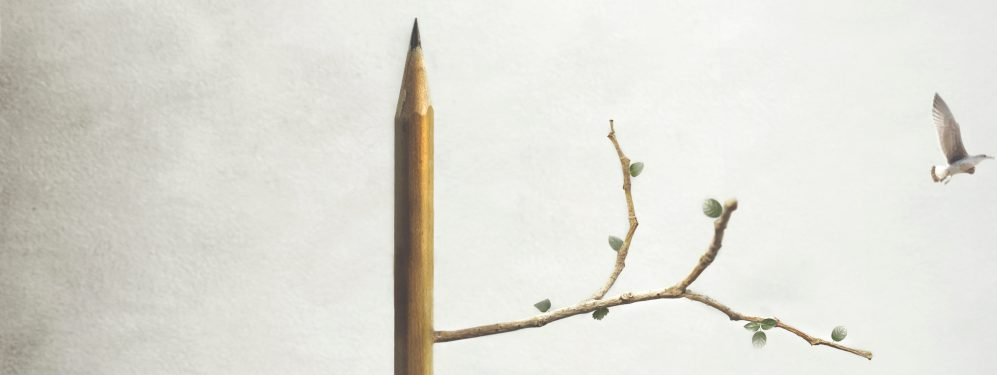

Unscripted – Week 4: When Life Unravels Slowly — And Why That’s a Gift

Welcome to Unscripted — a weekly reflection on living without inherited stories, rigid identities, or predetermined purpose. Each Monday, I explore a different facet of this shift toward presence and clarity, one moment, one breath, one pencil stroke at a time.

Most of us expect change to announce itself. We imagine turning points as moments—sharp, dramatic, unmistakable. A decision. A crisis. A breaking point. Something that clearly divides before from after.

But for many of us, real change arrives differently.

It comes slowly. Quietly. Almost politely.
So gradually that we don’t recognize it as change at all.

This is the kind of unraveling that doesn’t destroy your life.
It loosens it.

And that slow unraveling, uncomfortable as it can be, may be one of the greatest gifts life offers.


The Myth of the Sudden Awakening

We tend to believe that meaningful transformation should be obvious.

That when something is truly ending, we’ll know.
That when a belief no longer fits, it will collapse under its own weight.
That clarity arrives in a single moment of insight.

Sometimes that happens.

More often, it doesn’t.

More often, life unravels in small, almost forgettable ways:

  • a question that doesn’t go away
  • a certainty that feels slightly hollow
  • a role that requires more effort than it used to
  • a belief that still works on paper but not in experience

Nothing dramatic breaks.
Nothing visibly fails.

But something quietly loosens.


When the Old Story Stops Carrying You

There is a particular discomfort that comes when a familiar story begins to lose its grip.

Not because it’s been disproven.
Not because you’ve rejected it.
But because it no longer carries the weight it once did.

You may still speak the words.
Still perform the roles.
Still meet expectations.

And yet, something underneath has shifted.

What once felt solid now feels effortful.
What once felt motivating now feels heavy.
What once felt certain now feels… thin.

This isn’t confusion.
It’s misalignment.

And misalignment doesn’t demand immediate action.
It asks for attention.


Why Slow Unraveling Is Kinder Than Sudden Collapse

A sudden collapse forces change.

A slow unraveling invites it.

When life unravels slowly, you’re given time:

  • time to notice
  • time to grieve without drama
  • time to loosen without tearing
  • time to let clarity emerge on its own

Nothing has to be burned down.
Nothing has to be replaced immediately.

The Pencil-Driven Life trusts this pace.

Just as a pencil erases lightly—without ripping the page—life often revises us gently, one line at a time.


Living Through the In-Between

The most difficult part of slow unraveling is not knowing what comes next.

You haven’t arrived somewhere new.
But you can’t fully return to where you were.

This in-between can feel unsettling.

There’s less certainty.
Less motivation to defend old positions.
Less urgency to prove anything.

And yet—more honesty.

More listening.
More willingness to pause.
More openness to not knowing.

This is not stagnation.

This is presence learning to lead.


What Presence Reveals During Unraveling

Presence doesn’t rush the unraveling process.

It doesn’t demand answers.
It doesn’t force conclusions.

It simply notices what no longer fits.

Presence allows you to stay with the discomfort long enough to learn from it—without turning it into a problem to solve.

In this space, you may begin to see:

  • which beliefs require constant reinforcement
  • which roles you’re performing out of habit
  • which identities depend on external approval
  • which expectations no longer reflect who you are

Nothing needs to be resolved immediately.

Seeing is enough.


Why This Phase Is a Gift

Slow unraveling protects you from trading one script for another.

It prevents reactionary change.
It discourages certainty dressed up as freedom.

Instead, it creates space.

Space to respond rather than react.
Space to let go without replacing.
Space to trust what’s unfolding without naming it too quickly.

This is the gift:
you’re not being pushed forward.
You’re being invited inward.


Letting the Pencil Move

The pencil doesn’t rush revisions.

It pauses.
It hovers.
It adjusts lightly.

Living without a script doesn’t mean always knowing where you’re going.
It means staying present while the next line reveals itself.

Slow unraveling teaches this better than certainty ever could.

Because it asks you to stay with what’s real—
even when it hasn’t resolved into something neat.


A Closing Thought

If your life feels like it’s unraveling slowly, gently, without spectacle—nothing may be wrong.

You may not be losing direction.
You may be loosening a story that no longer fits.

Stay with it.

Notice what’s shifting.
Notice what no longer needs defending.
Notice what feels truer when nothing is forced.

The Pencil-Driven Life isn’t built on sudden awakenings.
It’s built on honest noticing.

And sometimes, the most meaningful change arrives quietly—
line by line—
as the pencil moves.


If you’d like to receive new entries from the Unscripted series by email, you can subscribe here. Occasionally, other reflective posts may appear as well.
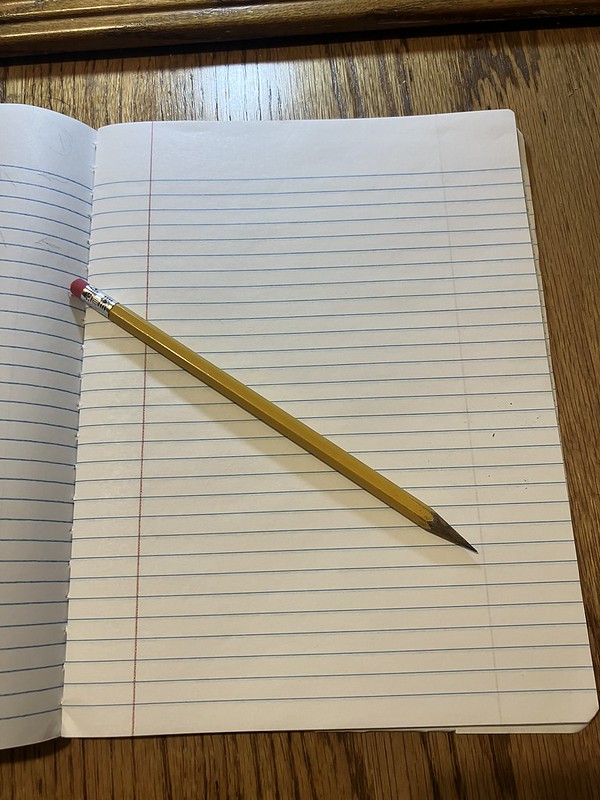
Unscripted — Week 3: How Inherited Stories Shape — and Shrink — Our Lives

Welcome to Unscripted, a weekly reflection on what it means to live without inherited stories, rigid identities, or predetermined purpose. Each Monday, I explore a different part of this shift toward presence and clarity—one moment, one breath, one pencil stroke at a time.

We rarely choose the stories that first shape us.

They arrive quietly—through family, culture, religion, education, praise, warning, repetition. By the time we’re old enough to question them, they already feel like truth. Not stories at all. Just “the way things are.”

This is how inherited stories work.
They don’t announce themselves as narratives.
They present themselves as reality.

And because of that, they shape our lives far more than we realize.


What I Mean by “Inherited Stories”

An inherited story isn’t a single belief.
It’s a framework—a background script that tells you:

  • who you are
  • what matters
  • what success looks like
  • what failure means
  • what you’re allowed to want
  • what you should fear
  • what must never be questioned

Some inherited stories are explicit.
Others are absorbed through tone, silence, or reward.

“You’re the responsible one.”
“Don’t rock the boat.”
“Good people don’t think that way.”
“This is just how life is.”
“You should be grateful.”
“That’s selfish.”
“That’s unrealistic.”

Over time, these stories stop sounding like voices.
They start sounding like you.


How Stories Begin to Shrink a Life

Most inherited stories begin as protection.

They keep families stable.
They maintain order.
They offer certainty.
They reduce anxiety.

But what protects early on often constrains later.

A story that once helped you survive can quietly limit who you’re allowed to become.

You may notice it when:

  • curiosity feels dangerous
  • rest feels irresponsible
  • joy carries guilt
  • silence feels unproductive
  • stillness feels wrong
  • your body says “no,” but the story says “push”

This is not failure.
It’s friction between lived experience and an outdated script.


Why These Stories Are Hard to See

Inherited stories don’t shrink us through force.
They shrink us through familiarity.

They feel normal.
Responsible.
Mature.
Even virtuous.

And because they’re often rewarded—socially, emotionally, morally—we rarely pause to ask:

Is this actually true?
Is this still mine?
Does this fit the life I’m living now?

Instead, we try harder to live inside the story.

That effort is exhausting.


The Cost of an Unexamined Story

Living inside an inherited story comes with a quiet cost:

  • chronic tension
  • a sense of never being “enough”
  • constant comparison
  • fear of slowing down
  • fear of disappointing others
  • fear of disappointing the version of yourself the story requires

You may appear successful.
Capable.
Put together.

And yet feel strangely absent from your own life.

This isn’t because something is wrong with you.

It’s because the story is no longer aligned with reality.


The Pencil as a Tool for Seeing

This is where the pencil matters.

A pencil invites examination without commitment.

It lets you write something down without declaring it final.
It allows erasure.
Revision.
Curiosity.

When you put an inherited story on paper, something subtle happens:

It stops being invisible.

Writing doesn’t judge the story.
It simply makes it visible.

And once visible, it can be questioned.


A Simple Way to Notice Your Stories

You don’t need to dismantle your life to begin.
You don’t need to confront anyone.
You don’t need new beliefs.

Just notice where tension appears.

Some gentle questions to explore—not answer all at once:

  • What do I feel pressured to be?
  • What am I afraid would happen if I stopped trying so hard?
  • What feels “not allowed,” even though no one is forbidding it?
  • What voice appears when I rest, slow down, or change direction?
  • Whose approval am I still seeking?

Write whatever arises.
No fixing.
No correcting.

The pencil moves.
You watch.


Seeing Without Replacing

This part matters.

The goal is not to swap one story for a better one.
Not to adopt a new identity.
Not to declare independence from the past.

The Pencil-Driven Life doesn’t ask you to replace inherited stories.

It asks you to see them.

Because when a story is seen clearly, its grip loosens naturally.

What once felt absolute begins to feel optional.
What once felt mandatory begins to feel negotiable.

And space appears.


Living Without a Script Begins Here

Living without a script doesn’t mean living without values or structure.

It means no longer mistaking inherited narratives for unquestionable truth.

Presence allows you to notice when a story is operating.
Clarity allows you to decide whether it still belongs.

And often, nothing dramatic happens.

You simply:

  • respond instead of react
  • rest without explanation
  • choose differently
  • let go of a role
  • stop defending an identity
  • breathe more easily

This is not rebellion.

It’s alignment.


A Quiet Invitation

You don’t need to name every story today.
You don’t need to confront the biggest ones first.

Start small.

Notice the sentence that appears when you slow down.
Notice the feeling that says, “I shouldn’t be doing this.”
Notice the voice that insists, “This is just how I am.”

Write it down.

Not to judge it.
Not to erase it.

Just to see it.

Because the moment a story is seen clearly, it stops running the show.

And in that space—
something wider becomes possible.


*Next week in Unscripted:
*”When Life Unravels Slowly — And Why That’s a Gift” — grounding the philosophy in your personal experience without rehashing the past.


Unscripted — Week 2: Presence, the Quiet Skill You Already Have

Welcome to Unscripted, a weekly reflection on what it means to live without inherited stories, rigid identities, or predetermined purpose. Each Monday, I explore a different part of this shift toward presence and clarity—one moment, one breath, one pencil stroke at a time.

Presence is often spoken about as if it were rare, advanced, or difficult to attain. Something earned through discipline, training, or years of practice. Something monks cultivate and the rest of us chase.

But presence isn’t something you acquire. It’s something you notice.

You already have it.

What most of us lack isn’t presence—it’s permission to trust it.


What Presence Is (and Isn’t)

Presence isn’t calm. It isn’t silence. It isn’t the absence of thought. It isn’t a permanent state you arrive at and stay in.

Presence is simply being aware of what is happening right now—without immediately trying to fix it, explain it, judge it, or escape it.

It’s the moment you notice your breath without controlling it. The instant you realize you’ve been lost in thought. The pause before a reaction. The awareness that you’re thinking.

Presence is not the elimination of noise. It’s the recognition of it.

And that recognition is already happening—whether you’re aware of it or not.


Why Presence Feels Elusive

If presence is already here, why does it feel so hard to access?

Because we’ve been trained, from early on, to live one step removed from direct experience.

We’re taught to interpret before we feel. To evaluate before we notice. To assign meaning before we sit with what’s happening.

Most of our lives are spent inside commentary:

  • What this means
  • What this says about me
  • What I should do next
  • How this fits into a larger story

Presence doesn’t live in commentary. It lives before it.

And the mind is very good at pulling us back into narration.


Presence and the Pencil

This is where the pencil matters.

A pencil doesn’t rush. It doesn’t jump ahead. It moves line by line.

When you write with a pencil—physically or metaphorically—you’re forced to slow down enough to stay with what’s here. One word at a time. One stroke at a time.

You can’t write tomorrow’s sentence today. You can’t revise what hasn’t been written yet.

The pencil keeps you honest. It keeps you present.

This is why writing—journaling, reflecting, sketching thoughts—is such a powerful doorway into presence. Not because it produces something, but because it requires attention.


Presence Is Not a Performance

One of the great misunderstandings about presence is the belief that it should look a certain way.

Calm. Peaceful. Centered. Spiritual.

But presence includes:

  • restlessness
  • frustration
  • boredom
  • doubt
  • fatigue
  • grief
  • joy

Presence isn’t a mood. It’s a relationship to whatever mood is here.

You don’t become present by fixing your inner state. You become present by seeing it clearly.

The moment you notice, “I’m distracted,” presence is already operating. The moment you realize, “I’m anxious,” presence is already here.

You didn’t fail. You woke up.


The Skill You’re Already Using

Think about the last time you caught yourself daydreaming. Or replaying a conversation. Or worrying about something that hasn’t happened.

What noticed that?

That noticing didn’t come from thought. It came before thought.

That’s presence.

You don’t need to build it. You don’t need to strengthen it. You don’t need to protect it.

You only need to stop overlooking it.

Presence is not fragile. It’s constant.

What comes and goes is attention.


Presence and Living Without a Script

Living without a script doesn’t mean living without plans or structure. It means not confusing your plans with reality.

Presence keeps you grounded in what’s actually happening, rather than what should be happening.

When you live from presence:

  • you respond instead of react
  • you listen instead of preparing a reply
  • you notice when a belief no longer fits
  • you feel when it’s time to let something go

Presence doesn’t give you answers. It gives you clarity.

And clarity changes everything.


Practicing Presence (Without Making It Another Task)

Here’s the paradox: The moment you try to do presence, you lose it.

Presence isn’t practiced by effort. It’s practiced by noticing.

A few gentle invitations—not instructions:

  • Notice when you’re lost in thought.
  • Notice the sensation of sitting where you are.
  • Notice the sound furthest from you.
  • Notice the impulse to move away from discomfort.
  • Notice the next breath—without changing it.

Nothing to improve. Nothing to hold onto. Nothing to achieve.

Just noticing.

And when you forget? That noticing is the practice.


Presence Is Enough

Presence doesn’t promise happiness. It doesn’t promise peace. It doesn’t promise certainty.

What it offers is something quieter and more reliable:

honesty.

From that honesty, life begins to untangle itself—not all at once, but moment by moment.

The Pencil-Driven Life isn’t built on constant awareness. It’s built on repeated noticing.

A thousand small returns.

You don’t need a better technique. You don’t need more discipline. You don’t need to become someone else.

You already have the quiet skill you’re looking for.

It’s here— now.

And now.

And now.