

Here’s the link to this article.
Poker anyone?

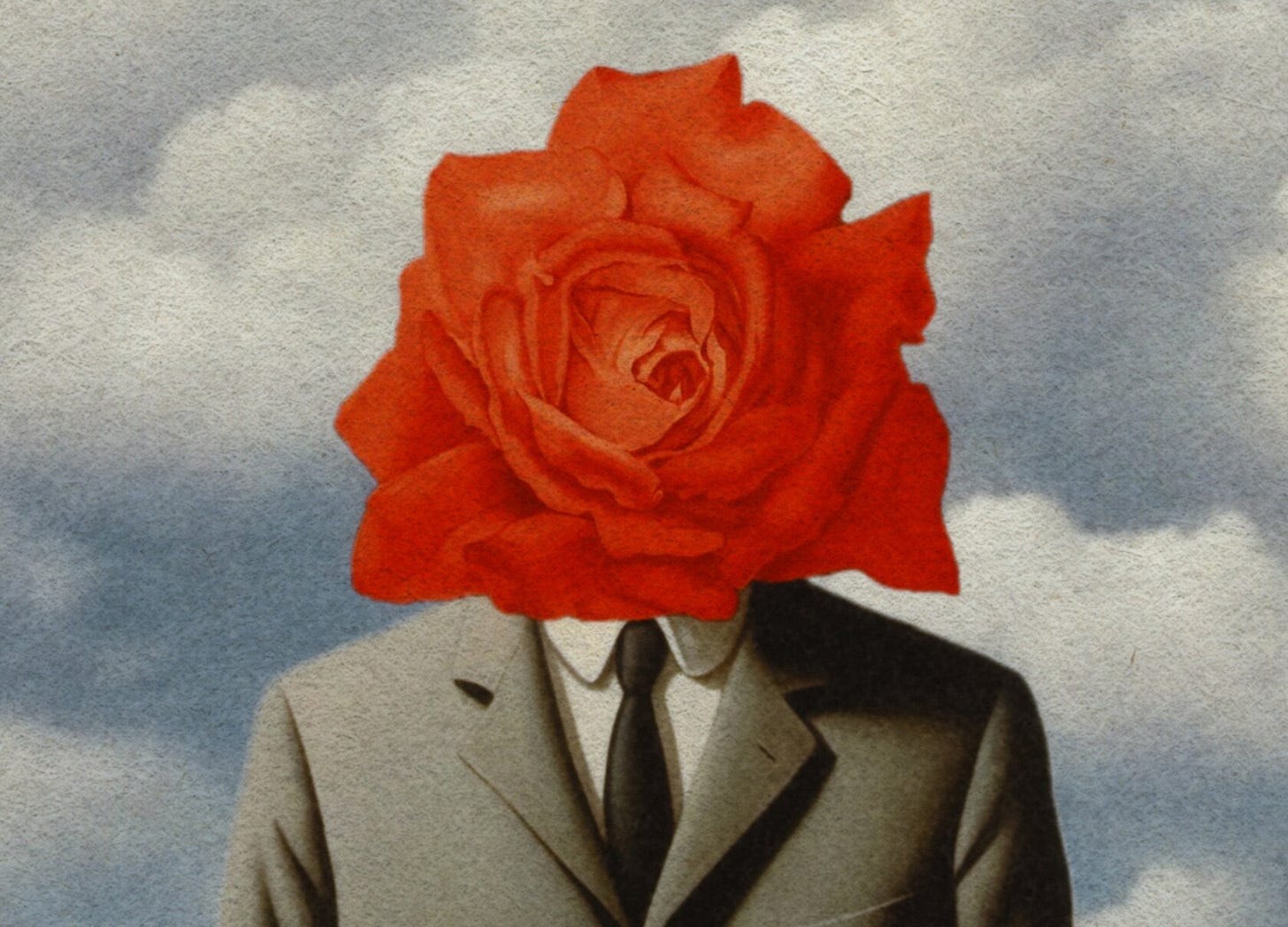
Nature seems to have given us six primary emotions—happiness, sadness, fear, anger, surprise, and disgust. A glance at those cards suggests that the deck may be stacked against us. Only happiness seems worth wanting for its own sake. The rest, even the ambiguously valanced surprise, are generally unwelcome. Most of us regularly enjoy happiness, of course, and amusement, contentment, delight—even ecstasy—are among its many facets. But we must overcome countless forms of irritation and anguish to do so.
Layered on top of the primary emotions, we find moral ones like pride, guilt, shame, empathy, gratitude, and outrage. Once again, it seems that anyone who simply wants to be happy in this world will find themselves at a disadvantage. If pride is good, it is so only for children. And, as Paul Bloom has noted, even empathy (in the emotional, rather than cognitive, sense) is overrated.
We begin to experience these moral emotions as toddlers, and their emergence very likely coincides with our ability to distinguish ourselves from others—not merely as separate bodies in space, but as independent beings capable of distinct states of mind. Leaving moral outrage aside, to feel pride, guilt, shame, empathy, or gratitude is to intuit, if only unconsciously, that other people have points of view, and that one’s own person is among the many things they might harbor views about. Each of us thereafter, as Sartre famously put it, becomes an object in the world for others.
Somewhere in the vicinity of guilt and shame we find further sources of comedy and tragedy—in particular, the acutely self-conscious states of embarrassment and humiliation. Telling these sisters apart is more art than science. Some use the terms interchangeably, or merely consider humiliation to be an extreme form of embarrassment. Both types of assault upon our self-esteem require the gaze of others—by whose light we see ourselves to have lost status in a social hierarchy. However, the experiences differ in at least one respect. As William Ian Miller observed in his book, Humiliation, we are often eager to describe our past embarrassments, as other people tend to find these stories quite funny. Not so with our genuine humiliations.
Let us now consider the happier sister—embarrassment:
The Oxford English Dictionary indicates that the term “embarrassment” was in use for nearly a century before it acquired its current, most common meaning:
Intense emotional or social discomfort caused by an awkward situation or by an awareness that one’s own or another’s words or actions are inappropriate or compromising, or that they reveal inadequacy or foolishness; awkwardness, self-consciousness… Typically distinguished from shame in being caused by something that is socially awkward or inappropriate rather than morally wrong or debasing.
It’s first known usage in this sense seems to have occurred in the year 1751:
She pretended to be with child by him… She brought a man whom she called uncle, to add weight to her threats; and these violent proceedings threw Mr. Baker under great embarrassment. He always was extreamly tender of his reputation with the world. (London Magazine April 198/2)
One wants to know more about this “uncle.” In any case, there is a Mr. Baker in each of us—running a frenzied circuit between the medial prefrontal cortex (self-reflection and self-evaluation), the anterior cingulate (error detection, emotional regulation, and awareness of physical and social pain), the insula (the perception of emotion and other internal states of the body), the amygdala (emotional salience and threat detection), and the temporal-parietal junction (understanding the mental states of others).
However, we live not merely in our brains, but in the world.
Imagine you’re at a party. Though you happen to be in an expansive mood and have met many interesting people, all your interactions have felt slightly off-kilter. Most conversations have terminated abruptly—as though your company was best appreciated in the act of leaving of it. After more than an hour of pointlessly caroming off strangers in this way, you go to the restroom to freshen up, only to discover a 5-carat booger prominently displayed in one of your nostrils.
Of course, the change in you is instantaneous—and yet your inner mixologist has been working for nearly a million years in evolutionary time to produce the precise cocktail of destructive emotions that you are now obliged to drink.
Though I am no psychologist, the resulting state of mind strikes me as right on the boundary between embarrassment and humiliation. Everything depends on whether you are viewed, by yourself and others, as an object of comedy or contempt—both in the moment and, most important, in the final analysis. It is the presence (or painful absence) of good-natured laughter—once you exit the bathroom, having restored a semblance of bodily integrity—that will determine on which side of this invisible frontier you will live out your days.
Think of the most embarrassing moment in your life. Surely a few stand out. Pick one, and bring this experience to mind as vividly as you can. I’m asking you to recall, not an experience that left you traumatized and pining for the scaffold, but one about which you can now laugh, no matter how complete a loss of face it entailed at the time. Think of the most embarrassing story you would be willing to tell another human being.
Ok, now that you’ve prepared, let’s play a game of poker. I believe that I hold the higher cards.
Want to bet?
It begins, as most great stories do, with a prostate exam…
I was nearly forty and decided that it was time for a checkup. My primary physician had recently retired, and so without giving the matter much thought, I scheduled an appointment with the doctor who had inherited his practice.
When booking this appointment, however, I learned that this new doctor was a woman. There was nothing surprising about this, of course. I’d seen several female doctors over the years for specialized concerns—dermatology, tropical medicine, ophthalmology. But I’d never had one as my primary physician.
When I told a friend about this impending encounter, I detected an unflattering gleam in his eye.
“So a woman is going to give you a prostate exam?” He said.
I admit that the prospect suddenly struck me as somehow uncanny. Pressing further, my friend suggested that it would stand to reason that having a prostate gland of one’s own might better qualify a person to perform this intimate procedure. I asked him how often he felt his own prostate and what exactly these adventures in proctology had qualified him for.
The appointed hour came soon enough, and I found myself standing face-to-face with my new physician. After a period of perfectly rational discussion and a few lesser intrusions—blood taken, reflexes checked, breathing analyzed—the moment foretold finally arrived:
“Ok, so now I need to check your prostate.” Her tone was matter-of-fact, but she might as well have added, “and you and I both know that you’ve thought about nothing else since you set foot in my office.”
The exam itself went without incident, and at no point did I have occasion to regret my choice of doctor—that is, until the final moment, when she stepped away from the exam table to record her findings.
It was then, with her back turned to me, that she spoke the following words:
“Your prostate is enlarged.”
A perfectly ordinary sentence.
But its meaning entered my brain with the force of incantation. As I rose to a sitting position at the end of the exam table—elevated, as I was about to learn, for the comfort of the working physician, not the safety of her patients—the idea that my prostate was “enlarged,” as opposed to “fine,” or “normal,” or indeed “the best I’ve ever known”—struck me with uncommon power. So much power, it seems, that it rendered me unconscious.
It is perhaps relevant at this point to confess that I had been, at various periods in my life, a committed martial artist. I had even trained in ninjitsu, the fabled art of the Ninja. I was also a decent marksman. Fighting with knives was a topic about which I had well-formed opinions. What I am trying to say is that I had prepared for most species of human violence—except, it would seem, the quiet violence of an unfavorable prostate exam.
The next thing I remember is the sound of a woman’s scream. Sometime later, I could faintly make out the desperate comings and goings of at least two people moving above me. Above me, of course, because I was now lying on the floor, having travelled there headfirst, as an intrepid diver might—who, with the assurance of deep water beneath him, could forego the protective use of his arms.
There can be no doubt that my arms had hung limply at my sides, as I pitched forward from that high table, and smashed my head against the wall, and then a helpless chair, and finally the floor.
But the good doctor had been composing her notes and hadn’t seen me fall. She only heard the centripetal crashings of a man hurled to earth, his stout body smashing against every object in its path and then flopping, naked but for his blameless choice of Calvin Klein briefs in black, at her feet.
We have all be raised to believe that there are only four fundamental forces of Nature—the weak and strong nuclear forces, electromagnetism, and finally gravity—which had so suddenly declared itself my enemy. But there is a 5th force, which often works in direct opposition to gravity. That force is embarrassment.
We have all witnessed the effect—whether in real life or in videos online—when some hapless person slips on ice, or while attempting a silly stunt to amuse his friends. If they are not grievously injured, such people leap to their feet with astonishing speed. This force, which gives even an old woman sprawled among her groceries the sudden agility of an Olympic gymnast—this is the primordial spirit of embarrassment.
As I came to my senses and began to realize what had just happened, the fact that I had fainted at a mere rumor about the condition of my prostate gland (the very existence of which, I might add, remains little more than a rumor) and had collapsed with greater suddenness than any man felled in battle—for not even an arrow shot into a man’s heart is likely to bring him down with the full force of gravity—the knowledge that I had not managed so much as a shout or a stagger, but had been literally struck senseless by a mere utterance, as if by some witch’s curse, produced in me the first stirrings of that ancient feeling.
I was properly embarrassed. Which meant, as a wide literature will attest, that I understood that I had violated some basic norms of self-presentation by collapsing on my new doctor’s floor in a nearly-naked heap.
But my vision and hearing had returned, and my mind began to thrill to a new purpose—one that is all but encoded in the DNA of our species—to restore social cohesion. Yes, I needed to recapture the sense of decorum and feelings of fellowship that had prevailed up to and—a surprising fact this—even beyond the point that this strange woman, with whom I had just been discussing world affairs only moments prior, had inserted a gloved finger into my ass.
And so, sensing the vindication that would be mine the moment I was once again sitting, standing, and walking among the living, I began to get up.
Unfortunately, this brought me into immediate conflict with medical authority. My doctor, who had found nothing to do for me in my state of prostration, now applied all her skills to prevent my escaping it.
The case she made was simple: While she had heard all the violence I had meted out to her office, she had seen nothing. She was, therefore, unable to even speculate as to the immensity of my injuries. Even now, as she stood over me like some an avenging angel of medical reproach, she couldn’t say whether I was suffering a brain hemorrhage or a broken spine. Under no circumstances could she permit me to move.
You might have thought that a doctor’s office would be a better place than most to fall and hit your head, but you would be mistaken. In fact, your doctor is no more equipped to assess your injuries, much less to treat them, than a random tourist would be, should you lose consciousness at the zoo or on the floor of a casino. In fact, your own doctor, styled in a white lab coat and stethoscope and surrounded by framed degrees from the world’s finest medical institutions, can do nothing under the circumstances but call 911 and summon an ambulance.
And so it was that after I had been lying on the floor of my new doctor’s office for long enough to have run out of things to talk about—and for her to begin doing clerical work of some sort as I studied the acoustical tiles that lined her ceiling—four young firemen came hurtling into the room, bearing all the gear necessary to rescue me had I driven my car into a raging river.
I am happy to say that, staring up at their sunburned faces, I was granted a vision of the glory of youth. I knew at once that these young men could have saved me from any conceivable emergency. But as for the inconceivable—the 20-megaton sunburst of embarrassment that had by now detonated inside me, the blast wave from which seemed likely to bring down the very walls around us—they were powerless to intervene.
Nevertheless, these young heroes quickly secured the patient’s neck with a plastic collar, immobilized his spine by strapping him to a board, and then bore the fallen man in his underwear through a crowded reception area, out onto a once familiar street, and into a waiting ambulance, so that he could be driven scarcely 500 feet to the nearest emergency room.
To appreciate the roiling splendor of my embarrassment at this point, you must picture each station of the cross that was now mine to bear: You must see me meeting the ambulance crew proffering oxygen, and then the battle-hardened men and women who greeted me upon intake at the ER. You must picture every point of entanglement with the great machine of a modern hospital—each encounter with the orderlies, residents, doctors, and technicians that attended my triage, X-ray imaging, and physical exam—and you must, in the theater of your imagination, linger on those moments when I or the person then responsible for me had to give some account of what had happened. For while these medical professionals had seen and heard much, mine was a tale that none were expecting. Had I been in a car accident? Had I been physically attacked? Was I an athlete who had pushed his skills beyond their natural limit?
To understand my predicament, you really must see me as I lay supine upon that gurney, fully immobilized and merely able to cast sidelong glances at those in attendance. And then understand that over the course of several hours, I could think of nothing more dignified or exculpatory to say, again and again and again and again, than this: “It was only a prostate exam.”
My brain had not hemorrhaged. My spine was intact. But the fall seemed to have produced in me a form of extrasensory perception. I now find that if I listen closely, I can hear the faint, crackling sound that other minds emit when they struggle not to laugh.
What cards are you holding?
Subscribe to Sam Harris
Sam Harris is the author of five NYT bestsellers, host of the Making Sense podcast, and creator of the Waking Up app.






 Richard L. Fricks
