Writer / Observer / Builder — Presence, clarity, and living without a script
Author: Richard L. Fricks
Writer. Observer. Builder. I write from a life shaped by attention, simplicity, and living without a script—through reflective essays, long-form inquiry, and fiction rooted in ordinary lives. I live in rural Alabama, where writing, walking, and building small, intentional spaces are part of the same practice.
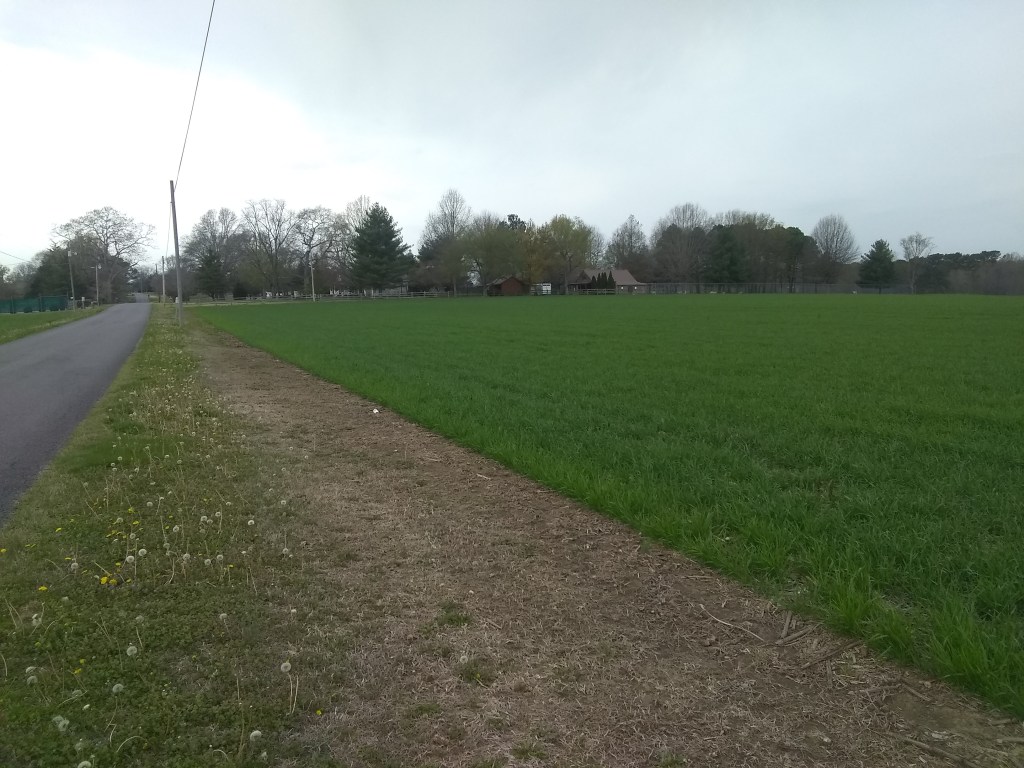
Biking is something I both love and hate. The conflicting emotions arise from the undeniable physical effort it demands. However, this exertion is precisely what makes it an excellent form of exercise. Most days, I dedicate over an hour to my cycling routine, and in doing so, I’ve discovered a unique opportunity to enjoy a good book or podcast. The rhythmic pedaling and the wind against my face create a calming backdrop that allows me to fully immerse myself in the content. In these moments, the time spent on the bike seems worthwhile, as I can’t help but appreciate the mental and physical rewards it offers.
I especially like having ridden. The post-biking feeling is one of pure satisfaction. The endorphin rush, coupled with a sense of accomplishment, makes the initial struggle and fatigue worthwhile. As I dismount and catch my breath, I relish the sensation of having conquered the challenge, both physically and mentally. It’s a reminder that the things we sometimes love to hate can often be the ones that bring us the most fulfillment. In the end, the love-hate relationship with biking only deepens my appreciation for the sport, as it continually pushes me to overcome my own limitations and embrace the rewards that follow the effort.
My bike
A Rockhopper by Specialized. I purchased it November 2021 from Venture Out in Guntersville; Mike is top notch! So is the bike. The ‘old’ man seat was salvaged from an old Walmart bike (update: seat replaced, new photo to follow, someday).
Something to consider if you’re not already cycling.
I encourage you to start riding a bike, no matter your age. Check out these groups:
NOW A MAJOR MOTION PICTURE—The #1 New York Times bestselling worldwide sensation with more than 18 million copies sold, hailed by The New York Times Book Review as “a painfully beautiful first novel that is at once a murder mystery, a coming-of-age narrative and a celebration of nature.”
For years, rumors of the “Marsh Girl” have haunted Barkley Cove, a quiet town on the North Carolina coast. So in late 1969, when handsome Chase Andrews is found dead, the locals immediately suspect Kya Clark, the so-called Marsh Girl. But Kya is not what they say. Sensitive and intelligent, she has survived for years alone in the marsh that she calls home, finding friends in the gulls and lessons in the sand. Then the time comes when she yearns to be touched and loved. When two young men from town become intrigued by her wild beauty, Kya opens herself to a new life—until the unthinkable happens.
Where the Crawdads Sing is at once an exquisite ode to the natural world, a heartbreaking coming-of-age story, and a surprising tale of possible murder. Owens reminds us that we are forever shaped by the children we once were, and that we are all subject to the beautiful and violent secrets that nature keeps.
Most people take the elevator. Be someone who takes the stairs instead.
***
Embracing Discomfort
Welcome adversity into your life as a path to better physical and mental well-being.
In Embracing Discomfort, journalist and professor Michael Easter challenges us to let go of certain modern comforts and incorporate a healthy amount of adversity into our “progressively sheltered, sterile, temperature-controlled, overfed, under-challenged lives.”
“We often have to go through short-term discomfort to get long-term benefits,” Michael says—and doing so, according to the research, can help us make profoundly “positive shifts in our health, perspective, and well-being.”
***
Michael Easteris the author of two books—The Comfort Crisis, a bestseller, and the recently released Scarcity Brain—and a professor at the University of Nevada, Las Vegas. His work has been translated into 40 languages. He lives in Las Vegas on the edge of the desert with his wife and two dogs.
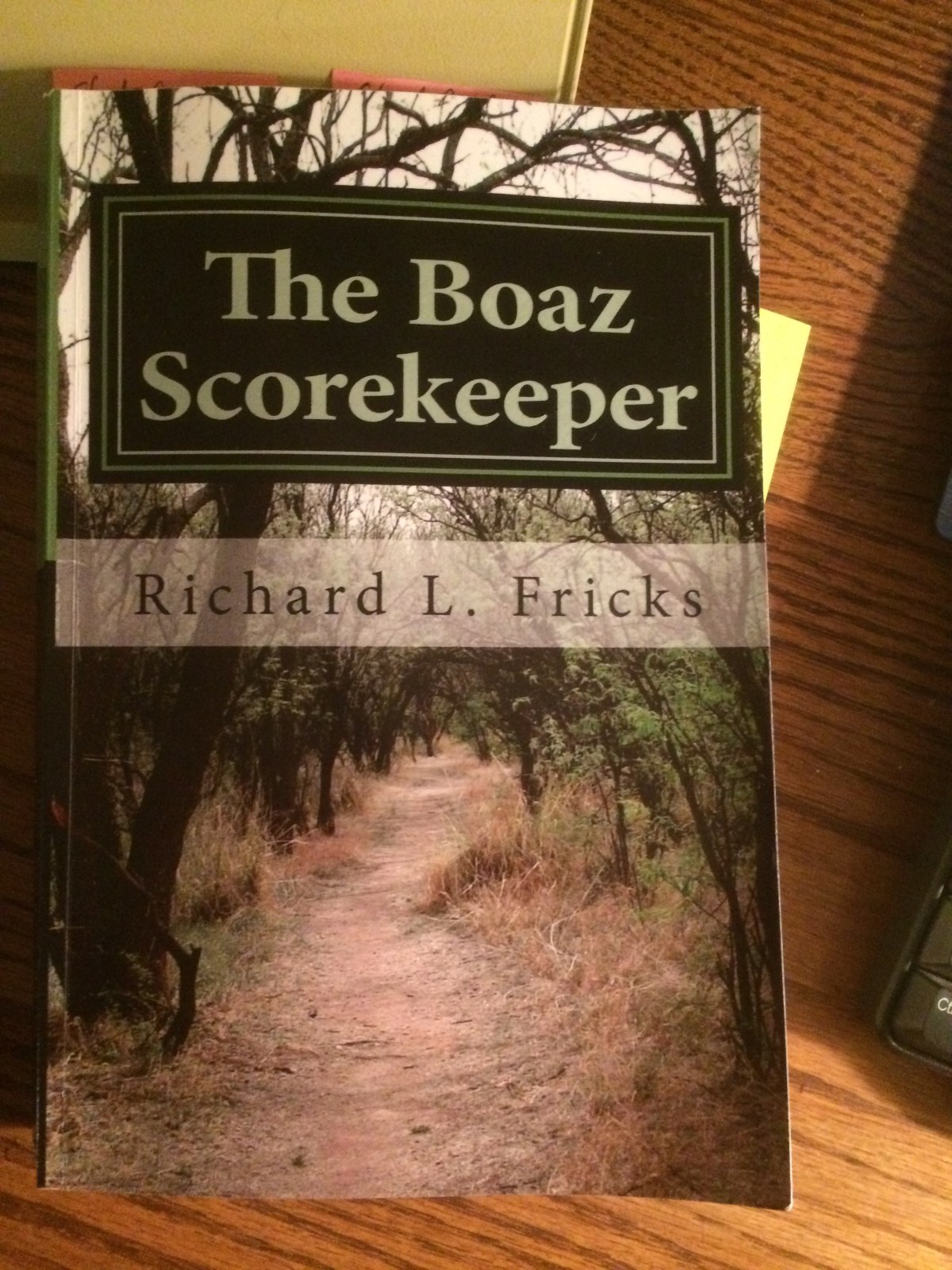
The Boaz Scorekeeper, written in 2017, is my second novel. I'll post it, a chapter a day, over the next few weeks.
I was born January 1, 1954 to Billy Joe and Mary Sue Tanner. Until I moved to Atlanta in 1973 for college, we lived on a 40-acre farm, in a two-story, Amish style house, three miles east of Boaz in the Arona community. It was my grandfather’s birthplace. My grandparents, Frank and Elma Tanner, had lived there all their married life working the farm and caring for his widowed mother until her death in 1953. My parents married and moved in with Gramp’s and Mama El in 1944 when Dad returned from Italy after the Army discovered he was only 16 when he enlisted.
My parents were the hardest working folks I have ever known. My Dad was a weaver at Boaz Spinning Mills, working six nights a week from 10:30 p.m. until 6:30 a.m. He then returned home to help my Mother complete the early morning farm work that she and I started before sunrise. By 9:30, Dad had finished his chores and breakfast and had gone upstairs to sleep for five or six hours before rejoining my Mother somewhere on our 40 acres to toil until 6:00 p.m., to then catch his ride to Boaz with neighbor and co-worker Calvin Conners.
Mother, a city girl from Albertville, knew nothing of farming but had no choice but to learn fast. After marrying, Mother spent a month with Gramp’s learning how to grow chickens, plant and maintain a garden, hoe cotton, and a dozen other tasks before his Diabetes cost him a leg and sent him to Gadsden to rehab for three months. Although short on experience she was extremely long on patience and determination. For as long as I can remember, the legend was that on Christmas Eve morning 1946 my Dad had come home tired and unusually depressed spouting threats that they should pack their bags and move to Detroit for him to make ‘good money’ at General Motors, and that he just couldn’t continue working two jobs for so little results. The story goes that Mother rolled out her own threat. “If I ever again hear you say that you are quitting, that you can’t do something, then I’m leaving you for good. Do you understand?” Losing Mother would have destroyed Dad. She was the light of his life. The story goes that Dad never breathed the ‘can’t’ word again. It was also the only time that I heard of him being depressed.
Gramp’s had started growing chickens for Boaz Poultry Company in 1932. The Depression was gaining momentum every day. Gramp’s had two neighbors who were pleased with their eight-year-old decision to build two specially designed buildings that housed thousands of chickens from the time they were just a few days old. He didn’t make the decision easily since it was the first time the home place had ever been mortgaged. In the end, Gramp’s believed it really wasn’t much of a risk when you compared it to the only other option which was to starve to death or quit farming altogether. It turned out his decision was a good one. The two poultry houses stabilized the farm, and later gave Mother a job and the ability to always be home when I was there.
My first memory of Saturdays as a kid was when I was three years old, at least that’s what Mama El told me. After breakfast, she took me to our garden and taught me how to pick peas. She told me I could tell when to pull them from the vines by looking at the plumpness of the pod, their hardness, and by their color. She made me watch her pick half a basket of Crowder peas before she let me pull one. Then, she taught me about peppers and tomatoes, and returned to the house. That Saturday, I picked two bushels of peas, and a basket full of tomatoes. I left the peppers alone, thinking they were not quite ready but also thinking Mama El might be testing my judgment. Compared to most every other Saturday I remember, that first working Saturday was a vacation. Normally, I was up and out by 4:30 a.m. helping Mother in the broiler houses, although I was often doing this by myself by age 10 if Mother had garden vegetables to can and freeze. After this task was completed, I worked in our corn field, milked Molly our cow, castrated pigs if we had a new litter, cut, split, and stacked firewood, and mended fences. If all this didn’t fill up my Saturday there was always something Mother and Mama El needed help with either in the garden or on the back porch shelling peas, snapping green beans, or cutting corn off the cob. During cold weather, we always had four hogs to slaughter, butcher, and ready for grinding into sausage, or for salting-down in the big wooden meat box. I was only six when Gramp’s let me use his Marlin lever-action 22 Rifle to kill a 400-pound hog just right to have it fall over on the big wood sled we used to scald off the hog’s hair. Saturdays were always work days on the farm until I went off to college.
Mother said she got her grit and determination from God. I’m 91 now and have never seen a more God-fearing person. I’ve been told that I was only three days old when I made my first appearance at Clear Creek Baptist Church. This was Mother’s doing no doubt. From then until I started attending First Baptist Church of Christ in Boaz when I was in the tenth grade, Mother made sure I was in church every Sunday morning and night, and every Wednesday night. But, attendance was only the minimum requirement. Mother read the Bible to me since I was born and made sure I had my daily devotion and prayer time for thirty minutes before I went to bed at night, although there were times that I forgot. And, reading my Sunday School lesson was even more important than completing my homework which, according to Mother, I would never be able to choose to work and live away from the farm unless I completed every single assignment in full. In math, she always demanded I write out every step of the calculation no matter how simple it was. As for Dad, he was not against God, Christianity, and the Church but chose to remain relatively silent while letting Mother and Brother G be my spiritual guides.
Brother G was, as I learned after I begin attending the big church in town, a Christian Fundamentalist. He, without doubt, believed the Bible was written by God Himself and that obviously, there was no error in any verse throughout its sixty-six books. To him, and me until many years later, God had been around a long time, forever in fact. He created the world in six literal days and made man in His image. Out of His love He sent His Son, born of a virgin, to die for the sins of all mankind, and to be resurrected forever to welcome believing sinners to His presence after death or His return in the clouds, whichever came first. God, Jesus, and the Holy Spirit, the Trinity, were all the same and all different. That was confusing, but I believed whatever Brother G told me. I never questioned him because he spoke the truth, the truth that comes only from the Bible. I read my Bible most every day, said my prayers, and lived as though the Holy Trinity was watching my every move and hearing my every thought. Throughout my growing up years I loved God with all my heart. That’s what I was taught to do. It was real. God was real to me. I believed He walked with me and talked with me. Without Brother G and Mother, I would have drunk moonshine, smoked cigarettes, and got naked with girls. Only by God’s grace, did I walk the high road to life and peace.
No matter what road I walked throughout my life I always had fond memories of my growing-up Sunday afternoons. Often Clear Creek Baptist Church had ‘dinner on the ground.’ After Brother G’s voice boomed his last and hoarse gasp, the ladies moved the towel-covered dishes filled with choice casseroles, vegetables, breads, pies, and cakes, from the small kitchen at the back of the church outdoors, laid tablecloths on the long concrete table that the men had built on the creek side of the church years before I was born, and spread a collection of food that would outrank the biggest Baptist churches in North Alabama.
After eating two days worth of food, me and every boy and girl out of diapers would take to the grass-barren field beyond the creek to play whatever sport was in season. From baseball to football to basketball. And, starting in 1959, to soccer, after a family of Hispanics moved in the old Elkins’ home place. Sometimes we played until it was time to go back inside for Training Union with Sister G, Brother G’s wife. Other than the absolute minimum chores that had to be done, Sundays were for worshiping God and relaxing. I dearly loved Sundays.
Biking is something I both love and hate. The conflicting emotions arise from the undeniable physical effort it demands. However, this exertion is precisely what makes it an excellent form of exercise. Most days, I dedicate over an hour to my cycling routine, and in doing so, I’ve discovered a unique opportunity to enjoy a good book or podcast. The rhythmic pedaling and the wind against my face create a calming backdrop that allows me to fully immerse myself in the content. In these moments, the time spent on the bike seems worthwhile, as I can’t help but appreciate the mental and physical rewards it offers.
I especially like having ridden. The post-biking feeling is one of pure satisfaction. The endorphin rush, coupled with a sense of accomplishment, makes the initial struggle and fatigue worthwhile. As I dismount and catch my breath, I relish the sensation of having conquered the challenge, both physically and mentally. It’s a reminder that the things we sometimes love to hate can often be the ones that bring us the most fulfillment. In the end, the love-hate relationship with biking only deepens my appreciation for the sport, as it continually pushes me to overcome my own limitations and embrace the rewards that follow the effort.
My bike
A Rockhopper by Specialized. I purchased it November 2021 from Venture Out in Guntersville; Mike is top notch! So is the bike. The ‘old’ man seat was salvaged from an old Walmart bike (update: seat replaced, new photo to follow, someday).
Something to consider if you’re not already cycling.
I encourage you to start riding a bike, no matter your age. Check out these groups:
NOW A MAJOR MOTION PICTURE—The #1 New York Times bestselling worldwide sensation with more than 18 million copies sold, hailed by The New York Times Book Review as “a painfully beautiful first novel that is at once a murder mystery, a coming-of-age narrative and a celebration of nature.”
For years, rumors of the “Marsh Girl” have haunted Barkley Cove, a quiet town on the North Carolina coast. So in late 1969, when handsome Chase Andrews is found dead, the locals immediately suspect Kya Clark, the so-called Marsh Girl. But Kya is not what they say. Sensitive and intelligent, she has survived for years alone in the marsh that she calls home, finding friends in the gulls and lessons in the sand. Then the time comes when she yearns to be touched and loved. When two young men from town become intrigued by her wild beauty, Kya opens herself to a new life—until the unthinkable happens.
Where the Crawdads Sing is at once an exquisite ode to the natural world, a heartbreaking coming-of-age story, and a surprising tale of possible murder. Owens reminds us that we are forever shaped by the children we once were, and that we are all subject to the beautiful and violent secrets that nature keeps.
The latest outbreak of violence in the Middle East shows why religion makes peace impossible. Israel and Hamas are in a fundamentalist deadlock, neither able to triumph, but neither willing to concede.
Once again, the Holy Land is the epicenter of bloodshed and war.
Hamas has launched their biggest attack in years. They surged out of the Gaza Strip in force, carrying out attacks across southern Israel. Israeli military and security forces were caught off guard and overwhelmed, and Hamas had free rein until the IDF was able to regroup.
But what makes this eruption of conflict stand out was the extreme nature of the violence. Hamas fighters committed horrific atrocities—only “committed” isn’t a strong enough word. They reveled in them.
In addition to attacking military bases and police stations, they attacked a music festival, spraying the attendees with gunfire. The dead include Israeli citizens as well as foreign tourists. There are reliable reports that they went door-to-door in Israeli villages, killing indiscriminately, kidnapping some to hold as hostages. The death toll is still rising, but is already over a thousand. There are unconfirmed reports of even worse evils, but it’s uncertain if these are accurate or merely the atrocity propaganda that’s all too common in wartime.
Wherever you start out, you can find deep-rooted causes for why each side acts as it does.
In response, Israel is doling out massive punishment to the Palestinians. They’ve imposed a total blockade of food, water, electricity and fuel on Gaza. They’ve bombed it from the air, flattening residential buildings and decimating a crowded open-air market. They’re poised to launch a costly ground assault.
I need to state my conflicts of interest. As I’ve stated in the past, I have Jewish ancestry. That said, I’m an atheist and a secular humanist, and I don’t identify as Jewish in any religious sense. I’ve never been to Israel and I don’t know anyone directly affected by the attacks. The extent of my connection to Judaism is that anyone who wished harm on all Jewish people would undoubtedly include me in that.
The endless chain of “yes, buts”
Usually, empathy is the way out of conflicts like this. By making an effort to set aside your privilege and viewing the world through the eyes of an oppressed people, you can see what fairness demands.
What makes this conflict such a Gordian knot is that empathy doesn’t seem to help. Wherever you start out, you can find deep-rooted causes for why each side acts as it does. Rather than a path out of the maze, it’s an ouroboros with no beginning or end.
Start with the obvious point, emphasized by most world leaders: Hamas’ savage and indiscriminate killings of civilians are a war crime and deserve to be treated as such. There can be no excuse for targeting innocent people who did nothing to them and who had no part in the decisions of Israel’s leadership. Whatever the justice of the Palestinian cause, this slaughter does nothing to advance it. On the contrary, it makes them pariahs in the eyes of the world.
All that is indisputable. But now, pull back and widen the circle of empathy a bit, and in come the “yes, buts”:
Yes, but: Israel has forced the Palestinians to live under intolerable conditions. The Gaza Strip is effectively a giant prison camp, hemmed in by fences and barbed wire, with Israel holding a chokehold on vital supplies. Unemployment and poverty are rampant. The isolation of the Palestinians is backed up by apartheid laws that make it extremely difficult for them to travel or participate in Israeli society. Whenever any of them lash out, Palestinians suffer collective punishment from Israeli bombardments.
How could living under such conditions not drive a people to despair and nihilistic rage? What other outcome did Israel have any right to expect?
Yes, but: Hamas is a violent, autocratic Islamist group that takes Jewish genocide as an explicit goal. They’ve never recognized Israel as a state, nor acknowledged its right to exist. On the contrary, they believe Muslims have a sacred right and mandate to conquer all the land where Israel currently exists. Can you blame Israel for confining Gazan Palestinians and treating them harshly, when their leadership’s stated goals are the destruction of Israel and extermination of the Jewish people?
Yes, but: Israel has its own religious fanatics whose views are no less extreme. They believe Jewish occupation of the entire land is their God-given right, and any non-Jews living there should be ethnically cleansed. The Israeli government has furthered these aims by supporting radical Jewish settlers, who’ve taken over so much Palestinian territory that a two-state solution may already be impossible.
Yes, but: To a people who’ve survived as much trauma as the Jews, it’s expected they’d long for a homeland of their own. The Jewish people have hung on for centuries, isolated and defenseless, in the midst of often violently hostile societies. They’ve always been treated as aliens, as outsiders, as the other, or as plotting evildoers. They’ve been confined to ghettoes, deprived of rights, and hounded from one country to the next. They’ve suffered pogroms, blood libel, and other bigoted violence. This long chain of oppressions culminated with the Holocaust, the most horrific act of state-organized evil in human history. How could these centuries of persecution not have left their mark on the Jewish psyche?
The history of the Middle East is like a red-hot chain stretching back into the mists of the past.
That’s especially true since Israel, from the moment of its birth, was surrounded by other states that were hostile and that immediately attacked them. Of course they’re going to conclude that outsiders will never protect them and they have to take charge of their own security. Of course they’re going to go to any lengths necessary to secure their homeland. What other outcome did the world have any right to expect?
Yes, but: The land that became Israel wasn’t a blank slate. When the Zionist movement selected it for settlement, there were already people living there. Those are the Palestinians, and they were pushed off their own land, made second-class citizens, and in the end, subjugated and imprisoned by a colonizing power.
Is there any group of people, either now or ever in history, who’d accept this treatment and give in peacefully? What other outcome did the world have any right to expect?
Yes, but: The land of Israel is the original and sacred home of the Jewish people. They lived there for untold generations, until they were subjugated and expelled by a cruel empire, condemning them to wander the world for a two-millennium diaspora. They have a historic claim on this land, and they have a moral right to have it returned to them, even if that means…
And so on and so on, forever.
The history of the Middle East is like a red-hot chain stretching back into the mists of the past. Each link is forged of an atrocity that one side committed against the other. The pain and rage arising from that then lays the groundwork for the next link to be welded on.
No one has a path to victory
Can that chain be broken? There’s no telling. The most depressing part about this new eruption of violence is that it’s laid bare the fact that an ending is almost impossible to imagine.
Hamas has no path to victory. They can kill unarmed civilians and commit acts of terror, but that’s all. They’re no match for the Israeli army. Israel can inflict pain on the Palestinians whenever it wants, as much as it wants. Whatever damage they manage to inflict on Israel, they’re bound to suffer even worse retribution.
Israel, meanwhile, has a tiger by the tail. They have millions of desperate, angry people penned up within their borders, with no plausible long-term solution for what to do with them. By oppressing the Palestinians so long and so harshly, they’ve nurtured a burning hatred toward themselves—to which their only response is still further oppression. It’s not clear if they could ever ease up on the Palestinians without risking an even bigger backdraft of violence.
And thus, bloodshed leads to bloodshed, reprisal fuels reprisal, and hatred on one side nurtures hatred on the other, in a never-ending spiral of futility. I wrote about another clash between Israel and Hamas in 2009, and the story was almost identical. Nothing has changed in the years since.
On top of this, both sides are fueled by sacred values that their faith will never permit them to compromise. Both Israeli settlers and Hamas jihadists believe, in mirror-image fashion, that God is on their side and that it’s God’s will for them to possess this particular stretch of land. So long as these clashing fundamentalisms hold sway, peace is impossible. This so-called holy land may well be the last and the worst outpost of bloodshed on earth.
In modern life, welcoming discomfort makes us healthier and happier.
***
Embracing Discomfort
Welcome adversity into your life as a path to better physical and mental well-being.
In Embracing Discomfort, journalist and professor Michael Easter challenges us to let go of certain modern comforts and incorporate a healthy amount of adversity into our “progressively sheltered, sterile, temperature-controlled, overfed, under-challenged lives.”
“We often have to go through short-term discomfort to get long-term benefits,” Michael says—and doing so, according to the research, can help us make profoundly “positive shifts in our health, perspective, and well-being.”
***
Michael Easteris the author of two books—The Comfort Crisis, a bestseller, and the recently released Scarcity Brain—and a professor at the University of Nevada, Las Vegas. His work has been translated into 40 languages. He lives in Las Vegas on the edge of the desert with his wife and two dogs.
The Boaz Scorekeeper, written in 2017, is my second novel. I'll post it, a chapter a day, over the next few weeks.
I am Micaden Lewis Tanner. This is my life story. As you read, please keep in mind that I write legal memorandums and briefs, and scribble out a few short stories. However, I am not a novelist. But, don’t think that I don’t have a story to tell.
***
“Micaden, ‘vengeance is mine saith the Lord.’ You have been playing long enough. Pastor Gorham will be here in less than an hour.” Mom called out as she unpinned towels and underwear from the clothesline just off the back porch.
“Just a little longer. I promise I’ll be ready before he gets here.”
Gramp’s and I had finished feeding and milking before 5:00 and he was already dozing in his chair under the big oak in our backyard. I had played ‘Shoot to Kill’ two times already. It was more fun when Mama El was here to narrate but she was too busy cooking her cobbler. I ran to the barn with time to play one more time.
Bam, bam, bam, three shots rang out from the front yard. I was finishing my chores in the barn. I flung the pitchfork onto bales of hay and ran around the side of the house.
Daddy was lying in a pool of blood and an army of huge men were standing behind a big black Ford. With his last breath Daddy said, “Micaden, trouble has come, be brave, I love you.”
I grabbed Daddy’s rifle and started shooting. In fact, I picked up my slingshot and started knocking over oil cans lined up across the hood of an old and disabled Chevy. Nobody was a better shot than me.
The men kept shooting at me and they kept missing. When it was over, three men lay dead, and two more were begging for their lives. It was not until I walked over closer that I could tell they were police officers, and my friend Billy Baker was in the back seat of their vehicle.
All six years of my life I had heard how James David Kilpatrick, the sixteen-year-old son of Aubrey Kilpatrick, had meted out justice to the men who had gunned down his father in cold blood. That event had taken place less than a mile from where I stood. It happened in 1951 and James had only recently been released from prison. Both Gramp’s and my Father had shared this story with me since I was a baby.
I may be wrong but I think they were trying to teach me life isn’t always fair and to be ready to defend those you love when the law seems unconcerned.
“Micaden Lewis Tanner, get in here now and wash up, Brother Gorham will be here in ten minutes,” Mama El hollered from the front porch.
I gathered up my smooth stones scattered around the yard and went inside.
All my life Mother had cooked supper once per month for our pastor, Gabriel Gorham. He was tall and thin with sandy blond hair and never without his thick wire rim glasses. He always wore a black suit, white shirt, and a gold tie. He and his family had moved to the Arona Community in 1949 from Selma to shepherd Clear Creek Baptist Church. Tonight, his wife stayed home with their four children and a bushel of measles.
Mother, Gramp’s, Mama El, Brother Gorham, and I sat down to one of Mom’s feasts: half a dozen fried, steamed, baked, and broiled vegetables, sugar-cured smoked ham, Mama’s El’s sourdough bread, and her first prize blackberry cobbler. Dad was at the spinning mill.
Gramp’s said our blessing and we dug in. After what seemed too long a span of silence I spoke up, “Brother G,” that’s what he insisted all us kids call him, “why was James Kilpatrick sent to prison?”
Before he could respond Mom interrupted, “honey, why don’t we let Pastor Gorham enjoy his food?”
“Thanks Mary, I don’t mind, and by the way, everything is superb, excellent as always.” Turning to me Brother G said, “Micaden, I suspect you are referring to the 1951 incident where James shot and killed three law enforcement officers, correct?”
“Yes, Gramp’s said James has just been set free from prison.”
“Paroled.” Gramp’s said.
“Your question is a difficult one, especially so if you consider it from a theological viewpoint. The answer to your question boils down to the facts, what happened the night of May 17, 1951. There’s usually always two sides to every story but the Prosecutor argued that James had no legal right to shoot the officers because his father was breaking the law when he started firing. Defense attorneys Rogers and Brown had a very different take. They contended James had no idea he was shooting at the police. All he knew was he heard gunfire, ran around the corner of his house, saw his father laying in a pool of blood, and could see an unmarked vehicle with several men standing around with guns blazing.”
“I think James was innocent.” I said.
“I agree with you, but I wasn’t there nor at his trial. Again, the answer to your question depends on the facts, the truth of what actually happened.” Brother G said.
“What does God say about killing?” Gramp’s spoke up.
I could tell Mother was getting a little perturbed. “Mama El, why don’t you pass Pastor Gorham another slice of ham.”
“The Bible has much to say about civil disobedience, including illustrations of when the taking of another life is permitted, not sin that is. It speaks of war. You have heard me preach many times on David and the giant Goliath. Then, there’s self-defense. Which is what I think James was doing, protecting his family against an evil that had descended in the dark around his home and family. In a couple of weeks, I’m preaching on Acts 5:29 where Peter says, ‘we must obey God rather than men.’ Maybe, that would be a good time to expand on my remarks here. Yes, I think I will attempt to answer your question. Thanks, Micaden for asking it. Now, I can’t wait for Mama El’s blackberry cobbler.”
I kept my mouth shut the remainder of our meal. I sure wanted to hear Brother G talk about justice but instead I ate nearly two bowls of cobbler made from the blackberries me and Mama El had picked right after I finished my morning chores.
Brother G left a little before dark knowing I wouldn’t go to bed until he was gone. Tomorrow was my first day of school. Boaz Elementary was over three miles away and my school bus would be here at 6:30. I had to be standing out by the mailbox by 6:20 in case it was early. My 4:30 chore-time didn’t go away now that I was a student. I had to get to sleep.
But, I couldn’t, not for over an hour. I lay still for a minute and tossed for three, over and over it seemed. I felt both strong and weak. I wasn’t worried in the least about learning and completing my school assignments. Mother had me well prepared. From the time I was born, she had read to me. I started reading to myself at age 3. I knew my alphabet and could count like a fifth grader, according to Mom.
I also believed I was strong enough, brave enough, to deal with trouble if it came to me. No doubt it would. This is what Aubrey Kilpatrick had said according to Gramp’s. The story was that he had taught his oldest son James never to go looking for trouble. He wouldn’t have to because it would always find its way to him. When it did, don’t run but face it head-on and fear no man.
After an hour I was finally still, and halfway asleep. The last thought I had before consciousness collapsed was of a shepherd boy named David choosing five smooth stones, approaching and conversing with a giant named Goliath, and bravely declaring, “You come against me with sword and spear and javelin, but I come against you in the name of the Lord Almighty, the God of the armies of Israel, whom you defied. This day the Lord will deliver you into my hands, and I’ll strike you down and cut off your head.”
Biking is something I both love and hate. The conflicting emotions arise from the undeniable physical effort it demands. However, this exertion is precisely what makes it an excellent form of exercise. Most days, I dedicate over an hour to my cycling routine, and in doing so, I’ve discovered a unique opportunity to enjoy a good book or podcast. The rhythmic pedaling and the wind against my face create a calming backdrop that allows me to fully immerse myself in the content. In these moments, the time spent on the bike seems worthwhile, as I can’t help but appreciate the mental and physical rewards it offers.
I especially like having ridden. The post-biking feeling is one of pure satisfaction. The endorphin rush, coupled with a sense of accomplishment, makes the initial struggle and fatigue worthwhile. As I dismount and catch my breath, I relish the sensation of having conquered the challenge, both physically and mentally. It’s a reminder that the things we sometimes love to hate can often be the ones that bring us the most fulfillment. In the end, the love-hate relationship with biking only deepens my appreciation for the sport, as it continually pushes me to overcome my own limitations and embrace the rewards that follow the effort.
My bike
A Rockhopper by Specialized. I purchased it November 2021 from Venture Out in Guntersville; Mike is top notch! So is the bike. The ‘old’ man seat was salvaged from an old Walmart bike (update: seat replaced, new photo to follow, someday).
Something to consider if you’re not already cycling.
I encourage you to start riding a bike, no matter your age. Check out these groups:
#1 NEW YORK TIMES BESTSELLER • Discover the global phenomenon that tells an unforgettable story of love, loss, and healing.
“Compellingly artful . . . [a] blockbuster memoir.”—The New Yorker
It was one of the most searing images of the twentieth century: two young boys, two princes, walking behind their mother’s coffin as the world watched in sorrow—and horror. As Princess Diana was laid to rest, billions wondered what Prince William and Prince Harry must be thinking and feeling—and how their lives would play out from that point on.
For Harry, this is that story at last.
Before losing his mother, twelve-year-old Prince Harry was known as the carefree one, the happy-go-lucky Spare to the more serious Heir. Grief changed everything. He struggled at school, struggled with anger, with loneliness—and, because he blamed the press for his mother’s death, he struggled to accept life in the spotlight.
At twenty-one, he joined the British Army. The discipline gave him structure, and two combat tours made him a hero at home. But he soon felt more lost than ever, suffering from post-traumatic stress and prone to crippling panic attacks. Above all, he couldn’t find true love.
Then he met Meghan. The world was swept away by the couple’s cinematic romance and rejoiced in their fairy-tale wedding. But from the beginning, Harry and Meghan were preyed upon by the press, subjected to waves of abuse, racism, and lies. Watching his wife suffer, their safety and mental health at risk, Harry saw no other way to prevent the tragedy of history repeating itself but to flee his mother country. Over the centuries, leaving the Royal Family was an act few had dared. The last to try, in fact, had been his mother. . . .
For the first time, Prince Harry tells his own story, chronicling his journey with raw, unflinching honesty. A landmark publication, Spare is full of insight, revelation, self-examination, and hard-won wisdom about the eternal power of love over grief.
Novel I’m listening to:
Where the Crawdads Sing
Amazon abstract:
NOW A MAJOR MOTION PICTURE—The #1 New York Times bestselling worldwide sensation with more than 18 million copies sold, hailed by The New York Times Book Review as “a painfully beautiful first novel that is at once a murder mystery, a coming-of-age narrative and a celebration of nature.”
For years, rumors of the “Marsh Girl” have haunted Barkley Cove, a quiet town on the North Carolina coast. So in late 1969, when handsome Chase Andrews is found dead, the locals immediately suspect Kya Clark, the so-called Marsh Girl. But Kya is not what they say. Sensitive and intelligent, she has survived for years alone in the marsh that she calls home, finding friends in the gulls and lessons in the sand. Then the time comes when she yearns to be touched and loved. When two young men from town become intrigued by her wild beauty, Kya opens herself to a new life—until the unthinkable happens.
Where the Crawdads Sing is at once an exquisite ode to the natural world, a heartbreaking coming-of-age story, and a surprising tale of possible murder. Owens reminds us that we are forever shaped by the children we once were, and that we are all subject to the beautiful and violent secrets that nature keeps.
Ken Ham says evangelicals have ‘lost Gen Z’ because he and his ilk can no longer indoctrinate children in public schools.
We explore his claims and figure out where the blame really rests.
Reading Time: 10 MINUTES
YouTube offered me a Ken Ham short video the other day, which demonstrates that I have completely confused its algorithm. In it, the serial grifter and ur-liar-for-Jesus offers his thoughts about why evangelicals “lost Gen Z.” Let’s go over his video and see if he’s right. Then let’s see where the blame really rests.
A quick introduction to Ken Ham and Creationism
Ken Ham leads a Young-Earth Creationist group called Answers in Genesis. As the label implies, he erroneously believes that his god conjured everything in the universe into existence about six thousand years ago. (I’m sure that was quite a surprise to the civilizations around back then.) Other kinds of Creationism exist, some of which come much closer to the Earth’s real age of 4.5 billion years and the universe’s real age of 10-20 billion years, but here we speak only of Young-Earth Creationism.
Creationism is a relatively new doctrinal stance that arose in the 1970s-1980s thanks to an American law professor named Phillip E. Johnson. It had the marvelous good fortune of gaining popular awareness at a time when American evangelicals were undergoing a massive shift into the hardline fundamentalist-fused culture warriors we know today. The newly-politicized and tribalism-addled group happily absorbed Creationism along the way. By the late 1990s, Creationism was a required belief for them.
Often, Young-Earth Creationists call their belief system “intelligent design.” In this way, they pretend it’s not just another name for Young-Earth Creationism. In the 1990s and 2000s, this dishonesty was absolutely key to their disingenuous attempts to sneak their beliefs into public schools. I will not be granting them this pious fraud.
Ham and his associates also erroneously believe that Christians who don’t accept Creationism are Jesusing all wrong.
He thinks this because of a very childish interpretation of the Bible called literalism. That means they erroneously think that everything in the Bible literally happened the way the Bible’s writers describe it. Their entire faith system depends on this belief being 100% true. So they get very fretful when other Christians have differing interpretations of the Bible. They think that such inconsistency “undermines” a Christian’s beliefs.
As far as I know, they have conducted no research into that assumption. In fact, they haven’t conducted much original research at all since their early years—because their field researchers kept realizing that Creationism was impossible and deconverting from the belief.
Ken Ham insists this is “the FIRST Post-Christian Generation,” y’all!
And now we arrive at Ken Ham’s first error. It occurs in his video’s title.
Ken Ham calls this video “The FIRST Post-Christian Generation – this is how we lost Gen Z.”
But this isn’t the first post-Christian generation. Ken Ham attributes this idea to Barna Group, which has also referred to Gen Z that way.
Researchers began calling America “post-Christian” back in 2013. That puts us very solidly into Millennial territory, since they were born between 1981-1996. The oldest Gen Z people (born between 1997-2012) in 2013 would have been roughly 15. Folks that young aren’t generally pushing the religion needle one way or the other.
Rather, Millennials began—and are still—turning America post-Christian, not Gen Z. That’s the generation that evangelicals panicked about in the 2010s.
Gen Z simply continues the trend of increasing secularity in America.
But okay, Ken Ham. How exactly did you lot manage to lose an entire upcoming generation of adults?
Ken Ham has lost Gen Z, everyone! (Has he looked under the sofa?)
Moving on, Ken Ham tells us in the video:
But now we have the second world view dominating because we have allowed generations of kids to be indoctrinated in an education system that has thrown God out, the Bible out, prayer out, Creation[ism] out. They teach you all came about by natural processes. There is no supernatural, there is no God.
Sorry to say this, but the majority of pastors have endorsed that system, told parents that’s fine, but don’t worry about what they’re being taught. Just come along, we’ll tell them about Jesus. And you see now we’re seeing generations who have a different foundation and a whole different worldview. And Generation Z in particular is called by George Barna, Christian researcher, “the first post-Christian generation” in this nation.“The FIRST Post-Christian Generation – this is how we lost Gen Z,” Ken Ham. Uploaded 5/20/23.
Ken Ham himself posted this video to his own channel. That fact forces me to conclude that he is actually proud of this 36-second burst of poor reasoning and dishonesty.
Christians often accuse others of exactly what they themselves do (or want to do). This time the trope is egregiously easy to see.
So is Ham’s self-interest. Gosh, the products he happens to sell could fix this awful problem! Who could have seen that coming?
Why Ken Ham is fretting about Gen Z
Ken Ham sounds very, very upset that he may no longer indoctrinate children to believe his quirky, dishonest, error-packed li’l take on the Bible. By indoctrination, of course, he means dogmatic claims shoved at people—in this case, children—who must accept them without questions or reservation. He wants to indoctrinate children, so he assumes that schools do the same. His is good, though. Theirs is ickie and evil.
But which children does he mean?
Surely not children attending his flavor of Christianity’s religious schools or being insularly-homeschooled by fellow Creationists. Those children are already being indoctrinated with his beliefs. He can’t be upset about losing them.
No, he’s upset that he can no longer indoctrinate the children attending public, taxpayer-funded schools in America. Those schools are off-limits to people like him. Those children are beyond his reach.
Unless a teacher wishes to present Creationism in the context of why it isn’t at all real science, or in the context of a religious belief alongside others, then that’s the only way children in public schools will learn about his beliefs in that setting. In other words, Creationism won’t be presented the way Ken Ham wants it presented: in science classes as an indoctrination meant to completely undermine the backbone of science, the scientific method, and the basic concepts it helped humans understand, like the Theory of Evolution.
No, if Ken Ham wants to indoctrinate those children, then he must get the explicit permission of their parents. And American law, which protects Americans’ right to freedom of religion, has placed strict rules around when and where such indoctrination may occur in a public-school context.
Alas, Ken Ham doesn’t think that his desired indoctrination will take if he can’t use public schools to push it at children. Unless children are surrounded by it 24/7, it won’t overcome what children are learning in public schools. More to the point, it won’t overcome the worldview they are absorbing.
Ken Ham’s god isn’t anywhere near strong enough to defeat a worldview that simply doesn’t lend itself to accepting the claims Ken Ham likes to make.
The ‘biblical worldview’ that’s almost extinct
You might notice that Ken Ham quoted George Barna in assessing Gen Z as ‘lost’ to evangelicals. George Barna started Barna Group many years ago (though he eventually left it to pursue a solo career). Barna Group is a for-profit survey house that sells analyses of its research and polls to worried evangelical parents and leaders. Barna Group workers’ jobs involve creating analyses that will open evangelical wallets.
And nothing worries evangelicals and opens their wallets quite like predicting imminent disaster.
Indeed, George Barna must be having quite a heyday. For years now, he has been crying in the wilderness about the extinction of the ‘biblical worldview.’
If you’re wondering what “biblical” means in this context, it’s simply a Christianese adjective that indicates that its noun is something the judging Christian likes.
Usually, you’ll only see this adjective in evangelical writing, where it modifies any number of nouns:
Biblical marriage. That’s opposite-sex, hetero-only, woman-subjugating marriage between one man and one woman who follow evangelicals’ weird, regressive gender-role expectations.
Biblical parenting. That’s the creepy, punishment-oriented, dysfunctional-authoritarian parenting style that evangelicals think is the only way to set children up for lifelong faith.
Biblical dating. Think “Duggar-style courtship” and you won’t be far off the mark.
Evangelicals love sneering at other flavors of Christianity as sub-par, even though there is no way whatsoever to say that any one flavor is more authentically Christian than any other. The word biblical is how they do their sneering: by implying that other takes aren’t based on the Bible like theirs is.
So a biblical worldview simply means the worldview of a hardline evangelical like Ken Ham or George Barna.
Why Ken Ham and George Barna think that their biblical worldview is going extinct
By 2023, Barna was alarmed to find that the percentage of Americans generally who had a biblical worldview had declined from 6% in March 2020 to 4%. Meanwhile, from 2020 to 2023, he found that the percentage of Americans calling themselves “born again” had likewise declined from 19% to 13%.
Either way, Barna certainly thinks that his worldview is going “extinct.” By extension, so does Ken Ham. In Ham’s case, he’s also very certain that public education is to blame. Of course, Creationists have never conducted any research regarding this assertion. But he’s still very certain of it, and certainty—even if it’s completely misplaced—carries a lot of weight with literalists.
(Related: “Hello, my name is Kent Hovind” — this dissertation will tell you immediately why Creationists aren’t real big on science.)
That worldview is what is most important to evangelicals
In the context of indoctrinating children, evangelicals like Ken Ham are well aware that their god is nearly helpless up against a mismatched worldview. If children cannot be taught or forced to adopt a worldview amenable to Ken Ham’s flavor of Christianity, then they’ll think for the rest of their lives that his claims are whackadoodle-squared.
I remember our first year on the field literally thinking, “No one is ever, ever going to come to faith in Christ, no matter how many years I spend here.”
I thought this because for the first time in my life, I was face-to-face with the realities that the story of Jesus was so completely other to the people I was living among. Buddhism and the East had painted such a vastly different framework than the one I was used to that I was at a loss as to how to even begin to communicate the gospel effectively.
And so, the Amy-Carmichael-Wanna-Be [a famous Irish missionary] that I was, I dug in and started learning the language. I began the long, slow process of building relationships with the nationals, and I ended up spending lots of time talking about the weather and the children in kitchens. And while over time, I became comfortable with helping cook the meal, I saw very little movement of my local friends towards faith.“Rice Christians and Fake Conversions,” Laura Parker, 1/28/13
Unfortunately for Ken Ham and his like-minded pals, they have a much worse problem than that missionary. Their worldview is very much on the outer fringes of Christianity. So they’re not just fighting reality itself, but every more-sensible flavor of their own religion. Even if a child has a generally-Christian worldview, that’s not enough to make Creationist claims sound plausible.
The demographic time bomb exploded years ago for Creationists
It’s worth mentioning, by the way, that one of the main witnesses for the plaintiffs in the landmark Creationism-based Kitzmiller v Dover Area School District lawsuit in 2005 was a Christian, Dr. Kenneth Miller. Miller, a biology professor, had, in fact, written many peer-reviewed biology articles and even a popular biology textbook.
For years prior to this lawsuit’s filing, Creationists had been champing at the bit for exactly such an opportunity. They’d been sneaking their indoctrination materials into public schools for yearsin hopes of provoking it. Finally, parents and science teachers in one small, out of the way town got sick of their antics and filed suit against their district’s school board—which was led by and packed with Creationists and their sycophants.
The judge in that case, John E. Jones III, was likewise a Christian—and a Dubya appointee. So Creationists were doubly sure that they’d successfully win the right to push their religious materials into public science classrooms.
They brought their A+ game to this fight, insofar as they could, I suppose.
And they got completely BTFO. They lost. They not only lost, but they lost in the most humiliating ways possible. Not only did Creationism get exposed as purely religious in nature, not only was the Dover school board leader caught red-handed lying to a federal judge, not only were their own witnesses—the ones who didn’t just withdraw from the trial, I mean—exposed as clown-shoes incompetents, but Dover-area voters also immediately replaced the Dover school board with people who understood and accepted real science.
(If you like definitive legal smackdowns or even just want to learn every single way that Creationism is not science but instead absolutely positively simply Christian indoctrination aimed at grooming children to hold a Creationism-friendly worldview, Jones’ opinion paper cannot be missed. It’s one of my favorite reads, a GOAT winner.)
And Gen Z had a front-row seat to watch it happen
Evangelicals’ decline started right around this same time. From 2006, their roller coaster only went downhill.
I really feel like that’s when the pendulum began to swing back to sanity regarding Christians trying to infiltrate public schoolrooms. People began taking those attempts a lot more seriously after that. Sure, Creationists still tried to get into public schools, and they still do try. But they’re tightly constrained compared to how things were before 2005.
I’m bringing up this trial almost 20 years later for a reason. The aftereffects of it cannot be overestimated.
Remember, Gen Z was getting born during the Dover period as well (they were born between 1997-2012). Parents with Gen Z kids were direct witnesses of this evangelical overreach. And the youngest kids in Dover classrooms in 2005 were Gen Z.
The real surprise is that even 4% of Gen Z kids have a biblical worldview, not that so few do. I doubt that percentage will rise.
Ken Ham has no clue in the world how to deal with that demographic time bomb, either
Nowadays, Ken Ham preaches to his choir in his little safe space. I don’t think he makes many new converts to his flavor of Christianity. Instead, he’s stuck in that safe space with a dwindling number of believers. I’m sure it’s very cozy, at least. But it’s going to get less comfortable as the years pass.
The problem Ken Ham is having is that his worldview doesn’t come naturally to anyone. It has to be coached extensively into people who don’t know any better. So generally, that coaching must begin very early. It must also be reinforced constantly and from all sides. Children must be absolutely shrink-wrapped to maintain it.
Even so, the moment such a child ventures out into the real world, their false worldview always risks toppling in the face of reality. There simply does not exist a way for the Ken Hams of the world to shrink-wrap a child so well that reality cannot ever penetrate those layers of indoctrination.
Not anymore, anyway. At one time, I’m sure it was a lot easier to build those bubbles.
As Ken Ham himself has admitted, evangelicals have already lost Gen Z. But let’s be clear here: they lost Gen Z because Gen X and older Millennials refused to allow their children to be indoctrinated with a Creationism-friendly worldview. He demonizes schools for this refusal, but really he’s missed a few steps here!
That said, I’m sure he wishes with all his heart that he could indoctrinate those children without their parents knowing, but it ain’t gonna happen.
Now younger Millennials are poised to start having their own children. Those children will be part of Gen Alpha (born between 2013-2025) and whatever we call the next age cohort. It seems very likely that they will also generally refuse to allow their children to learn fake science to make Ken Ham happy.
His roller coaster may be reaching the end of the ride. But the future for children has never been brighter as a result.
Giving others our time, attention, and service lengthens and enriches our lives.
***
In Zen and the Art of Living, Robert Waldinger—director of the Harvard Study of Adult Development, and a Zen teacher—explores what ancient wisdom and modern research tell us about “the building blocks of the good life that are hidden right here in plain sight.”
Robert draws on both his in-depth experience in Zen and the most up-to-date study findings to share insights and practices that can “help us through difficult times, and bring richness and joy to our everyday lives.”
Robert Waldinger is Professor of Psychiatry at Harvard Medical School, director of the Harvard Study of Adult Development at Massachusetts General Hospital, and cofounder of the Lifespan Research Foundation. Dr. Waldinger received his AB from Harvard College and his MD from Harvard Medical School. He is a practicing psychiatrist and psychoanalyst, and he directs a psychotherapy teaching program for Harvard psychiatry residents. He is also a Zen master (Roshi) and teaches meditation in New England and around the world. You can find out more at his website.






























 by
by 

 by
by 

 Richard L. Fricks