
The Nature of the Self
Examine how the ego can create a tremendous amount of unnecessary suffering.
***
For more information, click here.

Examine how the ego can create a tremendous amount of unnecessary suffering.
***
For more information, click here.
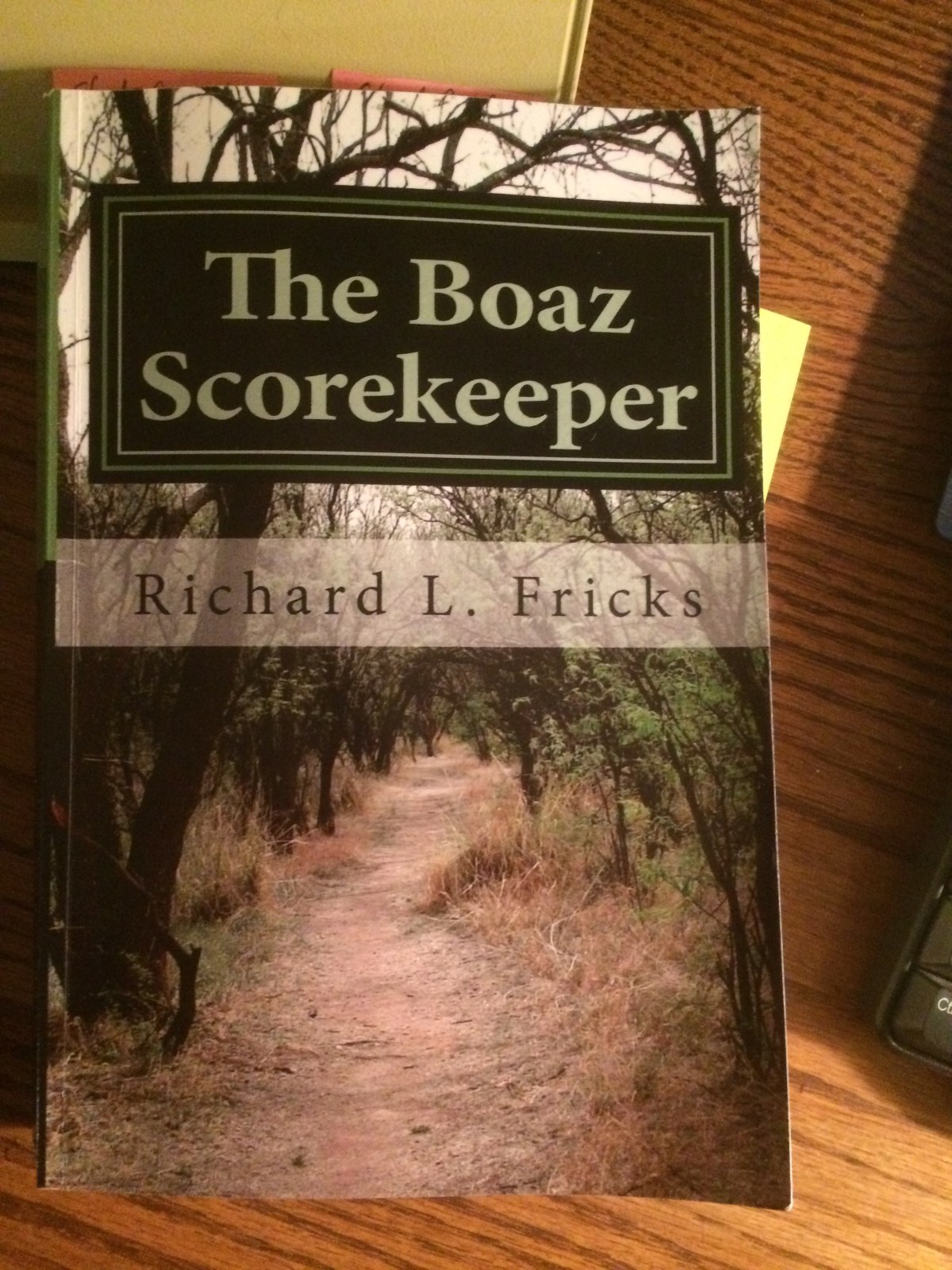
The Boaz Scorekeeper, written in 2017, is my second novel. I'll post it, a chapter a day, over the next few weeks.
Over the next several weeks, as often as I could, I continued to sit in that grove of Hickory trees and watch our new home rise from the dirt.
Just as I expected, nothing became of the Murray’s deaths. What I mean is neither the Flaming Five, their fathers, or anyone connected to these five prominent families, were ever tied to Bill and Nellie’s deaths. In fact, these cases remained unsolved for almost twenty years. Other than learning that cyanide poisoning had killed them, no other evidence was ever discovered that indicated they were murdered. Of course, I knew in my gut they were.
In looking back, that gut feeling was a major transitional point in my life. That, and a conversation between two block layers that I had overheard where the two had argued over the existence of God with the older man chiding the younger saying, ‘faith is just belief in the absence of evidence.’ These two events or occurrences in my life caused me to start thinking about truth and how to determine what was true.
I understood court cases were not determined simply by gut feelings. Especially criminal cases where the level of proof was much higher than in a civil case. The legal standard was proof beyond a reasonable doubt. This level of proof is not proof beyond all doubt. I guess one could say that would be unreasonable to expect that.
Up until Bill and Nellie’s deaths, I had put aside my growing doubts about God. Nellie had been an inspiration to me. She almost convinced me that there was really something to prayer. That changed with her and Bill’s deaths.
I was raised to doubt my doubts and to anchor my life to Christ by faith. But, wasn’t that like having a gut feeling about something? Most of my life I had had a gut feeling that Christ and Christianity were true. Then, a time where I had a gut feeling Christ and Christianity was the single biggest myth ever. But now I realized that my early life commitment to Christ and God was rooted in beliefs implanted in me by nearly everyone around me, certainly the preachers and Sunday School teachers I had sat before and soaked up their every word. I felt like a child to admit that I hadn’t been a critical thinker when it came to my religious life. Oh yes, I was extremely critical in my professional life. I had received an excellent legal education at Emory’s law school. I also realized I had been educated, trained so to speak, by the church. That training was an equipping in compartmentalization. The Bible teachers had taught me to keep my thoughts and live my life in a spiritual bubble, and not to allow my secular world to infiltrate my Christianity.
Gut feelings and faith were simply not enough. There had to be more. I started reading outside the faith. I disobeyed. I rejected compartmentalization. I broke down the walls between my spiritual life and my secular life. I used my critical thinking skills to probe into my Christian beliefs and the overwhelming question that I faced was why does God allow so much suffering in the world?
My mind raced back to May 25, 1972. Why did God allow Wendi and Cindi to be repeatedly raped by the Flaming Five? Why did God allow them to beat them with a shovel, killing Cindi? Why did God allow David to smother Wendi to death? Why did God allow His children to suffer untold pain? Why did I have to suffer through six months of incarceration and the humiliation of a criminal trial? Why did the Flaming Five escape punishment, with their reputations and dignity intact, even though they were rapists and murderers? Why did Bill and Nellie have to die? Why were the true perpetrators not held financially responsible for Wendi and Cindi’s deaths? Why was there no justice for Bill and Nellie? And on and on.
I couldn’t answer any of these questions, but I now believed that either God didn’t care about any of these things, or He was powerless to prevent them from happening. And, it wasn’t because God hadn’t been called upon. I particularly remembered the scripture verse on the index card Nellie gave me the Friday her and Bill came to the office before the trial was to begin on the following Monday: “And all things you ask in prayer, believing, you will receive.” (Matthew 21:22). I had heard Nellie’s prayer and how humbly and specifically she had asked God for His intervention: “Sweet and Holy Jesus we ask you for complete victory in this legal battle against those who murdered our daughters. …. We simply ask you for justice for Wendi and Cindi.”
Why did God not do what He promised He would do? This Bible verse is a prayer promise. It could not be clearer: ask, believe, and receive. Nellie asked, there could be no doubt she believed, but she certainly didn’t receive. But, I can hear Christian apologists. I grew up hearing all their arguments. The very existence of millions of Christian apologists proves the Bible often says one thing, but God does something quite the contrary. Why did the Word not mean what the Word clearly said? No, it couldn’t be honest. It had to be magic. ‘God is mysterious. We do not know the mind of God. God has a plan that is far more loving than we can know.’ I felt beads of sweat popping out across my forehead. I was angry. I was angry that I had been so damn stupid. The Bible was a lie, at least this verse was. I had seen and experienced it firsthand. I knew that a lying Bible didn’t necessarily mean that there was no God, that God didn’t intervene in human affairs, but it sure as hell meant I had been wrong to believe it was the infallible Word of God.
Those damn Christian apologists kept saddling up beside my mind. ‘Micaden, don’t forget that God gave men freewill. All the evil comes about because men are sinners and they choose to do wrong.’ For some reason, this argument no longer made any sense. Even if freewill is the reason for all evil in the world (what about the pain and suffering that comes about naturally? From floods, earthquakes, tornadoes, famines?) wasn’t I taught that God is all-knowing, all-powerful, all-loving, and all-beneficent? Now, for the first time in my life I realized that God cannot be all these things. How could God be all-loving and yet allow Wendi and Cindi to suffer as they did? I myself tried to help these two precious girls but was stopped by the Flaming Five. I tried to help and I’m just a weak and lowly sinner. God didn’t step in and help because He is not who the Bible says He is. There, I finally said it.
My stomach started rolling when I thought of the two prayer meetings that had taken place the Friday night before the wrongful death trial was to begin on Monday morning. Nelle had invited me and Matt to her church, Calvary Baptist in Douglas. Matt had attended. Her church had a prayer meeting to implore God to favor justice, to give her and Bill victory over those who had caused the death of their dear daughters. But, while that meeting was taking place, First Baptist Church of Christ in Boaz was holding its own prayer meeting for the Flaming Five and their fathers. These fine folks were imploring God to hold back the hand of greed that was attacking their favored sons. So, I’m to conclude that when God gets in a direct conflict like this, He protects those with the higher social standing, those who have more financial resources, all while ignoring the side that has the facts on its side? This doesn’t square with the Bible, or at least, the version that I had been taught.
There was no turning back. My mind was now on a course of truth-seeking. Playing the mental games, I had been brainwashed into playing all my life; were no longer appealing. No, they were absolutely appalling. If Wendi and Cindi, and Bill and Nellie, were ever to receive any justice it wouldn’t come from a non-existent God. But, it might could come from me. And, yet again, I had had a revolutionary thought, one never snapping out in my mind. Could I step in and mete out some justice? I loved these four-beautiful people and they had been treated as the scum of the earth by five prominent families, by both a criminal and civil justice system, and by the Christian God who didn’t exist. There, that day in late November 1998, standing in the middle of the road leading up to our partially framed but roofless dwelling, I determined I would create some form of justice for the four dead, buried, and seemingly forgotten, Murrays.
But, my determination was slow in evolving. My idea to create justice was like so many ideas. It got caught in a revolving door. I became a hamster on a wheel, working to keep justice far, far away from my clients. For the next seventeen years I traveled all over North Alabama defending those accused of every evil under the sun: murder, arson, theft, burglary, and unimaginable sex crimes.
Nevertheless, I never forgot the Murrays and the horrible series of events that began on graduation night 1972. Even though I didn’t pursue actual justice, I did continue to keep score, recording every game played by the Flaming Five, whether private or public, whether coaching and teaching at the Family Life Center, or selling God, money, cars, nails and lumber, and land and houses. One thing never happened. Not one of the Flaming Five ever fouled out of the game. They were masters at running, passing, shooting. I had long concluded they were actors with far better skills than the very best of Hollywood. To every eye but mine, they were in all ways happy and successful. They were bulletproofed, or so it seemed. Justice had never been interested in playing against the Flaming Five. They were simply too quick, too fast, too smart, for justice to survive on the same court.
However, as often happens in life, things changed once again. In 2015, I almost forgot about my loss and my determination to seek justice for the Murrays. It was Monday, February 9th. Lewis lost the love of his life. Susan died in an innocuous car accident, not much more than a fender-bender, at the intersection of Bethsaida Road and Highway 431. Lewis and Susan had married in 2012. Kaden Lewis Tanner, mine and Karla’s only grandchild, was born July 18, 2013. Now, Susan’s near-perfect life had been taken away. By God or fate. An autopsy revealed that she was dying from an inoperable brain tumor. It was in the early stages, revealing itself so far with only an occasional headache. Susan’s death rocked our family and our life. If there was remotely anything positive from the timing of Susan’s death, it was Kaden was less than two years old. Lewis surprised us all. He became the rock we all needed. I still feel ashamed that I almost fell apart while he steeled himself for Kaden. Within two years of Susan’s death, both Lewis and Kaden were living forward. Michael Lewis Tanner was and is a better man than I am.
As bad as these past two years were, they were not bad enough to prevent my mind from returning to the events of May 25, 1972. By early 2017, I once again started having nightmares. When conscious, all I could think about was various levels of injustice in the world. How could a loving God take sweet Susan from Kaden and Lewis? What had she done to deserve that? What had they done to deserve losing their wonderful and kind, wife and mother? And, on a wholly different level, the same questions returned to my mind that I had asked nearly nineteen years earlier. I had to do something.
No doubt it was long past time for new rules. It was time the game changed. It was time justice had a chance. But, I needed a nudge to push me off the hamster wheel.
Here’s today’s bike ride. Temperature at beginning: 46 degrees.
Biking is something I both love and hate. The conflicting emotions arise from the undeniable physical effort it demands. However, this exertion is precisely what makes it an excellent form of exercise. Most days, I dedicate over an hour to my cycling routine, and in doing so, I’ve discovered a unique opportunity to enjoy a good book or podcast. The rhythmic pedaling and the wind against my face create a calming backdrop that allows me to fully immerse myself in the content. In these moments, the time spent on the bike seems worthwhile, as I can’t help but appreciate the mental and physical rewards it offers.
I especially like having ridden. The post-biking feeling is one of pure satisfaction. The endorphin rush, coupled with a sense of accomplishment, makes the initial struggle and fatigue worthwhile. As I dismount and catch my breath, I relish the sensation of having conquered the challenge, both physically and mentally. It’s a reminder that the things we sometimes love to hate can often be the ones that bring us the most fulfillment. In the end, the love-hate relationship with biking only deepens my appreciation for the sport, as it continually pushes me to overcome my own limitations and embrace the rewards that follow the effort.

A Rockhopper by Specialized. I purchased it November 2021 from Venture Out in Guntersville; Mike is top notch! So is the bike. The ‘old’ man seat was salvaged from an old Walmart bike (update: seat replaced, new photo to follow, someday).
I encourage you to start riding a bike, no matter your age. Check out these groups:
Cycling for those aged 70+(opens in a new tab)
Solitary Cycling(opens in a new tab)
Remember,
Nothing today.
Nothing today.















The Insurrection of Curiosity
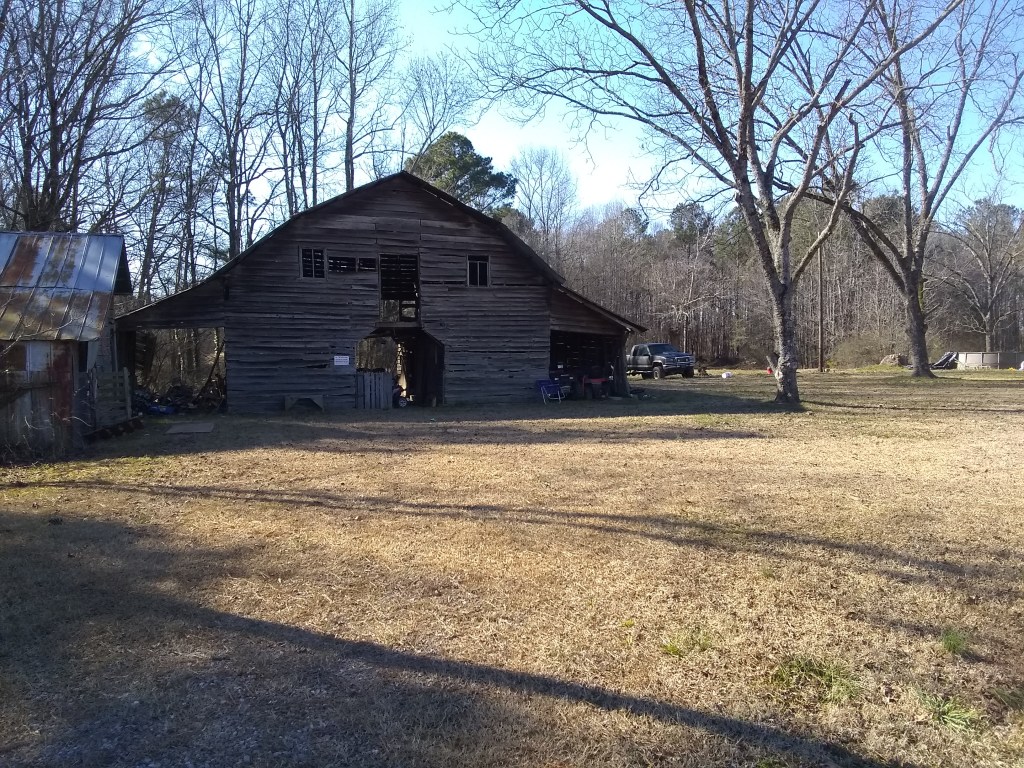
In the early hours of dawn, as I sit in the Pencil Pit, my barn transformed into a haven of thought and reflection, I ponder a quote by Nabokov that I stumbled upon: “Curiosity is insubordination in its purest form.” These words, piquant and profound, resonate within the walls of this rustic retreat, where curiosity is not just welcomed but revered.
Yesterday’s experiences seemed to dance around this very theme. My 16-mile bike ride, a ritualistic embrace of nature and endurance, was unusually challenged by rain. Clad in a cheap rainsuit, ostensibly a shield against the elements, I found myself battling not just the external downpour but an internal one too. Drenched in sweat, every pedal stroke became a rebellion against discomfort, against the urge to seek shelter. It was as if the very act of pushing through the rain was an insubordination against the body’s natural inclination for comfort and dryness.
This physical challenge oddly mirrored my mental explorations later in the day, lounging in my bedroom chair, diving deep into Sam Harris’ Waking Up app. The episode titled ‘Beginning Again’ offered a contemplative journey into mindfulness and the power of resetting one’s thoughts. It struck me then how curiosity – the kind that propels us to question, explore, and even defy our comfort zones – is a form of beginning again. Each time we allow our minds to wander into uncharted territories, question ingrained beliefs, or challenge the status quo, we are, in essence, starting anew. We are shedding the old skin of complacency and conformity.
Curiosity, in its relentless pursuit of ‘what if’ and ‘why not,’ is indeed an act of insubordination against the mundane, the accepted, and the unchallenged. It’s a rebellion against the intellectual lethargy that often seeps into our lives unnoticed. Whether it’s questioning the mechanics of a rainsuit during a deluge or contemplating philosophical insights about mindfulness, curiosity propels us into a state of perpetual growth and learning.
In the Pencil Pit, surrounded by the tools of my trade – books, notes, and, of course, pencils – I realize that this space is a physical manifestation of curiosity. It’s where thoughts are not just born but also nurtured and challenged. It’s where the insubordination of curiosity isn’t just an act of defiance but a celebration of the human spirit’s unquenchable thirst for understanding.
As I embark on today’s journey, both in the Pencil Pit and beyond, I carry with me Nabokov’s words as a reminder of the transformative power of curiosity. It is, after all, in the questioning, the exploring, and the rebelling that we truly begin again, continuously redefining ourselves and our understanding of the world around us.
Take the goal as the path by recognizing the inherent freedom of awareness, now.
***
For more information, click here.
The Boaz Scorekeeper, written in 2017, is my second novel. I'll post it, a chapter a day, over the next few weeks.
The Murray’s autopsies were released three weeks after Judge Freeman dismissed their case. However, Matt had been unable to obtain a copy until the last week of November. Cyanide poisoning was the cause of both deaths. The Marshall County District Attorney opened a formal investigation. I had a good working relationship with Detective Darden Clarke who shared with me that the Sheriff had seized a bottle of Restoril the day the bodies were found. Restoril was a benzodiazepine used as a sleeping pill. The bottle seized was Nellie’s and had been prescribed by Dr. Lester, her family doctor. Darden told me the DA was sending the Restoril to the State Lab for analysis to determine if the remaining pills contained any cyanide. He said even if they did and were the cause of Nellie’s death, it didn’t explain how Bill died from cyanide poisoning unless he had taken one of her sleeping pills. Darden said the only thing they knew for sure right now was that Bill and Nellie Murray died from cyanide poisoning. They were a long way from ruling their deaths a homicide even though suspicions were high.
Biking is something I both love and hate. The conflicting emotions arise from the undeniable physical effort it demands. However, this exertion is precisely what makes it an excellent form of exercise. Most days, I dedicate over an hour to my cycling routine, and in doing so, I’ve discovered a unique opportunity to enjoy a good book or podcast. The rhythmic pedaling and the wind against my face create a calming backdrop that allows me to fully immerse myself in the content. In these moments, the time spent on the bike seems worthwhile, as I can’t help but appreciate the mental and physical rewards it offers.
I especially like having ridden. The post-biking feeling is one of pure satisfaction. The endorphin rush, coupled with a sense of accomplishment, makes the initial struggle and fatigue worthwhile. As I dismount and catch my breath, I relish the sensation of having conquered the challenge, both physically and mentally. It’s a reminder that the things we sometimes love to hate can often be the ones that bring us the most fulfillment. In the end, the love-hate relationship with biking only deepens my appreciation for the sport, as it continually pushes me to overcome my own limitations and embrace the rewards that follow the effort.
A Rockhopper by Specialized. I purchased it November 2021 from Venture Out in Guntersville; Mike is top notch! So is the bike. The ‘old’ man seat was salvaged from an old Walmart bike (update: seat replaced, new photo to follow, someday).
I encourage you to start riding a bike, no matter your age. Check out these groups:
Cycling for those aged 70+(opens in a new tab)
Solitary Cycling(opens in a new tab)
Remember,
Nothing today.
Nothing today.
In the quiet of my early morning, often accompanied by the gentle scratching of my pencil in the Pencil Pit, I find myself reflecting on the myriad ways our thinking can go astray. Today, I want to delve into a topic that’s crucial for anyone striving for the clarity of thought – logical fallacies.
Logical fallacies are like traps in reasoning: deceptive and often misleading. They’re errors in reasoning that can invalidate an argument, yet they’re persuasive enough to often go unnoticed. Understanding and identifying these fallacies is vital for anyone engaged in critical thinking and rational discourse.
Let’s explore some common ones:
Recognizing these fallacies is the first step in clearing the fog in the landscape of debate and discussion. In our daily lives, especially in an era dominated by information overload, the ability to discern flawed arguments is not just an academic skill but a necessity.
As we navigate through complex discussions and debates, let’s arm ourselves with the tools of critical thinking. Let’s not fall prey to the seductive simplicity of flawed reasoning. Our pursuit of truth in The Pencil Driven Life demands no less.
Here are examples of logical fallacies from various articles:
Ad Hominem Fallacy:
Straw Man Fallacy:
Appeal to Ignorance Fallacy:
False Dilemma Fallacy:
Slippery Slope Fallacy:
These examples illustrate how logical fallacies can appear in arguments and discussions, demonstrating the importance of analyzing and questioning the underlying assumptions and logic.
As I sit in the Pencil Pit, the early morning light casting soft shadows around my barn-turned-sanctuary, my mind meanders through the events of yesterday, each a metaphor in its own right, each a lesson subtly veiled.
My thoughts first drift to a casual remark made at the Walgreen’s drive-thru, about Canadian geese that, contrary to their migratory nature, never leave. This offhand comment, punctuated by the distant squawks of the geese, stayed with me. It’s fascinating how, like these geese, certain elements of our psyche – be it fear, resentment, or outdated beliefs – choose to roost permanently in our minds. They linger, often unnoticed, long past their natural season to depart. It’s a gentle reminder of the mental clutter we ought to clear, yet somehow, it remains, nested comfortably in the crevices of our thoughts.
Later, in the attic, amidst the chore of stuffing insulation into the exhaust fan, I was struck by the likeness of the white, blown insulation to clouds. It was a moment of unexpected beauty, a reminder of how perspective can transform the mundane into the extraordinary. It made me think about perception – how the way we choose to see things can alter our entire experience. There, in the dusty corners of the attic, amidst the routine task, lay a whimsical landscape, a sky within a home.
The day ended in the garden with Jon and Donna, our hands working in unison to remove the tomato cages, making way for the planting of Crimson Clover. This act, simple yet profound, is a dance with the rhythm of nature – a preparation for renewal and growth. Planting a winter cover crop is an investment in the future; it’s about nurturing the soil, even when it lies dormant under the cold sky. It symbolizes hope, care, and the foresight to prepare today for tomorrow’s harvest.
These moments, as ordinary as they may seem, are threads in the tapestry of daily life. The geese that don’t migrate remind us to let go of what no longer serves us. The cloud-like insulation speaks of finding wonder in the everyday. The act of preparing the garden soil is a testament to the cycles of nature and life – of preparation, care, and eventual rejuvenation.
In the quiet of the Pencil Pit, as I reflect on these seemingly disparate experiences, I find a common theme – the importance of perspective, the beauty in the ordinary, and the continuous cycle of holding on and letting go. It’s remarkable how life, in its unassuming way, offers lessons at every turn, in every attic corner, every garden patch, and even in the flight patterns of geese.


 Richard L. Fricks