The Boaz Scorekeeper–Chapter 46

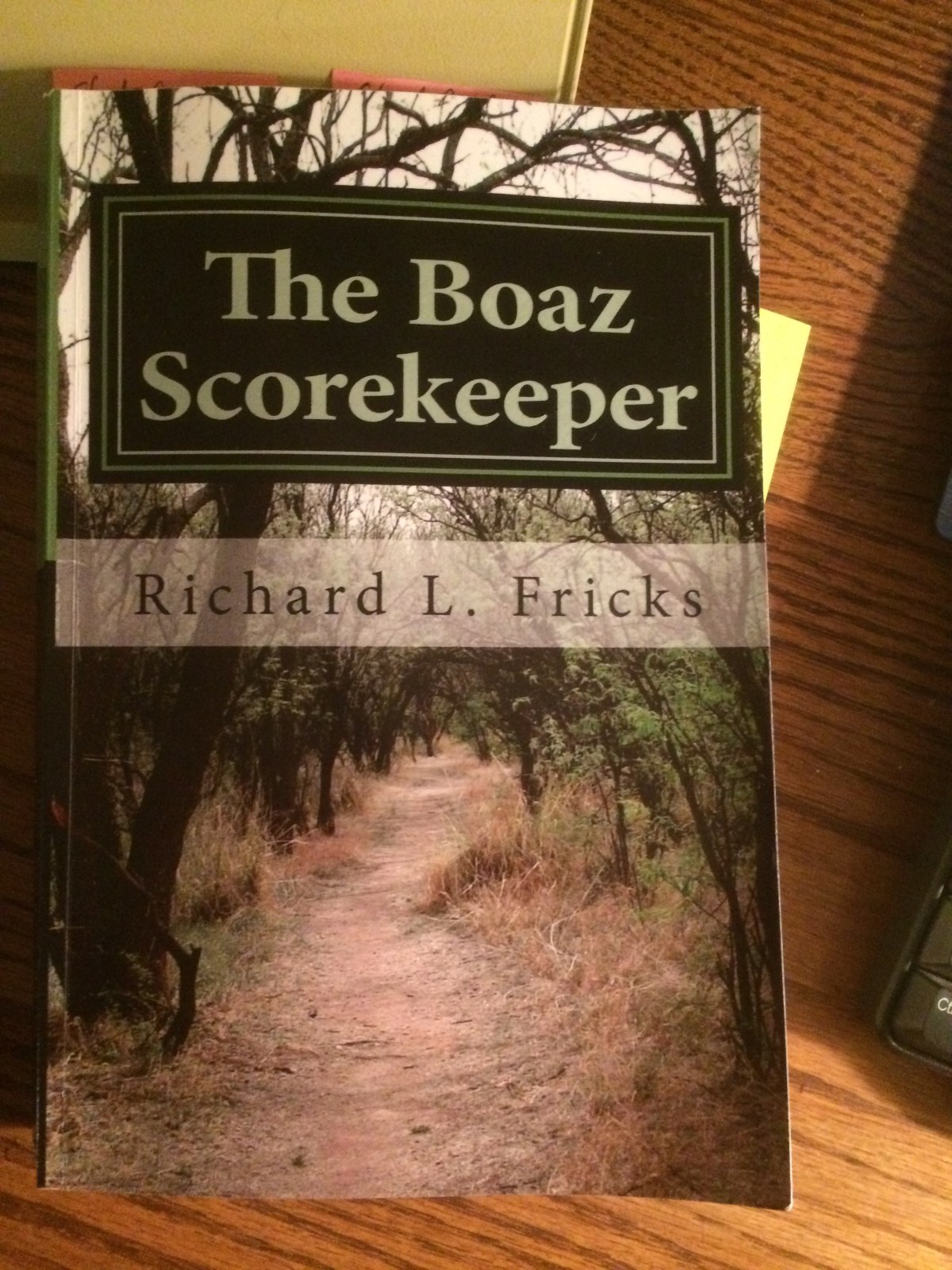
The Boaz Scorekeeper, written in 2017, is my second novel. I'll post it, a chapter a day, over the next few weeks.

After work, I drove straight to Oak Hollow and went inside the house.  Since purchasing the Black’s property three years ago I had converted the house into an extension of my law office.  I often came here to conduct legal research and draft briefs for my appeals cases.  I also used one bedroom for my writing.  A few years ago, I had started writing short stories.  My ideas had mainly come from the criminal defendants I had represented.

Today, I changed clothes and sat at the kitchen table reviewing the mental plan I had prepared several weeks ago.  I had named it ‘the Kill.’  I had long determined that no matter what John’s family did after receiving my ransom note, that John would die.  That was the only true justice for what he had done.  I never promised his family they would ever see him again. 

Several months ago, I had rented a backhoe and brought it here to Oak Hollow.  I had used it to dig five graves.  They were at the back of the several acres the Black’s had cleared off, about 200 yards behind the barn.  This clearing is also fenced in.  I had bought five old horses and brought them here.  Today, two old horses would die, with one of them being the human kind.

I walked outside and to the barn and found John laying on the floor on his back.  I told him to roll over and to put his hands behind him. I unlocked the cell door and went in, cuffed his hands behind him and removed the shackle from his left hand.  I had him stand up. 

John kept saying that I was in more trouble than I could ever escape.  I just let him talk while I led him outside and down to the back of the clearing. I took one of the horses by its halter.  We walked behind John.  I had him open the gate.  The five graves were right beyond the fence.  When John saw the five holes in the ground he fell to his knees and said, “Micaden, you don’t have to do this.  It’s not too late.  I will pay you whatever you want and will never mention this ever.  Please, please don’t kill me.”

 I walked the old mare over beside the first grave and injected her with 50 mg of Diazepam as a sedative.  In less than five minutes she was laying down on her side.  I then injected her with 120 ccs sodium pentobarbital.  Within a couple more minutes, the old mare stopped breathing.  I had John lay down on his stomach, face down.

The shovel I had chosen was heavy with a long handle.  John kept trying to get up and I kept shoving him back down.  The first blow missed his head completely, hitting his neck below his left ear.  John rolled over screaming.  “God help me, Tanner please stop.”  The second blow was direct.  It centered the back side of his head. He rolled on to his left side.   I hit him again, this time across the face.  Blood began pouring from his nose and mouth.  It took five more blows before he died.

I removed the hand cuffs and pushed him into the first grave.  I used the shovel to cover his body with three or four feet of dirt.  I then used a come-a-long to pull the horse into the grave.  It took me over an hour to shovel in enough dirt to fill the ten-foot hole.

I walked back to the barn and hung up John’s cuffs.  After showering in the house, I drove home to Hickory Hollow.  Karla had my favorite meal.  Slow-cooked pintos and fried potatoes.  We spent the rest of the evening playing checkers with four-year-old Kaden.

11/29/23 Biking & Listening

Here’s today’s bike ride metrics. Temperature at beginning of ride: 45 degrees. Brilliant sun with beautiful blue sky, but a little windy.


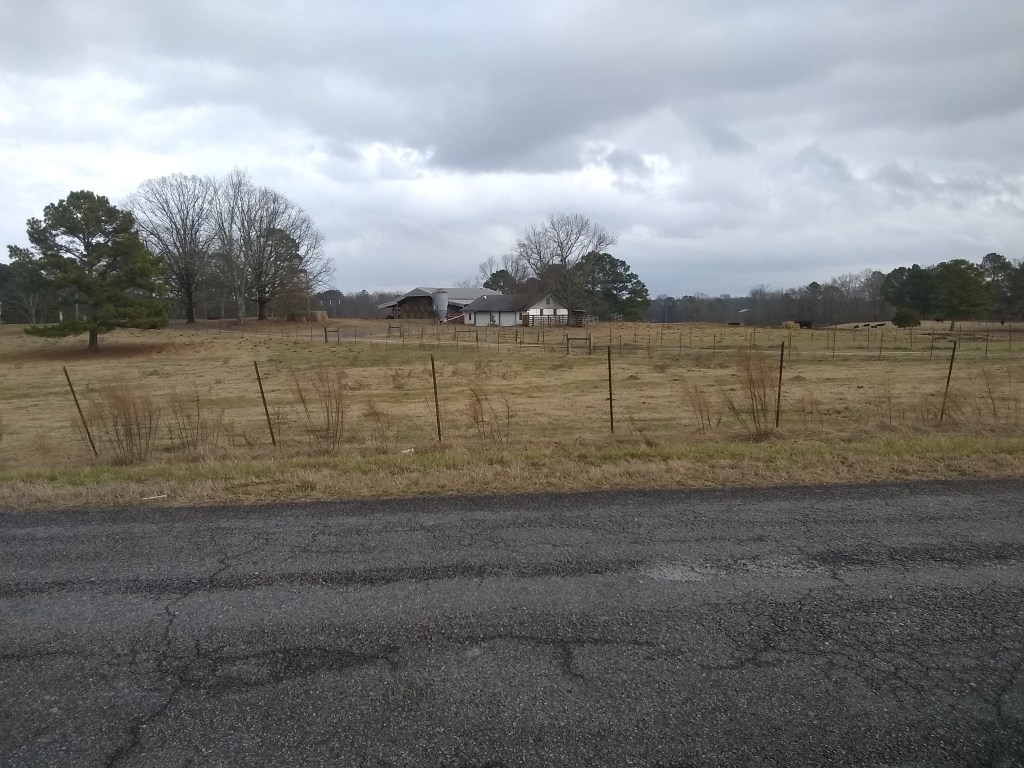
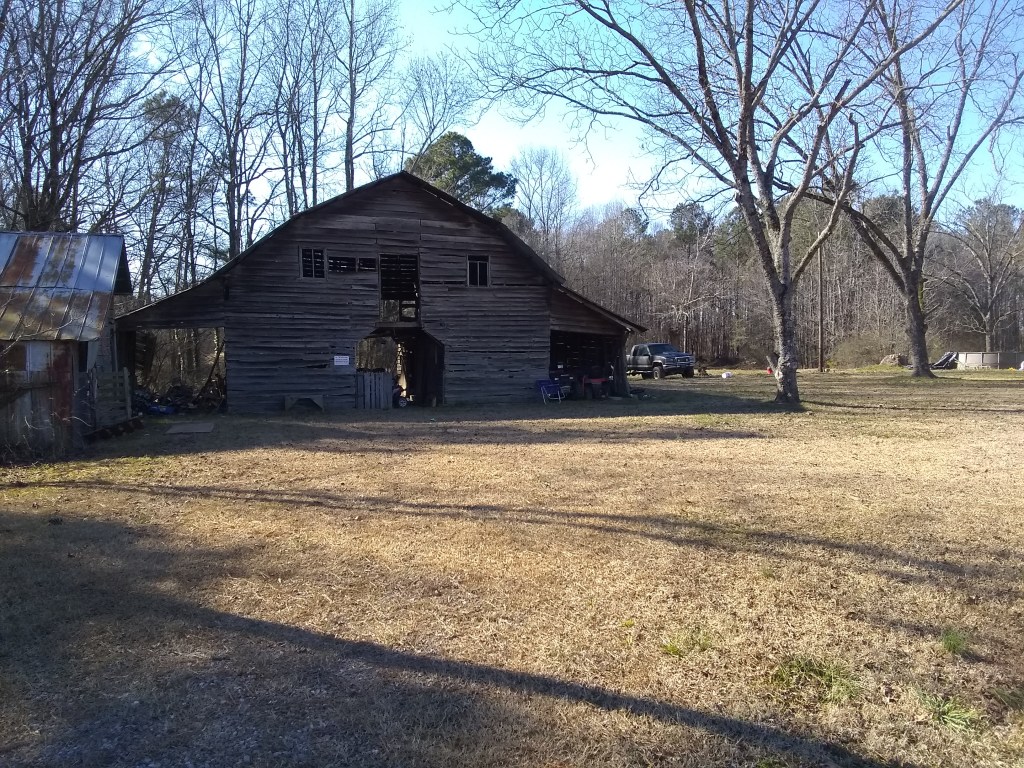
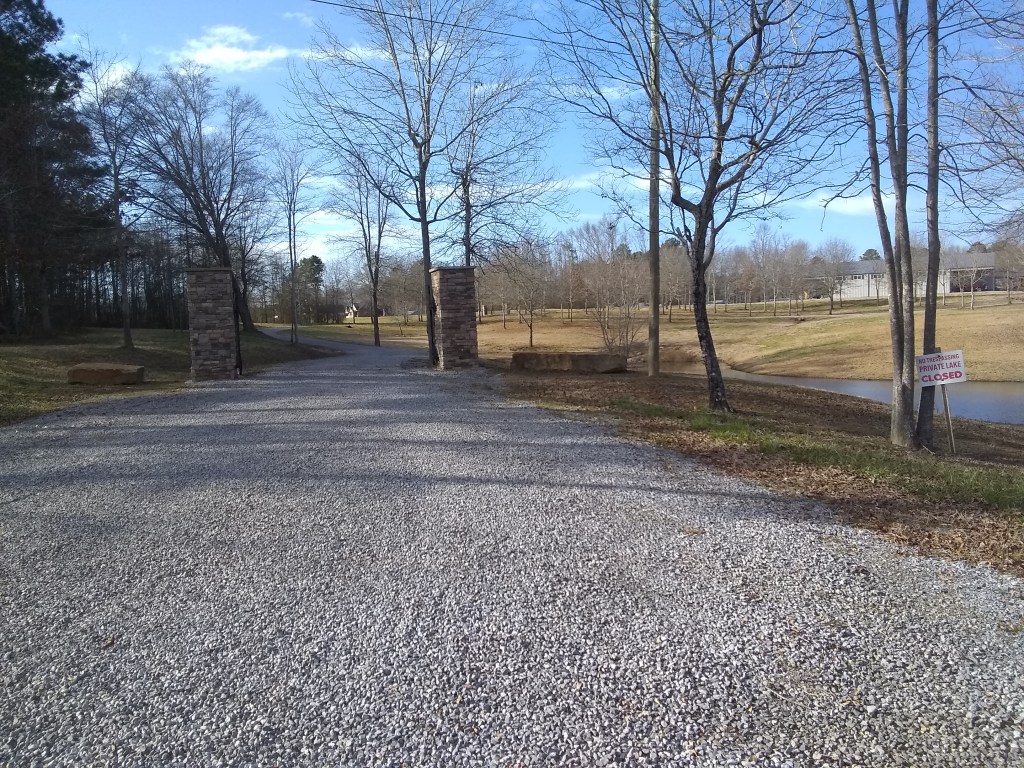
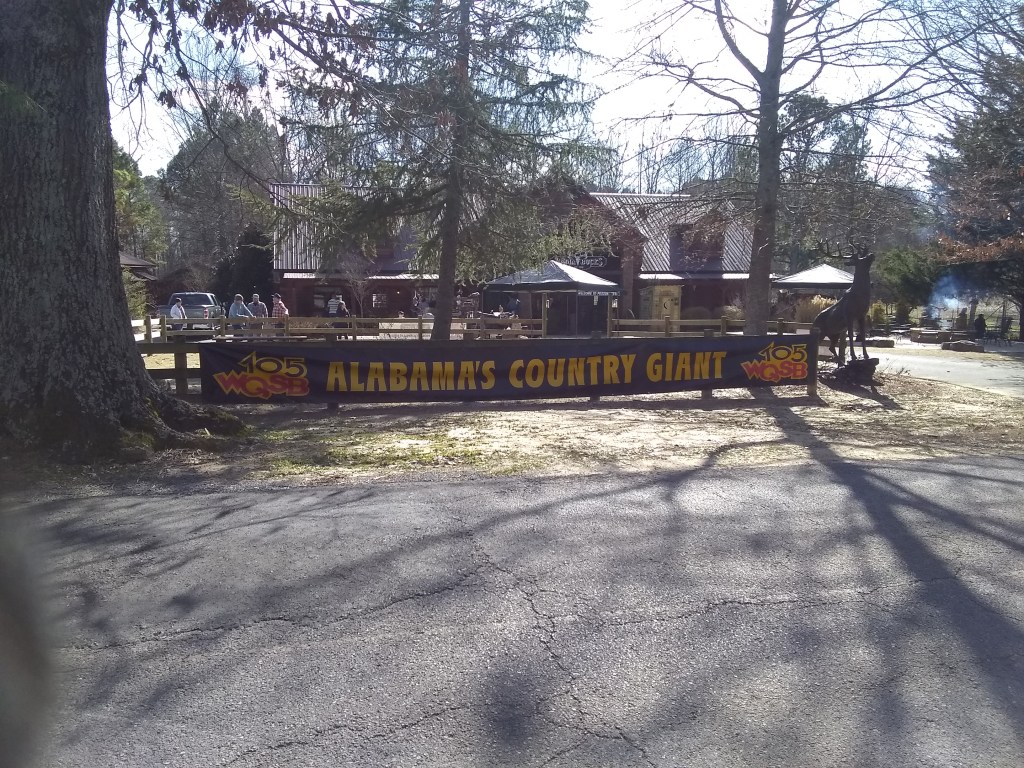
Photos from today’s ride

None today.

Why I ride

Biking is something I both love and hate. The conflicting emotions arise from the undeniable physical effort it demands. However, this exertion is precisely what makes it an excellent form of exercise. Most days, I dedicate over an hour to my cycling routine, and in doing so, I’ve discovered a unique opportunity to enjoy a good book or podcast. The rhythmic pedaling and the wind against my face create a calming backdrop that allows me to fully immerse myself in the content. In these moments, the time spent on the bike seems worthwhile, as I can’t help but appreciate the mental and physical rewards it offers.

I especially like having ridden. The post-biking feeling is one of pure satisfaction. The endorphin rush, coupled with a sense of accomplishment, makes the initial struggle and fatigue worthwhile. As I dismount and catch my breath, I relish the sensation of having conquered the challenge, both physically and mentally. It’s a reminder that the things we sometimes love to hate can often be the ones that bring us the most fulfillment. In the end, the love-hate relationship with biking only deepens my appreciation for the sport, as it continually pushes me to overcome my own limitations and embrace the rewards that follow the effort.


Why you should ride

Reduces Anxiety:

Regular cycling can play a significant role in reducing anxiety, offering both immediate and long-term benefits. Here’s how it contributes to managing and alleviating symptoms of anxiety:

  • Physical Activity and Anxiety Reduction: Engaging in physical exercise like cycling has been shown to reduce overall levels of tension, elevate and stabilize mood, improve sleep, and improve self-esteem. Even five minutes of aerobic exercise can stimulate anti-anxiety effects.
  • Endorphins and Neurotransmitters: Cycling stimulates the production of endorphins, the body’s natural feel-good neurotransmitters. Additionally, it increases the levels of other neurotransmitters like serotonin and dopamine, which are often low in individuals with anxiety. This biochemical boost can lead to a reduction in anxiety symptoms.
  • Stress Hormone Reduction: Regular physical activity, such as cycling, lowers the body’s stress hormones, like cortisol and adrenaline, over time. Lower levels of these hormones can lead to a reduction in anxiety.
  • Improved Sleep Patterns: Cycling can help regulate your sleep patterns, which can be particularly beneficial for those whose anxiety disrupts their sleep. Better sleep not only helps reduce anxiety levels but also improves overall health.
  • Mindfulness and Focus: Cycling requires a level of focus and presence, which can act as a form of mindfulness exercise. This focus on the present moment can be a powerful tool in managing anxiety, as it shifts attention away from anxious thoughts.
  • Sense of Control and Mastery: Learning new skills and improving cycling performance can provide a sense of control and mastery. For individuals with anxiety, this sense of achievement and the ability to set and meet goals can be empowering and anxiety-reducing.
  • Social Interaction: If you cycle in groups or join a cycling community, the social interaction and support can be therapeutic. Social engagement can alleviate feelings of anxiety and provide a sense of belonging.
  • Nature and Outdoor Exposure: Cycling outdoors, especially in green spaces, can reduce anxiety levels. Nature exposure has been linked to decreased rumination (repetitive, negative thoughts) and reduced activity in the subgenual prefrontal cortex, a brain area related to mental illness.
  • Routine and Structure: Having a routine can be beneficial for people with anxiety. Regular cycling provides structure and a sense of predictability, which can help alleviate feelings of anxiety.
  • Distraction and Diversion: Cycling can offer a healthy distraction from the everyday stressors and worries that fuel anxiety. Engaging in a physical activity that you enjoy can be a form of diversion that allows your mind to take a break from anxious thoughts.
  • Cardiovascular Fitness and Anxiety: Improved cardiovascular fitness through cycling can also lead to reduced symptoms of anxiety. A healthy heart and lungs are linked to overall health, which includes mental health.

Incorporating cycling into a regular routine can thus be a valuable part of a comprehensive approach to managing anxiety. It provides both physiological and psychological benefits that contribute to reduced anxiety levels.


Please watch

Here’s a couple of links to groups I like. Hopefully, they’ll encourage you to start riding a bike, no matter your age.

Cycling for those aged 70+(opens in a new tab)


Solitary Cycling(opens in a new tab)


My bike

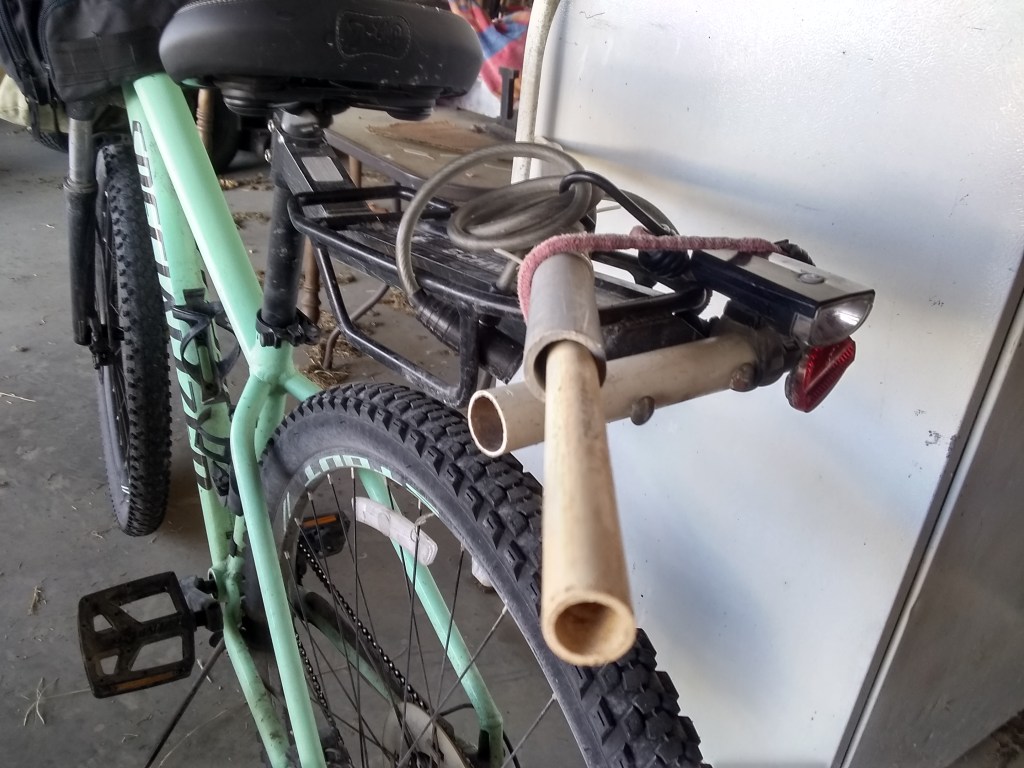
A Rockhopper by Specialized. I purchased it November 2021 from Venture Out in Guntersville; Mike is top notch! So is the bike. The ‘old’ man seat was salvaged from an old Walmart bike. Seat replaced with new one from Venture Out.


What I’m listening to

Novel:


Amazon abstract:

NATIONAL BESTSELLER • The Girl with the Dragon Tattoo series continues: Lisbeth Salander must face the most important battle of her life, and will finally put her past to rest in this thriller that will “leave Salander’s legion of followers clamoring for more” (The Wall Street Journal). • Also known as the Millennium series

Mikael Blomkvist is trying to reach Lisbeth Salander—the fierce, unstoppable girl with the dragon tattoo. He needs her help unraveling the identity of a man who died with Blomkvist’s phone number in his pocket—a man who does not exist in any official records and whose garbled last words hinted at knowledge that would be dangerous to important people. But Lisbeth has disappeared. She’s sold her apartment in Stockholm. She’s gone dark. She’s told no one where she is. And no one is aware that at long last she’s got her primal enemy, her twin sister, Camilla, squarely in her sights.

Look for the latest book in the Girl with the Dragon Tattoo series, The Girl in the Eagle’s Talons, coming soon!


Blinkist nonfiction book summaries

None today.

Podcast episodes:

Waking Up app series/courses:

None today.


Here’s a few photos from previous riding adventures:

Morning Mental Meanderings–11/29/23

Weaving Reality with Imagined Threads

As dawn breaks over the Pencil Pit, my barn sanctuary where imagination and reality often intertwine, I find myself reflecting on the essence of Project 55. This entirely imagined writing assignment from my past – a task to describe Thanksgiving Day at age 69, as envisioned by my 14-year-old self – has become a canvas for creativity and reflection.

Yesterday, I continued this journey through Project 55 during my Morning Pages. Walking across the creek to the ‘back 40’, a place rich in familial history, I was deeply immersed in this fictional narrative. Each step seemed to bridge the gap between my teenage imagination and my current reality, blending the echoes of my great grandfather’s legacy with the whimsical projections of a young mind.

Later in the day, the task of building a new raised bed for the garden with Jon anchored me back to the tangible present. Or did it? The lines began to blur. Was this activity too part of the imagined world of Project 55, or was it a concrete part of my day? This interplay between doing and imagining led me to ponder the nature of our experiences. In what ways do our imaginative projections and our real-life actions intersect and influence each other?

In Project 55, my younger self’s task of predicting the future, particularly imagining marital life, reflects the boundless possibilities of imagination. Fast forward to the present, and the act of constructing a garden bed, seemingly real and practical, might also be tinted with the hues of imagination – a future harvest, a vision of lush growth.

This morning, as I sit pencil in hand, I am struck by how our lives are a constant dance between the tangible and the imagined. Each action, each decision, is layered with both the weight of reality and the lightness of imagined possibilities. The building of the garden bed, whether real or imagined, is not just a physical act but also a symbol of planting seeds for future growth, much like the imagined narratives of Project 55.

So, what do these reflections reveal about life? They underscore the power of our imagination to shape our reality. Even as we engage in the routine tasks of our daily lives, there’s a part of us that is always dreaming, always creating. Our imagined futures and pasts are not just idle fantasies; they are integral to our understanding of ourselves and the world around us.

In the Pencil Pit, surrounded by the tangible remnants of my past and the limitless possibilities of my imagination, I find a profound beauty in this interplay. It’s a reminder that life is not just lived but also imagined, and in this imagination lies the true richness of our existence.

The Boaz Scorekeeper–Chapter 45

The Boaz Scorekeeper, written in 2017, is my second novel. I'll post it, a chapter a day, over the next few weeks.

The next day I arrived at the office early and before anyone else.  I prepared a typed ransom note.  It read:

“John has been kidnapped.  For now, he is safe and sound.  The amount of fear and pain he suffers is up to you.  You can positively affect his situation by doing the following three things:

1.  Before Thursday, May 18, 2017, deliver $100,000 to Jesse Dawson, the girl John repeatedly raped when she was in the 9th grade at Boaz High School.  Jesse, now Jesse Rickles, lives at 3855 County Road 35, Rainsville, AL.  Be sure and take a photo of the certified check with it being hand-delivered to Ms. Rickles.  Post these two photos to John’s Facebook account before the 18th.

2. Before Sunday, May 21, 2017 draft a letter of apology from John to Wendi and Cindi Murray and their parents Bill and Nellie Murray.  Include details of what John did to harm this family beginning with the rapes and murders of Wendi and Cindi on May 25, 1972.  Deliver this letter to Pastor Walter Tillman and ask that it be read to the congregation of First Baptist Church of Christ on the 21st.

3. Before Tuesday, May 23, 2017, wire transfer $2,000,000 to Fidelity Bank Limited in Grand Cayman, Cayman Islands.  This bank’s physical address is: Cayman Financial Centre, 36A Dr. Roy’s Drive, Grand Cayman, KYI-1103, Cayman Islands.  The bank’s Routing Number is 063012136.  You are to have these funds deposited to Account Number is 90003070.

Of course, you can involve family, friends, police and other authorities.  That is up to you.  You are bright enough to realize such involvement might not be in John’s best interest.”

I put on tight latex gloves, printed out the two letters, and addressed two envelopes.  One to John’s wife Judith, and the other one to Franklin, his father.  I folded and inserted the letters into the envelopes and sealed them using an Aqua Ball to moisten the flap.  I almost licked a stamp before realizing what I was about to do.  I threw that one away and then affixed two stamps, again using the Aqua Ball.  I then inserted these two envelopes into one manila folder and drove to the Gadsden Post Office.  With gloveless hands, I carried the folder inside and let the two smaller envelopes slide into the outgoing mail chute being careful not to touch them.

I drove back to the law office.

11/28/23 Biking & Listening

Here’s today’s bike ride metrics. Temperature at beginning of ride: 45 degrees. Brilliant sun with beautiful blue sky, but a little windy.


Photos from today’s ride

I’m a rigger.

Why I ride

Biking is something I both love and hate. The conflicting emotions arise from the undeniable physical effort it demands. However, this exertion is precisely what makes it an excellent form of exercise. Most days, I dedicate over an hour to my cycling routine, and in doing so, I’ve discovered a unique opportunity to enjoy a good book or podcast. The rhythmic pedaling and the wind against my face create a calming backdrop that allows me to fully immerse myself in the content. In these moments, the time spent on the bike seems worthwhile, as I can’t help but appreciate the mental and physical rewards it offers.

I especially like having ridden. The post-biking feeling is one of pure satisfaction. The endorphin rush, coupled with a sense of accomplishment, makes the initial struggle and fatigue worthwhile. As I dismount and catch my breath, I relish the sensation of having conquered the challenge, both physically and mentally. It’s a reminder that the things we sometimes love to hate can often be the ones that bring us the most fulfillment. In the end, the love-hate relationship with biking only deepens my appreciation for the sport, as it continually pushes me to overcome my own limitations and embrace the rewards that follow the effort.


Why you should ride

Enhances the Sense of Well-being:

Cycling can profoundly enhance an individual’s overall sense of well-being. This sense of well-being goes beyond the temporary ‘feel good’ state; it encapsulates a deeper and more sustained level of contentment and life satisfaction. Here’s a look at how cycling contributes to this state:

  • Connection with the Environment: Cycling, particularly outdoors, allows for an immersive experience with the environment. This connection to the outdoors and nature can significantly contribute to a person’s sense of well-being. Being outside and engaging with the landscape allows for a grounding experience that can help one feel more in tune with the world around them.
  • Improvement in Physical Health: There is a strong link between physical health and well-being. Regular cycling helps improve cardiovascular health, build muscle, and control weight, which in turn contributes to better physical health and a stronger sense of well-being.
  • Sense of Autonomy and Freedom: The ability to hop on a bike and go wherever you choose can instill a powerful sense of freedom and autonomy. This feeling can be especially potent in urban environments where traffic and congestion can make people feel trapped. Cycling offers an alternative that is not only efficient but also provides a liberating experience.
  • Mindfulness and Presence: The focus required when cycling — from navigating the road to maintaining balance — encourages a state of mindfulness. This practice of being present can significantly reduce levels of stress and anxiety, contributing to an enhanced sense of well-being.
  • Regular Routine and Exercise: Establishing a routine that includes regular exercise like cycling can provide structure and purpose to one’s day or week. This consistency is beneficial for mental health, as it can help to combat feelings of aimlessness or uncertainty.
  • Social Connection: For many, cycling is a social activity. Whether it’s joining a cycling club or participating in group rides, the social aspect of cycling can foster a sense of community and belonging, which is essential for well-being.
  • Accomplishment and Progress: Setting and achieving goals is a key part of cycling. Whether it’s increasing the distance of rides or improving speed, the progress made is tangible. This sense of accomplishment feeds into a person’s self-efficacy and contributes to their overall well-being.
  • Mental Respite: Cycling can provide a break from the mental clutter of everyday life. This respite is vital for mental recovery and can help maintain a balanced perspective on life’s challenges.
  • Reduction in Negative Health Behaviors: Regular cycling can also lead to a reduction in negative health behaviors, such as sedentary living and poor dietary choices. By promoting a healthier lifestyle, cycling helps prevent the onset of health conditions associated with these behaviors, enhancing one’s well-being.
  • Balance in Life Domains: Cycling can help balance various life domains — physical, emotional, social, and sometimes even spiritual. This balance is crucial for a holistic sense of well-being.

In essence, the well-being derived from cycling is multifaceted, affecting the cyclist’s physical health, emotional state, social life, and overall lifestyle. The compound effect of these benefits contributes to a deeper and more sustainable sense of well-being, making cycling not just an exercise for the body, but also nourishment for the soul.


Please watch

Here’s a couple of links to groups I like. Hopefully, they’ll encourage you to start riding a bike, no matter your age.

Cycling for those aged 70+(opens in a new tab)


Solitary Cycling(opens in a new tab)


My bike

A Rockhopper by Specialized. I purchased it November 2021 from Venture Out in Guntersville; Mike is top notch! So is the bike. The ‘old’ man seat was salvaged from an old Walmart bike. Seat replaced with new one from Venture Out.


What I’m listening to

Novel:


Amazon abstract:

NATIONAL BESTSELLER • The Girl with the Dragon Tattoo series continues: Lisbeth Salander must face the most important battle of her life, and will finally put her past to rest in this thriller that will “leave Salander’s legion of followers clamoring for more” (The Wall Street Journal). • Also known as the Millennium series

Mikael Blomkvist is trying to reach Lisbeth Salander—the fierce, unstoppable girl with the dragon tattoo. He needs her help unraveling the identity of a man who died with Blomkvist’s phone number in his pocket—a man who does not exist in any official records and whose garbled last words hinted at knowledge that would be dangerous to important people. But Lisbeth has disappeared. She’s sold her apartment in Stockholm. She’s gone dark. She’s told no one where she is. And no one is aware that at long last she’s got her primal enemy, her twin sister, Camilla, squarely in her sights.

Look for the latest book in the Girl with the Dragon Tattoo series, The Girl in the Eagle’s Talons, coming soon!


Blinkist nonfiction book summaries

None today.

Podcast episodes:

Waking Up app series/courses:

None today.


Here’s a few photos from previous riding adventures:

Cognitive Clarity–The Metastability of Faith

"Cognitive Clarity" blog posts are about cultivating a culture of thoughtful and informed discourse. They encourage readers to think deeply, question boldly, and approach the world with an open yet discerning mind.

Here’s the link to this article.

By Daniel Mocsny at 11/26/2023

Quick summary: atheism is easier than religious faith, and people are lazy, so why does anybody bother with the hard option? Why don’t human brains seek a kind of lowest-energy state, by analogy with dynamical systems that tend to run downhill? This post explores, rather speculatively, whether the human brain on faith gets stuck in a kind of higher-energy state, and becomes unable to get to the bottom, similar to what many dynamical systems actually do.


* * *

Faith is not merely a belief for many persons of faith, but also a practice. Faith appears to be something that most people have to work at. Regular church attendance, participation in group ritual, being dazzled by professional religious stagecraft and affected styles of preaching, prayer, bible reading (of the devotional, rather than the critical variety), basking in the social proof from a crowd of fellow believers – these are familiar activities for the devoted Christian. They’re considered reliable markers of Christians who mean business. These activities might even be necessary for the believer – stop doing them, and faith slowly atrophies, like an unused muscle. The vast amount of money that believers spend on regularly topping up their faith tanks does not seem to be an accident.

It also casts doubt on the so-called sensus divinitatis. If believers really possessed an innate ability to sense God, they shouldn’t need expensive churches to activate it nor professional orators to explain it to them. For comparison, if you have working eyeballs, they function as soon as you open your eyelids every day, and keep working until you close them. You don’t have to do anything fancy to get them to work. Usually, you don’t need someone else to tell you what you’re seeing. And nobody can charge you money by letting you use the eyes you already have. Churches look to me like a strong argument that the sensus divinitatis either doesn’t exist at all outside of the churchy environment of psychological suggestion, or it doesn’t extend far beyond a small percentage of “adepts“. Some of whom might be on a psychosis spectrum.

To the extent that a believer’s faith results from religious practice, there’s no straightforward way to package that practice into arguments. Thus when an atheist, who approaches claims from the standpoint of reason, argues with a theist, who arrives at beliefs from practice, their arguments may go right past each other. The difficulty is compounded by the believer carrying on as if his or her faith exists in the argument space. This might be an instance of confabulation, a psychological phenomenon whereby the speaking part of a person’s brain acts as an unreliable narrator, concocting explanations for what the other parts of the brain are doing independently of the speaking part, and without letting the speaking part know. Even though the religious believer goes to church at least weekly to have his or her beliefs instilled and reinforced, the believer might honestly think he or she came by the beliefs via a process of reasoning, and so can explain them in terms of reasons. (William Lane Craig elevates this charade to high art, even labeling it with the oxymoron “Reasonable Faith”. If faith is “reasonable” i.e. derived from reasons, then it doesn’t require practice. If faith cannot survive without practice, then it does not derive from reasons.) For the believer to really “explain” his or her beliefs, the believer needs to take the atheist to church, and hope that the atheist will have the same emotional reaction to the goings-on as the believer has.

Occasionally someone is honest about how this works. I recall a political discussion in which a Trump supporter basically admitted that he couldn’t adequately explain his views in terms of reasons, but rather he said you need to go to a Trump rally! It’s like getting your medical advice from an old-timey medicine show rather than from those boring peer-reviewed medical studies. The studies are boring by design: they’re trying to remove emotion from the belief-formation game to the degree possible. The medicine show, in contrast, relies on emotion where facts are lacking, which is early and often.

The religious believer’s need for constant faith replenishment is in sharp contrast to the atheist, especially the atheist of a scientific bent. The atheist doesn’t have to keep going back to school every week to be re-persuaded to accept, for example, the Periodic Table of the Elements. Once a person understands the scientific world view, after that it’s automatically self-reinforcing. You don’t need group rituals, professional stagecraft, or billions of dollars in church infrastructure to keep you believing in science. The whole universe keeps you believing in science. As does the constant parade of ever-improving technologies made possible by science. Unlike prayer, which never produces results distinguishable from random chance, never mind improving over time, your smartphone does tend to work, routinely doing things that would have gobsmacked the folks who wrote the bible. And every few years when you shop for a new one, you find they’ve improved again. While Moore’s law (the name for this improving trend of digital electronics) appears to have slowed of late, it may still have considerable room to run.

Modern science has been around for about 400 years, with Galileo’s career often taken to mark its start. In that time, scientists have performed millions of experiments and observations, with ever-increasing power and sensitivity, and they keep finding no evidence of any gods doing anything anywhere. They also find that no religion guessed correctly about the nature of things – what matter is, where the Earth came from, how we got here, where the Sun goes at night, and the realities that lie beyond the power of our natural senses (from the microbial to the astronomical). No religion had anything to say about massively important phenomena such as viruses and radioactivity. Until just a few decades ago, nobody had an inkling that we inhabit a world shot through with them. In some parts of the ocean, there can be roughly as many virus particles (called virions) in a liter of seawater as there are humans on the planet. Fortunately for us, almost all of those viruses attack other forms of life. But plenty of viruses do attack humans, sometimes moving in permanently. Some geneticists estimate that up to 8% of our DNA consists of endogenous retroviruses. For some reason, neither of the contradictory creation accounts in the Book of Genesis mention God putting all that viral DNA into us.

For the atheist there’s no Problem of Pain, either, beyond the discomfort of experiencing it. There’s nothing scientists can detect about the universe that would lead anyone to suspect it is even aware of humans, let alone benevolent toward us, and forget about omni-benevolence. We live in a galaxy having from 100 billion to 400 billion stars, each one following a random unplanned orbit around the galactic barycenter. Stellar collisions are rare, but possible. Near misses are still rare, but more likely than collisions. At any time, a wandering star could swing by our Solar System and perturb the orbits of our familiar planets. Earth could be shoved too close to the Sun, and boil, or too far away, and freeze. Earth could be ejected from the Solar System altogether and drift through interstellar space as a dark frozen rogue planet. We know from geological evidence on Earth that a perturbation of this severity hasn’t happened to our Solar System in over 4 billion years, but there’s nothing to prevent it. Astronomers can look through telescopes and see galaxies exploding (technically, galaxies having active nuclei emitting “significant” amounts of radiation, and sometimes plasma jets shooting out for thousands of light-years). Bard doesn’t know whether life can evolve in such a boisterous galaxy, but if any has, it might be less likely to dream up a god who loves it.


If faith is so much work, and getting steadily harder as science continues to outstrip religion, why would anyone bother? Perhaps faith shares features (even if just by analogy) with metastable systems in physics and chemistry. Per the English Wikipedia:

A metastable state of weaker bond (1), a transitional 'saddle' configuration (2) and a stable state of stronger bond (3).“… metastability denotes an intermediate energetic state within a dynamical system other than the system’s state of least energy. A ball resting in a hollow on a slope is a simple example of metastability. If the ball is only slightly pushed, it will settle back into its hollow, but a stronger push may start the ball rolling down the slope. Bowling pins show similar metastability by either merely wobbling for a moment or tipping over completely. A common example of metastability in science is isomerisation. Higher energy isomers are long lived because they are prevented from rearranging to their preferred ground state by (possibly large) barriers in the potential energy.”

Glass, both man-made and volcanic, is another example of metastability. Glass may form from some molten minerals that cool rapidly, such as when magma from a volcano emerges underwater to form volcanic glass (obsidian). As J. A. Zalasiewicz explains in Rocks: A Very Short Introduction (2016), obsidian is metastable: its atoms were trapped in a higher-energy state by cooling so rapidly that they couldn’t reach the lower-energy state of forming crystals. But even after the glass has cooled, the atoms in the glass are still being bounced by thermal energy. Occasionally an atom bounces enough to escape its energy “well” and migrate to a position of lower energy by linking up with the growing surface of a crystal. Over time – sometimes millions of years – this causes the volcanic glass to devitrify and become cloudy.

At the risk of straining this analogy beyond all recognition, I can’t help but notice how volcanic glass forms by cooling rapidly. Why, it’s a lot like the religious believer who believes the first lie they’re told, before properly investigating all the competing religious lies, much less what the voices of reason have to say.

There is a kind of metastability in the brain studied by computational neuroscientists. I see that it’s been applied to a theory of social coordination dynamics, and religion in practice is inherently social. But here I’m just thinking about a rough analogy between the actual metastability of dynamical systems and a kind of figurative metastability of religious belief. Instead of seeking the easiest and most stable belief, which would be materialism, the basis of science, the religious brain insists on remaining higher on the slope, where things are harder. More evidence has to be ignored, more discrepancies need to be explained away, and if you can think logically at all, you have to waste your time on the endless sophistry of apologetics. At no point can you ever verify your beliefs with a test. That is, your belief can never attain the status of fact, such that you might meet a scientific or legal standard of proof.

For the religious brain to remain high on that slope, it must be blocked by walls from rolling farther down. These consist of strategies to prevent the believer from grasping the obvious – that the absence of evidence for any god is the same as the absence of evidence for rocks that think. Few sane people would ever suspect rocks of thinking, not because we can actively prove that rocks don’t think, but because we can observe lots of things that do think (e.g. people, and many animals). Things that think are unable to imitate rocks for very long, and no rock has ever imitated anything that thinks. Everything that thinks has a physical brain, and perhaps in the near future things with electronic brains will behave much as if they are thinking. But rocks lack the internal complexity, and an energy source, that are common to everything that demonstrably thinks. Thinking is a metabolically expensive activity, so anything which can think is going to justify the expenditure by doing it. We are familiar with things that think, and how they behave, and rocks are nothing like them. Thus no sane person offers the “absence of evidence is not evidence of absence” argument for thinking rocks. Minds are even less likely to come from empty space, because there is nothing about empty space that begins to resemble things we know that think. There is no evidence for thinking rocks, or for thinking empty space, beyond someone’s loud insistence that invisible, undetectable minds are really there.

So what good is this metastability model? Well, it might tell us something about how rocks that are stuck high on a slope might roll down the slope. In the physical system of balls on a slope, you might free a trapped ball by chipping away at the wall that traps it. Or you might impart energy to the ball, or wait for something like an earthquake to shake the entire slope. If the ball starts rattling around in its well, it might roll high enough to get over the wall, and roll down to the real bottom.

Factors that can chip away at the wall might include new facts that assail it. Darwin’s theory of evolution by mutation and natural selection seems to have done the trick for many. It changed the whole landscape, as it were. Before Darwin, there was no satisfying natural explanation for biodiversity. Back then, the landscape may have been tilted, with the religious “well” being actually lower than the atheist “well.” And indeed, atheism didn’t have much of a history before Darwin. Even though pre-Darwinian skeptics recognized the crazy train that religion is, they had a hard time imagining a world that God didn’t create. So they compromised with Deism – the belief that God set everything in motion, and then had no more to do with his creation. Either he left, or he died.

After Darwin tilted the slope, the position of religion became more precarious.

Factors that can impart energy to the ball include anything that triggers a “crisis of faith” such as a personal tragedy, or a tragedy affecting others that is hard to ignore. The fact that felt tragedies often trigger crises of faith suggests that the faithful somehow got the idea that their faith makes them immune to such things. When tragedies happen anyway, the resulting shattered expectations give rise to cognitive dissonance. That’s the perception of contradictory information and the mental toll of it.

Both history and the present day are full of tragedies, but most people don’t really care about most of it. A million people could die on the other side of the world tomorrow, as happened in the Rwandan genocide in 1994 (scholarly estimates are around 500,000 to 800,000 Tutsi deaths), and most people not directly affected would probably just go about their business. This kind of studied indifference doesn’t seem right for the Christian, who should view all of God’s children equally. But in practice, Christians are about as indifferent to strangers as anybody else is. A tragedy usually has to hit close to home to grab the Christian’s attention and start rattling that ball.

For example, Seth Andrews’ deconversion memoir (Deconverted: A Journey from Religion to Reason) mentions the tragic death of Rich Mullins in 1997 as having triggered his own crisis of faith, which proved decisive. Mullins died shortly after the Rwandan genocide, but there’s no mention of the vastly larger and more distant tragedy in the book. Insofar as dislodging faith is concerned, often the tragedy has to hit the believer or someone they’re close to.

Occasionally an atheist bounces back up the hill to faith. Admittedly that’s a difficulty for my conceptual model. Evidently the slope and shape of the hill aren’t the same for everybody. While I myself noticed a considerable removal of burden once I abandoned superstition for reason, perhaps for some people the entire slope tips the opposite way. They continue to have a deep need for what religion has to offer them, which certainly isn’t evidence. Some people don’t seem to find facts as inherently satisfying as I do. They need reality to be something other than what it is, and getting back on the religion treadmill gives that to them. Not an actually different reality, but the external reinforcement necessary to pretend.

As always, the less a person knows about science, or scholarship generally, the easier it is to stay up in the religion well. Fewer inconvenient facts will intrude to disturb the faith and chip at the wall. Thus a religious person who leaves faith as a result of personal tragedy, and learns nothing else, may be prone to bounce back into faith. That’s why I think it’s important for the atheist to learn the other reasons for atheism besides the first one that convinced him or her. That one reason on its own may or may not prove to be durable. Many deconversion memoirs mention how the newly minted atheist undertook a program of book-reading, to catch up on what he or she wasn’t allowed to read before.

Morning Mental Meanderings–11/28/23

Layers of Imagination and Reality

Here in the Pencil Pit, my fingers warmed by the steady movement of pencil on paper, I find myself unraveling the layered tapestry of yesterday’s experiences. Project 55 and my routine bike ride, both, in their unique ways, brought to the fore the concept of layers – in imagination, in preparation, in life.

Continuing with Project 55 during my Morning Pages, I realized that I had strayed from Mrs. Stamps’ original assignment. Instead of focusing solely on Thanksgiving Day in 2023, I had been oscillating between 1968 and 2023. This realization prompted me to create a more structured outline, strictly adhering to the 2023 scenario. Yet, as imagination would have it, the narrative took a whimsical turn. In a fictional reminisce during the Thanksgiving gathering, I imagined bringing up Project 55, revealing a playful twist where my younger self envisioned marrying Susan, Joanie’s cousin, instead of Joanie – both figments of my imagination, yet humorously at odds with each other. The power of fiction indeed! It’s intriguing how Project 55, initially an assignment from the past, is evolving, taking on a life of its own in the present.

Parallel to this unfolding of layered imagination was my 16-mile bike ride. Unlike the previous day, there was no rain, but the biting cold at 38 degrees was a stark reminder of my need for proper biking attire. It’s funny, isn’t it, how life often mirrors our internal states? Just as I needed to layer my clothing to adapt to the changing weather, my Project 55 required a layering of imagination – a stacking of stories, scenarios, and possibilities, one over the other, to create a coherent narrative.

Sitting here this morning, I’m struck by how these seemingly unrelated events connect. Both are about being prepared – in writing, to adhere to the constraints of an assignment while allowing creativity to flourish; in biking, to equip myself against the elements. They are also about the depth and complexity that layers bring, whether it’s in a story or in shielding oneself against the cold.

In life, we often find ourselves layering – experiences, memories, knowledge. Each layer adds depth, context, and richness to our existence. They protect us, much like clothing against the cold, and they allow us to delve deeper into the realms of imagination, much like a well-crafted narrative.

As I ponder these connections, I realize that life, in many ways, is about finding the right balance in these layers. Too few, and we might find ourselves unprepared or lacking depth. Too many, and we risk losing clarity or becoming burdened.

In the quiet of the barn, surrounded by the remnants of yesterday’s thoughts and today’s revelations, I appreciate this dance of layering. It’s a delicate balance, a continuous adjustment, much like the art of living itself.

The Boaz Scorekeeper–Chapter 44

The Boaz Scorekeeper, written in 2017, is my second novel. I'll post it, a chapter a day, over the next few weeks.

Matt’s auto accident was worse than originally thought.  He spent three days in the hospital and almost three weeks at home in bed.  The doctor said he had suffered extreme brain trauma and risked convulsion and a stroke if he exerted himself.

I covered both mine and Matt’s cases having court appearances nearly every day.  But, I still found time to conduct detailed planning on how I would abduct John Ericson.  I had decided against simply killing him.  That would be too easy and wouldn’t accomplish enough.  I didn’t mind the easy part but I had previously decided that my form of justice would be a combination of civil and criminal justice.  Each of the Flaming Five would pay money for the evil they had committed and they also would pay with their lives.  I doubt any reasonable person would argue this wasn’t what they each deserved.

Four weeks to the day after Career Day, and its vivid reminder of what John Ericson and family had done to Jesse Dawson and her family, I was ready for game one.  I left the office at 5:00 p.m., drove home, and ate supper with Karla and Kaden.  After eating, I told them I had a brief to complete and went to my study.  It was on the back of the house next to the master bedroom where I slept.  Karla and I had not slept together in years.  She blamed it on my snoring.  She now had her own bedroom upstairs in what used to be the loft.  I changed clothes and walked back through the study and out onto my balcony.  By now it was dark.  I walked through the back yard and the 300 or so yards to the barn.  There I backed my 2007, F150 Ford pickup out and loaded my bicycle in the back under the camper shell.

I drove back to the office, parked, and went inside long enough to turn on all the lights.  I then came back out, removed my bicycle, and rode up Main Street, crossing Highway 205. I had twenty minutes or so to kill so I rode past Snead College, the Boaz Rec Center, Corley Elementary School and then circled back toward First Baptist Church of Christ.  I crossed back over Highway 205 and turned left on Brown Street and then right on Sparks.  A block before reaching the church I pulled into the driveway of an abandoned house on the corner of Sparks and Elm Streets.  I hid my bike behind the house under an old tarp that had been left by the previous owners to cover two lidless garbage cans. 

I walked across Elm and through a grove of trees and an assortment of picnic tables and benches that were used mainly by church employees during their lunch hour.  John’s car was parked where it always was on Monday nights, in the parking lot on the west side of the Family Life Center, in parking spot number 275, facing Gethsemane, the informal name that had been assigned to the grove of trees I had just passed through.  And John, I had to assume, was where he always was on Monday nights, inside teaching and coaching the Upward Bound Basketball and Bible program.  I squatted down beside the passenger side door.  It was now 8:55 p.m. and there were no other cars in the parking lot. 

For the past three weeks, I had made this same little biking journey and hid in Gethsemane.  Each week had been almost an exact replica, the only thing that varied was the time John walked out of the west side door of the Center and approached his 2017 Chevrolet Traverse.  The earliest time had been 9:02 p.m., and the latest had been 9:06 p.m.  The kids and the other workers were always gone at the latest by 8:45 p.m.

Tonight at 9:05 p.m., I heard John rattling the Center’s door making sure it was locked.  I could hear his footsteps as he approached his vehicle. It was roughly forty feet from the Center’s door to the driver’s side door on John’s Traverse.  I started inching my way toward the back of his vehicle.  When I heard the beep of his automatic door opener I readied myself at the back corner. I counted ‘one thousand one, one thousand two.’  I knew it took John two seconds after sounding the beep to reach his vehicle and open the back door.  My entire plan could go south in a hurry if John didn’t follow his routine.  He always opened the back door and threw his duffel bag inside onto the bench seat.  If he had opened the front door and sit down in the bucket seat, my job would be much more difficult, if not impossible.  He followed his routine and opened the back door. 

Just as I heard him pull on the door handle I looked around the bumper on the driver’s side and saw him tossing in his duffel bag.  I rushed toward him making far more noise than I had intended but reached him as he was turning towards me.  Our eyes locked together as I lunged the taser in my right hand into the left side of his chest.  He fell back against the open door without saying a word. 

I had not anticipated the level of difficulty it would be to get John’s body inside his vehicle.  Even though John was tall and slim, he probably only weighed 160 to 170 pounds.  It took me three attempts to pick up his lifeless body and lean him back against the bench seat.  Every time I tried to prop him up his feet kept slipping and he collapsed.  I finally figured out that if I turned him face-forward toward the seat that his center of gravity shifted upwards enough for him to lay across the seat.  I then went around to the other side and could pull him completely inside.  I had to go back around and bend his legs upward to close the door. 

I panicked when I could not find John’s keys.  After crawling in the back seat and checking his pockets I realized he probably dropped them when I tasered him.  I got outside and down on all fours and found John’s keys up under the Traverse.  I opened the driver’s door and jumped inside.  The vehicle had been running ever since John had used his automatic door opener.  I backed up and started toward the west side parking lot and onto Elm Street when I remembered that I had forgotten to handcuff John’s hands.  I quickly stopped the vehicle, got out, walked around the Traverse, opened the back door, and pulled his arms and hands from underneath his body and behind his back.  The cuffs finally snapped shut.  I looked at my watch.  It was 9:14 p.m.  It had taken six minutes more than I had planned.  I was soaking wet from sweat and it was still pouring off my face and head.  I got back behind the wheel and drove north on Elm Street.  Only then did I remove my black hood.

It was twenty minutes before I pulled up beside the barn.  This wasn’t my barn at Hickory Hollow.  That would have been way too risky.  I could not have prevented Karla and Kaden from discovering how the Flaming Five were finally receiving their justice.  Three years ago, I had purchased the south eighty acres from the Black’s.  I had bought it from their son Andrew.  When I first purchased their north 100 acres and named it Hickory Hollow, I had asked them for a right of first refusal on their south 80.  They had agreed and I had made sure that Andrew, who lived in Jackson, Mississippi, knew about it.  Betty Black had died in 2002 and Carl in 2013.  Andrew settled the estate and, good to his word, contacted me asking whether I still wanted to buy the remaining 80 acres.  I didn’t really need it, nor have any plans for it but bought it none the same.

Oak Hollow, the name I had coined for the Black’s south 80 acres, was located on Dogwood Trail, just beyond where Leeth Gap Road begins. The northeast corner of Oak Hollow is at the dead-end of Dogwood Trail. There are only four houses on this road.  The Black’s had installed a chain gate swung from two metal poles, one on each side of the road.  Andrew had given me a key to the lock.  The Black’s simple one-story brick home was a hundred yards or so inside the gate.  Another three hundred yards deeper into the woods the Black’s had cleared off a few acres and built a barn.  I had made a lot of changes to the barn since purchasing the south 80 in 2015.  It was this barn that I now sat beside in John’s Traverse with him groaning and lying across the back seat.

I got out and flipped on two light switches that I had installed on the outer wall inside a weather proof cover.  One switch was an outside LED flood light at the top of the roof under the eve and just above the loft door.  The other switch turned on a row of lights down the center of the barn’s open hallway.  I had parked the Traverse perpendicular to the barn’s hallway.  I opened the vehicle’s back door on the driver’s side and told John to get out.  By now he was awaking, but not yet fully alert.  He moaned and I told him, “John Ericson, this is Micaden Tanner, and you have been convicted of rape and murder and sentenced to die.  Now get out of my police car.” 

I knew he couldn’t easily get out of the vehicle, not with him lying on his stomach with his hands cuffed behind his back.  I just wanted to be dramatic.  I had rehearsed over and over the past three weeks what I wanted to say when we arrived at Oak Hollow Prison. 

I took John’s ankles in my hands and started pulling him off the backseat.  When his feet were on the ground I grabbed his shirt at his shoulders with both hands and stood him upright.  He turned and looked at me with a mix of fear and disgust and said, “Tanner, what the hell are you doing?  Uncuff me right now or your ass is dead.”
I replied, “John I don’t think you are in any position to be making such bold demands.”  I pushed John further inside the barn’s hallway and inside a stall halfway down on the right side.  I made him sit down on a metal stool that was in the center of the room and secured to the cement floor.  I then used an extra pair of cuffs to connect his right hand to the stool and removed the first cuffs.  I then had him stand which allowed him to bring his arms and hands around in front of him.  When he stood up he thrust out his left hand towards me to punch my face.  I blocked his punch and told him, “I figured you would try that.  Now, you can do one of two things.  Either you let me put a shackle on your left hand which is attached to this stool and with its chain give you six feet of roaming freedom, or I will leave you just the way you are with your right-hand close-cuffed to the stool.”

John reached out his left hand and I put on the shackle that was lying on the floor next to the stool.  I had previously secured the chain to the stool.  I stepped back toward the jail cell type door that I had built and John let out the shrillest scream I had ever heard.  I turned and smiled at him.

“John, you can shout, holler, or scream as loud and as often as you want.  You are at least a mile from anyone, and in between you and the first household, are a million oak and hickory trees to resist your sound waves.  It’s up to you.”

“Tanner, okay, I get it.  But, be sensible.  Let’s make a deal.  I suspect I know what this is all about.  What will satisfy you?  What about a million dollars?”  John said.

“I appreciate your offer.  That’s about half of what I was thinking.  Two million dollars will be what I demand from your family.  Do you think you are worth that?  Will they pay that?”  I asked.

“Unshackle me right now and we can deal with this tonight.”

“Oh, my funny John.  Don’t you realize that you will never see your family again?”  With that I walked out and locked the cell’s door.  I looked back at John and told him there was water and bread within reach behind him on a table, and under the table was a pillow and a blanket.  “There’s a five-gallon bucket in the opposite corner for your creative uses.”  I couldn’t resist saying as I looked at John’s eyes.  I think he was about to cry. 

I walked across the hallway to a supply room and took a bottle of Lysol Spray and a clean towel.  For the next fifteen minutes, I scrubbed down the inside of John’s Traverse.  Even though I had used gloves I wanted to make sure there was nothing suspicious left in the vehicle.  When I finished, I drove back to the Family Life Center and parked in spot 275.  I got out, locked up, and walked through Gethsemane across Elm and retrieved my bike from under the blue tarp at the abandoned house.  In less than five minutes I was back at the law office and the bike was in the back of my truck locked inside my camper top.  I went inside and turned off all the lights and drove home.  It was after 11:00 p.m. when I walked across my balcony, back through the study, and into my bedroom.

After taking a shower, I lay down across my bed but tossed and turned for at least an hour.  I guess it was only natural to replay tonight’s events over and over in my mind.  Once I finally dozed off, I slept sound the rest of the night.