Writing and snake-handling

Yesterday, I finally focused on a task I’d been postponing for days. It was time for a new tag line for my website.

Even though my web address is my name, a year or so ago I’d given it a title that meant a lot to me personally: The Pencil Driven Life. I’d coined this phrase much earlier. Initially, it was created as a response to Rick Warren’s book, The Purpose Driven Life.

In it, Warren claims that God creates every human with a purpose. This comes about before each person is conceived. Although I once believed this, I no longer do. The Pencil Driven Life is simply the reverse, the opposite of Warren’s position. I now believe that there’s insufficient reason to believe Warren’s God exists. Thus, what naturally follows is that every person creates his or her own meaning; it comes from within, not from without. Each person decides what he wants to pursue. And, there’s no better creative tool than the lowly pencil. Properly used, this wonderful tool is a pathway to clarify one’s thinking and choosing what matters. It’s all about individual choice, not some supernatural force superimposing his/her/its choice.

My old tag line was: Reading and writing will change your life for the good. I wanted to make myself more clear. At bottom, I wanted my new tag line to express what I’d personally discovered since changing my religious beliefs, and starting a regular writing practice in 2015.

After an hour or so of thinking, doodling, considering various words and their definitions, and reviewing what many others have said about why they write, this is the current result: Writing is a tool for thinking, for discovering the truth obscured by a cluttered, unquestioning, and gullible mind.

Consider these words and their definitions (quotation marks omitted):
Cluttered–filled or scattered with a disorderly accumulation of objects or rubbish;
Unquestioning–not inclined to ask questions, being without doubt or reserve;
Gullible–naive and easily deceived or tricked.

Look carefully at the following quote. I don’t think anyone–ever–has better illustrated the necessity of writing.

I write entirely to find out what I’m thinking, what I’m looking at, what I see and what it means. What I want and what I fear.

Joan Didion

Note the meaning of necessity—“the condition of being essential or indispensable.” To Joan and many others, including me, writing is essential to a good life.

If we want to think better we need to start writing. Don’t believe this? Then, take this test. Sit down, alone, with as few distractions as possible. Start observing your mind. It won’t take long to discover it’s a mess (“dirty and disorderly”). Thoughts start appearing. You can’t stop them and most of them vanish as rapidly as they appear. It’s chaotic, disorderly. I close my eyes and my first thought is a snake story. More on this later.

None of this means writing isn’t messy. It is. Try it. You’ll soon conclude it’s a arduous process. The difference between initial thoughts and first scribblings, and a cogent representation of what you’re looking at, of what you’re seeing, and of what it means, is in the focusing, the determination, the doggedness of the rewriting.

Ernest Hemingway once said, “the only kind of writing is rewriting.” And, in the same vein, Robert Graves said, “there is no such thing as good writing, only good rewriting.” I’m certain Joan Didion would agree. It was not in her “easily deceived” mind or in her first marks on the page, but in her rewriting that she discovered what truly was obscured inside the cluttered back-room of her mind. I think it goes without saying that rewriting involves a ton of questioning.

Let’s talk about snakes. Today, I saw a 2014 abcNews article titled, “Snake-Handling Pentecostal Pastor Dies From Snake Bite.” Here’s the link. I encourage you to read it and watch the embedded video.

In a separate Google search, here’s what this pastor, Jamie Coots, said some years before his death in response to the question, “What does the Bible mean by taking up serpents?”

Takin’ up serpents, to me, it’s just showin’ that God has power over something that he created that does have the potential of injuring you or takin’ your life.

Jamie Coots

Was Mr. Coots correct? Let’s say we’d heard about snake handling, and learned that those who practiced it believed it’s how Jesus wanted Christians to demonstrate their faith. Maybe we’ve done some reading on the topic and even sat in a service at Full Gospel Tabernacle in Jesus Name in Middlesboro, Ky.

We’re back home now and want to sort things out–we want to find out what we’re thinking, what we’re looking at, what we see and what it means. What we want and what we fear. We grab a pencil and notepad and start brainstorming, jotting down a number of questions. Such as, what does the Bible actually say? And, what happened to Pastor Coots? Was he a true believer?

The abcNEWS article referenced Mark 16:18, so we look it up. As an aside, I recalled my beliefs from my sixty years as a Southern Baptist fundamentalist, and, after considering the above article and video, I quickly discover I’d never been as ‘fundamentalist’ as Jamie Coots.

For better context, here’s Mark 16:15-18 in the King James Version:

15 And he said unto them, Go ye into all the world, and preach the gospel to every creature.
16 He that believeth and is baptized shall be saved; but he that believeth not shall be damned.
17 And these signs shall follow them that believe; In my name shall they cast out devils; they shall speak with new tongues;
18 They shall take up serpents; and if they drink any deadly thing, it shall not hurt them; they shall lay hands on the sick, and they shall recover.

For comparison, here’s the passage in the New International Version:

15 [Jesus] said to them, “Go into all the world and preach the gospel to all creation.
16 Whoever believes and is baptized will be saved, but whoever does not believe will be condemned.
17 And these signs will accompany those who believe: In my name they will drive out demons; they will speak in new tongues;
18 they will pick up snakes with their hands; and when they drink deadly poison, it will not hurt them at all; they will place their hands on sick people, and they will get well.

The first thing we note is the problem of interpreting verse 18. Ignoring the ‘taking up’ versus ‘picking up’ in the first part of this verse, it seems the subject is changed to drinking deadly poison. Do we assume it means the person with the snake in hand somehow drinks some of the snakes venom? That seems odd given what we know about how the venom is transferred via the snake’s bite. Oddly, it seems to say something else, that some other person, if they drink deadly poison, the result will be positve. “[I]t will not hurt them.”

For now, let’s skip over this and hypothesize Mark is saying a true believer can handle snakes and not be harmed. And, even further (since it’s all in the same verse; probably not the best assumption), the true believer’s action of snake handling will give them power to heal sick folks.

As to our question whether Mr. Coots was a true believer, it appears he either wasn’t or there’s something else going on. Again, look at the Coots quote from above: “Takin’ up serpents, to me, it’s just showin’ that God has power over something that he created that does have the potential of injuring you or takin’ your life.” We might ask ourselves concerning Coots, what happened to God’s power?

Can we conclude Jesus’ promise applies only to “believers”? True believers are saved. The snakes will not harm true believers. Why not scribble a note to the side of our paper: Right now I have grave doubts what I’m reading here in Mark represents reality.

We dig a little deeper. Let’s look back at our NIV Bible. At the end of Mark 16:8, there’s a footnote:

“Mark 16:8 Some manuscripts have the following ending between verses 8 and 9, and one manuscript has it after verse 8 (omitting verses 9-20): Then they quickly reported all these instructions to those around Peter. After this, Jesus himself also sent out through them from east to west the sacred and imperishable proclamation of eternal salvation. Amen.”

Here’s verses 9-20 in the NIV:

9 When Jesus rose early on the first day of the week, he appeared first to Mary Magdalene, out of whom he had driven seven demons. 10 She went and told those who had been with him and who were mourning and weeping. 11 When they heard that Jesus was alive and that she had seen him, they did not believe it. 12 Afterward Jesus appeared in a different form to two of them while they were walking in the country. 13 These returned and reported it to the rest; but they did not believe them either. 14 Later Jesus appeared to the Eleven as they were eating; he rebuked them for their lack of faith and their stubborn refusal to believe those who had seen him after he had risen. 15 He said to them, “Go into all the world and preach the gospel to all creation. 16 Whoever believes and is baptized will be saved, but whoever does not believe will be condemned. 17 And these signs will accompany those who believe: In my name they will drive out demons; they will speak in new tongues; 18 they will pick up snakes with their hands; and when they drink deadly poison, it will not hurt them at all; they will place their hands on sick people, and they will get well.” 19 After the Lord Jesus had spoken to them, he was taken up into heaven and he sat at the right hand of God. 20 Then the disciples went out and preached everywhere, and the Lord worked with them and confirmed his word by the signs that accompanied it.

Two observations. First, it’s reasonable to conclude these verses were added to later manuscripts to support Jesus and a supernatural resurrection (see especially vs. 19). The second observation is that these highly questionable verses include our snake handling promise, including the promise such handlers will have special powers to heal sick folks.

It appears reasonable to question whether Mr. Coots sole authority for his Christian snake-handling beliefs, for his God-inspired way to demonstrate his faith, shouldn’t even be included in the Bible. Of course, this assumes the Bible, without these verses is the inerrant, infallible word of God. I wanted show it here but it doesn’t take much research to conclude Mark didn’t write the book of Mark. The author or authors are anonymous. But, we’ll leave that alone for now.

It seems our first draft raised some serious issues, none of which will likely be resolved to everyone’s satisfaction, especially to folks like Jamie Coots.

But, what about you? Will you stake your life on Rick Warren’s Bible? Believing God created and ordained you for a specific purpose in this life? Believing God that you’ll come to no harm handling those diamondback rattlers?

Or, is it more likely that if you do lean toward trusting in Warren’s Bible, you’ll at least ignore Mark 16:18 and cherry pick other verses to decide what you believe?

Ending thoughts. Why didn’t earlier manuscripts include verses 9-20? And, was Jamie Coots more likely to become a snake-handling Christian because of his ancestors (recall, both his father and grandfather were snake-handlers)? If so, does this indicate where we are born and to what parents and what they believe may be the primary reason we believe as we do.

Finally, can writing help us make better choices? Recall my new tag line: Writing is a tool for thinking, for discovering the truth obscured by a cluttered, unquestioning, and gullible mind.

Want a life with fewer snakes? Then, write to life.


For additional insight into Mark 16, read David Madison’s article, The Colossal Embarrassment of Mark 16.

01/06/23 Biking & Listening

Biking is something else I both love and hate. It takes a lot of effort but does provide good exercise and most days over an hour to listen to a good book or podcast. I especially like having ridden.

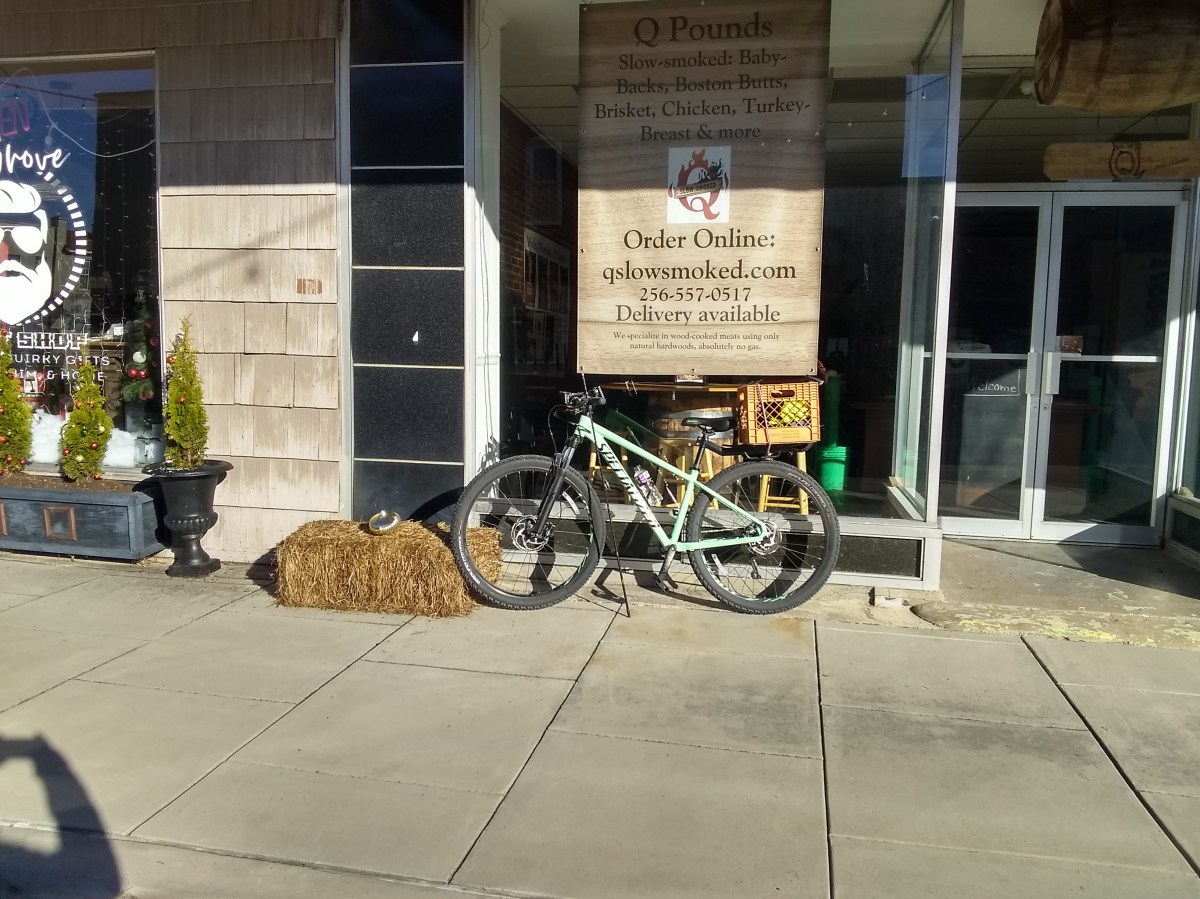
Here’s my bike, a Rockhopper by Specialized. I purchased it November 2021 from Venture Out in Guntersville; Mike is top notch! So is the bike, and the ‘old’ man seat I salvaged from an old Walmart bike.

Here’s a link to my January 6th bike ride. It’s what I call my pistol route, which is my goal every day. But, sometimes cold weather says otherwise.

Here’s what I’m currently listening to: The First Deadly Sin, by Lawrence Sanders

Sanders was a tremendously talented writer.

Amazon abstract:

The #1 New York Times–bestselling author introduces readers to “a great detective, a detective’s detective,” New York cop Edward X. Delaney (Kirkus Reviews).

New York Police Department Captain Edward Delaney is called to the scene of a brutal murder. A Brooklyn councilman was struck from behind, the back of his skull punctured and crushed with an unknown weapon. The victim wasn’t robbed, and there’s no known motive. The commissioner appoints Delaney to head up a clandestine task force, but soon this effort ignites an internecine war of departmental backstabbing.   Distracted by the serious illness of his wife, Barbara, Delaney begins his secret investigation. Then the killer claims another victim—slain in the exact same way, leaving the strange puncture wound. As more young men are found murdered, Delaney starts putting the pieces together. Soon, he’s faced with a cop’s dilemma: He knows who the killer is, but the man is untouchable. That’s when Delaney lays a trap to bring a monster to justice . . .

Learn more–read this great review on Amazon by Pennydreadful

I feel I may have cheated when reading this book because I read it in gosh, too many years ago to count. However, Sanders’s Deadly Sin series were the first stories that put my heart to pounding and made me wish I could write. Recently, I wanted to see if that belief was still true, and darned if it isn’t.

Lawrence Sanders quite simply is a master. Of characterization, of research, of police procedure, of getting inside the characters’ (and readers’ heads). His set up might indeed be frowned upon today. He starts the book with several chapters surrounding the antagonist, and then we meet Captain Edward X. Delaney and several chapters pertain to him and the politics surrounding a police captain with a critically ill wife.

But a killer is on the streets of New York City, and soon Captain Delaney is torn. Torn between sitting by his wife’s bedside and putting a madman away. Naturally it’s not as simple as that because politics and a power struggle are afoot, and a new kind of police reorganization affects the department all the way to the mayors’ office.

Edward X Delaney’s wife takes a turn for the worse, and he tries to resign. A police commissioner persuades him to take a leave of absence. But in the midst of all the politics and turmoil affecting the police department, the commissioner convinces Delaney to work in secret and independently while using his years of detective experience to find the killer who is walking the streets of New York and murdering unsuspecting men with an ice ax.

To accomplish this private investigation, Captain Delaney must do much of the leg work and research himself. To do this he recruits civilians to aid him in this quest, including a bedridden mountain climber, a 70+ retired curator dying to be of assistance and the widow of one of Blank’s victims [Blank is the suspect]. Much of the case is done thanks to these people when the city is in a full-blown panic because of the new administrations’ blunders and inability to catch the killer.

Captain Delaney is called back to work. And with police resources given him, he makes every effort to stop a killer from killing again.

A masterpiece of writing.

01/13/23 Biking & Listening

Biking is something else I both love and hate. It takes a lot of effort but does provide good exercise and most days over an hour to listen to a good book or podcast. I especially like having ridden.

Here’s my bike, a Rockhopper by Specialized. I purchased it November 2021 from Venture Out in Guntersville; Mike is top notch! So is the bike, and the ‘old’ man seat I salvaged from an old Walmart bike.

Here’s a link to today’s bike ride. It’s what I call my pistol route, which is my goal every day. But, sometimes cold weather says otherwise.

Here’s what I’m currently listening to: The First Deadly Sin, by Lawrence Sanders

Sanders was a tremendously talented writer.

Amazon abstract:

The #1 New York Times–bestselling author introduces readers to “a great detective, a detective’s detective,” New York cop Edward X. Delaney (Kirkus Reviews).

New York Police Department Captain Edward Delaney is called to the scene of a brutal murder. A Brooklyn councilman was struck from behind, the back of his skull punctured and crushed with an unknown weapon. The victim wasn’t robbed, and there’s no known motive. The commissioner appoints Delaney to head up a clandestine task force, but soon this effort ignites an internecine war of departmental backstabbing.   Distracted by the serious illness of his wife, Barbara, Delaney begins his secret investigation. Then the killer claims another victim—slain in the exact same way, leaving the strange puncture wound. As more young men are found murdered, Delaney starts putting the pieces together. Soon, he’s faced with a cop’s dilemma: He knows who the killer is, but the man is untouchable. That’s when Delaney lays a trap to bring a monster to justice . . .

Learn more–read this great review on Amazon by Pennydreadful

I feel I may have cheated when reading this book because I read it in gosh, too many years ago to count. However, Sanders’s Deadly Sin series were the first stories that put my heart to pounding and made me wish I could write. Recently, I wanted to see if that belief was still true, and darned if it isn’t.

Lawrence Sanders quite simply is a master. Of characterization, of research, of police procedure, of getting inside the characters’ (and readers’ heads). His set up might indeed be frowned upon today. He starts the book with several chapters surrounding the antagonist, and then we meet Captain Edward X. Delaney and several chapters pertain to him and the politics surrounding a police captain with a critically ill wife.

But a killer is on the streets of New York City, and soon Captain Delaney is torn. Torn between sitting by his wife’s bedside and putting a madman away. Naturally it’s not as simple as that because politics and a power struggle are afoot, and a new kind of police reorganization affects the department all the way to the mayors’ office.

Edward X Delaney’s wife takes a turn for the worse, and he tries to resign. A police commissioner persuades him to take a leave of absence. But in the midst of all the politics and turmoil affecting the police department, the commissioner convinces Delaney to work in secret and independently while using his years of detective experience to find the killer who is walking the streets of New York and murdering unsuspecting men with an ice ax.

To accomplish this private investigation, Captain Delaney must do much of the leg work and research himself. To do this he recruits civilians to aid him in this quest, including a bedridden mountain climber, a 70+ retired curator dying to be of assistance and the widow of one of Blank’s victims [Blank is the suspect]. Much of the case is done thanks to these people when the city is in a full-blown panic because of the new administrations’ blunders and inability to catch the killer.

Captain Delaney is called back to work. And with police resources given him, he makes every effort to stop a killer from killing again.

A masterpiece of writing.

Drafting–Colton finds Millie’s note


Something was up. No lights downstairs, upstairs, anywhere. The front porch light was always on when he returned from work on Friday nights, even if Millie and Molly were gone on a jog or walk. Colton turned off S. Princeton into his driveway. Hadn’t he promised Millie they’d go out tonight?

Colton parked and walked up the stairs. The front door was locked. It shouldn’t be. Both of them knew he didn’t like fiddling with keys. Where’s Molly? Hadn’t he called Millie at work and left a message with Catherine he wanted Molly to go out with them tonight?

Inside, he flipped on the overhead light and walked to the kitchen for a beer. He closed the refrigerator and saw a note laying on the table in front of his chair. There was one sheet of paper ripped from a spiral bound notebook. Colton pulled back his chair and sat. It was Millie’s writing. On one side of the page. There were two airline tickets underneath.

The flight was today. O’Hare to Houston, with a 4:00 PM arrival. He downed half his Bud, and read the note. Twice. It wasn’t a surprise. The surprise was that it had taken Millie so long to leave. The other two women he’d lived with hadn’t lasted a year.

Colton finished his beer, slung the bottle toward the sink, and grabbed another. He drawled out a deep burp and yelled, “you fucking bitch.” An equally loud laugh erupted. “Stupid, stupid. You think I’m buying what you’re selling? That you and Molly have gone to Houston?” He picked up one of the tickets and looked again. Maybe she’s trying that reverse psychology trick on me, Colton thought.

The only thing that bothered him was not knowing how to reach her. Without her testimony the DA had him over a barrel, a barrel shaped like an eight by eight jail cell.

Six months ago Colton and Sandy, his best bud, had met two chicks at Mitchell’s Tap, their favorite hangout. After a few drinks, they’d followed them to a house on n apartment on South Morgan Street. Rejection was something neither man could manage. The women hadn’t understood that. It might have had something to do with the ski masks. Eventually, both women surrendered and did what they were told. Colton and Sandy had taken everything they came for. The sixteen hundred cash was a bonus but, to start with, it had cost Ellen a finger. Later, it had cost more.

Shortly before dawn, a distant siren and a neighbor’s knock on the door scared them off, but not before they’d doused the place and struck a match. After retrieving his truck from Mitchell’s Tap, Colton had driven home and awakened a sleeping Millie. Molly was at Alisha’s for a sleepover.

At first, Millie didn’t ask a question, just wondered silently why Colton was so disheveled with two scratches on his fact. “I may need you to provide an alibi.” Millie refused to tell anyone that he’d returned from Mitchell’s at 10:30 PM. She changed her mind when Colton threatened Molly.

Two weeks ago, the DA had secured an indictment against him and Sandy for burglary, robbery, rape, sodomy, false imprisonment, and arson. Colton’s defense attorney and investigator had subsequently learned that somehow Gina had managed to escape the burning house, but had hid out for nearly a week before approaching the police. No doubt, Gina was the DA’s key witness and was saying it had to be the two men she and Ellen had partied with at Mitchell’s earlier that night. City detectives had no trouble identifying Colton Lee Atwood and J. Sandford Brown. Unfortunately for the DA, there was no physical evidence Colton and Sandy were the perpetrators.

He tossed the second beer bottle in the sink and grabbed two more. Colton had been in trouble before but nothing like this. At least he could be thankful he’d worn a condom when he’d screwed the tight-assed Gina. But, he knew her testimony would be enough to put him and Sandy into the lion’s den and without Millie’s alibi testimony could easily send the two of them to prison for the rest of their lives.

Colton swore he’d find Molly and Millie. He wouldn’t ask again. He’d kidnap Molly and hold her until Millie lied that he and Sandy were at their house by 11:00 PM and stayed all night. Millie wouldn’t hesitate to protect the most important person in her world.

Drafting–Toledo>Cleveland>Akron>Youngstown—Molly


Molly was still cold. According to the TV in Subway, the outside temperature was 25 degrees. It didn’t feel much warmer inside the bus. After the bus departed Toledo and crossed the Maumee River, she quickly realized the need for extra clothing. It had been fortuitous her mother had bought the thick red Christmas sweater while at Walmart. Molly wished she’d insisted on some insulated under-clothes; not cotton, but wool. Oh well, at least the seat was comfortable, and it reclined.

It didn’t take long for Millie and Molly to settle in and start listening to music through their cell phones. Greyhound offered WiFi but didn’t allow streaming YouTube or any other service—something about slowing down WiFi for other passengers. Thankfully, at Walmart after activating their new phones, Molly had suggested downloading some music for their journey since their data plans were so small. With Walmart’s WiFi, and Catherine’s Spotify account, they now had an assortment of play-lists to pick from. Molly assumed her mother’s best friend at work at volunteered her access codes. Millie wouldn’t have asked.

After two songs, Molly removed her ear plugs and listened. No doubt her mother was fast asleep. Her slow and soft consistent puffs were a dead giveaway. Molly straightened her seat, reached for her book bag nestled at her feet, and removed the iPhone 7 Alisha had given her last night.

Molly didn’t hesitate to text her BFF. “Are you still up?” The short and dumpy redhead had come into her life in Kindergarten. They’d been best buds ever since. There were no secrets between them.

“Yep, just lying here thinking about you, wondering where you are and why I haven’t heard anything all day.” Catherine wasn’t the only person who was generous. It had been Alisha’s idea. Last night during the sleepover Molly and Alisha had cried themselves to sleep troubled they might never see each other again. But, this morning, early, before Molly had gotten out of bed, Alisha had snuck out of her room and conversed with Alistair, her fifteen year old brother. In exchange for doing his chores for two months, he had given her an old iPhone 7. It no longer had phone service but still worked on WiFi. Molly had been reluctant to accept it but did so at Alisha’s insistence. “How else are we going to communicate?”

“I’m on a Greyhound bus. Our car broke down in Perrysburg, Ohio. Mom rules.”

“That’s kinda cool. Where are you now?” Molly could picture Alisha’s bedroom. Three times the size of her tiny room. Alisha, Alistair and their parents lived in the Auburn Gresham area in what was clearly a mansion compared to the old and deteriorating dump on Princeton Avenue where Millie and Molly, and Mr. Demon lived. Oh to have had a safe opportunity this morning to call him that to his face.

“About ninety minutes from Cleveland. It’ll take 24 hours to reach NYC. Mom said it’s only nine hours by car, straight through.”

Molly kept glancing at her mother knowing she’d be livid if she discovered the secret phone. The guilt was palpable, as was the loneliness Molly felt from being separated from her best friend. This war had caused Molly’s hesitation in accepting Alisha’s gift. What if the old iPhone somehow someway led Mr. Demon to them in New York City? Alisha had assured her that was impossible. She’d asked Alistair the same question. “It’s untraceable without a sim card.” Molly hoped that was correct.

“That’s a downer. Btw, how’s your mom?” Molly had shared her mother’s roller-coaster emotional ride since Mr. Demon’s first attack.

“She had to go to the ER last night. The bastard hit her with a beer can. Caused a big gap above her eye. Took three stitches. Her fight eye is almost black. Thankfully, she’s held together good and is taking her meds like she’s supposed to.”

TO BE CONTINUED

01/11/23 Biking & Listening

Biking is something else I both love and hate. It takes a lot of effort but does provide good exercise and most days over an hour to listen to a good book or podcast. I especially like having ridden.

Here’s my bike, a Rockhopper by Specialized. I purchased it November 2021 from Venture Out in Guntersville; Mike is top notch! So is the bike, and the ‘old’ man seat I salvaged from an old Walmart bike.

Here’s a link to today’s bike ride. It’s what I call my pistol route, which is my goal every day. But, sometimes cold weather says otherwise.

Here’s what I’m currently listening to: The First Deadly Sin, by Lawrence Sanders

Sanders was a tremendously talented writer.

Amazon abstract:

The #1 New York Times–bestselling author introduces readers to “a great detective, a detective’s detective,” New York cop Edward X. Delaney (Kirkus Reviews).

New York Police Department Captain Edward Delaney is called to the scene of a brutal murder. A Brooklyn councilman was struck from behind, the back of his skull punctured and crushed with an unknown weapon. The victim wasn’t robbed, and there’s no known motive. The commissioner appoints Delaney to head up a clandestine task force, but soon this effort ignites an internecine war of departmental backstabbing.   Distracted by the serious illness of his wife, Barbara, Delaney begins his secret investigation. Then the killer claims another victim—slain in the exact same way, leaving the strange puncture wound. As more young men are found murdered, Delaney starts putting the pieces together. Soon, he’s faced with a cop’s dilemma: He knows who the killer is, but the man is untouchable. That’s when Delaney lays a trap to bring a monster to justice . . .

Learn more–read this great review on Amazon by Pennydreadful

I feel I may have cheated when reading this book because I read it in gosh, too many years ago to count. However, Sanders’s Deadly Sin series were the first stories that put my heart to pounding and made me wish I could write. Recently, I wanted to see if that belief was still true, and darned if it isn’t.

Lawrence Sanders quite simply is a master. Of characterization, of research, of police procedure, of getting inside the characters’ (and readers’ heads). His set up might indeed be frowned upon today. He starts the book with several chapters surrounding the antagonist, and then we meet Captain Edward X. Delaney and several chapters pertain to him and the politics surrounding a police captain with a critically ill wife.

But a killer is on the streets of New York City, and soon Captain Delaney is torn. Torn between sitting by his wife’s bedside and putting a madman away. Naturally it’s not as simple as that because politics and a power struggle are afoot, and a new kind of police reorganization affects the department all the way to the mayors’ office.

Edward X Delaney’s wife takes a turn for the worse, and he tries to resign. A police commissioner persuades him to take a leave of absence. But in the midst of all the politics and turmoil affecting the police department, the commissioner convinces Delaney to work in secret and independently while using his years of detective experience to find the killer who is walking the streets of New York and murdering unsuspecting men with an ice ax.

To accomplish this private investigation, Captain Delaney must do much of the leg work and research himself. To do this he recruits civilians to aid him in this quest, including a bedridden mountain climber, a 70+ retired curator dying to be of assistance and the widow of one of Blank’s victims [Blank is the suspect]. Much of the case is done thanks to these people when the city is in a full-blown panic because of the new administrations’ blunders and inability to catch the killer.

Captain Delaney is called back to work. And with police resources given him, he makes every effort to stop a killer from killing again.

A masterpiece of writing.

Drafting–The six hour wait

Millie was surprised to learn the bus station served both Greyhound and Amtrak. The decision was easy given the goal of being as frugal as reasonably possible. The Sentra’s death had heightened both Millie and Molly’s desire to conserve cash.

The next available Amtrak departed at 11:49 PM and arrived at Penn Station in New York City at 6:50 PM Saturday night. Although that was six plus hours faster than the scheduled bus ride, the trip would cost an extra $150, and that was for coach only, two-seats. A private room would cost an additional $348. Two-hundred thirty-eight dollars to Greyhound for two seats was their only viable option.

The next six hours were long and difficult, made more so by Molly’s incessant request to “get out and do something, and I’ll pay.” She used her own phone to develop a multi-hour itinerary: walk to nearby Middleground Metro Park and enjoy the half-mile walking trail, then walk two blocks to the highly rated San Marcos Mexican Restaurant on Summit Avenue, then, for desert, venture south to the The Original Sub for a slice of their Chocolate strawberry olive oil cake with orange whipped cream and crushed fruit, and finally, take an Uber to the Cinemark theater and watch the 6:45 PM showing of “Little Women.”

Reluctantly and regrettably, Millie vetoed Molly’s plan, took another Depakote, and slept on the furtherest bench from the station entrance until 8:45. When she awoke, Molly was reading Where the Red Fern Grows, the second book she’d failed to return to the Harvard Elementary School’s library.

After a quick trip to the restroom, Molly suggested they eat at the in-house Subway. She again offered to pay. Molly was such a loving and forgiving child, and did her best over the next ninety minutes to encourage Millie who seemed anxious, and depressed.

The bus was ten minutes early and departed on time. From their seats toward the rear, Molly squeezed Millie’s hand and whispered, “Cleveland, Ohio, here we come.” Millie managed a smile and planted a soft kiss on her daughter’s forehead.

01/10/23 Biking & Listening

Biking is something else I both love and hate. It takes a lot of effort but does provide good exercise and most days over an hour to listen to a good book or podcast. I especially like having ridden.

Here’s my bike, a Rockhopper by Specialized. I purchased it November 2021 from Venture Out in Guntersville; Mike is top notch! So is the bike, and the ‘old’ man seat I salvaged from an old Walmart bike.

Here’s a link to today’s bike ride. It’s what I call my pistol route, which is my goal every day. But, sometimes cold weather says otherwise.

Here’s what I’m currently listening to: The First Deadly Sin, by Lawrence Sanders

Sanders was a tremendously talented writer.

Amazon abstract:

The #1 New York Times–bestselling author introduces readers to “a great detective, a detective’s detective,” New York cop Edward X. Delaney (Kirkus Reviews).

New York Police Department Captain Edward Delaney is called to the scene of a brutal murder. A Brooklyn councilman was struck from behind, the back of his skull punctured and crushed with an unknown weapon. The victim wasn’t robbed, and there’s no known motive. The commissioner appoints Delaney to head up a clandestine task force, but soon this effort ignites an internecine war of departmental backstabbing.   Distracted by the serious illness of his wife, Barbara, Delaney begins his secret investigation. Then the killer claims another victim—slain in the exact same way, leaving the strange puncture wound. As more young men are found murdered, Delaney starts putting the pieces together. Soon, he’s faced with a cop’s dilemma: He knows who the killer is, but the man is untouchable. That’s when Delaney lays a trap to bring a monster to justice . . .

Learn more–read this great review on Amazon by Pennydreadful

I feel I may have cheated when reading this book because I read it in gosh, too many years ago to count. However, Sanders’s Deadly Sin series were the first stories that put my heart to pounding and made me wish I could write. Recently, I wanted to see if that belief was still true, and darned if it isn’t.

Lawrence Sanders quite simply is a master. Of characterization, of research, of police procedure, of getting inside the characters’ (and readers’ heads). His set up might indeed be frowned upon today. He starts the book with several chapters surrounding the antagonist, and then we meet Captain Edward X. Delaney and several chapters pertain to him and the politics surrounding a police captain with a critically ill wife.

But a killer is on the streets of New York City, and soon Captain Delaney is torn. Torn between sitting by his wife’s bedside and putting a madman away. Naturally it’s not as simple as that because politics and a power struggle are afoot, and a new kind of police reorganization affects the department all the way to the mayors’ office.

Edward X Delaney’s wife takes a turn for the worse, and he tries to resign. A police commissioner persuades him to take a leave of absence. But in the midst of all the politics and turmoil affecting the police department, the commissioner convinces Delaney to work in secret and independently while using his years of detective experience to find the killer who is walking the streets of New York and murdering unsuspecting men with an ice ax.

To accomplish this private investigation, Captain Delaney must do much of the leg work and research himself. To do this he recruits civilians to aid him in this quest, including a bedridden mountain climber, a 70+ retired curator dying to be of assistance and the widow of one of Blank’s victims [Blank is the suspect]. Much of the case is done thanks to these people when the city is in a full-blown panic because of the new administrations’ blunders and inability to catch the killer.

Captain Delaney is called back to work. And with police resources given him, he makes every effort to stop a killer from killing again.

A masterpiece of writing.

01/09/23 Biking & Listening

Biking is something else I both love and hate. It takes a lot of effort but does provide good exercise and most days over an hour to listen to a good book or podcast. I especially like having ridden.

Here’s my bike, a Rockhopper by Specialized. I purchased it November 2021 from Venture Out in Guntersville; Mike is top notch! So is the bike, and the ‘old’ man seat I salvaged from an old Walmart bike.

Here’s a link to yesterday’s bike ride. It’s what I call my pistol route, which is my goal every day. But, sometimes cold weather says otherwise.

Here’s what I’m currently listening to: The First Deadly Sin, by Lawrence Sanders

Sanders is a tremendously talented writer.

Amazon abstract:

The #1 New York Times–bestselling author introduces readers to “a great detective, a detective’s detective,” New York cop Edward X. Delaney (Kirkus Reviews).

New York Police Department Captain Edward Delaney is called to the scene of a brutal murder. A Brooklyn councilman was struck from behind, the back of his skull punctured and crushed with an unknown weapon. The victim wasn’t robbed, and there’s no known motive. The commissioner appoints Delaney to head up a clandestine task force, but soon this effort ignites an internecine war of departmental backstabbing.   Distracted by the serious illness of his wife, Barbara, Delaney begins his secret investigation. Then the killer claims another victim—slain in the exact same way, leaving the strange puncture wound. As more young men are found murdered, Delaney starts putting the pieces together. Soon, he’s faced with a cop’s dilemma: He knows who the killer is, but the man is untouchable. That’s when Delaney lays a trap to bring a monster to justice . . .

Learn more–read this great review by Pennydreadful

I feel I may have cheated when reading this book because I read it in gosh, too many years ago to count. However, Sanders’s Deadly Sin series were the first stories that put my heart to pounding and made me wish I could write. Recently, I wanted to see if that belief was still true, and darned if it isn’t.

Lawrence Sanders quite simply is a master. Of characterization, of research, of police procedure, of getting inside the characters’ (and readers’ heads). His set up might indeed be frowned upon today. He starts the book with several chapters surrounding the antagonist, and then we meet Captain Edward X. Delaney and several chapters pertain to him and the politics surrounding a police captain with a critically ill wife.

But a killer is on the streets of New York City, and soon Captain Delaney is torn. Torn between sitting by his wife’s bedside and putting a madman away. Naturally it’s not as simple as that because politics and a power struggle are afoot, and a new kind of police reorganization affects the department all the way to the mayors’ office.

Edward X Delaney’s wife takes a turn for the worse, and he tries to resign. A police commissioner persuades him to take a leave of absence. But in the midst of all the politics and turmoil affecting the police department, the commissioner convinces Delaney to work in secret and independently while using his years of detective experience to find the killer who is walking the streets of New York and murdering unsuspecting men with an ice ax.

To accomplish this private investigation, Captain Delaney must do much of the leg work and research himself. To do this he recruits civilians to aid him in this quest, including a bedridden mountain climber, a 70+ retired curator dying to be of assistance and the widow of one of Blank’s victims [Blank is the suspect]. Much of the case is done thanks to these people when the city is in a full-blown panic because of the new administrations’ blunders and inability to catch the killer.

Captain Delaney is called back to work. And with police resources given him, he makes every effort to stop a killer from killing again.

A masterpiece of writing.

Drafting–Sentra gives up the ghost

After some discussion and a little negotiating, Millie and Molly decided to alter their decision of stopping every hour or so and instead to take a longer break in Perrysburg. It was the approximate midpoint between South Bend and Youngstown, their ultimate goal for the day. The only exception would be if either of them had to go to the restroom.

Two and a half hours later, with a sleeping Molly in the back seat, Millie decided to bypass Perrysburg and continue on. She thought to herself: “Like, miraculously, I’d know how to resolve the grinding sound I’ve been hearing for the past hour every time I speed up to pass someone.” Although she was torn whether to return to Chicago and accept Matt’s Tahoe offer, it seemed best to continue on and contact an auto repair shop when they arrived in Youngstown. Maybe, all the Sentra needs is a transmission flush like Colton had mentioned.

Fifteen minutes later the twenty-year old Nissan had other plans. The moment it entered the long bridge across the Maumee River, the grinding noise doubled, the entire car began shaking, and the burning smell became so bad Millie thought her first and only new car might catch fire. She quickly realized with the cars and eighteen wheelers whizzing by that their progress was slowing. In a quarter mile the car lurched forward one final time, just enough for Millie to steer to her right and stop within an inch of the metal guard rail that separated them from the dark, murky water below.

“Molly, wake up.” Millie turned and reached over the seat and shook her daughter’s leg. “We’re stuck. We need to get out of the car and watch traffic.” The latter sounded silly but Millie knew they didn’t need to risk being hit from the rear. At least outside, they could walk east and away from the car enough to hopefully escape death if a car or truck creeped to the right and rammed the Sentra.

“What’s wrong?” Molly sat sideways in the seat with her back to the door. She looked behind and watched the passing traffic. “Why’d you stop here.”

“Come on, I’ll explain. Be careful, watch for cars.”

It was almost two hours before the wrecker arrived. Millie had Googled and found two auto repair shops in Perrysburg. She didn’t know why but she’d chosen Ray’s Service Center & Towing over Steve’s Family Auto.

“Are you Ray?” Millie asked as the short and stocky man in a greasy red hat exited the blue and white vehicle and approached the two stranded females.

“Nope. I’m Bobby. You got car troubles?” Bobby was perceptive. Millie described the Sentra’s problems, detailing each symptom and her in vain efforts to patch things up with extra fluids.

“You need a transmission. That’ll cost you.”

“How much?” Molly interjected but Millie closed her eyes and shook her head sideways.

“Never mind. Just give us a tow back to your shop and we can talk about it there.” Millie said, resigned to forking over thousands, her skin tingling. Not good.

It was a quarter past noon when Bobby turned right off Louisiana Avenue and pulled the wrecker alongside a neat and modern three-bay metal building. Millie opened the passenger door and Molly slide out beside her. The two had held a hand across their noses and mouths to ward off Bobby’s BO. The wafting smell coming from Perry’s Burgers across the parking lot was welcoming and prevented both from gagging or throwing up.

“Ray’s at lunch. You girls can sit inside.” Bobby pointed toward a side door with a sign that read, “Welcome.” Thankfully, he walked inside the shop, selected some tools from a giant red box, and hid himself underneath the hood of a late model Camaro.

The waiting room was small with six stiff chairs and two vending machines: one supplied by Coca Cola, the other filled with an assortment of candy bars, gum, granola bars, chips & pretzels, cookies, and crackers. Millie bought a Diet Coke for herself and a Sprite for Molly who returned to the Sentra for a bag of snacks they’d purchased at Walmart.

Ray and a woman, possibly his wife, returned at 1:15. To Millie and Molly’s surprise, the two were the total opposite of Bobby. They were dressed in neat, casual clothes, and were odorless. The woman retreated to a room marked “Office” and Ray approached and held out a hand. “I’m Ray. Sorry about your troubles. Bobby tells me it sounds like transmission issues.”

Ray led them inside the office and pointed to two chairs in front of the room’s second desk. Millie didn’t hesitate, thinking she might as well hear the bad news. “What will a new one cost?”

After detailing the options to replace the Sentra’s transmission—new one, used one with minimal guarantee, and a rebuilt one with extended warranty—and the range of costs—$1600 to $3200—Ray announced an equally troubling fact. It would take a week to diagnose the true problem, and if that’s what the doctor ordered, to secure a transmission from either option, would take at least five or six work days, given their current work orders.

Millie and Molly walked outside and pondered their options. Molly suggested calling Matt and figuring out a plan to unite them with his Tahoe. That seemed like defeat, something like a dog returning to its vomit. Millie rejected that and instead Googled the nearest Greyhound Bus station.

By 3:00 PM Millie had learned the nearest Greyhound was fifteen to twenty minutes away in Toledo and there was a bus departing for New York City at 10:30 tonight. The decision was made, with Molly reluctantly agreeing. The cost to repair the Sentra was just too much, given its age and market value, not even considering the near-week delay.

After paying Ray a hundred-twenty dollars in cash for their tow bill, Millie convinced him to ship Molly’s stuffed animals to their new apartment. The thing that felt bad was giving Ray their new address, but given their importance to Molly and the limited options, she finally convinced herself the risk was minimal. She handed Ray another twenty-dollar bill, and Googled a taxi service.

At 3: 55 PM, the Uber driver delivered them to the Emerald Avenue bus station in Toledo. Another twenty-six dollars down and all Millie and Molly had to do now was wait six and a half-hours before they were back on their journey to New York City.