
Author: Richard L. Fricks
Richard L. Fricks is a novelist, former attorney and CPA, Fictionary Certified StoryCoach Editor, and creator of The Pencil-Driven Life. He lives in rural North Alabama near Boaz, where much of his fiction and reflection remain rooted. His work explores story, inherited purpose, faith and doubt, family pressure, moral contradiction, consciousness, ordinary life, and the practice of beginning again with a pencil.
About the Holy Bible, by Robert G. Ingersoll (1894): Part XI: Inspiration
This is a very long article. I’ll post it by part.
Here’s the link to the full article.
XI: Inspiration
Not before about the third century was it claimed or believed that the books composing the New Testament were inspired.
It will be remembered that there were a great number of books, of Gospels, Epistles and Acts, and that from these the “inspired” ones
were selected by “uninspired” men.
Between the “Fathers” there were great differences of opinion as to which books were inspired; much discussion and plenty of hatred.
Many of the books now deemed spurious were by many of the “Fathers” regarded as divine, and some now regarded as inspired were believed
to be spurious. Many of the early Christians and some of the “Fathers” repudiated the Gospel of John, the Epistle to the Hebrews, Jade,
James, Peter, and the Revelation of St. John. On the other hand, many of them regarded the Gospel of the Hebrews, of the Egyptians, the Preaching
of Peter, the Shepherd of Hermas, the Epistle of Bar nabas, the Pastor of Hermas, the Revelation of Peter, the Revelation of Paul, the
Epistle of Clement, the Gospel of Nicodemus, inspired books, equal to the very best.
From all these books, and many others, the Christians selected the inspired ones.
The men who did the selecting were ignorant and superstitious. They were firm believers in the miraculous. They thought that diseases
had been cured by the aprons and handkerchiefs of the apostles, by the bones of the dead. They believed in the fable of the Phoenix, and
that the hyenas changed their sex every year.
Were the men who through many centuries made the selections inspired? Were they—ignorant, credulous, stupid and malicious—as well
qualified to judge of “inspiration” as the students of our time? How are we bound by their opinion? Have we not the right to judge
for ourselves?
Erasmus, one of the leaders of the Reformation, declared that the Epistle to the Hebrews was not written by Paul, and he denied the
inspiration of Second and Third John, and also of Revelation. Luther was of the same opinion. He declared James to be an epistle of straw,
and denied the inspiration of Revelation. Zwinglius rejected the book of Revelation, and even Calvin denied that Paul was the author of Hebrews.
The truth is that the Protestants did not agree as to what books are inspired until 1647, by the Assembly of Westminster.
To prove that a book is inspired you must prove the existence of God. You must also prove that this God thinks, acts, has objects, ends and
aims. This is somewhat difficult.
It is impossible to conceive of an infinite being. Having no conception of an infinite being, it is impossible to tell whether all the
facts we know tend to prove or disprove the existence of such a being.
God is a guess. If the existence of God is admitted, how are we to prove that he inspired the writers of the books of the Bible?
How can one man establish the inspiration of another? How can an inspired man prove that he is inspired? How can he know himself that
he is inspired? There is no way to prove the fact of inspiration. The only evidence is the word of some man who could by no possibility
know anything on the subject.
What is inspiration? Did God use men as instruments? Did he cause them to write his thoughts? Did he take possession of their minds and
destroy their wills?
Were these writers only partly controlled, so that their mistakes, their ignorance and their prejudices were mingled with the wisdom of God?
How are we to separate the mistakes of man from the thoughts of God? Can we do this without being inspired ourselves? If the original writers
were inspired, then the translators should have been, and so should be the men who tell us what the Bible means.
How is it possible for a human being to know that he is inspired by an infinite being? But of one thing we may be certain: An inspired book
should certainly excel all the books produced by uninspired men. It should, above all, be true, filled with wisdom, blossoming in beauty—perfect.
Ministers wonder how I can be wicked enough to attack the Bible.
I will tell them: This book, the Bible, has persecuted, even unto death, the wisest and the best. This book stayed and stopped the onward
movement of the human race. This book poisoned the fountains of learning and misdirected the energies of man.
This book is the enemy of freedom, the support of slavery. This book sowed the seeds of hatred in families and nations, fed the flames of
war, and impoverished the world. This book is the breastwork of kings and tyrants—the enslaver of women and children. This book has
corrupted parliaments and courts. This book has made colleges and universities the teachers of error and the haters of science. This book has
filled Christendom with hateful, cruel, ignorant and warring sects. This book taught men to kill their fellows for religion’s sake. This book
funded the Inquisition, invented the instruments of torture, built the dungeons in which the good and loving languished, forged the chains that
rusted in their flesh, erected the scaffolds whereon they died. This book piled fagots about the feet of the just. This book drove reason from
the minds of millions and filled the asylums with the insane.
This book has caused fathers and mothers to shed the blood of their babes. This book was the auction block on which the slave- mother
stood when she was sold from her child. This book filled the sails of the slave-trader and made merchandise of human flesh. This book
lighted the fires that burned “witches” and “wizards.” This book filled the darkness with ghouls and ghosts, and the bodies
of men and women with devils. This book polluted the souls of men with the infamous dogma of eternal pain. This book made credulity the greatest
of virtues, and investigation the greatest of crimes. This book filled nations with hermits, monks and nuns—with the pious and the useless.
This book placed the ignorant and unclean saint above the philosopher and philanthropist. This book taught man to despise the joys of this life,
that he might be happy in another—to waste this world for the sake of the next.
I attack this book because it is the enemy of human liberty—the greatest obstruction across the highway of human progress.
Let me ask the ministers one question: How can you be wicked enough to defend this book?
What Is Science? From Feynman to Sagan to Asimov to Curie, an Omnibus of Definitions
Here’s the link to this article.
“The most beautiful experience we can have is the mysterious — the fundamental emotion which stands at the cradle of true art and true science.”
BY MARIA POPOVA
 “We live in a society absolutely dependent on science and technology,” Carl Sagan famously quipped in 1994, “and yet have cleverly arranged things so that almost no one understands science and technology. That’s a clear prescription for disaster.” Little seems to have changed in the nearly two decades since, and although the government is now actively encouraging “citizen science,” for many “citizens” the understanding of — let alone any agreement about — what science is and does remains meager.
So, what exactly is science, what does it aspire to do, and why should we the people care? It seems like a simple question, but it’s an infinitely complex one, the answer to which is ever elusive and contentious. Gathered here are several eloquent definitions that focus on science as process rather than product, whose conduit is curiosity rather than certainty.
Stuart Firestein writes in the excellent Ignorance: How It Drives Science:
Real science is a revision in progress, always. It proceeds in fits and starts of ignorance.
Isaac Asimov knew this when he appeared on the Bill Moyers show in 1988 and shared some timeless, remarkably timely insights on creativity in science and education:
Science does not purvey absolute truth, science is a mechanism. It’s a way of trying to improve your knowledge of nature, it’s a system for testing your thoughts against the universe and seeing whether they match.
Carl Sagan echoed the same sentiment when he remarked:
Science is a way of thinking much more than it is a body of knowledge.
In a letter to Hans Mühsam dated July 9th, 1951, an elderly Albert Einstein observed:
One thing I have learned in a long life: that all our science, measured against reality, is primitive and childlike — and yet it is the most precious thing we have.
In his recent New York Review of Books piece on Margaret Wertheim’s Physics on the Fringe: Smoke Rings, Circlons, and Alternative Theories of Everything, Freeman Dyson offers:
All of science is uncertain and subject to revision. The glory of science is to imagine more than we can prove.
Claude Lévi-Strauss, widely regarded as the father of modern anthropology, articulated the same idea in 1964 in the first volume of his iconic Mythologiques collection of cultural anthropology:
The scientist is not a person who gives the right answers, he’s one who asks the right questions.

In the fantastic A General Theory of Love, psychologists Thomas Lewis, Fari Amini, and Richard Lannon give this beautiful definition:
Science is an inherent contradiction — systematic wonder — applied to the natural world.
This element of wonder and whimsy also comes through in the words of iconic physicist and mathematician Max Born (thanks, Joe):
Science is not formal logic — it needs the free play of the mind in as great a degree as any other creative art. It is true that this is a gift which can hardly be taught, but its growth can be encouraged in those who already possess it.
In his iconic book On Human Nature, which should be required reading for all, the great biologist and naturalist E. O. Wilson observed:
The heart of the scientific method is the reduction of perceived phenomena to fundamental, testable principles. The elegance, we can fairly say the beauty, of any particular scientific generalization is measured by its simplicity relative to the number of phenomena it can explain.

In 1894, upon having received her second graduate degree, Marie Curie wrote in a letter to her brother:
One never notices what has been done; one can only see what remains to be done…
Curie also likely inspired this interpretation of her famous words on the essence of the scientific ethos:
Nothing in life is to be feared, it is only to be understood. Now is the time to understand more, so that we may fear less.

Richard Feynman would have nodded in agreement. Einstein certainly did when he observed:
The most beautiful experience we can have is the mysterious — the fundamental emotion which stands at the cradle of true art and true science.
This comes full-circe to Firestein’s book on ignorance, where he asserts:
Being a scientist requires having faith in uncertainty, finding pleasure in mystery, and learning to cultivate doubt. There is no surer way to screw up an experiment than to be certain of its outcome.
But hardly anyone captures the essence and ethos of science more eloquently than The Great Explainer. In 1966, the National Science Teachers Association asked the great Richard Feynman to give an address that answers the question, “What is science?” The answer comes true to character:
And so what science is, is not what the philosophers have said it is, and certainly not what the teacher editions say it is. What it is, is a problem which I set for myself after I said I would give this talk.
After some time, I was reminded of a little poem:
A centipede was happy quite, until a toad in fun
Said, “Pray, which leg comes after which?”
This raised his doubts to such a pitch
He fell distracted in the ditch
Not knowing how to run.All my life, I have been doing science and known what it was, but what I have come to tell you–which foot comes after which–I am unable to do, and furthermore, I am worried by the analogy in the poem that when I go home I will no longer be able to do any research.
Later in the speech, Feynman hones a more answer-like answer:
[I]f you are going to teach people to make observations, you should show that something wonderful can come from them. I learned then what science was about: it was patience. If you looked, and you watched, and you paid attention, you got a great reward from it — although possibly not every time.
Later:
[Science] teaches the value of rational thought as well as the importance of freedom of thought; the positive results that come from doubting that the lessons are all true.
He closes with a keen point for his audience of professional science educators:
Science alone of all the subjects contains within itself the lesson of the danger of belief in the infallibility of the greatest teachers of the preceding generation.

Science, then, necessitates a certain comfort with being wrong, a tolerance for the fear of failure — perhaps cultivating that capacity is an essential prerequisite not only for science but also for the basic appreciation of science.
Huineng 2: Dwelling Nowhere
Examine where you are right now, and see where experience is coming from.
Here is today’s Meditation.
04/30/23 Biking & Listening

Biking is something else I both love and hate. It takes a lot of effort but does provide good exercise and most days over an hour to listen to a good book or podcast. I especially like having ridden.
Here’s my bike, a Rockhopper by Specialized. I purchased it November 2021 from Venture Out in Guntersville; Mike is top notch! So is the bike, and the ‘old’ man seat I salvaged from an old Walmart bike.

Here’s a link to today’s windy bike ride. This is my pistol ride.
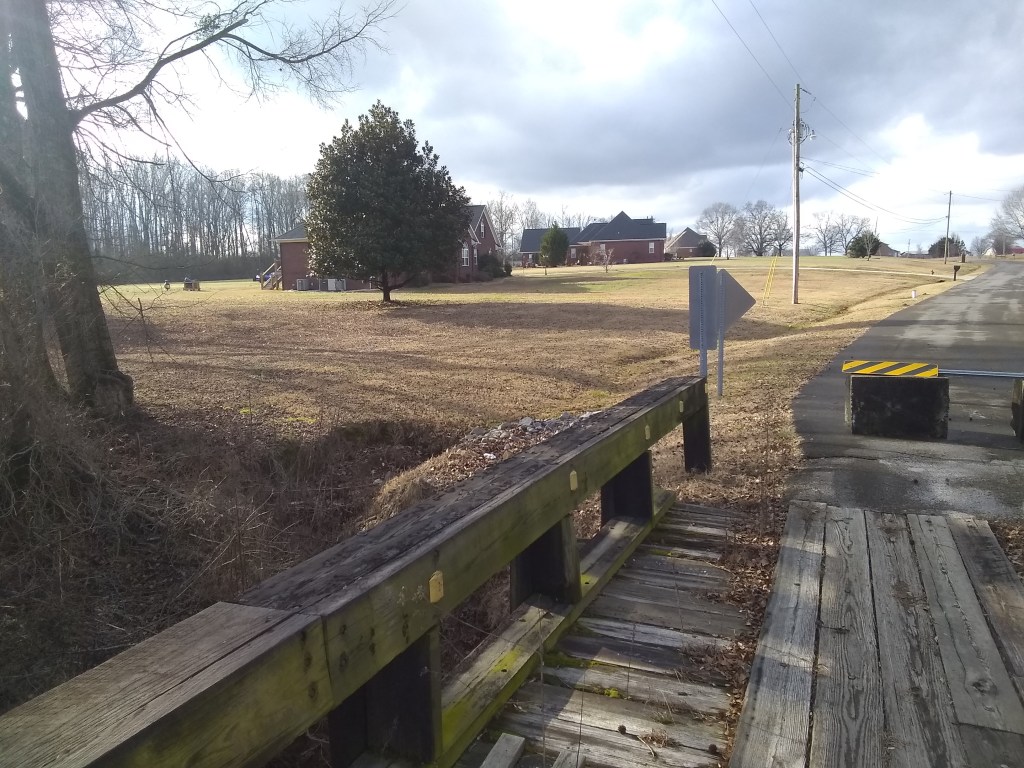
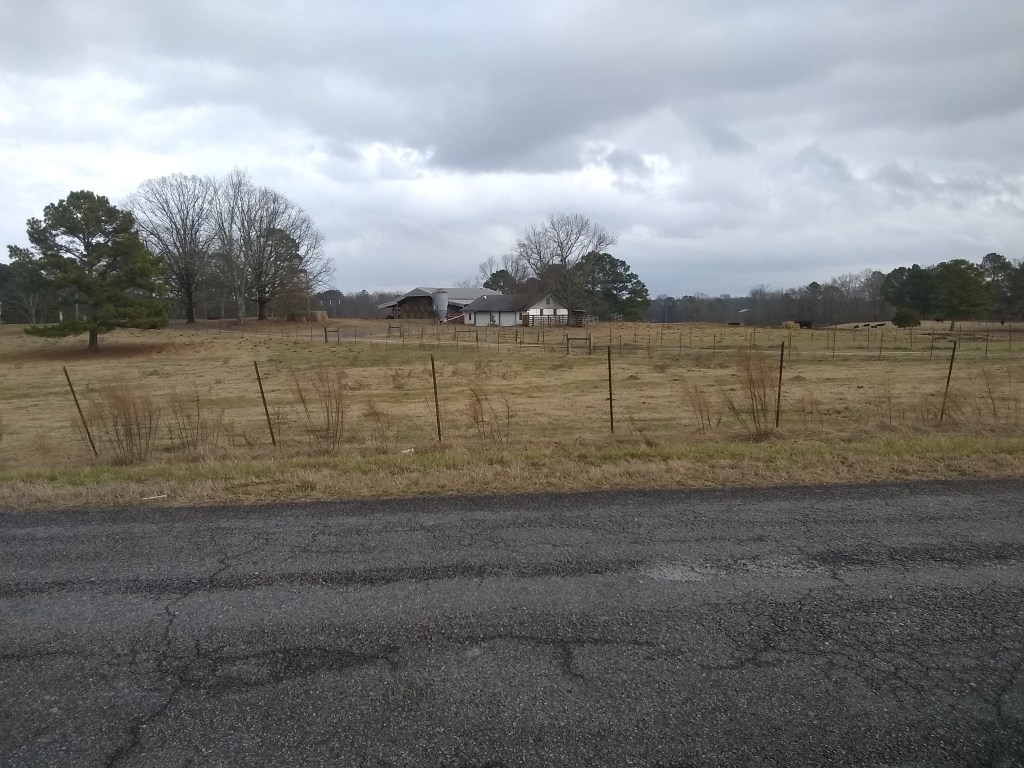
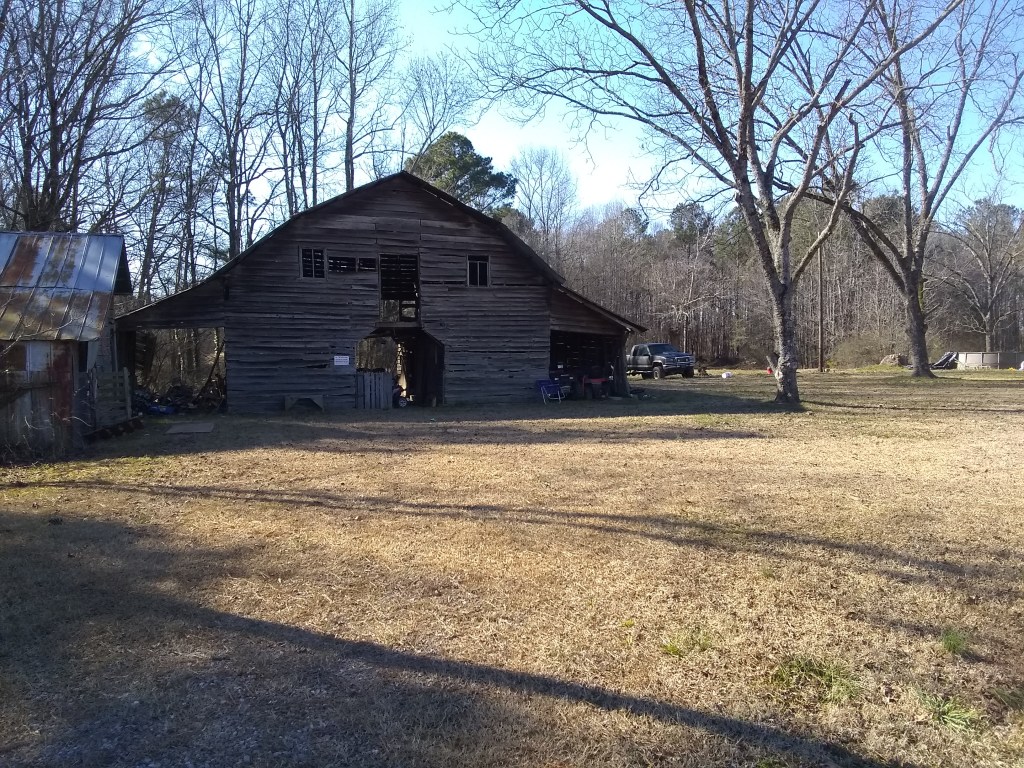
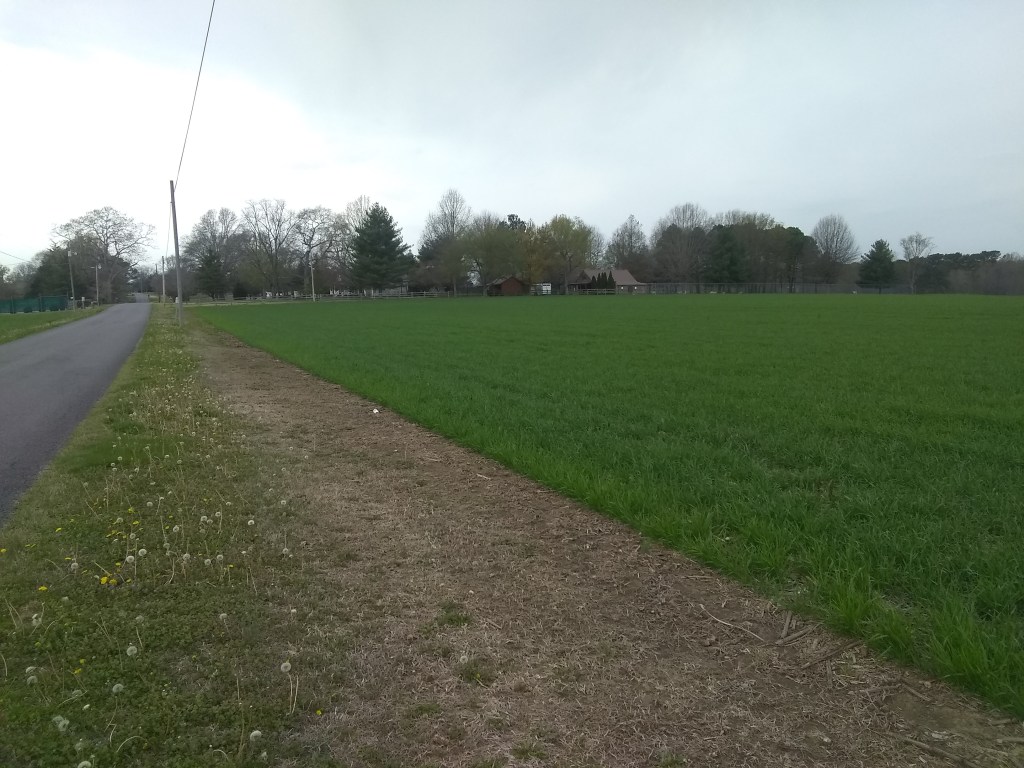
Here’s a few photos taken along my route:






















Here’s what I listened to today: I Will Find You, by Harlan Coben

Amazon abstract:
Five years ago, an innocent man began a life sentence for murdering his own son. Today he found out his son is still alive.
David Burroughs was once a devoted father to his three-year-old son Matthew, living a dream life just a short drive away from the working-class suburb where he and his wife, Cheryl, first fell in love–until one fateful night when David woke suddenly to discover Matthew had been murdered while David was asleep just down the hall.
Half a decade later, David’s been wrongly accused and convicted of the murder, left to serve out his time in a maximum-security prison—a fate which, grieving and wracked with guilt, David didn’t have the will to fight. The world has moved on without him. Then Cheryl’s younger sister, Rachel, makes a surprise appearance during visiting hours bearing a strange photograph. It’s a vacation shot of a bustling amusement park a friend shared with her, and in the background, just barely in frame, is a boy bearing an eerie resemblance to David’s son. Even though it can’t be, David just knows: Matthew is still alive.
David plans a harrowing escape, determined to achieve the impossible – save his son, clear his own name, and discover the real story of what happened. But with his life on the line and the FBI following his every move, can David evade capture long enough to reveal the shocking truth?
A few top reviews from the United States:

5.0 out of 5 stars Another great story from this author
Reviewed in the United States on April 13, 2023
Harlan Coben can spin a yarn! Once again he has proven that in I Will Find You. This intricate plot is populated by a colorful and interesting cast of characters, especially the two FBI Special Agents, Max and Sarah, assigned to this case. They provide the comic relief in an otherwise very serious story of murder and a missing child. While cracking wise to each other they manage to cut through the distractions provided by Coben’s other characters and home in the most important issues.
David Burroughs is accused and convicted of killing his three year old son. While in prison he learns the son might still be alive, a scenario which makes no sense as the son’s body was found in his bed, beaten to death. In order to find out if that is true David must find a way to get out of prison and find his son.
The story is compelling and moves swiftly with lots of suspense and things that keep the reader guessing. If there is any flaw, there are parts of the plot which sound more like a soap opera rather than a murder mystery. That didn’t detract from my enjoyment of the book. I recommend this to all who enjoy a good mystery/thriller.
5.0 out of 5 stars Harlan Coben at his best!
Reviewed in the United States on April 16, 2023
The story begins with David Burroughs five years into serving a life sentencing for murdering his son. He feels his life his over and never fought his conviction since he felt his life was over without his son. He never felt he would have murdered his own son but he had no memory of the night in question. David refused visitors in his first years at the prison until one day when his sister-in-law, Rachel, shows up requesting to see him. The visit causes him to question if his son is actually still alive. The book is an another great by Harlan Coben! I couldn’t put it down until the last page. I highly recommend this book and this author.
5.0 out of 5 stars An Amazing Ride
Reviewed in the United States on March 28, 2023
I Will Find You has a premise which I have not found in another novel. A man convicted of murdering his child, who thinks that he may have done it in a drunken moment of hysteria, finds out that the murdered child in his house that evening was not his son and that his son is still alive. Great idea for a book. How will Harlan Coben bring the pieces together so that it makes sense and gives the reader a thrilling ride? I will divulge nothing other than Harlan Coben did a really nice job of giving me the ride that I was hoping for.
Is the book perfect? Am I still a little confused by the ending? Yes. Does it matter? No. The book is a roller coaster ride which you should take if you like thrillers or you have read everything that Coben has ever written.
His best book ever was The Boy From The Woods. By far, that book was perfect and exceptional. This book is right up there and worth your time.
5.0 out of 5 stars Harlan Coben has done it again!! This book will be your favorite this year!
Reviewed in the United States on April 7, 2023
Wow! The storyline in this book is beyond! I didn’t know if I even wanted to know the truth behind how it happened, but I had to know! That is what makes Harlan Coben a standout beyond all the rest! The characters, as usual, you will fall in love with and some you will love to hate! His style of writing is the reason I love to read! I would recommend this book to anyone and everyone! I already recommended it before I even finished it myself! I gave this book a five-star rating because Harlan Coben gets an A+ and every area of his writing! The plot, the characters, his style of writing the mystery! He has ramped up the edginess in this one!
7th Foundational Falsehood of Creationism
John Steinbeck on the Creative Spirit and the Meaning of Life
Here’s the link to this article.
“The free, exploring mind of the individual human is the most valuable thing in the world.”
BY MARIA POPOVA
A decade before he won the Nobel Prize for Literature, John Steinbeck (February 27, 1902–December 20, 1968) wrote East of Eden (public library), which was eventually adapted into the 1955 film of the same title starring James Dean and which Steinbeck originally addressed to his two young sons. (The elder one, Thom, later became the recipient of Steinbeck’s magnificent letter of advice on falling in love.)
The thirteenth chapter of the novel features some of the most beautiful, poignant, and timelessly transcendent prose ever written — a gorgeous meditation on the meaning of life and the essence of the creative spirit:
Sometimes a kind of glory lights up the mind of a man. It happens to nearly everyone. You can feel it growing or preparing like a fuse burning toward dynamite. It is a feeling in the stomach, a delight of the nerves, of the forearms. The skin tastes the air, and every deep-drawn breath is sweet. Its beginning has the pleasure of a great stretching yawn; it flashes in the brain and the whole world glows outside your eyes. A man may have lived all of his life in the gray, and the land and trees of him dark and somber. The events, even the important ones, may have trooped by faceless and pale. And then — the glory — so that a cricket song sweetens his ears, the smell of the earth rises chanting to his nose, and dappling light under a tree blesses his eyes. Then a man pours outward, a torrent of him, and yet he is not diminished. And I guess a man’s importance in the world can be measured by the quality and number of his glories. It is a lonely thing but it relates us to the world. It is the mother of all creativeness, and it sets each man separate from all other men.

Writing in 1952, and writing for his two young sons, Steinbeck peers into the future, perhaps our present, with a concerned and prescient eye:
There are monstrous changes taking place in the world, forces shaping a future whose face we do not know. Some of these forces seem evil to us, perhaps not in themselves but because their tendency is to eliminate other things we hold good. It is true that two men can lift a bigger stone than one man. A group can build automobiles quicker and better than one man, and bread from a huge factory is cheaper and more uniform. When our food and clothing and housing all are born in the complication of mass production, mass method is bound to get into our thinking and to eliminate all other thinking. In our time mass or collective production has entered our economics, our politics, and even our religion, so that some nations have substituted the idea collective for the idea God. This in my time is the danger. There is great tension in the world, tension toward a breaking point, and men are unhappy and confused.
He extends a poignant reminder of what anchors us to life and what makes that life worth living:
At such a time it seems natural and good to me to ask myself these questions. What do I believe in? What must I fight for and what must I fight against?
Our species is the only creative species, and it has only one creative instrument, the individual mind and spirit of a man. Nothing was ever created by two men. There are no good collaborations, whether in music, in art, in poetry, in mathematics, in philosophy. Once the miracle of creation has taken place, the group can build and extend it, but the group never invents anything. The preciousness lies in the lonely mind of a man.
And now the forces marshaled around the concept of the group have declared a war of extermination on the preciousness, the mind of man. By disparagement, by starvation, by repressions, forced direction, and the stunning hammerblows of conditioning, the free, roving mind is being pursued, roped, blunted, drugged. It is a sad suicidal course our species seems to have taken.
And this I believe: that the free, exploring mind of the individual human is the most valuable thing in the world. And this I would fight for: the freedom of the mind to take any direction it wishes, undirected. And this I must fight against: any idea, religion, or government which limits or destroys the individual. This is what I am and what I am about. I can understand why a system built on a pattern must try to destroy the free mind, for this is one thing which can by inspection destroy such a system. Surely I can understand this, and I hate it and I will fight against it to preserve the one thing that separates us from the uncreative beasts. If the glory can be killed, we are lost.
Complement East of Eden with Steinbeck’s six tips on writing, a fine addition to the collected wisdom of great writers.
About the Holy Bible, by Robert G. Ingersoll (1894): Part X: Why Should We Place Christ at the Top and Summit of the Human Race?
This is a very long article. I’ll post it by part.
Here’s the link to the full article.
X: Why Should We Place Christ at the Top and Summit of the Human Race?
Was he kinder, more forgiving, more self-sacrificing than Buddha? Was he wiser, did he meet death with more perfect calmness, than
Socrates? Was he more patient, more charitable, than Epictetus? Was he a greater philosopher, a deeper thinker, than Epicurus? In what respect
was he the superior of Zoroaster? Was he gentler than Lao-tsze, more universal than Confucius? Were his ideas of human rights and duties superior
to those of Zeno? Did he express grander truths than Cicero? Was his mind subtler than Spinoza’s? Was his brain equal to Kepler’s or Newton’s?
Was he grander in death—a sublimer martyr than Bruno? Was he in intelligence, in the force and beauty of expression, in breadth and scope of
thought, in wealth of illustration, in aptness of comparison, in knowledge of the human brain and heart, of all passions, hopes and fears, the
equal of Shakespeare, the greatest of the human race?
If Christ was in fact God, he knew all the future. Before him like a panorama moved the history yet to be. He knew how his words would be
interpreted. He knew what crimes, what horrors, what infamies, would be committed in his name. He knew that the hungry flames of persecution
would climb around the limbs of countless martyrs. He knew that; thousands and thousands of brave men and women would languish in dungeons
in darkness, filled with pain. He knew that his church would invent and use instruments of torture; that his followers would appeal to whip
and fagot, to chain and rack. He saw the horizon of the future lurid with the flames of the auto da fe. He knew what creeds would spring like
poisonous fungi from every text. He saw the ignorant sects waging war against each other. He saw thousands of men, under the orders of priests,
building prisons for their fellow-men. He saw thousands of scaffolds dripping with the best and bravest blood. He saw his followers using the
instruments of pain. He heard the groans—saw the faces white with agony. He heard the shrieks and sobs and cries of all the moaning,
martyred multitudes. He knew that commentaries would be written on his words with swords, to be read by the light of fagots. He knew that the
Inquisition would be born of the teachings attributed to him.
He saw the interpolations and falsehoods that hypocrisy would write and tell. He saw all wars that would he waged, and he knew that above
these fields of death, these dungeons, these rackings, these burnings, these executions, for a thousand years would float the dripping
banner of the cross.
He knew that hypocrisy would be robed and crowned—that cruelty and credulity would rule the world; knew that liberty would perish from
the earth; knew that popes and kings in his name would enslave the souls and bodies of men; knew that they would persecute and destroy the
discoverers, thinkers and inventors; knew that his church would extinguish reason’s holy light and leave the world without a star.
He saw his disciples extinguishing the eyes of men, flaying them alive, cutting out their tongues, searching for all the nerves of pain.
He knew that in his name his followers would trade in human flesh; that cradles would be robbed and women’s breasts unbabed for gold.
And yet he died with voiceless lips.
Why did he fail to speak? Why did he not tell his disciples, and through them the world: “You shall not burn, imprison and torture in
my name. You shall not persecute your fellow-men.”
Why did he not plainly say: “I am the Son of God,” or, “I am God”? Why did he not explain the Trinity? Why did he not
tell the mode of baptism that was pleasing to him? Why did he not write a creed? Why did he not break the chains of slaves? Why did he not say
that the Old Testament was or was not the inspired word of God? Why did he not write the New Testament himself? Why did he leave his words to
ignorance, hypocrisy and chance? Why did he not say something positive, definite and satisfactory about another world? Why did he not turn the
tear-stained hope of heaven into the glad knowledge of another life? Why did he not tell us something of the rights of man, of the liberty of
hand and brain?
Why did he go dumbly to his death, leaving the world to misery and to doubt?
I will tell you why. He was a man, and did not know.
Huineng 1: Original Face
Question if there is some level of consciousness that predates your existence.
Here is today’s Meditation.
04/29/23 Biking & Listening

Biking is something else I both love and hate. It takes a lot of effort but does provide good exercise and most days over an hour to listen to a good book or podcast. I especially like having ridden.
Here’s my bike, a Rockhopper by Specialized. I purchased it November 2021 from Venture Out in Guntersville; Mike is top notch! So is the bike, and the ‘old’ man seat I salvaged from an old Walmart bike.
Here’s a link to today’s bike ride. This is my pistol ride.
Here’s a few photos taken along my route:
Here’s what I listened to today: I Will Find You, by Harlan Coben
Amazon abstract:
Five years ago, an innocent man began a life sentence for murdering his own son. Today he found out his son is still alive.
David Burroughs was once a devoted father to his three-year-old son Matthew, living a dream life just a short drive away from the working-class suburb where he and his wife, Cheryl, first fell in love–until one fateful night when David woke suddenly to discover Matthew had been murdered while David was asleep just down the hall.
Half a decade later, David’s been wrongly accused and convicted of the murder, left to serve out his time in a maximum-security prison—a fate which, grieving and wracked with guilt, David didn’t have the will to fight. The world has moved on without him. Then Cheryl’s younger sister, Rachel, makes a surprise appearance during visiting hours bearing a strange photograph. It’s a vacation shot of a bustling amusement park a friend shared with her, and in the background, just barely in frame, is a boy bearing an eerie resemblance to David’s son. Even though it can’t be, David just knows: Matthew is still alive.
David plans a harrowing escape, determined to achieve the impossible – save his son, clear his own name, and discover the real story of what happened. But with his life on the line and the FBI following his every move, can David evade capture long enough to reveal the shocking truth?
A few top reviews from the United States:
5.0 out of 5 stars Another great story from this author
Reviewed in the United States on April 13, 2023
Harlan Coben can spin a yarn! Once again he has proven that in I Will Find You. This intricate plot is populated by a colorful and interesting cast of characters, especially the two FBI Special Agents, Max and Sarah, assigned to this case. They provide the comic relief in an otherwise very serious story of murder and a missing child. While cracking wise to each other they manage to cut through the distractions provided by Coben’s other characters and home in the most important issues.
David Burroughs is accused and convicted of killing his three year old son. While in prison he learns the son might still be alive, a scenario which makes no sense as the son’s body was found in his bed, beaten to death. In order to find out if that is true David must find a way to get out of prison and find his son.
The story is compelling and moves swiftly with lots of suspense and things that keep the reader guessing. If there is any flaw, there are parts of the plot which sound more like a soap opera rather than a murder mystery. That didn’t detract from my enjoyment of the book. I recommend this to all who enjoy a good mystery/thriller.
5.0 out of 5 stars Harlan Coben at his best!
Reviewed in the United States on April 16, 2023
The story begins with David Burroughs five years into serving a life sentencing for murdering his son. He feels his life his over and never fought his conviction since he felt his life was over without his son. He never felt he would have murdered his own son but he had no memory of the night in question. David refused visitors in his first years at the prison until one day when his sister-in-law, Rachel, shows up requesting to see him. The visit causes him to question if his son is actually still alive. The book is an another great by Harlan Coben! I couldn’t put it down until the last page. I highly recommend this book and this author.
5.0 out of 5 stars An Amazing Ride
Reviewed in the United States on March 28, 2023
I Will Find You has a premise which I have not found in another novel. A man convicted of murdering his child, who thinks that he may have done it in a drunken moment of hysteria, finds out that the murdered child in his house that evening was not his son and that his son is still alive. Great idea for a book. How will Harlan Coben bring the pieces together so that it makes sense and gives the reader a thrilling ride? I will divulge nothing other than Harlan Coben did a really nice job of giving me the ride that I was hoping for.
Is the book perfect? Am I still a little confused by the ending? Yes. Does it matter? No. The book is a roller coaster ride which you should take if you like thrillers or you have read everything that Coben has ever written.
His best book ever was The Boy From The Woods. By far, that book was perfect and exceptional. This book is right up there and worth your time.
5.0 out of 5 stars Harlan Coben has done it again!! This book will be your favorite this year!
Reviewed in the United States on April 7, 2023
Wow! The storyline in this book is beyond! I didn’t know if I even wanted to know the truth behind how it happened, but I had to know! That is what makes Harlan Coben a standout beyond all the rest! The characters, as usual, you will fall in love with and some you will love to hate! His style of writing is the reason I love to read! I would recommend this book to anyone and everyone! I already recommended it before I even finished it myself! I gave this book a five-star rating because Harlan Coben gets an A+ and every area of his writing! The plot, the characters, his style of writing the mystery! He has ramped up the edginess in this one!
 Richard L. Fricks