06/12/23 Biking & Listening to The Dictionary of Lost Words

Biking is something else I both love and hate. It takes a lot of effort but does provide good exercise and most days over an hour to listen to a good book or podcast. I especially like having ridden.

Here’s my bike, a Rockhopper by Specialized. I purchased it November 2021 from Venture Out in Guntersville; Mike is top notch! So is the bike, and the ‘old’ man seat I salvaged from an old Walmart bike.

Here’s a link to today’s bike ride. I call this my pistol route.


Something to consider if you’re not already cycling.

I encourage you to start riding a bike, no matter your age. Check out these groups:

Cycling for those aged 70+(opens in a new tab)

Solitary Cycling(opens in a new tab)

Remember,

Photo by Suzy Hazelwood on Pexels.com

Here’s what I’m listening to: The Dictionary of Lost Words, by Pip Williams

Amazon abstract:

NEW YORK TIMES BESTSELLER • REESE’S BOOK CLUB PICK • “Delightful . . . [a] captivating and slyly subversive fictional paean to the real women whose work on the Oxford English Dictionary went largely unheralded.”—The New York Times Book Review

“A marvelous fiction about the power of language to elevate or repress.”—Geraldine Brooks, 
New York Times bestselling author of People of the Book

Esme is born into a world of words. Motherless and irrepressibly curious, she spends her childhood in the Scriptorium, an Oxford garden shed in which her father and a team of dedicated lexicographers are collecting words for the very first Oxford English Dictionary. Young Esme’s place is beneath the sorting table, unseen and unheard. One day a slip of paper containing the word bondmaid flutters beneath the table. She rescues the slip and, learning that the word means “slave girl,” begins to collect other words that have been discarded or neglected by the dictionary men.

As she grows up, Esme realizes that words and meanings relating to women’s and common folks’ experiences often go unrecorded. And so she begins in earnest to search out words for her own dictionary: the Dictionary of Lost Words. To do so she must leave the sheltered world of the university and venture out to meet the people whose words will fill those pages.

Set during the height of the women’s suffrage movement and with the Great War looming, The Dictionary of Lost Words reveals a lost narrative, hidden between the lines of a history written by men. Inspired by actual events, author Pip Williams has delved into the archives of the Oxford English Dictionary to tell this highly original story. The Dictionary of Lost Words is a delightful, lyrical, and deeply thought-provoking celebration of words and the power of language to shape the world.

WINNER OF THE AUSTRALIAN BOOK INDUSTRY AWARD


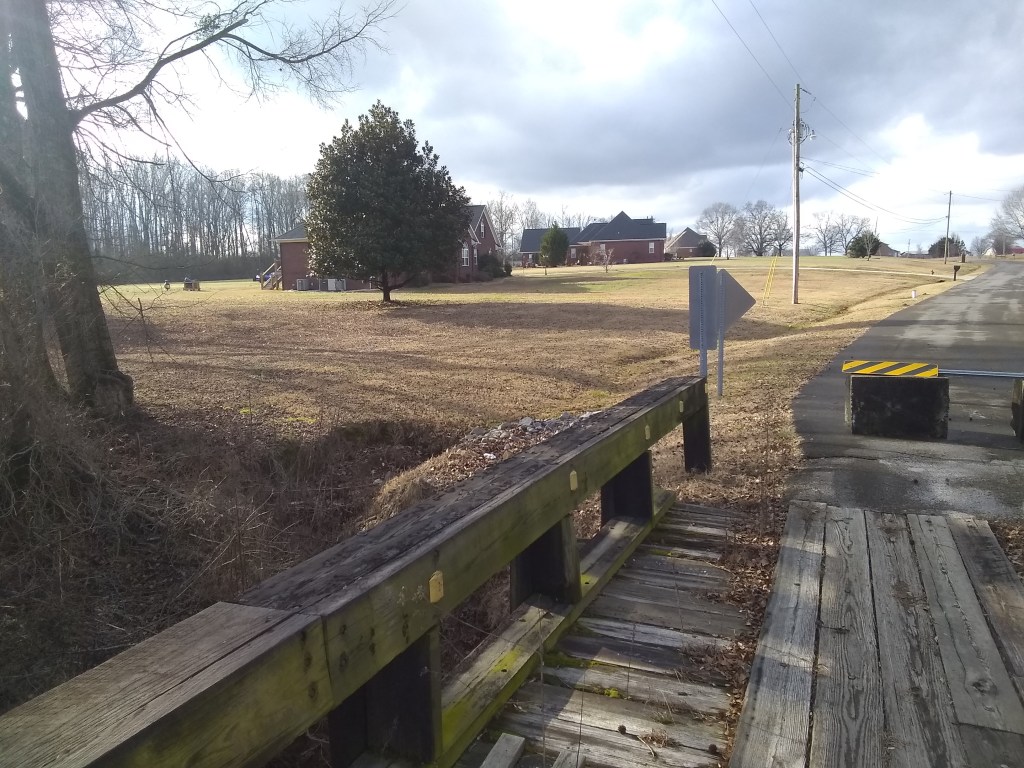
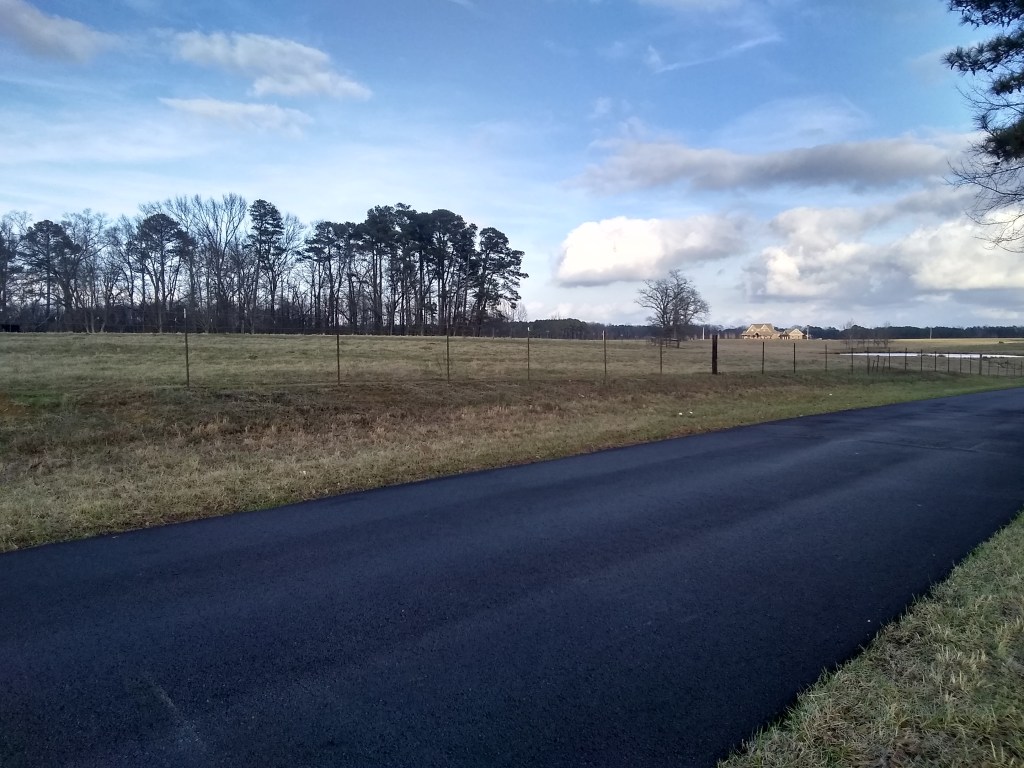
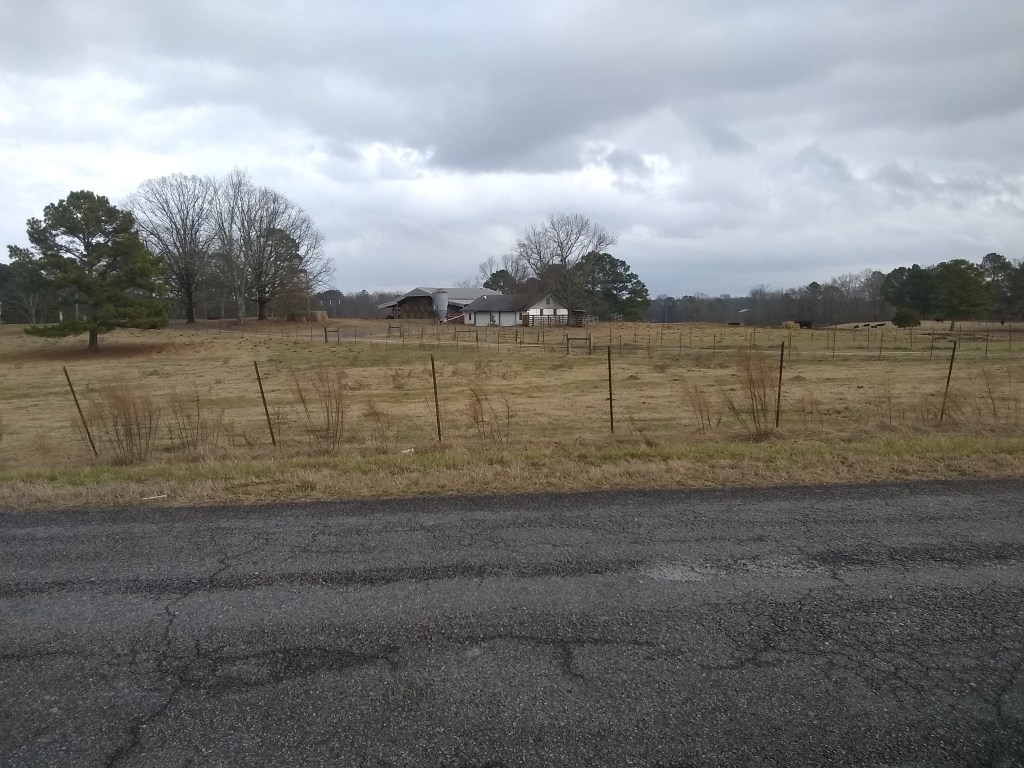
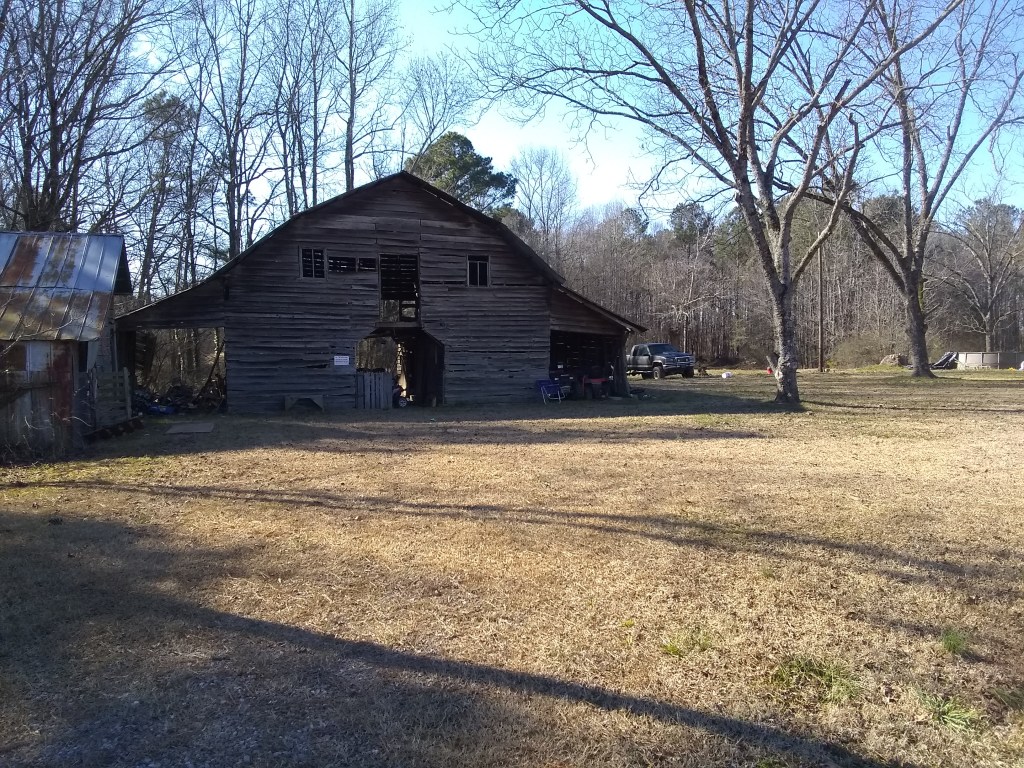
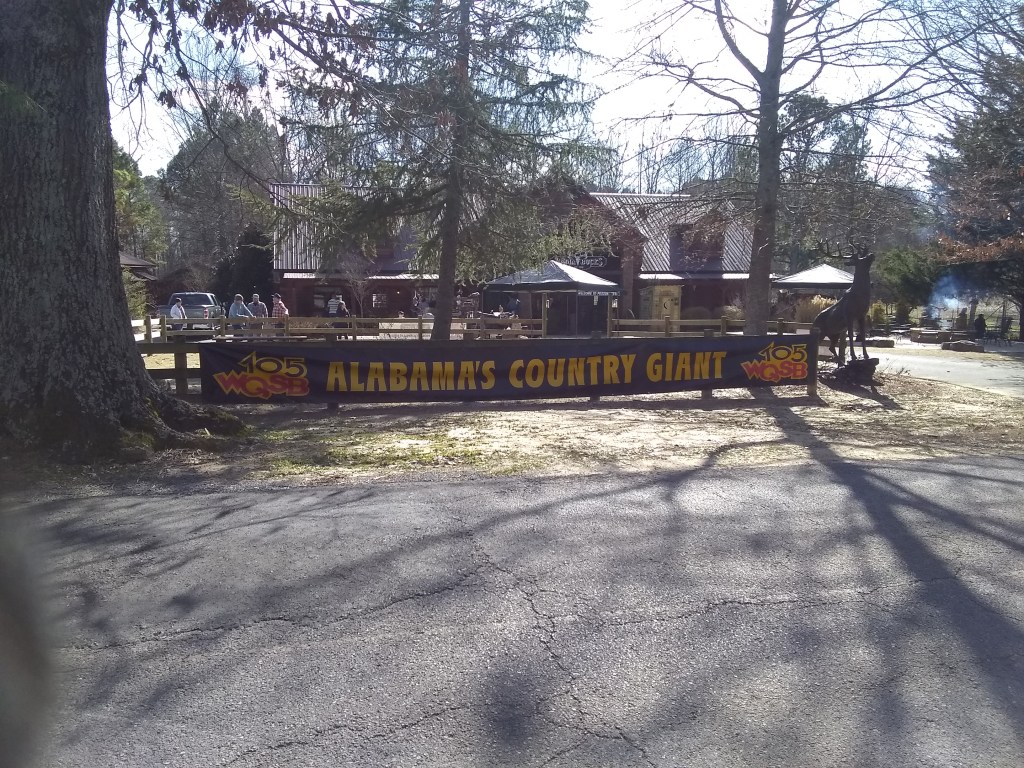
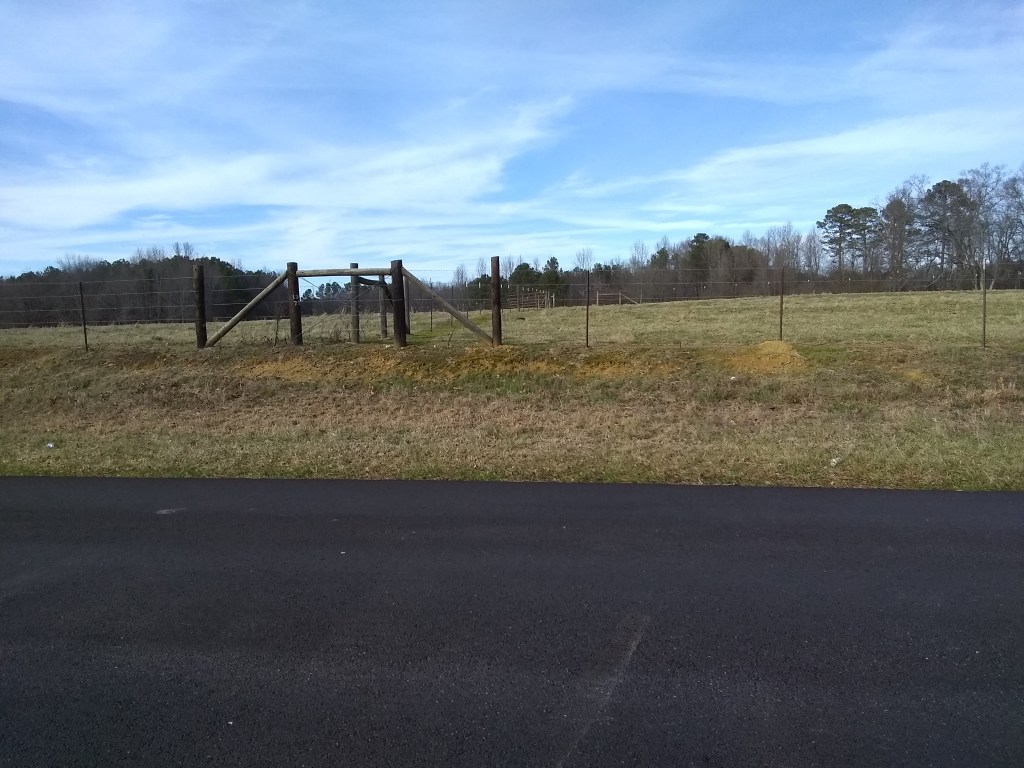
Here’s a few photos from along my pistol route:

James Baldwin on Love, the Illusion of Choice, and the Paradox of Freedom

Here’s the link to this article.

“Nothing is more unbearable, once one has it, than freedom.”

BY MARIA POPOVA

jamesbaldwin
James Baldwin on Love, the Illusion of Choice, and the Paradox of Freedom

We, none of us, choose the century we are born in, or the skin we are born in, or the chromosomes we are born with. We don’t choose the incredibly narrow band of homeostasis within which we can be alive at all — in bodies that die when their temperature rises above 40 degrees Celsius or drops below 20, living on a planet that would be the volcanic inferno of Venus or the frigid desert of Mars if it were just a little closer to or farther from its star.

And yet, within these narrow parameters of being, nothing appeals to us more than the notion of freedom — the feeling that we are free, that intoxicating illusion with which we blunt the hard fact that we are not. The more abstract and ideological the realm, the more vehemently we can insist that moral choice in specific situations within narrow parameters proves a totality of freedom. But the closer the question moves to the core of our being, the more clearly and catastrophically the illusion crumbles — nowhere more helplessly than in the most intimate realm of experience: love. Try to will yourself into — or out of — loving someone, try to will someone into loving you, and you collide with the fundamental fact that we do not choose whom we love. We could not choose, because we do not choose who and what we are, and in any love that is truly love, we love with everything we are.

James Baldwin (August 2, 1924–December 1, 1987) was a young man — young and brilliant and aflame with life, blazing against society’s illusion of stability and control — when he composed his stunning semi-autobiographical novel Giovanni’s Room (public library), making the paradox of freedom its animating theme.James Baldwin

Baldwin writes:

Nothing is more unbearable, once one has it, than freedom.

To bear the unbearable, Baldwin intimates, we construct and cling to artificial structures of choice, personal and social — habits, routines, the contractual commitment of marriage, the moralistic frameworks that indict one kind of love as good and another as bad. Today, Giovanni’s Room is celebrated as a pioneering liberation and representation of LGBTQ+ love — a term that did not exist in Baldwin’s day, for it speaks to a cultural silence so deep then that there was no adequate language for it. (The language we use today is hardly adequate — but language is always a placeholder for a culture’s evolving understanding of itself, the space in which we work out our concepts as we learn how to think about them in learning how to speak of them.) Baldwin rose against a tidal force of cowardice from publishers at a time when the Bible of psychiatry — the Diagnostic Manual of Mental Disorders — classified love as so many of us know it as a “sociopathic personality disturbance.” At the center of his act of courage and resistance is the recognition that the experience of love is our most primal confrontation with the illusion of freedom.

Art by Dorothy Lathrop, 1922. (Available as a print and as stationery cards.)

Exactly half a century after the Spanish-American poet, philosopher, and novelist George Santayana considered why we like what we like and a decade after the Holocaust survivor Viktor Frankl made his hard-earned case for saying yes to life in the most unfree of circumstances, Baldwin writes:

People can’t, unhappily, invent their mooring posts, their lovers and their friends, anymore than they can invent their parents. Life gives these and also takes them away and the great difficulty is to say Yes to life.
Art by Margaret C. Cook from a rare 1913 edition of Walt Whitman’s Leaves of Grass. (Available as a print.)

Four years later, Baldwin would develop these ideas in his immensely insightful speech-turned-essay on freedom and how we imprison ourselves.

In the final years of his life, he would look back on the crucible of these ideas, describing Giovanni’s Room as a book not about one kind of love or another but “about what happens to you if you’re afraid to love anybody.” In his most intimate interview, he would recount the best advice he ever received on the transcendent, terrifying choicelessness of love and the implicit, seemingly paradoxical demand for choice within it — advice given him by an old friend:

You have to go the way your blood beats. If you don’t live the only life you have, you won’t live some other life, you won’t live any life at all.

Art by Margaret C. Cook from Leaves of Grass. (Available as a print.)

Complement with Toni Morrison on the deepest meaning of freedom and Simone de Beauvoir on how chance and choice converge to make us who we are, then revisit Baldwin on the doom and glory of knowing who you are.

The Ultimate Deal

Here’s the link to this article. Please subscribe to The New York Review of Books.

Fintan O’Toole

Trump’s hoarding of official secrets is both breathtakingly careless and utterly calculated.

June 10, 2023

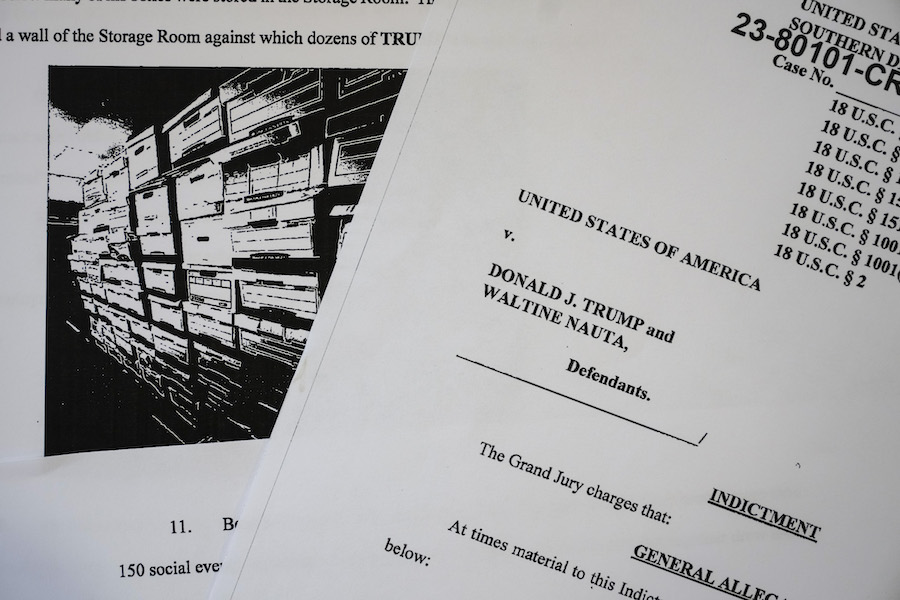
Department of JusticePhotographs from 2021 of boxes of documents in storage at Mar-a-Lago, included in the Justice Department’s indictment of Donald Trump

Secrets are a kind of currency. They can be hoarded, but if kept for too long they lose their value. Like all currencies, they must, sooner or later, be used in a transaction—sold to the highest bidder or bartered as a favor for which another favor will be returned. To see the full scale of Donald Trump’s betrayal of his country, it is necessary to start with this reality. He kept intelligence documents because, at some point, those secrets could be used in a transaction. What he was stockpiling were the materials of treason. He may not have known how and when he would cash in this currency, but there can be little doubt that he was determined to retain the ability to do just that.

Before the publication of the grand jury’s indictment, it was possible to believe that Trump’s retention of classified documents was reckless and stupid. The indictment reveals that recklessness and stupidity are the least of his sins. With Trump, it’s always a mistake to equate anarchy with purposelessness or to think that the farce is not deadly serious. Trump’s hoarding of official secrets is both breathtakingly careless and utterly calculated. At the heart of that calculation is a cold resolve to not give up the power that access to highly restricted information had given him.

The most immediately striking parts of the indictment may, in this regard, be something of a distraction. The photographs that show boxes of papers at Mar-a-Lago, piled high on a ballroom stage, in a bathroom, and spilling out onto the floor of a storage room, convey an almost comic sense of chaos. If comedy is generated by incongruity, what could be more incongruous than nuclear plans or details of “potential vulnerabilities of the United States and its allies to military attack” sitting beside a toilet?

It all seems random and haphazard, an impression greatly magnified by the knowledge that Mar-a-Lago, in the eighteen months after Trump took the documents from the White House, was, as the indictment states, the venue for “more than 150 social events, including weddings, movie premieres and fundraisers that together drew tens of thousands of guests.” The New York Times has published photographs, scraped from social media, of people in party dresses or casual summer clothes around the Mar-a-Lago pool. We can see that, behind them, the door that leads to the storeroom, which was packed with boxes of official papers, is wide open. In those boxes, when the FBI opened them in August 2022, were eleven documents marked Top Secret, thirty-six marked Secret, and twenty-eight marked Confidential. It would have been the least thrilling spy thriller ever made. No James Bond high-tech gadgets or George Smiley ingenuity—just turn up in a cocktail dress, slip through an open door, and help yourself to the US military’s contingency plans for invading Iran.

Yet this ludicrous vulnerability to foreign spies is both remarkable and somewhat beside the point. The slapdash storage of classified papers is shocking—but also misleading. It defines the scandal as, in the words of Alan Feuer and Maggie Haberman in The New York Times, “Mr. Trump’s indifference toward the country’s most sensitive secrets.” But this is not a tale of indifference. Trump cared a great deal about the value of the documents. He cared enough, per the indictment, to suggest that his attorney lie to the FBI and a grand jury about what papers he did or did not have. Even Trump does not engage in a criminal conspiracy purely for its own sake. The retention of those boxes mattered to him because he understood the market value of what they contained.

It is important to bear in mind that chaos is Trump’s natural element. It is the medium in which his narcissism thrives. When there is no plan, the only law is his own desire. He alone knows at any given moment what he will do. In this light, the apparent disorderly storage of the boxes at Mar-a-Lago does not signify a lack of concern with what they contained. It is just the norm of Trumpworld. Derangement is his modus operandi.

The indictment makes clear that Trump knew very well that he was breaking the law. He was repeatedly warned by the National Archives and Records Administration that if he did not hand over the missing records, he would be referred to the Department of Justice. He had, of course, made a very big point in his attacks on Hillary Clinton of the need for zero tolerance for any lack of rigor in the handling of classified documents. He fully understood that the laws applied to everyone, including the president. As he declared in September 2016, before that year’s election, “We can’t have someone in the Oval Office who doesn’t understand the meaning of the word confidential or classified.” As president, in July 2018, he issued a statement saying that “as the head of the executive branch and Commander-in-Chief, I have a unique constitutional responsibility to protect the nation’s classified information, including by controlling access to it.”

More specifically, Trump knew that he was taking huge risks when he allegedly instructed his lawyer to lie to the FBI and the grand jury. That lawyer, quoted in the indictment, recalls that when Trump told him to take a folder of documents to his hotel room, he made a silent “plucking motion,” as if to say, “if there’s anything really bad in there, like, you know, pluck it out.” Precisely because Trump knew that he was committing a crime, he preferred not to utter the incriminating words. There is nothing thoughtless or accidental in all of this. He clearly believed that the risks were worth taking.

This does not suggest that he was holding these documents merely as souvenirs. It’s quite possible to believe that part of his motivation lay in his fantasy that he was still the real president: retaining the intelligence briefings he received as POTUS would make him still, at some level of self-delusion, potent. The two known occasions, cited in the indictment, when Trump produced some of the documents to outsiders while explicitly referring to them as secret and confidential have this air of showing off—perhaps as much to himself as to those he was trying to impress. It is also quite reasonable to think of him experiencing a tingle of pure pleasure in imagining his own impunity—knowing that he was committing the ultimate transgression and thrilling to the idea that he would get away with it because he had always in his life gotten away with everything.

Drew Angerer/Getty ImagesPages from the Justice Department’s indictment of Donald Trump, June 9, 2023

But these elements of twisted psychology can coexist with a more rational impulse: to keep hold of secrets that could be traded at some point for his personal gain. Trump sees himself above all as a deal-maker: “The nation’s classified information” is a potentially lucrative part of one or many deals.

This intent would be treasonous. Trump may not have actually committed treason, but he was consciously putting himself in a position to be able to do so. For what is not secret is the identity of the foreign countries that would be most interested in acquiring the details of the military plans and vulnerabilities of the US and its allies. The indictment states that the documents also included information that could identify US agents and informants in some of those countries and “the continued viability of sensitive intelligence collection methods.” This is worth underlining: Trump went to great lengths to retain for himself, as a private citizen, the power to reveal to any foreign power not just US military secrets but the workings of US intelligence-gathering in those countries. It is impossible to believe that he did this accidentally or without considering that he might at some time use that power in return for some financial or other benefits.

Which makes it all the more astonishing that most of the Republican Party is fine with this. Much of the history of the right in America is bound up with paranoia about the possible existence of traitors at high levels of government. Here is stark evidence of the existence of one at the very highest level of government, and Republicans are rushing to defend him. The Elizabethan courtier Sir John Harington famously asked, “Treason doth never prosper: what’s the reason?” and answered, “For if it prosper, none dare call it Treason.” If the hoarding of state secrets as valuable currency cannot be called treason, the concept has gone the way of honor, truthfulness, and respect for law. It has ceased to exist for the Republican Party.

Fintan O’Toole

Fintan O’Toole is the Advising Editor at The New York Review, a columnist for The Irish Times, and the Leonard L. Milberg Professor of Irish Letters at Princeton. His most recent book, We Don’t Know Ourselves: A Personal History of Modern Ireland, was published in the US last year. (June 2023)

Drafting–Millie speaks to the Cook County District Attorney

At 3:45 PM Molly was lying in her bed reading one of her new novels when she heard Millie’s cellphone vibrating on the end-table beside the couch. Her mother didn’t move. She’d been asleep on the couch since the two of them ended their conversation about Tracey.

“Mom, Mom.” Molly semi-yelled. Thankfully, she didn’t have to get up.

Her mother roused and saw that it was the DA calling. She quickly grabbed the phone and said, “hello.” First thing yesterday morning she’d called Mr. Hook’s office but had to leave a message since he was on holiday until Monday. Millie had explained that it was an emergency and begged the call-taker to notify him as soon as possible.

“Ms. Anderson, this is District Attorney George Hooks. I’m sorry but I just got your message. How may I help you?” The DA knew that Millie and Defendant Colton lived together but that he had never talked to her, nor had one of his investigators. But, that wasn’t because they hadn’t tried. Millie had hidden behind Colton’s attorney, per Colton’s demand. However, the DA had learned during last Monday’s hearing that Millie could provide an alibi for both Colton and Sandy.

“Thanks for returning my call. I need to report a rape, the rape of my twelve-year-old daughter by Colton Atwood.” The first thing DA Hook’s thought was, ‘well that could dampen one’s motivation to provide an alibi.’

“Oh my goodness. I’m so sorry. That reaffirms that bastard is pure evil.” The DA paused a second or two and continued when Millie didn’t respond. “I know this is difficult but can you give me some details, like, when this happened, where it happened, and, sorry for having to be so insensitive, how do you know this is true?”

At first, the DA’s last question triggered Millie’s anger, but then she realized he wasn’t her best friend here; he had a job to do. “We’re pretty certain, Molly and I, that she’s pregnant. Right now all we have, other than my daughter’s word, which I fully believe, is the positive result from an over-the-counter pregnancy test. We have an appointment with an OB/GYN on Monday.”

“I see.” The DA thought about his Monday schedule. “What time is Molly’s appointment?”

“Ten AM.”

“Okay, after that I need the two of you to come to my office. We’ll meet, along with Todd Lacey, my chief investigator, and, again forgive me for my insensitivity, if justified, we’ll swear out a warrant for Mr. Atwood’s arrest.”
Millie really didn’t want to tell the DA where she and Molly were, and that they couldn’t come to his office on Monday. But, she had little choice, especially as to the latter. “We can’t come, I’m sorry. We’re no longer in Chicago. Last Friday, we ran away. We weren’t safe.”

“I’m sorry to hear that, but we’ll still need to meet. We can use Zoom. Will that be a problem?”

“No, that’ll work.” Millie was relieved. She admitted she’d return to Chicago if absolutely necessary. She’d do anything for Molly, and to punish Colton.

“Ms. Anderson, I need to tell you that Mr. Atwood and his co-defendant, Sanford Brown, are AWOL. They failed to appear in court last Monday.”

Millie wasn’t aware Colton had any scheduled court dates. “What was that about? The court appearance?”

“I earlier filed a motion to revoke their bonds. Apparently, they realized Judge Rhodes might put them in jail so they didn’t show.”

A wave of nausea erupted in Millie’s stomach. She knew how cunning and relentless Colton could be. “So, he’s free to do as he pleases?”

“Until we find and arrest him.” Millie heard a child in the background pleading for her father to play with her. “Before I go, I need to give you an update. I have a report that the defendants are driving a dark gray Mercedes van. It’s a Sprinter model.”

Millie quickly jumped in. “How do you know this?”

“I’m sorry but I cannot divulge my source right now but he tells me the defendants were seen at Colton’s house on Princeton Avenue.”

“It’s my home. Colton lived with me and Molly.”

“I see. Anyway, they were seen there last Tuesday. After they departed my source searched the garbage can and found cold items, apparently from your refrigerator.”

06/11/23 Biking & Listening to The Dictionary of Lost Words

Biking is something else I both love and hate. It takes a lot of effort but does provide good exercise and most days over an hour to listen to a good book or podcast. I especially like having ridden.

Here’s my bike, a Rockhopper by Specialized. I purchased it November 2021 from Venture Out in Guntersville; Mike is top notch! So is the bike, and the ‘old’ man seat I salvaged from an old Walmart bike.

Here’s a link to today’s bike ride. I call this my pistol route.


Something to consider if you’re not already cycling.

I encourage you to start riding a bike, no matter your age. Check out these groups:

Cycling for those aged 70+(opens in a new tab)

Solitary Cycling(opens in a new tab)

Remember,

Photo by Suzy Hazelwood on Pexels.com

Here’s what I’m listening to: The Dictionary of Lost Words, by Pip Williams

Amazon abstract:

NEW YORK TIMES BESTSELLER • REESE’S BOOK CLUB PICK • “Delightful . . . [a] captivating and slyly subversive fictional paean to the real women whose work on the Oxford English Dictionary went largely unheralded.”—The New York Times Book Review

“A marvelous fiction about the power of language to elevate or repress.”—Geraldine Brooks, 
New York Times bestselling author of People of the Book

Esme is born into a world of words. Motherless and irrepressibly curious, she spends her childhood in the Scriptorium, an Oxford garden shed in which her father and a team of dedicated lexicographers are collecting words for the very first Oxford English Dictionary. Young Esme’s place is beneath the sorting table, unseen and unheard. One day a slip of paper containing the word bondmaid flutters beneath the table. She rescues the slip and, learning that the word means “slave girl,” begins to collect other words that have been discarded or neglected by the dictionary men.

As she grows up, Esme realizes that words and meanings relating to women’s and common folks’ experiences often go unrecorded. And so she begins in earnest to search out words for her own dictionary: the Dictionary of Lost Words. To do so she must leave the sheltered world of the university and venture out to meet the people whose words will fill those pages.

Set during the height of the women’s suffrage movement and with the Great War looming, The Dictionary of Lost Words reveals a lost narrative, hidden between the lines of a history written by men. Inspired by actual events, author Pip Williams has delved into the archives of the Oxford English Dictionary to tell this highly original story. The Dictionary of Lost Words is a delightful, lyrical, and deeply thought-provoking celebration of words and the power of language to shape the world.

WINNER OF THE AUSTRALIAN BOOK INDUSTRY AWARD


Here’s a few photos from along my pistol route:

The Paradox of Free Will

Here’s the link to this article.

The neuroscience, physics, and philosophy of freedom in a universe of fixed laws.

BY MARIA POPOVA

“Nothing is more unbearable, once one has it, than freedom,” James Baldwin observed in recognizing how limited our freedom is and how illusory our choices, for he knew that “people can’t, unhappily, invent their mooring posts, their lovers and their friends, anymore than they can invent their parents.”

And yet we move through the world with an air of agency, without which life would feel unlivable — a gauntlet of causality stretching all the way back to the Big Bang, into which we are hurled as helpless pawns in some cosmic game that has already played out. It is a disquieting notion — one we have countered with our dream of free will, continually mistaking the feeling of freedom for the fact of freedom.

But even within the presets and parameters conferred upon us by the cosmic and cultural forces that made us, there exists a margin of movement in which notions like control, agency, and moral responsibility live. In that margin, we become fully human.

In this fascinating BBC documentary, journalist Melissa Hogenboom and a constellation of neuroscientists, physicists, and philosophers explore the science and subtleties of the free will question — a question that remains not only unanswered but a testament to Hannah Arendt’s astute observation that “to lose the appetite for meaning we call thinking and cease to ask unanswerable questions [would be to lose] the capacity to ask all the answerable questions upon which every civilization is founded.”

Complement with Einstein on free will and the power of the imagination, C.S. Lewis on suffering and what it means to have free will in a universe of fixed laws, and neuroscientist Christof Koch on the paradox of freedom.

06/10/23 Biking & Listening to The Dictionary of Lost Words

Biking is something else I both love and hate. It takes a lot of effort but does provide good exercise and most days over an hour to listen to a good book or podcast. I especially like having ridden.

Here’s my bike, a Rockhopper by Specialized. I purchased it November 2021 from Venture Out in Guntersville; Mike is top notch! So is the bike, and the ‘old’ man seat I salvaged from an old Walmart bike.

Here’s a link to today’s bike ride.

Here’s what I’m listening to: The Dictionary of Lost Words, by Pip Williams

Amazon abstract:

NEW YORK TIMES BESTSELLER • REESE’S BOOK CLUB PICK • “Delightful . . . [a] captivating and slyly subversive fictional paean to the real women whose work on the Oxford English Dictionary went largely unheralded.”—The New York Times Book Review

“A marvelous fiction about the power of language to elevate or repress.”—Geraldine Brooks, 
New York Times bestselling author of People of the Book

Esme is born into a world of words. Motherless and irrepressibly curious, she spends her childhood in the Scriptorium, an Oxford garden shed in which her father and a team of dedicated lexicographers are collecting words for the very first Oxford English Dictionary. Young Esme’s place is beneath the sorting table, unseen and unheard. One day a slip of paper containing the word bondmaid flutters beneath the table. She rescues the slip and, learning that the word means “slave girl,” begins to collect other words that have been discarded or neglected by the dictionary men.

As she grows up, Esme realizes that words and meanings relating to women’s and common folks’ experiences often go unrecorded. And so she begins in earnest to search out words for her own dictionary: the Dictionary of Lost Words. To do so she must leave the sheltered world of the university and venture out to meet the people whose words will fill those pages.

Set during the height of the women’s suffrage movement and with the Great War looming, The Dictionary of Lost Words reveals a lost narrative, hidden between the lines of a history written by men. Inspired by actual events, author Pip Williams has delved into the archives of the Oxford English Dictionary to tell this highly original story. The Dictionary of Lost Words is a delightful, lyrical, and deeply thought-provoking celebration of words and the power of language to shape the world.

WINNER OF THE AUSTRALIAN BOOK INDUSTRY AWARD


Here’s a few photos from along my pistol route:

Modern Liberalism Born of Enlightenment Thought

Here’s the link to this article.

James A. Haught | March 31, 2023 | Kiosk Article


Values that later grew into liberalism began stirring in the epoch now known as the Enlightenment, starting more than three centuries ago, chiefly in England and France. It was an era when kings still ruled brutally by “divine right,” and the church still sought to execute “heretics” holding irregular beliefs, or jail skeptics for blasphemy. Most people were agricultural serfs, working on lands inherited by wealthy barons and counts. The bottom-rung majority had virtually no rights.

But the Enlightenment roused a new way of thinking: a sense that all people should have some control over their lives, a voice in their own destiny. Absolute power of authorities—either the throne or the cathedral—was challenged. Reformers asserted that human reason and the scientific method can improve society and benefit nearly everyone.

The 1600s were a time of ugly intolerance, much of it stemming from alliances between church and throne. In England’s notorious Star Chamber, controlled by the Anglican archbishop, Puritan and Presbyterian dissenters were forced to testify against themselves, then sentenced to have their ears cut off or their faces branded with markings such as S. L. (for seditious libeler). One victim, John Lilburne, became a public hero because he wrote pamphlets claiming that all people deserved “freeborn rights” not subject to king or church.

Europe was emerging from horrors of religious wars and massacres between Catholics and Protestants. Catholic France persecuted Huguenot Protestants. Jews were attacked cruelly and banned from certain nations, including England. Sporadic executions of “heretics” and “witches” still occurred. England’s last accused witch was put to death in 1684. A few others were executed around Europe and the New World for another century.

This was the background that helped spawn Enlightenment reform.

England was shattered by civil war in the 1640s between Parliament and Puritans on one side versus King Charles I and Anglicans on the other. Charles was beheaded and the power of kings was reduced—expanding an erosion that began four centuries earlier when barons forced King John to sign the Magna Carta, yielding certain rights.

By the late 1600s, some thinkers began pondering society and government.

Thomas Hobbes (1588-1679) wrote Leviathan asserting that people need a “social contract” to secure safe lives. In a dog-eat-dog natural state, he said, everyone suffers from “continual fear and danger of violent death; and the life of man [is] solitary, poor, nasty, brutish and short.” Therefore, he said, people must yield power to a sovereign government to enforce order and protect them. Hobbes supported a king as the sovereign—but the tide away from absolute kings already was flowing. Hobbes raised awareness that the social order is made by humans, not by God.

In his many writings, Hobbes repeatedly affronted the clergy. A bishop accused him of atheism, possibly punishable by death. The allegation subsided, then flared again. Nearing 80 years old, Hobbes hastily burned some of his papers and eluded prosecution.

John Locke (1632-1704) hatched notions of democracy, arguing that all people, male and female, deserve a degree of equality. He dismissed the divine right of kings, and advocated separation of church and state to avert religious conflict.

John Milton (1608-1674) was more than an epic poet who wrote in four languages. He also supported popular government and attacked state-mandated religion. When Parliament imposed censorship on writings, he defied a licensing requirement and published an Areopagitica pamphlet claiming that all thinking people are entitled to free expression of their beliefs. “Books are not absolutely dead things,” he said. “He who destroys a good book kills reason itself.” The principle of free speech and free press was furthered.

In France, Baron de Montesquieu (1689-1755) championed democracy and envisioned an elected government with power divided between executive, legislative and judicial branches.

Francois Marie Arouet (1694-1788)—”that consuming fire called Voltaire,” as Will Durant called him—was a brilliant French writer who became a heroic champion of human rights. Endlessly, he denounced cruelties of bishops and aristocrats. Here’s an example: In the devout town of Abbeville, a teen-age youth, Francois de la Barre, was accused of marring a crucifix, singing impious songs and wearing his hat while a church procession passed. He was sentenced to have his tongue torn out, his head chopped off, and his remains burned. Voltaire wrote bitter protests against this savagery. He helped appeal the youth’s case to Parliament, which showed “mercy” by affording the blasphemer a quick death by beheading—with a copy of Voltaire’s Philosophical Dictionary nailed to his body.

Voltaire’s protest writings roused ferment across Europe and won reversal of a few cases. He freed Jean Espinas, who had spent 23 years aboard a penal galley ship because he sheltered a fugitive Protestant minister for one night. Likewise, he freed Claude Chaumont from a galley bench, where he had been sentenced for attending a Protestant worship service.

In The Rights of Man, Thomas Paine wrote that Voltaire’s “forte lay in exposing and ridiculing the superstitions which priestcraft, united with statecraft, had interwoven with governments.”

At first, Enlightenment ideas were somewhat suppressed in Europe, where kings and archbishops still prevailed, but they found fertile ground in America’s colonies. Brilliant radicals such as Thomas Jefferson, John Adams, Benjamin Franklin and James Madison read them ardently and adopted them as a pattern for the first modern democracy, the United States of America. In the Declaration of Independence, Jefferson summed up the essence:

All men are created equal and endowed by their creator with certain inalienable rights, among these life, liberty and the pursuit of happiness.

Less-known founding father George Mason incorporated the principles into the Bill of Rights, keeping church and state apart, guaranteeing free speech, and protecting each person from abuses by the majority. Similarly, the personal liberties were reiterated in the Rights of Man and the Citizen adopted by the French Revolution, and eventually in the Universal Declaration of Human Rights that Eleanor Roosevelt helped craft for the United Nations.

Thus democracy became self-contradictory. A basic premise is majority rule—yet a bill of rights prevents majority rule. For example, the Christian majority cannot vote to banish minority Jews or skeptics. Personal beliefs are exempt from majority rule.

The Enlightenment was the seedbed that sprouted most of the liberal freedoms now enjoyed in democracies everywhere. It projected a model for humane, safe, fair modern life.