The Silence of Pliny the Elder (1st-Century Fridays #7)

Here’s the link to this article.

Avatar photoby CAPTAIN CASSIDY

AUG 06, 2021

City and Lake of Como, painted 1834 by Jean-Baptiste-Camille Corot. It looked way different in Pliny’s day, and it looks even more different now.

Hi and welcome back! As it’s now Friday, let’s turn our gaze to another author alive during the supposed lifetime of Jesus Christ — one who should have known about the creator of Christianity and those earliest Christians he inspired. 

Today, our focus rests upon Gaius Plinius Secundus, more popularly known as Pliny the Elder. As he lived between 23/24 CE – 79 CE and was good friends with Emperor Vespasian (who ruled from 69-79 CE), he was very well-placed to know all about this stuff. Let’s see if he did.

City and Lake of Como, painted 1834 by Jean-Baptiste-Camille Corot. It looked way different in the days of Pliny the Elder, and it looks even more different now.

(In 1st-Century Fridays, we meet the ancient contemporaries of Jesus. We’re using the real definition of the word “contemporaneous” here, not the one Biblical scholars have weaseled to give themselves some leeway with their utter lack of evidence that their Savior actually existed. No, the people we’ll meet here must have been alive during that critical time of 30-35 CE. AND they must have had a good chance of hearing about what Christians claim was happening in Jerusalem at the time. Here’s the largely-canonical list of contemporaries you might have seen around. I prefer this diagram made by one of our other link writers. And here are some other lists.)

Everyone, Meet Pliny the Elder.

Pliny the Elder was a Roman writer, philosopher, and military commander. He lived from 23/24 to 79 CE. At least, we think that’s his birth year. In truth, we don’t know much about his early life. Neither he nor his nephew (Pliny the Younger, natch) said much about his parents. We also think he was born in Como, in way northern Italy. His sister bore his nephew, Pliny the Younger.

As is normal for wealthy highborn Romans, Pliny the Elder enjoyed a good education. In this case, he learned lawmaking. At some point, he seems to have adopted Stoic beliefs. Once that was done, he began that course of military positions and whatnot that would prepare him for a grand future in Roman politics.

The following is a list of the most commented articles in the last 7 days.

He sounds like quite the traditionalist. Though he became quite wealthy, he adopted an archaic lifestyle. For example, he ate austere, reasonable meals instead of huge feasts. He never married or had kids, either. Instead, he adopted his nephew as his heir after his sister’s husband died.

He left the military right around when Nero became emperor. It really looks like Pliny did everything he could to avoid drawing Nero’s attention during those dangerous years of his rule from 54-68 CE. Instead, he worked as a lawyer. He also wrote books about safe topics: grammar, education, etc.

Anything else was too dangerous to contemplate.

Pliny the Elder and His Later Life.

After the tumultuous Year of Four Emperors, Vespasian became emperor in 69 CE. He was, like Pliny, a man of the equestrian class. He’d lived a very similar life. And his #1 priority in those early years of his reign was to get the empire stabilized. He wanted to secure things after all the upsets Rome had experienced recently.

Vespasian called to Pliny to serve him. Pliny responded to that call. He gave up his law practice to become a high-ranking official in various important provinces. The men seem to have become friends. Indeed, Pliny often visited Vespasian in the early morning before going about his own duties.

Toward the end of his life, Pliny published the first books of his Natural HistoryIt was a 37-volume encyclopedia. He used his own experience and other previously-written works to create it. In it, he covered every single topic he could think of. Regarding the title, he meant by it not just what we’d think of as “natural history,” but stuff about life itself, all aspects of it.

And I do mean “all” up there. Various volumes of his Natural History covered Africa, China, and other such places that Roman expansionism had touched and absorbed.

The Last Day of Pliny the Elder.

By now, Vespasian had appointed him the praefectus classis in Miseno. That’s toward the north end of the Bay of Naples. Here it is on a map:

miseno, pompeii, stabiae
The Bay of Naples. Miseno is in the north, Pompeii and Stabiae in the middle. The black smudge represents the eruption itself

In 79 CE, Pliny stood and watched a weird cloud arising from Mount Vesuvius. It was shaped like a “pine-tree,” or so his nephew says (Book 6, Letter 16, “To Tacitus.”)

Either way, Pliny the Elder wanted to find out what that cloud was all about. Just watching from afar didn’t satisfy him.

He was in the north end of the bay with a fleet of ships. Why not use ’em? After watching the cloud from afar, he ordered a galley to be prepared to sail closer for a better look.

I wonder if he wanted to put this info into his Natural History!

The Death of Pliny the Elder.

But there was another reason why Pliny the Elder wanted to sail into danger.

In the midst of his preparations to explore, he received a letter from his frantic friend Rectina. She had a villa close by the mountain in Stabiae. And she was getting more and more frightened by the moment. She begged Pliny to rescue her. He’d already been getting a galley ready to sail out that way. Now, though, his efforts became focused on rescue. In all, a number of galleys sailed out on the rescue trip. He intended to help as many people as he could.

Pliny invited his nephew to come along, but the younger man declined; he had some work to finish up. So his uncle set off without him. (Lucky nephew! He dodged that one!)

He did rescue at least one other person in Stabiae: his friend Senator Pomponianus.

Then, his ship got stuck in Stabiae.

Alas, Pliny had hung around Stabiae too long. Perhaps he inhaled too much volcanic ash or toxic gas. Or perhaps he had a heart attack. We don’t know if his rescued friend survived, either. Nor do we know if he ever reached Rectina — or even what happened to her.

What we do know is that Pliny the Elder died in 79 CE in Stabiae.

What Did Pliny the Elder Write About Jesus and Christianity?

So we’ve got this account of a well-traveled, well-read Roman leader who very deliberately and purposefully gathered and wrote down absolutely everything about everything he could find. His encyclopedia has influenced similar efforts for thousands of years.

Thankfully, we can access Natural History in translation here.

And I can tell you now that it does not mention anything about Jesus or the earliest Christians.

Not a word. You can search it yourself if you like! There’s an excellent search function right there.

All you’ll find for these terms are footnotes added by Christians. They clearly felt tetchy about, say, Pliny’s mention of Tyana. I can see why.

After all, that’s where Apollonius of Tyana was from. I’m sure they would indeed have bristled at this reminder of his existence.

Sidebar: The Essenes Have Entered the Chat.

Pliny the Elder does talk a little about Judea in Book V, Chapter 15. Interestingly, he mentions the Essenes. They were a mystic Jewish sect that existed from the 2nd century BCE to the 1st century CE. Of them, Pliny writes:

Lying on the west of Asphaltites, and sufficiently distant to escape its noxious exhalations, are the Esseni, a people that live apart from the world, and marvellous beyond all others throughout the whole earth, for they have no women among them; to sexual desire they are strangers; money they have none; the palm-trees are their only companions. Day after day, however, their numbers are fully recruited by multitudes of strangers that resort to them, driven thither to adopt their usages by the tempests of fortune, and wearied with the miseries of life. Thus it is, that through thousands of ages, incredible to relate, this people eternally prolongs its existence, without a single birth taking place there; so fruitful a source of population to it is that weariness of life which is felt by others.

Yep, that sounds about like the Essenes we’ve met. Off and on through his work, Pliny might also be referring to various Essene people, but it doesn’t sound like historians are completely sure about that. In addition, this same chapter mentions Galilee, the Jordan River, and Herodium.

Otherwise, we see nothing whatsoever of Jesus or Christianity in this vast encyclopedia. All the same, it’s interesting stuff. I especially liked this chapter (VI.37) about “The Fortunate Isles.”

What Pliny the Elder Never Knew.

Like we saw with Seneca the Younger last week, Pliny the Elder really, truly destroys Christian claims of Jesus’ importance. He also wrecks their own historical claims about their religion’s earliest years and their claims about its rapid early growth.

Pliny the Elder was writing and gathering information for his Natural History till his death. His work covered every single aspect of the world Romans knew.

As a well-traveled and well-read Roman leader, he really was in the perfect place to have at least heard about the new religion and its firebrand of a leader — especially if, as Christians like to claim, the new religion swept through the Roman Empire because it was just so, I dunno, DIFFERENT, I guess.

But no. That silence surprised even me a bit, because I expected at least a mention of Christians somewhere in his work.

And yet, Pliny the Elder seems to have known nothing at all of any of it.

Grading Pliny the Elder.

I’m giving Pliny the Elder an A+.

I don’t think we’ve yet found another 1st-century writer better-situated than he was to know about the earliest Christians and Jesus Christ than him. And yet he is utterly silent on both topics. He most definitely belongs on our list of vetted 1st-century writers who really should have known about this stuff but didn’t.

I’m very glad to have learned about him. And I hope you’ll find his adventurous life as interesting as I did!

06/19/23 Biking & Listening to The Dictionary of Lost Words

Biking is something else I both love and hate. It takes a lot of effort but does provide good exercise and most days over an hour to listen to a good book or podcast. I especially like having ridden.

Here’s my bike, a Rockhopper by Specialized. I purchased it November 2021 from Venture Out in Guntersville; Mike is top notch! So is the bike, and the ‘old’ man seat I salvaged from an old Walmart bike.
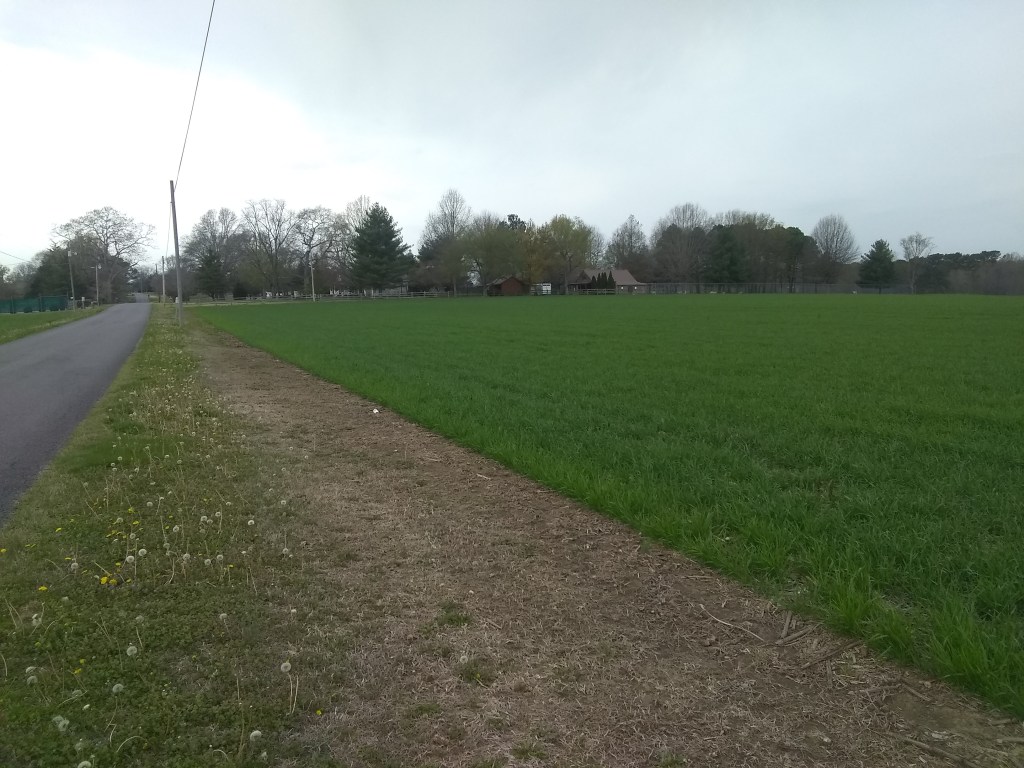
Here’s a link to today’s bike ride.


Something to consider if you’re not already cycling.

I encourage you to start riding a bike, no matter your age. Check out these groups:

Cycling for those aged 70+(opens in a new tab)

Solitary Cycling(opens in a new tab)

Remember,

Photo by Suzy Hazelwood on Pexels.com

Here’s what I’m listening to: The Dictionary of Lost Words, by Pip Williams

Amazon abstract:

NEW YORK TIMES BESTSELLER • REESE’S BOOK CLUB PICK • “Delightful . . . [a] captivating and slyly subversive fictional paean to the real women whose work on the Oxford English Dictionary went largely unheralded.”—The New York Times Book Review

“A marvelous fiction about the power of language to elevate or repress.”—Geraldine Brooks, 
New York Times bestselling author of People of the Book

Esme is born into a world of words. Motherless and irrepressibly curious, she spends her childhood in the Scriptorium, an Oxford garden shed in which her father and a team of dedicated lexicographers are collecting words for the very first Oxford English Dictionary. Young Esme’s place is beneath the sorting table, unseen and unheard. One day a slip of paper containing the word bondmaid flutters beneath the table. She rescues the slip and, learning that the word means “slave girl,” begins to collect other words that have been discarded or neglected by the dictionary men.

As she grows up, Esme realizes that words and meanings relating to women’s and common folks’ experiences often go unrecorded. And so she begins in earnest to search out words for her own dictionary: the Dictionary of Lost Words. To do so she must leave the sheltered world of the university and venture out to meet the people whose words will fill those pages.

Set during the height of the women’s suffrage movement and with the Great War looming, The Dictionary of Lost Words reveals a lost narrative, hidden between the lines of a history written by men. Inspired by actual events, author Pip Williams has delved into the archives of the Oxford English Dictionary to tell this highly original story. The Dictionary of Lost Words is a delightful, lyrical, and deeply thought-provoking celebration of words and the power of language to shape the world.

WINNER OF THE AUSTRALIAN BOOK INDUSTRY AWARD


Here’s a few photos from along my pistol route:

Two Fantastic Quotes from Colonel Robert G. Ingersoll: On Willful Disbelief & A Designer In Need Of Design

Here’s the link to this article.

By John W. Loftus at 5/28/2023

#1 On Willful Disbelief: Can we control our thought? Can we tell what we are going to think tomorrow? Can we stop thinking? Is belief the result of that which to us is evidence, or is it a product of the will? Can the scales in which reason weighs evidence be turned by the will? Why then should evidence be weighed? If it all depends on the will, what is evidence? Is there any opportunity of being dishonest in the formation of an opinion? Must not the man who forms the opinion know what it is? He cannot knowingly cheat himself. He cannot be deceived with dice that he loads. He cannot play unfairly at solitaire without knowing that he has lost the game. He cannot knowingly weigh with false scales and believe in the correctness of the result.

The Bible quotes Jesus with having said, “He that believeth and is baptized shall be saved; but he that believeth not shall be damned.” The Christians say that it is the duty of every person to read, to understand, and to believe this revelation – that a man should use his reason; but if he honestly concludes that the Bible is not a revelation from God, and dies with that conclusion in his mind, he will be tormented forever. They say,” Read,” and then add: “Believe, or be damned.” Suppose then I read this Bible honestly, fairly, and when I get through I am compelled to say, “The book is not true.” If this is the honest result, if the book and my brain are both the work of the same Infinite God, whose fault is it that the book and the brain do not agree? Either God should have written a book to fit my brain, or should have made my brain to fit his book. The brain thinks without asking our consent; we believe, or disbelieve, without an effort of the will. Belief is a result. It is the effect of evidence upon the mind. The scales turn in spite of him who watches. There is no opportunity of being honest or dishonest in the formation of an opinion. The conclusion is entirely independent of desire. We must believe, or we must doubt, in spite of what we wish. –From Col. Ingersoll to Mr. Gladstone

#2 On A Designer In Need Of Design: The idea that a design must have a beginning and that a designer need not, is a simple expression of human ignorance. We find a watch, and we say: “So curious and wonderful a thing must have had a maker.” We find the watch-maker, and we say: “So curious and wonderful a thing as man must have had a maker.”

We find God, and we then say: “He is so wonderful that he must not have had a maker.” In other words, all things a little wonderful must have been created, but it is possible for something to be so wonderful that it always existed. One would suppose that just as the wonder increased the necessity for a creator increased, because it is the wonder of the thing that suggests the idea of creation. Is it possible that a designer exists from all eternity without design? Was there no design in having an infinite designer? For me, it is hard to see the plan or design in earthquakes and pestilences. It is somewhat difficult to discern the design or the benevolence in so making the world that billions of animals live only on the agonies of others. The justice of God is not visible to me in the history of this world. When I think of the suffering and death, of the poverty and crime, of the cruelty and malice, of the heartlessness of this “design” and “plan,” where beak and claw and tooth tear and rend the quivering flesh of weakness and despair, I cannot convince myself that it is the result of infinite wisdom, benevolence, and justice. –From Ingersoll vs Black, A former Chief Justice of US.

Philosopher Martha Nussbaum on Human Dignity and the Nuanced Relationship Between Agency and Victimhood

Here’s the link to this article.

“The victim shows us something about our own lives: we see that we too are vulnerable to misfortune, that we are not any different from the people whose fate we are watching…”

BY MARIA POPOVA

Philosopher Martha Nussbaum on Human Dignity and the Nuanced Relationship Between Agency and Victimhood

“Of all the parts of your body, be most vigilant over your index finger,” Joseph Brodsky proclaimed in the greatest commencement address of all time“for … a pointed finger is a victim’s logo.” But while there is tremendous truth in the poet’s words, as is often the case with grandiose proclamations, it is only a partial truth beneath which lies a far more nuanced reality.

Those nuances are what philosopher Martha Nussbaum examines in her 2001 book Upheavals of Thought: The Intelligence of Emotions (public library), titled after Proust’s conception of the emotions as “geologic upheavals of thought” — her terrific exploration of, among other perplexities, why embracing our neediness is essential for happiness and healthy relationships.

Martha Nussbaum

A generation after the great composer Leonard Bernstein defined democracy as “the difficult, slow method in which the dignity of A is acknowledged by B, without impairing the dignity of C,” Nussbaum turns an eye to classical Greek philosophy and tragedy to examine the mediating role of dignity in the question of agency and victimhood in a just society. She writes:

Compassion requires the judgment that there are serious bad things that happen to others through no fault of their own. In its classic tragic form, it imagines that a person possessed of basic human dignity has been injured by life on a grand scale. So it adopts a thoroughly anti-Stoic picture of the world, according to which human beings are both dignified and needy, and in which dignity and neediness interact in complex ways… The basic worth of a human being remains, even when the world has done its worst. But this does not mean that the human being has not been profoundly damaged, both outwardly and inwardly.

The society that incorporates the perspective of tragic compassion into its basic design thus begins with a general insight: people are dignified agents, but they are also, frequently, victims. Agency and victimhood are not incompatible: indeed, only the capacity for agency makes victimhood tragic. In American society today, by contrast, we often hear that we have a stark and binary choice, between regarding people as agents and regarding them as victims. We encounter this contrast when social welfare programs are debated: it is said that to give people various forms of social support is to treat them as victims of life’s ills, rather than to respect them as agents, capable of working to better their own lot.

Art by Shaun Tan for a special edition of the Brothers Grimm fairy tales

Writing a decade and a half before today’s crescendoing debates about the societal complexities surrounding rape and the criminal justice system, Nussbaum critiques how this “stark and binary choice” between agency and victimhood is keeping us from establishing a foundation of basic human dignity upon which to build our society:

We find the same contrast in recent feminist debates, where we are told that respecting women as agents is incompatible with a strong concern to protect them from rape, sexual harassment, and other forms of unequal treatment. To protect women is to presume that they can’t fight on their own against this ill treatment; this, in turn, is to treat them like mere victims and to undermine their dignity.

[…]

We are offered the same contrast, again, in debates about criminal sentencing, where we are urged to think that any sympathy shown to a criminal defendant on account of a deprived social background or other misfortune such as child sexual abuse is, once again, a denial of the defendant’s human dignity. Justice Thomas, for example, went so far as to say, in a 1994 speech, that when black people and poor people are shown sympathy for their background when they commit crimes, they are being treated like children, “or even worse, treated like animals without a soul.”

But we confer these judgments selectively and the arbitrariness of these selections, Nussbaum points out, is itself suspect — we don’t, for instance, believe that we’re undermining artists’ and writers’ dignity by protecting their freedom of speech, nor do we believe that laws protecting personal property are turning property-owners into victims. Nussbaum poses a necessary question:

If, then, we hear political actors saying such things about women, and poor people, and racial minorities, we should first of all ask why they are being singled out: what is there about the situation of being poor, or female, or black that means that help is condescending, and compassion insulting?

Art by Andrea Dezsö for a special edition of the Brothers Grimm fairy tales

In this unease lies the seedbed of our conflicted relationship to agency and victimhood:

The victim shows us something about our own lives: we see that we too are vulnerable to misfortune, that we are not any different from the people whose fate we are watching, and we therefore have reason to fear a similar reversal.

Trauma and tragedy — the circumstances that create the basic framework of victimhood — force us to confront this dual nature of the human experience: we are at once agents of our own fate and vulnerable to the whims of a larger system over much of which we have no control. But discomfiting as this duality is, Nussbaum suggests, it holds our greatest opportunity for goodness:

Tragedy asks us … to walk a delicate line. We are to acknowledge that life’s miseries strike deep, striking to the heart of human agency itself. And yet we are also to insist that they do not remove humanity, that the capacity for goodness remains when all else has been removed.

Nussbaum considers how this understanding of tragedy can help us begin to foster such foundations for dignity:

If we understand that injustice can strike its roots into the personality itself, producing rage and resentment and the roots of bad character, we have even deeper incentives to commit ourselves to giving each child the material and social support that human dignity requires. A compassionate society … is one that takes the full measure of the harms that can befall citizens beyond their own doing; compassion thus provides a motive to secure to all the basic support that will undergird and protect human dignity.

Upheavals of Thought, it bears repeating, is a remarkable and dimensionally rewarding read. Complement this particular portion with Nietzsche on how to become master of yourself and this lovely illustrated reminder that we are separated from those less fortunate than us by little more than unmerited cosmic odds.

06/18/23 Biking & Listening to The Dictionary of Lost Words

Biking is something else I both love and hate. It takes a lot of effort but does provide good exercise and most days over an hour to listen to a good book or podcast. I especially like having ridden.

Here’s my bike, a Rockhopper by Specialized. I purchased it November 2021 from Venture Out in Guntersville; Mike is top notch! So is the bike, and the ‘old’ man seat I salvaged from an old Walmart bike.

Here’s a link to today’s bike ride.


Something to consider if you’re not already cycling.

I encourage you to start riding a bike, no matter your age. Check out these groups:

Cycling for those aged 70+(opens in a new tab)

Solitary Cycling(opens in a new tab)

Remember,

Photo by Suzy Hazelwood on Pexels.com

Here’s what I’m listening to: The Dictionary of Lost Words, by Pip Williams

Amazon abstract:

NEW YORK TIMES BESTSELLER • REESE’S BOOK CLUB PICK • “Delightful . . . [a] captivating and slyly subversive fictional paean to the real women whose work on the Oxford English Dictionary went largely unheralded.”—The New York Times Book Review

“A marvelous fiction about the power of language to elevate or repress.”—Geraldine Brooks, 
New York Times bestselling author of People of the Book

Esme is born into a world of words. Motherless and irrepressibly curious, she spends her childhood in the Scriptorium, an Oxford garden shed in which her father and a team of dedicated lexicographers are collecting words for the very first Oxford English Dictionary. Young Esme’s place is beneath the sorting table, unseen and unheard. One day a slip of paper containing the word bondmaid flutters beneath the table. She rescues the slip and, learning that the word means “slave girl,” begins to collect other words that have been discarded or neglected by the dictionary men.

As she grows up, Esme realizes that words and meanings relating to women’s and common folks’ experiences often go unrecorded. And so she begins in earnest to search out words for her own dictionary: the Dictionary of Lost Words. To do so she must leave the sheltered world of the university and venture out to meet the people whose words will fill those pages.

Set during the height of the women’s suffrage movement and with the Great War looming, The Dictionary of Lost Words reveals a lost narrative, hidden between the lines of a history written by men. Inspired by actual events, author Pip Williams has delved into the archives of the Oxford English Dictionary to tell this highly original story. The Dictionary of Lost Words is a delightful, lyrical, and deeply thought-provoking celebration of words and the power of language to shape the world.

WINNER OF THE AUSTRALIAN BOOK INDUSTRY AWARD


Here’s a few photos from along my pistol route:

Worth sharing from Twitter

RC deWinter

@RCdeWinter

The following is an actual question given on a University of Washington chemistry mid-term. The answer by one student was so “profound” that the professor shared it with colleagues via the Internet, which is, of course, why we now enjoy it as well.

Bonus Question: Is Hell exothermic (gives off heat) or endothermic (absorbs heat)?

Most of the students wrote proofs of their beliefs using Boyle’s Law (gas cools when it expands and heats when it is compressed) or some variant.

One student, however, wrote the following:

First, we need to know how the mass of Hell is changing in time. So we need to know the rate at which souls are moving into Hell and the rate at which they are leaving. I think that we can safely assume that once a soul gets to Hell, it will not leave. Therefore, no souls are leaving.

As for how many souls are entering Hell, let’s look at the different religions existing in the world today. Most of these religions state that if you are not a member of their religion, you will go to Hell. Since there are more than one of these religions, and since people do not belong to more than one religion, we can project that all souls go to Hell. With birth and death rates as they are, we can expect the number of souls in Hell to increase exponentially.

Now, we look at the rate of change of the volume in Hell because Boyle’s Law states that in order for the temperature and pressure in Hell to stay the same, the volume of Hell has to expand proportionately as souls are added.

This gives two possibilities:

1. If Hell is expanding at a slower rate than the rate at which souls enter Hell, then the temperature and pressure in Hell will increase until all Hell breaks loose

2. If Hell is expanding at a rate faster than the increase of souls in Hell, then the temperature and pressure will drop until Hell freezes over.

So which is it?

If we accept the postulate given to me by Teresa during my Freshman year, that, “it will be a cold day in Hell before I sleep with you,” and take into account the fact that I slept with her last night, then Number 2 must be true, and thus I am sure that Hell is exothermic and has already frozen over.

The corollary of this theory is that since Hell has frozen over, it follows that it is not accepting any more souls and is therefore, extinct…leaving only Heaven, thereby proving the existence of a divine being which explains why, last night, Teresa kept shouting “Oh my God.”

THIS STUDENT RECEIVED THE ONLY A

Cruelty, Crime and Abuse in the Name of Jesus

Here’s the link to this article.

By David Madison at 5/26/2023


It never seems to stop

How does religion get away with it? It relies on the ignorance, gullibility and, yes, the complacency of those are committed to piety. And the consequences can be calamitous. In an article I posted here in January, Humanity’s Urgent Need to Outgrow Religion, I mentioned the plan to spend big bucks to build what amounts to a theme-park at the supposed site of Jesus’ baptism—but the developers have been careful not to call it a theme park. It’s a scam, a prank, a joke, because nobody knows where Jesus was baptized, in fact the gospel of John omits any mention of Jesus setting foot in the River Jordan. Yes, John the Baptist is there, but mainly to announce that Jesus is the “lamb of God who takes way the sins of the world.”  

But a baptism theme-park is a minor offense. We keep being hit with news about the cruelties, crimes, and abuses done in Jesus’ name. Three headlines of recent vintage illustrate the ongoing problem.

One:

The New York Times, 14 May 2023: He told followers to starve to meet Jesus. Why did so many do it? by Andrew Higgins. This happened in Kenya, when members of a cult founded by Paul Nthenge Mackenzie, “a former taxi driver turned televangelist” urged his followers to flee to Shakahola, “an evangelical Christian sanctuary from the fast-approaching apocalypse.” 

“Instead of a haven, however, the 800-acre property, a sun-scorched wasteland of scrub and spindly trees, is now a gruesome crime scene, scattered with the shallow graves of believers who starved themselves to death — or, as Mr. Mackenzie would have it, crucified themselves so that they could meet Jesus.” 

The article notes that, so far, 179 bodies have been found, and many people are still missing.  

“Mr. Mackenzie’s journey from destitute taxi driver to cult leader with his own television channel began in 2002 in a stone courtyard opposite a Catholic primary school in Malindi.” 

“Evangelical Christianity and freelance preachers have surged in popularity across Africa, part of a religious boom on the continent that stands in stark contrast to the rapid secularization of former colonial powers like Britain, which governed Kenya until 1963. About half of Kenyans are evangelicals, a far higher proportion than in the United States.” 

Mr. Mackenzie “…said that he would stay alive to help lead his followers to ‘meet Jesus’ through starvation but that once this work was done, he, too, would starve himself to death ahead of what he said was the imminent end of the world.” 

But guess who is still alive and under arrest! The venality of Mackenzie is clear from his story reported in the article. We can suspect that he promoted the scam without really believing it himself. Do Kenneth Copeland and Joel Osteen, who have become super wealthy through their “ministries,” really believe what they’re preaching? Whatever the case, they have discovered that ancient superstitions about meeting savior-Jesus work. The most natural thing in the world is that people are afraid of death—and this fear is so easily exploited. Thousands of religions have promoted so many different gimmicks to get out of dying, and the apostle Paul especially pushed the idea that Jesus would arrive on the clouds soon to rescue those who believe. It is no benefit whatever to humanity—now, in 2023—that so many minds are captive to goofy ideas: about half of Kenyans are evangelicals! 

Two:

How U.S. Evangelicals Helped Homophobia Flourish in AfricaAnti-gay sentiment had previously existed on the continent, but white American religious groups have given it a boost, by Nigerian journalist Caleb Okereke, foreignpolicy.com, 19 March 2023.

In the U.S., evangelicals have faced considerable pushback in their hostility to gay people, whose battle cry has become, “We’re mad as hell, and we’re not taking it anymore.” This resistance to hatred and abuse culminated in the Marriage Equality ruling by the Supreme Court in 2015. But conservative have the Bible on their side—they’re sure of it—because of the so-called clobber verses that show for sure that their god hates homosexuality. And armed with that certainty, some evangelicals saw Africa as a venue for advancing anti-gay hatreds and abuse. 

Full disclosure here: I am gay, and just this week my husband and I celebrated our 45th anniversary. I realized my orientation as a teenager, and was curious to know how that had happened. My father was a doctor, and among his books I found Alfred Kinsey’s 1948 book, Sexual Behavior in the Human Male. There were the statistics, i.e., maybe five percentage of males are homosexual. No condemnation, no scolding: just the facts of the matter. In 1973 the American Psychiatric Association removed homosexuality from its Diagnostic Manual because evidence was lacking that same-sex attraction is a disorder. Therapists should focus on helping their clients achieve productive lives acknowledging same-sex attraction. 

Despite what we now know—after exhaustive study—about homosexuality, evangelicals are sure it’s a moral evil, and irrationally champion the few Bible verses that seem to make their case, e.g. Leviticus 20:13 and Paul’s condemnation in Romans 1:26-27. They have their blinders on: they don’t follow most of the other laws in Leviticus, and they laugh off Paul’s advice to heterosexual couples: “…it is best for a man not to touch a woman…” (1 Corinthians 7:1) and “those who belong to Christ have crucified the flesh with its passions and desires” (Galatians 5:24).   

Caleb Okereke’s article calls attention to the lies and misinformation perpetuated by the anti-gay campaign in Africa: “It has deep links to white evangelical Christianity and is an export of a made-in-the-USA movement and ideology that is polarizing African countries and harming and endangering LGBTQ+ people.” The article concludes:

“Proponents of ex-gay and anti-gay philosophies depend on the permanence of gay people for their message to be relevant. They require an enemy for their fight to be valid, and they go to great lengths to construct this enemy as a well-funded and all-powerful foreign movement while falsely presenting the local anti-gay movement as a grassroots underdog, despite its heavy reliance on U.S. evangelicals for publicity.” 

This certainly qualifies as cruelty and abuse in the name of Jesus. How we wish evangelical would grow up. They zealously promote hate under the guise of love.

Three:

Sex Abuse in Catholic Church: Over 1,900 Minors Abused in Illinois, State Says: A new report by the attorney general of Illinois covering decades names more than 450 credibly accused sexual abusers, including priests and lay religious brothers, by Ruth Graham, 23 May 2023, The New York Times.

It’s a mystery to me that membership in the Catholic Church isn’t down to zero by now. These headlines have become routine for a long time, prompting Richard Carrier’s verdict:


“In actual fact the Catholic Church is an international rape factory. And has been for decades; possibly untold centuries. Religious belief not only allowed that to happen, it is still allowing it to happen, as believers refuse to leave the church, refusing to effect any substantive reform that would prevent it, refusing to find a less deadly and destructive religion to believe in and support.” (What’s the Harm: Why Religious Belief Is Always Bad, 10 September 2018)

Why in the world do believers refuse to leave the church? In the wake of this crime, cruelty, and abuse, Catholic churches in Illinois should now be empty. I have argued that, from the very first week of his papacy, beloved Pope Francis should have been holding weekly press conferences to let the world know exactly what has been accomplished to put an end to priests raping children: 

·      This is how many priests have been handed over to the police. 

·      This is how we have upgraded recruiting and training practices to screen for pedophiles. 

·      This is what we have done to ensure that criminal priests are not transferred to other parishes. 

Above all

·      This is what we have done to teach priests about human sexuality. 

In his book, In the Closet of the Vatican: Power, Homosexuality, Hypocrisy, Frédéric Martel notes that young men who loath their same-sex orientation opt for the priesthood to avoid suspicion. As soon as their decision is announced, questions about “Why don’t you have a girlfriend?” cease. But how do they not perceive what a huge mistake it is to opt to live in an all-male environment! Martel demonstrates (based on four years of research and interviews) that so many of the gays in the Vatican itself are virulently homophobic. This was sustained especially by popes John-Paul II and Benedict XVI, who brought their own versions of gay-hate with them to the Vatican from Poland and Germany. Even now the Vatican describes homosexuality as an intrinsic disorder.

So the pressure is there—for priests everywhere—to keep a lid on it, to follow the supposed ideal of Paul, “…those who belong to Christ have crucified the flesh with its passions and desires.” But this doesn’t work, hence children, for whom priests are ultimate authority figures, become the victims. How do priests explain to children what they’re about to do? “Don’t worry, Jesus is okay with this.” Do they clear their own consciences by going to confession?

Not that all priests are closeted gays, but even the straight priests who have sworn vows of celibacy become aware that keeping a lid on it is an unnecessary torment. Hence priest-on-priest action happens as well, as Tom Rastrelli documents in his book, Confessions of a Gay Priest: A Memoir of Sex, Love, Abuse, and Scandal in the Catholic Seminary.

By the way, in this context, “playing dress up” is not a best practice. What are they playing at? Trying to dazzle the folks who show up at church? Creating a distraction? The Vatican—to set an example for priests everywhere—should tone down theatrical ritual and absurd costuming. Its motto should not be, “There’s no business like show business.” The reputation of the Catholic church has been damaged severely, and it
cannot be repaired by the over-the-top worship outfits: get back to the reality of child abuse that needs to be eliminated. And oh—here’s a thought—pay attention to the Jesus-script in the Sermon on the Mount about not giving much thought to what to wear: “Consider the lilies of the field, how they grow; they neither toil nor spin, yet I tell you, even Solomon in all his glory was not clothed like one of these” (Matthew 6:28-29). Yet the Vatican seems determined to outdo Solomon is all his glory. But instead they have accumulated so much shame.


David Madison was a pastor in the Methodist Church for nine years, and has a PhD in Biblical Studies from Boston University. He is the author of two books, Ten Tough Problems in Christian Thought and Belief: a Minister-Turned-Atheist Shows Why You Should Ditch the Faith (2016; 2018 Foreword by John Loftus) and Ten Things Christians Wish Jesus Hadn’t Taught: And Other Reasons to Question His Words (2021). The Spanish translation of this book is also now available. 

His YouTube channel is here. He has written for the Debunking Christianity Blog since 2016.

The Cure-for-Christianity Library©, now with more than 500 titles, is here. A brief video explanation of the Library is here.