
The Path and the Goal of Practice
Take the goal as the path by recognizing the inherent freedom of awareness, now.
***
For more information, click here.

Take the goal as the path by recognizing the inherent freedom of awareness, now.
***
For more information, click here.
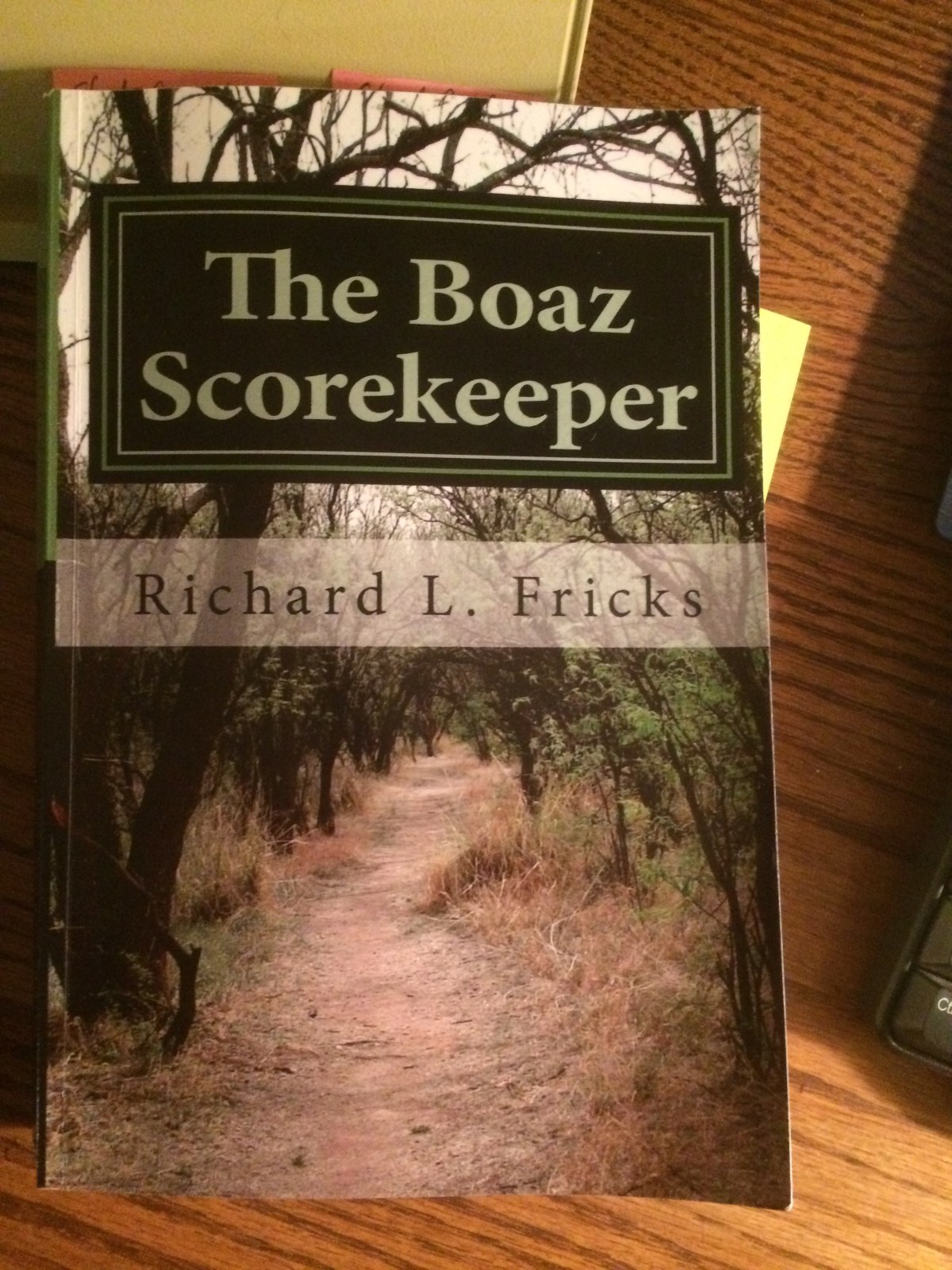
The Boaz Scorekeeper, written in 2017, is my second novel. I'll post it, a chapter a day, over the next few weeks.
The Murray’s autopsies were released three weeks after Judge Freeman dismissed their case. However, Matt had been unable to obtain a copy until the last week of November. Cyanide poisoning was the cause of both deaths. The Marshall County District Attorney opened a formal investigation. I had a good working relationship with Detective Darden Clarke who shared with me that the Sheriff had seized a bottle of Restoril the day the bodies were found. Restoril was a benzodiazepine used as a sleeping pill. The bottle seized was Nellie’s and had been prescribed by Dr. Lester, her family doctor. Darden told me the DA was sending the Restoril to the State Lab for analysis to determine if the remaining pills contained any cyanide. He said even if they did and were the cause of Nellie’s death, it didn’t explain how Bill died from cyanide poisoning unless he had taken one of her sleeping pills. Darden said the only thing they knew for sure right now was that Bill and Nellie Murray died from cyanide poisoning. They were a long way from ruling their deaths a homicide even though suspicions were high.
Biking is something I both love and hate. The conflicting emotions arise from the undeniable physical effort it demands. However, this exertion is precisely what makes it an excellent form of exercise. Most days, I dedicate over an hour to my cycling routine, and in doing so, I’ve discovered a unique opportunity to enjoy a good book or podcast. The rhythmic pedaling and the wind against my face create a calming backdrop that allows me to fully immerse myself in the content. In these moments, the time spent on the bike seems worthwhile, as I can’t help but appreciate the mental and physical rewards it offers.
I especially like having ridden. The post-biking feeling is one of pure satisfaction. The endorphin rush, coupled with a sense of accomplishment, makes the initial struggle and fatigue worthwhile. As I dismount and catch my breath, I relish the sensation of having conquered the challenge, both physically and mentally. It’s a reminder that the things we sometimes love to hate can often be the ones that bring us the most fulfillment. In the end, the love-hate relationship with biking only deepens my appreciation for the sport, as it continually pushes me to overcome my own limitations and embrace the rewards that follow the effort.

A Rockhopper by Specialized. I purchased it November 2021 from Venture Out in Guntersville; Mike is top notch! So is the bike. The ‘old’ man seat was salvaged from an old Walmart bike (update: seat replaced, new photo to follow, someday).
I encourage you to start riding a bike, no matter your age. Check out these groups:
Cycling for those aged 70+(opens in a new tab)
Solitary Cycling(opens in a new tab)
Remember,
Nothing today.
Nothing today.















In the quiet of my early morning, often accompanied by the gentle scratching of my pencil in the Pencil Pit, I find myself reflecting on the myriad ways our thinking can go astray. Today, I want to delve into a topic that’s crucial for anyone striving for the clarity of thought – logical fallacies.
Logical fallacies are like traps in reasoning: deceptive and often misleading. They’re errors in reasoning that can invalidate an argument, yet they’re persuasive enough to often go unnoticed. Understanding and identifying these fallacies is vital for anyone engaged in critical thinking and rational discourse.
Let’s explore some common ones:
Recognizing these fallacies is the first step in clearing the fog in the landscape of debate and discussion. In our daily lives, especially in an era dominated by information overload, the ability to discern flawed arguments is not just an academic skill but a necessity.
As we navigate through complex discussions and debates, let’s arm ourselves with the tools of critical thinking. Let’s not fall prey to the seductive simplicity of flawed reasoning. Our pursuit of truth in The Pencil Driven Life demands no less.
Here are examples of logical fallacies from various articles:
Ad Hominem Fallacy:
Straw Man Fallacy:
Appeal to Ignorance Fallacy:
False Dilemma Fallacy:
Slippery Slope Fallacy:
These examples illustrate how logical fallacies can appear in arguments and discussions, demonstrating the importance of analyzing and questioning the underlying assumptions and logic.
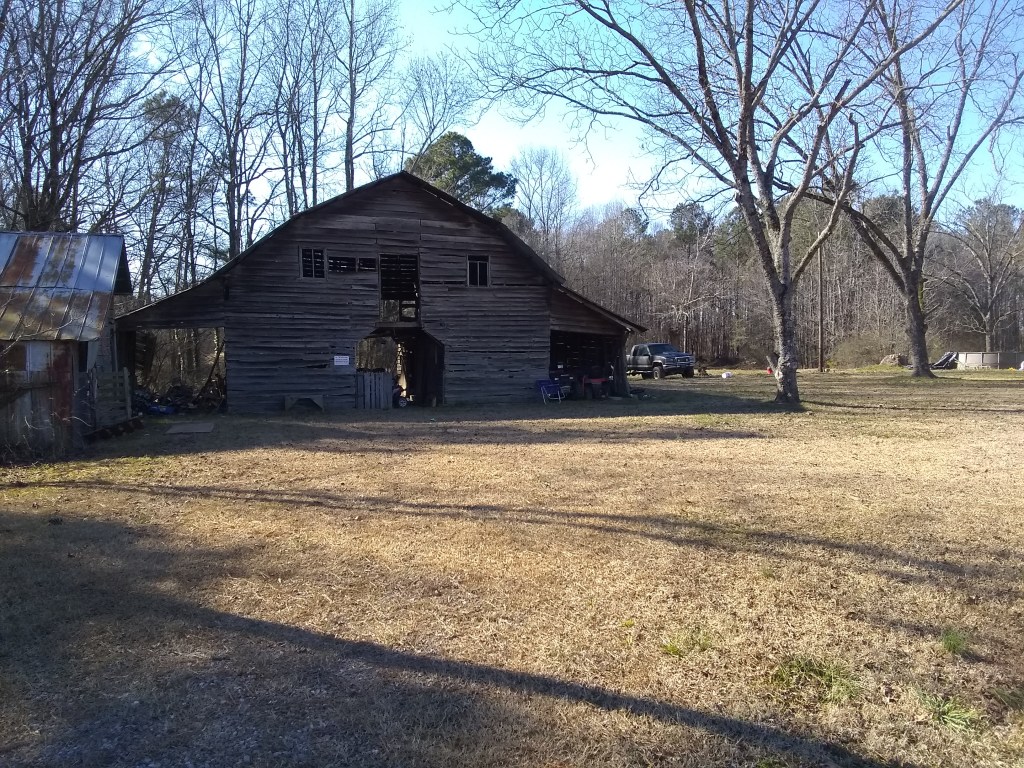
As I sit in the Pencil Pit, the early morning light casting soft shadows around my barn-turned-sanctuary, my mind meanders through the events of yesterday, each a metaphor in its own right, each a lesson subtly veiled.
My thoughts first drift to a casual remark made at the Walgreen’s drive-thru, about Canadian geese that, contrary to their migratory nature, never leave. This offhand comment, punctuated by the distant squawks of the geese, stayed with me. It’s fascinating how, like these geese, certain elements of our psyche – be it fear, resentment, or outdated beliefs – choose to roost permanently in our minds. They linger, often unnoticed, long past their natural season to depart. It’s a gentle reminder of the mental clutter we ought to clear, yet somehow, it remains, nested comfortably in the crevices of our thoughts.
Later, in the attic, amidst the chore of stuffing insulation into the exhaust fan, I was struck by the likeness of the white, blown insulation to clouds. It was a moment of unexpected beauty, a reminder of how perspective can transform the mundane into the extraordinary. It made me think about perception – how the way we choose to see things can alter our entire experience. There, in the dusty corners of the attic, amidst the routine task, lay a whimsical landscape, a sky within a home.
The day ended in the garden with Jon and Donna, our hands working in unison to remove the tomato cages, making way for the planting of Crimson Clover. This act, simple yet profound, is a dance with the rhythm of nature – a preparation for renewal and growth. Planting a winter cover crop is an investment in the future; it’s about nurturing the soil, even when it lies dormant under the cold sky. It symbolizes hope, care, and the foresight to prepare today for tomorrow’s harvest.
These moments, as ordinary as they may seem, are threads in the tapestry of daily life. The geese that don’t migrate remind us to let go of what no longer serves us. The cloud-like insulation speaks of finding wonder in the everyday. The act of preparing the garden soil is a testament to the cycles of nature and life – of preparation, care, and eventual rejuvenation.
In the quiet of the Pencil Pit, as I reflect on these seemingly disparate experiences, I find a common theme – the importance of perspective, the beauty in the ordinary, and the continuous cycle of holding on and letting go. It’s remarkable how life, in its unassuming way, offers lessons at every turn, in every attic corner, every garden patch, and even in the flight patterns of geese.
The Boaz Scorekeeper, written in 2017, is my second novel. I'll post it, a chapter a day, over the next few weeks.
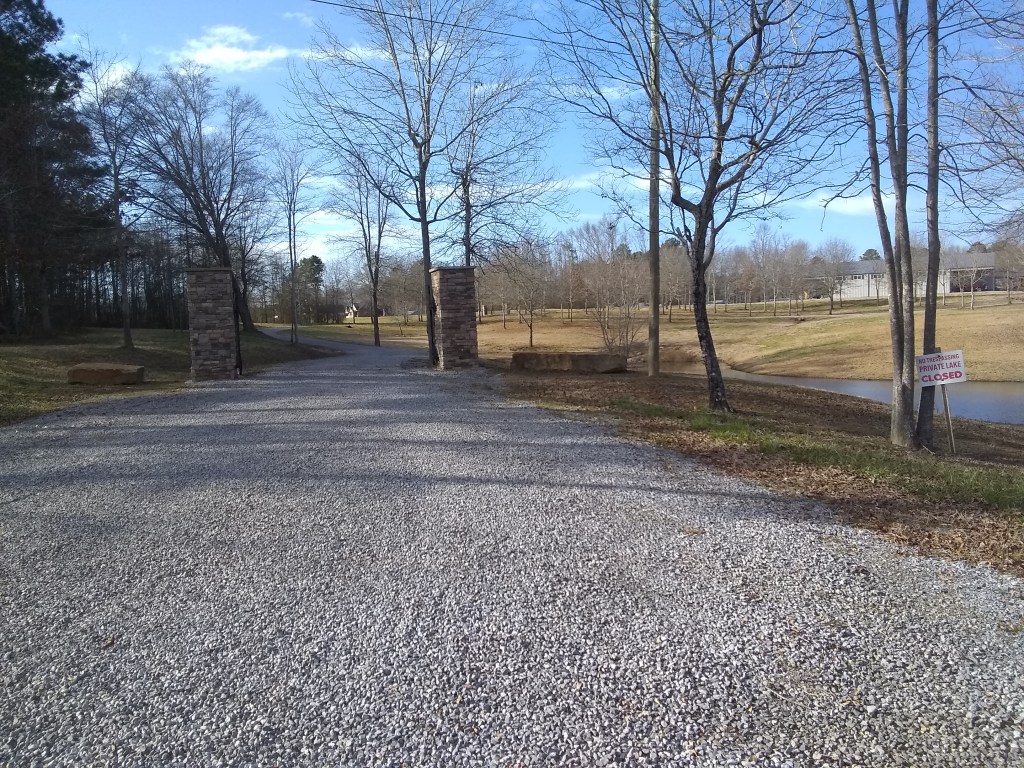
Matt was so gracious in allowing me to work part time for the remainder of October and the entire month of November 1998. He knew how hard Bill and Nellie’s deaths hit me. But time off from the law practice was insufficient alone to redirect my thinking. Probably, the only thing that kept me from bed-ridden depression was the construction of our home at Hickory Hollow. Karla and I had purchased this 100-acre tract off Cox Gap Road in North Etowah County earlier this year. We had planned this house for months and had only hired Boggs Construction Company in August with plans to break ground the last week of October. The first week was devoted to digging a partial basement, with the second and third weeks focused on pouring a footer and the basement floor. The fourth week was consumed with block laying.
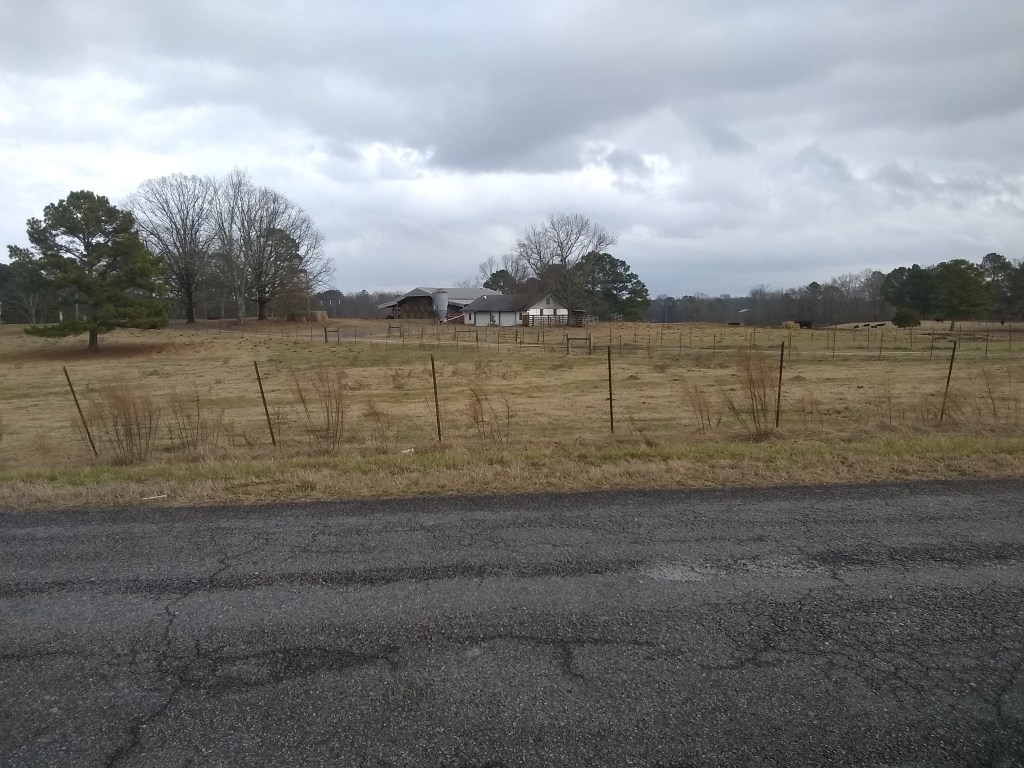
There was something therapeutic about watching the workmen, whether they were operating a track hoe or a bulldozer, or pulling a tape measure and using stakes and string to layout the outer walls of the sprawling ranch style house. I mostly sat in a lawn chair and watched. I occasionally would talk with Stewart Boggs, but that was rare since he was like a machine focused on production. He knew what he was doing. We had spent countless hours since late August hashing through the many decisions before having the plans drawn.
No matter how hard I tried to focus on the construction, my mind kept wandering to the Murrays final night. I didn’t know for sure but I had from the first news of their deaths, concluded the Flaming Five were responsible. No doubt, I didn’t give mere coincidence much of a chance to be the reason. How on earth could their deaths be a coincidence? If only Bill or Nellie had died in their sleep that Sunday night I might could side with coincidence. But, two deaths were a totally different matter. And both deaths just hours before the world was to begin to hear the mountain of evidence Matt and I had assembled that would convince the most skeptical jurors imaginable that Wade, James, Randall, Fred, and John, and each of their fathers, were responsible for the deaths of Wendi and Cindi Murray.
The only consolation I could allow to seed in my mind was that somehow, this time, the ones responsible for the Murray’s deaths would face criminal punishment. They would serve hard time in prison. While sitting under hundred-year-old Hickory trees, my mind sought out the truth of what happened that night. At first, I believed it nothing more than my imagination, but near the end of November I felt I had constructed a foolproof case of reliable and admissible evidence against David Adams and Walter Tillman. I don’t know why I believed these two were the only two who had come to the Murray’s that Sunday night and killed them. How did they kill them? There were no signs of any struggle. Their house had not been broken into. No doubt my mind was using past reality to construct a present reality. David had smothered the final life out of Wendi over 25 years ago while Walter watched. And, just four months earlier, Walter had settled his part of the wrongful death case. He had convinced himself that settling his case had freed him to commit two additional murders. Was his participation forced by the other members of Club Eden? Hadn’t Walter sold-out the Club? Now, he felt he had to make up with the Club to save his skin. Thus, he helped David, the ruthless, evil David, to once again snuff the live out of two more Murrays.
I was merely speculating. My real imaginings sitting in a grove of Hickory trees at Hickory Hollow was simply an exercise in survival. The sun, the wind, the occasional summer shower, flooded my mind with a natural hope but it was my legal training and my inherent bent towards logic and reason that enabled me to sit up and avoid a bed-ridden depression.
While watching workmen at Hickory Hollow, if I had any doubts whether the Flaming Five and Fathers were responsible for the Murray’s deaths, these disappeared when the results of their long-delayed autopsies were released.
Biking is something I both love and hate. The conflicting emotions arise from the undeniable physical effort it demands. However, this exertion is precisely what makes it an excellent form of exercise. Most days, I dedicate over an hour to my cycling routine, and in doing so, I’ve discovered a unique opportunity to enjoy a good book or podcast. The rhythmic pedaling and the wind against my face create a calming backdrop that allows me to fully immerse myself in the content. In these moments, the time spent on the bike seems worthwhile, as I can’t help but appreciate the mental and physical rewards it offers.
I especially like having ridden. The post-biking feeling is one of pure satisfaction. The endorphin rush, coupled with a sense of accomplishment, makes the initial struggle and fatigue worthwhile. As I dismount and catch my breath, I relish the sensation of having conquered the challenge, both physically and mentally. It’s a reminder that the things we sometimes love to hate can often be the ones that bring us the most fulfillment. In the end, the love-hate relationship with biking only deepens my appreciation for the sport, as it continually pushes me to overcome my own limitations and embrace the rewards that follow the effort.
A Rockhopper by Specialized. I purchased it November 2021 from Venture Out in Guntersville; Mike is top notch! So is the bike. The ‘old’ man seat was salvaged from an old Walmart bike (update: seat replaced, new photo to follow, someday).
I encourage you to start riding a bike, no matter your age. Check out these groups:
Cycling for those aged 70+(opens in a new tab)
Solitary Cycling(opens in a new tab)
Remember,
Nothing today.
Nothing today.
Sitting in the quietude of the Pencil Pit before dawn, my mind wanders through the vast cosmos, far beyond the confines of this rustic barn. The phrase “everyone loses everything” lingers in my thoughts, now intertwined with the staggering scale of the universe I pondered yesterday.
I watched a video that put the size of our Milky Way Galaxy into perspective. Imagine the entire United States (just the lower 48 states) representing the Milky Way. In this grand scale, our entire solar system is a mere speck around Kansas City, Kansas. It struck me profoundly. On the fingertip of a person, amidst the ridges and valleys of a fingerprint, a tiny yellow ball represented our Sun – smaller than a grain of sand, yet in reality almost 900,000 miles in diameter. The immensity is unfathomable.
Lying in bed last night, I couldn’t shake off the image of our solar system, all seven planets and their orbits, fitting on a man’s fingertip. In this grand cosmic scale, the significance of a single human, or even humanity as a whole, becomes infinitesimally small. We are but a fleeting whisper in the boundless universe, one of billions of galaxies, each with its own billions of stars and planets.
And yet, here I am, in the Pencil Pit, pondering the finite nature of our existence. “Everyone loses everything” – the phrase seems even more poignant against the backdrop of the cosmos. Our time, our possessions, our very beings are transient in this vast universe. But rather than diminishing our lives, this thought imbues them with a profound significance. Each moment we live, each connection we make, every line we write is a miracle against the canvas of this almost endless universe.
This perspective, from the scale of galaxies down to the simple act of writing in my barn, is a humbling reminder of our place in the cosmos. It grounds me in the present, reinforcing the importance of cherishing every fleeting moment. In the grand scheme of things, we may be insignificant, but in the realm of our personal experiences, every moment is vast and meaningful. This is where the true spirituality lies – not in clinging to what we will eventually lose, but in fully embracing the now, the ephemeral beauty of existence in a universe so vast, it’s beyond our full comprehension.
Discover how mindfulness can help you find relief from constant mental chatter.
***
For more information, click here.


 Richard L. Fricks