Biking is something I both love and hate. The conflicting emotions arise from the undeniable physical effort it demands. However, this exertion is precisely what makes it an excellent form of exercise. Most days, I dedicate over an hour to my cycling routine, and in doing so, I’ve discovered a unique opportunity to enjoy a good book or podcast. The rhythmic pedaling and the wind against my face create a calming backdrop that allows me to fully immerse myself in the content. In these moments, the time spent on the bike seems worthwhile, as I can’t help but appreciate the mental and physical rewards it offers.
I especially like having ridden. The post-biking feeling is one of pure satisfaction. The endorphin rush, coupled with a sense of accomplishment, makes the initial struggle and fatigue worthwhile. As I dismount and catch my breath, I relish the sensation of having conquered the challenge, both physically and mentally. It’s a reminder that the things we sometimes love to hate can often be the ones that bring us the most fulfillment. In the end, the love-hate relationship with biking only deepens my appreciation for the sport, as it continually pushes me to overcome my own limitations and embrace the rewards that follow the effort.
My bike
A Rockhopper by Specialized. I purchased it November 2021 from Venture Out in Guntersville; Mike is top notch! So is the bike. The ‘old’ man seat was salvaged from an old Walmart bike (update: seat replaced, new photo to follow, someday).
Something to consider if you’re not already cycling.
I encourage you to start riding a bike, no matter your age. Check out these groups:
“…an utterly wrongheaded approach to their faith…”
About ten years ago, when was I writing drafts of chapters that would be part of my 2016 book, Ten Tough Problems in Christian Thought and Belief, I asked a few Christian friends to read and critique what I’d written. They all refused, except for one Catholic woman—showing more courage than the others—who seems to have learned something from my chapter on the gospels: “I didn’t know Jesus was supposed to come back.” I was not surprised, since so many Catholics have told me they were never encouraged to read the gospels. Another Catholic woman who refused my request was honest about her reason: she embraced her faith passionately because she is eager to see her mother again in heaven—and she wanted nothing to jeopardize that. One Protestant admitted that he worked hard to keep his faith intact, and was reluctant to read anything that might fuel his doubts.
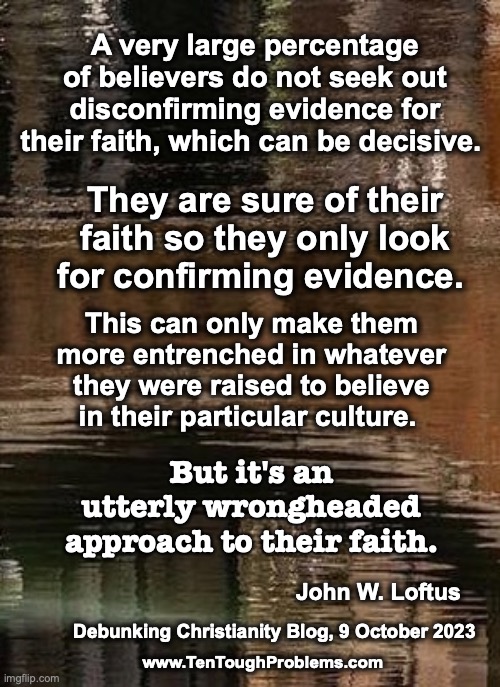
“A very large percentage of believers do not seek out disconfirming evidence for their faith, which can be decisive. They are sure of their faith so they only look for confirming evidence. This can only make them more entrenched in whatever they were raised to believe in their particular culture. But it’s an utterly wrongheaded approach to their faith.”
An utterly wrongheaded approach: Very often our identities are anchored/locked to what we were taught as children by parents and clergy. How could these trusted figures have been wrong? It’s a thought so many people refuse to entertain, secure as they are in the version of reality that seems oh so right because it has defined who they are for years. In his fifth reason, Loftus states that “…believers fear to doubt. It’s the very nature of faith in an omniscient mind-reading God that he is displeased when they doubt his promises. So in order not to displease him they do not seriously question their faith.”
But this is the tragic irony: “an omniscient mind-reading God” is a component of ancient superstition—and the Christian faith is a bundle of quite a few of these components. In the Old Testament, animal sacrifice was a major part of piety, as a way to atone for sins committed. The theologians who wrote the New Testament substituted a human sacrifice, absorbing a common cult idea that believing in a dying-rising deity assured eternal life. As Richard Carrier has put it, “…Jesus is just a late comer to the party. Yet one more dying-and-rising personal savior god. Only this time, Jewish.” (Dying-and-Rising Gods: It’s Pagan, Guys. Get Over It, 29 March 2018)
Of course, the ecclesiastical bureaucracy doesn’t want the laity to see this background—the blatant superstitions—and works hard with ritual and ceremony, preaching and religious education (= indoctrination) to keep people in awe of Jesus their lord and savior. Loftus’ list of Ten Reasons provides helpful insight into how the church keeps members loyal—and keeps going. And what we’re up against. Religions specialize in blunting curiosity. As an elderly Catholic women admitted to me recently, “We were told not to think about what we were taught in catechism.”
But are there ways to breach the walls of the Mighty Fortress of Faith? Something must be working, since the church—at least in North American and Western Europe—is losing ground. For details on this, see Robert Conner’s recent article here, The Lingering Death of the American Church, and his book, The Death of Christian Belief.
If we could just build little fires of curiosity, prodding the faithful to be suspicious about the plea of clergy to take their teaching “on faith”—to go ahead and think about what is taught in Sunday School and catechism. Three things come to mind when I wonder how to breach the fortress walls.
ONE
What a novel idea: let’s start with the Bible! How could people object to that? Well, it’s risky. Catholic clergy don’t urge their parishioners to read the Bible, and despite the central role of the Bible in Protestant belief, its preachers don’t make a habit of giving Bible reading assignments every Sunday, perhaps at the end of the sermon: “Please be sure to read Paul’s Letter to the Romans this week—and write reports to hand in next Sunday.” This doesn’t happen because it is risky. Any layperson who reads the Bible carefully can detect the problems, errors, contradictions, and too much silliness—and then go running for explanations to the clergy, who don’t want that burden.
Here are a few examples:
In Mark 4, Jesus tells his disciples that he teaches in parable to prevent people from repenting and being forgiven; his chapter 13 is a frightful depiction of the arrival of the kingdom of god. Matthew claims that, at the moment Jesus died, lots of dead people came live in their tombs, then walked around Jerusalem on Eastern morning. Luke includes the alarming Jesus-script in which he states that his followers must hate their families and even life itself (Luke 14:26), and that his mission is a destructive one: “I have come to cast fire upon the earth, and how I wish it were already ablaze!” (Luke 12:49)
In Paul’s Letter to the Galatians (5:24) he teaches that “…those who belong to Christ have crucified the flesh with its passions and desires.” How many Christian couples, on their wedding day, have Galatians 5:24 in mind as they look forward to their honeymoons? In Romans 1, Paul includes gossips and rebellious children in his list of those who deserve to die. In fact, it would be remarkable for clergy to urge the folks in the pews to read the Letter to the Romans. It’s a dense, daunting patch of scripture. Conservative Christian scholar Ben Witherington III, in his massive commentary on Romans (Paul’s Letter to the Romans: A Socio-Rhetorical Commentary), states on page 1: “…the goal of understanding this formidable discourse is not reached for a considerable period of time.” Isn’t this a dangerous thing to admit? Isn’t the Bible supposed to be the accessible Word of God—perfect for placement in millions of hotel rooms?
The Bible is a perfect tool for inciting devout believers to doubt their faith.
TWO
The state of Christianity today should make the faithful wonder, “What the hell happened?” What does it mean (1) that this religion has splintered into thousands of different, quarreling brands, and (2) no one is working toward reconciliation? The ecclesiastical bureaucracy of each brand—enjoying prestige and power—doesn’t seem to mind. There are no serious negotiations under way for Southern Baptists and Catholics to work out their disagreements about god and worship—and merge. Every Christian should be wondering, asking: “How can I be sure that my denomination is the right one—a true representation of the religion of Jesus?” No, it won’t do to assume that your clergy have it right. What would be the basis for that assumption?
The scandal of Christian division and disharmony should prompt deep skepticism, should be a tip-off that cherished beliefs might be dead wrong. Maybe this is another way to breach the walls of the Mighty Fortress. One tool to help with this coaching is John Loftus’ 2013 book, The Outsider Test of Faith: How to Know Which Religion Is True.
THREE
Does the biblical god concept fit with our contemporary knowledge of the Cosmos? I suspect it will be hard to get people to think seriously about this. Of the eight billion humans now on this planet, how many of the adults know what Edwin Hubble discovered a hundred years ago? Are five percent aware? Ten percent? Using one of the most powerful telescopes of his time, Hubble collected the data demonstrating that the Andromeda galaxy is indeed another galaxy, far beyond the Milky Way. Many astronomers at the time argued that our galaxy was the universe.
Our perspective was changed forever: there are indeed billions of other galaxies. In December 1995, the telescope named after Hubble photographed for ten days a tiny patch of sky (about the size of a tennis ball viewed from 100 meters). The result is known as the Hubble Deep Field, and revealed almost 3,000 galaxies.
So this is a fair question to pose to our churchgoing friends: Do you know how humanity rates in the Cosmos? The Bible deity who keeps a close watch on every human, who enjoys the aroma of burning animal sacrifices—is this idea compatible with what we now know about the universe? Theologians have worked so hard at reinventing Bible-god, to make this deity less local, provincial, tribal, petty. But we come back to the question that all theologians must answer: where can we find the reliable, verifiable, objective evidence for the god you’re constantly updating?
It’s unlikely we can breach the Mighty Fortress of faith with this approach, but it might work with a few folks.
ANOTHER REALITY
I suspect that faith takes a hit when people face horrors they don’t expect—which their faith is supposed to protect them from—and when they contemplate so much horrendous suffering in the world. It seems that the Sunday after 9/11, church attendance was high in the New York area. I’ve wondered why. Were people looking for comfort—or answers? Why would a good, powerful, caring god have let those planes fly into the buildings? Wasn’t this horror an indictment of religion itself? The hijackers were religious fanatics, as Christopher Hitchens has pointed out:
“The nineteen suicide murderers of New York and Washington and Pennsylvania were beyond any doubt the most sincere believers on those planes. Perhaps we can hear a little less about how ‘people of faith’ possess moral advantages that others can only envy.” (p. 32, God Is Not Great: How Religion Poisons Everything)
When an earthquake killed hundreds of people in central Italy, the pope said that Jesus and his mother were there to comfort the survivors. What feeble theology. Jesus and his mother were powerless to prevent the earthquake? And the 2004 tsunami that killed perhaps 80,000 toddlers and babies—how does that align with “this is my father’s world”? We commonly hear, “god works in mysterious ways”—but that is so anemic, painfully pathetic. Theology has a lot to answer for.
An utterly wrongheaded approach to their faith has prevailed for such a long time. There are signs it faces a much tougher road ahead.
There are many ways to experience nature. Most of them make you healthier and happier.
***
Embracing Discomfort
Welcome adversity into your life as a path to better physical and mental well-being.
In Embracing Discomfort, journalist and professor Michael Easter challenges us to let go of certain modern comforts and incorporate a healthy amount of adversity into our “progressively sheltered, sterile, temperature-controlled, overfed, under-challenged lives.”
“We often have to go through short-term discomfort to get long-term benefits,” Michael says—and doing so, according to the research, can help us make profoundly “positive shifts in our health, perspective, and well-being.”
***
Michael Easteris the author of two books—The Comfort Crisis, a bestseller, and the recently released Scarcity Brain—and a professor at the University of Nevada, Las Vegas. His work has been translated into 40 languages. He lives in Las Vegas on the edge of the desert with his wife and two dogs.
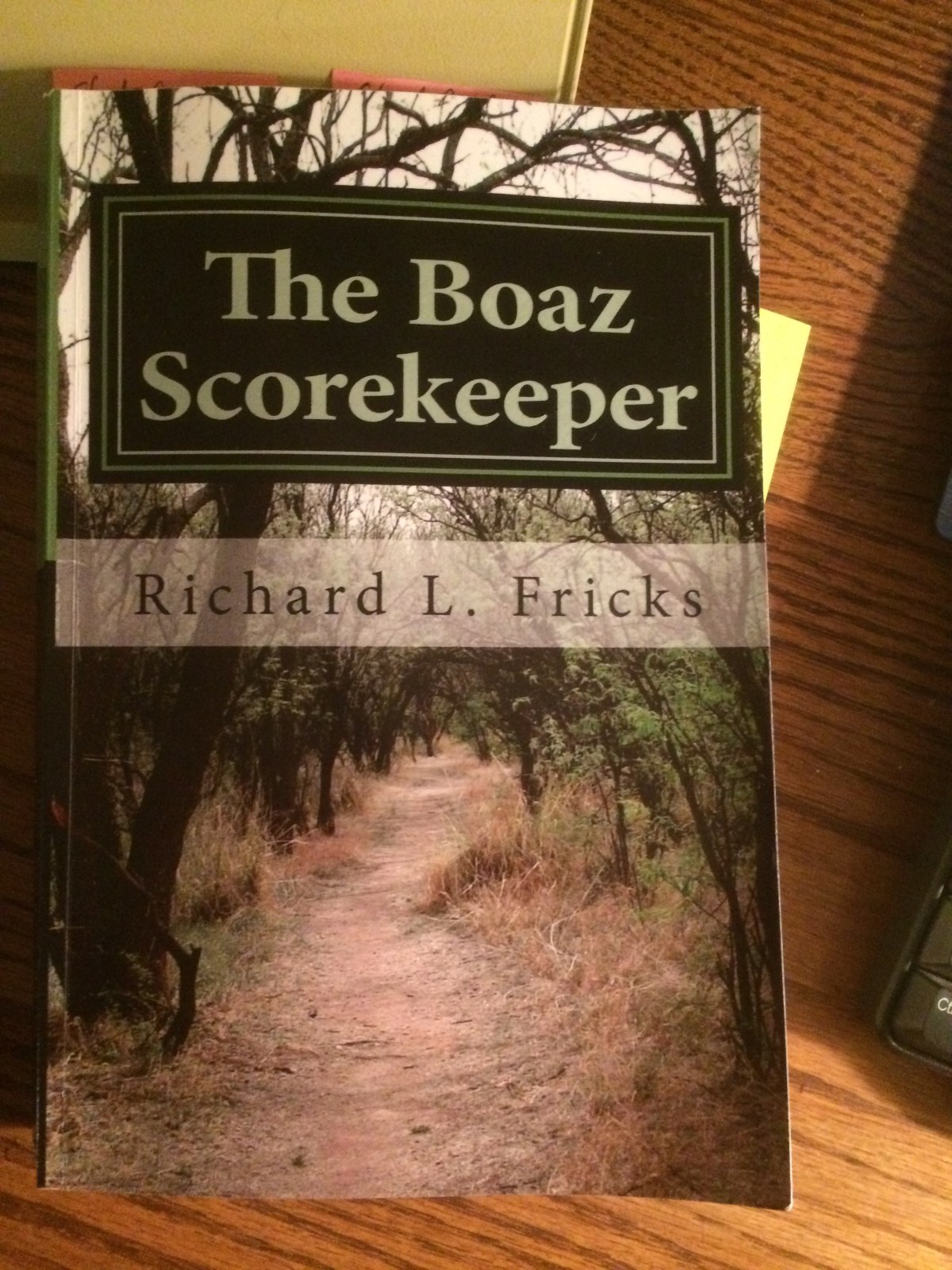
The Boaz Scorekeeper, written in 2017, is my second novel. I'll post it, a chapter a day, over the next few weeks.
I started Boaz Elementary School in mid-August 1960. I remember the first day. Mr. Chambers’ Bus #9 stopped at our mailbox at 6:30 a.m. and I stepped into another world. I had figured I might be one of the first on the bus since it was so early. I was wrong. Scattered around the front half of the bus were my neighborhood friends, all friendly, polite, clean-mouthed, and evidencing the six years of Bible teaching and tough love poured out on us by Brother G. The back half of the bus was overflowing with the heathen. I didn’t know any of them, but soon learned they all were sons and daughters of a group of tenant farmers just north of Double Bridges. From the front of the bus, I could see their dirty faces and torn clothing as they stood in the aisle way or sat on the back of the bench seats. And, the worst part, I could hear the filth spewing from their mouths, dirty words, half of which I had never heard. I was glad to find a seat beside Billy Baker in the front row right behind a bus-driver that seemed oblivious to everything around him.
I was lucky. Only one of the heathen clan wound up in Mrs. Gillespie’s first grade class. Frankie Olinger didn’t stand a chance against this beautiful soul who welded words like swords if the need arose. That first morning, before the first bell rang, this Godly saint had Frankie, with clean hands, arms, and face, facing the overgrown black-board, sitting straight-back in a student’s desk, right beside her own giant oak desk at the front of the room. I don’t know what she said to him in the coat room as she unwound his cockiness from the moment we all walked in from the bus. The other bus riders, being older than me, went to separate rooms. Only Billy Baker and myself, and Frankie Olinger, wound up in Mrs. Gillespie’s room. I quickly learned that the other 24 students were city kids who probably had never hoed a row of cotton, pulled an ear of corn, castrated a single pig, or eaten a boiled rabbit leg.
By the end of the first week, I knew I was already miles ahead of most everyone in the room when it came to reading and writing. Mother had made sure this would be the case. However, there was a group of five boys who ran a close second. It didn’t take long the first day of school for me to learn that they were from five prominent Boaz families. They made sure everyone around them knew their fathers were a big-church pastor, a home-owned bank president, a rich car-dealer, a more-rich hardware and building supply owner, and a most-rich real estate developer. By the end of the first week, these five, Wade Tillman, Fred Billingsley, James Adams, Randall Radford, and John Ericson, semi-included me in a group they were contemplating allowing in their small circle of friends. Including me, like anyone else, was strictly strategic. I was as big or bigger than any of them except Randall, and I was smart. Even at six years old these five had already learned the art of the deal from the feet of their fathers, the masters of a booming but clannish town. Out of this group, my pick was Fred Billingsley. He was the quietest of the bunch and seemed to appreciate me helping him solve a simple arithmetic problem after lunch on Thursday, our fourth day of carving out a new life. Several years later I would find out he was a little different from the other four members of his group.
Other than enduring the body odor and foul mouths of the Double Bridges gang during my bus rides to and from school, my life for the next five years was maybe the best time so far. I did extremely well in school. My faith in God grew by leaps and bounds all thanks to Brother G, and life at home with Dad and Mom, Mama El, and Gramp’s laid down deep abiding lessons of how a bi-vocational lower-income family could exchange touches of love amidst the long hours of caring for chickens, tending a gigantic garden, and cultivating 30 acres of corn and cotton.
My world came tumbling down at the end of my Fifth-grade year. It was during Spring Break. Gramp’s and I were fishing in our pond, one he had helped his father build with a pair of overgrown mules two years before the turn of the century. It was late afternoon and after we had caught a stringer full of Brim, everyone as big as one of Gramps’ hands. I was walking around the shallow end of the pond casting my line out into the middle without a float trying to snag a catfish laying on the bottom of the pond. Gramp’s was fishing from the center of the dam, sitting under the outstretched limbs of a hundred-year-old oak.
Just as the sun sank behind the row of Loblolly Pines on the west side of the pond my fishing pole jerked out of my hand. I had to scramble to keep from losing it. I grabbed it right before it slithered into the edge of the pond. It took me what seemed like an hour to haul in the ten-pound catfish. When I had it off my hook and safely away from the pond’s edge, I held it up and hollered, “Look Gramp’s, bet you never caught one this big.” For some reason, I had not looked over towards Gramp’s during the whole time I was dealing with the big Cat. When he didn’t respond to my ribbing was when I saw something I will never forget. Gramp’s was lying on his side with his face next to the water’s edge.
I dropped the Cat and raced to Gramp’s. When I reached him, I thought he had died. His face was towards me and his eyes were closed. I managed somehow to turn him over and around, with his head now higher than his feet. I remember I almost let him roll into the pond. I put my ear to his mouth and nose and could tell he was still breathing. Then, he opened his eyes. “Gramp’s, what’s wrong?” I said.
Barely audible he managed to say, “It’s my heart, I’m dying.”
“No Gramp’s you can’t die. I’m going to get help.”
“Micaden, it’s no use. Stay with me, please.” Gramp’s said with a tear running down his left cheek.
By now it was nearly dark. We had brought a kerosene lantern and I used a match from my pocket that Gramp’s always made me carry. The light revealed the hollowness and distance in his eyes. I was only eleven years old but had seen enough death in the eyes of piglets and calves, even rabbits and squirrels, to realize I was losing the one person who I loved more than anyone in the world. I almost felt ashamed thinking this because I dearly loved my Mom, my Dad, and my Mama El. Gramp’s and I had something unique. Dad didn’t have a lot of time for me with working two jobs. Gramp’s was always at home and it was there, at the house and farm, that we were together most every minute of the day when I wasn’t in school or in church.
“Don’t die Gramp’s. I can’t live without you.”
“Listen to me Micaden. You are stronger than you think. You can do whatever you set out to do, but stay true to God. Don’t go looking for trouble, it’ll find you. But, don’t run from it when it comes. Fight it head on. Don’t be fooled by the world. It might not be what you think it is.” It took Gramp’s five attempts and at least ten minutes to say these words.
“I promise you I will. Gramp’s, I need to get help.” I said, tears running down my cheeks, my heart racing with fear.
And, that was it. Gramp’s stopped breathing, his mouth fixed open like he was a baby bird waiting for its mother to drop in some food. But, it was his eyes that I will never forget. Still hollow, glassy, now lifeless. I sat and stared into his open eyes for minutes before running back across the knee-high corn, through the pasture gate, across the Bermuda pasture, and around the garden to the back porch of our house.
As I ran, I recall thinking that Gramps’ spirit was with Jesus. But, I hadn’t seen any sign of that when I considered his eyes and face. I had heard Brother G preach many a sermon on how at death the body returns to the dust of the ground but the soul is immediately in the presence of our living Savior. Just like the calf we had lost at birth only three weeks earlier, Gramp’s was dead. But, unlike that calf, someday, at Jesus’ Second Coming, Gramp’s would rise with a new body and fly to glory to be reunited with His spirit at the right hand of the Father. For now, and probably for the rest of my life, I would never walk alongside Gramp’s as he strolled through our two chicken houses looking for dead birds. I would never sit next to him at our oak dinner table. I would never watch him plant a garden or pull ten ears of corn to my one, even if he did have only one leg. Death had descended and Gramp’s was gone.
Mother and Mama El were both coming out the kitchen door onto the back porch when I screamed, “Gramp’s is dead.”
Biking is something I both love and hate. The conflicting emotions arise from the undeniable physical effort it demands. However, this exertion is precisely what makes it an excellent form of exercise. Most days, I dedicate over an hour to my cycling routine, and in doing so, I’ve discovered a unique opportunity to enjoy a good book or podcast. The rhythmic pedaling and the wind against my face create a calming backdrop that allows me to fully immerse myself in the content. In these moments, the time spent on the bike seems worthwhile, as I can’t help but appreciate the mental and physical rewards it offers.
I especially like having ridden. The post-biking feeling is one of pure satisfaction. The endorphin rush, coupled with a sense of accomplishment, makes the initial struggle and fatigue worthwhile. As I dismount and catch my breath, I relish the sensation of having conquered the challenge, both physically and mentally. It’s a reminder that the things we sometimes love to hate can often be the ones that bring us the most fulfillment. In the end, the love-hate relationship with biking only deepens my appreciation for the sport, as it continually pushes me to overcome my own limitations and embrace the rewards that follow the effort.
My bike
A Rockhopper by Specialized. I purchased it November 2021 from Venture Out in Guntersville; Mike is top notch! So is the bike. The ‘old’ man seat was salvaged from an old Walmart bike (update: seat replaced, new photo to follow, someday).
Something to consider if you’re not already cycling.
I encourage you to start riding a bike, no matter your age. Check out these groups:
NOW A MAJOR MOTION PICTURE—The #1 New York Times bestselling worldwide sensation with more than 18 million copies sold, hailed by The New York Times Book Review as “a painfully beautiful first novel that is at once a murder mystery, a coming-of-age narrative and a celebration of nature.”
For years, rumors of the “Marsh Girl” have haunted Barkley Cove, a quiet town on the North Carolina coast. So in late 1969, when handsome Chase Andrews is found dead, the locals immediately suspect Kya Clark, the so-called Marsh Girl. But Kya is not what they say. Sensitive and intelligent, she has survived for years alone in the marsh that she calls home, finding friends in the gulls and lessons in the sand. Then the time comes when she yearns to be touched and loved. When two young men from town become intrigued by her wild beauty, Kya opens herself to a new life—until the unthinkable happens.
Where the Crawdads Sing is at once an exquisite ode to the natural world, a heartbreaking coming-of-age story, and a surprising tale of possible murder. Owens reminds us that we are forever shaped by the children we once were, and that we are all subject to the beautiful and violent secrets that nature keeps.
Most people take the elevator. Be someone who takes the stairs instead.
***
Embracing Discomfort
Welcome adversity into your life as a path to better physical and mental well-being.
In Embracing Discomfort, journalist and professor Michael Easter challenges us to let go of certain modern comforts and incorporate a healthy amount of adversity into our “progressively sheltered, sterile, temperature-controlled, overfed, under-challenged lives.”
“We often have to go through short-term discomfort to get long-term benefits,” Michael says—and doing so, according to the research, can help us make profoundly “positive shifts in our health, perspective, and well-being.”
***
Michael Easteris the author of two books—The Comfort Crisis, a bestseller, and the recently released Scarcity Brain—and a professor at the University of Nevada, Las Vegas. His work has been translated into 40 languages. He lives in Las Vegas on the edge of the desert with his wife and two dogs.
The Boaz Scorekeeper, written in 2017, is my second novel. I'll post it, a chapter a day, over the next few weeks.
I was born January 1, 1954 to Billy Joe and Mary Sue Tanner. Until I moved to Atlanta in 1973 for college, we lived on a 40-acre farm, in a two-story, Amish style house, three miles east of Boaz in the Arona community. It was my grandfather’s birthplace. My grandparents, Frank and Elma Tanner, had lived there all their married life working the farm and caring for his widowed mother until her death in 1953. My parents married and moved in with Gramp’s and Mama El in 1944 when Dad returned from Italy after the Army discovered he was only 16 when he enlisted.
My parents were the hardest working folks I have ever known. My Dad was a weaver at Boaz Spinning Mills, working six nights a week from 10:30 p.m. until 6:30 a.m. He then returned home to help my Mother complete the early morning farm work that she and I started before sunrise. By 9:30, Dad had finished his chores and breakfast and had gone upstairs to sleep for five or six hours before rejoining my Mother somewhere on our 40 acres to toil until 6:00 p.m., to then catch his ride to Boaz with neighbor and co-worker Calvin Conners.
Mother, a city girl from Albertville, knew nothing of farming but had no choice but to learn fast. After marrying, Mother spent a month with Gramp’s learning how to grow chickens, plant and maintain a garden, hoe cotton, and a dozen other tasks before his Diabetes cost him a leg and sent him to Gadsden to rehab for three months. Although short on experience she was extremely long on patience and determination. For as long as I can remember, the legend was that on Christmas Eve morning 1946 my Dad had come home tired and unusually depressed spouting threats that they should pack their bags and move to Detroit for him to make ‘good money’ at General Motors, and that he just couldn’t continue working two jobs for so little results. The story goes that Mother rolled out her own threat. “If I ever again hear you say that you are quitting, that you can’t do something, then I’m leaving you for good. Do you understand?” Losing Mother would have destroyed Dad. She was the light of his life. The story goes that Dad never breathed the ‘can’t’ word again. It was also the only time that I heard of him being depressed.
Gramp’s had started growing chickens for Boaz Poultry Company in 1932. The Depression was gaining momentum every day. Gramp’s had two neighbors who were pleased with their eight-year-old decision to build two specially designed buildings that housed thousands of chickens from the time they were just a few days old. He didn’t make the decision easily since it was the first time the home place had ever been mortgaged. In the end, Gramp’s believed it really wasn’t much of a risk when you compared it to the only other option which was to starve to death or quit farming altogether. It turned out his decision was a good one. The two poultry houses stabilized the farm, and later gave Mother a job and the ability to always be home when I was there.
My first memory of Saturdays as a kid was when I was three years old, at least that’s what Mama El told me. After breakfast, she took me to our garden and taught me how to pick peas. She told me I could tell when to pull them from the vines by looking at the plumpness of the pod, their hardness, and by their color. She made me watch her pick half a basket of Crowder peas before she let me pull one. Then, she taught me about peppers and tomatoes, and returned to the house. That Saturday, I picked two bushels of peas, and a basket full of tomatoes. I left the peppers alone, thinking they were not quite ready but also thinking Mama El might be testing my judgment. Compared to most every other Saturday I remember, that first working Saturday was a vacation. Normally, I was up and out by 4:30 a.m. helping Mother in the broiler houses, although I was often doing this by myself by age 10 if Mother had garden vegetables to can and freeze. After this task was completed, I worked in our corn field, milked Molly our cow, castrated pigs if we had a new litter, cut, split, and stacked firewood, and mended fences. If all this didn’t fill up my Saturday there was always something Mother and Mama El needed help with either in the garden or on the back porch shelling peas, snapping green beans, or cutting corn off the cob. During cold weather, we always had four hogs to slaughter, butcher, and ready for grinding into sausage, or for salting-down in the big wooden meat box. I was only six when Gramp’s let me use his Marlin lever-action 22 Rifle to kill a 400-pound hog just right to have it fall over on the big wood sled we used to scald off the hog’s hair. Saturdays were always work days on the farm until I went off to college.
Mother said she got her grit and determination from God. I’m 91 now and have never seen a more God-fearing person. I’ve been told that I was only three days old when I made my first appearance at Clear Creek Baptist Church. This was Mother’s doing no doubt. From then until I started attending First Baptist Church of Christ in Boaz when I was in the tenth grade, Mother made sure I was in church every Sunday morning and night, and every Wednesday night. But, attendance was only the minimum requirement. Mother read the Bible to me since I was born and made sure I had my daily devotion and prayer time for thirty minutes before I went to bed at night, although there were times that I forgot. And, reading my Sunday School lesson was even more important than completing my homework which, according to Mother, I would never be able to choose to work and live away from the farm unless I completed every single assignment in full. In math, she always demanded I write out every step of the calculation no matter how simple it was. As for Dad, he was not against God, Christianity, and the Church but chose to remain relatively silent while letting Mother and Brother G be my spiritual guides.
Brother G was, as I learned after I begin attending the big church in town, a Christian Fundamentalist. He, without doubt, believed the Bible was written by God Himself and that obviously, there was no error in any verse throughout its sixty-six books. To him, and me until many years later, God had been around a long time, forever in fact. He created the world in six literal days and made man in His image. Out of His love He sent His Son, born of a virgin, to die for the sins of all mankind, and to be resurrected forever to welcome believing sinners to His presence after death or His return in the clouds, whichever came first. God, Jesus, and the Holy Spirit, the Trinity, were all the same and all different. That was confusing, but I believed whatever Brother G told me. I never questioned him because he spoke the truth, the truth that comes only from the Bible. I read my Bible most every day, said my prayers, and lived as though the Holy Trinity was watching my every move and hearing my every thought. Throughout my growing up years I loved God with all my heart. That’s what I was taught to do. It was real. God was real to me. I believed He walked with me and talked with me. Without Brother G and Mother, I would have drunk moonshine, smoked cigarettes, and got naked with girls. Only by God’s grace, did I walk the high road to life and peace.
No matter what road I walked throughout my life I always had fond memories of my growing-up Sunday afternoons. Often Clear Creek Baptist Church had ‘dinner on the ground.’ After Brother G’s voice boomed his last and hoarse gasp, the ladies moved the towel-covered dishes filled with choice casseroles, vegetables, breads, pies, and cakes, from the small kitchen at the back of the church outdoors, laid tablecloths on the long concrete table that the men had built on the creek side of the church years before I was born, and spread a collection of food that would outrank the biggest Baptist churches in North Alabama.
After eating two days worth of food, me and every boy and girl out of diapers would take to the grass-barren field beyond the creek to play whatever sport was in season. From baseball to football to basketball. And, starting in 1959, to soccer, after a family of Hispanics moved in the old Elkins’ home place. Sometimes we played until it was time to go back inside for Training Union with Sister G, Brother G’s wife. Other than the absolute minimum chores that had to be done, Sundays were for worshiping God and relaxing. I dearly loved Sundays.
Biking is something I both love and hate. The conflicting emotions arise from the undeniable physical effort it demands. However, this exertion is precisely what makes it an excellent form of exercise. Most days, I dedicate over an hour to my cycling routine, and in doing so, I’ve discovered a unique opportunity to enjoy a good book or podcast. The rhythmic pedaling and the wind against my face create a calming backdrop that allows me to fully immerse myself in the content. In these moments, the time spent on the bike seems worthwhile, as I can’t help but appreciate the mental and physical rewards it offers.
I especially like having ridden. The post-biking feeling is one of pure satisfaction. The endorphin rush, coupled with a sense of accomplishment, makes the initial struggle and fatigue worthwhile. As I dismount and catch my breath, I relish the sensation of having conquered the challenge, both physically and mentally. It’s a reminder that the things we sometimes love to hate can often be the ones that bring us the most fulfillment. In the end, the love-hate relationship with biking only deepens my appreciation for the sport, as it continually pushes me to overcome my own limitations and embrace the rewards that follow the effort.
My bike
A Rockhopper by Specialized. I purchased it November 2021 from Venture Out in Guntersville; Mike is top notch! So is the bike. The ‘old’ man seat was salvaged from an old Walmart bike (update: seat replaced, new photo to follow, someday).
Something to consider if you’re not already cycling.
I encourage you to start riding a bike, no matter your age. Check out these groups:
NOW A MAJOR MOTION PICTURE—The #1 New York Times bestselling worldwide sensation with more than 18 million copies sold, hailed by The New York Times Book Review as “a painfully beautiful first novel that is at once a murder mystery, a coming-of-age narrative and a celebration of nature.”
For years, rumors of the “Marsh Girl” have haunted Barkley Cove, a quiet town on the North Carolina coast. So in late 1969, when handsome Chase Andrews is found dead, the locals immediately suspect Kya Clark, the so-called Marsh Girl. But Kya is not what they say. Sensitive and intelligent, she has survived for years alone in the marsh that she calls home, finding friends in the gulls and lessons in the sand. Then the time comes when she yearns to be touched and loved. When two young men from town become intrigued by her wild beauty, Kya opens herself to a new life—until the unthinkable happens.
Where the Crawdads Sing is at once an exquisite ode to the natural world, a heartbreaking coming-of-age story, and a surprising tale of possible murder. Owens reminds us that we are forever shaped by the children we once were, and that we are all subject to the beautiful and violent secrets that nature keeps.
The latest outbreak of violence in the Middle East shows why religion makes peace impossible. Israel and Hamas are in a fundamentalist deadlock, neither able to triumph, but neither willing to concede.
Once again, the Holy Land is the epicenter of bloodshed and war.
Hamas has launched their biggest attack in years. They surged out of the Gaza Strip in force, carrying out attacks across southern Israel. Israeli military and security forces were caught off guard and overwhelmed, and Hamas had free rein until the IDF was able to regroup.
But what makes this eruption of conflict stand out was the extreme nature of the violence. Hamas fighters committed horrific atrocities—only “committed” isn’t a strong enough word. They reveled in them.
In addition to attacking military bases and police stations, they attacked a music festival, spraying the attendees with gunfire. The dead include Israeli citizens as well as foreign tourists. There are reliable reports that they went door-to-door in Israeli villages, killing indiscriminately, kidnapping some to hold as hostages. The death toll is still rising, but is already over a thousand. There are unconfirmed reports of even worse evils, but it’s uncertain if these are accurate or merely the atrocity propaganda that’s all too common in wartime.
Wherever you start out, you can find deep-rooted causes for why each side acts as it does.
In response, Israel is doling out massive punishment to the Palestinians. They’ve imposed a total blockade of food, water, electricity and fuel on Gaza. They’ve bombed it from the air, flattening residential buildings and decimating a crowded open-air market. They’re poised to launch a costly ground assault.
I need to state my conflicts of interest. As I’ve stated in the past, I have Jewish ancestry. That said, I’m an atheist and a secular humanist, and I don’t identify as Jewish in any religious sense. I’ve never been to Israel and I don’t know anyone directly affected by the attacks. The extent of my connection to Judaism is that anyone who wished harm on all Jewish people would undoubtedly include me in that.
The endless chain of “yes, buts”
Usually, empathy is the way out of conflicts like this. By making an effort to set aside your privilege and viewing the world through the eyes of an oppressed people, you can see what fairness demands.
What makes this conflict such a Gordian knot is that empathy doesn’t seem to help. Wherever you start out, you can find deep-rooted causes for why each side acts as it does. Rather than a path out of the maze, it’s an ouroboros with no beginning or end.
Start with the obvious point, emphasized by most world leaders: Hamas’ savage and indiscriminate killings of civilians are a war crime and deserve to be treated as such. There can be no excuse for targeting innocent people who did nothing to them and who had no part in the decisions of Israel’s leadership. Whatever the justice of the Palestinian cause, this slaughter does nothing to advance it. On the contrary, it makes them pariahs in the eyes of the world.
All that is indisputable. But now, pull back and widen the circle of empathy a bit, and in come the “yes, buts”:
Yes, but: Israel has forced the Palestinians to live under intolerable conditions. The Gaza Strip is effectively a giant prison camp, hemmed in by fences and barbed wire, with Israel holding a chokehold on vital supplies. Unemployment and poverty are rampant. The isolation of the Palestinians is backed up by apartheid laws that make it extremely difficult for them to travel or participate in Israeli society. Whenever any of them lash out, Palestinians suffer collective punishment from Israeli bombardments.
How could living under such conditions not drive a people to despair and nihilistic rage? What other outcome did Israel have any right to expect?
Yes, but: Hamas is a violent, autocratic Islamist group that takes Jewish genocide as an explicit goal. They’ve never recognized Israel as a state, nor acknowledged its right to exist. On the contrary, they believe Muslims have a sacred right and mandate to conquer all the land where Israel currently exists. Can you blame Israel for confining Gazan Palestinians and treating them harshly, when their leadership’s stated goals are the destruction of Israel and extermination of the Jewish people?
Yes, but: Israel has its own religious fanatics whose views are no less extreme. They believe Jewish occupation of the entire land is their God-given right, and any non-Jews living there should be ethnically cleansed. The Israeli government has furthered these aims by supporting radical Jewish settlers, who’ve taken over so much Palestinian territory that a two-state solution may already be impossible.
Yes, but: To a people who’ve survived as much trauma as the Jews, it’s expected they’d long for a homeland of their own. The Jewish people have hung on for centuries, isolated and defenseless, in the midst of often violently hostile societies. They’ve always been treated as aliens, as outsiders, as the other, or as plotting evildoers. They’ve been confined to ghettoes, deprived of rights, and hounded from one country to the next. They’ve suffered pogroms, blood libel, and other bigoted violence. This long chain of oppressions culminated with the Holocaust, the most horrific act of state-organized evil in human history. How could these centuries of persecution not have left their mark on the Jewish psyche?
The history of the Middle East is like a red-hot chain stretching back into the mists of the past.
That’s especially true since Israel, from the moment of its birth, was surrounded by other states that were hostile and that immediately attacked them. Of course they’re going to conclude that outsiders will never protect them and they have to take charge of their own security. Of course they’re going to go to any lengths necessary to secure their homeland. What other outcome did the world have any right to expect?
Yes, but: The land that became Israel wasn’t a blank slate. When the Zionist movement selected it for settlement, there were already people living there. Those are the Palestinians, and they were pushed off their own land, made second-class citizens, and in the end, subjugated and imprisoned by a colonizing power.
Is there any group of people, either now or ever in history, who’d accept this treatment and give in peacefully? What other outcome did the world have any right to expect?
Yes, but: The land of Israel is the original and sacred home of the Jewish people. They lived there for untold generations, until they were subjugated and expelled by a cruel empire, condemning them to wander the world for a two-millennium diaspora. They have a historic claim on this land, and they have a moral right to have it returned to them, even if that means…
And so on and so on, forever.
The history of the Middle East is like a red-hot chain stretching back into the mists of the past. Each link is forged of an atrocity that one side committed against the other. The pain and rage arising from that then lays the groundwork for the next link to be welded on.
No one has a path to victory
Can that chain be broken? There’s no telling. The most depressing part about this new eruption of violence is that it’s laid bare the fact that an ending is almost impossible to imagine.
Hamas has no path to victory. They can kill unarmed civilians and commit acts of terror, but that’s all. They’re no match for the Israeli army. Israel can inflict pain on the Palestinians whenever it wants, as much as it wants. Whatever damage they manage to inflict on Israel, they’re bound to suffer even worse retribution.
Israel, meanwhile, has a tiger by the tail. They have millions of desperate, angry people penned up within their borders, with no plausible long-term solution for what to do with them. By oppressing the Palestinians so long and so harshly, they’ve nurtured a burning hatred toward themselves—to which their only response is still further oppression. It’s not clear if they could ever ease up on the Palestinians without risking an even bigger backdraft of violence.
And thus, bloodshed leads to bloodshed, reprisal fuels reprisal, and hatred on one side nurtures hatred on the other, in a never-ending spiral of futility. I wrote about another clash between Israel and Hamas in 2009, and the story was almost identical. Nothing has changed in the years since.
On top of this, both sides are fueled by sacred values that their faith will never permit them to compromise. Both Israeli settlers and Hamas jihadists believe, in mirror-image fashion, that God is on their side and that it’s God’s will for them to possess this particular stretch of land. So long as these clashing fundamentalisms hold sway, peace is impossible. This so-called holy land may well be the last and the worst outpost of bloodshed on earth.
In modern life, welcoming discomfort makes us healthier and happier.
***
Embracing Discomfort
Welcome adversity into your life as a path to better physical and mental well-being.
In Embracing Discomfort, journalist and professor Michael Easter challenges us to let go of certain modern comforts and incorporate a healthy amount of adversity into our “progressively sheltered, sterile, temperature-controlled, overfed, under-challenged lives.”
“We often have to go through short-term discomfort to get long-term benefits,” Michael says—and doing so, according to the research, can help us make profoundly “positive shifts in our health, perspective, and well-being.”
***
Michael Easteris the author of two books—The Comfort Crisis, a bestseller, and the recently released Scarcity Brain—and a professor at the University of Nevada, Las Vegas. His work has been translated into 40 languages. He lives in Las Vegas on the edge of the desert with his wife and two dogs.























 by
by 
 Richard L. Fricks