Write to Life blog

10/05/23 Biking & Listening

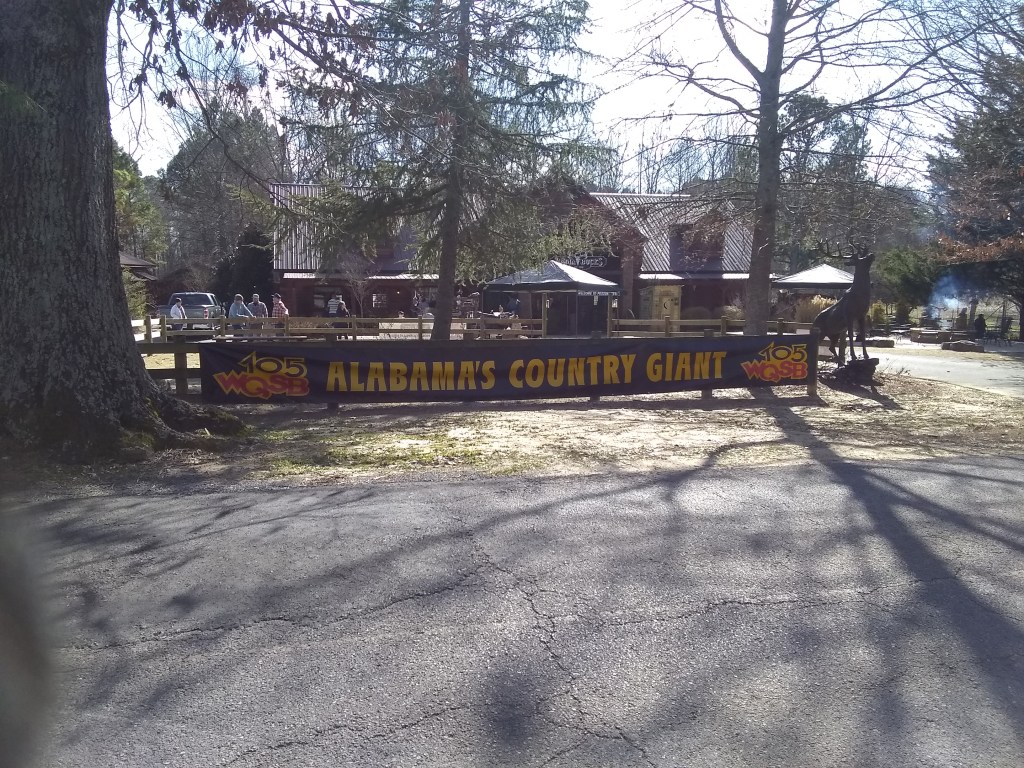
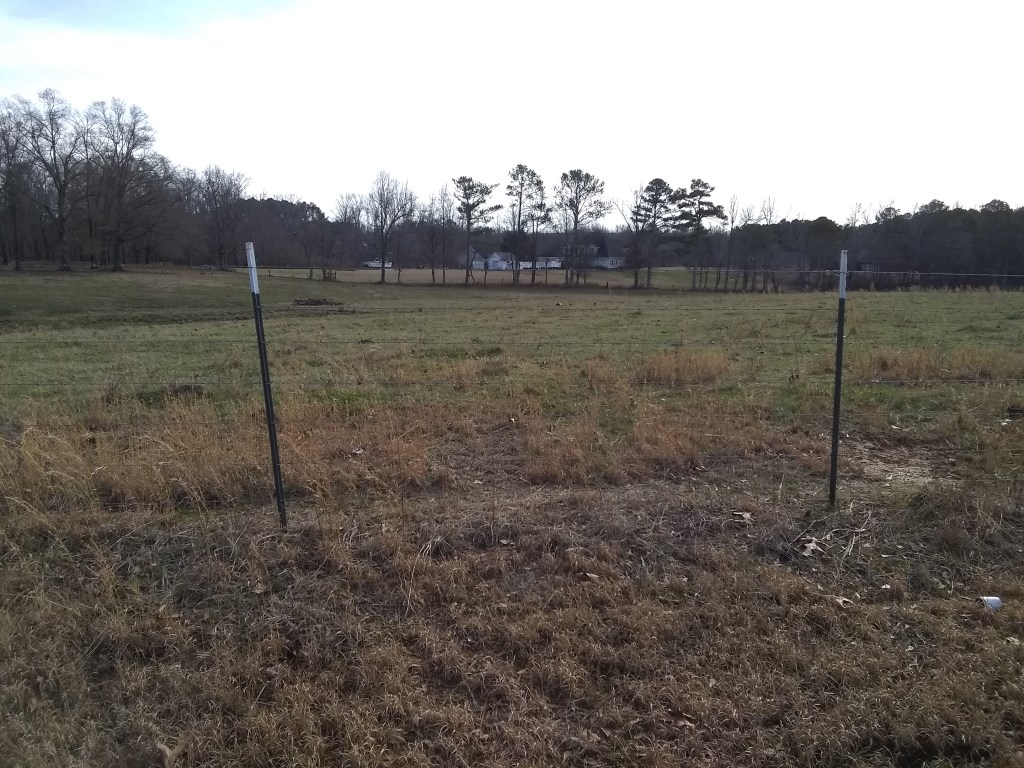
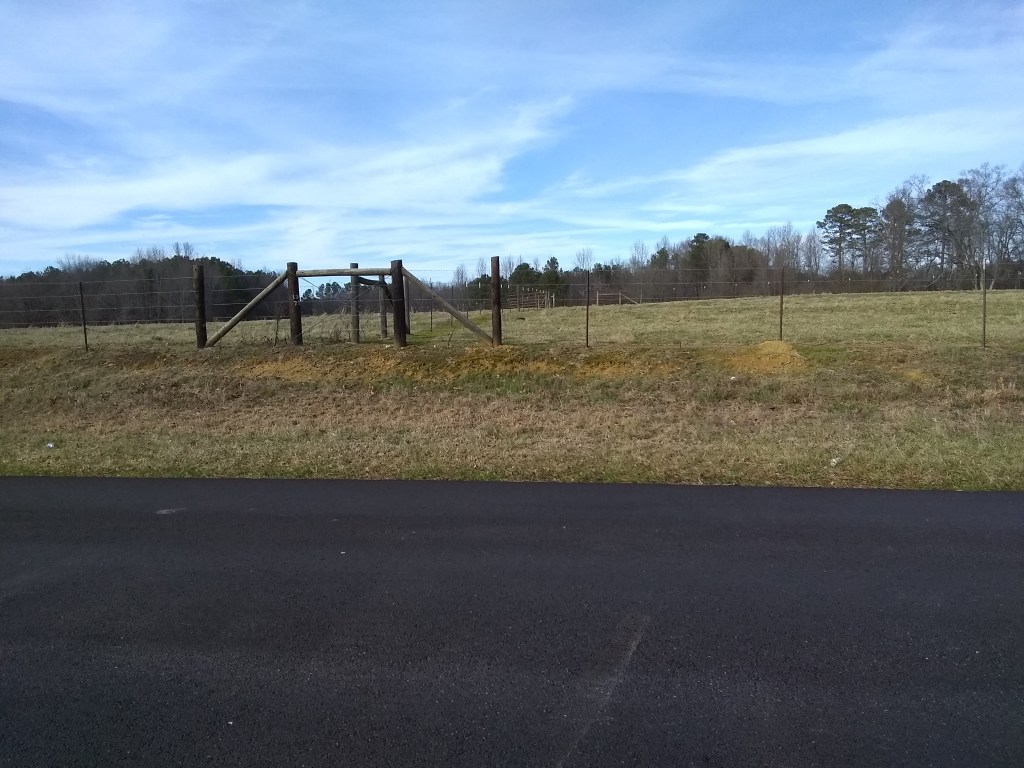
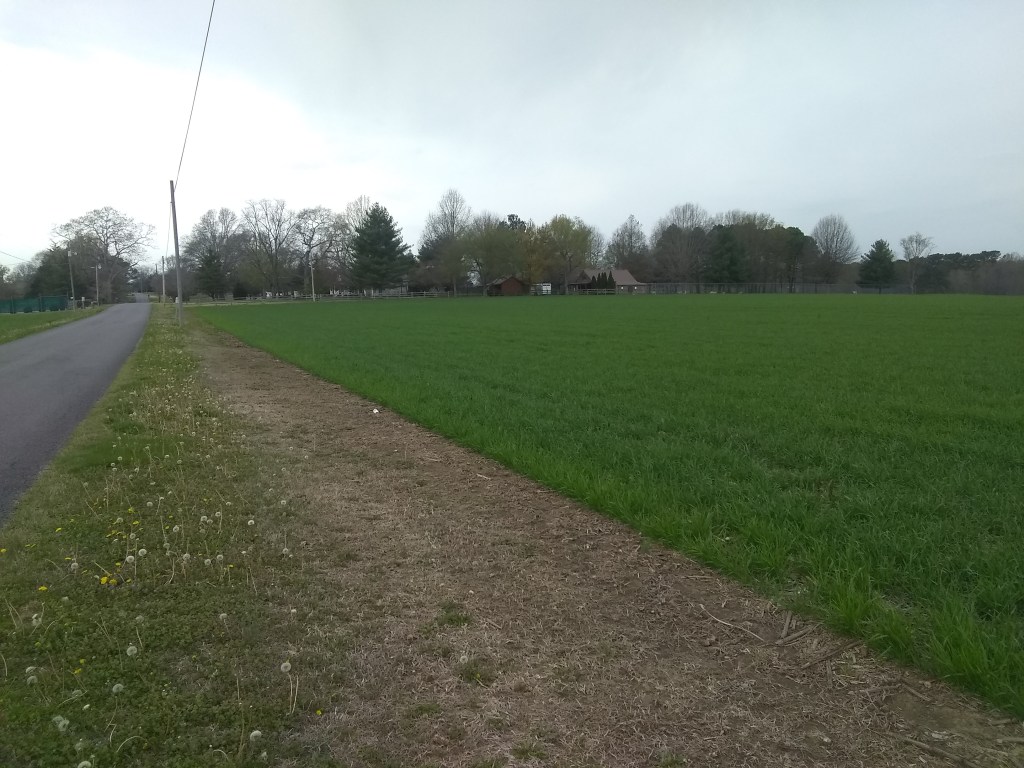
Today’s ride was in two parts: part A and part B.

Why I ride

Biking is something I both love and hate. The conflicting emotions arise from the undeniable physical effort it demands. However, this exertion is precisely what makes it an excellent form of exercise. Most days, I dedicate over an hour to my cycling routine, and in doing so, I’ve discovered a unique opportunity to enjoy a good book or podcast. The rhythmic pedaling and the wind against my face create a calming backdrop that allows me to fully immerse myself in the content. In these moments, the time spent on the bike seems worthwhile, as I can’t help but appreciate the mental and physical rewards it offers.

I especially like having ridden. The post-biking feeling is one of pure satisfaction. The endorphin rush, coupled with a sense of accomplishment, makes the initial struggle and fatigue worthwhile. As I dismount and catch my breath, I relish the sensation of having conquered the challenge, both physically and mentally. It’s a reminder that the things we sometimes love to hate can often be the ones that bring us the most fulfillment. In the end, the love-hate relationship with biking only deepens my appreciation for the sport, as it continually pushes me to overcome my own limitations and embrace the rewards that follow the effort.

My bike

A Rockhopper by Specialized. I purchased it November 2021 from Venture Out in Guntersville; Mike is top notch! So is the bike. The ‘old’ man seat was salvaged from an old Walmart bike (update: seat replaced, new photo to follow, someday).


Something to consider if you’re not already cycling.

I encourage you to start riding a bike, no matter your age. Check out these groups:

Cycling for those aged 70+(opens in a new tab)

Solitary Cycling(opens in a new tab)

Remember,

Photo by Suzy Hazelwood on Pexels.com

Memoir I’m listening to:

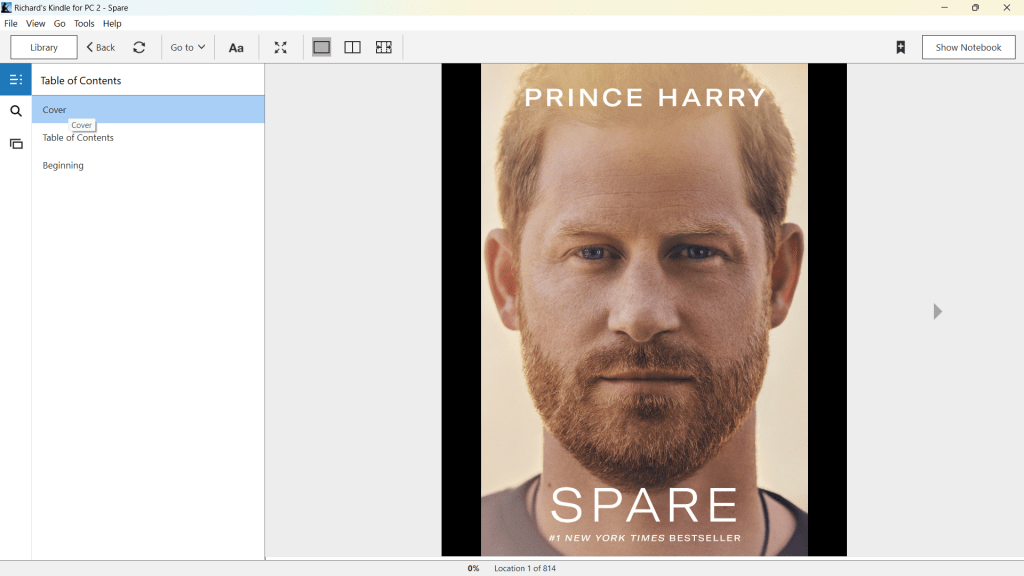
Spare by Prince Harry

Amazon abstract:

#1 NEW YORK TIMES BESTSELLER • Discover the global phenomenon that tells an unforgettable story of love, loss, and healing.

“Compellingly artful . . . [a] blockbuster memoir.”—The New Yorker

It was one of the most searing images of the twentieth century: two young boys, two princes, walking behind their mother’s coffin as the world watched in sorrow—and horror. As Princess Diana was laid to rest, billions wondered what Prince William and Prince Harry must be thinking and feeling—and how their lives would play out from that point on.

For Harry, this is that story at last.

Before losing his mother, twelve-year-old Prince Harry was known as the carefree one, the happy-go-lucky Spare to the more serious Heir. Grief changed everything. He struggled at school, struggled with anger, with loneliness—and, because he blamed the press for his mother’s death, he struggled to accept life in the spotlight.

At twenty-one, he joined the British Army. The discipline gave him structure, and two combat tours made him a hero at home. But he soon felt more lost than ever, suffering from post-traumatic stress and prone to crippling panic attacks. Above all, he couldn’t find true love. 

Then he met Meghan. The world was swept away by the couple’s cinematic romance and rejoiced in their fairy-tale wedding. But from the beginning, Harry and Meghan were preyed upon by the press, subjected to waves of abuse, racism, and lies. Watching his wife suffer, their safety and mental health at risk, Harry saw no other way to prevent the tragedy of history repeating itself but to flee his mother country. Over the centuries, leaving the Royal Family was an act few had dared. The last to try, in fact, had been his mother. . . .

For the first time, Prince Harry tells his own story, chronicling his journey with raw, unflinching honesty. A landmark publication, Spare is full of insight, revelation, self-examination, and hard-won wisdom about the eternal power of love over grief.


Novel I’m listening to:

Where the Crawdads Sing

Amazon abstract:

NOW A MAJOR MOTION PICTURE—The #1 New York Times bestselling worldwide sensation with more than 18 million copies sold, hailed by The New York Times Book Review as “a painfully beautiful first novel that is at once a murder mystery, a coming-of-age narrative and a celebration of nature.”

For years, rumors of the “Marsh Girl” have haunted Barkley Cove, a quiet town on the North Carolina coast. So in late 1969, when handsome Chase Andrews is found dead, the locals immediately suspect Kya Clark, the so-called Marsh Girl. But Kya is not what they say. Sensitive and intelligent, she has survived for years alone in the marsh that she calls home, finding friends in the gulls and lessons in the sand. Then the time comes when she yearns to be touched and loved. When two young men from town become intrigued by her wild beauty, Kya opens herself to a new life—until the unthinkable happens.

Where the Crawdads Sing is at once an exquisite ode to the natural world, a heartbreaking coming-of-age story, and a surprising tale of possible murder. Owens reminds us that we are forever shaped by the children we once were, and that we are all subject to the beautiful and violent secrets that nature keeps.

Podcasts I’m listening to:


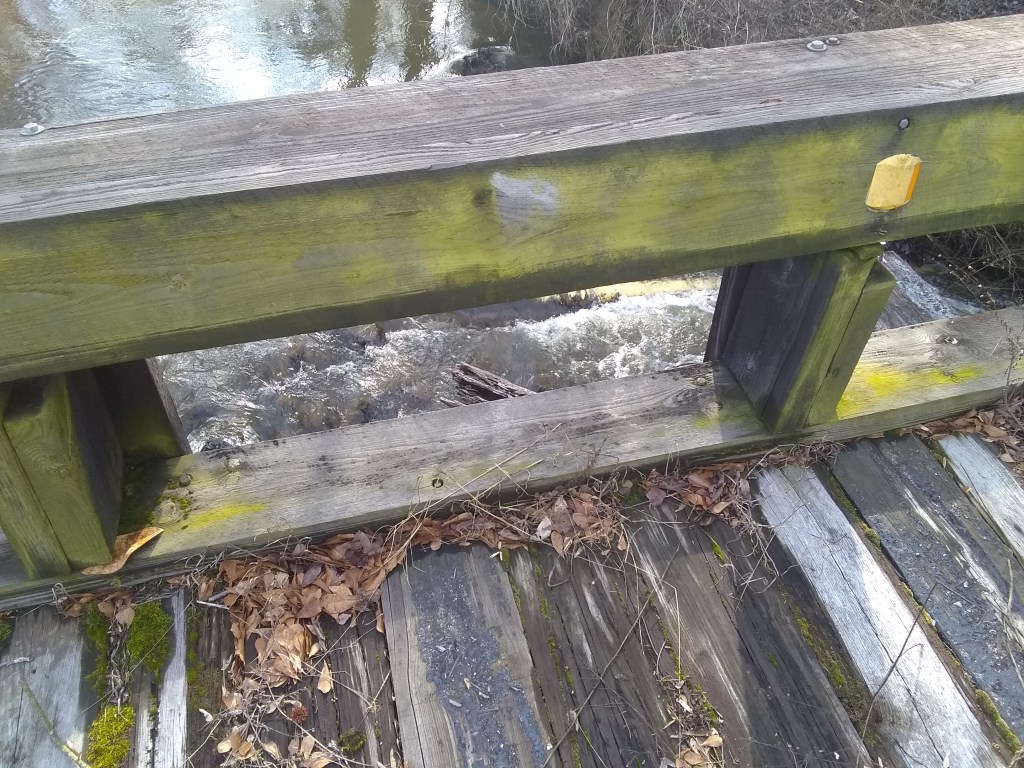
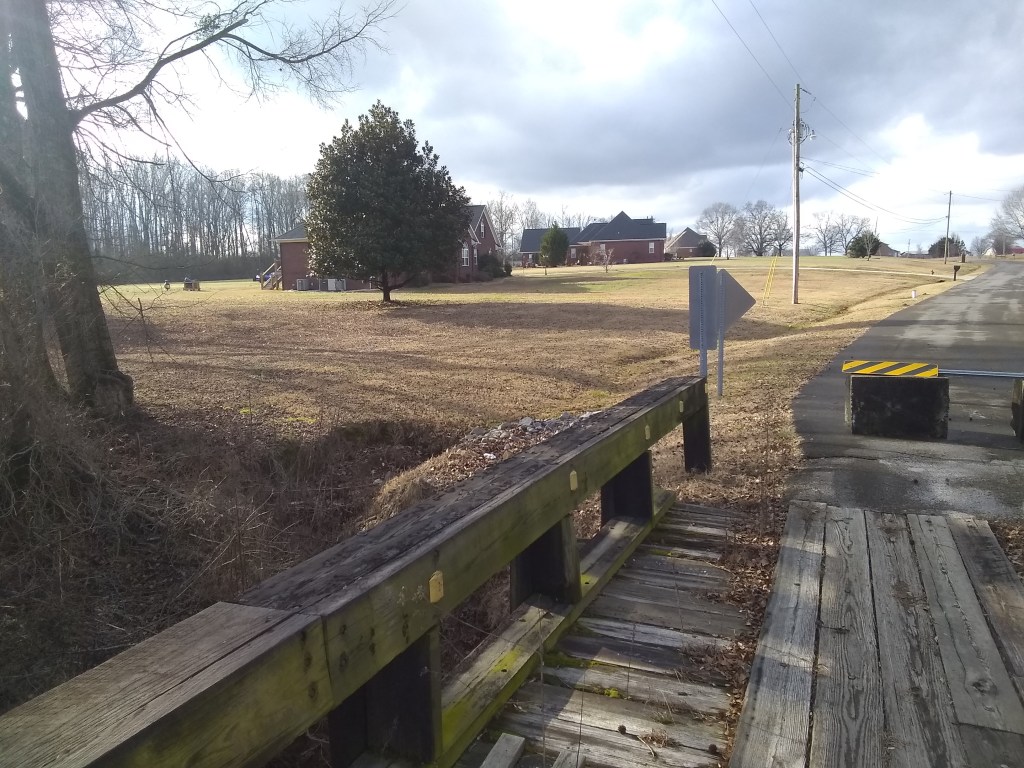
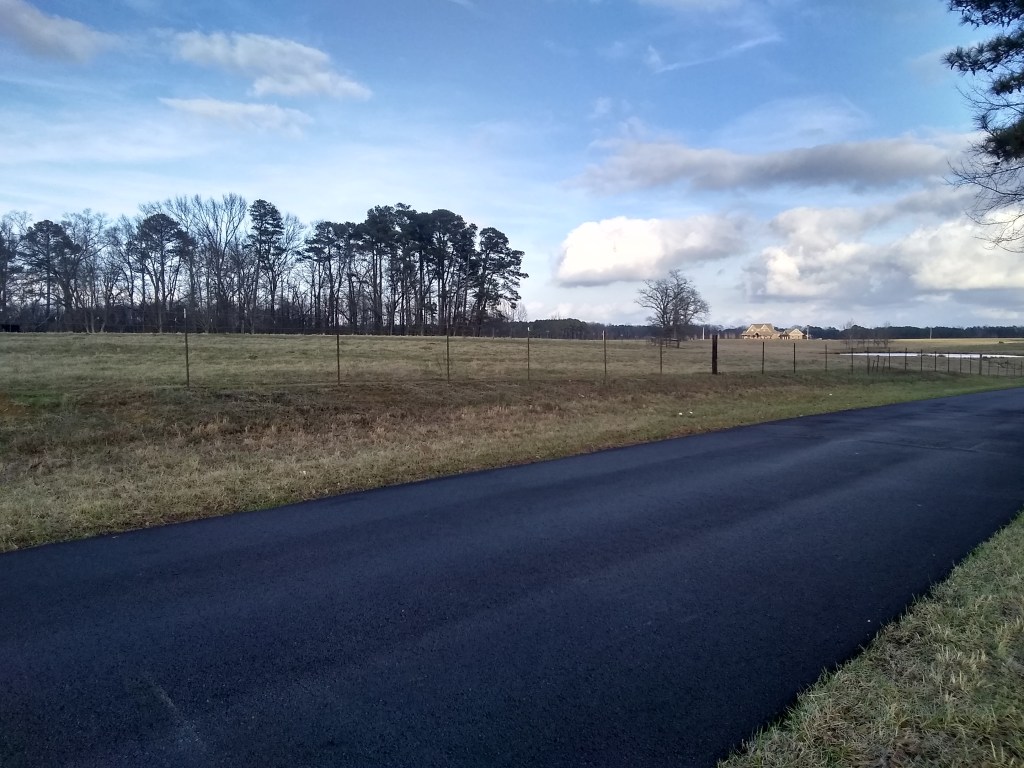
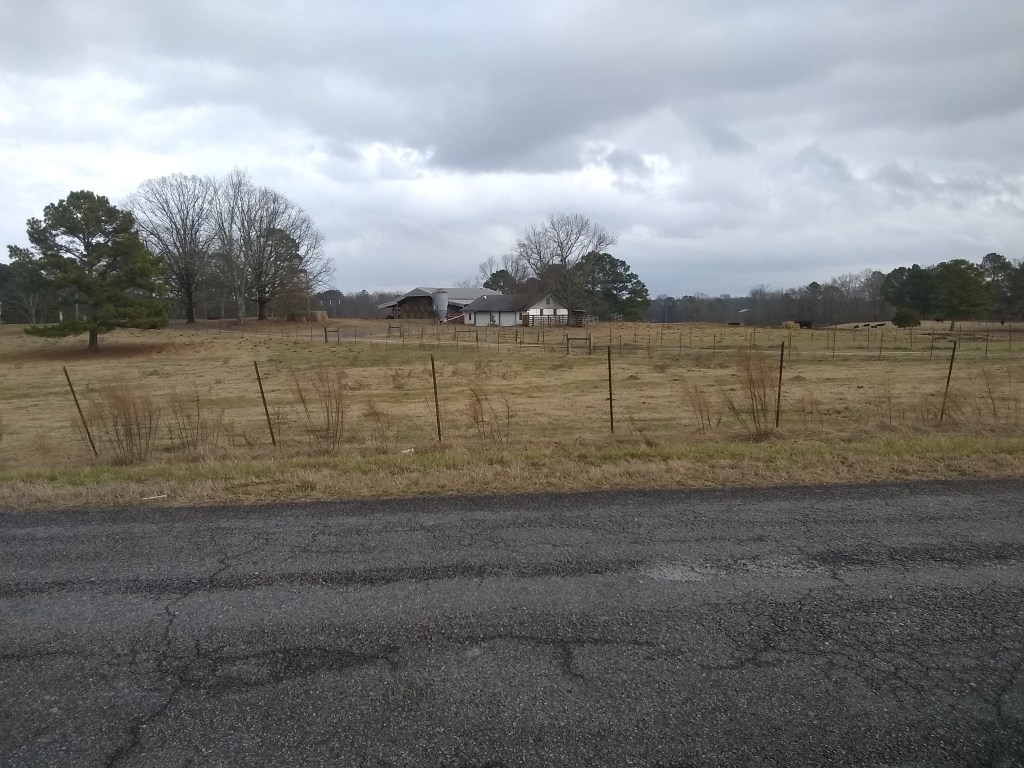
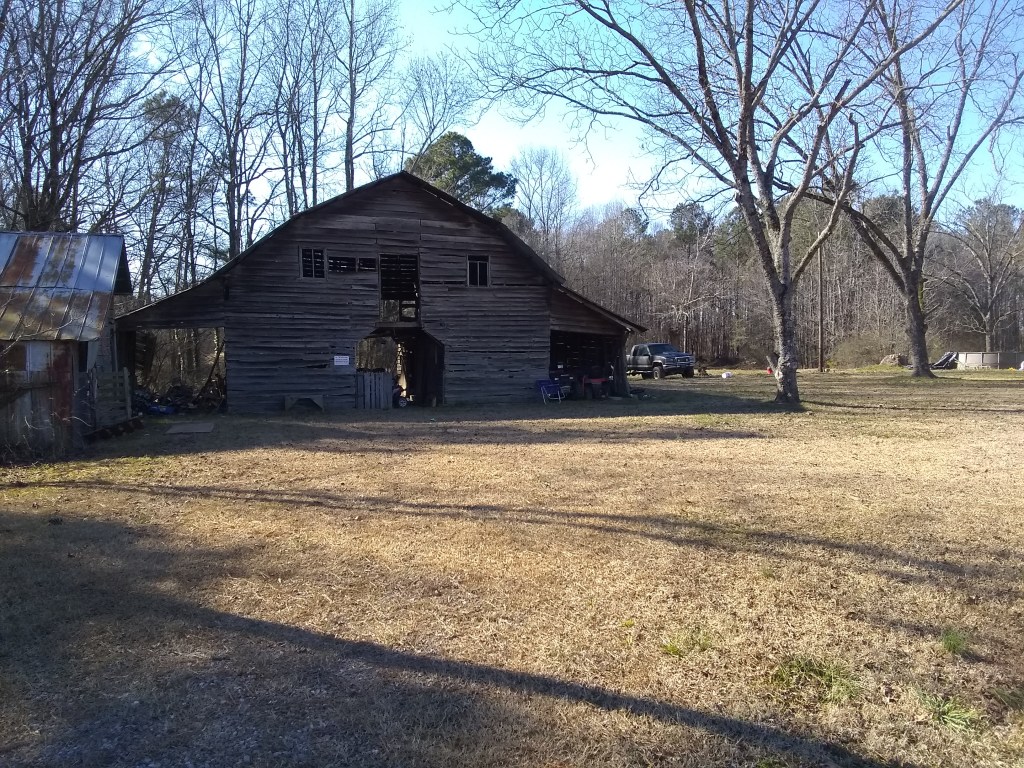
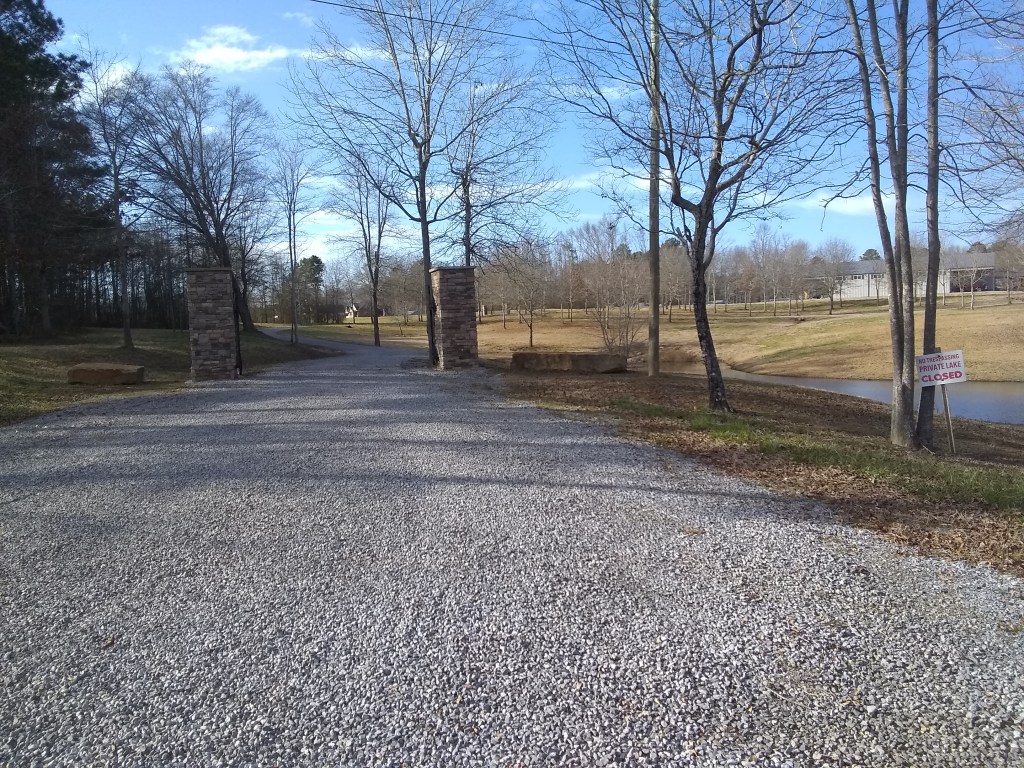
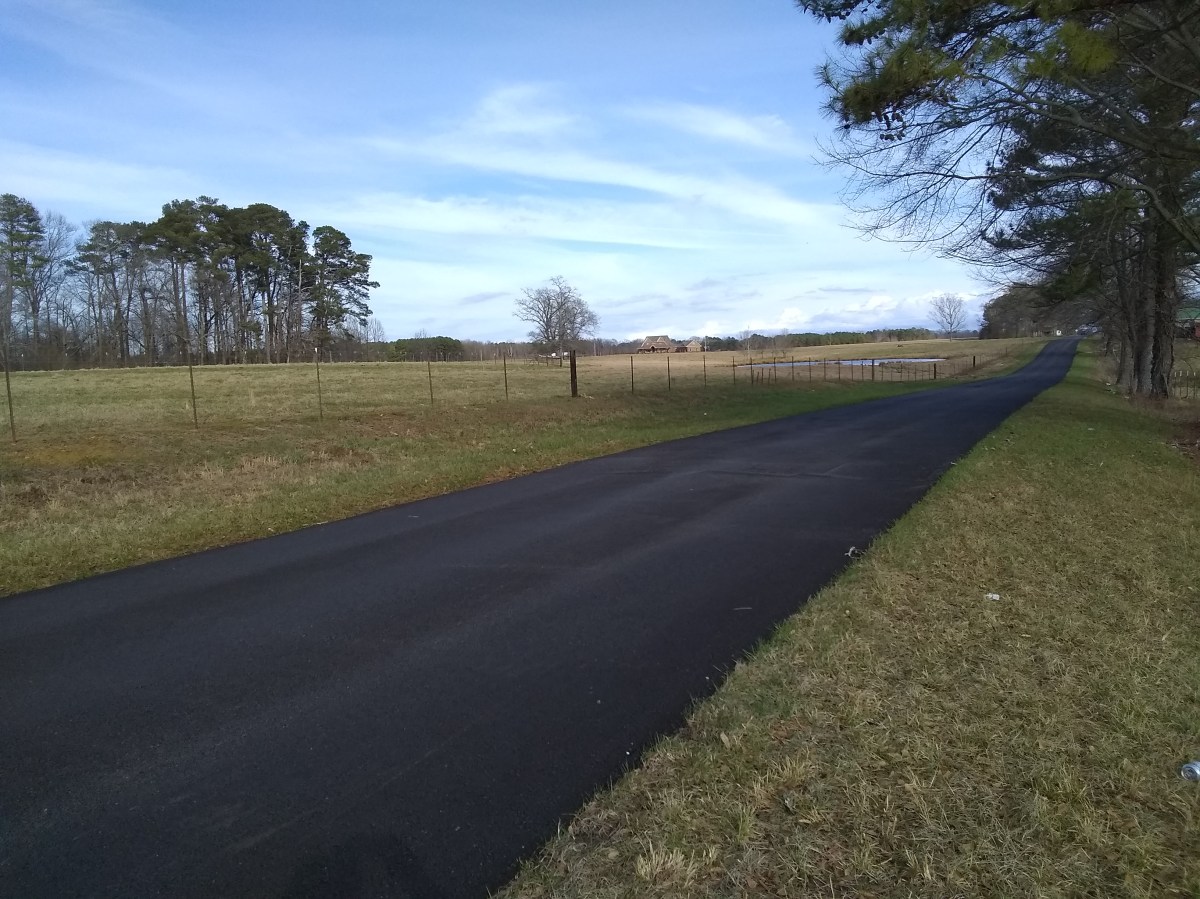
Here’s a few photos from along my pistol route:

God and Girl–Chapter 20

God and Girl is my first novel, written in 2015. I'll post it, a chapter a day, over the next few weeks.

“I have a special assignment for you.” Mr. Johnson said as the bell rang.

“I started this last year and believe it can be quite meaningful for you.  And, it is a good way for you to stretch your creativity.  I trust it will cause you to really think.

Here is an overview.  Also, in a few minutes I will hand out a sheet describing your assignment in more detail.  

I want you to assume that you have died and that you are still conscious.  You can imagine that you have gone to Heaven or to some other place.  Or, you can imagine that you are lying in your casket.  You think of someone.  It is the one special person you know and whom you have a unique relationship with here now in this life.  This can be a parent, a sibling, a cousin, a classmate, or a former or current friend.  You pick but take the time to think of the one person who you need to come back to and have one final talk.  Assume you yourself will not be able to come back, at least in bodily form, but that you will mail or otherwise transport your words back to that person.

Obviously, you are to create a poem.  You may follow any form you want. It most likely will be free form prose, but you can decide what you like most.  Your poem can be any length, but please no more than 10 pages.  I do have to read them all.

Your poems are due no later than the Wednesday before

Thanksgiving. Please submit your work to me through Blackboard.

Please spend the rest of the class in private contemplation of your assignment.  Please no talking.  This is a very individual assignment.  Try to make this as real as possible.  I believe this will greatly improve the quality of your work.

Joanie, would you give one of these to everyone?”  Mr. Johnson said handing her a stack of papers.  

I sat quietly across from Ellen and looked over at her.  Our eyes met, and we smiled but we didn’t say anything, just as Mr. Johnson had instructed.

He had a policy starting with the first-class last year.  If you are working here in class on an assignment, you can move to any empty seat in the room.  He knew that the fewer distractions around us, the better our ability to get in the poetry zone, he liked to call it.

I took my notepad and pen and went to the back of the room next to a large window.  I turned my chair around, so I could have the sun’s light warm my face, and maybe inspire me to where I needed to go with this interesting but somewhat troubling assignment.  I faced the window and the sun with my eyes closed.  I had closed my eyes, so I wouldn’t be distracted by all the outside activity.

The room was quiet, a little eerie. The sun was much warmer than I had thought it would be.  It was as though the rays coming through the window were being magnified. I even began to sweat just a little, which was unusual for me.  I removed my sweater, but I didn’t back away from the window.  I had learned that sometimes in pursuing my poetry I encountered life more intensely.  Maybe it was just me being more observant.  Either way, I liked using nature, or allowing nature to be itself, to reveal itself to me in new ways.  

It reminded me of the time I was at the City Park, in my secret spot.  It was a Sunday afternoon and I hiked up the steep hill that was behind me.  I had done this a million times before.  That day I was troubled about what my Mom had told me, how when she was young she had fallen in love with a guy and they had a sexual relationship.  Mom was very young, in the ninth grade—like me.  I was wanting to write about this because it was so dominating my thoughts.  That’s when I decided to take my little hike, hoping to spur my memory and my imagination.

As I started up the hill, I decided that I would go blind, that I would pretend I was blind.  I took the bandana that was around my neck and blindfolded myself.  I didn’t think I was being too risky because I knew this patch of woods.  I started back walking but was nearly overcome with a sense of newness, of almost being in another world.  And in fact, I was.  I was in a world, a dark world, where rocks and trees are moving, jumping here and there, of low hanging limbs crawling, and spider webs lunging at my nose and eyes. I had become unstable, unbalanced, so I stopped next to a tree that had reached out and touched my hand as I was feeling forward for something similar and substantial.  The tree was probably six or eight inches in diameter.  I didn’t know what type of tree it was, but it had mountains and valleys, pointed and steep.  These vertical grooves were always there, always when I had come before, without blindfold.  Maybe I had touched this tree a million times.  But never noticed how perfect the ridges.  It was as though the tree held itself out to the world as a straight and narrow tree with its skin, its bark, being much like the other trees around it, around it in its neighborhood.  I imagined this tree had some secrets down in one or more of its valleys.  I tried but my fingers were all too wide, too thick, to feel down between the bark ridges, down into the valleys.  But, I knew they were there.  What secrets did they hold?  Would the neighboring trees be shocked to learn of this tree’s secrets?

I couldn’t help but think again of Mom.  I even felt naive.  Why had I never learned this lesson before? The lesson that we really don’t know those around us very well at all.  Yes, we know she, speaking of mom, is kind, gentle, encouraging, loving, a great cook, a faithful wife, a committed and dedicated professional teacher.  I’ve heard serial killers have this side to them.  Gosh, I’m not thinking Mom is a serial killer.  What about Dad?  What would I be shocked to learn about him?  What about Ryan and Lisa and Sarah?  Oh my, what about Ellen?  Do I really, truly know my sweet Ellen?  My mind raced.  It seems to do that when it was put on a thought slide.  Is Ellen a serial killer?  Seriously, what is the most shocking secret that Ellen keeps locked down in her heart, way back in the dark dungeon, deeper than the chamber where little Ella enjoys her eternal sleep?

“Ruthie, Ruthie, it’s time to go.”  Ellen said as I returned from the hill above the City Park.  The sun had done its thing.  I was sweating as though I had hiked up and down that hillside a dozen times.  The sun’s inspiration had led me down a surprising path, not one that I would have guessed when I first sat down.  It seemed like I had wasted the last thirty minutes.  It seemed I had gotten off on a tangent.  I was disappointed that I hadn’t made any progress in finding a good direction to pursue my ‘After Death’ poem.

“You look like you’ve been running.”  Ellen said.  “Or, have you been dreaming of me?  I do have a way of getting you to sweat.  Ha, ha.”

I got up, walked over for my backpack, and walked out into the hall.  Ellen followed asking me what had gotten me so worked up.  “Later my love, remember Mr. Johnson’s instructions, this is a very private assignment.  At least for now.  Once it is complete, I suspect we will share our creations.  I know I will.  And, I hope you will too.  I must grab a book from my locker.  I’ll meet you at your car in a few minutes.” “Okay, I’ll be waiting.”  Ellen said.

I had to have a few minutes to myself.  I felt I had to put a bookend on what I was thinking when I was ‘awakened’ by Ellen.  The question I hadn’t posed but now had to, just as always when I am deep in thought.  What does this mean?  I was referring to my blindfolded walk, and more specifically, the tree’s secrets, Mom’s secrets, my question of Ellen’s secrets.  Is this what I am to draw from that walk?  Is this something I need to pursue in my ‘After Death’ poem?  I don’t really know yet, but I must engage with it in writing.  I never know for sure until I have written about it.  It’s like I don’t know what my thoughts truly are until I have played around with them on paper—just like Virginia Woolf I guess.

I grabbed my World History textbook from my locker and walked to Ellen’s car in the parking lot. 

“The usual?”  Ellen asked.

“Always and Forever.”  I said.  For several months, we had been going to Dairy Queen after school.  It had become a ritual, more like a tradition. A Butterfinger Blizzard was calling my name.

Ellen dropped me off at home a little before 5:00.  Dad was already home.  Early for a Thursday.

Mom had her usual great supper prepared.  And for me, a salad.  She didn’t much like me having my dessert before dinner, but she chose her battles carefully.

It has always been a requirement that whoever is home at meal times must eat together.  I sat down and poured a ‘quart’ of Ranch dressing over my salad while Mom passed the cheese-less broccoli to Dad.

“Honey, how was your meeting?” Mom asked Dad.

“Pretty standard.  I met with six pastors from Walton County, Georgia.  All but one of them was from Monroe, the county seat.  It is about half-way between Atlanta and Athens. The churches with the most interest were First Baptist, Grace, Faith, and Calvary Baptist churches. I laid out the entire ‘Take a Stand’ program.  They said they intended to encourage the Walton County Baptist Association to call a special meeting of all 110 churches to discuss adopting ‘Take a Stand.’  Dad said.

“Do you think your marches, literature distribution, talk show appearances, and social media blitzes are doing any good?”  I asked.

“I have to believe they are.  Certainly, we are raising awareness of the attack on our religious liberties.”  Dad said.

“From what I hear and see on the news, you are doing a good job of isolating the church, of building a wall between the church and the world.  It certainly seems the world is moving away from the church and towards less judging and more acceptance and love.”  I said.

“Sounds like you are getting more and more entrenched in the homosexuality philosophy and rejecting your faith.”  Dad said.

“No Dad, I’m searching for the truth.  And, the more I read and study, the less importance I find in holding on to the idea that stories such as Adam and Eve, and Noah’s Ark, in the Bible are historic facts.  What I see is that one group of people, the group that should know better, your group Dad, is creating a caste system.  You are saying that Christians have all knowledge and they, therefore are superior to homosexuals and anyone else who doesn’t believe like you do.”  I said.

“Honey, do you think the grouper is too spicy?” Mom said to throw a stick into the racing wheel that was spinning hotter and hotter.  “Truce you two.  I am setting down a new rule.  It is now off limits to discuss politics or religion or anything similar at meal times.  My food, as good as it is, is not enjoyed when we are disagreeing and arguing.  I’m serious.”  

“Okay, I agree.”  Dad said.  “But, when can Ruthie and I debate this world-changing issue?”

“On your own time.  The two of you need to spend more time together anyway.  You might find that there is some common ground between you, if you would both set aside your pride and truly listen to each other.”  Mom said like a true political science professor.

“Okay Mom.  I agree too.  I truly must go now.  I have school projects to attend to.  Dad, don’t worry. I still love you, even though you are a bigot.  Ha, ha.”

“Thanks darling.  I love you too.  As I always say, infidels need love too.”  Dad added.

God and Girl–Chapter 19

God and Girl is my first novel, written in 2015. I'll post it, a chapter a day, over the next few weeks.

Dr. Ayers loved my paper and gave me an A.  My Fall semester grade was also an A, as it was in all my classes.

The holidays came and went as winter continued.  Ellen and I had carefully built a deep and wide foundation for our relationship.  Our daily patterns and routines became predictable, but our ways of expressing our love were quite spontaneous, quite new every day.  Thoughtfulness was not simply a characteristic of our relationship, but it was a mighty mission.  One of us was always surprising the other with a sweet note, a goofy, but love-enlightening text, or an ugly shirt, purse, or pair of shoes from The Sand Mountain Thrift store, with the clothing item always finding a unique way of showing up—in the mail, in an icebox sat by the front door, hung outside a window, or crammed into a school locker.  We were both masters of thoughtfulness.  We were both missionaries, even though our mission was not religious, we were just as zealous.

Our ninth-grade year came to an end with straight A’s for both in all subjects.  Ellen and I spent our summer riding bikes, swimming, eating and more eating, and sharing trips with our parents to beaches and mountains.  The roots of our love grew deeper and deeper with every summer rain.  Summer started with a slow jog, but ultimately raced to the finish line.   

Our tenth-grade year seemed to start as suddenly as our ninth grade had ended.  World History became American History, and Algebra I became Algebra II.  Thankfully, Biology, English Literature, and Poetry continued.  Art was gone.  I had lost interest, as it seemed to divert my attention away from my poetry.  Thank the universe for poetry.  Without it, the big bang would have gone bust.

I have known Ellen now for over a year.  Today, she holds my heart, molds my mind, bolds my hope, and rolls my imagination a zillion times more than just yesterday.  She lives inside every cell of my being.  I can’t imagine life without the gorgeous and glorious Ellen.  There would be no life without my one and only Ellen. 

10/04/23 Biking & Listening

Here’s a link to today’s bike ride.

Why I ride

Biking is something I both love and hate. The conflicting emotions arise from the undeniable physical effort it demands. However, this exertion is precisely what makes it an excellent form of exercise. Most days, I dedicate over an hour to my cycling routine, and in doing so, I’ve discovered a unique opportunity to enjoy a good book or podcast. The rhythmic pedaling and the wind against my face create a calming backdrop that allows me to fully immerse myself in the content. In these moments, the time spent on the bike seems worthwhile, as I can’t help but appreciate the mental and physical rewards it offers.

I especially like having ridden. The post-biking feeling is one of pure satisfaction. The endorphin rush, coupled with a sense of accomplishment, makes the initial struggle and fatigue worthwhile. As I dismount and catch my breath, I relish the sensation of having conquered the challenge, both physically and mentally. It’s a reminder that the things we sometimes love to hate can often be the ones that bring us the most fulfillment. In the end, the love-hate relationship with biking only deepens my appreciation for the sport, as it continually pushes me to overcome my own limitations and embrace the rewards that follow the effort.

My bike

A Rockhopper by Specialized. I purchased it November 2021 from Venture Out in Guntersville; Mike is top notch! So is the bike. The ‘old’ man seat was salvaged from an old Walmart bike (update: seat replaced, new photo to follow, someday).


Something to consider if you’re not already cycling.

I encourage you to start riding a bike, no matter your age. Check out these groups:

Cycling for those aged 70+(opens in a new tab)

Solitary Cycling(opens in a new tab)

Remember,

Photo by Suzy Hazelwood on Pexels.com

Memoir I’m listening to:

Spare by Prince Harry

Amazon abstract:

#1 NEW YORK TIMES BESTSELLER • Discover the global phenomenon that tells an unforgettable story of love, loss, and healing.

“Compellingly artful . . . [a] blockbuster memoir.”—The New Yorker

It was one of the most searing images of the twentieth century: two young boys, two princes, walking behind their mother’s coffin as the world watched in sorrow—and horror. As Princess Diana was laid to rest, billions wondered what Prince William and Prince Harry must be thinking and feeling—and how their lives would play out from that point on.

For Harry, this is that story at last.

Before losing his mother, twelve-year-old Prince Harry was known as the carefree one, the happy-go-lucky Spare to the more serious Heir. Grief changed everything. He struggled at school, struggled with anger, with loneliness—and, because he blamed the press for his mother’s death, he struggled to accept life in the spotlight.

At twenty-one, he joined the British Army. The discipline gave him structure, and two combat tours made him a hero at home. But he soon felt more lost than ever, suffering from post-traumatic stress and prone to crippling panic attacks. Above all, he couldn’t find true love. 

Then he met Meghan. The world was swept away by the couple’s cinematic romance and rejoiced in their fairy-tale wedding. But from the beginning, Harry and Meghan were preyed upon by the press, subjected to waves of abuse, racism, and lies. Watching his wife suffer, their safety and mental health at risk, Harry saw no other way to prevent the tragedy of history repeating itself but to flee his mother country. Over the centuries, leaving the Royal Family was an act few had dared. The last to try, in fact, had been his mother. . . .

For the first time, Prince Harry tells his own story, chronicling his journey with raw, unflinching honesty. A landmark publication, Spare is full of insight, revelation, self-examination, and hard-won wisdom about the eternal power of love over grief.


Novel I’m listening to:

Where the Crawdads Sing

Amazon abstract:

NOW A MAJOR MOTION PICTURE—The #1 New York Times bestselling worldwide sensation with more than 18 million copies sold, hailed by The New York Times Book Review as “a painfully beautiful first novel that is at once a murder mystery, a coming-of-age narrative and a celebration of nature.”

For years, rumors of the “Marsh Girl” have haunted Barkley Cove, a quiet town on the North Carolina coast. So in late 1969, when handsome Chase Andrews is found dead, the locals immediately suspect Kya Clark, the so-called Marsh Girl. But Kya is not what they say. Sensitive and intelligent, she has survived for years alone in the marsh that she calls home, finding friends in the gulls and lessons in the sand. Then the time comes when she yearns to be touched and loved. When two young men from town become intrigued by her wild beauty, Kya opens herself to a new life—until the unthinkable happens.

Where the Crawdads Sing is at once an exquisite ode to the natural world, a heartbreaking coming-of-age story, and a surprising tale of possible murder. Owens reminds us that we are forever shaped by the children we once were, and that we are all subject to the beautiful and violent secrets that nature keeps.

Podcasts I’m listening to:


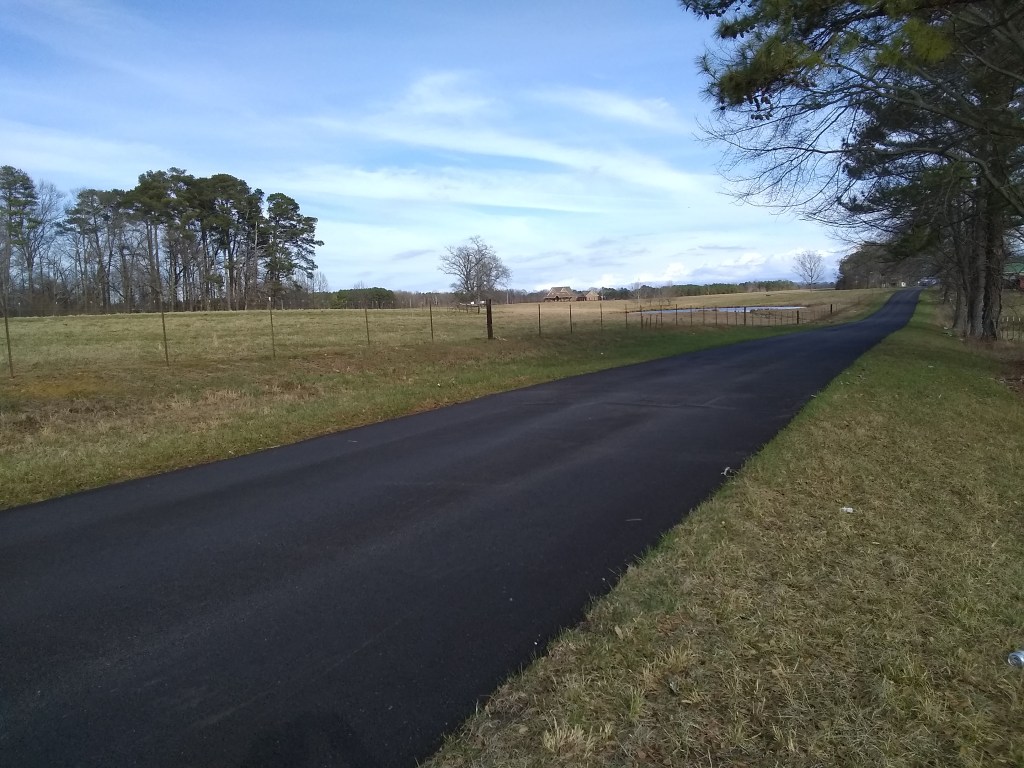
Here’s a few photos from along my pistol route:

God and Girl–Chapter 18

God and Girl is my first novel, written in 2015. I'll post it, a chapter a day, over the next few weeks.

Time is running out.  My Biology class paper, my own, not a team-paper like the ones Ellen and I have worked on every Friday night since the first week of school last September, is a major stress right now.  This solo paper is a big deal, 40% of my grade, and it is due in one week.

Dr. Ayers has really been encouraging us to get creative.  She said one reason so many people today do not know much science, especially Biology, and more especially Evolutionary Biology, is that no one has seemed to come up with a way of making it interesting reading.  She emphasized that she isn’t looking for an article publishable in a peer-reviewed scientific journal, but one that contains truth/evidence from past findings, and that is told in a simple, interesting and engaging way.

I don’t know what it was about my experience with Heather back in the sixth grade that awakened my search, my quest for truth.  Maybe, it was because the experience was so surprising.  Until mine and Heather’s first kiss—practice for the boys we told ourselves—I had never thought that my sexual orientation was for my own gender.  I had of course thought before that I was different in some way, but I had just passed it off to being Daddy’s little girl, being Daddy’s little tomboy.

With Heather, truth seemed to appear unsolicited, suddenly, and not dressed up in a sermon, Bible story, or parent lecture.  Starting then, and much more so continuing today, I have an insatiable appetite for learning.  I’m especially interested in the age-old questions: ‘where did I come from?’ ‘what am I to do?’ and ‘where am I going?’  But, ever since Ellen came along, my questions about the status quo have multiplied by a zillion, especially my questioning of age-old traditions.  And, most especially, traditions about God, the Bible, church, just Christianity in general.  Of late, I’ve had an interest in human evolution, thanks to Dr. Ayers.  So, I guess it is natural given my questioning nature to try to reconcile the long, long line of human evolution with the creation story in Genesis.  Good old Adam and Eve I’m looking for you.

It was very early this morning, probably 4:00 a.m. while I was lying in bed a little upset, that I had woken up.  I think I woke up, but maybe I was just dreaming.  Anyway, I know I was thinking about this stinking Biology paper and a creative way to share real biological information, in an interesting way with my reader—Dr. Ayers. Suddenly, it was like my mind was launched from a powerful cannon back two million years to the time of Homo Naledi.  I had recently read in National Geographic about the recent discovery in a south African cave of a whole new species of humans. Again, suddenly, one synapse, then another, and then several million later, but only milli-seconds in time, my mind was solidly rooted. I would write about this new human species from that Geographic article and everything else I could find, but more importantly, I would write from actual observation because I myself, not just my thoughts, would travel back two million years and become a part of a Homo Naledi tribe, group, family, whatever they would have been.

I take advantage of this creative gift.  I get up out of bed and go to my desk, open my laptop and continue my dream or whatever I had tapped into.  I begin pecking away on my keyboard.

Suddenly, I wake up.  I remembered yesterday’s walk-through miles of woods and then across a vast savannah.  I was laying on a bed of grass I had piled up next to a cluster of rocks, next to a clear stream of water.  My body was stiff and throbbing all over with pain.  I was so not used to this.  I finally get to my feet and I hear something coming, I know because the tall grass up on the ridge is crunching and swaying back and forth.  I don’t believe it is the wind, even though the wind is blowing, much more than when I woke up a few minutes ago.

Then they appear.  There they are, very much like the drawings I had seen in the National Geographic, pictures by artists who had been guided by scientists, all projecting and predicting what Naledi might look like. I could tell they were startled to see me.  I quickly counted and there were eighteen or nineteen in their group: men, women, and children.  Or, that’s what I will call them because they certainly didn’t look like any humans I know back home, back in the states.  There was an obvious difference between the adults.  The men, well, they were men.  I could see easily since none of them had on any type of clothes.

I move forward, towards the group, slowly.  To my surprise, they do not retreat.  Several of the larger ones are making noises, just grunts. They are very primitive looking in their face, skull, jawbone, and teeth— yes, it seemed a couple were smiling at me.  My first thought is they are apes, but upon closer look, I see they are far more advanced than an ape.  They also have human features.  Their feet look a lot like my own.  They are standing, not hunched over.  Even their legs, a little more hairy than modern man, are very much like today’s men and women, but their shoulders are more apelike, probably for climbing.

Was this new species the earliest human species?  I remembered Dr. Ayers in Biology class telling us that apes and humans both descended from a common ancestor, probably two to three million years ago.  Was I looking at the origin of our genus Homo, one that was very close in time to when we split off in one direction from our common ancestor.  Or, was I looking at a close relative of Lucy, the apelike Australopithecines, epitomized by Australopithecus Afarensis, a skeleton discovered in Ethiopia in 1974?  Scientists have determined that Lucy was pre-Homo.

The closer I got, the more I could see that I was a head taller than the tallest among them.  I am tall, almost six feet.  I estimated their tallest at 5 feet. Also, the closer I got to them, I noticed they either sat down or kneeled on the ground.  It was as though they were being reverent.  I could have sworn I saw a reverence in their eyes and faces towards me.  I wondered if they thought I was a god.  I certainly was totally different than anything they had ever seen.  I saw one woman holding a baby, just a tiny little infant.  She began holding her baby up towards the sky and then out towards me.  To my surprise she was wanting me to hold her baby.  It was like she wanted me to bless her baby, maybe endow it with special powers to look like me, or for some other reason I will never know.  I took the baby in my hands and cradled it like I had seen real mothers do.  The baby looked up at me with its odd shaped eyes, real eyes, dark-colored eyes.  The baby reached its left hand and arm out towards my face and I held its little index finger with my right hand.  Soon, the baby had moved her hand from mine and grasped tightly onto my right thumb.  I stood there and held little Ella.  I trusted my Ellen wouldn’t mind, ha.  I held her until the whole group got up and surrounded me, in a loving and gentle sort of way. Then, we all kind of drifted down the hill towards the stream.

We sat down in a circle around my campfire.  It had died down to just a few hot coals. One of the taller men grunted, almost like a squeal, and motioned toward a boy, and pointed out towards a group of trees farther down the stream.  They both got up and left.  Soon they returned, each with an armful of sticks and larger limbs.  The man knelt by the fire and methodically stacked the firewood, starting with smaller twigs, sticks, and then bigger branches.  Soon, the fire was roaring, and we had to move back from the heat. 

Two other adult males communicate in their grunt-like talk and leave.  I recognize that I have not said a word out loud since I met my new friends.  I thought it was time for me to sound out.  I figured they would hear my words as a specialized grunt.  I said, “I am Ruthie and I am happy to meet you.”  A little boy got up from his Dad’s lap and walked over to me.  He reached out his right hand and touched my lips.  He may have a tiny brain, as I had discovered in my research, but it wasn’t too small to realize that the sound he had heard, one unlike any he had ever heard, was coming from my mouth.  He pointed to his own mouth as though he wanted to make new sounds.  He let out a loud but gleeful sound, one sounding almost like yea.  I said, “great job, what is your name?”  Then, he said what sounded like wow.  For the next two hours, not only little Ryan—I guess it is natural for everyone to have a name—but everyone else in our group, except the four little babies, took their turn coming up to me, standing before me, and having little conversations.  I don’t know what on earth they could have learned from me, what they had concluded that all this meant, but I could feel a kinship growing.  After a while, we all settled back, and the talking died off, I closed my eyes and leaned back against a rock.  In a few minutes, I heard what sounded like a song.  I looked and saw three women standing next to the stream holding up their hands and softly singing.  No, it wasn’t like anything I had heard before, certainly not Adele.  It was clear that each of them was mouthing or humming a different sound.  There was a gentle and peaceful tone, almost a religious tone, to their singing.

Just as the song ended the two men who had left earlier returned with what I concluded was a deer or some animal they had killed and skinned.  I couldn’t tell really what it was.  I really didn’t want to know.  They tied two sticks together with a sort of vine in a tee-pee shape, then made another and placed them along each side of the fire.  They had already inserted a stick throughout the middle of the meat.  They placed the stick holding the meat on the two tee-pees.  The meat cooked for hours with the men taking turns rotating the meat like it was a rotisserie.  While the meat cooked I played with a group of young boys and girls, tossing a soccer size ball, it was a ball made by tightly weaving blades of grass with light, but tough vine, wrapped around the outside.  We finally wound up tossing the ball into the stream, seeing who could throw it out the farthest.  The boys took turns wading out to get the floating ball.

Dinner was good.  An all meat meal.  One of the oldest women cut the meat with a rock, but not just any rock.  I could tell it was more like a knife, having been molded carefully.  I suspect it took days and days to make this knife.  The woman obviously had culinary talents given how precisely she cut the smoky delicacy.   

After being offered seconds, I was busting full.  After another sound-out game with two little girls, I leaned back and fell asleep.

When I awoke, I was alone, at least in our camp.  But when I looked upstream, out beyond the stream, north I think, I saw what looked like the entire group of Naledi.  They were all kneeling around one woman who was standing in the middle.  She was holding a baby.  I could hear her grunting, various sounds, various pitches of sound.  The sound made me sad.  I crossed over the stream and approached the group but stopped 20 feet or so before I reached them.  After a few minutes, the group stood, and I heard again the song I had heard the night before from the three ladies who stood and sung beside the other side of the stream.  I could see the baby the woman was holding was the one I had held.  She was Ella’s mom.  It no doubt was Ella, the sweet, loving little girl who had clutched my thumb.  Ella was wrapped, fully wrapped, head to toe, in a light brown animal skin.  When the singing stopped the group turned to me, all with long, sad faces.  One woman grunted at me and motioned for me to come on.  The group started walking further northward, and I joined them.

After an hour’s walk, we came to a cave. The entire group sat down just outside the cave’s entrance, everyone except the mother and the father.  They motioned for me to come with them while everyone else stayed seated.  The three of us, with the mother and father taking turns carrying Ella, went deeper and deeper into the cave.  At one point, we reached a place I knew was a dead-end, certain we could not go any further.  I was wrong.  On hands and knees, and, at times, flat on our stomachs we crawled through a very tight place.  It seemed to go on and on.  Finally, one at a time, me being the last, we could stand up again.  We crossed a large chamber and I followed the other two, climbing up a rock wall, jagged enough to provide us with hand and foot-holds. Once we reached the top we found ourselves in a beautiful cavity with stalactites.  

Ella’s mother and father stood together with Ella in between them in their arms.  I stood as far away as I could to give them a little privacy.  I could hear their sobbing.  I could see them considering each other’s eyes.  In a few minutes, they gently kissed, and the father took Ella and seemed to disappear down into another chamber.  I walked over to look to see where he had gone.  I could see an empty space dropping down, a vertical chute, small very small.  I could only see Ella as I suspected the opening was too small for her father to carry her like a baby, cradled in his arms.  He must have been making his way down the chute, mainly with his feet, while holding Ella above his head.  Soon, Ella was gone.  I could no longer see anything but darkness down that dark, tight chute.

I went back and stood by Ella’s mother.  She was standing holding her hands together and looking up with her eyes closed.  Soon Ella’s father wiggled his way up out of the opening in the chamber floor.  There was no Ella.  He had left her somewhere down further in the cave.  He had left her in a vault.  I finally realized that this had been her funeral.  Ella’s body had been placed in the ground for all eternity.

We made our way out of the cave and I watched the entire Naledi group exchange hugs with Ella’s father and mother.  The Naledi may not be human.  Some say they are much closer to Lucy and the animal world.  But, I say they are our evolutionary ancestors.  I say they are virtually the start of our genus Homo, humankind.  Even though modern humans have changed much since two million years ago, one thing hasn’t changed, and that is love.  Maybe, the Naledi, didn’t know how to clearly say, “Always and Forever, I will love you,” in words, but they showed love by their actions.  During all my time with my Naledi friends, I never heard a cross word, and never saw anger or disgust in any face.  I saw and felt a love that modern man could learn from, could use to mend fences, whether across the world, across the street, or right in our own homes.  

But, their love was best expressed by Ella.  She was most likely sick when I first held her.  Yet, she was human enough to look me in the eye with joy.  She was human enough to take my thumb and tell me, in a primitive type of way, that we could be friends, that we could both enjoy spending time together, we could laugh together, we could cry together.  

And, Ella’s father and mother knew love too.  They showed their love for each other and for Ella by the effort they put into her burial.  Someway, somehow, they revealed, though not in words I could understand, in their own words and in their own way, that they believed in something they could not see.  They showed by their actions that they believed their loved ones who died needed a final resting place.  I don’t know if they believed in an afterlife, but something tells me they might have.  They cared for sweet little Ella as though they believed she lived on, somewhere, even though she was no longer breathing and smiling with them.  No animal, no real animal, could show love like my Naledi friends.

After our trip to the cave to bury little Ella, we returned to our camp.  I did the best I could to say my goodbyes.  And they did too.  They knew I was leaving.  Although our parting wasn’t like you’d expect from modern humans, the Naledi sounded out words, sweet words I know, and all the children came close and took turns touching my lips.  Ella’s father and mother then came and gave me a little round gourd-like object.  They looked at me as I looked at the gourd and as I moved it, I could hear a rattle.  I knew beyond doubt this was Ella’s.  This was her favorite toy, probably something she held in her left-hand clutching just like she did my right thumb. I knew it had to be something they found near a certain type tree.  I thanked them the best I could and put an arm around each of them.  They really didn’t know what to do but looked me in the eyes and nodded and turned their heads heavenward.

Slowly, I turned and started my long walk forward, through two million years, back to my desk.  But, before I got back to the forest, I realized that during my entire time in south Africa with my Naledi friends, some two million years before the 21st century, I had seen no sign of Adam or Eve, Cain or Able, and no sign of Seth.  If it was too early in history for the Garden of Eden and Adam and Eve, then they were not the first humans.  If it was just the right time in history and the Garden of Eden and Adam and Eve were somewhere else, say on the Tigris River, then they were not the only humans, and whether God knew about the Naledi or not when he created Adam and Eve, he certainly would approve of how they treated each other.  Maybe, my friends, the Naledi, were the ones living in the Garden of Eden.  Whatever my guesses, what I truly believed, especially now, is that Dr. Ayers and a million other scientists are correct.  Homo sapiens have been evolving for quite a while, most likely millions and millions of years, that we probably have a common ancestor with the apes, and that religion, real religion, didn’t start a few thousand years ago, but has been part of our species for eons.

After I dressed and as I was riding with Mom to school, all I could think about was my sweet little Ella, all alone deep, deep in that south African cave.  I found peace once my thoughts stepped out onto more solid ground.  Ella, who Ella was now, after she died in this life, was now new.  Ella’s spirit had left her body the moment she took her last breath.  Her spirit was not wrapped up inside that light brown animal skin.  It was not buried deep inside that cave.  I didn’t know where her spirit went, where it was now, but I believed, yes believed without verifiable evidence, that the real Ella, her very essence, lived on.

Something made me believe this.  I sure wanted this to be true.

I sure hope Dr. Ayers approves of how I have packaged my science research, I thought as I got out of the car and headed to class.
10/03/23 Biking & Listening

Here’s a link to today’s bike ride.

Why I ride

Biking is something I both love and hate. The conflicting emotions arise from the undeniable physical effort it demands. However, this exertion is precisely what makes it an excellent form of exercise. Most days, I dedicate over an hour to my cycling routine, and in doing so, I’ve discovered a unique opportunity to enjoy a good book or podcast. The rhythmic pedaling and the wind against my face create a calming backdrop that allows me to fully immerse myself in the content. In these moments, the time spent on the bike seems worthwhile, as I can’t help but appreciate the mental and physical rewards it offers.

I especially like having ridden. The post-biking feeling is one of pure satisfaction. The endorphin rush, coupled with a sense of accomplishment, makes the initial struggle and fatigue worthwhile. As I dismount and catch my breath, I relish the sensation of having conquered the challenge, both physically and mentally. It’s a reminder that the things we sometimes love to hate can often be the ones that bring us the most fulfillment. In the end, the love-hate relationship with biking only deepens my appreciation for the sport, as it continually pushes me to overcome my own limitations and embrace the rewards that follow the effort.

My bike

A Rockhopper by Specialized. I purchased it November 2021 from Venture Out in Guntersville; Mike is top notch! So is the bike. The ‘old’ man seat was salvaged from an old Walmart bike (update: seat replaced, new photo to follow, someday).


Something to consider if you’re not already cycling.

I encourage you to start riding a bike, no matter your age. Check out these groups:

Cycling for those aged 70+(opens in a new tab)

Solitary Cycling(opens in a new tab)

Remember,

Photo by Suzy Hazelwood on Pexels.com

Memoir I’m listening to:

Spare by Prince Harry

Amazon abstract:

#1 NEW YORK TIMES BESTSELLER • Discover the global phenomenon that tells an unforgettable story of love, loss, and healing.

“Compellingly artful . . . [a] blockbuster memoir.”—The New Yorker

It was one of the most searing images of the twentieth century: two young boys, two princes, walking behind their mother’s coffin as the world watched in sorrow—and horror. As Princess Diana was laid to rest, billions wondered what Prince William and Prince Harry must be thinking and feeling—and how their lives would play out from that point on.

For Harry, this is that story at last.

Before losing his mother, twelve-year-old Prince Harry was known as the carefree one, the happy-go-lucky Spare to the more serious Heir. Grief changed everything. He struggled at school, struggled with anger, with loneliness—and, because he blamed the press for his mother’s death, he struggled to accept life in the spotlight.

At twenty-one, he joined the British Army. The discipline gave him structure, and two combat tours made him a hero at home. But he soon felt more lost than ever, suffering from post-traumatic stress and prone to crippling panic attacks. Above all, he couldn’t find true love. 

Then he met Meghan. The world was swept away by the couple’s cinematic romance and rejoiced in their fairy-tale wedding. But from the beginning, Harry and Meghan were preyed upon by the press, subjected to waves of abuse, racism, and lies. Watching his wife suffer, their safety and mental health at risk, Harry saw no other way to prevent the tragedy of history repeating itself but to flee his mother country. Over the centuries, leaving the Royal Family was an act few had dared. The last to try, in fact, had been his mother. . . .

For the first time, Prince Harry tells his own story, chronicling his journey with raw, unflinching honesty. A landmark publication, Spare is full of insight, revelation, self-examination, and hard-won wisdom about the eternal power of love over grief.

Podcasts I’m listening to:


Here’s a few photos from along my pistol route:

God and Girl–Chapter 17

God and Girl is my first novel, written in 2015. I'll post it, a chapter a day, over the next few weeks.

After several weeks of prodding and pushing from Dad, I finally agreed to meet with a counselor.  I didn’t want to, but I was tired of Dad’s insistence at every turn.

I just walked out of Dr. Mathison’s office.  Mom was waiting for me in the reception area.  I told her, I just mouthed the words to her, that I would never come back here.

On our long drive home, Mom didn’t say or ask anything about my counseling session.  And, I didn’t offer anything other than to say that “Dr. Mathison is a complete jerk.  He is a know-it-all and makes you feel like you are an idiot and a lost Christian.  He is a talking head, mouthing Dad’s archaic language.”

Dr. Mathison is supposed to be a psychologist and Christian counselor, top in his field.  Looking at his ego wall in his office before he came in, I noticed that he had degrees from Yale, Duke, and Regent Universities.  He obtained his doctorate from Regent.

He had been evasive in his responses to my questions—of course I knew he was the one who would ask most of the questions. In frustration, I had finally told him that I believed in evolution, most of the Bible, and that if I had to bet, that homosexuality is genetic.  He questioned why I felt this way and his response was basically that you cannot believe everything you read, and that science and religion were in many respects in conflict and that science and the science community was losing its way because of the many atheistic scientists.  He said all science comes from the Bible.  His prescription for me was to keep a journal of my feelings and actions related to my homosexuality, and to spend time daily reading and studying the Bible and praying.

We stopped just outside Birmingham and ate dinner.  It was nearly 7:00 when we arrived home.  Dad was waiting on us in the den, obviously wanting to chat.  I went straight to my room.  I so wanted to be with Ellen, but tomorrow is a school day, so I’ll have to be satisfied with talking to her on the phone.

I turned on Pandora and my Adele station, and lay across my bed.  My thoughts were popping in and out of my head totally at random.  I got up and sat at my desk and took out my notepad.

Degrees, degrees,

all over his wall.

Yale, Duke, Regent,

He went, he studied, he earned degrees and more degrees.

All the reading,

All the writing,

All the lectures,

All the cramming,

All the testing,

All the experience,

Degrees, degrees.

All he could do to help me,

(do I need help?)

Read and study the Bible.

And pray.”

Okay, I hold my Bible.

Let’s read Genesis.

There’s Adam and Eve,

Just came out of nowhere,

Oh sorry, God created them,

Did he also create Lucy?

Did he create the Neanderthals?

Did he create Naledi?

If Genesis has it wrong,

what about the Gospels?

Seems Dad and Dr. M and 

Millions of other Bible literalists

Find all my questions irrelevant, Damning heresy.

No wonder I need counseling.

The world, at least most of my world,

is deaf, dumb, and blind,

But I probably am too,

In one or more, maybe many, ways,

But, at least I am committed to the truth,

Finding the truth,

Not burying my head in the sand,

And buying a story or stories,

That seem to be collapsing.

But Dad and his ilk

Will believe the Bible 

No matter if Jesus was found,

Dead.

Of course, to them, it wouldn’t be Jesus,

Not their Jesus, or He would just be sleeping.

Evidence is Satan’s production,

Faith isn’t natural,

It’s supernatural,

And therefore, cannot be tested by science.

Always, the Creationist’s best argument.

Is it wrong to ask questions?

No, it is the only way to learn.

God, if you are there, here, everywhere,

Why not speak to me?

Why not show yourself to me?

at least in a cloud, in the rain,

In a storm, in a rainbow.

Oh yes, I can hear it now,

‘God is speaking to you, but you cannot hear,

You are letting your sinful lifestyle deafen you.’

And the Bible says,

‘Faith is the substance of things hoped for,

the evidence of things not seen.’ 

Oh, sorry, I forgot.

You are making yourself known, really known,

was limited to Bible story days.

I was just about to call Ellen when my cell vibrated.  I didn’t recognize the number but answered anyway.  It was Erin from our youth group.  

“Ruthie, this is Erin Chandler.  I’m in your youth group at church.”

“Erin, I think I know who you are.  What’s up?”  I said.

“I really need someone to talk to and didn’t know who to call.  I don’t want to talk to my parents right now.  I thought of you.” Erin said.

“I can talk with you if you want. When?” I said.

“How about tomorrow after school?  We could meet at the gym and sit up in the bleachers away from everybody.  Okay?”  Erin said.

“How about at 3:00 tomorrow?  I’ll be waiting just inside the front door at the high school gym.”  I said.

“Sounds good.  Thanks, and I’ll see you tomorrow.”  Erin said and hung up.

I was puzzled.  What would Erin need to talk about, and why me?  Erin is in the sixth grade, a quiet, polite young lady.  She has never given any signs that she is a trouble-maker.  As far as I know, she comes from a good family and home.  Her parents are very active in church, our church.  

I finally lay down and went to sleep.  The next day was normal.  We had a substitute teacher in History and watched a movie about some war between Turkey and Spain back in the 15th century.  Ellen and I sat in the back of the room and exchanged notes.  It’s great to be able to draft romance poems out of thin air, short though they be. One of the ones I gave Ellen I had borrowed from Tyler Gregson, a haiku,

‘You will never feel.

Not for a single moment.

That I don’t love you.’

Ellen loved it. But one of hers to me was even better, because she wrote it. It was a spin off Gregson’s, even though she kind of botched the 5, 7, 5 syllable requirements:

“You will always feel.

In every single moment

now and always

That I love you.”

The movie ended, and the bell rang, too soon, much too soon, for both.

Could there be any possible way that I could have a better life and world than the one I have with my wonderful, adorable Ellen?  ‘If loving you is wrong, then I don’t want to be right.’ I seem to remember Mr. Ingram’s song was about a married man falling in love with a single lady. But, that’s not important to my thought, other than I sure am glad I’m not married to someone else.  Ha.  

Erin was waiting on me when I walked in the gym.  We walked inside and up, way up, into the bleachers and sat down.

“Thanks for meeting me.  I have a problem.  I told Jimmy I would go with him to the school dance next Friday night, but I don’t really like him, and I told him I would go because I believed no one else would ask me.  But, Stan asked me yesterday afternoon right after school.  I told him I would go.  I haven’t told Jimmy yet.  I feel so bad about lying to him.  I feel like I have let God down and that I have ruined my witness here at school. What should I do?” Erin said.

And, here I was thinking Erin had gotten herself pregnant.  I guess a sixth grader can get pregnant.  And, that she was wanting an abortion and wanted me to go with her and not tell her mom, and even for me to pay for it.  Or, something bad like that.  But, her problem seems so simple, given my life.  She is revealing herself to be a wonderful Christian.  Dad would be very proud of her.

“Have you thought of just going to Jimmy and telling him the truth?  Maybe say something like, ‘Jimmy, thanks for asking me to the dance, but I have decided to go with Stan.  I’m sorry I told you I would go but I have changed my mind. Maybe next time.’” I said.

“I know that is what I should do but it seems so hard to be truthful sometimes, but I do want to do the right thing.”  Erin said.

“I suggest you go talk to Jimmy as soon as you can.  You will say the right words and you will get through this.”

“Okay Ruthie.  I really do appreciate you meeting me and giving me good advice.”  Erin said, standing up and shaking my hand. “I’ll go try to find Jimmy.”  

As Erin walked down the stairs, I said, “Erin, be sure and pray.”

When she turned and gave me a thumb up, I sat back down. I almost fell over.  Now, I was a counselor?  And now, I was advising folks to pray?  Maybe, I should have advised her to keep her first promise to Jimmy and tell Stan the truth.  Maybe, I should have told her that she should tell both Jimmy and Stan the truth and not go with either of them, not go to the dance at all, that she should leave boys along, that she would just wind up hurt or worse, believing she was pregnant or even worse, pregnant.  It seems the more I thought about it, the more I realized that even a so-called simple little situation like Erin’s isn’t so simple.  The truth is kind of hard to find.  Maybe we must discover our own truth the very best we can.

Erin was sincere in her desire to do the right thing. Had I gotten to the point I was missing points, relevant points.  All my life until Ellen, I was like Erin, thinking God and the Bible were truth, and that prayer was real and valuable.  Maybe the words from my mouth, advising Erin to pray, were an attempt by my inner but jailed thoughts and truths to make a valiant effort to escape to the light and make themselves known-real and valuable.

This time with Erin had clearly revealed to me that I was a long way from finding truth, the real thing, or even discovering my version of the truth, if it was different.  One thing I knew, this journey I was on wasn’t going to be easy.  Yet, I was determined I had no choice, whether we engage in life or simply crawl in a cave, we are pursuing truth in our own individual way.

10/02/23 Biking & Listening

Here’s a link to today’s bike ride.

Why I ride

Biking is something I both love and hate. The conflicting emotions arise from the undeniable physical effort it demands. However, this exertion is precisely what makes it an excellent form of exercise. Most days, I dedicate over an hour to my cycling routine, and in doing so, I’ve discovered a unique opportunity to enjoy a good book or podcast. The rhythmic pedaling and the wind against my face create a calming backdrop that allows me to fully immerse myself in the content. In these moments, the time spent on the bike seems worthwhile, as I can’t help but appreciate the mental and physical rewards it offers.

I especially like having ridden. The post-biking feeling is one of pure satisfaction. The endorphin rush, coupled with a sense of accomplishment, makes the initial struggle and fatigue worthwhile. As I dismount and catch my breath, I relish the sensation of having conquered the challenge, both physically and mentally. It’s a reminder that the things we sometimes love to hate can often be the ones that bring us the most fulfillment. In the end, the love-hate relationship with biking only deepens my appreciation for the sport, as it continually pushes me to overcome my own limitations and embrace the rewards that follow the effort.

My bike

A Rockhopper by Specialized. I purchased it November 2021 from Venture Out in Guntersville; Mike is top notch! So is the bike. The ‘old’ man seat was salvaged from an old Walmart bike (update: seat replaced, new photo to follow, someday).


Something to consider if you’re not already cycling.

I encourage you to start riding a bike, no matter your age. Check out these groups:

Cycling for those aged 70+(opens in a new tab)

Solitary Cycling(opens in a new tab)

Remember,

Photo by Suzy Hazelwood on Pexels.com

Memoir I’m listening to:

Spare by Prince Harry

Amazon abstract:

#1 NEW YORK TIMES BESTSELLER • Discover the global phenomenon that tells an unforgettable story of love, loss, and healing.

“Compellingly artful . . . [a] blockbuster memoir.”—The New Yorker

It was one of the most searing images of the twentieth century: two young boys, two princes, walking behind their mother’s coffin as the world watched in sorrow—and horror. As Princess Diana was laid to rest, billions wondered what Prince William and Prince Harry must be thinking and feeling—and how their lives would play out from that point on.

For Harry, this is that story at last.

Before losing his mother, twelve-year-old Prince Harry was known as the carefree one, the happy-go-lucky Spare to the more serious Heir. Grief changed everything. He struggled at school, struggled with anger, with loneliness—and, because he blamed the press for his mother’s death, he struggled to accept life in the spotlight.

At twenty-one, he joined the British Army. The discipline gave him structure, and two combat tours made him a hero at home. But he soon felt more lost than ever, suffering from post-traumatic stress and prone to crippling panic attacks. Above all, he couldn’t find true love. 

Then he met Meghan. The world was swept away by the couple’s cinematic romance and rejoiced in their fairy-tale wedding. But from the beginning, Harry and Meghan were preyed upon by the press, subjected to waves of abuse, racism, and lies. Watching his wife suffer, their safety and mental health at risk, Harry saw no other way to prevent the tragedy of history repeating itself but to flee his mother country. Over the centuries, leaving the Royal Family was an act few had dared. The last to try, in fact, had been his mother. . . .

For the first time, Prince Harry tells his own story, chronicling his journey with raw, unflinching honesty. A landmark publication, Spare is full of insight, revelation, self-examination, and hard-won wisdom about the eternal power of love over grief.

Podcasts I’m listening to:


Here’s a few photos from along my pistol route:

God and Girl–Chapter 16

God and Girl is my first novel, written in 2015. I'll post it, a chapter a day, over the next few weeks.

It was late Saturday night. I had just gotten back from Ryan’s where our gang did its usual thing. I had asked Ellen if her Mom would mind dropping me off when she came to pick her up.  Mom and Dad were in the den, in the dark almost, with only the light from our big screen TV.  I said hello and asked were they having a romantic evening alone.  Mom semi-nodded her head.  

“If you want to call watching a debate about science and religion romance, then I guess we are.”  Mom said.

“We are watching a rerun of the debate a few weeks ago between Bill Nye and Ken Ham, held at Mr. Ham’s creation museum in Kentucky.  Mr. Nye is known as ‘the science guy.’  We found it on YouTube and for some reason your Mom acted interested and encouraged us to watch it.” Dad said.

“You can join us if you like.”  Mom said.

“Maybe for just a little while.” I said.

“The moderator had just asked Mr. Ham how old the earth is and where did we come from, when you walked in.”  Dad said.  “Let’s listen.”

Mr. Ham’s answer and explanation was rather short.  He said that “we can tell from Scriptures that the earth is around 6,000 years old.  From analyzing and comparing various chronologies, and by examining the fossil record as laid down by Noah’s Flood we reach this conclusion.  And, just as it says in Genesis, over a six-day period, six days just like our days that is, God created all life.  He created the first man, Adam, from the dust of the earth.  He created the first woman, Eve, from one of Adam’s ribs.  God spoke, and it was done.  All life was created.  God created the fish, the birds, reptiles, mammals, and humankind as their own kind, their own separate species, fully complete.  And no life has ever become a new species.  Life came from God and not evolution as Mr. Nye will argue.”

The moderator then asked Mr. Nye the same question. “The earth is approximately 4.5 billion years old.  This date is confirmed by all the well-established science fields: Geology, Physics, Chemistry, and Biology.  The universe started with the Big Bang.  Scientists are still investigating this and what caused it.  A recent discovery shows that life started shortly after the big bang occurred—just a few million years afterwards.  Unlike the story in Genesis, life started much more slowly, and much simpler.  Life started with a simple, single-celled organism and continued, again over millions of years, into a multi-celled organism, and on and on.  Science shows that all life, all living things, and all life that has died, gone extinct, has evolved from a common ancestor.  And whether we like it or not, we share a common ancestor with chimps and apes.  The fossil record establishes this.”

Dad paused the video. “And now schools can no longer teach creationism but have to teach evolution.  A theory that clearly destroys Genesis and what we believe.”  Dad said.

“It seems there is a sound scientific theory for evolution. And, that is why it is now being taught in science class.  Evolution seems to refute the creation story from Genesis.”  I said.
“I don’t care what evolutionists say, God created the world and man and all living things.  We didn’t evolve from apes.  There is no other way to explain Adam and Eve.  The Bible is clear.  It says nothing at all to indicate that Adam and Eve were anything but human, just like us.”  Dad said.

“Honey, I know this is all rather troubling.  It seems science is attacking religion, our Christianity.  At a minimum, it seems science is forcing religion to do its own research to determine how science and religion co-exist without destroying Adam and Eve and the creation story.”  Mom said looking at Dad.

“Story, is that all Genesis is?  Are you now like Ruthie, denying whether it is true, denying whether God created the universe, the earth, animals, plants and especially us?  I can’t believe I have had so little influence on my family.”  Dad said.

“Dad, could it be that we are misreading Genesis.  Maybe Adam and Eve were not the first humans, or human-like beings.  What if Adam and Eve are metaphorical, and that God gave them a soul, and they represent the first beings that shared God’s image, and that all the earlier humans and human-like beings were just part of the evolutionary process that took place.  Kind of like God started life off after the Big Bang, with Him causing the bang, and the Genesis days of creation are very, very long days?  Maybe we are just failing to properly interpret Genesis and the beginning of life.”  I said.

“The problem, and there are many, is that Genesis is clear that God created a perfect place, the Garden of Eden, and there was no death until Adam and Eve sinned.  No animals died, no life of any kind died before the Fall.  Without sin, as described in Genesis, we don’t have Original Sin, and without Original Sin, all mankind since Adam and Eve are not sinners in need of a savior.  Christ came to save all mankind from sin, from Original Sin, the sin they inherited from Adam and Eve.  And, if there was no sin imputed to all mankind, then there is no reason for Christ to have come and died the horrible death on Calvary’s Cross.  In short, Christianity falls without Adam and Eve. From what I know of evolution, which truly isn’t a whole lot, it appears there’s not much room for Christianity and God and Christ.  Evolution argues there is no God, no Christian God.”  Dad said.

“I agree, on its face, it appears evolution doesn’t need God, but I still want to believe there is much, much more we do not know—about both God and the Bible, and evolution.”  I said.

“So, the Bible could be wrong, is that what you are saying?”  Dad said.

“Well maybe, for sure it may mean we are misinterpreting the Bible.  But, maybe we are wrong to believe that the Bible is totally without error.”  I said.

“The next thing I expect you to say is that the Bible gets it wrong about Christian marriage, a marriage exclusively between one man and one woman.  Then, you or someone, will start arguing that homosexuality is not sin and that two men, or two women, have just as much right to marry as one man and one woman.”  Dad said.

“Maybe, I just don’t know anymore.  One of my teachers recently said that we need to always keep in mind that ‘we know so very little.’  Maybe the church, the Christian church, doesn’t know as much as it thinks it does.”  I said.

I could tell Dad was visibly upset. He had stood up and was pacing across the den.  

“I never dreamed I would hear my own daughter, my own Ruthie, say such a thing.  Do you hear what you are saying?  You are letting the camel into the tent.  Don’t you know that once we admit that the Bible contains some errors, even one error, we are sliding down the slope to the abyss—a place of suffering and a place of no return, a place of destruction.  This is just what the gays want.  Such an argument defeats everything I am trying to protect.  Religious freedom will change forever.  There will be no differences between gays and Christians. We will all be just one happy family.”  Dad said.

“How do you know what the gays want?  Maybe they just want to be treated with respect, the respect of being human, the respect acknowledged in our Declaration of Independence when it says all men have inalienable rights. Have you ever sat down with a gay person or a gay couple, privately, and simply talked with them as fellow human beings?”  I said feeling like I was getting a little too bold and that I might soon get kicked in the teeth, at least figuratively.

“Ruthie,” Dad said with the loudest tone I can ever remember. “Have your stripes changed, are you now in bed with the homosexuals.  I expect now you will argue that homosexuality is not a sin, that the Bible is wrong when it says that homosexuality is a sin, and that gays are just born that way.”  Dad said.

“Dad again, I don’t know.  We have learned in Biology class that that is a real possibility.  Dr. Ayers was asked that question a week or so ago.  She didn’t at all bring it up.  But, she tried to answer Danny when he asked.  Dr. Ayers said that there are several research projects across the world working on various hypotheses related to what she referred to as the ‘gay gene.’ She said that the scientific community is nowhere near arriving at a theory homosexuality is determined at birth by certain genes, or the non-functioning of certain genes, but she says there is some positive findings being made.  So, Dad, again, maybe we truly know so very little.” I said.

“Honey, don’t you think it is time we have a talk about what is going on with you?”  Mom said.

I couldn’t believe what I had just heard.  Was Mom turning on me?

“What do you mean?” Dad said.

“Honey.”  Mom said.

I wasn’t quite ready to be kicked in the teeth, but I was more than a little upset, maybe mad, at my Dad for his tone and his arrogance.  I said, to myself, and to a surprised self, oh, what the hell.  “Dad, if being in love with Ellen means I am a homosexual then I am a homosexual.”

Dad stopped his pacing, just froze, as though he had been shot in the head and in the heart.  It seemed his whole body became stiff like a rock-lifeless, ugly. “What in the hell are you saying?” Dad said.

I had never, ever, heard Dad talk like this.  I was dumbfounded to say the least.  “You heard me.  I am in love with Ellen Ayers.  I have been in love with her almost from the time I met her.  And, I am the happiest I have ever been.”  I said.

“How long have you known about this?” Dad asked Mom.

“For several weeks now.  Ellen told me, and I told her I would keep it between us until I felt it was time for you to know.”  Mom said.

“Well, thanks for trusting me, for believing enough in me to give me the truth.”  Dad said.

“Honey, I’m sorry if I have hurt you but I did what I felt the Lord was telling me to do.” Mom said.

“The Lord?  Now, you use God as though he is a broom or a mop, just a tool for a certain job?  What do you believe? I thought we had just thrown God straight into Hell, just flat out rejected Him.” Dad said.

“We are letting our emotions take over here.  Honey, when Ruthie first told me that she might be homosexual I someway felt I had real and true wisdom come upon me.  I felt that I should support her as a mom is supposed to support her children.  I didn’t tell her that, ‘oh, alright Ruthie, that is just wonderful, go have a happy life.’  I told her that sometimes life is hard and that we must find out on our own what is right for us.  I told her that I suspected that it wouldn’t do a bit of good if I locked her in a cage for the next five years.  From my own growing up years I knew that teenagers especially, have a mind of their own, an undeveloped mind no doubt, but they didn’t respond so positively to preaching and demands, imprisonment and the like.  The most important thing to me was to show Ruthie that I love her and that I will always love her.”  Mom said.

I looked at Dad and he had softened somewhat, he was no longer stiff and hard-looking as a rock.  He was standing in front of the TV with his eyes closed.  Like he was praying.  I kept on looking at him and I became convinced he was praying.  In a while, he opened his eyes.  I could see my real Dad, a man with soft and gentle eyes.  He reached out his hands and arms to me and said, “come here baby.”

I burst up and over to Dad.  He held me in his arms for, forever. Finally, he said, “Like your mom, I love you, and that will never change.  But, unlike her, I won’t be so passive about your relationship with Ellen.  I promise I will not lock you up, but I intend to come up with a way for you to learn more.  You seemed to think ‘we know so little,’ well then, we need to learn.  All I ask is that you be willing to talk with me, learn with me, maybe even go to a good Christian counselor.  Okay?” Dad said.

“Dad, all I want is the truth.  But, even if I have the truth and it says that homosexuality is not caused by a gene, but is really a sin, I do not promise at all that I will leave Ellen.  Like I said, I love her.  And, she loves me.”

“Honey, it is getting late.  I suggest we all give this a rest for now.” Mom said, and Dad agreed.

10/01/23 Biking & Listening

Here’s a link to today’s bike ride.

Why I ride

Biking is something I both love and hate. The conflicting emotions arise from the undeniable physical effort it demands. However, this exertion is precisely what makes it an excellent form of exercise. Most days, I dedicate over an hour to my cycling routine, and in doing so, I’ve discovered a unique opportunity to enjoy a good book or podcast. The rhythmic pedaling and the wind against my face create a calming backdrop that allows me to fully immerse myself in the content. In these moments, the time spent on the bike seems worthwhile, as I can’t help but appreciate the mental and physical rewards it offers.

I especially like having ridden. The post-biking feeling is one of pure satisfaction. The endorphin rush, coupled with a sense of accomplishment, makes the initial struggle and fatigue worthwhile. As I dismount and catch my breath, I relish the sensation of having conquered the challenge, both physically and mentally. It’s a reminder that the things we sometimes love to hate can often be the ones that bring us the most fulfillment. In the end, the love-hate relationship with biking only deepens my appreciation for the sport, as it continually pushes me to overcome my own limitations and embrace the rewards that follow the effort.

My bike

A Rockhopper by Specialized. I purchased it November 2021 from Venture Out in Guntersville; Mike is top notch! So is the bike. The ‘old’ man seat was salvaged from an old Walmart bike (update: seat replaced, new photo to follow, someday).


Something to consider if you’re not already cycling.

I encourage you to start riding a bike, no matter your age. Check out these groups:

Cycling for those aged 70+(opens in a new tab)

Solitary Cycling(opens in a new tab)

Remember,

Photo by Suzy Hazelwood on Pexels.com

Memoir I’m listening to:

Spare by Prince Harry

Amazon abstract:

#1 NEW YORK TIMES BESTSELLER • Discover the global phenomenon that tells an unforgettable story of love, loss, and healing.

“Compellingly artful . . . [a] blockbuster memoir.”—The New Yorker

It was one of the most searing images of the twentieth century: two young boys, two princes, walking behind their mother’s coffin as the world watched in sorrow—and horror. As Princess Diana was laid to rest, billions wondered what Prince William and Prince Harry must be thinking and feeling—and how their lives would play out from that point on.

For Harry, this is that story at last.

Before losing his mother, twelve-year-old Prince Harry was known as the carefree one, the happy-go-lucky Spare to the more serious Heir. Grief changed everything. He struggled at school, struggled with anger, with loneliness—and, because he blamed the press for his mother’s death, he struggled to accept life in the spotlight.

At twenty-one, he joined the British Army. The discipline gave him structure, and two combat tours made him a hero at home. But he soon felt more lost than ever, suffering from post-traumatic stress and prone to crippling panic attacks. Above all, he couldn’t find true love. 

Then he met Meghan. The world was swept away by the couple’s cinematic romance and rejoiced in their fairy-tale wedding. But from the beginning, Harry and Meghan were preyed upon by the press, subjected to waves of abuse, racism, and lies. Watching his wife suffer, their safety and mental health at risk, Harry saw no other way to prevent the tragedy of history repeating itself but to flee his mother country. Over the centuries, leaving the Royal Family was an act few had dared. The last to try, in fact, had been his mother. . . .

For the first time, Prince Harry tells his own story, chronicling his journey with raw, unflinching honesty. A landmark publication, Spare is full of insight, revelation, self-examination, and hard-won wisdom about the eternal power of love over grief.

Podcasts I’m listening to:


Here’s a few photos from along my pistol route: