Write to Life blog

Cognitive Clarity–The Metastability of Faith

"Cognitive Clarity" blog posts are about cultivating a culture of thoughtful and informed discourse. They encourage readers to think deeply, question boldly, and approach the world with an open yet discerning mind.

Here’s the link to this article.

By Daniel Mocsny at 11/26/2023

Quick summary: atheism is easier than religious faith, and people are lazy, so why does anybody bother with the hard option? Why don’t human brains seek a kind of lowest-energy state, by analogy with dynamical systems that tend to run downhill? This post explores, rather speculatively, whether the human brain on faith gets stuck in a kind of higher-energy state, and becomes unable to get to the bottom, similar to what many dynamical systems actually do.


* * *

Faith is not merely a belief for many persons of faith, but also a practice. Faith appears to be something that most people have to work at. Regular church attendance, participation in group ritual, being dazzled by professional religious stagecraft and affected styles of preaching, prayer, bible reading (of the devotional, rather than the critical variety), basking in the social proof from a crowd of fellow believers – these are familiar activities for the devoted Christian. They’re considered reliable markers of Christians who mean business. These activities might even be necessary for the believer – stop doing them, and faith slowly atrophies, like an unused muscle. The vast amount of money that believers spend on regularly topping up their faith tanks does not seem to be an accident.

It also casts doubt on the so-called sensus divinitatis. If believers really possessed an innate ability to sense God, they shouldn’t need expensive churches to activate it nor professional orators to explain it to them. For comparison, if you have working eyeballs, they function as soon as you open your eyelids every day, and keep working until you close them. You don’t have to do anything fancy to get them to work. Usually, you don’t need someone else to tell you what you’re seeing. And nobody can charge you money by letting you use the eyes you already have. Churches look to me like a strong argument that the sensus divinitatis either doesn’t exist at all outside of the churchy environment of psychological suggestion, or it doesn’t extend far beyond a small percentage of “adepts“. Some of whom might be on a psychosis spectrum.

To the extent that a believer’s faith results from religious practice, there’s no straightforward way to package that practice into arguments. Thus when an atheist, who approaches claims from the standpoint of reason, argues with a theist, who arrives at beliefs from practice, their arguments may go right past each other. The difficulty is compounded by the believer carrying on as if his or her faith exists in the argument space. This might be an instance of confabulation, a psychological phenomenon whereby the speaking part of a person’s brain acts as an unreliable narrator, concocting explanations for what the other parts of the brain are doing independently of the speaking part, and without letting the speaking part know. Even though the religious believer goes to church at least weekly to have his or her beliefs instilled and reinforced, the believer might honestly think he or she came by the beliefs via a process of reasoning, and so can explain them in terms of reasons. (William Lane Craig elevates this charade to high art, even labeling it with the oxymoron “Reasonable Faith”. If faith is “reasonable” i.e. derived from reasons, then it doesn’t require practice. If faith cannot survive without practice, then it does not derive from reasons.) For the believer to really “explain” his or her beliefs, the believer needs to take the atheist to church, and hope that the atheist will have the same emotional reaction to the goings-on as the believer has.

Occasionally someone is honest about how this works. I recall a political discussion in which a Trump supporter basically admitted that he couldn’t adequately explain his views in terms of reasons, but rather he said you need to go to a Trump rally! It’s like getting your medical advice from an old-timey medicine show rather than from those boring peer-reviewed medical studies. The studies are boring by design: they’re trying to remove emotion from the belief-formation game to the degree possible. The medicine show, in contrast, relies on emotion where facts are lacking, which is early and often.

The religious believer’s need for constant faith replenishment is in sharp contrast to the atheist, especially the atheist of a scientific bent. The atheist doesn’t have to keep going back to school every week to be re-persuaded to accept, for example, the Periodic Table of the Elements. Once a person understands the scientific world view, after that it’s automatically self-reinforcing. You don’t need group rituals, professional stagecraft, or billions of dollars in church infrastructure to keep you believing in science. The whole universe keeps you believing in science. As does the constant parade of ever-improving technologies made possible by science. Unlike prayer, which never produces results distinguishable from random chance, never mind improving over time, your smartphone does tend to work, routinely doing things that would have gobsmacked the folks who wrote the bible. And every few years when you shop for a new one, you find they’ve improved again. While Moore’s law (the name for this improving trend of digital electronics) appears to have slowed of late, it may still have considerable room to run.

Modern science has been around for about 400 years, with Galileo’s career often taken to mark its start. In that time, scientists have performed millions of experiments and observations, with ever-increasing power and sensitivity, and they keep finding no evidence of any gods doing anything anywhere. They also find that no religion guessed correctly about the nature of things – what matter is, where the Earth came from, how we got here, where the Sun goes at night, and the realities that lie beyond the power of our natural senses (from the microbial to the astronomical). No religion had anything to say about massively important phenomena such as viruses and radioactivity. Until just a few decades ago, nobody had an inkling that we inhabit a world shot through with them. In some parts of the ocean, there can be roughly as many virus particles (called virions) in a liter of seawater as there are humans on the planet. Fortunately for us, almost all of those viruses attack other forms of life. But plenty of viruses do attack humans, sometimes moving in permanently. Some geneticists estimate that up to 8% of our DNA consists of endogenous retroviruses. For some reason, neither of the contradictory creation accounts in the Book of Genesis mention God putting all that viral DNA into us.

For the atheist there’s no Problem of Pain, either, beyond the discomfort of experiencing it. There’s nothing scientists can detect about the universe that would lead anyone to suspect it is even aware of humans, let alone benevolent toward us, and forget about omni-benevolence. We live in a galaxy having from 100 billion to 400 billion stars, each one following a random unplanned orbit around the galactic barycenter. Stellar collisions are rare, but possible. Near misses are still rare, but more likely than collisions. At any time, a wandering star could swing by our Solar System and perturb the orbits of our familiar planets. Earth could be shoved too close to the Sun, and boil, or too far away, and freeze. Earth could be ejected from the Solar System altogether and drift through interstellar space as a dark frozen rogue planet. We know from geological evidence on Earth that a perturbation of this severity hasn’t happened to our Solar System in over 4 billion years, but there’s nothing to prevent it. Astronomers can look through telescopes and see galaxies exploding (technically, galaxies having active nuclei emitting “significant” amounts of radiation, and sometimes plasma jets shooting out for thousands of light-years). Bard doesn’t know whether life can evolve in such a boisterous galaxy, but if any has, it might be less likely to dream up a god who loves it.


If faith is so much work, and getting steadily harder as science continues to outstrip religion, why would anyone bother? Perhaps faith shares features (even if just by analogy) with metastable systems in physics and chemistry. Per the English Wikipedia:

A metastable state of weaker bond (1), a transitional 'saddle' configuration (2) and a stable state of stronger bond (3).“… metastability denotes an intermediate energetic state within a dynamical system other than the system’s state of least energy. A ball resting in a hollow on a slope is a simple example of metastability. If the ball is only slightly pushed, it will settle back into its hollow, but a stronger push may start the ball rolling down the slope. Bowling pins show similar metastability by either merely wobbling for a moment or tipping over completely. A common example of metastability in science is isomerisation. Higher energy isomers are long lived because they are prevented from rearranging to their preferred ground state by (possibly large) barriers in the potential energy.”

Glass, both man-made and volcanic, is another example of metastability. Glass may form from some molten minerals that cool rapidly, such as when magma from a volcano emerges underwater to form volcanic glass (obsidian). As J. A. Zalasiewicz explains in Rocks: A Very Short Introduction (2016), obsidian is metastable: its atoms were trapped in a higher-energy state by cooling so rapidly that they couldn’t reach the lower-energy state of forming crystals. But even after the glass has cooled, the atoms in the glass are still being bounced by thermal energy. Occasionally an atom bounces enough to escape its energy “well” and migrate to a position of lower energy by linking up with the growing surface of a crystal. Over time – sometimes millions of years – this causes the volcanic glass to devitrify and become cloudy.

At the risk of straining this analogy beyond all recognition, I can’t help but notice how volcanic glass forms by cooling rapidly. Why, it’s a lot like the religious believer who believes the first lie they’re told, before properly investigating all the competing religious lies, much less what the voices of reason have to say.

There is a kind of metastability in the brain studied by computational neuroscientists. I see that it’s been applied to a theory of social coordination dynamics, and religion in practice is inherently social. But here I’m just thinking about a rough analogy between the actual metastability of dynamical systems and a kind of figurative metastability of religious belief. Instead of seeking the easiest and most stable belief, which would be materialism, the basis of science, the religious brain insists on remaining higher on the slope, where things are harder. More evidence has to be ignored, more discrepancies need to be explained away, and if you can think logically at all, you have to waste your time on the endless sophistry of apologetics. At no point can you ever verify your beliefs with a test. That is, your belief can never attain the status of fact, such that you might meet a scientific or legal standard of proof.

For the religious brain to remain high on that slope, it must be blocked by walls from rolling farther down. These consist of strategies to prevent the believer from grasping the obvious – that the absence of evidence for any god is the same as the absence of evidence for rocks that think. Few sane people would ever suspect rocks of thinking, not because we can actively prove that rocks don’t think, but because we can observe lots of things that do think (e.g. people, and many animals). Things that think are unable to imitate rocks for very long, and no rock has ever imitated anything that thinks. Everything that thinks has a physical brain, and perhaps in the near future things with electronic brains will behave much as if they are thinking. But rocks lack the internal complexity, and an energy source, that are common to everything that demonstrably thinks. Thinking is a metabolically expensive activity, so anything which can think is going to justify the expenditure by doing it. We are familiar with things that think, and how they behave, and rocks are nothing like them. Thus no sane person offers the “absence of evidence is not evidence of absence” argument for thinking rocks. Minds are even less likely to come from empty space, because there is nothing about empty space that begins to resemble things we know that think. There is no evidence for thinking rocks, or for thinking empty space, beyond someone’s loud insistence that invisible, undetectable minds are really there.

So what good is this metastability model? Well, it might tell us something about how rocks that are stuck high on a slope might roll down the slope. In the physical system of balls on a slope, you might free a trapped ball by chipping away at the wall that traps it. Or you might impart energy to the ball, or wait for something like an earthquake to shake the entire slope. If the ball starts rattling around in its well, it might roll high enough to get over the wall, and roll down to the real bottom.

Factors that can chip away at the wall might include new facts that assail it. Darwin’s theory of evolution by mutation and natural selection seems to have done the trick for many. It changed the whole landscape, as it were. Before Darwin, there was no satisfying natural explanation for biodiversity. Back then, the landscape may have been tilted, with the religious “well” being actually lower than the atheist “well.” And indeed, atheism didn’t have much of a history before Darwin. Even though pre-Darwinian skeptics recognized the crazy train that religion is, they had a hard time imagining a world that God didn’t create. So they compromised with Deism – the belief that God set everything in motion, and then had no more to do with his creation. Either he left, or he died.

After Darwin tilted the slope, the position of religion became more precarious.

Factors that can impart energy to the ball include anything that triggers a “crisis of faith” such as a personal tragedy, or a tragedy affecting others that is hard to ignore. The fact that felt tragedies often trigger crises of faith suggests that the faithful somehow got the idea that their faith makes them immune to such things. When tragedies happen anyway, the resulting shattered expectations give rise to cognitive dissonance. That’s the perception of contradictory information and the mental toll of it.

Both history and the present day are full of tragedies, but most people don’t really care about most of it. A million people could die on the other side of the world tomorrow, as happened in the Rwandan genocide in 1994 (scholarly estimates are around 500,000 to 800,000 Tutsi deaths), and most people not directly affected would probably just go about their business. This kind of studied indifference doesn’t seem right for the Christian, who should view all of God’s children equally. But in practice, Christians are about as indifferent to strangers as anybody else is. A tragedy usually has to hit close to home to grab the Christian’s attention and start rattling that ball.

For example, Seth Andrews’ deconversion memoir (Deconverted: A Journey from Religion to Reason) mentions the tragic death of Rich Mullins in 1997 as having triggered his own crisis of faith, which proved decisive. Mullins died shortly after the Rwandan genocide, but there’s no mention of the vastly larger and more distant tragedy in the book. Insofar as dislodging faith is concerned, often the tragedy has to hit the believer or someone they’re close to.

Occasionally an atheist bounces back up the hill to faith. Admittedly that’s a difficulty for my conceptual model. Evidently the slope and shape of the hill aren’t the same for everybody. While I myself noticed a considerable removal of burden once I abandoned superstition for reason, perhaps for some people the entire slope tips the opposite way. They continue to have a deep need for what religion has to offer them, which certainly isn’t evidence. Some people don’t seem to find facts as inherently satisfying as I do. They need reality to be something other than what it is, and getting back on the religion treadmill gives that to them. Not an actually different reality, but the external reinforcement necessary to pretend.

As always, the less a person knows about science, or scholarship generally, the easier it is to stay up in the religion well. Fewer inconvenient facts will intrude to disturb the faith and chip at the wall. Thus a religious person who leaves faith as a result of personal tragedy, and learns nothing else, may be prone to bounce back into faith. That’s why I think it’s important for the atheist to learn the other reasons for atheism besides the first one that convinced him or her. That one reason on its own may or may not prove to be durable. Many deconversion memoirs mention how the newly minted atheist undertook a program of book-reading, to catch up on what he or she wasn’t allowed to read before.


Morning Mental Meanderings–11/28/23

Layers of Imagination and Reality

Here in the Pencil Pit, my fingers warmed by the steady movement of pencil on paper, I find myself unraveling the layered tapestry of yesterday’s experiences. Project 55 and my routine bike ride, both, in their unique ways, brought to the fore the concept of layers – in imagination, in preparation, in life.

Continuing with Project 55 during my Morning Pages, I realized that I had strayed from Mrs. Stamps’ original assignment. Instead of focusing solely on Thanksgiving Day in 2023, I had been oscillating between 1968 and 2023. This realization prompted me to create a more structured outline, strictly adhering to the 2023 scenario. Yet, as imagination would have it, the narrative took a whimsical turn. In a fictional reminisce during the Thanksgiving gathering, I imagined bringing up Project 55, revealing a playful twist where my younger self envisioned marrying Susan, Joanie’s cousin, instead of Joanie – both figments of my imagination, yet humorously at odds with each other. The power of fiction indeed! It’s intriguing how Project 55, initially an assignment from the past, is evolving, taking on a life of its own in the present.

Parallel to this unfolding of layered imagination was my 16-mile bike ride. Unlike the previous day, there was no rain, but the biting cold at 38 degrees was a stark reminder of my need for proper biking attire. It’s funny, isn’t it, how life often mirrors our internal states? Just as I needed to layer my clothing to adapt to the changing weather, my Project 55 required a layering of imagination – a stacking of stories, scenarios, and possibilities, one over the other, to create a coherent narrative.
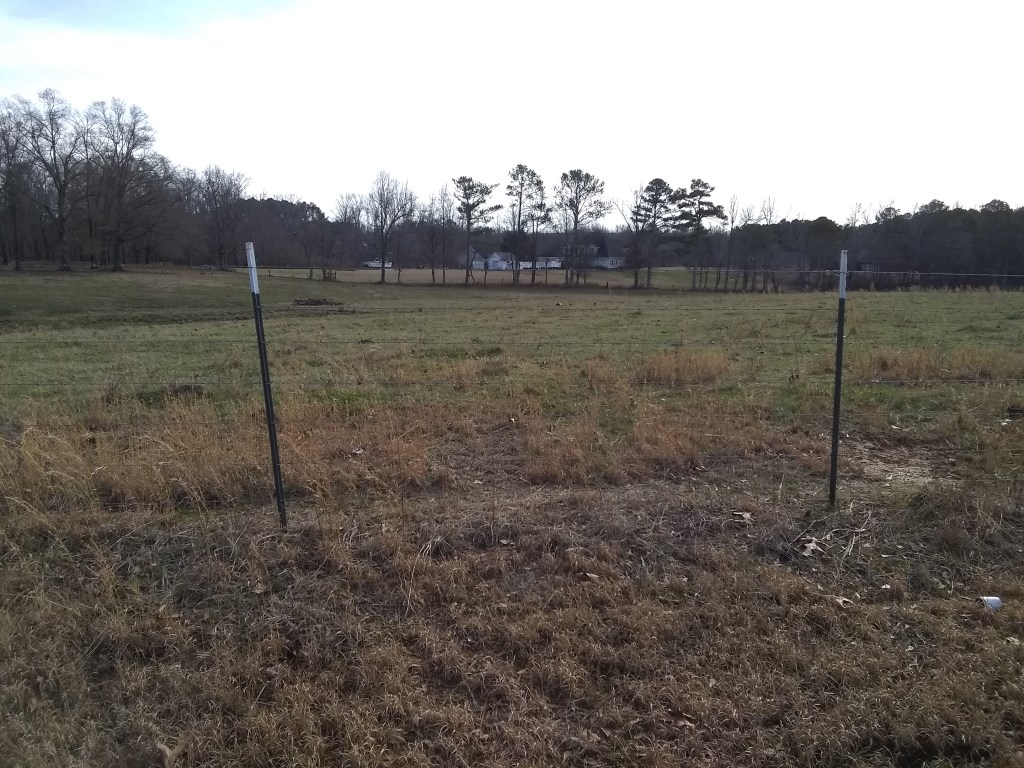
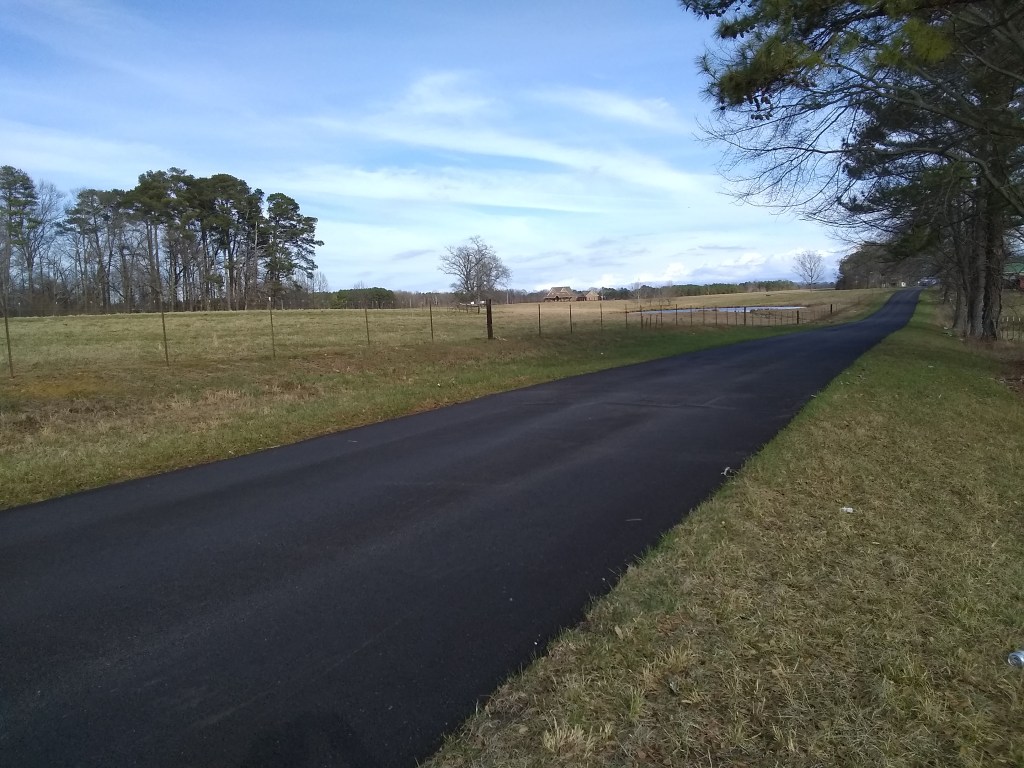
Sitting here this morning, I’m struck by how these seemingly unrelated events connect. Both are about being prepared – in writing, to adhere to the constraints of an assignment while allowing creativity to flourish; in biking, to equip myself against the elements. They are also about the depth and complexity that layers bring, whether it’s in a story or in shielding oneself against the cold.
In life, we often find ourselves layering – experiences, memories, knowledge. Each layer adds depth, context, and richness to our existence. They protect us, much like clothing against the cold, and they allow us to delve deeper into the realms of imagination, much like a well-crafted narrative.

As I ponder these connections, I realize that life, in many ways, is about finding the right balance in these layers. Too few, and we might find ourselves unprepared or lacking depth. Too many, and we risk losing clarity or becoming burdened.

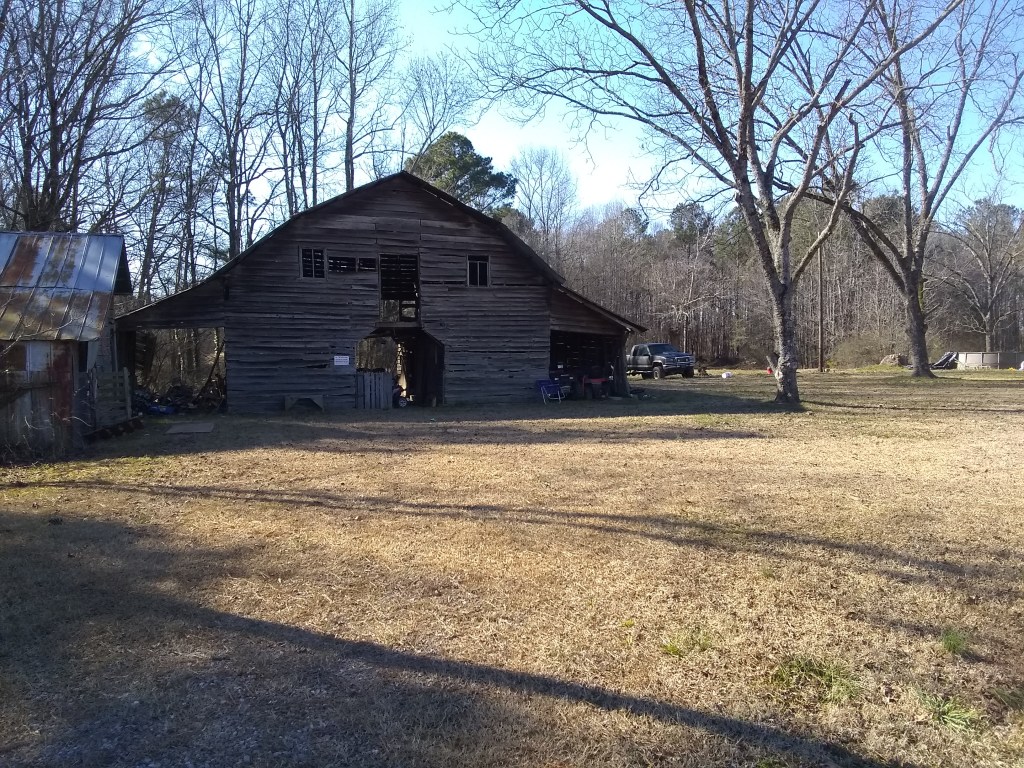
In the quiet of the barn, surrounded by the remnants of yesterday’s thoughts and today’s revelations, I appreciate this dance of layering. It’s a delicate balance, a continuous adjustment, much like the art of living itself.

The Boaz Scorekeeper–Chapter 44

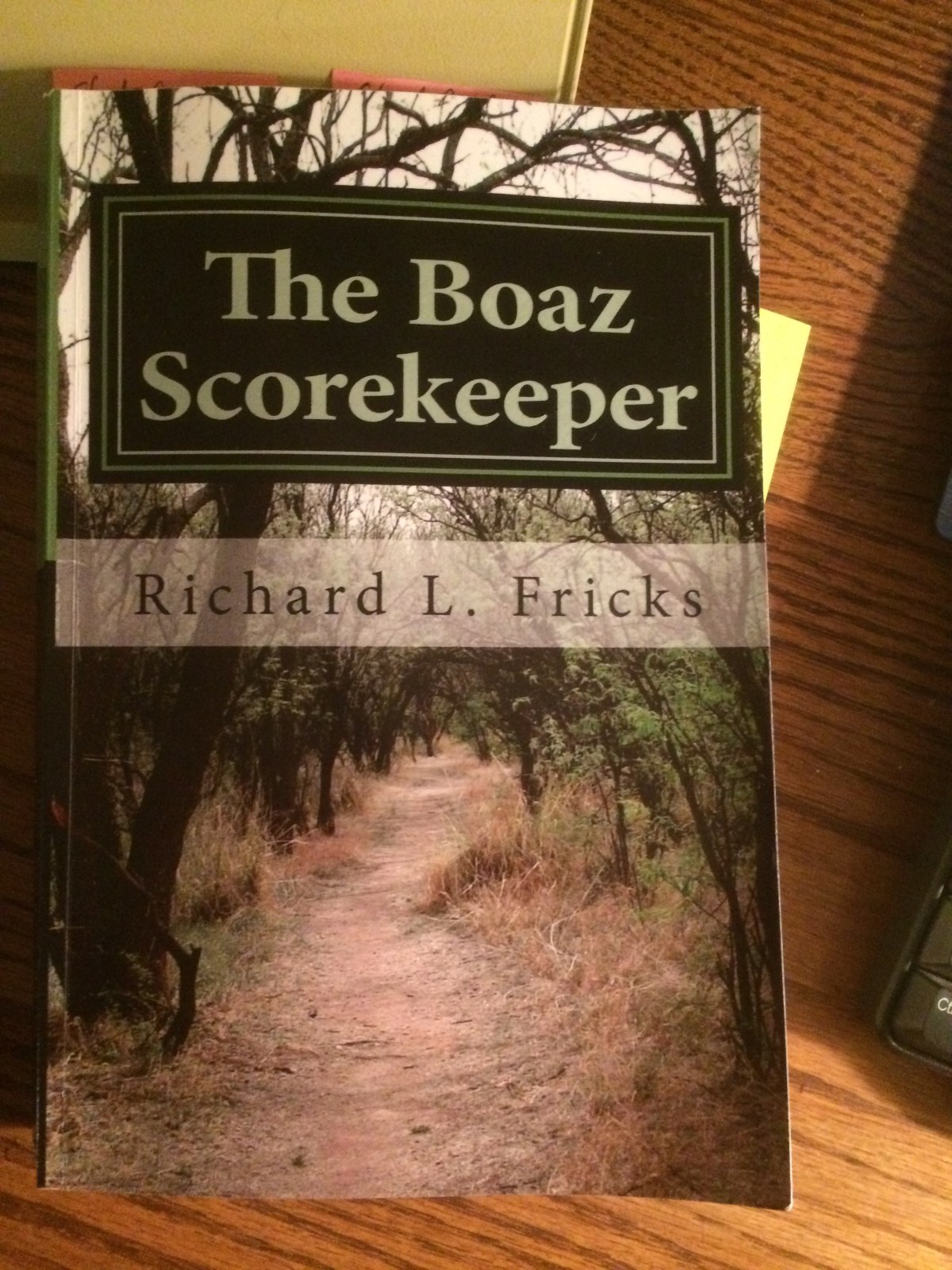
The Boaz Scorekeeper, written in 2017, is my second novel. I'll post it, a chapter a day, over the next few weeks.

Matt’s auto accident was worse than originally thought.  He spent three days in the hospital and almost three weeks at home in bed.  The doctor said he had suffered extreme brain trauma and risked convulsion and a stroke if he exerted himself.

I covered both mine and Matt’s cases having court appearances nearly every day.  But, I still found time to conduct detailed planning on how I would abduct John Ericson.  I had decided against simply killing him.  That would be too easy and wouldn’t accomplish enough.  I didn’t mind the easy part but I had previously decided that my form of justice would be a combination of civil and criminal justice.  Each of the Flaming Five would pay money for the evil they had committed and they also would pay with their lives.  I doubt any reasonable person would argue this wasn’t what they each deserved.

Four weeks to the day after Career Day, and its vivid reminder of what John Ericson and family had done to Jesse Dawson and her family, I was ready for game one.  I left the office at 5:00 p.m., drove home, and ate supper with Karla and Kaden.  After eating, I told them I had a brief to complete and went to my study.  It was on the back of the house next to the master bedroom where I slept.  Karla and I had not slept together in years.  She blamed it on my snoring.  She now had her own bedroom upstairs in what used to be the loft.  I changed clothes and walked back through the study and out onto my balcony.  By now it was dark.  I walked through the back yard and the 300 or so yards to the barn.  There I backed my 2007, F150 Ford pickup out and loaded my bicycle in the back under the camper shell.

I drove back to the office, parked, and went inside long enough to turn on all the lights.  I then came back out, removed my bicycle, and rode up Main Street, crossing Highway 205. I had twenty minutes or so to kill so I rode past Snead College, the Boaz Rec Center, Corley Elementary School and then circled back toward First Baptist Church of Christ.  I crossed back over Highway 205 and turned left on Brown Street and then right on Sparks.  A block before reaching the church I pulled into the driveway of an abandoned house on the corner of Sparks and Elm Streets.  I hid my bike behind the house under an old tarp that had been left by the previous owners to cover two lidless garbage cans. 

I walked across Elm and through a grove of trees and an assortment of picnic tables and benches that were used mainly by church employees during their lunch hour.  John’s car was parked where it always was on Monday nights, in the parking lot on the west side of the Family Life Center, in parking spot number 275, facing Gethsemane, the informal name that had been assigned to the grove of trees I had just passed through.  And John, I had to assume, was where he always was on Monday nights, inside teaching and coaching the Upward Bound Basketball and Bible program.  I squatted down beside the passenger side door.  It was now 8:55 p.m. and there were no other cars in the parking lot. 

For the past three weeks, I had made this same little biking journey and hid in Gethsemane.  Each week had been almost an exact replica, the only thing that varied was the time John walked out of the west side door of the Center and approached his 2017 Chevrolet Traverse.  The earliest time had been 9:02 p.m., and the latest had been 9:06 p.m.  The kids and the other workers were always gone at the latest by 8:45 p.m.

Tonight at 9:05 p.m., I heard John rattling the Center’s door making sure it was locked.  I could hear his footsteps as he approached his vehicle. It was roughly forty feet from the Center’s door to the driver’s side door on John’s Traverse.  I started inching my way toward the back of his vehicle.  When I heard the beep of his automatic door opener I readied myself at the back corner. I counted ‘one thousand one, one thousand two.’  I knew it took John two seconds after sounding the beep to reach his vehicle and open the back door.  My entire plan could go south in a hurry if John didn’t follow his routine.  He always opened the back door and threw his duffel bag inside onto the bench seat.  If he had opened the front door and sit down in the bucket seat, my job would be much more difficult, if not impossible.  He followed his routine and opened the back door. 

Just as I heard him pull on the door handle I looked around the bumper on the driver’s side and saw him tossing in his duffel bag.  I rushed toward him making far more noise than I had intended but reached him as he was turning towards me.  Our eyes locked together as I lunged the taser in my right hand into the left side of his chest.  He fell back against the open door without saying a word. 

I had not anticipated the level of difficulty it would be to get John’s body inside his vehicle.  Even though John was tall and slim, he probably only weighed 160 to 170 pounds.  It took me three attempts to pick up his lifeless body and lean him back against the bench seat.  Every time I tried to prop him up his feet kept slipping and he collapsed.  I finally figured out that if I turned him face-forward toward the seat that his center of gravity shifted upwards enough for him to lay across the seat.  I then went around to the other side and could pull him completely inside.  I had to go back around and bend his legs upward to close the door. 

I panicked when I could not find John’s keys.  After crawling in the back seat and checking his pockets I realized he probably dropped them when I tasered him.  I got outside and down on all fours and found John’s keys up under the Traverse.  I opened the driver’s door and jumped inside.  The vehicle had been running ever since John had used his automatic door opener.  I backed up and started toward the west side parking lot and onto Elm Street when I remembered that I had forgotten to handcuff John’s hands.  I quickly stopped the vehicle, got out, walked around the Traverse, opened the back door, and pulled his arms and hands from underneath his body and behind his back.  The cuffs finally snapped shut.  I looked at my watch.  It was 9:14 p.m.  It had taken six minutes more than I had planned.  I was soaking wet from sweat and it was still pouring off my face and head.  I got back behind the wheel and drove north on Elm Street.  Only then did I remove my black hood.

It was twenty minutes before I pulled up beside the barn.  This wasn’t my barn at Hickory Hollow.  That would have been way too risky.  I could not have prevented Karla and Kaden from discovering how the Flaming Five were finally receiving their justice.  Three years ago, I had purchased the south eighty acres from the Black’s.  I had bought it from their son Andrew.  When I first purchased their north 100 acres and named it Hickory Hollow, I had asked them for a right of first refusal on their south 80.  They had agreed and I had made sure that Andrew, who lived in Jackson, Mississippi, knew about it.  Betty Black had died in 2002 and Carl in 2013.  Andrew settled the estate and, good to his word, contacted me asking whether I still wanted to buy the remaining 80 acres.  I didn’t really need it, nor have any plans for it but bought it none the same.

Oak Hollow, the name I had coined for the Black’s south 80 acres, was located on Dogwood Trail, just beyond where Leeth Gap Road begins. The northeast corner of Oak Hollow is at the dead-end of Dogwood Trail. There are only four houses on this road.  The Black’s had installed a chain gate swung from two metal poles, one on each side of the road.  Andrew had given me a key to the lock.  The Black’s simple one-story brick home was a hundred yards or so inside the gate.  Another three hundred yards deeper into the woods the Black’s had cleared off a few acres and built a barn.  I had made a lot of changes to the barn since purchasing the south 80 in 2015.  It was this barn that I now sat beside in John’s Traverse with him groaning and lying across the back seat.

I got out and flipped on two light switches that I had installed on the outer wall inside a weather proof cover.  One switch was an outside LED flood light at the top of the roof under the eve and just above the loft door.  The other switch turned on a row of lights down the center of the barn’s open hallway.  I had parked the Traverse perpendicular to the barn’s hallway.  I opened the vehicle’s back door on the driver’s side and told John to get out.  By now he was awaking, but not yet fully alert.  He moaned and I told him, “John Ericson, this is Micaden Tanner, and you have been convicted of rape and murder and sentenced to die.  Now get out of my police car.” 

I knew he couldn’t easily get out of the vehicle, not with him lying on his stomach with his hands cuffed behind his back.  I just wanted to be dramatic.  I had rehearsed over and over the past three weeks what I wanted to say when we arrived at Oak Hollow Prison. 

I took John’s ankles in my hands and started pulling him off the backseat.  When his feet were on the ground I grabbed his shirt at his shoulders with both hands and stood him upright.  He turned and looked at me with a mix of fear and disgust and said, “Tanner, what the hell are you doing?  Uncuff me right now or your ass is dead.”

I replied, “John I don’t think you are in any position to be making such bold demands.”  I pushed John further inside the barn’s hallway and inside a stall halfway down on the right side.  I made him sit down on a metal stool that was in the center of the room and secured to the cement floor.  I then used an extra pair of cuffs to connect his right hand to the stool and removed the first cuffs.  I then had him stand which allowed him to bring his arms and hands around in front of him.  When he stood up he thrust out his left hand towards me to punch my face.  I blocked his punch and told him, “I figured you would try that.  Now, you can do one of two things.  Either you let me put a shackle on your left hand which is attached to this stool and with its chain give you six feet of roaming freedom, or I will leave you just the way you are with your right-hand close-cuffed to the stool.”

John reached out his left hand and I put on the shackle that was lying on the floor next to the stool.  I had previously secured the chain to the stool.  I stepped back toward the jail cell type door that I had built and John let out the shrillest scream I had ever heard.  I turned and smiled at him.

“John, you can shout, holler, or scream as loud and as often as you want.  You are at least a mile from anyone, and in between you and the first household, are a million oak and hickory trees to resist your sound waves.  It’s up to you.”

“Tanner, okay, I get it.  But, be sensible.  Let’s make a deal.  I suspect I know what this is all about.  What will satisfy you?  What about a million dollars?”  John said.

“I appreciate your offer.  That’s about half of what I was thinking.  Two million dollars will be what I demand from your family.  Do you think you are worth that?  Will they pay that?”  I asked.

“Unshackle me right now and we can deal with this tonight.”

“Oh, my funny John.  Don’t you realize that you will never see your family again?”  With that I walked out and locked the cell’s door.  I looked back at John and told him there was water and bread within reach behind him on a table, and under the table was a pillow and a blanket.  “There’s a five-gallon bucket in the opposite corner for your creative uses.”  I couldn’t resist saying as I looked at John’s eyes.  I think he was about to cry. 

I walked across the hallway to a supply room and took a bottle of Lysol Spray and a clean towel.  For the next fifteen minutes, I scrubbed down the inside of John’s Traverse.  Even though I had used gloves I wanted to make sure there was nothing suspicious left in the vehicle.  When I finished, I drove back to the Family Life Center and parked in spot 275.  I got out, locked up, and walked through Gethsemane across Elm and retrieved my bike from under the blue tarp at the abandoned house.  In less than five minutes I was back at the law office and the bike was in the back of my truck locked inside my camper top.  I went inside and turned off all the lights and drove home.  It was after 11:00 p.m. when I walked across my balcony, back through the study, and into my bedroom.

After taking a shower, I lay down across my bed but tossed and turned for at least an hour.  I guess it was only natural to replay tonight’s events over and over in my mind.  Once I finally dozed off, I slept sound the rest of the night.

11/27/23 Biking & Listening

Here’s today’s bike ride metrics. Temperature at beginning of ride: 38 degrees. Brilliant sun with beautiful blue sky.


Photos from today’s ride

none

Why I ride

Biking is something I both love and hate. The conflicting emotions arise from the undeniable physical effort it demands. However, this exertion is precisely what makes it an excellent form of exercise. Most days, I dedicate over an hour to my cycling routine, and in doing so, I’ve discovered a unique opportunity to enjoy a good book or podcast. The rhythmic pedaling and the wind against my face create a calming backdrop that allows me to fully immerse myself in the content. In these moments, the time spent on the bike seems worthwhile, as I can’t help but appreciate the mental and physical rewards it offers.

I especially like having ridden. The post-biking feeling is one of pure satisfaction. The endorphin rush, coupled with a sense of accomplishment, makes the initial struggle and fatigue worthwhile. As I dismount and catch my breath, I relish the sensation of having conquered the challenge, both physically and mentally. It’s a reminder that the things we sometimes love to hate can often be the ones that bring us the most fulfillment. In the end, the love-hate relationship with biking only deepens my appreciation for the sport, as it continually pushes me to overcome my own limitations and embrace the rewards that follow the effort.


Why you should ride

To increase self-esteem

Riding a bike on a regular basis can lead to dramatic improvements in self-esteem. As we pedal down the street, breeze in our hair, the physical and mental benefits accumulate in ways that profoundly impact how we view ourselves.

On a physical level, cycling strengthens our cardiovascular system, burns calories, and tones core and leg muscles. The sight and feeling of our body transforming, becoming stronger, leaner, and healthier fosters an innate sense of pride. The boost in endorphins and energy makes us feel more vibrant and enthusiastic in tackling other goals. We carry ourselves with more confidence as our posture and physical abilities improve.

The act itself of biking also builds self-esteem. It represents personal accomplishment to bike mile after mile. As we track distance and improve personal bests, we feel empowered seeing hard work pay off. There’s also freedom and independence realized atop two wheels on an open road or bike trail. Feelings of self-reliance translate into improved self-worth.

Pushing past mental barriers and physical discomfort in order to bike builds grit and resilience. We face fears, withstand pain, and refuse to quit. The experience, repeated regularly, makes us see ourselves as determined and strong. It redefines limits on what we can achieve.

In all these ways, the simple act of hopping on a bike and pedaling leads to radical self-transformation from the inside-out. As fitness increases, so does assurance in our skills, abilities, strength, and worth. The boost in confidence changes how we carry ourselves in the world and the belief we have in our inner resources.


Here’s a couple of links to groups I like. Hopefully, they’ll encourage you to start riding a bike, no matter your age.

Cycling for those aged 70+(opens in a new tab)


Solitary Cycling(opens in a new tab)


My bike

A Rockhopper by Specialized. I purchased it November 2021 from Venture Out in Guntersville; Mike is top notch! So is the bike. The ‘old’ man seat was salvaged from an old Walmart bike (update: seat replaced, new photo to follow, someday).


What I’m listening to

Novel:


Amazon abstract:

NATIONAL BESTSELLER • The Girl with the Dragon Tattoo series continues: Lisbeth Salander must face the most important battle of her life, and will finally put her past to rest in this thriller that will “leave Salander’s legion of followers clamoring for more” (The Wall Street Journal). • Also known as the Millennium series

Mikael Blomkvist is trying to reach Lisbeth Salander—the fierce, unstoppable girl with the dragon tattoo. He needs her help unraveling the identity of a man who died with Blomkvist’s phone number in his pocket—a man who does not exist in any official records and whose garbled last words hinted at knowledge that would be dangerous to important people. But Lisbeth has disappeared. She’s sold her apartment in Stockholm. She’s gone dark. She’s told no one where she is. And no one is aware that at long last she’s got her primal enemy, her twin sister, Camilla, squarely in her sights.

Look for the latest book in the Girl with the Dragon Tattoo series, The Girl in the Eagle’s Talons, coming soon!


Blinkist nonfiction book summaries

Thinking, Fast and Slow, by Daniel Kahneman

Podcast episodes:

None today.

Waking Up app series/courses:

None today.


Here’s a few photos from previous riding adventures:

Morning Mental Meanderings–11/27/23

The Unpredictability of Preparation

Seated in the Pencil Pit, my sanctuary of creativity and contemplation, I find myself reflecting on the parallels between two seemingly disparate experiences from yesterday – the continuation of Project 55 and a challenging bike ride.

Project 55, a dive into my past, has me revisiting an assignment from Mrs. Stamps, my 9th grade English teacher. Tasked in 1968 with envisioning my life 55 years in the future, I remember how my 14-year-old self struggled to project a life at age 69. Marriage seemed like a distant, foggy concept. I chose a girl from church to be my future wife, not out of affection or foresight, but more as a placeholder, a way to complete the assignment. It was an exercise in uncertainty, a young boy’s attempt to make sense of a future too far to comprehend.

Contrast this with yesterday’s bike ride – a 16-mile journey under a cold, relentless rain. I found myself woefully underprepared, lacking the right clothing for the weather. The struggle wasn’t just physical; it was a mental grappling with my own lack of foresight.

Connecting these two moments, I see a thread of unpreparedness weaving through. As a teenager, I couldn’t prepare for a future I couldn’t envision. As an adult, I sometimes find myself in situations, like the bike ride, where I’m caught off guard, underprepared for the immediate challenges.

Yet, there’s a deeper connection here, one that transcends the mere act of being unprepared. It’s about the inherent unpredictability of life. At 14, how could I have known whom I would marry, or the myriad turns my life would take? Similarly, even with experience and age, can we ever be truly prepared for all that life throws our way?

These reflections lead me to consider the nature of preparation itself. Maybe it’s not always about having all the answers or the right gear. Perhaps it’s more about the ability to adapt, to make the best of what we have in the moment. In Project 55, my young self did just that – I adapted to the task with the limited understanding I had. And on the bike ride, despite being cold and wet, I adapted and persevered through the miles.

As I write this, pencil in hand, in the early light of the barn, I realize that life is a constant balancing act between preparation and adaptation. We plan, we foresee, but often we find ourselves in situations that our preparations didn’t account for. It’s in these moments that our resilience is tested, and our ability to adapt becomes our greatest asset.

So, as I ponder the connection between a school assignment from decades ago and a rainy bike ride, I’m reminded that being unprepared isn’t always a failure; sometimes, it’s just a part of the human experience. And perhaps, in recognizing this, we find a way to be better prepared for the unpredictable journey of life.

The Boaz Scorekeeper–Chapter 43

The Boaz Scorekeeper, written in 2017, is my second novel. I'll post it, a chapter a day, over the next few weeks.

For forty-four years Matt had participated in the Boaz High School Career Day program.  He had graduated Valedictorian from Boaz in 1954, the University of Alabama in 1959, and Emory University’s School of Law in 1962.  Matt practiced in Atlanta for nearly ten years before returning to his hometown and starting his solo law practice in January 1972.  My case in the fall of 1972 was Matt’s first Alabama murder case.

Matt’s forty-fifth Career Day appearance was scheduled for today at 9:00 a.m.  At 8:05 a.m., I received a call at the law office from a nurse in the Emergency Room at Marshall Medical Center South Hospital stating that Matt had asked her to call and tell me to go to Boaz High School to fill his spot.  The nurse also instructed me to find Mrs. Southerland and explain to her that Matt was unable to attend Career Day because he had been in an auto accident.  The nurse assured me that Matt had run off the road, hit a tree, and had a non-life-threatening cut on his forehead that had to be sewn up. She said that he was under heavy medication and wouldn’t be released for several hours.

I grabbed my coat and drove to Boaz High School.  After locating Mrs. Southerland and explaining why I was there, she walked with me to the English Department on second floor where students interested in a legal career would come by to chat with me, Circuit Court Judge Henagar, and District Attorney Charles Abbott. She said there was coffee in the lounge and provided directions.  I told her I would just wait here.

After she left I walked out into the hall and saw Room 201.  My mind jumped backwards forty-six years to 1971, January 3rd to be exact.  I went into the empty room, sat down at the first student desk in the third row, and closed my eyes.  I had a good memory of what had happened in my Junior Year English Literature class the first day after returning from Christmas holidays.

Mrs. Peterson, our teacher, was absent, something about a weather-related delay returning from Chicago.  We had a substitute, a Miss Barnes I believe.  She was a recent college graduate with very little ability to control thirty or more energetic teenagers.  She seriously attempted guiding the class in a reading of Shakespeare’s Macbeth but soon lost control.  John Ericson was the ring-leader in flirting with Miss Barnes.  She was probably only four or five years older than we were and could easily pass for a classmate.  She was, as they say, drop-dead gorgeous.  John, egged on by Randall Radford and Fred Billingsley, asked her if she had a boyfriend.  The more she ignored him and tried to maintain classroom order John continued to badger her.  I remember him saying, “I don’t care if you do have a boyfriend.  After a roll in the hay with me you will never think of him again.”  One of the five or six girls in the class chimed in with, “John, I hear you’re about to be a father. I doubt you’ll have time for Miss Barnes.”   John looked dumbfounded. 

His puzzled look turned to terror when the door opened and two police officers walked in.  One of them asked John to come into the hallway.  At first, he just stood frozen.  Finally, one of the officers walked over to him, took hold of his arm, and walked him outside the classroom.  As the other officer was pulling the door shut, he told Miss Barnes to keep the rest of us in the room until the bell rings.

Eerily, the classroom fell quiet.  The girl, Janice Brewster I believe, who had claimed John was about to be a father, spoke out after a few minutes of total silence.  She said, “Big Bad John is in some deep shit.”  Miss Barnes tried her best to assert control, even warning Janice and the rest of us not to use foul language.  She finally said that we could talk if we were civil and not too loud.  Janice said that her mother had told her that John had gotten a ninth grader, Jesse Dawson, pregnant, and that he was going to be charged with rape, something about him being over 16 years old and having sex with a girl that is more than two years younger.

Fred spoke up and said that little Jesse should be charged and not John, that she looked like she was eighteen and had seduced John into having sex.  Randall said that John had been dating the ninth grader for over a year and nothing would ever have come of this if Doc Yelling hadn’t blabbed to social services who in turn blabbed to an Assistant District Attorney.  Jesse had thought she was pregnant but had learned she wasn’t.

Noise from the hallway roused me up and brought me back to the present.  I looked at my watch and it was nearly 9:00 a.m.  I walked back across the hall and spent the next three hours sitting beside the Judge and the DA in front of a revolving door of students each with some curiosity of what working in the legal field is all about.  After the last group of students left, Mrs. Southerland came and reminded us that a special lunch had been prepared in the cafeteria for all who had come and participated in Career Day.  I thanked her, but declined.  I had a 2:00 p.m. hearing in Guntersville.

During my drive to court, I couldn’t help but wonder what happened to John and his statutory rape charges.  He truly was charged, but like it always seemed for members of the Flaming Five and their families, they were slick as eels, always finding a way to avoid the reality the rest of humanity must deal with. 

Even before John’s preliminary hearing, which is mandated 20 days after an arrest, Jesse Dawson and her mother had told both the Boaz Police Chief and the District Attorney that she had never had sex with John Ericson and that she was not pregnant.  The only thing she would say is that she had had sex with a 9th grade boy, but she refused to disclose his name.   John never spent a night in jail and the charges against him were dropped soon after Jesse’s statement.  I never heard how close John came to facing justice but I do remember that Jesse and her family moved to Fort Payne.  At least that’s what I heard.  I suspect that John’s family was instrumental in showing Jesse’s parents the light, including the opportunities in Dekalb County. 

The only thing I remember hearing John say about this dark little chapter in his life, was during a basketball game our senior year.  Boaz was playing Fort Payne at Fort Payne High School.  As I always did, I rode the bus with the team, not for official score keeping purposes but simply to keep Coach Pearson’s stats report, what he called, ‘The Shit Sheet.’  I was sitting on the bench watching our team warm-up after halftime had ended.  John and Fred were on the court taking long shots from right in front of where I was sitting.  I heard John tell Fred that Jesse Dawson was on the second row behind the Fort Payne cheerleaders.  Fred warned John to leave her alone.  As John took his final shot within my hearing I heard him say, “Our eyes locked a few minutes ago. I can tell she will be up for a quickie right after the game.  She never could resist my flame.”

As I pulled into the courthouse parking lot, I was unreasonably mad at Matt for making me return to Boaz High School.  I doubt that I would have remembered how arrogant and powerful John had been even as a high school student.  Graduation night was not the first time he had raped an innocent girl.  I guess if I knew the truth, there were many young girls who had melted to his flame.

The son of a bitch will not escape real justice.

11/26/23 Biking & Listening

Here’s today’s bike ride metrics. Temperature at beginning of ride: 50 degrees. Light rain.


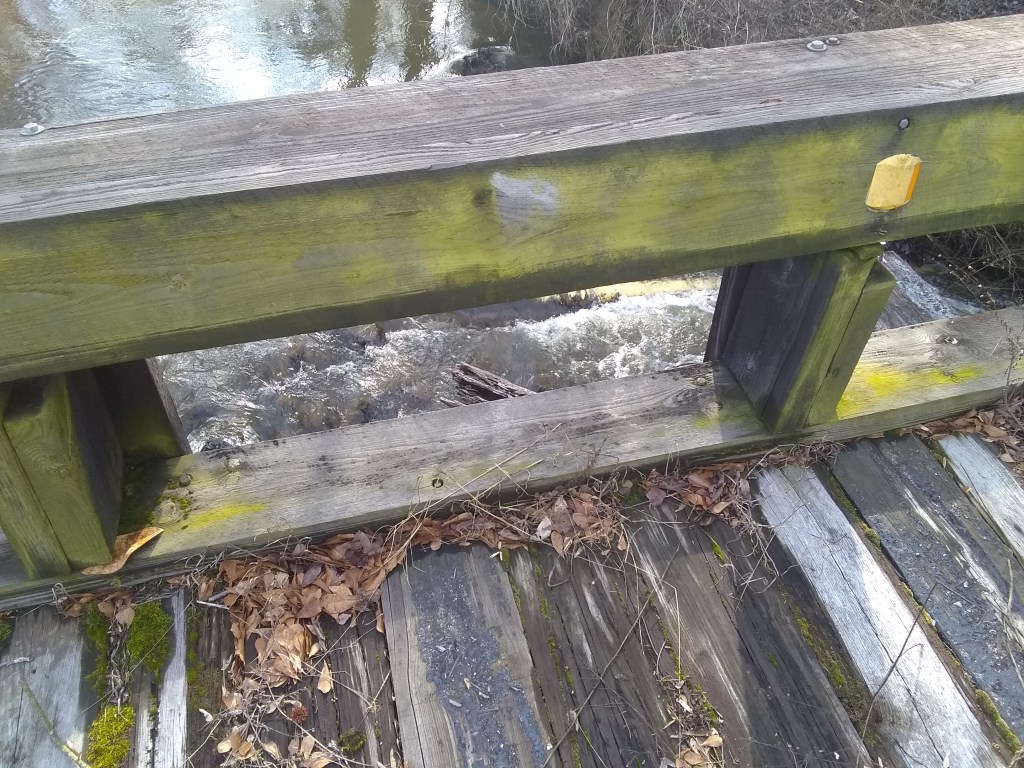
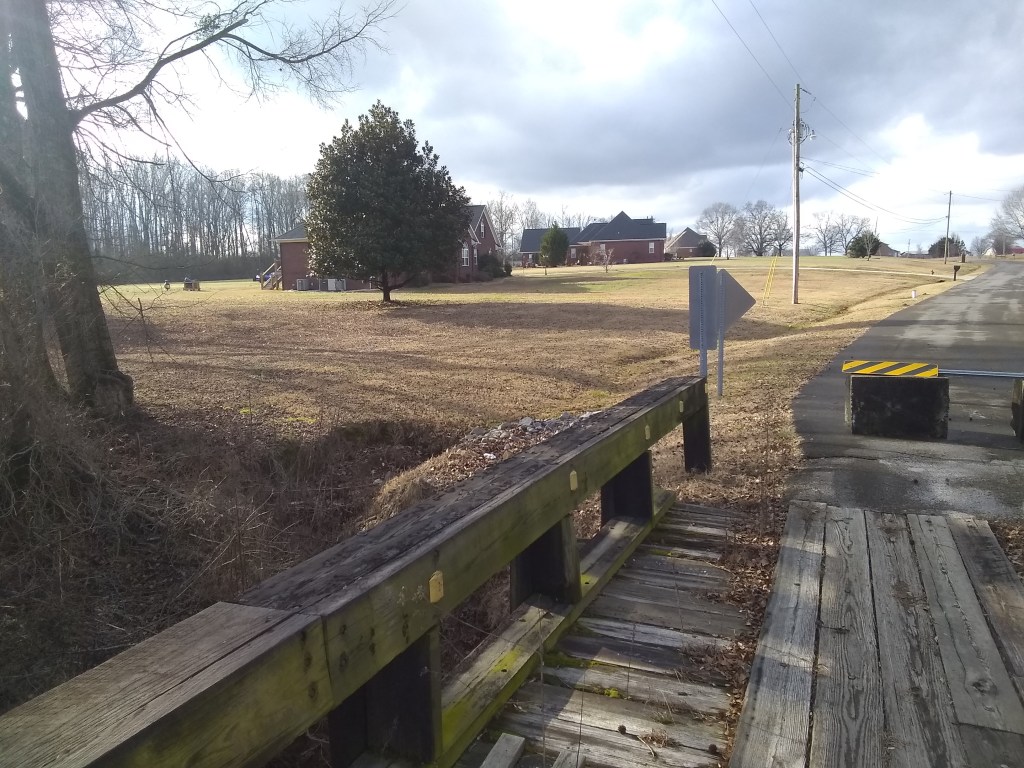
From today’s ride

Why I ride

Biking is something I both love and hate. The conflicting emotions arise from the undeniable physical effort it demands. However, this exertion is precisely what makes it an excellent form of exercise. Most days, I dedicate over an hour to my cycling routine, and in doing so, I’ve discovered a unique opportunity to enjoy a good book or podcast. The rhythmic pedaling and the wind against my face create a calming backdrop that allows me to fully immerse myself in the content. In these moments, the time spent on the bike seems worthwhile, as I can’t help but appreciate the mental and physical rewards it offers.

I especially like having ridden. The post-biking feeling is one of pure satisfaction. The endorphin rush, coupled with a sense of accomplishment, makes the initial struggle and fatigue worthwhile. As I dismount and catch my breath, I relish the sensation of having conquered the challenge, both physically and mentally. It’s a reminder that the things we sometimes love to hate can often be the ones that bring us the most fulfillment. In the end, the love-hate relationship with biking only deepens my appreciation for the sport, as it continually pushes me to overcome my own limitations and embrace the rewards that follow the effort.


Why you should ride

To improve Mood Through the Release of Endorphins:

Cycling can significantly uplift one’s mood, and this is closely linked to the body’s production of endorphins during physical activity. Here’s how the process works and why it’s beneficial:

  • Endorphin Release: When you engage in cycling, your body’s response to the physical exertion is to produce endorphins. These are neurotransmitters that the brain releases during prolonged, continuous workouts of moderate to high intensity. They interact with receptors in the brain that reduce your perception of pain and trigger a positive feeling in the body, similar to that of morphine.
  • Natural High: Often referred to as a “natural high,” the endorphins released during cycling can lead to an improvement in mood, a feeling of euphoria, and a more positive outlook on life. This state can be particularly helpful for combating the negative thoughts and feelings associated with anxiety and depression.
  • Stress and Anxiety Reduction: The mood-boosting effect of endorphins is accompanied by a decrease in stress hormones, such as cortisol and adrenaline. This biochemical shift helps alleviate stress and anxiety, creating a more tranquil mental state post-ride.
  • Increased Self-Esteem: Regular boosts in endorphin levels can lead to improvements in self-esteem and self-worth. As you meet cycling goals or simply enjoy the ride, the accompanying endorphin rush reinforces a sense of accomplishment and positivity.
  • Pain Relief: Endorphins also act as analgesics, which means they diminish the perception of pain. They bind to the same neuron receptors as pain medicines but without the addiction and side effects. This can be particularly beneficial for people with chronic pain conditions, as regular cycling can help manage pain and improve quality of life.
  • Improved Cognitive Function: The endorphins released during cycling do more than just improve mood; they also help enhance cognitive functions. They can increase alertness, improve concentration, and help keep the mind sharp.
  • Social Well-being: If you cycle in a group, the shared experience can amplify the endorphin release. Social interactions during group rides can lead to a greater sense of happiness and fulfillment, adding to the mood-lifting effects of endorphins.
  • Long-term Benefits: The mood enhancement from endorphins isn’t just a short-term effect. Regular cycling can contribute to long-term mood stability. It’s often prescribed as part of treatment plans for those with depression and mood disorders because of its ability to produce consistent and predictable mood improvements.

In summary, cycling is not only a physical activity but also a powerful tool for mental health maintenance. The release of endorphins during a ride can help create a more optimistic mental state, combat feelings of depression and anxiety, and foster a general sense of well-being.


Here’s a couple of links to groups I like. Hopefully, they’ll encourage you to start riding a bike, no matter your age.

Cycling for those aged 70+(opens in a new tab)


Solitary Cycling(opens in a new tab)


My bike

A Rockhopper by Specialized. I purchased it November 2021 from Venture Out in Guntersville; Mike is top notch! So is the bike. The ‘old’ man seat was salvaged from an old Walmart bike (update: seat replaced, new photo to follow, someday).


What I’m listening to

Novel:


Amazon abstract:

NATIONAL BESTSELLER • The Girl with the Dragon Tattoo series continues: Lisbeth Salander must face the most important battle of her life, and will finally put her past to rest in this thriller that will “leave Salander’s legion of followers clamoring for more” (The Wall Street Journal). • Also known as the Millennium series

Mikael Blomkvist is trying to reach Lisbeth Salander—the fierce, unstoppable girl with the dragon tattoo. He needs her help unraveling the identity of a man who died with Blomkvist’s phone number in his pocket—a man who does not exist in any official records and whose garbled last words hinted at knowledge that would be dangerous to important people. But Lisbeth has disappeared. She’s sold her apartment in Stockholm. She’s gone dark. She’s told no one where she is. And no one is aware that at long last she’s got her primal enemy, her twin sister, Camilla, squarely in her sights.

Look for the latest book in the Girl with the Dragon Tattoo series, The Girl in the Eagle’s Talons, coming soon!


Blinkist nonfiction book summaries

Sapiens by, Yuval Noah Harari

The Stranger in the Woods, by Michael Finkel

Podcast episodes:

None today.

Waking Up app series/courses:

None today.


Here’s a few photos from previous riding adventures:

Cognitive Clarity–A Big Item on God’s To-Do List: Kill as Many People as Possible

"Cognitive Clarity" blog posts are about cultivating a culture of thoughtful and informed discourse. They encourage readers to think deeply, question boldly, and approach the world with an open yet discerning mind.

Here’s the link to this article.

By David Madison at 11/24/2023

Yet the church gets away with “God is love” 

Those who have been assured since childhood that God is Love—and

have been coached to pray to their loving father well into adulthood—seem immune to many Bible texts that contradict this idea, for example, these pieces of Jesus-script:

“Do not think that I have come to bring peace to the earth; I have not come to bring peace but a sword. For I have come to set a man against his father, and a daughter against her mother,
and a daughter-in-law against her mother-in-law,and one’s foes will be members of one’s own household.”  (Matthew 10:34-36)

Luke’s version of this text is prefaced with, “I have come to cast fire upon the earth, and how I wish it were already ablaze!” (Luke 12:49)

In his letter to the Romans, the apostle Paul taught that “wrath and fury” awaited people who were disobedient to god. (Romans 2:8)

The Genesis Flood Story is all about god killing as many people as possible, in fact everyone on earth except for one family. Yet Bible books for children focus on the rainbow ending, ignoring the genocide. Ken Ham decided to celebrate the genocide with a family-fun theme park. How in the world can he live with himself? 

Devout folks are persuaded that the horrendous suffering in the world can’t be blamed on god, but is the result of free will, or god’s mysterious ways, or a supposed bigger plan unknown to us. This is what I have called “easy acceptance of the very terrible,” an outlook/attitude that is given a boost by a deep ignorance of history, i.e., unawareness of how much suffering there has been. 

On 1 November 1755, Lisbon was destroyed by earthquake, tsunami and fire. Many of the 12,000 who died were killed when churches collapsed on them as they praised god on All-Saints-Day. In the 14th century, at least a quarter of the human population between India and England died of the plague—and the suffering was grotesque. The church was sure that this was god’s “wrath and fury” in action, and penitents wandered Europe flagellating themselves hoping to appease god’s anger. But how can that possibly make sense—how can it be squared with belief in a loving god? The Holocaust during World War II—six million people intentionally murdered—is totally inexplicable if a good, caring deity is paying attention. Indeed, Holocaust-denialism is one way of salvaging faith. Such denial is totally inexplicable since the Holocaust is one of the most thoroughly documented crimes in history. 

Honest theology would admit that killing people seems to be a big item on angry god’s to-do list.

But then there was another Holocaust that has not attracted as much attention. It is appropriate here to include paragraphs from the opening of David E. Stannard’s book, American Holocaust: The Conquest of the New World.

“In the darkness of an early July morning in 1945, on a desolate spot in the New Mexico desert named after a John Donne sonnet celebrating the Holy Trinity, the first atomic bomb was exploded. J. Robert Oppenheimer later remembered that the immense flash of light, followed by the thunderous roar, caused a few observers to laugh and others to cry. But most, he said, were silent. Oppenheimer himself recalled at that instant a line from the Bhagavad-Gita: 

I am become death, the shatterer of worlds.

“There is no reason to think that anyone on board the Niña, the Pinta, or the Santa María, on an equally dark early morning four and a half centuries earlier, thought of those ominous lines from the ancient Sanskrit poem when the crews of the Spanish ships spied a flicker of light on the windward side of the island they would name after the Holy Savior. But the intuition, had it occurred, would have been as appropriate then as it was when that first nuclear blast rocked the New Mexico desert sands. 

“In both instances—at the Trinity test site in 1945 and at San Salvador in 1492—those moments of achievement crowned years of intense personal struggle and adventure for their protagonists and were culminating points of ingenious technological achievement for their countries. 

“But both instances also were prelude to orgies of human destructiveness that, each in its own way, attained a scale of devastation not previously witnessed in the entire history of the world. Just twenty-one days after the first atomic test in the desert, the Japanese industrial city of Hiroshima was leveled by nuclear blast; never before had so many people—at least 130,000, probably many more—died from a single explosion. Just twenty-one years after Columbus’s first landing in the Caribbean, the vastly populous island that the explorer had renamed Hispaniola was effectively desolate; nearly 8,000,000 people—those Columbus chose to call Indians—had been killed by violence, disease, and despair. It took a little longer, about the span of a single human generation, but what happened on Hispaniola was the equivalent of more than fifty Hiroshimas.”

And: “The destruction of the Indians of the Americas was, far and away, the most massive act of genocide in the history of the world.”

How does God-Is-Love theology survive when we become fully aware of such horrendous suffering? “He’s got the whole world in his hands” fails to have any meaning at all. The New Testament especially makes the point that its god is aware of every human, i.e., everything we say, and even think—which is how prayer is supposed to work—is known to god.  

And how can the god who runs the cosmos not be aware of the Big Picture? 

He had to know very well that Europeans were sailing west to find a way to China, but that a massive land mass was in the way—a land mass that was home to many millions of people who had been settled in north, central, and south American for thousands of years. Moreover, this god must have known that these residents of the Americas would have no immunity whatever to the many diseases that the European explorers brought with them. These diseases proved to be primary cause of death—wiping out millions of people: a super version of the 14th century’s Black Plague.

Yet, god just watched it all happen? How can this not be an enormous problem for Christian theology? An all-powerful god just sitting on his hands? It makes no sense whatever. 

Stannard devotes considerable space in his book to descriptions of the societies that the Spanish found as they ventured deeper into South America. He quotes from letters and diaries that explorers wrote, in which they marveled at the wonders they encountered: examples of advanced architecture and well-ordered, well-run communities. 

But the Spanish were not tourists. They were money motivated, on the hunt for gold, silver for the Spanish monarchy—and for slaves. Columbus was the trail-blazer—and a malicious one at that; he was a man 

“…with sufficient intolerance and contempt for all who did not look or behave or believe as he did, that he thought nothing of enslaving or killing such people simply because they were not like him. He was, to repeat, a secular personification of what more than a thousand years of Christian culture had wrought. As such, the fact that he launched a campaign of horrific violence against the natives of Hispaniola is not something that should surprise anyone. Indeed, it would be surprising if he had not inaugurated such carnage.” (pp. 199-200, Kindle, Stannard, emphasis added)

Later, heroes of the United States shared similar ideas. 

“George Washington, in 1779, instructed Major General John Sullivan to attack the Iroquois and ‘lay waste all the settlements around . . . that the country may not be merely overrun but destroyed,’ urging the general not to “listen to any overture of peace before the total ruin of their settlements is effected.”” (p. 119, Kindle)

Thomas Jefferson, “…in 1807 instructed his Secretary of War that any Indians who resisted American expansion into their lands must be met with ‘the hatchet.’ ‘And . . . if ever we are constrained to lift the hatchet against any tribe,’ he wrote, ‘we will never lay it down till that tribe is exterminated, or is driven beyond the Mississippi,’ continuing: ‘in war, they will kill some of us; we shall destroy all of them.’” (p. 120, Kindle)

And: “…the man who became America’s first truly twentieth century President, Theodore Roosevelt, added his opinion that the extermination of the American Indians and the expropriation of their lands ‘was as ultimately beneficial as it was inevitable.’” (p. 245, Kindle)

So many of the devout do their very best not to think about these evils: easy acceptance of the very terrible is an easy way out. Well, maybe not so easy—if they’re honest with themselves—but they adopt it anyway to shelter their beliefs from close examination. 

This is actually cowardice. Serious threats to the faith should be addressed head-on. One helpful tool for this is John Loftus’ hefty (more than 500 pages) 2021 anthology, God and Horrendous Suffering.

The existence of a good, loving, all-powerful, competent god does not withstand careful, critical, skeptical analysis. The Christian god who allowed the American Holocaust is the same one who does nothing to irradicate thousands of genetic diseases, mental illnesses—and cancers that are rampant in the world. He’s “got the whole world in his hands” is such a pathetic misunderstanding of reality. And how is it that a god who supposedly “inspired” humans—that is, manipulated their minds—to write a 1000-page holy book, couldn’t have changed thousands of minds in the direction of improving basic human decency? That is, cleansed our brains of racism. Is that too much to expect?

One of Stannard’s final observations: “…there is little doubt that the dominant sixteenth-and seventeenth-century ecclesiastical, literary, and popular opinion in Spain and Britain and Europe’s American colonies regarding the native peoples of North and South America was that they were a racially degraded and inferior lot—borderline humans as far as most whites were concerned.”  (p. 278, Kindle, emphasis added)

Humanity would be a lot better off if the Christian god had much greater tutorial skills.

David Madison was a pastor in the Methodist Church for nine years, and has a PhD in Biblical Studies from Boston University. He is the author of two books, Ten ToughProblems in Christian Thought and Belief: a Minister-Turned-Atheist Shows Why You Should Ditch the Faith, now being reissued in several volumes, the first of which is Guessing About God (2023) and Ten Things Christians Wish Jesus Hadn’t Taught: And Other Reasons to Question His Words (2021). The Spanish translation of this book is also now available. 

His YouTube channel is here. At the invitation of John Loftus, he has written for the Debunking Christianity Blog since 2016.

The Cure-for-Christianity Library©, now with more than 500 titles, is here. A brief video explanation of the Library is here