Write to Life blog

Novel Excerpts–The Boaz Scorekeeper, Chapter 81

The primary aim of the "Novel Excerpts" blog category is to showcase my creative writing, specifically from the novels I've written. Hopefully, these posts will provide a glimpse into my storytelling style, themes, and narrative skills. It's an opportunity to share my artistic expressions and the worlds I've created through my novels.
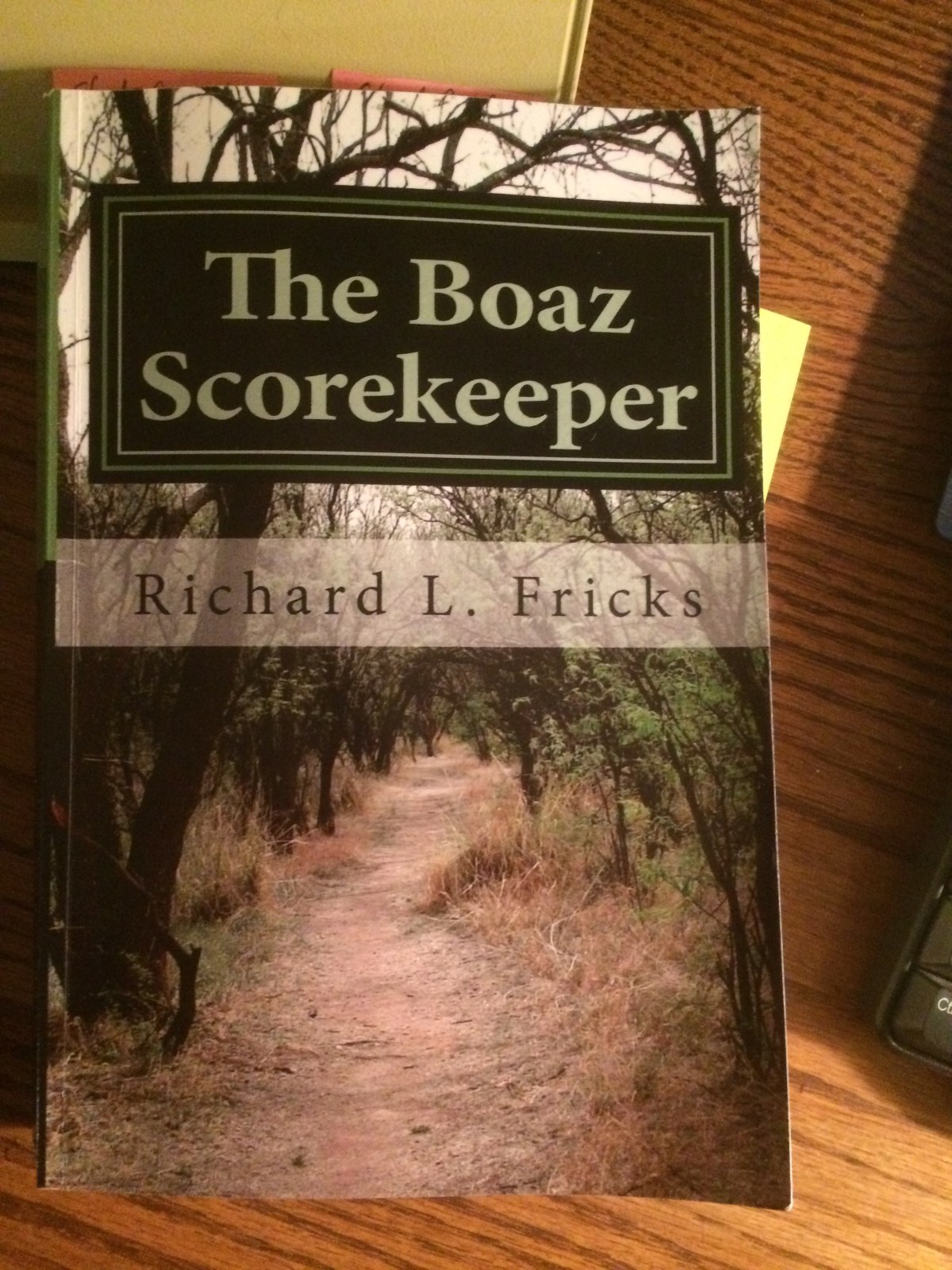
The Boaz Scorekeeper, written in 2017, is my second novel. I'll post it a chapter a day over the next few weeks.

The next section of Nate’s lengthy article was titled, The 1901 Murder of a Black Man and his Son.

Success for the five prominent families didn’t come uninterrupted.  Things changed forever in 1901.  Waymon’s long held belief that all men were created in God’s image was radically altered when Leroy Jones, his wife Eliza, and their two children, Sally and Toby, moved into the Boaz community.  Waymon had never had much contact with black folks even though for the first twelve years of his life he lived where there were hundreds of slaves on dozens of plantations all within a few miles of downtown Jackson, Georgia.  But, Waymon had never spoken with one.  His father was a preacher and they lived in town.  His father forbid Waymon from engaging with black folks.

At Mercer Preparatory School, Waymon learned from Professor Sherwood that Abraham Lincoln believed Negroes were inferior to whites and that the two races should not mix socially or politically.  But Waymon, deeply influenced by Sherwood and his infatuation with the Book of Ruth and the colorblind Boaz, remained, at a minimum, neutral in his beliefs. 

This changed when Mary, his daughter, feel in love with Toby Jones. The two met at Red Apple church in the late Spring of 1901.  Mary, at 19, had traveled with a group of ladies from First Baptist Church of Christ to Red Apple to host a Vacation Bible School for a sister church whose pastor had been killed by a falling tree during a heavy snow storm the past February.

Toby and his family lived across the road from Red Apple Church alongside the Church’s cemetery.  Toby and his sister Sally had been out working in their garden when Mary was strolling through the cemetery before their School started that morning.  Toby was tall and handsome with light brown skin.  Mary, for the first time in her life, felt sexual desire as she watched Toby working a middle buster plow behind a short, white pony. 

Over the next nine days of Bible School, Mary visited the cemetery every morning, and someway Toby found a reason to always be in the family garden.  After three days, they were talking.  Mary was surprised how clearly and intelligently Toby spoke and conversed.  She had read many books that all seemed to paint Negroes as ignorant and unsavory.  On day four, they were sharing thoughts of their favorite books and stories.  Mary invited Toby to town to visit the new library that had recently opened, but Toby declined saying that wouldn’t be possible right now.  On day five, they were sitting on a stump toward the back side of the cemetery unseen to anyone across the road at the Church.  Day eleven was a Saturday, the day after Vacation Bible School had ended.  Mary got up early and walked the three miles and met Toby, as planned, at the old oak stump.  They spent all day walking and talking, sitting and laying on a blanket Toby had brought.  They enjoyed a picnic down by Clear Creek that ran behind the Jones’ place. As late afternoon approached, Mary stood up and packed her basket.  Toby rolled up their blanket and they returned to the old oak stump.  It was there their physical intimacy began.  But, not because of Toby’s initiation.  It was Mary who reached out and pulled Toby’s face into hers for their first kiss.  Mary, standing on top of the old oak stump, was face to face with the man, the Negro man, she had fallen in love with in less than two weeks.  Neither one of them realized that Matt Rawlings was watching their every move through a grove of white oaks on the other side of the fence as he sat fishing alongside a long-neglected pond.

Nate shared that he could have written an entire article about the sweet and innocent love affair between Mary and Toby.  However, his editors wouldn’t allow it.  Nate shared how Waymon found out what Mary was up to and forbid her ever seeing Toby Jones again.  Everyone could predict her next move.  Waymon next went to visit Leroy Jones and the meeting didn’t go well.  Leroy’s beliefs sounded like Waymon’s, well, the former Waymon.  By now, Waymon’s true heart had erupted and he found justification in Scripture for his current belief that whites and blacks should not date or marry, or otherwise intermingle.  Mary’s behavior and rejection of him led to Waymon’s pure hatred.  This was the birth of Waymon’s lifelong bigotry toward people of color.

In early Fall, Leroy and his son Toby, went missing.  Four days later they were found, and a week later Leroy’s wife and daughter moved back to their hometown of Gadsden.  Waymon and the other four members of Club Eden had lured the two Negroes to Nedmore Grocery where supposedly the store owner held a package for them that he had mistakenly picked up at the Red Apple Post Office.  A mile before reaching Nedmore, Waymon and company surprised the two who had slowed their small buggy to cross a creek.  Rumors had it that Earl Adams and Rufus Radford hung Leroy from a low-hanging oak limb, and Frasier Billingsley and Abraham Ericson stoned Toby and cut off his private part as he lay dying.  Four days later, their bodies were found where the five members of Club Eden had left them.  Leroy and Toby Jones’ killers were never found.  Nate declared that it is more than rumor that Mary, a week after Eliza and Sally moved away from Red Apple, left Boaz to never return.

01/03/24 Biking & Listening

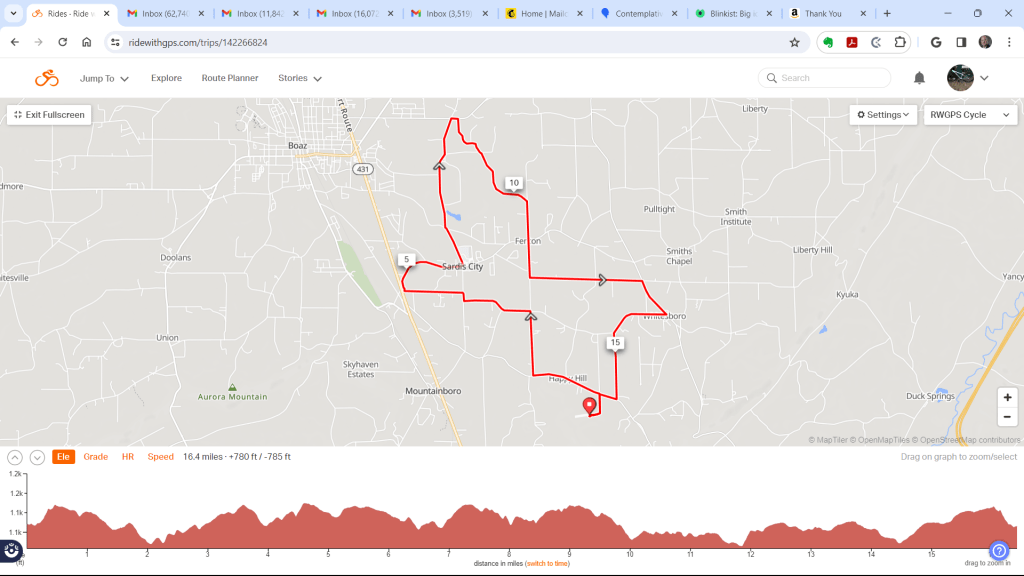
Here’s today’s bike ride metrics. Temperature at beginning of ride: 41 degrees. Clear and cold. No wind. 


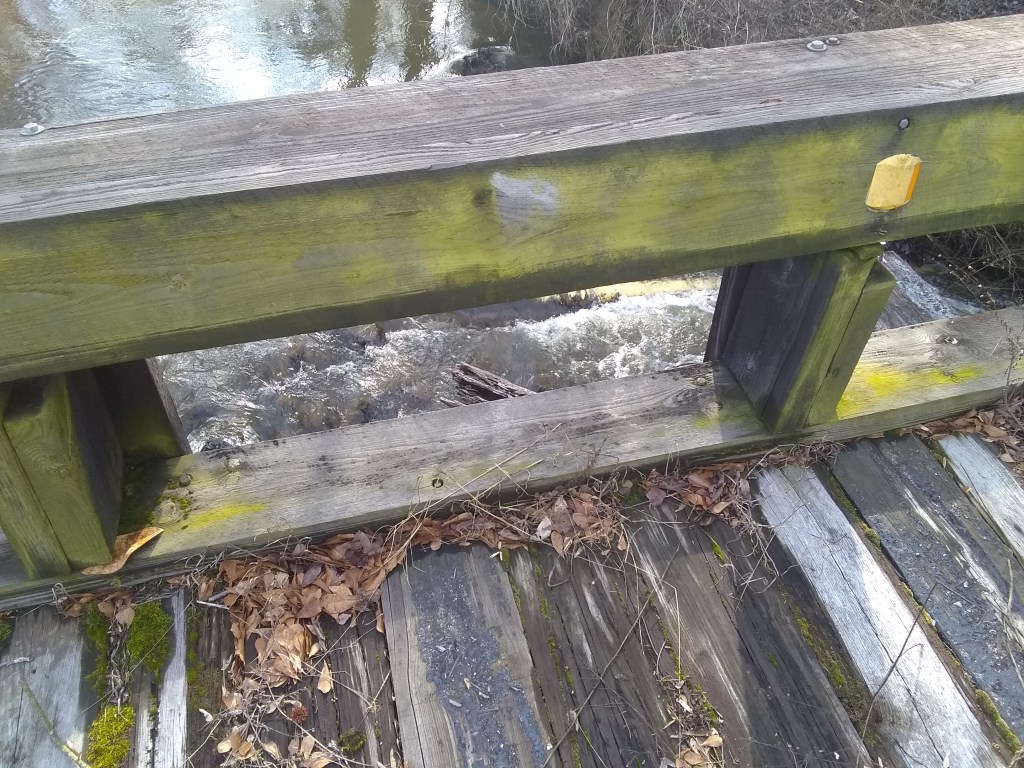
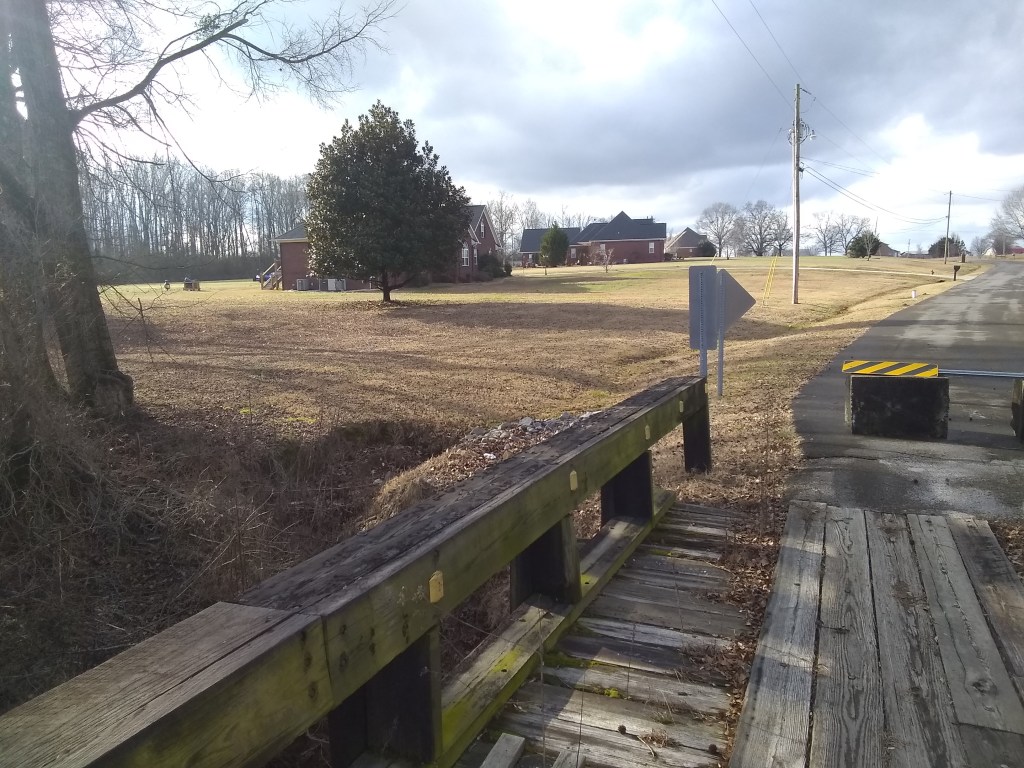
Photos from today’s ride:

None today.

Why I ride:

Biking is something I both love and hate. The conflicting emotions arise from the undeniable physical effort it demands. However, this exertion is precisely what makes it an excellent form of exercise. Most days, I dedicate over an hour to my cycling routine, and in doing so, I’ve discovered a unique opportunity to enjoy a good book or podcast. The rhythmic pedaling and the wind against my face create a calming backdrop that allows me to fully immerse myself in the content. In these moments, the time spent on the bike seems worthwhile, as I can’t help but appreciate the mental and physical rewards it offers.

I especially like having ridden. The post-biking feeling is one of pure satisfaction. The endorphin rush, coupled with a sense of accomplishment, makes the initial struggle and fatigue worthwhile. As I dismount and catch my breath, I relish the sensation of having conquered the challenge, both physically and mentally. It’s a reminder that the things we sometimes love to hate can often be the ones that bring us the most fulfillment. In the end, the love-hate relationship with biking only deepens my appreciation for the sport, as it continually pushes me to overcome my own limitations and embrace the rewards that follow the effort.


Why you should ride:

Encourages Relaxation:

Cycling is not just a form of physical exercise; it also has a profound ability to encourage relaxation. Here are various ways in which cycling contributes to a relaxed state of mind and body:

  • Physical Activity and Stress Reduction: Engaging in physical activities like cycling can reduce the body’s stress responses. Exercise triggers the release of endorphins, the body’s natural painkillers and mood elevators, which promote relaxation. The physical effort of cycling also helps to use up the energy created by stress, aiding in calming the body.
  • Rhythmic Pedaling as a Meditative Practice: The repetitive nature of cycling, with its steady, rhythmic pedaling, can have a meditative effect. This rhythmic motion can help focus the mind, drawing attention away from stressful thoughts and allowing a sense of calm.
  • Outdoor and Nature Exposure: Cycling outdoors, especially in natural or scenic settings, can enhance relaxation. Being in nature is known to reduce stress and promote a sense of peace. The sights, sounds, and smells of the outdoors can be very soothing.
  • Mindfulness and Presence: Cycling requires a level of present-moment awareness, which is a key aspect of mindfulness. Practicing mindfulness has been shown to reduce stress and promote relaxation. When cycling, the focus on the immediate environment and bodily sensations can help achieve this state.
  • Cardiovascular Health Benefits: Regular cycling improves cardiovascular health, which can help in reducing tension in the body. A healthier heart and circulatory system can contribute to a more relaxed state overall.
  • Reduces Mental Clutter: A bike ride offers a break from daily routines and responsibilities, providing an opportunity to clear the mind. This mental break can be refreshing and relaxing, especially after a long day or during stressful periods.
  • Social Relaxation: For those who enjoy group rides, the social aspect of cycling can be relaxing. Social interactions and the sense of community found in cycling groups can contribute to overall relaxation and well-being.
  • Achievement and Satisfaction: Completing a challenging ride or reaching a cycling goal can bring about a sense of achievement and satisfaction. This positive feeling can promote a relaxed state, as it counters feelings of stress and anxiety.
  • End of Ride Relaxation Response: After a cycling session, the body often experiences a natural relaxation response. The decrease in physical activity coupled with the sense of accomplishment can lead to a profound state of relaxation.
  • Improves Sleep Quality: As cycling improves sleep quality, it indirectly promotes relaxation. Better sleep means the body is better rested and more capable of handling stress, leading to a more relaxed state during waking hours.

In summary, cycling’s ability to encourage relaxation is multifaceted, combining physical, mental, and emotional elements. By incorporating regular cycling into one’s lifestyle, it’s possible to cultivate a more relaxed state of being, beneficial for overall health and well-being.


Please watch

Here’s a couple of links to groups I like. Hopefully, they’ll encourage you to start riding a bike, no matter your age.

Cycling for those aged 70+(opens in a new tab)


Solitary Cycling(opens in a new tab)


My bike:

A Rockhopper by Specialized. I purchased it November 2021 from Venture Out in Guntersville; Mike is top notch! So is the bike. The ‘old’ man seat was salvaged from an old Walmart bike. Seat replaced with new one from Venture Out.


What I’m listening to:

NONFICTION

Blinkest summaries

None today.

Podcasts:

None today.

Waking Up app series/courses:

None today.

FICTION

Novels:

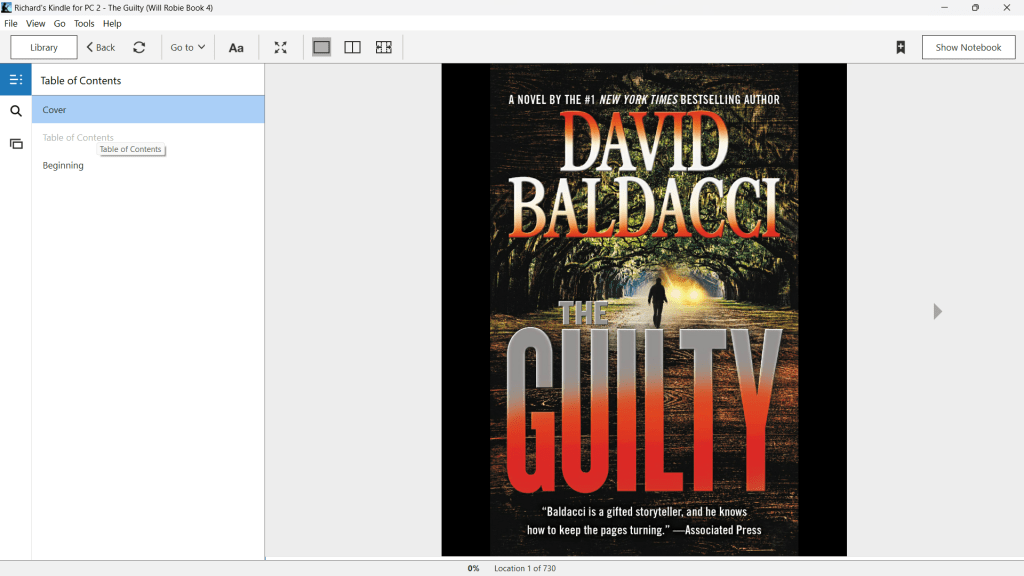
Amazon abstract:

After failing a critical assignment overseas, Will Robie must investigate a murder accusation against his father–but to save him, he’ll have to face a violent and deadly fallout in this New York Times bestselling thriller.

Will Robie escaped his small Gulf Coast hometown of Cantrell, Mississippi after high school, severing all personal ties, and never looked back. Not until the unimaginable occurs. His father, Dan Robie, has been arrested and charged with murder.

Father and son haven’t spoken or seen each other since the day Robie left town. In that time, Dan Robie–a local attorney and pillar of the community–has been elected town judge. Despite this, most of Cantrell is aligned against Dan. His guilt is assumed.

To make matters worse, Dan has refused to do anything to defend himself. When Robie tries to help, his father responds only with anger and defiance. Could Dan really be guilty?

With the equally formidable Jessica Reel at his side, Robie ignores his father’s wishes and begins his own desperate investigation into the case. But Robie is now a stranger to his hometown, an outsider, a man who has forsaken his past and his family. His attempts to save his father are met with distrust and skepticism…and violence.

Unlike the missions Robie undertook in the service of his country, where his target was clearly defined, digging into his father’s case only reveals more questions. Robie is drawn into the hidden underside of Cantrell, where he must face the unexpected and possibly deadly consequences of the long-ago choices made by father and son. And this time, there may be no escape for either of them.


Blinkest fiction book summaries:

None today.

Music:

None today.


Here’s a few photos from previous riding adventures:

Novel Excerpts–The Boaz Scorekeeper, Chapter 80

The primary aim of the "Novel Excerpts" blog category is to showcase my creative writing, specifically from the novels I've written. Hopefully, these posts will provide a glimpse into my storytelling style, themes, and narrative skills. It's an opportunity to share my artistic expressions and the worlds I've created through my novels.
The Boaz Scorekeeper, written in 2017, is my second novel. I'll post it a chapter a day over the next few weeks.

Nate’s New York Times article was published Sunday, July 1st.  I couldn’t have been more surprised.  I was expecting a slew of facts about Gina and Alma’s murder and all the indictments that were pending against Wade, James, their fathers, Raymond Radford and Franklin Ericson, and the three Boaz Police officers.  Nate met my expectations here but the remainder of his article reached much farther back in history.  I also thought the article title was rather odd: “City of Possibilities: A Southern Town Turns Good Myth into Bad Money.”

Up front, Nate shared his chief source, Rudolph Tillman (DOB 1911), the 106-year-old father of Walter Tillman, and grandfather of Wade Tillman.  Rudolph resided at Creekside Nursing Home in Boaz.  Years ago, Parkinson’s took away his mobility, but at the time of Nate’s interviews, his mind was a near perfect computer.

Nate’s article revealed Rudolph’s story, it was a story he had heard from the lips of his father, Morton Tillman (DOB 1873/DOD 1962), and his grandfather, Waymon Tillman (DOB 1844/DOD 1937).

Waymon was born October 16, 1844 in Jackson, Georgia, the county seat of Butt’s County located midway between Atlanta and Macon. He had an exceptional intellect and, at age 13, was accepted to Mercer University Preparatory School in Penfield, some 70 miles away.  Here, he was exposed to the Hebrew language, Old Testament textual criticism, and professor and Baptist minister Adiel Sherwood.  It was Sherwood’s love of the Biblical story of Boaz and Ruth, and his disdain for Abraham Lincoln, that rooted deep into Waymon’s subconsciousness.

Sherwood taught that Boaz was the perfect model of Christ, and that Waymon and his fellow students would find deep meaning and life purpose by adopting a redemptive mindset.  He portrayed Boaz as the type leader all decent men should follow, often contrasting him with the bigoted Lincoln.

Sherwood was from Macon and subscribed to the Georgia Telegraph, a daily newspaper that was adamantly against the tall and lanky senator from Springfield, Illinois.  In the Fall of 1858, Sherwood had shared with his class an article from the Telegraph which included a statement Lincoln had made on September 18th during his fourth debate with Stephen A. Douglas at Charleston, Illinois:

“I will say then that I am not, nor ever have been in favor of bringing about in anyway the social and political equality of the white and black races – that I am not nor ever have been in favor of making voters or jurors of negroes, nor of qualifying them to hold office, nor to intermarry with white people; and I will say in addition to this that there is a physical difference between the white and black races which I believe will forever forbid the two races living together on terms of social and political equality. And, in so much as they cannot so live, while they do remain together there must be the position of superior and inferior, and I as much as any other man am in favor of having the superior position assigned to the white race. I say upon this occasion I do not perceive that because the white man is to have the superior position the negro should be denied everything.”

Sherwood taught that, unlike Lincoln, Boaz was colorblind, accepting the Moab woman named Ruth without hesitation.  Boaz saw her, not as a dark-skinned freak of nature, but simply a human being, made, like him, in God’s image. The professor painted Lincoln as more against the Southern way of life with its plantations and slaves, than for the best interests of the Negro. Sherwood’s viewpoint that blacks should have both social and political equality was certainly a minority view in the deep South just three years before the outbreak of the Civil War.

Waymon’s love for and faith in Yahweh grew by leaps and bounds during his first year at Mercer.  Things changed when Azoulay Waxman, a visiting professor from Jerusalem, showed up during the summer of Waymon’s second year.  Waxman was a middle-aged man whose forefathers were all scholars of the Hebrew language and the Jewish faith.  It was during an August 1859 lecture on the Exodus story, where Moses led the Israelites out of Egypt and on their 40 years of wandering before reaching the Promised Land, that Waxman praised the power of myth and legend.  He asked the class to consider the affects the Exodus story and the life of Moses had had on the world even though he never lived.  This statement caused an uproar in class and led to Waxman saying that the value of story is not dependent on the historical veracity of its occurrence, but on the lesson, it teaches and, most importantly, whether people believe it to be true.  Waymon would never forget the exact words Waxman said at the end of that day’s lecture. “I’m shocked that all of you, for the 15 or so years you have been living, actually believed that Adam and Eve, Noah, Moses, Abraham, David, all these Old Testament characters were historical figures.”

Waxman and his teaching was a light-bulb time for Waymon. During the remainder of his days at Mercer, he never doubted God’s existence but he interpreted scripture in a whole new light.  Sherwood returned many times to the story of Boaz and Ruth with a clear objective of persuading Waymon and his fellow students to become true leaders by rejecting stereotypes and prejudice and by reaching out to the weak, colored, and disadvantaged. However, Waymon’s Hebrew interpretation approach, buttressed by Waxman’s revelation, developed into a rather practical method. Concerning the story of Boaz and Ruth, Waymon’s interest gravitated to Naomi, a character Professor Sherwood didn’t say much about.  Reading and searching the story for its usefulness, Waymon concluded that it was Naomi’s desire to improve her and Ruth’s lot in life that was the true nugget of wisdom.  Naomi was a plotter and a planner, a real-life schemer. Even though Boaz was kind and generous to Ruth by allowing her to glean his barley fields, it was Naomi that recognized opportunity when she saw it.  Her thankfulness for the blessing of a steady supply of food didn’t deter her from shooting for the stars.  Her plot to live like a queen at the expense of Boaz was what she wanted for her and her daughter-in-law Ruth. 

In June 1861, Waymon graduated from Mercer Preparatory School. He left Penfield enlightened by the power of story and how it didn’t have to be historically true for the multitudes to believe it was true.  His years at Mercer had produced in him the core principle that having a selfish and hidden purpose is acceptable if you are improving the life of those around you. 

Another thing Waymon had learned at Mercer, was that a true leader is willing to fight for what he believes.  Two days after returning to Jackson, Waymon forged his parents’ name on enlistment papers and joined the Confederate army.  His purpose was not to fight for the right to own slaves but, as a chaplain, to spread the redemptive, but practical, message of Old Testament stories. Waymon would spend the next four years attempting to persuade young and scared soldiers to put their faith and trust in the Hebrew God who had a practical plan and purpose for their lives.

After four years of dodging bullets, enduring near-starvation, and searching for the hand of God among a pathway of bloody, lifeless bodies, Waymon returned to a much-destroyed Jackson.  It was there, 1865, he met Earl Adams, Rufus Radford, Frasier Billingsley, and Abraham Ericson.  All these men, except Frasier, had fought in the Civil War.  Over the next fifteen years, they formed a brotherhood of sorts, centered mainly around their failed efforts to find direction and purpose, spending most of their time trying to till, tease, or cuss-out a living from the red Georgia clay.  Finally, Waymon told them it was time to be a Naomi and go looking for their redeemer.  They were easy to convince because they all knew, sure as hell, their redeemer didn’t live in Jackson, Georgia.

On a cold and snowy April morning in 1880, the five men, along with their wives and five children, left Jackson in wagons loaded down with every possession they owned.  Their intended destination was Memphis, Tennessee.  It seemed the further west they traveled the more they heard about a place called Sand Mountain.  Two people, at two different places, had even referred to a high and lush Garden of Eden.  Nine days later, they lost two wagons and nearly fifty-percent of their worldly goods in the flood waters of the Coosa River in a valley-community known as Gadsden, Alabama.

Dejected, depressed, and near defeat, the five men lost all vision and purpose and literally sat down to die.  Gadsden wouldn’t have been a bad place to settle.  It was a bustling community lying along the Coosa River, a community filled with a diverse population of hard-working whites, blacks, and American Indians.  Named Gadsden in 1845, the city became the county seat of Etowah County. 

The group spent three days licking their wounds, and half-way hoping to just die.  They would have probably turned over and pulled their blankets over their heads if not for an itinerant preacher named Thaddeus Gibbons who set-up camp just upriver and began bellowing out a ‘never-die’ sermon rooted in the story of David and Goliath from 1st Samuel.  It seemed Gibbons preached non-stop, and Waymon listened non-stop.

Four days after losing a battle with a belching and churning river, Waymon was determined not to lose the war.  He pushed and prodded, and shouted and screamed, until the fifteen men, women, and children were rolling northward.  A day later, they limped and crawled atop Sand Mountain, ten miles north-west of Gadsden, and camped that night under a star-filled sky in what became the Egypt community, sharing a meal of their remaining beef jerky and stale bread.

Before turning in for the night, Waymon told a story describing how Naomi truly felt upon her return to Bethlehem after ten years in Moab.  “Don’t call me Naomi,” she told them. “Call me Mara, because the Almighty has made my life very bitter.  I went away full, but the Lord has brought me back empty. Why call me Naomi?  The Lord has afflicted me; the Almighty has brought misfortune upon me.” Waymon encouraged the tired and discouraged around him to take heart.  Just like Naomi and Ruth found their paradise, they were now on the very outskirts of their own Garden of Eden. He encouraged them to take heart and seek the Lord through the night.  The next morning, Waymon announced that during the darkest hour of the night, God had revealed himself, ordering them to forsake their Memphis plans and to set down roots in the next community they reached.  Waymon declared that God was calling them to form an alliance before reaching their new home. He told the group that God had commanded them to form a secret club known as Club Eden and swear an oath that they would forever remain loyal to each other.  After packing, the group of fifteen set off north on a narrow and rutty trail carved through a forest of pine, oak, and hickory.

At mid-afternoon, they pulled into a bustling little community they quickly learned was called Sparkstown.  They were greeted warmly and kindly and experienced generosity like they had never known, hardly even realizing how they had found their way to the Garden of Eden. Abraham Ericson always speculated God had sent a mighty chariot commanded by the Archangel Michael who had swooped down and flew them all, including three wagons and six horses, to a barley-filled heaven on earth.

By early Fall, all five families were living in small cabins, the result of the community’s gift of labor, logs, lumber, and love.  Although it could have been, in part, from the widespread belief that Sparkstown needed a church with an educated and visionary preacher.  While Waymon preached and ministered, Earl Adams, Rufus Radford, Frasier Billingsley, and Abraham Ericson were busy building houses and learning they were not the only folks who heralded from Butts County, Georgia.  An eleven wagon, forty-two-person caravan known as the Sparks Wagon Train of 1878 had taken only eleven days to make their way to Eden from central Georgia. It was this group that the vibrant community atop Sand Mountain had taken its name, Sparkstown.

Over the next six years, the five families, secretly known as Club Eden, built a foundation of prosperity that, to many, appeared eternal.  Even though the group believed it was a miracle from God that brought them to Sparkstown, they all knew that it was Waymon and his belief in the practicality of Naomi that spawned their success.  He again called on his education from Mercer Preparatory School, this time from an economics course taught by the School’s founder.  It was there that Waymon learned there are five key ingredients for a thriving community, and that whoever controlled these, controlled the community.  It was this structure that the Club Eden families pursued:  Earl Adams and transportation (horses, mules, oxen, wagons and related gear); Rufus Radford and hardware and building materials; Frasier Billingsley and banking; Abraham Ericson and real estate trading and development.  Finally, and to Waymon, the most important ingredient of all, religion, more particularly, the Christian faith.

It was Waymon’s discovery at Mercer Preparatory School, at the feet of visiting professor, Azoulay Waxman, that grounded Club Eden’s overarching plan.  Controlling the four key areas of commerce was paramount, but controlling the minds of the general citizenry was the deeply rooted heart. Waxman’s revelation that virtually every Bible story was legendary but still taken as absolute truth fed Waymon’s idea to secure his own future.  If he could contrive a story, no doubt tied to his favorite Old Testament character, the infamous Naomi, the community would hold him invincible forever. In his sermons, he began sharing how at Mercer he had learned he was a direct descendant of the Biblical Boaz, and how God had confirmed this in a revelation during their trip to Sand Mountain and the informally named Sparkstown.

Waymon’s luck could not have been better or more valuably timed.  In mid-summer 1886 George M. Emory Mann applied for a post office. State authorities required a formal name. Rumors have it that it was a simple meal that generated the winning name for the small but vibrant community.  The following Sunday, Mann asked his dinner guests their thoughts for a name.  The Henry McCord’s, Mann’s in-laws, shared how Pastor Tillman had preached that day on the book of Ruth and how a man named Boaz had cared for this Moabite woman and her Jewish mother-in-law.  Mrs. McCord had said that Boaz was a true man of God, exemplifying not only generosity but a lifestyle not blinded by prejudice.  She shared how Boaz had treated Ruth, a dark-skinned foreigner, as an equal human being.  Mr. McCord then exclaimed that there could be no better name for a city set on a hill than Boaz, a man of prosperity and piousness.  Mann’s decision was made and the name Boaz was approved.  Now, Waymon’s story gained the strength it needed.  The next Sunday he announced how blessed he was that God had favored him, an ancestor of the Biblical Boaz, to live in a city that was named, uninfluenced by him, in honor of a true redeemer.

Success continued in every way for the Tillman’s and the other four Club Eden families.  In 1897 the five men formally organized the Club by creating The Garden, Ltd.  The wives were excluded.  Club Eden became a man’s club.  By now, there were five other entities surrounding the five club members: First Baptist Church of Christ, Adams Transportation, Radford Hardware & Building Supplies, First State Bank of Boaz, and Ericson Real Estate Sales & Development.

01/02/24 Biking & Listening

Here’s today’s bike ride metrics. Temperature at beginning of ride: 43 degrees. Clear and cold. No wind. 


Photos from today’s ride:

None today.

Why I ride:

Biking is something I both love and hate. The conflicting emotions arise from the undeniable physical effort it demands. However, this exertion is precisely what makes it an excellent form of exercise. Most days, I dedicate over an hour to my cycling routine, and in doing so, I’ve discovered a unique opportunity to enjoy a good book or podcast. The rhythmic pedaling and the wind against my face create a calming backdrop that allows me to fully immerse myself in the content. In these moments, the time spent on the bike seems worthwhile, as I can’t help but appreciate the mental and physical rewards it offers.

I especially like having ridden. The post-biking feeling is one of pure satisfaction. The endorphin rush, coupled with a sense of accomplishment, makes the initial struggle and fatigue worthwhile. As I dismount and catch my breath, I relish the sensation of having conquered the challenge, both physically and mentally. It’s a reminder that the things we sometimes love to hate can often be the ones that bring us the most fulfillment. In the end, the love-hate relationship with biking only deepens my appreciation for the sport, as it continually pushes me to overcome my own limitations and embrace the rewards that follow the effort.

Why you should ride:

Encourages Relaxation:

Cycling is not just a form of physical exercise; it also has a profound ability to encourage relaxation. Here are various ways in which cycling contributes to a relaxed state of mind and body:

  • Physical Activity and Stress Reduction: Engaging in physical activities like cycling can reduce the body’s stress responses. Exercise triggers the release of endorphins, the body’s natural painkillers and mood elevators, which promote relaxation. The physical effort of cycling also helps to use up the energy created by stress, aiding in calming the body.
  • Rhythmic Pedaling as a Meditative Practice: The repetitive nature of cycling, with its steady, rhythmic pedaling, can have a meditative effect. This rhythmic motion can help focus the mind, drawing attention away from stressful thoughts and allowing a sense of calm.
  • Outdoor and Nature Exposure: Cycling outdoors, especially in natural or scenic settings, can enhance relaxation. Being in nature is known to reduce stress and promote a sense of peace. The sights, sounds, and smells of the outdoors can be very soothing.
  • Mindfulness and Presence: Cycling requires a level of present-moment awareness, which is a key aspect of mindfulness. Practicing mindfulness has been shown to reduce stress and promote relaxation. When cycling, the focus on the immediate environment and bodily sensations can help achieve this state.
  • Cardiovascular Health Benefits: Regular cycling improves cardiovascular health, which can help in reducing tension in the body. A healthier heart and circulatory system can contribute to a more relaxed state overall.
  • Reduces Mental Clutter: A bike ride offers a break from daily routines and responsibilities, providing an opportunity to clear the mind. This mental break can be refreshing and relaxing, especially after a long day or during stressful periods.
  • Social Relaxation: For those who enjoy group rides, the social aspect of cycling can be relaxing. Social interactions and the sense of community found in cycling groups can contribute to overall relaxation and well-being.
  • Achievement and Satisfaction: Completing a challenging ride or reaching a cycling goal can bring about a sense of achievement and satisfaction. This positive feeling can promote a relaxed state, as it counters feelings of stress and anxiety.
  • End of Ride Relaxation Response: After a cycling session, the body often experiences a natural relaxation response. The decrease in physical activity coupled with the sense of accomplishment can lead to a profound state of relaxation.
  • Improves Sleep Quality: As cycling improves sleep quality, it indirectly promotes relaxation. Better sleep means the body is better rested and more capable of handling stress, leading to a more relaxed state during waking hours.

In summary, cycling’s ability to encourage relaxation is multifaceted, combining physical, mental, and emotional elements. By incorporating regular cycling into one’s lifestyle, it’s possible to cultivate a more relaxed state of being, beneficial for overall health and well-being.


Please watch

Here’s a couple of links to groups I like. Hopefully, they’ll encourage you to start riding a bike, no matter your age.

Cycling for those aged 70+(opens in a new tab)


Solitary Cycling(opens in a new tab)


My bike:

A Rockhopper by Specialized. I purchased it November 2021 from Venture Out in Guntersville; Mike is top notch! So is the bike. The ‘old’ man seat was salvaged from an old Walmart bike. Seat replaced with new one from Venture Out.


What I’m listening to:

NONFICTION

Blinkest summaries

None today.

Podcasts:

None today.

Waking Up app series/courses:

None today.

FICTION

Novels:

Amazon abstract:

After failing a critical assignment overseas, Will Robie must investigate a murder accusation against his father–but to save him, he’ll have to face a violent and deadly fallout in this New York Times bestselling thriller.

Will Robie escaped his small Gulf Coast hometown of Cantrell, Mississippi after high school, severing all personal ties, and never looked back. Not until the unimaginable occurs. His father, Dan Robie, has been arrested and charged with murder.

Father and son haven’t spoken or seen each other since the day Robie left town. In that time, Dan Robie–a local attorney and pillar of the community–has been elected town judge. Despite this, most of Cantrell is aligned against Dan. His guilt is assumed.

To make matters worse, Dan has refused to do anything to defend himself. When Robie tries to help, his father responds only with anger and defiance. Could Dan really be guilty?

With the equally formidable Jessica Reel at his side, Robie ignores his father’s wishes and begins his own desperate investigation into the case. But Robie is now a stranger to his hometown, an outsider, a man who has forsaken his past and his family. His attempts to save his father are met with distrust and skepticism…and violence.

Unlike the missions Robie undertook in the service of his country, where his target was clearly defined, digging into his father’s case only reveals more questions. Robie is drawn into the hidden underside of Cantrell, where he must face the unexpected and possibly deadly consequences of the long-ago choices made by father and son. And this time, there may be no escape for either of them.


Blinkest fiction book summaries:

None today.

Music:

None today.


Here’s a few photos from previous riding adventures:

Novel Excerpts–The Boaz Scorekeeper, Chapter 79

The primary aim of the "Novel Excerpts" blog category is to showcase my creative writing, specifically from the novels I've written. Hopefully, these posts will provide a glimpse into my storytelling style, themes, and narrative skills. It's an opportunity to share my artistic expressions and the worlds I've created through my novels.
The Boaz Scorekeeper, written in 2017, is my second novel. I'll post it a chapter a day over the next few weeks.

The next morning, I was on my way to Russellville for a Hearing on my Motion to Suppress Evidence in the State of Alabama’s case against my client, Thomas Lee Nixon.  There were two key issues the defense and the prosecution would fight over.  One was whether the Lawrence County deputy who pulled Tommie Lee over on the night of March 27, 2017 as he drove east on Taborlane Road had probable cause to make the traffic stop.  The second issue was whether the deputy had probable cause to search the trunk of my client’s car.  I was confident I could win this motion given that the Deputy’s video-cam clearly showed that Tommie Lee’s taillights were functioning properly.  This was a pretextual stop and therefore illegal.  But, I also knew that anything could happen at these type hearings.  The Deputy could now say that he also saw my client’s car wander across the center line. Answering my question why he hadn’t put this in his report, he could simply respond, “I must have forgotten.”  Judges in Alabama, I knew from experience, often sided with the Prosecution, many of them having been former prosecutors.  But, the more difficult problem for the DA was what had justified the Deputy to search the trunk of Tommie Lee’s vehicle.  Again, what should be an easy win for the defense would most likely fade away.  I could hear the Deputy saying, “earlier in the evening I had received an anonymous call that someone driving a 2007 Chrysler Charger was transporting a large amount of meth.”  

I was pondering my cross-examination questions for Deputy Lightsey, when Matt called my cell phone.  I answered and before I could say hello or anything Matt said, “Greg just called and said he has the forensics report.”

“I assume you are referring to the three Aurora Lake bodies?”

“I am.  Greg is emailing me a copy.  I’ll forward it to you as soon as I get it.  Hold on to your hat, the three bodies are Fred Billingsley, David Howsley, and Baynard Reed. I can’t talk any more right now.  See you late afternoon when you get back in.”

The April 27th tornado and discovery of the 1946 Beetle had put Aurora Lake on the go-to map of every serious scuba diver within 200 miles.  Within a week, a few local divers were exploring the waters, none of which had the equipment to adequately explore the deeper waters along the dam.  It took a little longer for the professional divers to arrive.   The Huntsville Diving Club, a fifty-year-old club from Madison County, made its first weekend trip on Saturday, May 6th.  By 9:00 a.m., the seven men and five women, all engineers and computer specialists, each equipped with a Light & Motion Sola Dive 800 L.E.D. Hands Free Light, had created a 15-section grid to explore the waters along the west end next to the dam, stretching 150 yards to the east.  By 5:00 p.m., the six teams retired for the day having completed their ‘B’ level exploration of sections 1 through 7.  At 10:45 a.m. on Sunday morning, Team Three members, Sharon Teal and Lee Thompson, in section 8 and 80 feet of water, found the skeletal remains of two bodies, both weighed down with rocks and chains.  By 4:00 p.m., the dive team from the Etowah County Sheriff’s Department Search and Rescue Squad, was on site and in the water.  At 4:30, the team found the third body, this one encased in a modern-day funeral home body-bag.

Even though there had been no public announcement, nor private leak, of the identity of the three bodies found in early May by the Huntsville Diving Club, I already knew that Fred Billingsley was one of them. A couple of weeks ago I had done a little research.  Knowing that I had put his body inside the airtight mortuary bag I had purchased online from Classic Plastics Corporation, I wondered what condition his body would be in less than six months after his death.  I had framed a quick Google query, “how does a body deteriorate inside an airtight container,” and the first hit had been from Reddit.  The writer posted this quote from Wikipedia: “Oxygen present in the body is quickly depleted by the aerobic organisms found within. This creates an ideal environment for the proliferation of anaerobic organisms.  Anaerobic organisms, originating in the gastrointestinal tract and respiratory system, begin to transform carbohydrates, lipids, and proteins, to yield organic acids (propionic acid, lactic acid) and gases (methane, hydrogen sulfide, ammonia). The process of microbial proliferation within a body is referred to as putrefaction and leads to the second stage of decomposition, known as bloat.” It seemed that since anaerobic bacteria were involved, the airtight container would have no effect on decomposition.

I drove another thirty minutes and pulled off Highway 24 in front of an old cotton mill to see if Matt’s email had arrived.  It had.  There were several documents attached to Greg’s email.  Three were the individual autopsy reports, and one was a detailed description of the condition of the bodies when they arrived at the State Lab in Montgomery on May 7, 2018.  This latter document said that Fred’s body was found in 78 feet of water held down by cable tied to six cement blocks.  The body was inside a body bag that was commonly used in the funeral and mortuary industry.  The body was fully decomposed.  I scanned over a paragraph describing the various forms of bacteria found and read that a small leather calendar/notebook was found inside the bag.  It was in remarkably good condition having a zipper to protect its contents. The document also noted that they had found a set of car keys.

Another document referred to Fred’s vehicle. The Etowah County Sheriff’s Department had transported the Camaro to the State Forensic Lab in Birmingham after it was discovered six days after Fred went missing.  An older man living in the area had called ‘911’ when he spotted two teenagers he knew trying to load the car on the back of a trailer the man knew was owned by the widow of his best friend. The report stated that the keys were those to Fred’s Camaro, and the only finger prints found in both the car and on the keys, were those of Fred Billingsley. This document referred to a ‘Car Analysis’ report.

Addressing Fred’s calendar/notebook, the first document referred to a Forensic Accounting report for a full analysis.  That report, just like the Car Analysis report, was not attached, but the one I was reading stated that on the day Fred disappeared (October 27, 2017) there was an appointment with ‘Wade’ listed for 3:30 p.m.  Within a parenthesis besides ‘Wade’ was written ‘Club Eden.’  The only other reference the document made to Fred’s calendar was an undated note that read, ‘never saw James so mad as today in Wade’s study.  Was afraid.’

I scanned Fred’s autopsy and saw ‘gunshot to the center of the forehead along with blunt force trauma to the neck and head’ listed as the cause of death.  ‘Probable gunshot to the chest’ was listed as the cause of death for both David Howsley and Baynard Reed. 

As I pulled back onto Hwy. 24, I couldn’t help but wonder how the Department had determined the identity of Howsley and Reed.  I knew it would be through DNA testing.  By the time I reached the Lawrence County Courthouse in Russellville I admitted it could have been as simple as a Facebook plea.  I figured local law enforcement would have told the Department the story of these two missing men. But then I remembered all the public knew was that Howsley and Reed had simply left town to return to San Francisco.

01/01/24 Biking & Listening

Here’s today’s bike ride metrics. Temperature at beginning of ride: 40 degrees. Clear and cold with lite wind. 


Photos from today’s ride:

None today.

Why I ride:

Biking is something I both love and hate. The conflicting emotions arise from the undeniable physical effort it demands. However, this exertion is precisely what makes it an excellent form of exercise. Most days, I dedicate over an hour to my cycling routine, and in doing so, I’ve discovered a unique opportunity to enjoy a good book or podcast. The rhythmic pedaling and the wind against my face create a calming backdrop that allows me to fully immerse myself in the content. In these moments, the time spent on the bike seems worthwhile, as I can’t help but appreciate the mental and physical rewards it offers.
I especially like having ridden. The post-biking feeling is one of pure satisfaction. The endorphin rush, coupled with a sense of accomplishment, makes the initial struggle and fatigue worthwhile. As I dismount and catch my breath, I relish the sensation of having conquered the challenge, both physically and mentally. It’s a reminder that the things we sometimes love to hate can often be the ones that bring us the most fulfillment. In the end, the love-hate relationship with biking only deepens my appreciation for the sport, as it continually pushes me to overcome my own limitations and embrace the rewards that follow the effort.

Why you should ride:

Encourages Relaxation:

Cycling is not just a form of physical exercise; it also has a profound ability to encourage relaxation. Here are various ways in which cycling contributes to a relaxed state of mind and body:

  • Physical Activity and Stress Reduction: Engaging in physical activities like cycling can reduce the body’s stress responses. Exercise triggers the release of endorphins, the body’s natural painkillers and mood elevators, which promote relaxation. The physical effort of cycling also helps to use up the energy created by stress, aiding in calming the body.
  • Rhythmic Pedaling as a Meditative Practice: The repetitive nature of cycling, with its steady, rhythmic pedaling, can have a meditative effect. This rhythmic motion can help focus the mind, drawing attention away from stressful thoughts and allowing a sense of calm.
  • Outdoor and Nature Exposure: Cycling outdoors, especially in natural or scenic settings, can enhance relaxation. Being in nature is known to reduce stress and promote a sense of peace. The sights, sounds, and smells of the outdoors can be very soothing.
  • Mindfulness and Presence: Cycling requires a level of present-moment awareness, which is a key aspect of mindfulness. Practicing mindfulness has been shown to reduce stress and promote relaxation. When cycling, the focus on the immediate environment and bodily sensations can help achieve this state.
  • Cardiovascular Health Benefits: Regular cycling improves cardiovascular health, which can help in reducing tension in the body. A healthier heart and circulatory system can contribute to a more relaxed state overall.
  • Reduces Mental Clutter: A bike ride offers a break from daily routines and responsibilities, providing an opportunity to clear the mind. This mental break can be refreshing and relaxing, especially after a long day or during stressful periods.
  • Social Relaxation: For those who enjoy group rides, the social aspect of cycling can be relaxing. Social interactions and the sense of community found in cycling groups can contribute to overall relaxation and well-being.
  • Achievement and Satisfaction: Completing a challenging ride or reaching a cycling goal can bring about a sense of achievement and satisfaction. This positive feeling can promote a relaxed state, as it counters feelings of stress and anxiety.
  • End of Ride Relaxation Response: After a cycling session, the body often experiences a natural relaxation response. The decrease in physical activity coupled with the sense of accomplishment can lead to a profound state of relaxation.
  • Improves Sleep Quality: As cycling improves sleep quality, it indirectly promotes relaxation. Better sleep means the body is better rested and more capable of handling stress, leading to a more relaxed state during waking hours.

In summary, cycling’s ability to encourage relaxation is multifaceted, combining physical, mental, and emotional elements. By incorporating regular cycling into one’s lifestyle, it’s possible to cultivate a more relaxed state of being, beneficial for overall health and well-being.


Please watch

Here’s a couple of links to groups I like. Hopefully, they’ll encourage you to start riding a bike, no matter your age.

Cycling for those aged 70+(opens in a new tab)


Solitary Cycling(opens in a new tab)


My bike:

A Rockhopper by Specialized. I purchased it November 2021 from Venture Out in Guntersville; Mike is top notch! So is the bike. The ‘old’ man seat was salvaged from an old Walmart bike. Seat replaced with new one from Venture Out.


What I’m listening to:

NONFICTION

Blinkest summaries

None today.

Podcasts:

None today.

Waking Up app series/courses:

None today.

FICTION

Novels:

Amazon abstract:

After failing a critical assignment overseas, Will Robie must investigate a murder accusation against his father–but to save him, he’ll have to face a violent and deadly fallout in this New York Times bestselling thriller.

Will Robie escaped his small Gulf Coast hometown of Cantrell, Mississippi after high school, severing all personal ties, and never looked back. Not until the unimaginable occurs. His father, Dan Robie, has been arrested and charged with murder.

Father and son haven’t spoken or seen each other since the day Robie left town. In that time, Dan Robie–a local attorney and pillar of the community–has been elected town judge. Despite this, most of Cantrell is aligned against Dan. His guilt is assumed.

To make matters worse, Dan has refused to do anything to defend himself. When Robie tries to help, his father responds only with anger and defiance. Could Dan really be guilty?

With the equally formidable Jessica Reel at his side, Robie ignores his father’s wishes and begins his own desperate investigation into the case. But Robie is now a stranger to his hometown, an outsider, a man who has forsaken his past and his family. His attempts to save his father are met with distrust and skepticism…and violence.

Unlike the missions Robie undertook in the service of his country, where his target was clearly defined, digging into his father’s case only reveals more questions. Robie is drawn into the hidden underside of Cantrell, where he must face the unexpected and possibly deadly consequences of the long-ago choices made by father and son. And this time, there may be no escape for either of them.


Blinkest fiction book summaries:

None today.

Music:

None today.


Here’s a few photos from previous riding adventures:

Novel Excerpts–The Boaz Scorekeeper, Chapter 78

The primary aim of the "Novel Excerpts" blog category is to showcase my creative writing, specifically from the novels I've written. Hopefully, these posts will provide a glimpse into my storytelling style, themes, and narrative skills. It's an opportunity to share my artistic expressions and the worlds I've created through my novels.
The Boaz Scorekeeper, written in 2017, is my second novel. I'll post it a chapter a day over the next few weeks.

Ever since the vehicle had been extracted from Aurora Lake via a crane and transported to the State Department of Forensic Sciences in Montgomery, rumors had been flying around Boaz.  Since the April 27th discovery of what appeared from Jeff Marks’ photos to be a Volkswagen Beetle, tall tales ignited of how a prominent Boaz family, after World War II, had stopped a foreign car dealership from encroaching on its General Motors territory.  Speculation surfaced that Vincent Prader and his wife Helga had been murdered and buried in their Beetle in the eastern end of Aurora Lake.  Shortly after the tornado and Marks’ photos hit Facebook, a feisty and eager journalist with the Sand Mountain Reporter took to the archives and found a photo and article used in its March 25, 1946 edition. The Reporter refused to republish the article until facts were confirmed but someway a copy of the photo and article made their way to Facebook and the world. 

The article was titled Boaz Hero to Open Volkswagen Dealership.  The photo revealed a stocky and smiling Vincent Prader in full Army regalia with pinned service awards across his chest standing at the hood of a tan colored 1946 Beetle.  The tall, beautiful woman with dark curly hair standing at the rear of the shiny car was his wife Helga.  It was clear the photo had been taken on Main Street in Boaz in front of the Rialto Theater.  The Best Years of Our Lives, co-starring Fredric March & Myrna Loy, was boldly visible on the Theater’s marquee.

The article described Vincent’s World War II ventures that produced for him both the Medal of Honor for his bravery, and a Purple Heart for his battle wounds.  It spoke of how he had rescued Helga Katz in Nuremberg, Germany while U.S. and Allied forces lay siege during the latter days of the War in April 1945.  The article described how Vincent and his squad had been instrumental in helping Helga, her family, and several neighbors escape the rubble of a bombed-out Nuremberg and obtain shelter and care in an American camp.  There was a long paragraph about how Vincent and Helga had fallen in love, almost at first sight, how they had corresponded by mail after the War ended, and details about Helga’s journey to American in late October 1945.  They were married March 21, 1946, just four days before the Sand Mountain Reporter photo.

On May 10, 2018, the rumors were transformed into solid facts.  The Department of Forensic Sciences released to the Etowah County Sheriff and District Attorney its final report.  Once again, the report found its way to Facebook.  The vehicle was a 1946 Volkswagen Type 11 Beetle complete with a 1,131cc OHV Air-Cooled Flat 4-Cylinder Engine, a single solex carburetor, and a 4-Speed Manual Transmission.  It contained the skeletal remains of Vincent Prader and his wife Helga Katz Prader.  The Report did not reveal how the Department had made this later determination. Nor did it speculate how the Beetle found its way to the bottom of Aurora Lake or how long it had been there.  However, it estimated that the Beetle and the two bodies had likely been there since they went missing in March 1946.  An autopsy report was included and stated that Vincent and Helga had both died from gunshot wounds to the head.

After I reread the full report, I left the office and drove to McDonald’s for a cup of coffee.  Ever since the tornado, I had been contemplating calling Nick Baker with the New York Times.  I felt it was time he return to Boaz and research and write the follow-up story to his 1998 piece where he featured the demise of the Outlet Center, the 1972 deaths of Wendi and Cindi Murray, and the then current wrongful death lawsuit by Bill and Nellie Murray against members of five prominent Boaz families.  I walked inside, bought a large cup of coffee and an apple pie, and sat outside in an empty playground.  Nick Baker answered his phone on the first ring.

12/31/23 Biking & Listening

Here’s today’s bike ride metrics. Temperature at beginning of ride: 53 degrees. Sunny and warm; very little wind. 


Photos from today’s ride:

None today.

Why I ride:

Biking is something I both love and hate. The conflicting emotions arise from the undeniable physical effort it demands. However, this exertion is precisely what makes it an excellent form of exercise. Most days, I dedicate over an hour to my cycling routine, and in doing so, I’ve discovered a unique opportunity to enjoy a good book or podcast. The rhythmic pedaling and the wind against my face create a calming backdrop that allows me to fully immerse myself in the content. In these moments, the time spent on the bike seems worthwhile, as I can’t help but appreciate the mental and physical rewards it offers.

I especially like having ridden. The post-biking feeling is one of pure satisfaction. The endorphin rush, coupled with a sense of accomplishment, makes the initial struggle and fatigue worthwhile. As I dismount and catch my breath, I relish the sensation of having conquered the challenge, both physically and mentally. It’s a reminder that the things we sometimes love to hate can often be the ones that bring us the most fulfillment. In the end, the love-hate relationship with biking only deepens my appreciation for the sport, as it continually pushes me to overcome my own limitations and embrace the rewards that follow the effort.


Why you should ride:

Encourages Relaxation:

Cycling is not just a form of physical exercise; it also has a profound ability to encourage relaxation. Here are various ways in which cycling contributes to a relaxed state of mind and body:

  • Physical Activity and Stress Reduction: Engaging in physical activities like cycling can reduce the body’s stress responses. Exercise triggers the release of endorphins, the body’s natural painkillers and mood elevators, which promote relaxation. The physical effort of cycling also helps to use up the energy created by stress, aiding in calming the body.
  • Rhythmic Pedaling as a Meditative Practice: The repetitive nature of cycling, with its steady, rhythmic pedaling, can have a meditative effect. This rhythmic motion can help focus the mind, drawing attention away from stressful thoughts and allowing a sense of calm.
  • Outdoor and Nature Exposure: Cycling outdoors, especially in natural or scenic settings, can enhance relaxation. Being in nature is known to reduce stress and promote a sense of peace. The sights, sounds, and smells of the outdoors can be very soothing.
  • Mindfulness and Presence: Cycling requires a level of present-moment awareness, which is a key aspect of mindfulness. Practicing mindfulness has been shown to reduce stress and promote relaxation. When cycling, the focus on the immediate environment and bodily sensations can help achieve this state.
  • Cardiovascular Health Benefits: Regular cycling improves cardiovascular health, which can help in reducing tension in the body. A healthier heart and circulatory system can contribute to a more relaxed state overall.
  • Reduces Mental Clutter: A bike ride offers a break from daily routines and responsibilities, providing an opportunity to clear the mind. This mental break can be refreshing and relaxing, especially after a long day or during stressful periods.
  • Social Relaxation: For those who enjoy group rides, the social aspect of cycling can be relaxing. Social interactions and the sense of community found in cycling groups can contribute to overall relaxation and well-being.
  • Achievement and Satisfaction: Completing a challenging ride or reaching a cycling goal can bring about a sense of achievement and satisfaction. This positive feeling can promote a relaxed state, as it counters feelings of stress and anxiety.
  • End of Ride Relaxation Response: After a cycling session, the body often experiences a natural relaxation response. The decrease in physical activity coupled with the sense of accomplishment can lead to a profound state of relaxation.
  • Improves Sleep Quality: As cycling improves sleep quality, it indirectly promotes relaxation. Better sleep means the body is better rested and more capable of handling stress, leading to a more relaxed state during waking hours.

In summary, cycling’s ability to encourage relaxation is multifaceted, combining physical, mental, and emotional elements. By incorporating regular cycling into one’s lifestyle, it’s possible to cultivate a more relaxed state of being, beneficial for overall health and well-being.


Please watch

Here’s a couple of links to groups I like. Hopefully, they’ll encourage you to start riding a bike, no matter your age.

Cycling for those aged 70+(opens in a new tab)


Solitary Cycling(opens in a new tab)


My bike:

A Rockhopper by Specialized. I purchased it November 2021 from Venture Out in Guntersville; Mike is top notch! So is the bike. The ‘old’ man seat was salvaged from an old Walmart bike. Seat replaced with new one from Venture Out.


What I’m listening to:

NONFICTION

Blinkest summaries

None today.

Podcasts:

None today.

Waking Up app series/courses:

None today.

FICTION

Novels:

Amazon abstract:

After failing a critical assignment overseas, Will Robie must investigate a murder accusation against his father–but to save him, he’ll have to face a violent and deadly fallout in this New York Times bestselling thriller.

Will Robie escaped his small Gulf Coast hometown of Cantrell, Mississippi after high school, severing all personal ties, and never looked back. Not until the unimaginable occurs. His father, Dan Robie, has been arrested and charged with murder.

Father and son haven’t spoken or seen each other since the day Robie left town. In that time, Dan Robie–a local attorney and pillar of the community–has been elected town judge. Despite this, most of Cantrell is aligned against Dan. His guilt is assumed.

To make matters worse, Dan has refused to do anything to defend himself. When Robie tries to help, his father responds only with anger and defiance. Could Dan really be guilty?

With the equally formidable Jessica Reel at his side, Robie ignores his father’s wishes and begins his own desperate investigation into the case. But Robie is now a stranger to his hometown, an outsider, a man who has forsaken his past and his family. His attempts to save his father are met with distrust and skepticism…and violence.

Unlike the missions Robie undertook in the service of his country, where his target was clearly defined, digging into his father’s case only reveals more questions. Robie is drawn into the hidden underside of Cantrell, where he must face the unexpected and possibly deadly consequences of the long-ago choices made by father and son. And this time, there may be no escape for either of them.


Blinkest fiction book summaries:

None today.

Music:


Here’s a few photos from previous riding adventures:

New Year Resolutions for Christians, 2024

Here’s the link to this article.

By David Madison at 12/29/2023

Embrace curiosity, question everything!

It’s probably a safe bet that Christian bookstores don’t have shelves marked, “Books by Our Atheist Critics.” There would be few sales—perhaps zero sales, because there is zero curiosity about critiques of Christianity written by serious thinkers. Thus I won’t encourage curiosity in this direction. I suspect most of the devout remain unaware of the boom in atheist publishing during the last couple of decades. This boom was stimulated by the best-selling atheist books written by Richard Dawkins, Christopher Hitchens, and Sam Harris; these seemed to open the floodgates. By my count, there are now well over 500 books—most published since 1999—that explain the falsification of theism, Christianity especially. The owner of this blog, John W. Loftus, has made a major contribution to this growing body of literature (see the books pictured at the right). Even if some churchgoers are vaguely aware of this, they look the other way.


But there are other avenues for their curiosities to take, although curiosity is not considered a virtue—at least since the time of St. Augustine (born 354), who considered curiosity a disease:  
 
“There is another form of temptation, even more fraught with danger. This is the disease of curiosity. It is this which drives us to try and discover the secrets of nature, those secrets which are beyond our understanding, which can avail us nothing and which man should not wish to learn.”
 
Augustine had no way of knowing that 1,500 years later humans would be in hot pursuit to figure out the secrets of nature, thereby enriching our understanding of the cosmos. But far too many Christians today are stuck in the Augustine-mode. Mike Pence doesn’t “believe” in evolution, and says he’ll ask God about it after he dies. If Pence had anything above zero-level of curiosity, he’d read a few books on biology, on the enormous impact of Darwin’s discoveries on our understanding of the world. How evolution works is not that hard to grasp
 
But, moving on: as a New Year Resolution for Christians, 2024, I would recommend 
 
·     Above all, curiosity about the Bible
·     Curiosity about Christianity itself, including the origins of the faith
 
It must be a great relief to the clergy that most of their parishioners are not obsessed with reading the Bible: there are 1,001 verses that are embarrassing, hard to explain, that work against their idealized versions of god and Jesus. Any careful reading of the gospels can provoke troubling doubt, as I discussed in my article here last week, Rampant Gospel Confusion. If the gospels aren’t eagerly read, the letters of the apostle Paul get even less traffic. Yet, Paul’s Letter to the Romans is a gigantic element in Christian theology. Martin Luther suggested that Christians should memorize it. No surprise there, since he was obsessed with theology, which cannot be said of contemporary believers. 
 
Many other theologians as well have been obsessed with the Letter to the Romans. C. S. Dodd began his 1932 commentary on Romans with this claim:
 
“The Epistle to the Romans is the first great work of Christian theology…For us men of Western Christendom there is probably no other single writing so deeply embedded in our heritage of thought.” (p. 9)
 
Ben Witherington III opened his 2004 commentary on Romans with this statement:
 
“Embarking on a study of Romans is rather like beginning a long journey—it requires a certain amount of preparation, patience, and faith, as the goal of understanding this formidable discourse is not reached for a considerable time.” (p. 1)
 
Shouldn’t Christian curiosity kick in if Dodd and Witherington are right? “How is our faith sustained and strengthened by what we read in Romans? Does this epistle capture our faith perfectly?” 
 
So, put curiosity into full gear and plunge into study of Romans.
 
Even in the first chapter, however, we see Paul in a bad, vindictive mood. God abandons those who refuse to acknowledge him. Somehow, “love is patient, love is kind” (I Corinthians 13:4) doesn’t apply to his god:
 
“…God gave them over to an unfit mind and to do things that should not be done. They were filled with every kind of injustice, evil, covetousness, malice. Full of envy, murder, strife, deceit, craftiness, they are gossips, slanderers, God-haters, insolent, haughty, boastful, inventors of evil, rebellious toward parents, foolish, faithless, heartless, ruthless. They know God’s decree, that those who practice such things deserve to die…”   (Romans 1:28-32)
 
Is this part of your faith, that gossips and rebellious children deserve to die? This is severe theology, and in the next chapter, Paul stresses the horrible punishments that his god has in store:
 
“But by your hard and impenitent heart you are storing up wrath for yourself on the day of wrath, when God’s righteous judgment will be revealed. He will repay according to each one’s deeds: to those who by patiently doing good seek for glory and honor and immortality, he will give eternal life, while for those who are self-seeking and who obey not the truth but injustice, there will be wrath and fury.” (Romans 2:5-8, emphasis added)
 
A far more cherished idea among the devout is that God-Is-Love, and perhaps they do worry what will happen to them if they commit too many sins—and they can probably identify with Paul’s confusion about his own behavior, as he confesses in chapter 7 of the letter:
 
“I do not understand my own actions. For I do not do what I want, but I do the very thing I hate.  Now if I do what I do not want, I agree that the law is good. But in fact it is no longer I who do it but sin that dwells within me. For I know that the good does not dwell within me, that is, in my flesh. For the desire to do the good lies close at hand, but not the ability. For I do not do the good I want, but the evil I do not want is what I do. Now if I do what I do not want, it is no longer I who do it but sin that dwells within me.” (Romans 7:15-20, emphasis added)
 
So it can be an uphill battle to be a good person; it would seem, based on this text, that Paul knew this very well. Yet he managed to be so nasty, so vicious at the opening of the letter: those who deserve to die include gossips, rebellious children, people who are “foolish, faithless, heartless, ruthless.” Why couldn’t Paul have cut them some slack? Good Christian folks who can identify with Paul’s self-evaluation—sin dwells within them—are probably more patient with other sinners they see around them: no, they don’t deserve to die. Paul’s theology here is extreme. 
 
Is this part of the faith of devout believers?
 
Paul’s disinterest in sex comes across in his letters as well. In Romans 13:14 he wrote, “…put on the Lord Jesus Christ, and make no provision for the flesh, to gratify its desires.” He is even more emphatic in his letter to the Galatians: “And those who belong to Christ have crucified the flesh with its passions and desires.” (Galatians 5:24) 
 
Is this also part of the faith of devout believers? 
 
The opening paragraph of Romans 13 is one of Paul’s most bizarre statements. He claims that all government authorities have been put in place by God. 
 
“Therefore whoever resists authority resists what God has appointed, and those who resist will incur judgment.” (v. 2) 
 
“But if you do what is wrong, you should be afraid, for the authority does not bear the sword in vain! It is the agent of God to execute wrath on the wrongdoer.”  (v. 2)
 
It would appear that Paul was not aware that Jesus had been executed by Roman authorities. We know the story because of the gospels, but they hadn’t been written yet when Paul was active. 
 
Peter J. Brancazio has noted correctly that Paul’s teaching here “…is incredibly naïve, and the idea that governments are inherently just and God-ordained is no longer taken seriously. It is a sad fact that on too many occasions Paul’s words were cited by Christians to justify their cooperation with totalitarian regimes.” (page 458, The Bible from Cover to Cover)
 
Believers who undertake this adventure in curiosity regarding Paul’s Letter to the Romans are likely to make many other unpleasant discoveries. Theologians often live in their bubbles of delusion: how else to explain C. H. Dodd’s boast that Romans is “the first great work of Christian theology.” It is anything but. Paul was a mediocre thinker, obsessed with mediocre theology, based on—he admits it, brags about it—his hallucinations. 
 
Christian curiosity will probably bring the most stress when the origins of the faith are examined carefully. This will require a lot of courage, and willingness to look below the surface, by which I mean studying other cults that influenced early Christian beliefs. 
 
It can be a shocking discovery that there were other dying-and-rising savior cults that promised eternal life. For a thorough examination of this issue, see Richard Carrier’s 2018 essay, Dying-and-Rising Gods: It’s Pagan, Guys. Get Over ItCarrier has pointed out that “Jesus was late to the party.” 
 
It’s also appropriate to be curious about verification that Jesus was a real person. How would a devout Christian go about citing the evidence for that? This requires a certain level of awareness about what has been going on in world of scholarly Jesus studies in recent decades. Quite a few scholars now have serious doubts that there was a historical Jesus. Vital homework here is Richard Carrier’s 600-page 2014 volume, On the Historicity of Jesus: Why We Might Have Reason for Doubt. In his conclusion, Carrier states:
 
“Right from the start Jesus simply looks a lot more like a mythical man than a historical one. And were he not the figure of a major world religion—if we were studying the Attis or Zalmoxis or Romulus cult instead—we would have treated Jesus that way from the start, knowing full well we need more than normal evidence to take him back out of the class of mythical persons and back into that of historical ones.”  (p. 602)

A crucial part of this book is pp. 65-234, in which Carrier describes, in detail, 48 elements that form the backdrop of Christian belief. In 2020 Carrier published Jesus From Outer Space: What the Earliest Christians Really Believed About Christ, intended as a summary—aimed at the lay reader—of his primary points in On the Historicity of Jesus.

It doesn’t take too much digging—but true curiosity is a prerequisite—to discover the New Testament roadblocks to proving the historicity of Jesus. So a very good resolution for Christians for 2024 is rise to the challenge of doing serious homework about where your faith came from. 
 
David Madison was a pastor in the Methodist Church for nine years, and has a PhD in Biblical Studies from Boston University. He is the author of two books, Ten ToughProblems in Christian Thought and Belief: a Minister-Turned-Atheist Shows Why You Should Ditch the Faith, now being reissued in several volumes, the first of which is Guessing About God (2023) and Ten Things Christians Wish Jesus Hadn’t Taught: And Other Reasons to Question His Words (2021). The Spanish translation of this book is also now available. 

His YouTube channel is here. At the invitation of John Loftus, he has written for the Debunking Christianity Blog since 2016.
 
The Cure-for-Christianity Library©, now with more than 500 titles, is here. A brief video explanation of the Library is here

Novel Excerpts–The Boaz Scorekeeper, Chapter 77

The primary aim of the "Novel Excerpts" blog category is to showcase my creative writing, specifically from the novels I've written. Hopefully, these posts will provide a glimpse into my storytelling style, themes, and narrative skills. It's an opportunity to share my artistic expressions and the worlds I've created through my novels.
The Boaz Scorekeeper, written in 2017, is my second novel. I'll post it a chapter a day over the next few weeks.

Today was Friday, April 27, 2018, one month since Etowah County Circuit Court Judge William Stivender had granted District Attorney Royce Harper’s motion to dismiss my case.  It seemed Harper, unrelenting as he was, finally acknowledged that all evidence pointed to my innocence in the abduction and murder of Gina Tillman.  Gina’s diamond-carved signature in the trunk of James’ Impala, and the State Lab’s determination that the two extra graves at Oak Hollow contained horse bones, appeared to be the final push Harper needed.  Of course, the mountain of evidence that Greg had obtained through his Federal investigation and that he had shared with Harper didn’t hurt either.

Now, it was late April and early afternoon but it was dark and raining.  The humidity was like mid-August. Matt and I were headed to Marshall County District Attorney Abbott’s office in Guntersville to meet with him and Walter Tillman. 

Guntersville is the county seat of Marshall County.  This pristine city is a beautiful mountain-lake oasis, sitting alongside the largest lake in Alabama, all 69,000 acres of it.  Lake Guntersville was created by Guntersville Dam along the Tennessee River, and is maintained and managed by the Tennessee Valley Authority.  This great body of water provides some of the best opportunities for bass-fishermen in the country.  This gorgeous and romantic city of less than 10,000 is where the real money lives in Marshall County.  I’ve heard this all my life.  And, it’s mostly true.  But, maybe, some of these folks that say this, haven’t heard of the Flaming Five and their families.

In February, Matt and I both had spoken with Abbott about seeking an indictment against David Adams for the death of Wendi Murray.  At the time, he was too focused on the 2016 murder of Harold Maples and the 1998 murders of Bill and Nellie Murray.  Walter had finally agreed to talk about that fateful night in May 1972 when he saw David Adams smother a young and innocent Wendi Murray. Matt and I both believed that with mine and Walter’s testimony, and that of Cynthia Radford, Raymond’s ex-wife, there would be no problem securing an indictment for murder against David Adams.

At 1:55 p.m., we sat at the intersection of Highways 431 and 75 waiting for the light to change.  We saw two firetrucks, three MUB Utility trucks, and two police cars crossing in front of us heading east on Highway 75.  Matt turned on WQSB radio and heard a weather siren in the background and an interview with Rainsville’s Police Chief Cedric Jennings.  He said the EF5 tornado had struck Highway 35 a mile south of town around 12:30 p.m. and traveled north tracking the Highway while cutting a half-mile swath on either side.  He also sadly relayed that there were “many deaths.” After the end of the interview the newscaster spoke with the radio announcer about how the tornado had briefly touched down in North Etowah County before leaping skyward and northeasterly again to kill, maim, and destroy in the small Dekalb County town of Rainsville.

Tragic as this was, it was even more eerie.  Today was the seventh anniversary of the worst weather day in Alabama.  It was April 27, 2011 that 238 people lost their lives across the State.  Rainsville alone lost 35 gentle souls.  This was strong evidence that the end of April in Alabama, North Alabama especially, was a place to avoid.  Also, the fact just three days ago, April 24th, had been the 110th anniversary of the 1908 tornado that had caused 15 deaths and virtually destroyed Albertville.  If all this weren’t bad enough, just a little over eight years ago, April 24, 2010 (the 102nd anniversary of the 1908 tornado death and destruction) another tornado ripped East Main Street and other parts of Albertville.  The only consolation in 2010, was that no one was killed.

When we reached DA Abbott’s office, his receptionist told us we would have to reschedule.  Abbott was on his way to Rainsville to check on his sister and her family who lived in the area. The older receptionist said that when Abbott heard about the tornado he immediately tried calling his sister but was unable to reach her by phone.  He had left shortly thereafter and asked her to apologize for his absence.

We stayed glued to WQSB during our return trip to the law office.  The station kept alternating interviews with folks on the ground in Dekalb and Etowah Counties.  Ed Shultz, head of the Etowah County Emergency Management office, told a newscaster that shortly after noon the large funnel cloud touched down and destroyed Belton Howard’s poultry farm northeast of the Shady Grove Road/Highway 179 intersection.  The raging funnel then continued northeasterly and leveled the store at Aurora.  It hopped over and spared the William Kinney farm but settled to mow down a quarter mile swath of trees before breaking the dam at Aurora Lake and lifting skyward to continue northeasterly towards Rainsville.

Matt and I stayed at the law office until almost 9:00 p.m.  By 4:30 both Birmingham and Huntsville TV stations were on site both in Etowah and Dekalb County.  We sat in the conference room glued to the large flat screen TV that we had recently installed to use for Skype interviews with out of town clients and witnesses.

Just before dark, a helicopter crew filmed and showed footage starting with a sea of snow-white but dead chickens at Belton Howard’s farm.  As the helicopter slowly made its way northeasterly I could see that Club Eden’s cabin had not been spared.  It was still standing but there were trees toppled over making it look like someone was building a giant teepee.  I could tell that the water level in Aurora Lake was down a few feet but the newscaster said that the damage to the dam was only minimum, cutting out a section thirty or so feet wide but only four or five feet deep.  Repair crews were already on hand.

Before heading home, I was back in my office reviewing my emails and phone messages that had accumulated since leaving the office after lunch, when Matt hollered for me to “hurry, you need to see this.”

A WBRC FOX 6 news reporter from Birmingham, a young lady whose blond hair was wet and frizzled, was interviewing a Jeff Marks whose house suffered only mild damage.  The young reporter was not there to talk about the two pine trees hanging off the side of Marks’ house in the background.  His property was on the northeastern end of Aurora Lake, what locals called, ‘the shallow end.’  As the young reporter was asking Marks questions, she had her camera crew step behind Marks and focus on the lake.  There, in the middle of the lake, maybe 150 feet or so from the shore at the ‘shallow end,’ was a car of some sort.  Marks shared how after the winds had died down he had come up out of his basement and out onto his pier.  He could tell the water level in the lake was going down.  He walked westward, across his neighbor’s yards, all the way down to the dam.  That’s when he noticed the damage and why the water was running out of the lake like a draining bathtub.  He had returned to his property and that was when he noticed the vehicle.  Before cutting away from the interview, the young reporter told Marks that the car looked like an old Volkswagen her grandfather had bought in Birmingham after World War II.

Matt flipped off the TV and looked at me. “Do you think there is any way that car has anything to do with Vincent Prader?”

“Yep, I would bet my life on it.”  I drove home, hardly needing my headlights.  The brightness of the moon was welcome.  However, it also created the second eerie feeling I had had today.  I kept wondering what secrets the old Volkswagen, if that’s what it was, had held the many years it had sat at the bottom of Aurora Lake.  Pulling into the garage I realized the true source of my second eerie feeling.  What else in Aurora Lake would the EF5 tornado reveal?  My only salvation may have been that the dam was not destroyed and the Lake completely drained.  The remainder of the night I lay in bed wondering whether Fred had been awakened by the storm, or if he was still sleeping soundly and securely.