The primary aim of the "Novel Excerpts" blog category is to showcase my creative writing, specifically from the novels I've written. Hopefully, these posts will provide a glimpse into my storytelling style, themes, and narrative skills. It's an opportunity to share my artistic expressions and the worlds I've created through my novels.
The Boaz Stenographer, written in 2018, is my fourth novel. I'll post a chapter a day over the next few weeks.
Book Blurb
Walt Shepherd, a 35 year veteran of the White House’s stenographic team, is fired by President Andrew Kane for refusing to lie.
Walt returns to his hometown of Boaz, Alabama and renews his relationship with Regina Gillan, his high school sweetheart, who he had ditched right before graduation to marry the daughter of a prominent local businessman. Regina has recently moved back to Boaz after forty years in Chicago working at the Tribune. She is now editor of the Sand Mountain Reporter, a local newspaper.
Walt and Regina’s relationship transforms into a once in life love at the same time they are being immersed in a growing local and national divide between Democrats and traditional Republicans, and extremist Republicans (known as Kanites) who are becoming more dogmatic about the revolution that began during President Kanes campaign.
Walt accepts two part-time jobs. One as a stenography instructor at Snead State Community College in Boaz, and one as an itinerant stenographer with Rains & Associates out of Birmingham.
Walt later learns the owner of Rains & Associates is also one of five men who created the Constitution Foundation and is involved in a sinister plot to destroy President Kane, but is using an unorthodox method to achieve its objective. The Foundation is doing everything it can to prevent President Kane from being reelected in 2020, and is scheming to initiate a civil war that will hopefully restore allegiance to the U.S. Constitution.
While Walt is writing a book, The Coming Civil War, he is, unwittingly, gathering key information for the Constitution Foundation.
Will Walt discover a connection between the Foundation and the deaths of three U.S. Congressmen in time to save his relationship with Regina, prevent President Kane from being reelected as the defacto head of a Christian theocracy, and the eruption of a civil war that could destroy the Nation ?
Chapter 66
It was dusk. The dark was pushing the last bit of light from the path we traveled. Today, it’s job was easy since a misty fog had hovered from Guntersville throughout Boaz. Regina’s plane had been delayed for nearly two hours in the early afternoon.
She had called at 2:30 p.m. from Huntsville as she was boarding her plane to Chicago. Noticeably absent from our brief conversation was the love language that normally filled our communications. We were at a serious crossroads. Last Tuesday when Zell and Ginger learned that I had not fulfilled my mission to deliver their envelope to Professor Romanov, nor their urgency that he divulge his knowledge of election tampering to the FBI, all hell had broken loose. And, Regina was seemingly caught in the middle. She had been summoned to Chicago. This gave Vann and me the opportunity I wanted to conduct a little search at her house.
Regina, like me, had negotiated a purchase of her parent’s home. The only difference was her mother came with the deal until her death. Brenda Sue Gillan was 88 years old and normally would be sitting, alone, in her easy chair before the big screen TV in the living room. She preferred it over the den. Today, this late Friday afternoon in the winter of 2019, she was out of town with her daughter Belinda. They had traveled to Plains, Georgia to attend the funeral of her oldest sister, Linda, who had died at 92.
The forty acres was just one big rock. It jutted out toward Sand Valley and was the last driveway down Cox Gap Road before dropping off the mountain toward Gadsden. I had visited here only a handful of times, since the ‘old lady’ as Frankie called her, was always around. The house smelled of cigarette smoke and urine. A combination that triggered my gag reflex like no other. Last weekend, I had made an exception after I made my final decision that I had to see what Regina kept in her home office. She had been after me to help her stain the huge deck on the backside of the house that overlooked the valley below. It would be a multi-day project, but we had started a week ago. I had arranged it so that she had to run an errand for me—Vann called and needed a file at my house concerning our book. When he called I acted as though I had to run home. This, without surprise, prompted Regina to volunteer to meet Vann to unlock my back door.
This had given me the opportunity to scout out the best way to enter the house. I knew she didn’t have a security system since we had talked about it several times over the past few weeks, given there had been a spat of break-ins. I had gone into her office and noticed a small safe slid into a bookcase behind her desk. I started to unlock one of the windows in her study but opted to make it harder by going downstairs to the basement, which was really the first floor, since it was mostly above ground. I unlocked a window that was up higher than I wanted to maneuver because it was on the backside of a workbench and was shaded by some type of thorny bush on the outside. I could make it work.
Today, Vann was with me. It has taken two days to convince him he should help me learn the truth, or at least, attempt to. He now knows everything I know about Regina’s deception. I’ve also told him about my connection to Zell and Ginger and the Constitution Foundation. Vann is most troubled by Regina’s past relationship with Thaddeus Colburn, believing there might be a plot at work that is much more sinister than a local affair.
We arrived. I’m wearing a thick pair of coveralls to protect me from the thorny bush. The window was higher than I thought. I wished I had gone outside to judge instead of looking at it from the inside. I was glad I had brought a six-foot ladder. After I got inside and turned my ankle sliding off the counter, Vann and I went upstairs and out on the deck carrying two brushes and a gallon of deck stain. I had decided that if by chance someone came I could tell them I wanted to surprise Regina and have her deck finished before she returned. I opened the can and poured a good amount into a paint tray and went back inside.
Vann was already in Regina’s bedroom. We had discussed his assignment, search through every drawer, under the mattress, over the clothes on a big shelf in a dozen or more shoe boxes I had spotted last Saturday. His second task, assuming we had time, was to look through a wall of cabinets in the laundry and utility room. My focus would be Regina’s office.
I spent nearly thirty minutes going through the side drawers of Regina’s huge desk. These turned out totally uneventful. The left-hand drawer contained mostly household bills, appliance warranties, and legal documents such as her power of attorney over her mother and living wills for Belinda, Frankie, and Freddie. The right-hand drawer was filled with files that reached back to Regina’s days at the Chicago Tribune. I scanned a couple of articles and realized time was getting away too rapidly. I removed the contents of this whole drawer and put them in one of the backpacks I had brought.
I then turned my attention to the safe. It took nearly ten minutes, but I was finally able to break open the door after pulling it out of the bookcase and turning it on its side. It, not doubt, was not a high-quality container or the latch would not have broken. But, I had used a hefty crow-bar and hammer. The only thing inside were several journals and two thumb drives. I placed these in another bookbag and laid it, along with the other one and the crowbar and hammer, in the doorway. I crossed the office to the windows facing the deck. There were two bookcases between the two sets of double windows I wanted to inspect. Just as I squatted down and opened a large cabinet door on the bottom of one of the cabinets I heard a loud blast.
The first thing I thought was a gun had been fired. The sound had come from Vann’s direction, Regina’s bedroom. I tried to run down the long hallway, but my ankle slowed me down. Just as I turned left through her doorway I saw Vann laying at the foot of Regina’s bed. There was blood coming out his mouth as he lay on his stomach but with his head turned towards me. At that moment my mind realized that I had been hearing something out on the deck. The shooter had run over the gallon of deck stain and the paint tray. He had shouted, ‘oh shit.’ I ran, as best I could, and looked out the storm door that had just pulled shut. I caught just the glimpse of the back side of a tall and skinny man with army fatigues, a black hoodie and carrying a pistol in one hand and the dark green backpack that I had given Vann to use during his closet search.
I turned and walked back down the hall and into the kitchen and over to the window above the sink. From there I could see my truck and the man running down the hill towards Cox Gap Road. It was then that it hit me. The hell of a mess I was in. I semi-jogged back to Regina’s bedroom and determined, without any trouble at all, that Vann was dead. I didn’t touch him, but he had a hole in the back of his head that I could have put my hand into. I wanted to lean down and hold him, talk him back to life someway. But, I didn’t. I had to get out of there. It was the hardest thing I have ever done. My mind convinced me I had no choice but to leave this scene just the way it was. I would only complicate things worse by attempting to move Vann’s body. I was also convinced that the gunman had not known I was here. If he had, I had no doubt he would have killed me too.
I walked back to Regina’s study, picked up the two book bags, the crow-bar and hammer, walked down the basement stairs, and outside to my truck. I decided to turn left onto Cox Gap Road instead of right, which would have taken me straight back to Highway 431. I felt I needed to take the long way home. I didn’t want to take a chance that my truck would be seen. Then it hit me. The gunman had seen my truck as he raced out of Regina’s and down the driveway. Oh hell, what a mess. This cannot lead to anything but trouble.
I made my way to Interstate 59 and drove north to the Collinsville exit. By 8:00 p.m., I was at home. Sick was an understatement. I spent two hours showering and squatting beside the commode, gagging and spitting. At 10:05 p.m., I called Regina.
From Elder in the Jehovah’s Witnesses religion to proponent of scientific naturalism, by Michael Bigelow
In several of my books I have recounted my own journey from born-again Christian to religious skeptic, in the context of understanding how beliefs are formed and change (in The Believing Brain), how religious and faith-based beliefs differ (or at least should differ) from scientific and empirical beliefs (in Why Darwin Matters), and the relationship of science and religion: same-worlds model, separate-worlds model, conflicting-worlds model (in Why People Believe Weird Things). As a result, over the years I have received a considerable amount of correspondence from Christians who want to convince me to come back to the faith, along with one-time believers who recount their own pathway to non-belief. At my urging after emails revealing autobiographical fragments of his own loss of faith, in this edition of Skeptic guest contributor Michael Bigelow narrates his sojourn from Elder in the Jehovah’s Witnesses religion to proponent of scientific naturalism. As he recalls in this revealing passage from the essay below:
A literal interpretation of the Bible proved incorrect. Humans were not created in 4026 BC, nor was the earth engulfed by a flood 4,400 years ago. I was wrong. My personal discovery categorically rendered the Bible’s account of natural history as false. This revelation cast doubt on the entirety of the Bible.
—Michael Shermer
Losing My Religion
In 2008, I faced one of the most uncomfortable moments of my life. For Jehovah’s Witnesses, the memorial of Jesus’ death is the most significant event of the year. It is a solemn occasion in which a respected Elder addresses a packed Kingdom Hall, filled with believers and visitors. That year, I delivered the talk and managed the ritual passing of the wine and unleavened bread. Many attendees praised me afterward, claiming it was clear that God’s spirit was upon me. However, for nearly four years before that evening, I had ceased praying and believing and was deeply troubled by the hypocrisy of teaching things I could no longer accept as true.
An even more distressing day occurred in 2012 when I publicly renounced my ties with Jehovah’s Witnesses. A former friend described my departure as a “nuclear blast” that devastated the three congregations I had once served. My decision to leave based on conscience resulted in immediate and complete shunning by all my former friends, my family, and even my two adult sons.
Turning Points
I was born into a large extended family of Jehovah’s Witnesses in 1961 in San Diego, California. Our family of eight led a life typical for Witness households: we didn’t celebrate holidays, birthdays, or participate in patriotic events and after-school activities. My entire social circle was within the religious community, and our Saturdays were dedicated to door-to-door preaching. This lifestyle felt completely normal to me as a child.
During the 1960s, Jehovah’s Witnesses were taught that Armageddon was imminent and strongly suggested this would occur in 1975. We believed that on this day, God would destroy all who were not part of our faith, creating a deep sense of urgency to save not just ourselves but others. Driven by this belief, my father moved our family from the comfort of Southern California to frugal living in Northern New England, aiming to reach an underserved community with our teachings.
In New Hampshire, at our new Kingdom Hall, I met a young lady who would become my wife. At just twelve years old, we were both deeply committed to our faith, known among Jehovah’s Witnesses as “The Truth,” and we knew we would eventually wed. Despite our parents’ efforts to keep us apart, it seemed inevitable that we would be together. After graduating high school, we married young, securing minimum wage jobs and making ends meet with second-hand furniture and tight budgets.
I progressed through various positions of responsibility, both in our congregation and at the manufacturing company where I worked. Together, we raised and homeschooled our two sons, continually striving to live up to the commitments of our dedication to God.
In 1991, I was appointed as an Elder in our local congregation, a role laden with significant responsibilities. My duties included teaching at congregation meetings, providing guidance to those struggling, leading preaching efforts, and speaking at large conventions. Following in my father’s footsteps, I established a reputation as a dedicated minister. Despite my commitment, I harbored private doubts. Natural disasters and biblical accounts like the Noachian flood, which seemed improbable, troubled me. I was also disturbed by the notion of God allowing Satan to corrupt His perfect creation. We were taught to manage such doubts through prayer and meditation, a strategy that sufficed until innovations like Google Earth introduced new perspectives that challenged my views further.
Deconversions
Accounts of shunning, deconversion, and abandoning supernatural beliefs are increasingly common today. While my story isn’t unique in its occurrence, it is distinct in its unfolding. Many are leaving Jehovah’s Witnesses due to the organization’s strict control, unfulfilled prophecies, evolving doctrines, prohibition of blood transfusions, biased translations of the Bible, and mishandling of child sexual abuse cases.
These are valid reasons to leave, but my departure was driven by something else. When I realized the biblical narrative of natural history couldn’t possibly be true, my entire belief system collapsed. Yet, I continued to serve as a teacher, shepherd, and public figure in the organization for five more years, knowing I was an atheist. This period was a personal torment for which I still feel remorse. Looking back, I can’t see how I could have chosen differently. Here is how it all unfolded.
I have always had a profound love for the outdoors, and spending time in the mountains has been a significant part of my life. In the late 1960s, my grandparents took my brothers and me on a road trip from San Diego to the Sierra Nevada mountains in Central California. The majestic, snow-capped and rugged terrain captivated my imagination. This experience left a lasting impression, and by the mid 1980s I began organizing annual backpacking and climbing trips to the Sierras. Each spring, I would meticulously plan these trips from New Hampshire, pouring over maps, guidebooks, and equipment lists.
By the early-1990s, the Palisade range of the Sierra had become my personal sanctuary, notable for the ranges’ largest active glacier. The first time I observed the glacier from an elevated viewpoint, I noticed it was shrinking. At the glacier’s base lay a horseshoe-shaped moraine nearly a hundred feet high. Below the moraine’s rim, a glacial pond of milky, silty water formed, scattered with broken granite and ice. This observation troubled me; something significant was amiss, yet it remained just beyond my understanding.
Palisade Glacier. Photo by the author.
From the perspective of day-age, fundamentalist Christians, it is believed that the entire planet was submerged underwater 4,400 years ago during Noah’s flood. Thus, every existing landform—whether a canyon, glacier, desert, cavern, or mountain—either existed under water at that time or formed naturally afterward. I didn’t contemplate these ideas when I first saw that glacier or when I climbed the 14,000-foot mountains surrounding it. Yet, a seed of new doubt was planted.
By the late 1990s, I had a new tool for planning my trips to the Sierra: Google Earth. This technology allowed me to view satellite imagery of the entire mountain range. I could meticulously plan climbing routes, select camping spots, and observe glaciers—not only those that were still active but, more intriguingly, those that had vanished. The disappearance of glaciers suggested ice ages, a concept that I was not ready to accept as it contradicts Jehovah’s Witnesses’ teachings, which deny such geological periods.
Business Interlude and Deep Questioning of the Faith
In 1999, the company I had been with since my teenage years offered me a job in Asia. At that time, I was managing two of their operations in New England. They had recently acquired a company in Taiwan and wanted me to oversee their manufacturing in China. My wife and I deliberated over this opportunity, with our primary concern being the ability to maintain our spiritual commitments and contribute to a local congregation in Taiwan. After reaching out to the headquarters of our religious organization, we learned there was an English-speaking group in the city we would be moving to, and they welcomed our participation. Encouraged by this, we decided to relocate.
Upon moving to Taiwan, I soon realized the necessity of learning Mandarin Chinese to succeed in my role. Motivated by this challenge, I dedicated myself to studying with an intensity I had never shown before. In high school, my focus had been on my future wife rather than academics, making me a lackluster student. However, in Taiwan, I quickly learned Mandarin and developed effective study habits that significantly changed my life’s direction. This deep dive into the language not only helped in my immediate job but also enabled me and my business partners to eventually acquire the Asian company, securing our financial future. Additionally, working in locations away from my family provided me with the private space and time to deeply research and reflect on significant topics, further enriching my understanding and perspectives.
In the early 2000s, while living in Asia, I continued planning trips to the Sierra Nevada. By then, Google Earth’s satellite imagery had greatly improved, allowing me to see individual boulders and trees. This tool became indispensable for both planning excursions and simply enjoying the landscapes from afar. Around 2003, a particular land feature near Bishop, California, caught my attention and profoundly shifted my perspective. There, a small river emerges from the high country and runs through a wide, empty glacial moraine into the arid Owens Valley (see Google Earth image below). The moraine, a pristine trench once filled by a glacier, is starkly visible, stretching nearly to the desert floor. This observation challenged my previous beliefs: it seemed highly unlikely that this landform was ever submerged underwater or formed shortly after a flood. As I reviewed images from all the earth’s great mountain ranges, I found similar features. This realization opened a floodgate of curiosity and skepticism about the traditional narratives I had accepted.
Religious Dogma vs. Carbon Dating
The first research book I purchased was Glaciers of California: Modern Glaciers, Ice Age Glaciers, the Origin of Yosemite Valley, and a Glacier Tour in the Sierra Nevada by Bill Guyton. This book ignited a thirst for knowledge that grew exponentially. Studying glaciers led me to explore broader geology, which in turn introduced me to plate tectonics and scientific dating methods. These concepts opened the door to pre-history and the works of scholars like Jared Diamond, Steven Mithen, and many others. As I delved deeper, consuming books, downloading scientific papers, and visiting field sites, I was desperately seeking any evidence to affirm the Bible’s accounts of natural history. Internally, I struggled with my faith-based commitment that “I can’t be wrong,” but the mounting evidence made me fear that I was losing the argument against established scientific consensus.
As I delved into pre-history, I frequently encountered carbon dating—a method I had been taught to distrust. From the 1960s until the early 1990s, Jehovah’s Witnesses employed pseudo-scientific arguments to discredit the reliability of carbon dating. Reflecting on these apologetics with a better understanding of logical fallacies and flawed reasoning, I now recognize those arguments as circular, appealing to authority, and rooted in motivated reasoning. Despite my resistance, the evidence supporting carbon dating seemed overwhelming. In my quest to align my beliefs with factual accuracy, I had to personally validate carbon dating’s efficacy. I came across a statement from Carl Sagan, who said, “When you make the finding yourself—even if you’re the last person on Earth to see the light—you’ll never forget it.” This sentiment resonated with me deeply; I had to experience this realization firsthand. Sagan was right—I will never forget the moment I accepted the truth of carbon dating.
During the early 2000s, part of my research turned to the peopling of the Americas, a captivating area of paleontology that held particular significance for me at the time. According to 17th-century biblical chronologist James Ussher, humans were created from dirt in 4004 BC, specifically on October 22. Jehovah’s Witnesses adopt a similar timeline, placing human creation at 4026 BC. Arriving at Ussher’s date involves recording and counting forward or backward from known events based on the ages of biblical kings and patriarchs. This chronology is accepted as accurate by many biblical literalists. However, if evidence showed that the Americas were populated thousands of years before these dates, it would profoundly challenge this timeline and compel me to reconsider my beliefs further.
As I delved into the peopling of the Americas, I discovered that the ash and pumice layer from the eruption of Mt. Mazama (now Crater Lake) serves as a precise stratigraphic marker. At Paisly Cave and Fort Rock Cave, archaeologists found human artifacts both within and beneath the Mt. Mazama volcanic tephra layer. These artifacts included campfire remains, hand-woven sagebrush sandals, grinding stones, projectile points, basketry, cordage, human hair, and the butchered remains of now-extinct animals, such as camelids and equids. Many of these artifacts were carbon dated, with results ranging from 9,100 to 14,280 years before present (BP). Therein lies a hurdle—those pesky carbon dating references. I struggled to reconcile these dates with my previous beliefs, as they suggested human presence in the Americas long before the biblical timeline of human creation.
The abundant artifacts found within and beneath the debris from Mt. Mazama prompted researchers to pinpoint the eruption’s date more accurately. In 1983, Charles Bacon estimated the eruption occurred around 6,845 years +/-50 (BP) using the beta counting method of carbon dating on burned wood samples found in Mazama’s lava flows. A more refined date was published in 1996 by D.J. Hallet, who dated the eruption to approximately 6,730 BP, with a margin of error of +/- 40 years. This estimate utilized the more advanced Accelerator Mass Spectrometry (AMS) carbon dating technique on burned leaves and twigs mixed with Mazama tephra in nearby lakebed sediments. Despite the improved methodology, my skepticism persisted because it still relied on carbon dating, a technique I was still reluctant to trust fully.
The quest for a more accurate date of the Mt. Mazama eruption led to significant advancements in 1999 when C.M. Zdanowicz and his team published a paper with a revised eruption date. They leveraged the precise nature of annual layers in Greenland Ice Cores, hypothesizing that they could pinpoint a near absolute year for the eruption by identifying Mazama’s volcanic signatures within the ice. Starting with calibrated carbon dates from previous research as a baseline, they sampled layers above and below the target area, searching for traces of Mazama.
The team found volcanic glass and other chemical markers consistent with those found near the eruption site. Zdanowicz published a date range of 7,545 to 7,711 years before present, aligning closely with previous carbon dating results. This discovery was a profound moment of humility and awakening for me; the precision of carbon dating not only pinpointed the location of Mazama tephra in the Greenland ice core but also demonstrated the reliability of this dating method. It confirmed what many scientists had long understood: carbon dating is a powerful tool for establishing historical timelines, and these were in direct conflict with my religious beliefs.
The End of the End
A literal interpretation of the Bible proved incorrect. Humans were not created in 4026 BC, nor was the earth engulfed by a flood 4,400 years ago. I was wrong. My personal discovery categorically rendered the Bible’s account of natural history as false. This revelation cast doubt on the entirety of the Bible. When biblical authors wrote of a literal flood and Adam and Eve as the first humans, they were unaware of their inaccuracies. This prompted me to investigate the origins of the Old Testament. I concluded that this collection of books was crafted to forge a grand narrative, one that provided the people of Israel with a national identity and a distinguished status before God as His chosen people, dating back to the creation of the first humans.
If there was a definitive End of Faith date for me, it would be December 26, 2004. Witnessing the catastrophic effects of the Sumatra earthquake and tsunamis, and having experienced another earlier and massive earthquake in Taiwan firsthand, I was deeply shaken. During a period when I was already grappling with new and challenging information, I saw our volatile planet claim hundreds of thousands of lives. This led me to a stark realization: “This is God’s planet. Either He caused this, or He allowed it to happen.” Just days after the disaster, I considered a third, more profound possibility: God does not exist. He didn’t cause the disaster nor did He allow it; He simply isn’t there. With this realization, my constant wondering, doubting, and blaming ceased. The peace I found in accepting this personal truth is indescribable.
Despite realizing that truth, fear of the unknown future and the potential devastation to my loved ones and their trust in me as a teacher and shepherd kept me living a lie. For many more years, I endured the heavy burden of this deceit, which led to terrifying, public panic attacks, some of which occurred before large audiences. This period was marked by intense internal conflict as I struggled to reconcile my public persona with my private understanding. Although it took years, I eventually had to leave the religion.
The Aftermath
Rejecting the Bible, which had been the cornerstone of my faith, propelled me toward scientific skepticism. Like many before me, I was drawn to the writings of Michael Shermer and works featured in Skeptic magazine. My departure from biblical teachings spurred me to explore questions about belief, the brain, and supernatural claims. The insights of thinkers like Carl Sagan, Richard Dawkins, Sam Harris, Daniel Dennett, Bertrand Russell, Guy P. Harrison, Robert Green Ingersoll, and Thomas Paine solidified my embrace of scientific naturalism. Their eloquent articulations reinforced and expanded upon the truths I had come to recognize on my own.
But what of my life now? What about my former hope of living forever on a paradisiacal earth? What of my loved ones and my marriage? I have witnessed many who have left their faith struggle to cope with the reality that this life is all there is. Our purpose is what we decide to make it. No one has, or likely ever will, live forever. The concept of a religious afterlife is a comforting illusion, a fortified barrier constructed to shield us from the fear of death.
I’ve discovered that I’ve become a better person as a non-believer than I ever was as a believer. There’s a kind of grotesque self-assuredness that comes from believing you have the only true answers to the universe’s most important questions. Such certainty naturally breeds a tendency toward dogmatism in all aspects of life. Regrettably, some of this dogmatic attitude lingered even after I abandoned my faith. Initially, I felt compelled to make my immediate family—especially my wife—understand what I had learned. This approach was unwise and unkind. I have since moved past that phase. My wife and sons are aware of my beliefs and my rejection of what I consider falsehoods. I desire their happiness within their faith as Jehovah’s Witnesses, striving to be the best people they can be. This is particularly important for my wife, who deeply needs and cherishes her beliefs. I know of no other couple who have managed to survive and thrive under similar circumstances, and I am committed to not letting go of that.
Since renouncing my supernatural beliefs, I’ve grown more tolerant of others’ faiths, though I still cannot condone the terrible acts or political agendas that sometimes arise from religious doctrines. However, I remain acutely aware that many people on this “pale blue dot” rely deeply on the hope and peace their faith provides. As long as these beliefs do not result in harm, I see them as fundamentally benign. This perspective allows for a respectful coexistence in our diverse world.
As for what the future holds, I cannot say. If someone had described my current life to me 25 years ago, I would have been incredulous. Yet here I am, leading a life full of wonder and satisfaction. I intend to make the most of each day until the very end—when the sun goes dark on my last day, so will I.
The primary aim of the "Novel Excerpts" blog category is to showcase my creative writing, specifically from the novels I've written. Hopefully, these posts will provide a glimpse into my storytelling style, themes, and narrative skills. It's an opportunity to share my artistic expressions and the worlds I've created through my novels.
The Boaz Stenographer, written in 2018, is my fourth novel. I'll post a chapter a day over the next few weeks.
Book Blurb
Walt Shepherd, a 35 year veteran of the White House’s stenographic team, is fired by President Andrew Kane for refusing to lie.
Walt returns to his hometown of Boaz, Alabama and renews his relationship with Regina Gillan, his high school sweetheart, who he had ditched right before graduation to marry the daughter of a prominent local businessman. Regina has recently moved back to Boaz after forty years in Chicago working at the Tribune. She is now editor of the Sand Mountain Reporter, a local newspaper.
Walt and Regina’s relationship transforms into a once in life love at the same time they are being immersed in a growing local and national divide between Democrats and traditional Republicans, and extremist Republicans (known as Kanites) who are becoming more dogmatic about the revolution that began during President Kanes campaign.
Walt accepts two part-time jobs. One as a stenography instructor at Snead State Community College in Boaz, and one as an itinerant stenographer with Rains & Associates out of Birmingham.
Walt later learns the owner of Rains & Associates is also one of five men who created the Constitution Foundation and is involved in a sinister plot to destroy President Kane, but is using an unorthodox method to achieve its objective. The Foundation is doing everything it can to prevent President Kane from being reelected in 2020, and is scheming to initiate a civil war that will hopefully restore allegiance to the U.S. Constitution.
While Walt is writing a book, The Coming Civil War, he is, unwittingly, gathering key information for the Constitution Foundation.
Will Walt discover a connection between the Foundation and the deaths of three U.S. Congressmen in time to save his relationship with Regina, prevent President Kane from being reelected as the defacto head of a Christian theocracy, and the eruption of a civil war that could destroy the Nation ?
Chapter 65
The Monday after Zell and Ginger had given me the envelope to give to Professor Romanov, I had decided to call his attorney, Micaden Tanner. That afternoon I had met him at his office and told him, with the agreement our conversation would be kept confidential, about my relationship with the Constitution Foundation and their request for me to visit his client.
Micaden immediately opened the envelope after I told him about how Zell had instructed me on what to say to Romanov about his brother. The envelope contained gruesome pictures of a man held in chains in what looked like a dungeon. It was probably a basement somewhere. Micaden speculated the man was his client’s brother. After spending another hour or so at Micaden’s office I rode with him to the Marshall County Jail where we met with Romanov and discussed everything I knew about the Constitution Foundation. I later pondered whether I did the right thing, but it was all triggered by Regina’s deception about the photo and the false testimony by Rayansh Johar.
Romanov swore that he did not shoot Kip Brewer.
On the drive back to Micaden’s office, he had asked me how much I knew about Regina. I shared our story and realized that I really didn’t know a lot of what had happened in her life from 1972 until the later part of 2017, other than a few bits and pieces. When pressed by Micaden, all I could tell him was that after high school she spent nearly a year in some rehab in Kentucky, years later she had attended the University of Chicago earning a degree in Journalism, and then had gotten a job at the Chicago Tribune where she had worked until retirement in the Fall of 2017.
Micaden said that he was a big believer in private investigations and encouraged me to allow him to hire a company in Atlanta that he had used over the years. At the time I agreed to his request I didn’t realize what a major, life-changing decision I had made. That was three weeks ago.
Micaden had been introduced to Callahan & Associates of Atlanta in 1980, when he started his legal career at the firm of Downs, Gambol & Stevens. The third-generation private investigative firm assigned former FBI agent Bobby Sorrells to researching Regina Gillan. Yesterday, I had met Bobby and Micaden at his office. I don’t think fiction writer John Grisham could have imagined such a story.
I had forgotten that Regina was best friends in high School with Juanita Tillman, Wade Tillman’s sister, the First Baptist Church of Christ pastor who had recently been sent, along with Boaz mayor James Adams, to federal prison in Georgia. Juanita was Warren Tillman’s aunt. Wade and Juanita were classmates of Regina and me although Juanita was ten months younger than Wade. She should have been a year behind in school, but her parents wanted the siblings in the same grade. Juanita was extremely intelligent so holding her back for that reason wasn’t a concern.
After mine and Regina’s break-up and after we all had graduated, her and Juanita left town. Initially, Juanita had told her parents that her and Regina were going on an extended trip to celebrate such an important life milestone. Bobby shared how he had found Juanita living in Beattyville, Kentucky, a small, coal-mining town in Eastern Kentucky. According to several government reports, this town was one of the poorest places in the country.
Juanita told Bobby that her and Regina had wound up in Beattyville two weeks after leaving Boaz. Something about them wanting to experience poverty. She said it was Regina’s idea. She wanted her outer world to match how she felt inside. Juanita didn’t remember exactly how they had chosen this place over dozens of other similar towns throughout the Appalachian Mountains of Kentucky and West Virginia.
The two girls rented a garage apartment that belonged to Mavis Colburn. Her son was Thaddeus Colburn, who was his mother’s pride and joy and the brightest student to ever graduate from Lee County High School. The three teenagers became fast friends and spent almost every waking hour together until Thaddeus moved to Chicago to attend the University of Chicago on a full academic scholarship. That Fall, Regina and Juanita were headed to visit Thaddeus and were both hurt when they were t-boned by a pickup truck outside Winchester, Kentucky.
Long story short. The girls eventually recovered but they got addicted to pain killers. Thaddeus felt responsible and, with the help of a friendly professor at the University, arranged treatment at a Rehab facility on the north side of Chicago. There, Juanita and Thaddeus fell in love. After another year, they moved into an apartment with Thaddeus, who by then, had made friends with a set of twin brothers from Dubois, Wyoming. Little did the two girls know that the three guys were on the fast track to becoming White Supremacists. The five spent most every Saturday afternoon at an old rock quarry in Lake Forest, a small community north of Chicago. This is where Regina became an expert marksman.
Juanita told Bobby that she and Thaddeus eventually broke up and she moved out. She hinted that it had something to do with Regina, maybe she had squirreled her way in between the two lovers. Juanita went her own way, enrolled at the University and earned a Master of Arts in Social Work. After graduating she took a job with the State of Kentucky and moved back to Beattyville where she worked to help alleviate drug addiction and poverty. She never married.
Thaddeus’s two friends moved out. Regina enrolled in the School of Journalism about the time Thaddeus graduated and entered graduate school at DePaul University School of Law. Juanita was unable to provide much information after she moved out but referred Bobby to Landon and Logan Miller, the twins who lived with Thaddeus. Bobby found them living back in their hometown of Dubois, Wyoming. Neither had married but were earning a living on the ranch their parents had left them. They shared how close they had become in college of ‘going off the deep end’ as they called it. They said Thaddeus, even at age 20, knew what he wanted. And, that was to return America to its roots. Logan shared how knowledgeable and well-read Thaddeus was on American history. Landon said that he and his brother moved out when Thaddeus started talking revolution and the need to spread the message that America was created by white males and unless the country returned to its roots, it would fail. Both Landon and Logan agreed Thaddeus wouldn’t hesitate to use violence. Logan added, “we spent too much time on the firing range not to know what was in Thaddeus’ heart. He wanted a Thomas Jefferson type in the White House. He would say, ‘Nixon, Ford, and Carter, together, were not as smart as Mr. Jefferson.’” Bobby’s investigation had gone cold after his conversation with Landon and Logan. He did learn that Regina had graduated in 1978 and had gone to work for the Chicago Tribune as a runner but had worked her way up the ladder until she became Editor in Chief in the late nineties. Bobby did not know what had happened to Regina’s and Thaddeus’ relationship. He had checked State Marriage Licenses and the two had never married in Illinois. He reported that Thaddeus had gone on to start a public interest law firm, and the Constitution Foundation. Bobby couldn’t, so far, find anything that would make him believe Thaddeus had acted out in any illegal way.
The primary aim of the "Novel Excerpts" blog category is to showcase my creative writing, specifically from the novels I've written. Hopefully, these posts will provide a glimpse into my storytelling style, themes, and narrative skills. It's an opportunity to share my artistic expressions and the worlds I've created through my novels.
The Boaz Stenographer, written in 2018, is my fourth novel. I'll post a chapter a day over the next few weeks.
Book Blurb
Walt Shepherd, a 35 year veteran of the White House’s stenographic team, is fired by President Andrew Kane for refusing to lie.
Walt returns to his hometown of Boaz, Alabama and renews his relationship with Regina Gillan, his high school sweetheart, who he had ditched right before graduation to marry the daughter of a prominent local businessman. Regina has recently moved back to Boaz after forty years in Chicago working at the Tribune. She is now editor of the Sand Mountain Reporter, a local newspaper.
Walt and Regina’s relationship transforms into a once in life love at the same time they are being immersed in a growing local and national divide between Democrats and traditional Republicans, and extremist Republicans (known as Kanites) who are becoming more dogmatic about the revolution that began during President Kanes campaign.
Walt accepts two part-time jobs. One as a stenography instructor at Snead State Community College in Boaz, and one as an itinerant stenographer with Rains & Associates out of Birmingham.
Walt later learns the owner of Rains & Associates is also one of five men who created the Constitution Foundation and is involved in a sinister plot to destroy President Kane, but is using an unorthodox method to achieve its objective. The Foundation is doing everything it can to prevent President Kane from being reelected in 2020, and is scheming to initiate a civil war that will hopefully restore allegiance to the U.S. Constitution.
While Walt is writing a book, The Coming Civil War, he is, unwittingly, gathering key information for the Constitution Foundation.
Will Walt discover a connection between the Foundation and the deaths of three U.S. Congressmen in time to save his relationship with Regina, prevent President Kane from being reelected as the defacto head of a Christian theocracy, and the eruption of a civil war that could destroy the Nation ?
Chapter 64
Before I arrived, I had decided not to say anything to anyone, especially Regina, about what I had learned at the Quik-Mart. Ginger had told me to park behind the Sand Mountain Reporter building and to come in the unlocked back door. As I was walking down the hall towards Regina’s office I could hear laughter. When I turned inside the doorway I could see Ginger, Zell, and Regina all sitting at her round table in the corner.
Zell saw me first and motioned me over. “Walt, good to see you.
Thanks for coming on such short notice. Please join us.”
Regina got up and gave me her seat and she moved over into the seat closest to the wall. “Did you get a nap?” She said as I sat down trying to maintain a mild, unfettered face, as I shook my head in the negative.
“Walt, are you okay? You look at little pale.” Ginger asked.
“I’m fine. Just feeling like I’m on the outside looking in.” I said looking at Regina and then back to Ginger.
Zell reached over and patted my back and said, “Let me tell you a little story. By the way, it’s why we were all laughing when you walked in. We were talking about the first time Ginger and I met Regina in Chicago. It was at the Kane Hotel. It was right after the 2000 Presidential election and the Florida recount between Bush and Gore had just been completed a few weeks earlier and now George W. Bush was President. We three were there, Regina separately of course, attending an all-day lecture by Illinois Senator and University of Chicago Professor Barack Obama. I cannot recall the exact name of the conference but the part that stuck with me after all these years was Obama’s contention that the U.S. Constitution needed to be amended to include substantive qualifications for someone to be elected President. He suggested ….”
Ginger jumped in and said, “Zell, too much detail. During lunch, Zell and I sat down by Regina. It was simply fate that put us together. After we started eating, the typical questions started to roll out. What do you do? Where are you from? That sort of thing. Come to find out Regina was from Boaz. And I was from Chicago. She had gone to college at the University of Chicago and I had gone to college at the University of Alabama. We were laughing over how much I still talk like a true Southerner and Regina’s brogue is true Chicago.”
Zell wasn’t finished so he said, “over the next several years Ginger and I had several opportunities to see and talk with Regina. It was mainly over cases we were dealing with and she was either researching or writing an editorial piece. You might not recall, but at the time, Zell and I worked for a public interest law firm, one created by Thaddeus Colburn, the man who started the Constitution Foundation.”
I was growing tired of all this stage setting. “Okay, it’s good to learn, for the first time I might add, that you all know each other. You said it was important that we meet. Can we get to that?”
“Yes, sure, okay.” Zell said. “We have reason to believe that Professor Romanov might need a little motivation to talk. We want you to meet with him at the County jail.”
“Why don’t you meet with him?” I said.
“Walt, I take it that you are a little pissed. You should know the answer to that. Is something bothering you?” Ginger asked.
“To be totally open, yes there is. I feel like I am being kept in the dark about what is truly going on. I sense I might be treading into waters that are shark-filled. Can you tell me why I feel this way?” I said.
“Fair enough.” Zell said standing up. I recalled from our meeting in Birmingham that he liked to pace while he talked. “Romanov may be the single most important man in the world. What I mean is he may know more about how Russia manipulated the 2016 Presidential election than anyone else. We need him to tell the FBI the truth, the full truth. We doubt he will do that without a little old-fashioned arm twisting.”
“What are you suggesting I tell him?”
“That his brother, Anatoly, is in grave danger of losing his freedom if he does not confess.” Zell said.
“What am I to tell him about who is sending this message?”
“Tell him Thaddeus Colburn promises to help him if he helps himself now. Tell him that he can use anything he knows to make a deal, but he needs to confess to the murder of Kip Brewer.”
“Don’t you think it looks a little odd for me, the court reporter in his case, to go visit him in jail?” I said.
“It doesn’t if you have a good reason. Create that reason. You are creative. Also, when you go, give Romanov this envelope.” Ginger said looking over at Regina who had said nothing substantial since we began.
“What is this? It’s a few photos that will get Romanov to thinking.” Zell said.
I finally told Zell and Ginger that I would think about their request. That’s when they offered me a $20,000 bonus. Again, I told them I would think about it. Driving home my thoughts were certain that I was still in the dark, that there was something big I didn’t know about. I wanted and needed to talk to Regina, but she said it would be too late for her to come by after being delayed on her usual Sunday afternoon work of completing the final layout for Tuesday’s paper. Maybe being alone was what I needed. No doubt I had to try and figure out what Regina was up to. I felt in my gut that her lying about the photograph and its source was directly related to what I had just been asked to do. I also knew that I would screw up royally if I acted on a gut feeling. I had to have some proof. I had to hide my feelings at least long enough to snoop around and find out what Regina was up to.
The primary aim of the "Novel Excerpts" blog category is to showcase my creative writing, specifically from the novels I've written. Hopefully, these posts will provide a glimpse into my storytelling style, themes, and narrative skills. It's an opportunity to share my artistic expressions and the worlds I've created through my novels.
The Boaz Stenographer, written in 2018, is my fourth novel. I'll post a chapter a day over the next few weeks.
Book Blurb
Walt Shepherd, a 35 year veteran of the White House’s stenographic team, is fired by President Andrew Kane for refusing to lie.
Walt returns to his hometown of Boaz, Alabama and renews his relationship with Regina Gillan, his high school sweetheart, who he had ditched right before graduation to marry the daughter of a prominent local businessman. Regina has recently moved back to Boaz after forty years in Chicago working at the Tribune. She is now editor of the Sand Mountain Reporter, a local newspaper.
Walt and Regina’s relationship transforms into a once in life love at the same time they are being immersed in a growing local and national divide between Democrats and traditional Republicans, and extremist Republicans (known as Kanites) who are becoming more dogmatic about the revolution that began during President Kanes campaign.
Walt accepts two part-time jobs. One as a stenography instructor at Snead State Community College in Boaz, and one as an itinerant stenographer with Rains & Associates out of Birmingham.
Walt later learns the owner of Rains & Associates is also one of five men who created the Constitution Foundation and is involved in a sinister plot to destroy President Kane, but is using an unorthodox method to achieve its objective. The Foundation is doing everything it can to prevent President Kane from being reelected in 2020, and is scheming to initiate a civil war that will hopefully restore allegiance to the U.S. Constitution.
While Walt is writing a book, The Coming Civil War, he is, unwittingly, gathering key information for the Constitution Foundation.
Will Walt discover a connection between the Foundation and the deaths of three U.S. Congressmen in time to save his relationship with Regina, prevent President Kane from being reelected as the defacto head of a Christian theocracy, and the eruption of a civil war that could destroy the Nation ?
Chapter 63
Regina and I went to church Sunday morning and afterwards grabbed each of us a salad at Wendy’s drive-through. We ate at the bar without much conversation other than a little dialog over Pastor Warren’s sermon. She left at 1:00 p.m. with me still a little pissed that she hadn’t told me earlier about a surprise Board meeting at the newspaper.
I decided to use this time following-up on a lingering question I had ever since Micaden made such a big deal out of it at the Romanov preliminary hearing. The issue had bothered me enough to cause me last Friday morning before I left the courthouse to make a copy of the photo that had been introduced by District Attorney Abbott, the one Regina had discovered at Aurora Quik-Mart. I had also made a copy of Reyansh Johar’s photo.
He was the authenticating witness for the photograph that allegedly was made by the Quik-Mart’s security system.
Having Johar’s photograph available was unusual, or so I had heard. Judge Broadside had a new policy of having his bailiff photograph every witness who testified in his courtroom. Apparently, the Judge had been dupped a couple of years ago in a highly publicized drug trafficking case—so I was told by Nancy Teegle, Judge Cannon’s court reporter.
I drove to Aurora and went inside. The clerk, a woman of Indian descent, maybe thirty years old wearing a sleeveless top that was low cut revealing a healthy cleavage. She was waiting on two men who seemed to be regulars and were flirting, asking her if the owner was going to bring back the girly magazines. As I considered whether to buy a Payday or a Baby Ruth candy bar, I recalled a girl in college who was not really a friend, but we had shared several classes. She was from India and always wore a sari with a choli top, a long skirt called a lehenga and a dupatta scarf. The entire outfit was called a gagra choli. It was strange that this unique memory flooded my mind.
After the two men left I introduced myself, borrowing some credibility from my courthouse affiliation, embellishing it just a little. She was cordial and spoke very good English. She didn’t resist cooperating in the least. What she said confounded me. The Aurora Quik-Mart doesn’t have a security system and she had never seen the man in the photo that had been identified in court as Anton Romanov. Furthermore, Reyansh Johar never worked at the Quik-Mart. She said she had seen him but was sure he hadn’t worked here during the five years she had managed the store for Belton Howard who also owned a large poultry operation across the road. I asked her if she had any idea how I might find Mr. Johar. She said, “Indians are a pretty close group around here. I could ask around for you. Try to gain you some contact information.”
I left my card, paid for both candy bars, thanked her profusely, and returned to my truck. All I could do was sat there. I was no longer interested in the taste of something sweet. My mouth was bitter and strangely, I wanted it to linger. For the first time since I returned from Washington, D.C. to live in Boaz, as far as I knew, Regina had deceived me. I continued to sit with my windows up, without starting the engine, with the interior air becoming hotter and staler. What was going on? Why had Regina lied? I started feeling nauseous, so I walked back inside the store and bought a Coke. I was just about to walk out when the clerk said, “Mr. Shepherd, try this number.” I walked back to the counter and she handed me an index card with ‘Lakeview Tackle & Grocery, Guntersville (256-582-1949).’ I looked at her and she said, “I think your Reyansh Johar works there.” Again, I thanked her and returned to my truck.
Just as I was pulling out onto Highway 179 my phone vibrated. It was Ginger. “Hello.”
“Hi Walt. I know this is short notice but Zel and I are in town and wanted to know if we could see you. It’s rather important. We’ll make it worth your time.”
“What time are you thinking about?” I said.
“Could you possibly meet now?”
“I really don’t have any plans the rest of the afternoon. Regina is at the newspaper, at a meeting.”
“I know, she is with us now. The Board meeting just ended. Can you meet with us here, in a few minutes?
“I can be there in about twenty minutes.” I said.
“Okay, see you soon.” Ginger said.
As I drove back to Boaz all I could think about was how quick life could change. My mind wanted to go crazy and speculated the deeper meaning of the connection between the Quik-Mart, quick that is, and my thought about how quick things could change, but I avoided that surreal pondering. Not only had I just learned that Regina had deceived me, she had lied under oath at the court hearing. And now, I learned there is a connection between her, the Sand Mountain Reporter, Ginger, Zel and the Constitution Foundation. That’s also deceiving. Why on earth had Regina not told me that Ginger and Zel are on the Board at the newspaper? I realized they might not be on the Board, but something is up. I someway pushed all of that aside, trying not to jump to any conclusion, hoping and praying, of a sort, that Regina had a good and redeeming reason for lying.
The primary aim of the "Novel Excerpts" blog category is to showcase my creative writing, specifically from the novels I've written. Hopefully, these posts will provide a glimpse into my storytelling style, themes, and narrative skills. It's an opportunity to share my artistic expressions and the worlds I've created through my novels.
The Boaz Stenographer, written in 2018, is my fourth novel. I'll post a chapter a day over the next few weeks.
Book Blurb
Walt Shepherd, a 35 year veteran of the White House’s stenographic team, is fired by President Andrew Kane for refusing to lie.
Walt returns to his hometown of Boaz, Alabama and renews his relationship with Regina Gillan, his high school sweetheart, who he had ditched right before graduation to marry the daughter of a prominent local businessman. Regina has recently moved back to Boaz after forty years in Chicago working at the Tribune. She is now editor of the Sand Mountain Reporter, a local newspaper.
Walt and Regina’s relationship transforms into a once in life love at the same time they are being immersed in a growing local and national divide between Democrats and traditional Republicans, and extremist Republicans (known as Kanites) who are becoming more dogmatic about the revolution that began during President Kanes campaign.
Walt accepts two part-time jobs. One as a stenography instructor at Snead State Community College in Boaz, and one as an itinerant stenographer with Rains & Associates out of Birmingham.
Walt later learns the owner of Rains & Associates is also one of five men who created the Constitution Foundation and is involved in a sinister plot to destroy President Kane, but is using an unorthodox method to achieve its objective. The Foundation is doing everything it can to prevent President Kane from being reelected in 2020, and is scheming to initiate a civil war that will hopefully restore allegiance to the U.S. Constitution.
While Walt is writing a book, The Coming Civil War, he is, unwittingly, gathering key information for the Constitution Foundation.
Will Walt discover a connection between the Foundation and the deaths of three U.S. Congressmen in time to save his relationship with Regina, prevent President Kane from being reelected as the defacto head of a Christian theocracy, and the eruption of a civil war that could destroy the Nation ?
Chapter 62
Vann and I were supposed to meet at 6:00 a.m. Saturday morning. He was late. It had been three weeks since we had gotten together to work on our book. It wasn’t that we hadn’t made any progress since we both had drafted a separate chapter apiece. Today, we needed to deal with an overall issue that had been bothering me ever since I had read a Facebook post by Franklin Graham, the son of the famous evangelist Billy Graham.
Franklin Graham had asked Christians to pray for a man by the name of Jack Phillips. It seems he was involved with a case that the U.S. Supreme Court was soon to decide. Back in 2012, Charlie Craig and David Mullins, a gay couple, had come to Phillips’ bakery and asked him to create for them a wedding cake to celebrate their marriage. Phillips refused saying he does not create wedding cakes for same-sex weddings because of his religious beliefs. Craig and Mullins sued and the case, after a long journey through the Colorado court system, wound up at the U.S. Supreme Court. Phillips’ legal argument is that to be forced to make a wedding cake for a same-sex couple would violate his constitutional rights to freedom of speech and the free exercise of religion.
Graham’s prayer request had bothered me. I had hardly slept the past two nights. The first night I tossed and turned bothered primarily by the arrogance of Jack Phillips. Why make the couple’s request a religious issue at all? Wasn’t he in business to make a living? For God’s sake, it’s a wedding cake. The couple wasn’t asking Mr. Phillips to sacrifice his daughter. Also, for hours, between a nap or two, I got caught up imagining what if all the other businesses in the area took the same approach as Phillips. What if Walmart refused to sell groceries to him, because he was a Christian? What if the local hospital emergency room refused medical care to him when Phillips cut his hand and was bleeding to death. Again, that was night one. During the second night, my thoughts turned to the bigger picture. This case represented something much bigger than a baker refusing to make a wedding cake for a gay couple. This case was about the complete reconstitution of Christianity.
During the second night my mind couldn’t get away from the question, what was Graham’s overriding purpose in making the prayer request? He had said in his post, “I like people who stand up for what they believe and don’t back down in this world of compromise.” To me, the most important thing for Graham to accomplish was to win a battle, to make sure homosexuals were treated as second-class citizens, that they, like Black people in the Sixties, were deformed, retarded, or otherwise inferior to God’s chosen. I realized the time had come that Christianity was no longer about the Great Commission of sharing the redeeming message of Jesus Christ. To Graham, the law be damned, the hell with the Declaration of Independence and the U.S. Constitution.
God’s law must triumph over all.
Vann arrived at 6:20 a.m. “Sorry I’m late, the drive-through line was all the way out in the highway.”
“No problem. It gave me some time to organize my thoughts for today.”
“Oh no, I suspect I better sit down.” Vann said handing me a giant sausage biscuit and sitting down at the bar.
I sat across from Vann and started eating. I also briefed him on the Phillips case and how my initial thoughts had transformed. “I know we have a pretty firm outline for our book, but I think we are missing a key theme.”
“What’s that? Do you have any milk?” Vann asked.
I poured us both a glass of milk and sat back down. “Our book title, The Coming Civil War, is grounded on two premises. One is that President Kane has tapped into a voting block that is dangerous, mainly because of their ignorance of American history and the Constitution, and the structure and functioning of our three branches of government. The second premise is that Kane was not legally elected. What I think our book is missing is the driving force behind Kane’s supporters. They support Kane to gain control of our federal government and convert it to a Christian theocracy. Herein, lies the real danger. The coming civil war is between Christians and non-Christians.” I said taking the last bite of my biscuit.
“That’s too broad. I think you want to say, Protestant Christians. I don’t think all Christians have the same ambition.” Vann added.
“Good. Yes, I agree.” I said as I let Vann read the Franklin Graham post about baker Phillips.
“I’ve never liked Graham, Franklin Graham. I always liked his father but until Kane came along there was just something, something I couldn’t really describe, that I didn’t like about him. But, when he became an outspoken, diehard Kane supporter, I knew he would do anything to sell his wares.”
“Good way to put it. I believe he is the dead-on representative of the Kane Tribe. He’s not interested in traditional evangelism, where his controlling mission is to spread Christ’s gospel and see millions come to salvation. He is after his own glory and seeing his interpretation of the Bible becomes the law of the land.” I said.
“Let’s see if we are on the same page here. You are saying that what we are observing through the Boaz Stenographer column comments is indicative of what we are gleaning from Franklin Graham’s Facebook post about the wedding cake case?”
“Yes, but continue, cite an example or two. That will let me know if you’re with me on this.” I said.
“We’re seeing a lot of posts that clearly set out an us versus them attitude. One guy always includes a remark such as ‘stupid liberals.’ What he means is that everyone who doesn’t believe as he does is on the other team, or fights for the opposing army.” Vann said walking his empty milk glass over to the sink.
“Correct, but don’t forget to add. Your guy, like Graham, lives knee-deep in Southern Baptist Christianity. They see they are on a mission. They don’t give a rat’s ass about any human who isn’t a believer in the virgin born Jesus Christ. Everyone else be damned.”
“How does this change our outline? Don’t you think that’s something we better address before we go any further?” Vann said.
“I agree.” We spent the next several hours working on our outline. Deleting, adding, modifying. When Vann left a little before 1:00 p.m., we both agreed the coming war would be between superstition and reason. It scared both of us because we had grown up face-to-face with folks who believed in the literal interpretation of Adam and Eve and the Genesis creation story. No wonder Jack Phillips refused to make a wedding cake for a gay couple.
The primary aim of the "Novel Excerpts" blog category is to showcase my creative writing, specifically from the novels I've written. Hopefully, these posts will provide a glimpse into my storytelling style, themes, and narrative skills. It's an opportunity to share my artistic expressions and the worlds I've created through my novels.
The Boaz Stenographer, written in 2018, is my fourth novel. I'll post a chapter a day over the next few weeks.
Book Blurb
Walt Shepherd, a 35 year veteran of the White House’s stenographic team, is fired by President Andrew Kane for refusing to lie.
Walt returns to his hometown of Boaz, Alabama and renews his relationship with Regina Gillan, his high school sweetheart, who he had ditched right before graduation to marry the daughter of a prominent local businessman. Regina has recently moved back to Boaz after forty years in Chicago working at the Tribune. She is now editor of the Sand Mountain Reporter, a local newspaper.
Walt and Regina’s relationship transforms into a once in life love at the same time they are being immersed in a growing local and national divide between Democrats and traditional Republicans, and extremist Republicans (known as Kanites) who are becoming more dogmatic about the revolution that began during President Kanes campaign.
Walt accepts two part-time jobs. One as a stenography instructor at Snead State Community College in Boaz, and one as an itinerant stenographer with Rains & Associates out of Birmingham.
Walt later learns the owner of Rains & Associates is also one of five men who created the Constitution Foundation and is involved in a sinister plot to destroy President Kane, but is using an unorthodox method to achieve its objective. The Foundation is doing everything it can to prevent President Kane from being reelected in 2020, and is scheming to initiate a civil war that will hopefully restore allegiance to the U.S. Constitution.
While Walt is writing a book, The Coming Civil War, he is, unwittingly, gathering key information for the Constitution Foundation.
Will Walt discover a connection between the Foundation and the deaths of three U.S. Congressmen in time to save his relationship with Regina, prevent President Kane from being reelected as the defacto head of a Christian theocracy, and the eruption of a civil war that could destroy the Nation ?
Chapter 61
It never failed. Every time I saw Regina I was like a kid in a candy story. Forgive the cliché, but the kid wasn’t just any kid. This was a young boy who had never been to any type store, let alone a candy store. But, the smart little fellow had read many an article and story about candy stores, and heard his parents and grandparents share their experiences lingering and sampling. To say I was excited, no not just sexually, when I saw the adorable, drop-dead gorgeous Regina, was the understatement of the year. This seemingly couldn’t be better. Regina made sure it was because she always seemed happy to see me in return.
After I changed clothes, we walked around the pond with Sandi close beside us, but sometimes running ahead to fetch a tennis ball that I kept in a bucket nailed to a fence post. The weather was cool but not cold, so we sat in our two chairs at the end of the pier. We held hands as Sandi, panting, lay between us. For at least thirty minutes we sat and took turns gazing at each other and then toward the stars making their way into the night sky.
“Do you ever have days you wish you could run away?” Regina broke the silence moving her chair a little closer to mine.
“About every day, especially now that I’ve taken on a full-time job. Okay, let’s hear it. What’s going on?” I said using my right thumb to caress her left index finger.
“It seems I’m caught right slap dab in the middle of a pot of competing vipers. Ever since Sandra Donaldson’s murder the website comments have grown more vicious. Directly accusing me and the newspaper of fostering hate in what once was a unified, peaceful little city.”
“How can people be so ignorant? First, this city has always been run by just a handful of families and even though much of the dislike, even hatred, was there, maybe unspoken, but it’s been around all our lives.
“There is a difference now. Ever since I took over the Sand Mountain Reporter you know I’ve been clear about its purpose, to expand the dialogue, to bring in new ideas. You know, locals, most of them, are so extremely conservative politically, and so fundamentalist religiously, they think everything contrary to their staple of meat and potatoes is liberal and therefore an assault on their way of life.”
“What’s the Donaldson murder got to do with it?” I ask.
“A few commenters are saying there are rumors her death could not have been caused by a local, that it had to be a liberal.”
“So, let me see if I understand. Locals don’t believe there are any liberals living in Boaz?”
“Pretty much. Really, they believe there are a few around, Dean Naylor types, they call them, but locals treat them as foreigners. Strange, isn’t it?”
“They actually mentioned Dean Naylor?”
“Yep. Here’s one thing that has me flustered. Two commenters today said the death of Brian Steel is probably the work of the same killer.”
“How on earth could they think that? I thought his death, tragic as it was, was clearly an accident.”
“I thought so too until I talked with Delton today. He said that his source, you know the one in the DA’s office, says there is a possibility Brian’s death was murder.”
“How?”
“During the initial investigation, the State Forensics team found a hydraulic hose had come off its fitting. The clamp that was supposed to hold it tight was loose. They concluded it was an oversight because the company that maintains Sand Mountain Tire’s hydraulic lift system had inspected everything just two days before Brian was killed. Now, it seems that company, Taylor Hydraulics, has produced a video that shows all connections were in perfect order. Seems like a couple of years ago they had started videoing all their inspections. Another accident over in Huntsville prompted them to start this procedure.”
“So, locals are saying that Brian was murdered. I still don’t see the connection with the Donaldson murder.”
“One guy, Tommy Bowden, no Bolton, said Brian and Sandra usually commented on each other’s Facebook posts. He said the two had a big following and always garnered a ton of Likes for every post. Seems like Brian and Sandra, even though they knew each other from high school, didn’t have a real relationship.”
“Funny, you say it that way, ‘real relationship.’ Isn’t that what life has come to? Facebook defines who we are. We know people only from a distance. My book needs to include at least a theory on how this will fit with the coming civil war.”
“Okay, don’t start getting philosophical on me. Now to the scary part. Someone else, I can’t think who, I know she was a girl.” “Most are.” I said.
“Funny. She said everyone needs to be careful, that Boaz might have a serial killer on the loose.”
“And you think that is scary? Are you serious?”
“I know most locals are missing a screw or two, but I’ve never said they were stupid. They certainly have a narrow, often unreasonable way of thinking, but, you know, they might be able to spot a pattern before anyone else.”
“Interesting you say that. I’ve been doing some research that seems to prove religious people are more prone than others to see patterns. One writer I read said that usually the patterns are simple coincidences. He used the example of someone’s praying appears to clearly show God intervened. Like, a person has cancer and then he doesn’t. The writer, and I totally agree, says it shouldn’t be surprising that this would sometimes occur, given the millions of times people pray and the millions of people contract cancer. The writer is also clear that not once has someone prayed for someone who had lost a limb and then the limb grew back.”
“That would make me a believer for sure.” Regina said.
“Me too. But, the writer said that his research does show that these people, these religious, praying people, appear to be better able to spot true patterns. He attributed it to some natural phenomenon, something to do with dopamine levels.”
“Aren’t you cold. I’m freezing. Let’s go in.” Regina said giving me that sexy look in her eyes that always turned me to putty.
This will be my last ‘Biking & Listening’ post until I figure out what’s going on with my left knee–hurt during my April 1st accident.
My typical daily route:
My bike:
My second bike, new as of 04/22/24. A Sirrus X 4.0 by Specialized. Purchased from Venture Out in Guntersville; Mike is top notch! So is the bike, but the seat has to g0!
What I’m listening to:
Novel
On the right side of the law—sort of—Sebastian Rudd is not your typical street lawyer. His office is a customized bulletproof van, complete with Wi-Fi, a bar, a small fridge, and fine leather chairs. He has no firm, no partners, and only one employee: his heavily armed driver, who also so happens to be his bodyguard, law clerk, confidant, and golf caddie. Sebastian drinks small-batch bourbon and carries a gun. He defends people other lawyers won’t go near: a drug-addled, tattooed kid rumored to be in a satanic cult; a vicious crime lord on death row; a homeowner arrested for shooting at a SWAT team that mistakenly invaded his house. Why these clients? Because Sebastian believes everyone is entitled to a fair trial—even if he has to bend the law to secure one.
Podcast
none today
Non-Fiction
This is ongoing since I’m working on obtaining my Fictionary StoryCoach certification.
Secrets to Editing Success by K. Stanley and L. Cooke
Amazon abstract:
The Creative Story Editing Method
SECRETS TO EDITING SUCCESS teaches you how to become an exceptional story editor. Whether you’re editing your own story or are an editor wanting your clients to succeed, this book shows you how to make all stories better.
In SECRETS TO EDITING SUCCESS, you will learn how to structurally edit a manuscript starting by evaluating at the story level and then focusing at the scene level, resulting in actionable advice.
SECRETS TO EDITING SUCCESS shows you the fastest, most comprehensive route to a successful story edit. You’ll discover the Fictionary Story Editing process and use the 38 Fictionary Story Elements.
Give your draft a creative story edit, so it outperforms the other great books being published today. Use SECRETS to EDITING SUCCESS to edit any novel into a bestseller.
Praise for Secrets to Editing Success
“One of the most frequent questions a novelist asks is “Does my draft contain a story?” Stanley and Cooke have written a practical guide that shows you how to answer that question. Secrets to Editing Success gives you actionable advice and a process to edit and revise your novel so that you can take your novel draft and turn it into a publishable book.”
Grant Faulkner, Executive Director of National Novel Writing Month
“Secrets to Editing Success is every editor’s dream. Whether you’re a new author reviewing your first book or professional editor, this is without doubt, the most comprehensive and detailed guide to editing I’ve ever had the pleasure of reading. This book will hold your hand, explain, clarify and give you step by step instructions for editing your novel. Paired best when using the incomparable developmental editing software Fictionary, this guide will change your editing life. Read it. Immediately.”
Sacha Black, Rebel Author Podcast
Here’s a few photos from previous riding adventures:
My second bike, new as of 04/22/24. A Sirrus X 4.0 by Specialized. Purchased from Venture Out in Guntersville; Mike is top notch! So is the bike, but the seat has to g0!
What I’m listening to:
Short story–prequel
AN ORIGINAL E-SHORT • This standalone prequel to the #1 bestseller Rogue Lawyer tells the story of how Sebastian Rudd finally found someone he could trust to be his driver, bodyguard, law clerk, and partner.
Sebastian Rudd, rogue lawyer, defends people other lawyers won’t go near. It’s controversial and dangerous work, which is why Sebastian needs his bodyguard/assistant/sidekick: Partner. So if Sebastian is just about the most unpopular lawyer in town, why is Partner so loyal to him? How did they meet? And what’s the real story of this man of few words who’s as good with a gun as he is with the law? The surprising answers are all in PARTNERS, John Grisham’s first exclusively digital short story.
Podcast
none today
Non-Fiction
This is ongoing since I’m working on obtaining my Fictionary StoryCoach certification.
Secrets to Editing Success by K. Stanley and L. Cooke
Amazon abstract:
The Creative Story Editing Method
SECRETS TO EDITING SUCCESS teaches you how to become an exceptional story editor. Whether you’re editing your own story or are an editor wanting your clients to succeed, this book shows you how to make all stories better.
In SECRETS TO EDITING SUCCESS, you will learn how to structurally edit a manuscript starting by evaluating at the story level and then focusing at the scene level, resulting in actionable advice.
SECRETS TO EDITING SUCCESS shows you the fastest, most comprehensive route to a successful story edit. You’ll discover the Fictionary Story Editing process and use the 38 Fictionary Story Elements.
Give your draft a creative story edit, so it outperforms the other great books being published today. Use SECRETS to EDITING SUCCESS to edit any novel into a bestseller.
Praise for Secrets to Editing Success
“One of the most frequent questions a novelist asks is “Does my draft contain a story?” Stanley and Cooke have written a practical guide that shows you how to answer that question. Secrets to Editing Success gives you actionable advice and a process to edit and revise your novel so that you can take your novel draft and turn it into a publishable book.”
Grant Faulkner, Executive Director of National Novel Writing Month
“Secrets to Editing Success is every editor’s dream. Whether you’re a new author reviewing your first book or professional editor, this is without doubt, the most comprehensive and detailed guide to editing I’ve ever had the pleasure of reading. This book will hold your hand, explain, clarify and give you step by step instructions for editing your novel. Paired best when using the incomparable developmental editing software Fictionary, this guide will change your editing life. Read it. Immediately.”
Sacha Black, Rebel Author Podcast
Here’s a few photos from previous riding adventures:
The primary aim of the "Novel Excerpts" blog category is to showcase my creative writing, specifically from the novels I've written. Hopefully, these posts will provide a glimpse into my storytelling style, themes, and narrative skills. It's an opportunity to share my artistic expressions and the worlds I've created through my novels.
The Boaz Stenographer, written in 2018, is my fourth novel. I'll post a chapter a day over the next few weeks.
Book Blurb
Walt Shepherd, a 35 year veteran of the White House’s stenographic team, is fired by President Andrew Kane for refusing to lie.
Walt returns to his hometown of Boaz, Alabama and renews his relationship with Regina Gillan, his high school sweetheart, who he had ditched right before graduation to marry the daughter of a prominent local businessman. Regina has recently moved back to Boaz after forty years in Chicago working at the Tribune. She is now editor of the Sand Mountain Reporter, a local newspaper.
Walt and Regina’s relationship transforms into a once in life love at the same time they are being immersed in a growing local and national divide between Democrats and traditional Republicans, and extremist Republicans (known as Kanites) who are becoming more dogmatic about the revolution that began during President Kanes campaign.
Walt accepts two part-time jobs. One as a stenography instructor at Snead State Community College in Boaz, and one as an itinerant stenographer with Rains & Associates out of Birmingham.
Walt later learns the owner of Rains & Associates is also one of five men who created the Constitution Foundation and is involved in a sinister plot to destroy President Kane, but is using an unorthodox method to achieve its objective. The Foundation is doing everything it can to prevent President Kane from being reelected in 2020, and is scheming to initiate a civil war that will hopefully restore allegiance to the U.S. Constitution.
While Walt is writing a book, The Coming Civil War, he is, unwittingly, gathering key information for the Constitution Foundation.
Will Walt discover a connection between the Foundation and the deaths of three U.S. Congressmen in time to save his relationship with Regina, prevent President Kane from being reelected as the defacto head of a Christian theocracy, and the eruption of a civil war that could destroy the Nation ?
Chapter 60
I started working as Judge Broadside’s court reporter the Monday after Ginger made her request. For the past three weeks I had fallen into somewhat of a routine. Monday’s were reserved for a criminal motions docket. Things like hearings on a defendant’s motion to either set bond or reduce a bond. Also, I was surprised by the number of motions to suppress. These too were filed by criminal defendants who were attempting to persuade the Judge that law enforcement had illegally obtained evidence. I found the U.S. Constitution’s Fourth Amendment protections to be not only interesting but refreshing. It was good to know that America’s Founding Fathers believed in protecting citizens freedom. Tuesdays, for me, were devoted to cleaning up Monday’s transcripts, reviewing for errors and making corrections, and an occasional court appearance to record a criminal plea that, for some reason, couldn’t wait until the next criminal docket week. My few mistakes allowed me the luxury of leaving by early afternoon.
Wednesdays were for civil case motions. Sometimes these spilled over into Thursdays. By end of day on Thursday I was always caught up with my civil transcript review. I was off on Friday’s unless the Judge had a trial. Every two weeks was a trial week, either for a civil case or a criminal case. Sometimes there were several trials per week. This was my favorite part of the job. Every trial told a story. Often, the story was tragic, more than any fiction author could ever imagine.
I guess routines are made to be broken. Today, Judge Broadside agreed to hold the preliminary hearing for Anton Romanov. Normally, a District Court Judge hears these matters. But, both judges were in New Orleans at a Judge’s conference and the twenty-day deadline for Romanov’s preliminary hearing was today. Every criminal defendant has a legal right to a preliminary hearing within twenty days of arrest. If not, he must be released. District Attorney Charles Abbott certainly couldn’t allow that to happen. Judge Broadside reluctantly agreed.
Romanov was represented by Boaz attorney Micaden Tanner, a high school classmate of mine. All the time I was driving home after the Hearing I couldn’t help but think about what all he had gone through since we graduated in 1972. He endured as a criminal defendant in a trial in the same courtroom I now worked. Micaden had been falsely accused of kidnapping and murdering two girls from Douglas. His court ordeal ended in a mistrial. And if that weren’t enough trauma for one life, just recently he had been exonerated in the kidnapping and murder case of Gina Tillman. Since I had moved back to Boaz last December I had seen Micaden a few times around town. We had just chit-chatted. We had never been close friends but seemed to always share a mutual respect. After watching him in court today I felt I wanted to get to know him better. Anyone who had suffered as he had no doubt had a few interesting stories to tell.
Romanov’s hearing was straight-forward. I guess my ignorance shown through as I believed that the Prosecutor would ask all types of questions about Romanov’s relationship to Russian President Putin and how the two of them were involved in manipulating the 2016 Presidential election. I’m learning that court is a lot different than life, or the type of life where people are sitting around for a friendly, or not so friendly, chat. The Alabama Rules of Evidence were something I was learning a little about and a subject I intended to pursue.
District Attorney Abbott called Frankie Olinger to testify about what happened at Club Eden the weekend before Kip Brewer was shot and killed. Frankie acknowledged that Romanov was there, that he participated in their across-the-lake shooting practice, and that he had shot Frankie’s own 30-06 rifle. He also testified that his rifle had gone missing for over a week but suddenly and surprisingly reappeared, but he admitted that he was rather forgetful and could have simply forgotten how he had handled the rifle. Frankie’s examination ended with him sharing how Romanov talked about looking forward to seeing and hearing Kip Brewer at his upcoming Town Hall meeting in Boaz.
Regina had testified how she discovered Romanov’s photograph, or what she believed to be a photo of him. The security camera at the Quik-Mart in Aurora had caught Romanov around 8:30 a.m. on the morning Brewer was murdered. The store’s clerk also testified to authenticate the photo. He said he could not be sure that the man he saw in the store that morning was the same man sitting in the courtroom beside Micaden.
DA Abbot concluded his case presentation with a flurry of witnesses that all had only one or two points to make. Sean Miller, Kip Brewer’s lead Secret Service agent, testified about hearing a gunshot and finding Brewer dead on the back deck of his home. Angela Peterson with the Department of Forensic Sciences testified about Brewers autopsy and that he was killed by a single gunshot wound to the head. Her counterpart, Eric Tomlinson, from the ballistics office, testified the bullet that killed Brewer was from a 30-06 Springfield rifle. In fact, it was from the rifle seized during a search from the home of Frankie Olinger.
The prosecutor seemed to easily meet his burden, which was low. This wasn’t a trial. The purpose of a preliminary hearing is to determine if there is probable cause the defendant committed the alleged crime. It commanded only a low threshold of evidence. To me, of course I’m no lawyer, the burden is like a civil case where the term is ‘by the preponderance of the evidence.’ Many legal scholars called it the ‘more likely than not’ rule. It certainly seemed to me, given these things that were racing through my mind as I traveled Highway 431 South towards Boaz, more likely than not, Anton Romanov murdered Kip Brewer.
But, Micaden Tanner saw things totally different. He homed in on the issue of the photograph. His questioning, his cross-examining, was clear and direct. First, he attacked the photograph itself. After the hearing, I viewed the photo, since I am responsible for transferring Exhibits back to the Clerk’s office. I saw what Micaden was arguing about. Even though the photo was a little cloudy, I could see where a reasonable person could argue the man there on the Quik-Mart security camera was not Anton Romanov. His nose, to me, was all wrong. Micaden, argued to Judge Broadside, that DA Abbott had wholly failed to prove that the man in the photo was Anton Romanov, and even if it was, how did that lend any credibility to the accusation he had shot and killed Kip Brewer. Micaden’s other line of questioning dealt with the 3006 rifle itself. Micaden was almost sarcastic when he asked Eric Tomlinson to repeat whose fingerprints had been found on the rifle. He repeated, “Frankie Olinger.”
I learned a valuable lesson at court today. The prosecution’s power to pursue a criminal conviction against a defendant is enormous. If I had been the Judge in this case I truly believe I would have ruled against the State. I would have ruled that it failed to prove probable cause. But, that’s not what happened. Judge Broadside’s full statement before he slammed down his gavel was, “I find probable cause in the case of State of Alabama vs. Anton Romanov.”
Turning into my driveway I once again was alarmed that I didn’t remember anything about my drive from Guntersville. It was like I had been in a fog and someone else had transported me all the way. The thought that I had better start paying more attention to my driving left me as soon as I rounded the curve towards the back of my house. There, I was greeted with two beauties, Regina and Sandi, both sitting on the big wooden swing on the far end of the porch. I so loved them both and was a lucky man to have them in my life.

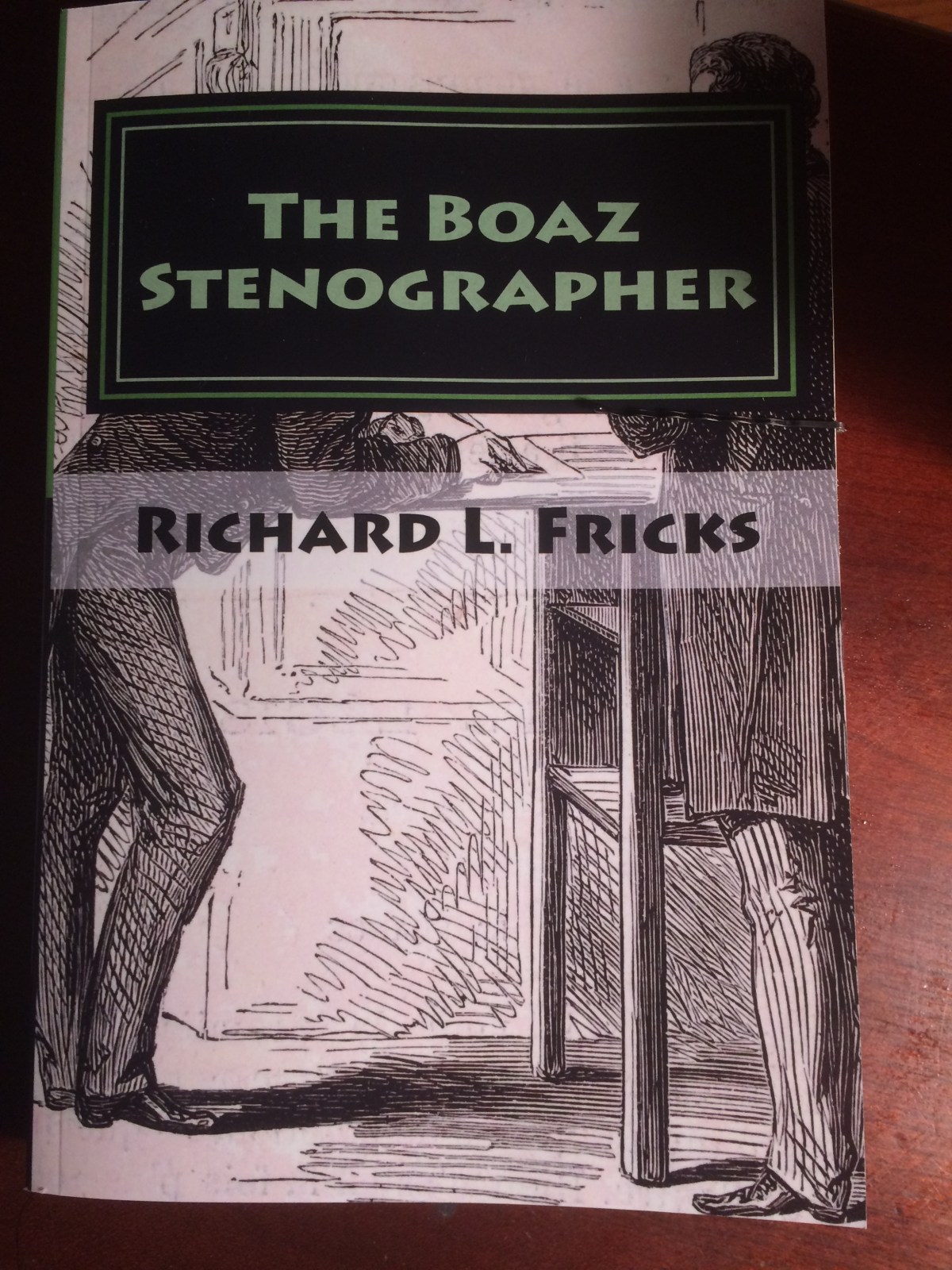
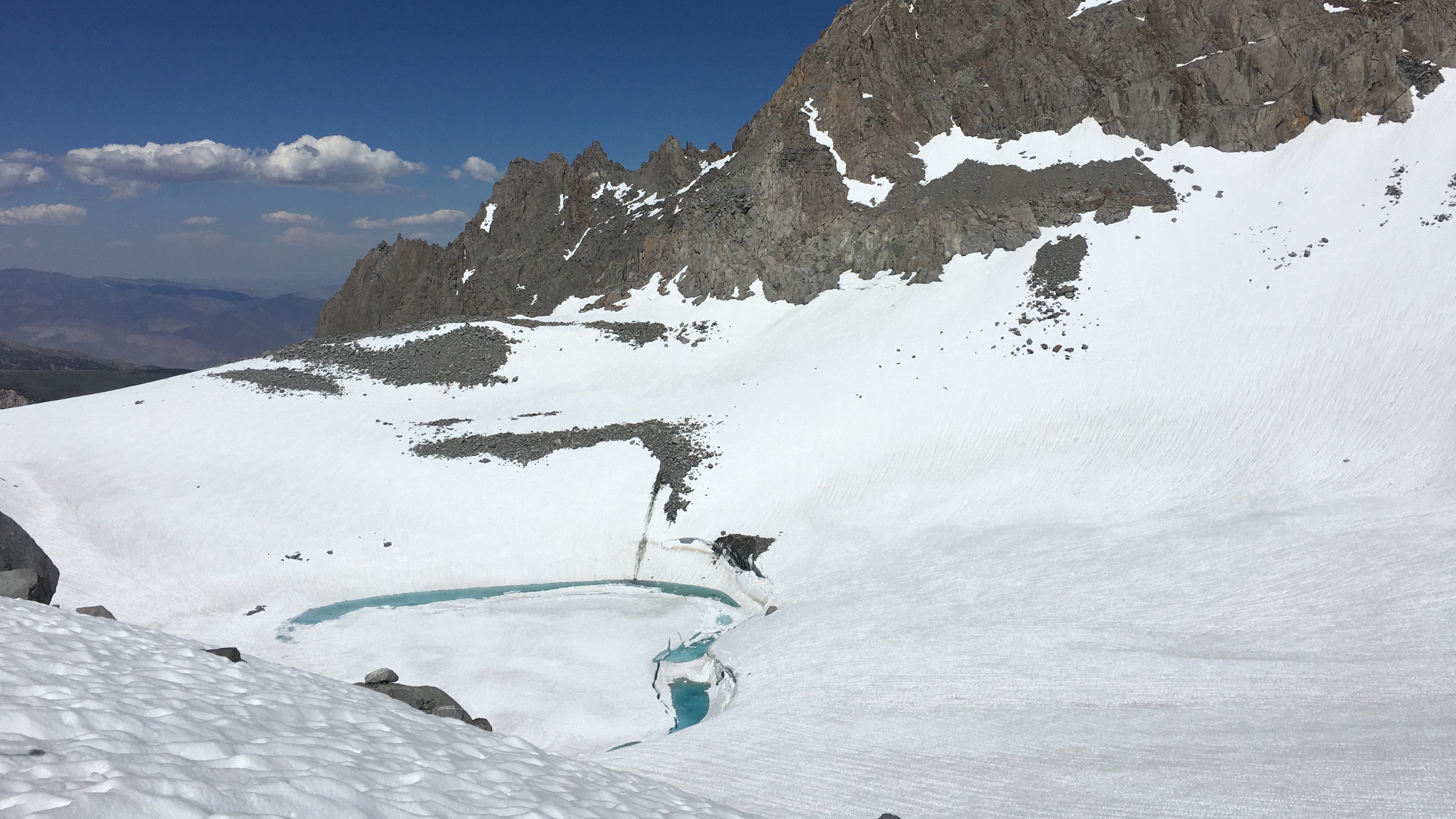
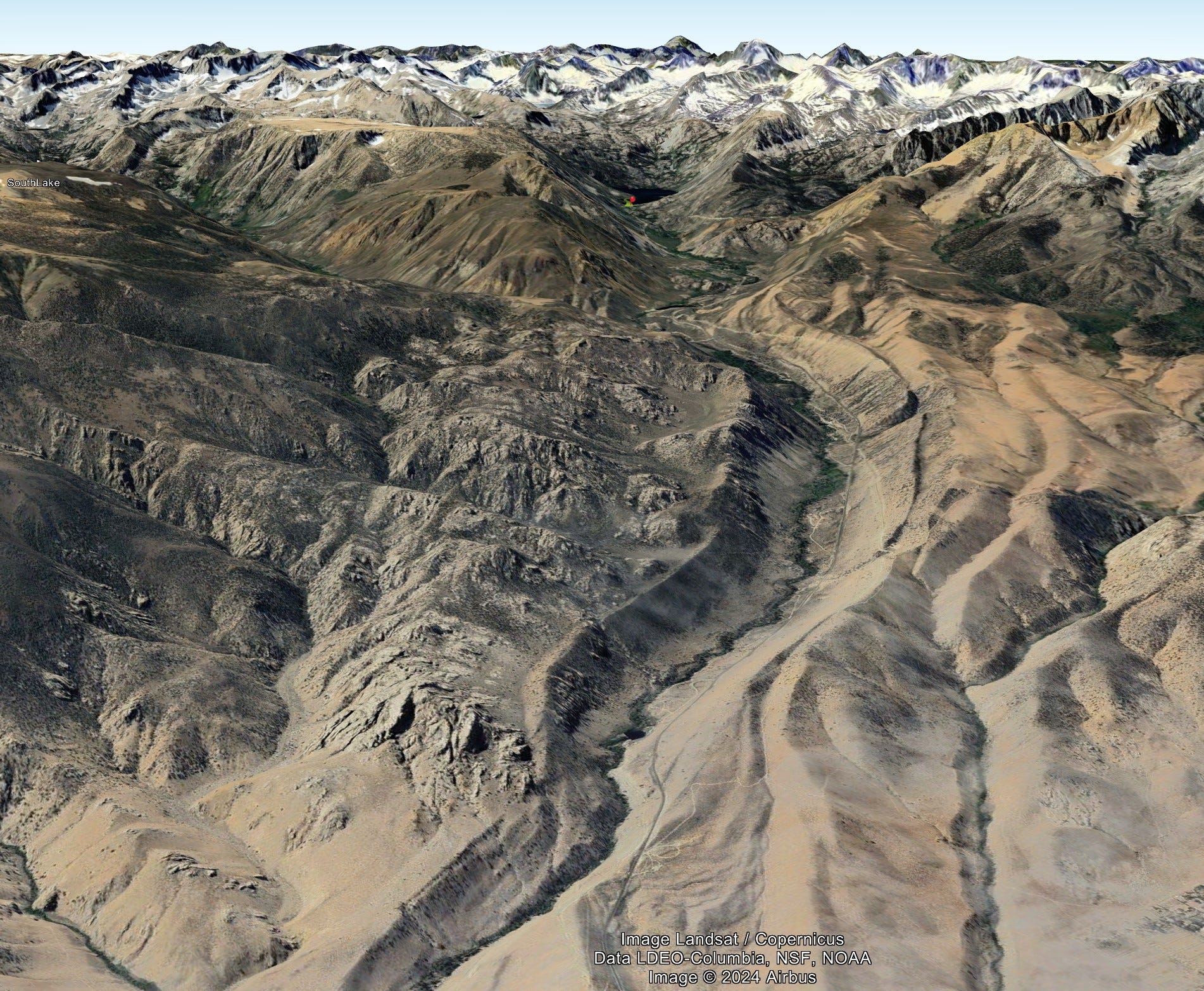









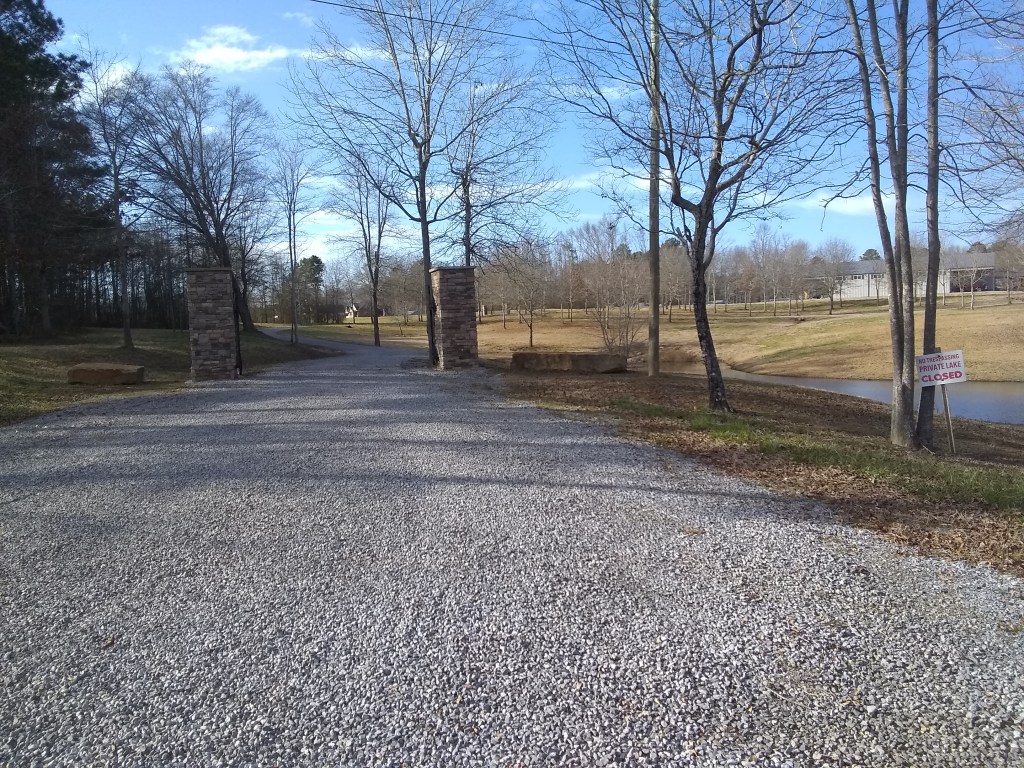


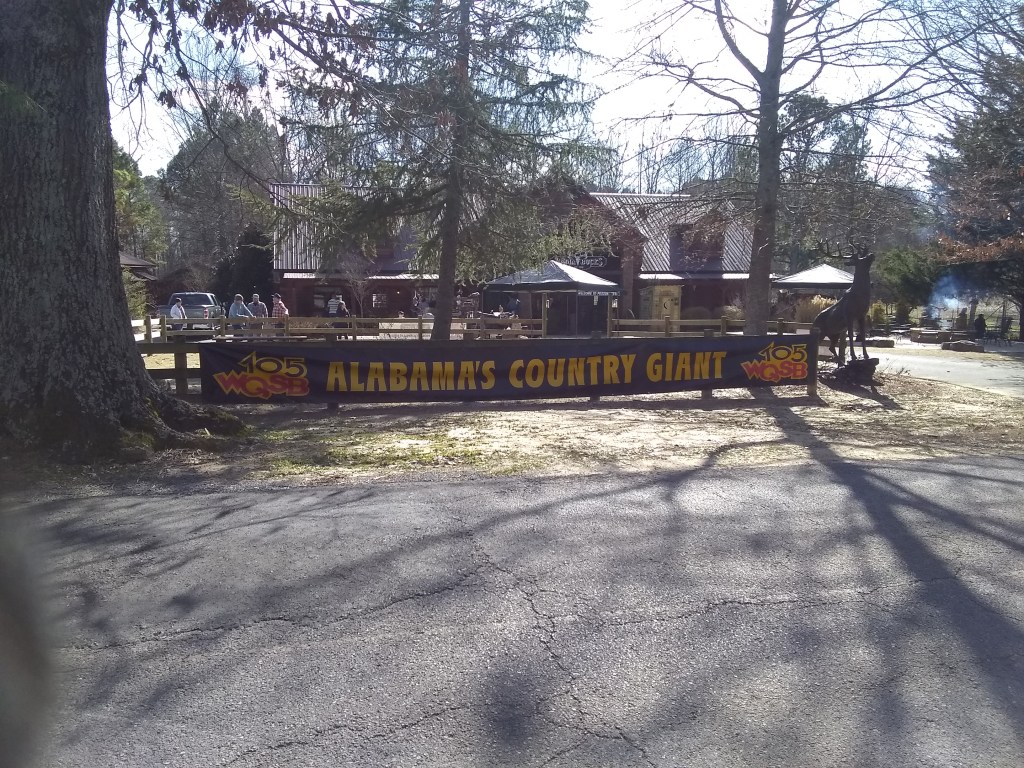

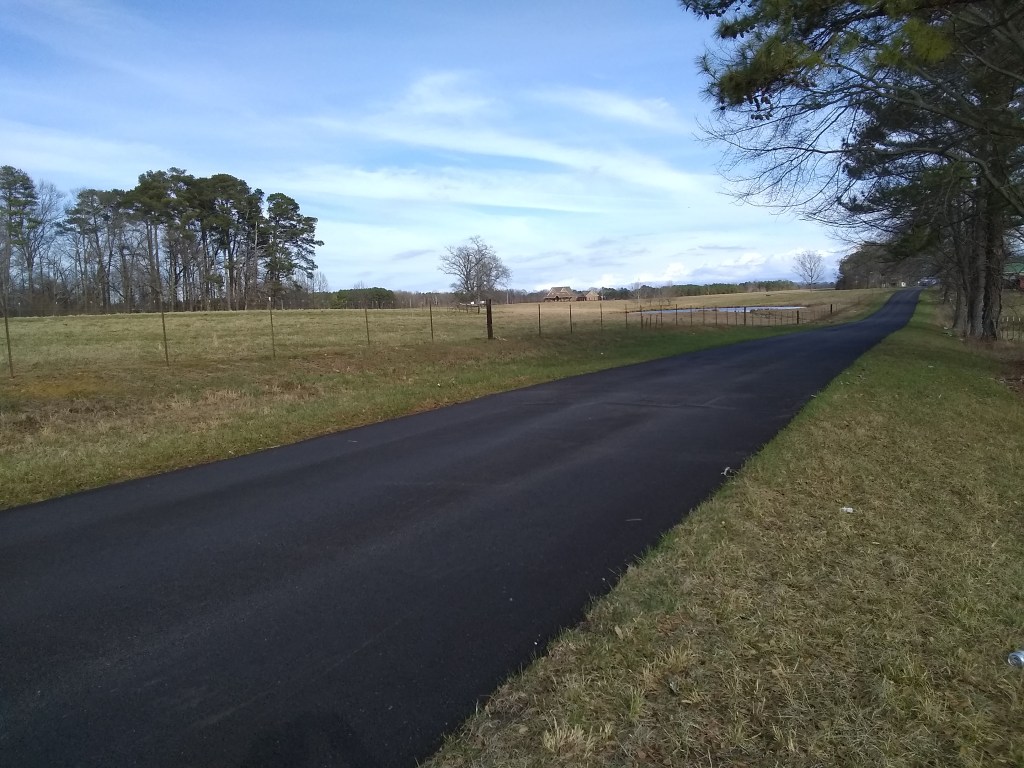




 Richard L. Fricks