Write to Life blog

Drafting–Colton & Sandy tour house, unload & attempt to hide the RAM

Pop’s place was a small two-bedroom one story clapboard-sided house built in the fifties on a one-acre wooded lot. At the rear of the house was an attached two-car carport. Sixty-feet to the northwest was a single-car detached garage, currently locked, with an attached shed used by Mildred Simmons to protect her riding and push mowers, and an assortment of lawn-maintenance tools, including weed-eaters, blowers, edgers, and seed-spreaders. Pop’s house, as well as Mildred’s and the other ten houses on this side of Ruskin Drive, faced south and were surrounded on the north and east by the 3,500 acre Busse Woods Natural Preserve, itself encircled by a paved biking trail that meandered parallel to the homes rear boundary lines.

The inside of Pop’s house didn’t look like it had changed since it was constructed nearly three-quarters of a century ago. The floors in the utility room, kitchen, and both baths were linoleum. The other rooms—a large den, a small study, and two bedrooms—had low-pile shag carpeting, either yellow or green. The latter reminded Colton of guacamole, without the onions.

“Your Pop lived rather sparsely.” Colton had noticed several bare walls in the bedrooms and the absence of any type desk in the study.

Sandy looked inside the refrigerator, then opened every cabinet door, top and bottom, and each of the drawers. “At least she didn’t take the pots, pans, utensils, and a pound of coffee.”

“Your sister? But, she took the antiques and paintings you mentioned.” That explained the house’s empty feel.

“About two weeks ago. Sarah hired a moving company. She flew here and supervised the loading, and flew back to Phoenix without even a phone call.” Sandy said, leaning against the kitchen sink.

Colton returned to the den but still within Sandy’s earshot. It was odd an American Gothic hung on each of the den’s four walls. No doubt, reproductions, since the original of the 1930’s painting is in the Art Institute of Chicago’s collection. Apparently, Pop liked the now dead but still famous painter Grant Wood who favored scenes of rural people and Iowa cornfields. American Gothic portrays a farmer and his daughter standing in front of an Eldon, Iowa house. The farmer is holding the handle of a three-speared pitchfork while his daughter is staring at someone or something to her left. Colton would never have known these details if it weren’t for a visit with Molly and Millie to the museum shortly after they started dating. It was something to do with a school research project. That too was odd, since at the time Molly was only in the forth grade. “I guess Sarah didn’t like reproductions.”

Without responding, Sandy removed a notepad from a kitchen drawer along with a pencil and started writing a grocery list. “Coffee, creamer, sweetener, beer. Do you like pot pies?”

“Only if I’m starving. Let’s unload the truck, make a pot of coffee, and keep brainstorming our strategy. We’ve got lots to think about.”

They walked through the combination laundry and utility room to the carport. Colton made two trips, bringing in two duffle bags, a metal lock-box filled with a cache of pistols, and a briefcase stuffed with bank statements and a spiral notebook Millie used to capture names and addresses of plumbers, heating & air repairmen, carpenters, electricians, and anyone else she believed might be needed in the future. Sandy made one trip with a suitcase, a smaller duffle, and three extra-large pillows.

“Where’s the key to the garage?” Colton asked after depositing his things inside Pop’s bedroom. Naturally, Sandy had chosen the one he occupied in the summers while growing up since Sarah rarely visited.

“Pantry. You best be glad Pop was organized and a creature of habit. Or, we’d be looking for a hacksaw or bolt cutters to open the lock.” Sandy opened the narrow door beside the refrigerator and grabbed the labeled key from a small pegboard filled with an assortment of keys and screwdrivers.

Since making the decision he and Sandy had to disappear, Colton wondered what to do with the Ram. He knew they couldn’t use it in Chicago. At first, he’d thought about going out of town and trading it for something else. But, that seemed to swap one problem for another, given the near-certainty investigators would check the Department of Motor Vehicles database. Ultimately he’d gone with Sandy’s suggestion to use Pop’s Buick.

Colton sat in the Ram and turned up the heat. The weather was deteriorating. Snow was thickening. The temperature was falling. He eased the truck forward as Sandy crunched through two inches of the white stuff.

The key worked flawlessly. Sandy removed the Master Lock and raised the over-sized garage door. He couldn’t believe what he saw parked inside. Colton put the Ram in park and exited. “What the hell?”

The dark blue Mercedes Sprinter van looked brand new. “Damn, Pop lost his mind. He hated traveling. Was an absolute homebody.”

“These things don’t come cheap.” Colton added, walking to a locked driver’s side door. “Run grab the keys.” If Pop was so organized, the key would be on the pegboard. Yet, the key to the Buick was under the floor mat.

“Something’s wrong.” Sandy said, walking to the passenger side, checking the locked door, and peering inside the cab. “I bet this isn’t Pop’s. Two reasons. One, he wouldn’t dare spend this kind of money, and two, he’d never have a Branson, Missouri brochure.”

“Uh?”

“On the seat.” Sandy pointed as Colton joined him and stared at the colorful front page advertising Dolly Parton’s Dixie Stampede Dinner Attraction.

The sound of an approaching vehicle from Ruskin Drive caught their attention. At first, given the near-blinding snow, all they could see were two headlights. But then, a 1990’s Impala appeared and parked behind Colton’s Ram.

“Shit, that’s Mildred Simmons.” Sandy said, recognizing the car Pop’s favorite neighbor had purchased new when he was a ten-year-old lad.

Without exiting the Impala, and while leaning her red-haired head out a lowered window, the ancient woman with more wrinkles than an African bush elephant, half-screamed, “I’ve called the police. You’re not going to steal my van.”

“Well, that explains it. Just the hell we need.” Colton spouted, remaining in front of the Sprint.

“Rusty, it’s Sandy, Pop’s grandson. We’re not stealing anything.”

It took three attempts to convince her, including the inspection of Sandy’s driver’s license, and the correct name for the Pekingese Mildred, Rusty, owned fifteen years ago. After some deliberation Sandy said, “Scarlett.” No doubt, the dog was red.

“Oh my goodness.” Mildred said as she made a smooth exit from the Impala. “I’m so sorry about Pop, and for not making the funeral.” Pop’s death had been sudden, six months ago by heart-attack. Sandy and Rusty reminisced over bygone days with him silently regretting his near-failure to visit his grandfather during the last ten years of his life.

Fortunately, shortly after two Elk Grove police officers arrived, they departed with repeated assurances from Mildred she’d made a mistake in calling 911. The deciding assurance was her detailed narrative of the van purchased a year ago and Pop’s insistence she park it inside his detached garage. She even showed the officers her key that fit the Master Lock.

After Mildred returned home, Sandy lowered and secured the garage’s overhead door while Colton backed the RAM once again inside the carport.
Shivering, both men returned to the kitchen for more coffee. “Rusty is going to be a problem.” Sandy said as they stood with their backs to a five-grate gas heater just inside the den.

01/26/23 Biking & Listening

Biking is something else I both love and hate. It takes a lot of effort but does provide good exercise and most days over an hour to listen to a good book or podcast. I especially like having ridden.

Here’s my bike, a Rockhopper by Specialized. I purchased it November 2021 from Venture Out in Guntersville; Mike is top notch! So is the bike, and the ‘old’ man seat I salvaged from an old Walmart bike.

Here’s a link to today’s bike ride. It’s what I call my pistol route, which is my goal every day. But, sometimes cold weather says otherwise. Cold ride, 43 degrees, but my four layers helped.

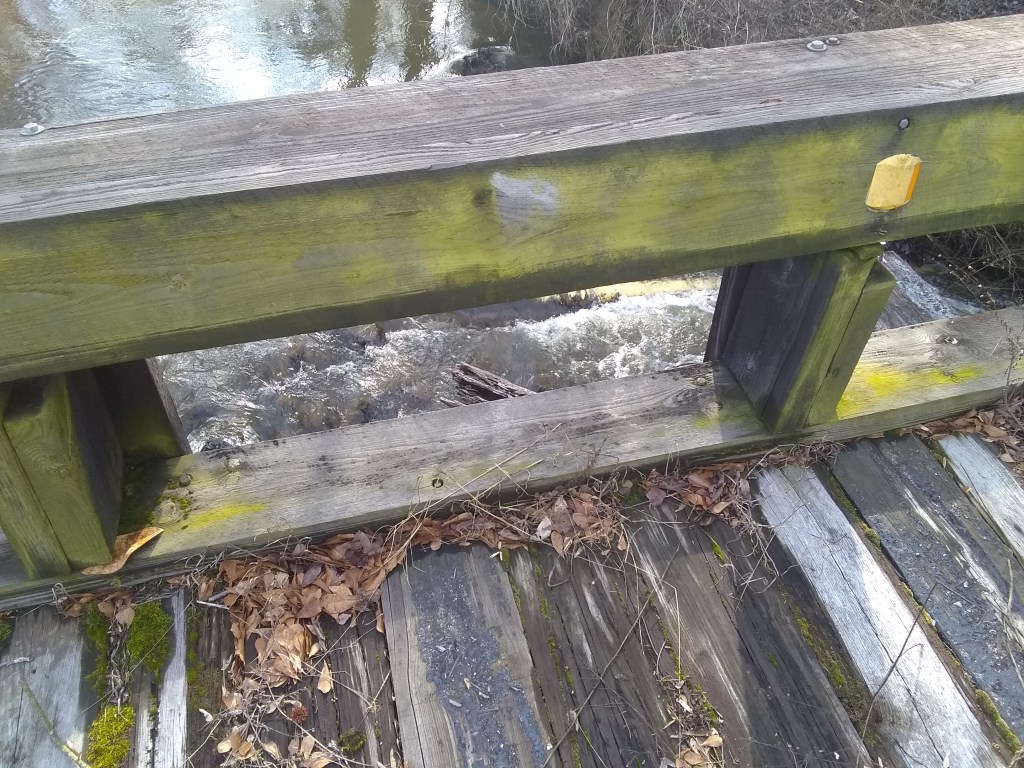
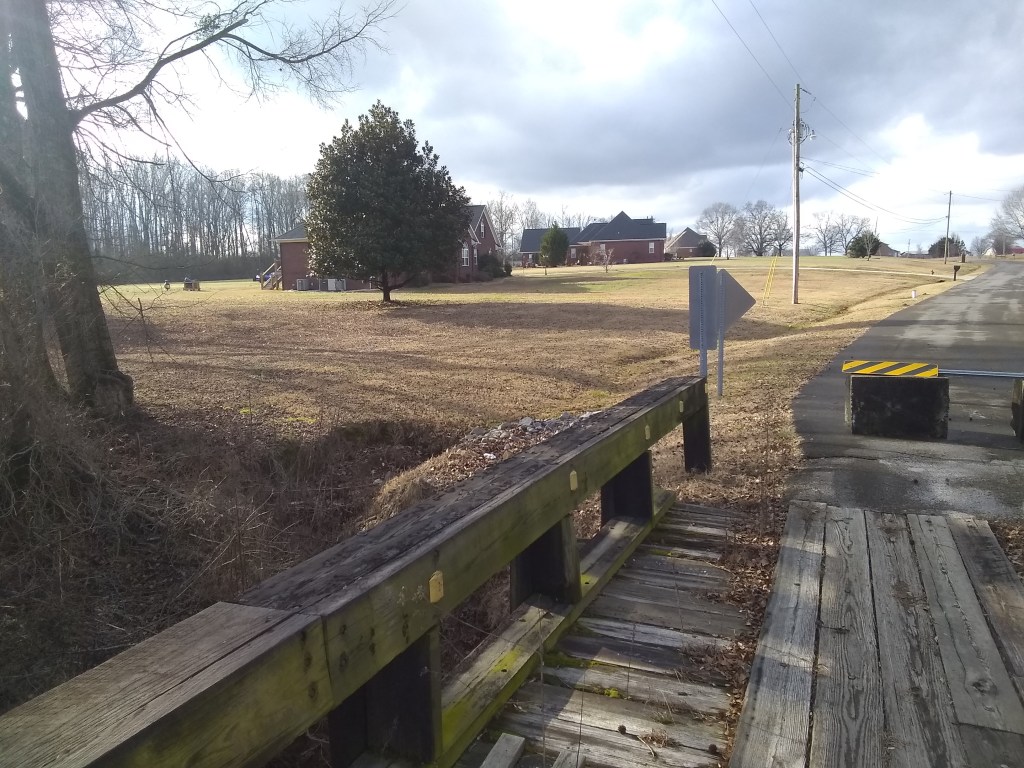
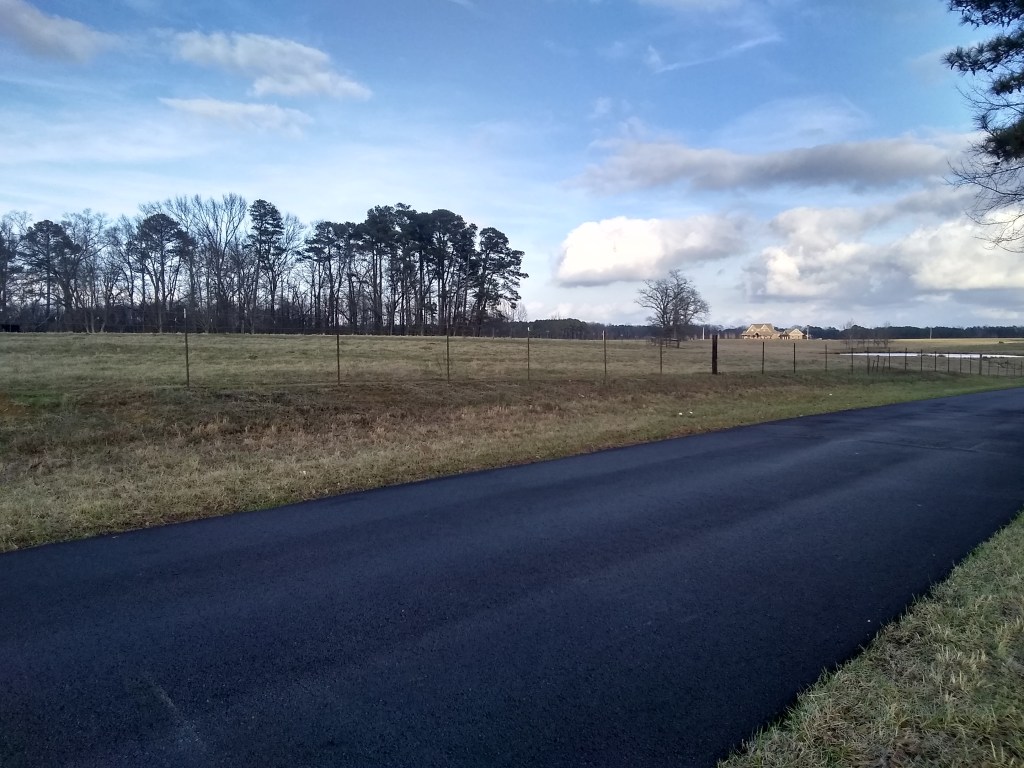
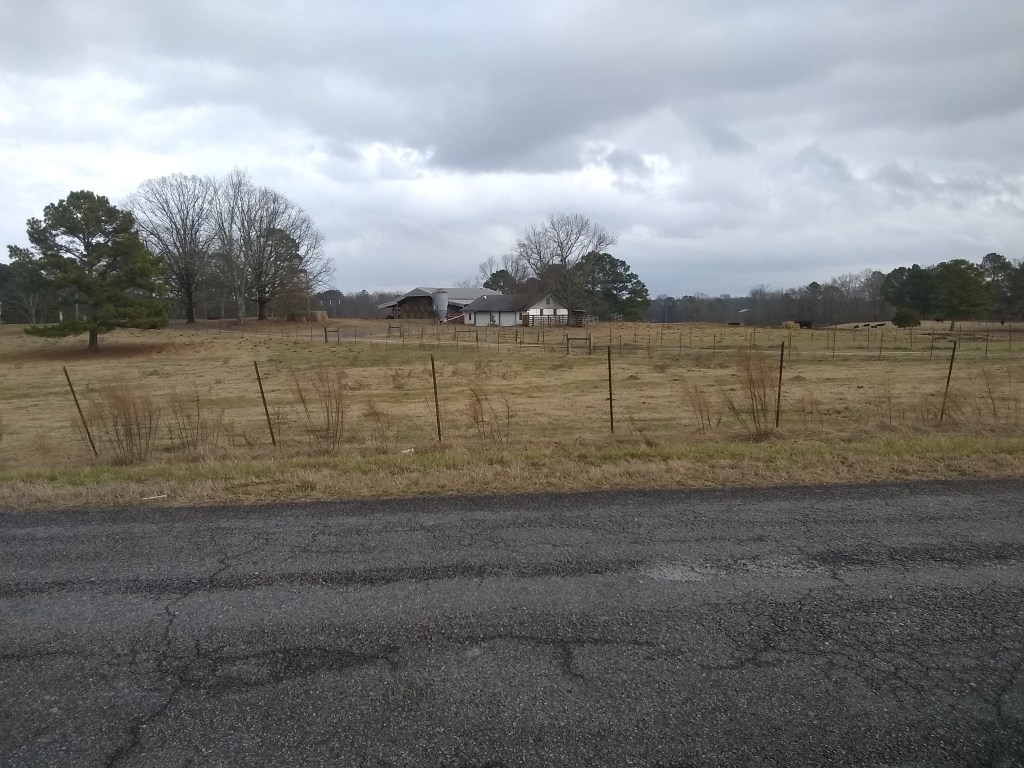
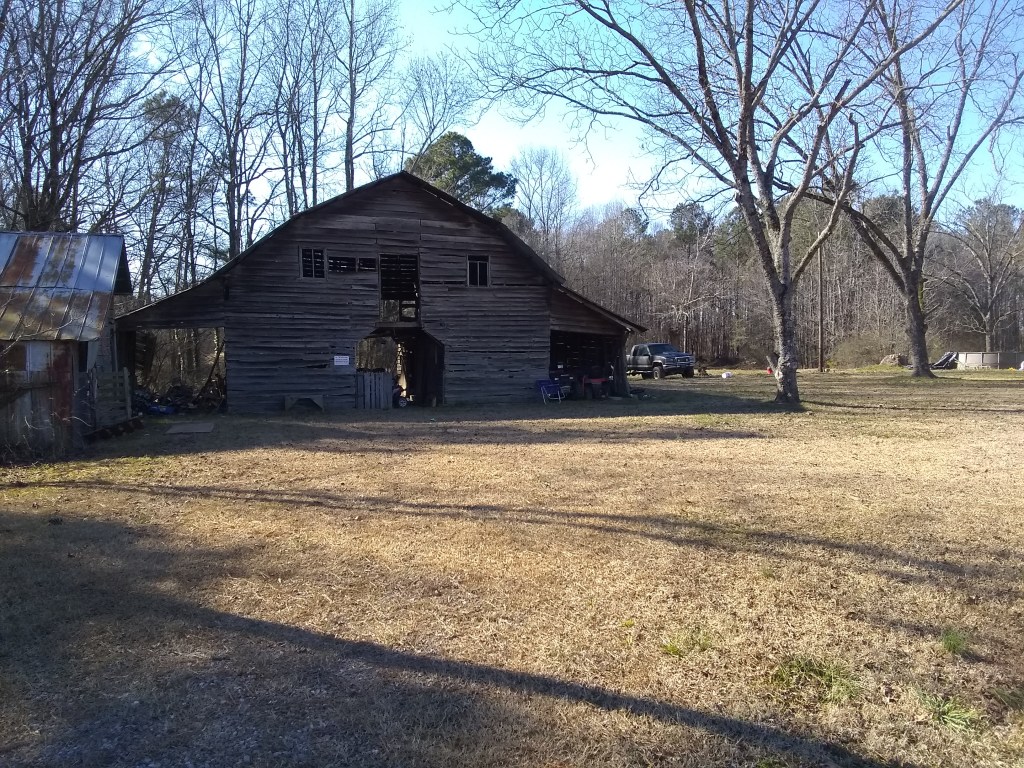
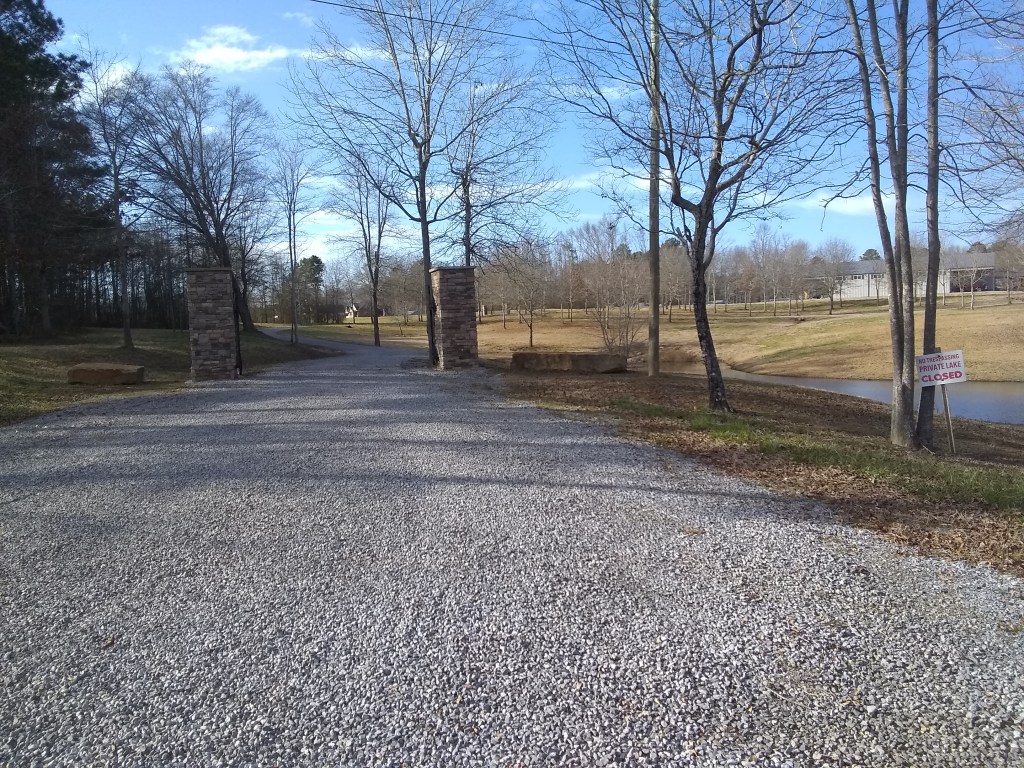
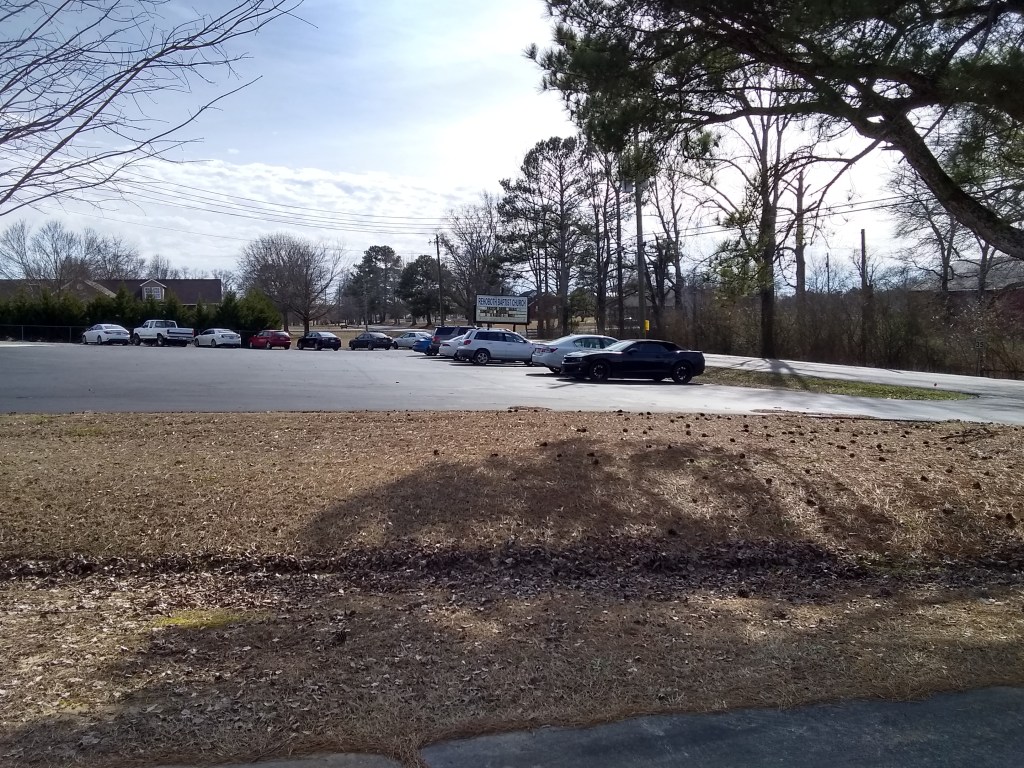
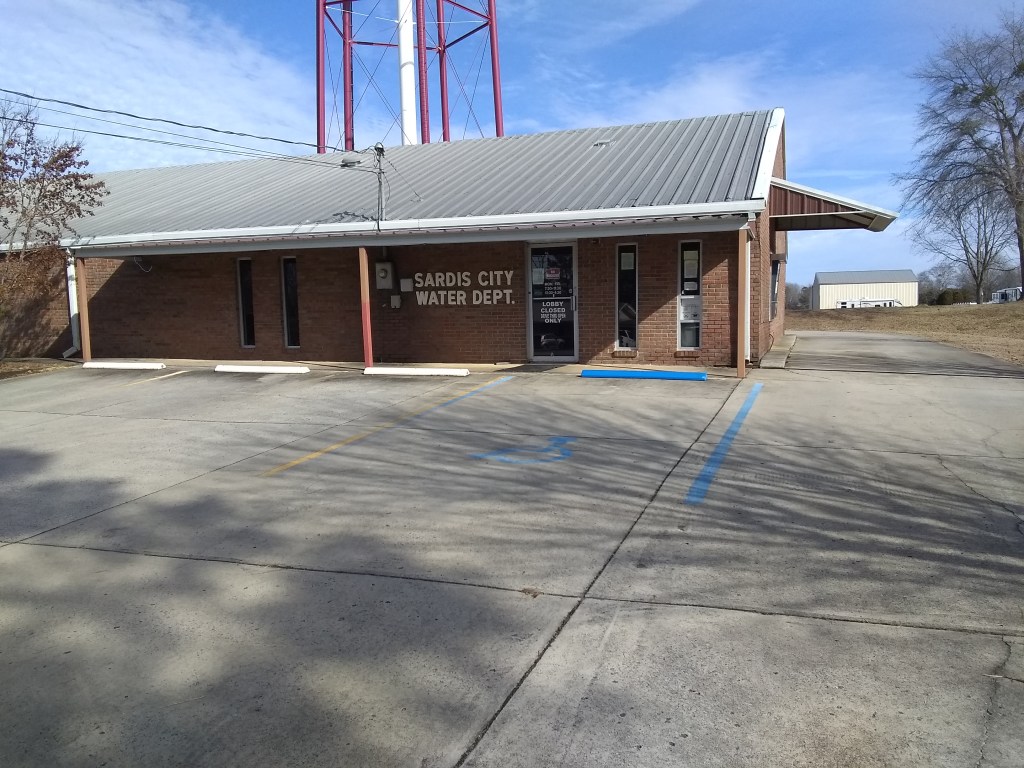
Here’s a few photos taken along my route:

Here’s what I’m currently listening to: The Second Deadly Sin, by Lawrence Sanders

Sanders was a tremendously talented writer.

Amazon abstract:

A police detective must find out who murdered a world-famous artist in a thriller by the #1 New York Times–bestselling “master of suspense” (The Washington Post).

A month ago, world-renowned artist Victor Maitland was found dead in his Mott Street studio—stabbed repeatedly in the back. With no clear leads or suspects, the New York Police Department calls Chief Edward Delaney out of retirement. Delaney is still adjusting to life on the outside, and he’s bored by his free time. He welcomes the chance to put his well-honed investigative skills to the test once again. To investigate the case, Delaney plunges into Maitland’s rarefied orbit. Following a winding path of avarice, deception, and fraud, Delaney uncovers a long line of suspects that includes Maitland’s wife, son, and mistress. When a second murder rocks Manhattan’s art world, Delaney moves closer to the truth about what kind of a man—or monster—Victor Maitland really was. But which of the artist’s enemies was capable of killing him and leaving no trail?

Writing Journal—Thursday writing prompt

Your character is a sharpshooter out hunting for the first time. Describe his moral dilemma as he sights an animal in his scope and prepares to take its life.

One Stop for Writers

 Guidance & tips

Write the scene of discovery (i.e., tell a story), or brainstorm and create a list of related ideas.

Here’s five story elements to consider:

  • Character
  • Setting
  • Plot
  • Conflict
  • Resolution

Never forget, writing is a process. The first draft is always a mess.

The first draft of anything is shit.

Ernest Hemingway

Writing Journal—Wednesday writing prompt

Your character decides to prank his parents on April Fool’s Day by pretending he’s gotten a girl pregnant. 

One Stop for Writers

Guidance & tips

Write the scene of discovery (i.e., tell a story), or brainstorm and create a list of related ideas.

Here’s five story elements to consider:

  • Character
  • Setting
  • Plot
  • Conflict
  • Resolution

Never forget, writing is a process. The first draft is always a mess.

The first draft of anything is shit.

Ernest Hemingway

Drafting–Colton & Sandy go off-grid

Today, as usual, I reread the prior day’s writing. I decided to re-do the last sentence.

Here’s how it was:
“Uh.” Colton said stopping in front of the two-car garage.

Here’s the updated version:
“Uh.” Colton pulled into the paved driveway already half-covered with snow. “What’s fitting?” He pointed the Ram toward a detached garage, then backed into the carport’s unoccupied spot beside Pop’s twenty-year old Buick.

Sandy didn’t respond but jumped out and headed to his grandfather’s car. He hoped, at worse, all it would need was a battery charge. A thrill of confidence flooded his mind. Finally, Colton was letting him have a say. First, Pop’s place as base camp, then his well-maintained car as transportation to and from Chicago. As usual, the key was under the floor mat. Thankfully, it started right off.

“Somebody’s either living here or routinely coming. Otherwise, the battery would be dead.” Colton said, standing between the Ram and Pop’s Buick, worrying about the house’s heat, given the bitter cold weather forecast.

Sandy stared at the dash, his face red as a male cardinal. He thought of Mildred Simmons next door. “Shit.”

01/24/23 Biking & Listening

Biking is something else I both love and hate. It takes a lot of effort but does provide good exercise and most days over an hour to listen to a good book or podcast. I especially like having ridden.

Here’s my bike, a Rockhopper by Specialized. I purchased it November 2021 from Venture Out in Guntersville; Mike is top notch! So is the bike, and the ‘old’ man seat I salvaged from an old Walmart bike.

Here’s a link to today’s bike ride. A shorter ride today because of long dental appointment.

Here’s a few photos taken along my route:

Here’s what I’m currently listening to: The Second Deadly Sin, by Lawrence Sanders

Sanders was a tremendously talented writer.

Amazon abstract:

A police detective must find out who murdered a world-famous artist in a thriller by the #1 New York Times–bestselling “master of suspense” (The Washington Post).

A month ago, world-renowned artist Victor Maitland was found dead in his Mott Street studio—stabbed repeatedly in the back. With no clear leads or suspects, the New York Police Department calls Chief Edward Delaney out of retirement. Delaney is still adjusting to life on the outside, and he’s bored by his free time. He welcomes the chance to put his well-honed investigative skills to the test once again. To investigate the case, Delaney plunges into Maitland’s rarefied orbit. Following a winding path of avarice, deception, and fraud, Delaney uncovers a long line of suspects that includes Maitland’s wife, son, and mistress. When a second murder rocks Manhattan’s art world, Delaney moves closer to the truth about what kind of a man—or monster—Victor Maitland really was. But which of the artist’s enemies was capable of killing him and leaving no trail?

Writing Journal—Tuesday writing prompt

When your character passes a curbside grate, she sees something lodged between the metal bars. Shockingly, the item belongs to her, something she lost almost a year ago.

One Stop for Writers

Guidance & tips

Write the scene of discovery (i.e., tell a story), or brainstorm and create a list of related ideas.

Here’s five story elements to consider:

  • Character
  • Setting
  • Plot
  • Conflict
  • Resolution

Never forget, writing is a process. The first draft is always a mess.

The first draft of anything is shit.

Ernest Hemingway

Let There Always Be Light: Dark Matter and the Mystery of Our Mortal Stardust

(Patti Smith Reads Rebecca Elson)

Here’s the link to this article.

“For this we go out dark nights, searching… for signs of unseen things… Let there be swarms of them, enough for immortality, always a star where we can warm ourselves.”

BY MARIA POPOVA

This is the fourth of nine installments in the animated interlude season of The Universe in Verse in collaboration with On Being, celebrating the wonder of reality through stories of science winged with poetry. See the rest here.

THE ANIMATED UNIVERSE IN VERSE: CHAPTER FOUR

Months before Edwin Hubble finally published his epoch-making revelation about Andromeda, staggering the world with the fact that the universe extends beyond our Milky Way galaxy, a child was born under the star-salted skies of Washington, D.C., where the Milky Way was still visible before a century’s smog slipped between us and the cosmos — a child who would grow up to confirm the existence of dark matter, that invisible cosmic glue holding galaxies together and pinning planets to their orbits so that, on at least one of them, small awestruck creatures with vast complex consciousnesses can unravel the mysteries of the universe.

Night after night, Vera Rubin (July 23, 1928–December 25, 2016) peered out of her childhood bedroom and into the stars, wondersmitten with the beauty of it all — until she read a children’s book about the trailblazing astronomer Maria Mitchell, who had expanded the universe of possibility for half of our species a century earlier. The young Vera was suddenly seized with a life-altering realization: Not only was there such a thing as a professional stargazer, but it was a thing a girl could do.

Vera Rubin as an undergraduate at Vassar, 1940s

In 1965 — exactly one hundred years after Maria Mitchell was appointed the first professor of astronomy at Vassar, which Vera Rubin had chosen as her training ground in astronomy — she became the first woman permitted to use the Palomar Observatory. Peering through its colossal eye — the telescope, devised the year Rubin was born, had replaced the one through which Hubble made his discovery as the world’s most powerful astronomical instrument — she was just as wondersmitten as the little girl peering through the bedroom window, just as beguiled by the beauty of the cosmos. “I sometimes ask myself whether I would be studying galaxies if they were ugly,” she reflected in her most personal interview. “I think it may not be irrelevant that galaxies are really very attractive.”

Galaxies had taken Rubin to Palomar, and galaxies — the riddle of their rotation, which she had endeavored to solve — became the key to her epochal confirmation of dark matter. One of the most mesmerizing unsolved puzzles in astronomy, dark matter had remained only an enticing speculation since the Swiss astrophysicist Fritz Zwicky had first theorized it when Vera was five.

A generation later, a small clan of astronomers at Cambridge analyzed the deepest image of space the Hubble Space Telescope had yet captured — that iconic glimpse of the unknown, revealing a universe “so brutal and alive it seemed to comprehend us back” — to discern the origin of the mysterious dark matter halo enveloping the Milky Way. Spearheading the endeavor was an extraordinary young astronomer back to work during a remission of a rare terminal blood cancer ordinarily afflicting the elderly.

Rebecca Elson, 1987

Nursed on geology and paleontology on the shores of a prehistoric lake, Rebecca Elson (January 2, 1960–May 19, 1999) was barely sixteen and already in college when she first glimpsed Andromeda through a telescope. Instantly dazzled by its “delicate wisp of milky spiral light floating in what seemed a bottomless well of empty space,” she became a scientist but never relinquished the pull of the poetic dimensions of reality. During her postdoctoral work at Princeton’s Institute for Advanced Study, Elson found refuge from the narrow patriarchy of academic science in a gathering of poets every Tuesday evening. She became a fellow at a Radcliffe-Harvard institute for postgraduate researchers devoted to reversing “the climate of non-expectation for women,” among the alumnae of which are Anne Sexton, Alice Walker, and Anna Deavere Smith. There, in a weekly writing group, she met and befriended the poet Marie Howe, whose splendid “Singularity” became the inspiration for this animated season of The Universe in Verse.

It was then — twenty-nine and newly elected the youngest astronomer in history to serve on the Decennial Review committee steering the course of American science toward the most compelling unsolved questions — that Elson received her terminal diagnosis.

Throughout the bodily brutality of her cancer treatment, she filled notebooks with poetic questions and experiments in verse, bridging with uncommon beauty the creaturely and the cosmic — those eternal mysteries of our mortal matter that make it impossible for a consciousness born of dead stars to fathom its own nonexistence.

Rebecca Elson lived with the mystery for another decade, never losing her keen awareness that we are matter capable of wonder, never ceasing to channel it in poetry. When she returned her borrowed stardust to the universe, a spring shy of her fortieth birthday, she left behind nearly sixty scientific papers and a single, splendid book of poems titled A Responsibility to Awe (public library) — among them the staggering “Theories of Everything” (read by Regina Spektor at the 2019 Universe in Verse) and “Antidotes to Fear of Death (read by Janna Levin at the 2020 Universe in Verse).

Permeating Elson’s poetic meditations, the mystery of dark matter culminates in one particular poem exploring with uncommon loveliness what may be the most touching paradox of being human — our longing for the light of immortality as creatures of matter in a cosmos governed by the dark sublime of dissolution.

Bringing Elson’s masterpiece to life for this series is Patti Smith (who read Emily Dickinson’s pre-atomic ode to particle physics at the 2020 Universe in Verse), with animation by Ohara Hale (who animated Emily Dickinson’s pre-ecological poem about ecology in Chapter One of this experimental season of The Universe in Verse) and music by Zoë Keating (who read Rita Dove’s paleontological poem at the 2018 Universe in Verse).

LET THERE ALWAYS BE LIGHT (SEARCHING FOR DARK MATTER)
by Rebecca Elson

For this we go out dark nights, searching
For the dimmest stars,
For signs of unseen things:

To weigh us down.
To stop the universe
From rushing on and on
Into its own beyond
Till it exhausts itself and lies down cold,
Its last star going out.

Whatever they turn out to be,
Let there be swarms of them,
Enough for immortality,
Always a star where we can warm ourselves.

Let there be enough to bring it back
From its own edges,
To bring us all so close we ignite
The bright spark of resurrection.

Previously on The Universe in VerseChapter 1 (the evolution of life and the birth of ecology, with Joan As Police Woman and Emily Dickinson); Chapter 2 (Henrietta Leavitt, Edwin Hubble, and the human hunger to know the cosmos, with Tracy K. Smith); Chapter 3 (trailblazing astronomer Maria Mitchell and the poetry of the cosmic perspective, with David Byrne and Pattiann Rogers).

Drafting–Colton & Sandy go off-grid

“Turn right on Biesterfield Road. It’s about a quarter mile.” Sandy said from the front passenger seat of Colton’s crew cab Ram truck. The two had spent the past ninety minutes heading west to a house along the southern edge of the Busse Woods Forest Preserve, located just south of Rolling Meadows. Their quest to disappear had led them here.

It seemed their best option. Certainly, they couldn’t stay at Colton’s on S. Princeton, or Sandy’s on S. Farrell St. These places would be the first locations Chicago Police would look once the arrest warrants were issued. Neither man doubted that’s what would happen in court shortly after 10:00 AM on Monday. Hell, the whole purpose of the hearing was to determine whether the defendants would appear in court to face their charges. The judge, the new pro-prosecution judge, would order both men be immediately arrested and held in jail awaiting trial.

Colton turned right, and momentarily squeezed his eyes shut. Why hadn’t he seen this coming? Why wasn’t he more prepared? Why did the damn bank only allow a maximum daily ATM withdrawl of $300.00?

Sandy tried to think of the last time he’d been to Pop’s place. The best he could recall it was three or four years ago. Pop was the only father-figure he’d ever really known, since his biological father had died in his mid-twenties when Sandy was only three. James Todd Hickman was his maternal grandfather, who’d once owned two-hundred acres south of the the Busse Woods Preserve. Over the years he’d made a fortunate selling off twenty to forty acre tracts to eager developers. Now, Pop was gone, as was his only daughter, Sandy and Sarah’s mother, who’d died last February of a brain aneurysm. Any day now, his mother’s estate, which included most of Pop’s estate she had inherited, would be distributed to Sandy and his sister.

Sandy stared at Seibert Landscaping on his right and remembered the physically-exhausting summer he’d worked there. Pop’s had said it would show him what real work was like, and motivate him to do better in school. The only good thing to come out of the three-month torture was the owner’s daughter, the deeply-tanned and delectably toned thirteen year old Rachel Duncan. Oh my, Sandy whispered to himself wondering what might have been if his mother had let him live with Pop year-round.

“What if Sarah reneges?” It was the third time Colton had mentioned the agreement. Although Stella Hickman Brown had left everything in equal shares to Sandy and Sarah, the two had supposedly reached an agreement whereby Sandy would own the Busse Woods home outright, with Sarah receiving an extra $150,000 from Pop’s cash assets for her half of the real estate.

“Again, she lives in Phoenix and has no need or desire for sticks and stones in Rolling Meadows. Oh shit, turn left, right here. Beisner Road.”

“What about the contents. You said Pop’s had a lot of antiques, and several expensive paintings.”

“Get off of it, will you? It’s all in the agreement. That’s where the extra $50,000 comes in.” Sandy pointed ahead. “Slow down. Right on Winston.”

The idea had been Sandy’s. After him and Colton met at Mitchell’s Tap, they’d sat in his truck and brainstormed the safest place to setup base-camp as Sandy called it. After listing a few not-so-desirous spots—including an abandoned warehouse close to Lincoln Park Zoo owned by Colton’s immediate supervisor at work—Sandy had suggested Pop’s house. The only negative being it was ninety minutes from either one of their houses. Colton had reluctantly agreed but was worried that cops or bounty hunters could likely discover the link in Sandy’s ancestral chain.

“Left on Ruskin Drive. About a block.” Pop’s place was the thirteenth house on the left, and backed up to the 3,500 acre nature preserve. Sandy’s mind returned to Rachel Duncan and the summer night they’d hiked to Busse Lake and gone skinny-dipping. Where had his life gone so horribly wrong? Such promise, including an all-expense college education compliments of Pop’s. But, such disappointment? Beginning in the eleventh grade in Chicago. Drugs and stealing had led to juvenile detention and eventually to dropping out of high school. “Here it is, 622 Ruskin Drive.” The last account Sandy had of Rachel was she was married to a Dallas, Texas gynecologist. “Fitting,” he said aloud.

“Uh.” Colton said stopping in front of the two-car garage.