Write to Life blog

Who Wrote the Gospels? Our Earliest (Apparent) Reference

Here’s the link to this article written by Bart Ehrman.

March 2, 2023

I have begun to discuss the evidence provided by the early church father Papias that Mark was actually written by Mark.  He appears to be the first source to say so.  Does he?  And if so, is he right?

Here’s how I begin to discuss these matters in my book Jesus Before the Gospels (edited a bit here).

******************************

Papias is often taken as evidence that at least two of the Gospels, Matthew and Mark, were called by those names already several decades after they were in circulation.

Papias was a Christian author who is normally thought to have been writing around 120 or 130 CE.  His major work was a five-volume discussion of the teachings of Jesus, called Exposition of the Sayings of the Lord. [1] It is much to be regretted that we no longer have this book.   We don’t know exactly why later scribes chose not to copy it, but it is commonly thought that the book was either uninspiring, naïve, or theologically questionable.  Later church fathers who talk about Papias and his book are not overly enthusiastic.  The “father of church history,” the fourth-century Eusebius of Caesarea, indicates that, in his opinion, Papias was “a man of exceedingly small intelligence” (Church History, 3.39).

Our only access to Papias and his views are in quotations of his book in later church fathers, starting with the important author Irenaeus around 185 CE, and including Eusebius himself.  Some of these quotations are fascinating and have been the subject of intense investigation among critical scholars for a very long time.  Of relevance to us here is what he says both about the Gospels and about the connection that he claims to have had to eyewitnesses to the life of Jesus.

In one of the most famous passages quoted by Eusebius, Papias indicates that instead of reading about Jesus and his disciples in books, he preferred hearing a “living voice.”   He explains that whenever knowledgeable people came to visit his church, he talked with them to ask what they knew.  Specifically he spoke with people who had been “companions” of those whom he calls “elders” who had earlier been associates with the disciples of Jesus.   And so Papias is not himself an eyewitness to Jesus’ life and does not know eyewitnesses.   Writing many years later (as much as a century after Jesus’ death), he indicates that he knew people who knew people who knew people who were with Jesus during his life.  So it’s not like having firsthand information, or anything close to it.  But it’s extremely interesting and enough to make a scholar sit up and take notice.

Richard Bauckham [In his book Jesus and the Eyewitnesses] is especially enthusiastic about Papias’s testimony, in part because he believes that Papias encountered these people long before he was writing, possibly as early as 80 CE, that is, during the time when the Gospels themselves were being composed [Papias himself, as you can probably guess, says nothing of the sort].  Bauckham does not ask whether Papias’ memory of encounters he had many decades earlier was accurate.  But as that is our interest here, it will be important to raise the questions ourselves.

Two passages from Papias are especially important, as Bauckham and others have taken them to be solid evidence that the Gospels were already given their names during the first century.  At first glance, one can see why they might think so.  Papias mentions Gospels written both by Mark and by Matthew.   His comments deserve to be quoted here in full.  First on a Gospel written by Mark.:

This is what the elder used to say, “when Mark was the interpreter [Or: translator] of Peter he wrote down accurately everything that he recalled of the Lord’s words and deeds – but not in order.  For he neither heard the Lord nor accompanied him; but later, as I indicated, he accompanied Peter, who used to adapt his teachings for the needs at hand, not arranging, as it were, an orderly composition of the Lord’s sayings.  And so Mark did nothing wrong by writing some of the matters as he remembered them.  For he was intent on just one purpose: not to leave out anything that he heard or to include any falsehood among them.”  (Eusebius, Church History, 3. 39)

Thus, according to Papias, someone named Mark was Peter’s interpreter or translator (from Aramaic?) and he wrote down what Peter had to say about Jesus’ words and deeds.  He did not, however, produce an orderly composition.  Still, he did record everything he ever heard Peter say and he did so with scrupulous accuracy.  We will see that these claims are highly problematic, but first consider what Papias says also about a Gospel by Matthew:

And so Matthew composed the sayings in the Hebrew tongue, and each one interpreted [Or: translated] them to the best of his ability.  (Eusebius, Church History, 3. 39)

There are numerous reasons for questioning whether these passages – as quoted by Eusebius — provide us solid evidence that the New Testament Gospels were given their names in the late first or early second century.

First, it is somewhat curious and certainly interesting that Eusebius chose not to include any quotations from Papias about Luke or John.  Why would that be?  Were Papias’s views about these two books not significant?  Were they unusual?  Were they contrary to Eusebius’s own views?  We’ll never know.

Second, it is important to stress that in none of the surviving quotations of Papias does he actually quote either Matthew or Mark.  That is to say, he does not give a teaching of Jesus, or a summary of something he did, and then indicate that he found it in one of these Gospels.  That is unfortunate, because it means that we have no way of knowing for certain that when he refers to a Gospel written by Mark he has in mind the Gospel that we now today call the Gospel of Mark.  In fact there are reasons for doubting it, as I will show in my next post.

[1] See the Introduction and the collection of all the fragments of Papias that I give in The Apostolic Fathers, vol. 2 pp. 85-118.

Writing Journal—Friday writing prompt

Your character wants to infiltrate a cult in order to lure his teenage daughter away from them. Write the scene where your character is interviewed by the cult leader to see if he’s a suitable candidate for membership. 

One Stop for Writers

Guidance & Tips

Write the scene of discovery (i.e., tell a story), or brainstorm and create a list of related ideas.

Here’s five story elements to consider:

  • Character
  • Setting
  • Plot
  • Conflict
  • Resolution

Never forget, writing is a process. The first draft is always a mess.

The first draft of anything is shit.

Ernest Hemingway

Did Mark Write Mark? What the Apostolic Fathers Say

Here’s the link to this article written by Bart Ehrman.

March 1, 2023

Did Mark write Mark?   A couple of weeks ago I did an eight-lecture course on the Gospel of Mark for my separate (unrelated to the blog) venture, a series of courses on “How Historians Read the Bible” (the courses are available on my website: www.bartehrman.com).  It was a blast.  One of the things I loved about doing it was that I was able to read and reread scholarship on Mark and I learned some things I had long wondered about, and re-learned other things that I used to know.

One of the things I had to think seriously about for the first time in some years was the question of why church fathers in the second century (but when?) began claiming that our second Gospel was written by John Mark, allegedly a secretary for the apostle Peter.  That took me straight back to the question of the reliability of an early Christian writer named Papias (writing around 120 or 130 CE?).

Papias gets used all the time as proof that Mark wrote Mark.  Conservative Christian scholars cite him on the point as “gospel truth.”  But for the past 30 years I’ve found the evidence unconvincing.  I’ve written about the issue briefly on the blog before, but I decided to look up my lengthiest discussion of the matter in my book Jesus Before the Gospels (HarperOne, 2016) and lo and behold, I made some points there that I didn’t remember!

I thought it would be worthwhile to present that discussion here.  It tries to show why Papias’ witness is so problematic for establishing the authorship of both Mark and Matthew, the only two Gospels he mentions in the snippets of his writings we still have.  This will take three posts.

In this one I give the backdrop to the testimony of Papias.

******************************

The Gospel writers are all anonymous.  None of them gives us any concrete information about their identity.  So when did they come to be known as Matthew, Mark, Luke, and John?   We might begin by considering the earliest references to the books, which occur in a group of authors who were writing, for the most part, immediately after the New Testament period.   These are the so-called “Apostolic Fathers.”  That term is not meant to indicate that these authors themselves were apostles, but that, in scholarly opinion starting hundreds of years ago (though no longer), they were companions of the apostles.   Theirs are among our earliest non-canonical writings.[1]

In the various Apostolic Fathers there are numerous quotations of the Gospels of the New Testament, especially Matthew and Luke.   What is striking about these quotations is that in none of them does any of these authors ascribe a name to the books they are quoting.  Isn’t that a bit odd?   If they wanted to assign “authority” to the quotation, why wouldn’t they indicate who wrote it?

Almost certainly the first apostolic father is the book of 1 Clement, a letter from the church of Rome to the church of Corinth written around 95 CE (and so, before some of the last books of the New Testament) and traditionally claimed to have been composed by the third bishop of Rome, Clement.   Scholars today widely reject that claim, but for our purposes here it does not much matter.   Just to give an example of how the Gospels are generally treated in the Apostolic Fathers, I quote one passage from 1 Clement:

We should especially remember the words the Lord Jesus spoke when teaching about gentleness and patience.  For he said: “Show mercy, that you may be shown mercy; forgive, that it may be forgiven you.  As you do, so it will be done to you; as you give, so it will be given to you; as you judge, so you will be judged; as you show kindness, so will kindness be shown to you; the amount you dispense will be the amount you receive.” (1 Clement 13:1-2)

This is an interesting passage, and fairly typical, because it conflates a number of passages from the Gospels, containing lines from Matthew 5:76:14-157:1-212Luke 6:31, and 36-38.   But the author does not name the Gospels he has taken the texts from, and certainly doesn’t attribute them to eyewitnesses.  Instead, he simply indicates that this is something that Jesus said.

The same is true of other Apostolic Fathers.   In chapter one of the intriguing book known as the Didache, which contains a set of ethical and practical instructions to the Christian churches, the anonymous writer quotes from Mark 12, Matthew 5 and 7; and Luke 8.  But he never names these Gospels.  Later he cites the Lord’s prayer, virtually as it is found in Matthew 6; again he does not indicate his source.

So too, as a third example, Ignatius of Antioch clearly knows Matthew’s story of the star of Bethlehem (Ignatius, Ephesians 19) and Matthew’s story of Jesus’ baptism which was undergone “in order to fulfill all righteousness” (Smyrneans 1).  But he doesn’t mention that the account was written by Matthew.   Similarly, Polycarp of Smyrna quotes Matthew chapters 5, 7, and 26 and Luke 6, but he never names a Gospel.

This is true of all of our references to the Gospels prior to the end of the second century.   The Gospels are known, read, and cited as authorities.  But they are never named or associated with an eyewitness to the life of Jesus.  There is one possible exception:  the fragmentary references to the Gospels of Matthew and Mark in the writings of the church father, Papias.

[1] For a translation of their writings, with introductions, see Bart D. Ehrman, The Apostolic Fathers, 2 vols. (Cambridge, Mass.:  Harvard University Press, 2003).  I have used this translation for all my quotations.

Writing Journal—Thursday writing prompt

Your character lives in a world where marriage is prized, and rare, as only soulmates may marry. Soulmates bear the same birthmark. Describe the scene when your character discovers her worst enemy bears a birthmark identical to her own. 

One Stop for Writers

Write the scene of discovery (i.e., tell a story), or brainstorm and create a list of related ideas.

Here’s five story elements to consider:

  • Character
  • Setting
  • Plot
  • Conflict
  • Resolution

Never forget, writing is a process. The first draft is always a mess.

The first draft of anything is shit.

Ernest Hemingway

The Magic of Moss and What It Teaches Us About the Art of Attentiveness to Life at All Scales

Here’s the link to this attention-grabbing article by Maria Popova.

“Attention without feeling,” Mary Oliver observed in her magnificent memoir of love and loss, “is only a report.” In Gathering Moss: A Natural and Cultural History of Mosses (public library) — an extraordinary celebration of smallness and the grandeur of life, as humble yet surprisingly magical as its subject — botanist Robin Wall Kimmerer extends an uncommon and infectious invitation to drink in the vibrancy of life at all scales and attend to our world with befitting vibrancy of feeling.

One of the world’s foremost bryologists, Kimmerer is a scientist blessed with the rare privilege of belonging to a long lineage of storytellers — her family comes from the Bear Clan of the Potawatomi. There is a special commonality between her heritage and her scientific training — a profound respect for all life forms, whatever their size — coupled with a special talent for rendering that respect contagious, which places her prose in the same taxon as Mary Oliver and Annie Dillard and Thoreau. Indeed, if Thoreau was a poet and philosopher who became a de facto naturalist by the sheer force of poetic observation, despite having no formal training in science, Kimmerer is a formally trained scientist whose powers of poetic observation and contemplative reflection render her a de facto poet and philosopher. (So bewitching is her book, in fact, that it inspired Elizabeth Gilbert’s beautiful novel The Signature of All Things, which is how I first became aware of Kimmerer’s mossy masterwork.)

Scale by Maria Popova

Mosses, to be sure, are scientifically impressive beyond measure — the amphibians of vegetation, they were among the first plants to emerge from the ocean and conquer the land; they number some 22,000 species, whose tremendous range of size parallels the height disparity between a blueberry bush and a redwood; they inhabit nearly every ecosystem on earth and grow in places as diverse as the branch of an oak and the back of a beetle. But beyond their scientific notoriety, mosses possess a kind of lyrical splendor that Kimmerer unravels with enchanting elegance — splendor that has to do with what these tiny organisms teach us about the art of seeing.

She uses the experience of flying — an experience so common we’ve come to take its miraculousness for granted — to illustrate our all too human solipsism:

Between takeoff and landing, we are each in suspended animation, a pause between chapters of our lives. When we stare out the window into the sun’s glare, the landscape is only a flat projection with mountain ranges reduced to wrinkles in the continental skin. Oblivious to our passage overhead, other stories are unfolding beneath us. Blackberries ripen in the August sun; a woman packs a suitcase and hesitates at her doorway; a letter is opened and the most surprising photograph slides from between the pages. But we are moving too fast and we are too far away; all the stories escape us, except our own.

Illustration by Peter Sís from The Pilot and the Little Prince

We, of course, need not rise to the skies in order to fall into the chronic patterns of our myopia and miss most of what is going on around us — we do this even in the familiar microcosm of a city block. Kimmerer considers how our growing powers of technologically aided observation have contributed to our diminished attentiveness:

We poor myopic humans, with neither the raptor’s gift of long-distance acuity, nor the talents of a housefly for panoramic vision. However, with our big brains, we are at least aware of the limits of our vision. With a degree of humility rare in our species, we acknowledge there is much we can’t see, and so contrive remarkable ways to observe the world. Infrared satellite imagery, optical telescopes, and the Hubble space telescope bring vastness within our visual sphere. Electron microscopes let us wander the remote universe of our own cells. But at the middle scale, that of the unaided eye, our senses seem to be strangely dulled. With sophisticated technology, we strive to see what is beyond us, but are often blind to the myriad sparkling facets that lie so close at hand. We think we’re seeing when we’ve only scratched the surface. Our acuity at this middle scale seems diminished, not by any failing of the eyes, but by the willingness of the mind. Has the power of our devices led us to distrust our unaided eyes? Or have we become dismissive of what takes no technology but only time and patience to perceive? Attentiveness alone can rival the most powerful magnifying lens.

But the rewards of attentiveness can’t be forced into manifesting — rather, they are surrendered to. In a sentiment that calls to mind Rebecca Solnit’s spectacular essay on how we find ourselves by getting lost, Kimmerer writes:

A Cheyenne elder of my acquaintance once told me that the best way to find something is not to go looking for it. This is a hard concept for a scientist. But he said to watch out of the corner of your eye, open to possibility, and what you seek will be revealed. The revelation of suddenly seeing what I was blind to only moments before is a sublime experience for me. I can revisit those moments and still feel the surge of expansion. The boundaries between my world and the world of another being get pushed back with sudden clarity an experience both humbling and joyful.

[…]

Mosses and other small beings issue an invitation to dwell for a time right at the limits of ordinary perception. All it requires of us is attentiveness. Look in a certain way and a whole new world can be revealed.

[…]

Learning to see mosses is more like listening than looking. A cursory glance will not do it. Starting to hear a faraway voice or catch a nuance in the quiet subtext of a conversation requires attentiveness, a filtering of all the noise, to catch the music. Mosses are not elevator music; they are the intertwined threads of a Beethoven quartet.

Echoing Richard Feynman’s iconic monologue on knowledge and mystery, Kimmerer adds:

Knowing the fractal geometry of an individual snowflake makes the winter landscape even more of a marvel. Knowing the mosses enriches our knowing of the world.

Moss and air plant sculpture by Art We Heart

This knowing, at its most intimate, is a function of naming — for words are how we come to know meanings. Kimmerer considers this delicate dialogue between a thing’s essence and its name:

Having words for these forms makes the differences between them so much more obvious. With words at your disposal, you can see more clearly. Finding the words is another step in learning to see.

[…]

Having the words also creates an intimacy with the plant that speaks of careful observation.

[…]

Intimacy gives us a different way of seeing, when visual acuity is not enough.

The remarkable diversity of moss varieties known and named only adds to the potentiality for intimacy with the world at all scales. But among this vast multiplicity of mosses is one particular species inhabiting the small caves carved by glaciers into the lakeshore, which alone embodies immense wisdom about the mystery and meaning of life. Kimmerer writes:

Schistostega pennata, the Goblins’ Gold, is unlike any other moss. It is a paragon of minimalism, simple in means, rich in ends. So simple you might not recognize it as a moss at all. The more typical mosses on the bank outside spread themselves to meet the sun. Such robust leaves and shoots, though tiny, require a substantial amount of solar energy to build and maintain. They are costly in solar currency. Some mosses need full sun to survive, others favor the diffuse light of clouds, while Schistostega lives on the clouds’ silver lining alone.

Goblins’ Gold (Photograph: Matt Goff)

This singular species subsists solely on the light reflections emanating from the lake’s surface, which provide one-tenth of one percent of the solar energy that direct sunlight does. And yet in this unlikely habitat, Schistostega has emerged as a most miraculous jewel of life:

The shimmering presence of Schistostega is created entirely by the weft of nearly invisible threads crisscrossing the surface of the moist soil. It glows in the dark, or rather it glitters in the half light of places which scarcely feel the sun.

Each filament is a strand of individual cells strung together like beads shimmering on a string. The walls of each cell are angled, forming interior facets like a cut diamond. It is these facets which cause Schistostega to sparkle like the tiny lights of a far-away city. These beautifully angled walls capture traces of light and focus it inward, where a single large chloroplast awaits the gathering beam of light. Packed with chlorophyll ad membranes of exquisite complexity, the chloroplast converts the light energy into a stream of flowing electrons. This is the electricity of photosynthesis, turning sun into sugar, spinning straw into gold.

But more than a biological marvel, Schistostega presents a parable of patience and its bountiful rewards — an allegory for meeting the world not with grandiose entitlement but with boundless generosity of spirit; for taking whatever it has to offer and giving back an infinity more. Kimmerer writes:

Rain on the outside, fire on the inside. I feel a kinship with this being whose cold light is so different from my own. It asks very little from the world and yet glitters in response.

[…]

Timing is everything. Just for a moment, in the pause before the earth rotates again into night, the cave is flooded with light. The near-nothingness of Schistostega erupts in a shower of sparkles, like green glitter spilled on the rug at Christmas… And then, within minutes, it’s gone. All its needs are met in an ephemeral moment at the end of the day when the sun aligns with the mouth of the cave… Each shoot is shaped like a feather, flat and delicate. The soft blue green fronds stand up like a glad of translucent ferns, tracking the path of the sun. It is so little. And yet it is enough.
This tiny moss is a master of “the patient gleaming of light” — and what is the greatest feat of the human spirit, the measure of a life well lived, if not a “patient gleaming of light”? Annie Dillard knew this when she wrote: “I cannot cause light; the most I can do is try to put myself in the path of its beam.” And Carl Jung knew it when he insisted that “the sole purpose of human existence is to kindle a light in the darkness of mere being.” The humble, generous Schistostega illuminates the darkness of mere being into blazing awe at the miracle of life itself — a reminder that our existence on this unremarkable rock orbiting an unremarkable star is a glorious cosmic accident, the acute awareness of which calls to mind poet Mark Strand’s memorable words: “It’s such a lucky accident, having been born, that we’re almost obliged to pay attention.”

To pay attention, indeed, is the ultimate celebration of this accidental miracle of life. Kimmerer captures this with exuberant elegance:

The combination of circumstances which allows it to exist at all are so implausible that the Schistostega is rendered much more precious than gold. Goblins’ or otherwise. Not only does its presence depend on the coincidence of the cave’s angle to the sun, but if the hills on the western shore were any higher the sun would set before reaching the cave… Its life and ours exist only because of a myriad of synchronicities that bring us to this particular place at this particular moment. In return for such a gift, the only sane response is to glitter in reply.

Gathering Moss is a glittering read in its entirety. Complement it with Annie Dillard on the art of seeing and the two ways of looking.

03/01/23 Biking & Listening

Biking is something else I both love and hate. It takes a lot of effort but does provide good exercise and most days over an hour to listen to a good book or podcast. I especially like having ridden.

Here’s my bike, a Rockhopper by Specialized. I purchased it November 2021 from Venture Out in Guntersville; Mike is top notch! So is the bike, and the ‘old’ man seat I salvaged from an old Walmart bike.

Here’s a link to today’s bike ride. This is my pistol ride.

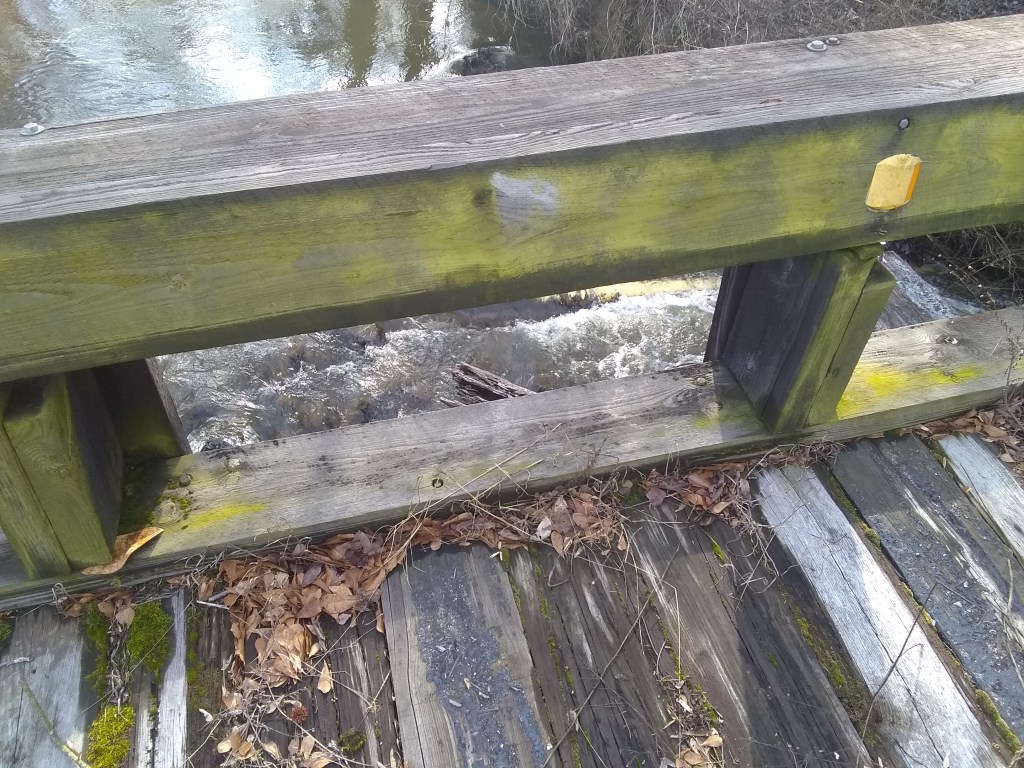
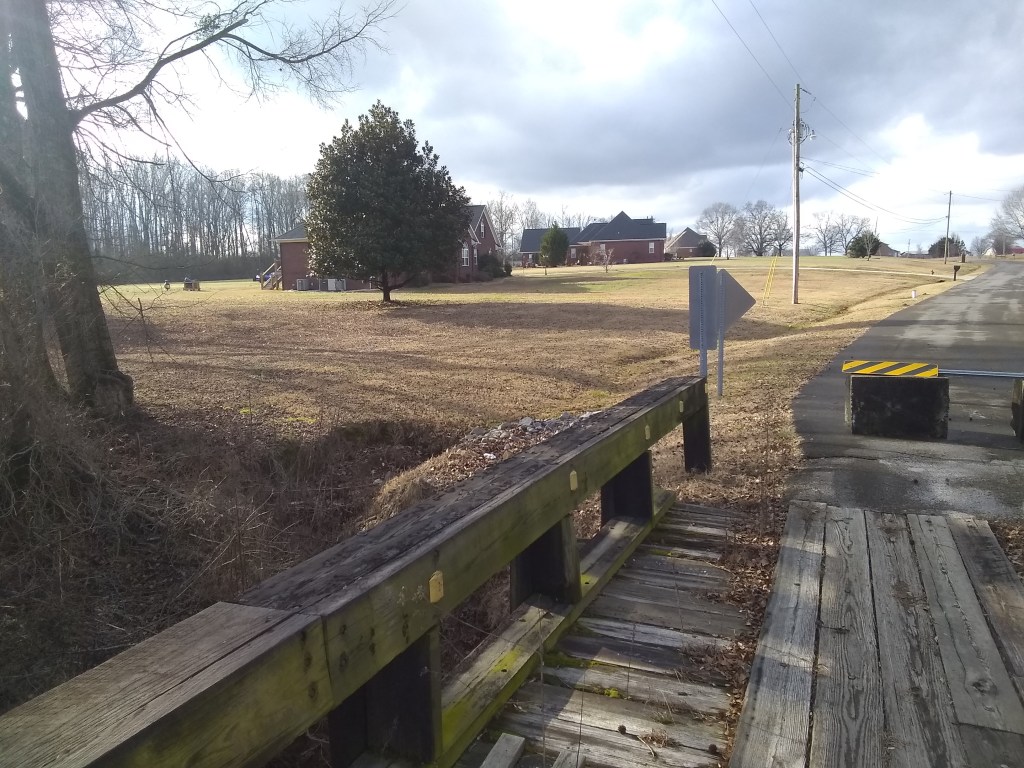
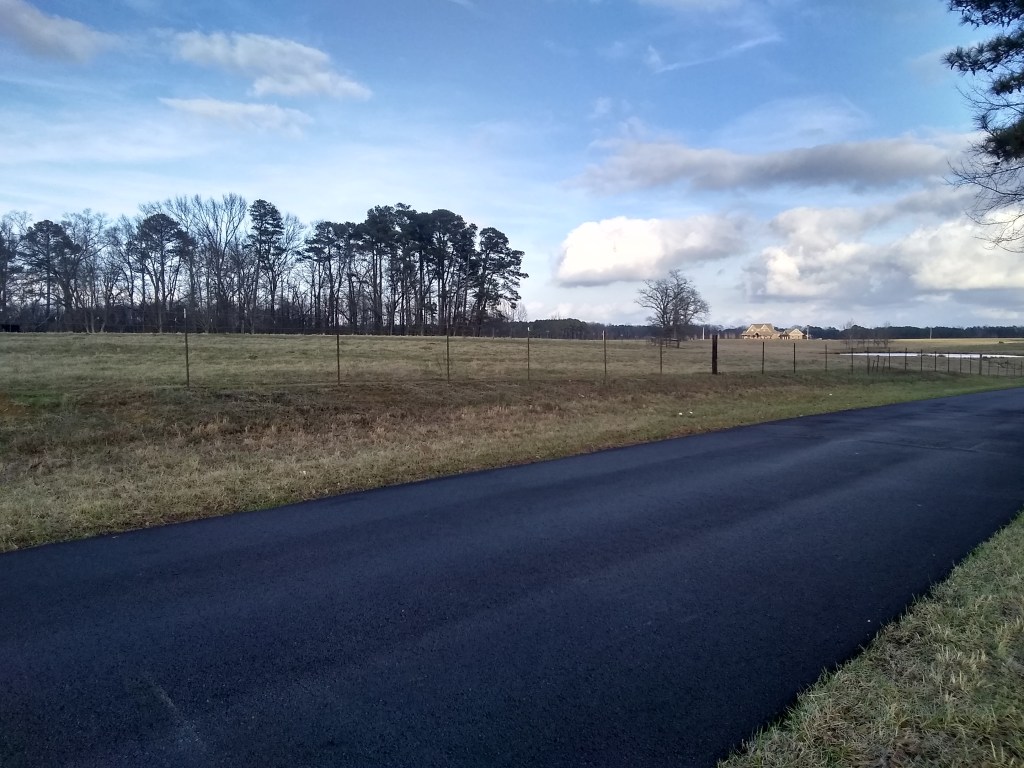
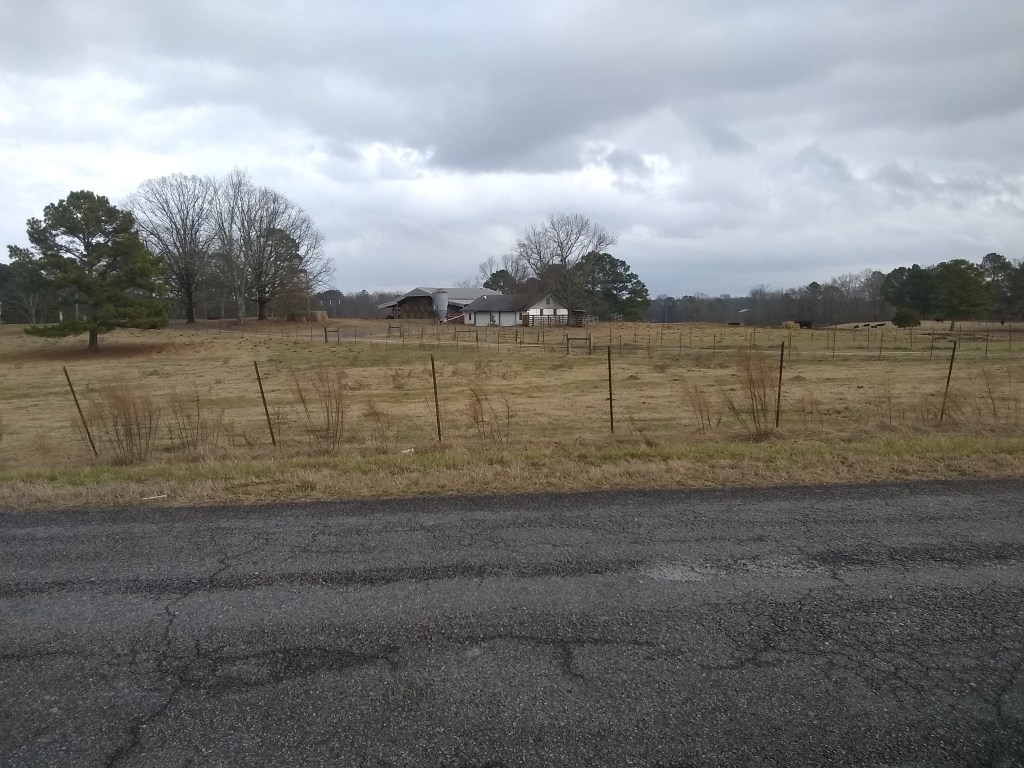
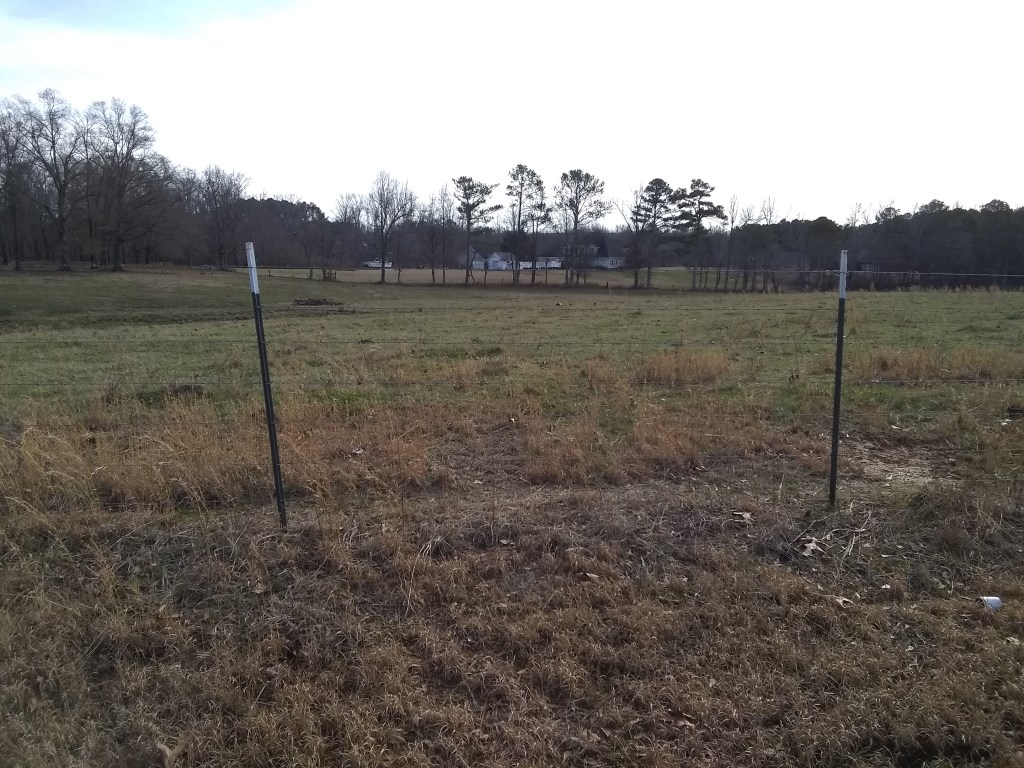
Here’s a few photos taken along my route:

Here’s what I’m currently listening to: The Fourth Deadly Sin, by Lawrence Sanders

Sanders was a tremendously talented writer.

Amazon abstract:

When a Manhattan psychiatrist is murdered, a retired detective returns to the job, in a thriller by the #1 New York Times–bestselling “master of suspense” (The Washington Post).

On a rainy November night, Dr. Simon Ellerbee stares out the window of his Upper East Side psychiatry office, miserably wishing he could seek counseling for the problems in his seemingly perfect life. He hears the door buzzer and goes to answer it, but flinches when he sees his unexpected guest. Minutes later, he’s dead, his skull crushed by repeated blows from a ball-peen hammer. Once the doctor was down, the killer turned over the body and smashed in Ellerbee’s eyes.  With no leads and a case getting colder by the hour, the New York Police Department calls in former chief Edward Delaney. His search for the truth raises more questions than answers: Who had Ellerbee let into his office? Why were there two sets of wet footprints on the carpeting of the doctor’s townhouse? What caused Ellerbee’s odd personality transformation over the past year? And who murdered, then symbolically mutilated, the prominent Manhattan psychiatrist?

A Sample Five Star Review

Errol Mortland

5.0 out of 5 stars The Best Bubble Gum Ever!

Reviewed in the United States on August 6, 2017

If you’re tired of streaming or cleaning for the moment and need to pass some time, you won’t go wrong with the four Deadly Sins series from Lawrence Sanders. I zip through all of them every other year, in sequence. They’re great reads, and I’ve always pictured George C. Scott as Edward X. Delaney (Frank Sinatra in the movie version of the First in pretty insipid, but apparently he owned the rights).

The Fourth is the murder is Dr Simon Ellerbee, you get the usual palette of suspects, and retired Chief of Detectives gets his crew and does his stuff. If Hemingway wrote crime suspense set in NYC, it’d be like this. I love short descriptive sentences. Not sure I recall seeing “ears like slabs of veal” in this one. If you love New York, Mr Sanders captures its essence like a great musical conductor. The “Sins” series is the best, followed by the “Commandments.” The Arch McNally stuff which followed that is okay, even though they kept the series going after Mr Sanders died in 1998. I just find that disrespectful. I only regret there wasn’t a Fifth Deadly Sin.

Life inside the Bible Bubble: If you’re saved, God is your Daddy

Watch this clip where the preacher makes claims about reality–that the Christian God is your Daddy (if you’ve been ‘saved’) and you can talk to him just like you do your earthly father.

https://screencast-o-matic.com/watch/c0eV2IVyKsc

After watching this clip, please think. Does sky-daddy treat you like your earth-daddy? The answer is an unequivocal no. Of course, this assumes your earthly father is a caring, loving father (most are, naturally, although admittedly, some are horrible bastards).

My point is, a normal earthly father will give his life for his son or daughter. He will do anything for his child. If he sees her about to walk out into a busy street, he will rush to stop her. If the father see’s his son about to drink poison from under the sink, he will come to the rescue. Why will the earthly father do these things? Because he loves his children.

One would think the Christian God, the one who is supposedly omniscient, omnipotent, and omni-benevolent would be at least as loving and kind as a normal earthly father.

But, is he? I think not.

Think about the real world vs. the imaginary world as you listen to “Sam Harris vs. Religion” in this YouTube video.

After pondering Sam’s shocking truths, ask yourself, where was God when young children recently froze to death in Afghanistan?

I encourage you to read: Dying Children and Frozen Flocks in Afghanistan’s Bitter Winter of Crisis. Here’s the link (note, you may have to sign-in, or set-up a free account, or subscribe).

How would you rate sky-daddy’s love for his children? Is your response, “these weren’t his children because they had never been ‘saved’?”

I thought God loves all children?

Luke 18:16-17 KJV

But Jesus called them unto him, and said, Suffer little children to come unto me, and forbid them not: for of such is the kingdom of God. Verily I say unto you, Whosoever shall not receive the kingdom of God as a little child shall in no wise enter therein.

And, what about the song, “Jesus Loves the Little Children of the World”?

Here’s the lyrics:

Jesus loves the little children
All the children of the world
Red and yellow, black and white
They are precious in His sight
Jesus loves the little children of the world

Jesus died for all the children
All the children of the world
Red and yellow, black and white
They are precious in His sight
Jesus died for all the children of the world

Jesus loves the little children
All the children of the world
Red and yellow, black and white
They are precious in His sight
Jesus loves the little children of the world

Jesus loves the little children of the world


Think back, did you catch it from Sam’s video? “Nine million children die every year before they reach the age of five.” Many, if not most of their parents, are praying to the Christian God as their child suffers and dies.

Could it be sky-daddy doesn’t love his ‘children’ like a normal earthy-father?

Or, could it be sky-daddy (aka, the Christian God) is simply imaginary?

I sincerely believe that if you will ‘read-to-death’ you will, sooner or later, come to realize the answer is the latter.

Writing Journal—Wednesday writing prompt

Your character wakes up to discover that the electricity is out and there are no cell or radio signals; all electronics have ceased to work. Upon venturing outside, she sees that everyone in her neighborhood has disappeared. Describe the moments leading up to her realization that something is terribly wrong. 

One Stop for Writers

Guidance & Tips

Write the scene of discovery (i.e., tell a story), or brainstorm and create a list of related ideas.

Here’s five story elements to consider:

  • Character
  • Setting
  • Plot
  • Conflict
  • Resolution

Never forget, writing is a process. The first draft is always a mess.

The first draft of anything is shit.

Ernest Hemingway

Train Crash in Greece Kills at Least 36

Here’s the link to this article.

A train with 350 passengers aboard collided with a freight train. Two of the carriages “basically don’t exist anymore,” a regional governor said.

  • Death Toll Climbs After Trains Collide in GreeceA train with about 350 passengers collided with a freight train near the city of Larissa in northern Greece.CreditCredit…Angelos Tzortzinis for The New York Times
Niki Kitsantonis

By Niki Kitsantonis

Reporting from Athens

March 1, 2023Updated 4:07 a.m. ET

3 MIN READ

At least 36 people were killed when a passenger train and a freight train collided in northern Greece, with an impact so intense that cranes were being used to remove wreckage in the search for survivors, a Greek fire service official said on Wednesday.

The cause of the crash, which happened just before midnight on Tuesday near the small town of Tempe, was not immediately clear. About 350 passengers were on the train as it traveled north from Athens to Thessaloniki, according to Hellenic Train, which operated the route.

TempeSite wheretrains collidedRoute of thepassenger trainheading towardThessalonikiTempeThessalonikiAthensGREECEALBANIALarissa

50 mi.

100 km.

© Mapbox © OpenStreetMap

By Pablo Robles

Eighty-five people were taken to hospitals with injuries, and 66 were admitted, the Greek fire service said in a statement. With the recovery operation still underway, there were fears that the death toll would rise.

Story continues below advertisement

Continue reading the main story

https://b62c38754cb55aac65ccd8964ee821cb.safeframe.googlesyndication.com/safeframe/1-0-40/html/container.html

“Windows were shattering and people were screaming,” a young man, who was not identified, told a television crew after surviving the crash. “There was panic in the carriage. A huge chunk of metal from the other train had come through one of the windows.”

It was the worst rail disaster in Greek history, according to reports in Greek media. The deadliest crash in recent memory came in 1968, when a collision involving two passenger trains near Corinth, about 40 miles west of Athens, left 34 people dead.

Several carriages derailed upon impact, and at least three caught fire. A spokeswoman for the Greek police, Constantina Dimoglidou, said the process of identifying the dead had begun at a hospital in the city of Larissa, about 20 miles south of Tempe, asking relatives of passengers to call a hotline for information.

Most of the victims were young, the Greek health minister, Thanos Plevris, told reporters outside the hospital. “It is a terrible process for parents and relatives,” he said.

Asked by reporters about the cause of the crash, Mr. Plevris said that it was not the right time to focus on the circumstances of the disaster.

Editors’ Picks

What You Should Know Before Choosing Kitchen CabinetsHow Nature Comes Alive in the WinterAn Unlikely Fiddler’s Dream

Continue reading the main story

https://b62c38754cb55aac65ccd8964ee821cb.safeframe.googlesyndication.com/safeframe/1-0-40/html/container.html

Story continues below advertisement

Continue reading the main story

“The priority now is to nurse the injured and support the families who have lost their loved ones. Everything else we will deal with afterward,” he said.

On Greek television, experts aired their concerns about rail safety in the country, claiming that there were problems that had not been addressed for decades, though it was not clear what led to the crash.

Destroyed carriages at the site of the train collision in northern Greece on Wednesday. The cause of the crash was not immediately clear.
Destroyed carriages at the site of the train collision in northern Greece on Wednesday. The cause of the crash was not immediately clear.Credit…Angelos Tzortzinis for The New York Times
Destroyed carriages at the site of the train collision in northern Greece on Wednesday. The cause of the crash was not immediately clear.

“Nothing works,” Kostas Genidounias, president of the association of Greek train drivers, told state television.

“Everything is done manually,” he said, adding that neither the signals nor the traffic control system worked. “If they had been working, the drivers would have seen the red light and the trains would have stopped 500 meters away from each other,” he added, noting that he and colleagues had frequently reported malfunctioning systems recently.

Story continues below advertisement

Continue reading the main story

https://b62c38754cb55aac65ccd8964ee821cb.safeframe.googlesyndication.com/safeframe/1-0-40/html/container.html

“We are constantly complaining about it,” he said.

Greece had already stood out in Europe for the lack of safety on its rail network. From 2018 to 2020, Greece had the highest railway fatality rate among 28 European countries per million train kilometers, according to a 2022 report by the European Union Agency for Railways. In 2019, the European Data Journalism Network, a group of media organizations, reported that from 2010 to 2018, 137 people died and 97 were seriously injured in railway accidents in Greece, with an average of more than 15 deaths and 11 serious injuries per year. The media network attributed the problems to unsafe level crossings, poor infrastructure and traffic management systems, and understaffed companies.

Vasileios Vathrakoyiannis, a spokesman for the fire service, said at a televised briefing that the rescue operation was “currently concentrated on the two first carriages of the passenger train, which have overturned.” He said four cranes were being used.

Television footage showed red cranes looming over the twisted, charred wreckage, as police and rescue workers in fluorescent jackets surveyed the scene.

“This is a terrible night,” Kostas Agorastos, governor of the Thessaly region, said on television. He said that two of the carriages “basically don’t exist anymore. Because of the strength of the impact they were thrown into the air.”

The army was assisting with the rescue operation, and the Greek minister for civil protection, Christos Stylianides, was coordinating the state’s response, while Prime Minister Kyriakos Mitsotakis was on his way to the scene.

Story continues below advertisement

Continue reading the main story

https://b62c38754cb55aac65ccd8964ee821cb.safeframe.googlesyndication.com/safeframe/1-0-40/html/container.html

Vassilis Polyzos, a local resident, told The Associated Press, “There were many big pieces of steel,” adding, “The trains were completely destroyed, both passenger and freight trains.”

Mr. Polyzos said that he had seen people who appeared to be dazed and disoriented trying to flee from the trains as he arrived on the scene.

“People, naturally, were scared — very scared,” he said. “They were looking around, searching; they didn’t know where they were.”

Niki Kitsantonis is a freelance correspondent for The Times based in Athens. She has been writing about Greece for 20 years, including more than a decade of coverage for The Times. @NikiKitsantonis