Write to Life blog

03/15/23 Biking & Listening

Biking is something else I both love and hate. It takes a lot of effort but does provide good exercise and most days over an hour to listen to a good book or podcast. I especially like having ridden.

Here’s my bike, a Rockhopper by Specialized. I purchased it November 2021 from Venture Out in Guntersville; Mike is top notch! So is the bike, and the ‘old’ man seat I salvaged from an old Walmart bike.

Here’s a link to today’s bike ride. This is my pistol ride.

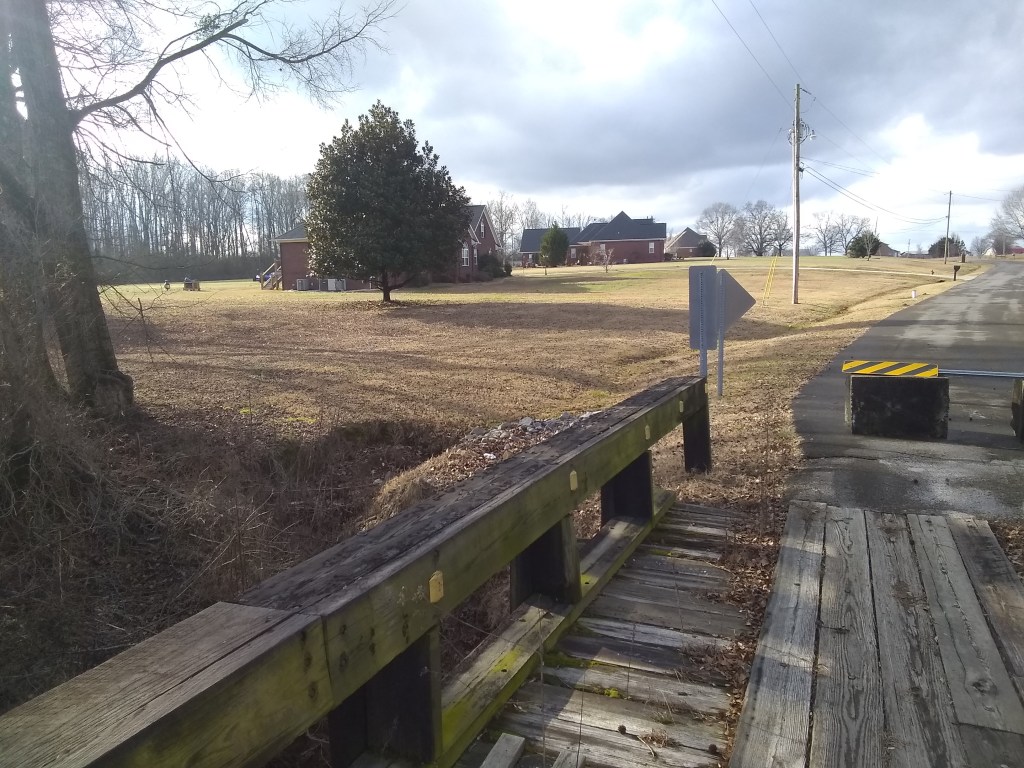
Here’s a few photos taken along my route:

Here’s what I’m currently listening to: McNally’s Secret, by Lawrence Sanders

He was a tremendously talented writer.

Amazon abstract:

First in the series starring the sleuthing Palm Beach playboy from the #1 New York Times–bestselling and Edgar Award–winning author.
 Inveterate playboy Archy McNally gets paid to make discreet inquiries for Palm Beach’s power elite. But keeping their dirty little secrets buried will take some fancy footwork in McNally’s latest case. A block of priceless 1918 US airmail stamps has gone missing from a high-society matron’s wall safe. Lady Cynthia Horowitz, now on her sixth husband, is a nasty piece of work who lives in a mansion that looks like Gone With the Wind’s Tara transplanted to southern Florida. McNally’s search takes him into a thickening maze of sex, lies, scandal, and blackmail. When passion erupts into murder and McNally must dig even deeper to uncover the truth, he unearths a shocking secret that could expose his own family’s skeletons.  

Top reviews from the United States

Linda G. Shelnutt

5.0 out of 5 stars Cure Cultural Volcanics with Bubbling Champagne. Design Life To Suit Taste & Times.

Reviewed in the United States on May 21, 2006

Verified Purchase

This book didn’t merely capture my reading interest. It became a book of my heart…

In McNally’s SECRET, the pilot to this series, we’re informed that the pater McNally is not an “old-money” man. Okay. I get that and I like it. (That’s not the secret.)

Having reviewed 4 of the original 7 McNally books by Lawrence Sanders, I had accepted the face value (not realizing the facade) of the Palm Beach mansion and the genteel lifestyle of pater Prescott McNally, Yale graduate, leather-bound-Dickens-reading, attorney-at-law. Upon reading (in McNally’s Secret) the illuminating passages of Archy’s grandparent’s ways into money, I began to wonder what other Secrets this novel might expose.

Usually, if possible, I prefer to read a series in order, pilot first. I can’t explain why, but, in this case I’m glad I read 4 of the original 7 McNally’s prior to reading SECRET (though I believe this series can be satisfyingly read in any order).

The opening of this novel was classic, and felt to be the initiation of what Sanders was born and itching to write, beyond the sagas of his other fine works. The introductory remarks were exquisite in mapping the reasons for, “Can’t you ever be serious, Archy?” I’d love to quote that paragraph, but maybe I should allow you to read it with the book in hand. I will quote a few other passages, however, which might serve as appropriate appetizers to this banquet of a book.

Comparing himself to S. Holmes, Archy says:

“I can’t glance at a man and immediately know he’s left-handed, constipated, has a red-headed wife, and slices lox for a living. I do investigations a fact at a time. Eventually they add up – I hope. I’m very big on hope.”

Archy’s description of the start up of the Pelican Club were the best type of soul food. This is how and why such a club should be started (then survive through a near hit of Chapter 7). Of course you really should read the book to get the whole of that brief history, but here’s a prime paring:

“We were facing Chapter 7 when we had the great good fortune to hire the Pettibones, an African-American family who had been living in one of the gamier neighborhoods of West Palm Beach and wanted out.”

They “wanted out” and they deserved a chance where their skills could and would save not only themselves, but those who hired them. Isn’t that the type of win/win the world needs now?

I almost sobbed at the below passage, I felt such a deep surge of “right on” (definitely did a breath-catch hiccup and heart moan):

“… we formed a six-piece jazz combo (I played tenor kazoo), and we were delighted to perform, without fee, at public functions and nursing homes. A Palm Beach critic wrote of one of our recitals, `Words fail me.’ You couldn’t ask for a better review than that.”

Yep. This is a book of my heart. Words don’t often fail me in reviews; too much the contrary. But I’m getting better at refraining from using my critic hat with a steel-studded-bat accessory, which is what Archy was getting at.

Some might wonder why a person in my position, with my un-hidden agendas, would take so much time to write raves on a series by a deceased author. Mostly, I love Archy. But, possibly the live spirits of the dead are sometimes more able to be helpful than dead souls of the living? Keeping my tongue in cheek, I might add that freed spirits probably have better connections for helping an author into the right publishing contacts for a character series with ironic assonance with this one.

Moving quickly onward and upward, though not with wings attached yet…

In contrast to the other 4 I’ve read, I noticed that this Archy is less bubbly-buffoonish (though the buffoon is always endearing) and slightly more serious, sensitive, and quietly contemplative. I like both versions of Archy, though I prefer the slight edge of peaceful acquiescence in the pilot, and I can’t help but wonder, as I do with all series, how much reader feedback, and editor/agents’ interpretation of it, directed the progression of balance of certain appealing or potentially irritating qualities. I wonder how each series would have progressed if the feedback had been balanced and pure (as a species, we’re not there yet, but forward motion is perceptible), rather than inevitably polluted by the “life happens” part of the sometimes perverted, capricious tastes of us squeaky wheels, and the healthy ego needs of professionals in positions of swallow and sway.

I’m still trying to understand why honesty is the most appealing human quality to me, yet honest criticism does not speak to my heart, nor to my soul, not even to my head. Often, though, it does speak in perfect pitch to my funny bone. And, of course true Honesty (with the capital “H”) leaps beyond speaking the “truth” as one happens to “see” it on a good or bad day. Cultural honesty, of the type dramatized by Stephen King, Lawrence Sanders, Tamar Myers, Barbara Workinger, Joanne Pence, Sue Grafton, (and others) is what most often pushes me to stand up and cheer.

Somewhere.

One of the best spots I’ve found is on the edge of the clear cliff of ozone found in Amazon’s sacred forum of Customer Reviewers.

Of course the first lines in SECRET, the sipping of champagne from a belly button would snag the attention of even the most sexually skittish reader of the nose-raised, neck-cricked, personality persuasion. But, truly and honestly, what sunk me with every hook were the few lines exposing why Archy could never be serious. I know I said I wouldn’t, but I have to quote this passage, beginning on page 1 chapter 1. For me, it’s one of the main selling points of the series:

“I had lived through dire warnings of nuclear catastrophe, global warming, ozone depletion, universal extinction via cholesterol, and the invasion of killer bees. After a while my juices stopped their panicky surge and I realized I was bored with all these screeched predictions of Armageddon due next Tuesday. It hadn’t happened yet, had it? The old world tottered along, and I was content to totter along with it.”

I’d bet my fortune (which is based on a skill of “make do”; there are no bananas in it) that the above passage is what captured a collection of readers so absolutely in a “right on” agreement that this series spanned the grave of the author and is still spewing pages and stretching shelves. And, of course, this attitude of “if you can’t lick `em; flick `em” which Archy aimed toward “kvetch-ers” as he terms them, continues from the above, with relish accumulating, throughout the book.

Archy is a rare sane person swimming along nicely within the insanity of a last-gasp-culture (which is “drowning in The Be Careful Sea” as I described and termed that syndrome in one of my sci fi manuscripts titled MORNING COMES).

To Jennifer, of the champagne sea in her belly button, Archy answered why he wasn’t an attorney:

“Because I was expelled from Yale Law for not being serious enough. During a concert by the New York Philharmonic I streaked across the stage, naked except for a Richard M. Nixon mask.”

That answer brought to mind the bright side of Howard Roark (from Ayn Rand’s FOUNTAINHEAD, see my review posted 10/14/05) who was arrogantly unconcerned about his and the Dean’s reasons for Roark’s being expelled from architectural school. You’d be right to wonder where I got that comparison, since Roark could never be accused of being anything but serious. Syncopated irony? Assonance?

You be the judge. Get the SECRET of the McNally collection.

As I relished the final chapters and pages of SECRET, I had a thought about the beauty, warmth, lovely literary melancholy, and subtly complex richness radiating from those concluding textual treasures:

In retrospect, this novel doesn’t feel like a planned pilot to a mystery series. It feels to be a singular novel, like but not like, the ones Sanders had written prior to it. What it feels like to me is that Lawrence hit upon a “soul speak” story which couldn’t halt the cultural conversation it had initiated, however serendipitous that initiation may have been.

Yes, I do recall that in some of my other reviews (“reveries” according to my Amazon Friend, L.E. Cantrell) I speculated on something which could seem contradictory to the above mentioned “thought.” I had wondered if Parker’s Senser series might have been somehow a spark for this McNally series. I continued to see references to Boston in this book (as in other McNally’s I’ve reviewed), which, of course, is the city for which Spenser did the Walkabout. So possibly SECRET was somewhat an antithetical homage to Spenser, possibly even a hat “doff” with a friendly, competitive “one-better” attempt, meant only to be a single novel rather than a never-die series.

Based on Agatha Christie’s official web site, Miss Marple was not originally intended to be another Poirot, and look what happened there (see my Listmania of the Miss Marple series).

To me, Archy appears to be a gatekeeper for pure and primal, hidden wishes and dreams. Living home comfortably, guiltlessly at 37, on the top floor of his parent’s mansion in Palm Beach; eating drool-food from a house chef; having established a club like The Pelican as a side atmosphere to partake in daily; working at a cushy, just challenging enough, engaging career for discreet inquiries … If an author’s (or reader’s) going to retire that would be da place (or at least an entertaining option).

It’ll be interesting to see if/how I’m able to bridge the gap from Lawrence Sanders’s Archy to Vincent Lardo’s. I’d love to know how that bridge was built and continues to be maintained.

Though a perfectly acceptable, gorgeous reprint in a mass market paperback was (probably still is) available on Amazon’s Super Saver Special, I felt lucky to find a vender on Amazon (a-bookworm2) holding a used G. P. Putnam’s Sons hardcover of this novel, a first printing of the 1992 copyright. What an honor it will be to have this version of the pilot of such an auspicious series from such a life-perceptive author, Lawrence Sanders. The glossy-black jacket provides a luscious background for the name and title printed in thick, gleaming, copper ink, with the artwork of an antique magnifying glass and fancy-brass scissors weighing down the million-dollar-valued, 1918 US Stamp of the Inverted Jenny.

This pilot is a rare find in a rare series.

Linda G. Shelnutt

Christian lawmaker cites Bible to defend hitting special needs students

Here’s the link to this article by Hemant Mehta.

State Rep. Jim Olsen helped defeat a bill that would’ve banned the use of corporal punishment against students with special needs

This Substack newsletter is free, but it’s only able to sustain itself due to the support I receive from a small percentage of regular readers. Would you please consider becoming one of those supporters? You can use the button below to subscribe to Substack or use my usual Patreon page!


Republicans in Oklahoma had the chance to ban corporal punishment against students with disabilities… but failed to pass the bill today, in part because one legislator said beating kids with special needs was biblical.

Oklahoma currently permits corporal punishment in public schools. That’s a problem in and of itself, but the law at least has a carve-out exempting students with “the most significant cognitive disabilities.” Teachers can theoretically spank kids but a handful of students are off-limits.

House Bill 1028, sponsored by Republican State Rep. John Talley, was designed to broaden that exemption so that it applied to all students with disabilities. GOP State Rep. Anthony Moore signed on as a co-sponsor of the bill specifically because he thought this would be an easy vote. “There’s going to be nobody who’s for corporal punishment on students with disabilities,” he said.

He must have forgotten that he’s surrounded by other Republicans from Oklahoma.

They will always find a way to defend abuse in the name of Jesus.

State Rep. Jim Olsen argued earlier today that the Bible permits hitting a child as a form of discipline—therefore that option must be available to teachers.

Rep. Jim Olsen, seen here after comparing abortion to slavery (screenshot via YouTube)

The Recount @therecount

Oklahoma lawmakers have rejected a bill that would have banned corporal punishment for kids with disabilities in schools. Rep. Jim Olsen (R) cites Proverbs in rejecting the ban: “The rod and reproof give wisdom. But a child left to himself bringeth his mother to shame.”

You know, several scriptures could be read here. Let me just read just one: Proverbs 29: “The rod and reproof give wisdom, but a child left to himself bringest his mother to shame.”

So that would seem to endorse the use of corporal punishment.

So how would you reconcile this bill with scriptures…?

Who cares. It’s the Bible and he’s a legislator. We don’t need to run policy ideas through his favorite book.

Olsen later cited Proverbs 13:24, the infamous verse that gave us, “Spare the rod, spoil the child.” Kudos to the Tulsa World for including this line in its article:

Olsen did not turn to Deuteronomy 21:18-21, which is usually translated as God ordering that “stubborn and rebellious” sons be stoned to death.

And what about the American Academy of Pediatrics, which supports banning any form of physical discipline against children because there’s plenty of evidence showing the harm it causes in the long term?

Olsen didn’t care.

“God’s counsel is higher than the American Academy of Pediatrics,” said Olsen. “God’s word is higher than all the so-called experts.”

To paraphrase a famous line, Olsen acts like he placed his hand on the Constitution and swore to uphold the Bible. It’s supposed to be the other way around.

But the Bible wasn’t the only way a Republican defended hitting kids with disabilities. Another one said teachers needed the threat of discipline in order to coerce kids to do their bidding.

Rep. Randy Randleman, R-Eufaula, made a different argument from Olsen’s against HB 1028. A child psychologist who often infuses religion into his medical opinions on the House floor, Randleman this time said spanking is almost always inappropriate but is sometimes called for. And he said teachers need the threat of corporal punishment to maintain classroom order.

“‘You can’t touch me.’ I hear that over and over. I don’t want to hear that in school,” said Randleman.

If your classroom is so chaotic that physical discipline is your only solution, you shouldn’t be a teacher. And if you’re someone who thinks threatening children—special needs children!—with abuse is the only way to maintain order, you shouldn’t be anywhere in a position of power. Yet here we are.

Today’s vote in the House was 45-43 in favor of exempting kids with disabilities from physical punishment in schools. That sounds like good news… but because there are 101 members of the State House, 51 votes are needed for a bill to pass. That’s why the bill was technically defeated. More than a dozen legislators were absent for the vote.

Because neither side had the majority, the bill may come up for a vote later in the legislative session. 10 Republicans have yet to cast a vote on this matter. At least a few of them would have to do the right thing for the bill to pass.

Democratic State Rep. Forrest Bennett put today’s vote bluntly:

Forrest Bennett @ForrestBennett

Good morning from the Oklahoma House Chamber, where a pastor and a psychiatrist (who are also legislators) are fighting *AGAINST* a bill that would ban corporal punishment for students with special needs. It’s 2023 outside; it’s 1880 in here.2:45 PM ∙ Mar 14, 2023872Likes211Retweets

“It’s 1880 in here” should really be Oklahoma’s State Motto.

Incidentally, hitting kids has long been a core belief among fundamentalist Christians. Years ago, Michael and Debi Pearl wrote an infamous guide to faith-based abuse called To Train Up a Child. It’s a book that tells adults how to properly hit their kids, and it’s as awful as it sounds, recommending that Christian parents physically discipline kids as young as six months with “the same principles the Amish use to train their stubborn mules.”

In Oklahoma, this isn’t just theoretical. Corporal punishment is legal in the state and school officials take advantage of that:

Oklahoma educators reported using physical discipline 3,968 times during the 2017-18 school year, according to the most recent federal data available from the Office of Civil Rights of the U.S. Department of Education. The federal government reported that corporal punishment was administered at more than 1,800 Oklahoma schools.

Ultimately, the Sunday School teacher who routinely cites the Bible to defend horrible policies used his power to defeat a bill so that more vulnerable students could be hurt just a little more. He’s the sort of guy who wants to protect kids from learning about systemic racism while making sure teachers have the option to beat students with disabilities.

All because his Christian faith taught him that abuse is more important than compassion.
Does God Punish Those Who Do *Right*?

Here’s the link to this article by Bart Ehrman.

March 15, 2023

In my last post I began discussing the dialogues at the heart of the book of Job, where Job’s friends declare that hs is simply getting what he deserves because he is so sinful, and he defending himself by saying he has done nothing to deserve this.  It turns out he’s right.  But why then is he suffering.  Here is how the dialogue continues, as the “friends” intensify their attacks on his morals and Job stands firm in declaring his righteousness.

******************************

Sometimes the friends bar no holds in accusing Job, wrongly, of great sin before God, as when Eliphaz later declares:

Is it for your piety that he reproves you,

and enters into judgment with you?

Is not your wickedness great?

There is no end to your iniquities.

For you have … stripped the naked of their clothing.

You have given no water to the weary to drink,

and you have withheld bread from the hungry…

You have sent widows away empty handed,

and the arms of the orphans you have crushed.

Therefore snares are around you,

and sudden terror overwhelms you.  (22:4-7, 9-10)

That word “therefore” in the final couplet is especially important.  It is because of Job’s impious life and unjust treatment of others that he is suffering, and for no other reason.

For Job, it is this charge itself that is unjust.  He has done nothing to deserve his fate, and to maintain his personal integrity he has to insist on his own innocence.  To do otherwise would  be to lie to himself, the world, and to God.  He cannot repent of sins he has never committed and pretend that his suffering is deserved, when in fact he has done nothing wrong.  As he repeatedly tells his friends, he knows full well what sin looks like – or rather, tastes like — and he would know if he had done anything to stray from the paths of godliness:

Teach me and I will be silent;

make me understand how I have gone wrong.

How forceful are honest words!

But your reproof, what does it reprove?…

But now be pleased to look at me;

for I will not lie to your face.

Is there any wrong on my tongue?

Cannot my taste discern calamity? (6:24-25, 28, 30)

In graphic and powerful images Job insists that despite his innocence, God has lashed out at him and attacked him and ripped into his body like a savage warrior on the attack:

I was at ease, and he broke me in two;

he seized me by the neck and dashed me to pieces;

he set me up as his target;

his archers surround me.

He slashes open my kidneys, and shows no mercy;

he pours out my gall on the ground.

He bursts upon me again and again;

he rushes at me like a warrior….

My face is red with weeping,

and deep darkness is on my eyelids,

though there is no violence in my hands,

and my prayer is pure. (16:12-14, 16-17)

With violence he seizes my garment;

he grasps me by the collar of my tunic.

He has cast me into the mire,

and I have become like dust and ashes.

I cry to you and you do not answer me;

I stand, and you merely look at me.

You have turned cruel to me;

with the might of your hand you persecute me. (30:18-21)

Job constantly feels God’s terrifying presence, which he cannot escape even through sleep at night.  He pleads with God to relieve his torment, to leave him in peace just long enough to allow him to swallow:

When I say, “My bed will comfort me,

my couch will ease my complaint,”

then you scare me with dreams

and terrify me with visions,

so that I would choose strangling

and death rather than this body.

I loathe my life; I would not live forever.

Let me alone, for my days are a breath….

Will you not look away from me for a while,

Let me alone until I swallow my spittle? (7:13-16, 19)

In contrast, however, those who are wicked prosper, with nothing to fear from God:

Why do the wicked live on,

reach old age, and grow mighty in power?

Their children are established in their presence,

and their offspring before their eyes.

Their houses are safe from fear,

and no rod of God is upon them…

They sing to the tambourine and the lyre,

and rejoice to the sound of the pipe.

They spend their days in prosperity,

and in peace they go down to Sheol. (21:7-9, 12-13)

This kind of injustice might be considered fair, if there were some kind of afterlife in which the innocent were finally rewarded and the wicked punished, but for Job (as for most of the Hebrew Bible) there is no justice after death either:

As waters fail from a lake,

and a river wastes away and dries up,

so mortals lie down and do not rise again;

until the heavens are no more, they will not awake

or be roused out of their sleep. (14:11-12)

Job realizes that if he tried to present his case before the Almighty, he would not have a chance: God is simply too powerful.  But that doesn’t change the situation: Job is in fact innocent, and he knows it:

God will not turn back his anger…

How then can I answer him,

choosing my words with him?

Though I am innocent, I cannot answer him;

I must appeal for mercy to my accuser.

If I summoned him and he answered me,

I do not believe that he would listen to my voice.

For he crushes me with a tempest,

and multiplies my wounds without cause…

If it is a contest of strength, he is the strong one!

If it is a matter of justice, who can summon him?

Though I am innocent, my own mouth would condemn me;

though I am blameless, he would prove me perverse. (9:13-20)

In this, Job is prescient.  For at the end of the poetic dialogues God does appear before Job – who is innocent and blameless – and cows him into submission by his fearful presence as the Almighty Creator of all.  Still, though, Job insists on presenting his case before God, insisting on his own righteousness and his right to declare his innocence: “[M]y lips will not speak falsehood; … until I die I will not put away my integrity from me” (27:3-4).  He is sure that God must agree, if only he could find him to present his case:

Oh that I knew where I might find him,

that I might come even to his dwelling!

I would lay my case before him,

and fill my mouth with arguments.

I would learn what he would answer me,

and understand what he would say to me.

Would he contend with me in the greatness of his power?

No; but he would give heed to me.

There an upright person could reason with him,

and I should be acquitted forever by my judge. (23:3-7)

Would that it were so.  But unfortunately, Job’s earlier claims turn out instead to be true.  God doesn’t listen to the pleas of the innocent; he overpowers them by his almighty presence.  Still, at the end of the dialogues Job throws down the gauntlet and demands a divine audience:

O that I had one to hear me!

(Here is my signature! Let the Almighty answer me!)

O that I had the indictment written by my adversary!

Surely I would carry it on my shoulder;

I would bind it on me like a crown;

I would give him an account of all my steps;

like a prince I would approach him.” (31:35-37)

This final demand receives a divine response.  But not before another “friend” appears to state still more forcefully the “prophetic” case against Job, that he is being punished for his sins.  Elihu son of Barachel appears out of nowhere and enters into the discussion, delivering a speech that separates Job’s demand for a divine audience and the appearance of God himself on the scene.  In this speech Elihu rebukes Job in harsh terms and exalts God’s goodness in punishing the wicked and rewarding the righteous.

My next and final post on Job will discuss the denouement of these back-and-forths, one of the most stunning passages of the entire Bible.

Commentary on D. James Kennedy’s book Why I Believe–Chapter 5-6

Here’s the link to this article.

(Non Sequitur)

After that long analysis of the chapter on creationism, I need a rest! Fortunately, the next two chapters in Why I Believe can be reviewed relatively quickly.

The chapter on Heaven begins by first trying to establish the immortality of the human soul. Let me say that I personally do not reject the idea of a human soul. In science, absence of evidence can be, in many cases, evidence of absence. However, the existence of souls is a question not addressed by science. Therefore I have found no convincing reason to deny the existence of my soul. Indeed, I acknowledge evidence for it. I realize that such evidence is not observable by experiment. Neither is it repeatable in the scientific sense, but the observation of such evidence is certainly repeated, consistently and many times over, by independent observers, a fact which I cannot dismiss.

However, I think Kennedy’s fails to justify his reasons for believing in an immortal soul, and he fails to support his opinion about what happens after death. He presents rationales for the idea of an immortal soul based on science, nature, and the universal longing of mankind for eternity. I’ll go over these points briefly.

First, the thermodynamics argument Kennedy presents is a non sequitur, meaning that the conclusion he draws is not logically connected with his premise. The First Law of Thermodynamics, which says energy and matter can be transformed from one to the other, but not created nor destroyed, says nothing about the human spirit. That law is still just as valid if humans had no soul. Then, consciousness would simply be the manifestation of all electrical and chemical processes in the body operating harmoniously, which ceases when the physical body dies (and the body’s matter then gets converted to energy as it is consumed).

Second, in his analogy from nature, where Kennedy quotes William Jennings Bryan, he gives us another non sequitur. The facts that “cold and pulseless” seeds grow into living plants, or that rosebushes whither in autumn and then recover in spring, say nothing about death. Those facts relate to reproduction and metabolic changes in living physical organisms, not dying.

Third, in considering a universal longing for eternity as evidence for the existence of an immortal soul Kennedy presents still another non sequitur. One could as easily argue that a universal longing for eternity, combined with a subconscious fear that no soul exists, is the reason all creatures embody the desire to reproduce and thus continue their existence the only way possible.

Despite his use of more appeals to questionable authority, reference to Scripture (for which he has so far not established a record of reliability), irrelevant poetry quotations, and the idea that what the majority believes must be true, Kennedy does point out that some elegant philosophical arguments have been put forward throughout human history for the existence of an eternal soul. Having “established” human immortality, he then writes about dying. This is where he really stumbles.

In particular, Kennedy cites the excellent and fascinating book Life After Life, by Raymond A. Moody, Jr. (Kennedy refers to him as “Dr.” although Moody wrote his book before getting his doctoral degree – which indicates another attempt on Kennedy’s part to appear more authoritative). The book is a collection of accounts of people who had been pronounced dead but returned to consciousness. To provide evidence of Heaven’s existence, Kennedy, adhering to his practice in other chapters, takes great care to select only those pieces of evidence which conform to his preconceptions while ignoring everything else. Look at what Moody wrote at the end of the book in his “Questions” chapter:

Through all of my research, however, I have not heard a single reference to a heaven or a hell or anything like the customary picture to which we are exposed in this society. Indeed, many persons have stressed how unlike their experiences were to what they had been led to expect in the course of their religious training. One woman who “died” reported: “I had always heard that when you die, you see both heaven and hell, but I didn’t see either one.” Another lady who had an out-of-body experience after severe injuries said, “The strange thing was that I had always been taught in my religious upbringing that the minute you died you would be right at these beautiful gates, pearly gates. But there I was hovering around my own physical body, and that was it! I was just baffled.” Furthermore, in quite a few instances reports have come from persons who had no religious beliefs or training at all prior to their experiences, and their descriptions do not seem to differ in content from people who had quite strong religious beliefs.[1]

Moody also does not rule out psychological or neurological explanations for the accounts he recorded. For example, the physical and chemical effects of blood loss to neurons in the brain are the same from one brain to the next, so it is not unreasonable to expect people to experience similar hallucinations from such a trauma.

Dr. Kennedy, however, doggedly interprets all life-after-death accounts to support his belief not only in the soul, but in the existence of Heaven and Hell. He imagines that the only alternative is the cessation of existence, which he regards as unthinkable. He doesn’t offer any reason whatsoever why we shouldn’t believe, for instance, in reincarnation as a possibility for the soul’s future. Moody wrote:

Not one of the cases I have looked into is in any way indicative to me that reincarnation occurs. However, it is important to bear in mind that not one of them rules out reincarnation, either. If reincarnation does occur, it seems likely that an interlude in some other realm would occur between the time of separation from the old body and the entry into the new one. Accordingly, the technique of interviewing people who come back from close calls with death would not be the proper mode for studying reincarnation, anyway.[2]

Keep in mind that personal death experiences show no evidence Heaven, Hell, or reincarnation. However, outside of these experiences, one finds substantially more evidence supporting the idea of reincarnation than for the concepts of Heaven and Hell, even if one ignores the deep personal revelations experienced by individuals like Carlos Castañeda and Shirley MacLaine. The Tibetan Book of the Dead not only recounts with remarkable accuracy the stages of near-death encounters (in agreement with Moody’s observations), but it also says that reincarnation does occur. Naturally, Kennedy neglects to mention anything about it. He suggests that the idea of an immortal soul is valid because so many people believe it (the argumentum ad numerum fallacy) -then, by his own flawed logic, the concept of reincarnation has validity also.

In the experimental technique of hypnotic regression, a subject under hypnosis is made to go back to successively earlier times in life. When told to go back beyond the earliest present-life experiences, many subjects tell stories about previous lives in earlier times and different places. Some of these stories can be checked, and have turned out to be amazingly accurate, even when it is definitely established that the subject could not have known about the events, people, and places described so accurately. Many impressive and well-documented cases of hypnotic regression exist (see, for example, Twenty Cases Suggestive of Reincarnation by Ian Stevenson, MD).

Another body of evidence for reincarnation comes from documented accounts of young children who, when they learn to talk, report knowledge of relationships to other families in distant places, with uncanny accuracy. I remember one case where a young girl described her memories as an elderly man in a tiny rural English community. She was able to describe the man’s relatives and friends (many of whom still lived), and details of the town. She eventually had a reunion with her “previous” friends and family, who welcomed her as the spirit of the man they knew. Reincarnation, as one explanation, appears more reasonable than Christian interpretations of such cases, because it requires only that the soul exist without having to introduce other entities like God and the Devil. Occam’s Razor! Of course, one might also argue that not requiring the existence of a soul results in the simplest explanations.

Still more evidence for reincarnation, although more indirect, comes from accounts of the deceased communicating with loved ones, a phenomenon known as After Death Communication, or ADC. This is direct and spontaneous communication that does not include a third party like a psychic or a medium. ADC experiences are fairly common, discussed freely in many other parts of the world; anthropologists run across them often.[3]

I recall one case where a Christian mother lost her teenage son in a drunk-driving accident in which he was a passenger. For a while afterward, she could hold conversations with him, and he told her things about his other friend in the accident which she did not know but which were later confirmed, as well as where in the wrecked car to find his class ring, which the police could not find. He reported that neither he nor anyone else he met in his realm knew anything about a “god” as described by many religions, and told her he was deciding where to go for his next life, saying that even other planets were possible options.

Kennedy refers to probably the best-known author on this subject, Elizabeth Kübler-Ross, MD, who spent much of her career helping the dying. She now lives in the desert of Arizona, where she moved after surviving a religious-motivated attack on her house in Virginia following statements she made about life-after-death experiences. Now isn’t it ironic that churches also teach the doctrine of life after death? Why do so many fundamentalists become irate about ADCs? The reason is that they believe the devil speaks through all people who have those experiences. These misguided Christians believe anything not Christianity is evil. But why then do people become better people (many of whom are Christian) after ADC experiences? Perhaps some Christians should re-think their worldview.

Regarding Hell as Christians define it, I notice that the concept is often used as a threat against non-Christians. This tactic is nothing more than a variant of Pascal’s wager, which was refuted several different ways near the end of my commentary on chapter 3. Besides, I find that the threat has scant Biblical backing. Hell, in the medieval sense of fire and brimstone, is described primarily in the dream of Revelations. The literal concept of it probably got started in the Middle Ages when the Church wanted to keep the population under their control, toeing their line. Paul mentions God using flaming fire to take vengeance on unbelievers, although we don’t know where he got this concept (from the author of Revelations, perhaps?). In any case, it’s hard to take Revelations seriously when it claims the events described will “shortly come to pass” (1:1). The events in the dream have not come to pass, least of all “shortly,” even after nearly 2,000 years.

The main point here is, regardless of what you believe, there is much corroborating evidence for alternatives to the Heaven/Hell dichotomy. Heaven and Hell, in the original sense, may be interpreted simply as allegories for what one might experience in future lives. Or, of course, we might simply just cease to exist when we die. The issue is not settled, in my opinion. Soon enough I will know anyway, so I don’t fret about it.[4]

Writing Journal—Wednesday writing prompt

Your character is heading back into the harbor after a day of fishing and comes across a rowboat set adrift. What does he find inside? 

One Stop for Writers

Here’s five story elements to consider:

  • Character
  • Setting
  • Plot
  • Conflict
  • Resolution

Never forget, writing is a process. The first draft is always a mess.

The first draft of anything is shit.

Ernest Hemingway

03/14/23 Biking & Listening

Biking is something else I both love and hate. It takes a lot of effort but does provide good exercise and most days over an hour to listen to a good book or podcast. I especially like having ridden.

Here’s my bike, a Rockhopper by Specialized. I purchased it November 2021 from Venture Out in Guntersville; Mike is top notch! So is the bike, and the ‘old’ man seat I salvaged from an old Walmart bike.

Here’s a link to today’s bike ride. This is my pistol ride.

Here’s a few photos taken along my route:

Here’s what I’m currently listening to: McNally’s Secret, by Lawrence Sanders

He was a tremendously talented writer.

Amazon abstract:

First in the series starring the sleuthing Palm Beach playboy from the #1 New York Times–bestselling and Edgar Award–winning author.
 Inveterate playboy Archy McNally gets paid to make discreet inquiries for Palm Beach’s power elite. But keeping their dirty little secrets buried will take some fancy footwork in McNally’s latest case. A block of priceless 1918 US airmail stamps has gone missing from a high-society matron’s wall safe. Lady Cynthia Horowitz, now on her sixth husband, is a nasty piece of work who lives in a mansion that looks like Gone With the Wind’s Tara transplanted to southern Florida. McNally’s search takes him into a thickening maze of sex, lies, scandal, and blackmail. When passion erupts into murder and McNally must dig even deeper to uncover the truth, he unearths a shocking secret that could expose his own family’s skeletons.  

Top reviews from the United States

Linda G. Shelnutt

5.0 out of 5 stars Cure Cultural Volcanics with Bubbling Champagne. Design Life To Suit Taste & Times.

Reviewed in the United States on May 21, 2006

Verified Purchase

This book didn’t merely capture my reading interest. It became a book of my heart…

In McNally’s SECRET, the pilot to this series, we’re informed that the pater McNally is not an “old-money” man. Okay. I get that and I like it. (That’s not the secret.)

Having reviewed 4 of the original 7 McNally books by Lawrence Sanders, I had accepted the face value (not realizing the facade) of the Palm Beach mansion and the genteel lifestyle of pater Prescott McNally, Yale graduate, leather-bound-Dickens-reading, attorney-at-law. Upon reading (in McNally’s Secret) the illuminating passages of Archy’s grandparent’s ways into money, I began to wonder what other Secrets this novel might expose.

Usually, if possible, I prefer to read a series in order, pilot first. I can’t explain why, but, in this case I’m glad I read 4 of the original 7 McNally’s prior to reading SECRET (though I believe this series can be satisfyingly read in any order).

The opening of this novel was classic, and felt to be the initiation of what Sanders was born and itching to write, beyond the sagas of his other fine works. The introductory remarks were exquisite in mapping the reasons for, “Can’t you ever be serious, Archy?” I’d love to quote that paragraph, but maybe I should allow you to read it with the book in hand. I will quote a few other passages, however, which might serve as appropriate appetizers to this banquet of a book.

Comparing himself to S. Holmes, Archy says:

“I can’t glance at a man and immediately know he’s left-handed, constipated, has a red-headed wife, and slices lox for a living. I do investigations a fact at a time. Eventually they add up – I hope. I’m very big on hope.”

Archy’s description of the start up of the Pelican Club were the best type of soul food. This is how and why such a club should be started (then survive through a near hit of Chapter 7). Of course you really should read the book to get the whole of that brief history, but here’s a prime paring:

“We were facing Chapter 7 when we had the great good fortune to hire the Pettibones, an African-American family who had been living in one of the gamier neighborhoods of West Palm Beach and wanted out.”

They “wanted out” and they deserved a chance where their skills could and would save not only themselves, but those who hired them. Isn’t that the type of win/win the world needs now?

I almost sobbed at the below passage, I felt such a deep surge of “right on” (definitely did a breath-catch hiccup and heart moan):

“… we formed a six-piece jazz combo (I played tenor kazoo), and we were delighted to perform, without fee, at public functions and nursing homes. A Palm Beach critic wrote of one of our recitals, `Words fail me.’ You couldn’t ask for a better review than that.”

Yep. This is a book of my heart. Words don’t often fail me in reviews; too much the contrary. But I’m getting better at refraining from using my critic hat with a steel-studded-bat accessory, which is what Archy was getting at.

Some might wonder why a person in my position, with my un-hidden agendas, would take so much time to write raves on a series by a deceased author. Mostly, I love Archy. But, possibly the live spirits of the dead are sometimes more able to be helpful than dead souls of the living? Keeping my tongue in cheek, I might add that freed spirits probably have better connections for helping an author into the right publishing contacts for a character series with ironic assonance with this one.

Moving quickly onward and upward, though not with wings attached yet…

In contrast to the other 4 I’ve read, I noticed that this Archy is less bubbly-buffoonish (though the buffoon is always endearing) and slightly more serious, sensitive, and quietly contemplative. I like both versions of Archy, though I prefer the slight edge of peaceful acquiescence in the pilot, and I can’t help but wonder, as I do with all series, how much reader feedback, and editor/agents’ interpretation of it, directed the progression of balance of certain appealing or potentially irritating qualities. I wonder how each series would have progressed if the feedback had been balanced and pure (as a species, we’re not there yet, but forward motion is perceptible), rather than inevitably polluted by the “life happens” part of the sometimes perverted, capricious tastes of us squeaky wheels, and the healthy ego needs of professionals in positions of swallow and sway.

I’m still trying to understand why honesty is the most appealing human quality to me, yet honest criticism does not speak to my heart, nor to my soul, not even to my head. Often, though, it does speak in perfect pitch to my funny bone. And, of course true Honesty (with the capital “H”) leaps beyond speaking the “truth” as one happens to “see” it on a good or bad day. Cultural honesty, of the type dramatized by Stephen King, Lawrence Sanders, Tamar Myers, Barbara Workinger, Joanne Pence, Sue Grafton, (and others) is what most often pushes me to stand up and cheer.

Somewhere.

One of the best spots I’ve found is on the edge of the clear cliff of ozone found in Amazon’s sacred forum of Customer Reviewers.

Of course the first lines in SECRET, the sipping of champagne from a belly button would snag the attention of even the most sexually skittish reader of the nose-raised, neck-cricked, personality persuasion. But, truly and honestly, what sunk me with every hook were the few lines exposing why Archy could never be serious. I know I said I wouldn’t, but I have to quote this passage, beginning on page 1 chapter 1. For me, it’s one of the main selling points of the series:

“I had lived through dire warnings of nuclear catastrophe, global warming, ozone depletion, universal extinction via cholesterol, and the invasion of killer bees. After a while my juices stopped their panicky surge and I realized I was bored with all these screeched predictions of Armageddon due next Tuesday. It hadn’t happened yet, had it? The old world tottered along, and I was content to totter along with it.”

I’d bet my fortune (which is based on a skill of “make do”; there are no bananas in it) that the above passage is what captured a collection of readers so absolutely in a “right on” agreement that this series spanned the grave of the author and is still spewing pages and stretching shelves. And, of course, this attitude of “if you can’t lick `em; flick `em” which Archy aimed toward “kvetch-ers” as he terms them, continues from the above, with relish accumulating, throughout the book.

Archy is a rare sane person swimming along nicely within the insanity of a last-gasp-culture (which is “drowning in The Be Careful Sea” as I described and termed that syndrome in one of my sci fi manuscripts titled MORNING COMES).

To Jennifer, of the champagne sea in her belly button, Archy answered why he wasn’t an attorney:

“Because I was expelled from Yale Law for not being serious enough. During a concert by the New York Philharmonic I streaked across the stage, naked except for a Richard M. Nixon mask.”

That answer brought to mind the bright side of Howard Roark (from Ayn Rand’s FOUNTAINHEAD, see my review posted 10/14/05) who was arrogantly unconcerned about his and the Dean’s reasons for Roark’s being expelled from architectural school. You’d be right to wonder where I got that comparison, since Roark could never be accused of being anything but serious. Syncopated irony? Assonance?

You be the judge. Get the SECRET of the McNally collection.

As I relished the final chapters and pages of SECRET, I had a thought about the beauty, warmth, lovely literary melancholy, and subtly complex richness radiating from those concluding textual treasures:

In retrospect, this novel doesn’t feel like a planned pilot to a mystery series. It feels to be a singular novel, like but not like, the ones Sanders had written prior to it. What it feels like to me is that Lawrence hit upon a “soul speak” story which couldn’t halt the cultural conversation it had initiated, however serendipitous that initiation may have been.

Yes, I do recall that in some of my other reviews (“reveries” according to my Amazon Friend, L.E. Cantrell) I speculated on something which could seem contradictory to the above mentioned “thought.” I had wondered if Parker’s Senser series might have been somehow a spark for this McNally series. I continued to see references to Boston in this book (as in other McNally’s I’ve reviewed), which, of course, is the city for which Spenser did the Walkabout. So possibly SECRET was somewhat an antithetical homage to Spenser, possibly even a hat “doff” with a friendly, competitive “one-better” attempt, meant only to be a single novel rather than a never-die series.

Based on Agatha Christie’s official web site, Miss Marple was not originally intended to be another Poirot, and look what happened there (see my Listmania of the Miss Marple series).

To me, Archy appears to be a gatekeeper for pure and primal, hidden wishes and dreams. Living home comfortably, guiltlessly at 37, on the top floor of his parent’s mansion in Palm Beach; eating drool-food from a house chef; having established a club like The Pelican as a side atmosphere to partake in daily; working at a cushy, just challenging enough, engaging career for discreet inquiries … If an author’s (or reader’s) going to retire that would be da place (or at least an entertaining option).

It’ll be interesting to see if/how I’m able to bridge the gap from Lawrence Sanders’s Archy to Vincent Lardo’s. I’d love to know how that bridge was built and continues to be maintained.

Though a perfectly acceptable, gorgeous reprint in a mass market paperback was (probably still is) available on Amazon’s Super Saver Special, I felt lucky to find a vender on Amazon (a-bookworm2) holding a used G. P. Putnam’s Sons hardcover of this novel, a first printing of the 1992 copyright. What an honor it will be to have this version of the pilot of such an auspicious series from such a life-perceptive author, Lawrence Sanders. The glossy-black jacket provides a luscious background for the name and title printed in thick, gleaming, copper ink, with the artwork of an antique magnifying glass and fancy-brass scissors weighing down the million-dollar-valued, 1918 US Stamp of the Inverted Jenny.

This pilot is a rare find in a rare series.

Linda G. Shelnutt

This I Believe

Here’s the link to this article by Joyce Carol Oates.

Five Motives for Writing

Letter, Calligraphy, Ink, Written, Write

Originally published in The Kenyon ReviewNew Series, Vol. 36, No. 4 (Fall 2014)

Edited and arranged by Robert Friedman


It is a very self-conscious thing to speak of one’s “credo.”

I think that most writers and artists love their work, which of course we don’t consider “work”—exactly. As artists love the basic materials of their art—paints, charcoal, clay, marble—so writers love the basic materials of their art—language.

Many visual artists have no “credo” at all. They offer no “artist’s statement.” And they consider those who do to be somewhat suspicious, if not frankly duplicitous.

The oracular, pontificating, self-aggrandizing vatic voice—how hollow it sounds, to others! There are great poets, including even Walt Whitman and Robert Frost, who might have known better, who have fallen into such hollowness, as one might fall into a bog.

Recall D. H. Lawrence’s admonition—Never trust the teller, trust the tale.

Criticism, as distinct from literature, or “creative” writing, has often been aligned with a particular moral, political, religious sensibility. The 1950s were perceived, proudly and without irony, as an Age of Criticism—at least, by critics. (It does seem rather narrow to define the 1950s as an age of criticism when writers like Jack Kerouac, Allen Ginsberg, Eudora Welty, and Flannery O’Connor, among numerous others, were publishing frequently.) Criticism is more naturally a kind of preaching, or propaganda; there are systems of belief underlying most criticism, intent upon rewarding those who confirm the critic’s core beliefs and punishing those who don’t. But “creative” artists resist defining their beliefs so overtly, as one might wish not to wear one’s clothing inside-out revealing seams and stitches.

However, considering my own life, or rather my career, I think it is likely that my credo, if I were to have one, involves several overlapping ideals.

Subscribe

Commemoration

Much of literature is commemorative. Home, homeland, family, ancestors. Mythology, legend. That “certain slant of light” in a place deeply imprinted in childhood, as in the oldest, most prevailing region of the brain.

Photo by Graham Gibson

Much of my prose fiction is “commemorative” in essence—it is a means of memorializing a region of the world in which I have lived, a past I’ve shared with others, a way of life that might seem to me vanishing, thus in danger of being forgotten. Not an “old” America but rather an “older” America—those years described as the Depression, through World War II, the Vietnam War, the 1960s, and so forward to the present time in upstate, quasi-rural America. Writing is our way of assuaging homesickness.

The Lockport Public Library where the author spent many happy hours, c. 1946

Commemoration is identical, for me, with setting. Where a story or a novel is set is at least as significant as what the story—the plot—“is.” In my fiction, characters are not autonomous but arise out of the very physicality of the places in which they live and the times in which they live. There is a spiritual dimension to landscape that gifted photographers can suggest and gifted writers can evoke.

Often, I am mesmerized by the descriptions of landscapes, towns, and cities in fiction—(obviously, the novels of Dickens, Hardy, Lawrence come to mind; it is difficult to name any novels of distinction that are not firmly imbued with “place.”) And if the setting is antagonistic to the spirit, as in our environmentally devastated landscapes and cityscapes, this is a part of the story.

Lockport New York
“For residents of the area who have gone to live elsewhere, it’s the canal—so deep-set in what appears to be solid rock … that resurfaces in dreams.” —Joyce Carol Oates.

Bearing witness

Most of the world’s population, through history, have not been able to “bear witness” for themselves. They lack the language, as well as the confidence, to shape the language for their own ends. They lack the education, as well as the power that comes with education. Politically, they may be totally disenfranchised—simply too poor, and devastated by poverty and the bad luck that comes with poverty, like an infected limb turning gangrenous. They may be suppressed, or terrorized into silence. My most intense sympathies tend to be for those individuals who have been left behind by history, as by the economy; they are all around us, but become visible only when something goes terribly wrong, like a natural disaster, or an outburst of madness and violence.

The author, photographed through the window of her Princeton home in 2008, by Charlie Gross

Particularly, I have been sympathetic with the plight of women and girls in a patriarchal society; I am struck by the ways in which weakness can be transformed into strength and vulnerability into survival.

If the writer has any obligation—and this is a debatable issue, for the writer must remain free—it’s to give voice to those who lack voices of their own.

Self-expression

The “self” is, at its core, radically young, even adolescent. Our “selves” are forged in childhood, burnished and confirmed in adolescence. That is why there are great, irresistibly engaging writers of “adolescence”—for instance, Henry David Thoreau, Emily Dickinson, Ernest Hemingway (in his early short stories set in northern Michigan).

Photo by Robert Benyas for The New York Times Book Review, 1963

Since I began writing fairly seriously when I was very young, my truest and most prevailing self is that adolescent self, confronting an essentially mysterious and fascinating adult world, like a riddle to be solved, or a code to be decoded. The essence of the adolescent is rebelliousness, skepticism. It is very healthy, a stay against the accommodations and compromises of what we call adulthood, particularly “middle age.”

Propaganda, “moralizing”

Once, it was not considered gauche for literary writers (Stowe, Upton Sinclair, Tolstoy, Eliot, Dickens) to address the reader more or less directly, and to speak of moral predilections; now, since the revolution in sensibility generally associated with the early decades of the twentieth century, which we call Modernism, it is virtually impossible to indicate a moral position in any dogmatic way. Ours is still, over all, an age of irony—indirection, obliquity. As Emily Dickinson advises, speaking of her own credo—“Tell all the truth but tell it slant / Success in circuit lies.” And Virginia Woolf, in these thrilling, liberating words:

Art is being rid of all preaching: things in themselves: the sentence in itself beautiful. . . Why all this criticism of other people? Why not some system that includes the good? What a discovery that would be—a system that did not shut out.

Virginia Woolf

Still, most of us who write hope to evoke sympathy for our characters, as George Eliot and D. H. Lawrence prescribed; we would hope not to be reducible to a political position, still less a political party—though writers in other parts of the world are often adamantly political and are political activists—but we write with the expectation that our work will illuminate areas of the world that may be radically different from our readers’ experiences, and that this is a good thing. It is an “educational” instinct—one hopes it is not “preacherly.”

Aesthetic object

Writing as purely gestural, as Woolf suggests—“the sentence in itself beautiful.” In fact, it is very difficult to write a sustained work of fiction that is “purely gestural”— meaning emerges even out of the random, a moral perspective evolves even out of anarchy, nihilism, and amorality; the mere act of writing, still more the discipline of revision, seems to carry with it an ethical commitment to its subject. Yet most of us are drawn to art, not because of its moral gravity, but rather because it is “art”—that is, “artificial”—in some sort of heightened and rarified and very special relationship to reality, which (mere) reality itself can’t provide.

Joyce at home in Princeton 2022, with Lilith. Photo by Peter Garritano for the Wall Street Journal.

Of course, “beauty” in art can be virtually anything, including even conventional ugliness, beautifully/originally treated. In choosing a suitable language for a work of prose fiction, as well as poetry, the writer is making an aesthetic choice: she is rejecting all other languages, or “voices”; she is gambling that this particular voice is the very best voice for this material. The truism “Art for art’s sake” really means “Art for beauty’s sake”—the content of any literary novel is of less significance than the language in which the novel is told.

File:Aufgeschlagenes Buch -- 2020 -- 4204 (bw).jpg

Now that much of publishing is digital, the book as aesthetic object is endangered. Storytelling isn’t likely to vanish, but physical, three-dimensional books comprised of actual pages (paper of varying quality) —with their “hard” covers and “dust” jackets—are in a perilous state. Many of us who love to write also love books—the phenomenon of books.

The author and friend, Doe Library UC Berkeley. Photo by Charlie Gross, 2012.

We may have been initially drawn to writing because we fell in love with a very few, select books in childhood, which we have hoped to replicate somehow; we hoped, however fantastically, to join the select society of those individuals whose names are printed on the spines of books. It isn’t to grasp at a kind of immortality—we fell into our yearning as children, long before immortality, or even mortality, was an issue. Rather, we yearn to ally ourselves with a kind of beauty, an object to be held in the hand, passed from hand to hand—an object to place upon a shelf, or to be stood upright, its beautiful cover turned outward to the world.

The author at UC Berkeley, Doe Library Reading Room

As Freud said memorably in Civilization and Its Discontents, “Beauty has no obvious use; nor is there any clear cultural necessity for it. Yet civilization could not do without it.”

Would the great writers of our tradition, James Joyce, for instance, have labored quite so hard, and with such fierce devotion, if the end-product of their labor was to have been nothing more than “online” art—sustained purely by electricity, bodiless, near-anonymous, instantaneously summoned as a genie out of a bottle, and just as instantaneously banished to the netherworld of cyberspace?

Like Joyce, most writers still crave the quasi-permanence of the book: not the book as idea but as physical, aesthetic object. This is as close as we are likely to come to the sacramental, which, for some of us, is wonderfully close enough.

Job and His “Friends.” With Friends Like These…

Here’s the link to this article by Bart Ehrman.

March 14, 2023

I have been doing a series of posts on the views of suffering in the book of Job.  I quite intentionally use the plural “views” because, unlike what most people think or assume (those who have any opinion on the matter) the book of Job does not present a solitary view but several views that are at odds with each other.  One of those views is opposed by the author.  But two of them – that are at odds! – are embraced by the author.  Or, rather, we need to use the plural again: by the “authors.”   As I point out, there are at least two authors behind our book of Job, writing at different times, in different places, for different audiences, and setting forth different views.  Only later did some unknown third person combine the writings – one of them a narrative folk tale told in prose (chs. 1-2, 42) and the other a set of dialogues presented in poetry (chs. 3-42).

If you haven’t read the previous posts, no worries.  This one and the ones that follow will make sense on their own.  These will be on the view of suffering found in the main part of the book the poetic dialogues.  They again will be drawn from my book God’s Problem: How the Bible Fails to Answer our Most Important Question – Why We Suffer (HarperOne 2008).

******************************

The view found in these dialogues is very, very different from the one in the narrative framing story of the prologue and epilogue.  The issue dealt with, however, is the same.  If God is ultimately in charge of all of life, why is it that the innocent suffer?

For the folktale it is because God tests people to see if they can retain their piety despite undeserved pain and misery.  For the poetic dialogues, there are different answers for different ones of the figures involved: for Job’s so-called friends, suffering comes as a punishment for sin (this view appears to be rejected by the narrator).  Job himself, in the poetic speeches, cannot figure out a reason for innocent suffering.  And God, who appears at the end of the poetic exchanges, refuses to give a reason.  It appears that for this author the answer to innocent suffering is that there is no answer.  That, in itself, is obviously very interesting!

The Overall Structure of the Poetic Dialogues

The poetic dialogues are set up as a kind of back and forth between Job and his three “friends.”  Job makes a statement and one of his friends replies; Job responds and the second friend replies; Job responds again and then the third friend replies.  This sequence happens three times, so that there are three cycles of speeches. The third cycle however, has  become muddled, possibly in the copying of the book over the ages: one of the friend’s (Bildad’s) comments are inordinately short in the third go-around (only five verses); another friend’s (Zophar’s) comments are missing this time; and Job’s response at one point appears to take the position that his friends had been advocating and that he had been opposing in the rest of the book (ch. 27).  Scholars typically think something has gone awry in the transmission of the dialogues at this point (i.e., in the copying of the text).

But the rest of the structure is clear.  After the friends have had their say, a fourth figure appears; this is a young man name Elihu, who is said to be dissatisfied with the strength of the case laid out by the other three.  Elihu tries to state the case more forcefully: Job is suffering because of his sins.  This restatement appears to be no more convincing than anything the others have said, but before Job can reply, God himself appears, wows Job into submission by his overpowering presence, and informs him that he, Job, has no right to challenge the workings of the one who created the universe and all that is in it.  Job repents of his desire to understand, and grovels in the dirt before the awe-inspiring challenge of the Almighty.  And that’s where the poetic dialogues end.

Job and His Friends

The poetic section begins with Job, out of his misery, cursing the day he was born and wishing that he had died at birth:

After this Job opened his mouth and cursed the day of his birth.  Job said:

“Let the day perish in which I was born,

and the night that said ‘A man-child is conceived.’…

Why did I not die at birth,

come forth from the womb and expire?

Why were there knees to receive me,

or breasts for me to suck?…

Or why was I not buried like a stillborn child,

like an infant that never sees the light?” (3:1-3; 11-12; 16)

Eliphaz is the first friend to respond, and his response sets the tone for what all the friends will say.  In their opinion, Job has received what was coming to him. God does not, they claim (wrongly, as readers of the prologue know), punish the innocent but only the guilty:

Then Eliphaz the Temanite answered:

“If one ventures a word with you, will you be offended?

But who can keep from speaking.?…

Think now, who that was innocent ever perished?

Or where were the upright cut off?

As I have seen, those who plow iniquity

and sow trouble reap the same.

By the breath of God they perish,

and by the blast of his anger they are consumed.”  (4:1-2; 7-9)

All three friends will have similar things to say throughout the many chapters of their speeches.  Job is guilty, he should repent, and if he does so God will relent and return him to his favor.  If he refuses, he is simply showing his recalcitrance and willfulness before the God who punishes those who deserve it.  (These friends seem well versed in the views of the Israelite prophets we considered in chapters 2 and 3)  And so Bildad, for example, insists that God is just and seeks Job’s repentance:

Then Bildad the Shuhite answered:

“How long will you say these things,

and the words of your mouth be a great wind?

Does God pervert justice?

Or does the Almighty pervert the right?

If your children sinned against him,

he delivered them into the power of their transgression.

If you will seek God

and make supplication to the Almighty,

if you are pure and upright,

surely then he will rouse himself for you

and restore to you your rightful place.

Though your beginning was small,

your latter days will be very great.” (8:1-7)

Zophar too thinks that Job’s protestations of innocence are completely misguided and an affront to God.  If he is suffering, it is because he is guilty and is getting his due; in fact, he deserves far worse (one wonders what could be worse, if the folktale is any guide)

Then Zophar the Naamathite answered:

“Should a multitude of words go unanswered,

and should one full of talk be vindicated?

Should your babble put others to silence,

and when you mock, shall no one shame you?

For you say, ‘My conduct is pure,

and I am clean in God’s sight.’

But O that God would speak,

and open his lips to you

and that he would tell you the secrets of wisdom!

For wisdom is many-sided.

Know then that God exacts of you less than your guilt deserves.” (11:1-6)

And this is what Job’s friends are saying!   I’ll continue in the next post.