
Write to Life blog
The Nature of the Self: Experimental Philosopher Joshua Knobe on How We Know Who We Are
Here’s the link to this article.
A mind-bending new understanding of our basic existential anchor.
BY MARIA POPOVA
“The fate of the world depends on the Selves of human beings,” pioneering educator Annemarie Roeper wrote in her meditation on how poorly we understand the self. Indeed, while philosophers may argue that the self is a toxic illusion and psychologists may insist that it’s forever changing, we tend to float through life anchored by a firm conviction that the self is our sole constant companion. But when psychologist David DeSteno asks “Can the present you trust the future you?” in his fantastic exploration of the psychology of trust, the question leaves us — at least, leaves me — suddenly paralyzed with the realization that the future self is in many ways fundamentally different from the present self. Our emotions and beliefs and ideals are constantly evolving — Anaïs Nin put it perfectly: “I am a series of moods and sensations. I play a thousand roles… My real self is unknown.” — and even biologically, most cells in the our bodies are completely renewed every seven years. How, then, do we know how “we” are? How do we hold the “self” with any sense of firmness?
Over the past decade, the emerging field of experimental philosophy — a discipline that pursues inquiries about the human condition traditionally from the realm of philosophy with the empirical methods of psychology — has tackled this paradox, along with its many fringe concerns spanning morality, happiness, love, and how to live. In this fascinating video from the 2013 HeadCon seminar shot by TED Talks film director Jason Wishnow, Yale University professor and experimental philosopher Joshua Knobe, editor of the anthology Experimental Philosophy (public library), takes us through some mind-bending, soul-deconstructing thought experiments that push our notions of the self to the limit and past it, into a new understanding of our basic existential anchor.

Although the full talk is remarkable in its entirety and is well worth the watch, here is what I find to be Knobe’s most poignant pause-giver:
One specific thing [has] really been exploding in the past couple of years and this is experimental philosophy work on the notion of the self. This is work on questions about what is the self, how does the self extend over time, is there a kind of essence of the self, how do we know what falls inside or outside the self?…
Philosophers have called [this] the “question of personal identity.” It’s a question in philosophy that goes back, at least, to the time of John Locke. It’s one that philosophers are still talking about up until the present day. You can get a sense for the question pretty easily just by thinking about a certain kind of initial question, and it’s this:
Imagine how the world is going to be a year from now. A year from now there are going to be all these people in this world, and one of those people is going to have a very special property. That person is going to be you. So, with any luck a year from now, there’ll be someone out there who’s you. But what is it about that person that makes that person you?
At this moment you have a certain kind of body, you have a certain kind of goals, and beliefs, and values, you have certain emotions. In the future there are going to be all these other people that are going to have certain bodies, they’re going to have certain goals, certain beliefs, certain emotions. Some of them are going to be, to varying degrees, similar and, to varying degrees, different from yours; and one of those people is going to be you. So, what makes that person you?
[…]
Imagine what things are going to be like in 30 years. In 30 years, there’s going to be a person around who you might normally think of as you — but that person is actually going to be really, really different from you in a lot of ways. Chances are, a lot of the values you have, a lot of the emotions, a lot of the beliefs, a lot of the goals are not going to be shared by that person. So, in some sense you might think that person is you, but is that person really you? That person is like you in certain respects, but … you might think that person is kind of not me anymore.
Once you start to reflect on that, you might start to have a really different feeling about that person — the person you’re going to turn into. You might even start to feel a little bit competitive with that person. Suppose you start saving money right now. You are losing money and he or she is the one gaining the money. The money is being taken away from the person who has the values, the emotions, and the goals that you really care about and going to this other person.
Be sure to watch the full talk — you’ll be glad you did — and dive deeper into this fascinating fledgling field with Knobe’s second volume of Experimental Philosophy, featuring fourteen of the most influential recent essays and articles at this illuminating intersection of philosophy and psychology.
05/10/23 Biking & Listening

Biking is something else I both love and hate. It takes a lot of effort but does provide good exercise and most days over an hour to listen to a good book or podcast. I especially like having ridden.
Here’s my bike, a Rockhopper by Specialized. I purchased it November 2021 from Venture Out in Guntersville; Mike is top notch! So is the bike, and the ‘old’ man seat I salvaged from an old Walmart bike.

Here’s a link to today’s bike ride. This is my pistol ride.
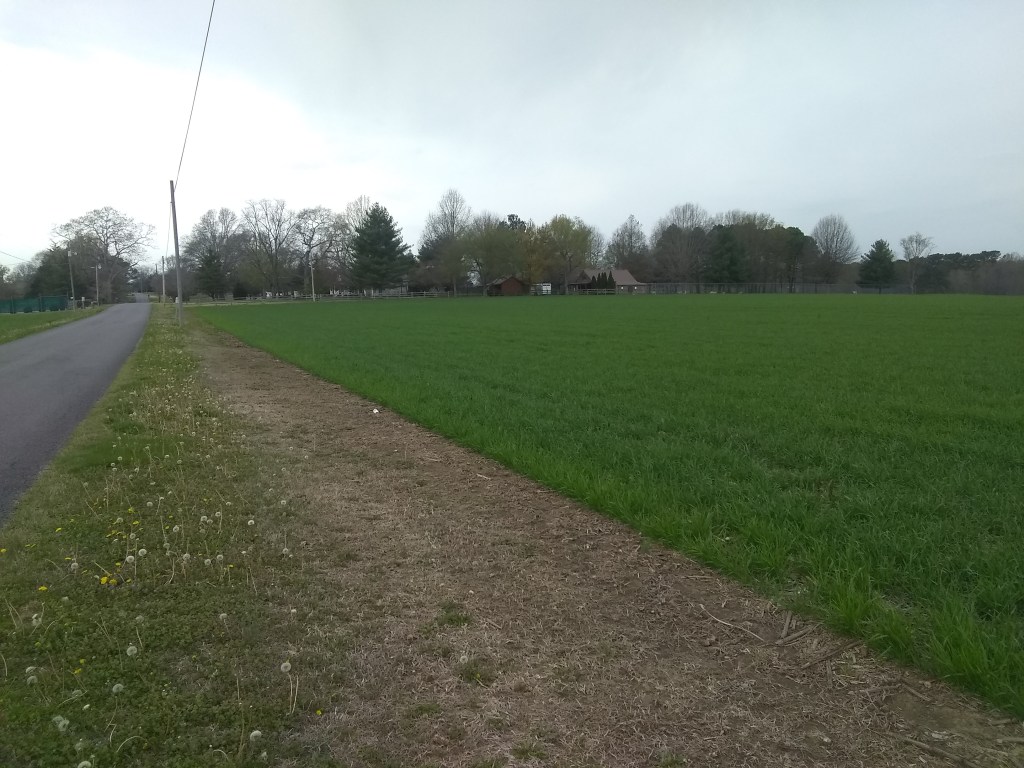
Here’s a few photos taken along my route:

























Here’s what I listened to today: I Will Find You, by Harlan Coben

Amazon abstract:
Five years ago, an innocent man began a life sentence for murdering his own son. Today he found out his son is still alive.
David Burroughs was once a devoted father to his three-year-old son Matthew, living a dream life just a short drive away from the working-class suburb where he and his wife, Cheryl, first fell in love–until one fateful night when David woke suddenly to discover Matthew had been murdered while David was asleep just down the hall.
Half a decade later, David’s been wrongly accused and convicted of the murder, left to serve out his time in a maximum-security prison—a fate which, grieving and wracked with guilt, David didn’t have the will to fight. The world has moved on without him. Then Cheryl’s younger sister, Rachel, makes a surprise appearance during visiting hours bearing a strange photograph. It’s a vacation shot of a bustling amusement park a friend shared with her, and in the background, just barely in frame, is a boy bearing an eerie resemblance to David’s son. Even though it can’t be, David just knows: Matthew is still alive.
David plans a harrowing escape, determined to achieve the impossible – save his son, clear his own name, and discover the real story of what happened. But with his life on the line and the FBI following his every move, can David evade capture long enough to reveal the shocking truth?
A few top reviews from the United States:

5.0 out of 5 stars Another great story from this author
Reviewed in the United States on April 13, 2023
Harlan Coben can spin a yarn! Once again he has proven that in I Will Find You. This intricate plot is populated by a colorful and interesting cast of characters, especially the two FBI Special Agents, Max and Sarah, assigned to this case. They provide the comic relief in an otherwise very serious story of murder and a missing child. While cracking wise to each other they manage to cut through the distractions provided by Coben’s other characters and home in the most important issues.
David Burroughs is accused and convicted of killing his three year old son. While in prison he learns the son might still be alive, a scenario which makes no sense as the son’s body was found in his bed, beaten to death. In order to find out if that is true David must find a way to get out of prison and find his son.
The story is compelling and moves swiftly with lots of suspense and things that keep the reader guessing. If there is any flaw, there are parts of the plot which sound more like a soap opera rather than a murder mystery. That didn’t detract from my enjoyment of the book. I recommend this to all who enjoy a good mystery/thriller.
5.0 out of 5 stars Harlan Coben at his best!
Reviewed in the United States on April 16, 2023
The story begins with David Burroughs five years into serving a life sentencing for murdering his son. He feels his life his over and never fought his conviction since he felt his life was over without his son. He never felt he would have murdered his own son but he had no memory of the night in question. David refused visitors in his first years at the prison until one day when his sister-in-law, Rachel, shows up requesting to see him. The visit causes him to question if his son is actually still alive. The book is an another great by Harlan Coben! I couldn’t put it down until the last page. I highly recommend this book and this author.
5.0 out of 5 stars An Amazing Ride
Reviewed in the United States on March 28, 2023
I Will Find You has a premise which I have not found in another novel. A man convicted of murdering his child, who thinks that he may have done it in a drunken moment of hysteria, finds out that the murdered child in his house that evening was not his son and that his son is still alive. Great idea for a book. How will Harlan Coben bring the pieces together so that it makes sense and gives the reader a thrilling ride? I will divulge nothing other than Harlan Coben did a really nice job of giving me the ride that I was hoping for.
Is the book perfect? Am I still a little confused by the ending? Yes. Does it matter? No. The book is a roller coaster ride which you should take if you like thrillers or you have read everything that Coben has ever written.
His best book ever was The Boy From The Woods. By far, that book was perfect and exceptional. This book is right up there and worth your time.
5.0 out of 5 stars Harlan Coben has done it again!! This book will be your favorite this year!
Reviewed in the United States on April 7, 2023
Wow! The storyline in this book is beyond! I didn’t know if I even wanted to know the truth behind how it happened, but I had to know! That is what makes Harlan Coben a standout beyond all the rest! The characters, as usual, you will fall in love with and some you will love to hate! His style of writing is the reason I love to read! I would recommend this book to anyone and everyone! I already recommended it before I even finished it myself! I gave this book a five-star rating because Harlan Coben gets an A+ and every area of his writing! The plot, the characters, his style of writing the mystery! He has ramped up the edginess in this one!
Teachings of Jesus that Christians Dislike and Ignore, Number 3
Here’s the link to this article.
By David Madison, 04/07/2023.
They just say NO to their lord and savior

Most of the Old Testament is ignored today by churchgoers: trying to plough through the books of Numbers or Leviticus, Jeremiah or Ezekiel is too much of a struggle. When they turn to the New Testament, the gospels probably get most of their attention—though that is limited too—while the letters of the apostle Paul are also too much of a struggle. Of course, there are famous texts from these letters that are favorites, e.g., “love is patient, love is kind” (I Cor.13:4)—which is Paul in a good mood. So much of the time he is a bully, lashing out, scolding, savoring the wrath of his god.
Reading his letters is actually depressing. He is the typical cult fanatic, so sure that being possessed by Jesus (as he imagined him) is a good thing, and that Jesus would arrive from heaven “any day now” to set things right. It seems he was a tortured soul, and his interest in sex was close to zero; he projected this as an ideal for followers. “And those who belong to Christ have crucified the flesh with its passions and desires” (Galatians 5:24). He felt it was best for a man not to touch a woman (I Cor. 7:1), but if it can’t be helped, go ahead. However, since Jesus was about to arrive from heaven, it was best to remain pure: “…the appointed time has grown short; from now on, let even those who have wives be as though they had none…” (I Cor. 7:29).
[Previous articles in this series: Number 1 Number 2]
When the gospel writers came along later, it’s probable they were influenced by Paul’s thinking. Hence we find Jesus-script about sexuality that many of the devout today would hesitate to endorse. There are actually quite a few of them; here are four.
One
Anyone whose interest in sex is higher than Paul’s knows that arousal happens; it’s a natural thing, built into humans by evolution—well, for those who don’t believe in evolution, it’s still very real. The advocates for the early Jesus cult, i.e., those who wrote the gospels, wanted to keep a lid on it; hence this Jesus script: “You have heard that it was said, ‘You shall not commit adultery.’ But I say to you that everyone who looks at a woman with lust has already committed adultery with her in his heart” (Matthew 5:27-28).
Equating arousal with adultery?This falls into a category of Jesus sayings that can be identified as Bad Advice and Bad Theology (see all the categories here). If Christians heard this from anyone else—in any other context—they would dismiss it entirely. It’s dumb, sophomoric, not at all what one would expect of a great moral teacher. This text has also probably played a role in making people feel guilty about their sexual feelings.
Some guilt would be a good idea, of course. Why didn’t Jesus say something like, “Clergy who lust after and rape children shall never enter the kingdom of heaven”? It’s become so common to see outrageous headlines, e.g., just this week: Maryland AG report into Archdiocese of Baltimore alleges 150 Catholic clergy members and others abused more than 600 children. Here’s a quote:“From the 1940s through 2002, over a hundred priests and other Archdiocese personnel engaged in horrific and repeated abuse of the most vulnerable children in their communities while Archdiocese leadership looked the other way. Time and again, members of the Church’s hierarchy resolutely refused to acknowledge allegations of child sexual abuse for as long as possible.”
The apostle Paul was dead wrong about sexual feelings being crucified when you “belong to Christ.”
Two
It is quite common for Christians to ignore Jesus-script about divorce. In one of his confrontations with the Pharisees, he said:
“Have you not read that the one who made them at the beginning ‘made them male and female,’ and said, ‘For this reason a man shall leave his father and mother and be joined to his wife, and the two shall become one flesh’? So they are no longer two but one flesh. Therefore what God has joined together, let no one separate” (Matthew 19:4-6).
Who needed to have it explained that there was a reason for the male-and-female arrangement? Becoming “one flesh” is an obvious outcome. But then this Jesus-script wanders into truly bad theology: “…what God has joined together.” If you go along with the view that a god created the arrangement, yes, this was God’s scheme. But this script seems to imply that all marriages have been arranged by this god—he has done the joining together, which is why divorce is forbidden: you’re breaking up a divinely ordained union. There are a couple of things really wrong about this: (1) that a god meddles in intimate human affairs, he micromanages. This is totalitarian monotheism—another way for clergy/theologians to enhance the guilt-factor in religion: if you get a divorce, you’re suggesting that god made a mistake; (2) think of all the bad marriages you know of in your experience, done for so many wrong reasons. Multiply that by the number of horrible marriages throughout human history.
God must have made a lot of mistakes. “…what God has joined together, let no one separate” is bad theology—not what we would expect of a great moral teacher.
And it gets worse: “He said to them, ‘It was because you were so hard-hearted that Moses allowed you to divorce your wives, but from the beginning it was not so. And I say to you, whoever divorces his wife, except for sexual immorality, and marries another commits adultery, and he who marries a divorced woman commits adultery” Matthew 19:8-9).
There can be many reasons for divorce, and it’s not all that smart to suggest that being hard-hearted is the main reason. Had Jesus done a lot of research, to be able to announce that “from the beginning it was not so”? How would be know that? Then this additional silliness: if a divorced person marries someone else, that’s adultery. It’s even worse adultery if a man marries a divorced woman. How much damage has been caused by this teaching, especially in terms to increasing guilt? By the way, Matthew’s line “except for sexual immorality” is missing from the text that he copied from Mark. He wanted to soften the harsh teaching.
Do contemporary Christians pay much attention to such Jesus-script? This quote is from a 2014 study published by Baylor University: “Despite their strong pro-family values, evangelical Christians have higher than average divorce rates—in fact, being more likely to be divorced than Americans who claim no religion…”
And this is from a 2015 survey by the Pew Research center: “Among Catholics who have ever been married, roughly one-third (34%) have experienced a divorce.” That’s especially a scandal since marriage is one of the sacraments in the Catholic church. Major games are played as well: I know a Catholic man who paid big money to have his twenty-year marriage—that resulted in three children—annulled, to avoid admitting that a divorce had been involved. Too bad Jesus didn’t mention annulment when he preached about divorce!
So many Christians seem to be okay with ignoring Jesus-script on divorce.
Three
Right after Jesus equates arousal with adultery, he recommends self-mutilation:
“If your right eye causes you to sin, tear it out and throw it away; it is better for you to lose one of your members than for your whole body to be thrown into hell. And if your right hand causes you to sin, cut it off and throw it away; it is better for you to lose one of your members than for your whole body to go into hell” (Matthew 5:29-30, with the same warning repeated in Matthew 18:8-9).
Although the clergy will rush to assure the devout that this is metaphor, we have to wonder why a great moral teacher would have chosen such grotesque imagery. Again, this has too much the flavor of cult fanaticism, which we have come to expect of the gospel writers who created the Jesus-script.
Four
Robert Conner, in his book, The Jesus Cult: 2000 Years of Last Days, notes that “Jesus’ command to mutilate oneself hardly stops with an eye, hand or foot however” (p. 55), and he quotes Matthew 19:12: “For there are eunuchs who have been so from birth, and there are eunuchs who have been made eunuchs by others, and there are eunuchs who have made themselves eunuchs for the sake of the kingdom of heaven. Let anyone accept this who can.”

Jesus fails to qualify as a great moral teacher if he recommends self-castration: “Let anyone accept this who can.” Conner is right: “Surely no rational man would think himself spiritually elevated because he had removed his own testicles! That reaction would be true if we were talking about rational people, but we aren’t. We’re talking about early Christians” (p. 56).
Conner quotes from an article by Daniel F. Caner: “…sources from the fourth century indicate that by then self-castration had become a real problem in the nascent Church…by which time an ascetic movement that included not merely renunciation of marriage but also extreme forms of self-mortification had become influential and widespread in Christian communities” (p. 56).
Matthew 19:12 is most certainly Jesus-script that is universally ignored. Conner also notes that several modern translations obscure the meaning to the Greek text (see p. 55), but the top prize for deception goes to The Message Bible:
“But Jesus said, ‘Not everyone is mature enough to live a married life. It requires a certain aptitude and grace. Marriage isn’t for everyone. Some, from birth seemingly, never give marriage a thought. Others never get asked—or accepted. And some decide not to get married for kingdom reasons. But if you’re capable of growing into the largeness of marriage, do it.’”
This is not even paraphrase; it’s the pushing of theology favored by those claiming to be translators. Bluntly stated: it’s lying.
Churchgoers who take the time to think about these texts can appreciate that they are out of sync with the way the devout today deal with arousal and divorce—and no one gives serious thought to self-mutilation. It doesn’t help that the metaphor is so grotesque. Even the devout may wonder—despite the words printed in red—if Jesus really did say these things. They should embrace the concept of Jesus-script, that is, these sayings were invented by the gospel writers as they created their Jesus tales. But then the devout face another awkward reality: we have no way of knowing the authentic words of Jesus. Indeed, are there any at all in the gospels? New Testament scholars have known for a long time that there is no way to verify any of the words of Jesus we find in the gospels—because these documents are decades removed from the time of Jesus.
Maybe the devout are fine with “taking it on faith” that Jesus actually uttered the words that are so tough to take seriously, but then they have to admit that they just say NO to their lord and savior. Of course, they don’t say it out loud.
David Madison was a pastor in the Methodist Church for nine years, and has a PhD in Biblical Studies from Boston University. He is the author of two books, Ten Tough Problems in Christian Thought and Belief: a Minister-Turned-Atheist Shows Why You Should Ditch the Faith (2016; 2018 Foreword by John Loftus) and Ten Things Christians Wish Jesus Hadn’t Taught: And Other Reasons to Question His Words (2021). The Spanish translation of this book is also now available.
His YouTube channel is here. He has written for the Debunking Christianity Blog since 2016.
The Cure-for-Christianity Library©, now with more than 500 titles, is here. A brief video explanation of the Library is here.
Science of Genesis Paradise Lost–Part 1 Before the Beginning
Henry Miller on Art, War, and the Future of Humanity
Here’s the link to this article.
“It is almost banal to say so yet it needs to be stressed continually: all is creation, all is change, all is flux, all is metamorphosis.”
BY MARIA POPOVA


In the heat of World War II, Henry Miller (December 26, 1891–June 7, 1980) — voracious reader, masterful letter-writer, champion of combinatorial creativity, one disciplined writer — was living in Beverly Glen, California, and wrestling with the soul-stirring questions that war inevitably brings to the surface. It was then he penned “Of Art and the Future,” a wide-ranging essay on war, art, technology, the role of women in society, and mankind’s future, eventually published in Sunday After the War (public library) in 1944. In 1959, it was included in The Henry Miller Reader — also featuring Miller’s wonderful “The Wisdom of the Heart” — where he contextualizes it with a caveat: “The war was still on, my royalties from Europe were cut off, and I was in the doldrums.” Still, the essay offers a timeless and immeasurably timely lens on the triumphs and tyrannies of the human spirit.

Miller begins by considering the continuum of time:
To most men the past is never yesterday, or five minutes ago, but distant, misty epochs some of which are glorious and others abominable, Each one reconstructs the past according to his temperament and experience. We read history to corroborate our own views, not to learn what scholars think to be true. About the future there is as little agreement as bout the past, I’ve noticed. We stand in relation to the past very much like the cow in the meadow — endlessly chewing the cud. It is not something finished and done with, as we sometimes fondly imagine, but something alive, constantly changing, and perpetually with us. But the future too is with us perpetually, and alive and constantly changing. The difference between the two, a thoroughly fictive one, incidentally, is that the future we create whereas the past can only be recreated. As for that constantly vanishing point called the present, that fulcrum which melts simultaneously into past and future, only those who deal with the eternal know and live in it, acknowledging it to be all.
He articulates the era’s familiar fear of technology:
The cultural era of Europe, and that includes America, is finished. The next era belongs to the technician; the day of the mind machine is dawning. God pity us!
Vintage illustration for Homer’s ‘The Iliad and the Odyssey’ by Alice and Martin Provensen. Click image for details.
In a prescient contemplation, all the more true and urgent today, Miller considers the state of war and peace:
In the future we shall have only “world wars” — that much is already clear.
With total wars a new element creeps into the picture. From now on, every one is involved, without exception. What Napoleon began with the sword, and Balzac boasted he would finish with the pen, is actually going to be carried through by the collaboration of the whole wide world, including the primitive races whom we study and exploit shamelessly and ruthlessly. As war spread wider and wider so will peace sink deeper and deeper into the hearts of men. If we must fight more whole-heartedly we shall also be obliged to live more whole-heartedly.
He then goes on to echo his then-lover Anaïs Nin‘s poignant meditation on individuals and mass movements:
This war will bring about the realization that the nations of the earth are made up of individuals, not masses. The common man will be the new factor in the world-wide collective mania which will sweep the earth.
Miller considers the role and responsibility of inventors and “geniuses” in moving society forward — something astrophysicists Neil deGrasse Tyson recently discussed on Colbert — with equal parts optimism for human nature and caution of power-warped human intentions:
The problem of power, what to do with it, how to use it, who shall wield it or not wield it, will assume proportions heretofore unthinkable. We are moving into the realm of incalculables and imponderables in our everyday life just as for the last few generations we have been accustoming ourselves to this realm through the play of thought. Everything is coming to fruition, and the harvest will be brilliant and terrifying. To those who look upon such predictions as fantastic I have merely to point out, ask them to imagine, what would happen should we ever unlock the secret patents now hidden in the vaults of our unscrupulous exploiters. Once the present crazy system of exploitation crumbles, and it is crumbling hourly, the powers of the imagination, heretofore stifled and fettered, will run riot. The face of the earth can be changed utterly overnight once we have the courage to concretize the dreams of our inventive geniuses. Never was there such a plentitude of inventors as in this age of destruction. And there is one thing to bear in mind about the man of genius — even the inventor — usually he is on the side of humanity, not the devil. It has been the crowning shame of this age to have exploited the man of genius for sinister ends. But such a procedure always acts as a boomerang: ultimately the man of genius always has his revenge.
One could easily see him as a champion of today’s 99%:
What is now at the bottom will come to the top, and vice versa. The world has literally been standing on its head for thousands of years.
Vintage illustration for Homer’s ‘The Iliad and the Odyssey’ by Alice and Martin Provensen. Click image for details.
Two years before Races of Mankind, Miller makes an eloquent case for abolishing racist sensibilities:
We have talked breathlessly about equality and democracy without ever facing the reality of it. We shall have to take these despised and neglected ones to our bosom, melt into them, absorb their anguish and misery. We cannot have a real brotherhood so long as we cherish the illusion of racial superiority, so long as we fear the touch of yellow, brown, black or red skins.
He then presents a vision for the future of the city, strikingly aligned with today’s notion of global citizenship:
The city, which was the birth-place of civilization, such as we know it to be, will exist no more. There will be nuclei of course, but they will be mobile and fluid. The peoples of the earth will no longer be shut off from one another within states but will flow freely over the surface of the earth and intermingle. There will be no fixed constellations of human aggregates.
Miller’s addition to history’s famous definitions of art mirrors Joan Didion’s conception of writing as power. He writes:
At the root of the art instinct is this desire for power — vicarious power. The artist is situated hierarchically between the hero and the saint.
[…]
To put it quite simply, art is only a stepping stone to reality; it is the vestibule in which we undergo the rites of initiation. Man’s task is to make of himself a work of art. The creations which man makes manifest have no validity in themselves; they serve to awaken, that is all.
Despite his own profound passion for books, Miller envisions a future where the bound page no longer is:
In a few hundred years or less books will be a thing of the past. There was a time when poets communicated with the world without the medium of print; the time will come when they will communicate silently, not as poets merely, but as seers. What we have overlooked, in our frenzy to invent more dazzling ways and means of communication, is to communicate.
Nearly two decades before Marshall McLuhan’s seminal treatise on how new communication media shape our desires and cultural norms, Miller makes a similar observation:
No, the advance will not come through the use of subtler mechanical devices, nor will it come through the spread of education. The advance will come in the form of a breakthrough. New forms of communication will be established. New forms presuppose new desires. The great desire of the world today is to break the bounds which lock us in. It is not yet a conscious desire. Men do not yet realize what they are fighting for. This is the beginning of a long fight, a fight from within outwards.
In contemplating the era’s political landscape — an observation at once timeless and timelier than ever, with the urgency of this season’s election — he laments:
Often, when I listen to the radio, to a speech by one of our politicians, to a sermon by one of our religious maniacs, to a discourse by one of our eminent scholars, to an appeal by one of our men of good will, to the propaganda dined into us night and day by the advertising fiends, I wonder what the men of the coming century would think were they to listen in for just one evening.
Ultimately, however, Miller’s characteristic faith in the human spirit remains unabated:
Myself I cannot see the persistence of the artist type. I see no need for the individual man of genius in such an order. I see no need for martyrs. I see no need for vicarious atonement. I see no need for the fierce preservation of beauty on the part of a few. Beauty and Truth do not need defenders, nor even expounders. No one will ever have a lien on Beauty and Truth; they are creations in which all participate. They need only to be apprehended; they exist externally. Certainly, when we think of the conflicts and schisms which occur in the realm of art, we know that they do not proceed out of love of Beauty or Truth. Ego worship is the one and only cause of dissension, in art as in other realms. The artist is never defending art, but simply his own petty conception of art. Art is as deep and high and wide as the universe. There is nothing but art, if you look at it properly. It is almost banal to say so yet it needs to be stressed continually: all is creation, all is change, all is flux, all is metamorphosis.
Complement Sunday After the War with Miller on the secret to remaining young at heart, the meaning of life, and his eleven commandments of writing.
05/09/23 Biking & Listening
Biking is something else I both love and hate. It takes a lot of effort but does provide good exercise and most days over an hour to listen to a good book or podcast. I especially like having ridden.
Here’s my bike, a Rockhopper by Specialized. I purchased it November 2021 from Venture Out in Guntersville; Mike is top notch! So is the bike, and the ‘old’ man seat I salvaged from an old Walmart bike.
Here’s a link to today’s bike ride. This is my pistol ride.
Here’s a few photos taken along my route:
Here’s what I listened to today: I Will Find You, by Harlan Coben
Amazon abstract:
Five years ago, an innocent man began a life sentence for murdering his own son. Today he found out his son is still alive.
David Burroughs was once a devoted father to his three-year-old son Matthew, living a dream life just a short drive away from the working-class suburb where he and his wife, Cheryl, first fell in love–until one fateful night when David woke suddenly to discover Matthew had been murdered while David was asleep just down the hall.
Half a decade later, David’s been wrongly accused and convicted of the murder, left to serve out his time in a maximum-security prison—a fate which, grieving and wracked with guilt, David didn’t have the will to fight. The world has moved on without him. Then Cheryl’s younger sister, Rachel, makes a surprise appearance during visiting hours bearing a strange photograph. It’s a vacation shot of a bustling amusement park a friend shared with her, and in the background, just barely in frame, is a boy bearing an eerie resemblance to David’s son. Even though it can’t be, David just knows: Matthew is still alive.
David plans a harrowing escape, determined to achieve the impossible – save his son, clear his own name, and discover the real story of what happened. But with his life on the line and the FBI following his every move, can David evade capture long enough to reveal the shocking truth?
A few top reviews from the United States:
5.0 out of 5 stars Another great story from this author
Reviewed in the United States on April 13, 2023
Harlan Coben can spin a yarn! Once again he has proven that in I Will Find You. This intricate plot is populated by a colorful and interesting cast of characters, especially the two FBI Special Agents, Max and Sarah, assigned to this case. They provide the comic relief in an otherwise very serious story of murder and a missing child. While cracking wise to each other they manage to cut through the distractions provided by Coben’s other characters and home in the most important issues.
David Burroughs is accused and convicted of killing his three year old son. While in prison he learns the son might still be alive, a scenario which makes no sense as the son’s body was found in his bed, beaten to death. In order to find out if that is true David must find a way to get out of prison and find his son.
The story is compelling and moves swiftly with lots of suspense and things that keep the reader guessing. If there is any flaw, there are parts of the plot which sound more like a soap opera rather than a murder mystery. That didn’t detract from my enjoyment of the book. I recommend this to all who enjoy a good mystery/thriller.
5.0 out of 5 stars Harlan Coben at his best!
Reviewed in the United States on April 16, 2023
The story begins with David Burroughs five years into serving a life sentencing for murdering his son. He feels his life his over and never fought his conviction since he felt his life was over without his son. He never felt he would have murdered his own son but he had no memory of the night in question. David refused visitors in his first years at the prison until one day when his sister-in-law, Rachel, shows up requesting to see him. The visit causes him to question if his son is actually still alive. The book is an another great by Harlan Coben! I couldn’t put it down until the last page. I highly recommend this book and this author.
5.0 out of 5 stars An Amazing Ride
Reviewed in the United States on March 28, 2023
I Will Find You has a premise which I have not found in another novel. A man convicted of murdering his child, who thinks that he may have done it in a drunken moment of hysteria, finds out that the murdered child in his house that evening was not his son and that his son is still alive. Great idea for a book. How will Harlan Coben bring the pieces together so that it makes sense and gives the reader a thrilling ride? I will divulge nothing other than Harlan Coben did a really nice job of giving me the ride that I was hoping for.
Is the book perfect? Am I still a little confused by the ending? Yes. Does it matter? No. The book is a roller coaster ride which you should take if you like thrillers or you have read everything that Coben has ever written.
His best book ever was The Boy From The Woods. By far, that book was perfect and exceptional. This book is right up there and worth your time.
5.0 out of 5 stars Harlan Coben has done it again!! This book will be your favorite this year!
Reviewed in the United States on April 7, 2023
Wow! The storyline in this book is beyond! I didn’t know if I even wanted to know the truth behind how it happened, but I had to know! That is what makes Harlan Coben a standout beyond all the rest! The characters, as usual, you will fall in love with and some you will love to hate! His style of writing is the reason I love to read! I would recommend this book to anyone and everyone! I already recommended it before I even finished it myself! I gave this book a five-star rating because Harlan Coben gets an A+ and every area of his writing! The plot, the characters, his style of writing the mystery! He has ramped up the edginess in this one!
15th Foundational Falsehood of Creationism–Part 2
Drafting–Millie and Molly make Keylime pies & meet the couple across the hall
“You make the crust. I’ll make the filling.” Millie said tossing an apron to Molly. Yesterday afternoon they had taken the five minute walk to Gristedes Supermarket, the store Matt had hired to deliver a mountain of groceries last Saturday. The only ingredients they’d purchased were those needed to make two Keylime pies.
That short round-trip jaunt had prompted Molly to suggest visiting Central Park. Reluctantly, Millie had agreed. Both were surprised to learn their street, E. 79th, led straight to the Park and transformed to 79th Street Traverse, which unfortunately still allowed cars. However, this hadn’t prevented them from enjoying the thick wooded maze of paved walkways open to only cyclists and walkers.
Molly removed twenty-two graham cracker sheets from the box and placed eleven of them in a large ziploc bag. She would smash half of them at a time. “I miss our food processor,” she said, remembering the recently-purchased Hamilton-Beach they’d left in Chicago. With light hand strikes Molly started pulverizing the graham crackers. Millie set the oven to preheat at 375 degrees.
“Here, use this.” Millie opened a drawer, removed a rolling pin, and handed it to Molly.
“Thanks.” Ever since the three hours yesterday in the park, Molly had noticed her mother’s improved state of mind. Probably, it had something to do with their still-developing idea of going to the Park several times per week for a jog, something Millie had routinely done in Chicago. Molly finished crushing the first bag of graham crackers and thought about how today Millie seemed even more like her former self, especially that can-do-anything person she was before the Colton frankensteinian transformation.
“I hope these are as good as the ones you made for Thanksgiving.” For years, Millie had taught her daughter how to cook. This skill had become paramount when Colton started demanding dinner each day at 5:00 PM, usually, through the week, before Millie arrived home from work.
“They’ll be better since you’re helping.” Molly said as Millie finished whisking together sweetened condensed milk, sour cream, lime juice, and lime zest. She wiped her hands on a towel before giving Molly a hug. “By the way, are we going to church this Sunday?” Molly asked while laying her head on her mother’s shoulder.
Millie removed two 9.5 inch Pyrex pie plates from a lower cabinet and slid them toward Molly as she pondered her question and their church back home. “Do you want to?”
Molly didn’t hesitate in responding. “Yes, we just need to pick one that sounds good. There are several within walking distance.” Molly’s eagerness was rooted in her and Millie’s experience attending St. Paul Missionary Baptist Church. It wasn’t so much what Pastor Richter had preached but the love and support from the members. Molly knew they both, especially her mother, needed an extended family.
Millie watched as Molly mixed and stirred the cracker crumbs, sugar, and melted butter in a bowl. “Okay, I’ll let you choose.”
Molly liked the idea. Her mother had grown up in a Baptist church in Sanford, North Carolina naturally taking on fundamentalist beliefs, mainly that the Bible was inspired by God and was without error. But Molly, even at twelve, was more liberal, probably because of the influence Alisha and her family had on her.
Molly spent several minutes pressing the crumb mixture into the pie plates while her mother washed dishes in the sink. “Finished.” You want me to pour in the pie filling?”
Millie turned to face Molly. “What are you forgetting?”
She knew her mother always baked the crust for seven minutes before adding the filling. “Idea. I’ve read you don’t have to heat the crust. And, the pies are just as good. Can we try it?”
“Sure, if you want.” Millie said, turning the oven to ‘OFF.’
Molly poured the filling into both pie pans and placed them in the refrigerator. “Done and done. Let’s sit, I have a few questions and you can wash the rest of the dishes after while.” Molly laughed.
Millie popped her daughter’s behind with the towel, tossed it on the counter, and joined her at the dining room table.
“I made some notes.” Molly said, pulling a folded sheet of paper from her pocket.
“Okay.” Millie loved that her daughter was organized and judicious.
“Yesterday, while we were in the Park you said you were going to ask Dr. Hanover to suggest a child psychiatrist I could talk to.”
“I did. Unfortunately, the woman she recommended—Dr. Francis Winter—is out of the country and, obviously, not accepting new patients until she returns.
Molly paused and smoothed out the wrinkled paper. “I don’t disagree but was hoping you would let me talk with Tracey and maybe she could help. You know, teach me how to meditate. Her website is interesting.”
Shaking her head sideways, Millie voiced her concern. “You wouldn’t go to a chiropractor for surgery, or a plumber for legal advice. Tracey probably means well but she’s not a medical doctor. A psychiatrist is.”
“Again, I’m not disagreeing. All I’m asking is for you to let me give Tracey a chance. She’s a Zen master, with over fifteen years of practice and teaching under her belt.”
“Honey, you have been through so much, with Colton and the rape, leaving the only home you’ve ever known, and now, pregnant and anticipating an abortion. You need professional advice and counseling just like I do.”
“Tracey’s a professional too, and she specifically deals with trauma. Her website says this.” Molly turned her notes over to the back side and read: “‘Meditation helps the traumatized heal by offering a new perspective on past and current events, and ultimately, by changing the structure of their brain.’”
Millie stared at Molly and knew from her serious expression, and the two pages of notes she’d written, this subject was highly important to her. “Here’s my current thought. Let’s talk to Dr. Winter when you meet with her. Hopefully, she’ll have some solid advice.”
This was positive but Molly was impatient. “In the mean time, why don’t we talk with Tracey? If we can’t tonight, then maybe she’ll have time tomorrow.” Molly left it there, but continued to think to herself. Maybe talking with Tracey would be enough for Millie, enough to convince her to give the go-ahead and not wait two weeks to talk with Dr. Winter.
Just as Molly was about to read another quote from Tracey’s website, someone knocked on the door.
“I’ll get it.” Molly said, standing and looking at Millie to make sure it was okay.
She nodded and pointed to her right temple, tapping it two times. “Think.”
“Yes?” Molly said, waiting.
“Miss, we’re Kenneth and Nita Eldridge from across the hall.” A woman said in a monotone voice. “We just wanted to say hello to our new neighbors.” Molly turned and looked for guidance from Millie who was now walking toward her.
“It’s okay.” Millie motioned for Molly to flip the deadbolt.
She did, opened the door, and said “hello. I’m Molly. This is Millie, my mom.”
“Nice to meet you. We just got back into town late last night or we’d have come earlier.” The short, thick man with gray hair, a close-cropped beard, and receding hairline said standing closer to the half-opened door across the hall than to Millie and Molly’s.
Millie reached out her hand and shook Nita’s and waited for Kenneth to come closer. “Nice to meet ya’ll.” Millie said, quickly noticing her Southern expression, and recalling her father’s oft-cited phrase: ‘you can take the girl out of the country but can’t take the country out of the girl.’
“What brings you to New York City?” Nita asked.
Before either Millie or Molly could respond, Kenneth tried to clarify his wife’s question. “Honey, they may have moved here from across town, or around the corner.”
“Chicago.” Millie said, believing it okay to be open and truthful. These two were complete strangers, wholly unconnected to her and Molly’s former life.
“Dear,” Kenneth said looking at Molly. “You’re about our granddaughter’s age. Fifteen, sixteen?”
This got Molly’s attention and triggered a respectful laugh. “Twelve going on thirteen.”
“She’s mature for her age.” Millie added, looking at the top of Molly’s head which was almost the height of her own. Changing the subject, Millie asked, “how long have you guys lived here?”
“Oh,” Nita looked at Kenneth and started counting on her fingers.
“Seven months.” Kenneth answered. “We moved here last May. To be closer to our grandchildren, Olivia and Otto.”
Nita took a deep breath and placed a hand on Millie’s arm. “Their mother, our daughter, has cancer. We’re just trying to help.”
“I’m so sorry. That must be a difficult time for your daughter, and her family, all of you.” Millie started to ask if there was a son-in-law in the picture but thought better of it.
“Listen, we don’t want to bother you. Know that we’re here at night and most weekends if you need anything.” Kenneth handed Millie a card. “That’s our cell number on the back.”
On the front was written, Kenneth Eldridge, Detective, Albuquerque Police Department with address and phone number. “Wow, I bet you’ve got some stories to tell.”
“Don’t get him started. He’ll blather on until midnight.” Nita said, reaching out and taking Molly’s hand. The woman was no doubt a toucher. “You do good in school honey and forget about the boys. They’re nothing but trouble.”
Molly smiled and wondered if the heavyset woman was relaying advice she wished her granddaughter would take.
As the older couple retreated, Kenneth made one final announcement. “We rarely see our other neighbors. The couple next to us are siblings. He works at some Wall Street firm, and she’s a teacher. The couple next to you, they’re lesbians, work at some nightclub.”
Neither Millie or Molly responded as Nita reprimanded her husband.
How We Spend Our Days Is How We Spend Our Lives: Annie Dillard on Choosing Presence Over Productivity
Here’s the link to this article.
“The life of sensation is the life of greed; it requires more and more. The life of the spirit requires less and less.”
BY MARIA POPOVA
The meaning of life has been pondered by such literary icons as Leo Tolstoy (1904), Henry Miller (1918), Anaïs Nin (1946), Viktor Frankl (1946), Italo Calvino (1975), and David Foster Wallace (2005). And although some have argued that today’s age is one where “the great dream is to trade up from money to meaning,” there is an unshakable and discomfiting sense that, in our obsession with optimizing our creative routines and maximizing our productivity, we have forgotten how to be truly present in the gladdening mystery of life.
From The Writing Life (public library) by Annie Dillard — a wonderful addition to the collected wisdom of beloved writers — comes this beautiful and poignant meditation on the life well lived, reminding us of the tradeoffs between presence and productivity that we’re constantly choosing to make, or not:
How we spend our days is, of course, how we spend our lives. What we do with this hour, and that one, is what we are doing. A schedule defends from chaos and whim. It is a net for catching days. It is a scaffolding on which a worker can stand and labor with both hands at sections of time. A schedule is a mock-up of reason and order—willed, faked, and so brought into being; it is a peace and a haven set into the wreck of time; it is a lifeboat on which you find yourself, decades later, still living. Each day is the same, so you remember the series afterward as a blurred and powerful pattern.

She goes on to illustrate this existential tension between presence and productivity with a fine addition to history’s great daily routines and daily rituals:
The most appealing daily schedule I know is that of a turn-of-the-century Danish aristocrat. He got up at four and set out on foot to hunt black grouse, wood grouse, woodcock, and snipe. At eleven he met his friends, who had also been out hunting alone all morning. They converged “at one of these babbling brooks,” he wrote. He outlined the rest of his schedule. “Take a quick dip, relax with a schnapps and a sandwich, stretch out, have a smoke, take a nap or just rest, and then sit around and chat until three. Then I hunt some more until sundown, bathe again, put on white tie and tails to keep up appearances, eat a huge dinner, smoke a cigar and sleep like a log until the sun comes up again to redden the eastern sky. This is living…. Could it be more perfect?”
Dillard juxtaposes the Danish aristocrat’s revelry in everyday life with the grueling routine of a couple of literary history’s most notorious self-disciplinarians:
Wallace Stevens in his forties, living in Hartford, Connecticut, hewed to a productive routine. He rose at six, read for two hours, and walked another hour—three miles—to work. He dictated poems to his secretary. He ate no lunch; at noon he walked for another hour, often to an art gallery. He walked home from work—another hour. After dinner he retired to his study; he went to bed at nine. On Sundays, he walked in the park. I don’t know what he did on Saturdays. Perhaps he exchanged a few words with his wife, who posed for the Liberty dime. (One would rather read these people, or lead their lives, than be their wives. When the Danish aristocrat Wilhelm Dinesen shot birds all day, drank schnapps, napped, and dressed for dinner, he and his wife had three children under three. The middle one was Karen.)
[…]
Jack London claimed to write twenty hours a day. Before he undertook to write, he obtained the University of California course list and all the syllabi; he spent a year reading the textbooks in philosophy and literature. In subsequent years, once he had a book of his own under way, he set his alarm to wake him after four hours’ sleep. Often he slept through the alarm, so, by his own account, he rigged it to drop a weight on his head. I cannot say I believe this, though a novel like The Sea-Wolf is strong evidence that some sort of weight fell on his head with some sort of frequency — but you wouldn’t think a man would claim credit for it. London maintained that every writer needed a technique, experience, and a philosophical position.

At the heart of these anecdotes of living is a dynamic contemplation of life itself:
There is no shortage of good days. It is good lives that are hard to come by. A life of good days lived in the senses is not enough. The life of sensation is the life of greed; it requires more and more. The life of the spirit requires less and less; time is ample and its passage sweet. Who would call a day spent reading a good day? But a life spent reading — that is a good life. A day that closely resembles every other day of the past ten or twenty years does not suggest itself as a good one. But who would not call Pasteur’s life a good one, or Thomas Mann’s?
The Writing Life is sublime in its entirety, the kind of book that stays with you for lifetimes.
Illustration by Wendy MacNaughton
 Richard L. Fricks