
Here’s the link to this article. Definitely worth a read.
Ten lessons on living a good life and being resilient in the teeth of entropy, problems, setbacks & obstacles, aka normal life

MAY 16, 2023
For the past 12 years I have been a Presidential Fellow at Chapman University, where I have taught a course called Skepticism 101: How to Think Like a Scientist, examples for which I draw from over 30 years of publishing Skeptic magazine and directing the Skeptics Society. I lecture on causality and determining truth, Bayesian reasoning, Signal Detection Theory, the scientific method, rationality and irrationality, game theory, cognitive biases, cults, conspiracies, Holocaust denial, creationism, science and religion, and much more (you can watch some of the lectures that I recorded remotely during the pandemic here).
In the final minutes of the final lecture of my final semester at Chapman a student asked what practical lessons for life I might share with them. I offered as much as I could think of off the top of my head, but since I have researched and written a fair amount on this topic over the decades (and tried to apply these lessons to my own life) I thought I would deliver a final lecture here, not only for my students but for anyone who is interested in knowing what tools science and reason can provide for how to live a good life and how to deal with entropy, problems, setbacks and obstacles, aka normal life. I have kept this short and limited to ten lessons, but I plan to expand each of these into chapter-length lessons and add a number more (possibly for a book). Watch for those in this space as well as in eSkeptic and on my podcast. To that end, please consider becoming a paid subscriber below. All monies go to the Skeptics Society, a 501(c)(3) nonprofit educational organization.
Skeptic is a reader-supported publication. All monies go to the Skeptics Society, a 501(c)(3) nonprofit. To receive new posts and support my work, consider becoming a free or paid subscriber.
Lesson 1. The First Law of Life
The Second Law of Thermodynamics is first law of life, namely to expend energy to survive and flourish. That sounds rather anodyne, so let me unpack that briefly here, then we will see how it applies to all the other lessons.
We are physical beings living in a physical universe governed by the laws of nature. One of the most fundamental of all the laws of nature is called the Second Law of Thermodynamics, sometimes called “entropy”, which holds that in a closed system energy dissipates, disorder increases, and things run down.
A hot cup of coffee, for example, will get cold if you don’t do anything to heat it up again. Why? Because heat is produced by all the jiggling of the water and coffee molecules in the cup, and since energy decreases and disorder increases, over time the molecules will jiggle less and the heat will dissipate into the environment, like the air above the cup or your hand holding the cup (which itself temporarily warms as the heat is transferred). In this case, a microwave oven to re-heat the coffee is your way of fighting back against entropy by putting energy into the cup. Of course, the energy to run the microwave comes from electricity generated by power plants, which you have to pay for each month, so there’s no free lunch in the universe!
Humans are open systems. We capture energy from food and convert it to power our muscles to move and push back against entropy, like making coffee, cleaning the house, going to work, and so forth. This is what I mean when I say that the Second Law of Thermodynamics is the First Law of Life. Your purpose in life is to expend energy to carve out pockets of order that lead to survival and flourishing.
Examples of entropy abound: metal rusts if you don’t maintain it. Weeds overrun gardens if you don’t weed them. Wood rots if you don’t paint it. Beds stay unmade and bedrooms get cluttered if you don’t make and clean them. Your body will grow weak and flabby if you don’t stress it regularly with exercise. Your mind becomes fuzzy and confused if you don’t challenge it to think. Friendships and relationships must be maintained through regular communication. An empty bank account is what happens if you don’t go to work and earn money. Poverty is what societies get if they do nothing productive.
Entropy is not a “force” per se, like gravity. It’s just what happens if energy isn’t put into the system. Think of a sandcastle: There are a near infinite number of ways that grains of sand can be configured into an amorphous blob that resembles nothing in particular, but with just the right amount of water mixed with the sand there are a limited number of ways that the grains can be congealed into structures that resemble castles. What happens if the sandcastle is not maintained? Wind and waves and dogs and children erode it back into a featureless glob. There are simply far more ways for sand to be unstructured than structured. Life consists of building sand castles and maintaining them.

This also explains why failures in life are so much more common than successes: there are simply more ways to fail than there are to succeed. And the higher you aim the more obstacles there are going to be for you to get there, and entropy will push back against you along the way. Remember that the next time you fail. Like sandcastles, failure is normal, success unusual.
Lesson 2. To Thine Own Self Be True
In William Shakespeare’s play Hamlet, the character Polonius says:
“This above all: to thine own self be true,
And it must follow, as the night the day.
Thou canst not then be false to any man.”
To thine own self be true. What does this mean, exactly? Let’s begin with what philosophers call the Law of Identity: A is A, which means that each thing is identical with itself. The 15th century philosopher Nicholas of Cusa explained it this way: “there cannot be several things exactly the same, for in that case there would not be several things, but the same thing itself.”
Being true to yourself means recognizing and acknowledging that A is A, that you are you and not someone else. To try to be something that you are not, or to pretend to be someone else, is a violation of the Law of Identity: A cannot be non-A.
A is A means discovering who you are, your temperament and personality, your intelligence and abilities, your needs and wants, your loves and interests, what you believe and stand for, where you want to go and how you want to get there, and what matters most to you. Thine own self is your A, which cannot also be non-A. The attempt to make A into non-A has caused countless problems, failures, and heartaches in peoples’ lives.
How do you figure out who you are? By testing yourself, by trying new things, by meeting new people, by exploring, traveling, and reading, by trying different jobs and considering different careers. In time you will discover that most things you try, you will not be good at, but out of all those failures will emerge a handful of things that you are good at, a few people whom you are drawn to, and slowly the real you will emerge and thine own true self will come into focus.
Lesson 3. Be Antifragile
If the purpose of life is to survive and flourish in the teeth of entropy pushing back against everything you do, then you need to be antifragile, a word coined by the risk analyst Nassim Nicholas Taleb in his 2012 book of that title, Antifragile: Things That Gain from Disorder, on how to live in a world that is unpredictable and chaotic, and how to thrive during times of stress and even disaster.
Antifragile means growing and prospering from randomness, uncertainty, opacity, and disorder, and benefitting from a variety of shocks. Here’s how my psychologist friend and colleague Jonathan Haidt applies the concept of antifragility to raising children:
Bone is anti-fragile. If you treat it gently, it will get brittle and break. Bone actually needs to get banged around to toughen up. And so do children … they need to have a lot of unsupervised time, to get in over their heads and get themselves out.
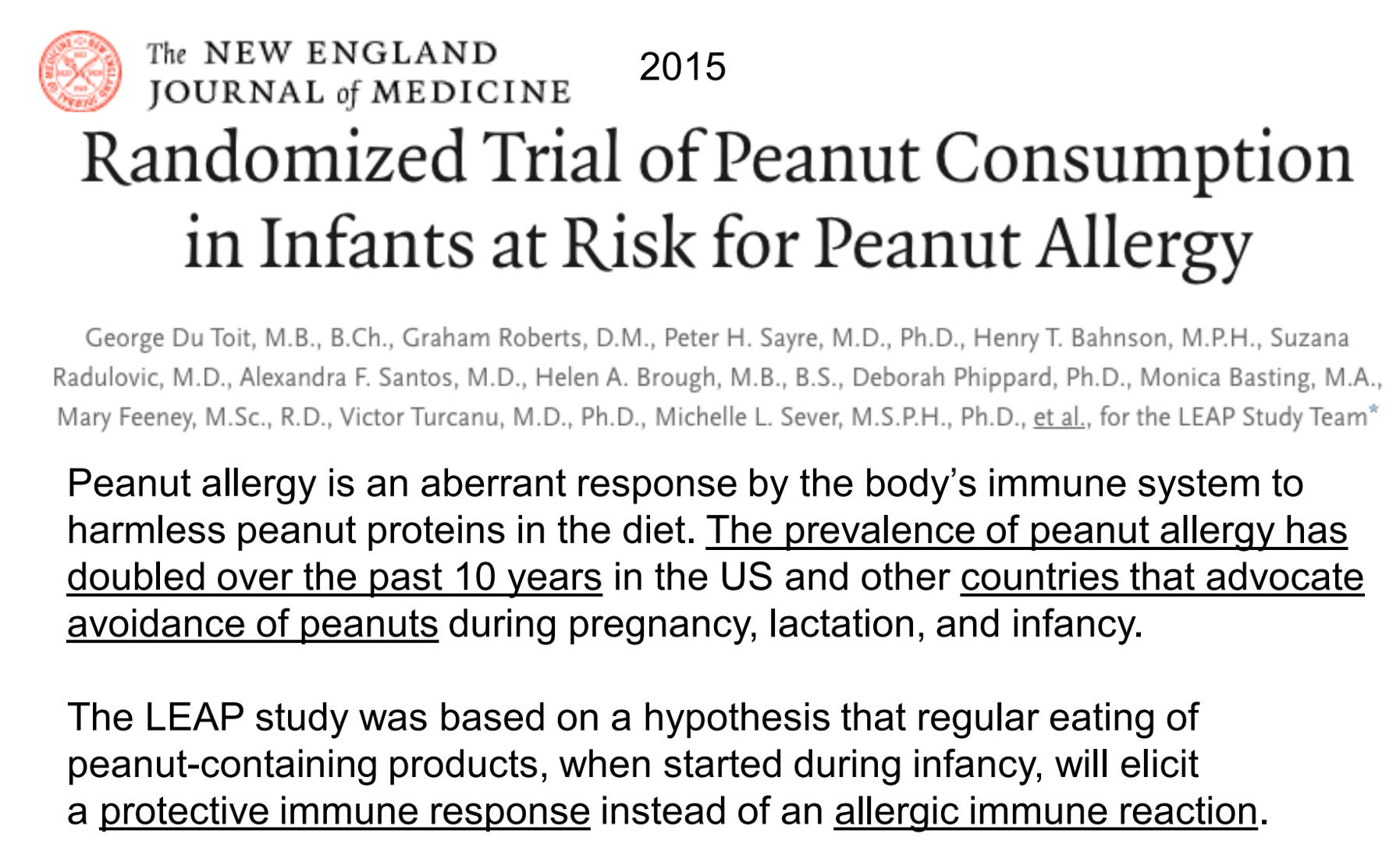
For example, peanut allergies were once extremely rare. A mid-1990s study found that only 4 out of 1,000 children under the age of eight had a peanut allergy. A 2008 study by the same researchers, however, found that the rate had skyrocketed by 350 percent to 14 per 1,000. Why? Because parents and teachers had protected children from exposure to peanuts. The lesson is clear: immune systems become antifragile by exposure to environmental stressors, and so too do our minds and bodies to the stressors of daily life.
One solution to this problem may be found in an old saying: “Prepare the child for the road, not the road for the child.” Other idioms capture the principle behind the lesson of antifragility: “What doesn’t kill you makes you stronger,” Nietzsche famously said. “Tough times don’t last but tough people do,” my mother often told me. Here is what I wrote one of my students when she was going through a particularly difficult time:
No matter who you reach out to, ultimately it will come down to you and how you respond to your issues. There’s only so much other people can do. In the end, you have to help yourself. Whatever has happened in your life, you can’t do anything about that now as it is in the past and is out of your control. What is in your control is how you respond to it, whatever the “it” is, starting by deciding today that you are not going to let yourself be a victim any longer. It has to stop.
Ultimately only you can make it stop. Psychologists, family, and friends can only do so much. You must dig deep inside yourself and call up reserves you didn’t know you had, and from there rebuild your life, day by day, hour by hour, until it no longer is holding you back from realizing your full potential. What does not kill you makes you stronger. Whatever happened, it didn’t kill you. You are alive. You are engaged in the world. You are working on assignments. You will grow stronger with every accomplishment.
The current craze of overprotecting students from anything that makes them uncomfortable, including ideas that may challenge them, is making them weaker, not stronger, fragile, not antifragile.
Lesson 4. Be Self-Disciplined Because Action is Character
As the name implies, discipline comes from within the self. You are the architect of your life. You are responsible for what you do. So do it. How? Change your behavior and your cognition will follow. Change your habits and your thoughts will follow.
Everyone is looking for a hack, an easy way around the self-discipline problem. There is no hack and no way around being self-disciplined. External motivations, like motivating yourself with rewards for changing your habits, will not last. The motivation must eventually come from within. Internal motivation is the key to self-discipline.
You want to stop eating sugar and unhealthy food? Stop eating sugar and unhealthy food! Where? Here. When? Now. Self-discipline happens here and now. Stop eating bad food and start eating good food…here and now. Just do it.
Toward the end of his life the novelist F. Scott Fitzgerald wrote that “action is character,” by which he meant that what you do is who you are. Cognitive psychologists call this “embodied cognition”, in which action becomes character. My friend the science writer Amy Alkon wrote a book about this, colorfully titled Unfuckology: A Field Guide to Living with Guts and Confidence, with a chapter title that perfectly captures this principle: “The Mind is Bigger Than the Brain.” Here’s how Amy explains the principle in her humorous way:
Embodied cognition research shows that who you are is not just a product of your brain. It’s also in your breathing, your gut, the way you stand, the way you speak, and, while you’re speaking, whether you make eye contact or dart your eyes like you’re about to bolt under a car like a cat.
By acting and behaving a new way, you push out of your mind the old ways of being that you want to change. You are what you do. So act the way you want to feel. Be the person you want to be by acting like that person. As the Buddha counseled:
Your worst enemy cannot harm you as much as your own thoughts, unguarded. But once mastered, no one can help you as much.
Lesson 5. Don’t be a Victim
In their 2018 book The Rise of Victimhood Culture: Microaggressions, Safe Spaces, and the New Culture Wars, the sociologists Bradley Campbell and Jason Manning document how Western society has transitioned from an honor culture to a dignity culture and now is shifting into a victimhood culture.
In a culture of honor, each person has to earn honor and, unable to tolerate a slight, takes action himself. The big advance in Western society was to let the law handle serious offenses and ignore the inevitable minor ones—what sociologists call the culture of dignity, which reigned in the 20th century. It allows diversity to flourish because different people can live near each other without killing each other. As such, a culture of honor leads to autonomy, independence, self-reliance, confidence, courage, and strength of character.
The past quarter century, however, has seen the rise of a victimhood culture, where people are hypersensitive to slights as in the honor culture, but they don’t take care of it themselves. Instead they appeal to a third party to punish for them. A culture of victimhood leads people to divide the world into good and bad classes—victims and oppressors. As such, a culture of victimhood makes one weak, dependent, timid, afraid, and lacking courage and character.
Yes, any of us can be victims, but how you handle it matters. In a victimhood culture the primary way to gain status is to either be a victim or to condemn alleged perpetrators against victims, leading to an accelerating search for both. An Oxford student explained what happened to her after she joined a campus feminist group named Cuntry Living and started reading their literature on misogyny and patriarchy:
Along with all of this, my view of women changed. I stopped thinking about empowerment and started to see women as vulnerable, mistreated victims. I came to see women as physically fragile, delicate, butterfly-like creatures struggling in the cruel net of patriarchy. I began to see male entitlement everywhere.
As a result she became fearful and timid, afraid even to go out to socialize:
Feminism had not empowered me to take on the world—it had not made me stronger, fiercer or tougher. Even leaving the house became a minefield. What if a man whistled at me? What if someone looked me up and down? How was I supposed to deal with that? This fearmongering had turned me into a timid, stay-at-home, emotionally fragile bore.
Here is an antifragile way to deal with misogyny and patriarchy, from the model and pro-nuclear energy activist Isabelle Boemke:

If your Spanish is rusty a biblical metonymy may be found in the command to “go forth and multiply” (with your mother).
So stop with the safe spaces, trigger warnings, microaggressions, and especially the deplatforming and cancelation of speakers who may cause students to rethink their beliefs—you know, what colleges and universities were designed to do. It is turning young adults into fragile snowflakes instead of antifragile warriors.
Lesson 6. Don’t Eat the Marshmallow
When video of Admiral William H. McRaven’s 2014 commencement address at the University of Texas at Austin was posted online, the speech went viral. Millions of viewers will remember the core message summed up in his memorable line: “If you want to change the world, start off by making your bed.” The Navy SEAL veteran explained the psychology behind such a simple task:
If you make your bed every morning you will have accomplished the first task of the day. It will give you a small sense of pride and it will encourage you to do another task and another and another. By the end of the day, that one task completed will have turned into many tasks completed. Making your bed will also reinforce the fact that little things in life matter. If you can’t do the little things right, you will never do the big things right. And, if by chance you have a miserable day, you will come home to a bed that is made—that you made—and a made bed gives you encouragement that tomorrow will be better.
Admiral McRaven’s “life lessons” in his speech are, in fact, variations on a theme explored by the legendary psychologist Walter Mischel in his 2014 book The Marshmallow Test. The key to being a successful Navy SEAL—or anything else in life—is summed up in the book’s subtitle, Mastering Self-Control. Mischel begins by describing how, in the late 1960s, he and his colleagues devised a straightforward experiment to measure self-control at the Bing Nursery School at Stanford University.
In its simplest form, children between the ages of 4 and 6 were given a choice between one marshmallow now or two marshmallows if they waited 15 minutes. Some kids ate the marshmallow right away, but most engaged in unintentionally hilarious attempts to overcome temptation. They averted their gaze, covered their eyes, squirmed in their seats, or sang to themselves. They made grimacing faces, tugged at their ponytails, picked up the marshmallow and pretended to take a bite. They sniffed it, pushed it away from them, covered it up. If paired with a partner, they engaged in dialogue about how they could work together to reach the goal of doubling their pleasure.
In 2006, Professor Mischel published a new paper in the prestigious journal Psychological Science. The researchers did a follow-up study with the students they had tested 40 years before, examining the type of adults they had grown into. They found that the children who were able to delay gratification had higher SAT scores entering college, higher grade-point averages at the end of college, and they made more money after college. Perhaps not surprisingly, they also tended to have a lower body-mass index. That is, they were less likely to have a weight problem.
So, not eating the marshmallow is good for both your body and your mind. And all of life is a series of marshmallow tests.
Lesson 7: Directing Your Future Self
In an episode of the hit animated television series The Simpsons, Marge warns her husband that he might regret the drinking binge he’s about to go on, to which Homer replies: “That’s a problem for future Homer. Man, I don’t envy that guy.”
All of us, in fact, have future selves. Or, more accurately, there is no fixed self, but rather an ever-changing self, and the fact that we can project ourselves into the future means we can not only anticipate how our future selves might act, we can take measures today to alter how our future selves behave.
In the field of behavioral economics this problem of the future self is called future discounting, or myopic (nearsighted) discounting, and research shows that most of us discount the future too steeply, for example, electing to spend too much now instead of saving some for later. People are notoriously bad at long-term investing, as well as selecting smart retirement plans. The reason is that in the world we evolved in, and in all of human history until recently, life was, in the words of the political theorist Thomas Hobbes, “nasty, brutish, and short.” Why save for a fabulous 75th birthday party when the odds were high that you’d be dead by 50?
For most of our ancestors, a bird in the hand was worth two in the bush. In that world, it was better to eat one marshmallow now rather than risk the promised two marshmallows later that might be purloined or otherwise lost. A bumper sticker captures the temptation psychology: “Life is short. Eat dessert first.”
In today’s world, however, there is a good chance you will live a long life, so there is some justification to figuring out how to delay gratification, save for the future, plan for retirement, and expect your future self to be around for awhile.
The key here is projecting your current self into the future, asking yourself now what you want to happen then, and set up conditions today that you know will take effect later when your future self may not be trusted with doing the right thing.
That is, you don’t want to be Homer and say of your future self “man, I don’t envy that guy.”
Lesson 8: Be Your Own Financial Advisor
The comedian Woody Allen once joked, “It is better to be rich than it is to be poor…if only for financial reasons.” Well, yes, it is, and those financial reasons are not trivial.
Money may not be able to buy you love, happiness, or meaningfulness, but it sure can make life more comfortable and, more importantly, it can increase your opportunities for finding love, happiness and meaningfulness. How?
First, if you’re living on the margin—that is, your income barely covers your expenses and you have next to nothing left over for additional consumption or investment—your opportunities for doing anything else, from vacations to hobbies to retirement, are reduced to next to nothing.
Second, money buys you time, and that time can be put to use to make more money, as well as enjoy life by enriching it with additional opportunities for both business and pleasure.
Third, money buys a better life: better food, better clothes, better homes, better education, better transportation, better travel, better recreation, and better retirement.
How do you make money? Investments in real estate or the stock market (or both). I recommend a book called The Gone Fishin’ Portfolio by a financial advisor named Alex Green, who subsequently became a friend of mine. What Alex demonstrates is that no one can consistently beat the market. You may hear about people who do—for example, fund managers like Bill Miller, who in 2006 was declared by CNNMoney.com to be “The Greatest Money Manager of our Time” because he beat the S&P 500 stock index 15 years in a row.
But as my science writer friend Leonard Mlodinow calculated in his book The Drunkard’s Walk: How Randomness Rules Our Lives, there are over 6,000 fund managers in the U.S., and so if you do a simple coin-flip calculation of the odds that someone in that cohort of 6,000 fund managers would beat the S&P 500 15 years in a row, it turns out to be .75, or 3 out of 4. As Len says, the CNNMoney headline should have read “Expected 15-Year Run Finally Occurs: Bill Miller Lucky Beneficiary.” And, wouldn’t you know it, in the two years after Miller’s 15-year streak, the story read: “the market handily pulverized him.”
When Alex Green says to “go fishin” what he means is that you should not try to be the next Bill Miller. Why? Because only after the fact can we pick out the winners. Instead, you should pick stocks in companies with a solid track record—or, even better, invest in mutual funds tied to, for example, the S&P 500—and then, well, go fishing; that is, leave your investments alone. For example, Green calculates that if you invested $10,000 in 1990 in a mutual fund tied to the entire S&P 500 and then went fishing, 20 years later you would have $90,000, not counting dividend reinvestment, which would push you well over the $100,000 figure.
By contrast, if you tried to be actively involved in trading—buying and selling stocks and trying to anticipate what the market would do—you risk missing the biggest increases in that 20-year block. For example, if you miss just the 5 best days in that 20 years, your $90,000 account would plummet to $45,000. If you miss the 10 best days you’d end up with around $35,000. If you miss the best 25 days your $10,000 investment would only bring you only $19,000. And if you miss the best 50 days…you’d actually lose money.
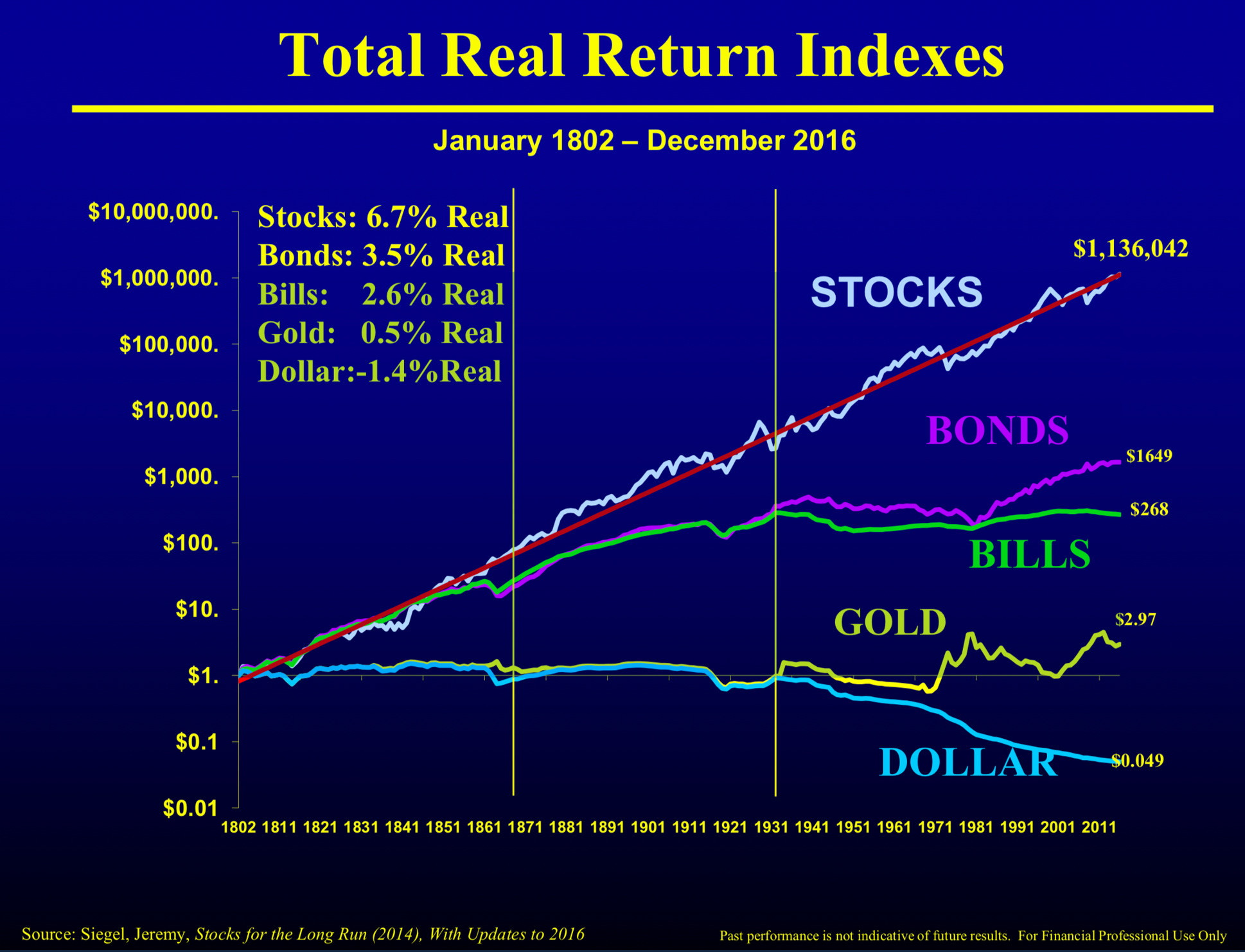
Anyone can compute for you how much stocks have returned to investors in the past. No one can do that for the future. In the case of the S&P 500, since the 1920s it has returned an annualized average of around 10%. The returns for the NASDAQ, which is heavily loaded in tech stocks that have done so well the past 20 years, is significantly higher. Whichever fund you invest in, however, you should expect that your returns will not be significantly higher or lower than the long-term average, which in any block of time in a two-digit positive number. Here’s how Alex Green explains it:
History clearly demonstrates that no other asset class returns more than stocks over the long haul. Once you understand this—and accept the steep odds against timing the market—you’ve made the first step toward adopting an investment strategy that can generate high returns with an acceptable level of risk.
Here’s a chart showing the value of different assets over the very long run:
Lesson 9: Build Strong Social Networks
Diet and exercise are very important tools for living a long, healthy, and high-quality life, but believe it or not there’s something else you can do that produces even better results and it doesn’t require getting up at Zero Dark Thirty, doing push-ups, or eating kale. All you have to do is be sociable. Here are some comparisons of things you can do to lower your mortality risk based on the latest studies in longevity by scientists around the world:
- Exercise lowers mortality risk by 33%. A happy marriage lowers it by 49%.
- Eating 6 or more servings per day of fruits and vegetables lowers mortality risk by 26%. Having a large social network lowers it by 45%
- Eating 3 servings a day of whole grains lowers mortality risk by 23%. Feeling you have others you can count on for support lowers it by 35%.
- Eating a Mediterranean diet lowers mortality risk by 21%. Living with someone lowers it by 32%.
These numbers, and their implications for what you can do to improve your life, were compiled by the science journalist Marta Zaraska and published in her book Growing Young: How Friendship, Optimism, and Kindness can Help You Live to 100. Here are some of her suggestions of simple things you can do, all backed by scientific research:
- Engage in more physical contact with others: kiss your partner more often, hold hands with your kids, hug your friends, rub each other’s back, look others in the eyes.
- Prioritize your romantic relationship and really commit to it. Read books and articles on how to be a better partner. Avoid contempt, criticism, stonewalling, and defensiveness. Talk with your partner about good things that happen in your daily life. Try new and fun things together and have some fun.
- Invest in your friendships. Spend more time together, disclose your secrets, and don’t be afraid to ask for favors. When you’re with your partner or friends and family, put your phone away and focus on them.
- Be more extraverted by greeting staff in a store, calling a friend whom you haven’t talk to in awhile, try a new restaurant or bar or café where you will meet new people working there.
In Zaraska’s words, here’s the bottom line:
It’s time we recognize that improving our social lives and cultivating our minds can be at least as important for health and longevity as are diet and exercise. When you grow as a person, chances are, you will also grow young. To Michael Pollan’s famous statement, “Eat food. Not too much. Mostly plants,” I would add: “Be social, care for others, enjoy life.”
Lesson 10. Find Your Meaning and Purpose in Life
What, specifically, should you do to find meaning and purpose in life? Philosophers, theologians, and sages from spiritual traditions have been writing about this topic for millennia, and recently psychologists have undertaken scientific studies of people and what they do to find meaning and purpose in life. Here are some of their findings.
1. Love and family. The bonding and attachment to other people increases one’s circle of sentiments and a corresponding sense of purpose to care about others as much as, if not more than, oneself. A core principle of leading a meaningful life is to make it more than just about yourself.
2. Meaningful work and career. Having a passion for work and a long-term career gives most people a drive to achieve goals beyond the needs of themselves and their immediate family that lifts all of us to a higher plane, and society toward greater prosperity and moral progress. Having a reason to get up and around in the morning, and having a place to go where one is needed, is a lasting purposeful goal.
3. Social and community involvement. We are not isolated individuals but social beings with a drive to participate in the process of determining how best we should live together, for the benefit of ourselves, our families, our communities, and our societies. This is not just voting but, for example, being actively engaged in the political process; it is not just a matter of joining a club or society, but caring about its goals and the actions of the other members working toward the same goals. Get out and participate!
4. Challenges and goals. Most of us need tests and trials and things at which to aim, both ordinary, such as the physical challenge of sports and recreation and the mental challenge of games and intellectual pursuits, as well as extraordinary, such as striving for abstract principles like truth, justice, and freedom, and struggling through obstacles in the way of realizing them.
5. Transcendency and spirituality. Possibly unique to our species is the capacity for aesthetic appreciation, spiritual reflection, and transcendent contemplation through a variety of expressions such as art, music, dance, exercise, sports, meditation, prayer, quiet contemplation, religious revere, and spiritual contemplation, connecting us to that which is outside of ourselves, and generating a sense of awe and wonder at the vastness of humanity, nature, the world, and the cosmos. The idea that we live in a universe that is 13.8 billion years old, and on a planet that is but one among trillions of planets in our galaxy alone, itself one of hundreds of billions of other galaxies, in a universe that is possibly just one in a multiverse of universes, is so staggering a thought as to leave one speechless in reverence for the vastness of it all.

I will end this reverie on lessons for life with an inspiring poem that completely changed how I looked at my life when I first encountered it. It’s called Invictus, written in 1920 by William Ernest Henley, and is particularly poignant as he wrote it when he was terminally ill:
Out of the night that covers me,
Black as the pit from pole to pole,
I thank whatever gods may be
For my unconquerable soul.
In the fell clutch of circumstance
I have not winced nor cried aloud.
Under the bludgeonings of chance
My head is bloody, but unbowed.
Beyond this place of wrath and tears
Looms but the Horror of the shade,
And yet the menace of the years
Finds and shall find me unafraid.
It matters not how strait the gate,
How charged with punishments the scroll,
I am the master of my fate:
I am the captain of my soul.
Please consider supporting Skeptic by becoming a free or paid subscriber below. All monies go to the Skeptics Society, a 501(c)(3) nonprofit educational organization.
Upgrade to paid
###
Michael Shermer is the Publisher of Skeptic magazine, the host of The Michael Shermer Show, and a Presidential Fellow at Chapman University. His many books include Why People Believe Weird Things, The Science of Good and Evil, The Believing Brain, The Moral Arc, and Heavens on Earth. His new book is Conspiracy: Why the Rational Believe the Irrational.






























 Richard L. Fricks