Write to Life blog

Survey: Belief in God, Heaven, Hell, angels, and the devil is lower than ever before

Here’s the link to this article.

While a majority of Americans still believe in supernatural entities, Gallup found declines over the past two decades

HEMANT MEHTA

JUL 20, 2023

This newsletter is free, but it’s only able to sustain itself due to the support I receive from a small percentage of regular readers. Would you please consider becoming one of those supporters? You can use the button below to subscribe to Substack or use my usual Patreon page!

Upgrade to paid


Belief in the supernatural is at an all-time low, according to a new survey from Gallup. While the majority of Americans still believe in God, angels, Heaven, Hell, and Satan, those majorities continue to dwindle, which could be bad news for the religious institutions that treat fiction as fact.

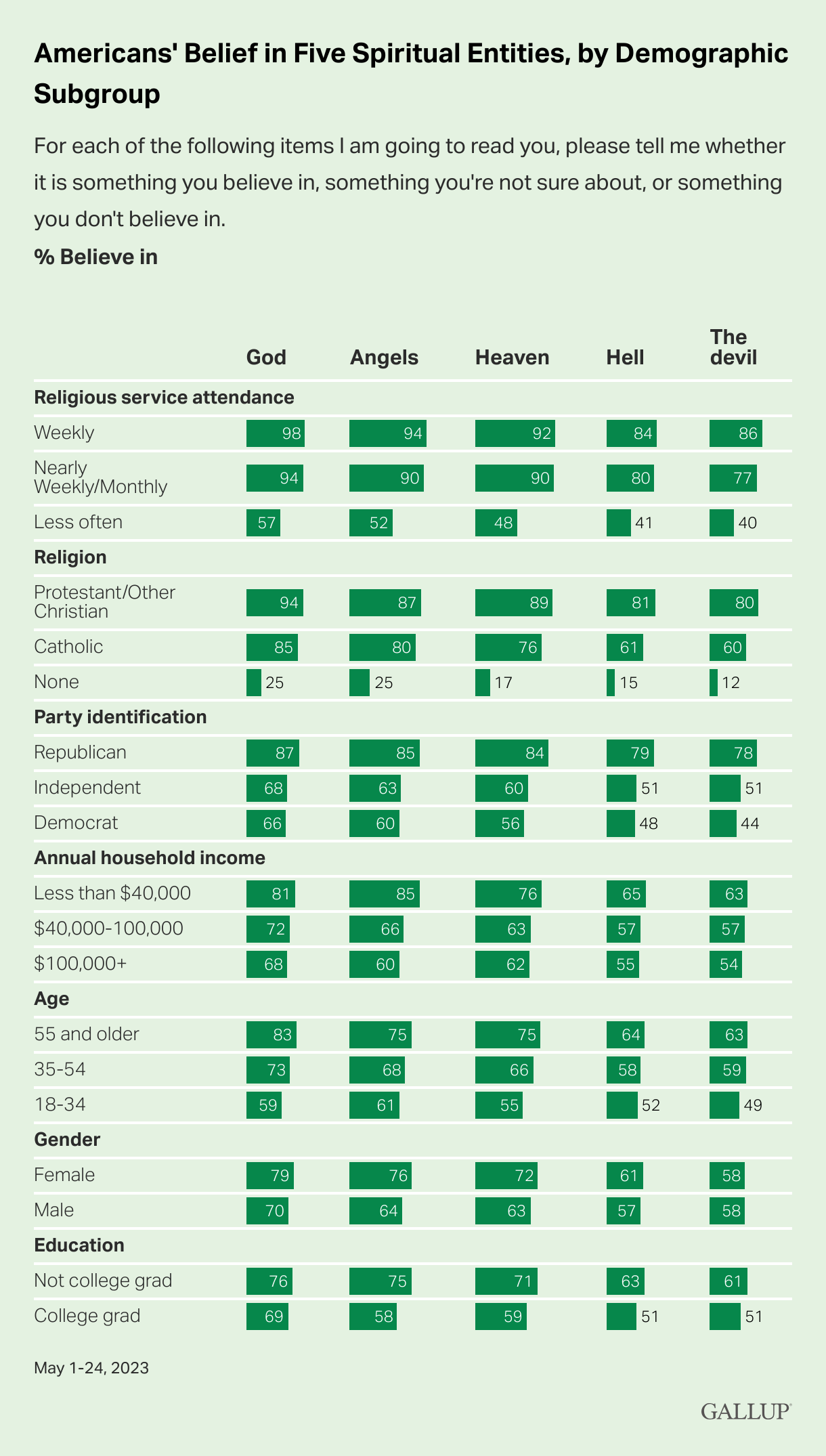
Since 2001, belief in God has gone from 90% to 74%—which implies more than a quarter of Americans are either unsure or reject the idea of God altogether. The percentage of believers has not gone up in the past two decades.

Meanwhile, while belief in the devil saw a slight rise during the George W. Bush administration, that number has also seen a drop from a high of 70% to 58% today. (Ironically, 69% of Americans still believe in angels. People seem to prefer their spiritual entities in a “glass half full” sort of way.)

51% of Americans believe in all five of those spiritual entities. 7% of Americans are “unsure” about all five. 11% reject all five. (Those 11% are correct.)

All of this is happening while plenty of other surveys have found a dramatic rise in non-belief. The Pew Research Center has found that 29% of Americans have no religious affiliation at all.

So how many atheists believe in these spiritual entities? (How many people are full of logical inconsistencies?) That’s a little harder to say. While Gallup doesn’t address the issue in this particular survey, Pew found in 2017 that 9% of people who didn’t believe in God did believe in some “higher power.” There’s a flip side to that too. There are a lot of Americans in this survey who say they believe in God but reject the concepts of Heaven, Hell, or the beings that supposedly live in them. What the hell is going on there? It suggests many Americans take a cafeteria-style approach to religion, picking and choosing the parts they like instead of purchasing the entire package.

Gallup found (perhaps not surprisingly) that believers in all of the Big Five include Protestants more than Catholics, frequent churchgoers more than casual ones, people without a college degree more than college graduates, Republicans more than Democrats, people in households that make under $40,000 a year more than those making over $100,000, adults 55 and older more than younger ones, and women more than men (except when it comes to the devil, when both numbers are the same).

All of this is bad news for church leaders that use these beliefs to bring in and control members. When fewer people believe in the devil, it’s a lot harder to scare them straight. When fewer people believe in Heaven or Hell, it raises questions about why people need to follow religious rules that don’t make sense.

Many atheists could tell you that their belief in God didn’t fade away in a split second. Rather, there was some aspect of religion that stopped making sense to them. That led to them questioning other ones. Once that first domino fell, the others followed in succession until even God couldn’t stand up to scrutiny.

What these survey results show us is that the dominoes are falling. It’ll take a while for the entire chain to go down, but religious leaders should be worried.

07/27/23 Biking & Listening

Biking is something else I both love and hate. It takes a lot of effort but does provide good exercise and most days over an hour to listen to a good book or podcast. I especially like having ridden.

Here’s my bike, a Rockhopper by Specialized. I purchased it November 2021 from Venture Out in Guntersville; Mike is top notch! So is the bike, and the ‘old’ man seat I salvaged from an old Walmart bike.

Here’s a link to today’s bike ride.


Something to consider if you’re not already cycling.

I encourage you to start riding a bike, no matter your age. Check out these groups:

Cycling for those aged 70+(opens in a new tab)

Solitary Cycling(opens in a new tab)

Remember,

Photo by Suzy Hazelwood on Pexels.com

I’m listening to Don’t Let Go by Harlan Coben

Amazon Abstract

FROM THE BESTSELLING AUTHOR AND CREATOR OF THE HIT NETFLIX DRAMA THE STRANGER

With unmatched suspense and emotional insight, Harlan Coben explores the big secrets and little lies that can destroy a relationship, a family, and even a town in this powerful new thriller.

Suburban New Jersey Detective Napoleon “Nap” Dumas hasn’t been the same since senior year of high school, when his twin brother Leo and Leo’s girlfriend Diana were found dead on the railroad tracks—and Maura, the girl Nap considered the love of his life, broke up with him and disappeared without explanation. For fifteen years, Nap has been searching, both for Maura and for the real reason behind his brother’s death. And now, it looks as though he may finally find what he’s been looking for. 

When Maura’s fingerprints turn up in the rental car of a suspected murderer, Nap embarks on a quest for answers that only leads to more questions—about the woman he loved, about the childhood friends he thought he knew, about the abandoned military base near where he grew up, and mostly about Leo and Diana—whose deaths are darker and far more sinister than Nap ever dared imagine.


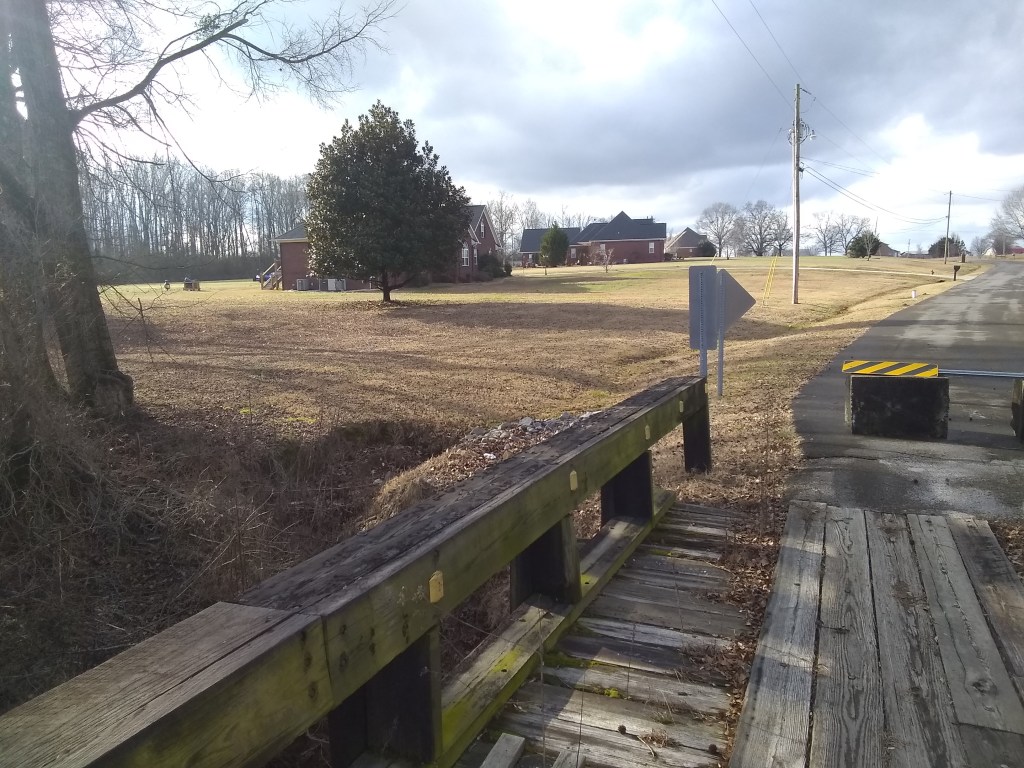
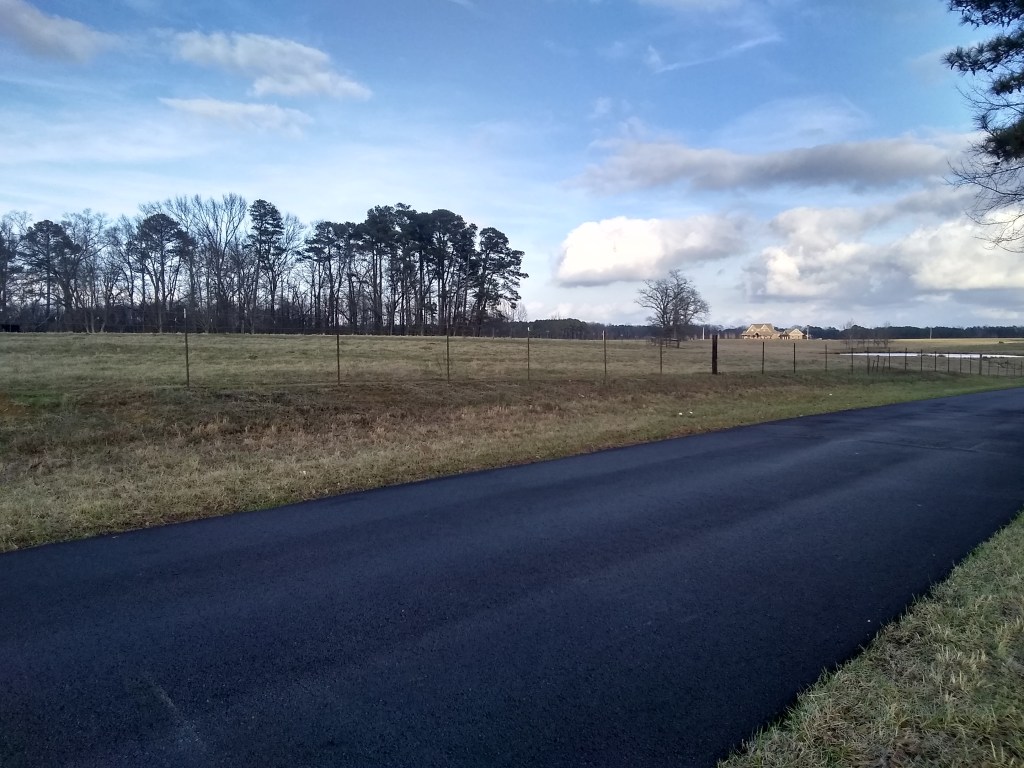
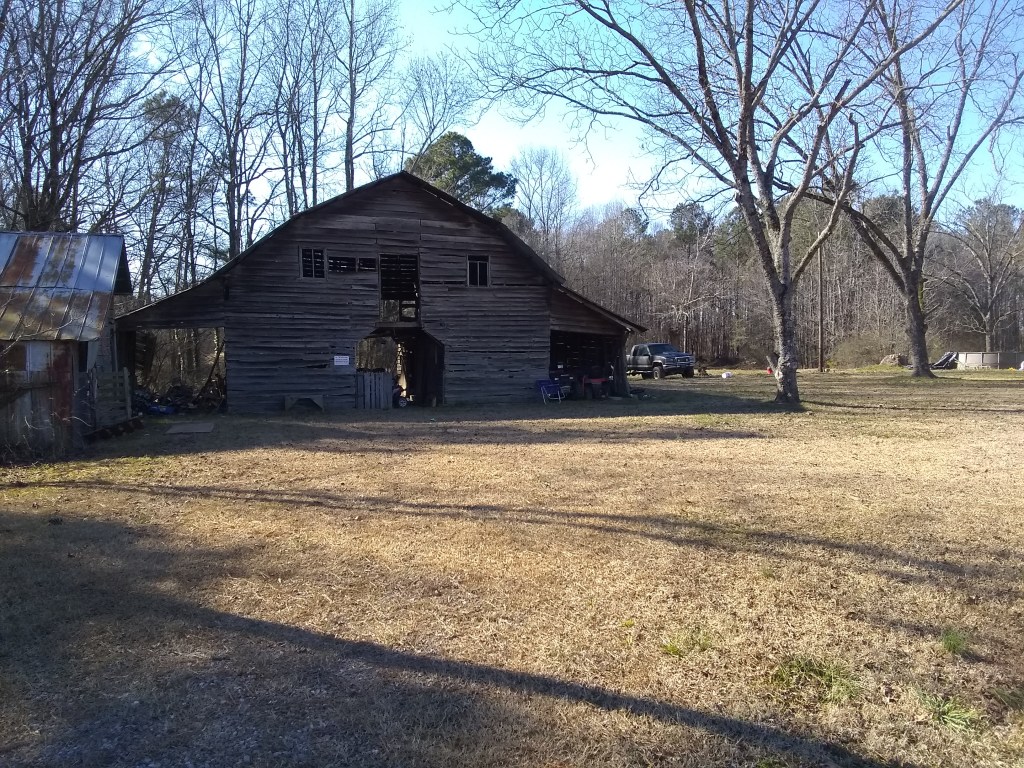
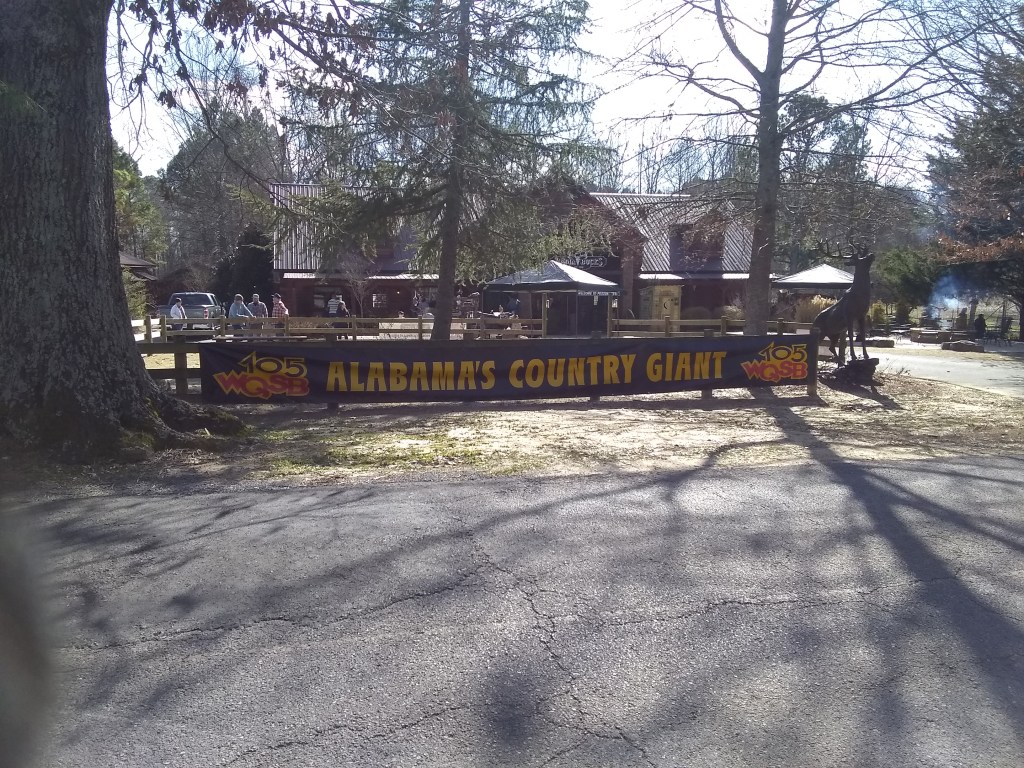
Here’s a few photos from along my pistol route:

The busiest abortionist

Here’s the link to this article.

Avatar photoby DR. ABBY HAFER

JUL 06, 2022

busiest abortionist
Shutterstock

Reading Time: 5 MINUTES

“They took it out in pieces,” she told me.  

My friend was discussing a pregnancy that she had very much wanted as a married woman in her 20s. It had failed inside her and had to be removed, as she said, in pieces. Otherwise, she would have died of sepsis. She was devastated by this loss. Whether this is what led to the failure of her marriage a year or so later is anybody’s guess.

Women often feel guilty if their pregnancy miscarries. Religious women are often told that their bodies are the result of “Intelligent Design,” and the expectation is that their bodies are the perfect retorts for growing and continuing a pregnancy.  Even those who are not religious tend to think that our bodies, having evolved over millions of years, must be nearly perfectly adapted for the process of carrying a pregnancy and giving birth. 

Yes, our bodies did evolve. But evolution’s standard for the success of a system is not perfection, or even near-perfection. The standard for success in an evolved system is, “It doesn’t cause death before reproduction too often.” That’s a pretty low standard. It takes no account of human suffering, and it certainly takes no account of the occasional unsuccessful embryo. So long as enough people survive to reproduce, the species keeps going. Deaths or disfigurements in individual conceptuses don’t matter, so long as the population itself continues.

As a result, a human pregnancy is actually a pretty tenuous affair. One thing that would help women in general—and men as well—would be an understanding of just how tenuous a situation a human pregnancy actually is. 

 When does the soul enter the body?

We are not helped by the fact that anti-abortionists often claim that “life” begins at conception,  especially since what is formed at conception is a cell with a new combination of DNA. The life that allows that DNA molecule to replicate is the woman’s life.

However, when anti-abortionists talk about life “beginning” at conception, what they actually mean is that they believe a divine soul is actively placed into a fertilized egg at the exact moment that egg and sperm fuse. This imagined process of God turning it from meat into a human being by inserting a soul is called “ensoulment.”

The life that allows that DNA molecule to replicate is the woman’s life.

The issue of ensoulment is a matter that religious philosophers have discussed for many hundreds of years. 

In earlier eras, ensoulment was thought to happen at quickening, which was when movements inside the uterus were first experienced. Others have argued that ensoulment doesn’t take place until a baby, outside of the mother’s body, draws its first breath. 

Fertilization was only discovered after the invention of the microscope

What earlier thinkers did not think was that ensoulment took place at conception. Why didn’t they think that? Because prior to the advent of modern science, nobody knew what conception actually was. In Biblical times, nobody knew what happens at fertilization.

What actually happens at fertilization could only be discovered after the invention of the microscope. And following that invention, it still took a great deal of painstaking scientific research to figure out that sperm and egg have to meet and fuse for fertilization to take place. This painstaking research involved, among other things, putting pants on frogs. I am not kidding. 

How do you draw the line for the existence of something that doesn’t exist?

Since there is no evidence of a non-corporeal soul, and certainly no way of measuring its presence or absence, religious philosophers have always been at a loss for telling when a soul enters a body. Because a soul is immeasurable and indeed undetectable, once science discovered the fertilization of eggs, religious-philosophical cowards decided that the winking into existence of a human soul took place right at the moment of fertilization.

Why? Because they were unable to figure out where or how to draw a line. A fertilized egg changes into a born baby gradually through a continuous process. But the naïve religious concept of a binary “soul” insists that the soul either exists fully complete or does not exist at all. Further, it switches from one to the other in an instant—a serious mismatch with the reality of gestation and birth.

Faced with a difficult decision, many religious philosophers wimped out. They were actively unwilling to think about evidence of prenatal development.

They were also unwilling to make hard decisions. There is no evidence for a soul existing at the moment of conception or any other. However, the entire religious belief in a binary on-or-off soul depends on drawing a line someplace. So they decided to play it safe, drawing the line right at the moment of conception. It’s a lazy, cowardly person’s choice.

What does this have to do with miscarriages?

But we were talking about miscarriages, and about a divine soul being placed into a fertilized egg by God himself, at the moment of conception. Of these two ideas, only one is a fact. And the fact is that pregnancies miscarry at an alarming rate. Further, these two ideas—ensoulment and miscarriage—stand in direct contradiction to one another. 

The other term for miscarriage is “spontaneous abortion.”  Conservative religions go out of their way to ignore the fact that women’s bodies are hives of spontaneous abortions. These happen routinely in humans.

Conservative religions go out of their way to ignore the fact that women’s bodies are hives of spontaneous abortions.

Where human women are concerned, the bald fact is that over 31 percent of all fertilized eggs fail to result in living babies—a conservative estimate based on careful research.

I am not now talking about human-induced abortions but spontaneous miscarriages.

What’s more, according to careful research reported in the New England Journal of Medicine, about 25 percent of all fertilized eggs do not even manage to implant on the lining of the uterus, which is just the first step in a pregnancy after fertilization.

Twenty-five percent of all fertilized eggs live for only about ten days, then fail to implant. They die and pass out of the body along with menstrual fluid. This in turn means that every year many millions of fertilized eggs come into existence and then die about ten days later as undifferentiated clumps of cells. The remaining six percent of spontaneous abortions happen after implantation.

All this is supposedly God’s work. 

This means that for every 100 live births, there were at least 45 spontaneous abortions.

So we must ask ourselves: Why, if God creates these souls at conception, does he then destroy so many of them before they even have a chance to breathe? Before they ever experience life outside the womb? Before they can ever have the experience of being human? Before they can ever have an interaction with the world, which we are told, is necessary in order to find their way to God? 

These numbers show that the human female reproductive system is far from perfect. In fact, anyone who argues that the human body is the result of intelligent design has clearly never taken a close look at the female reproductive system, or for that matter the male one.  

In human females, gestation is frequently incomplete and often results in a naturally aborted fetus.

There were approximately 130 million babies born worldwide in 2018, which means approximately 58.5 million spontaneous, natural abortions in that year alone.

If God gives life to each embryo at the exact moment when egg meets sperm as conservative Christians claim, then God subsequently kills tens of millions of little unborn babies every year. Put another way, God performs tens of millions of abortions every year.

God, if he exists, is by far the world’s busiest abortionist.

The Boaz Stranger–Chapter 9

Lillian was still in bed when her iPhone rang. She unburied herself from three layers of covers and reached toward the nightstand, knocking over a bottle of water. Thankfully, she had tightened the cap.

It was Donnie from Alexander Ford. It was five past seven. “Your car’s ready. Pete stayed over last night to finish up.”

“Thanks.” Lillian’s voice sounded like a man’s. “What was wrong with it?”

“Right rear rotor, had to replace it. You shouldn’t ride your brakes.” Lillian wasn’t aware of this tendency but didn’t comment on the advice.

By now, untangled and standing, her mind caught up with reality. She didn’t have a way to get her vehicle. Ray left yesterday around noon. An emergency of sorts. In Knoxville. He had driven his Suburban, leaving only the Corvette which Lillian couldn’t handle, given its manual transmission. Ray wouldn’t return until late afternoon, at the earliest. “Is there any way you or one of your guys could deliver my Aviator? I live on top of Skyhaven Drive, at the cypress lodge.”

By 8:00 AM Lillian had dropped Tank, a short and wide kid of maybe twenty, off at Alexander Ford and paid her bill. Six hundred forty-four dollars and thirty-eight cents seemed a little much, but she knew nothing about brakes and rotors. At least she had wheels. Better still, she’d used Ray’s debit card.

Most any other woman would have enjoyed spending the past two days at home, especially one as large and beautiful as the Lodge, not considering the view that competed vigorously with the Smoky Mountains. However, Lillian wasn’t just any woman. She was rarely content, except maybe when she’d find just the right novel, one with mystery and, of course, romance. Since marrying Ray, she’d always felt unfulfilled. She always regretted dropping out of college after Ray’s proposal and abandoning her dream of becoming a Crimson Tide cheerleader.

Lillian loved her Lincoln Aviator. It was the Black Label Grand Touring model. Black, of course, with tan leather interior. It was the most comfortable vehicle she’d ever owned. It was her first SUV, and Ray had bought it for $51,000 a year ago, not quibbling over the extra $1,000. Lillian guessed she was worth it. Not Lillian, but Becky Brownfield.

The irony was double headed. If Ray hadn’t introduced Lillian to private investigator Connor Ford one Sunday after church, she would never have obtained photographic proof of Ray and Becky’s affair. The real irony, if that’s what you call it, is that it was Lillian who’d hired Becky to seduce Ray. It was a long and interesting story involving the naïve Jane Fordham. The good part was that Becky was cheap, as in cost, willing to exploit Ray’s weakness for a mere $5,000.

Lillian turned right out of Alexander Ford’s parking lot and drove south on Highway 431. She was a day early, but that would give her an opportunity to inspect while the cleaning crew was still on site.

To Lillian’s surprise, Ray had not resisted her decision to move to the Corbett place. He’d even agreed to pay for the sprucing up. Two men and one woman from the city’s street department had moonlighted for Ray and Mayor King for years. They’d started yesterday morning, Veteran’s Day, an off day. Everything should be clean by late afternoon. Lillian figured today’s early morning rain had kept the three from their day-job duties.

Like Kyla’s, the Corbett place had a large pond. Lillian liked hers better, since it wasn’t in front of the house. Even better was the barn. Unlike Kyla’s, the barn was a hundred feet behind the one-story cabin. The barn had burned shortly after Ray bought the place and he’d rebuilt it much improved. Lillian loved the gambrel roof.

Lillian turned right on Alexander Road and saw the driveway to the left. Three vehicles consumed it. She parked along the road in front of the cabin. One man was vacuuming the yard with one of Ray’s John Deere mowers. That job would need repeating in a few weeks. The two giant oaks weren’t finished shedding.

Another man was on the porch, washing a large picture window to the right of the front door. Lillian waved to the man on the mower and walked to the cabin. The gray-headed window washer was humming “Amazing Grace” and didn’t hear her clear her throat. He also didn’t notice as she opened the storm door and walked into a large pine-paneled den.

Lillian could see the kitchen through a wide, arched opening. A matching entranceway was to the right, in the far corner of the den. She suspected the kitchen was one large room having a choice of entrances and exits, including one at the backside of the cabin.

Lillian heard a noise. A woman talking, or was she singing? Whatever it was, the noise was melodious. It was coming through another doorway, this one likely leading to the cabin’s bedrooms. Lillian stepped forward to a short hallway and saw the fireplug shaped woman standing inside a ceramic bathtub. She had ear buds and a caulk gun. Lillian knocked hard on the door, finally grabbing the attention of the woman with short, curly, and pinkish hair.

“Shit, you scared me.” Faye, according to her name tag, jerked out the ear buds with her free hand.

“Sorry, I’m Lillian. Looks like you guys are doing a good job.”

“Oh baby, what would I give to be in your shoes. This place is the bomb. And damn, me and Eddie could make some fine music on that gigantic bed.” Faye apparently had no filter.

“Bed?”

“It’s the biggest king I’ve ever seen.” Faye dropped the ear buds and pointed to my left. “Down the hall.”

The tube of caulk needed replacing. Faye stepped out of the tub and squeezed past Lillian.

The cabin’s main bedroom was a third the size of hers at the Lodge. The bed was enormous, almost consuming the room. Ray’s renters must have left it.

After exploring the kitchen and small utility room off the back porch, Lillian spent an hour exploring the barn and sitting in a swing beside the pond twenty feet from a long wooden pier. She wondered what roamed beneath the pond’s surface. Maybe she could learn to fish; she considered whether she could fish and read at the same time. Forget fishing. What a place to read a novel. Thoughts of starting over were scary, but also exhilarating. Living alone and maybe taking a class or two at Snead State Community College felt like heaven on earth.

A shrill noise from behind her silenced Lillian’s imagination. She stood and turned toward the cabin. Faye had reached inside her Nissan Sentra and blown the horn. She was now waving. “We done. Take care.”

Lillian returned the wave and couldn’t help but feel sorry for the short, stout, and pink-haired woman who seemed too damn happy.

An involuntary phrase erupted. “Faye don’t need no Aviator. She’s got loving Eddie and their melodious music.”

***

The early morning rain reappeared, forcing Lillian to return to the cabin. She entered through the back porch and found a set of keys on the kitchen counter. Underneath was a note scrawled across a paper towel. “If you want to sell the king call me.” Below, Faye had printed her name and phone number. Lillian couldn’t help but smile and flirt with a dream as she verified the keys. There were five in all: two for the front door and two for the rear. She guessed the fifth was for the detached garage behind the cabin.

After making sure the back door was secure, Lillian grabbed a handful of paper towels from a roll beside the sink and headed to the front porch. She locked the wooden door and used the towels to keep her hair dry, stumbling when she stepped off the short sidewalk onto the freshly mowed grass. When she reached her stylish and expensive SUV, Lillian glanced at the spot in the driveway where Faye had parked her silver Sentra.

As Lillian turned left onto Cox Gap Road, she whispered a question to herself: “if I hadn’t married Ray, would I have wound up like Faye?”

At Highway 431, Lillian dialed Kyla to ask if she had time for a visit. The sister of the only man she had ever truly loved had seemed troubled last Tuesday when Lillian had dropped by.

“Hey you.” Kyla answered on the first ring.

“I’m coming to see you if that’s okay.” Lillian assumed Kyla would be home. “What do you want for an early lunch? My treat.” She was approaching Taco Bell on the right.

“Sounds great. I’ve been missing you.” Lillian heard voices in the background, ‘next.’ “You’re welcome to come anytime but I’m waiting in line at the Courthouse. Not sure exactly when I’ll get back. Make yourself at home; the keys are where I told you.”

“You got a case or something?” Lillian turned right onto McVille Road beside Boaz Chevrolet.

“Homestead exemption. Why can’t things work like they’re supposed to? ‘Next.’”

“My favorite question.”

“I’ll be home as soon as I can. I think they’re about to call me back. Make yourself at home.” Kyla ended their call as Lillian passed WBSA on her left.

As she drove, the thought of returning to a former life sent a chill down Lillian’s spine. She couldn’t decide what it meant. Was it fear or hope? Whatever it was, it included a gallon of regret. Lillian reminisced about visiting Lee and Kyla’s home place, where they had grown up, and she and Lee had spent many an hour during their last two years of high school. Memories of Lee’s bedroom flooded her mind, along with the pond and the barn loft. Oh, the barn loft. How could she forget their favorite spot: soft hay and sexy hands? She had never forgotten how alive and in love Lee had made her feel, and it really wasn’t about sex. It was how he’d traced the lines and curves on her face and neck and whispered his sweet and sensuous words. The man always had the right words.

An Alabama Crimson Tide ringtone blared from the Aviator’s console. Lillian favored the vibration setting. Why she’d changed it last night, she didn’t know. Boredom probably. She didn’t recognize the number; it wasn’t in her contacts.

“Hello, this is Lillian.”

“And this is Jane. Hi L.”

“Oh, hi.” Of all people, Lillian now regretted answering. She’d given up sexy words and sensuous touches to speak to the Bible woman.

“I’m headed to the Hunt House and thought of you and Kyla.” Jane wasn’t making any sense.

“Okay.”

“Do you want to join me?” Lillian could barely hear over the loud country song in the background.

“Why?”

“May be our last chance.” Jane turned the volume down a notch. “Barbara’s finished packing and is leaving early afternoon. I’ve heard the place could be rubble by sunset.” Jane was often wrong and had a penchant for drama. Lillian knew from Ray there were some unresolved legal issues before the bulldozers did their thing.

“I’m headed to Kyla’s.” Lillian regretted her announcement.

“Bring her too. We’ll make it a memorial of sorts, for Rachel. It can be a reverse cloud of witness’s type of thing.” Now that was confusing.

“Kyla’s in Guntersville. Barbara doesn’t care?” Rachel’s room had enamored Lillian, Jane, and Kyla. Third floor, exotic wood floors, walls, and ceiling, built-in bookcases with a hundred cubby holes. And don’t dare forget the narrow stairway that led to the kitchen.

“Not at all. She said I could stay as long as I want, just lock the door when I leave.” The volume increased. ‘You’re one of them girls I wanna put my lips on.’ Jane was unique. Everything was about God and the Bible, except for her country music. To Lillian, the contrast of interests was astounding. WQSB and sex-slurping songs vs. God’s Holy Word.

“I’ll be there in about ten minutes.” Lillian turned around at Shiloh Country Store and pressed hard on the accelerator. Reminiscing was coming easily today.

It was her last visit to the Hunt House. It was December 12, 1969, after the Boaz Christmas Parade. Rachel had invited her, Jane, and Kyla for one final spend the night party. She’d instructed everyone to arrive at 10:30. By 1:00 am, Rachel still hadn’t arrived. Jane, Lillian, and Kyla were tired, tired of sitting on the giant front porch and waiting. Rachel and Ray must have gotten distracted. And where were Rob and Rosa?

Lillian had always wondered about that night.

***

Ray walked across the gift shop to the maitre’d’s podium and asked for the corner table along the rear wall if available. It was. After sitting down and giving the server his drink order, he again read Ted’s text from five minutes ago. “I’m just about to leave the lawyer’s office. Should be there by 7:00. Sorry.” Per Ray’s iPhone, it was now 6:25.

The Shack wasn’t Ray’s favorite restaurant. Even though the food was excellent, the owner was an asshole, just like his father. At least the old man was dead. Ray’s drink arrived. When the server left, he held his glass up as though offering a toast, and whispered, “To Wiley Jones. Thank God you’re dead.”

Wesley Jones, the son and current owner, a former attorney with the U.S. Justice Department, was getting stinking rich. Ray simply didn’t understand. Maybe if dear old Wiley had left lawyer-turned-restaurateur a chain of these Cracker-Barrel type joints it would be more believable.

The only reason Ray hated Wiley was because he had won the city councilman’s election five years ago. What galled Ray was that he had fared so badly, losing by over thirty percent.

The server returned, and Ray ordered another glass of Chardonnay. But all was not bad. Even though Wesley was now completing the balance of Wiley’s second term, if he hadn’t died, Ray wouldn’t own the Lodge. Linda, Wiley’s wife, had been eager to sell, virtually running away from the haunted house. Not openly, but secretly, Wiley’s death brought pleasure. Murdered seemed an innocuous way to put it. In fact, Wiley’s killing was execution style in his own bedroom, in the secluded room beyond the walk-in closet beside the upstairs bathroom. The one attached to Lillian’s bedroom.

Ray steered his mind toward his wife and keeping her close. That looked better from the outside. Man and wife together, same house, happy. A loving couple.

Ray heard Ted’s voice, one recognizable anywhere. “Damn, that man loves torture, the slow kind.” The mayor was two tables away trying to flag a server.

“The attorney?” Ray hated lawyers.

“Yea. He took nearly three hours to tell me the city will probably go bankrupt if we don’t do your deal.” Ted said, ordering a glass of wine and a double Bourbon.

“Shit, I didn’t realize it was that bad.” Another server came and took their food orders. “Two large rib-eyes, baked potatoes, salads with ranch dressing. Shrimp as the second meat.”

“Thanks, I’m starving.” Ted and Ray always ordered the most expensive entrees. The city always paid. Business. Ted shared the attorney’s details. “It’s the twenty-five million we’re in debt for the park and the rec center.”

“Debt can be a killer if not properly structured.” Ray was a financial genius. Of course, it hadn’t hurt that five years ago he’d sold his pharmacy chain for a sneeze short of a billion dollars.

“The monthly nut is a quarter million. It’s eating our lunch.” Ted’s drinks arrived. He downed the bourbon in one gulp.

“That takes a shit-pot full of sales at five percent.”

“You’re telling me.” Ted loosened his pink and green tie and held out his wineglass. “To the future. I’m tired of the past.” Ray and Ted toasted.

“Speaking of the future, did Vince say if anyone had backed out?” Ray hadn’t wanted to think about it. All nine real estate contracts had already closed. With one unsatisfied contingency. Per agreement, the Birmingham attorney who represented the nine landowners had negotiated a rare provision: in exchange for a price reduction of fifteen percent, the property owners had twenty business days to decide whether to kill the deal. And the real twist was if all nine bailed, the city would withdraw its intention to go forward with the eminent domain action.

“Not yet. Rob’s son-in-law has thrown a monkey wrench into our plans.”

“You talking about Lee Harding? What dog does he have in this fight?”

“According to Vince, around noon today, Mr. Harding moved for temporary injunctive relief.” The food arrived and Ted paused long enough to take a bite of everything.

Ray started with his steak. He always ate one thing at a time, then moved on to the next item. “That has to be their Hail Mary finale.”

“Maybe, maybe not. Vince said he did a little research after receiving notice of Lee’s filing. According to him, the grounds aren’t frivolous. There’s precedent for it. The Hunt House has been on the National Register of Historic Places since the mid-nineties.”

Suddenly Ray was no longer hungry. He laid down his fork and knife and pushed back his plate. He knew the entire project depended on buying the Hunt House, and that time was of the essence. “Let’s up the offer.”

“At first, I thought the same thing. Who in their right mind wouldn’t instantly accept a half million dollars for that old heap of bricks? But listen. Our problem may be bigger than you realize. Guess who our Mr. Harding has associated with?”

“You know I hate the guessing game.” Ray grabbed the passing server and ordered a double Scotch.

“Micaden Tanner.”

“Oh, hell.” Ray said, closing his eyes and shaking his head sideways.

What I’m reading

I encourage all my Southern Baptist friends (and others) to read this excellent book.

Here’s a quote:

Personal feelings about your relationship with any deity — no matter how deep — are not proof that what you believe is true.

Madison, David; Sledge, Tim. GUESSING ABOUT GOD (Ten Tough Problems in Christian Belief Book 1) (p. 34). Insighting Growth Publications Inc.. Kindle Edition.

Amazon abstract

In this first book of his Ten Tough Problems series, David Madison shares three critical problems in Christian belief.

Problem One: God is invisible and silent. This fact forces humanity to rely on ineffective ways of knowing God — common knowledge, sacred books, visions, prayer, personal feelings, and theologians. But all these sources of God knowledge fall short as evidenced by a world of disagreement, not just between Christians and other religions, but within Christianity itself.

Problem Two: The Bible disproves itself. In Chapter 2, Madison narrows his focus down to the world’s most famous book. He shows how two hundred years of critical scholarship — something most Christians know nothing about — have revealed the Bible to be full of archaic ideas, moral failures, and contradictions. He makes a convincing case that all these flaws rob us of any confidence that claims of biblical revelation can be taken seriously.

Problem Three: We can only guess who Jesus was. In Chapter 3, Madison turns his magnifying glass on the four Gospels and finds them severely lacking in their attempts to provide a clear understanding of who Jesus was and what he had to say. These Gospels not only contradict one another, but when reviewed under Madison’s guidance, prompt the honest reader to request, “Will the real Jesus please stand up?”

Combining rigorous scholarship with engaging personal reflections, this book offers understanding and help for individuals struggling with tough questions about belief. And the most pressing question it provides for the reader is: How could a deity competent enough to create this Universe be such a massively poor communicator who leaves humanity Guessing about God.

07/26/23 Biking & Listening

Biking is something else I both love and hate. It takes a lot of effort but does provide good exercise and most days over an hour to listen to a good book or podcast. I especially like having ridden.

Here’s my bike, a Rockhopper by Specialized. I purchased it November 2021 from Venture Out in Guntersville; Mike is top notch! So is the bike, and the ‘old’ man seat I salvaged from an old Walmart bike.

Here’s a link to today’s bike ride.


Something to consider if you’re not already cycling.

I encourage you to start riding a bike, no matter your age. Check out these groups:

Cycling for those aged 70+(opens in a new tab)

Solitary Cycling(opens in a new tab)

Remember,

Photo by Suzy Hazelwood on Pexels.com

I’m listening to Don’t Let Go by Harlan Coben

Amazon Abstract

FROM THE BESTSELLING AUTHOR AND CREATOR OF THE HIT NETFLIX DRAMA THE STRANGER

With unmatched suspense and emotional insight, Harlan Coben explores the big secrets and little lies that can destroy a relationship, a family, and even a town in this powerful new thriller.

Suburban New Jersey Detective Napoleon “Nap” Dumas hasn’t been the same since senior year of high school, when his twin brother Leo and Leo’s girlfriend Diana were found dead on the railroad tracks—and Maura, the girl Nap considered the love of his life, broke up with him and disappeared without explanation. For fifteen years, Nap has been searching, both for Maura and for the real reason behind his brother’s death. And now, it looks as though he may finally find what he’s been looking for. 

When Maura’s fingerprints turn up in the rental car of a suspected murderer, Nap embarks on a quest for answers that only leads to more questions—about the woman he loved, about the childhood friends he thought he knew, about the abandoned military base near where he grew up, and mostly about Leo and Diana—whose deaths are darker and far more sinister than Nap ever dared imagine.


Here’s a few photos from along my pistol route:

A biologist explains why ‘heartbeat laws’ are nonsensical

Here’s the link to this article.

Avatar photoby DR. ABBY HAFER

MAY 06, 2022

a biologist explains why heartbeat laws are nonsensical | heart cell and pulse line
Shutterstock/YouTube screenshot

Overview

The proliferation of anti-abortion ‘heartbeat laws’ cynically conflate the spontaneous pulsing of cardiac cells with the beating of a heart, and the beating of a heart with the presence of a soul. Such magical thinking belongs nowhere near the laws of a secular democracy

Reading Time: 5 MINUTES

A scientist is working in her lab, quietly culturing heart cells. She puts Petri dishes full of them into an incubator to grow. A few days later, she takes them out and inspects them under a microscope to see if they have multiplied as she wanted. 

As she innocently adjusts her scope, she sees—they are beating. What’s more, when she puts two of them near each other, they beat together! When she moves all of them together, they still beat together, in one great throbbing mass!  “IT’S ALIIIIVE!” she shrieks.


That scientist would be me. I didn’t really shriek, “It’s alive!” But I did see individual heart cells beating, cells that I had cultured, beating with no brain, nerves, organism, or even heart around them. They just contracted rhythmically—that is to say, they beat—all by themselves. 

Because that’s what heart cells do. 

Biologists sometimes have weird jobs. One summer, I worked in a lab that looked at how embryonic heart cells take up various chemicals. One of my jobs was to culture the heart cells— that is to say, grow them. I dissected embryonic chickens, took out the hearts, dissolved the connective tissue between the cells, and spread the cells out in Petri dishes along with the food and fluids they would need to be happy. Then I put them into incubators, hoping they would multiply.

After a few days, I took them out and checked them under a microscope to see if they were multiplying. And sometimes, when I looked at them, they were beating. The individual heart cells kind of looked like they were twinkling, with their little, individual contractions.

As for putting them together to see if they beat together, I didn’t actually do that. But other scientists have done so, and that’s exactly what they found: when cardiac muscle cells are placed together, they will beat together. It’s so well established that it’s common knowledge, written into textbooks. We know that they do it, and we know why they do it. Here’s a paragraph about this from the textbook Anatomy and Physiology:

If embryonic heart cells are separated into a Petri dish and kept alive, each is capable of generating its own electrical impulse followed by contraction.

It goes on to say:

When two independently beating embryonic cardiac muscle cells are placed together, the cell with the higher inherent rate sets the pace, and the impulse spreads from the faster to the slower cell to trigger a contraction.

In short, it is not mysterious, it is not magic. It’s biology doing what biology has evolved to do.

The anti-abortion movement’s cynical “heartbeat laws” are all manipulation, no science

There are many so-called “heartbeat laws” on the books in the United States at this time, laws that outlaw abortion after an embryonic “heartbeat” has been detected. Many others have been proposed. The most egregious current example is the law in Texas that states that a woman may not get an abortion after she has been pregnant for six weeks. Specifically, it bans abortion after cardiac activity is detectable. Other states are following suit as of this writing.

To most people, “cardiac activity” and “heartbeat” sound synonymous, and this mistaken assumption has been exploited by those who wish to deny women their right to an abortion. 

The assumption may be easy to make, but it is glaringly incorrect, as is illustrated by the narrative that began this article. It’s simple: heart cells beat all by themselves, entirely on their own. If an individual heart cell is alive, it contracts in a rhythmic manner—that is to say, it beats. “Cardiac activity” means that a few heart cells are alive and beating, not that a heart actually exists.  A true heartbeat, on the other hand, is, technically speaking, the beating of a heart. An actual complete heart, not a few cardiac muscle cells. A complete heart does not exist at six weeks’ gestation. 

To further illustrate just how independent a heart cell’s beating is from there being an actual living organism, consider the following two facts:

1) Beating heart cells need not come from an embryo. At Vienna University of Technology, descendants of stem cells called progenitor cells were induced to become heart cells in a laboratory, and they too beat on their own, in a Petri dish.

YouTube video

2) It is also possible for a person who is brain dead to still have a beating heart.

Heart and soul

If all of this seems spooky, it is largely because we incorrectly but understandably associate a beating heart with an intrinsic, even mystical life force; it is associated with the presence of a soul itself.

Ancient Egyptians and some ancient Greeks believed that the heart housed the soul, as well as our ability to think. Christianity adopted the idea that the heart is the seat of consciousness, intelligence, free personality, intrinsic knowledge of right and wrong, and a place over which God could have direct influence. These feelings continue in our culture to this day.  

But what we know, through science, is that the heart is a muscle that pumps blood throughout the body. We know that a heart can be transplanted from a dead person to someone else, and that a soul is not transplanted at the same time. We know that cardiac muscle cells will contract in a rhythmic manner, regardless of the state of the body around it, or even the existence of a body around it, or even the existence of a heart around it. 

The religious idea that the heart is the seat of the soul stalks the subject of abortion. In fact, in general, the religious concept of “ensoulment” has been the unspoken underpinning of the anti-abortion movement for decades.

The religious idea that the heart is the seat of the soul stalks the subject of abortion.

“Ensoulment” is the idea that there is a specific moment when a developing embryo is endowed with a soul. Once a divine soul is placed in an embryo, terminating that embryo is thought to constitute the murder of a divine soul.

The laws of a secular democracy should offer no place for magical thinking of this kind. When anti-abortionists ask “When does life begin?”, they are really asking, “When does life with a soul begin?” It should be noted that no one is arguing about whether or not the organism created through conception is alive.

The egg and sperm were alive. The parents were alive. All the ancestors back to the dawn of life on the planet were alive. Life is involved at every juncture before, during, and after conception. So the question “When does life begin?” regarding pregnancy is a nonsensical one. Once you realize this, you see that the question is a stand-in for ensoulment. 

“Cardiac activity” is likewise a stand-in for ensoulment. When such activity begins, it only means that some individual heart cells are alive. The sound is nothing more than the greatly-amplified rhythmic contracting of a collection of muscle cells that do not form a heart.

It needs to be stated in plain English: All anti-abortion fetal “heartbeat laws” are based on unscientific nonsense and should be abrogated. Cardiac muscle cells will contract on their own, even in a Petri dish, with no brain, no nervous system, no organism, and no heart attached to these cells. A “heartbeat” at six weeks’ gestation does not involve an actual heart. Further, muscle cells contracting are not the sign of a soul.

And regardless of the beliefs in the individual minds of citizens, the concept of a soul has no place in the laws of a secular democracy.

The Boaz Stranger–Chapter 8

I slept horribly. Every time I’d close my eyes, the current edition of the American Bar Association’s law journal would appear. On its cover was a picture of me in an orange jumpsuit. The caption underneath my photo was, “America’s Worst Attorney.” Apparently, the punishment for violating a lawyer’s duty of competence to his client was now a long prison sentence.

As the digital clock clicked to 4:30, I gave up. After showering, dressing, and eating a bowl of Raisin Bran cereal, I headed for the law school. No lawyer likes to be embarrassed. As I made the twenty-minute drive, I secretly hoped the New York legal eagle was only a sparrow.

By 6:30, I’d concluded Rob was smarter than I’d ever imagined. He had been correct to question whether I was a real attorney. My WESTLAW search had produced six cases that addressed the National Registry (officially named National Register of Historic Places), and eminent domain. Each case had wound up in federal court except one. I ignored it and concentrated on the other five. After reading two cases, I realized I had been wrong. Embarrassed or not, as an attorney, I had to follow the truth wherever it led.

The case whose facts were closest to the Hunt House was out of the seventh circuit (Illinois, Indiana, and Wisconsin). It originated in South Bend, Indiana in a state trial court but was quickly moved to federal court. The National Registry was the issue that gave the Feds jurisdiction. Ultimately, the property owner lost but the appeals court’s reasoning turned on the fact the real estate had once been a commercial warehouse.

I kept looking. One case I’d initially skipped now looked promising. It had originated in Macon, Georgia, which was part of the Eleventh Circuit. Alabama is also in this circuit. My interest was not because of the Court’s ultimate ruling. It was the attention it had given to a temporary injunction. What made the analysis so powerful was that it was controlling law. Since I hadn’t found a single case on my issue that had made it to the U.S. Supreme Court, I had to depend on a lower federal court’s ruling. Any other analysis and ruling on temporary injunctions could be used, but they would only be persuasive authority, not controlling. Of course, all federal circuits might think the same way on this issue, but I didn’t have the time, nor interest, to chase that rabbit.

However, I was curious enough to review the only case I’d found where a state appeal’s court had considered the National Registry’s effect on a local municipality’s eminent domain action against a private landowner. It originated in Dubois, Wyoming. The property was Twin Pines Lodge, on Highway 287, the heartbeat of downtown Dubois. It was built in 1913 and operated for years as a hotel. The thing I liked most about this case was the unquestioning viability of razing the Lodge and constructing a mega-mall, including three restaurants and forty other stores. But the learned Wyoming Supreme Court justices gave a long and inspiring opinion including two pages weighing the importance of the past and comparing it to expected profits in the future. History won. I particularly liked the last sentence of the paragraph addressed to the National Registry: “The National Register of Historic Places included Twin Pines Lodge for one simple reason: to preserve and protect our past. Economic progress is too high a price to pay to lose physical proof of the rough and tumultuous journey we’ve trod to get us where we are today.”

I printed a copy of Twin Pines Lodge vs. City of Dubois. It felt more than persuasive. I was ashamed to admit that all I had really wanted to find this morning was some legitimate way to slow down Judge Broadside’s ruling. For the first time, I realized the Hunt House was a national treasure. Losing it to another shopping center, one in existence simply to generate a few more sales tax dollars for the City’s till was clearly too high a price to pay. Even if the citizens of Boaz didn’t realize it.

But there was another issue I had to address before I could draft and move for temporary injunctive relief. I wasn’t a member of the Alabama Bar. Thankfully, each state had a procedure to resolve my problem. It’s called Pro hac vice. These Latin words mean, “for this occasion.” It is a legal term for adding an attorney to a case in a jurisdiction that does not license him, in a way the attorney does not commit the unauthorized practice of law.

I quickly searched the Alabama Bar’s website and wasn’t surprised by its rules. I had to associate with an attorney who was already a member in good standing with the Alabama State Bar. Then, that attorney had to file a verified application for my admission to practice. It was a lot to ask of another attorney. I’d need to find one who didn’t have a conflict with the City of Boaz, one who wouldn’t require me to travel to his office for a personal interview before he would agree to our association.

Thankfully, I already knew who I would call. And, even better, his office was in old downtown Boaz. Micaden Tanner was a high school classmate. Although we had not been close friends, I always sensed a mutual respect. I hadn’t seen him since graduation in 1972, but I had talked with him once. It was the year 2000 when I was working for the U.S. Department of Justice in Washington, D.C. He had called to ask the name of the best Assistant U.S. attorney to talk with in the Civil Rights Division. We had promised each other to stay in touch. Promises we both had neglected. Until now.

Fortunately, I reached him on my first attempt. Unfortunately, I was running out of time before my 8:00 AM Torts class, and Micaden was ten minutes from having to depart for a motions docket in Calhoun County. After exchanging pleasantries, I went for the jugular. “I need to associate with a local attorney in a case against the City of Boaz.”

Before I could go further, he responded, “the Hunt House?” He didn’t pause for my acknowledgment. “The sons of bitches respect nothing or no one unless it lines their pockets.” I liked a straight shooter, even if I didn’t fully understand his bold statement.

I confirmed I needed authority to represent Rob and Rosa Kern in their defense of the Hunt House. “I’m hoping you don’t have a conflict.”

“No. Never. I’ve always represented the little guys, those who don’t have a chance in hell against the big boys. But I must warn you. How long has it been since you lived here?”

“Early August 1972, right before I moved to Charlottesville, Virginia. Why?”

“As long as you keep David and Goliath in mind, you’ll be okay.”

I didn’t question his analogy, since his secretary came in and announced his need to leave for Anniston.

“After I’m admitted, assuming Judge Broadside approves my application, I want to move for temporary injunction.”

Again, Micaden was quick to jump in. “I’ll have Tina email you the application. Complete and return it to me ASAP. I’ll have it on Judge Broadside’s desk by noon if you do your part. Talk later.” The line went dead without a goodbye. I too disliked chit-chat.

I grabbed my Prosser, Wade, and Schwartz tome and headed to my 1L Tort class. Mostly, 1L’s (first-year students) spend their time on the law school’s first floor, 2L’s on the second, and 3L’s on the third. Administration sandwiched my office between two smaller classrooms and was easily accessible to 3L’s and professors alike. Although I enjoyed teaching the more advanced classes, after Rachel died, I’d requested permission to teach introduction to torts. There was something special about witnessing a mental toddler transform into a hair-splitting adult. It was as beautiful as observing the caterpillar-to-cocoon-to-butterfly process.

After class and interacting with a couple of students, including answering a false imprisonment hypothetical, I returned to my office via the stairwell. Rachel would be proud.

It took less than half an hour to print the Pro hac vice application and return it to Micaden’s secretary. I halfway expected her to call with at least a clarification question or two. She did not.

I spent the rest of the morning with Lauren Araya, a 3L, having a problem with the essay she was writing for the Yale Law Journal, the student led publication.

At noon, I ate my sack lunch and closed my eyes. I semi-dozed twenty minutes before my iPhone alarm sounded. This practice had become valuable.

For the next three hours, behind a locked door, I read and graded case briefs written by my Appellate Advocacy students. Naturally, all 3L’s. The best students always impressed me with their ability to set out the Statement of Facts in narrative form.

At three-twenty, Gina tapped on my door and whispered she had an emergency. I took a break and learned her daughter had suffered a broken tooth during soccer practice.

I whisked her away right as Professor Stallings stuck his head inside my open doorway. As usual, he didn’t tarry. He stayed just long enough to learn I had called Connie Morgan but had to leave a message. I took the liberty of succinctly stating she might lead to another prospect.

At four fifteen, once again my iPhone sounded. This time, it was a phone call from Micaden’s office. I answered, assuming there was a problem. “Lee, is now a good time to talk.” I affirmed. “Okay, hold for Mr. Tanner.”

Tersely, he said: “Good news and bad news. Shit, I’m getting windy. Judge Broadside approved your application and is demanding we both appear at next Tuesday’s hearing.”

I felt woozy. I’m glad I’m not the fainting type. All along I had failed to consider real life law practice in the South. Why can’t Alabama judges make conference calls or even online video exchanges, especially with attorneys living a thousand miles away? “Gosh, are you kidding?” I already had my answer. Micaden wasn’t the kidding type.

“No. Be glad you’ve got a cushy teaching job. Judge Broadside is hell on wheels. It was your motion for temporary injunctive relief that raised his dander.”

“How did he know that? That motion hasn’t been drafted.”

“Trust me, it’s better I forewarned him. Why else would you be getting in the case? Shit, you have to do more than kiss the city attorney’s ass.”

Micaden had a point. I had nothing to say except thanks.

He quickly responded with, “Send me a copy of your draft motion. If possible, have it here early. Tomorrow.” The line went dead. My high school classmate certainly wasn’t a chit-chatter, but he clearly wasn’t passive.

Damn, what had I gotten myself into?

“Now I am become death, the destroyer of worlds”

Here’s the link to this article.

STEVE SCHMIDT

JUL 23, 2023

The “Gadget,” the first atomic bomb, explodes in Los Alamos, New Mexico, on July 16, 1945 (Corbis via Getty Images)

“Now I am become death, the destroyer of worlds.” — J. Robert Oppenheimer

‘Oppenheimer’ is an extraordinary and stunning movie. Seventy-eight years have passed since the Trinity test site outside of Los Alamos, New Mexico. It marked the beginning of a new epoch in history, where mankind harnessed the powers of the gods and became capable of triggering Armageddon. 

Matt Damon plays General Leslie Groves, the architect of the Manhattan Project. He perfectly captures 2023 America’s lassitude towards the weapons that remain poised to destroy human civilization. Here is what Damon said:

How did I forget about this? It’s like the Cold War ended and my brain played a trick on me and said, ‘OK, let’s put that away, you don’t have to worry about that anymore’ — which is absurd.

But as soon as Russia invaded Ukraine “suddenly overnight it became the most important thing for us all to think about again.

Damon is one of the greatest actors of his generation, and among the most thoughtful as well. His comments aren’t an expression of vapidity or disinterest, but rather a spot-on assessment of how the overwhelming number of Americans think about the weapons that can destroy 10,000 years of human civilization and history in an instant.

I’ve written about this subject before. General Douglas MacArthur was the first person to speak directly to the existential issues raised by the dawn of the nuclear weapons age. They remain dire and true 78 years later.

The winds of catastrophe are stirring

STEVE SCHMIDT

·

JAN 31

The winds of catastrophe are stirring

There are a confluence of dangerous events occurring that have the potential to trigger global catastrophe at the end of the lifespans of the generation that endured human civilization’s greatest one. They are nearly all gone. Eleven years from now, it is estimated that there will be less than 1,000 American veterans left out of 16 million that served in the Second World War. Today, there are slightly more than 100,000 alive from a war that killed 400,000 Americans, and defined an era that came to be known as the “American century.”

Read full story

Even though nuclear weapons have not been deployed in combat since 1945 does not mean that they no longer exist. There are thousands of them under the control of the following nations: United States, Russia, China, UK, France, Israel, North Korea, Pakistan and India. The most nuclear arsenal in the world belongs to the United States, and it consists of three elements. The United States can deliver its nuclear weapons to any spot on Earth via airplane, land-based intercontinental ballistic missile and submarine-launched intercontinental ballistic missile. The weapons are under the command and control of the US Armed Forces, and can be launched on orders from the president of the United States. Since Harry Truman, the following Americans have held the unilateral power to destroy the world: Dwight Eisenhower, John Kennedy, Lyndon Johnson, Richard Nixon, Gerald Ford, Jimmy Carter, Ronald Reagan, George H.W. Bush, Bill Clinton, George W. Bush, Barack Obama, Donald Trump and Joe Biden. One of these men is unlike the others.

Upgrade to paid

During the hectic days after January 6, Speaker Nancy Pelosi famously queried Joint Chiefs Chairman Mark Milley about the security of America’s nuclear arsenal. Milley responded that he had everything under control. Overwhelmingly, the American media and people yawned at the news, and believed what Milley told Pelosi — which is absolutely not true. The chairman of the Joint Chiefs of Staff isn’t part of the decision-making process when it comes to Armageddon. The president alone has that authority.

Everything in the American government is designed to move slowly — except one thing. The launch of the nuclear weapons are the exception. Should the president give the order, it will be carried out by highly-trained professionals who will not hesitate to execute it. In fact, right now, in this second, they are at their duty posts at the bottom of a silo, under the seas or in the air, awaiting the order.

What Matt Damon said is true for most of us in 2023 because no sane society would choose Donald Trump as the person to hold the power of extinction. Yet, we did.

The world came extremely close to nuclear war in October of 1962. Perhaps the only reason it didn’t was the profound wisdom, steeliness and courage of John Kennedy. Today, we have replaced wisdom with a deluded moral infancy and addlement that makes a mockery of the life and death issues that rest on the president’s desk.

We live in a cynical time in which there is so much evil operating in plain sight all over the world. Yet, after 78 years of having the power to destroy the planet, mankind has not pulled the trigger. It is a blink of an eye and an eternity all at once. What lies ahead is unknown, but it will be dangerous and deadly. What keeps us safe is judgement and morality. When that disappears all that is left is the mushroom cloud.

Why have we stopped believing these weapons exist — like all weapons — to be used?

‘Oppenheimer’ helps us remember the world in which we live. I recommend that you go to see it.

07/25/23 Biking & Listening

Biking is something else I both love and hate. It takes a lot of effort but does provide good exercise and most days over an hour to listen to a good book or podcast. I especially like having ridden.

Here’s my bike, a Rockhopper by Specialized. I purchased it November 2021 from Venture Out in Guntersville; Mike is top notch! So is the bike, and the ‘old’ man seat I salvaged from an old Walmart bike.

Here’s a link to today’s bike ride.


Something to consider if you’re not already cycling.

I encourage you to start riding a bike, no matter your age. Check out these groups:

Cycling for those aged 70+(opens in a new tab)

Solitary Cycling(opens in a new tab)

Remember,

Photo by Suzy Hazelwood on Pexels.com

I’m listening to Don’t Let Go by Harlan Coben

Amazon Abstract

FROM THE BESTSELLING AUTHOR AND CREATOR OF THE HIT NETFLIX DRAMA THE STRANGER

With unmatched suspense and emotional insight, Harlan Coben explores the big secrets and little lies that can destroy a relationship, a family, and even a town in this powerful new thriller.

Suburban New Jersey Detective Napoleon “Nap” Dumas hasn’t been the same since senior year of high school, when his twin brother Leo and Leo’s girlfriend Diana were found dead on the railroad tracks—and Maura, the girl Nap considered the love of his life, broke up with him and disappeared without explanation. For fifteen years, Nap has been searching, both for Maura and for the real reason behind his brother’s death. And now, it looks as though he may finally find what he’s been looking for. 

When Maura’s fingerprints turn up in the rental car of a suspected murderer, Nap embarks on a quest for answers that only leads to more questions—about the woman he loved, about the childhood friends he thought he knew, about the abandoned military base near where he grew up, and mostly about Leo and Diana—whose deaths are darker and far more sinister than Nap ever dared imagine.


Here’s a few photos from along my pistol route: