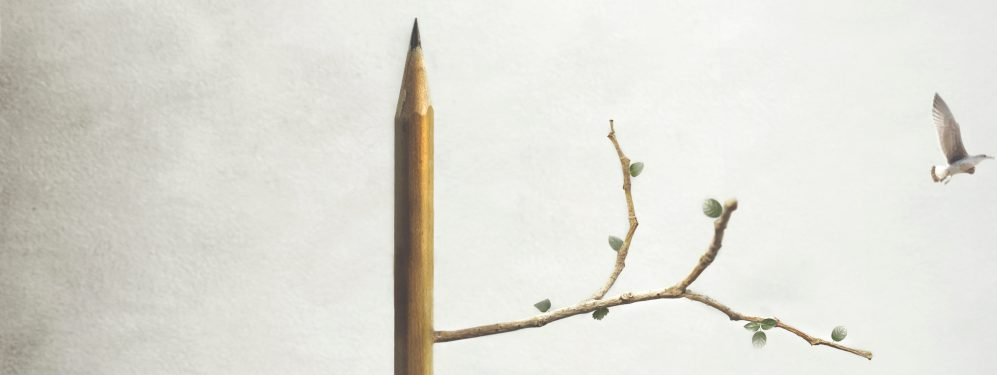
Welcome to Unscripted, a weekly reflection on what it means to live without inherited stories, rigid identities, or predetermined purpose. Each Monday, I explore a different part of this shift toward presence and clarity—one moment, one breath, one pencil stroke at a time.
We rarely choose the stories that first shape us.
They arrive quietly—through family, culture, religion, education, praise, warning, repetition. By the time we’re old enough to question them, they already feel like truth. Not stories at all. Just “the way things are.”
This is how inherited stories work.
They don’t announce themselves as narratives.
They present themselves as reality.
And because of that, they shape our lives far more than we realize.
What I Mean by “Inherited Stories”
An inherited story isn’t a single belief.
It’s a framework—a background script that tells you:
- who you are
- what matters
- what success looks like
- what failure means
- what you’re allowed to want
- what you should fear
- what must never be questioned
Some inherited stories are explicit.
Others are absorbed through tone, silence, or reward.
“You’re the responsible one.”
“Don’t rock the boat.”
“Good people don’t think that way.”
“This is just how life is.”
“You should be grateful.”
“That’s selfish.”
“That’s unrealistic.”
Over time, these stories stop sounding like voices.
They start sounding like you.
How Stories Begin to Shrink a Life
Most inherited stories begin as protection.
They keep families stable.
They maintain order.
They offer certainty.
They reduce anxiety.
But what protects early on often constrains later.
A story that once helped you survive can quietly limit who you’re allowed to become.
You may notice it when:
- curiosity feels dangerous
- rest feels irresponsible
- joy carries guilt
- silence feels unproductive
- stillness feels wrong
- your body says “no,” but the story says “push”
This is not failure.
It’s friction between lived experience and an outdated script.
Why These Stories Are Hard to See
Inherited stories don’t shrink us through force.
They shrink us through familiarity.
They feel normal.
Responsible.
Mature.
Even virtuous.
And because they’re often rewarded—socially, emotionally, morally—we rarely pause to ask:
Is this actually true?
Is this still mine?
Does this fit the life I’m living now?
Instead, we try harder to live inside the story.
That effort is exhausting.
The Cost of an Unexamined Story
Living inside an inherited story comes with a quiet cost:
- chronic tension
- a sense of never being “enough”
- constant comparison
- fear of slowing down
- fear of disappointing others
- fear of disappointing the version of yourself the story requires
You may appear successful.
Capable.
Put together.
And yet feel strangely absent from your own life.
This isn’t because something is wrong with you.
It’s because the story is no longer aligned with reality.
The Pencil as a Tool for Seeing
This is where the pencil matters.
A pencil invites examination without commitment.
It lets you write something down without declaring it final.
It allows erasure.
Revision.
Curiosity.
When you put an inherited story on paper, something subtle happens:
It stops being invisible.
Writing doesn’t judge the story.
It simply makes it visible.
And once visible, it can be questioned.
A Simple Way to Notice Your Stories
You don’t need to dismantle your life to begin.
You don’t need to confront anyone.
You don’t need new beliefs.
Just notice where tension appears.
Some gentle questions to explore—not answer all at once:
- What do I feel pressured to be?
- What am I afraid would happen if I stopped trying so hard?
- What feels “not allowed,” even though no one is forbidding it?
- What voice appears when I rest, slow down, or change direction?
- Whose approval am I still seeking?
Write whatever arises.
No fixing.
No correcting.
The pencil moves.
You watch.
Seeing Without Replacing
This part matters.
The goal is not to swap one story for a better one.
Not to adopt a new identity.
Not to declare independence from the past.
The Pencil-Driven Life doesn’t ask you to replace inherited stories.
It asks you to see them.
Because when a story is seen clearly, its grip loosens naturally.
What once felt absolute begins to feel optional.
What once felt mandatory begins to feel negotiable.
And space appears.
Living Without a Script Begins Here
Living without a script doesn’t mean living without values or structure.
It means no longer mistaking inherited narratives for unquestionable truth.
Presence allows you to notice when a story is operating.
Clarity allows you to decide whether it still belongs.
And often, nothing dramatic happens.
You simply:
- respond instead of react
- rest without explanation
- choose differently
- let go of a role
- stop defending an identity
- breathe more easily
This is not rebellion.
It’s alignment.
A Quiet Invitation
You don’t need to name every story today.
You don’t need to confront the biggest ones first.
Start small.
Notice the sentence that appears when you slow down.
Notice the feeling that says, “I shouldn’t be doing this.”
Notice the voice that insists, “This is just how I am.”
Write it down.
Not to judge it.
Not to erase it.
Just to see it.
Because the moment a story is seen clearly, it stops running the show.
And in that space—
something wider becomes possible.
*Next week in Unscripted:
*”When Life Unravels Slowly — And Why That’s a Gift” — grounding the philosophy in your personal experience without rehashing the past.
 Richard L. Fricks