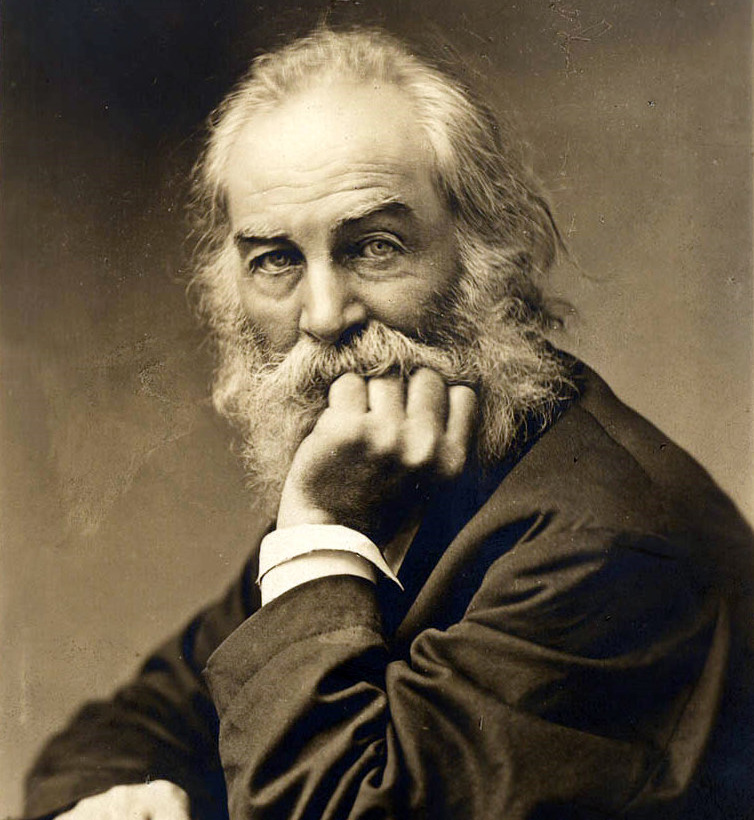
“I can conceive of no better service… than boldly exposing the weakness, liabilities and infinite corruptions of democracy.”
BY MARIA POPOVA
“Progress is never permanent, will always be threatened, must be redoubled, restated and reimagined if it is to survive,” Zadie Smith wrote in her spectacular essay on optimism and despair. The illusion of permanent progress inflicts a particularly damning strain of despair as we witness the disillusioning undoing of triumphs of democracy and justice generations in the making — despair preventable only by taking a wider view of history in order to remember that democracy advances in fits and starts, in leaps and backward steps, but advances nonetheless, on timelines exceeding any individual lifetime. Amid our current atmosphere of presentism bias and extreme narrowing of perspective, it is not merely difficult but downright countercultural to resist the ahistorical panic by taking such a telescopic view — lucid optimism that may be our most unassailable form of resistance to the corruptions and malfunctions of democracy.
I can conceive of no better service in the United States, henceforth, by democrats of thorough and heart-felt faith, than boldly exposing the weakness, liabilities and infinite corruptions of democracy.
Having lived and saved lives through the Civil War, having seen the swell of “vast crops of poor, desperate, dissatisfied, nomadic, miserably-waged populations,” having witnessed the corrosion of idealism and the collapse of democratic values into corruption and complacency, Whitman still faces a dispiriting landscape with a defiant and irrepressible optimism — our mightiest and most countercultural act of courage, then and now and always:
Though I think I fully comprehend the absence of moral tone in our current politics and business, and the almost entire futility of absolute and simple honor as a counterpoise against the enormous greed for worldly wealth, with the trickeries of gaining it, all through society in our day, I still do not share the depression and despair on the subject which I find possessing many good people.
Zooming out of the narrow focus of his cultural moment — as we would be well advised to do with ours — Whitman takes a telescopic perspective of time, progress, and social change, and considers what it really takes to win the future:
The advent of America, the history of the past century, has been the first general aperture and opening-up to the average human commonalty, on the broadest scale, of the eligibilities to wealth and worldly success and eminence, and has been fully taken advantage of; and the example has spread hence, in ripples, to all nations. To these eligibilities — to this limitless aperture, the race has tended, en-masse, roaring and rushing and crude, and fiercely, turbidly hastening — and we have seen the first stages, and are now in the midst of the result of it all, so far. But there will certainly ensue other stages, and entirely different ones. In nothing is there more evolution than the American mind. Soon, it will be fully realized that ostensible wealth and money-making, show, luxury, &c., imperatively necessitate something beyond — namely, the sane, eternal moral and spiritual-esthetic attributes, elements… Soon, it will be understood clearly, that the State cannot flourish, (nay, cannot exist,) without those elements. They will gradually enter into the chyle of sociology and literature. They will finally make the blood and brawn of the best American individualities of both sexes.
American Democracy, in its myriad personalities, in factories, work-shops, stores, offices — through the dense streets and houses of cities, and all their manifold sophisticated life — must either be fibred, vitalized, by regular contact with out-door light and air and growths, farm-scenes, animals, fields, trees, birds, sun-warmth and free skies, or it will morbidly dwindle and pale. We cannot have grand races of mechanics, work people, and commonalty, (the only specific purpose of America,) on any less terms. I conceive of no flourishing and heroic elements of Democracy in the United States, or of Democracy maintaining itself at all, without the Nature-element forming a main part — to be its health-element and beauty-element — to really underlie the whole politics, sanity, religion and art of the New World.
“Human being, vegetables or cosmic dust, we all dance to an invisible tune, intoned in the distance by a mysterious player.”
BY MARIA POPOVA
We are accidents of biochemistry and chance, moving through the world waging wars and writing poems, spellbound by the seductive illusion of the self, every single one of our atoms traceable to some dead star.
In the interlude between the two World Wars, days after the stock market crash that sparked the Great Depression, the German-American poet and future Nazi sympathizer George Sylvester Viereck sat down with Albert Einstein (March 14, 1879–April 18, 1955) for what became his most extensive interview about life — reflections ranging from science to spirituality to the elemental questions of existence. It was published in the Saturday Evening Post on October 29, 1929 — a quarter century after Einstein’s theory of relativity reconfigured our basic understanding of reality with its revelation that space and time are the warp and weft threads of a single fabric, along the curvature of which everything we are and everything we know is gliding.
Albert Einstein by Lotte Jacobi. (University of New Hampshire Museum of Art.)
Considering the helplessness individual human beings feel before the immense geopolitical forces that had hurled the world into its first global war and the decisions individual political leaders were making — decisions already inclining the world toward a second — Einstein aims in his sensitive intellect at the fundamental reality of existence:
I am a determinist. As such, I do not believe in free will. The Jews believe in free will. They believe that man shapes his own life. I reject that doctrine philosophically. In that respect I am not a Jew… I believe with Schopenhauer: We can do what we wish, but we can only wish what we must. Practically, I am, nevertheless, compelled to act is if freedom of the will existed. If I wish to live in a civilized community, I must act as if man is a responsible being.
When asked about any personal responsibility for his own staggering achievements, he points a steadfast finger at the nonexistence of free will:
I claim credit for nothing. Everything is determined, the beginning as well as the end, by forces over which we have no control. It is determined for the insect as well as for the star. Human being, vegetables or cosmic dust, we all dance to an invisible tune, intoned in the distance by a mysterious player.
For Einstein, the most alive part of the mystery we live with — the mystery we are — is the imagination, that supreme redemption of human life from the prison of determinism. With an eye to his discovery of relativity, he reflects:
I believe in intuitions and inspirations. I sometimes feel that I am right. I do not know that I am. When two expeditions of scientists, funded by the Royal Academy, went forth to test my theory of relativity, I was convinced that their conclusions would totally tally with my hypothesis. I was not surprised when the eclipse of May 29, 1919, confirmed my intuitions. I would have been surprised if I had been wrong.
[…]
I am enough of an artist to draw freely from the imagination. Imagination is more important than knowledge. Knowledge is limited. Imagination encircles the world.
“Nothing is more unbearable, once one has it, than freedom.”
BY MARIA POPOVA
We, none of us, choose the century we are born in, or the skin we are born in, or the chromosomes we are born with. We don’t choose the incredibly narrow band of homeostasis within which we can be alive at all — in bodies that die when their temperature rises above 40 degrees Celsius or drops below 20, living on a planet that would be the volcanic inferno of Venus or the frigid desert of Mars if it were just a little closer to or farther from its star.
And yet, within these narrow parameters of being, nothing appeals to us more than the notion of freedom — the feeling that we are free, that intoxicating illusion with which we blunt the hard fact that we are not. The more abstract and ideological the realm, the more vehemently we can insist that moral choice in specific situations within narrow parameters proves a totality of freedom. But the closer the question moves to the core of our being, the more clearly and catastrophically the illusion crumbles — nowhere more helplessly than in the most intimate realm of experience: love. Try to will yourself into — or out of — loving someone, try to will someone into loving you, and you collide with the fundamental fact that we do not choose whom we love. We could not choose, because we do not choose who and what we are, and in any love that is truly love, we love with everything we are.
James Baldwin (August 2, 1924–December 1, 1987) was a young man — young and brilliant and aflame with life, blazing against society’s illusion of stability and control — when he composed his stunning semi-autobiographical novel Giovanni’s Room (public library), making the paradox of freedom its animating theme.James Baldwin
Baldwin writes:
Nothing is more unbearable, once one has it, than freedom.
To bear the unbearable, Baldwin intimates, we construct and cling to artificial structures of choice, personal and social — habits, routines, the contractual commitment of marriage, the moralistic frameworks that indict one kind of love as good and another as bad. Today, Giovanni’s Room is celebrated as a pioneering liberation and representation of LGBTQ+ love — a term that did not exist in Baldwin’s day, for it speaks to a cultural silence so deep then that there was no adequate language for it. (The language we use today is hardly adequate — but language is always a placeholder for a culture’s evolving understanding of itself, the space in which we work out our concepts as we learn how to think about them in learning how to speak of them.) Baldwin rose against a tidal force of cowardice from publishers at a time when the Bible of psychiatry — the Diagnostic Manual of Mental Disorders — classified love as so many of us know it as a “sociopathic personality disturbance.” At the center of his act of courage and resistance is the recognition that the experience of love is our most primal confrontation with the illusion of freedom.
People can’t, unhappily, invent their mooring posts, their lovers and their friends, anymore than they can invent their parents. Life gives these and also takes them away and the great difficulty is to say Yes to life.
In the final years of his life, he would look back on the crucible of these ideas, describing Giovanni’s Room as a book not about one kind of love or another but “about what happens to you if you’re afraid to love anybody.” In his most intimate interview, he would recount the best advice he ever received on the transcendent, terrifying choicelessness of love and the implicit, seemingly paradoxical demand for choice within it — advice given him by an old friend:
You have to go the way your blood beats. If you don’t live the only life you have, you won’t live some other life, you won’t live any life at all.
The neuroscience, physics, and philosophy of freedom in a universe of fixed laws.
BY MARIA POPOVA
“Nothing is more unbearable, once one has it, than freedom,” James Baldwin observed in recognizing how limited our freedom is and how illusory our choices, for he knew that “people can’t, unhappily, invent their mooring posts, their lovers and their friends, anymore than they can invent their parents.”
And yet we move through the world with an air of agency, without which life would feel unlivable — a gauntlet of causality stretching all the way back to the Big Bang, into which we are hurled as helpless pawns in some cosmic game that has already played out. It is a disquieting notion — one we have countered with our dream of free will, continually mistaking the feeling of freedom for the fact of freedom.
But even within the presets and parameters conferred upon us by the cosmic and cultural forces that made us, there exists a margin of movement in which notions like control, agency, and moral responsibility live. In that margin, we become fully human.
That year, Marie Howe — one of our great living poets, who awakens the creaturely conscience of the next generation in her ecopoetry class at Sarah Lawrence College — premiered a kindred poem that stilled the crowd constellating at Pioneer Works before erupting into a thousand-bodied standing ovation. While inspired by Stephen Hawking (who had just returned his stardust to the universe several weeks earlier) and titled after his trailblazing work on black holes and singularities — work that shines a sidewise gleam on the origin of everything — the poem is at bottom a stunning meditation on the interconnectedness of belonging across space and time, across selves and species, across the myriad artificial unbelongings we have manufactured as we have drifted further and further from our elemental nature. Its closing line is an invocation, an incantation, ending with a timeless word of staggering resonance today: home.
As we now stand on a profound precipice two years later — facing our deeply interconnected ecology of being on this shared cosmic home as we look back on fifty years of Earth Day built on Carson’s legacy, facing the most intimate meaning of home in our isolated shelters scattered across this “small and lonely planet” — the poem pulsates with a whole new meaning, as all great poems do in the veins of time.
And so, as a special treat for the 2020 Universe in Verse, streaming on April 25 into millions of homes around this sole shared home, I teamed up with SALT Project — a kindred clan of visual storytellers, who have won some hearts and won some Emmys with their soulful shorts ranging from book trailers to bird migration documentaries — to bring Howe’s “Singularity” to life in a transcendent short film, illustrated by paper collage artist Elena Skoreyko Wagner and featuring original music by the heroic cellist Zoë Keating, who was present in atoms at the 2018 show when “Singularity” premiered and who also composed the score for “Antidotes to Fear of Death” — the headlining miracle of a poem for the 2020 show.
It is with exuberant joy and gratitude that I share, as a special taste of the 2020 Universe in Verse, this symphony of beauty and perspective, over which so many talented women have labored with so much heart and generosity of spirit .
SINGULARITY by Marie Howe
(after Stephen Hawking)
Do you sometimes want to wake up to the singularity we once were?
so compact nobody needed a bed, or food or money —
nobody hiding in the school bathroom or home alone
pulling open the drawer where the pills are kept.
For every atom belonging to me as good Belongs to you. Remember?
There was no Nature. No them. No tests
to determine if the elephant grieves her calf or if
the coral reef feels pain. Trashed oceans don’t speak English or Farsi or French;
would that we could wake up to what we were — when we were ocean and before that
to when sky was earth, and animal was energy, and rock was liquid and stars were space and space was not
at all — nothing
before we came to believe humans were so important before this awful loneliness.
Can molecules recall it? what once was? before anything happened?
No I, no We, no one. No was No verb no noun only a tiny tiny dot brimming with
“There is no human being on earth capable of declaring with certitude who he is.”
BY MARIA POPOVA
It takes a great sobriety of spirit to know your own depths — and your limits. It takes a special grandeur of spirit to know the limits of your self-knowledge.
A recent brush with those limits reminded me of a short, stunning essay by Jorge Luis Borges (August 24, 1899–June 14, 1986) titled “The Mirror of Enigmas,” found in his Labyrinths (public library) — the 1962 collection of stories, essays, and parables that gave us his timeless parable of the divided self and his classic refutation of time.
Titling the essay after St. Paul’s famous cryptic statement Videmus nunc per speculum in aenigmate — loosely translated as We now see through a mirror, enigmatically — Borges considers the tribe of thinkers who have perched their efforts to reconcile knowledge and mystery, the scientific and the spiritual, on the assumption that “the history of the universe — and in it our lives and the most tenuous detail of our lives — has an incalculable, symbolical value.” With his characteristic poetic precision, he condenses this common and somewhat tired hypothesis:
The outer world — forms, temperatures, the moon — is a language humans have forgotten or which we can scarcely distinguish.
No one, Borges argues, has taken this precarious hypothesis to more surefooted ground than the French novelist, poet, and philosophical pamphleteer Léon Bloy (July 11, 1846–November 3, 1917).
Digging through the surviving fragments of Bloy’s written thought, he surfaces a passage emblematic of Bloy’s uncommon physics of the metaphysical — an 1894 passage fomented by his interest in the teachings of St. Paul. Translated by Borges himself, Bloy writes:
[St. Paul’s statement] would be a skylight through which one might submerge himself in the true Abyss, which is the soul of man. The terrifying immensity of the firmament’s abyss is an illusion, an external reflection of our own abysses, perceived “in a mirror.” We should invert our eyes and practice a sublime astronomy in the infinitude of our heart… If we see the Milky Way, it is because it actually exists in our souls.
A century before Milan Kundera considered the eternal challenge of knowing what we really want in his classic novel The Unbearable Lightness of Being, Bloy shines a sidewise gleam on the elemental self-opacity with and within which we live:
Everything is a symbol, even the most piercing pain. We are dreamers who shout in our sleep. We do not know whether the things afflicting us are the secret beginning of our ulterior happiness or not.
These ideas haunted Bloy, animated his pamphlets, his poems, his novels, then culminated in his 1912 book-length essay The Soul of Napoleon — a philosophical prose poem that sets out, as Borges puts it, “to decipher the symbol Napoleon, considered as the precursor of another hero — man and symbol as well — who is hidden in the future.” Bloy, translated again by Borges, writes in this uncommon work:
Every man* is on earth to symbolize something he is ignorant of and to realize a particle or a mountain of the invisible materials that will serve to build the City of God.
[…]
There is no human being on earth capable of declaring with certitude who he is. No one knows what he has come into this world to do, what his acts correspond to, his sentiments, his ideas, or what his real name is, his enduring Name in the register of Light… History is an immense liturgical text where the iotas and the dots are worth no less than the entire verses or chapters, but the importance of one and the other is indeterminable and profoundly hidden.
But as you contemplate these existential immensities, you face the limits of contemplation — the limits of meaning-making in relation to elemental truth.
Borges recognized this, closing the essay with by acknowledging “it is doubtful that the world has a meaning… even more doubtful that it has a double or triple meaning.”
I recognized this upon sitting down in for morning meditation in my garden after a nightlong storm and watching an almost otherworldly deposit roll onto the cushion: a tiny, perfect robin egg, improbable and sorrowful in its displaced blue beauty.
Singing Only Is by Maria Popova. (Available as a print.)
I considered climbing the neighbor’s colossal tree to find the storm-shaken nest and reinstate the egg. (Perfectly, the tree is an Ailanthus altissima, known as “tree-of-heaven” in its native China — a migrant now rooted in Brooklyn, like me.)
But then I considered this chance-event as the product of the same impartial forces that deposited the exact spermatozoid of my father’s onto my mother’s ovum at the exact moment to produce the chance-event of my particular configuration of atoms animated by this particular consciousness that just is, the consciousness mourning the robin that will never be. To call one expression of chance good and another bad is mere human hubris — the hubris of narrative and interpretation superimposed on an impartial universe devoid of why, awash in is.
No one knows the meaning of why anything comes to be, or doesn’t. Here is this pale blue orb, dropped from the tree-of-heaven onto a tiny Brooklyn point on the face of this Pale Blue Dot, itself a “mote of dust suspended in a sunbeam” within an immense and impartial universe, conceived in the creation myths and early scientific theories of our meaning-hungry ancestors as a great cosmic egg.
Here I am, and here you are, and here is the robin’s egg in its near-life collision with chance. To ask for its meaning is as meaningless a question as to demand the meaning of a color or the meaning of a bird. On this particular day, at this particular moment — the only locus of aliveness we ever have — the contour of meaning comes in shades of blue, singing only is.
“Everything depends on the individual human being, regardless of how small a number of like-minded people there is… on each person… creatively making the meaning of life a reality in his or her own being.”
BY MARIA POPOVA
“To decide whether life is worth living is to answer the fundamental question of philosophy,” Albert Camus wrote in his classic 119-page essay The Myth of Sisyphus in 1942. “Everything else… is child’s play; we must first of all answer the question.”
Sometimes, life asks this question not as a thought experiment but as a gauntlet hurled with the raw brutality of living.
That selfsame year, the young Viennese neurologist and psychiatrist Viktor Frankl (March 26, 1905–September 2, 1997) was taken to Auschwitz along with more than a million human beings robbed of the basic right to answer this question for themselves, instead deemed unworthy of living. Some survived by reading. Some through humor. Some by pure chance. Most did not. Frankl lost his mother, his father, and his brother to the mass murder in the concentration camps. His own life was spared by the tightly braided lifeline of chance, choice, and character.
Viktor Frankl
A mere eleven months after surviving the unsurvivable, Frankl took up the elemental question at the heart of Camus’s philosophical parable in a set of lectures, which he himself edited into a slim, potent book published in Germany in 1946, just as he was completing Man’s Search for Meaning.
As our collective memory always tends toward amnesia and erasure — especially of periods scarred by civilizational shame — these existential infusions of sanity and lucid buoyancy fell out of print and were soon forgotten. Eventually rediscovered — as is also the tendency of our collective memory when the present fails us and we must lean for succor on the life-tested wisdom of the past — they are now published in English for the first time as Yes to Life: In Spite of Everything (public library).
Frankl begins by considering the question of whether life is worth living through the central fact of human dignity. Noting how gravely the Holocaust disillusioned humanity with itself, he cautions against the defeatist “end-of-the-world” mindset with which many responded to this disillusionment, but cautions equally against the “blithe optimism” of previous, more naïve eras that had not yet faced this gruesome civilizational mirror reflecting what human beings are capable of doing to one another. Both dispositions, he argues, stem from nihilism. In consonance with his colleague and contemporary Erich Fromm’s insistence that we can only transcend the shared laziness of optimism and pessimism through rational faith in the human spirit, Frankl writes:
We cannot move toward any spiritual reconstruction with a sense of fatalism such as this.
Liminal Worlds by Maria Popova. (Available as a print.)
Today every impulse for action is generated by the knowledge that there is no form of progress on which we can trustingly rely. If today we cannot sit idly by, it is precisely because each and every one of us determines what and how far something “progresses.” In this, we are aware that inner progress is only actually possible for each individual, while mass progress at most consists of technical progress, which only impresses us because we live in a technical age.
Insisting that it takes a measure of moral strength not to succumb to nihilism, be it that of the pessimist or of the optimist, he exclaims:
Give me a sober activism anytime, rather than that rose-tinted fatalism!
How steadfast would a person’s belief in the meaningfulness of life have to be, so as not to be shattered by such skepticism. How unconditionally do we have to believe in the meaning and value of human existence, if this belief is able to take up and bear this skepticism and pessimism?
[…]
Through this nihilism, through the pessimism and skepticism, through the soberness of a “new objectivity” that is no longer that “new” but has grown old, we must strive toward a new humanity.
Sophie Scholl, upon whom chance did not smile as favorably as it did upon Frankl, affirmed this notion with her insistence that living with integrity and belief in human goodness is the wellspring of courage as she courageously faced her own untimely death in the hands of the Nazis. But while the Holocaust indisputably disenchanted humanity, Frankl argues, it also indisputably demonstrated “that what is human is still valid… that it is all a question of the individual human being.” Looking back on the brutality of the camps, he reflects:
What remained was the individual person, the human being — and nothing else. Everything had fallen away from him during those years: money, power, fame; nothing was certain for him anymore: not life, not health, not happiness; all had been called into question for him: vanity, ambition, relationships. Everything was reduced to bare existence. Burnt through with pain, everything that was not essential was melted down — the human being reduced to what he was in the last analysis: either a member of the masses, therefore no one real, so really no one — the anonymous one, a nameless thing (!), that “he” had now become, just a prisoner number; or else he melted right down to his essential self.
In a sentiment that bellows from the hallways of history into the great vaulted temple of timeless truth, he adds:
Everything depends on the individual human being, regardless of how small a number of like-minded people there is, and everything depends on each person, through action and not mere words, creatively making the meaning of life a reality in his or her own being.
Frankl then turns to the question of finding a sense of meaning when the world gives us ample reasons to view life as meaningless — the question of “continuing to live despite persistent world-weariness.” Writing in the post-war pre-dawn of the golden age of consumerism, which has built a global economy by continually robbing us of the sense of meaning and selling it back to us at the price of the product, Frankl first dismantles the notion that meaning is to be found in the pursuit and acquisition of various pleasures:
Let us imagine a man who has been sentenced to death and, a few hours before his execution, has been told he is free to decide on the menu for his last meal. The guard comes into his cell and asks him what he wants to eat, offers him all kinds of delicacies; but the man rejects all his suggestions. He thinks to himself that it is quite irrelevant whether he stuffs good food into the stomach of his organism or not, as in a few hours it will be a corpse. And even the feelings of pleasure that could still be felt in the organism’s cerebral ganglia seem pointless in view of the fact that in two hours they will be destroyed forever. But the whole of life stands in the face of death, and if this man had been right, then our whole lives would also be meaningless, were we only to strive for pleasure and nothing else — preferably the most pleasure and the highest degree of pleasure possible. Pleasure in itself cannot give our existence meaning; thus the lack of pleasure cannot take away meaning from life, which now seems obvious to us.
He quotes a short verse by the great Indian poet and philosopher Rabindranath Tagore — the first non-European to win the Nobel Prize, Einstein’s onetime conversation partner in contemplating science and spirituality, and a man who thought deeply about human nature:
I slept and dreamt that life was joy. I awoke and saw that life was duty. I worked — and behold, duty was joy.
In consonance with Camus’s view of happiness as a moral obligation — an outcome to be attained not through direct pursuit but as a byproduct of living with authenticity and integrity — Frankl reflects on Tagore’s poetic point:
So, life is somehow duty, a single, huge obligation. And there is certainly joy in life too, but it cannot be pursued, cannot be “willed into being” as joy; rather, it must arise spontaneously, and in fact, it does arise spontaneously, just as an outcome may arise: Happiness should not, must not, and can never be a goal, but only an outcome; the outcome of the fulfillment of that which in Tagore’s poem is called duty… All human striving for happiness, in this sense, is doomed to failure as luck can only fall into one’s lap but can never be hunted down.
At this point it would be helpful [to perform] a conceptual turn through 180 degrees, after which the question can no longer be “What can I expect from life?” but can now only be “What does life expect of me?” What task in life is waiting for me?
Now we also understand how, in the final analysis, the question of the meaning of life is not asked in the right way, if asked in the way it is generally asked: it is not we who are permitted to ask about the meaning of life — it is life that asks the questions, directs questions at us… We are the ones who must answer, must give answers to the constant, hourly question of life, to the essential “life questions.” Living itself means nothing other than being questioned; our whole act of being is nothing more than responding to — of being responsible toward — life. With this mental standpoint nothing can scare us anymore, no future, no apparent lack of a future. Because now the present is everything as it holds the eternally new question of life for us.
Frankl adds a caveat of tremendous importance — triply so in our present culture of self-appointed gurus, self-help demagogues, and endless podcast feeds of interviews with accomplished individuals attempting to distill a universal recipe for self-actualization:
The question life asks us, and in answering which we can realize the meaning of the present moment, does not only change from hour to hour but also changes from person to person: the question is entirely different in each moment for every individual.
We can, therefore, see how the question as to the meaning of life is posed too simply, unless it is posed with complete specificity, in the concreteness of the here and now. To ask about “the meaning of life” in this way seems just as naive to us as the question of a reporter interviewing a world chess champion and asking, “And now, Master, please tell me: which chess move do you think is the best?” Is there a move, a particular move, that could be good, or even the best, beyond a very specific, concrete game situation, a specific configuration of the pieces?
What emerges from Frankl’s inversion of the question is the sense that, just as learning to die is learning to meet the universe on its own terms, learning to live is learning to meet the universe on its own terms — terms that change daily, hourly, by the moment:
One way or another, there can only be one alternative at a time to give meaning to life, meaning to the moment — so at any time we only need to make one decision about how we must answer, but, each time, a very specific question is being asked of us by life. From all this follows that life always offers us a possibility for the fulfillment of meaning, therefore there is always the option that it has a meaning. One could also say that our human existence can be made meaningful “to the very last breath”; as long as we have breath, as long as we are still conscious, we are each responsible for answering life’s questions.
The fact, and only the fact, that we are mortal, that our lives are finite, that our time is restricted and our possibilities are limited, this fact is what makes it meaningful to do something, to exploit a possibility and make it become a reality, to fulfill it, to use our time and occupy it. Death gives us a compulsion to do so. Therefore, death forms the background against which our act of being becomes a responsibility.
[…]
Death is a meaningful part of life, just like human suffering. Both do not rob the existence of human beings of meaning but make it meaningful in the first place. Thus, it is precisely the uniqueness of our existence in the world, the irretrievability of our lifetime, the irrevocability of everything with which we fill it — or leave unfulfilled — that gives our existence significance. But it is not only the uniqueness of an individual life as a whole that gives it importance, it is also the uniqueness of every day, every hour, every moment that represents something that loads our existence with the weight of a terrible and yet so beautiful responsibility! Any hour whose demands we do not fulfill, or fulfill halfheartedly, this hour is forfeited, forfeited “for all eternity.” Conversely, what we achieve by seizing the moment is, once and for all, rescued into reality, into a reality in which it is only apparently “canceled out” by becoming the past. In truth, it has actually been preserved, in the sense of being kept safe. Having been is in this sense perhaps even the safest form of being. The “being,” the reality that we have rescued into the past in this way, can no longer be harmed by transitoriness.
In the remainder of the slender and splendid Yes to Life, Frankl goes on to explore how the imperfections of human nature add to, rather than subtract from, the meaningfulness of our lives and what it means for us to be responsible for our own existence. Complement it with Mary Shelley, writing two centuries ago about a pandemic-savaged world, on what makes life worth living, Walt Whitman contemplating this question after surviving a paralytic stroke, and a vitalizing cosmic antidote to the fear of death from astrophysicist and poet Rebecca Elson, then revisit Frankl on humor as lifeline to sanity and survival.
“Life is wasted when we make it more terrifying, precisely because it is so easy to do so.”
BY MARIA POPOVA
In a world pocked by cynicism and pummeled by devastating news, to find joy for oneself and spark it in others, to find hope for oneself and spark it in others, is nothing less than a countercultural act of courage and resistance. This is not a matter of denying reality — it is a matter of discovering a parallel reality where joy and hope are equally valid ways of being. To live there is to live enchanted with the underlying wonder of reality, beneath the frightful stories we tell ourselves and are told about it.
Having lost his mother to suicide, having lived through two World Wars, the Belgian surrealist artist René Magritte (November 21, 1898–August 15, 1967) devoted his life and his art to creating such a parallel world of enchantment.
The Lovers II by René Magritte, 1928
In a 1947 interview included in his Selected Writings (public library) — the first release of Magritte’s manifestos, interviews, and other prose in English, thanks to the heroic efforts of scholar Kathleen Rooney — he reflects:
Experience of conflict and a load of suffering has taught me that what matters above all is to celebrate joy for the eyes and the mind. It is much easier to terrorize than to charm… I live in a very unpleasant world because of its routine ugliness. That’s why my painting is a battle, or rather a counter-offensive.
Magritte revisits the subject in his manifesto Surrealism in the Sunshine, indicting the cultural tyranny of pessimism and fear-mongering — a worldview we have been sold under the toxic premise that if we focus on the worst of reality, we are seeing it more clearly and would be prepared to protect ourselves from its devastations. A quarter century before the great humanistic philosopher and psychologist Erich Fromm insisted that “pessimism [is] an alienated form of despair,” Magritte writes:
We think that if life is seen in a tragic light it is seen more clearly, and that we are then in touch with the mystery of existence. We even believe that we can reach objectivity thanks to this revelation. The greater the terror, the greater the objectivity.
This notion is the result of philosophies (materialist or idealist), that claim that the real world is knowable, that matter is of the same essence as mind, since the perfect mind would no longer be distinct from the matter it explains and would thus deny it. The man on the street is unknowingly in harmony with this idea: he thinks there is a mystery, he thinks he must live and suffer and that the very meaning of life is that it is a dream-nightmare.
Our mental universe (which contains all we know, feel or are afraid of in the real world we live in) may be enchanting, happy, tragic, comic, etc.
We are capable of transforming it and giving it a charm which makes life more valuable. More valuable since life becomes more joyful, thanks to the extraordinary effort needed to create this charm.
Life is wasted when we make it more terrifying, precisely because it is so easy to do so. It is an easy task, because people who are intellectually lazy are convinced that this miserable terror is “the truth”, that this terror is knowledge of the “extra-mental” world. This is an easy way out, resulting in a banal explanation of the world as terrifying.
Creating enchantment is an effective means of counteracting this depressing, banal habit.
Why prestige is the enemy of passion, or how to master the balance of setting boundaries and making friends.
BY MARIA POPOVA
“Find something more important than you are,” philosopher Dan Dennett once said in discussing the secret of happiness, “and dedicate your life to it.” But how, exactly, do we find that? Surely, it isn’t by luck. I myself am a firm believer in the power of curiosity and choice as the engine of fulfillment, but precisely how you arrive at your true calling is an intricate and highly individual dance of discovery. Still, there are certain factors — certain choices — that make it easier. Gathered here are insights from seven thinkers who have contemplated the art-science of making your life’s calling a living.
PAUL GRAHAM ON HOW TO DO WHAT YOU LOVE
Every few months, I rediscover and redevour Y-Combinator founder Paul Graham’s fantastic 2006 article, How to Do What You Love. It’s brilliant in its entirety, but the part I find of especial importance and urgency is his meditation on social validation and the false merit metric of “prestige”:
What you should not do, I think, is worry about the opinion of anyone beyond your friends. You shouldn’t worry about prestige. Prestige is the opinion of the rest of the world.
[…]
Prestige is like a powerful magnet that warps even your beliefs about what you enjoy. It causes you to work not on what you like, but what you’d like to like.
[…]
Prestige is just fossilized inspiration. If you do anything well enough, you’ll make it prestigious. Plenty of things we now consider prestigious were anything but at first. Jazz comes to mind—though almost any established art form would do. So just do what you like, and let prestige take care of itself.
Prestige is especially dangerous to the ambitious. If you want to make ambitious people waste their time on errands, the way to do it is to bait the hook with prestige. That’s the recipe for getting people to give talks, write forewords, serve on committees, be department heads, and so on. It might be a good rule simply to avoid any prestigious task. If it didn’t suck, they wouldn’t have had to make it prestigious.
Alain de Botton, modern philosopher and creator of the “literary self-help genre”, is a keen observer of the paradoxes and delusions of our cultural conceits.
In The Pleasures and Sorrows of Work, he takes his singular lens of wit and wisdom to the modern workplace and the ideological fallacies of “success.”
One of the interesting things about success is that we think we know what it means. A lot of the time our ideas about what it would mean to live successfully are not our own. They’re sucked in from other people. And we also suck in messages from everything from the television to advertising to marketing, etcetera. These are hugely powerful forces that define what we want and how we view ourselves. What I want to argue for is not that we should give up on our ideas of success, but that we should make sure that they are our own. We should focus in on our ideas and make sure that we own them, that we’re truly the authors of our own ambitions. Because it’s bad enough not getting what you want, but it’s even worse to have an idea of what it is you want and find out at the end of the journey that it isn’t, in fact, what you wanted all along.
HUGH MACLEOD ON SETTING BOUNDARIES
Cartoonist Hugh MacLeod is as well-known for his irreverent doodles as he is for his opinionated musings on creativity, culture, and the meaning of life. In Ignore Everybody: and 39 Other Keys to Creativity, he gathers his most astute advice on the creative life. Particularly resonant with my own beliefs about the importance of choices is this insight about setting boundaries:
16. The most important thing a creative person can learn professionally is where to draw the red line that separates what you are willing to do, and what you are not.
Art suffers the moment other people start paying for it. The more you need the money, the more people will tell you what to do. The less control you will have. The more bullshit you will have to swallow. The less joy it will bring. Know this and plan accordingly.
Later, MacLeod echoes Graham’s point about prestige above:
28. The best way to get approval is not to need it.
This is equally true in art and business. And love. And sex. And just about everything else worth having.”
In this excerpt, originally featured here in January, Hyde articulates the essential difference between work and creative labor, understanding which takes us a little closer to the holy grail of vocational fulfillment:
Work is what we do by the hour. It begins and, if possible, we do it for money. Welding car bodies on an assembly line is work; washing dishes, computing taxes, walking the rounds in a psychiatric ward, picking asparagus — these are work. Labor, on the other hand, sets its own pace. We may get paid for it, but it’s harder to quantify… Writing a poem, raising a child, developing a new calculus, resolving a neurosis, invention in all forms — these are labors.
Work is an intended activity that is accomplished through the will. A labor can be intended but only to the extent of doing the groundwork, or of not doing things that would clearly prevent the labor. Beyond that, labor has its own schedule.
…
There is no technology, no time-saving device that can alter the rhythms of creative labor. When the worth of labor is expressed in terms of exchange value, therefore, creativity is automatically devalued every time there is an advance in the technology of work.
Psychologist Mihaly Csikszentmihalyi has a term for the quality that sets labor apart from work: flow — a kind of intense focus and crisp sense of clarity where you forget yourself, lose track of time, and feel like you’re part of something larger. If you’ve ever pulled an all-nighter for a pet project, or even spent 20 consecutive hours composing a love letter, you’ve experienced flow and you know creative labor.
STEVE JOBS ON NOT SETTLING
In his now-legendary 2005 Stanford commencement address, an absolute treasure in its entirety, Steve Jobs makes an eloquent case for not settling in the quest for finding your calling — a case that rests largely on his insistence upon the power of intuition:
Your work is going to fill a large part of your life, and the only way to be truly satisfied is to do what you believe is great work. And the only way to do great work is to love what you do. If you haven’t found it yet, keep looking. Don’t settle. As with all matters of the heart, you’ll know when you find it. And, like any great relationship, it just gets better and better as the years roll on. So keep looking until you find it. Don’t settle.
ROBERT KRULWICH ON FRIENDS
Robert Krulwich, co-producer of WNYC’s fantastic Radiolab, author of the ever-illuminating Krulwich Wonders and winner of a Peabody Award for broadcast excellence, is one of the finest journalists working today. In another great commencement address, he articulates the infinitely important social aspect of loving what you do — a kind of social connectedness far more meaningful and genuine than those notions of prestige and peer validation.
You will build a body of work, but you will also build a body of affection, with the people you’ve helped who’ve helped you back. This is the era of Friends in Low Places. The ones you meet now, who will notice you, challenge you, work with you, and watch your back. Maybe they will be your strength.
…
If you can… fall in love, with the work, with people you work with, with your dreams and their dreams. Whatever it was that got you to this school, don’t let it go. Whatever kept you here, don’t let that go. Believe in your friends. Believe that what you and your friends have to say… that the way you’re saying it — is something new in the world.
THE HOLSTEE MANIFESTO
You might recall The Holstee Manifesto as one of our 5 favorite manifestos for the creative life, an eloquent and beautifully written love letter to the life of purpose. (So beloved is the manifesto around here that it has earned itself a permanent spot in the Brain Pickings sidebar, a daily reminder to both myself and you, dear reader, of what matters most.)
This is your life. Do what you love, and do it often. If you don’t like something, change it. If you don’t like your job, quit. If you don’t have enough time, stop watching TV. If you are looking for the love of your life, stop; they will be waiting for you when you start doing things you love.
The Holstee Manifesto is now available as a beautiful letterpress print, a 5×7 greeting card printed on handmade paper derived from 50% elephant poo and 50% recycled paper, and even a baby bib — because it’s never too early to instill the values of living from passion.
Reflections on how to keep the center solid as you continue to evolve.
BY MARIA POPOVA
UPDATE: The fine folks of Holstee have turned these seven learnings into a gorgeous letterpress poster inspired by mid-century children’s book illustration.
On October 23, 2006, I sent a short email to a few friends at work — one of the four jobs I held while paying my way through college — with the subject line “brain pickings,” announcing my intention to start a weekly digest featuring five stimulating things to learn about each week, from a breakthrough in neuroscience to a timeless piece of poetry. “It should take no more than 4 minutes (hopefully much less) to read,” I promised. This was the inception of Brain Pickings. At the time, I neither planned nor anticipated that this tiny experiment would one day be included in the Library of Congress digital archive of “materials of historical importance” and the few friends would become millions of monthly readers all over the world, ranging from the Dutch high school student who wrote to me this morning to my 77-year-old grandmother in Bulgaria to the person in Wisconsin who mailed me strudel last week. (Thank you!) Above all, I had no idea that in the seven years to follow, this labor of love would become my greatest joy and most profound source of personal growth, my life and my living, my sense of purpose, my center. (For the curious, more on the origin story here.)
Illustration by Maurice Sendak from ‘I’ll Be You and You Be Me’ by Ruth Krauss, 1954. Click image for more.
Looking back today on the thousands of hours I’ve spent researching and writing Brain Pickings and the countless collective hours of readership it has germinated — a smile-inducing failure on the four-minute promise — I choke up with gratitude for the privilege of this journey, for its endless rewards of heart, mind and spirit, and for all the choices along the way that made it possible. I’m often asked to offer advice to young people who are just beginning their own voyages of self-discovery, or those reorienting their calling at any stage of life, and though I feel utterly unqualified to give “advice” in that omniscient, universally wise sense the word implies, here are seven things I’ve learned in seven years of making those choices, of integrating “work” and life in such inextricable fusion, and in chronicling this journey of heart, mind and spirit — a journey that took, for whatever blessed and humbling reason, so many others along for the ride. I share these here not because they apply to every life and offer some sort of blueprint to existence, but in the hope that they might benefit your own journey in some small way, bring you closer to your own center, or even simply invite you to reflect on your own sense of purpose.
Illustration from ‘Inside the Rainbow: Russian Children’s Literature 1920-35.’ Click image for more.
Allow yourself the uncomfortable luxury of changing your mind. Cultivate that capacity for “negative capability.” We live in a culture where one of the greatest social disgraces is not having an opinion, so we often form our “opinions” based on superficial impressions or the borrowed ideas of others, without investing the time and thought that cultivating true conviction necessitates. We then go around asserting these donned opinions and clinging to them as anchors to our own reality. It’s enormously disorienting to simply say, “I don’t know.” But it’s infinitely more rewarding to understand than to be right — even if that means changing your mind about a topic, an ideology, or, above all, yourself.
Do nothing for prestige or status or money or approval alone. As Paul Graham observed, “prestige is like a powerful magnet that warps even your beliefs about what you enjoy. It causes you to work not on what you like, but what you’d like to like.” Those extrinsic motivators are fine and can feel life-affirming in the moment, but they ultimately don’t make it thrilling to get up in the morning and gratifying to go to sleep at night — and, in fact, they can often distract and detract from the things that do offer those deeper rewards.
Be generous. Be generous with your time and your resources and with giving credit and, especially, with your words. It’s so much easier to be a critic than a celebrator. Always remember there is a human being on the other end of every exchange and behind every cultural artifact being critiqued. To understand and be understood, those are among life’s greatest gifts, and every interaction is an opportunity to exchange them.
Build pockets of stillness into your life. Meditate. Go for walks. Ride your bike going nowhere in particular. There is a creative purpose to daydreaming, even to boredom. The best ideas come to us when we stop actively trying to coax the muse into manifesting and let the fragments of experience float around our unconscious mind in order to click into new combinations. Without this essential stage of unconscious processing, the entire flow of the creative process is broken.Most importantly, sleep. Besides being the greatest creative aphrodisiac, sleep also affects our every waking moment, dictates our social rhythm, and even mediates our negative moods. Be as religious and disciplined about your sleep as you are about your work. We tend to wear our ability to get by on little sleep as some sort of badge of honor that validates our work ethic. But what it really is is a profound failure of self-respect and of priorities. What could possibly be more important than your health and your sanity, from which all else springs?
When people tell you who they are, Maya Angelou famously advised, believe them. Just as importantly, however, when people try to tell you who you are, don’t believe them. You are the only custodian of your own integrity, and the assumptions made by those that misunderstand who you are and what you stand for reveal a great deal about them and absolutely nothing about you.
Presence is far more intricate and rewarding an art than productivity. Ours is a culture that measures our worth as human beings by our efficiency, our earnings, our ability to perform this or that. The cult of productivity has its place, but worshipping at its altar daily robs us of the very capacity for joy and wonder that makes life worth living — for, as Annie Dillard memorably put it, “how we spend our days is, of course, how we spend our lives.”
“Expect anything worthwhile to take a long time.” This is borrowed from the wise and wonderful Debbie Millman, for it’s hard to better capture something so fundamental yet so impatiently overlooked in our culture of immediacy. The myth of the overnight success is just that — a myth — as well as a reminder that our present definition of success needs serious retuning. As I’ve reflected elsewhere, the flower doesn’t go from bud to blossom in one spritely burst and yet, as a culture, we’re disinterested in the tedium of the blossoming. But that’s where all the real magic unfolds in the making of one’s character and destiny.
One of Maurice Sendak’s vintage posters celebrating the joy of reading. Click image for more.
Then, just for good measure, here are seven of my favorite pieces from the past seven years. (Yes, it is exactly like picking your favorite child — so take it with a grain of salt.)




 “Find something more important than you are,” philosopher Dan Dennett once said in discussing
 PAUL GRAHAM ON HOW TO DO WHAT YOU LOVE
 ALAIN DE BOTTON ON SUCCESS
 HUGH MACLEOD ON SETTING BOUNDARIES
 LEWIS HYDE ON WORK VS. LABOR
 STEVE JOBS ON NOT SETTLING
 ROBERT KRULWICH ON FRIENDS
 THE HOLSTEE MANIFESTO
 On October 23, 2006, I sent a short email to a few friends at work — one of the four jobs I held while paying my way through college — with the subject line “brain pickings,” announcing my intention to start a weekly digest featuring five stimulating things to learn about each week, from a breakthrough in neuroscience to a timeless piece of poetry. “It should take no more than 4 minutes (hopefully much less) to read,” I promised. This was the inception of Brain Pickings. At the time, I neither planned nor anticipated that this tiny experiment would one day be included in the Library of Congress digital archive of “materials of historical importance” and the few friends would become millions of monthly readers all over the world, ranging from the Dutch high school student who wrote to me this morning to my 77-year-old grandmother in Bulgaria to the person in Wisconsin who mailed me strudel last week. (Thank you!) Above all, I had no idea that in the seven years to follow, this labor of love would become my greatest joy and most profound source of personal growth, my life and my living, my sense of purpose, my center. (For the curious, more on the origin story


 Richard L. Fricks