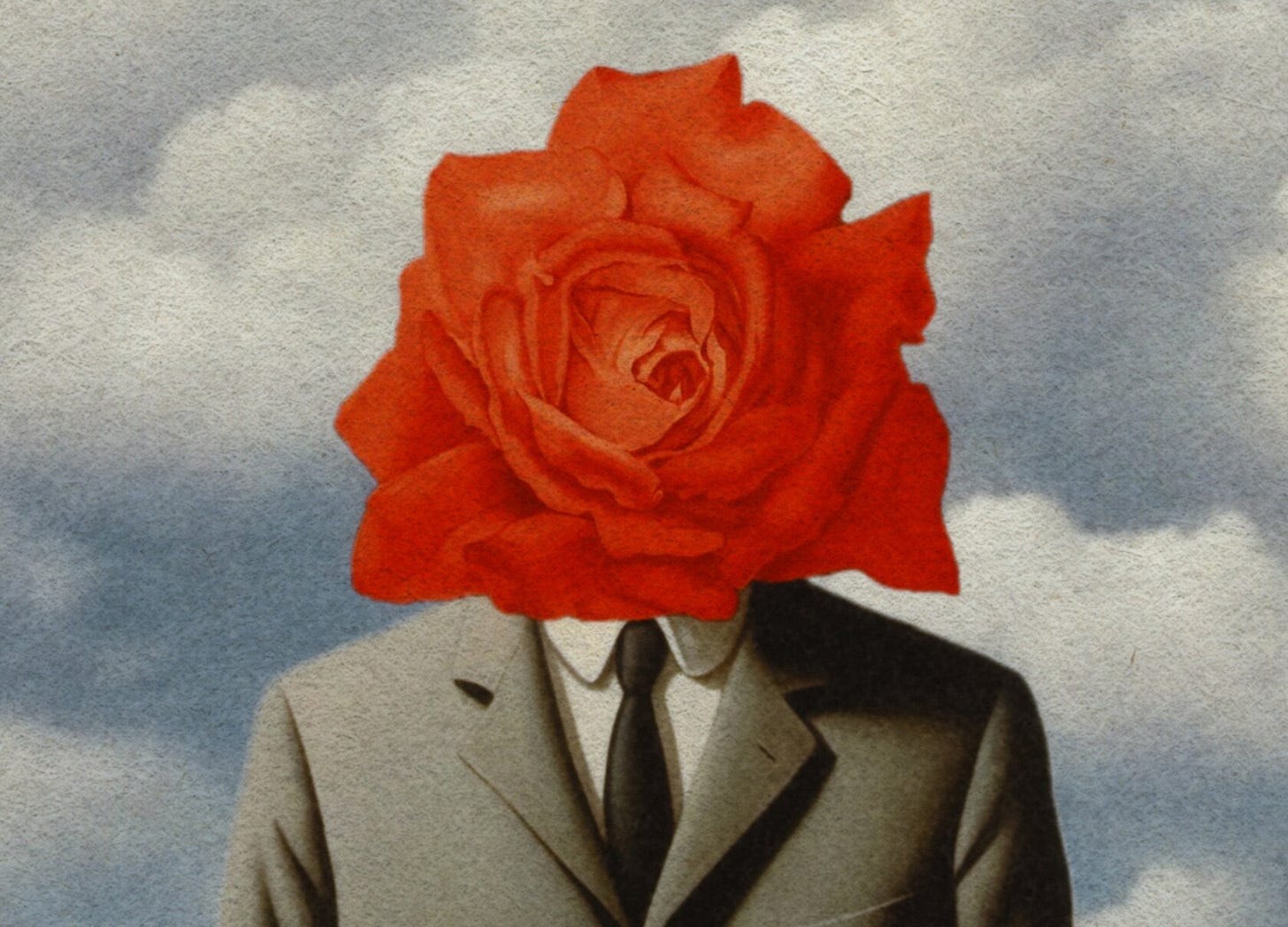
Sam Harris: The Anatomy of Embarrassment

Here’s the link to this article.

Poker anyone?

SAM HARRIS

Nature seems to have given us six primary emotions—happiness, sadness, fear, anger, surprise, and disgust. A glance at those cards suggests that the deck may be stacked against us. Only happiness seems worth wanting for its own sake. The rest, even the ambiguously valanced surprise, are generally unwelcome. Most of us regularly enjoy happiness, of course, and amusement, contentment, delight—even ecstasy—are among its many facets. But we must overcome countless forms of irritation and anguish to do so.  

Layered on top of the primary emotions, we find moral ones like pride, guilt, shame, empathy, gratitude, and outrage. Once again, it seems that anyone who simply wants to be happy in this world will find themselves at a disadvantage. If pride is good, it is so only for children. And, as Paul Bloom has noted, even empathy (in the emotional, rather than cognitive, sense) is overrated.

We begin to experience these moral emotions as toddlers, and their emergence very likely coincides with our ability to distinguish ourselves from others—not merely as separate bodies in space, but as independent beings capable of distinct states of mind. Leaving moral outrage aside, to feel pride, guilt, shame, empathy, or gratitude is to intuit, if only unconsciously, that other people have points of view, and that one’s own person is among the many things they might harbor views about. Each of us thereafter, as Sartre famously put it, becomes an object in the world for others.

Somewhere in the vicinity of guilt and shame we find further sources of comedy and tragedy—in particular, the acutely self-conscious states of embarrassment and humiliation. Telling these sisters apart is more art than science. Some use the terms interchangeably, or merely consider humiliation to be an extreme form of embarrassment. Both types of assault upon our self-esteem require the gaze of others—by whose light we see ourselves to have lost status in a social hierarchy. However, the experiences differ in at least one respect. As William Ian Miller observed in his book, Humiliation, we are often eager to describe our past embarrassments, as other people tend to find these stories quite funny. Not so with our genuine humiliations.

Let us now consider the happier sister—embarrassment:

The Oxford English Dictionary indicates that the term “embarrassment” was in use for nearly a century before it acquired its current, most common meaning:

Intense emotional or social discomfort caused by an awkward situation or by an awareness that one’s own or another’s words or actions are inappropriate or compromising, or that they reveal inadequacy or foolishness; awkwardness, self-consciousness… Typically distinguished from shame in being caused by something that is socially awkward or inappropriate rather than morally wrong or debasing.

It’s first known usage in this sense seems to have occurred in the year 1751:

She pretended to be with child by him… She brought a man whom she called uncle, to add weight to her threats; and these violent proceedings threw Mr. Baker under great embarrassment. He always was extreamly tender of his reputation with the world. (London Magazine April 198/2)

One wants to know more about this “uncle.” In any case, there is a Mr. Baker in each of us—running a frenzied circuit between the medial prefrontal cortex (self-reflection and self-evaluation), the anterior cingulate (error detection, emotional regulation, and awareness of physical and social pain), the insula (the perception of emotion and other internal states of the body), the amygdala (emotional salience and threat detection), and the temporal-parietal junction (understanding the mental states of others).

However, we live not merely in our brains, but in the world.

Imagine you’re at a party. Though you happen to be in an expansive mood and have met many interesting people, all your interactions have felt slightly off-kilter. Most conversations have terminated abruptly—as though your company was best appreciated in the act of leaving of it. After more than an hour of pointlessly caroming off strangers in this way, you go to the restroom to freshen up, only to discover a 5-carat booger prominently displayed in one of your nostrils.

Of course, the change in you is instantaneous—and yet your inner mixologist has been working for nearly a million years in evolutionary time to produce the precise cocktail of destructive emotions that you are now obliged to drink.

Though I am no psychologist, the resulting state of mind strikes me as right on the boundary between embarrassment and humiliation. Everything depends on whether you are viewed, by yourself and others, as an object of comedy or contempt—both in the moment and, most important, in the final analysis. It is the presence (or painful absence) of good-natured laughter—once you exit the bathroom, having restored a semblance of bodily integrity—that will determine on which side of this invisible frontier you will live out your days.

Think of the most embarrassing moment in your life. Surely a few stand out. Pick one, and bring this experience to mind as vividly as you can. I’m asking you to recall, not an experience that left you traumatized and pining for the scaffold, but one about which you can now laugh, no matter how complete a loss of face it entailed at the time. Think of the most embarrassing story you would be willing to tell another human being.

Ok, now that you’ve prepared, let’s play a game of poker. I believe that I hold the higher cards.

Want to bet?

It begins, as most great stories do, with a prostate exam…

I was nearly forty and decided that it was time for a checkup. My primary physician had recently retired, and so without giving the matter much thought, I scheduled an appointment with the doctor who had inherited his practice.

When booking this appointment, however, I learned that this new doctor was a woman. There was nothing surprising about this, of course. I’d seen several female doctors over the years for specialized concerns—dermatology, tropical medicine, ophthalmology. But I’d never had one as my primary physician.

When I told a friend about this impending encounter, I detected an unflattering gleam in his eye.

“So a woman is going to give you a prostate exam?” He said.

I admit that the prospect suddenly struck me as somehow uncanny. Pressing further, my friend suggested that it would stand to reason that having a prostate gland of one’s own might better qualify a person to perform this intimate procedure. I asked him how often he felt his own prostate and what exactly these adventures in proctology had qualified him for.

The appointed hour came soon enough, and I found myself standing face-to-face with my new physician. After a period of perfectly rational discussion and a few lesser intrusions—blood taken, reflexes checked, breathing analyzed—the moment foretold finally arrived:

“Ok, so now I need to check your prostate.” Her tone was matter-of-fact, but she might as well have added, “and you and I both know that you’ve thought about nothing else since you set foot in my office.”

The exam itself went without incident, and at no point did I have occasion to regret my choice of doctor—that is, until the final moment, when she stepped away from the exam table to record her findings.

It was then, with her back turned to me, that she spoke the following words:

“Your prostate is enlarged.”

A perfectly ordinary sentence.

But its meaning entered my brain with the force of incantation. As I rose to a sitting position at the end of the exam table—elevated, as I was about to learn, for the comfort of the working physician, not the safety of her patients—the idea that my prostate was “enlarged,” as opposed to “fine,” or “normal,” or indeed “the best I’ve ever known”—struck me with uncommon power. So much power, it seems, that it rendered me unconscious.

It is perhaps relevant at this point to confess that I had been, at various periods in my life, a committed martial artist. I had even trained in ninjitsu, the fabled art of the Ninja. I was also a decent marksman. Fighting with knives was a topic about which I had well-formed opinions. What I am trying to say is that I had prepared for most species of human violence—except, it would seem, the quiet violence of an unfavorable prostate exam.

The next thing I remember is the sound of a woman’s scream. Sometime later, I could faintly make out the desperate comings and goings of at least two people moving above me. Above me, of course, because I was now lying on the floor, having travelled there headfirst, as an intrepid diver might—who, with the assurance of deep water beneath him, could forego the protective use of his arms.

There can be no doubt that my arms had hung limply at my sides, as I pitched forward from that high table, and smashed my head against the wall, and then a helpless chair, and finally the floor. 

But the good doctor had been composing her notes and hadn’t seen me fall. She only heard the centripetal crashings of a man hurled to earth, his stout body smashing against every object in its path and then flopping, naked but for his blameless choice of Calvin Klein briefs in black, at her feet.

We have all be raised to believe that there are only four fundamental forces of Nature—the weak and strong nuclear forces, electromagnetism, and finally gravity—which had so suddenly declared itself my enemy. But there is a 5th force, which often works in direct opposition to gravity. That force is embarrassment.

We have all witnessed the effect—whether in real life or in videos online—when some hapless person slips on ice, or while attempting a silly stunt to amuse his friends. If they are not grievously injured, such people leap to their feet with astonishing speed. This force, which gives even an old woman sprawled among her groceries the sudden agility of an Olympic gymnast—this is the primordial spirit of embarrassment.

As I came to my senses and began to realize what had just happened, the fact that I had fainted at a mere rumor about the condition of my prostate gland (the very existence of which, I might add, remains little more than a rumor) and had collapsed with greater suddenness than any man felled in battle—for not even an arrow shot into a man’s heart is likely to bring him down with the full force of gravity—the knowledge that I had not managed so much as a shout or a stagger, but had been literally struck senseless by a mere utterance, as if by some witch’s curse, produced in me the first stirrings of that ancient feeling.

I was properly embarrassed. Which meant, as a wide literature will attest, that I understood that I had violated some basic norms of self-presentation by collapsing on my new doctor’s floor in a nearly-naked heap.

But my vision and hearing had returned, and my mind began to thrill to a new purpose—one that is all but encoded in the DNA of our species—to restore social cohesion. Yes, I needed to recapture the sense of decorum and feelings of fellowship that had prevailed up to and—a surprising fact this—even beyond the point that this strange woman, with whom I had just been discussing world affairs only moments prior, had inserted a gloved finger into my ass.

And so, sensing the vindication that would be mine the moment I was once again sitting, standing, and walking among the living, I began to get up.

Unfortunately, this brought me into immediate conflict with medical authority. My doctor, who had found nothing to do for me in my state of prostration, now applied all her skills to prevent my escaping it.

The case she made was simple: While she had heard all the violence I had meted out to her office, she had seen nothing. She was, therefore, unable to even speculate as to the immensity of my injuries. Even now, as she stood over me like some an avenging angel of medical reproach, she couldn’t say whether I was suffering a brain hemorrhage or a broken spine. Under no circumstances could she permit me to move.

You might have thought that a doctor’s office would be a better place than most to fall and hit your head, but you would be mistaken. In fact, your doctor is no more equipped to assess your injuries, much less to treat them, than a random tourist would be, should you lose consciousness at the zoo or on the floor of a casino. In fact, your own doctor, styled in a white lab coat and stethoscope and surrounded by framed degrees from the world’s finest medical institutions, can do nothing under the circumstances but call 911 and summon an ambulance.

And so it was that after I had been lying on the floor of my new doctor’s office for long enough to have run out of things to talk about—and for her to begin doing clerical work of some sort as I studied the acoustical tiles that lined her ceiling—four young firemen came hurtling into the room, bearing all the gear necessary to rescue me had I driven my car into a raging river.

I am happy to say that, staring up at their sunburned faces, I was granted a vision of the glory of youth. I knew at once that these young men could have saved me from any conceivable emergency. But as for the inconceivable—the 20-megaton sunburst of embarrassment that had by now detonated inside me, the blast wave from which seemed likely to bring down the very walls around us—they were powerless to intervene.

Nevertheless, these young heroes quickly secured the patient’s neck with a plastic collar, immobilized his spine by strapping him to a board, and then bore the fallen man in his underwear through a crowded reception area, out onto a once familiar street, and into a waiting ambulance, so that he could be driven scarcely 500 feet to the nearest emergency room.

To appreciate the roiling splendor of my embarrassment at this point, you must picture each station of the cross that was now mine to bear: You must see me meeting the ambulance crew proffering oxygen, and then the battle-hardened men and women who greeted me upon intake at the ER. You must picture every point of entanglement with the great machine of a modern hospital—each encounter with the orderlies, residents, doctors, and technicians that attended my triage, X-ray imaging, and physical exam—and you must, in the theater of your imagination, linger on those moments when I or the person then responsible for me had to give some account of what had happened. For while these medical professionals had seen and heard much, mine was a tale that none were expecting. Had I been in a car accident? Had I been physically attacked? Was I an athlete who had pushed his skills beyond their natural limit?

To understand my predicament, you really must see me as I lay supine upon that gurney, fully immobilized and merely able to cast sidelong glances at those in attendance. And then understand that over the course of several hours, I could think of nothing more dignified or exculpatory to say, again and again and again and again, than this: “It was only a prostate exam.”

My brain had not hemorrhaged. My spine was intact. But the fall seemed to have produced in me a form of extrasensory perception. I now find that if I listen closely, I can hear the faint, crackling sound that other minds emit when they struggle not to laugh.

What cards are you holding?

Subscribe to Sam Harris

Sam Harris is the author of five NYT bestsellers, host of the Making Sense podcast, and creator of the Waking Up app.

Morning Mental Meanderings–11/20/23

Sitting in the quietude of the Pencil Pit before dawn, my mind wanders through the vast cosmos, far beyond the confines of this rustic barn. The phrase “everyone loses everything” lingers in my thoughts, now intertwined with the staggering scale of the universe I pondered yesterday.

I watched a video that put the size of our Milky Way Galaxy into perspective. Imagine the entire United States (just the lower 48 states) representing the Milky Way. In this grand scale, our entire solar system is a mere speck around Kansas City, Kansas. It struck me profoundly. On the fingertip of a person, amidst the ridges and valleys of a fingerprint, a tiny yellow ball represented our Sun – smaller than a grain of sand, yet in reality almost 900,000 miles in diameter. The immensity is unfathomable.

Lying in bed last night, I couldn’t shake off the image of our solar system, all seven planets and their orbits, fitting on a man’s fingertip. In this grand cosmic scale, the significance of a single human, or even humanity as a whole, becomes infinitesimally small. We are but a fleeting whisper in the boundless universe, one of billions of galaxies, each with its own billions of stars and planets.

And yet, here I am, in the Pencil Pit, pondering the finite nature of our existence. “Everyone loses everything” – the phrase seems even more poignant against the backdrop of the cosmos. Our time, our possessions, our very beings are transient in this vast universe. But rather than diminishing our lives, this thought imbues them with a profound significance. Each moment we live, each connection we make, every line we write is a miracle against the canvas of this almost endless universe.

This perspective, from the scale of galaxies down to the simple act of writing in my barn, is a humbling reminder of our place in the cosmos. It grounds me in the present, reinforcing the importance of cherishing every fleeting moment. In the grand scheme of things, we may be insignificant, but in the realm of our personal experiences, every moment is vast and meaningful. This is where the true spirituality lies – not in clinging to what we will eventually lose, but in fully embracing the now, the ephemeral beauty of existence in a universe so vast, it’s beyond our full comprehension.

What Happens When We Die

Here’s the link to this article.

When my atheist engineer grandfather died, my atheist engineer grandmother leaned over the body in the hospice bed that had contained half a century of shared life and love, cradled the cranium in which his stubborn and sensitive mind had dwelt, and whispered into the halogen-lit ether:

“Where did you go, my darling?”

Whatever our beliefs, these sensemaking playthings of the mind, when the moment of material undoing comes, we — creatures of moment and matter — simply cannot fathom how something as exquisite as the universe of thought and feeling inside us can vanish into nothingness.

Even if we understand that dying is the token of our existential luckiness, even if we understand that we are borrowed stardust, bound to be returned to the universe that made it — a universe itself slouching toward nothingness as its stars are slowly burning out their energy to leave a cold austere darkness of pure spacetime — this understanding blurs into an anxious disembodied abstraction as the body slouches toward dissolution. Animated by electrical impulses and temporal interactions of matter, our finite minds simply cannot grasp a timeless and infinite inanimacy — a void beyond being.

Pillars of Creation, Eagle Nebula, Messier 16. Infrared photograph. NASA / Hubble Space Telescope. (Available as a print and as stationery cards.)

Even Walt Whitman, who could hold such multitudes of contradiction, could not grasp the void. “I will make poems of my body and of mortality,” he vowed as a young man as he reverenced our shared materiality in his timeless declamation that “every atom belonging to me as good belongs to you.” It was easy, from the shimmering platform of his prime, to look forward to becoming “the uncut hair of graves” upon returning his own atoms to the grassy ground one day.

But then, when that day loomed near as he grew old and infirm, “the poet of the body and the poet of the soul” suddenly could not fathom the total disbanding of his atomic selfhood, suddenly came to “laugh at what you call dissolution.”

And then he did dissolve, leaving us his immortal verses, verses penned when his particles sang with the electric cohesion of youth and of health, verses that traced with their fleshy finger the faint contour of an elemental truth: “What invigorates life invigorates death.”

“Thoughts, silent thoughts, of Time and Space and Death.” Art by Margaret C. Cook from a rare English edition of Walt Whitman’s Leaves of Grass. (Available as a print)

I wish I could have given my grandmother, and given the dying Whitman, the infinitely invigorating Mr g: A Novel About the Creation (public library) by the poetic physicist Alan Lightman — a magical-realist serenade to science, coursing with symphonic truth about our search for meaning, our hunger for beauty, and what makes our tender, transient lives worth living.

Toward the end of the novel, Mr g watches, with heartache unknown in the Void predating the existence of universes and of life, an old woman on her deathbed, the film of her long and painful and beautiful life unspooling from the reel of memory, leaving her grief-stricken by its terminus, shuddering with defiant disbelief that this is all.

“How can a creature of substance and mass fathom a thing without substance or mass?” wonders Mr g as he sorrows watching her succumb to the very laws he created. “How can a creature who will certainly die have an understanding of things that will exist forever?”

And then, as a faint smile washes across her face, she does die. Lightman writes:

At that moment, there were 3,​147,​740,​103,​497,​276,​498,​750,​208,​327 atoms in her body. Of her total mass, 63.7 percent was oxygen, 21.0 percent carbon, 10.1 percent hydrogen, 2.6 percent nitrogen, 1.4 percent calcium, 1.1 percent phosphorous, plus a smattering of the ninety-odd other chemical elements created in stars.

In the cremation, her water evaporated. Her carbon and nitrogen combined with oxygen to make gaseous carbon dioxide and nitrogen dioxide, which floated skyward and mingled with the air. Most of her calcium and phosphorous baked into a reddish brown residue and scattered in soil and in wind.

But then we see that every atom belonging to her — or, rather, temporarily borrowed by her — truly does belong to everything and everyone, just as you and I are now inhaling the same oxygen atoms that once inflated Walt Whitman’s lungs with the lust for life:

Released from their temporary confinement, her atoms slowly spread out and diffused through the atmosphere. In sixty days’ time, they could be found in every handful of air on the planet. In one hundred days, some of her atoms, the vaporous water, had condensed into liquid and returned to the surface as rain, to be drunk and ingested by animals and plants. Some of her atoms were absorbed by light-utilizing organisms and transformed into tissues and tubules and leaves. Some were breathed in by oxygen creatures, incorporated into organs and bone.

Pectanthis Asteroides — one of the otherworldly drawings of jellyfish by the 19th-century German marine biologist Ernst Haeckel, who coined the word ecology. (Available as a print.)

In a passage evocative of the central sentiment in Ursula K. Le Guin’s spare, stunning poem “Kinship,” he adds:

Pregnant women ate animals and plants made of her atoms. A year later, babies contained some of her atoms… Several years after her death, millions of children contained some of her atoms. And their children would contain some of her atoms as well. Their minds contained part of her mind.

Will these millions of children, for generations upon future generations, know that some of their atoms cycled through this woman? It is not likely. Will they feel what she felt in her life, will their memories have flickering strokes of her memories, will they recall that moment long ago when she stood by the window, guilt ridden and confused, and watched as the tadr bird circled the cistern? No, it is not possible. Will they have some faint sense of her glimpse of the Void? No, it is not possible. It is not possible. But I will let them have their own brief glimpse of the Void, just at the moment they pass from living to dead, from animate to inanimate, from consciousness to that which has no consciousness. For a moment, they will understand infinity.

And the individual atoms, cycled through her body and then cycled through wind and water and soil, cycled through generations and generations of living creatures and minds, will repeat and connect and make a whole out of parts. Although without memory, they make a memory. Although impermanent, they make a permanence. Although scattered, they make a totality.

Here we are, you and me, Walt and Alan, my grandmother who is and my grandfather who is no more — each of us a trembling totality, made of particles both absolutely vulnerable and absolutely indestructible, hungering for absolutes in a universe of relatives, hungering for permanence in a universe of ceaseless change, famished for meaning, for beauty, for emblems of existence.

Out of these hungers, out of these contradictions, we make everything that invigorates life with aliveness: our art and our music, our poems and our mathematics, our novels and our loves.

H Is for Hawk: Helen Macdonald on Love, Loss, Time, and Our Improbable Allies in Healing

Here’s the link to this article.

BY MARIA POPOVA

H Is for Hawk: Helen Macdonald on Love, Loss, Time, and Our Improbable Allies in Healing

Every once in a while — perhaps thrice a lifetime, if one is lucky — a book comes along so immensely and intricately insightful, so overwhelming in beauty, that it renders one incapable of articulating what it’s about without contracting its expansive complexity, flattening its dimensional richness, and stripping it of its splendor. Because it is, of course, about everything — it might take a specific something as its subject, but its object is nothing less than the whole of the human spirit, mirrored back to itself.

H Is for Hawk (public library) by Helen Macdonald is one such book — the kind one devours voraciously, then picks up and puts down repeatedly, unsure how to channel its aboutness in a way that isn’t woefully inadequate.

For a necessary starting point, here’s an inadequate summation: After her father’s sudden and soul-splitting death, Macdonald, a seasoned falconer, decides to wade through the devastation by learning to train a goshawk — the fiercest of raptors, “things of death and difficulty: spooky, pale-eyed psychopaths,” capable of inflicting absolute gore with absolute grace. Over the course of that trying experience — which she chronicles by weaving together personal memory, natural history (the memory of our planet), and literary history (the memory of our culture) — she learns about love and loss, beauty and terror, control and surrender, and the myriad other dualities reconciling which is the game of life.

British goshawk by Archibald Thorburn, 1915 (public domain)

Macdonald writes:

Here’s a word. Bereavement. Or, Bereaved. Bereft. It’s from the Old English bereafian, meaning ‘to deprive of, take away, seize, rob.’ Robbed. Seized. It happens to everyone. But you feel it alone. Shocking loss isn’t to be shared, no matter how hard you try.

Out of that aloneness a singular and paradoxical madness is born:

I knew I wasn’t mad mad because I’d seen people in the grip of psychosis before, and that was madness as obvious as the taste of blood in the mouth. The kind of madness I had was different. It was quiet, and very, very dangerous. It was a madness designed to keep me sane. My mind struggled to build across the gap, make a new and inhabitable world… Time didn’t run forwards any more. It was a solid thing you could press yourself against and feel it push back; a thick fluid, half-air, half-glass, that flowed both ways and sent ripples of recollection forwards and new events backwards so that new things I encountered, then, seemed souvenirs from the distant past.

This discontinuity of time in the universe of grief recurs throughout the book:

The archaeology of grief is not ordered. It is more like earth under a spade, turning up things you had forgotten. Surprising things come to light: not simply memories, but states of mind, emotions, older ways of seeing the world.

Rippling through Macdonald’s fluid, immersive prose are piercing, short, perfectly placed deliverances, in both senses of the word: there is the dark (“What happens to the mind after bereavement makes no sense until later.”), the luminous (“I’d halfway forgotten how kind and warm the world could be.”), the immediate (“Time passed. The wavelength of the light around me shortened. The day built itself.”), the timeless (“Those old ghostly intuitions that have tied sinew and soul together for millennia.”), and the irrepressibly sublime (“Looking for goshawks is like looking for grace: it comes, but not often, and you don’t get to say when or how.”).

American goshawk by Robert Ridgway, 1893 (public domain)

Choosing a goshawk, a creature notoriously difficult to tame, became Macdonald’s way of learning to let grace come unbidden, a letting that demanded a letting go — of compulsive problem-solving, of the various control strategies by which we try to bend life to our will, of the countless self-contortion and self-flagellation techniques driving the machinery of our striving. Recounting the frustration of failing to get her goshawk, Mabel, to obey her commands — frustration familiar to anyone who has ever anguished over any form of unrequited intentionality — Macdonald writes:

I flew her later in the day. I flew her earlier. I fed her rabbit with fur and rabbit without. I fed her chicks that I’d gutted and skinned and rinsed in water. I reduced her weight. I raised it. I reduced it again. I wore different clothes. I tried everything to fix the problem, certain that the problem couldn’t be fixed because the problem was me. Sometimes she flew straight to my fist, sometimes straight over it, and there was no way of knowing which it would be. Every flight was a monstrous game of chance, a coin-toss, and what was at stake felt something very like my soul. I began to think that what made the hawk flinch from me was the same thing that had driven away the man I’d fallen for after my father’s death. Think that there was something deeply wrong about me, something vile that only he and the hawk could see.

Macdonald peers directly into the black hole of fury, a familiar rage directed as much at the rebuffer as at the rebuffed self:

The anger was vast and it came out of nowhere. It was the rage of something not fitting; the frustration of trying to put something in a box that is slightly too small. You try moving the shape around in the hope that some angle will make it fit in the box. Slowly comes an apprehension that this might not, after all, be possible. And finally you know it won’t fit, know there is no way it can fit, but this doesn’t stop you using brute force to try to crush it in, punishing the bloody thing for not fitting properly. That was what it was like: but I was the box, I was the thing that didn’t fit, and I was the person smashing it, over and over again, with bruised and bleeding hands.

And yet somehow, Macdonald unboxes herself as she trains Mabel into control and Mabel trains her into the grace of surrender, of resting into life exactly as it is rather than striving for some continually unsatisfying and anguishing version of how it ought to be. She captures this beautifully in the closing vignette — an earthquake, quite an uncommon occurrence in England, rattles her house and sends her panic-stricken into Mabel’s quarters, terrified at the thought that earthquakes alarm wildlife and often cause animals to flee. Macdonald writes:

I race downstairs, three steps at a time, burst through the door and turn on the light in her room. She is asleep. She wakes, pulls her head from her mantle-feathers and looks at me with clear eyes. She’s surprised to see me. She yawns, showing her pink mouth like a cat’s and its arrowhead tongue with its black tip. Her creamy underparts are draped right down over her feet, so only one lemony toe and one carbon-black talon are exposed. Her other foot is drawn high up at her chest. She felt the tremors. And then she went back to sleep, entirely unmoved by the moving earth. The quake brought no panic, no fear, no sense of wrongness to her at all. She’s at home in the world. She’s here. She ducks her head upside down, pleased to see me, shakes her feathers into a fluffy mop of contentment, and then, as I sit with her, she slowly closes her eyes, tucks her head back into her feathers, and sleeps. She is not a duke, a cardinal, a hieroglyph or a mythological beast, but right now Mabel is more than a hawk. She feels like a protecting spirit. My little household god. Some things happen only once, twice in a lifetime. The world is full of signs and wonders that come, and go, and if you are lucky you might be alive to see them. I had thought the world was ending, but my hawk had saved me again, and all the terror was gone.

H Is for Hawk is an unsummarizably spectacular read in its totality, the kind that lodges itself in your mind, heart, and spirit with equal gravity and grace. Complement it with these gorgeous 19th-century drawings of raptors, then revisit Sy Montgomery on how an octopus illuminates the wonders of consciousness and Maira Kalman on what a dog taught her about the meaning of human life.

Artist Louise Bourgeois on How Solitude Enriches Creative Work

Here’s the link to this article.

BY MARIA POPOVA

“Nourish yourself with grand and austere ideas of beauty that feed the soul… Seek solitude,” young Delacroix counseled himself in 1824. Keats saw solitude as a sublime conduit to truth and beauty. Elizabeth Bishop believed that everyone should experience at least one prolonged period of solitude in life. Even if we don’t take so extreme a view as artist Agnes Martin’s assertion that “the best things in life happen to you when you’re alone,” one thing is certain: Our capacity for what psychoanalyst Adam Phillips has termed “fertile solitude” is absolutely essential not only for our creativity but for the basic fabric of our happiness — without time and space unburdened from external input and social strain, we’d be unable to fully inhabit our interior life, which is the raw material of all art.

That vital role of solitude in art and life is what the great artist Louise Bourgeois (December 11, 1911– May 31, 2010) explores in several of the letters and diary entires collected in Louise Bourgeois: Destruction of the Father / Reconstruction of the Father: Writings and Interviews, 1923–1997 (public library) — an altogether magnificent glimpse of one of the fiercest creative minds and most luminous spirits of the past century.

Louise Bourgeois at her studio, New York, 1946. (Louise Bourgeois Archive)

In September of 1937, 25-year-old Bourgeois writes to her friend Colette Richarme — an artist seven years her senior yet one for whom she took on the role of a mentor — after Richarme had suddenly left Paris for respite in the countryside:

After the tremendous effort you put in here, solitude, even prolonged solitude, can only be of very great benefit. Your work may well be more arduous than it was in the studio, but it will also be more personal.

A few months later, Bourgeois reiterates her counsel:

Solitude, a rest from responsibilities, and peace of mind, will do you more good than the atmosphere of the studio and the conversations which, generally speaking, are a waste of time.

Illustration by Isabelle Arsenault from Cloth Lullaby: The Woven Life of Louise Bourgeois by Amy Novesky, a children's book about the beloved artist's early life and how it shaped her art.
Illustration by Isabelle Arsenault from Cloth Lullaby: The Woven Life of Louise Bourgeois by Amy Novesky, a children’s book about the beloved artist’s early life and how it shaped her art.

For Bourgeois, aloneness was the raw material of art — something she crystallized most potently half a century later, in a diary entry from the summer of 1987:

You are born alone. You die alone. The value of the space in between is trust and love. That is why geometrically speaking the circle is a one. Everything comes to you from the other. You have to be able to reach the other. If not you are alone…

Complement the immeasurably insightful Louise Bourgeois: Destruction of the Father / Reconstruction of the Father with Bourgeois on art, integrity, and the key to creative confidence and this almost unbearably lovely picture-book about her early life, then revisit Edward Abbey’s enchanting vintage love letter to solitude.

The Lonely City: Adventures in the Art of Being Alone

Here’s the link to this article.

BY MARIA POPOVA

The Lonely City: Adventures in the Art of Being Alone

“You are born alone. You die alone. The value of the space in between is trust and love,” artist Louise Bourgeois wrote in her diary at the end of a long and illustrious life as she contemplated how solitude enriches creative work. It’s a lovely sentiment, but as empowering as it may be to those willing to embrace solitude, it can be tremendously lonesome-making to those for whom loneliness has contracted the space of trust and love into a suffocating penitentiary. For if in solitude, as Wendell Berry memorably wrote, “one’s inner voices become audible [and] one responds more clearly to other lives,” in loneliness one’s inner scream becomes deafening, deadening, severing any thread of connection to other lives.

How to break free of that prison and reinhabit the space of trust and love is what Olivia Laing explores in The Lonely City: Adventures in the Art of Being Alone (public library) — an extraordinary more-than-memoir; a sort of memoir-plus-plus, partway between Helen MacDonald’s H Is for Hawk and the diary of Virginia Woolf; a lyrical account of wading through a period of self-expatriation, both physical and psychological, in which Laing paints an intimate portrait of loneliness as “a populated place: a city in itself.”

Art by Isol from Daytime Visions

After the sudden collapse of a romance marked by extreme elation, Laing left her native England and took her shattered heart to New York, “that teeming island of gneiss and concrete and glass.” The daily, bone-deep loneliness she experienced there was both paralyzing in its all-consuming potency and, paradoxically, a strange invitation to aliveness. Indeed, her choice to leave home and wander a foreign city is itself a rich metaphor for the paradoxical nature of loneliness, animated by equal parts restlessness and stupor, capable of turning one into a voluntary vagabond and a catatonic recluse all at once, yet somehow a vitalizing laboratory for self-discovery. The pit of loneliness, she found, could “drive one to consider some of the larger questions of what it is to be alive.”

She writes:

There were things that burned away at me, not only as a private individual, but also as a citizen of our century, our pixelated age. What does it mean to be lonely? How do we live, if we’re not intimately engaged with another human being? How do we connect with other people, particularly if we don’t find speaking easy? Is sex a cure for loneliness, and if it is, what happens if our body or sexuality is considered deviant or damaged, if we are ill or unblessed with beauty? And is technology helping with these things? Does it draw us closer together, or trap us behind screens?

Bedeviled by this acute emotional anguish, Laing seeks consolation in the great patron saints of loneliness in twentieth-century creative culture. From this eclectic tribe of the lonesome — including Jean-Michel Basquiat, Alfred Hitchcock, Peter Hujar, Billie Holiday, and Nan Goldin — Laing chooses four artists as her companions charting the terra incognita of loneliness: Edward Hopper, Andy Warhol, Henry Darger, and David Wojnarowicz, who had all “grappled in their lives as well as work with loneliness and its attendant issues.”

Photograph by Maria Popova. (Available as a print.)

She considers, for instance, Warhol — an artist whom Laing had always dismissed until she was submerged in loneliness herself. (“I’d seen the screen-printed cows and Chairman Maos a thousand times, and I thought they were vacuous and empty, disregarding them as we often do with things we’ve looked at but failed properly to see.”) She writes:

Warhol’s art patrols the space between people, conducting a grand philosophical investigation into closeness and distance, intimacy and estrangement. Like many lonely people, he was an inveterate hoarder, making and surrounding himself with objects, barriers against the demands of human intimacy. Terrified of physical contact, he rarely left the house without an armoury of cameras and tape recorders, using them to broker and buffer interactions: behaviour that has light to shed on how we deploy technology in our own century of so-called connectivity.

Woven into the fabric of Laing’s personal experience are inquiries into the nature, context, and background of these four artists’ lives and their works most preoccupied with loneliness. But just as it would be unfair to call Laing’s masterpiece only a “memoir,” it would be unfair to call these threads “art history,” for they are rather the opposite, a kind of “art present” — elegant and erudite meditations on how art is present with us, how it invites us to be present with ourselves and bears witness to that presence, alleviating our loneliness in the process.

Laing examines the particular, pervasive form of loneliness in the eye of a city aswirl with humanity:

Imagine standing by a window at night, on the sixth or seventeenth or forty-third floor of a building. The city reveals itself as a set of cells, a hundred thousand windows, some darkened and some flooded with green or white or golden light. Inside, strangers swim to and fro, attending to the business of their private hours. You can see them, but you can’t reach them, and so this commonplace urban phenomenon, available in any city of the world on any night, conveys to even the most social a tremor of loneliness, its uneasy combination of separation and exposure.

You can be lonely anywhere, but there is a particular flavour to the loneliness that comes from living in a city, surrounded by millions of people. One might think this state was antithetical to urban living, to the massed presence of other human beings, and yet mere physical proximity is not enough to dispel a sense of internal isolation. It’s possible – easy, even – to feel desolate and unfrequented in oneself while living cheek by jowl with others. Cities can be lonely places, and in admitting this we see that loneliness doesn’t necessarily require physical solitude, but rather an absence or paucity of connection, closeness, kinship: an inability, for one reason or another, to find as much intimacy as is desired. Unhappy, as the dictionary has it, as a result of being without the companionship of others. Hardly any wonder, then, that it can reach its apotheosis in a crowd.

As scientists are continuing to unpeel the physiological effects of loneliness, it is no surprise that this psychological state comes with an almost bodily dimension, which Laing captures vividly:

What does it feel like to be lonely? It feels like being hungry: like being hungry when everyone around you is readying for a feast. It feels shameful and alarming, and over time these feelings radiate outwards, making the lonely person increasingly isolated, increasingly estranged. It hurts, in the way that feelings do, and it also has physical consequences that take place invisibly, inside the closed compartments of the body. It advances, is what I’m trying to say, cold as ice and clear as glass, enclosing and engulfing.

There is, of course, a universe of difference between solitude and loneliness — two radically different interior orientations toward the same exterior circumstance of lacking companionship. We speak of “fertile solitude” as a developmental achievement essential for our creative capacity, but loneliness is barren and destructive; it cottons in apathy the will to create. More than that, it seems to signal an existential failing — a social stigma the nuances of which Laing addresses beautifully:

Loneliness is difficult to confess; difficult too to categorise. Like depression, a state with which it often intersects, it can run deep in the fabric of a person, as much a part of one’s being as laughing easily or having red hair. Then again, it can be transient, lapping in and out in reaction to external circumstance, like the loneliness that follows on the heels of a bereavement, break-up or change in social circles.

Like depression, like melancholy or restlessness, it is subject too to pathologisation, to being considered a disease. It has been said emphatically that loneliness serves no purpose… Perhaps I’m wrong, but I don’t think any experience so much a part of our common shared lives can be entirely devoid of meaning, without a richness and a value of some kind.

With an eye to Virginia Woolf’s unforgettable diary writings on loneliness and creativity, Laing speculates:

Loneliness might be taking you towards an otherwise unreachable experience of reality.

Adrift and alone in the city that promises its inhabitants “the gift of privacy with the excitement of participation,” Laing cycles through a zoetrope of temporary homes — sublets, friends’ apartments, and various borrowed quarters, only amplifying the sense of otherness and alienation as she is forced to make “a life among someone else’s things, in a home that someone else has created and long since.”

Art by Carson Ellis from Home

But therein lies an inescapable metaphor for life itself — we are, after all, subletting our very existence from a city and a society and a world that have been there for much longer than we have, already arranged in a way that might not be to our taste, that might not be how the building would be laid out and its interior designed were we to do it from scratch ourselves. And yet we are left to make ourselves at home in the way things are, imperfect and sometimes downright ugly. The measure of a life has to do with this subletting ability — with how well we are able to settle into this borrowed, imperfect abode and how much beauty we can bring into existence with however little control over its design we may have.

This, perhaps, is why Laing found her only, if temporary, respite from loneliness in an activity propelled by the very act of leaving this borrowed home: walking. In a passage that calls to mind Robert Walser’s exquisite serenade to the soul-nourishment of the walk, she writes:

In certain circumstances, being outside, not fitting in, can be a source of satisfaction, even pleasure. There are kinds of solitude that provide a respite from loneliness, a holiday if not a cure. Sometimes as I walked, roaming under the stanchions of the Williamsburg Bridge or following the East River all the way to the silvery hulk of the U.N., I could forget my sorry self, becoming instead as porous and borderless as the mist, pleasurably adrift on the currents of the city.

But whatever semblance of a more solid inner center these peripatetic escapes into solitude offered, it was a brittle solidity:

I didn’t get this feeling when I was in my apartment; only when I was outside, either entirely alone or submerged in a crowd. In these situations I felt liberated from the persistent weight of loneliness, the sensation of wrongness, the agitation around stigma and judgement and visibility. But it didn’t take much to shatter the illusion of self-forgetfulness, to bring me back not only to myself but to the familiar, excruciating sense of lack.

Edward Hopper: Nighthawks (1942)
Edward Hopper: Nighthawks (1942)

It was in the lacuna between self-forgetfulness and self-discovery that Laing found herself drawn to the artists who became her companions in a journey both toward and away from loneliness. There is Edward Hopper with his iconic Nighthawks aglow in eerie jade, of which Laing writes:

There is no colour in existence that so powerfully communicates urban alienation, the atomisation of human beings inside the edifices they create, as this noxious pallid green, which only came into being with the advent of electricity, and which is inextricably associated with the nocturnal city, the city of glass towers, of empty illuminated offices and neon signs.

[…]

The diner was a place of refuge, absolutely, but there was no visible entrance, no way to get in or out. There was a cartoonish, ochre-coloured door at the back of the painting, leading perhaps into a grimy kitchen. But from the street, the room was sealed: an urban aquarium, a glass cell.

[…]

Green on green, glass on glass, a mood that expanded the longer I lingered, breeding disquiet.

Hopper himself had a conflicted relationship with the common interpretation that loneliness was a central theme of his work. Although he often denied that it was a deliberate creative choice, he once conceded in an interview: “I probably am a lonely one.” Laing, whose attention and sensitivity to even the subtlest texture of experience are what make the book so wonderful, considers how Hopper’s choice of language captures the essence of loneliness:

It’s an unusual formulation, a lonely one; not at all the same thing as admitting one is lonely. Instead, it suggests with that a, that unassuming indefinite article, a fact that loneliness by its nature resists. Though it feels entirely isolating, a private burden no one else could possibly experience or share, it is in reality a communal state, inhabited by many people. In fact, current studies suggest that more than a quarter of American adults suffers from loneliness, independent of race, education and ethnicity, while 45 per cent of British adults report feeling lonely either often or sometimes. Marriage and high income serve as mild deterrents, but the truth is that few of us are absolutely immune to feeling a greater longing for connection than we find ourselves able to satisfy. The lonely ones, a hundred million strong. Hardly any wonder Hopper’s paintings remain so popular, and so endlessly reproduced.

Reading his halting confession, one begins to see why his work is not just compelling but also consoling, especially when viewed en masse. It’s true that he painted, not once but many times, the loneliness of a large city, where the possibilities of connection are repeatedly defeated by the dehumanising apparatus of urban life. But didn’t he also paint loneliness as a large city, revealing it as a shared, democratic place, inhabited, whether willingly or not, by many souls?

[…]

What Hopper captures is beautiful as well as frightening. They aren’t sentimental, his pictures, but there is an extraordinary attentiveness to them… As if loneliness was something worth looking at. More than that, as if looking itself was an antidote, a way to defeat loneliness’s strange, estranging spell.

David Wojnarowicz by Peter Hujar (Peter Hujar Archive)

For the artists accompanying Laing on her journey — including Henry Darger, the brilliant and mentally ill Chicago janitor whose posthumously discovered paintings made him one of the most celebrated outsider artists of the twentieth century, and the creative polymath David Wojnarowicz, still in his thirties when AIDS took his life — loneliness was often twined with another profound affliction of the psyche: loss. In a passage evocative of Paul Goodman’s taxonomy of the nine types of silence, Laing offers a taxonomy of lonelinesses through the lens of loss:

Loss is a cousin of loneliness. They intersect and overlap, and so it’s not surprising that a work of mourning might invoke a feeling of aloneness, of separation. Mortality is lonely. Physical existence is lonely by its nature, stuck in a body that’s moving inexorably towards decay, shrinking, wastage and fracture. Then there’s the loneliness of bereavement, the loneliness of lost or damaged love, of missing one or many specific people, the loneliness of mourning.

But this lonesomeness of mortality finds its antidote in the abiding consolations of immortal works of art. “Art holds out the promise of inner wholeness,” philosopher Alain de Botton and art historian John Armstrong wrote in their inquiry into the seven psychological functions of art, and if loneliness is, as Laing puts it, “a longing for integration, for a sense of feeling whole,” what better answer to that longing than art? After all, in the immortal words of James Baldwin, “only an artist can tell, and only artists have told since we have heard of man, what it is like for anyone who gets to this planet to survive it.”

watertower_byMariaPopova

Looking back on her experience, Laing writes:

There are so many things that art can’t do. It can’t bring the dead back to life, it can’t mend arguments between friends, or cure AIDS, or halt the pace of climate change. All the same, it does have some extraordinary functions, some odd negotiating ability between people, including people who never meet and yet who infiltrate and enrich each other’s lives. It does have a capacity to create intimacy; it does have a way of healing wounds, and better yet of making it apparent that not all wounds need healing and not all scars are ugly.

If I sound adamant it is because I am speaking from personal experience. When I came to New York I was in pieces, and though it sounds perverse, the way I recovered a sense of wholeness was not by meeting someone or by falling in love, but rather by handling the things that other people had made, slowly absorbing by way of this contact the fact that loneliness, longing, does not mean one has failed, but simply that one is alive.

But as profoundly personal as loneliness may feel, it is inseparable from the political dimensions of public life. In a closing passage that calls to mind Audre Lorde’s clarion call for breaking our silences against structural injustice, Laing adds:

There is a gentrification that is happening to cities, and there is a gentrification that is happening to the emotions too, with a similarly homogenising, whitening, deadening effect. Amidst the glossiness of late capitalism, we are fed the notion that all difficult feelings — depression, anxiety, loneliness, rage — are simply a consequence of unsettled chemistry, a problem to be fixed, rather than a response to structural injustice or, on the other hand, to the native texture of embodiment, of doing time, as David Wojnarowicz memorably put it, in a rented body, with all the attendant grief and frustration that entails.

I don’t believe the cure for loneliness is meeting someone, not necessarily. I think it’s about two things: learning how to befriend yourself and understanding that many of the things that seem to afflict us as individuals are in fact a result of larger forces of stigma and exclusion, which can and should be resisted.

Loneliness is personal, and it is also political. Loneliness is collective; it is a city. As to how to inhabit it, there are no rules and nor is there any need to feel shame, only to remember that the pursuit of individual happiness does not trump or excuse our obligations to each another. We are in this together, this accumulation of scars, this world of objects, this physical and temporary heaven that so often takes on the countenance of hell. What matters is kindness; what matters is solidarity. What matters is staying alert, staying open, because if we know anything from what has gone before us, it is that the time for feeling will not last.

The Lonely City is a layered and endlessly rewarding book, among the finest I have ever read. Complement it with Rebecca Solnit on how we find ourselves by getting lost, David Whyte on the transfiguration of aloneness, Alfred Kazin on loneliness and the immigrant experience, and Sara Maitland on how to be alone without being lonely.

Thanks, Emily

Achieving Perspective: Trailblazing Astronomer Maria Mitchell and the Poetry of the Cosmic Perspective (David Byrne Reads Pattiann Rogers)

Here’s the link to this article.

BY MARIA POPOVA

This is the third of nine installments in the animated interlude season of The Universe in Verse in collaboration with On Being, celebrating the wonder of reality through stories of science winged with poetry. See the rest here.

THE ANIMATED UNIVERSE IN VERSE: CHAPTER THREE

To be human is to live suspended between the scale of glow-worms and the scale of galaxies, to live with our creaturely limitations without being doomed by them — we have, after all, transcended them to unravel the molecular mystery of the double helix and compose the Benedictus and land a mechanical prosthesis of our curiosity on Mars. We have dreamt these things possible, then made them real — proof that we are a species of limitless imagination along the forward vector of our dreams. But we are also a species continually blinkered — sometimes touchingly, sometimes tragically — by our own delusions about the totality around us. Our greatest limitation is not that of imagination but that of perspective — our lens is too easily contracted by the fleeting urgencies of the present, too easily blurred by the hopes and fears of our human lives.

Two centuries ago, Maria Mitchell — a key figure in Figuring — understood this with uncommon poetry of perspective.Portrait of Maria Mitchell, 1840s. (Maria Mitchell Museum. Photograph: Maria Popova)

America’s first professional female astronomer, she was also the first woman employed by the federal government for a “specialized non-domestic skill.” After discovering her famous comet, she was hired as “computer of Venus,” performing complex mathematical calculations to help sailors navigate the globe — a one-woman global positioning system a century and a half before Einstein’s theory of relativity made GPS possible.

When Maria Mitchell began teaching at Vassar College as the only woman on the faculty, the college handbook mandated that neither she nor her female students were allowed outside after nightfall — a somewhat problematic dictum, given she was hired to teach astronomy. She overturned the handbook and overwrote the curriculum, creating the country’s most ambitious science syllabus, soon copied by other universities — including the all-male Harvard, which had long dropped its higher mathematics requirement past the freshman year.

Maria Mitchell’s students went on to become the world’s first class with academic training in what we now call astrophysics. They happened to all be women.

Maria Mitchell, standing at telescope, with her students at Vassar

Science was one of Maria Mitchell’s two great passions. The other was poetry.

At her regular “dome parties” inside the Vassar College Observatory, which was also her home, students and occasional esteemed guests — Julia Ward Howe among them — gathered to play a game of writing extemporaneous verses about astronomy on scraps of used paper: sonnets to the stars, composed on the back of class notes and calculations.

Mitchell taught astronomy until the very end of her long life, when she confided in one of her students that she would rather have written a great poem than discovered a great comet. But scientific discovery is what gave her the visibility to blaze the way for women in science and enchant generations of lay people the poetry of the cosmic perspective.

Art from What Miss Mitchell Saw

It was this living example that became Maria Mitchell’s great poem, composed in the language of being — as any life of passion and purpose ultimately becomes.

“Mingle the starlight with your lives,” she often told her students, “and you won’t be fretted by trifles.”

And yet here we are, our transient lives constantly fretted by trifles as we live them out in the sliver of spacetime allotted us by chance.

A century after Maria Mitchell returned her borrowed stardust to the universe that made it, the poet Pattiann Rogers extended a kindred invitation to perspective, untrifling the tender moments that make a life worth living.

Published in her collection Firekeeper (public library), it is read for us here by the ever-optimistic David Byrne, with original art by his ever-perspectival longtime collaborator Maira Kalman and original music by the symphonic-spirited Jherek Bischoff.

ACHIEVING PERSPECTIVE
by Pattiann Rogers

Straight up away from this road,
Away from the fitted particles of frost
Coating the hull of each chick pea,
And the stiff archer bug making its way
In the morning dark, toe hair by toe hair,
Up the stem of the trillium,
Straight up through the sky above this road right now,
The galaxies of the Cygnus A cluster
Are colliding with each other in a massive swarm
Of interpenetrating and exploding catastrophes.
I try to remember that.

And even in the gold and purple pretense
Of evening, I make myself remember
That it would take 40,000 years full of gathering
Into leaf and dropping, full of pulp splitting
And the hard wrinkling of seed, of the rising up
Of wood fibers and the disintegration of forests,
Of this lake disappearing completely in the bodies
Of toad slush and duckweed rock,
40,000 years and the fastest thing we own,
To reach the one star nearest to us.

And when you speak to me like this,
I try to remember that the wood and cement walls
Of this room are being swept away now,
Molecule by molecule, in a slow and steady wind,
And nothing at all separates our bodies
From the vast emptiness expanding, and I know
We are sitting in our chairs
Discoursing in the middle of the blackness of space.
And when you look at me
I try to recall that at this moment
Somewhere millions of miles beyond the dimness
Of the sun, the comet Biela, speeding
In its rocks and ices, is just beginning to enter
The widest arc of its elliptical turn.

Previously on The Universe in VerseChapter 1 (the evolution of flowers and the birth of ecology, with Emily Dickinson); Chapter 2 (Henrietta Leavitt, Edwin Hubble, and the age of space telescopes, with Tracy K. Smith).

To Be a Person: Jane Hirshfield’s Playful and Poignant Poem About Bearing Our Human Condition

Here’s the link to this article.

BY MARIA POPOVA

To Be a Person: Jane Hirshfield’s Playful and Poignant Poem About Bearing Our Human Condition

A human being is a living constellation of contradictions, mostly opaque to itself. “Inward secret creatures,” Iris Murdoch called us in reckoning with the blind spots of our self-knowledge. “Humans are just the sort of organisms that interpret and modify their agency through their conception of themselves,” philosopher Amélie Rorty wrote as she examined what makes a person — a self-conception shaped by our astonishing evolutionary inheritance, which took us from bacteria to the Benedictus in a mere minute on the clock-face of the cosmos; a self-conception distorted by an ego that habitually confuses who we wish we were for who we are, redeemed only by the courage to know ourselves.

A generation after Maya Angelou captured these flickering contradictions in her poem “A Brave and Starling Truth,” which sailed into space to remind us that “we are neither devils nor divines,” Jane Hirshfield cracks open this eternal question of what it means to be a person in a lovely poem from her collection The Asking: New and Selected Poems (public library).

TO BE A PERSON
by Jane Hirshfield

To be a person is an untenable proposition.

Odd of proportion,
upright,
unbalanced of body, feeling, and mind.

Two predator’s eyes
face forward,
yet seem always to be trying to look back.

Unhooved, untaloned fingers
seem to grasp mostly grief and pain.
To create, too often, mostly grief and pain.

Some take,
in witnessed suffering, pleasure.
Some make, of witnessed suffering, beauty.

On the other side —
a creature capable of blushing,
who chooses to spin until dizzy,
likes what is shiny,
demands to stay awake even when sleepy.

Learns what is basic, what acid,
what are stomata, nuclei, jokes,
which birds are flightless.
Learns to play four-handed piano.
To play, when it is needed, one-handed piano.

Hums. Feeds strays.
Says, “All together now, on three.”

To be a person may be possible then, after all.

Or the question may be considered still at least open —
an unused drawer, a pair of waiting workboots.

Complement with Sylvia Plath on the pillars of personhood and philosopher Rebecca Goldstein on what makes you and your childhood self the same person despite a lifetime of physiological and psychological change, then revisit Jane Hirshfield’s wonderful poems “Optimism,” “The Weighing,” and “For What Binds Us,” and her uncommonly insightful prose meditation on how poetry transforms us.

Center of the Universe: Non-Speaking Autistic Poet Hannah Emerson’s Extraordinary Poem About How to Be Reborn Each Day

Here’s the link to this article.

BY MARIA POPOVA

Center of the Universe: Non-Speaking Autistic Poet Hannah Emerson’s Extraordinary Poem About How to Be Reborn Each Day

In their strange cosmogony predating Copernicus by two millennia, the ancient Greek scientific sect of the Pythagoreans placed at the center of the universe a ball of fire. It was not hell but the heart of creation. Hell, Milton told us centuries and civilizations later, is something else, somewhere else: “The mind is its own place,” he wrote in Paradise Lost, “and in it self can make a Heav’n of Hell, a Hell of Heav’n.”

Grief and despair, heartache and humiliation, rage and regret — this is the hellfire of the mind, hot as a nova, all-consuming as a black hole. And yet, if are courageous enough and awake enough to walk through it, in it we are annealed, forged stronger, reborn.

That is what the non-speaking autistic poet Hannah Emerson celebrates in her shamanic poem “Center of the Universe,” found in her extraordinary collection The Kissing of Kissing (public library), song of the mind electric, great bellowing yes to life.

CENTER OF THE UNIVERSE
by Hannah Emerson

Please try to go
to hell frequently
because you will
find the light there

yes yes — please
try to kiss the ideas
that you find there
yes yes — please

try to get that
it is the center
of the universe
yes yes — please

try to help yourself
by kissing the hot hot
hot life that is born
there yes yes — please

try to yell in hell
yes yes — please
try to free yourself
by pouring yourself

into the gutter all
guttural guttural yell
yes yes yes — please
try to get that you

become the being
that you came there
to be yes yes — please
try to go to the great

great great fire that you
created because you
become the light
that the fire makes

inside of you
yes yes — please
try to kiss yourself
for going there

yes yes — please
get that you are
reborn there
yes yes — please

begin your day

Drink in more soul-slaking poetry here, then revisit the story of how Dostoyevsky, just after his death sentence was repealed, found himself “regenerated into a new form… reborn for the better.”

Let There Always Be Light: Dark Matter and the Mystery of Our Mortal Stardust (Patti Smith Reads Rebecca Elson)

Here’s the link to this article.

BY MARIA POPOVA

This is the fourth of nine installments in the animated interlude season of The Universe in Verse in collaboration with On Being, celebrating the wonder of reality through stories of science winged with poetry. See the rest here.

THE ANIMATED UNIVERSE IN VERSE: CHAPTER FOUR

Months before Edwin Hubble finally published his epoch-making revelation about Andromeda, staggering the world with the fact that the universe extends beyond our Milky Way galaxy, a child was born under the star-salted skies of Washington, D.C., where the Milky Way was still visible before a century’s smog slipped between us and the cosmos — a child who would grow up to confirm the existence of dark matter, that invisible cosmic glue holding galaxies together and pinning planets to their orbits so that, on at least one of them, small awestruck creatures with vast complex consciousnesses can unravel the mysteries of the universe.

Night after night, Vera Rubin (July 23, 1928–December 25, 2016) peered out of her childhood bedroom and into the stars, wonder smitten with the beauty of it all — until she read a children’s book about the trailblazing astronomer Maria Mitchell, who had expanded the universe of possibility for half of our species a century earlier. The young Vera was suddenly seized with a life-altering realization: Not only was there such a thing as a professional stargazer, but it was a thing a girl could do.

Vera Rubin as an undergraduate at Vassar, 1940s

In 1965 — exactly one hundred years after Maria Mitchell was appointed the first professor of astronomy at Vassar, which Vera Rubin had chosen as her training ground in astronomy — she became the first woman permitted to use the Palomar Observatory. Peering through its colossal eye — the telescope, devised the year Rubin was born, had replaced the one through which Hubble made his discovery as the world’s most powerful astronomical instrument — she was just as wondersmitten as the little girl peering through the bedroom window, just as beguiled by the beauty of the cosmos. “I sometimes ask myself whether I would be studying galaxies if they were ugly,” she reflected in her most personal interview. “I think it may not be irrelevant that galaxies are really very attractive.”

Galaxies had taken Rubin to Palomar, and galaxies — the riddle of their rotation, which she had endeavored to solve — became the key to her epochal confirmation of dark matter. One of the most mesmerizing unsolved puzzles in astronomy, dark matter had remained only an enticing speculation since the Swiss astrophysicist Fritz Zwicky had first theorized it when Vera was five.

A generation later, a small clan of astronomers at Cambridge analyzed the deepest image of space the Hubble Space Telescope had yet captured — that iconic glimpse of the unknown, revealing a universe “so brutal and alive it seemed to comprehend us back” — to discern the origin of the mysterious dark matter halo enveloping the Milky Way. Spearheading the endeavor was an extraordinary young astronomer back to work during a remission of a rare terminal blood cancer ordinarily afflicting the elderly.

Rebecca Elson, 1987

Nursed on geology and paleontology on the shores of a prehistoric lake, Rebecca Elson (January 2, 1960–May 19, 1999) was barely sixteen and already in college when she first glimpsed Andromeda through a telescope. Instantly dazzled by its “delicate wisp of milky spiral light floating in what seemed a bottomless well of empty space,” she became a scientist but never relinquished the pull of the poetic dimensions of reality. During her postdoctoral work at Princeton’s Institute for Advanced Study, Elson found refuge from the narrow patriarchy of academic science in a gathering of poets every Tuesday evening. She became a fellow at a Radcliffe-Harvard institute for postgraduate researchers devoted to reversing “the climate of non-expectation for women,” among the alumnae of which are Anne Sexton, Alice Walker, and Anna Deavere Smith. There, in a weekly writing group, she met and befriended the poet Marie Howe, whose splendid “Singularity” became the inspiration for this animated season of The Universe in Verse.

It was then — twenty-nine and newly elected the youngest astronomer in history to serve on the Decennial Review committee steering the course of American science toward the most compelling unsolved questions — that Elson received her terminal diagnosis.

Throughout the bodily brutality of her cancer treatment, she filled notebooks with poetic questions and experiments in verse, bridging with uncommon beauty the creaturely and the cosmic — those eternal mysteries of our mortal matter that make it impossible for a consciousness born of dead stars to fathom its own nonexistence.

Rebecca Elson lived with the mystery for another decade, never losing her keen awareness that we are matter capable of wonder, never ceasing to channel it in poetry. When she returned her borrowed stardust to the universe, a spring shy of her fortieth birthday, she left behind nearly sixty scientific papers and a single, splendid book of poems titled A Responsibility to Awe (public library) — among them the staggering “Theories of Everything” (read by Regina Spektor at the 2019 Universe in Verse) and “Antidotes to Fear of Death (read by Janna Levin at the 2020 Universe in Verse).

Permeating Elson’s poetic meditations, the mystery of dark matter culminates in one particular poem exploring with uncommon loveliness what may be the most touching paradox of being human — our longing for the light of immortality as creatures of matter in a cosmos governed by the dark sublime of dissolution.

Bringing Elson’s masterpiece to life for this series is Patti Smith (who read Emily Dickinson’s pre-atomic ode to particle physics at the 2020 Universe in Verse), with animation by Ohara Hale (who animated Emily Dickinson’s pre-ecological poem about ecology in Chapter One of this experimental season of The Universe in Verse) and music by Zoë Keating (who read Rita Dove’s paleontological poem at the 2018 Universe in Verse).

LET THERE ALWAYS BE LIGHT (SEARCHING FOR DARK MATTER)
by Rebecca Elson

For this we go out dark nights, searching
For the dimmest stars,
For signs of unseen things:

To weigh us down.
To stop the universe
From rushing on and on
Into its own beyond
Till it exhausts itself and lies down cold,
Its last star going out.

Whatever they turn out to be,
Let there be swarms of them,
Enough for immortality,
Always a star where we can warm ourselves.

Let there be enough to bring it back
From its own edges,
To bring us all so close we ignite
The bright spark of resurrection.

Previously on The Universe in VerseChapter 1 (the evolution of life and the birth of ecology, with Joan As Police Woman and Emily Dickinson); Chapter 2 (Henrietta Leavitt, Edwin Hubble, and the human hunger to know the cosmos, with Tracy K. Smith); Chapter 3 (trailblazing astronomer Maria Mitchell and the poetry of the cosmic perspective, with David Byrne and Pattiann Rogers).