Biking is something else I both love and hate. It takes a lot of effort but does provide good exercise and most days over an hour to listen to a good book or podcast. I especially like having ridden.
Here’s my bike, a Rockhopper by Specialized. I purchased it November 2021 from Venture Out in Guntersville; Mike is top notch! So is the bike, and the ‘old’ man seat I salvaged from an old Walmart bike.
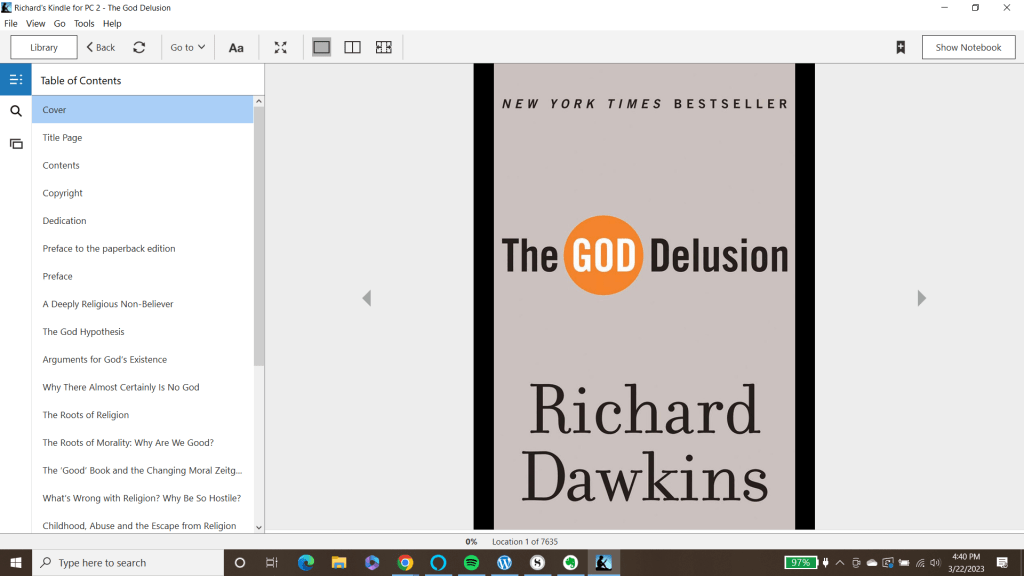
This is what I’m listening to: The God Delusion, by Richard Dawkins.
A preeminent scientist — and the world’s most prominent atheist — asserts the irrationality of belief in God and the grievous harm religion has inflicted on society, from the Crusades to 9/11.
With rigor and wit, Dawkins examines God in all his forms, from the sex-obsessed tyrant of the Old Testament to the more benign (but still illogical) Celestial Watchmaker favored by some Enlightenment thinkers. He eviscerates the major arguments for religion and demonstrates the supreme improbability of a supreme being. He shows how religion fuels war, foments bigotry, and abuses children, buttressing his points with historical and contemporary evidence. The God Delusion makes a compelling case that belief in God is not just wrong but potentially deadly. It also offers exhilarating insight into the advantages of atheism to the individual and society, not the least of which is a clearer, truer appreciation of the universe’s wonders than any faith could ever muster.
Biking is something else I both love and hate. It takes a lot of effort but does provide good exercise and most days over an hour to listen to a good book or podcast. I especially like having ridden.
Here’s my bike, a Rockhopper by Specialized. I purchased it November 2021 from Venture Out in Guntersville; Mike is top notch! So is the bike, and the ‘old’ man seat I salvaged from an old Walmart bike.
Have you heard of Bard? By Google? It’s their artificial intelligence program. I have it a try today.
My query: Help me describe today’s bike ride in the rain.
Bard’s response:
Sure, I can help you describe today’s bike ride in the rain.
It was a cold and rainy day, but I was determined to go for a bike ride. I put on my waterproof jacket and gloves, and I set off into the rain. The roads were slippery and the wind was strong, but I was enjoying the challenge. I rode for about an hour, and by the time I got home, I was soaked to the bone. But I felt great! I had had a great workout, and I had enjoyed the feeling of the wind and the rain on my face.
Here are some tips for biking in the rain:
Dress in layers so you can adjust your clothing as needed.
Wear a waterproof jacket and gloves.
Use a helmet with a visor to protect your eyes.
Be extra cautious when braking and cornering.
Be aware of your surroundings and be prepared to stop suddenly.
Enjoy the challenge and the feeling of the wind and the rain on your face!
Not bad, says I!
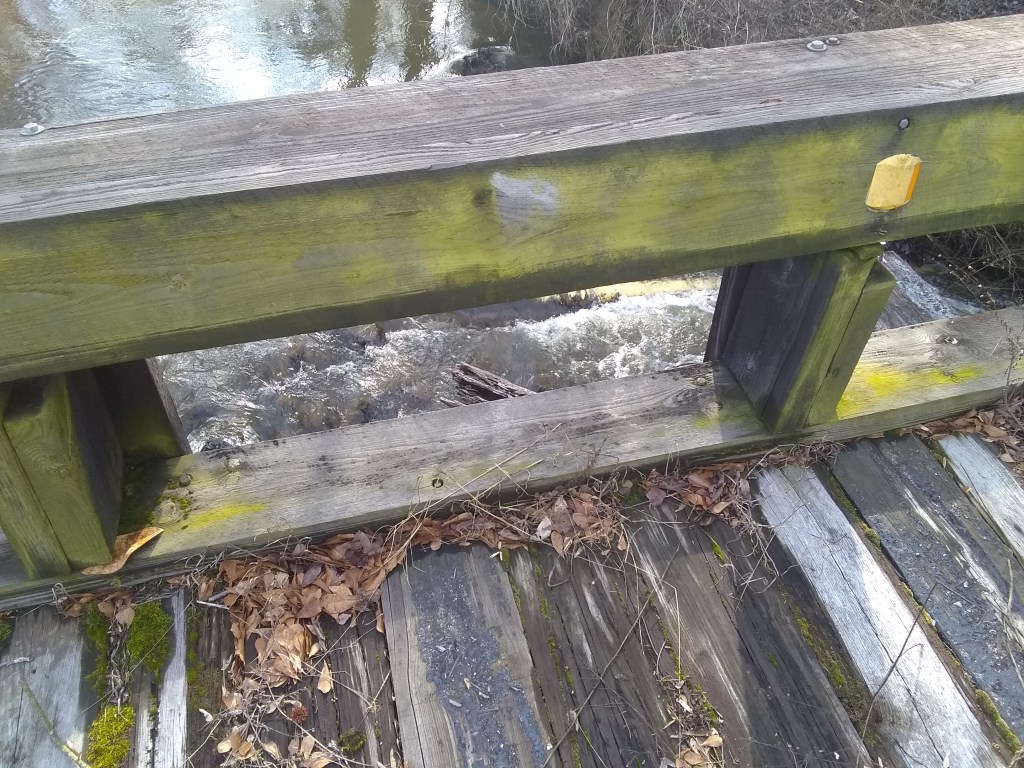
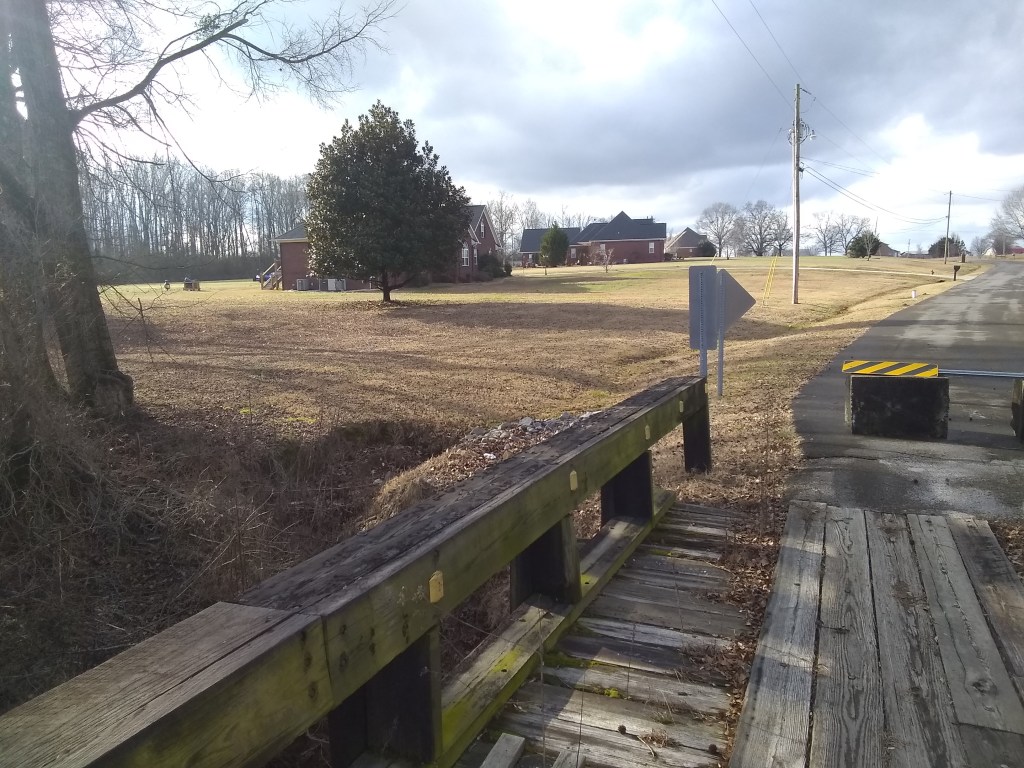
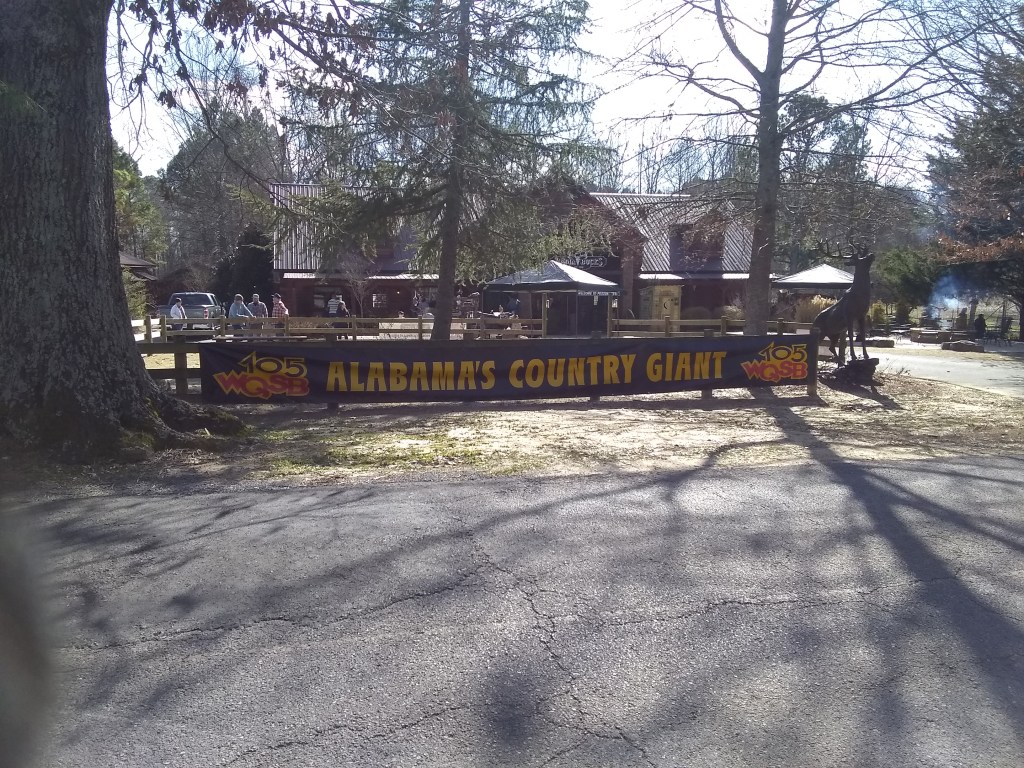
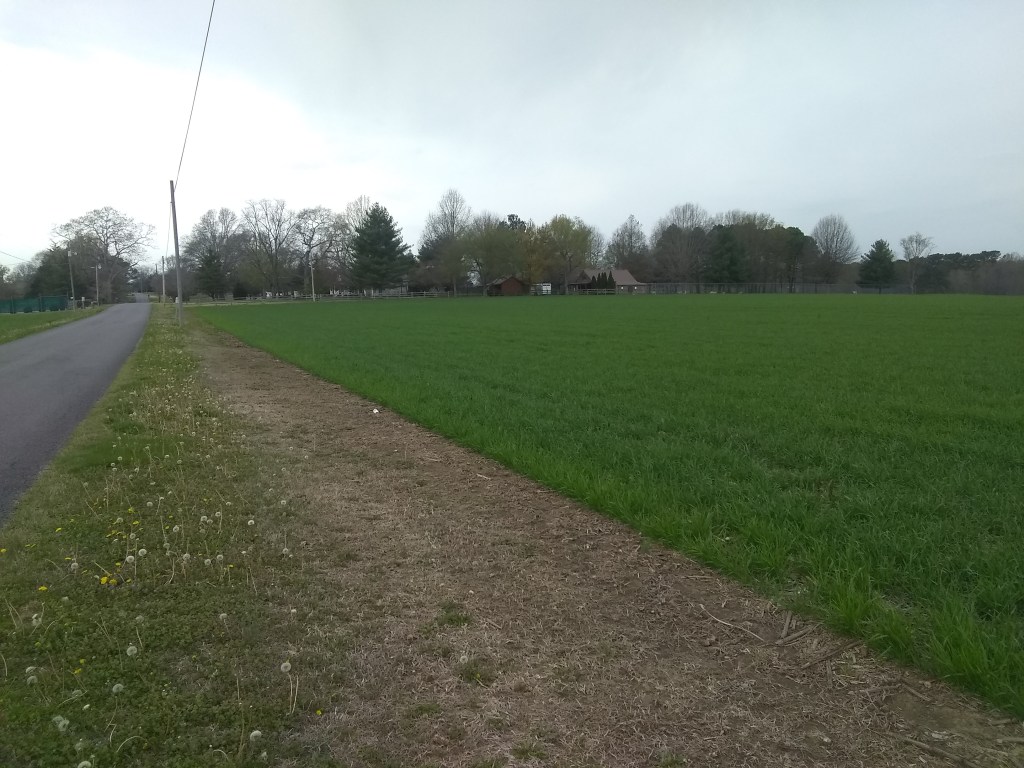
Here’s a few photos taken along my route:
Today, while biking, I listened to this episode of The Book Review podcast. I also listened to Episode 48 of The Essential Guide to Writing a Novel podcast.
Finally, I listened to forty minutes of The God Delusion, by Richard Dawkins.
A preeminent scientist — and the world’s most prominent atheist — asserts the irrationality of belief in God and the grievous harm religion has inflicted on society, from the Crusades to 9/11.
With rigor and wit, Dawkins examines God in all his forms, from the sex-obsessed tyrant of the Old Testament to the more benign (but still illogical) Celestial Watchmaker favored by some Enlightenment thinkers. He eviscerates the major arguments for religion and demonstrates the supreme improbability of a supreme being. He shows how religion fuels war, foments bigotry, and abuses children, buttressing his points with historical and contemporary evidence. The God Delusion makes a compelling case that belief in God is not just wrong but potentially deadly. It also offers exhilarating insight into the advantages of atheism to the individual and society, not the least of which is a clearer, truer appreciation of the universe’s wonders than any faith could ever muster.
Biking is something else I both love and hate. It takes a lot of effort but does provide good exercise and most days over an hour to listen to a good book or podcast. I especially like having ridden.
Here’s my bike, a Rockhopper by Specialized. I purchased it November 2021 from Venture Out in Guntersville; Mike is top notch! So is the bike, and the ‘old’ man seat I salvaged from an old Walmart bike.
Have you heard of Bard? By Google? It’s their artificial intelligence program. I have it a try today.
My query: Help me describe today’s bike ride in the rain.
Bard’s response:
Sure, I can help you describe today’s bike ride in the rain.
It was a cold and rainy day, but I was determined to go for a bike ride. I put on my waterproof jacket and gloves, and I set off into the rain. The roads were slippery and the wind was strong, but I was enjoying the challenge. I rode for about an hour, and by the time I got home, I was soaked to the bone. But I felt great! I had had a great workout, and I had enjoyed the feeling of the wind and the rain on my face.
Here are some tips for biking in the rain:
Dress in layers so you can adjust your clothing as needed.
Wear a waterproof jacket and gloves.
Use a helmet with a visor to protect your eyes.
Be extra cautious when braking and cornering.
Be aware of your surroundings and be prepared to stop suddenly.
Enjoy the challenge and the feeling of the wind and the rain on your face!
Not bad, says I!
Here’s a few photos taken along my route:
Today, while biking, I listened to an hour’s worth of The God Delusion, by Richard Dawkins.
A preeminent scientist — and the world’s most prominent atheist — asserts the irrationality of belief in God and the grievous harm religion has inflicted on society, from the Crusades to 9/11.
With rigor and wit, Dawkins examines God in all his forms, from the sex-obsessed tyrant of the Old Testament to the more benign (but still illogical) Celestial Watchmaker favored by some Enlightenment thinkers. He eviscerates the major arguments for religion and demonstrates the supreme improbability of a supreme being. He shows how religion fuels war, foments bigotry, and abuses children, buttressing his points with historical and contemporary evidence. The God Delusion makes a compelling case that belief in God is not just wrong but potentially deadly. It also offers exhilarating insight into the advantages of atheism to the individual and society, not the least of which is a clearer, truer appreciation of the universe’s wonders than any faith could ever muster.
Biking is something else I both love and hate. It takes a lot of effort but does provide good exercise and most days over an hour to listen to a good book or podcast. I especially like having ridden.
Here’s my bike, a Rockhopper by Specialized. I purchased it November 2021 from Venture Out in Guntersville; Mike is top notch! So is the bike, and the ‘old’ man seat I salvaged from an old Walmart bike.
Biking is something else I both love and hate. It takes a lot of effort but does provide good exercise and most days over an hour to listen to a good book or podcast. I especially like having ridden.
Here’s my bike, a Rockhopper by Specialized. I purchased it November 2021 from Venture Out in Guntersville; Mike is top notch! So is the bike, and the ‘old’ man seat I salvaged from an old Walmart bike.
Here’s the link at Sam’s website. You can also listen on Spotify (full episode requires subscription to Sam’s podcast).
SERIES OVERVIEW
This series is designed for long-time fans, newcomers, haters, lovers, critics, and curious dabblers in the philosophy and works of Sam Harris. Each episode in the series is structured as a guided tour through one of Sam’s specific areas of interest: Artificial Intelligence, Consciousness, Violence, Belief, Free Will, Morality, Death, and more. We’ve plunged into the Making Sense archive dating back over 10 years, and surfaced crucial exchanges with incredible guests to dissect Sam’s evolving stances — along with various explorations, approaches, agreements, disagreements, and pushbacks. We’ve crafted and juxtaposed these clips with original writing and analysis into brand-new audio documentaries.
You’ll be introduced (or re-introduced) to fantastic thinkers, and we’ll help illuminate your intellectual journey with plenty of recommendations, which range from fun and light to densely academic.
The writer and producer of this series is filmmaker, author, and podcaster Jay Shapiro, whose credits include the documentary adaptation of Sam Harris’s dialogue Islam and Future of Tolerance. Jay writes essays at whatjaythinks.com and hosts the Dilemma Podcast.
The voice of the series is author Megan Phelps-Roper. Megan was born into the extremist Westboro Baptist Church, where she was a member and spokesperson before leaving the group in 2012. She has since published a memoir, Unfollow, and works as a producer, writer, and speaker. She has twice appeared as a guest on Making Sense.
MARCH 17, 2023
In this episode, we examine a series of Sam’s conversations centered around religion, atheism, and the power of belief.
First, we hear the stories of three guests who have fled their respective oppressive religious organizations. We begin with Sarah Hairder, founder of the advocacy group Ex-Muslims of North America, who details how her encounters with militant atheists catalyzed her journey to secularism. Then our narrator, Megan Phelps-Roper, walks us through her story of abandoning the Westboro Baptist Church. Finally, Yasmine Mohammed presents her harrowing account of escaping fundamentalist Islamism and Sam’s role in inspiring her public advocacy work.
We then tackle the concept of belief more broadly, diving into Sam’s understanding of atheism and what sets it apart from the views of other atheist thinkers like Matt Dillahunty and Richard Dawkins. We also revisit an infamous conversation between Sam and Jordan Peterson, wherein they attempt to come to some universal definition of the word “truth.”
The episode concludes with two Q&A portions from life events in which Sam addresses some real concerns about purpose and meaning in the absence of religion.
Biking is something else I both love and hate. It takes a lot of effort but does provide good exercise and most days over an hour to listen to a good book or podcast. I especially like having ridden.
Here’s my bike, a Rockhopper by Specialized. I purchased it November 2021 from Venture Out in Guntersville; Mike is top notch! So is the bike, and the ‘old’ man seat I salvaged from an old Walmart bike.
Here’s the link at Sam’s website. You can also listen on Spotify (full episode requires subscription to Sam’s podcast).
SERIES OVERVIEW
This series is designed for long-time fans, newcomers, haters, lovers, critics, and curious dabblers in the philosophy and works of Sam Harris. Each episode in the series is structured as a guided tour through one of Sam’s specific areas of interest: Artificial Intelligence, Consciousness, Violence, Belief, Free Will, Morality, Death, and more. We’ve plunged into the Making Sense archive dating back over 10 years, and surfaced crucial exchanges with incredible guests to dissect Sam’s evolving stances — along with various explorations, approaches, agreements, disagreements, and pushbacks. We’ve crafted and juxtaposed these clips with original writing and analysis into brand-new audio documentaries.
You’ll be introduced (or re-introduced) to fantastic thinkers, and we’ll help illuminate your intellectual journey with plenty of recommendations, which range from fun and light to densely academic.
The writer and producer of this series is filmmaker, author, and podcaster Jay Shapiro, whose credits include the documentary adaptation of Sam Harris’s dialogue Islam and Future of Tolerance. Jay writes essays at whatjaythinks.com and hosts the Dilemma Podcast.
The voice of the series is author Megan Phelps-Roper. Megan was born into the extremist Westboro Baptist Church, where she was a member and spokesperson before leaving the group in 2012. She has since published a memoir, Unfollow, and works as a producer, writer, and speaker. She has twice appeared as a guest on Making Sense.
MARCH 17, 2023
In this episode, we examine a series of Sam’s conversations centered around religion, atheism, and the power of belief.
First, we hear the stories of three guests who have fled their respective oppressive religious organizations. We begin with Sarah Hairder, founder of the advocacy group Ex-Muslims of North America, who details how her encounters with militant atheists catalyzed her journey to secularism. Then our narrator, Megan Phelps-Roper, walks us through her story of abandoning the Westboro Baptist Church. Finally, Yasmine Mohammed presents her harrowing account of escaping fundamentalist Islamism and Sam’s role in inspiring her public advocacy work.
We then tackle the concept of belief more broadly, diving into Sam’s understanding of atheism and what sets it apart from the views of other atheist thinkers like Matt Dillahunty and Richard Dawkins. We also revisit an infamous conversation between Sam and Jordan Peterson, wherein they attempt to come to some universal definition of the word “truth.”
The episode concludes with two Q&A portions from life events in which Sam addresses some real concerns about purpose and meaning in the absence of religion.
Biking is something else I both love and hate. It takes a lot of effort but does provide good exercise and most days over an hour to listen to a good book or podcast. I especially like having ridden.
Here’s my bike, a Rockhopper by Specialized. I purchased it November 2021 from Venture Out in Guntersville; Mike is top notch! So is the bike, and the ‘old’ man seat I salvaged from an old Walmart bike.
Here’s what I’m currently listening to: McNally’s Secret, by Lawrence Sanders
He was a tremendously talented writer.
Amazon abstract:
First in the series starring the sleuthing Palm Beach playboy from the #1 New York Times–bestselling and Edgar Award–winning author. Inveterate playboy Archy McNally gets paid to make discreet inquiries for Palm Beach’s power elite. But keeping their dirty little secrets buried will take some fancy footwork in McNally’s latest case. A block of priceless 1918 US airmail stamps has gone missing from a high-society matron’s wall safe. Lady Cynthia Horowitz, now on her sixth husband, is a nasty piece of work who lives in a mansion that looks like Gone With the Wind’s Tara transplanted to southern Florida. McNally’s search takes him into a thickening maze of sex, lies, scandal, and blackmail. When passion erupts into murder and McNally must dig even deeper to uncover the truth, he unearths a shocking secret that could expose his own family’s skeletons.
This book didn’t merely capture my reading interest. It became a book of my heart…
In McNally’s SECRET, the pilot to this series, we’re informed that the pater McNally is not an “old-money” man. Okay. I get that and I like it. (That’s not the secret.)
Having reviewed 4 of the original 7 McNally books by Lawrence Sanders, I had accepted the face value (not realizing the facade) of the Palm Beach mansion and the genteel lifestyle of pater Prescott McNally, Yale graduate, leather-bound-Dickens-reading, attorney-at-law. Upon reading (in McNally’s Secret) the illuminating passages of Archy’s grandparent’s ways into money, I began to wonder what other Secrets this novel might expose.
Usually, if possible, I prefer to read a series in order, pilot first. I can’t explain why, but, in this case I’m glad I read 4 of the original 7 McNally’s prior to reading SECRET (though I believe this series can be satisfyingly read in any order).
The opening of this novel was classic, and felt to be the initiation of what Sanders was born and itching to write, beyond the sagas of his other fine works. The introductory remarks were exquisite in mapping the reasons for, “Can’t you ever be serious, Archy?” I’d love to quote that paragraph, but maybe I should allow you to read it with the book in hand. I will quote a few other passages, however, which might serve as appropriate appetizers to this banquet of a book.
Comparing himself to S. Holmes, Archy says:
“I can’t glance at a man and immediately know he’s left-handed, constipated, has a red-headed wife, and slices lox for a living. I do investigations a fact at a time. Eventually they add up – I hope. I’m very big on hope.”
Archy’s description of the start up of the Pelican Club were the best type of soul food. This is how and why such a club should be started (then survive through a near hit of Chapter 7). Of course you really should read the book to get the whole of that brief history, but here’s a prime paring:
“We were facing Chapter 7 when we had the great good fortune to hire the Pettibones, an African-American family who had been living in one of the gamier neighborhoods of West Palm Beach and wanted out.”
They “wanted out” and they deserved a chance where their skills could and would save not only themselves, but those who hired them. Isn’t that the type of win/win the world needs now?
I almost sobbed at the below passage, I felt such a deep surge of “right on” (definitely did a breath-catch hiccup and heart moan):
“… we formed a six-piece jazz combo (I played tenor kazoo), and we were delighted to perform, without fee, at public functions and nursing homes. A Palm Beach critic wrote of one of our recitals, `Words fail me.’ You couldn’t ask for a better review than that.”
Yep. This is a book of my heart. Words don’t often fail me in reviews; too much the contrary. But I’m getting better at refraining from using my critic hat with a steel-studded-bat accessory, which is what Archy was getting at.
Some might wonder why a person in my position, with my un-hidden agendas, would take so much time to write raves on a series by a deceased author. Mostly, I love Archy. But, possibly the live spirits of the dead are sometimes more able to be helpful than dead souls of the living? Keeping my tongue in cheek, I might add that freed spirits probably have better connections for helping an author into the right publishing contacts for a character series with ironic assonance with this one.
Moving quickly onward and upward, though not with wings attached yet…
In contrast to the other 4 I’ve read, I noticed that this Archy is less bubbly-buffoonish (though the buffoon is always endearing) and slightly more serious, sensitive, and quietly contemplative. I like both versions of Archy, though I prefer the slight edge of peaceful acquiescence in the pilot, and I can’t help but wonder, as I do with all series, how much reader feedback, and editor/agents’ interpretation of it, directed the progression of balance of certain appealing or potentially irritating qualities. I wonder how each series would have progressed if the feedback had been balanced and pure (as a species, we’re not there yet, but forward motion is perceptible), rather than inevitably polluted by the “life happens” part of the sometimes perverted, capricious tastes of us squeaky wheels, and the healthy ego needs of professionals in positions of swallow and sway.
I’m still trying to understand why honesty is the most appealing human quality to me, yet honest criticism does not speak to my heart, nor to my soul, not even to my head. Often, though, it does speak in perfect pitch to my funny bone. And, of course true Honesty (with the capital “H”) leaps beyond speaking the “truth” as one happens to “see” it on a good or bad day. Cultural honesty, of the type dramatized by Stephen King, Lawrence Sanders, Tamar Myers, Barbara Workinger, Joanne Pence, Sue Grafton, (and others) is what most often pushes me to stand up and cheer.
Somewhere.
One of the best spots I’ve found is on the edge of the clear cliff of ozone found in Amazon’s sacred forum of Customer Reviewers.
Of course the first lines in SECRET, the sipping of champagne from a belly button would snag the attention of even the most sexually skittish reader of the nose-raised, neck-cricked, personality persuasion. But, truly and honestly, what sunk me with every hook were the few lines exposing why Archy could never be serious. I know I said I wouldn’t, but I have to quote this passage, beginning on page 1 chapter 1. For me, it’s one of the main selling points of the series:
“I had lived through dire warnings of nuclear catastrophe, global warming, ozone depletion, universal extinction via cholesterol, and the invasion of killer bees. After a while my juices stopped their panicky surge and I realized I was bored with all these screeched predictions of Armageddon due next Tuesday. It hadn’t happened yet, had it? The old world tottered along, and I was content to totter along with it.”
I’d bet my fortune (which is based on a skill of “make do”; there are no bananas in it) that the above passage is what captured a collection of readers so absolutely in a “right on” agreement that this series spanned the grave of the author and is still spewing pages and stretching shelves. And, of course, this attitude of “if you can’t lick `em; flick `em” which Archy aimed toward “kvetch-ers” as he terms them, continues from the above, with relish accumulating, throughout the book.
Archy is a rare sane person swimming along nicely within the insanity of a last-gasp-culture (which is “drowning in The Be Careful Sea” as I described and termed that syndrome in one of my sci fi manuscripts titled MORNING COMES).
To Jennifer, of the champagne sea in her belly button, Archy answered why he wasn’t an attorney:
“Because I was expelled from Yale Law for not being serious enough. During a concert by the New York Philharmonic I streaked across the stage, naked except for a Richard M. Nixon mask.”
That answer brought to mind the bright side of Howard Roark (from Ayn Rand’s FOUNTAINHEAD, see my review posted 10/14/05) who was arrogantly unconcerned about his and the Dean’s reasons for Roark’s being expelled from architectural school. You’d be right to wonder where I got that comparison, since Roark could never be accused of being anything but serious. Syncopated irony? Assonance?
You be the judge. Get the SECRET of the McNally collection.
As I relished the final chapters and pages of SECRET, I had a thought about the beauty, warmth, lovely literary melancholy, and subtly complex richness radiating from those concluding textual treasures:
In retrospect, this novel doesn’t feel like a planned pilot to a mystery series. It feels to be a singular novel, like but not like, the ones Sanders had written prior to it. What it feels like to me is that Lawrence hit upon a “soul speak” story which couldn’t halt the cultural conversation it had initiated, however serendipitous that initiation may have been.
Yes, I do recall that in some of my other reviews (“reveries” according to my Amazon Friend, L.E. Cantrell) I speculated on something which could seem contradictory to the above mentioned “thought.” I had wondered if Parker’s Senser series might have been somehow a spark for this McNally series. I continued to see references to Boston in this book (as in other McNally’s I’ve reviewed), which, of course, is the city for which Spenser did the Walkabout. So possibly SECRET was somewhat an antithetical homage to Spenser, possibly even a hat “doff” with a friendly, competitive “one-better” attempt, meant only to be a single novel rather than a never-die series.
Based on Agatha Christie’s official web site, Miss Marple was not originally intended to be another Poirot, and look what happened there (see my Listmania of the Miss Marple series).
To me, Archy appears to be a gatekeeper for pure and primal, hidden wishes and dreams. Living home comfortably, guiltlessly at 37, on the top floor of his parent’s mansion in Palm Beach; eating drool-food from a house chef; having established a club like The Pelican as a side atmosphere to partake in daily; working at a cushy, just challenging enough, engaging career for discreet inquiries … If an author’s (or reader’s) going to retire that would be da place (or at least an entertaining option).
It’ll be interesting to see if/how I’m able to bridge the gap from Lawrence Sanders’s Archy to Vincent Lardo’s. I’d love to know how that bridge was built and continues to be maintained.
Though a perfectly acceptable, gorgeous reprint in a mass market paperback was (probably still is) available on Amazon’s Super Saver Special, I felt lucky to find a vender on Amazon (a-bookworm2) holding a used G. P. Putnam’s Sons hardcover of this novel, a first printing of the 1992 copyright. What an honor it will be to have this version of the pilot of such an auspicious series from such a life-perceptive author, Lawrence Sanders. The glossy-black jacket provides a luscious background for the name and title printed in thick, gleaming, copper ink, with the artwork of an antique magnifying glass and fancy-brass scissors weighing down the million-dollar-valued, 1918 US Stamp of the Inverted Jenny.
Biking is something else I both love and hate. It takes a lot of effort but does provide good exercise and most days over an hour to listen to a good book or podcast. I especially like having ridden.
Here’s my bike, a Rockhopper by Specialized. I purchased it November 2021 from Venture Out in Guntersville; Mike is top notch! So is the bike, and the ‘old’ man seat I salvaged from an old Walmart bike.
Here’s what I’m currently listening to: McNally’s Secret, by Lawrence Sanders
He was a tremendously talented writer.
Amazon abstract:
First in the series starring the sleuthing Palm Beach playboy from the #1 New York Times–bestselling and Edgar Award–winning author. Inveterate playboy Archy McNally gets paid to make discreet inquiries for Palm Beach’s power elite. But keeping their dirty little secrets buried will take some fancy footwork in McNally’s latest case. A block of priceless 1918 US airmail stamps has gone missing from a high-society matron’s wall safe. Lady Cynthia Horowitz, now on her sixth husband, is a nasty piece of work who lives in a mansion that looks like Gone With the Wind’s Tara transplanted to southern Florida. McNally’s search takes him into a thickening maze of sex, lies, scandal, and blackmail. When passion erupts into murder and McNally must dig even deeper to uncover the truth, he unearths a shocking secret that could expose his own family’s skeletons.
This book didn’t merely capture my reading interest. It became a book of my heart…
In McNally’s SECRET, the pilot to this series, we’re informed that the pater McNally is not an “old-money” man. Okay. I get that and I like it. (That’s not the secret.)
Having reviewed 4 of the original 7 McNally books by Lawrence Sanders, I had accepted the face value (not realizing the facade) of the Palm Beach mansion and the genteel lifestyle of pater Prescott McNally, Yale graduate, leather-bound-Dickens-reading, attorney-at-law. Upon reading (in McNally’s Secret) the illuminating passages of Archy’s grandparent’s ways into money, I began to wonder what other Secrets this novel might expose.
Usually, if possible, I prefer to read a series in order, pilot first. I can’t explain why, but, in this case I’m glad I read 4 of the original 7 McNally’s prior to reading SECRET (though I believe this series can be satisfyingly read in any order).
The opening of this novel was classic, and felt to be the initiation of what Sanders was born and itching to write, beyond the sagas of his other fine works. The introductory remarks were exquisite in mapping the reasons for, “Can’t you ever be serious, Archy?” I’d love to quote that paragraph, but maybe I should allow you to read it with the book in hand. I will quote a few other passages, however, which might serve as appropriate appetizers to this banquet of a book.
Comparing himself to S. Holmes, Archy says:
“I can’t glance at a man and immediately know he’s left-handed, constipated, has a red-headed wife, and slices lox for a living. I do investigations a fact at a time. Eventually they add up – I hope. I’m very big on hope.”
Archy’s description of the start up of the Pelican Club were the best type of soul food. This is how and why such a club should be started (then survive through a near hit of Chapter 7). Of course you really should read the book to get the whole of that brief history, but here’s a prime paring:
“We were facing Chapter 7 when we had the great good fortune to hire the Pettibones, an African-American family who had been living in one of the gamier neighborhoods of West Palm Beach and wanted out.”
They “wanted out” and they deserved a chance where their skills could and would save not only themselves, but those who hired them. Isn’t that the type of win/win the world needs now?
I almost sobbed at the below passage, I felt such a deep surge of “right on” (definitely did a breath-catch hiccup and heart moan):
“… we formed a six-piece jazz combo (I played tenor kazoo), and we were delighted to perform, without fee, at public functions and nursing homes. A Palm Beach critic wrote of one of our recitals, `Words fail me.’ You couldn’t ask for a better review than that.”
Yep. This is a book of my heart. Words don’t often fail me in reviews; too much the contrary. But I’m getting better at refraining from using my critic hat with a steel-studded-bat accessory, which is what Archy was getting at.
Some might wonder why a person in my position, with my un-hidden agendas, would take so much time to write raves on a series by a deceased author. Mostly, I love Archy. But, possibly the live spirits of the dead are sometimes more able to be helpful than dead souls of the living? Keeping my tongue in cheek, I might add that freed spirits probably have better connections for helping an author into the right publishing contacts for a character series with ironic assonance with this one.
Moving quickly onward and upward, though not with wings attached yet…
In contrast to the other 4 I’ve read, I noticed that this Archy is less bubbly-buffoonish (though the buffoon is always endearing) and slightly more serious, sensitive, and quietly contemplative. I like both versions of Archy, though I prefer the slight edge of peaceful acquiescence in the pilot, and I can’t help but wonder, as I do with all series, how much reader feedback, and editor/agents’ interpretation of it, directed the progression of balance of certain appealing or potentially irritating qualities. I wonder how each series would have progressed if the feedback had been balanced and pure (as a species, we’re not there yet, but forward motion is perceptible), rather than inevitably polluted by the “life happens” part of the sometimes perverted, capricious tastes of us squeaky wheels, and the healthy ego needs of professionals in positions of swallow and sway.
I’m still trying to understand why honesty is the most appealing human quality to me, yet honest criticism does not speak to my heart, nor to my soul, not even to my head. Often, though, it does speak in perfect pitch to my funny bone. And, of course true Honesty (with the capital “H”) leaps beyond speaking the “truth” as one happens to “see” it on a good or bad day. Cultural honesty, of the type dramatized by Stephen King, Lawrence Sanders, Tamar Myers, Barbara Workinger, Joanne Pence, Sue Grafton, (and others) is what most often pushes me to stand up and cheer.
Somewhere.
One of the best spots I’ve found is on the edge of the clear cliff of ozone found in Amazon’s sacred forum of Customer Reviewers.
Of course the first lines in SECRET, the sipping of champagne from a belly button would snag the attention of even the most sexually skittish reader of the nose-raised, neck-cricked, personality persuasion. But, truly and honestly, what sunk me with every hook were the few lines exposing why Archy could never be serious. I know I said I wouldn’t, but I have to quote this passage, beginning on page 1 chapter 1. For me, it’s one of the main selling points of the series:
“I had lived through dire warnings of nuclear catastrophe, global warming, ozone depletion, universal extinction via cholesterol, and the invasion of killer bees. After a while my juices stopped their panicky surge and I realized I was bored with all these screeched predictions of Armageddon due next Tuesday. It hadn’t happened yet, had it? The old world tottered along, and I was content to totter along with it.”
I’d bet my fortune (which is based on a skill of “make do”; there are no bananas in it) that the above passage is what captured a collection of readers so absolutely in a “right on” agreement that this series spanned the grave of the author and is still spewing pages and stretching shelves. And, of course, this attitude of “if you can’t lick `em; flick `em” which Archy aimed toward “kvetch-ers” as he terms them, continues from the above, with relish accumulating, throughout the book.
Archy is a rare sane person swimming along nicely within the insanity of a last-gasp-culture (which is “drowning in The Be Careful Sea” as I described and termed that syndrome in one of my sci fi manuscripts titled MORNING COMES).
To Jennifer, of the champagne sea in her belly button, Archy answered why he wasn’t an attorney:
“Because I was expelled from Yale Law for not being serious enough. During a concert by the New York Philharmonic I streaked across the stage, naked except for a Richard M. Nixon mask.”
That answer brought to mind the bright side of Howard Roark (from Ayn Rand’s FOUNTAINHEAD, see my review posted 10/14/05) who was arrogantly unconcerned about his and the Dean’s reasons for Roark’s being expelled from architectural school. You’d be right to wonder where I got that comparison, since Roark could never be accused of being anything but serious. Syncopated irony? Assonance?
You be the judge. Get the SECRET of the McNally collection.
As I relished the final chapters and pages of SECRET, I had a thought about the beauty, warmth, lovely literary melancholy, and subtly complex richness radiating from those concluding textual treasures:
In retrospect, this novel doesn’t feel like a planned pilot to a mystery series. It feels to be a singular novel, like but not like, the ones Sanders had written prior to it. What it feels like to me is that Lawrence hit upon a “soul speak” story which couldn’t halt the cultural conversation it had initiated, however serendipitous that initiation may have been.
Yes, I do recall that in some of my other reviews (“reveries” according to my Amazon Friend, L.E. Cantrell) I speculated on something which could seem contradictory to the above mentioned “thought.” I had wondered if Parker’s Senser series might have been somehow a spark for this McNally series. I continued to see references to Boston in this book (as in other McNally’s I’ve reviewed), which, of course, is the city for which Spenser did the Walkabout. So possibly SECRET was somewhat an antithetical homage to Spenser, possibly even a hat “doff” with a friendly, competitive “one-better” attempt, meant only to be a single novel rather than a never-die series.
Based on Agatha Christie’s official web site, Miss Marple was not originally intended to be another Poirot, and look what happened there (see my Listmania of the Miss Marple series).
To me, Archy appears to be a gatekeeper for pure and primal, hidden wishes and dreams. Living home comfortably, guiltlessly at 37, on the top floor of his parent’s mansion in Palm Beach; eating drool-food from a house chef; having established a club like The Pelican as a side atmosphere to partake in daily; working at a cushy, just challenging enough, engaging career for discreet inquiries … If an author’s (or reader’s) going to retire that would be da place (or at least an entertaining option).
It’ll be interesting to see if/how I’m able to bridge the gap from Lawrence Sanders’s Archy to Vincent Lardo’s. I’d love to know how that bridge was built and continues to be maintained.
Though a perfectly acceptable, gorgeous reprint in a mass market paperback was (probably still is) available on Amazon’s Super Saver Special, I felt lucky to find a vender on Amazon (a-bookworm2) holding a used G. P. Putnam’s Sons hardcover of this novel, a first printing of the 1992 copyright. What an honor it will be to have this version of the pilot of such an auspicious series from such a life-perceptive author, Lawrence Sanders. The glossy-black jacket provides a luscious background for the name and title printed in thick, gleaming, copper ink, with the artwork of an antique magnifying glass and fancy-brass scissors weighing down the million-dollar-valued, 1918 US Stamp of the Inverted Jenny.
Biking is something else I both love and hate. It takes a lot of effort but does provide good exercise and most days over an hour to listen to a good book or podcast. I especially like having ridden.
Here’s my bike, a Rockhopper by Specialized. I purchased it November 2021 from Venture Out in Guntersville; Mike is top notch! So is the bike, and the ‘old’ man seat I salvaged from an old Walmart bike.
Here’s what I’m currently listening to: McNally’s Secret, by Lawrence Sanders
He was a tremendously talented writer.
Amazon abstract:
First in the series starring the sleuthing Palm Beach playboy from the #1 New York Times–bestselling and Edgar Award–winning author. Inveterate playboy Archy McNally gets paid to make discreet inquiries for Palm Beach’s power elite. But keeping their dirty little secrets buried will take some fancy footwork in McNally’s latest case. A block of priceless 1918 US airmail stamps has gone missing from a high-society matron’s wall safe. Lady Cynthia Horowitz, now on her sixth husband, is a nasty piece of work who lives in a mansion that looks like Gone With the Wind’s Tara transplanted to southern Florida. McNally’s search takes him into a thickening maze of sex, lies, scandal, and blackmail. When passion erupts into murder and McNally must dig even deeper to uncover the truth, he unearths a shocking secret that could expose his own family’s skeletons.
This book didn’t merely capture my reading interest. It became a book of my heart…
In McNally’s SECRET, the pilot to this series, we’re informed that the pater McNally is not an “old-money” man. Okay. I get that and I like it. (That’s not the secret.)
Having reviewed 4 of the original 7 McNally books by Lawrence Sanders, I had accepted the face value (not realizing the facade) of the Palm Beach mansion and the genteel lifestyle of pater Prescott McNally, Yale graduate, leather-bound-Dickens-reading, attorney-at-law. Upon reading (in McNally’s Secret) the illuminating passages of Archy’s grandparent’s ways into money, I began to wonder what other Secrets this novel might expose.
Usually, if possible, I prefer to read a series in order, pilot first. I can’t explain why, but, in this case I’m glad I read 4 of the original 7 McNally’s prior to reading SECRET (though I believe this series can be satisfyingly read in any order).
The opening of this novel was classic, and felt to be the initiation of what Sanders was born and itching to write, beyond the sagas of his other fine works. The introductory remarks were exquisite in mapping the reasons for, “Can’t you ever be serious, Archy?” I’d love to quote that paragraph, but maybe I should allow you to read it with the book in hand. I will quote a few other passages, however, which might serve as appropriate appetizers to this banquet of a book.
Comparing himself to S. Holmes, Archy says:
“I can’t glance at a man and immediately know he’s left-handed, constipated, has a red-headed wife, and slices lox for a living. I do investigations a fact at a time. Eventually they add up – I hope. I’m very big on hope.”
Archy’s description of the start up of the Pelican Club were the best type of soul food. This is how and why such a club should be started (then survive through a near hit of Chapter 7). Of course you really should read the book to get the whole of that brief history, but here’s a prime paring:
“We were facing Chapter 7 when we had the great good fortune to hire the Pettibones, an African-American family who had been living in one of the gamier neighborhoods of West Palm Beach and wanted out.”
They “wanted out” and they deserved a chance where their skills could and would save not only themselves, but those who hired them. Isn’t that the type of win/win the world needs now?
I almost sobbed at the below passage, I felt such a deep surge of “right on” (definitely did a breath-catch hiccup and heart moan):
“… we formed a six-piece jazz combo (I played tenor kazoo), and we were delighted to perform, without fee, at public functions and nursing homes. A Palm Beach critic wrote of one of our recitals, `Words fail me.’ You couldn’t ask for a better review than that.”
Yep. This is a book of my heart. Words don’t often fail me in reviews; too much the contrary. But I’m getting better at refraining from using my critic hat with a steel-studded-bat accessory, which is what Archy was getting at.
Some might wonder why a person in my position, with my un-hidden agendas, would take so much time to write raves on a series by a deceased author. Mostly, I love Archy. But, possibly the live spirits of the dead are sometimes more able to be helpful than dead souls of the living? Keeping my tongue in cheek, I might add that freed spirits probably have better connections for helping an author into the right publishing contacts for a character series with ironic assonance with this one.
Moving quickly onward and upward, though not with wings attached yet…
In contrast to the other 4 I’ve read, I noticed that this Archy is less bubbly-buffoonish (though the buffoon is always endearing) and slightly more serious, sensitive, and quietly contemplative. I like both versions of Archy, though I prefer the slight edge of peaceful acquiescence in the pilot, and I can’t help but wonder, as I do with all series, how much reader feedback, and editor/agents’ interpretation of it, directed the progression of balance of certain appealing or potentially irritating qualities. I wonder how each series would have progressed if the feedback had been balanced and pure (as a species, we’re not there yet, but forward motion is perceptible), rather than inevitably polluted by the “life happens” part of the sometimes perverted, capricious tastes of us squeaky wheels, and the healthy ego needs of professionals in positions of swallow and sway.
I’m still trying to understand why honesty is the most appealing human quality to me, yet honest criticism does not speak to my heart, nor to my soul, not even to my head. Often, though, it does speak in perfect pitch to my funny bone. And, of course true Honesty (with the capital “H”) leaps beyond speaking the “truth” as one happens to “see” it on a good or bad day. Cultural honesty, of the type dramatized by Stephen King, Lawrence Sanders, Tamar Myers, Barbara Workinger, Joanne Pence, Sue Grafton, (and others) is what most often pushes me to stand up and cheer.
Somewhere.
One of the best spots I’ve found is on the edge of the clear cliff of ozone found in Amazon’s sacred forum of Customer Reviewers.
Of course the first lines in SECRET, the sipping of champagne from a belly button would snag the attention of even the most sexually skittish reader of the nose-raised, neck-cricked, personality persuasion. But, truly and honestly, what sunk me with every hook were the few lines exposing why Archy could never be serious. I know I said I wouldn’t, but I have to quote this passage, beginning on page 1 chapter 1. For me, it’s one of the main selling points of the series:
“I had lived through dire warnings of nuclear catastrophe, global warming, ozone depletion, universal extinction via cholesterol, and the invasion of killer bees. After a while my juices stopped their panicky surge and I realized I was bored with all these screeched predictions of Armageddon due next Tuesday. It hadn’t happened yet, had it? The old world tottered along, and I was content to totter along with it.”
I’d bet my fortune (which is based on a skill of “make do”; there are no bananas in it) that the above passage is what captured a collection of readers so absolutely in a “right on” agreement that this series spanned the grave of the author and is still spewing pages and stretching shelves. And, of course, this attitude of “if you can’t lick `em; flick `em” which Archy aimed toward “kvetch-ers” as he terms them, continues from the above, with relish accumulating, throughout the book.
Archy is a rare sane person swimming along nicely within the insanity of a last-gasp-culture (which is “drowning in The Be Careful Sea” as I described and termed that syndrome in one of my sci fi manuscripts titled MORNING COMES).
To Jennifer, of the champagne sea in her belly button, Archy answered why he wasn’t an attorney:
“Because I was expelled from Yale Law for not being serious enough. During a concert by the New York Philharmonic I streaked across the stage, naked except for a Richard M. Nixon mask.”
That answer brought to mind the bright side of Howard Roark (from Ayn Rand’s FOUNTAINHEAD, see my review posted 10/14/05) who was arrogantly unconcerned about his and the Dean’s reasons for Roark’s being expelled from architectural school. You’d be right to wonder where I got that comparison, since Roark could never be accused of being anything but serious. Syncopated irony? Assonance?
You be the judge. Get the SECRET of the McNally collection.
As I relished the final chapters and pages of SECRET, I had a thought about the beauty, warmth, lovely literary melancholy, and subtly complex richness radiating from those concluding textual treasures:
In retrospect, this novel doesn’t feel like a planned pilot to a mystery series. It feels to be a singular novel, like but not like, the ones Sanders had written prior to it. What it feels like to me is that Lawrence hit upon a “soul speak” story which couldn’t halt the cultural conversation it had initiated, however serendipitous that initiation may have been.
Yes, I do recall that in some of my other reviews (“reveries” according to my Amazon Friend, L.E. Cantrell) I speculated on something which could seem contradictory to the above mentioned “thought.” I had wondered if Parker’s Senser series might have been somehow a spark for this McNally series. I continued to see references to Boston in this book (as in other McNally’s I’ve reviewed), which, of course, is the city for which Spenser did the Walkabout. So possibly SECRET was somewhat an antithetical homage to Spenser, possibly even a hat “doff” with a friendly, competitive “one-better” attempt, meant only to be a single novel rather than a never-die series.
Based on Agatha Christie’s official web site, Miss Marple was not originally intended to be another Poirot, and look what happened there (see my Listmania of the Miss Marple series).
To me, Archy appears to be a gatekeeper for pure and primal, hidden wishes and dreams. Living home comfortably, guiltlessly at 37, on the top floor of his parent’s mansion in Palm Beach; eating drool-food from a house chef; having established a club like The Pelican as a side atmosphere to partake in daily; working at a cushy, just challenging enough, engaging career for discreet inquiries … If an author’s (or reader’s) going to retire that would be da place (or at least an entertaining option).
It’ll be interesting to see if/how I’m able to bridge the gap from Lawrence Sanders’s Archy to Vincent Lardo’s. I’d love to know how that bridge was built and continues to be maintained.
Though a perfectly acceptable, gorgeous reprint in a mass market paperback was (probably still is) available on Amazon’s Super Saver Special, I felt lucky to find a vender on Amazon (a-bookworm2) holding a used G. P. Putnam’s Sons hardcover of this novel, a first printing of the 1992 copyright. What an honor it will be to have this version of the pilot of such an auspicious series from such a life-perceptive author, Lawrence Sanders. The glossy-black jacket provides a luscious background for the name and title printed in thick, gleaming, copper ink, with the artwork of an antique magnifying glass and fancy-brass scissors weighing down the million-dollar-valued, 1918 US Stamp of the Inverted Jenny.
Biking is something else I both love and hate. It takes a lot of effort but does provide good exercise and most days over an hour to listen to a good book or podcast. I especially like having ridden.
Here’s my bike, a Rockhopper by Specialized. I purchased it November 2021 from Venture Out in Guntersville; Mike is top notch! So is the bike, and the ‘old’ man seat I salvaged from an old Walmart bike.
Here’s what I’m currently listening to: McNally’s Secret, by Lawrence Sanders
He was a tremendously talented writer.
Amazon abstract:
First in the series starring the sleuthing Palm Beach playboy from the #1 New York Times–bestselling and Edgar Award–winning author. Inveterate playboy Archy McNally gets paid to make discreet inquiries for Palm Beach’s power elite. But keeping their dirty little secrets buried will take some fancy footwork in McNally’s latest case. A block of priceless 1918 US airmail stamps has gone missing from a high-society matron’s wall safe. Lady Cynthia Horowitz, now on her sixth husband, is a nasty piece of work who lives in a mansion that looks like Gone With the Wind’s Tara transplanted to southern Florida. McNally’s search takes him into a thickening maze of sex, lies, scandal, and blackmail. When passion erupts into murder and McNally must dig even deeper to uncover the truth, he unearths a shocking secret that could expose his own family’s skeletons.
This book didn’t merely capture my reading interest. It became a book of my heart…
In McNally’s SECRET, the pilot to this series, we’re informed that the pater McNally is not an “old-money” man. Okay. I get that and I like it. (That’s not the secret.)
Having reviewed 4 of the original 7 McNally books by Lawrence Sanders, I had accepted the face value (not realizing the facade) of the Palm Beach mansion and the genteel lifestyle of pater Prescott McNally, Yale graduate, leather-bound-Dickens-reading, attorney-at-law. Upon reading (in McNally’s Secret) the illuminating passages of Archy’s grandparent’s ways into money, I began to wonder what other Secrets this novel might expose.
Usually, if possible, I prefer to read a series in order, pilot first. I can’t explain why, but, in this case I’m glad I read 4 of the original 7 McNally’s prior to reading SECRET (though I believe this series can be satisfyingly read in any order).
The opening of this novel was classic, and felt to be the initiation of what Sanders was born and itching to write, beyond the sagas of his other fine works. The introductory remarks were exquisite in mapping the reasons for, “Can’t you ever be serious, Archy?” I’d love to quote that paragraph, but maybe I should allow you to read it with the book in hand. I will quote a few other passages, however, which might serve as appropriate appetizers to this banquet of a book.
Comparing himself to S. Holmes, Archy says:
“I can’t glance at a man and immediately know he’s left-handed, constipated, has a red-headed wife, and slices lox for a living. I do investigations a fact at a time. Eventually they add up – I hope. I’m very big on hope.”
Archy’s description of the start up of the Pelican Club were the best type of soul food. This is how and why such a club should be started (then survive through a near hit of Chapter 7). Of course you really should read the book to get the whole of that brief history, but here’s a prime paring:
“We were facing Chapter 7 when we had the great good fortune to hire the Pettibones, an African-American family who had been living in one of the gamier neighborhoods of West Palm Beach and wanted out.”
They “wanted out” and they deserved a chance where their skills could and would save not only themselves, but those who hired them. Isn’t that the type of win/win the world needs now?
I almost sobbed at the below passage, I felt such a deep surge of “right on” (definitely did a breath-catch hiccup and heart moan):
“… we formed a six-piece jazz combo (I played tenor kazoo), and we were delighted to perform, without fee, at public functions and nursing homes. A Palm Beach critic wrote of one of our recitals, `Words fail me.’ You couldn’t ask for a better review than that.”
Yep. This is a book of my heart. Words don’t often fail me in reviews; too much the contrary. But I’m getting better at refraining from using my critic hat with a steel-studded-bat accessory, which is what Archy was getting at.
Some might wonder why a person in my position, with my un-hidden agendas, would take so much time to write raves on a series by a deceased author. Mostly, I love Archy. But, possibly the live spirits of the dead are sometimes more able to be helpful than dead souls of the living? Keeping my tongue in cheek, I might add that freed spirits probably have better connections for helping an author into the right publishing contacts for a character series with ironic assonance with this one.
Moving quickly onward and upward, though not with wings attached yet…
In contrast to the other 4 I’ve read, I noticed that this Archy is less bubbly-buffoonish (though the buffoon is always endearing) and slightly more serious, sensitive, and quietly contemplative. I like both versions of Archy, though I prefer the slight edge of peaceful acquiescence in the pilot, and I can’t help but wonder, as I do with all series, how much reader feedback, and editor/agents’ interpretation of it, directed the progression of balance of certain appealing or potentially irritating qualities. I wonder how each series would have progressed if the feedback had been balanced and pure (as a species, we’re not there yet, but forward motion is perceptible), rather than inevitably polluted by the “life happens” part of the sometimes perverted, capricious tastes of us squeaky wheels, and the healthy ego needs of professionals in positions of swallow and sway.
I’m still trying to understand why honesty is the most appealing human quality to me, yet honest criticism does not speak to my heart, nor to my soul, not even to my head. Often, though, it does speak in perfect pitch to my funny bone. And, of course true Honesty (with the capital “H”) leaps beyond speaking the “truth” as one happens to “see” it on a good or bad day. Cultural honesty, of the type dramatized by Stephen King, Lawrence Sanders, Tamar Myers, Barbara Workinger, Joanne Pence, Sue Grafton, (and others) is what most often pushes me to stand up and cheer.
Somewhere.
One of the best spots I’ve found is on the edge of the clear cliff of ozone found in Amazon’s sacred forum of Customer Reviewers.
Of course the first lines in SECRET, the sipping of champagne from a belly button would snag the attention of even the most sexually skittish reader of the nose-raised, neck-cricked, personality persuasion. But, truly and honestly, what sunk me with every hook were the few lines exposing why Archy could never be serious. I know I said I wouldn’t, but I have to quote this passage, beginning on page 1 chapter 1. For me, it’s one of the main selling points of the series:
“I had lived through dire warnings of nuclear catastrophe, global warming, ozone depletion, universal extinction via cholesterol, and the invasion of killer bees. After a while my juices stopped their panicky surge and I realized I was bored with all these screeched predictions of Armageddon due next Tuesday. It hadn’t happened yet, had it? The old world tottered along, and I was content to totter along with it.”
I’d bet my fortune (which is based on a skill of “make do”; there are no bananas in it) that the above passage is what captured a collection of readers so absolutely in a “right on” agreement that this series spanned the grave of the author and is still spewing pages and stretching shelves. And, of course, this attitude of “if you can’t lick `em; flick `em” which Archy aimed toward “kvetch-ers” as he terms them, continues from the above, with relish accumulating, throughout the book.
Archy is a rare sane person swimming along nicely within the insanity of a last-gasp-culture (which is “drowning in The Be Careful Sea” as I described and termed that syndrome in one of my sci fi manuscripts titled MORNING COMES).
To Jennifer, of the champagne sea in her belly button, Archy answered why he wasn’t an attorney:
“Because I was expelled from Yale Law for not being serious enough. During a concert by the New York Philharmonic I streaked across the stage, naked except for a Richard M. Nixon mask.”
That answer brought to mind the bright side of Howard Roark (from Ayn Rand’s FOUNTAINHEAD, see my review posted 10/14/05) who was arrogantly unconcerned about his and the Dean’s reasons for Roark’s being expelled from architectural school. You’d be right to wonder where I got that comparison, since Roark could never be accused of being anything but serious. Syncopated irony? Assonance?
You be the judge. Get the SECRET of the McNally collection.
As I relished the final chapters and pages of SECRET, I had a thought about the beauty, warmth, lovely literary melancholy, and subtly complex richness radiating from those concluding textual treasures:
In retrospect, this novel doesn’t feel like a planned pilot to a mystery series. It feels to be a singular novel, like but not like, the ones Sanders had written prior to it. What it feels like to me is that Lawrence hit upon a “soul speak” story which couldn’t halt the cultural conversation it had initiated, however serendipitous that initiation may have been.
Yes, I do recall that in some of my other reviews (“reveries” according to my Amazon Friend, L.E. Cantrell) I speculated on something which could seem contradictory to the above mentioned “thought.” I had wondered if Parker’s Senser series might have been somehow a spark for this McNally series. I continued to see references to Boston in this book (as in other McNally’s I’ve reviewed), which, of course, is the city for which Spenser did the Walkabout. So possibly SECRET was somewhat an antithetical homage to Spenser, possibly even a hat “doff” with a friendly, competitive “one-better” attempt, meant only to be a single novel rather than a never-die series.
Based on Agatha Christie’s official web site, Miss Marple was not originally intended to be another Poirot, and look what happened there (see my Listmania of the Miss Marple series).
To me, Archy appears to be a gatekeeper for pure and primal, hidden wishes and dreams. Living home comfortably, guiltlessly at 37, on the top floor of his parent’s mansion in Palm Beach; eating drool-food from a house chef; having established a club like The Pelican as a side atmosphere to partake in daily; working at a cushy, just challenging enough, engaging career for discreet inquiries … If an author’s (or reader’s) going to retire that would be da place (or at least an entertaining option).
It’ll be interesting to see if/how I’m able to bridge the gap from Lawrence Sanders’s Archy to Vincent Lardo’s. I’d love to know how that bridge was built and continues to be maintained.
Though a perfectly acceptable, gorgeous reprint in a mass market paperback was (probably still is) available on Amazon’s Super Saver Special, I felt lucky to find a vender on Amazon (a-bookworm2) holding a used G. P. Putnam’s Sons hardcover of this novel, a first printing of the 1992 copyright. What an honor it will be to have this version of the pilot of such an auspicious series from such a life-perceptive author, Lawrence Sanders. The glossy-black jacket provides a luscious background for the name and title printed in thick, gleaming, copper ink, with the artwork of an antique magnifying glass and fancy-brass scissors weighing down the million-dollar-valued, 1918 US Stamp of the Inverted Jenny.
























 Bard’s response:

 Richard L. Fricks