The Boaz Stranger–Chapter 44

I kissed Lillian on the cheek and whispered in her ear that I needed her to wake up. I then left the hospital and headed to Bridgewood Gardens. This time, I was paying a visit to Dorothy Bennett, Kent and Kyle’s mom.

While driving, I called Kent. Fortunately, he picked up the first ring. I thanked him for the email and asked if he minded me visiting his mother. He was almost offended when I asked. The four of us, Kent, Kyle, Ms. Bennett, and myself, had always had a great relationship. During the years growing up, especially before Kyle disappeared, it was like having two families.

Without question or prompting, Kent consumed the remaining fifteen minutes of my drive, sharing his hypothesis on what had happened to his twin brother. Kent believed Ray Archer had killed both Sharon Teague and Kyle. Sharon, to prevent her from disclosing her pregnancy and rape by Ray, thus destroying his relationship with Rachel, and exposing him to criminal prosecution. As to Kyle, to prevent him from disclosing anything about Sharon to the police, and secondarily, to eliminate him from interfering with Ray’s relationship with Rachel.

When I turned into Bridgewood Gardens’ parking lot, Kent’s confident voice disintegrated. His next words were whispered and laced with sadness. I could almost see him shaking his head sideways. “My problem, our problem, shit, every decent person’s problem, is we have no credible evidence. Kyle and Sharon will never enjoy a minute of justice.”

As I walked to the main entrance, I tried to give Kent hope. Before our call ended, I encouraged him not to give up. That many times in cold cases, some small and seemingly insignificant morsel was discovered and later proved key to solving the case.

Inside, I signed the guest register and walked to Room 114. Like Rosa on Sunday, Dorothy invited me in after one knock,

She stood, albeit slowly, when she saw me enter. She held out both arms. I crossed the intervening space, kissed her cheek, and gave her a big hug. She seemed in deep thought as she continued our embrace. Finally, she said, “see anybody you know?”

I had already spotted the many photos chronologically arranged beneath glass in an oversized picture frame hung on the wall behind Dorothy’s chair. “Oh boy, those trigger mixed emotions, bitter-sweet.”

After we untangled, she insisted I step around her Lazy Boy and inspect Kyle’s progressive growth, from first to tenth grade. Dorothy had chosen two photos per year: one from the school annual, and the other a random shot from many scenes, including several that Mom had taken during Kyle’s frequent visits to Harding Hillside. At the bottom right corner of the fourth row was one Dorothy had taken at the creek beside their house on King Street. It was a snapshot of Kent, Kyle, and me, each clothed only in a bathing suit. The sun reflected off the water behind us. It was almost as though we were standing in the bright shadow of the supernatural. I eased my way around Dorothy’s recliner and fixed my eyes inches from the glass. I couldn’t help but notice all three of us were wearing dog tags, those worrisome metal identification necklaces that practically became an additional appendage. It would have been a cardinal sin to remove them since you never knew when you’d die in a nuclear holocaust.

“Do you still have yours?” At first, I guessed Dorothy was asking about those god-awful pictures taken at the beginning of each school year. Before I could respond, she clarified her question. “Your dog tags?”

“This probably sounds strange, but I have them, along with every report card I ever received. They are in a lockbox Dad gave me when I was five years old.” I returned to the middle of the room and Dorothy motioned me to a couch. I couldn’t help but wonder if the dark green Army surplus container was still on a shelf in the garage or whether it had disappeared during the recent burglary.

Dorothy eased into her Lazy Boy and gave me a long stare. Her white hair and the dark circles under her eyes revealed the half-century mental strain she’d endured since losing her youngest son. “What I would give to see my baby sitting beside you today.” She reached for a Kleenex from the nearby end table and daubed her face high on each cheekbone. “Every morning before I sit, I look at Kyle’s tenth grade class photo and then at the three of you beside the creek. It never fails. I always think about Kyle’s dog tag and how that will be the first way police will identify him. I hope and pray I’ll hold that little metal tag in my hand before I die.”

I felt the need to apologize once again for my failure to help my dearest friend. “Mom.” The word came so naturally. “Mom, I’m so sorry I wasn’t there for Kyle when he needed me.”

Quickly, soothingly, Dorothy responded. “Oh honey, you have no reason to apologize. How could you have known something bad was about to happen?”

An image of Kyle, upstairs with Lillian and me at Fred Kings, came to mind. “Since we’re talking about dog tags, I remember Kyle fiddling with his as we watched the parade that night. You know that was a good sign something was bothering him.”

“I do. Kyle was too curious for his own good and couldn’t conceal his excitement.” Her response seemed a little off key, but I let it go. Dorothy paused, once again using the Kleenex to catch her tears. “I’m the one to be blamed.” I was even more confused.

“Why do you say that?”

“I knew better than to let him go to the parade. My gut told me otherwise, but I let him go. I obviously didn’t take Kyle’s teacher seriously enough.” It surprised me Dorothy brought up a subject I’d come to discuss.

“Are you referring to Ms. Smith, Linda Smith, our tenth-grade English teacher?”

“Yes, she called. It was Wednesday or Thursday. The week of the parade. I think it was Wednesday afternoon. She was sincere and apologetic.

“Why? I mean, what was she apologizing for?” I thought I knew but needed to verify.

“She’d promised Kyle to keep secret what he’d shared with her. I could tell she was torn, but she was honest. On one side, she thought Kyle might be overreacting. For caution’s sake, she thought he might be in trouble, the type that could get him hurt.”

I moved the conversation forward. “I assume,” I caught myself. I shouldn’t do that. It might make Dorothy feel worse than she does. “I mean, did you speak to Kyle about Ms. Smith’s call?”

I caught the look, one that screamed, ‘well, of course.’ “Any good mother would.”

“Would you share that conversation with me? It might be helpful to our investigation.” I took the dive and told Dorothy what I was up to and what I had learned since returning to Boaz.

“Thanks for all you’re doing for Kyle. And me.” A knock at Dorothy’s door interrupted our conversation. The same tall and skinny young man who’d brought Rosa’s breakfast two days ago entered and delivered a banana and a small container of ice-cream.

Tad was cordial. “Can I bring you something?”

“No, but thanks for taking care of Dorothy. She’s always been my second mom.”

Dorothy continued even before Tad exited the room. “I’m sure Kyle shared only select details, but they convinced him Ray Archer had something to do with the disappearance of the Albertville cheerleader. Her name escapes me.”

“Sharon Teague.”

“Yes, that’s it.” Dorothy opened the ice cream and asked me to retrieve a metal spoon from the minimalist kitchen nestled along a wall inside the foyer. She despised the small wooden spoon Tad had brought. “What seemed to conflict with what the teacher said was Kyle’s take on Rachel. Even after I asked him whether he and Rachel had a spout, he defended her, said it caught her in a dilemma.”

“What exactly did that mean?”

“I took it to mean she, Rachel, cared for Ray but knew he was trouble. But that’s not what bothered me the most. And it’s not something Ms. Smith knew about. At least she didn’t mention it.”

I leaned back and motioned for Dorothy to continue eating her ice cream. She took another bite and set the plastic container and spoon on the end table. “That Rachel was pregnant?” I asked this question to motivate Dorothy to be completely open. I thought if I shared that I knew about my wife’s teenage pregnancy, it would be her permission slip to be factual about anything bad concerning Rachel.

“No, that’s not what I’m referring to, even though Kyle shared that fact. We’re back to dog tags.” Again, Dorothy paused. She had to have noticed my puzzled look.

“Huh?”

“I’ll probably never know the truth. Kyle, bless his loving heart, may not have known the truth himself.”

“You’ve kind of lost me.”

“Rachel had given him the Teague girl’s identification tag.” This news floored me.

“You mean her dog tag?”

“Yes. I’ll try to explain.”

“Okay, thanks.”

“She, Rachel, wanted Kyle to hide it. He said she’d found it one afternoon when she’d borrowed Ray’s truck. It was on the floorboard. I’m not sure if Kyle said where, passenger or driver’s side.” I thought there had to be more to the story, but Dorothy stopped talking, leaned her head back, and closed her eyes.

I waited thirty seconds before saying, “I may be wrong, but that seems like a made-up story. Rachel finds it in Ray’s truck?” I plowed forward. “Did Kyle offer any reason Rachel wanted him to hide Sharon’s dog tag?”

“Not really. He left me believing it could prove important, but not now.” I could never have guessed what Dorothy would say next. “And not for the next fifty-plus years and I’m still counting.” Again, I was confused. Dorothy was an expert at reading my mind. “I see you thinking, ‘what happened to Sharon’s dog tag?’”

That wasn’t what I was thinking. Instead, I was trying to figure out what exactly Dorothy was counting. “That is an excellent question. Do you know the answer?”

“It’s in my jewelry box.” Dorothy pointed to the door to my right, the one I assumed led to her bedroom. “I found it in a shoebox at the back of Kyle and Kent’s closet a month after Kyle disappeared.”

I uncrossed my legs and sat along the edge of the couch. I hoped she’d sense I wanted to see the mystery dog tag. Instead, she reached for her ice-cream and spoon. I asked another question that was burning a hole in my mind. “Not to be judgmental, but why didn’t you report this to the police?” The moment I finished my statement, I realized my assumption. “Sorry, awful question.”

“It’s not. There are two reasons for my secrecy. By the time I found Sharon’s dog tag, the police had already arrested Nick Pearson. My other reason is the most important. I had promised Kyle not to tell anyone unless he said it was okay. Since he never did, I kept quiet.” Dorothy again leaned her head back and closed her eyes. “Kyle, my baby, please forgive me for breaking my promise.”

I wasn’t sure if I’d ever been so sad. My despair seemed equal to that feeling when I’d found Rachel hanging from the basement beam. I stood and walked two steps to Dorothy. After lowering myself to one knee, I took her hands in mine and poured my empathy into her eyes. “Kyle was so blessed to have you as his mother. You kept your promise and now, I believe you are hearing him say you did the right thing in telling me. You want justice for your son. So do I.”

She stared at me for a good long time, saying nothing. Finally, she released my hands and shooed me backwards. “Stop it. You’re going to make me cry,” she said, wiping tears from her eyes.

The two of us spent the next fifteen minutes standing beside her bed with an open jewelry box along the edge. She insisted I take Sharon’s dog tag, but it just didn’t feel right, so I refused. But I snapped a picture with my cell phone’s camera and with little thought asked, “Does Kent know about this?”

Unsurprisingly and promptly, Dorothy responded, “No. Remember, I promised Kyle, I’d keep it a secret.”

We exchanged another long hug before I departed.

08/30/23 Biking & Listening

Biking is something else I both love and hate. It takes a lot of effort but does provide good exercise and most days over an hour to listen to a good book or podcast. I especially like having ridden.

Here’s my bike, a Rockhopper by Specialized. I purchased it November 2021 from Venture Out in Guntersville; Mike is top notch! So is the bike, and the ‘old’ man seat I salvaged from an old Walmart bike.

Here’s a link to today’s bike ride.


Something to consider if you’re not already cycling.

I encourage you to start riding a bike, no matter your age. Check out these groups:

Cycling for those aged 70+(opens in a new tab)

Solitary Cycling(opens in a new tab)

Remember,

Photo by Suzy Hazelwood on Pexels.com

Novels listened to

The Count of Monte Cristo

Amazon abstract:

On the day of his wedding, Edmond Dantès is falsely accused of treason, arrested, and imprisoned without trial in a grim island fortress off Marseilles. A fellow prisoner inspires Dantès to escape and guides him to a fortune in treasure. Dantès returns home under the pseudonym of the mysterious Count of Monte Cristo, in order to avenge himself on the men who conspired to destroy him.

The Count of Monte Cristo takes place in France, Italy, and islands in the Mediterranean during the historical events of 1815-1839: the era of the Bourbon Restoration through the reign of Louis-Philippe of France. It begins just before the Hundred Days period (when Napoleon returned to power after his exile). The historical setting is a fundamental element of the book, an adventure story primarily concerned with themes of hope, justice, vengeance, mercy, and forgiveness. It centers around a man who is wrongfully imprisoned, escapes from jail, acquires a fortune, and sets about getting revenge on those responsible for his imprisonment. However, his plans have devastating consequences for the innocent as well as the guilty.


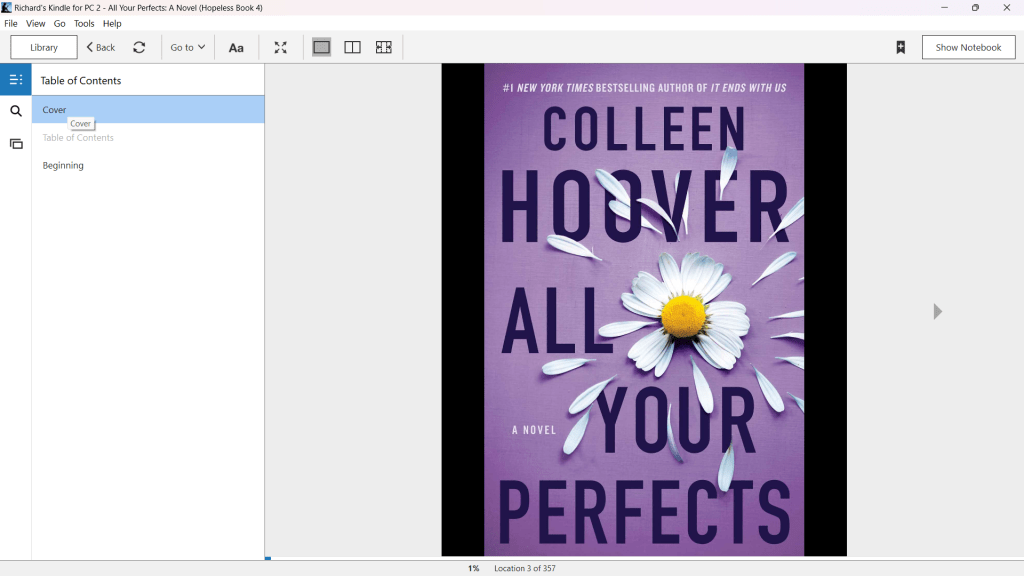
All Your Perfects, by Colleen Hoover


Amazon abstract:

INSTANT NEW YORK TIMES BESTSELLER

The #1 New York Times bestselling author of It Starts with Us and It Ends with Us—whose writing is “emotionally wrenching and utterly original” (Sara Shepard, New York Times bestselling author of the Pretty Little Liars series)—delivers a tour de force novel about a troubled marriage and the one old forgotten promise that might be able to save it.

Quinn and Graham’s perfect love is threatened by their imperfect marriage. The memories, mistakes, and secrets that they have built up over the years are now tearing them apart. The one thing that could save them might also be the very thing that pushes their marriage beyond the point of repair.

All Your Perfects is a profound novel about a damaged couple whose potential future hinges on promises made in the past. This is a heartbreaking page-turner that asks: Can a resounding love with a perfect beginning survive a lifetime between two imperfect people?


Podcasts listened to


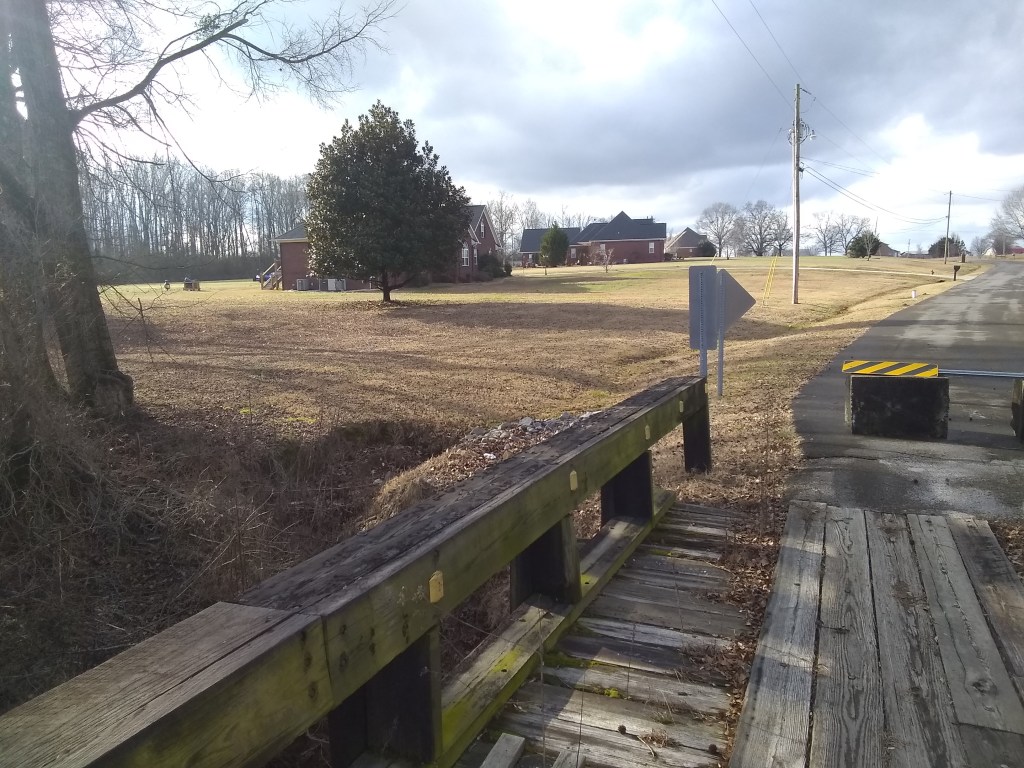
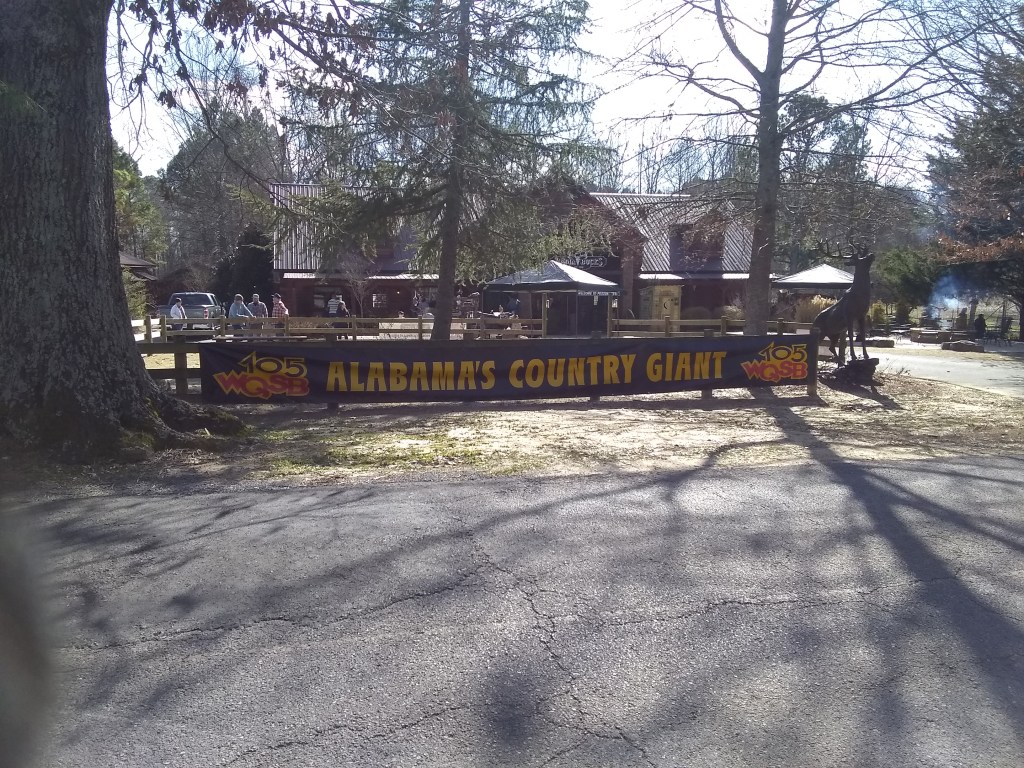
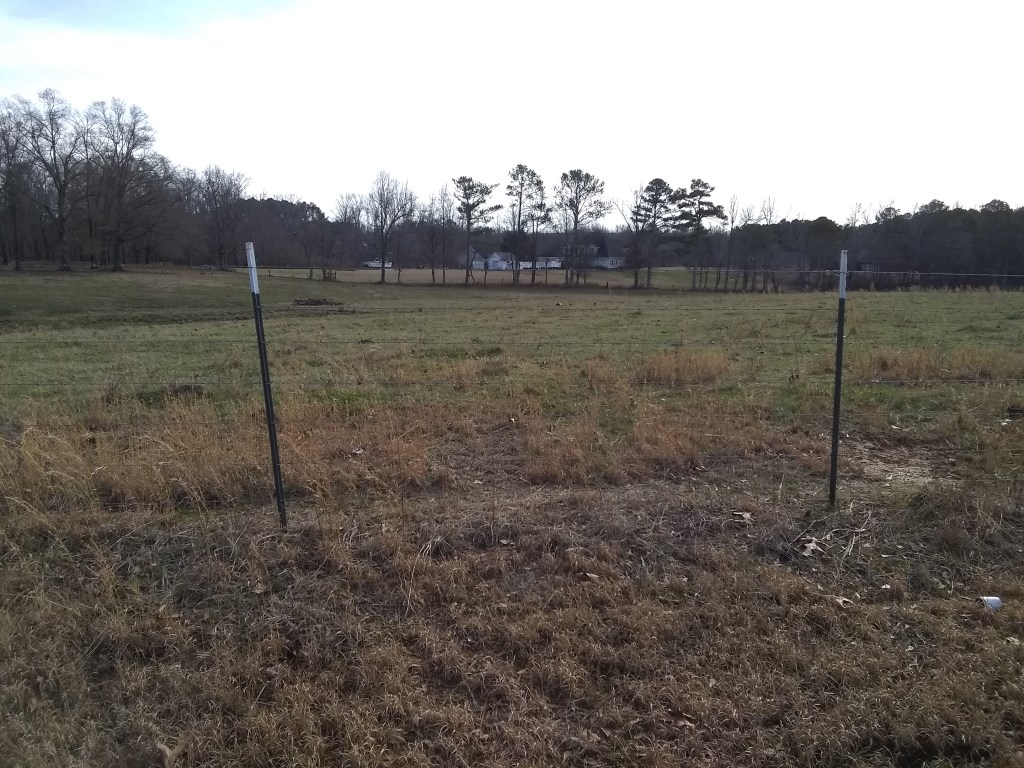
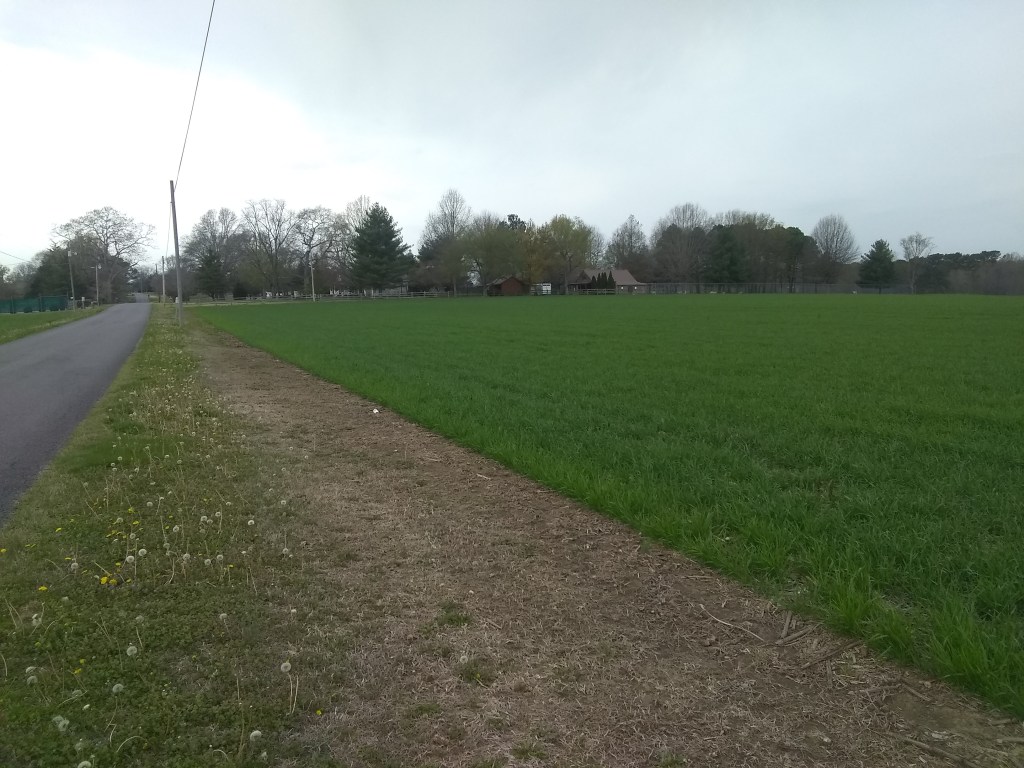
Here’s a few photos from along my pistol route:

Trump is a God—Just Not the One That Christians Believe, by David Eller

Here’s the link to this article.

By John W. Loftus at 8/28/2023

Beginning today, and every Monday morning that follows, I’ll be posting submitted essays, excerpts from my books, and some of the best posts of the past. Today is a post by Professor David Eller. He’s no stranger to readers of my books. He’s one of our best and important scholars on religion. 

So as the author of an excellent book on Donald Trump, I asked him to write something for us all to ponder, especially in light of being a twice impeached one-term multiple indicted president. Dr. Eller sent me this:

———–

Trump’s greatest trick is convincing Christians he is not a trickster.

The slavish and really obscene worship of Donald Trump by his misguided acolytes is incomprehensible from a purely political or personal perspective: Americans do not typically grovel at the feet of politicians or erect golden-calf images of them, and Trump is obviously a more despicable person than most would-be leaders. 

However, as others have commented, Trump’s Svengali hold on his “base” makes more sense from a religious viewpoint: Christians and conservatives, who have been programmed to genuflect to power and who see him as a perfectly-flawed suffering servant display the same unquestioning commitment to him and his untruths as they do to their god and its untruth.

It goes without saying that Trump has the most un-Christ-like persona we can imagine, conspicuously guilty of the sins of lying, adultery, gluttony, and covetousness and who has bragged about the sin of murder, which he knows his devotees would forgive or even celebrate, as they forgive and celebrate their god’s murder of his own son and of nearly the entire human population in the mythical flood. But he does resemble a different, older, and darker supernatural character, one with a paradoxical appeal across culture and history. This figure is the trickster, who appears in various guises in the world’s mythologies, as a god, a human culture hero, or even an animal. What unifies the fractal face of the trickster, as I write in Trump and Political Theology, is his (for tricksters are usually, at least initially, male) thrilled and thrilling violation of norms and boundaries. He is the personification, not of good and order, but of transgression.

Trickster tales abound in African, Native American, and ancient Greek, Roman, and Norse cultures among others. Hermes was a trickster god, whose first act after birth was to steal from his brother; Prometheus was the trickster who fooled the gods into giving fire to humans. In Native American stories, the trickster is sometimes an animal like the coyote, who plays tricks on other beings as he gets tricks played on him. Throughout religions, tricksters are commonly messengers, mediators, and conduits of knowledge, often forbidden knowledge; in any such role, they are the source of much of humans’ way of life. They are changelings (sometimes shifting form between human and animal or male and female), frequently associated with crossroads, thresholds, marketplaces, and other anomalous or anomic spaces. They are not ultimate creator-gods like Yahweh (not even gods at all in many instances), but they come along to alter or distort the creations of those gods, either intentionally or unintentionally, with their clever/buffoonish selfishness and often unlimited appetites.

Scholars of mythology Scott Leonard and Michael McClure summarized the trickster thusly:

He possesses a funny, absurd, iconoclastic sort of playfulness, yet the Trickster’s playfulness can carry with it serious, even tragic or transcendent, overtones. Tricksters provide the comic relief in the world’s mythologies, but they do so by embodying all the infinite ambiguities of what it is to be alive in the world. Tricksters are characters with attention deficit disorder, sacred clowns, carefree as children, obscene lechers, and generous companions. No single character type embodies so many, often contradictory, qualities. The Trickster is as likely to betray a friend as he is to set the stars in heaven or to become the victim of his own pranks. (Myth and Knowing: An Introduction to World Mythology 2004, p. 250)

This brief portrait should sound familiar, and other observers have noticed the trickster quality of Trump’s rule, over his business empire, his media presence (as the master of apprentices), and our United States of America. If Trump is anything, in one word, he is iconoclastic (the word “unprecedented” applies to too many of his utterances and actions), a violator of tradition, norm, decency, and—as is finally catching up with him—law. He can be funny, at least to his target audience, but his humor is serious and tragic, often cruel. He is definitely carefree, not caring what critics, opponents, journalists, scientists, or rational people think of him; he also suffers from an infamously short attention span. He is overtly absurd, obscene, and contradictory, and he has a long track record of betraying friends and allies, just as he repeatedly demonstrates—and his disciples seem to believe and applaud—that he sets the stars in the sky. 

Trump is not the only trickster on the global political stage. Indeed, it is fair to say that the contemporary crop of right-wing populists are all tricksters after a fashion. The description certainly fits Putin, Trump’s pal and role model. Putin too is iconoclastic, mercurial, obscene, cruel, and quick to turn on his former friends and allies, most recently Wagner Group leader Yevgeny Prigozhin, but before that any individual who would dare to challenge his authority or even compete with him in Russia’s (sham) democracy. More than anything else, Putin lies; he lies promiscuously, and he lies not only to misinform us but to portray his power over truth itself. Masha Gessen labeled it “the Putin paradigm,” this readiness to “use language primarily to communicate not facts or opinions but power: it’s not what the words mean that matters but who says them and when. This makes it impossible to negotiate with them and very difficult for journalists to cover them.” What others have called the firehose of falsities is a strategic trickster maneuver, which not only overwhelms listeners with untruth and bullshit but announces to the world that he is, in Gessen’s words, “able to say what he wants, when he wants, regardless of the facts. He is the president of the country and king of reality.”

This is the ultimate power of the modern trickster. A trickster like Trump or Putin replaces law with will, political process with personality, institutions with instincts. Such a trickster is a destroyer (“burn it all down”) but also a creator: if he succeeds, tomorrow the country, the world, reality itself will be his reflection. (American society, and especially the Republican party, is already too much in Trump’s image.) In his populist costume, he speaks for, represents, even embodies “the people,” and anyone who stands against him is not “the people” but rather the enemy of the people, to be shouted down if not gunned down. Tricksters in myth are agents of creative destruction, but they are seldom if ever leaders. It is difficult follow leaders who are so unpredictable, self-absorbed, inattentive, disrespectful, vengeful, and plain dangerous—bringers of chaos and promoters of self.

Throughout history, Christianity has actually vilified the trickster-figure. Christianity, lacking almost entirely a sense of humor—and definitely any sense of humor about its god and his vicars on earth—has tended to demonize disorder and willfulness (after all, messing with the god’s perfect creation can only make it imperfect). The devil acquired all the attributes of the trickster, becoming the master of lies and the prince of trickery. It is not hard to say, then, that Trump-the-trickster more closely resembles Satan than Yahweh or Christ. So what is the appeal to Christians?

I think, deep in their psyche, certain kinds of persons in America (and in other countries, where their own demagogues prowl the society) perceive the archetypal power of trickster-Trump. He is, to them, power incarnate, but they have a very limited vocabulary and conceptual toolkit to understand him. “Trickster” is not a term that Christians are fluent with or that they would endorse if they recognized it. All they have in their restricted language for that kind of overbearing stalking power, that kind of aspiring leviathan, is “god” or “savior,” and so they immediately default to that interpretation. And a trickster, without conscience or commitments of his own, is happy enough to let the masses wallow in their delusion, so long as they follow him, obey him, and ideally adore him. Christians, a few of whom are finally waking to the truth of the matter, have so far been disastrously willing to fall into step behind and pledge their fealty to a leader and savior who in fact is Loki in red, white, and blue garb.

The Boaz Stranger–Chapter 43

Monday night had slouched along like the world’s slowest turtle. It ranked high on Jane’s list of the worst experiences of her life.

Even though she’d loved Ray since high school, she knew it wasn’t mutual. For him, it was nothing but business. And now, minutes into Tuesday daylight, Jane’s guilt for helping Ray remove his ankle bracelet Saturday afternoon overwhelmed her. What in the Hell had she been thinking? Her desire for sex had once again blinded her reason, her mind, and her moral judgment, to the point of stopping her from asking Ray two simple questions. Why? And where do you need to go?

That criminal conduct had gone far beyond Jane’s half-century faithfulness to conceal information and protect the man who used her like a cast-iron skillet. The worst part, the thought of which had been last night’s constant companion, had been the imagined scene of being locked behind steel bars in a cramped jail cell, not just for hacking Ray’s ankle monitor, but for whatever he may have done, and may still do. Jane considered calling Micaden Tanner right then to confess and learn just how legally entangled she was.

As Tuesday’s light inched along the outside edges of her bedroom shutters, and with her bed tossed and her body tired, she sat upright, looking toward the dresser mirror across the room. The figure approached the grotesque, displaying the head and shoulders outline of a homely and destitute creature, hair electrified and frizzled. Finally, Jane vomited a disgusted smile, recalling the unthinkable that had become possible only because of Stella Newsome’s 3:00 AM phone call.

The longtime friend and ICU nurse had said, without greeting of any kind, “Lillian’s now my patient, in a coma, from blunt force across the side of her head.” The words had seemed surreal. How could this happen to the wife of Boaz’s wealthiest man? Jane surmised the reason for Stella’s call. It was her memory of spoken snippets from a long line of midweek Bible studies, including Jane and Lillian’s oft-repeated heated exchanges.

At first, Jane had not connected the dots. She still didn’t know for sure, but it didn’t appear far-fetched to imagine Ray was involved. Even though he had not admitted it, Jane was convinced he was responsible for the Hunt House fire, especially given the information gathered from Kyla, and partly from her own serendipitous followings of Lee and Lillian. Two plus two equaled four. There was only one reasonable conclusion. Lillian was a threat to Ray’s freedom.

Jane stood and slipped into a camel-colored housecoat and matching house shoes. After peeing and washing her face, she walked to the kitchen and poured a cup of coffee, adding a teaspoon of instant coffee for an extra kick. She grabbed a notepad and pencil, sat at the kitchen table, and scribbled the names Rosa and Ray.

It seemed Jane had an endless supply of reasons to feel guilty. Rosa was near the top of the list. Jane had visited her at Bridgewood Gardens late Saturday afternoon, intending to take her to The Shack and grow the courage to inquire about a certain pistol that Rachel had left in the Roanoke cabin. Maybe this, at least a delicious meal in a happy setting, would, in some small way, provide Rosa with a respite from the sadness of losing Rob. However, as God often does (so Jane believed), Jane’s plans were thwarted. Rosa was too tired to leave the facility, plus she had already agreed to dine at the Gardens’ cafeteria with three of her friendly neighbors. Jane’s guilt was rooted in her unwillingness to disclose the exactness of her prayer request, choosing instead to tell Rosa she was facing a life-changing decision.

After leaving Rosa’s apartment, Jane dropped by The Shack and placed a to-go order. That’s when she had seen Ray enter the gift shop and walk across the dining room to a table along the back wall occupied by Ted King. Instead of heading home, she had eaten in the car after sequestering her ten-year-old Impala in the darkest corner of the near-full parking lot three rows behind Ray’s black Suburban.

It was a few minutes past 9:30 when Ray walked outside and to his Suburban. To Jane’s surprise, he quickly exited the parking lot and raced south on 431, making it more difficult for Jane to follow given the increasing rain and the fear triggered by an image of her parents losing their lives when their vehicle lost control that fateful July day.

Instead of turning right on Gaines Street to weave his way to Hwy. 205 and Skyhaven Drive, Ray continued another quarter mile and turned left on Cox Gap Road. The only thing Jane could think of was Ray was headed to Lillian’s place. But why? She abandoned her brainstorming when the black Suburban motored past Alexander Road and kept going, speeding haphazardly into an approaching curve. Jane slowed while Ray recovered.

She was even more puzzled a mile and a half later when Ray turned right onto Dogwood Trail as the downpour intensified. Jane slowed, allowing Ray’s vehicle to disappear. She knew it would be crazy to follow him down a dead-end road. Thoughts from half a century ago appeared: a secluded farm, an old barn, and a huge campfire the night of Rachel’s going-away party. It was in the middle of tenth grade, the day after Christmas, a Friday night. Cold wasn’t the right word to describe the weather that night so long ago.

Jane turned around and drove forward a hundred feet and saw a narrow drive to her right into a thick grove of oaks. She assumed Ray’s visit would be quick, so she backed her car deep enough to maintain a direct line of sight to Dogwood Trail. What on earth could Ray do in this weather?

A shocking answer came over two hours later. Jane first saw the headlights and wasn’t certain it was Ray. But when he turned right instead of left, she saw the black Suburban pulling a long flatbed trailer holding a muscular-looking blue pickup truck.

Jane had followed Ray down the mountain all the way to Attalla and the entrance ramp to I-59. That’s when she had called it quits and headed home.

Now, pouring another cup of coffee, Jane wished she hadn’t given up and had continued to follow Ray southward. After two quick sips, she sat aside her second cup and returned to the bathroom. She needed to shower and visit Lillian. Hopefully, Lee would be there, and she could share her once unthinkable decision.

***

I was finally in a deep sleep when my iPhone dinged. I glanced at Lillian. She didn’t budge and probably hadn’t since I’d zonked out around noon. That was two hours ago, and over sixteen since I’d returned to the ICU. The ding was notification that I’d received an email from Kent. Once opened, I saw “Linda Smith” typed in the subject line. I started not to read it, thinking I already knew what it would say. After all, a little over a week ago, I’d received an email from our former English teacher that included the complete manuscript of Kyle’s essay. Basically, the only thing I’d learned was that Kyle had included the fact the Albertville High School cheerleader (Babe 2) had disappeared. Some way I’d missed this in my initial phone call to Ms. Linda while preparing my Memorial service eulogy.

Since I was now wide awake and had nothing better to do, I read Kent’s email twice. Doing so reminded me of the time Kyle and I jumped off the pier into a near-freezing pond on New Year’s Day, 1969. It was bone-chilling. Although Kent shared what I already knew, Ms. Linda had disclosed additional information (to Kent, not me) that Kyle hadn’t included in his own essay assignment but had included in one he’d written for Ray (she referred to it as Essay 3; Kyle had also written Essay 2, but it was rather innocuous about Ray’s challenge to get a football scholarship at the University of Alabama). Also, Ms. Linda had shared events that weren’t included in any of the three essays.

It was the Monday after Thanksgiving. Teacher Linda had observed a heated argument between Rachel and Kyle while the two stood in the hallway in front of his locker during the mid-morning break. The next day, during Ms. Linda’s regular office hours, Kyle had dropped by to discuss his essay project (Essay #1). This wasn’t out of the ordinary. In previous meetings, Ms. Linda had learned a few things about Kyle’s situation and the two essays (Essays #2 and #3) he was drafting for an unnamed student. Later, she’d determined the Brute character was Ray Archer, and Babe was Rachel Kern. Until this office visit, Ms. Linda had been concerned about Ray’s bullying but was confident he and Kyle would reconcile. Ms. Linda had viewed her non-disclosure decision as an acceptable outcome and had decided she wouldn’t penalize Ray for not failing to complete his own assignment. Ms. Linda’s decision changed after Kyle disclosed the following.

After initially promising Kyle she would keep everything a secret, he revealed the contents of yesterday’s verbal assault by the girl he thought a dear friend. Kyle’s disclosure of an overheard conversation between Ray and his father triggered Rachel’s surprise anger. She had warned Kyle to keep his nose out of Ray’s business.

The overheard conversation had taken place ten days earlier, just after the final football playoff game between Hartselle and Boaz. Most everyone had already left the stadium, except Kyle, Ray, and a couple of older guys with metal detectors looking for coins and jewelry beneath the stadium’s bleachers. Kyle was hiding in the equipment room at the back of the field house, waiting for bully Ray to leave. Kyle heard voices and eased into the adjoining hallway. Ray’s father had come inside through the office entrance and was yelling at his son. It seemed Mr. Archer had spent the past several hours at the Marshall County Sheriff’s Department answering questions about his son’s whereabouts the day Sharon Teague had gone missing.

Although the cheerleader’s disappearance occurred several weeks earlier, Marshall County Detective Charles Darden was pursuing a new lead, thanks to a former boyfriend of Sharon’s, who’d now come forward after an agonizing time of silence. The boy, Nick Pearson, alleged Sharon had confided in him that a popular jock from Boaz had raped her and gotten her pregnant. He’d also mentioned the jock’s current girlfriend was harassing her to the point of threatening her life if she didn’t shut up or disappear.

Kyle had concluded his office visit by again having Linda swear her secrecy, and by revealing that Rachel was two, if not three, months pregnant. He also shared that Ray was trying to convince Rachel to have an abortion. Kyle’s last statements that day had been a declaration and a question: “For the first time in my life, I’m scared and don’t know what to do. Ms. Smith, do I go to the police or just keep my mouth shut and play dumb?”

Kent closed his email with the sad fact Ms. Smith, two days later, left town on a family emergency. Before flying to Washington State, she’d battled the dilemma posed by her promise but ultimately disclosed Kyle’s secrets to his mother.

When Ms. Linda returned to Boaz on Saturday, December 12th, she discovered Kyle had disappeared.

08/29/23 Biking & Listening

Biking is something else I both love and hate. It takes a lot of effort but does provide good exercise and most days over an hour to listen to a good book or podcast. I especially like having ridden.

Here’s my bike, a Rockhopper by Specialized. I purchased it November 2021 from Venture Out in Guntersville; Mike is top notch! So is the bike, and the ‘old’ man seat I salvaged from an old Walmart bike.

Here’s a link to today’s bike ride.


Something to consider if you’re not already cycling.

I encourage you to start riding a bike, no matter your age. Check out these groups:

Cycling for those aged 70+(opens in a new tab)

Solitary Cycling(opens in a new tab)

Remember,

Photo by Suzy Hazelwood on Pexels.com

Novels listened to

The Count of Monte Cristo

Amazon abstract:

On the day of his wedding, Edmond Dantès is falsely accused of treason, arrested, and imprisoned without trial in a grim island fortress off Marseilles. A fellow prisoner inspires Dantès to escape and guides him to a fortune in treasure. Dantès returns home under the pseudonym of the mysterious Count of Monte Cristo, in order to avenge himself on the men who conspired to destroy him.

The Count of Monte Cristo takes place in France, Italy, and islands in the Mediterranean during the historical events of 1815-1839: the era of the Bourbon Restoration through the reign of Louis-Philippe of France. It begins just before the Hundred Days period (when Napoleon returned to power after his exile). The historical setting is a fundamental element of the book, an adventure story primarily concerned with themes of hope, justice, vengeance, mercy, and forgiveness. It centers around a man who is wrongfully imprisoned, escapes from jail, acquires a fortune, and sets about getting revenge on those responsible for his imprisonment. However, his plans have devastating consequences for the innocent as well as the guilty.


All Your Perfects, by Colleen Hoover


Amazon abstract:

INSTANT NEW YORK TIMES BESTSELLER

The #1 New York Times bestselling author of It Starts with Us and It Ends with Us—whose writing is “emotionally wrenching and utterly original” (Sara Shepard, New York Times bestselling author of the Pretty Little Liars series)—delivers a tour de force novel about a troubled marriage and the one old forgotten promise that might be able to save it.

Quinn and Graham’s perfect love is threatened by their imperfect marriage. The memories, mistakes, and secrets that they have built up over the years are now tearing them apart. The one thing that could save them might also be the very thing that pushes their marriage beyond the point of repair.

All Your Perfects is a profound novel about a damaged couple whose potential future hinges on promises made in the past. This is a heartbreaking page-turner that asks: Can a resounding love with a perfect beginning survive a lifetime between two imperfect people?


Podcasts listened to


Here’s a few photos from along my pistol route:

Is the Death of Christian Belief Coming Soon?

Here’s the link to this article.

By David Madison at 8/25/2023

Cheap knockoff superstitions are taking over

This really is a puzzle: why haven’t decent devout believers—by the millions—founded an organization called Christians Against Televangelism? They should be so appalled/enraged that televangelists have turned the faith into a showbusiness money-grab, enabling so many of them to become multi-millionaires. They’ve reimagined Jesus as big business, exploiting magical thinking found in the New Testament: believe in Jesus to get eternal life. This turned out to be a major made-for-TV gimmick. 

But televangelism is actually the crass culmination of the church’s centuries-long embrace of show business. Millions of churches have been built, the theatres—the stages—for performances. Among these are the spectacular cathedrals, with magnificent stained glass, paintings and sculptures. No one has been able to surpass the Catholic church, in terms of costuming, props, and ritual. All this makes it so easy to get away with magical thinking.

How long can this last? In his new book, The Death of Christian Belief, Robert Conner makes this point:

“If the history of religion teaches anything, it teaches that religions die. In the imagination of their adherents, religions are eternal, but they obviously aren’t—the world is strewn end to end with the temples, shrines, megalithic dolmens and stone circles, pyramids, inscriptions and images of hundreds of dead religions. No matter how completely religious belief and ritual command the present, there is never any guarantee they will command the future.” (Kindle, p. 68)

In my article here last week I commented on the first half of this excellent book, now let’s look at the last half. 

Chapter 4 is titled, Certifiably Crazy for Jesus, and at the outset, Conner observes:

“Speculation about the intersection of religion and insanity has obviously been around for a while and the connections (or lack thereof) continue to be vigorously debated in the present. Whether religious belief technically qualifies as psychosis we can leave to the professionals to thrash out, but it is beyond dispute that religious belief is—as often as not—functionally insane.”

Then he cites the horrible news from Kenya earlier this year that a cult had convinced people that starving to death for Jesus was a way to earn eternal life. Within a month it was determined that 201 people had died, and that 600 were missing. It’s not hard to figure out “…that literally anything—no matter how comically absurd, abysmally stupid, completely unhinged, or easily disproved—can be asserted under the aegis of ‘sincerely held religious belief’ clearly refutes any notion that religious belief is the product of common sense.” (p. 106, Kindle)

Conner notes that so many Jesus-believers “couldn’t pass a basic quiz about what the gospels say about Jesus.” (p. 106, Kindle) He points out that “the New Testament is a cookbook of crazy,” a primary example being Jesus-script in Matthew 18:3: “Truly I tell you, unless you change and become like children, you will never enter the kingdom of heaven.” This is typical cult technique: please don’t think about what we’re telling you—just take our word for it. One result of this approach is that so many laypeople don’t bother to read the gospels, and remain unaware of so much in the cookbook of crazy

Here’s a sample: In Mark, Jesus transfers (presumably by a magic spell) demons from a man into pigs; he glows on a mountaintop while god speaks from water vapor (a cloud); in Matthew, at the moment Jesus died, dead people came alive in their tombs, then on Easter morning walked around Jerusalem; in Luke, the resurrected Jesus appeared to two of his followers on their way to Emmaus—but they didn’t recognize him. At dinner, as he broke bread, they suddenly knew who he was, and—poof—he vanished. (See Conner’s book, Apparitions of Jesus: The Resurrection as Ghost Story) Luke also has the extreme cult teaching that hatred of family, and of life itself, is required for Jesus followers. In John, we find the ghoulish pronouncement that eternal life happens when cult members eat the flesh of Jesus, and drink his blood. 

This is just a sampling—and many more examples will jump out—the more folks read the gospels carefully, confirming Conner’s verdict that the New Testament offers “crazy with a side order of extra-crazy crazy.” (p. 120, Kindle)

Maybe the death of Christian belief is on the horizon because people are reading the cookbook of crazy. “In 2022, polling showed that ‘among all U.S. adults, only 20% say the Bible is the literal word of God, which is a historic low… A record 29% of Americans say the Bible is a collection of ‘fables, legends, history and moral precepts recorded by man.’ Only 30% of Protestants and 15% of Catholics currently believe the Bible is literally true.” (p. 114, Kindle)

In Chapter 5, Where Christianity Goes to Die, Conner provides a brutal dose of reality about the state of humanity. I remember reading, some twenty years ago, the prediction that by 2025 there would be a billion Pentecostals in the world. Much of the growth that it has experienced has been at the expense of the Catholic church. Conner quotes an article by David Masci of Pew Research:

“The music that you hear in Pentecostal churches has the same rhythms that people enjoy outside of church. In fact, in only a century, Pentecostalism has become indigenous, or ‘Latin Americanized,’ to a greater extent than Roman Catholicism has in four centuries in Latin America… And the Pentecostal preachers tend to sound more like their congregants. They are often unlettered, and they speak to their flock in the same way that people in Latin America speak to each other. They also tend to look like their congregants. So in Guatemala, many preachers are Mayan, and in Brazil they are Afro-Brazilian.” (pp. 122-123, Kindle)

They are often unlettered. This is emotion-based religion, fed by the cookbook of crazy. The crazy isn’t even noticed. I am reminded of Josiah Hesse’s experience, growing up in apocalyptic evangelism (my article here on 11 August was about his painful childhood):

“I would say that some of the most emotionally rapturous moments of my life were had in Pentecostal church services, where the loud and hypnotic music, speaking in tongues, primal dancing, shaking and collapsing to the ground, caused explosions of sensory transcendence in my little body. I’ve since had glimmers of these moments on a dance floor, a rock concert, or moments of exceptional sexual climax, but nothing has come close to the indescribable high of a frenetic religious service laced with an uncut dose of pure belief.”

But indescribable highs count for nothing when we’re trying to figure out how the cosmos works. For that we need reliable, verifiable, objective evidence. 

Earlier I mentioned Jesus transferring demons from a man to pigs—which we find in Mark 5. In fact, Mark’s gospel could be subtitled, Jesus and the Demons. Pentecostalism thrives on such superstitions. Conner describes the widespread belief in witch children, and the horrors they’ve suffered at the hands of exorcists. He quotes from an article by Cosima Lumley:

“Thousands of children every day are being branded witches and consequently tortured into confessing non-existent crimes, forced to undergo horrific ‘exorcisms’ by preachers, and even abandoned or killed by their own families or communities…The practice of branding children witches has also become a very lucrative one for Pentecostal preachers who are able to ‘exorcize’ children of the influence of Satan for a price, or as they call it, ‘enact deliverance.’” (p. 130, Kindle)

Conner also discusses the role that homophobia plays in the promoting of fanatical religion. American evangelicals have played a major role in stoking these hatreds in Africa especially. “Queerbaiting as a political tactic never seems to age. Fomenting hatred and violence is not a measure of last resort in societies where national politics is driven by religious fundamentalism. It’s their first move. It’s their path to power. To the extent this tactic loses traction in democratic countries, it must move to more hospitable climates to survive.” (p. 142, Kindle)

One of the major themes of Chapter 6, The Valley of Death, is the assumption among fanatics that climate change is real because it fits with apocalyptic doom scenarios. In other words, we shouldn’t even try to resist god’s plan—as outlined by the cookbook of crazy. Is such foolishness the fate of Christian belief? At the outset I asked why aren’t Christians furious with the corruption of their religion by televangelists. Likewise, Conner wants to know:

“When priests by the hundreds molest children and bishops cover it up, why aren’t Christians stunned? When Irish nuns raffle off the babies of unwed mothers, why aren’t Christians stunned? When unmarked graves of children are discovered around Canadian religious ‘schools,’ why aren’t Christians stunned? When embezzlement and sexual assault by preachers gets reported on an almost daily basis, why aren’t Christians stunned? When evangelical leaders gather to lay hands on figures like Donald Trump and Jair Bolsonaro, why aren’t Christian’s stunned?” (pp. 106-107, Kindle)

Given its ongoing degeneration, we can be sure that Christian belief will end up on the scrapheap of history:

“In the developed world, Christianity is losing traction for reasons that are now familiar: churches are dying because elderly Christians are dying, and Christian belief increasingly incorporates toxic elements of sexism, racism, and reactionary nationalism. But more importantly, the Christian gospel is simply irrelevant—thoughts and prayers don’t address poverty, discrimination, gun violence, failing government, or climate change.” (pp. 150-151, Kindle)

Here is the link to an interview that Robert Conner and I did together, with Derek Lambert of MythVision.

David Madison was a pastor in the Methodist Church for nine years, and has a PhD in Biblical Studies from Boston University. He is the author of two books, Ten ToughProblems in Christian Thought and Belief: a Minister-Turned-Atheist Shows Why You Should Ditch the Faith, now being reissued in several volumes, the first of which is Guessing About God (2023) and Ten Things Christians Wish Jesus Hadn’t Taught: And Other Reasons to Question His Words (2021). The Spanish translation of this book is also now available. 

His YouTube channel is here. At the invitation of John Loftus, he has written for the Debunking Christianity Blog since 2016.

The Cure-for-Christianity Library©, now with more than 500 titles, is here. A brief video explanation of the Library is here.

The Boaz Stranger–Chapter 42

By the time I approached Christiansburg thirty-five miles south, I was running on fumes.  My overindulgence of the food that friends and neighbors had brought to Kyla’s after the funeral no longer fueled my energy needs. I exited and pulled into a Citgo. After refilling, I bought a large coffee and two Little Debbie Honey Buns.

The only other stop I made during my return trip was a two-hour layover at the Tennessee Welcome Center in Bristol. My intermittent sleep in the reclined driver’s seat was fitful, but at least I got to rest my eyes.

Once again, from north of Knoxville to just south of Ft. Payne, Lillian was a soothing tonic. This time, I’d called her. We shared our hopes and dreams, our fears and foibles, and our investigative plans for my remaining days in Alabama. I’d driven, and she’d rested under a remarkably warm December sun in an Adirondack at the end of her pier.

I’d just exited at Collinsville when Lillian called again. “Lee, this is odd, and I’m scared.” Her voice, muffled, like she was trying to disappear into a crowd.

“What’s odd? What’s going on?”

“Ray just drove up, acting like he owns the place. He’s turning his Suburban around and backing to the barn.” I heard her footfalls on the wooden deck.

“Go inside and lock your doors. I don’t trust him at all.” I pushed the gas pedal to the floor and raced toward Crossville. Lillian had told me of a shortcut through Rodentown, but I was afraid I’d get lost and take even longer to get to her house.

 “Hey Lil, sorry to bother you.” I heard Ray in the background. His voice was friendly.

“He apparently has a key to the big door on the right. This is strange.”

“Lillian, did you hear me?”

“Uh?”

“Don’t approach Ray. Go inside. Now.” It was the safest plan. It was eerily comforting to remember Lillian kept a 32-caliber pistol in her bedroom’s nightstand.

“This is my place. He’s not welcome.” She paused, and I heard her open and shut the gate next to the driveway. “Lee, I’ll call you back in a few minutes.”

“No, Lillian. Lillian.” But she had already ended her call.

I met a State Trooper halfway up the winding road this side of Crossville. He flashed his blue lights but didn’t turn around. I was at least fifteen minutes, probably twenty, from Lillian’s. I had no choice but to slow to the speed limit.

It was the longest and worst time of my life, even worse than when I’d found Rachel hanging in the basement from an overhead beam. The memory of the tall and strong Ray pushing Lillian backwards onto his garage steps two weeks ago came rocketing across my mind. I shook my head to avoid even worse thoughts.

All the way to Kilpatrick, I tried to call Lillian. No luck. When I turned left on Hwy. 168, I called 911. After several requests, it felt like my pleading had fallen on deaf ears. The throaty sounding woman made no promises other than, “I’ll pass this along to the Sheriff’s Department.”

Based on what I knew about Ray Archer, there was nothing he wouldn’t do to protect himself, his reputation, and his sordid past.

After twenty terrifying minutes, I rounded the last curve before reaching Alexander Drive. There was no sign of Ray’s Suburban, and Lillian’s SUV was behind the house next to the back porch. I pulled to the far side of the Aviator and ran to the barn. I wasn’t sure why, other than this was the direction I’d imagined Lillian walking when she’d ended our conversation.

The right-side door was raised. I could see deep tire tracks just outside the bay. Lillian had mentioned a flatbed trailer. I went inside, saw nothing, and turned to the left. I loudly announced my presence, realizing the logical first thing to have done was to go inside the house. Why would Lillian still be out here?

I almost collapsed when I entered the room the neighbors had temporarily borrowed. Lillian was sitting upright on the ground, leaning against a tall stack of square bales. Her head slumped to her right.

“Lillian. Baby.” I took three steps and knelt beside her. Her neck revealed a pulse, but it was weak. “Talk to me.” I gently shook both shoulders without response. She was unconscious.

There were no visible signs of injury. Until I saw a pool of blood soaking the loose strands of hay on the barn’s dirt floor.

Struggling, I pulled her forward by her legs, allowing her to lie flat on her back. I lifted the hair on the right side of her head and saw a big gash just above the ear.

I again dialed 911, silently questioning whether I’d made the right decision to move Lillian’s body.

While I waited for the EMTs to arrive, I held my ear to Lillian’s face. Thankfully, she was still breathing, evidenced by the soft puffs emanating from her mouth.

When I heard a siren in the distance, I stood and edged myself through the corridor created by stacks of hay. I raised the overhead door, hoping help was only minutes away. The blue sky was beautiful, as clear as a glass of mountain water. The sky, sun, and temperature were perfect for a leisurely conversation sitting with Lillian at the end of the pier. Yet, reality had struck. Lillian’s coma like condition was no doubt the work of Ray Archer, the man I hated more every day.

The siren grew louder, and the ambulance appeared, rounding the last curve on Cox Gap Road. I walked outside ten feet and started waving both hands over my head.

The two men and one woman were fast and efficient. One man with a large medical bag and a woman followed my pointing while the other man removed a gurney. Within seconds, the woman assessed the situation with a stethoscope, pin light, and blood pressure band. She never looked at me while asking questions and ordering the two men to cradle Lillian into an immobilizing contraption before lifting her onto the gurney. “We’re headed to Marshall Medical Center South. You can follow but speak to Deputy Franklin first.”

An Etowah County Sheriff’s car pulled beside the ambulance as the female EMT walked away. “Miss. How is she? Will she make it?” It was something I had to ask.

The short, stocky redhead opened the van door and was intent on ignoring my question. Before sitting, she paused. I glimpsed a sympathetic eye. “She’s suffered a traumatic brain injury. She’s in a coma. It could go either way.” The redhead closed her door just as the male driver started backing toward the garage. The siren blared as the ambulance raced away. I’ve never felt so alone.

“Sir, I’m Deputy Franklin. This is Deputy Moore. Please tell us what happened and why you think a Mr. Ray Archer is involved.” Apparently, my first call to 911 had made its way to the Sheriff’s Department.

 I must have appeared weak or subject to fainting. Deputy Franklin took me by the elbow and walked me to the front fender of his patrol car. He let go as I leaned back. “Had you rather sit?”

“No. This is good.” I had trouble focusing on anything except Lillian. I needed to leave and head to the hospital, but with both deputies staring at me, I had to speak, or I’d be here all afternoon. “Lillian called me, not exactly in a panic but halfway there.”

“Where were you?” Deputy Franklin asked.

“I had just exited I-59 at Collinsville. I was returning from Roanoke, Virginia.”

“What did she say?”

“That Ray Archer had just arrived and was backing his Suburban toward the barn.” I pointed over my shoulder.

“Who is this Archer fellow?” Moore asked.

“He’s Lillian’s husband. They’re separated. He’s a dangerous man.”

“How so?” Franklin asked. I really didn’t want to get into the complete story. I chose my words carefully.

“He’s out on bond, recently charged with arson and murder.”

I was glad Franklin skipped forward in the chronology and took us in a new direction. “What was going on when you arrived?”

“There was no sign of Archer. Or Lillian. I found her collapsed inside the barn. She was barely breathing, unconscious.” I again pointed. This time toward the square bales.

“So, you’re saying you didn’t see Mr. Archer at all, certainly didn’t see him harm Lillian?”

I figuratively shook my head. I knew where this was headed. Either they would think I’d hurt Lillian or that it was an accident. “No, but how else can you explain that gash on her head?” This sounded intellectually silly, even to me.

After pleading for permission to leave, Deputy Franklin said I could and that he and Moore would drop by the hospital for me to sign a statement.

I thanked them, walked an unsteady path to the Hyundai, and headed to Marshall Medical Center South.

Before I reached the four-way stop at Johnson’s Builders, my mind was in a tug-of-war. One side pulled at the practical. On the other side, the emotional.

From a practical standpoint, it was only natural for me, an attorney, to favor a reasoned and logical approach to every issue. The big question, ‘what had happened to Lillian?’ was central. I had conducted a cursory search around Lillian’s body for a weapon, something solid Ray could have used to strike the side of her head. Nothing. I knew Ray was smart. How else could he have gotten away with a murder, maybe two, for over half a century? I then realized he would have taken the weapon with him—be it a pipe wrench, a baseball bat, or a shovel—intent on not leaving a trace of evidence. Turning onto Hwy. 431, I made quick disposal of the idea that Lillian’s condition was accidental.

Instead, my mind slid sideways into an emotional abyss. Lillian was about to die. Just when I had believed I was no longer jinxed and could experience contentment, happiness, even intimacy, fate had intervened (I dared not think it God’s will). Lillian’s death would return me to loneliness. Worse still, I had no one to blame but myself. I was defective. I was wholly incapable of taking care of the ones I loved.

I fought this battle all the way to the Emergency Room, surrendering to the dreadful thought that everyone I loved, Kyla, Leah and Lyndell and their spouses, and my four grandchildren, all were vulnerable, possibly each walking a tightrope above a raging and deadly sea.

Finally, after three hours of pacing the ER waiting room, and receiving repeated “she’s undergoing tests” update, a bulimic looking nurse approached and asked if I was Lillian Archer’s next of kin. I lied and said I was and wondered exactly how they’d determined the last name. The nurse advised me to go outside to the Ambulance entrance and talk with a Dr. Gerald Claburn who, of all things, was on a smoke break.

I did as instructed, thinking the doctor was a Clint Eastwood look-a-like as I approached. “How’s Lillian?” I asked as he gave me a slight head nod, crumbled a short, still-smoking butt into a disposal bin, and removed another cigarette from a pack of Winston’s he’d tucked inside his shirt pocket.

“Stable. She took a wicked lick on the side of her head, but no skull fracture. The CT scan shows no swelling or bleeding on the brain.”

He took a long pull on his cigarette. “Is she conscious?”

The double doors to the ER opened, and the same bulimic nurse motioned for Dr. Claburn. “No, and I do not know when she’ll return to us.” I thought that was a strange way to put it. I guessed the doc was some type of spiritualist.

He started backing towards the door and I followed him asking, “Give me your best guess, please.” I knew my request wasn’t meritorious. My feelings for Lillian now depended on guesswork.

“Doctor, come on.” The nurse announced, her face clearly unhappy.

I appreciated Dr. Claburn stopping and placing his hand on my shoulder. “It’s possible the blow to the head did not cause Lillian’s coma. Other possibilities are stroke or brain tumor. It’s simply too early to tell.”

With that, the doctor walked into the ER. I couldn’t have felt worse if I had fallen headfirst into a dark, heated tunnel.

I don’t know how long I stood blankly staring towards the sliding glass doors. The shrill sound of an approaching ambulance rocketed me to reality.

***

Before returning to the waiting room, I walked to my car and checked the trunk. The plastic-enclosed Chiefs Special was still wedged between a windbreaker and a pair of jeans inside my overnight bag. The sudden sound of a man’s voice behind me asking how I was doing shocked me. A quick turn convinced me he was no threat but a persuasive trigger that I had to deliver the murder weapon to either Micaden or the Marshall County District Attorney.

I chose the former, but not before calling and updating Kyla, and requesting she fill in for me while I ran an errand. She arrived in fifteen minutes and promised to call with any news.

Thankfully, a quick call verified Micaden was in his office, and not with a client. Tina was waiting by the outside door when I arrived and hustled me back to the conference room, where I found my attorney and Connor Ford.

After a head-nodding greeting from each of us, I placed my overnight bag on the table and removed the S & W. I had elected, for now, to stay mum about Lillian’s attack. Connor spoke first: a polite, thorough, and figurative dress-down of me inserting myself, once again, in the investigative role.

Before Connor finished speaking, Micaden was on the phone to the DA, but had to leave a message for her to call. “Assuming this is the pistol that killed Kyle Bennett, what do we have in order to conclude Ray pulled the trigger?”

I sat and said, “Rosa.” Connor held out his hand like a traffic cop. I didn’t heed his warning. “She says Rachel told her everything, including that Ray had shot Kyle, in her presence.”

“Inadmissible.” Connor said, fingering the weapon. Unfortunately, I had to admit to myself that he was probably correct.

“I’m afraid Ray is going to slip through the net once again unless we find Kyle’s body.” Micaden said, walking to the hallway to converse privately with Tina.

I couldn’t disagree with my colleagues. Short of an error by the trial judge (one certainly to be appealed), our evidence against Ray Archer was circumstantial. I felt like I’d been chasing a ghost. Just the moment I thought my hands were around its neck, the damn thing evaporated into thin air.

“Here’s some news.” Micaden said when he returned. “Maybe nothing. Tina’s niece works at The Shack. Seems that Billy and Buddy James didn’t show up for work yesterday or today. According to the niece, neither one has missed a day since the restaurant opened three years ago.”

Connor stood and announced he would deliver the pistol to the DA’s office. He abruptly left the room. I think he doesn’t like me.

“How’s Lillian?” Micaden asked. He obviously saw the confusion on my face. “Scanner.”

I delivered the short version. We spent another ten minutes brainstorming how we might precipitate another arrest of Ray Archer.

In the end, the best we could hope for was for Lillian to come out of her coma and tell us how Ray attacked her.

I returned to the ER and Kyla. The only news was that Lillian was now in the ICU and we could visit her for five minutes each.

08/28/23 Biking & Listening

Biking is something else I both love and hate. It takes a lot of effort but does provide good exercise and most days over an hour to listen to a good book or podcast. I especially like having ridden.

Here’s my bike, a Rockhopper by Specialized. I purchased it November 2021 from Venture Out in Guntersville; Mike is top notch! So is the bike, and the ‘old’ man seat I salvaged from an old Walmart bike.

Here’s a link to today’s bike ride.


Something to consider if you’re not already cycling.

I encourage you to start riding a bike, no matter your age. Check out these groups:

Cycling for those aged 70+(opens in a new tab)

Solitary Cycling(opens in a new tab)

Remember,

Photo by Suzy Hazelwood on Pexels.com

Novels listened to

The Count of Monte Cristo

Amazon abstract:

On the day of his wedding, Edmond Dantès is falsely accused of treason, arrested, and imprisoned without trial in a grim island fortress off Marseilles. A fellow prisoner inspires Dantès to escape and guides him to a fortune in treasure. Dantès returns home under the pseudonym of the mysterious Count of Monte Cristo, in order to avenge himself on the men who conspired to destroy him.

The Count of Monte Cristo takes place in France, Italy, and islands in the Mediterranean during the historical events of 1815-1839: the era of the Bourbon Restoration through the reign of Louis-Philippe of France. It begins just before the Hundred Days period (when Napoleon returned to power after his exile). The historical setting is a fundamental element of the book, an adventure story primarily concerned with themes of hope, justice, vengeance, mercy, and forgiveness. It centers around a man who is wrongfully imprisoned, escapes from jail, acquires a fortune, and sets about getting revenge on those responsible for his imprisonment. However, his plans have devastating consequences for the innocent as well as the guilty.


All Your Perfects, by Colleen Hoover


Amazon abstract:

INSTANT NEW YORK TIMES BESTSELLER

The #1 New York Times bestselling author of It Starts with Us and It Ends with Us—whose writing is “emotionally wrenching and utterly original” (Sara Shepard, New York Times bestselling author of the Pretty Little Liars series)—delivers a tour de force novel about a troubled marriage and the one old forgotten promise that might be able to save it.

Quinn and Graham’s perfect love is threatened by their imperfect marriage. The memories, mistakes, and secrets that they have built up over the years are now tearing them apart. The one thing that could save them might also be the very thing that pushes their marriage beyond the point of repair.

All Your Perfects is a profound novel about a damaged couple whose potential future hinges on promises made in the past. This is a heartbreaking page-turner that asks: Can a resounding love with a perfect beginning survive a lifetime between two imperfect people?


Podcasts listened to


Here’s a few photos from along my pistol route: