
Author: Richard L. Fricks
Writer. Observer. Builder. I write from a life shaped by attention, simplicity, and living without a script—through reflective essays, long-form inquiry, and fiction rooted in ordinary lives. I live in rural Alabama, where writing, walking, and building small, intentional spaces are part of the same practice.
God and Girl–Chapter 3

God and Girl is my first novel, written in 2015. I'll post it, a chapter a day, over the next few weeks.
It’s now Wednesday, ten days before my ninth-grade year begins at Boaz High School. I always meet with my Dad around 5:00 p.m. to just catch up and to discuss any questions I have about my middle school girl’s youth group I teach at 6:30 each Wednesday evening.
We always meet in his study on the second floor of the church’s administrative building. As I enter his outer office, “Dad, you here?”
“Waiting on you dear, come on in.”
I walk in and see a man I do not know sitting across from Dad in my chair, where I normally sit.
“Honey, I want you to meet Doug Carter, he is with the home office of the Southern Baptist Convention in Nashville,” Dad says.
“Hello Mr. Carter, nice to meet you,” I say.
“Honey, Mr. Carter and I were just wrapping up a day we have spent planning our next exercise. I’ll tell you about it later. If you will, give us about 10 minutes to finish up and I’ll be ready for our meeting.”
“Okay Dad, I’ll just sit at Linda’s desk.” Linda is Dad’s personal assistant. She is truly the engine under the deck around here. I sit in her soft leather chair and wait on Dad to get free and can’t help but think about Dad’s early life.
Dad grew up in Selma, Alabama. He was born in the late 60s.
Even though he didn’t witness the dramatic and violent Selma to Montgomery March led by Dr. Martin Luther King in 1965, the happenings concerning this march and desegregation with U.S. Congress passing civil rights and voters rights acts, all affected my Dad in deeply wonderful and troubling ways.
My grandfather was Jacob Brown. My brother was named after him. My grandfather was a deputy sheriff in Dallas County, where Selma was the county seat. The sheriff was a life-long enemy of African Americans and was instrumental in seeding and fostering black-hate in his Department. My grandfather was one of the deputies who used whips, tear gas, and nightsticks against the black marchers to turn them back as they attempted to cross the Edmund Pettis Bridge.
According to Dad, grandfather was a two-sided coin. He was hard as nails and fully believed that blacks were inferior to whites. He was so hard that he praised his ancestors for fighting the Civil War, often saying the South would be better off if blacks were still slaves. Dad grew up under the same roof with a father who was a bigot and proud of it.
But, there was a good side to my grandfather. He loved his family, my Dad, my uncles Simon and Preston, and my aunts Nancy and Bea, and my grandmother Marion. Grandfather worked two jobs for years. His day job was as a deputy sheriff, but several nights a week he was a security guard at Somerdale’s Lumber Mill, the largest employer in Selma. Even though he worked eighty-plus hours per week, grandfather spent quality time with his children. Dad was always big for his age and loved football. He played football, starting with Pee Wee, and continued through high school. Grandfather spent countless hours with Dad just throwing the football. He spent real time with each of his children, no matter their hobby and interests.
Two things stuck with Dad, even to this day. It is wrong to hold it against a man or woman who is born black. Even though his father felt totally different, he encouraged his children to think for themselves-and that is what my Dad did. The second thing that stuck with Dad was the importance of family, the importance of working and supporting your family and giving them a better life than you had growing up. Grandfather taught my Dad that the family was the most important government ever created and that the man, the husband, the head-of-the household, was duty bound to keep his family together.
I jumped up when I heard my Dad asking me if I was daydreaming. I told him that I guessed I was. We walked into his office and sat in our normal spots.
“What is your teaching plan for tonight?” Dad asked.
“We are going to the nursing home after I give a 10-minute talk on the elderly and their continuing value to our community and how important it is to spend time with them, showing them how we appreciate all their efforts in making our community and world a better place.”
“I think that is an excellent plan.” Dad said. “Is Ryan going with you?”
“Yes.” Ryan is a dear friend and is the son of the Associate Pastor here at the Church. Ryan and I have been friends all our lives. Associate Pastor Grantham came to First Baptist Church shortly after my Dad did. Ryan and I were both preschool—even though he is a year older than me. He will be in the tenth grade this year. Ryan asked me a year ago if I would help with the middle school youth group. We usually talk or text every day, mostly about the group but we also share a lot of interests, such as books, words, and the outdoors. I think Ryan likes me for more than just a friend, but he is totally shy. I guess that is a good thing for me.
“Are you getting excited about high school and the ninth grade?” Dad asked.
“I think I am, but I’m also a little nervous. I keep hearing how much harder my classes will be and that I will have to work to keep up, and that making excellent grades is an absolute requirement if I want to go to an Ivy League college.”
“Ruthie, you have a great mind and a good work ethic. Just take it one day at the time, faithfully completing your assignments. Also, it is important not to get sidetracked with distractions. Yes, I’m talking about boys here, my dear.”
Dad’s last comment hit me like a ton of bricks. I haven’t thought about my predicament lately and certainly haven’t been thinking of how hurt and possibly angry my dad would be if he knew that I felt and believed I was gay. Oh, how I must deal with this issue, and that includes talking to my dad, face to face, and just getting things out in the open. “What were you and Mr. Carter working on?” I asked Dad.
“We are both in total agreement that the Church’s next exercise must be about our opposition to homosexuality, and the Supreme Court’s ruling that homosexuals have a constitutional right to marry.” “That sounds like a very hot topic,” I said.
“Honey, I’m sorry, but I have to cut our time a little short. I have a meeting with the Deacons before prayer meeting. I hope you will forgive me my dearest. I’ll see you tonight at home. Thanks as always for being such a wonderful daughter and for your work with our youth group.”
After Dad left, I stayed in his study for the next hour before meeting with Ryan and our youth group. I stayed in his private library, which is right next to his study. It is wall-to-wall books with a small round table and two chairs in the middle. It has one entrance–a door from Dad’s study–and one window, a rather large stained-glass one with a multi-colored Christ coming to earth in the clouds.
I pulled John the Apostle, by Clint Bosworth, from a shelf filled with commentaries. I have loved this book for years now. It seems it encourages a belief, a celestial belief, that God is divine and that all men are just a little lower in importance. It also contends all men are made in His image, with all being unique in individuality, but all being His children, all loved equally, and all with one purpose, that of glorifying Him.
But, I couldn’t read, all I wanted to do was continue my thoughts about my dad. My mind couldn’t get past the thought of Exercise. This was Dad’s word for community involvement. Dad had coined this meaning shortly after he became pastor here at First Baptist Church, some 15 years ago. I believe Granddad had taught Dad something unintentionally. Granddad had inspired Dad to think of those black men and women marching to Selma but in a different vein entirely than Granddad thought. Dad believed blacks had a message for the world and that they were willing to risk their lives to share that message. Dad believed–yes, I know, because I have heard him speak of it so many times–blacks knew they were made in God’s image, and that they were entitled to fair and equal treatment. Dad believed blacks on that Selma to Montgomery march were engaged in an exercise–one of putting feet to their prayers. Dad was planning another exercise—one focused on his and the Church’s opposition to homosexuality. Dad knew his work was righteous work and that God was behind his efforts 100 percent.
Dad had organized and led many other exercises in his role as pastor. I remember him protesting our City’s vote to legalize alcohol. I also remember his stance and demonstrations against teaching evolution in school. This last one had been last year. Dad was a believer, a dogmatic believer, in the absolute truth, without error, of the Bible. Dad could be so reasonable, wanting his children to think for themselves, but he could also be so unreasonable, forbidding his children from disagreeing with the Bible.
Last year Dad had carried a whole bus load of folks to Montgomery to protest the Alabama Department of Education’s ruling that evolution be taught in Alabama public schools. Dad is against evolution in most every way, but he is more for Creationism and his entire protest was over making sure public schools also taught the Bible story of creation.
Dad hasn’t been too concerned with what has been taught in science class, especially biology class, here in Boaz. Mr. Hickson has been the Biology teacher for 35 years and is a staunch creationist–and a faithful member of First Baptist Church. But, Mr. Hickson retired at the end of last school year and his replacement hasn’t been announced. I think Dad is a little worried about this.
I looked at my watch and it said 6:29. I had to leave and hurry down to the Fellowship Hall. Hopefully, Ryan would already be there.
When I arrived, I was thankful for Ryan. He is always early and always leading. He already had our group sitting down at two tables, all eagerly creating their individual thank-you cards for a special nursing home resident. Last week Ryan had assigned an individual resident to each student. He believed in the personal touch. Each of our students would adopt a resident.
“Hi Ruthie, what’s up, you’re normally early?” Ryan said.
“I was in Dad’s library and just lost track of time. You know how libraries can be. Ha.”
“Hey, have you heard about our new Biology teacher?” Ryan asked.
“No.”
“Emily Ayers from Chicago. The School Board just announced it this afternoon. You know my dad always attends the Board meetings.” Ryan said.
“What do you know about her?” I asked.
“Actually, more than you probably care about right now. She moved here this summer with her husband and daughter. Her husband is a big-wheel with Progress Rail and was transferred here by Cat, you know, the big company that makes bulldozers and other big equipment. Her daughter is Ellen and she will be in the ninth grade with you. Oh, one other thing, teacher Ayers is a former professor of Evolutionary Biology at the University of Chicago. She has her PhD in Evolutionary Biology and apparently is widely published in science journals. Dad bored me with all these details when he picked me up after the meeting to come here. Sure, looks like Biology class at Boaz High School just entered the 21st century.”
09/18/23 Biking & Listening

Biking is something else I both love and hate. It takes a lot of effort but does provide good exercise and most days over an hour to listen to a good book or podcast. I especially like having ridden.
Here’s my bike, a Rockhopper by Specialized. I purchased it November 2021 from Venture Out in Guntersville; Mike is top notch! So is the bike, and the ‘old’ man seat I salvaged from an old Walmart bike.

Here’s a link to today’s bike ride.
Something to consider if you’re not already cycling.
I encourage you to start riding a bike, no matter your age. Check out these groups:
Cycling for those aged 70+(opens in a new tab)
Solitary Cycling(opens in a new tab)
Remember,
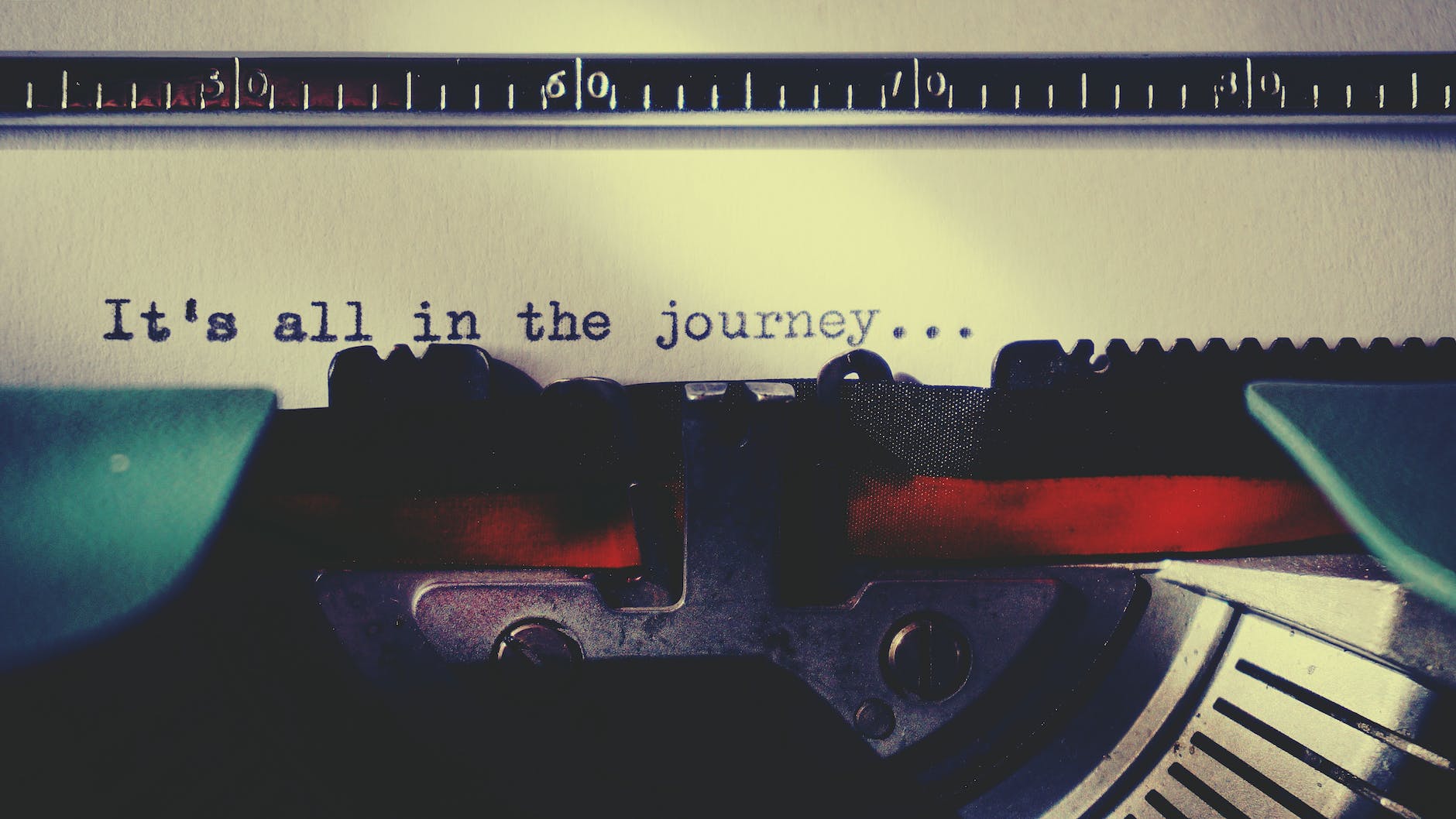
Novel listening: End of Watch by Stephen King

Abstract: End of Watch
The fabulously suspenseful and “smashing” (The New York Times Book Review) final novel in the Bill Hodges trilogy from the #1 New York Times bestselling author of Mr. Mercedes and Finders Keepers!
For nearly six years, in Room 217 of the Lakes Region Traumatic Brain Injury Clinic, Brady Hartsfield has been in a persistent vegetative state. A complete recovery seems unlikely for the insane perpetrator of the “Mercedes Massacre,” in which eight people were killed and many more maimed for life. But behind the vacant stare, Brady is very much awake and aware, having been pumped full of experimental drugs…scheming, biding his time as he trains himself to take full advantage of the deadly new powers that allow him to wreak unimaginable havoc without ever leaving his hospital room. Brady Hartsfield is about to embark on a new reign of terror against thousands of innocents, hell-bent on taking revenge against anyone who crossed his path—with retired police detective Bill Hodges at the very top of that long list….
Podcasts listened to
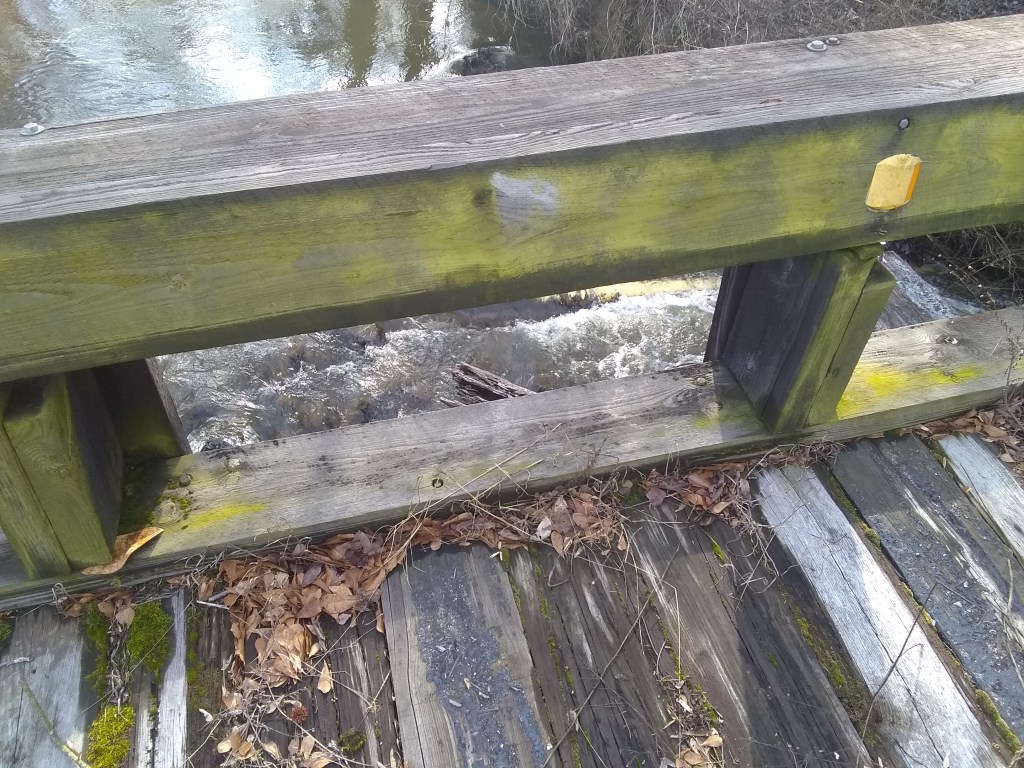
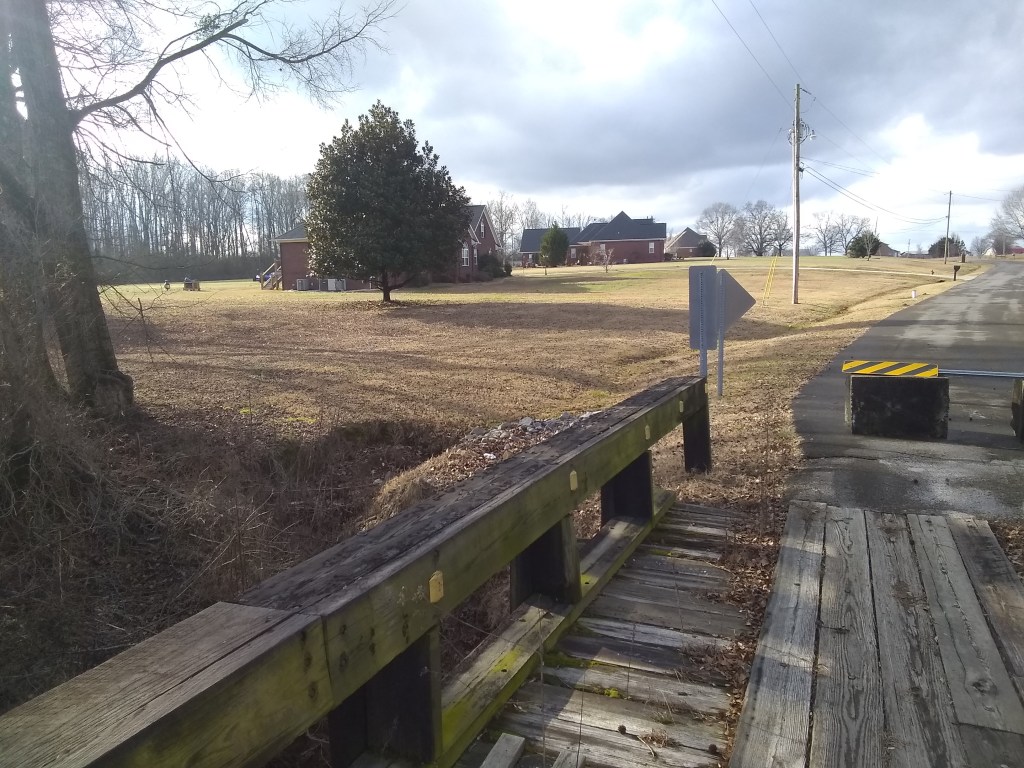
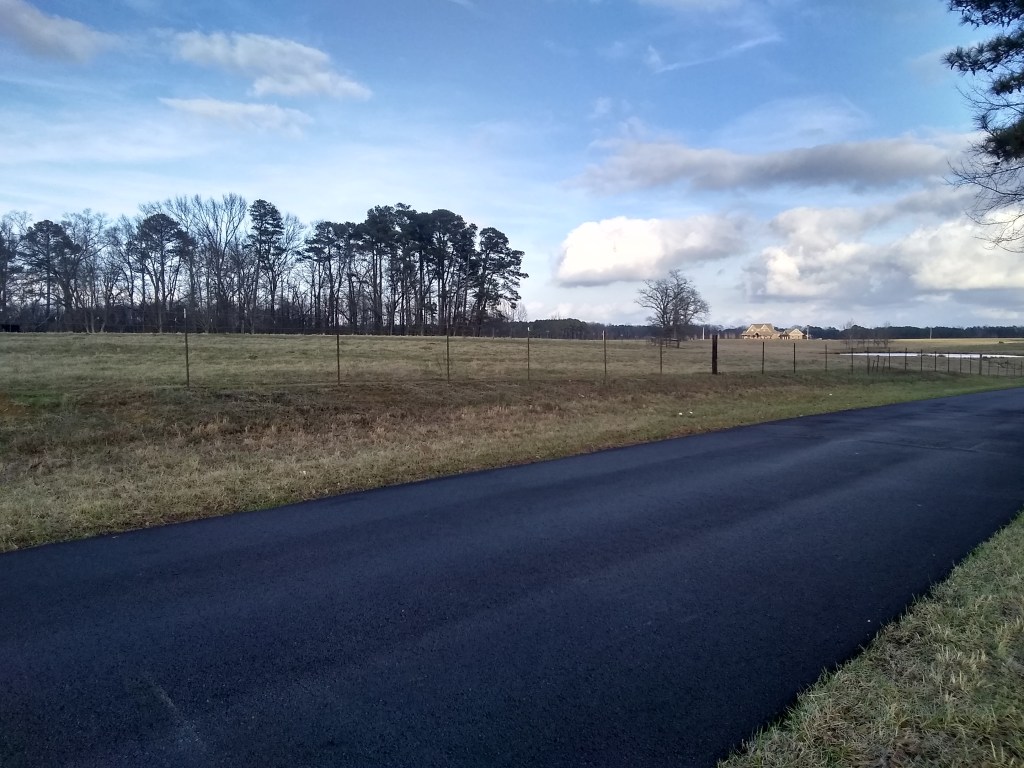
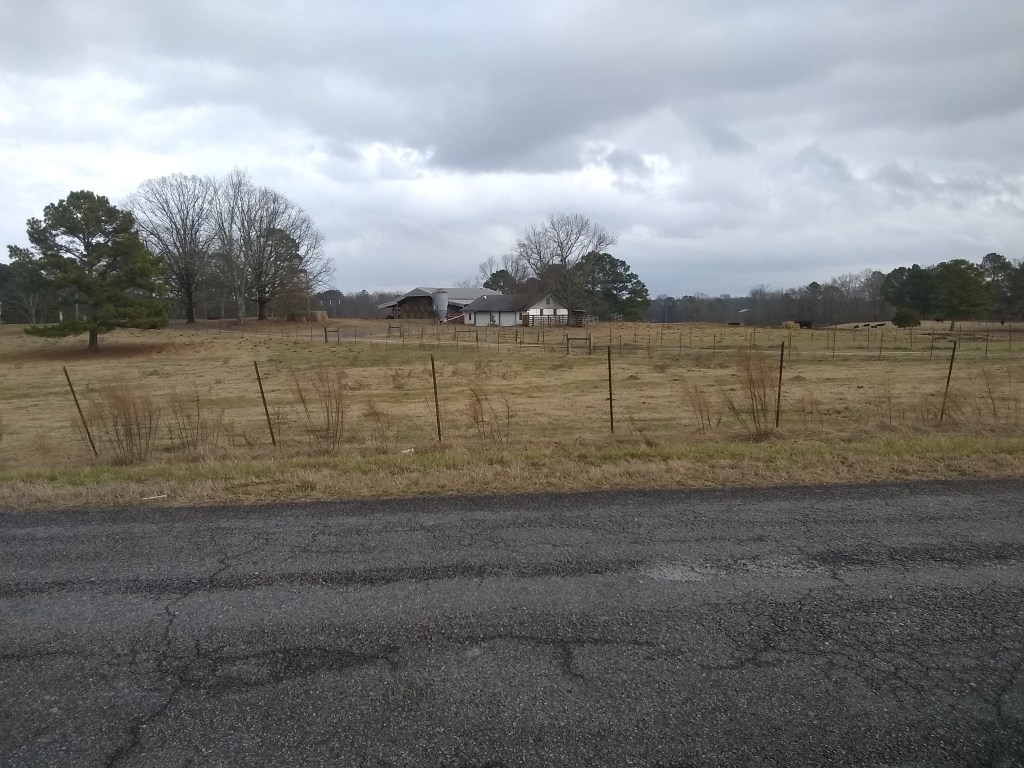
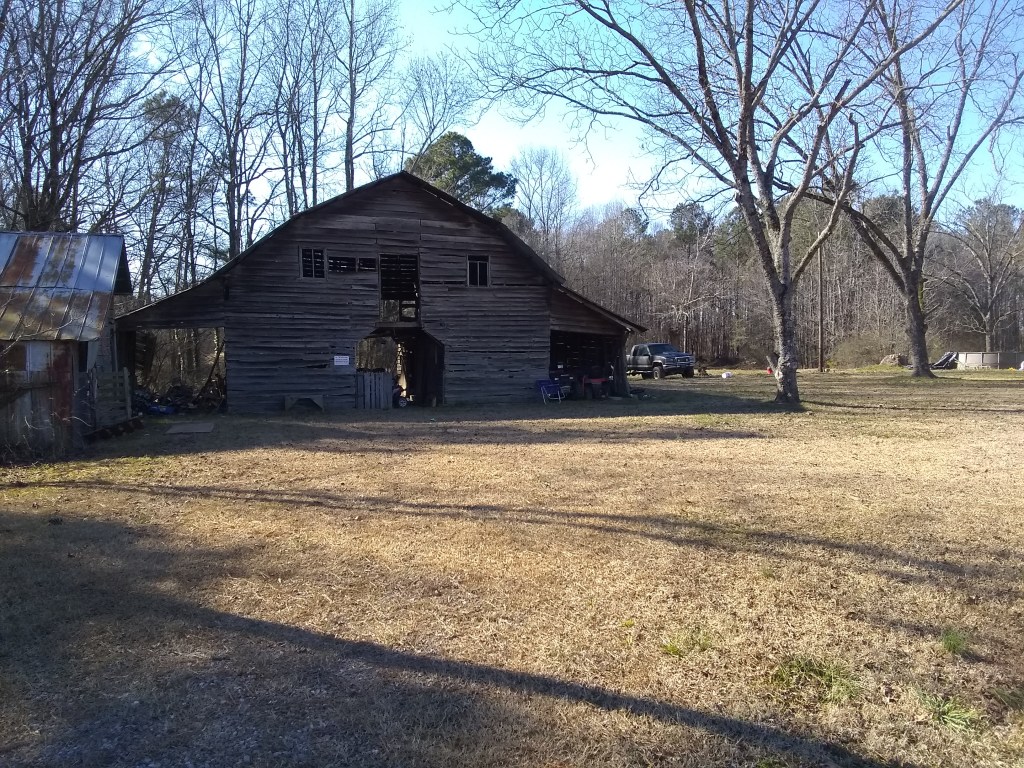
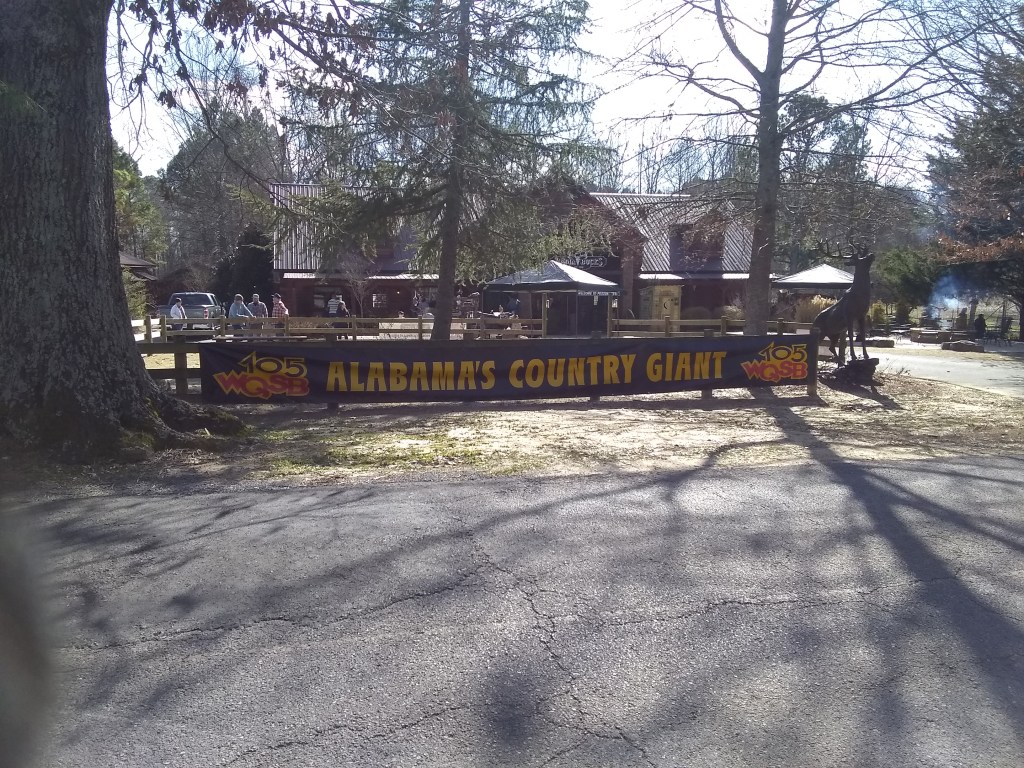
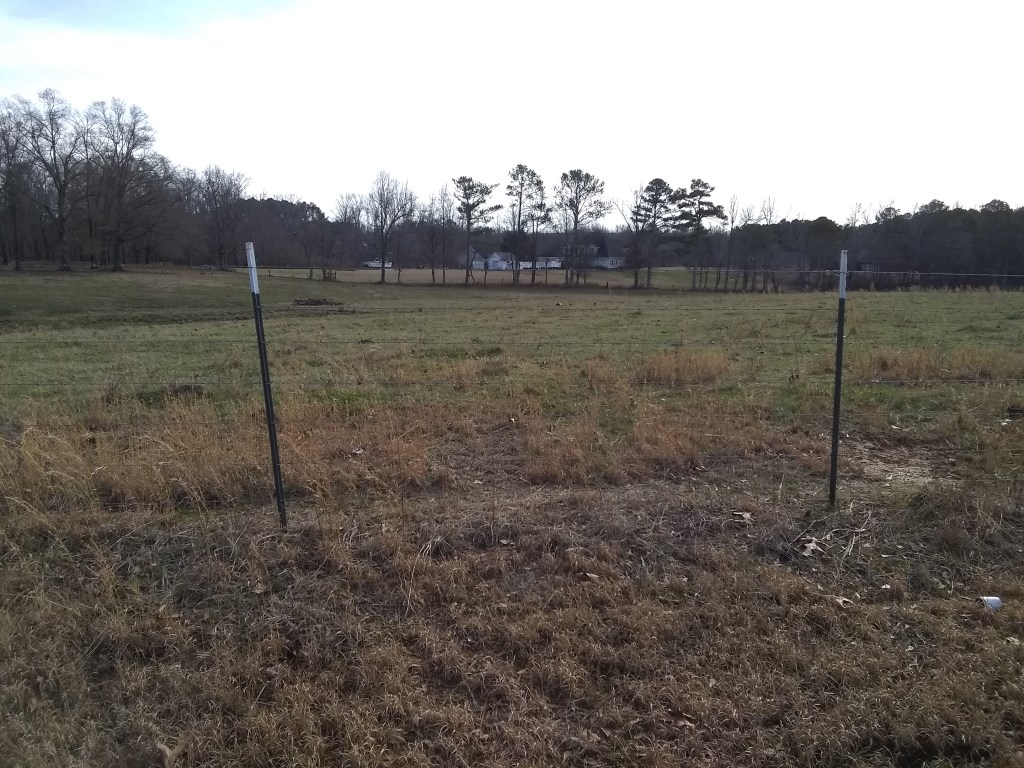
Here’s a few photos from along my pistol route:


















God and Girl–Chapter 2
God and Girl is my first novel, written in 2015. I'll post it, a chapter a day, over the next few weeks.
It’s Sunday morning on this hot and humid July day and I’m sitting in church waiting for services to begin. My Dad is the pastor of this Southern Baptist Church here in my hometown of Boaz, Alabama— some say it is a quaint southern town, a great place to ‘live, work, and play.’ There is no doubt it is in the heart of the Bible Belt. Many, mostly Yankee journalists, say that Alabama is the heart of the Bigot Belt.
My name is Ruth, most people call me Ruthie. I am fourteen years old and I will be in the ninth grade when school starts back in a few weeks. After a thirty-minute song service, including “There’s Victory in Jesus,” “Amazing Grace,” and “Love Lifted Me,” my Dad, the humble and gifted Joseph Brown, walks to the pulpit. “Good morning and welcome to all. It is a great day to be in God’s house and to be worshiping with each one of you. Today, we want to look at an issue that is changing America and the change isn’t good. It’s the issue of homosexuality and gay marriage. Many of us are aware that this week the United States Supreme Court issued a ruling in a case that found a constitutional right for gay couples to be married. Yes, our Supreme Court found that two men or two women have just as much a right to a lawful marriage—and all the rights that bestows—as a man and a woman have.
We all know that God instituted marriage as between one man and one woman.
The Apostle Paul specifically condemns homosexuality in the book of Romans—look if you want to at Romans Chapter 4. Here Paul, speaking for God, says that a man should not lust after another man, nor shall a woman lust after another woman. Neither shall lie with a member of the same sex. Friends, please carefully note that Paul does not see homosexuality as biological—that one is born with the ‘gay gene.’ He is clear, homosexuality and its related lifestyle is a choice. There is no other way to reason but to conclude that homosexuality is a sin—and this is why Paul calls homosexuality a sin here in God’s word. Friends and brothers, homosexuality is a sin and God will deal with it—He will punish the sin and the sinner.
Of course, this doesn’t mean we don’t love the homosexual. We do. However, we as a church, as God’s body, cannot condone the sin. Sin has consequences—and it is never good for the sinner nor society.”
Dad said a lot more during his sermon, including a whole lot about the likely effects of the Supreme Court’s decision, such as loss of religious freedom and the ultimate breakdown of the American family and our society. After Dad finished and stood at the front door of the church and shook everyone’s hand, we came home: me, Dad, Mom, my older brother, and my younger sister.
After we arrived home I went to my bedroom while Mom prepared lunch. I sat in the middle of my bed pondering the words Dad had so clearly and eloquently delivered to all in attendance this morning at First Baptist Church. One thing I knew he was right about, according to the Bible, homosexuality is a sin and a choice. A person is not born a homosexual or with homosexual tendencies.
“Ruthie, lunch is ready,” Mom called from the kitchen. I got up and quickly walked to the dining room. My parents had this crazy rule that whoever was at home at meal times always ate together in the dining room.
“Ruthie, it’s your turn to say grace,” Mom said.
“Lord, thank you for this day, for church, for Dad’s sermon, for family, and for this food. Amen.” I always was pretty good with prayers. I got right to it and never lingered.
Lunch time was rather quiet today, a little unusual for Sunday’s. Dad tried to start a conversation about his sermon but there were no takers, not even Mom, who usually is faithful to follow Dad off a cliff. The most chatter was over the summer Olympics in Germany and ridiculing computer gaming as a legitimate sport. The corn casserole generated its usual remarks from Rachel, Jacob, and myself—none of us kids could hardly stomach it but we all finally agreed that a sale on both creamy and niblet corn justified its purchase. We all were willing to sacrifice for the common good—our family unit had to stick together to be a unifying force in our community and, as Dad always said, “a beacon on a hill.”
Youthful attitudes improved greatly with the banana-pudding. I assumed bananas were likewise on sale. It was good and was even better when Mom let us kids take ours with us back to our individual bedrooms.
I sat at my desk thoughtless for a while as I finished my pudding. But, like a lightning bolt, I was suddenly awakened again to homosexuality and the consequences that would surely follow.
For quite a while I, at least subconsciously, had thought I might be gay. I had never talked with anyone about it, especially, not with my Dad. Prior to the sixth grade I knew I was different. I didn’t want anything to do with boys. I thought they were gross especially after I learned the difference sexually between boys and girls. The boys were just too much like animals.
As to girls, my whole mind and body changed in the sixth grade. Sarah, Heather, Lisa, and I had a sleep over at Sarah’s house. It was during the Christmas holidays. During the night, after her parents were fast asleep, we decided to play a game. Lisa had suggested that we would soon be invited to the Valentine’s dance—our first, and that we needed to learn more about kissing. It was a big dare and it took quite a while for everyone to get on board with it. I do remember not being the last one to agree—I guess that should have told me something about my tendencies.
The game started with us sitting in a circle like a clock and starting with Sarah at twelve o’clock, kissing Lisa sitting at the three o’clock position. The first kiss was easy—it was a kiss to the cheek. The second round was a quick kiss to the lips. It got more intense every round. Each round took what seemed like an hour, but of course it didn’t. After each kiss, there was much laughter and commentary. Also, after each round, we would rotate positions, so everyone would get practice with everyone.
During the last round, it came my turn to French kiss Heather. I was very hesitant at first, but once she gave me her tongue it seemed like something leaped in my gut, like my sexual clock had been plugged in. I then pulled Heather to me closer and closer and we kept our kissing going for quite a while. Sarah and Lisa finally pulled us apart and Lisa said, “well, we now know who has a thing for girls.” Sarah added, “you girls better get a room.”
Here is the thing that now blows my mind. Later that night, after we had all settled down and fallen asleep—scattered over their big den— Heather came and lay down beside me. I looked at her, surprised, but didn’t say a thing. I was glad she was there. She got in my sleeping bag with me and we started kissing, really kissing, French kissing. This went on for what seemed like an hour and then our hands started to explore each other’s body. Before sunrise, Heather kissed me one final and exciting time and went back to her sleeping bag.
I never saw Heather again. Her and her family moved cross country before school started in mid-August. I never heard from her again. And, I never told anyone about our sexual encounter.
It was too pretty to stay in my bedroom until church services tonight. Mom agreed that I could ride my bicycle to the city park. It was only a couple of miles and there would be several church families there picnicking and playing volleyball and just hanging out most of the afternoon. Mom made me promise her I would be back no later than 4:30. I agreed.
It was a nice ride to the park. I saw the Smith’s, the Williams’, and the Crutcher’s and declined an offer from each family to join them. I headed for my favorite spot beside a small stream just down the hill from the volleyball court. This was my favorite thinking spot. I even had my favorite rock that seemed out of place but was big enough for me to be hidden behind it away from the footpath.
My thoughts returned to my Dad. He is a good man, a good father, a good husband to my Mom. But, he is strict when it comes to the Bible, Christianity, and the church’s role in society. He is a fair man, but he doesn’t have much patience with those whose worldview is different than his own. He believes the Bible is literally God’s word and that it is true no matter the season or the century. He runs his church and his household fairly and firmly, but always in accord with what the Bible says.
Maybe I should go talk to my Dad and tell him how I feel. Even more, tell him that I think I am gay. What would he do? I have a feeling he would condemn me, hopefully gently and lovingly, and pray for me. One thing I know for sure is that he would never accept me as gay. He would always believe that my homosexuality was my choice—my choice to sin. If I told my Dad, I deeply fear that things would never be the same between us.
No, now doesn’t seem to be the right time to reveal any of this to my Dad, or anyone else. I must keep this a secret. Maybe, I am going through a phase. Maybe, I’m not gay. Maybe I am making too much of this. I should recommit to God’s Word and His ways. Lord, forgive me. “You have a good time at the park? See anyone you know?” Mom said as I walked in the house from the garage.
09/17/23 Biking & Listening
Biking is something else I both love and hate. It takes a lot of effort but does provide good exercise and most days over an hour to listen to a good book or podcast. I especially like having ridden.
Here’s my bike, a Rockhopper by Specialized. I purchased it November 2021 from Venture Out in Guntersville; Mike is top notch! So is the bike, and the ‘old’ man seat I salvaged from an old Walmart bike.
Here’s a link to today’s bike ride.
Something to consider if you’re not already cycling.
I encourage you to start riding a bike, no matter your age. Check out these groups:
Cycling for those aged 70+(opens in a new tab)
Solitary Cycling(opens in a new tab)
Remember,
Novel listening: End of Watch by Stephen King
Abstract: End of Watch
The fabulously suspenseful and “smashing” (The New York Times Book Review) final novel in the Bill Hodges trilogy from the #1 New York Times bestselling author of Mr. Mercedes and Finders Keepers!
For nearly six years, in Room 217 of the Lakes Region Traumatic Brain Injury Clinic, Brady Hartsfield has been in a persistent vegetative state. A complete recovery seems unlikely for the insane perpetrator of the “Mercedes Massacre,” in which eight people were killed and many more maimed for life. But behind the vacant stare, Brady is very much awake and aware, having been pumped full of experimental drugs…scheming, biding his time as he trains himself to take full advantage of the deadly new powers that allow him to wreak unimaginable havoc without ever leaving his hospital room. Brady Hartsfield is about to embark on a new reign of terror against thousands of innocents, hell-bent on taking revenge against anyone who crossed his path—with retired police detective Bill Hodges at the very top of that long list….
Podcasts listened to
Here’s a few photos from along my pistol route:
The lights are shining in Blue America
Here’s the link to this article.
 by ADAM LEE SEP 14, 2023

Overview:
Throughout America’s blue states and cities, Democratic officeholders are passing laws to help people and make their lives better, from education to health care to gun control to the environment to voting rights—and more besides.
Reading Time: 4 MINUTES
[Previous: The lights are flickering in Red America]
Red states are suffering from the laws they voted for.
Thanks to their rejection of Obamacare, rural areas have become health care deserts as hospitals lose money and shut down. COVID-denying, vaccine-refusing ideology has directly led to conservative areas suffering far more deaths and disability than would otherwise have been the case. Abortion bans are causing doctors to flee in droves, leaving states without maternity care. Schools are starved of resources, crippling the minds of the next generation and driving away businesses that need educated workers. Open-carry laws have spurred a plague of gun murders and suicides.
However, the state of the nation isn’t uniformly bleak. While the red states regress, blue states are doing better than ever. In places with enlightened, progressive governments that actually care about the well-being of their citizens, Democrats are passing a blizzard of laws to help people and make their lives better.
The Midwest
Start with Minnesota. Democrats won a trifecta in 2022, taking the governorship and both houses of the state legislature. They immediately made good use of their majority to turn the state into a laboratory in progressive policy:
Just over halfway through their legislative session, Minnesota legislators have already enacted or advanced measures that touch nearly every area of the Democratic Party platform, including policies about reproductive rights, democracy, voting, green energy and LGBTQ protections.
Among other progressive measures, Minnesota Democrats codified abortion rights into law. They massively expanded voting rights, set up automatic voter registration for teenagers, and provided for the automatic restoration of voting rights to people who’ve completed criminal sentences. They expanded background checks and red-flag laws for gun purchases. They required utilities to offer 100% clean energy by 2040. They legalized recreational marijuana.
And that’s not all. Another article, “The Minnesota Miracle“, lists even more Democratic accomplishments: They created a paid family and medical leave program that covers all workers. They passed a child tax credit to help poor families. They banned conversion therapy and passed sanctuary laws for transgender children with family in less tolerant states. They bumped up education spending and instituted free breakfast and lunch for all public school students. They passed laws guaranteeing access to health insurance and driver’s licenses regardless of immigration status.
Nearby Michigan, like Minnesota, elected a Democratic trifecta in 2022—in Michigan’s case, for the first time in forty years. Also like Minnesota, Michigan Democrats wasted no time. They banned conversion therapy; outlawed discrimination against LGBTQ people; repealed a Republican anti-union law; expanded the earned income tax credit; and passed a package of gun-control laws.
Governor Gretchen Whitmer also signed a “historic” education budget that boosts per-student spending and expands pre-K. It guarantees free breakfast and lunch for all public school students, making Michigan the seventh state to do so.
There’s also Illinois. While there wasn’t a huge reservoir of pent-up progressive changes in this deep blue state, there were still some good ideas. For example, they passed a law that bans book bans. In response to right-wing censorship, it prevents schools and libraries from removing books based on “partisan or doctrinal disapproval”, on pain of losing state funds. Illinois also eliminated cash bail and expanded support for abortion to help people coming from neighboring states.
The West
The biggest, most forward-thinking initiative in the Western states comes from California. The Golden State is manufacturing its own insulin through the non-profit CalRx initiative.
California will sell insulin for $30, up to 90% less than private companies charge. It will be a major disruption to the price-gouging rampant in Big Pharma. Other generic drugs, like naloxone, may soon follow.
In New Mexico, voters approved tapping into the state’s land grant fund to pay for early childhood education. A set of proposed state regulations would make child care free for most children up to age 5.
And Colorado, like California, is taking steps to rein in out-of-control medical costs. One new law caps the cost of EpiPens at $60. Another caps the interest rate on medical debt. A third bars it from being included on credit reports, which helps people who were unjustly turned down for loans or credit because of a medical crisis that was no fault of their own.
The East
In New York, I’ve previously written about the Build Public Renewables Act, one of the most ambitious laws ever passed to bring us closer to a green-energy future.
The Rhode Island legislature passed a law that makes wage theft a felony—eliminating the longstanding disparity that employees who steal from employers can expect prosecution and harsh punishment, whereas employers could steal from employees with little consequence.
Vermont, like New Mexico, approved a plan that greatly expands child care. It subsidizes families and reimburses providers. It’s paid for by a payroll tax—which is only fair, since employers benefit when their employees have reliable child care.
Massachusetts joins Minnesota and Michigan in making school meals free for all students, and the only surprise is that they hadn’t done so already. Lawmakers also made community college free for state residents.
Last but not least, East Coast states pioneered the idea of shield laws to fight right-wing anti-choice and anti-trans ideology. These laws prevent patients and doctors from being sued, arrested, or prosecuted for receiving abortion or gender-affirming care, and forbid states from cooperating with any such investigation by overreaching law enforcement in red states. Connecticut passed the first of these laws, but the idea has spread to Massachusetts, New York, Illinois, Minnesota, New Mexico, Colorado, Oregon, Washington and Vermont.
As conservative states sink further into the mire of theocracy, the blue states stand above them, shining like lighthouses. Not only are they protecting their citizens against religious-right encroachment, they’re offering more and more benefits like free child care, high-quality education, and access to affordable medical care. Our nation is increasingly diverging onto two separate tracks, and blue states will be havens, not just to liberals, but to everyone who wants to live a happy, healthy and prosperous life.
God and Girl–Chapter 1
God and Girl is my first novel, written in 2015. I'll post it, a chapter a day, over the next few weeks.
“Let’s kill all the lawyers,”
Shakespeare said in his play ‘Henry VI.’
“Let’s kill all the infidels,”
Radical Muslims say in real life.
These Muslims aren’t the only ones who want to kill the infidels.
I say, “Let’s kill all the preachers.
Let’s kill all the Southern Baptist preachers.”
Why didn’t Satan kill God when he had a chance?
Shakespeare referred to corrupt lawyers.
Radical Muslims to pure infidels.
I refer to corrupt and pure Fundamentalists.
I’m the Bible and I approve this message.
Preacher’s kids are the worst. I’ve often heard. I’m one myself, but I’m pretty good unless I’m writing poetry, at least as far as my Dad and Mom know.
I love my Dad. Mom too, maybe more, even though Dad is a radical himself. Of course, to most Americans, he is as normal as they come, just an ordinary Christian. But, to a slim minority of us in our little North Alabama town, he is a fundamentalist pastor, a radical.
Dad would probably die if he read my rather revolting poem. He probably doesn’t know that a poem isn’t necessarily true, or that it doesn’t have to reflect the view of the writer. After he read it he would say, “Ruthie, this is sick. I didn’t know you were so messed up. How have I failed you? I thought you believed in God, loved God, read your Bible, believed your Bible? What happened to you? You better be glad tomorrow is Sunday and you have to go to church.”
I guess I would have to say, “Dad, I do believe as best I know how. But, I am also curious and creative. Reading, poetry, words, these things are my breath, my bed, my ball. It’s a little safer than basketball, football, or hockey. Don’t you think? Can’t a girl have a little fun without a ball or a puck?”
I do like a lot of the stories and passages in the Bible. I really like this one from Chapter 4 of Song of Solomon:
“You’re so beautiful, my darling,
so beautiful, and your dove eyes are veiled
By your hair as it flows and shimmers,
like a flock of goats in the distance
streaming down a hillside in the sunshine.
Your smile is generous and full—
expressive and strong and clean.
Your lips are jewel red,
your mouth elegant and inviting,
your veiled cheeks soft and radiant.
The smooth, lithe lines of your neck
command notice—all heads turn in awe and admiration!
Your breasts are like fawns,
twins of a gazelle, grazing among the first spring flowers.
The sweet, fragrant curves of your body,
the soft, spiced contours of your flesh
Invite me, and I come. I stay
until dawn breathes its light and night slips away.
You’re beautiful from head to toe, my dear love,
beautiful beyond compare, absolutely flawless.”
I say a soon-to-be ninth grader can not only be revolting and revolutionary, but also romantic. Well, I don’t know much about romance, but my Dad might quickly repeat his three questions if he learned my interpretation and application of this beautiful passage from his inerrant Word.
Yes, I’m curious and creative and know that experience and imagination are about all one needs to write a good poem.
09/16/23 Biking & Listening
Biking is something else I both love and hate. It takes a lot of effort but does provide good exercise and most days over an hour to listen to a good book or podcast. I especially like having ridden.
Here’s my bike, a Rockhopper by Specialized. I purchased it November 2021 from Venture Out in Guntersville; Mike is top notch! So is the bike, and the ‘old’ man seat I salvaged from an old Walmart bike.
Here’s a link to today’s bike ride.
Something to consider if you’re not already cycling.
I encourage you to start riding a bike, no matter your age. Check out these groups:
Cycling for those aged 70+(opens in a new tab)
Solitary Cycling(opens in a new tab)
Remember,
Novel listening: End of Watch by Stephen King
Abstract: End of Watch
The fabulously suspenseful and “smashing” (The New York Times Book Review) final novel in the Bill Hodges trilogy from the #1 New York Times bestselling author of Mr. Mercedes and Finders Keepers!
For nearly six years, in Room 217 of the Lakes Region Traumatic Brain Injury Clinic, Brady Hartsfield has been in a persistent vegetative state. A complete recovery seems unlikely for the insane perpetrator of the “Mercedes Massacre,” in which eight people were killed and many more maimed for life. But behind the vacant stare, Brady is very much awake and aware, having been pumped full of experimental drugs…scheming, biding his time as he trains himself to take full advantage of the deadly new powers that allow him to wreak unimaginable havoc without ever leaving his hospital room. Brady Hartsfield is about to embark on a new reign of terror against thousands of innocents, hell-bent on taking revenge against anyone who crossed his path—with retired police detective Bill Hodges at the very top of that long list….
Podcasts listened to
Here’s a few photos from along my pistol route:
Theologians Squirm and Fret When We Ask for EVIDENCE
Here’s the link to this article.
By David Madison at 9/15/2023
Why does their god play hide and seek?

We can assume that some (many?) churchgoers read the gospels, but, it would appear, without critical thinking skills fully engaged. When the devout come across Mark 14:62, does it bother them that Jesus was wrong? At his trial, Jesus was asked point blank if he was the messiah, to which he replied: “I am, and you will see the Son of Man seated at the right hand of the Power and coming with the clouds of heaven.” The main thrust of Mark’s gospel was that kingdom of his god was so close. But obviously those at his trial did not witness the arrival of Jesus on the clouds. The apostle Paul was confident too that Jesus would arrive in the sky soon. He promised members of the Thessalonian congregation that their dead relatives would rise to meet Jesus—and that he too would be there to join them (I Thessalonians 1:15-17). So Paul was wrong as well.
Paul was pumped for years by his delusions, which show up continually in his letters: he knew for sure that Jesus spoke to him in his visions. Is there any better foundation for all those “words of Jesus” in the gospels? We have no way at all to verify that the Jesus-script in Mark 14—or anywhere else—is authentic. Any historian would want to know how the author of Mark’s gospel—written some forty years after the death of Jesus—knew what was said at the trial. Was there a transcript that Mark could access? It’s very doubtful, in the wake of the very destructive first Jewish-Roman war (66-73 CE). It’s much more likely that this author created scenes as he saw fit: he was writing to promote the beliefs of his cult.
This is but one aspect of the problem of evidence that hobbles Christianity. The gospels are so highly esteemed by churchgoers, who have been raised to believe that these documents “got the story right.” But on close examination—with critical thinking skills fully engaged—it’s hard to make the case for that. There is wide consensus among devout scholars—outside of fundamentalist circles—that the gospels were written several decades after the death of Jesus. The anonymous authors never identify their sources, not even the author of Luke’s gospel, who claims in his opening verses that his stories can be traced back to eyewitnesses. But these are never identified. So historians are stumped: there is no way to verify anything we find in the gospels.
How do historians do their job? Here’s one example: in Helen Langdon’s 391-page biography of Caravaggio (1998), at the end we find a 27-page fine-print list of her sources: details about the documentation her work is based on. That’s how historians operate. But they can’t operate that way when they take up the challenge of accurately reporting the story of Jesus. There are no letters, diaries, transcripts, stenographer notes contemporaneous with Jesus that corroborate the gospel accounts. To make matters worse, these accounts are chock full of errors, contradictions, and conflicting agendas: the four gospel authors were intent on correcting each other, culminating with John, who created a very different Jesus.
They couldn’t even agree on the resurrection stories. Just read the four accounts of Easter morning, and you can appreciate the mess. I suspect the apostle Paul would have been horrified by John’s account of Doubting Thomas sticking his finger in the risen Jesus’ sword wound. No, no, no: our risen bodies will be different:
“Look, I will tell you a mystery! We will not all die, but we will all be changed, in a moment, in the twinkling of an eye, at the last trumpet. For the trumpet will sound, and the dead will be raised imperishable, and we will be changed. For this perishable body must put on imperishability, and this mortal body must put on immortality” (I Corinthians 15:51-53).
Where is the evidence to verify Paul’s claim (I’m being generous: his delusion) that the dead will be raised imperishable? Where is the evidence that John’s Doubting Thomas story (missing from the other gospels) didn’t come from the author’s imagination? —after all, he was a master at making things up! There have been memes floating around Facebook and Twitter: “This comic book is the proof that Superman is real!” “These Harry Potter books are the proof that Harry is real!” The challenge for Christians is to show how and why the gospels deserve a higher historical ranking than comic and fantasy fiction books. No, I’m not kidding. Jesus studies have been in turmoil for a long time now—totally unnoticed by the folks who attend church— because devout scholars cannot agree on which gospels texts should/can be taken seriously.
Richard Carrier has stated the problem:
“…the NT underwent a considerable amount of editing, interpolation and revising over the course of its first two centuries, and not merely as a result of transcription and scribal error, but often with specific dogmatic intent…This is not something to sweep under the rug. It makes a real difference in how we estimate probabilities. Unlike most other questions in history, the evidence for Jesus is among the most compromised bodies of evidence in the whole of ancient history. It cannot be said that this has no effect on its reliability.” (On the Historicity of Jesus, pp. 275-276)
Are we going to have any better luck with evidence for god?
I recommend a careful reading of a recent article here by John Loftus, Daniel Mocsny’s Rebuttal of Paul Moser’s Definitional Apologetics, Which Obfuscates the Fact That Christianity is Utter Nonsense! Loftus has repeatedly requested that Christian theologians and philosophers provide objective evidence that their god is real, can be verified by data. Moser faulted Loftus for not being precise about what constitutes objective evidence. But this is a dodge, indeed obfuscation. Since theists are those claiming that god exists, they should be fully prepared to specify the evidence they have—and show us where we can find it.
A common claim is that their god is all-powerful, in fact mighty enough to have ignited the cosmos, and now to have billions of galaxies under management. Thus we can conclude that such vast power must be detectable by science. Edwin Hubble provides a good example of what can happen when smart humans look for data. Just about 100 years ago, using the new 100-inch telescope at Mount Wilson, Hubble determined that the Andromeda Galaxy is indeed a galaxy far beyond our own; a common view among astronomers at the time was that our Milky Way Galaxy was the universe. Hubble’s search for data, for objective, verifiable data, brought this important insight to human understanding of where we are in the Cosmos.
Is it too much to expect that theologians should be able to tell us where to find crucial data about their all-powerful god? This is where they fumble. “Oh, but our god commands a spiritual realm that is undetectable by science.” Our next question then must be: “How do you know this?” Where is the reliable, verifiable, objective data that backs up this claim? If they continue to fumble and equivocate, then

we know for sure they have retreated to theobabble, i.e., a form of eloquence designed to cover up their lack of actual knowledge. The church has thrived on theobabble for centuries.
Daniel Mocsny holds Paul Moser’s feet to the fire in the latter’s attempt to evade the call for evidence: “But most people don’t demand rigorous compact definitions of things like ‘chairs’ because most people have a working understanding of what a chair is, and it’s good enough. In other words there’s no need to play dumb about what a chair is, and similarly no need to play dumb about what evidence is.”
And Mocsny calls attention to the stark contrast between religion and science:
“I assume Moser plies his trade from an office and never applies his thinking to solving problems in the real world – such as how might we collect raw materials and transform them into a working smartphone. Given the astronomical number of ways to combine materials at random, the overwhelming majority of which will not result in a working smartphone, presumably Moser will agree that for scientists and engineers to manage this trick billions of times with a very low failure rate, they must have rules for evidence that are stupendously good.”
“It’s trivial to show that no religion has evidence as strong as either the law or science demands. No religion can prove its supernatural claims in a legitimate court of law, and no religion relying on faith builds anything like a smartphone. What has any religion produced besides words, and manipulating people? There is nothing to suggest that any religion has the kind of deep insight into reality that enables science to work actual near-miracles.”
Author Robert Conner (The Death of Christian Belief, The Jesus Cult: 2000 Years of Last Days, Apparitions of Jesus: The Resurrection as Ghost Story) commented on the Mocsny article:
“If Paul Moser were to call AAA for roadside assistance with a flat tire, I’m fairly sure the receptionist wouldn’t engage him in a tiresome (see what I did there?) debate about what, epistemically speaking, constitutes a flat tire. The tire, after all, still appears to be about 70-80% round; it’s just flat in that one spot.”
“Most people who are not institutionalized realize almost without reflection that Moser’s schtick is insanity on roller skates; in any real occupation his ‘thinking’ would get a person fired on the spot and escorted from the premises by security. That in Moser’s case it’s a tenured position in a Catholic university should tell us everything we need to know about the philosophy of religion.”
Embarrassed by the lack of science-based evidence for their deity, theologians and clergy commonly resort to “rounding up the usual suspects” (that classic line from the movie Casablanca), e.g., revelation through scripture, visions, prayer-based insights about god. But these all fail to deliver: Christianity has splinted into thousands of conflicting denominations because—among other things—they disagree about the god, based on the Bible itself. And, of course, the “inspired” scriptures of Mormons and Muslims are rejected. Visions too have yielded vastly different images of god(s) and saints; Protestants commonly ridicule Catholic vision claims. Christians have prayed endlessly to their god, but hold very different views on what god wants and expects.
Isn’t it so obvious that an all-powerful, competent, wise, caring god could have cleared up this mess a long time ago? “God can do anything!” devout believers claim. “Well, good, have him say Hi!” Let the evidence be clear and obvious. The gospel resurrection story itself fails by this standard. Why didn’t the resurrected Jesus show up at Pilate’s house on Easter morning? Why didn’t he appear to Caesar himself?
“Better still, the resurrected Jesus could have gone on a Worldwide Resurrection Tour with stops in China and every city, town, and village in the world.” (Tim Sledge, Four Disturbing Questions With One Simple Answer: Breaking the Spell of Christian Belief, p. 63)
Especially since the all-power Christian god gets really furious when humans don’t obey and worship him, it is very strange that he has failed so miserably when it comes to the presentation of evidence.
David Madison was a pastor in the Methodist Church for nine years, and has a PhD in Biblical Studies from Boston University. He is the author of two books, Ten ToughProblems in Christian Thought and Belief: a Minister-Turned-Atheist Shows Why You Should Ditch the Faith, now being reissued in several volumes, the first of which is Guessing About God (2023) and Ten Things Christians Wish Jesus Hadn’t Taught: And Other Reasons to Question His Words (2021). The Spanish translation of this book is also now available.
His YouTube channel is here. At the invitation of John Loftus, he has written for the Debunking Christianity Blog since 2016.
The Cure-for-Christianity Library©, now with more than 500 titles, is here. A brief video explanation of the Library is here.
The Boaz Stranger–Epilogue

I hit the snooze button twice before crawling out of bed. I blamed Kyla’s, “I’m going to miss you, but you need to get back to your routine.” Other than an “I love you,” this was the last thing I’d heard when I pulled away in the taped windowed Hyundai from Harding Hillside yesterday afternoon a few minutes before 2:00 PM headed to the Birmingham-Shuttlesworth International Airport.
I slipped on underwear and a tee-shirt and canceled my iPhone’s alarm. It was 5:19 AM, plenty of time to reacquaint myself with my old Saturday morning routine. I walked to the master bath, peed, and washed my hands and face. My plan was to drink a cup of coffee at the kitchen table, shower and dress, and then head to Eastwood Cemetery. I wanted to arrive before the sun rose at 7:00. Rachel and I had a lot to discuss.
I flipped on the overhead light as I entered the kitchen. The coffee waiting. For a moment, I felt confused. I had no memory of removing a filter from the overhead cabinet, measuring out four scoops of Maxwell House, pouring in a pot of water, or setting the timer to 5:00 AM. No memory, because I had none. The prepped automatic coffeemaker was just one task among many Sophia had completed a few hours before I’d arrived last night at midnight. I knew from the detailed note she’d left on the kitchen table, plus by the visible cleanliness and orderliness evidenced everywhere I looked.
I poured a large cup and sat in my chair at the table in the breakfast nook. For the millionth time in the past week, I’d tried to think of something other than Lillian’s death. I failed every time. I still had little memory of how I’d driven to Boaz after my mental and physical crash at the medical examiner’s office in Sevierville, Tennessee.
After Dr. Younger had completed his autopsy, he helped arranged the transport of Lillian’s body to McRae’s Funeral Home in Boaz. She had arrived late Monday. It was Thursday before her ashes were ready. “Scatter them along the edge of the pier but wait until the geese are swimming. Just you and my web-footed angels. No one else.” It was something she made me promise after she’d escaped her coma eight weeks ago. The ceremony took place late that afternoon, just before sunset. I’d just finished cleaning out her refrigerator when I walked onto the back porch and saw the geese.
A good-morning text from Kyla brought me back to the present. We both had always been early risers, part of the never-ending competition between us.
I finished my coffee and returned to the bathroom. After showering and dressing, I drove my Tahoe to Eastwood Cemetery (thankful for Lyndell’s two friends who’d returned my trusty steed from Boston Logan Airport last Wednesday).
After the short two-mile drive, I pulled through the rock archway as a hint of sunrise appeared on the eastern horizon. It was enough light to see Gordon placing an assortment of rakes and shovels onto the back of his trailer. He waved. I waved in return, hoping he knew it was me.
I eased my way north on Luke and turned right on Gethsemane. After I stopped beside Rachel’s grave, I sat, alternating my view between her headstone to my left and the rising sun straight ahead. It was nothing but guilt. I felt I was being unfaithful to Lillian, the woman who’d taught me the true meaning of love.
I finally realized why I was here, and it wasn’t to denigrate Rachel. It was to tell her I held no ill will for all the secrets she’d kept, and to say goodbye. Unless I wanted to die, I had no choice but to go forward with the only life I could imagine, one with love and allegiance focused upon the ever present but invisible Lillian. Maybe my sense of duty or fair play was twisted, but I believed I needed to provide the reason I would not return. I analogized it to a lawyer presenting his closing argument at trial, persuading the jury they should see things his way.
I grabbed the Sand Mountain Reporter and my old green thermos and exited the Tahoe. I didn’t feel like sitting, so I didn’t retrieve the lawn chair from the rear hatch.
“Good morning, Rachel Anne.” I said, hearing the rumble of a truck in the distance. “The kids send their love.” I sent both Leah and Lyndell a text last night shortly after my plane touched down in New Haven. Both had asked if I was going to the cemetery this morning, probably knowing that I would.
I used my handkerchief to wipe the dampness from the top of Rachel’s headstone. I laid the newspaper on the cold stone and started opening the thermos. My iPhone rang the moment I removed the lid. The number wasn’t in my contacts, but I recognized it none the same.
“Good morning Gordon, hope you’re well.”
“Same to you Mista Lee. You was gones too long. Glads you’s home.”
“How are you?” I repeated my question, choosing an original phrase. I envied my caretaker friend. His life was so simple. He didn’t have a worry in the world, or so I believed.
Gordon didn’t give me time to realize the extent of my foolishness. Who was I to imagine his life as carefree, even joyous? Without relaying a hint as to his welfare, he said, “UPS leaves you a box.” I stood silent, semi-considering where I was.
“Uh?” I’d subconsciously heard the truck turn into the cemetery and pull to the caretaker’s shed. I hadn’t given it a second’s thought.
“Can’s I bring it?” Gordon’s announcement was surreal. Who sends a package to someone at a cemetery?
“You sure it’s not a bomb?” My stomach had its own announcement. It didn’t like the coffee after hearing this potentially upsetting news. I would put nothing past Ray Archer, even a dead Ray Archer. He had the means and the evil intent to destroy me, no matter where he was right now.
“Don’t know. Maybe’s I leave it here while’s I do my work. You get it when you wants.”
“No need. You can bring it if it’s not too much trouble.” My statement wasn’t an expression of bravery, but blind curiosity.
“Ons my way.” The call ended, and I screwed the cup back onto my thermos. I returned it to the Tahoe’s driver’s seat and waited.
Gordon came and went, reverentially, like he was entering the Holy of Holies. No words, just a respectful head nod towards Rachel’s grave.
The package had been Priority Mailed yesterday. Whatever was inside, someone had thickly wrapped it with cardboard colored paper and clear tape. It was about a foot long, nine or ten inches wide, maybe three inches deep, and lighter than expected. After seeing the sender was Jane Fordham, my first thought was, “what the hell is she sending?”
I walked to the Tahoe and opened the rear hatch. After moving the lawn chair, I laid the package face up on the carpet and used my iPhone to snap a couple of photos and my penknife to cut through the tape. I tore open the cardboard-like paper and removed what clearly was a book safe. My mind hearkened to Rachel, her basement office and library, and the similar sized containers that had triggered my sad two-month adventure to Boaz.
A Farewell to Arms was inscribed across the safe’s front above a bouquet of pink flowers I didn’t recognize. I knew little about the novel other than it was a wartime love story written by Ernest Hemingway, and it wasn’t the one I’d chosen to read in Mrs. Smith’s tenth grade English class (my choice was To Kill a Mockingbird by Harper Lee). The only difference in the book safes in our basement (I assumed they were still there.) and the one I was holding was the latter did not have a locking mechanism. Without opening it, I returned the safe to the Tahoe’s carpet, closed the hatch, and returned to Rachel’s grave, intending to present my closing statement and read the Obits. I wasn’t interested in a book, even one by a famous author. The story was straightforward to frame. Rachel had long ago loaned the book to Jane. Her guilt and her desire to dampen my hatred had prompted her to return the book to who she believed was its rightful owner. She’d likely enclosed a letter of apology and a wish for my recovery, happiness, and forgiveness.
Before I could verbalize the first paragraph of my closing statement, I realized the package was too light to contain Hemingway’s book. My curiosity got the best of me. Maybe Jane’s guilt had inspired her to confess her role in Lillian’s disappearance and death. I excused myself from Rachel’s grave and returned to the rear of the Tahoe. After reopening the hatch, I opened the book safe. Inside was a handwritten letter from Jane. What I didn’t expect was a birth certificate. Quickly and before reading, I assumed it had to be Elita’s, Rachel’s only biological child. I confirmed my guess when I read Tung Wah Hospital in Hong Kong printed underneath the ‘Place of Birth’ caption. My mind changed when I read the child’s name and date of birth: Leah Ann Packer, May 8, 1986.
Confused, I didn’t recognize what I was seeing, so I started reading Jane’s letter. “Lee, I can no longer keep my promise to Rachel, the one I made in 1988 when the two of you adopted Elita’s two-year-old child. Instead, with great reluctance, I now answer the question you asked on Lillian’s pier a few weeks ago: ‘Who adopted Elita’s baby?’ The answer is, you and Rachel.”
I removed and unfolded the lawn chair and sat. I felt like the air in my lungs, and my life, were being sucked out by an infinitely powerful black hole.
I fought back tears and continued to read. “As you can see on the enclosed birth certificate, Elita gave birth on May 8, 1986. She was alone in Hong Kong, self-hidden from her adoptive parents, the Packer’s. Yet, she gave her child her own last name before passing away from complications. Rachel and Elita had kept in touch since her visit to Washington, DC. eight months earlier.”
“I’m sorry for my role in forging documents. The birth certificate you have revealing your baby’s name as Leah Marie Armstrong is a fake (Rachel switched it in 1988). I’m also sorry for my part in helping my dearest friend create the ruse that hid your adopted daughter’s identity and background. Not to minimize my role, but it wasn’t my idea. It was Rachel’s, another one of her reality-altering creations intended to protect you from hurt and heartache.”
I have never been so surprised, so shocked by something I’d learned. If true, it could be the blow that sends me over the edge. I closed my eyes and leaned my head toward my chest, symbolizing my near defeat.
I had meant so little to Rachel. She’d kept me locked out of her life. The two of us were as connected and intimate as I am to the fading importance of Pluto.
I read the final long paragraph that was Jane’s way of asking forgiveness for her many lies. It seemed she blamed most everything on the delusion that Ray Archer had put her under.
Jane signed her name and hand-printed one postscript. I guess she knew I would ask. “Rob and Rosa are the only other people who knew about Elita’s pregnancy and how Leah came to be yours and Rachel’s adopted daughter.”
I stood and returned the book safe and its contents to the Tahoe. I felt abused and helpless but motivated to move the lawn chair and myself back to Rachel’s grave.
I might not be trustworthy for secrets, but Rachel Anne depended on me to read the obits. That was the least I could do for her on the last day of my life, my old life. Monday, I would travel to the law school and tell Bert Stallings and Dean Waters I was retiring. My new life was back home with Lillian, hopefully, somehow, in her cabin by the pond. Unfortunately, my future also included multiple interviews with the DA concerning the events that had led to Ray’s death. I was confident, with Micaden’s help, I would be fully exonerated, but of course, one never knows.
I walked the few steps to Rachel’s grave with lawn chair in hand wondering if law enforcement would ever find Stella Newsome and Alex Mandy, who, as far as I knew, were still on the lamb. That thought brought Ted King to mind. According to a text from Kyla last night at the airport while I hailed a taxi, the local scuttlebutt was the worst thing that would happen to the mayor would be his resignation. He would avoid a criminal indictment since there was no one likely knowledgeable enough or brave enough to testify against him.
For some reason, I was procrastinating. I wasn’t quite ready for the Obits, instead my mind revisited another document Jane had included in the A Farewell to Arms book safe. It was a Last Will & Testament. So, it seems not only had I inherited Lillian’s ten acres and cabin on Cox Gap Road, but possibly Ray’s entire estate. The Will fortuitously states that Lillian will inherit everything if Ray does not survive her by at least ten days. It was a rather odd provision, but they created the Will during the early days of Ray and Lillian’s marriage. Since Ray survived Lillian by only six days, she’d inherited everything. Since I was her sole beneficiary, that put me in the sole position of inheriting over a billion dollars in cash and real estate. Of course, all this depended on the 1974 Will being authenticated, which I fully doubted.
At bottom, it really didn’t matter. I didn’t care about wealth. All I truly wanted was to return to the little cabin where Lillian lived in spirit and spend the rest of my days holding her hand, sharing our fears and fantasies, and reminding each other that ours was and will always be a once-in-life love.
Finally, but semi-reluctantly, I opened The Sand Mountain Reporter to the Obits on page three. “Mary Gail Norris, 89, peacefully passed into our Savior’s arms on Monday, January 25, 2021.” After reading to myself a long paragraph of cherished family memories, including twenty-something items Mary Gail was famous for cooking (I’d never heard of zucchini squash meat sauce), I refolded the newspaper and knelt beside the warming headstone.
Alone, with only a weed-eater or blower’s hum in the distance, I whispered softly but clearly. “Rachel Anne, I hope you are at peace wherever you are, in your Savior’s arms or in that non-existent state you were in before Rob and Rosa conceived you. Just as important, I hope you found the forgiveness you sought before you ended your life.”
“I hold no ill will against you, although I probably should. You kept many secrets. Many I guess I’ll never know. I now believe you truly were trying to protect me. For that, I’m grateful.”
“There’s something else I’m thankful for. And that’s our two children. In your wacky and mixed-up world, although you were never free to love me like I wanted you to, you did what now seems impossible. I’m speaking of Leah. And no, I’ll never disclose that secret.”
Again, I paused, questioning whether somehow Leah knew the truth. Either way, nothing could change how I felt about the sweet two-year-old who’d come into our lives thirty-three years ago. I raised my eyebrows and shook my head sideways, realizing I now had quickly transformed into a secret-keeper.
My left leg started cramping. I stood and hobbled around the headstone. “Rachel Anne today is the last day I’ll be visiting you, maybe forever. See, Lillian and I are back together. She loves me. I love her. We’re going to make a home, hopefully just outside Boaz. You take care. You hear.”
I grabbed the newspaper and stored it, the lawn chair, and the book safe inside the back hatch. I drove around the cemetery twice before I saw Gordon, handed him a hundred-dollar bill I told him I’d found on Gethsemane, and announced I was moving to Alabama.
He shook my hand and shared a toothless grin. “You’s take care. I hear that’s a strange place.”
“It is, and I’m still a stranger, but it’s going to be home.”
THE END
 Richard L. Fricks